













BCC+ Crash Zoom Dissolve
Category: BCC Transitions
Effect Name: BCC+ Crash Zoom Dissolve
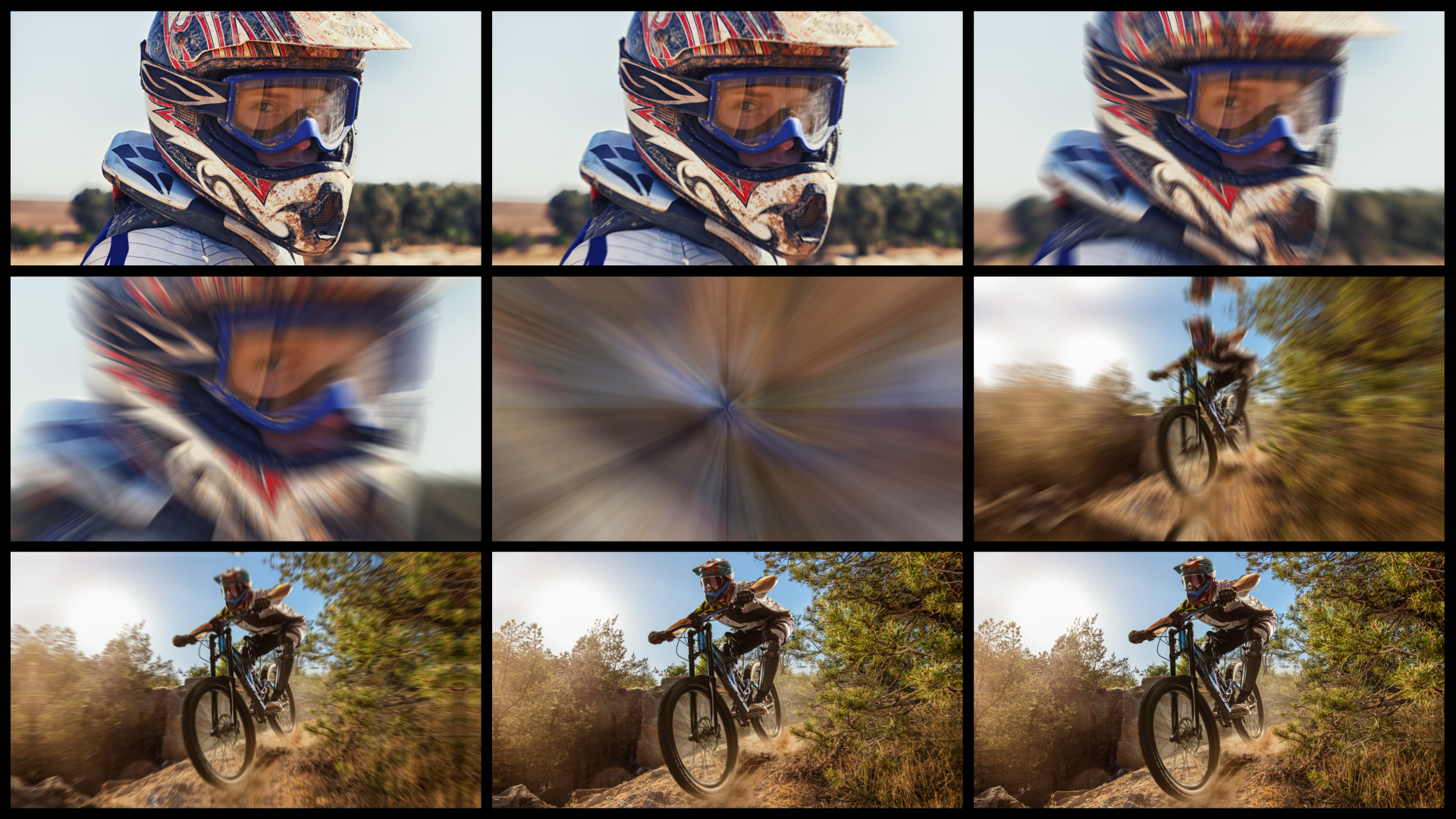
The BCC+ Crash Zoom Dissolve filter, part of the BCC Transitions category, simulates a rapid zoom distortion in the source footage which automatically animates in intensity as your transition progresses to obscure the underlying dissolve between clips.
Working with the Filter
FX Editor and Presets
- Use the FX Editor to load or save presets for reuse.
- To load a preset: Open the FX Editor, select a preset from the Presets panel, and click Apply to return to the host application.
- To save a custom preset: While in the FX Editor, click the Create Custom Preset icon in the parameter list, enter a preset name, and click Done. Additionally, a custom preset can be saved from the main menu bar by selecting File->Save Preset.
- To import custom presets from another drive: While in the FX Editor, select File->Import Preset from the main menu bar.
- Animation: Menu controlling what drives the animation of the transition.
- Auto: Automatically generates a transition based on the transition length (when used as a transition) or the clip length (when used as a filter.)
- Percent Done: Requires the user to set keyframes to control the transition progression.
- Layer to Reveal: This layer selection popup is not relevant when you have applied the filter as a true NLE-style transition and it will be hidden or disabled in that context. When applied as a normal “effect” as opposed to a transition, however, this menu is used to select the Incoming or Reveal layer for the transition.
- Percent Done: Disabled/Hidden by default. When the Animation menu is changed to Percent Done then this slider can be manually keyframed to control the transition progression.
- Center: Determines the position of the zoom along the x and y axis.
- Zoom Delta: Used to control the overall change in depth between the start and end points.
- Angle Delta: Used to control the overall change in clockwise angle for the image spin.
- Reverse Zoom Direction: Used to invert the motion of the transition animation from clockwise to counterclockwise.
- Prism Weight: Used to control the amount of color displacement as defined by the color chips. Higher vales will result in greater displacement and, subsequently, a stronger prism effect.
- Colors: Used to control the color of the indvidual color waves.
- Short Color: Used to set the color of the short color waves. The default is blue.
- Mid Color: Used to set the color of the medium color waves. The default is green.
- Long Color: Used to set the color of the long color waves. The default is red.
- Lock Center Start/End:Used to enable/disable a static start/end point. When enabled, the transition will not move from one point to another along the X/Y axis.
- Center Start: Used to set the position of the start point of the transition along the X/Y axis. If Center Start/End is enabled, the transition will not progress from this point to the defined end point.
- Center End: Used to set the position of the end point of the transition along the X/Y axis. If Center Start/End is enabled, the transition will not progress from the defined start point to this position.
- Boost Motion Blur: Increases the motion blur to provide a stronger more intense effect.
- Motion Blur Amount: Sets the amount of motion blur during the transition. Higher values will result in smoother motion blur.
- Hue: Control the overall hue of the transition.
- Saturation: Used to control the overall saturation of the transition. Higher values create a more intense color saturation than lower values.
- Brightness: Used to control the overall brightness of the transition. Higher values create a more intense highlights than lower values.
- Contrast: Used to control the overall contrast of the transition. Higher values create a more intense contrast between light and dark pixels than lower values.
- Gamma: Used to control the overall gamma of the transition.
- Temperature: Used to control the overall temperature of the transition. Moving the Temperature slider to the left (negative values) will yield a cooler result, while moving the slider to the right will warm up the shot.
- Cyan/Magenta: Used to control the overall amount of cyan/magenta in the image.. Moving the slider to the left (negative values) will add a cyan tint, while moving the slider to the right will add a magenta tint.
- Red: Used to control the overall value of the red color channel. Higher values increase the overall influence of the red color channel than lower values.
- Green: Used to control the overall value of the green color channel. Higher values increase the overall influence of the blue color channel than lower values.
- Blue: Used to control the overall value of the blue color channel. Higher values increase the overall influence of the red color channel than lower values.
- Ease In: Control how quickly or slowly the effect amount increases at the beginning of the transition.
- Ease Mid: Control the rate of change of the effect amount (how quickly it reaches its peak amount and how long it holds there) during the middle of the transition.
- Ease Out: Control how quickly or slowly the effect amount decreases at the end of the transition.
- Dissolve Duration: Control the timing of the underlying dissolve relative to the timing of the rest of the transition.
- OSC Enable: Only visible in hosts that support heads up display widgets for manipulating these controls directly on screen. Enables/Disables on screen controls.
- View Ease Curve: (Only visible/enabled in hosts that don’t support heads up display widgets for manipulating these controls directly on screen.) Enable this control to display a preview graph of the the animation curves rendered into in the composite window.
- GPU Rendering: allows for the selection of GPU or CPU software rendering.
- Default: Uses the GPU to render the effect.
- 16 bit float
- 32 bit float
- Disabled: disables GPU rendering and allows for CPU software rendering.
Crash Zoom Group
Color Correct Group
The Color Correct group provides a range of color correction tools to adjust the overall look of the transition.
Animation Tuning Group
These parameters control the overall timing of the transition. On hosts which permit on-screen heads up display widgets (such as AE, Premiere, and Avid) you should never need to modify these sliders directly since they can be configured in a more convenient and intuitive manner by manipulating the widgets directly in your comp/preview pane. On hosts without heads up display widgets you can use these sliders directly to fine tune your animation timing, taking advantage of the View Ease Curve option to help visualize the animation rates.