














BCC 3 Way Color Grade
Category: BCC Color and Tone
Effect Name: BCC 3 Way Color Grade
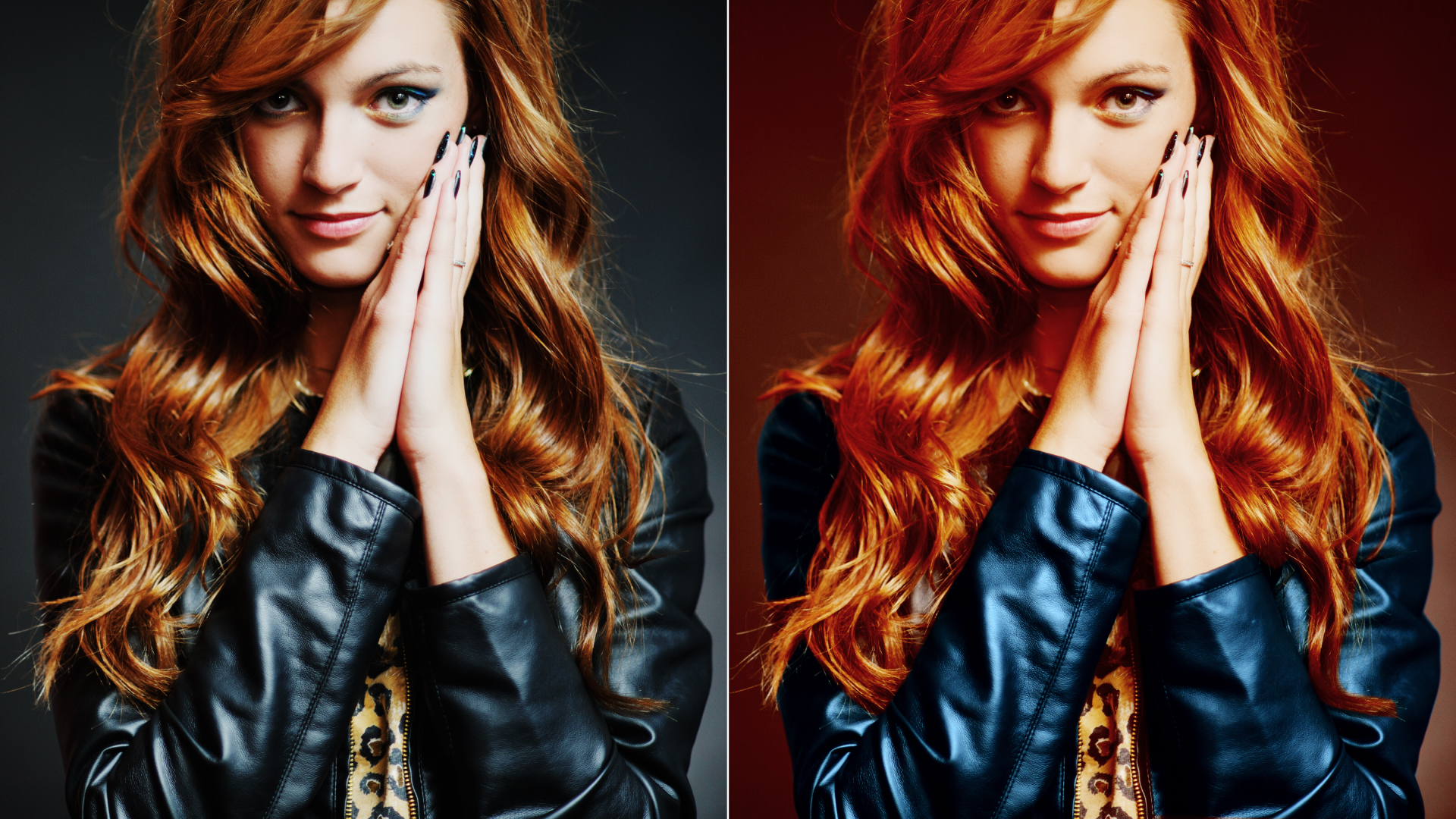
The BCC 3 Way Color Grade filter, part of the BCC Color and Tone category, enables the color correction of an input image using industry standard Lift-Gamma-Gain controls with an intuitive color sphere and slider interface. The filter includes a built-in keying option for isolating secondary colors from the primaries and power window style masking (with 2 point motion tracking), which allow you to isolate or selectively apply the color correction to specific region of the image. Independent color correction adjustments can be applied to points inside and outside of the key-mask selection within a single instance of the filter.
Working with the Filter
Presets and Common Controls
- BCC filters come with a library of factory installed presets plus the ability to create your own custom presets and preview them with the BCC FX Browser™.
- BCC filters also include common controls that configure global effect preferences and other host-specific effect settings.
For more information about working with presets and other common controls, Click Here.
Effect Controls
Compare Mode
The Compare Mode is used to view the filtered result alongside the original source layer. Several split-screen and side-by-side display options are available.
For more information, see Compare Mode.
Motion Tracker
The BCC Motion Tracker allows you to track the motion of an object, then use the motion path to drive other geometric properties of the effect without the need for keyframing.
For more information on the Motion Tracker, Click Here.
- Saturation Mode: Determines the color space in which the filter will perform changes to the saturation of the input clip, instructing the filter to process particular luma values in one of several separate ways when increasing or decreasing the Saturation of the input.
- HSV: Hue, Saturation, Value
- HSL: Hue, Saturation, Lightness
- HSI: Hue, Saturation, Interpreted
- HSP: Hue, Saturation, Perceptual
- HSLuma: Hue, Saturation, Luminance
Note: Setting the Saturation Mode to HSP provides the greatest tonal range when generating black and white images.
- Inside Preset: Used to store and or retrieve color settings that affect the region inside the masked or keyed region of the input. The settings in this group affect the 3 Color Wheel values, as well as the Exposure and Saturation parameter values
Inside Lift/Gamma/Gain Group
Contains animatable Lift/Gamma/Gain interactive color spheres and luma controls.
Note: While each of the three groups to some degree affect the entire image, the Lift controls are best suited for tuning the dark areas of the image, the Gamma controls for the mid‐tones, and the Gain controls for the light areas.
Located in the top left corner of the group is a switch labeled 11/3. This toggle switch enables you to change the origin or position of the color spheres to match that of a vector scope (where red is at approximately 11 o’clock) or that of a graphics application (where red is located at 3 o’clock).
Each color sphere has a control point that is used to adjust hue and saturation. The control point can be moved by interactively dragging it across the color sphere or by moving the cursor over the desired position on the sphere and clicking with the mouse / pen.
Beneath each color sphere is a pair of sliders that are used to adjust Luma values. The upper slider is used to make large adjustments to luma values, while the lower (dashed) slider is used to fine-tune the amount of Luma adjustment.
To enable animation for the controls in this group, click on the stopwatch function beside the group name. Once a keyframe has been added, you can add another by moving the CTI to another location on the timeline and changing any ball or slider setting.
Each of the color control spheres and the luma control sliders has an on/off switch and a reset switch. The on/off switch behaves like a checkbox toggle control – the reset switch resets the color sphere or luma sliders to their default neutral position.
- Lift / Gamma / Gain Color Spheres: Used to adjust the hue and saturation values of the input clip.
- Lift / Gamma / Gain Luma Sliders: Used to adjust the luma values of the input clip.
- On Switches: Used to enable or disable the color (hue and saturation) or luma adjustment individually for Lift, Gamma and Gain.
- R Switches: Used to reset the color sphere or luma sliders individually for Lift, Gamma or Gain to the default neutral position.
- Exposure: Lightens or darkens the image by the number of f-stops set in the slider. You can use this control to globally lighten or darken an image. The internal floating point image processing allows you to do this without introducing banding in the image result.
- Saturation: Boosts the saturation of the image, with positive values increasing the saturation of the image and negative values decreasing the saturation.
Note: Setting the Saturation Mode to HSP provides the greatest tonal range when generating black and white images.
- Render Mode: Determines the rendered output of the filter. The Mask and Key controls can be used to create a matte that separates the image into Inside and Outside pixels. The following options are available in this pop-up:
- Render with Matte: Uses the inside settings to render pixels inside the matte, and the outside settings to render pixels that are outside the matte.
- Render Inside Matte Only: Uses the inside settings to render pixels inside the matte, and leaves pixels outside the matte unchanged.
- Render Outside Matte Only: Uses the outside settings to render pixels outside the matte, and leaves pixels inside the matte unchanged.
- Use Inside Correction: The matte is ignored, and the inside correction is applied to the entire image.
- Use Outside Correction: The matte is ignored, and the outside correction is applied to the entire image.
- View Matte: The Matte is rendered as a black and white image.
- Mask Inside Pixels: The source is rendered with a ruby mask over the pixels that are inside the matte.
- Mask Outside Pixels: The source is rendered with a ruby mask over the pixels that are outside the matte.
- Make Alpha from Matte: Makes an alpha channel from the matte. This is composited with the image’s original alpha channel.
- Make Alpha from Inverse Matte: Makes an alpha channel from the inverted matte. This is composited with the image’s original alpha channel.
- Show Source: Displays the unfiltered and unmasked original input clip.
- Matte Preview Color : Sets the color of the mask overlay
- Mask Shape: Used to select the shape of the mask that is used to contain the inside and outside color correction. On-screen control widgets have been provided for the Rectangle, Rounded Rectangle and Egg Shape masks.
- Off: No mask is used and only the Inside Color Correction parameters will affect the image result.
- Rectangle: Generates a rectangular mask.
- Rounded Rectangle: Generates a rectangular mask.
- Egg Shape: Generates an egg shape mask.
- Host Layer: Uses luma values from the host layer.
- Host Mask: Uses AE native mask shape.
Note: If you select Host Layer or Host Mask, you must then proceed to the Mask Group to select a layer from the timeline or any single closed-‐spline AE mask shape. You will also need to go to the Mask group to modify any of the internally generated mask shape parameters.
Mask Group
Contains parameters pertaining to the mask that is used to separate the inside and outside color grade.
- Host Layer: Displays a list all of the available layers in the host timeline.
- Host Channel: Selects the host layer channel.
- Luma: Uses the selected host layer Luma channel.
- Alpha: Uses the selected host layer Alpha channel.
- Luma Inv: Uses the selected host layer Inverted Luma channel.
- Alpha Inv: Uses the selected host layer Inverted Alpha channel.
- Host Mask: Displays a list of available host generated closed spline mask shapes.
- Host Mask Offset: Used to offset the position of the selected host mask shape.
- Point 1: Sets the position of the top of the mask shape.
- Point 2: Sets the position of the bottom of the mask shape.
- Width: Determines the width of the mask shape.
- Scale: Sets the scale of the mask shape.
- Egg Shape: Controls the mask egg shape. Negative values produce a downward pointing egg shape, positive values produce an upward pointing egg shape.
- Feather: Sets the softness of the mask edge.
- Feather Bias: Positions the feather inside or outside of the mask shape bounds.
- Mask Gamma: Sets the falloff of the mask feathering.
- Invert: Inverts the mask.
Key Group
Contains parameters that are used in the generation of key mattes to isolate secondary colors for color adjustment.
- Key Mode: Controls the state of the key matte function.
- Off: Key matte function is disabled.
- On: Enables the key matte function.
- Invert: inverts the generated key matte.
- Mask Key Combine: Sets the options for combining the mask shape and the key matte.
- Multiply: Multiplies the key matte with the mask shape (removes pixels from the mask).
- Screen: Screens the key matte over the mask shape (adds pixels to the mask).
- HSV: Hue, Saturation, Luminance.
- HSL: Hue, Saturation, Value.
- HSI: Hue, Saturation, Interpreted.
- HSP: Hue, Saturation, Perceptual.
Note: Setting the Base Key On pop-up to HSP provides the greatest tonal range of all the available options but it less bright than the HSL default.
- Key Softness: Controls how the softness controls interact with the key.
- Expand Key: Increasing the softness controls expand the key when this is selected.
- Contract Key: Increasing the softness controls contract the key when this is selected
- Soften Key: Increasing the softness controls softens the key when this is selected.
- Key Color: Selects a color from the image that will be matched in the selected color space.
Note: If you choose a pure grey no hue matching will be done.
- Hue Threshold: Sets how close each pixels hue value needs to be to the selected Key Color to be treated as within the key.
- Hue Softness: Softens the key in the hue channel.
- Sat. Threshold: Sets how close each pixels saturation value needs to be to the selected Key Color to be treated as within the key.
- Sat. Softness: Softens the key in the saturation channel.
- Lightness Threshold: Sets how close each pixels lightness value needs to be to the selected Key Color to be treated as within the key.
- Lightness Softness: Softens the key in the lightness channel.
- Blur Key: Sets the amount of blur applied to the key.
Note: Use the Blur Key function with caution – it adds about 50 percent to the render time.
Outside Correction Group
This group contains a second set of color correction controls which are identical to the Inside Lift/Gamma/Gain and Exposure / Saturation functions at the top of the filter. This group of controls only effects regions that are outside of the key and / or mask and is disabled unless a live key or mask is present and seen by the filter. The parameters in this group are explained in the Left/Gamma/Gain group at the top of this document.
Note: Presets can be shared between the inside and the outside color correction groups.
- Mix with Original: Blends the source and filtered images. Use this parameter to animate the effect from the unfiltered to the filtered image without adjusting other settings, or to reduce the effect of the filter by mixing it with the source image.