














BCC+ Textures
Category: BCC Textures
Effect Name: BCC+ Textures
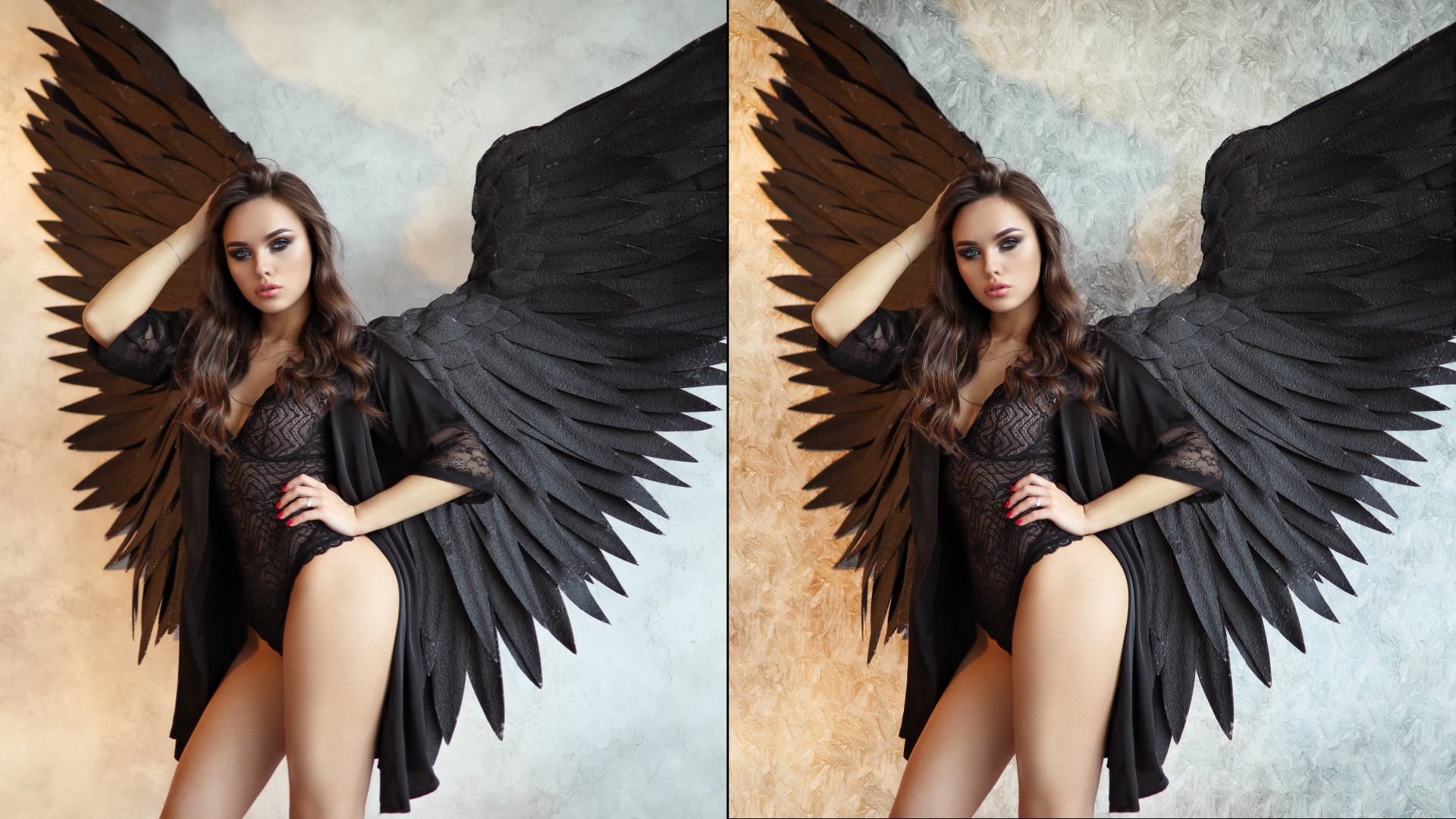
The BCC+ Textures filter, part of the BCC Textures group, composites various textures to an image to create a professionally stylized look.
Working with the Filter
FX Editor and Presets
- Use the FX Editor to load or save presets for reuse.
- To load a preset: Open the FX Editor, select a preset from the Presets panel, and click Apply to return to the host application.
- To save a custom preset: While in the FX Editor, click the Create Custom Preset icon in the parameter list, enter a preset name, and click Done. Additionally, a custom preset can be saved from the main menu bar by selecting File->Save Preset.
- To import custom presets from another drive: While in the FX Editor, select File->Import Preset from the main menu bar.
Effect Controls
Mocha Mask and Track
Continuum effects include integrated masking and matte tools that allow you to restrict the effect to specific regions of the image.
- Mocha masks: used to create custom spline masks. Mocha also includes Matte Assist ML and Matte Refine ML, which use machine learning to generate and track masks.
- Pixel Chooser: used to generate geometric shapes, gradients, or mattes based on channel, luma, or color-based selections. Additionally, an AI depth map generator, and an AI-powered face detection model allow for precise control of masks and mattes.
Note: Mocha can also be used to drive geometric parameters. See the Mocha Motion Tracker documentation for details.
For more information, see Mocha and Pixel Chooser.
Compare Mode
The Compare Mode is used to view the filtered result alongside the original source layer. Several split-screen and side-by-side display options are available.
For more information, see Compare Mode.
- View: Allows you to set the viewer to display various outputs for the effect.
- Output: Shows the default look of the filter on the image.
- Texture: Displays the texture used in the effect.
- Amount: Sets the amount of texture applied to the image.
- Complexity: Generates a more detailed, repetitive texture.
- Randomize: Randomizes the texture.
Transform Group
The Transform Group allows you to modify your image using Position, Scale, Rotation, Corner-Pin, Shear and Crop controls.
Crop
The image can be cropped by adjusting the various Crop parameters.
- Top: Crops the image from the top down.
- Bottom: Crops the image from the bottom up.
- Left: Crops the image from left to right.
- Right: Crops the image from right to left.
Corner Pin
The image can be corner pinned by adjusting the Corner Pin sliders as well as dragging the four points on the corners of the screen.
Note: You may need to zoom the image out a bit to see the corner points. In addition, to see and adjust the corner points in After Effects, make sure that the effect title in the Effect Controls window is highlighted. For Final Cut Pro, you must activate the cross hair icon next to the corner position parameters to see and adjust the corner points on the screen.
- Upper-Left: Controls the X and Y position of the Upper Left Point.
- Upper-Right: Controls the X and Y position of the Upper Right Point.
- Lower-Right: Controls the X and Y position of the Lower Right Point.
- Lower-Left: Controls the X and Y position of the Lower Left Point.
- Position X: The horizontal position.
- Position Y: The vertical position.
- Scale X: The horizontal scale.
- Scale Y: The vertical scale.
- Gang Scale: The Scale X and Scale Y slider values can be ganged together. When enabled, the scale parameter will not display individual X and Y parameters.
- Rotate: Rotates the image.
- Shear X: Skews left and right.
- Shear Y: Skews up and down.
- Anchor X: Defines the point on the X axis around which position, rotation, scaling or shearing takes place.
- Anchor Y: Defines the point on the Y axis around which position, rotation, scaling or shearing takes place.
- Filter: Determines the filtering method applied to the image.
- Triangle: The Triangle filter is not the highest quality, but fine for scaled images.
- Quadratic: Quadratic is like triangle, but more blur with fewer artifacts. It offers a good compromise between speed and quality.
- Cubic: Cubic is the default filter in Photoshop. It produces better results with continuous tone images, but is slower than Quadratic. If the image contains fine details, the result may be blurrier than desired.
- Catmull-Rom: This produces good results with continuous tone images which are scaled down, producing sharp results with fine detailed images.
- Gaussian: Gaussian lacks in sharpness, but is good with ringing and aliasing.
- Mitchell: A good balance between sharpness and ringing, Mitchell is a good choice when scaling up.
- Sinc: Keeps small details when scaling down with good aliasing.