














BCC Lens Shape
Category: BCC Blur
Effect Name: BCC Lens Shape
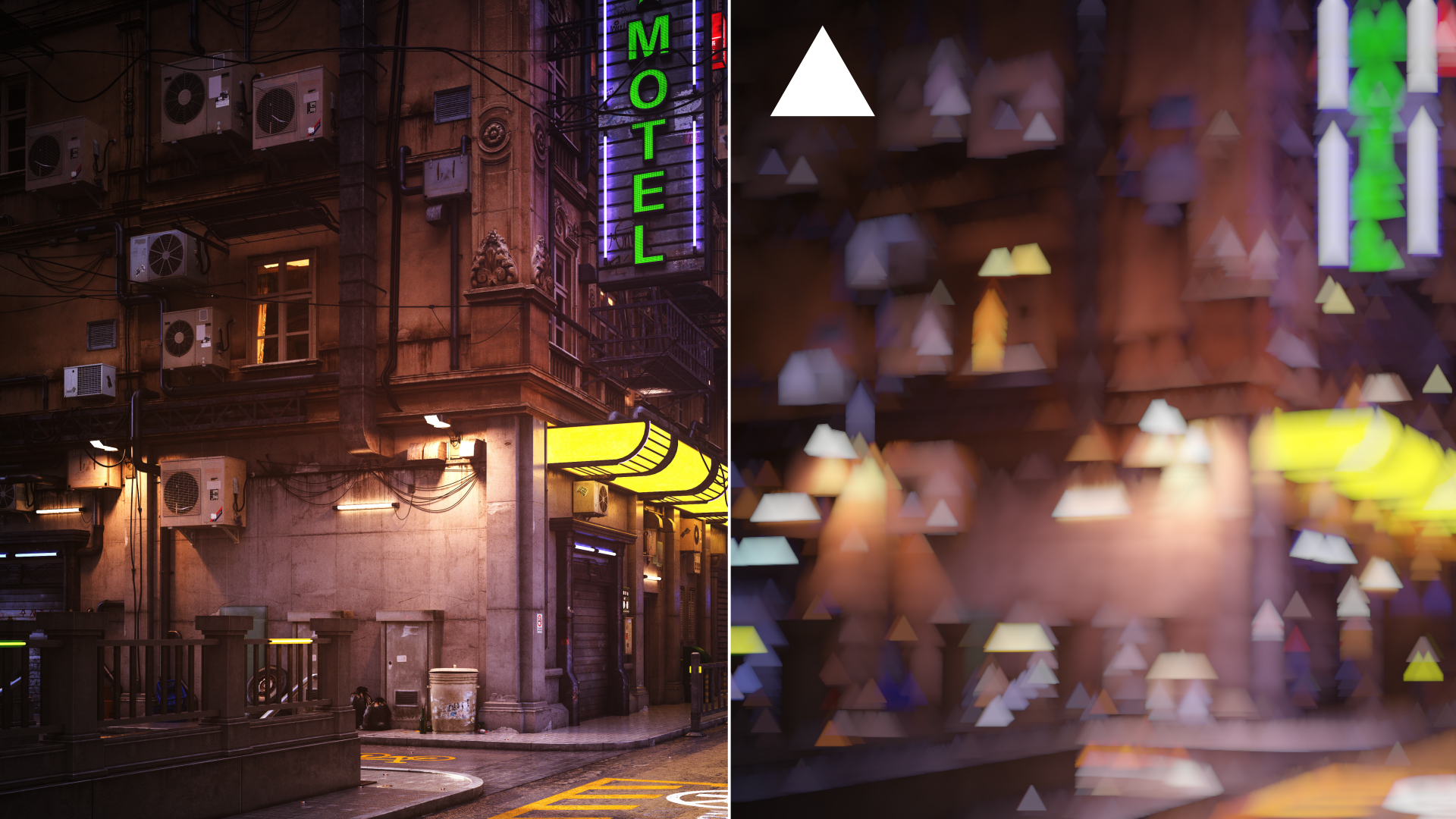
The BCC Lens Shape filter, part of the BCC Blur category, emulates a lens blur defocus/rack-focus effect where out of focus highlights of an image clip take on the shape of the lens diaphragm, however, the Lens Shape filter takes an image input and uses this for the highlight shape. When a lens is used at it’s maximum aperture (fully open / set to the smallest f stop number) the out of focus highlights are typically in the shape of a circle, however, when the lens is stopped down (set to something other than the smallest f stop number) the blades inside the lens shape the out of focus highlights into multi-sided shapes. This filter includes a pop-up that can be used to match the different looks that can be achieve in the physical world based on the lens aperture setting. This pleasing optical result is referred to in photographic terms as Bokeh.
The BCC Lens Shape filter also includes a comprehensive depth of field (Z-Depth) option, whereby a separate image can be used to control the depth and position of the focus field.
Working with the Filter
Presets and Common Controls
- BCC filters come with a library of factory installed presets plus the ability to create your own custom presets and preview them with the BCC FX Browser™.
- BCC filters also include common controls that configure global effect preferences and other host-specific effect settings.
For more information about working with presets and other common controls, Click Here.
Effect Controls
Mocha Mask and Track
Continuum effects include integrated masking and matte tools that allow you to restrict the effect to specific regions of the image.
- Mocha masks: used to create custom spline masks. Mocha also includes Matte Assist ML and Matte Refine ML, which use machine learning to generate and track masks.
- Pixel Chooser: used to generate geometric shapes, gradients, or mattes based on channel, luma, or color-based selections. Additionally, an AI depth map generator, and an AI-powered face detection model allow for precise control of masks and mattes.
Note: Mocha can also be used to drive geometric parameters. See the Mocha Motion Tracker documentation for details.
For more information, see Mocha and Pixel Chooser.
Compare Mode
The Compare Mode is used to view the filtered result alongside the original source layer. Several split-screen and side-by-side display options are available.
For more information, see Compare Mode.
- Quality:
Determines how the edges of the generated highlights are handled.
- Normal
- Sharp
- Sharper
- Iris Scale:Used to set the size of the highlight blur effect.
- Scale X:Scales the highlight along the X axis only.
- Scale Y:Scales the highlight along the Y axis only.
- Gamma:Used to control the image highlight gamma.
- Show Iris Widget:When checked, displays the on-screen interactive iris scale widget.
- Iris Shape:Used to select a layer from the timeline, which is used as a basis for the iris shape.
- View Iris:When checked, displays the iris shape on a black background.
Iris Shape Group
Contains parameters to control the shape and look of the generated highlights.
- Channel:
Used to select the channel from the Iris Shape input that is used to define the iris shape.
- Luma: Uses only the Luma values of the Iris Shape input.
- Alpha: Uses only the Alpha channel values.
- RGB Independent: Uses the combined RGB channel values of the Iris Shape input, ignoring the alpha channel values.
- Red: Uses only the Red channel values.
- Green: Uses only the Green channel values.
- Blue: Uses only the Blue channel values.
- Iris Auto Center:When enabled, centers the generated highlight shapes over the original highlights that they were generated from.
- Iris Offset X:Used to offset the generated highlight shapes along the X axis.
- Iris Offset Y:Used to offset the generated highlight shapes along the Y axis.
- Iris Threshold:Used to set the breakpoint, or threshold that determines what is considered a highlight by the filter.
Z Map Group
Contains parameters to enable and control Z-Depth compositing within the filter.
- Mode:
Used to set the mode of the Z-Map function
- Off: Default, the Z-Map function is disabled
- On: The Z-Map function is enabled
- View Focus Map: Displays the current state of the depth of field image
- View Z Map: Displays the Z-Map input image
- Mask Defocused Pixels: Displays a ruby red mask which is overlaid on the main image showing the pixels that are out of focus
- Z LayerUsed to select the layer that is used as the depth map image
- Channel
Used to select a channel from layer that is used as the depth map image
- Luminance
- Alpha
- Red
- Green
- Blue
- Lightness
- PixelChooser
- Smoothness:Higher values produce a smoother blur result
- Focal Point:Used to set the point along the Z axis which is in focus.
- Depth of Field:Controls the depth of the focus field, or the amount of pixels that remain in focus
- Z Gamma:Used to adjust the gamma levels of the Z Map input image
- Near Scale:Use to increase the size of the blur applied to the pixels that are closest to the camera
- Far Scale:Use to increase the size of the blur applied to the pixels that are farthest from the camera
Highlights Group
Contains parameters to control the highlights that are generated by the filter.
- Boost/Sup Mode:
Used to determine the way the highlights are composited into the image.
- RGB Max: Boosts the RGB values of the highlights.
- RGB Glow: Boosts the RGB and Saturation values of the highlights.
- Luma Boost to White: Boosts the Luminosity values and desaturates the highlights.
- Luma: Boosts the Luminosity values of the highlights.
- Highlight Boost:Used to set the intensity of the highlight boosting – higher values result in brighter highlights.
- Highlight Threshold:Used to set the cut off point for highlight boosting.
- Suppress Threshold:Used to set the intensity of the shadow boosting – higher values result in darker shadows.
- Boost Soften:A slope control that softens the highlight and shadow boosting effect.
Post Group
Contains parameters for post processing the image.
- Apply Mode:Contains 27 image apply modes for compositing the filtered result with the original image.
- Apply Mix:Used to create a blend between the current apply mode and the Normal apply mode.
- Mix with Original: Blends the source and filtered images. Use this parameter to animate the effect from the unfiltered to the filtered image without adjusting other settings, or to reduce the effect of the filter by mixing it with the source image.