














BCC Bulge
Category: BCC Warp
Effect Name: BCC Bulge
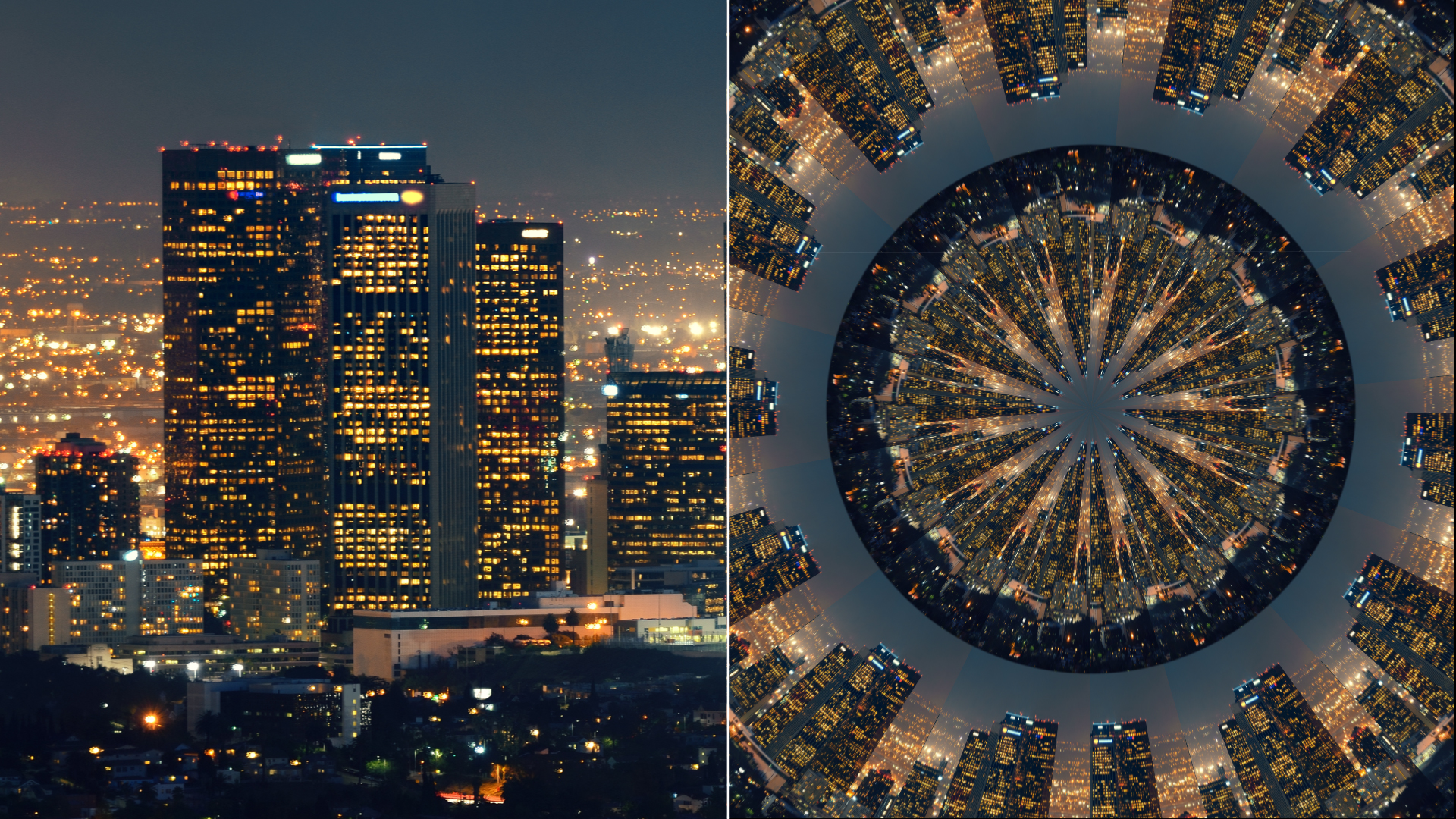
The BCC Bulge filter, part of the BCC Warp category, makes the source image appear as if it is stretched over a surface with a bulge or a depression.
Working with the Filter
Presets and Common Controls
- BCC filters come with a library of factory installed presets plus the ability to create your own custom presets and preview them with the BCC FX Browser™.
- BCC filters also include common controls that configure global effect preferences and other host-specific effect settings.
For more information about working with presets and other common controls, Click Here.
Effect Controls
Mocha Mask and Track
Continuum effects include integrated masking and matte tools that allow you to restrict the effect to specific regions of the image.
- Mocha masks: used to create custom spline masks. Mocha also includes Matte Assist ML and Matte Refine ML, which use machine learning to generate and track masks.
- Pixel Chooser: used to generate geometric shapes, gradients, or mattes based on channel, luma, or color-based selections. Additionally, an AI depth map generator, and an AI-powered face detection model allow for precise control of masks and mattes.
Note: Mocha can also be used to drive geometric parameters. See the Mocha Motion Tracker documentation for details.
For more information, see Mocha and Pixel Chooser.
Beat Reactor
The Beat Reactor is an audio-driven animation system that links effect parameters to an audio track. This allows visual effects to react dynamically to sound without manual key-framing.
For more information, see Beat Reactor Documentation.
- Correct Non-Square Pixels: If the filter is applied to media with non-square pixels, the filter converts the pixels to square pixels (maintaining the height), applies the bulge, and then converts the pixels back to their original format. This helps prevent distortion.
- Process Alpha Channel Only: Distorts the alpha channel without changing the underlying colors.
- Center Point: Sets the X and Y coordinates of the center of the bulge or depression.
- Height: Sets the height of the bulge above the surface. Negative Height values create a depression in the surface of the image.
- Perspective: Determines the distance from the viewer to the top of the bulge. Positive Perspective values move the viewer farther away from the surface, making the bulge appear less pronounced. Negative Perspective values place the viewer under the surface of the bulge, which can produce some unusual effects.
- Radius: Sets the radius of the bulge. This value is expressed as the distance, in pixels, between the center point and the edge of the bulge.
- Taper: Determines the shape of the bulge. An untapered bulge maps the source track onto a surface with a roughly spherical bump. Increasing Taper makes the surface more like a tapered candle, proportionally much higher in the middle than at the edges.
- Stretch: Stretches or squeezes the bulge in the direction of the Stretch Angle. Positive Stretch values pull the bulge apart, whereas negative values squeeze it together.
- Stretch Angle: Sets the direction in which the bulge is stretched or squeezed.
Distortion Pinning Group
The BCC Distortion Pinning controls are used to fine tune edge treatment in situations where a distortion effect might cause regions from outside the image edges to be remapped inside the boundary.
For more information on the BCC Distortion Pinning controls, Click Here.