














BCC Edge Lighting
Category: BCC Lights
Effect Name: BCC Edge Lighting
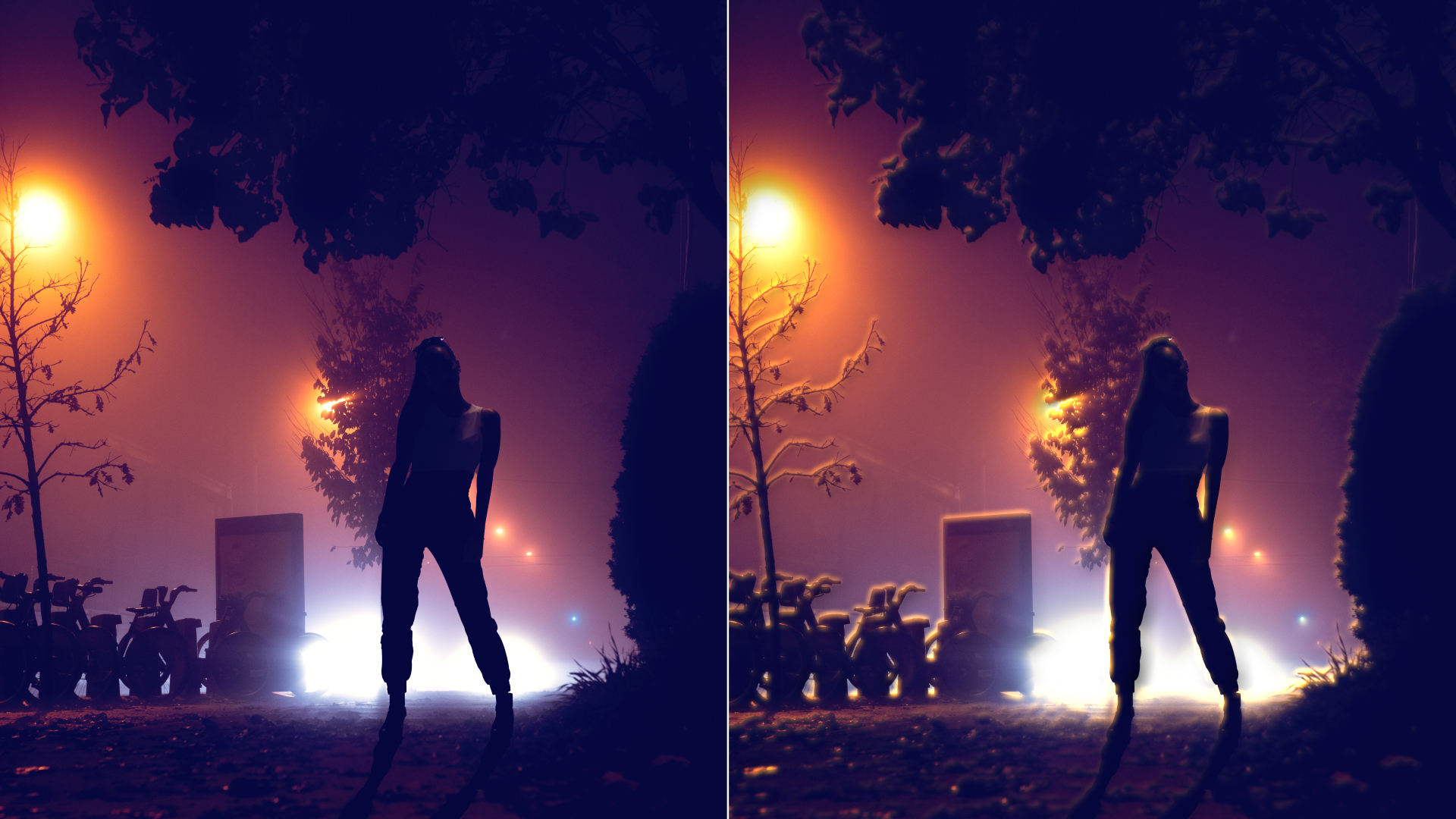
The BCC Edge Lighting filter, part of the BCC Lights category, finds edges based on pixel-to-pixel differences in any chosen channel in the source image or in the Edge Source Track and applies light to these edges. Highlights and Shadows are independently computed and can be blurred and applied separately to the source.
Warning: It is important to view at least some of your preview at full size. The effects of an edge filter can vary with the image scale, particularly if you apply Edge Lighting to a detailed photographic source image.
Working with the Filter
Presets and Common Controls
- BCC filters come with a library of factory installed presets plus the ability to create your own custom presets and preview them with the BCC FX Browser™.
- BCC filters also include common controls that configure global effect preferences and other host-specific effect settings.
For more information about working with presets and other common controls, Click Here.
Effect Controls
Mocha Mask and Track
Continuum effects include integrated masking and matte tools that allow you to restrict the effect to specific regions of the image.
- Mocha masks: used to create custom spline masks. Mocha also includes Matte Assist ML and Matte Refine ML, which use machine learning to generate and track masks.
- Pixel Chooser: used to generate geometric shapes, gradients, or mattes based on channel, luma, or color-based selections. Additionally, an AI depth map generator, and an AI-powered face detection model allow for precise control of masks and mattes.
Note: Mocha can also be used to drive geometric parameters. See the Mocha Motion Tracker documentation for details.
For more information, see Mocha and Pixel Chooser.
Beat Reactor
The Beat Reactor is an audio-driven animation system that links effect parameters to an audio track. This allows visual effects to react dynamically to sound without manual key-framing.
For more information, see Beat Reactor Documentation.
- Edge Layer: Selects the clip or layer used to generate edges.
- Edges From: Determines which source channel is used to compute edges. Edges can be created from the Alpha, Luma, Red, Green or Blue channels.
- Light Direction: Sets the direction that the light comes from.
- Light Elevation: Sets the elevation of the light source above the image plane. Increasing Light Elevation makes the edge lighting less directional.
Highlights Group
The Highlights parameters control the appearance of the highlights on the edges.
- Highlight Intensity: Sets the intensity of the highlights.
- Highlight Color: Sets the color of the highlights.
- Highlight Post Blur: Blurs the highlights after they are applied to the source.
- Apply Mode: Determines how the filtered image is composited with the source image. For more information on Apply Modes, click here.
- Highlight Apply Mix: Sets the mix of the specified Highlight Apply Mode with the Normal apply mode.
- Background Follow: When adjusted the ambient light and the shadows to fall off in regions of the image that are lit by highlights.
Note: You can add highlights to 2D text to create a subtle 3D appearance. To create an effect similar to the following example, increase the Intensity of the highlights and shadows, then soften the edge lighting by slightly increasing Post Blur.
Shadows Group
The Shadows parameters control the appearance of the shadows on the edges.
- Shadow Intensity: Sets the intensity of the shadows.
- Shadow Color: Sets the color of the shadows.
- Shadow Post Blur: Blurs the shadows after they are applied to the source.
- Apply Mode: Determines how the filtered image is composited with the source image. For more information on Apply Modes, click here.
- Shadow Apply Mix: Sets the mix of the specified Shadow Apply Mode with the Normal apply mode.
Common Group
The Common parameters offer a variety of options for adjusting the filter, allowing you to finetune the appearance of the effect.
- Pre Blur: Blurs the source image before the edges are computed.
- Threshold: Determines how sensitive the filter is to differences between pixels when finding edges in the source image.
- Edge Floor: The filter eliminates edges whose intensity is lower than the Edge Floor value.
- Ambient Light: Determines the total amount of diffuse light on the image.
- Post Blur Quality: Sets the quality of the Post Blur.
- Pyramid: The fastest option and generally adequate. Produces a blur similar in quality to the Pyramid Blur filter.
- Pyramid Smoother: Produces a higher quality pyramid blur and slightly increases rendering times.
- Gaussian Low: Produces a Gaussian blur with lower quality and faster rendering.
- Gaussian Medium: Produces a Gaussian blur with moderate quality and rendering time.
- Gaussian High: Produces a higher quality Gaussian blur with increased rendering time.
- Gaussian Higher: Produces an even higher quality Gaussian blur with further increased rendering time.
- Gaussian Highest: Produces the highest quality Gaussian blur with the longest rendering time.
- Alpha From: Determines how the filter creates the output alpha channel.
- Source: Uses the input alpha channel.
- Highlight Edges: Uses only the highlight edge information.
- Source and Highlight: Uses a combination of both the Source and Highlight information.
- Highlight and Shadow: Uses a combination of the Highlight and Shadow edge information.
- Full: Creates a fully opaque alpha channel, which is helpful when using Pixel Chooser.
- View: Displays different aspects of the filter.
- Output: Displays the filter’s output.
- Highlights: Displays the highlight edges in black and white.
- Shadows: Displays the shadow edges in black and white.
- Both: Displays both the highlights and shadows together for preview.
- Reduce Flicker: Reduces flicker in the rendered image.
- 1-2-1: Mixes each pixel with the pixels above and below it, with the input pixel getting twice the weight of the ones above and below. For After Effects users, this works the same as applying the AE Reduce Flicker filter at a setting of 0.5.
- 2-3-2: Provides more softening than 1-2-1.
- 1-1-1: Provides the most softening for effects that still contain flicker with the above options.
- Off: No deflickering is applied.
- Mix with Original: Blends the source and filtered images. Use this parameter to animate the effect from the unfiltered to the filtered image without adjusting other settings, or to reduce the effect of the filter by mixing it with the source image.