














BCC+ ST Map
Category: BCC Warp
Effect Name: BCC+ ST Map
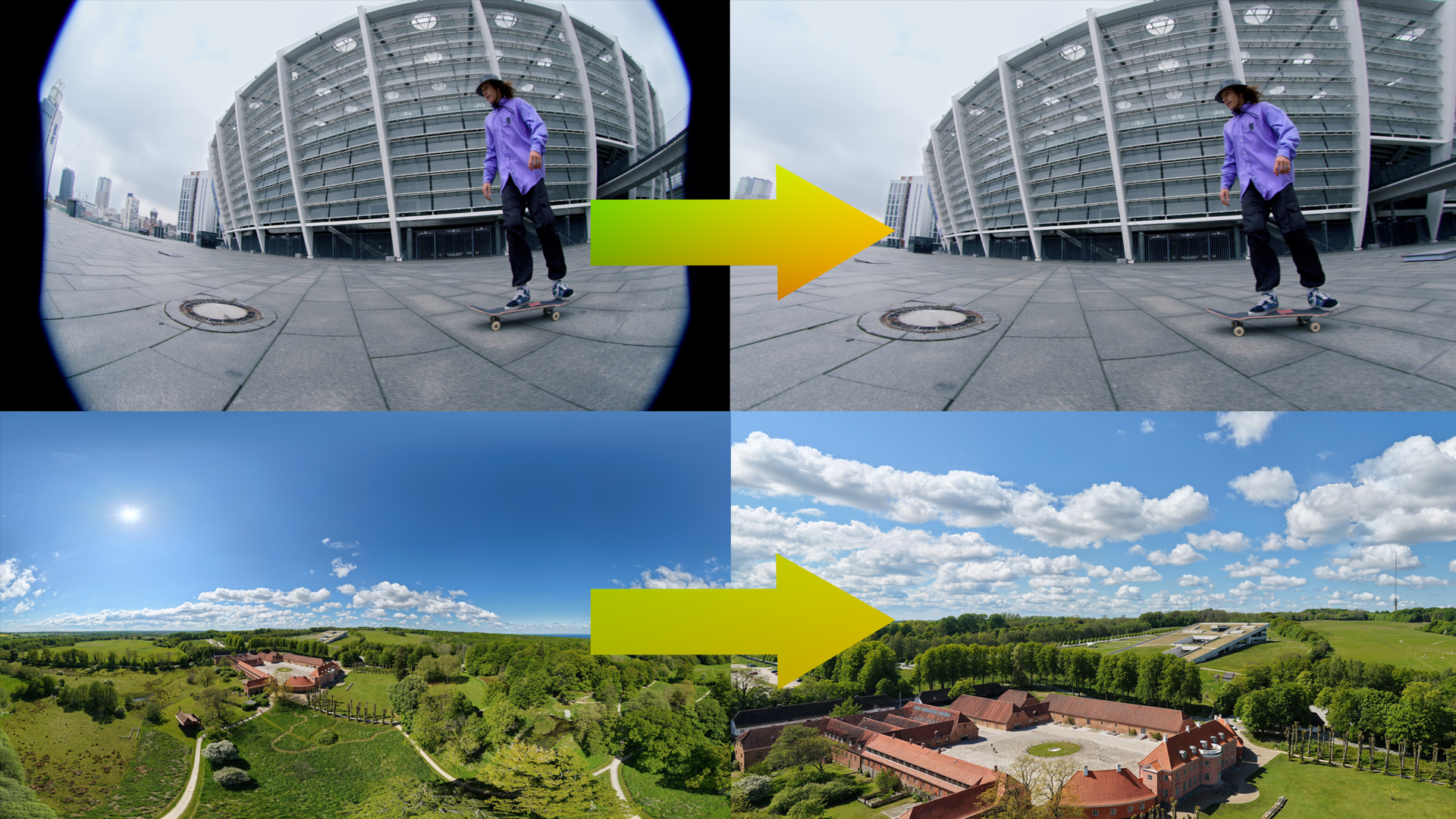
The BCC+ ST Map filter, part of the BCC Warp category, instantly transforms video source shots using the colors from the input of an ST/UV map image.
The BCC+ ST Map filter is a hardware accelerated filter that warp transforms source footage based on an ST map input. The ST Map filter can either process ST Map images directly from the host timeline or can import ST Map images from a disc or LAN, which negates the need to disable color management tools in the host to avoid altering the ST Map color, which would in turn alter the resulting warp transform of the target layer. The red and green channels of the ST map define the horizontal and vertical sampling locations respectively for the transform.
The filter includes a unique Watch Folder option for easy relinking of external media when paths have changed and an optional on-screen meta-data display of the ST Map details.
Working with the Filter
FX Editor and Presets
- Use the FX Editor to load or save presets for reuse.
- To load a preset: Open the FX Editor, select a preset from the Presets panel, and click Apply to return to the host application.
- To save a custom preset: While in the FX Editor, click the Create Custom Preset icon in the parameter list, enter a preset name, and click Done. Additionally, a custom preset can be saved from the main menu bar by selecting File->Save Preset.
- To import custom presets from another drive: While in the FX Editor, select File->Import Preset from the main menu bar.
Quickstart Guide for Using the Filter:
Workflow A: Import an ST map image in exr or tiff format from an external disc or NAS directly into the filter
If the ST map dimensions match the target layer dimensions, you can apply the ST Map filter directly to the target source layer in your host timeline. If the ST map is a different size then the target layer to be warped, you should instead apply the filter to a solid / filler layer the size of the external ST map and bring in the target layer as a secondary layer input.
Click on the Select Image button and use the file system navigation controls to select an ST map image that you wish to use for warping the filtered source.
Note: This workflow works only for static ST maps since it imports a single map image. If the ST map needs to be animated, use Workflow B instead.
Workflow B: Use an ST map layer from the host timeline
- In the host, import the ST map image that you wish to use for image warping and place this on top of the clip that you wish to warp.
- Apply the ST Map filter directly to the imported ST map layer.
- Turn off Use External ST Map
- Click on the Target Layer and select the clip you wish to warp.
Important Note: When using Workflow B, where the ST map is being used from the host timeline, it is essential that color management is dissabled for the imported ST map to avoid altering the colors in the ST map, which would in turn have a negative effect on the warped result.
- View: Displays the view output from the filter.
- Output: Displays the warped result.
- ST Map: Displays the ST map image used for warping.
- Target Layer: Selects the source layer for warping unless you have applied the filter directly to the target layer. Displays a list of layers from the host timeline.
- Use External ST Map: When enabled, an ST Map can be imported directly from disc (Workflow A) as opposed to an ST map directly in the host timeline (Workflow B)
- Select ST Map: Imports an ST Map from disc.
- Watch Folder: Sets a watch folder location for the ST Map image. Used for easier relinking of external files if paths have changes such as when projects are moved to another system
- Display Map Info: Displays on-screen information about the ST Map in use.
- Filter: Selects anti-aliasing method for the warp.
- Bilinear: Faster.
- Bicubic: Better.
- Edge Mode: Used to fill the edge of the frame when the transform indicates sampling outside the original image boundaries.
- Transparent: Allows the edge of the result to become transparent.
- Repeat: Repeats edge pixels.
- Reflect: Reflects sampling region back into the layer.
- Wrap: Wraps sampling region around to the other side of the layer.
Pre Crop Target Group
This group includes a set of parameters to crop the target layer before the warp transform is applied.
- Top: Crops from the top.
- Bottom: Crops from the bottom.
- Left: Crops from the left.
- Right: Crops from the right.
Post Transform Group
This group contains a set of parameters that are applied at the end of all other filter processing
- Enable: Toggles the Post Transform group controls.
- Position: Sets the position along the X/Y axis.
- Scale: Global scale control.
- Scale X: Scales along the horizontal axis only.
- Scale Y: Scales along the vertical axis only.
- Filter Softness: Sets the filter softness intensity.
- GPU Rendering:Specifies how the effect is rendered.
- Default: Uses product-wide default of 16 bit half-float GPU rendering.
- 16 Bit Float: Manually force 16 bit half-float GPU rendering.
- 32 Bit Float: Manually force 32 bit full-float GPU rendering.
- Disabled: Forces CPU rendering.