













 Marco Sebastiano Alessi |
August 20, 2026
Marco Sebastiano Alessi |
August 20, 2026


Let's dive into the world of loudness! Mind you, we’re not talking about the playback volume, which refers to the volume at which you listen to a song through your headphones or speakers in your playback device. We’re here to discuss LUFS, the loudness war, loudness normalization, and today’s loudness standards for music mixing and mastering for music streaming platforms.
If you want to create music that'll sound great on all digital streaming platforms, keep reading this complete guide to learn what LUFS is and whether it’s as important as people claim.
Let’s dive in!
What Are LUFS?
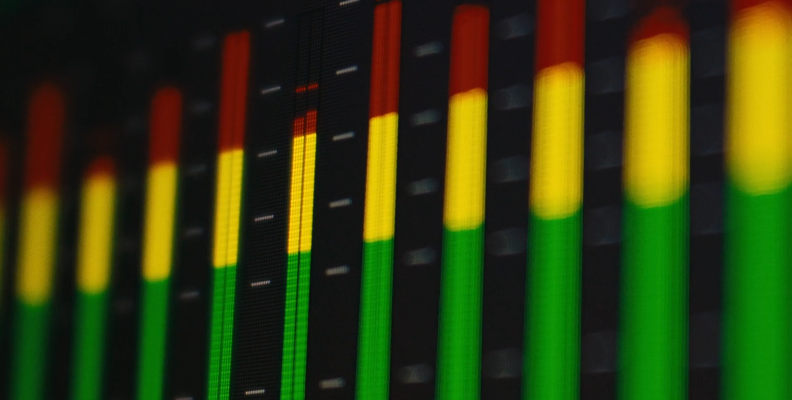
LUFS (Loudness Units relative to Full Scale) is a standardized system to measure perceived loudness, which considers how people hear sound, rather than the audio's electrical amplitude. It's a critical measurement for mixing and mastering, as it makes it possible to achieve consistent volume levels across different streaming platforms (like the standard -14 LUFS for Spotify and Apple Music).
Back in the days before LUFS were a thing, there were two methods for measuring an audio signal: by its peak amplitude and by its RMS (Root Mean Square). The peak amplitude is the highest level in the audio signal, the moment where the waveform reaches the maximum level, the loudest peak. RMS measures the average level of the audio signal over its entire duration. It provides an accurate representation of the audio signal's average power.
These measurements are expressed in dBFS, which stands for decibels relative to full scale. Here’s where there tends to be some confusion between RMS and LUFS, but they are very different. As mentioned, RMS measures the average power of your song over time, while LUFS measures perceived loudness based on how human ears hear sounds, which affects the listening experience.
However, our brain and ears perceive sounds in their own way. First, we tend to ignore high peaks and short variations and instead consider the entire track when assessing loudness. That’s why if we listen to a song that has very loud peaks, and another song with a consistent RMS, we may perceive the second one as louder than the first one.
We are also less sensitive to bass frequencies, perceiving them as quieter, and more sensitive to higher frequencies. So we perceive high-frequency sounds, such as a violin, louder than low-frequency sounds, such as a bass guitar, even when they are at similar dB levels.
In that regard, LUFS are more accurate in measuring loudness perception and the overall human listening experience of a song. LUFS also offers other measurement types, which we’ll discuss in a moment.
Let’s now take a look at the birth of LUFS and loudness normalization. It all started with the famous loudness wars.
A Brief History of the Loudness Wars
The loudness war was a period in which audio engineers competed to release the loudest records. It started with the belief that customers prefer a louder recording, and was intensified with the arrival of the CD in the 1980s, due to digital signal processing technology, which allows audio engineers to use brickwall limiters and extreme compression to push average sound levels over 0dBFS, the maximum level a signal can reach without distortion.
The loudness war peaked between the mid-1990s and the late 2000s, when each label and audio engineer developed their own workflow to make their records louder than the competition's. Their idea was that a louder sound grabs the listener’s attention, and everyone wanted to grab everyone's attention. Another common idea was that louder equals more sales.
The problem with this was that the dynamic range was reduced to make the albums sound evenly loud. The result was albums with reduced dynamics and sound quality, and increased audible distortion and listening fatigue due to excessive mastering compression. Some of the most notable victims of the loudness war include Oasis’s (What's the Story) Morning Glory? (1995), Red Hot Chili Peppers’ Californication (1999), and Metallica’s Death Magnetic (2008).
Customers and industry experts started to notice this and call it out, but the loudness wars persisted past the point of no return.
The Birth of LUFS and Loudness Normalization
During the loudness wars, the audio level difference between songs on the radio and between TV commercials and the programs transmitted was significant. Customers and industry experts started to notice and raise awareness of the issue.
To avoid these inconsistencies, the European Broadcasting Union issued EBU R 128 in 2010, a recommendation for loudness normalization and maximum audio signal levels, using two new loudness measures: LU (Loudness Units, equal to 1dB) and LUFS (Loudness Units referenced to Full Scale). The standard loudness measurement units are still used today in broadcast television, video, and music streaming services.
Before EBU R 128, normalization was based on peak levels, but, as we saw earlier, the same peak level and RMS did not produce the same loudness. We could have two audio signals with the same RMS and peak levels and be perceived as having different loudness.
With the introduction of LUFS, it was able to create a more even sound across different audio materials. In theory, two audio signals with the same LUFS should be perceived as equally loud.
Soon, it was required that all broadcast audio transmissions use the standard -23 LUFS. Later, with the advent of digital music streaming services, these platforms adopted loudness normalization to maintain a consistent loudness on their platform. It was especially needed to avoid loudness variations when listening to songs by different artists in sequence, for example, in Spotify playlists.
Today, most streaming services use the standard -14 LUFS, with a -1dB true peak to avoid clipping distortion. Even if your master is louder, many streaming platforms will normalize all tracks to -14 LUFS.
Many audio engineers, music producers, and artists believe that dynamic music sounds better than louder, over-compressed masters. A track with good dynamics can sound louder when compared to a louder track that has been normalized down to -14 LUFS, even if they're perceived with the same loudness.
However, some people think the loudness wars are not over. That has only taken a step back due to consumer pushback, but the idea of producing louder masters because it sounds better persists.
Types of LUFS Measurements
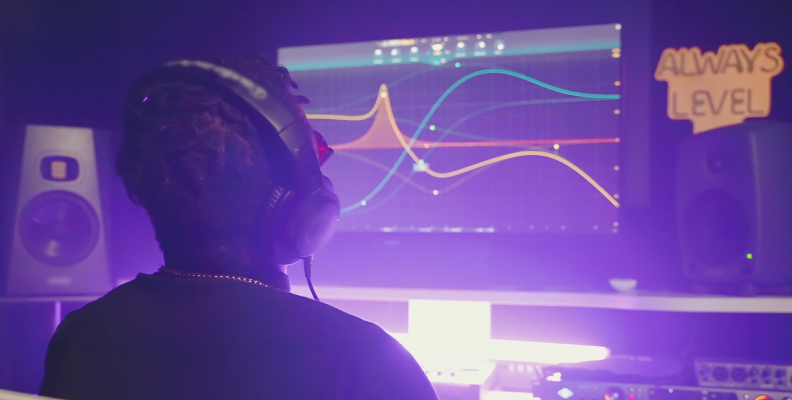
It’s time to get into the technical stuff. LUFS, also referred to as LKFS (Loudness, K-weighted, relative to Full Scale), is calculated by applying a K-weighting filter to the audio signal. This filter mimics the human ear's sensitivity by boosting high frequencies (above 2 kHz) and cutting low frequencies (below 80 Hz), simulating our lower sensitivity to bass and higher sensitivity to treble.
Once a LUFS measurement tool analyzes the incoming audio signal, it provides five metrics: momentary, short-term, and integrated loudness, LRA (loudness range), and true peak.
Let’s discuss each one of these, so you’ll understand what you’re looking at in your DAW.
Momentary Loudness
The momentary loudness analyzes and measures the last 400ms of filtered audio played. Because it’s measuring the filtered audio, it is more sensitive to the higher frequencies and less sensitive to the bass. The fast reaction time and higher sensitivity to treble allow it to highlight sudden loud moments in the audio signal, making it helpful for monitoring peaks that may need compression.
Momentary LUFS is not used for overall track loudness analysis, but it serves as the foundation for both integrated and short-term measurements. It is, however, helpful for identifying whether your mix is inconsistent by identifying transient peaks that may cause problems down the pipeline.
Short-Term Loudness
The short-term loudness measures the average sound level over the last 3 seconds of the analyzed audio. It sits between the momentary and integrated loudness analyses and provides a clearer view of the audio track's loudness during specific sections, for example, to compare the chorus and verses to maintain balanced audio levels.
It’s useful during the mixing and mastering stages to monitor loudness consistency and prevent ear fatigue during intense parts of the audio. However, it should not be considered as a target value.
Integrated Loudness
The integrated loudness is the value you want to pay more attention to. Not to say it is the most important, but it is the one that analyzes, measures, and determines the average loudness of the entire audio or video material from start to finish, ignoring silent gaps.
You’ll notice these values are negative because they’re relative to full scale. The closer to 0 (less negative value), the higher the average loudness. This is the value that streaming platforms use for audio normalization, typically between -14 and -16 LUFS.
Knowing the integrated loudness of the entire project can help you listen to your track the way it would sound on streaming platforms. It works as a guide to adjust your mix and deliver a better listening experience to multiple streaming services.
LRA (Loudness Range)
The LRA is the measurement of the loudness variation over time in an audio signal expressed in loudness units (LU). It is similar to dynamic range, but it focuses only on the principal and most frequent loudness readings, excluding the silences and high peaks. A high LRA value (above 10 LU) indicates high dynamics, and low values (below 3 LU) indicate consistent and compressed audio.
LRA, together with Integrated LUFS, can help you determine whether your audio track will sound loud and compressed, or just loud enough with good dynamics, and prevent it from being flat or too dramatic for the streaming platform.
True Peak (TP)
The true peak measures the maximum level of an audio signal waveform, including intersample peaks (peaks between digital samples). It uses oversampling to simulate the analog waveform and calculate its true maximum voltage, as intersample peaks can often exceed 0 dBFS, causing distortion. Thus, the true peak can help you prevent digital-to-analog conversion distortion.
For music streaming platforms, aim for a limit of -1 or -2 dBTP to prevent distortion on the listeners' playback devices.
Why LUFS Matter in Music Production?
In modern music production, LUFS has become the gold standard for measuring audio levels. Unlike older metering systems, LUFS is designed to mimic how the human ear perceives volume, which is why it’s important in music production. Here’s the main reasoning why LUFS matters in audio and music production.
Perceived Loudness and Peak Level
Traditional metering systems, such as peak or RMS, measure the electrical voltage or the average power of the audio signal, but humans can’t hear all frequencies at the same loudness. Therefore, the signal's power doesn't indicate how a listener will actually perceive the song. Since LUFS measures loudness based on how human ears perceive sound, it provides a better idea of how the final listener will experience your music.
Consistency
Using LUFS measurement tools in your music production workflow helps you monitor your mixes and masters. Two or more audio tracks with the same LUFS should, in theory, sound equally loud. So, if you’re mastering at consistent LUFS levels, you ensure your album maintains consistency across all tracks and compares favorably with others on streaming platforms. This not only helps you create more uniform songs but also produces competitive music.
Streaming Platforms Standard
The majority of music streaming services target a specific integrated LUFS level to ensure a consistent listening experience across their platforms. If your song is louder than their target, it will simply be turned down.
And you may be thinking, “Then, what’s the point of worrying about it if they’ll be dialed down anyway?” Well, the reason to follow the standard and master at the target LUFS is to create your music at the intended loudness levels.
Having said that, don’t treat the -14 LUFS as a rule or master goal. Use it as a reference point while focusing on creating a professional, balanced mix.
No More Loudness Wars
After decades of producers competing to create the loudest records, destroying dynamic range and producing overcompressed, distorted albums, we can now forget this competition and focus on creating good-quality music. Even though some music producers are still making flat, loud songs, it is not as it was in the early days.
Prevents Overcompression
LUFS helps us aim for reasonable loud levels and preserve good dynamics in your music. Creating better records without the distortion that victims of the loudness wars experience. You can rest assured that your audience can have a pleasant listening experience.
How to Use LUFS in Mixing
Mixing with LUFS is not about hitting a target value. There is no “magic recipe” with music as an art form. LUFS are more of a guide to maintaining consistency and competitive loudness in your mix. Use this as a guide to integrate LUFS into your mixing workflow.
Headroom and Gain Staging
In mixing, you don’t need to worry about the -14 LUFS that platforms require for your master. At this stage, you should only monitor your LUFS levels, leave enough headroom (around -23 to -18 LUFS), and keep your peak levels on your master bus between -6 dBFS and -10 dBFS to avoid distortion from the start.
Monitor Short-Term Loudness and LRA
We’ve stated that integrated LUFS is not something to worry about during mixing, but other metrics are helpful at this stage: short-term LUFS and LRA.
- Short-Term Loudness. Use short-term LUFS to analyze and compare the chorus against the verse and see if the parts you want to be louder show that jump in the short-term LUFS values. It also lets you see if there is consistency between the first and second verses or if you need to add automation or compression.
- LRA. Manage loudness range according to the type of music you are making:
- Jazz and classical music with more dynamic range may show higher LRA.
- Common POP and EDM may show lower LRA values, indicating greater consistency throughout the song.
Tip: First, mix with your ears to hear what sounds good to you, then place your LUFS metering tools last on your master bus to measure the actual output.
How to Use LUFS in Mastering
In the mastering stage, you want to achieve a professional song with the standard loudness for music streaming platforms. Here’s how to integrate LUFS into your mastering workflow.
LUFS Metering
Place your LUFS metering plugin or tool on your master output channel, after the last plugin. This ensures that when you play the entire song, it will get accurate integrated LUFS readings. Generally, you want to stay around the -14 LUFS and a True Peak below -1.0.
Use Reference Tracks
Use reference tracks from the same genre as the one you are making, and measure their integrated LUFS. Now, try to aim for that target and listen to how your mix sounds. You may be surprised that a song does not meet the standard normalization target. Again, master what sounds good to you.
True Peak Ceiling
Set your final limiter ceiling to -1.0 dBTP to prevent distortion during conversions. Use the True Peak reading in the LUFS metering tools to ensure it stays below your set ceiling.
Final Words
LUFS and loudness standards exist to maintain consistency across broadcast transmission and streaming platforms. Remember, it’s more important to create good quality music with dynamics according to your genre, so don’t stress too much about the numbers; use them as references, but they should never dictate how to mix and master your music.
Trust your ears first, and have fun!
FAQ
What LUFS Should My Song Be?
There is no rule for what LUFS to use for mastering. Many producers feel the need to export a song at -14 LUFS, but the “right” LUFS often depends more on the genre. Once you achieve the desired sound in your mix, listen to different songs in your genre and run them through a LUFS meter. Use reference tracks to achieve a similar sound and perceived loudness. If you feel that your song sounds better above or below the -14 LUFS, then that’s the right way to master it.
Is -14 LUFS the Best Target?
You can target -14 LUFS as a starting point. However, pay more attention to how your mix sounds. Sometimes you will master louder or quieter, depending on the genre. Also, remember that many streaming platforms will normalize your tracks, so it's better to achieve a good-sounding mix first. As you get more experienced, you’ll focus less on LUFS and more on your craft.
How do I Measure LUFS?
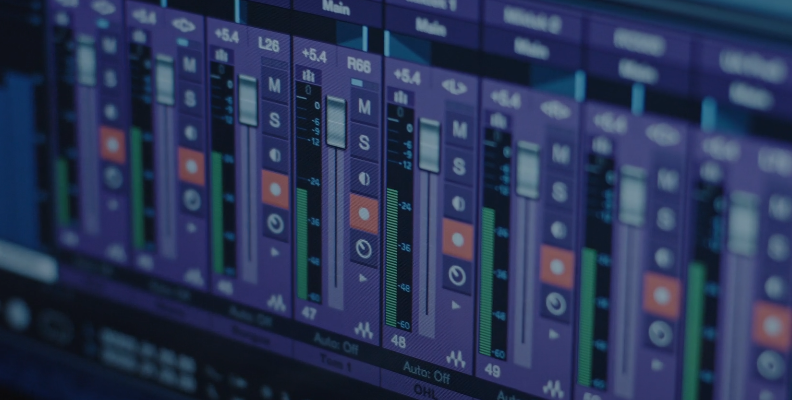
Many DAWS, such as Samplitude, Logic, Cubase, PreSonus, and others, include a loudness meter.

Search your stock plugins on your DAW for “LUFS meter”, “Loudness Meter”, or similar. If your DAW does not have one, you can find third-party plugins that can accurately measure LUFS. YouLean and iZotope Insight 2 are some popular options.