













 Bojan Veselinovikj |
July 17, 2026
Bojan Veselinovikj |
July 17, 2026


If you have ever wondered why your mix sounds cluttered despite every track sounding great in solo, frequency masking is likely the culprit. In this guide, we break down what frequency masking is, how it damages mix clarity, and the exact methods — from subtractive EQ to dynamic EQ and sidechain compression — you can use to fix it and achieve clean, professional mixes every time.
What Is Frequency Masking?

Frequency masking is an auditory phenomenon where a louder, dominant sound obscures a quieter sound in the same frequency range, making it inaudible. It occurs when two sounds compete for the same frequency spectrum simultaneously, resulting in a muddy and cluttered mix where individual elements become difficult to hear.
To understand auditory masking, think of two people talking at the same volume simultaneously. Your ears struggle to separate them, so important details get lost. The same principle applies in your mix. When a bass guitar and a kick drum both occupy a heavy portion of the low end, they fight for the same space in the frequency spectrum, and neither one cuts through clearly. The kick hits lose their punch, the bass loses its note definition, and the entire mix suffers.
Here's frequency masking explained simply: louder sounds in a given frequency range will make quieter sounds in the same frequency range harder — or impossible — to hear. This isn't just a technical problem; it's a psychoacoustic one rooted in how our ears process competing signals. Even experienced producers can miss masking issues because each track sounds fine in solo. The problem only reveals itself when instruments playing together collide in the same range.
How Masking Reduces Clarity in Your Mix
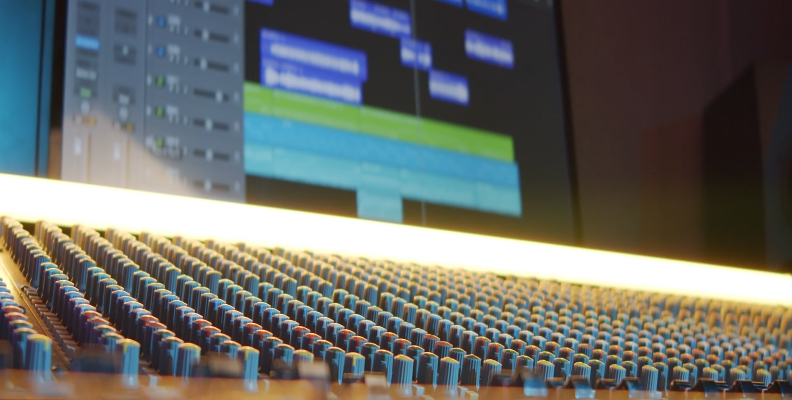
When elements share the same frequency range, the frequency spectrum becomes congested. The listener's ears can no longer distinguish individual instruments, and the mix loses depth, punch, and clarity. This is especially damaging in the low band, where frequencies build up quickly and become difficult to control.
Consider a typical arrangement: kick and bass competing in the 60–120 Hz region, a rhythm guitar adding body in the 200–400 Hz range, a lead vocal sitting in the 1–4 kHz zone, and hi hats adding air above 8 kHz. When each of these elements bleeds into the same range as another, masking occurs, and the mix becomes a wall of sound rather than a collection of distinct sounds. One sound smears into another, and the low end becomes undefined.
Masking doesn't only affect lower frequencies. Two instruments clashing in the upper midrange can create a harsh, fatiguing listen. Higher frequencies from multiple tracks competing can make a mix feel sharp and unpleasant. In every case, too many elements fight for the same frequency real estate, leaving no clear space for any one of them to breathe. The consequence is an unprofessional sound that no amount of stereo field widening or limiting can fully fix.
Methods to Unmask Your Mix
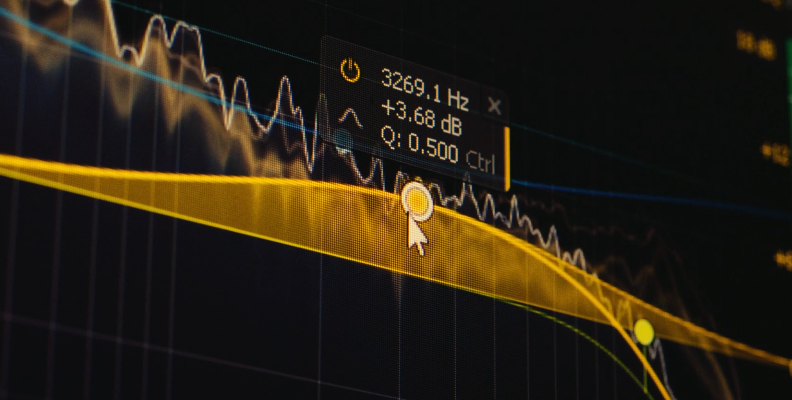
There are several reliable ways to carve space for each element and fix masking before it damages your mix.
Subtractive EQ is the primary tool most engineers reach for. Rather than boosting frequencies to make elements louder, subtractive EQ means cutting from one instrument what you want to hear from another. If your bass guitar is clashing with the kick drum, try an EQ cut from the bass right where the kick's fundamental sits. This creates a pocket for the kick to punch through without reducing overall bass presence in a damaging way.
High pass and low pass filtering are equally essential. Running a high pass filter on instruments that don't need low-frequency content — rhythm guitar, vocals, hi hats, pads — keeps the low end clean and reserved for the kick and bass. Low pass filtering on your kick or bass can similarly tame content that bleeds into the midrange.
Panning is a powerful and often underused tool. Spreading instruments across the stereo field means they're less likely to directly compete in the same space. Two guitars playing similar parts will mask each other if both are centered, but panning one left and the other right gives each its own position and reduces clutter significantly.
Sidechain compression is particularly effective for the classic kick and bass problem. By routing the kick drum signal as a sidechain input to the bass compressor, the bass ducks slightly every time the kick hits. Dynamic processors like sidechain compressors don't permanently alter the frequency balance — they respond in real time, making them ideal for elements that rhythmically share the same range. Saturation can also help by adding harmonics that shift an instrument's perceived energy into frequency bands where it's less likely to clash.
Unmask Your Mix with Samplitude Dynamic EQ

One of the most powerful modern tools for dealing with frequency masking is the dynamic EQ, and Samplitude's built-in Dynamic EQ is an excellent example of this technology at work.
A dynamic EQ behaves like a hybrid between a standard EQ and a compressor. Rather than applying a static EQ cut at all times, a dynamic EQ only activates when the signal crosses a set threshold. This makes it ideal for spot frequency masking — situations where the clash only happens at certain moments in the track. For example, a bass guitar that only occasionally encroaches on the kick's frequency range, or a lead vocal that clashes with a synth pad during dense passages.
In Samplitude, you can set up the Dynamic EQ to monitor specific frequencies in real time.
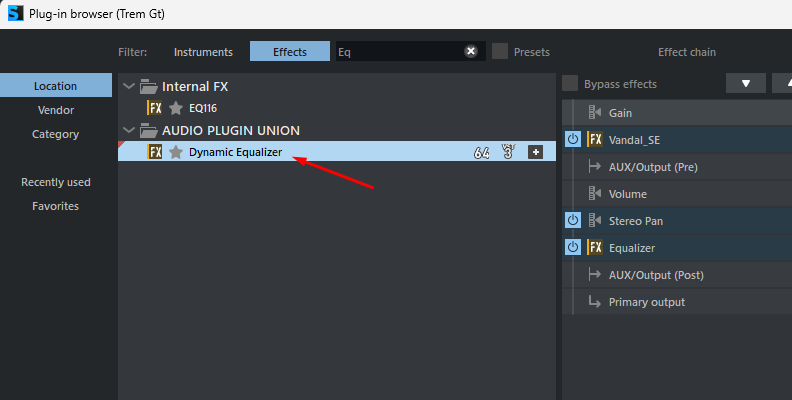
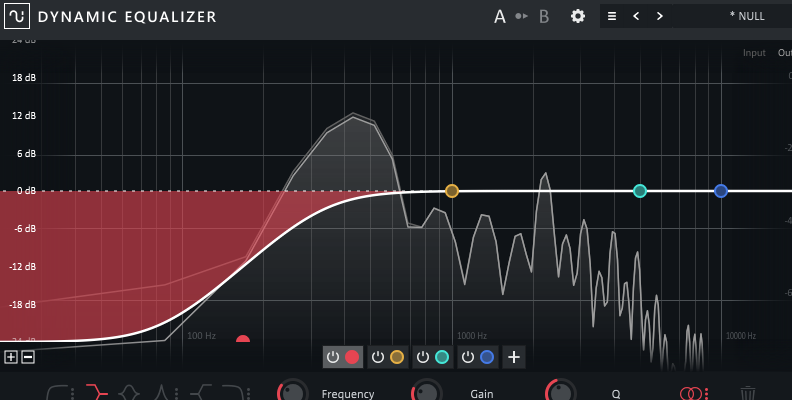
You can dial in a cut at, say, 80 Hz on the bass guitar, set the threshold so it only activates when the bass and kick are playing simultaneously, and let the processor handle the rest dynamically. The bass retains its full body when the kick isn't present, but automatically makes room when the kick hits.
Spectrum analyzers are your best companions here. By visualizing the frequency spectrum in real time, you can clearly see where two instruments overlap and dial in your dynamic EQ bands with precision rather than guessing by ear alone. Listen in context, identify the problem frequency bands, set your threshold carefully, and use a moderate ratio to keep the processing musical.
Common Instrument Masking & Overlaps in Music Production
Understanding which instruments are most likely to mask each other is half the battle. Kick and bass are the classic examples, both occupying the low end between roughly 40 and 200 Hz. The kick's fundamental and the bass's root notes compete directly, often with the bass sitting an octave higher than the kick's sub frequencies, leading to a low end that sounds undefined and bloated.
Rhythm guitar and bass often clash in the 150–300 Hz region. A high pass on the rhythm guitar and a complementary EQ cut clean up the muddy overlap in a dense mix. Lead vocal and synth pads or guitars frequently collide in the 1–4 kHz presence range. Since the vocal is the most important element in most mixes, this region should be protected — cutting from the competing instruments rather than boosting the vocal is more effective and transparent, leaving room for other elements to sit cleanly around it.
Snare and vocals can clash around 1–3 kHz, making each other sound harsh. Hi hats and acoustic guitars often share high-frequency content, creating an overly bright top end that fatigues the listener. Low pass filtering hi hats or easing the high shelf on acoustic guitars helps separate them. Piano and rhythm guitar both occupy a wide swathe of the midrange — panning them apart and using complementary EQ is the most effective approach.
In professional mixes, every instrument has its own defined space in the frequency spectrum. Getting there requires careful listening, analytical use of spectrum analyzers, and the willingness to make bold EQ cuts in service of the whole mix.
Final Words
Frequency masking is one of the most critical concepts to understand if you want your mixes to sound professional and clear. It's not glamorous work — it happens before you add reverb, before you touch the stereo field, before you engage creative processing — but it is foundational. A mix that communicates and breathes starts with instruments that have been thoughtfully separated and given their own space.
Train your ears to recognize when one sound is masking another, and when the low end starts to feel ill-defined or sounds muddy. Use subtractive EQ, high pass and low pass filtering, panning, sidechain compression, and dynamic EQ as complementary tools. Refer to spectrum analyzers to confirm what your ears are telling you. With practice, managing the frequency spectrum becomes second nature, and your mixes will reflect that clarity on every system you play them through.
FAQ
What frequency is sound masking? Sound masking can occur at any frequency, but it most commonly causes problems in the low end (20–250 Hz) and the midrange (500 Hz–4 kHz), where most instruments cluster. Lower frequencies are especially prone to masking because energy builds up quickly in a dense mix.
What is an example of frequency masking? The most common example is kick and bass masking. When both have strong energy around 80–120 Hz, they obscure each other — the kick loses its punch, and the bass loses note definition. Sidechain compression or a subtractive EQ cut on the bass resolves the issue.
How do I fix frequency masking in my mix? Apply subtractive EQ cuts to one instrument where another needs to be heard; use high pass filtering to remove unnecessary low-end buildup; apply sidechain compression to create dynamic space between rhythmically competing elements; pan instruments apart; and use a dynamic EQ to address masking that only occurs at specific moments in the signal.
What is the difference between a dynamic EQ and a standard EQ for fixing masking? A standard EQ applies a fixed cut or boost at all times. A dynamic EQ only activates when the signal exceeds a set threshold, making it ideal for masking that occurs intermittently — such as a bass that only clashes with the kick drum on certain beats, leaving the bass unaffected at all other times.