













The Upshaws and Wanda Sykes Legacy
Double Emmy-nominee, Angel Gamboa Bryant, ACE, discusses the different types of comedy editing, the pressure of being on set, and the importance of the laugh track in stand-up and sit-com.


Today on Art of the Cut we speak with Angel Gamboa Bryant, ACE, who is nominated this year for both The Upshaws – for Outstanding Picture Editing For A Multi-Camera Comedy Series - and Wanda Sykes Legacy – for Outstanding Picture Editing For Variety Programming.
Wanda has been nominated for nine total Emmys and four ACE Eddies. Her other credits include the feature film Off the Rails, and TV series, Poppa’s House, History of the World Part II, Project Runway, Last Comic Standing, and many others.
Angel. It’s so nice to have you on Art of the Cut. Congratulations, for not just one Emmy nomination, but two this year!
Thank you. Steve, I’m so excited to be here.
I have not done a lot of podcasts about editing multi-cam comedy. Maybe we should start out explaining what the process is.
The process for multi-camera comedy is a lot different from single-cam or sketch comedy, or anything else. We have a very tight schedule. An episode shoots in two days. It depends on what the series is and when they air, but typically it’s towards the end of the week. It’d be maybe a Thursday or Friday.
The first day of the shoot is called the pre shoot. During that day there is no studio audience and they shoot about half of the script - sometimes more - depends on the series. They all differ.
There’s no real rule to it, but typically it’s the more complicated scenes that they don’t feel like they can cover in front of a live studio audience.
They will shoot, and I usually come in that day and sit with them on set. The editors for most multi-cam do this.
Not always. Again, there’s no rule to it, but it is nice to have us there because it is a very tight turnaround, so they’re trying to get as much coverage as they can in a very limited time. So we’re there as an extra set of eyes to make sure we got the coverage that we need.
So we shoot that day - then as soon as we’re done - my assistant editor [Brian LeCoz] gets the dailies, groups (puts them in multi-cam groups) and ScriptSyncs them, then he gives them to me. Usually it’ll be afternoon or evening on that day. It’s usually around 4 or 5 p.m. when I start editing those scenes.
Those scenes have to be cut completely. There’s no time for anybody to screen them before they get turned around. It’s just me. So they put a lot of trust in what I do. We have a really good relationship and a lot of dialogue on set while they’re shooting.
We have to get them turned around the next day - usually around 1 or 2 p.m. All of the scenes have to be cut. We call them the pre-shoots. We deliver them to set in a QuickTime file. They call it the audience playback.
On the second day, the audience comes in around 5 p.m. and they shoot the rest of the script and they play the scenes that I’ve pre-cut consecutively. They play the scenes in the order the show would play. So the audience gets to see the entire show.
They also record laughs over the pre-cut scenes, then my assistant editor can lay them in and I can use those as a starting place when I’m putting laughs into the show.
Then after that it’s usually about five days to get my editor cut, which is plenty of time.
How many cameras are they shooting with?
We typically shoot with four cameras. Every once in a while - if there is a more complicated scene - they might add another camera or handheld or a roaming camera, depending on what the coverage needs to be for that scene. But typically it’s four.
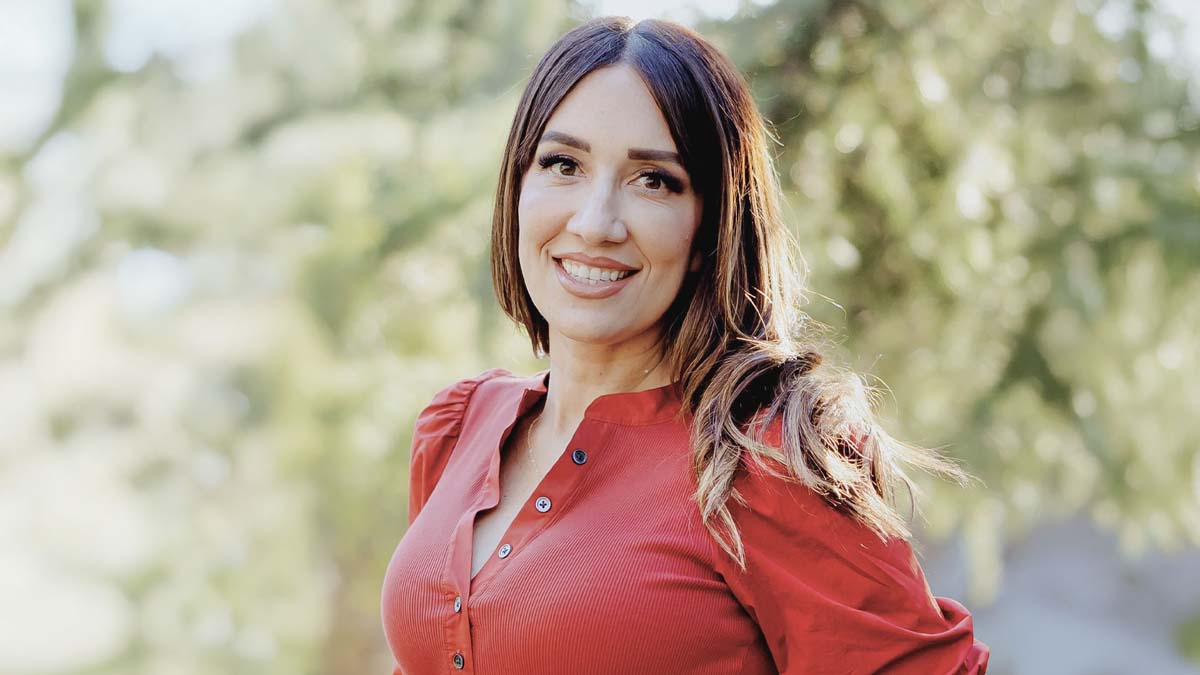
Editor Angel Gamboa Bryant, ACE
Do they do a line cut at all, or do you not even get a line cut (live-switched “edit”)?
There’s no line cut.
Once you have your editor’s cut, how close are you to the final length of the show and does time really matter for an episode on Netflix?
That’s a really great question. Generally speaking, the EP’s on our show - Regina, Wanda, Niles - they want to keep the show under 30 minutes because it’s just kind of what you expect with a comedy. You don’t want to see anything over 30 minutes. Netflix also prefers to keep it under 30 minutes. We never really want to see it go over that.
And I would say that they do a really good job in writing the script so that they’re pretty tight as it is. We don’t usually end up with more than 30 minutes. I would say, almost never in five seasons have I seen something bigger than five minutes.
Our episodes usually come in on average, at 25 to 26 minutes. They could be up to 28 minutes, but I have rarely had an instance where we’ve been concerned about pulling more time out or cutting it down more.
So it’s kind of liberating in that sense, where that’s not usually been an issue when – as you know - with broadcast television you’re very limited with your time. You have to get exactly into that time clock and get your act out.
We just aim towards less than 30 minutes.
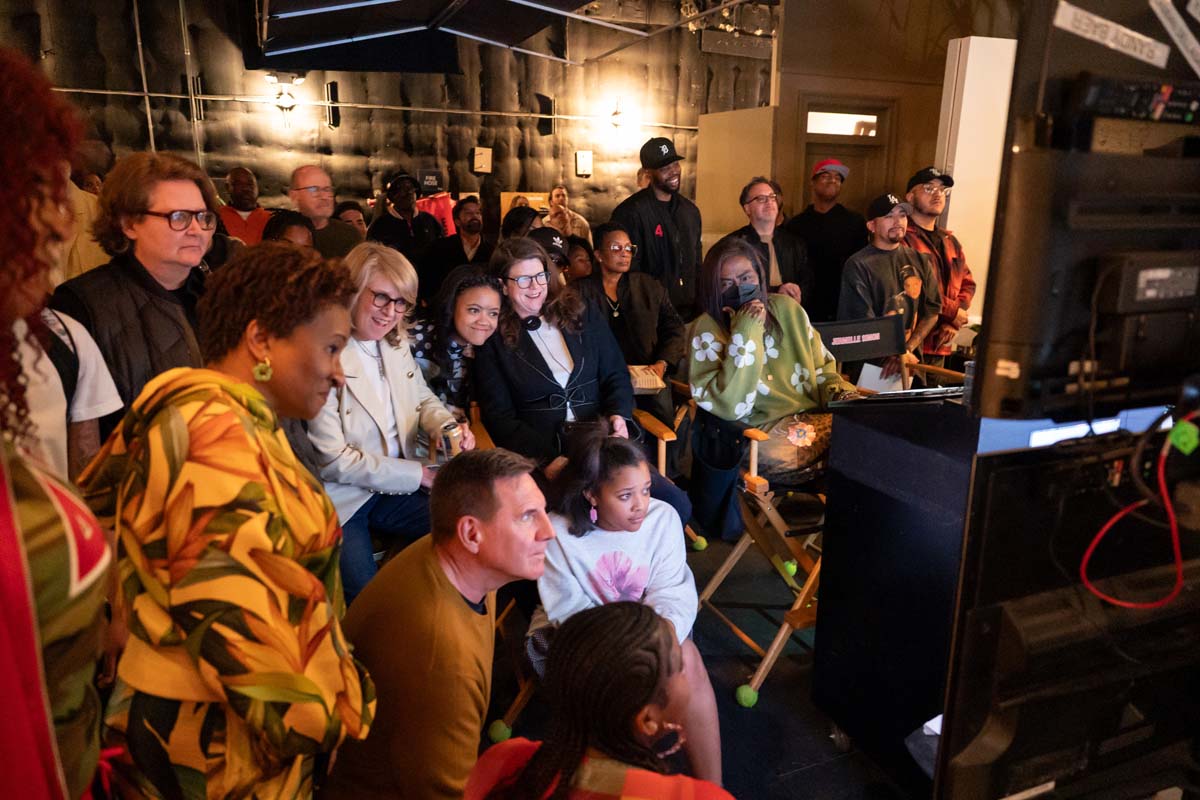
On set with The Upshaws
It doesn’t sound like they overwrite the show at all.
No. I have worked on a multi-cam where they did overwrite a lot and it was broadcast television. But this one, no, they do not overwrite. I would say they write pretty tight. They’re so conscious of what they’re writing and that they really want the stories to be exactly the way they want to tell it, o they put a lot of effort into making sure that is that way.
Even when we shot - early on - I learned that if I pull a line for one reason or another, I would get the note from Wanda or Regina: “No. As scripted. Where is this line as scripted?” So I learned pretty quickly that they didn’t want me to remove anything that they wrote. So that’s something that there’s a heavy focus on.
You mentioned the laugh track that it’s an audience recording that you do during the live recording and also during your playback of your precut day. How much do you tweak that or enhance it, or what do you do with the laugh track?
That’s a really good question. The laugh track is a huge part of a multi-cam comedy. It’s its own element. It’s its own voice in the show, and it’s really important. I’ve been cutting comedy for a long time now, so I just sort of have a strong understanding of where and when to use the laugh track. But it is an art form.
It really is. When we record the audience laugh track initially, it’s a really good starting off point for me.
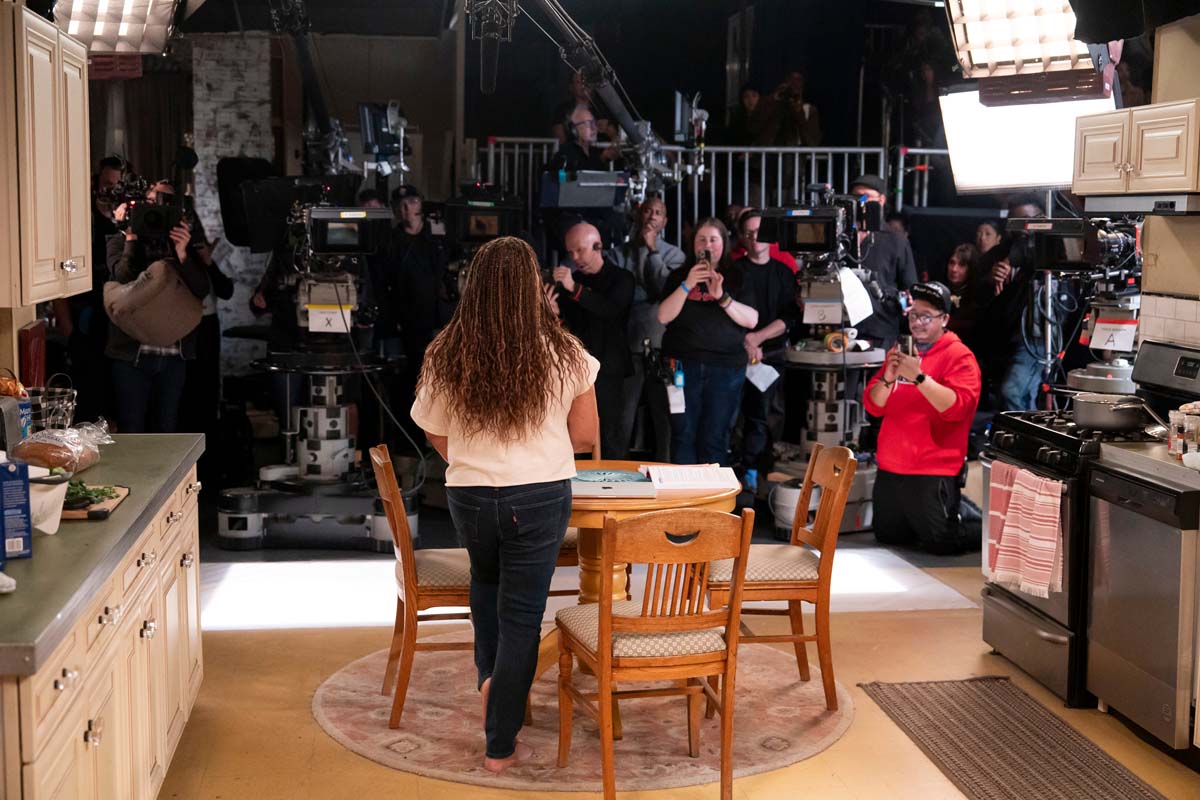
The pre-shoots, we cut them really fat. The reason for that is so that when the audience is laughing, they don’t overstep the next joke. Typically comedies cut really tight. You want to move move, move, move, move, but in this format we have to start with the pre-shoot kind of fat so that they don’t miss jokes.
That’s like really big and important to the producers because we want to get all the laughs. That said, it doesn’t always work either.
So I have that roadmap of the laughs, which is really nice and beautiful because we have the natural laughs from the set. But when I go back and have to do my second pass and maybe pull the air out, sometimes those laughs don’t necessarily work.
So I have to get rid of them or cut them down shorter, then reedit them with some dissolves so that they sound natural. It is quite a process.
Once I finish my first pass, I always look at story first, I look at time, I look at making sure I get all the coverage and I have everything I need to work first. That’s the most important part. Then I go back and I think about laughs.
Sometimes I have to open something back up to add more laughter in there and sometimes I need to tighten it and remove laughs, but the laughs are very important and make the show work in the end - making it feel like a natural stage production.
Do you use laugh tracks on multiple tracks so that you can blend them?
I do, yeah. My assistant editor does a great job in prepping bins for me, and the good thing is, since we had multiple seasons - five seasons - we’re able to collect laughs from so many different episodes and make them in the bins.
You have various different kinds of laughs from small laughs, big laughs, medium laughs. Brian actually will set up sequences for me just with laughs that already have fades in them that already sound good.
Sometimes we have to pull an end of a laugh and weave it in with another laugh because that one had cut off because we can hear mic bleed or something.
So we sometimes have to mix them together and add fades to make them work the best. Brian sets that up really well for me, so then I can just go to those bins and edit it in really, really quickly.
“Election” is the episode you were nominated for. It uses some non-linear editing when Wanda sings “Lean on Me.” Was that actually scripted that way or something that you found?
We changed that scene around so many times. It was written to be intercut. It wasn’t written to have transitions in it like that. That’s something that Wanda wanted to add: the old-fashioned wipes with a swoosh.
That was her, and that was really just because we wanted to cut it down and punctuate the comedy a little bit better.
She did such a great job at performing that song, “Lean on Me.” There was so much gold in that that I had a very hard time. I just wanted to watch her sing “Lean on Me” in this old folks home forever, because I could just laugh with her and laugh at the people all day.
It was fun. It did take quite a bit of crafting in the sense that we wanted to get it down short and sweet, but also still be fun and funny. I really do wish that scene went on for longer because it’s fun. It’s so much fun.
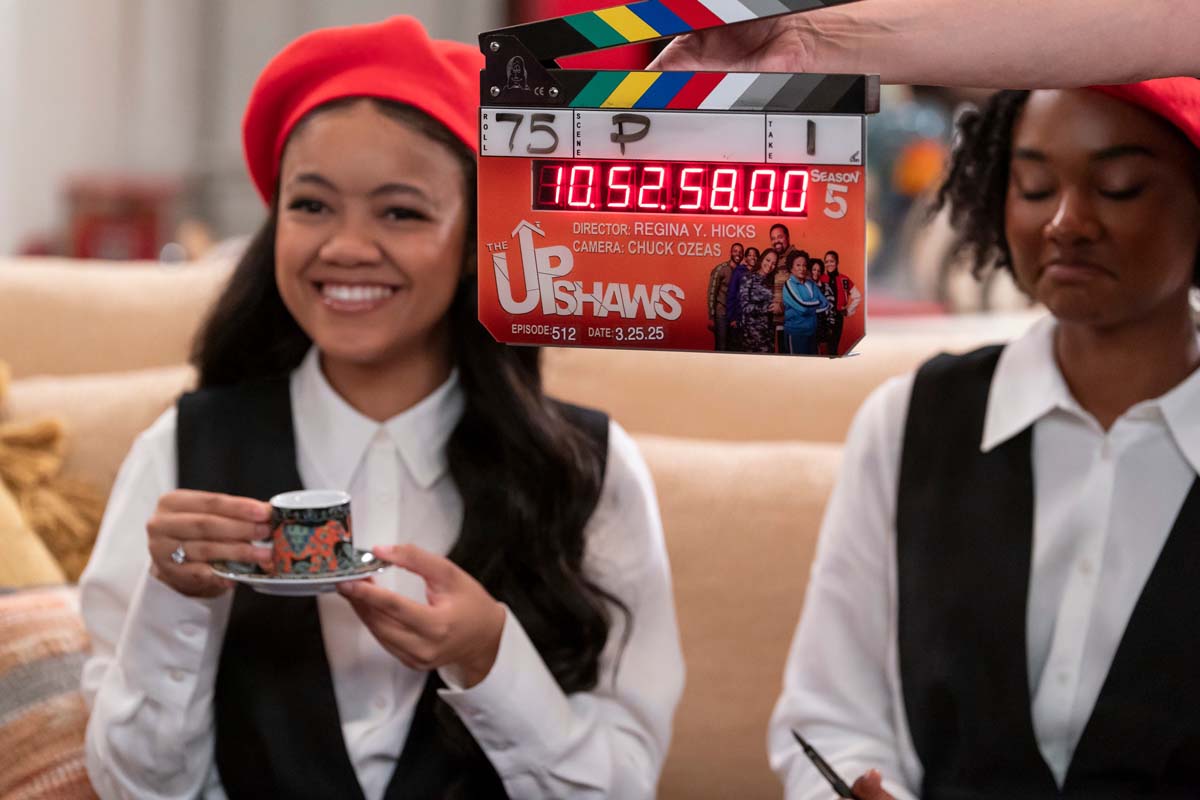
What about things like intercutting? I don’t really know what was broken up into the pre shoot versus the shoot. All the old folks home stuff, was that a pre-shoot?
Yeah a lot of the old folks home was. That was pre-show. Those scenes were quite challenging just because there was a lot going on. They did a great job with the coverage. When you have people moving all over the place like that and all different spaces, you had to be careful about the continuity of it all, but also maintaining the comedy.
It’s interesting that you bring that up. There’s a scene that’s not in the old folks home, but it’s outside of the old folks home when they get into this bus and Regina is going to take them to the polls to vote for her opponent.
That scene was one of the first scenes shot, and I hadn’t seen the coverage yet from inside the old folks home. There was supposed to be a lady sitting in the back of that bus that wanted to go to Red Robin, and they’re trying to go to vote, so to create the comedy there was sort of interesting for me because I hadn’t seen that character yet.
I hadn’t heard her voice yet, and we were just using like the AD’s voice or somebody who just spoke her voice on camera to match with Wanda. So trying to weave that scene together and make it funny and get the timing right, we can’t see the lady.
We’re actually just imagining that she’s back there. She’s not there at all, so for me, I had to sort of imagine this world and make it work without ever knowing who she was. I feel like it worked out really well. I’m actually very proud of that scene. It’s quite funny. I was able to cut it pretty quickly.
Then there’s a moment at the end of it where Benny shows up and he gets body slammed against the van by a cop because he’s interrupting the election result.
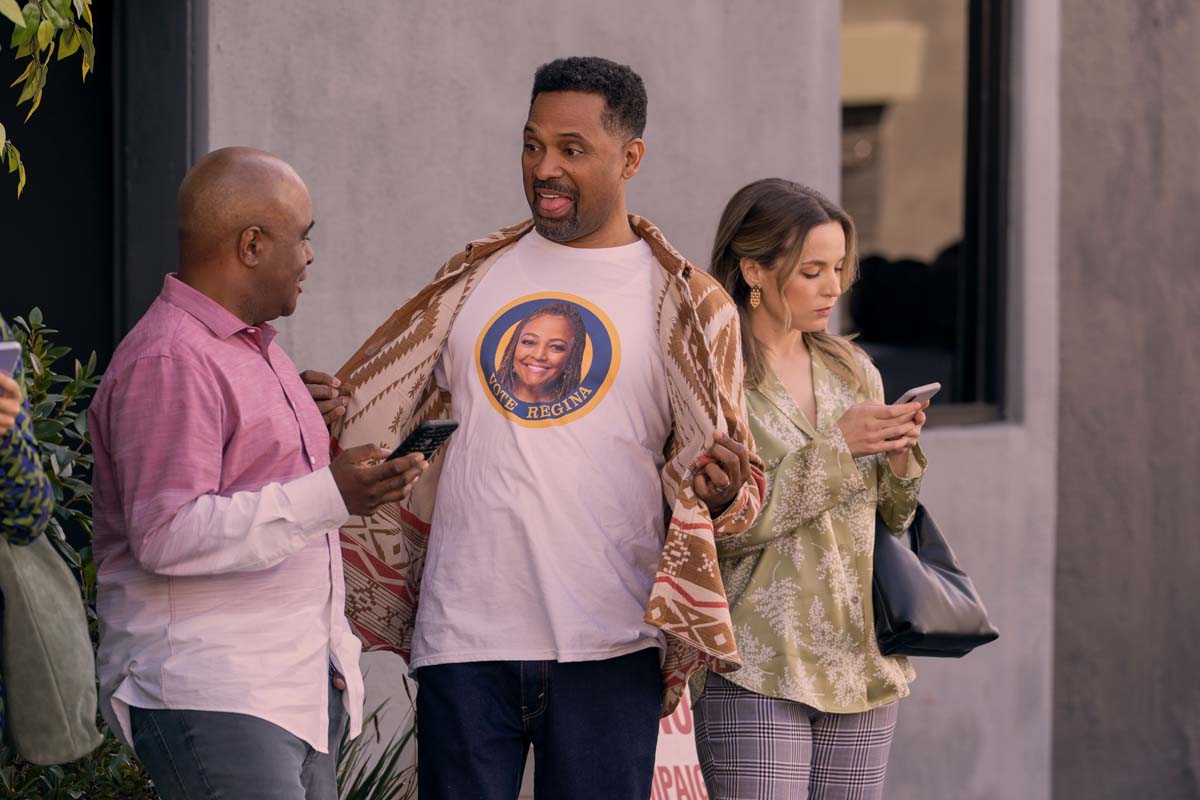
Yeah, he’s electioneering.
He’s electioneering, yeah. So that was also really funny and sort of interesting to cut with them inside the van. It was a really fun scene. But yes, you’re correct: all the old folks footage was done in the pre-show, and I think maybe the bar scene at the end because it was very complicated as well.
Let’s talk a little bit about the Wanda Sykes special. Wanda is of course very involved in – and stars in – The Upshaws. How did that relationship start?
I have a long history working in unscripted. I did a lot of big “shiny floor game shows.” Earlier in my career, I was known for cutting comedy, specifically on the game shows. I had a friend who knew the owner of Push It Productions with Page Hurwitz.
She’s a partner with Wanda Sykes. They’re business partners. This friend contacted me and said, “They’re looking for a comedy editor. They’re bringing back Last Comic Standing - this was like 2013 or 2012 - so they called me in for an interview.
They ended up hiring me, so I worked with Page and Wanda for several years, just cutting different stage shows, all comedy-based.
Then they started giving me stand-up specials. I was cutting scripted comedies on the side - independent films and things like that. I really wanted to work in scripted comedy, so when it got announced that they had gotten The Upshaws they said, “You have to do this!” But I actually didn’t work on the first season.
I didn’t come on until the second season. I did the second to the fifth season. I’ve been working with them now for more than a decade, so we’re pretty close. And Wanda and I know each other really well, and it’s great because I know what she wants and she trusts me. It’s a really good relationship.
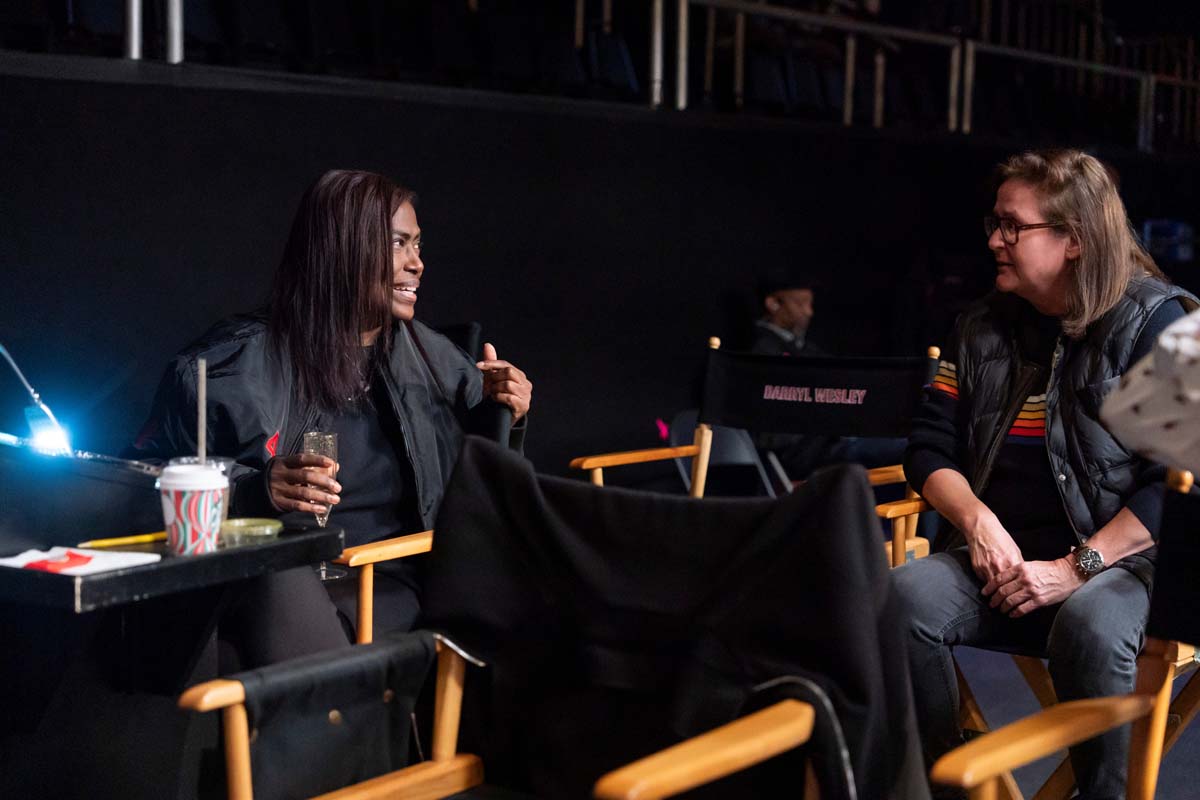
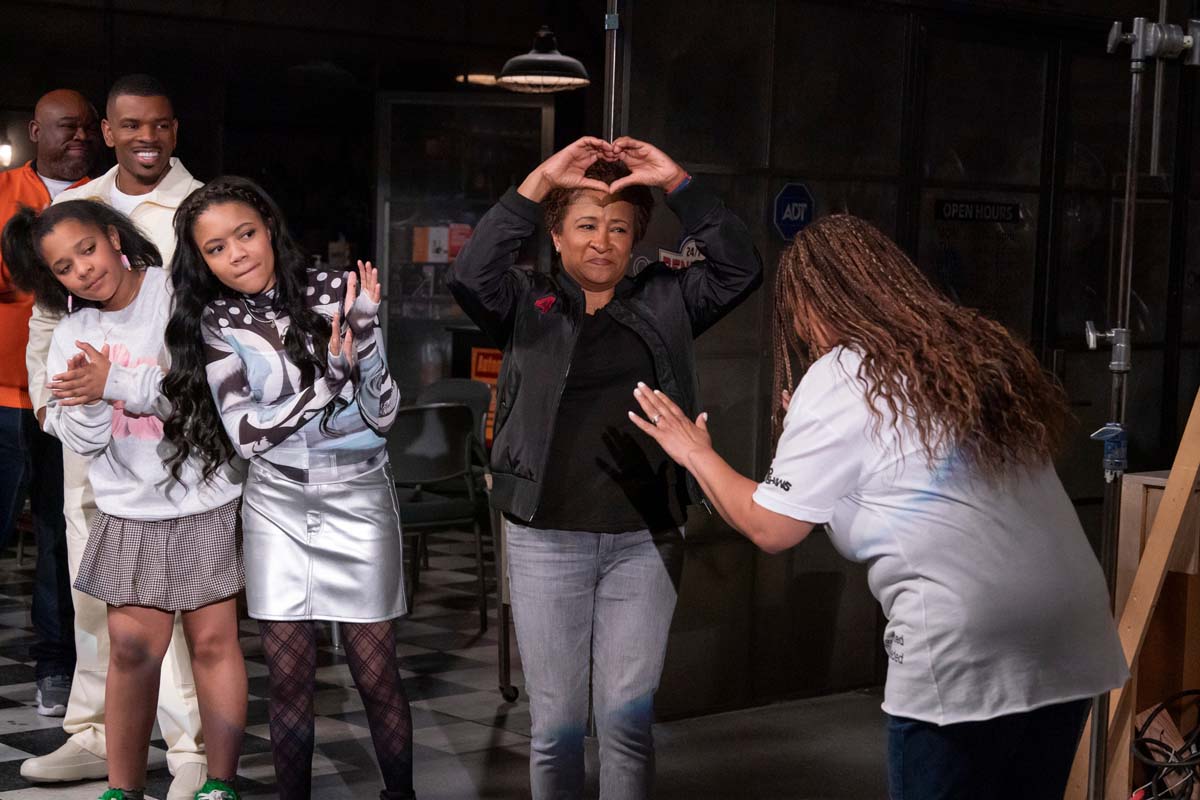
Regina and Page on the set of The Upshaws
You’ve done quite a bit of different types of editing. What are the differences in there when you switch from one to another, and what are the similarities in the editing of those things?
They’re all very different. Whenever I get onto a show - I feel like I’m changing formats and genres quite often - I have to recalibrate and figure out, “Okay, this is the world I’m in now, and these are the rules of this world.”
They do vary quite largely between the different things, especially when you go from sketch comedy to a multi-cam sitcom. They’re very different. Sketch is very fast paced. There are a lot of adlibs and going off script and trying to find pieces in there.
But what’s great about that is that’s related to my background in unscripted, where I have to go through hours and hours of footage and find the great moments and weave it together with the script.
Going from standup comedy to multi-camera sitcom is very fluid. The two are very similar stylistically, and also the way that you pace the comedy.
There’s the audience element, so you have to know when to pause and let the moments land and let it breathe and the audience sound to come in and let the comedian take that all in.
It’s really an important element of both standup comedy and multi-cam sitcoms, but it’s not at all an element of sketch comedy or narrative comedy - single camera comedy.
There are a lot of similarities and differences between all of them. When you do a lot of different things like this, you just add all the tools and knowledge that you gain from each one. You put it into a bucket and sometimes you can dip into that knowledge and pull something out and teach someone something new.
And other people teach me new things every time, too. Every time I get on one of these shows, it’s really nice working with editors with a different background and learning new skills and new tricks.
With the Wanda Sykes Legacy special, it starts out with a special open. Can you talk about editing that little kind of the montage-y open? Or was that done by somebody else?
I did not cut that open. Julie Dash, the director, has an editor who she works with a lot. Her name is Melissa Roth. They’re based on the East Coast. I work with Wanda quite often, and we’re on the West Coast. Well, Wanda is bicoastal.
Anyway, Julie really wanted Melissa to work on the special with her as well, but she’s doesn’t necessarily do stand up, so they decided that she was going to handle that open.
They did that on the East Coast in Premiere. I cut the special here on Avid, so then it was really tough trying to figure out how to get the two pieces together. It was pretty challenging.
She and I had to find a way to weave her section into mine fluidly. They would deliver me a QuickTime as a flattened file, then I had to find a way to weave that into the beginning of the stage show, so there was a lot of coordinating between Melissa and me. We would have Zooms and phone calls and ask, “Okay, which shot are you ending on?” “Which shot am I starting on
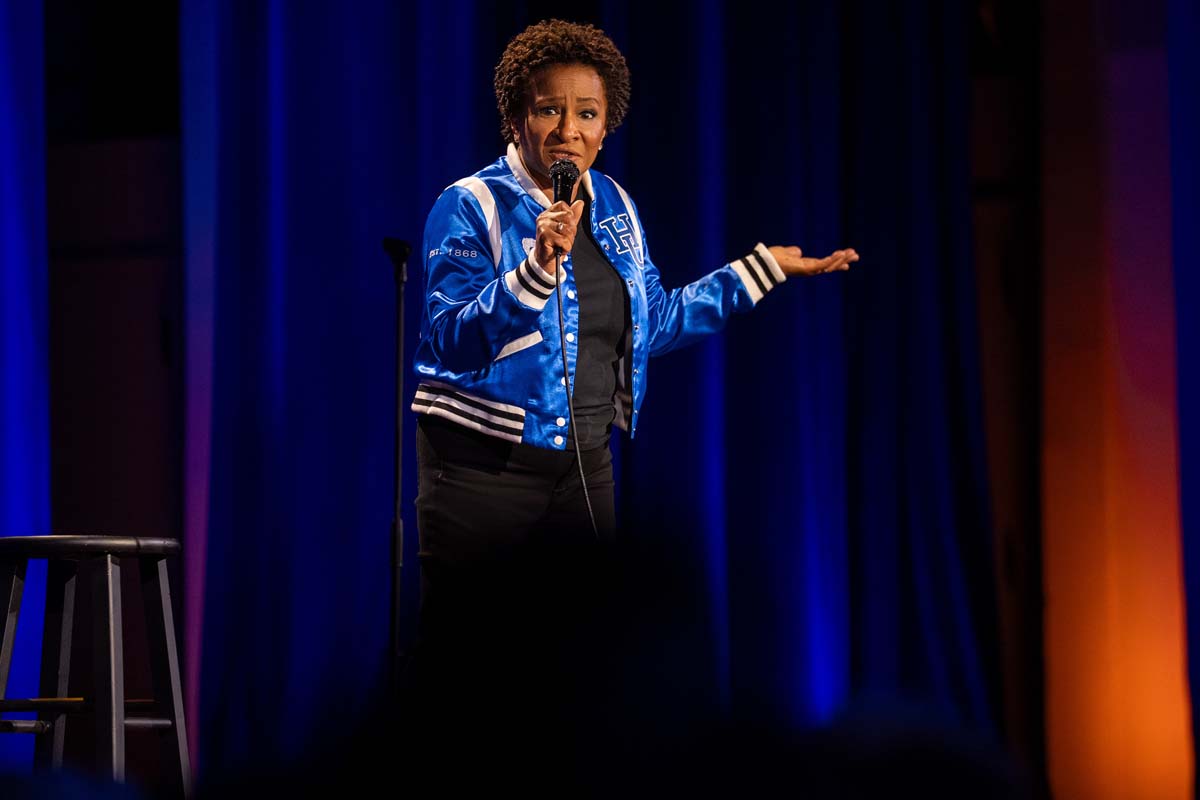
Wanda Sykes Legacy special
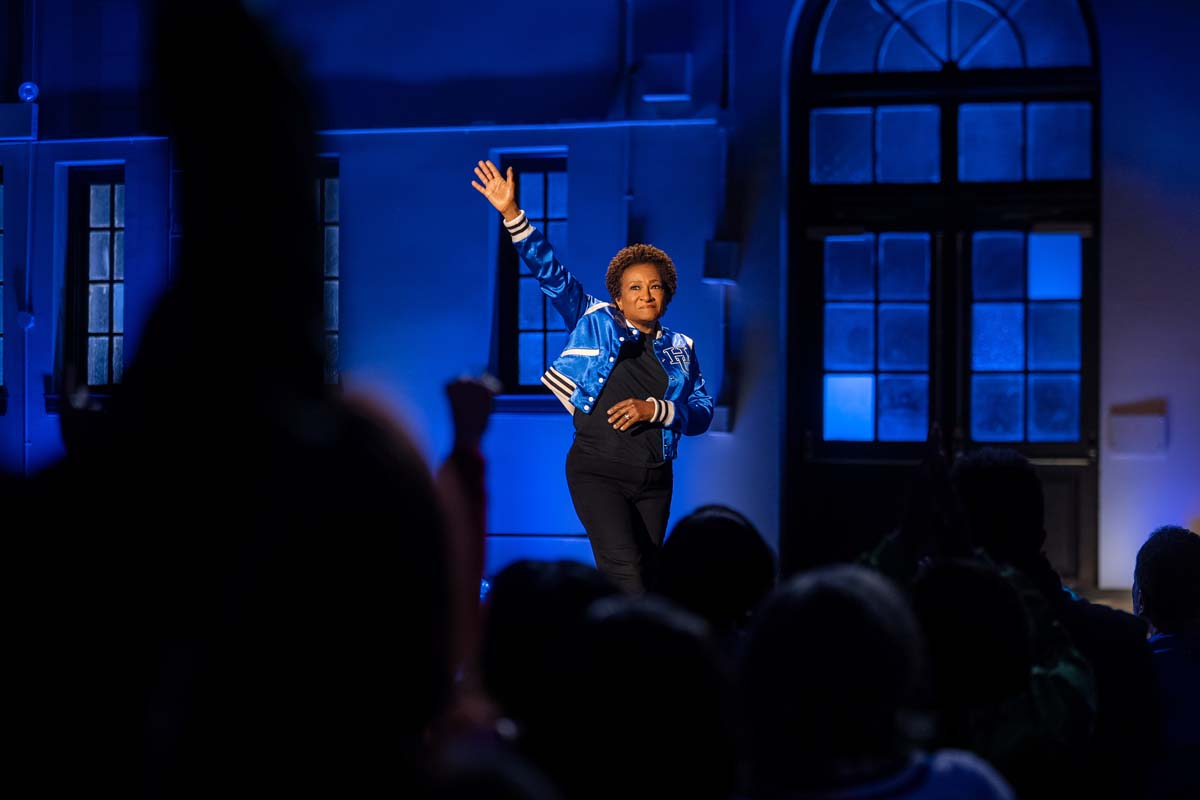
Talk to me about that transition from the open to Wanda entering the venue. I think that would be a very difficult transition. You’ve kind of built this almost fantasy world at the beginning, then you’re transitioning to this live comedy show. What kind of discussions did you have about how to get that to work?
Yeah, we had all kinds of discussions on how we were going to get that to work. We knew that the elements that would really be able to help us get there from the cold open footage - which is quite like stylistic, and sort of like avant garde - then to this stage with an audience that’s quite different. We knew that our biggest tool was going to be sound.
So using the sound of that band. In the cold open the marching band is the framework of the cold open, both visually and sound-wise, so I knew that we needed the big element of the stage - so that would be the audience applauding and our announcer - so we had to take the sound of the band, then weave it in with the sound of the audience and the sound of the announcer.
We knew if we could weave that together, we would find the shots to bring us in, so that’s kind of how we looked at it.
The idea originally was that Wanda was going to come in from the outside. She comes up the stairs and enters the building. We were missing a shot, so we had to find a way.
It was a really important shot to make that transition, so what we did was go from the outside of the building to the inside of the stage. You can’t really tell. It worked because the sound was able to really bring us in and make the whole thing cohesive.
Did you have to collaborate with the director that you mentioned on the comedy show special side? What creative decisions did you have to work on together?
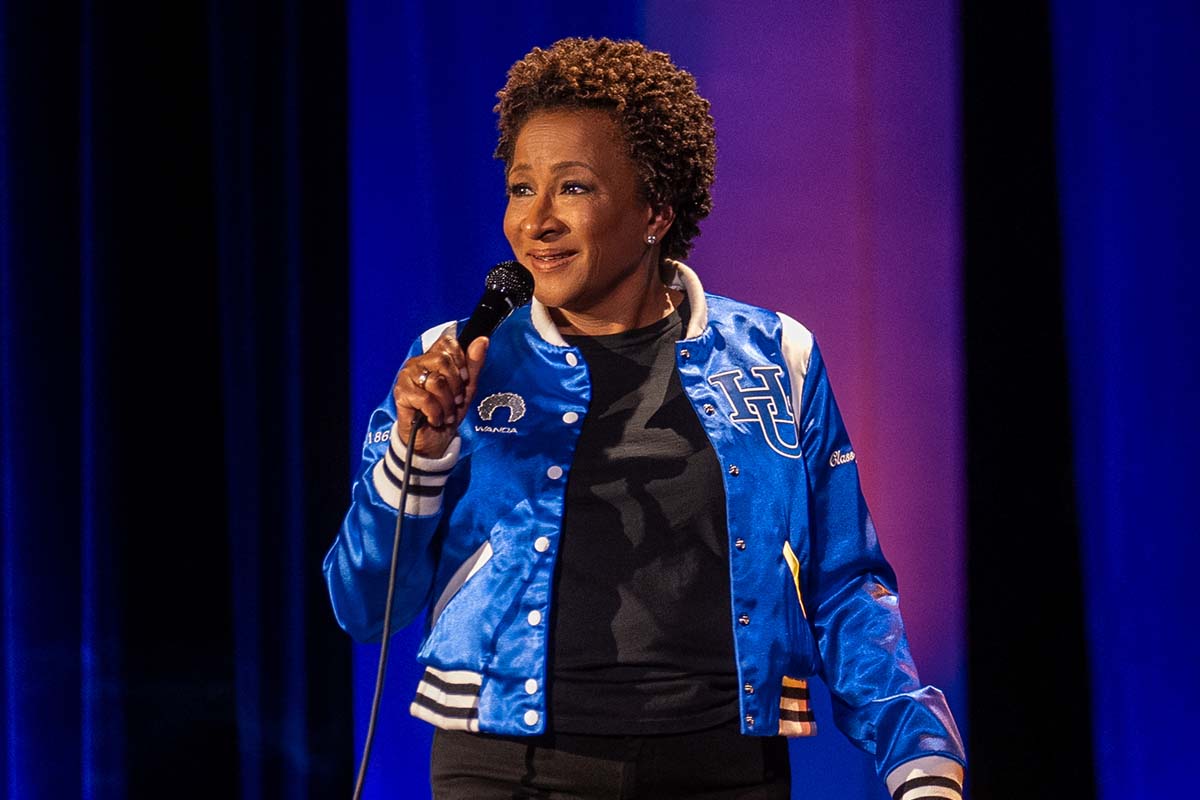
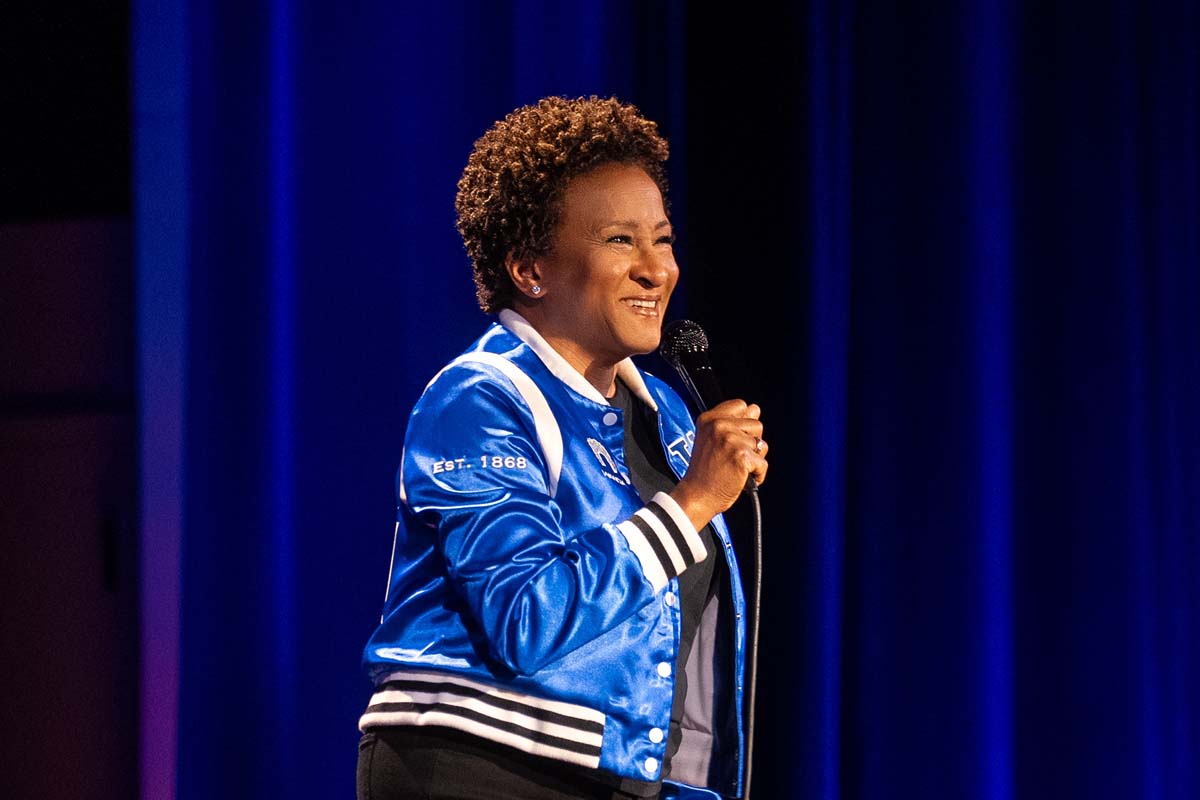
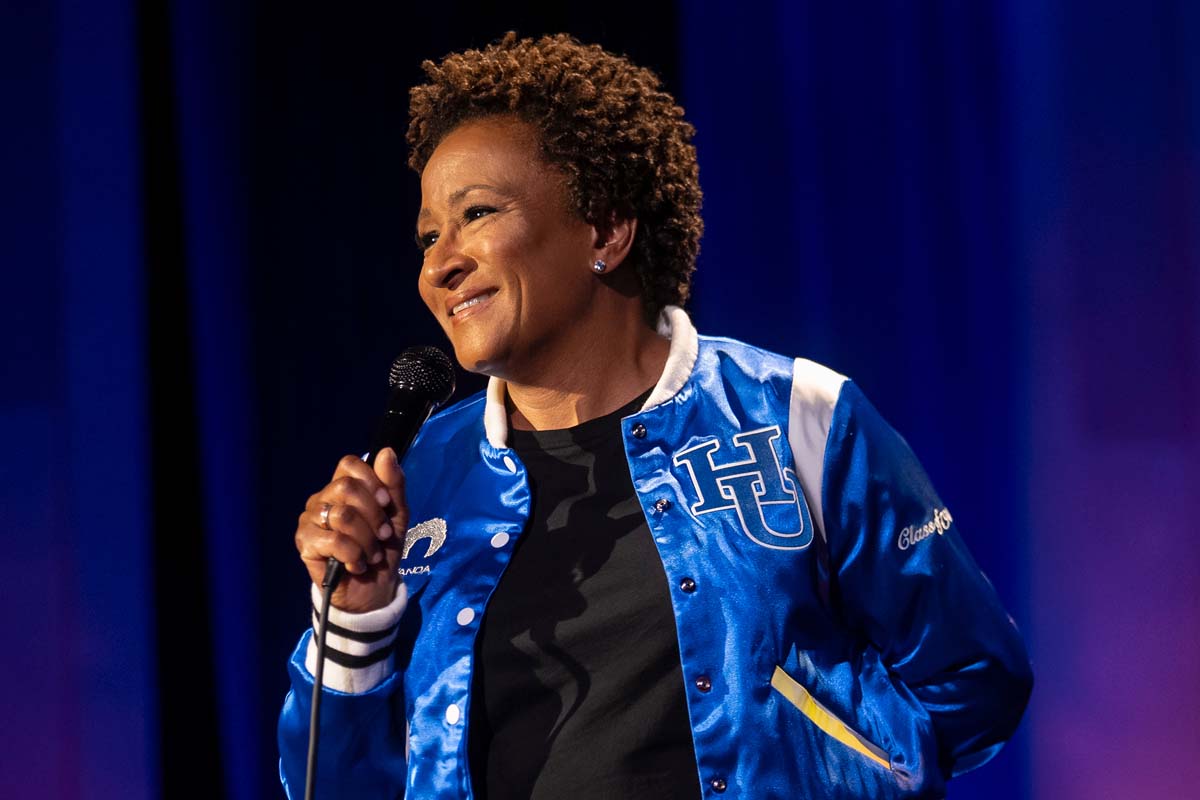
With the stand up special, it was shoot over two nights, so we have two performances to choose from. Netflix wants it to be under 60 minutes. If it’s 58 minutes and change, that’s fine, but if it hits anywhere near 60, it’s like, “no.”
So she did two 90 minute sets and then it was really, really tough to cut it down. So the first conversations we had - Julie and I - and usually we all would talk together: the producers and Page Hurwitz, Wanda Sykes, Julie Dash and the other editor, Melissa Roth, myself and the post supervisor.
We did a lot of Zooms to figure out how to do this, but Julie and I, our initial conversations were about which performance of the two nights was the strongest. Where should I start from? Where should the base of the show come from? Julie said, “I know that you this is your arena and you do these specials, so I trust you to get that together first and then we’ll see what we need to change. That was kind of how it worked. She did put a lot of trust in me.
You mentioned choosing which performance was better. Did you do that per joke or did you choose which night was better?
We use one night as the base. I’m almost positive it was night two. It usually is just because - as you can imagine - when someone does something two times, the second take, the last take, it’s always the better take.
We also had better camera coverage the second night. We had a really vibrant audience. The second night Wanda really nailed her set. She did both nights.
So what I do basically is take that second set and laid it into my timeline. I have my assistant editor color both nights differently. So I start with the second night as my base. I lay into the timeline and then my assistant editor colored the two nights differently.
I think we went green and blue. I make sure that I can see the color on my timeline so I can see what I’m using from each set. Everything is ScriptSynced. So I start with that second night as the base, then I just basically have to sit there and watch and decide like what’s working and what’s not working.
It’s a very tight turnaround, so if it’s not working I start with the setup to the joke… maybe she didn’t deliver it right. I feel like it could be better, so then I pull up my script, I go into the first night, I look at that setup, then I do a lot of weaving.
Usually it does come in the setup and the punch lines where I’m switching to the other night because I felt that it was stronger. In this particular case, it was tough because the first night the cameras just the coverage wasn’t very good, but some of the setups and the punch lines were better.
So I had to figure out ways to make it work, because that’s more important than the camera coverage - making sure that the punch lines and the setups are really strong. It’s everything in comedy. So I did a lot of that and I took extra time.
I actually asked for an extended four days on this edit. Believe it or not, with a one hour special your editor’s cut is done in five days, which is really aggressive.
But I said I really wanted more time. I ended up getting nine days to do it, which was really quite lovely. I was able to really take time with it and go through both shows and find the best.
Then it’s a lot of cutting down. She had about a 90 minute performance that needs to be less than 60, and I want to keep the integrity of her jokes on my first pass, so I tried not to pull anything out content-wise, but just to get it down. It was a big challenge.
What was your first pass like? Was it 90 minutes?
No, I definitely pulled a lot of air out. Wanda - when she performs a joke - she’ll get to the punchline and she just lets it breathe. She lets the audience laugh and react and take it in. She gives it a really good beat, so during that time she’ll pace back and forth on stage. That could go on for a couple of minutes.
And if that happens every time at the end of a joke, that’s quite a big chunk of content to pull out. I think my first cut was somewhere around an hour and 15 or an hour and 20, then it’s a process of sitting down with Wanda to decide what you’re going to cut. Wanda and Page work as a team. They’re both very hands on.
We worked with this software called Looper. I don’t know if you heard of it. This is my first time working with it. It’s like Evercast for doing remote screening and sometimes we use Zoom.
I really liked Looper. It was really good. So you’re in a screening room and you can share your Avid with them.
We spent a couple days just going through it in detail - pulling out things that didn’t work, making changes here and there to content and getting all that extra air out - about 20 minutes.
It was a challenge. It was really hard. Wanda and Page are both are very hands-on in making those decisions.
I would think that trying to keep the comic pacing of the jokes would be difficult when you’re trying to cut the show down, that you would have this tendency to tighten that up too much. So youd have to protect that.
It takes a lot of thoughtful time and work to do it. I get the pacing right, then I realize I can’t do it editorially. It happens once in a while. It doesn’t happen often because usually I can find ways to solve it, but sometimes I’ll get to a situation where I say, “This just doesn’t work.
It’s going to ruin the integrity of the joke,” or it just takes away too much because with this style of comedy - with standup - you can’t cut too quickly or cut away too much from the comedian because you’re going to start to distract from the joke.
You have to be very careful about where edit points are. It does take a lot of time to figure out how to get the pacing right and the coverage too.
I have my assistant editor spend a lot of time making me bins that are very specific of coverage, so I have him do all the wide shots with audience laughing and Wanda not speaking and pacing from left to right or right to left.
Then I do the reverse shots left to right, right to left audience reacting. They had to be laughing and sometimes no laughter. So I have to have this wide variety of things to pull from, because once I get all the pacing and everything figured out, I have to carefully weave those in so that you can’t see that I’ve pulled up all its time.
What you’re most concerned about when you’re doing the first pass is really just audio, and then you worry about covering.
Yep, discontinuity in another pass. Correct. Then after all of that, I have to really go in and make sure that the laughs work. That laugh pass takes me two days in and of itself. It’s really quite meticulous.
When you’re making that first cut, how concerned are you about the coverage? Or do you just say, “I’m going to put it all on a medium of Wanda while I’m trying to figure out the show?”
When I’m doing my first pass, I do a camera cut pass while I’m watching it. There is a line cut. I don’t use it. This line cut in particular was almost impossible to see. I turned my multi-cam function on while I’m watching as I’m cutting it down, and I’ll just hit the keys to switch angles as I go.
I’ll do that as I go to get a soft cut of kind of an idea of what I can see, because if I can see it, it also helps me get the visual of where the story is, too. So I do a little bit of both.
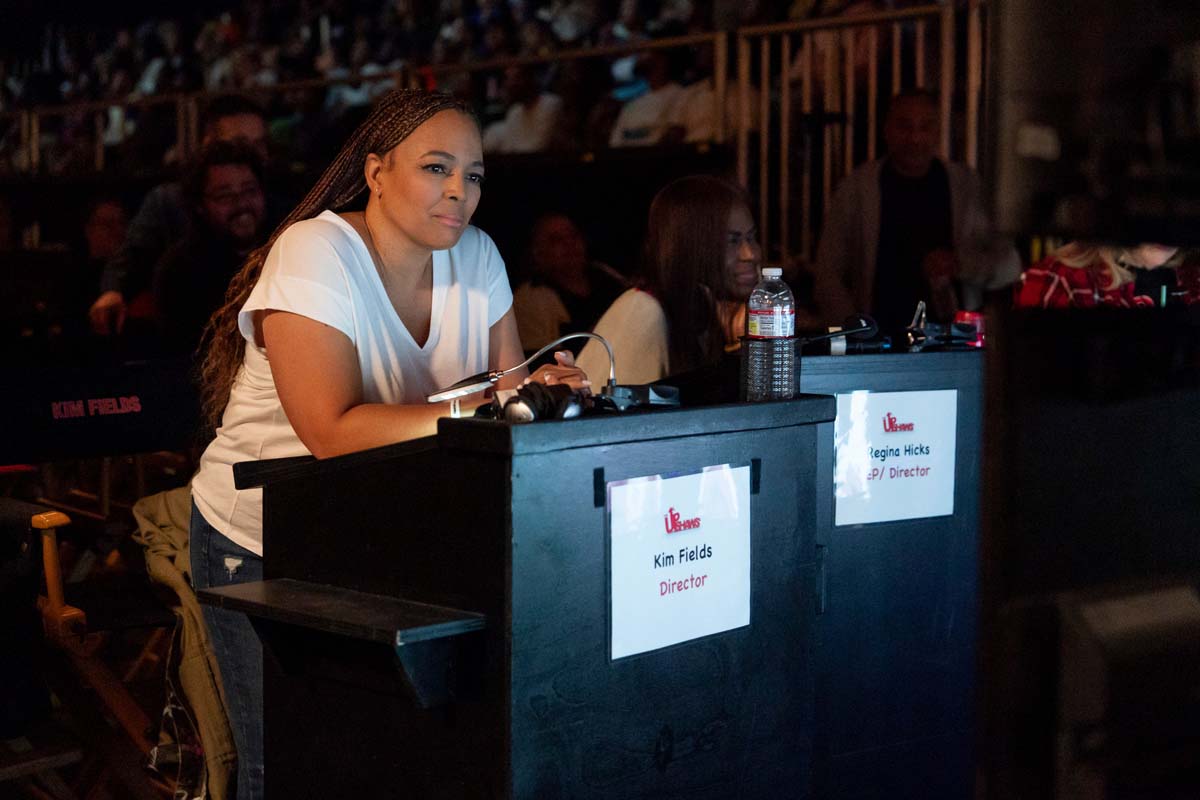
Director Kim Fields on the set of The Upshaws
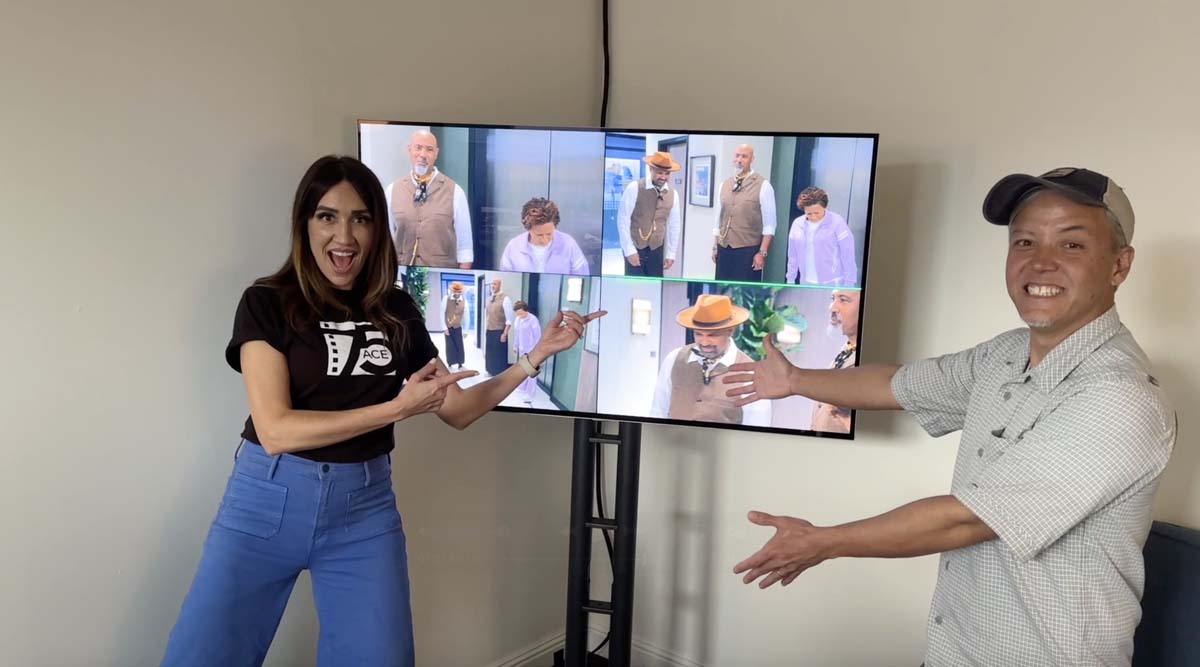
Do you watch it in the four way split?
No. So, the very first time I put it full screen, like you said, but it’s a head-to-toe shot. She’s a very active comedian. She does a lot of act outs. She’s on the floor sometimes rolling around. She’s jumping up and down. So I don’t want to miss any of that when I’m watching it the first time. So I usually put it on the head-to-toe angle and just watch it down one time.
Getting back to The Upshaws, you mentioned being on set. What are some of the things - when you are sitting on set for that shoot - that you would comment on?
For The Upshaws, every director is different. We have a different director every episode, and the way they approach things is different. I’ve worked on several seasons, so I started to really understand each director and what they were doing and what their style is, which is helpful.
But my first time sitting on a multi-cam set, I had no idea what was going on or even how to communicate with everybody. I was very nervous.
I had never, as an editor, been invited on set. Usually you’re in post and you don’t see anybody until you’re doing your editor’s cut. Typically it’s just me working in my own space.But when I found out I was going to be sitting on set, it was pretty overwhelming.
I didn’t know what to do or what I was supposed to be doing there. It’s very, very, very, very fast. They have everything ready ahead of time. They know what they’re doing. There’s a full plan, except I don’t know what the full plan is. So sometimes I’d be asking, “When are they going to get this shot?” So I have to figure it out and follow along really quickly.
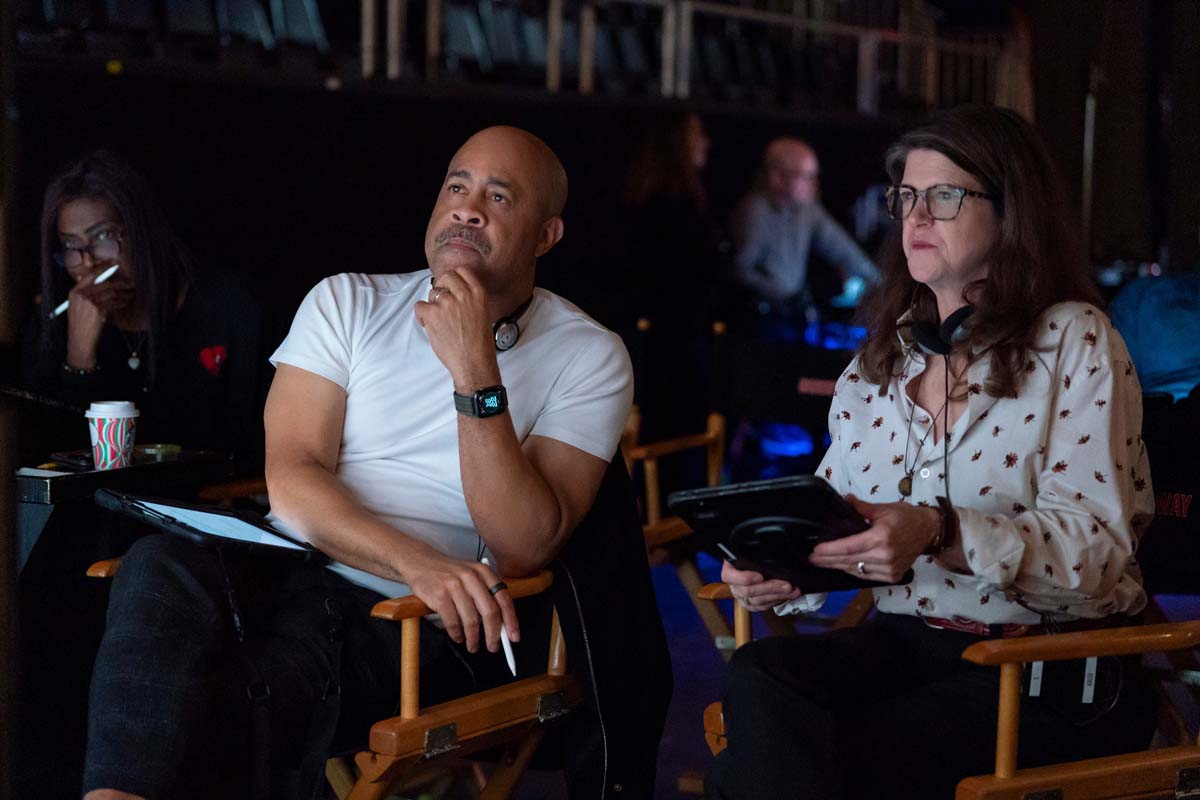
Regina, Robbie and Esther on the set of *The Upshaws*
I also found that it was really tough to watch four cameras coverage at once and trust that we had everything. When you’re only doing 2 or 3 takes, I feel like that’s a really big skill set that those directors specifically have and the producers and the writers, and so I had to sort of learn it.
And I also had to learn that if you want to ask them to get coverage on something, they work by line numbers in multi-cam. So, you can’t just ask for coverage on some dialogue in a specific scene.
For example, “Can you go back and get that line?” I’d have 20 heads turn back and look at me: “What line?” Then I’d realize they’re asking me for line numbers. They want me to call it out by number.
So that’s the communication style with multi-cam. Everything’s by number. “Go back to line 53. We need to redo the coverage for camera A for Wanda.” And you have to be quick on your toes with that.
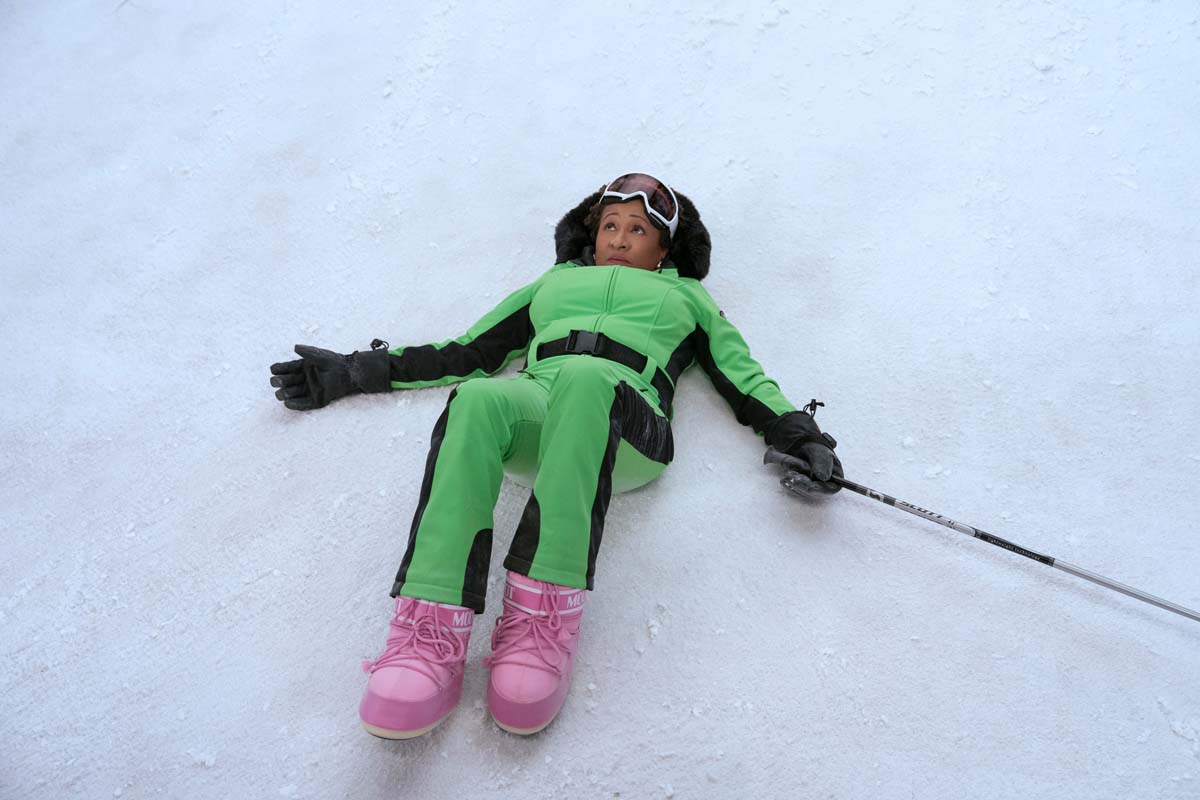
One thing that I will say on this season, we did have that happen where we were shooting a scene where Wanda is skiing on a mountain. The director was a really, really great director, Robbie Countryman. Wanda’s on top of the mountain.
She’s about to go down. She started realizing that she’s stranded up there and she’s never been on a mountain before, and she starts singing a song to herself. There are a couple other snowboarders passing by in this moment.
They say something to her and there’s a shot that he got over her head, where she looks up at the camera and she’s singing and she goes, “Ricola!” And it’s beautiful and brilliant and such an amazing moment, but I realized when he did that shot, either the snowboarders were now no longer there and they weren’t all the rest of the coverage, or they were there.
It was one or the other. He realized it, too, but we were getting to the point where it was lunch and we were going to go into very expensive overtime. So it was a moment of “What do we do? Did we get what we needed? Or are you going to be able to use that shot?” It’s so much pressure to think really fast.
“Do I have a way to fix this or not?” So I took a good 30 seconds, but it felt like an eternity trying to figure out how I could do it - how I could use this shot without ruining the entire day of dailies.
So I figured that probably I could crop it out enough and move the other shot around in the other take, that I’d be able to do it, so I said, “Okay, we’re good. We can move on. We got it.” But that was a lot of pressure on me as an editor, because I’m not used to doing that.
I’m used with them making the decisions and I’ve already gotten what they got. That does happen a couple times a season. It’s just a different thing as an editor to have that power. And also the pressure!
You’ve been nominated for multiple Emmys. Congratulations. What’s your dream project?
I really want to work in dark comedy. Any version of dark comedy. Even as dark as, Ryan Murphy. I really love his content. Beef and all those shows. You are Dead to Me.
That’s my genre. I feel like I have not had the fortunate experience to work in dark comedy yet, but, fingers crossed, I’m going to keep putting out into the universe, and hopefully someday I’ll be able to do that.
Tell me about collaborating with your co-editor on The Upshaws.
It’s typically, one editor, me. But we found that over time, sometimes I needed a little bit of support, so my assistant editor, Brian LeCoz - who is also an editor and a really great editor and teammate - he would jump on sometimes and help me with the pre-shoots because that turnaround is very, very tight, so after he’s done with his job - because he’s also trying to prepare all the dailies for me, and I’m very specific about making sure they’re well organized and that we’ve had everything ScriptSynced before I get them.
There’s a lot of editors who don’t use ScriptSync on multi-cam. I’ve worked with a few of them. They just don’t. But for me it was very important. So once he got his job done, if time allowed, he would take a couple of scenes and edit them as well.
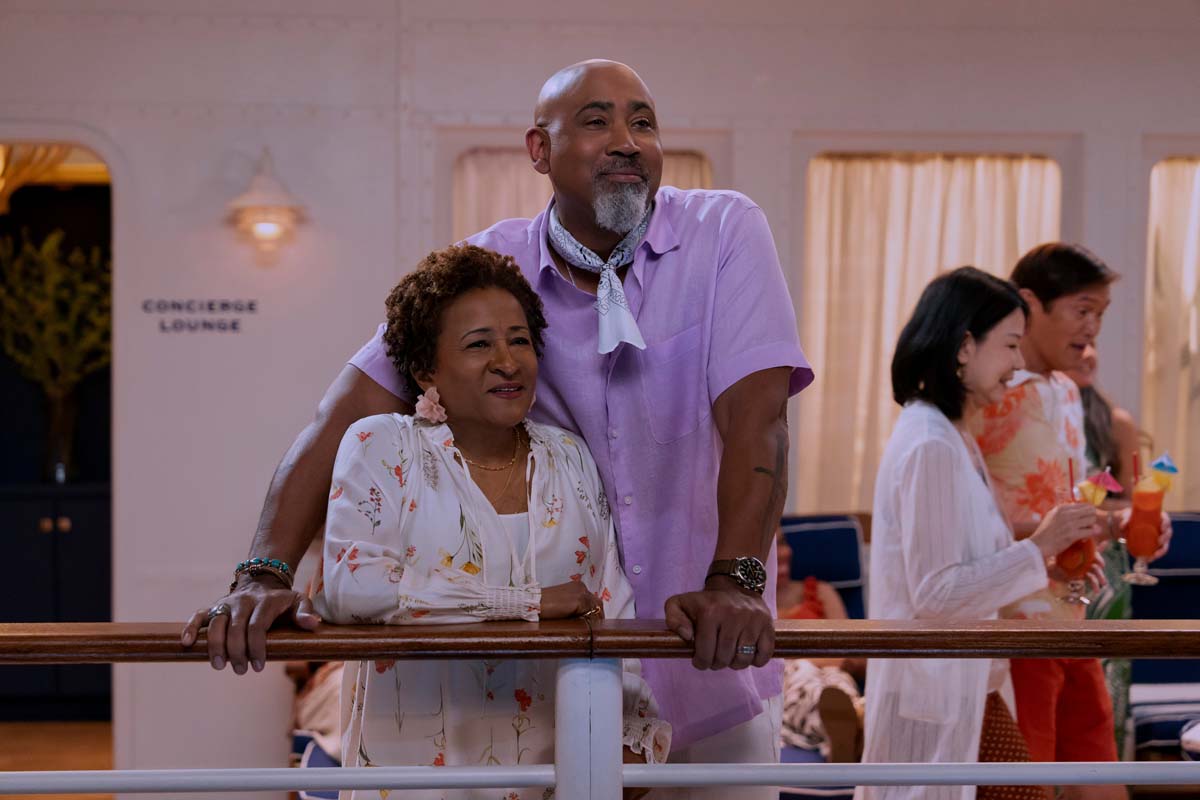
I’m a firm believer that if you work on the episode with me, you’re going to get co-editor credit unless you only cut like one scene or something really small. But Brian would cut at least three scenes, so I would give him co-editor credit. We work together really well.
When we got to season five, I was working on another show, with the Wayans - another sitcom - and I was trying to figure out how I was going to get on to The Upshaws because they overlapped.
One of the EPs called me and said, “How do you feel about Brian editing the first five episodes, then you come in and take over after that?” I said, “Yeah! Absolutely. I think that’s great, and I love it!” He’s been doing all this work and supporting me all this time.
And he knows the show. So he did. And then I cut the rest of the season. But it’s typically one person. Then on season two, I had another moment where I needed some support, and we brought Russell Griffin on to cut an episode with me.
He and I got nominated that season for that episode together. It’s called “Dust Up.” And that was great because Russell has been cutting multi-cam forever, and I’m so sort of newer to the format, so I really learned a lot from him.
He’s a huge mentor and friend to me. I’ll call him with different questions: “So what am I supposed to say when I’m on set and they’re asking me this question because I don’t know?” Russell also directs.
That is the cool thing about editors and multi-cam - since we are on set all the time - a lot of us do wear multiple hats. My last season on The Upshaws I got a producer credit. Russell directs and a lot of other multi-cam editors direct as well.
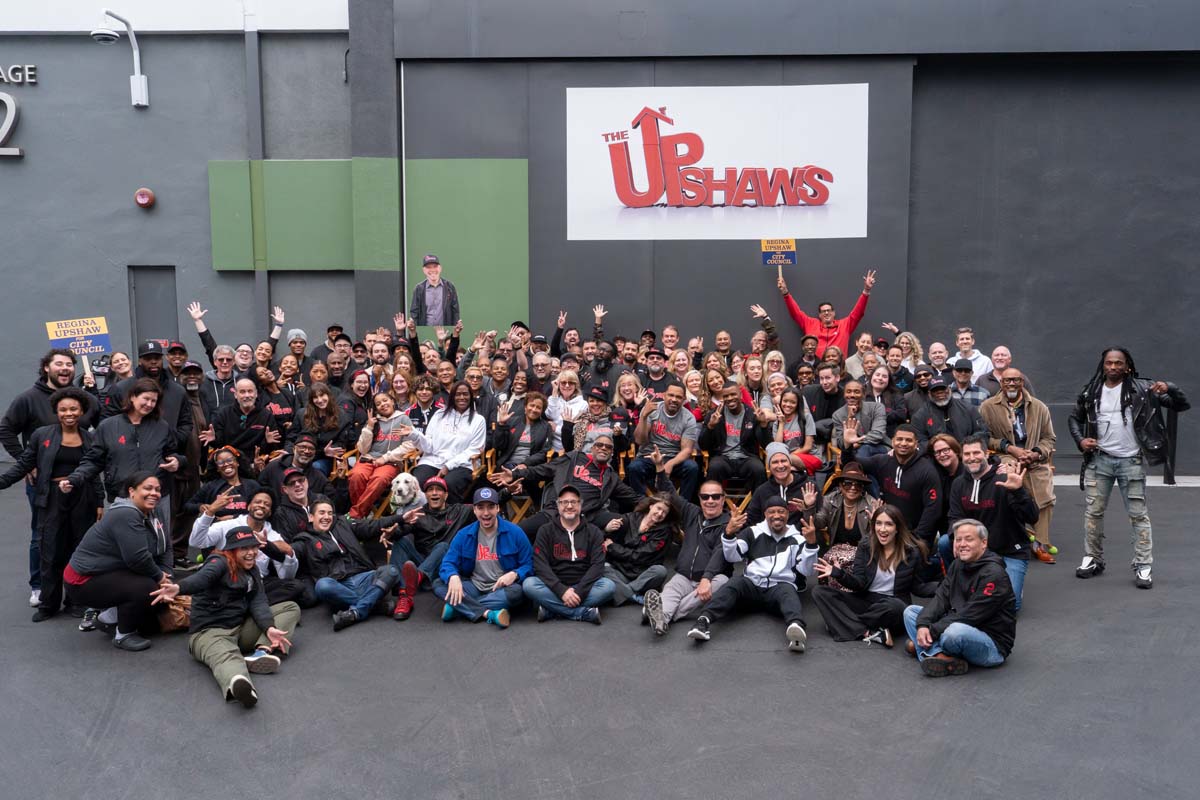
What do you think the crossover is in skill sets between directing and editing and episode? Why is the editor such a good choice as the director?
When you come from an editing background, I think that there are a lot of skills that are very strong that translate to set or to directing specifically because we’re the ones who work with all the footage from the directors, and we can learn a lot from seeing what’s done and how they get the coverage and how they work.
We see all the dailies from beginning to end, and I feel like it’s a big crash course in how to direct, how not to direct… You can have fun and play Monday Morning Quarterback with the footage and think about how you could do it better. If you get that opportunity, you can do that. You can actually figure out what you can do better.
But I would say with multi-cam specifically, it is so hard to direct four cameras at once and make sure that you’ve got all the coverage. When you have limited takes, if you have four cameras, you’re hoping all four cameras got your closeup of both actors, your wide shot, your entrance from the door.
And if you’re not watching all of them at once, you might not see that they missed the entrance or they missed a line. You know, an actor turned off and you’re not getting – as they like to say – “eyes.” You don’t see their eyes. In comedy, you want to see the actor, especially in multi-cam.
So you want to see their eyes when they’re delivering a joke, so you could easily miss it. So I do feel like that sort of being on set as an editor on multi-cam, then learning from the footage in your bay gives you a big step up. It’s a fluid transition to take on the job of a director.
That’s a great place to end this interview. Angel, thank you so much for a really interesting discussion. Congratulations on your Emmy nominations.
Thank you. Steve, thank you so much for having me.
 March 8, 2024
Walter Murch, ACE, "Suddenly Something Clicked"
Today on Art of the Cut, we’re talking with multi-Oscar winner, Walter Murch, ACE. I interviewed Walter in person just before his appearance at the ...
Read more January 11, 2024
Poor Things
Yorgos was an ACE nominee for The Lobster. He was nominated for a BAFTA and an Oscar and won the ACE Eddie for The Favourite. ...
Read more August 17, 2023
Triple Emmy-nominee Stephanie Filo, ACE
Today on Art of the Cut, editor Stephanie Filo, ACE. Stephanie just hit the Emmy trifecta: she was nominated for three Emmys for three different ...
Read more
Subscribe to our newsletter
Get all the latest news, blog posts and product updates from Boris FX, delivered directly to your inbox.
Welcome!
Thanks for opting-in to our newsletter. You'll receive an email momentarily with your confirmation.