













The AI Doc: Or How I Became an Apocaloptimist
Editors Daysha Broadway, ACE, and Davis Coombe, ACE, discuss the structure of the film, creatively re-purposing animation, and when not to cut on-camera interviews.


Today on Art of the Cut, we discuss the documentary, The AI Doc: Or How I Became an Apocaloptimist with the editors of the film, Daysha Broadway, ACE, and Davis Coombe, ACE. The film was produced and directed by some of the same team that created the film Everything, Everywhere, All at Once.
Daysha’s been on Art of the Cut before for The Black Lady Sketch Show, for which she won an Emmy and was nominated for an ACE Eddie Award. She was also nominated for Emmys for Born This Way, and a Peabody Award for Surviving R. Kelly.
Davis is known for editing Casting JonBenet, The Social Dilemma for which he is an Emmy winner, Saving Face for which he won another Emmy, and Chasing Coral.
Daysha and Davis, it’s so nice to have you on the show. Could you introduce yourselves?
Broadway: Hi, I am Daysha Broadway, ACE, I am co-editor of The AI Doc: Or How I Became an Apocaloptimist.
I love that title! Davis?
Coombe: Hi, I’m Davis Coombe, and I’m one of the editors on *The AI Doc: Or How I Became an Apocaloptimist.
What was the schedule on this? The doc starts when the director learns he’s having a baby with his wife, and the last frame of the movie, he’s toting around a two year old, or something like that.
Broadway: Initially the producers had the idea of of making this film in about a year, which obviously didn’t happen. Both Daniel Roher and Charlie Tyrell, the co-directors, had a baby on the way. Their babies were going to be born within a week of each other, coincidentally.
They’re both from Toronto and they knew each other going into the project. I don’t remember what year that was, but when I had my interview, the idea was that we would make this documentary in about a year, so I started cutting as soon as they did the first interview.
I was cutting right away with sort of a loose outline, cutting with some ideas of a structure, but mostly focusing on the opening since we didn’t have a bunch of interviews yet, focusing on how we were going to set the tone for the film, how we were going to bring people into it, and what that subject matter would be.
Initially, it was just: Daniel’s having a baby. Daniel fell in love with Caroline and said he was going to marry her within ten minutes of meeting her.
That actually happened very quickly and they had a baby on the way. This is like an existential crisis for him.
The post process for me at the beginning was just figuring that out. Then as interviews kept coming in, structuring the timeline, figuring out where those interviews are going to go and where each beat that we’re talking about is going to play and how it’s going to play and how long it’s going to play, and when we’re going to transition to the next phase as we got interviews and we started to hear more of what the subjects had to say.
We would try to build new narrative parts of the film. There were a lot of things that we tried over the course of nine or so months.
When you came on, Davis, how long was that process for you?
Coombe: I was talking to my friend Shane Boris, who’s one of the producers, and he said, “This movie that we’re working on, we thought we’d finish it in a year. We’ve been working on it for several years already.
That sounded familiar to me because I’m used to working on movies that are moving targets and evolve over time.
They were kind of in the weeds and they wanted to bring in additional help, so I ended up working on it for about 15 months, during which the movie evolved quite a bit, and we shot a lot more interviews.
We had yet to shoot the interviews with all the CEOs and figure out how to use that stuff. We ended up going back to a lot of our key interviews several times.
A lot of the animations were still evolving and a lot of scenes that had been conceptualized as animations changed or got deleted from the film and we had to figure out how to repurpose them.
Of course, the intro to the film went through more incarnations than I can remember because of the nature of the subject matter.
We were chasing a moving target and things that we thought were super-important at the beginning of the process were things that most of the public kind understood already towards the end of it, and we had new concerns and new ideas to work in, so it was changing every day.
I want to go back to Daysha for a minute. You started to talk about that pre-title sequence. Can you describe a little bit more about maybe some of the creative discussions or what you were thinking when you were building that to set a tone for the entire documentary?
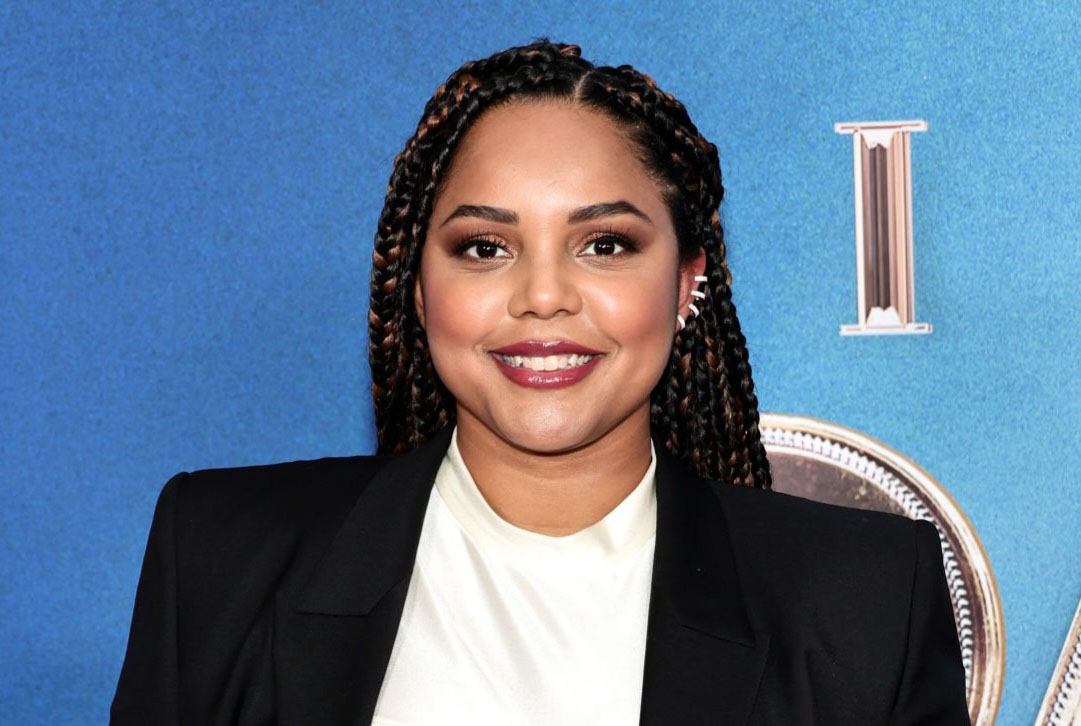
Editor Daysha Broadway, ACE
Broadway: There was a point where we had a lot of Tristan and Aza’s interview. Jeffrey and Connor and Tristan and Aza were saying some very disturbing things.
If I was just someone who was watching this in an audience - hearing that people who work on AI say that they don’t think that their children are going to make it past high school – that’s something that Tristan said.
There were moments like that. And the example that Connor gives is of the AI that decided to blackmail its creator so that it was no longer going to be shut down! These were things that I feel like - at least I personally – were very dark, and we’re going to hit people kind of hard.
I always thought we should start on a lighter note because of that. The best movies make me laugh, and that gives me permission to cry, right? Because now my guard is down, so I wanted to establish that kind of levity at the beginning.
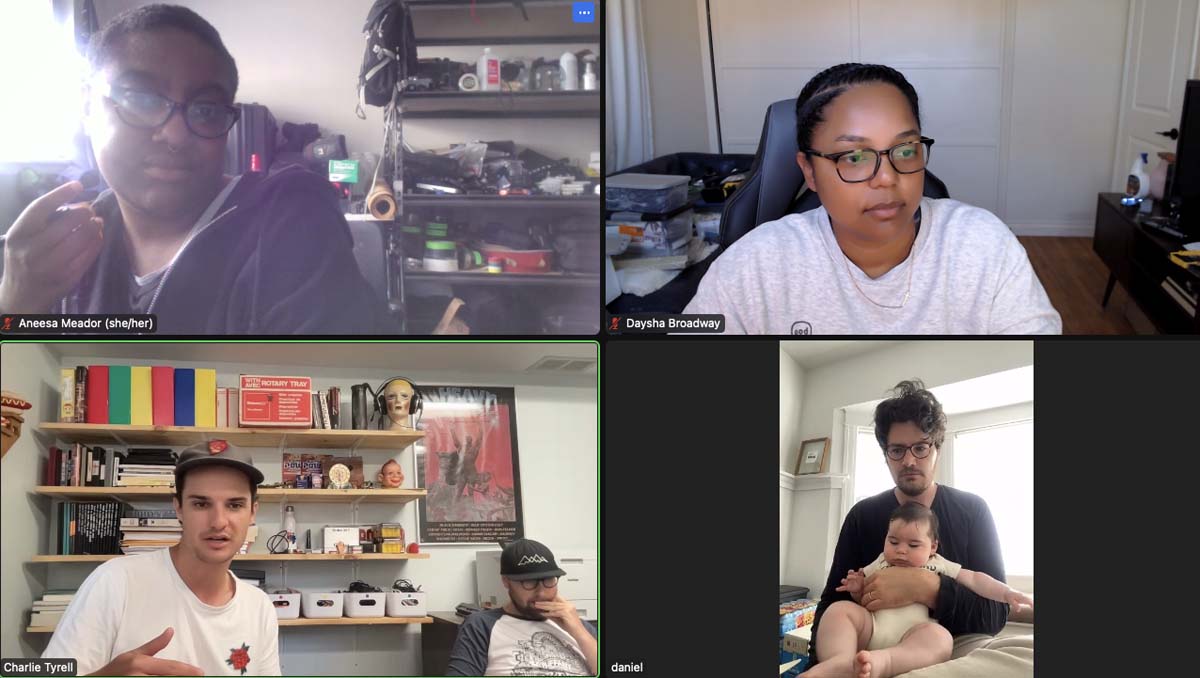
One day, Caroline Lindy - who I worked with on “Your Monster” - came into the office when I was working on this at Parallax. Caroline is Daniel’s wife and the narrator of the movie.
I showed her one version of the opening that included Zoom interviews of regular people they were interviewing because they were all expecting children.
I was doing kind of a supercut - intercutting that information with Caroline and Daniel’s meeting and trying to kind of create this opening. It wasn’t even about AI. It was just about what it’s like to be a human being creating a human being, and the terror that that already brings to you.
Caroline watched it and she was laughing because I made it funny. I was landing jokes. The people were naturally funny because they were couples. And sometimes when you put a camera on a couple, they just start bickering or they start remembering things differently and things like, so I thought, “This is great.
The point was to start the movie with the most human version that we could, because we knew we were going to get into something very anti-human. She said, “Oh! It’s a comedy! That’s brilliant! Of course it’s the comedy! It should be funny. And I said, “Yeah, but then it won’t be.” So that was the idea.
That version went to Daniel Shiner. I think he watched it and agreed, “Yes, this is how we should start it - a little bit lighter.” That is no longer in the movie. That was just one of about 22 versions of this opening that I cut, but the tone of it stayed.
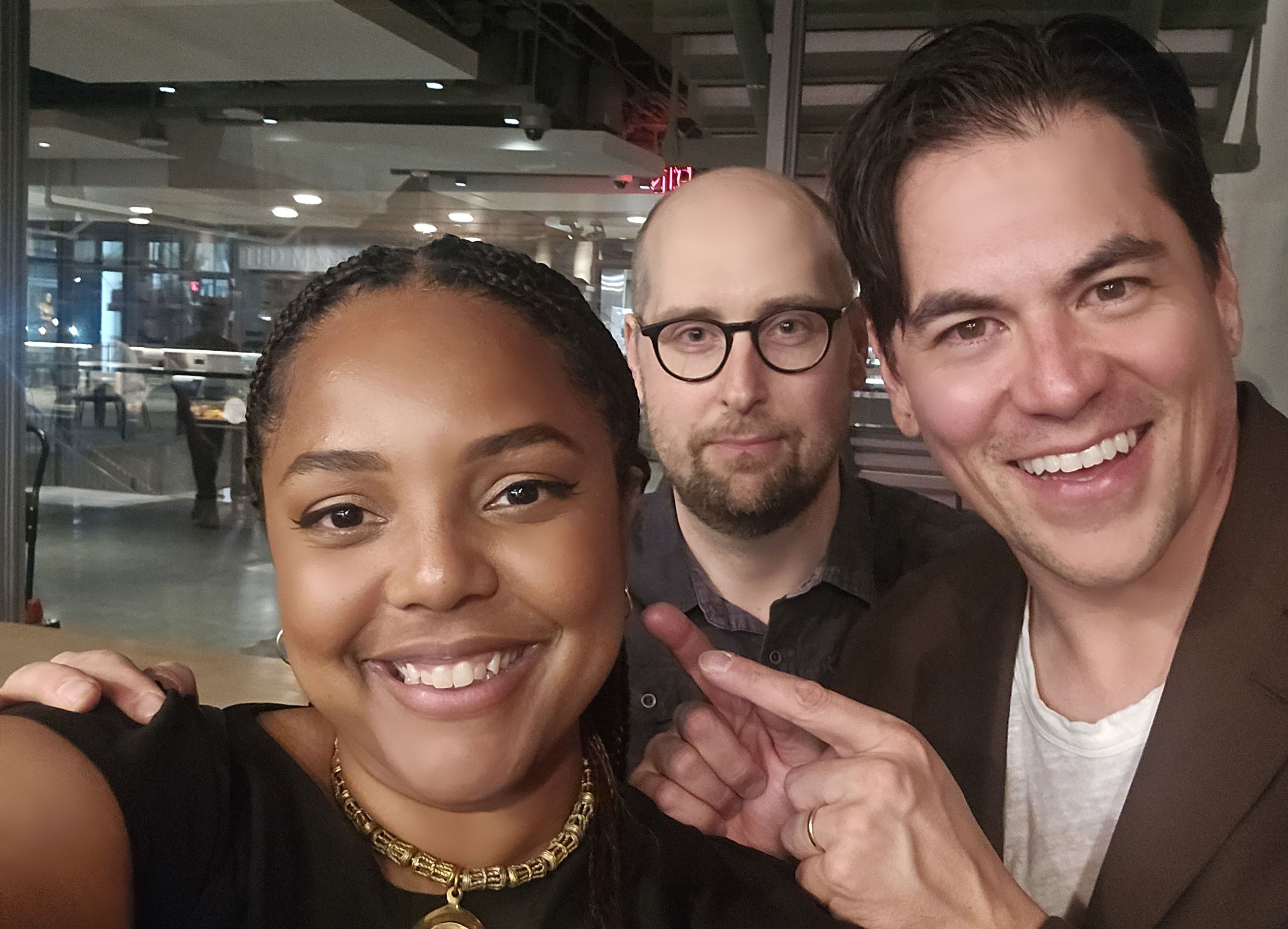
There are different ways we brought in the fact that Daniel was going to have a child. We used to bring it in earlier in the cut. Sometimes we would move it later in the cut as a reveal.
I believe at one point it was [additional editor] Paul Roger’s idea to wait to say something about it. It moved around a lot and I like where it lands now.
The cold open was always going to be where we established Daniel as our protagonist, and Caroline and Daniel’s love story - just to bring people into the type of movie that they didn’t know they were watching, then kind of ease them into all the technical jargon that they’re about to receive in a way that feels easier for them to digest, because there’s a lot of information that’s going to come at them.
So we just wanted people to relax into the movie first and know that human beings created it. Human beings with real lives are going to tell you the story, and the journey you’re going on is with a human being with a real human being problem.
Davis, how did that change as you picked up the mantle?
Coombe: The biggest change that happened early on when I was there was that we decided to move the reveal of the pregnancy father into the cut, and that kind of changed the nature of the opening, because so much of the earlier openings were about couples looking forward to having kids, talking about being expecting parents.
I really felt like that was a bomb that needed to drop later - sort of an inciting incident. Paul had initially moved it later, but at the same time, I think starting on a lighter note is definitely the right way to go.
One of the biggest challenges that we had putting the film together was figuring out exactly the nature of the narrative device that we used to get through this otherwise academic essay about a rather technical subject.
We have tons and tons of points that we need to make - exposition that we need to explain - about What is AI? How does it work? Why is it new? Why is it different now? What are the problems that we’re facing and what should we do about it?
All of those things happened in the film independent of any kind of story really, other than the story of technology, which is pretty dry generally to most of the public.
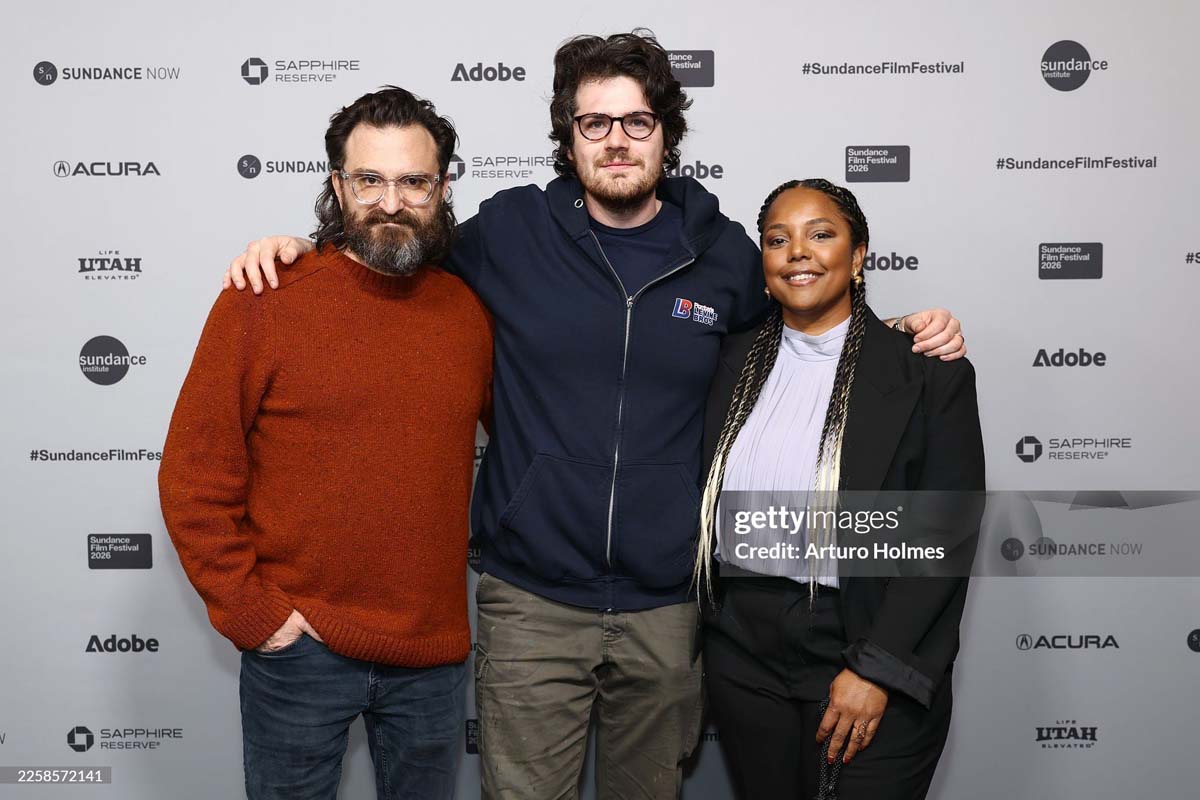
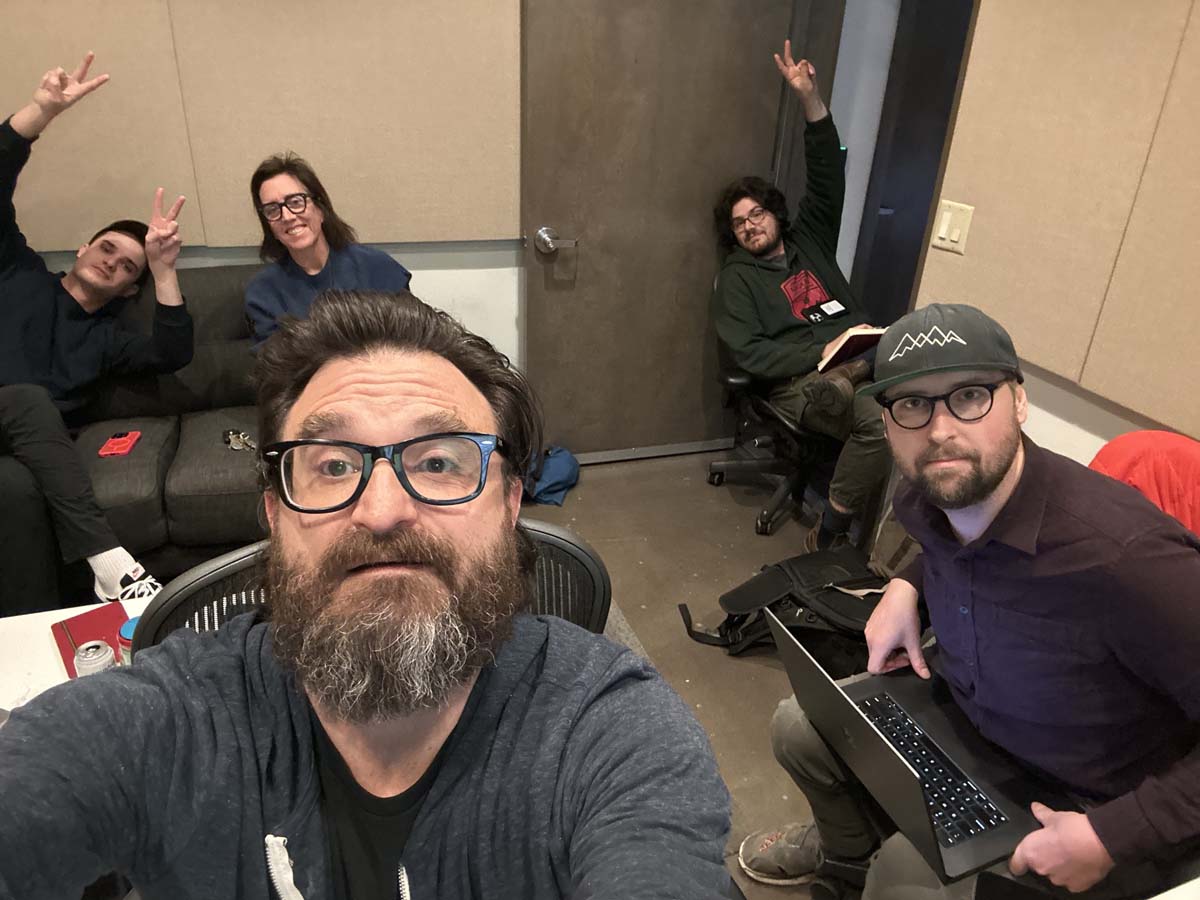
Editor Davis Coombe, director Daniel Roher, editor Daysha Broadway, ACE
Movies like this usually have two components: There’s this kind of academic essay component, then there’s “What’s the story about? Why is the audience going to keep watching?”
In this case, I think they wisely decided early on to let Daniel’s character of the director kind of guide us through the story. It really was a matter of, “Well, how do we set Daniel up? Who’s Daniel? What does he know already? What does he have to learn?
Is he what does he care about? Is he a stand in for the audience? Does he feel threatened by technology? Does he understand it already? Does he not understand it? Is it after his job? Why does he even care about AI?
One of the other early ideas that we had was Daniel recounting his first experience with generative AI, and he sits down on a computer and just type something silly into the computer and says, “Show me a picture of a poop monster.”
The computer instantly creates all of these very elaborate images of monsters made out of excrement. We had created a version of that where where we shot Daniel in his little studio in his backyard, interacting with ChatGPT and being surprised and then being confused and then being terrified.
That was a version of it that was almost an observational scene of Daniel’s interaction with ChatGPT. But by the time we were getting to the point where we really needed to figure out how to start the movie - which is always at the very end of the edit, by the way - he already had that experience.
There was nothing new about sitting your computer and typing into ChatGPT: make me a picture of my Labrador retriever walking a pet dinosaur. Everybody has done that, so it just wasn’t interesting anymore. So we were constantly trying to figure out how to get the train out of the station and start this journey.
As the film took shape, it was the story of Daniel and his family. It became more and more obviously the narrative engine to the story. Daniel had been saying, “Have you ever seen this movie that I made for my for my wedding?
It’s a short little story, about how he met Caroline and how they fell in love, and a version of that ended up being used to tell that story.
That happens before the title. It’s a very, chaotic, cutty flash-frame filled, choppy aesthetic of the story of Daniel and his wife meeting and him discovering AI and freaking out about it. It came right out of Dan’s brain, and, it was just a matter of massaging it and finessing it over and over and over again until all the producers were on board. We thought, “Yes. This this ticks all the boxes.” It was one of the toughest openings to settle on with such a big creative team.
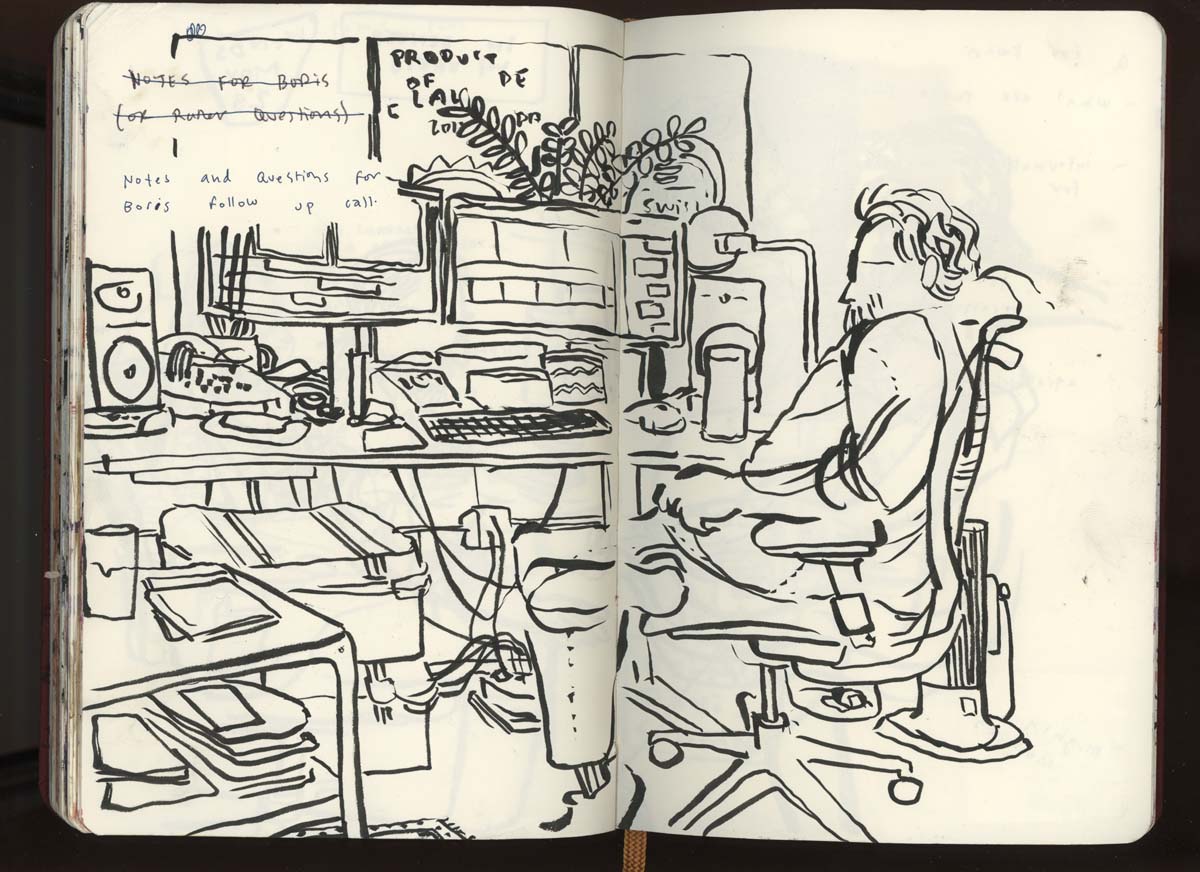
Broadway: Daniel talks about his ADHD in the film. At one point I remember talking about the cutting style and the cutting pattern of the film, as if the film also had ADHD, as if it was a part of Daniel’s brain in that way. That was a great direction to go off of.
Sometimes we would take the subject this way and then move it this way and then come back as it was in the film would operate just like Daniel’s brain. So at least that part of it was there.
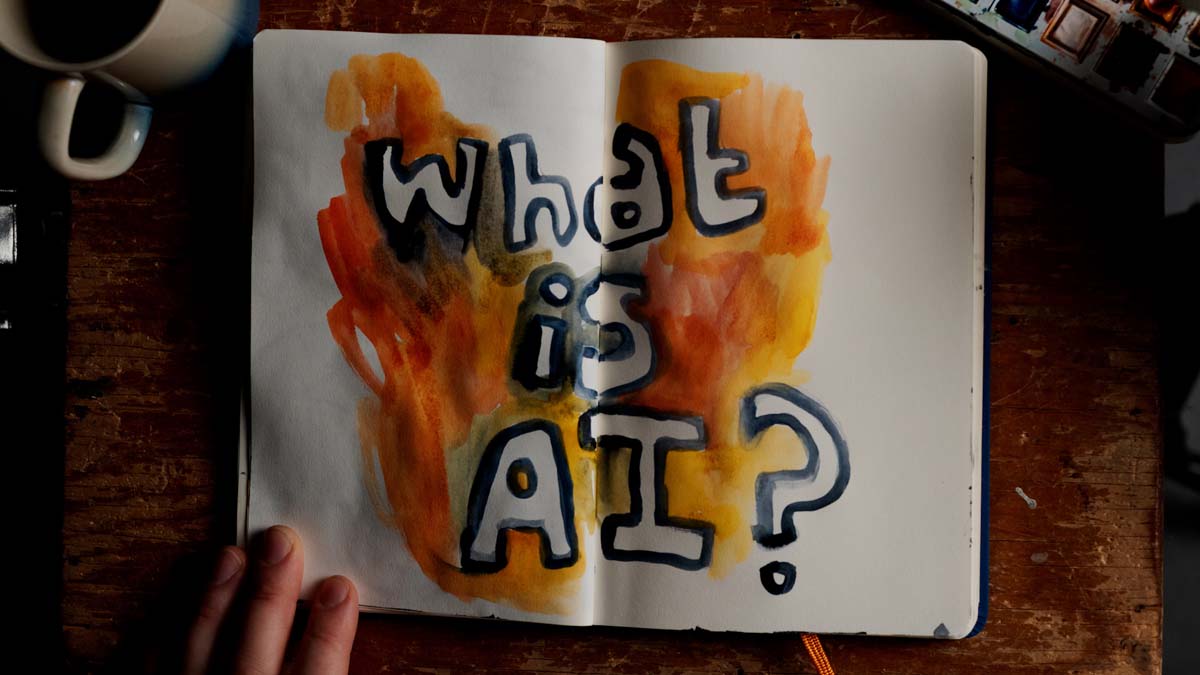
There was a scene about Daniel’s ADHD at one point. One of the interviewees pointed it out because Daniel would be sitting there painting while he was talking.
They stopped the interview. Daniel had to show the interviewee the paint and explain to him that he had ADHD and it was the way he it helped him focus. His notebook is like his blankie.
It’s a crazy thing to see that the whole time these interviews are going on, Daniel is on the set furiously painting watercolors of the person he’s talking to and somehow keeping up with the interview. It’s pretty strange to see.
At one point in the documentary he offers his painting to the interviewee…
Broadway: He gave everybody one.
The use of animation: Davis mentioned earlier that that evolved: that there were times when entire story beats would be deleted and you’d want to figure out a way to re-use them because they were expensive, obviously. What were you using either as placeholders during when you didn’t have that animation and then how were you interacting with the animators to make sure you got what you needed?
Broadway: We had a lot of conversations with Phil and the team at Stop Motion in Toronto (www.stopmodept.com). They’re awesome, by the way.
Charlie Tyrell is an animation heavy director, like his short: My Dead Dad’s Porno Tapes. He already kind of had that in his head where he was going to take the animation stylistically.
The placeholders were probably the most fun I had making this film, because my assistant Aneesa Meador and I - that was the moment we got to play. When I interviewed with Charlie for the first time for this job, we were talking about animation a lot because I said to him, “I think animation is great. It could be a great tool, and it’s obviously cool.” People get a break from the talking heads that they’re watching.
I always feel like you have to know why you’re cutting to animation. You can’t just throw it in because you don’t have anything else. I told him that my favorite use of animation recently was Harry Potter and the Deathly Hallows when they’re explaining the Deathly Hallows.
It’s just voiceover and it’s really cool animation. There was no other way they could have done that. It feels necessary, intentional, and it really helps, because it’s such a fantastical story.
We had, what we now call, “The Promise versus the Peril.” I think it used to be called The Dual Use Problem.” When we got to “The Promise versus the Peril” and got to the Peril, I used that whole sequence from Harry Potter as a placeholder.
I kind of blurred it out so that you could see it - you knew what it was if you’ve seen the movie - but there we put titles over it, explaining the animation that we were actually going to put in there. It made it fun to watch.
Even with “The AI race” I did the same thing, but I put in Mario Kart gameplay, and we put the music behind it, but you could hear the interview subjects talking over it. It was mixed pretty well in the temp mix. The idea was to sell the cut.
I want people to know that the tone of this is going to shift when we get to the AI race. It’s going to feel like a race.
The tempo is going to go up. Your heart’s going to be beating a little bit faster, and all this information about how all these people all over the world are trying to get to this thing before the next person, you’re going to be downloading that.
I think the AI race is played with newsreels in the final film, which I think is great because it allows people who don’t watch the news - people who are just creating funny AI videos and thinking that’s all AI is - to see AI realistically out in the real world. People in the news are talking about this all the time.
People are discussing this all the time. This is very real. There are times where we were going to use animation but it later changed to something like a montage of newsreels from all over the world because it was necessary, and I think that was it was a really smart choice. But in the meantime we were pacing out these slates, trying to sell the cut, sell the idea.
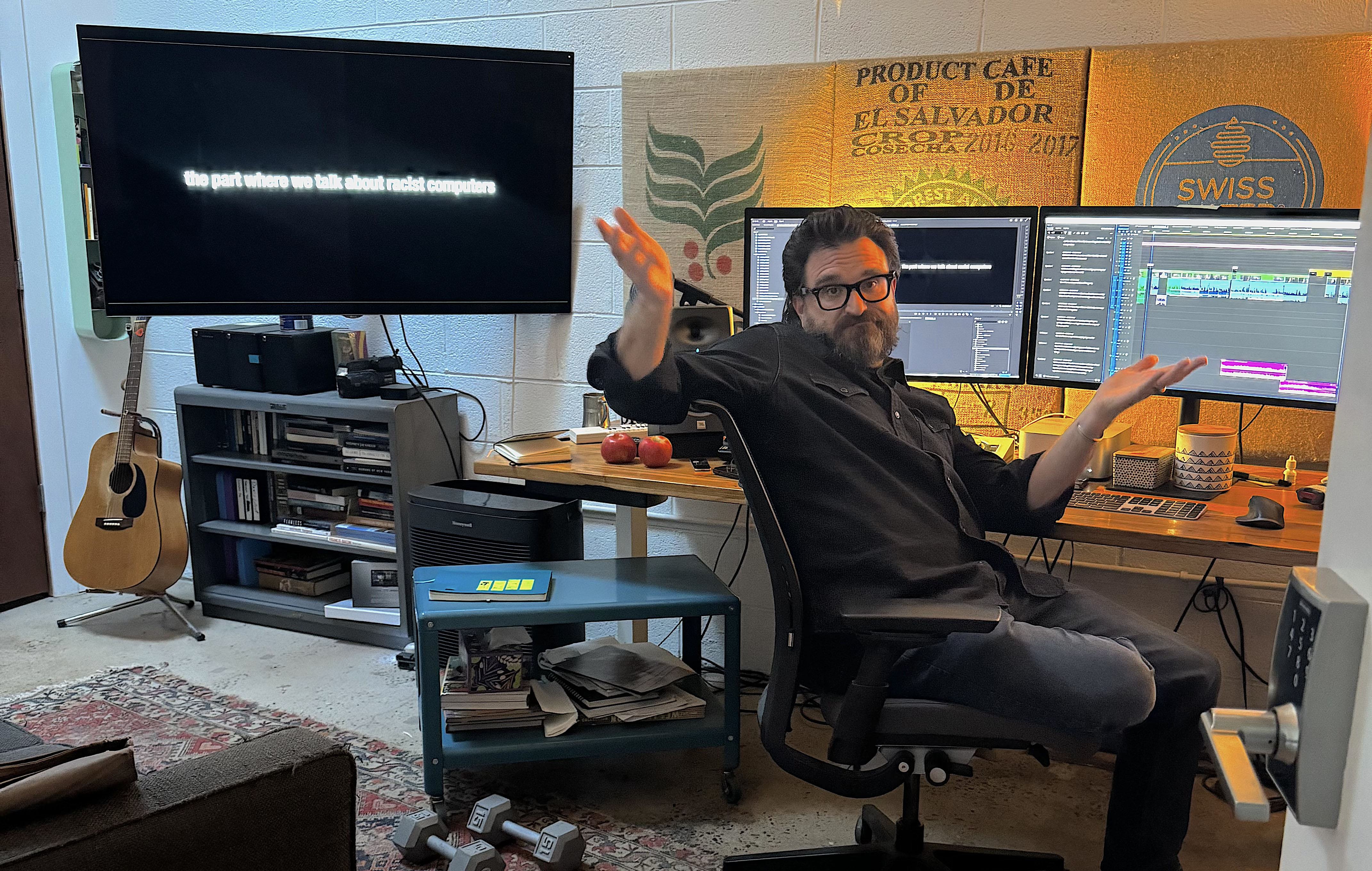
Coombe: It’s fun to just type on black and just cut it in as a placeholder: “Yeah. We’ll figure this out later.” The farther along the film got, the more often we would just do that because we had sort of realized at that point how much things were changing.
We were talking about the animations all the time, and figuring that out to stay on the same page with the other director, Charlie Terrell, and the animators, keeping that in mind. I was careful not to not to temp animation in that wasn’t going to happen.
The section that we call the AI race changed from something that was really a lot of fun and kind of silly to a lot of typical documentary news archives. Part of the reason was that - at that point in the film - we’re not really being funny anymore.
We’re explaining why we are in such peril at this point. We’re explaining the dynamic of the current situation and how it is putting us in jeopardy.
We’re done luring people in with humor at that point. We’re laying out the stakes of what’s going on, but also we were sort of out of the animation budget, too, so, we had to get creative.
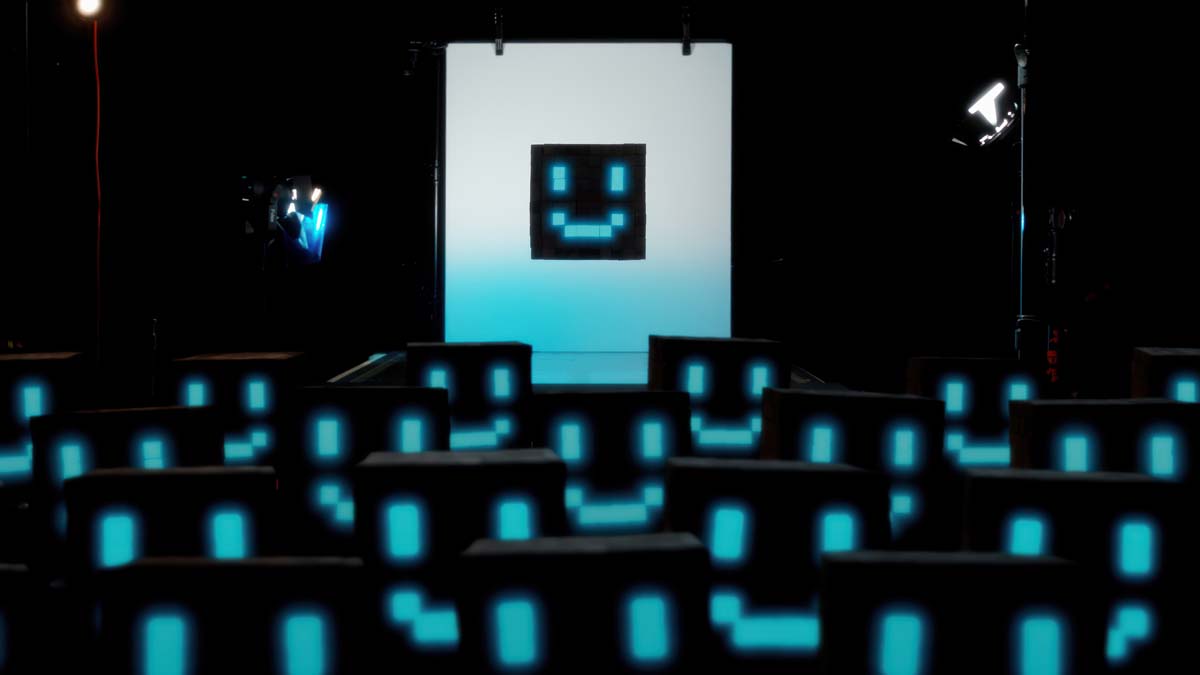
A lot of the animations that are still in the film took a long time because these are true stop motion animations. So they were objects that were built and moved one frame at a time and photographed and then put together after the fact. I mean, there was a whole other post-production process that happened for that.
A lot of these things were built and put together so beautifully only to decide that we had to lose the scene! We couldn’t go there because we sort of realized that the metaphor that was someone was using in the set and interview was no longer the case, or just was too far outside of the scope of what we were talking about, or just a little too outside of the frame that we were trying to create.
We had to find new ways to use those animations, because we had spent so much time and money on them, and they’re so engaging to look at.
I think my favorite example of that is the mountain that is built in Daniel’s studio. When he’s talking about “sometimes it feels like I’m climbing up a mountain” that animation was built for a completely different scene. That was an idea that I came up with to reuse that animation to keep it in the film. It also ends up setting up this whole conversation with the CEOs.
That’s really interesting, because that animation seems so central to the film…
Broadway: Because it’s Anxiety Mountain and it used to be Bullshit Mountain. There was a reason for that, but they kind of veered away from that. That was a good repurposing.
What NLE were you cutting in?
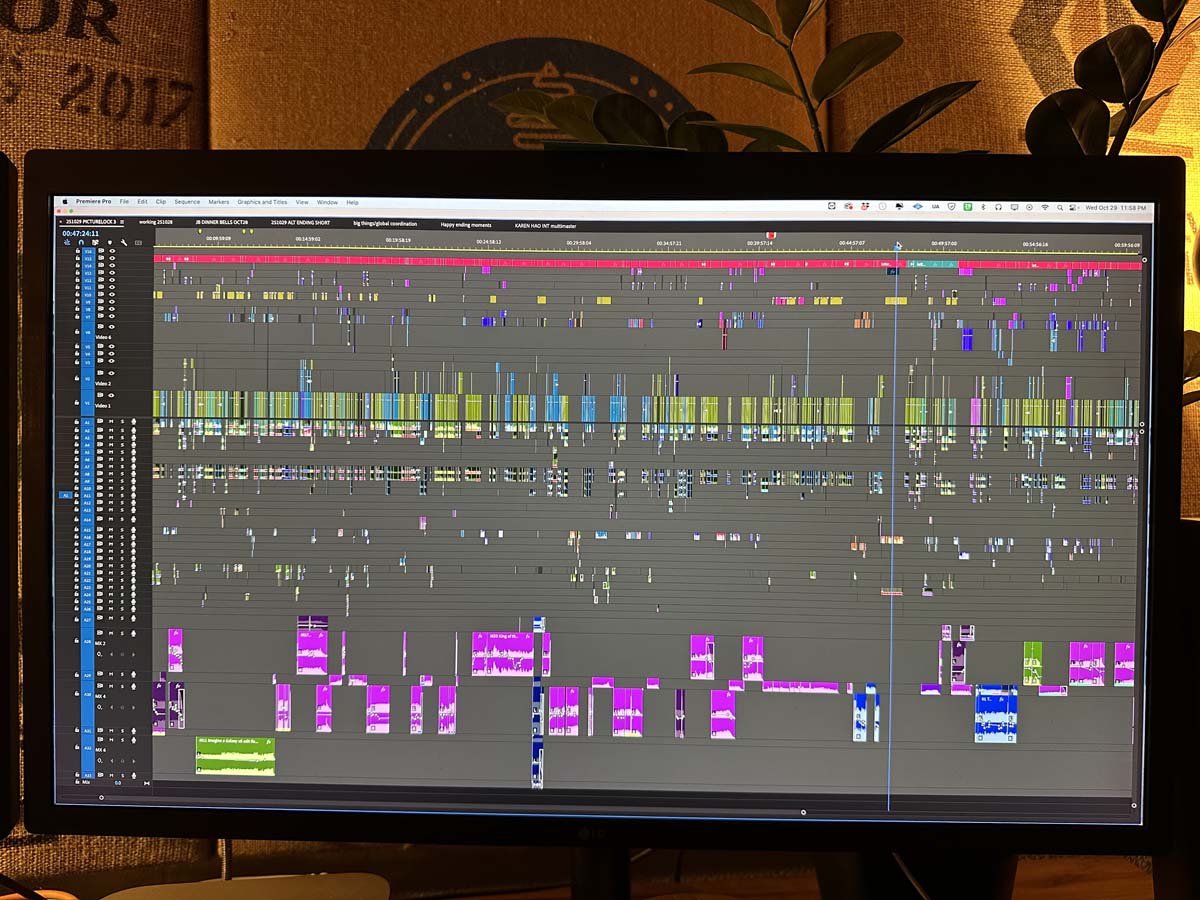
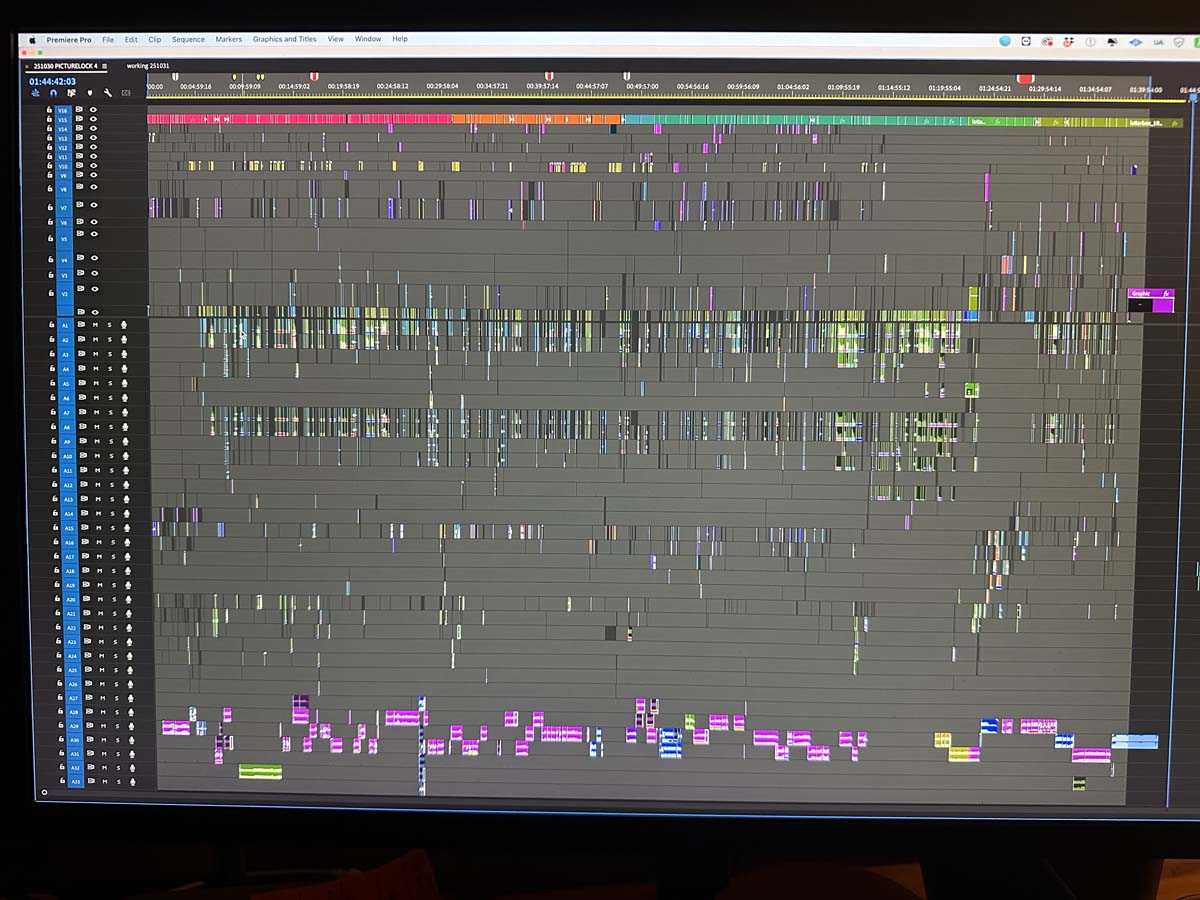
Broadway: Premiere. We were cutting up at Parallax and their servers and everything are set up for Premiere. It’s where they cut Everything, Everywhere All at Once, which was cut on premiere, and producer Daniel Kwan can hop into Premiere. He knows how to use it.
Coombe: Yeah. Daniel knows Premiere and director Charlie Tyrell knows it. Everybody knows it. I don’t use the Avid. I started on the Avid years and years ago. It’s been so long since I used it regularly. I prefer working in Premiere. It’s just easier for me.
Premiere Pro timeline screenshot
Getting back to the topic of animation, talk to me about requesting graphics and animation. Is that just a conversation like: “This is what we need?”
Coombe: No, because of the nature of our animation. If I had a new idea for an animation, I would have to bring it up gingerly with Charlie because of how tough it was. It takes a day of work on the animation camera to get less than a second of animation ready to go. And that doesn’t count all the time building the sets and building the puppets or whatever it is for animating.
So that process was very careful and thoughtful. There are few instances of what I would just call “motion graphics” where we would mock stuff up. I’d draw something on my iPad and just plop it in there.
But in most cases, the actual animations were things that had been brewing and fermenting in the minds of everybody involved - especially Charlie - from the beginning and, you ultimately evolved into what they are in the film.
Broadway: Yeah, they were always going to build the one of the shed and the idea of it breaking apart and getting us into the studio - that was an early-on idea.
So we knew that construction was going to happen. I would request storyboards if they existed just to placeholder things in.
But earlier on we had a little more wiggle room because we were just coming up with the ideas of where we would place animation. I would send Michael 30 seconds of a cut and say, “Here’s what I’m thinking for this section.”
And David said, kind of gingerly, “What do you think? I would like this to happen.” Then I started to get storyboards and drawings.
We would scan Daniel’s notebook, and I could use those scans from Daniel’s sketches in his notebooks to build things out, as well. So that was really helpful, knowing that they would be animated later.
Coombe: When I came on, there was still this idea that there was going to be this little movie-within-a-movie. There was a whole screenplay that was going to be animated.
That was going to be the story of two different versions of the future: the future where we don’t get it right, and the future where we do get it right. You had done elaborate edits of that with storyboards…
Broadway: Yeah, I was excited. There was even temp ADR. I put on my voice actor voice. I was excited about that portion of the film because the concept of it was grand. I thought, “We’re going to be watching this documentary and suddenly be in this grand narrative film. It’s going to shock people. It’s going to be so cool.
Let’s talk about structure for a minute. So it has a very… “structured structure.” There are clearly defined segments. Dirst he’s terrified of AI, then he becomes the apocaloptimist, then we have something else, then the CEOs. It’s definitely formed around a couple of centralized ideas. Can you talk about making that decision or was it cards on the wall? What happened with structure there?
Coombe: There were cards, and there were ideas like that that were sort of moving around a lot, but there are always these bigger modules. There was this: “I don’t know how we’re going to start this movie” module that had lots of little cards in it.
That changed quite a bit. Then there’s the “Meet the Dreamers” module, which is when Daniel learns how scary this is. That was a big chunk of the film. That was kind of always where it was. It was always at the beginning of the movie.
Then there was the “Daniel learns the other side of the story.” We always knew there would be something in between them. That kind of evolved as we discovered more and more of these secret recordings that Daniel had been making with his wife.
Then there was the “Payload Delivery” section, where Daniel learns that neither of these two possibilities are the absolute truth, and that what is actually happening is that it’s a little of both.
But there was the question of why? Why is it a little of both? We knew that the incentives and the race dynamic was always going to be another big module.
Because it took a long time for them to secure those CEO interviews, the question of how do we use those interviews was something that took a while to figure out.
There’s a happy accident there that it took so long to secure those interviews and get those people to sit down, that it ended up being kind of a good narrative device.
That was part of Daniel’s journey. He’s climbing up this mountain thinking he’s finally going to get to the bottom of things and finally going to get some answers and he goes all the way to the top… well, you’ll have to watch the movie to find out what happens when he gets there.
The CEOs also could have been interspersed throughout all those sections and not had a CEO section.
Coombe: Right, and I think maybe that was the plan early on. By the time we finally got those interviews, it felt like such a coup. We wanted to capitalize on that. Also, we realized that at that point, the audience is going to want some answers.
They going to want to talk to the CEOs. But if they’ve been hearing from them all along, then we didn’t really have a card to play at that point, so holding off on that until the very end was a way of essentially putting some plot into this otherwise academic essay that we were constructing.
There’s a lot of talking heads in this documentary. When do you show them on camera and when do you not show a person on camera?
Coombe: I don’t like cutting away from people that are talking in interviews. When we were working on Casting JonBenet (documentary, 2017), they were single camera interviews, centered in the frame, looking straight into the camera. There is no B-roll. That film has no cutaways. Every single comment from every interview that we used is uncut.
So figuring out how to get these comments from people without “Franken-biting” them was the tricky part of that film. Ever since I worked on that film, I’ve realized the power of not cutting up an interview. My preference is always not to edit interviews as much as possible, because as soon as you start slicing and dicing and moving people’s sentences around it, you lose a bit of their humanity.
I think that people don’t always express themselves perfectly, but the way that they express themselves is often as important as what they’re saying. So my choice is always not to cut away to people. Generally, when we cut to Daniel on the set, it’s to get a laugh or to tell the audience how Daniel is thinking - to give the audience an update on Daniel’s emotional journey.
However, this was a really dense technical topic, and we definitely had to franken-bite people quite a bit. We did that with multiple cameras on the interviews.
Most of the edits from one camera angle to another in the film are probably contiguous edits. They’re probably there for pacing, or for emphasis rather than because we’re chopping people up.
Broadway: I always thought Daniel was the audience, so I anytime we cut to him, it is because he’s us. So I would you would play his reaction off of a direct quote from one of the subjects that’s being interviewed. It’s not like none of those reactions are cheated.
I had a bin full of Daniel reactions. I just I went through all of them. I would request more when they went to go interview someone else, “Can you swing the camera around to him more?”
At one point we had his laptop camera that was always pointed at him on the first interview. There’s one shot of it in the film still.
Coombe: It is great the one time we use it, though.
Broadway: The one time, because we only use it once, but if you could swing it around to him it feels like we’re picking up something that’s happening in the present, and that was much better early on.
Coombe: Early on there was usually one camera that was roving. The roving camera was sometimes on Daniel or whoever was doing the interview, and it was sometimes behind the person in the interviews. By the end of it I said, “I want the camera on Daniel the whole time, just because we ended up using it so much.
And a lot of those are faked. A lot of those reactions are from other beats in the interview, but the best ones are his genuine reactions.
Broadway: And they’re still real, even if they’re fake, you’re still real.
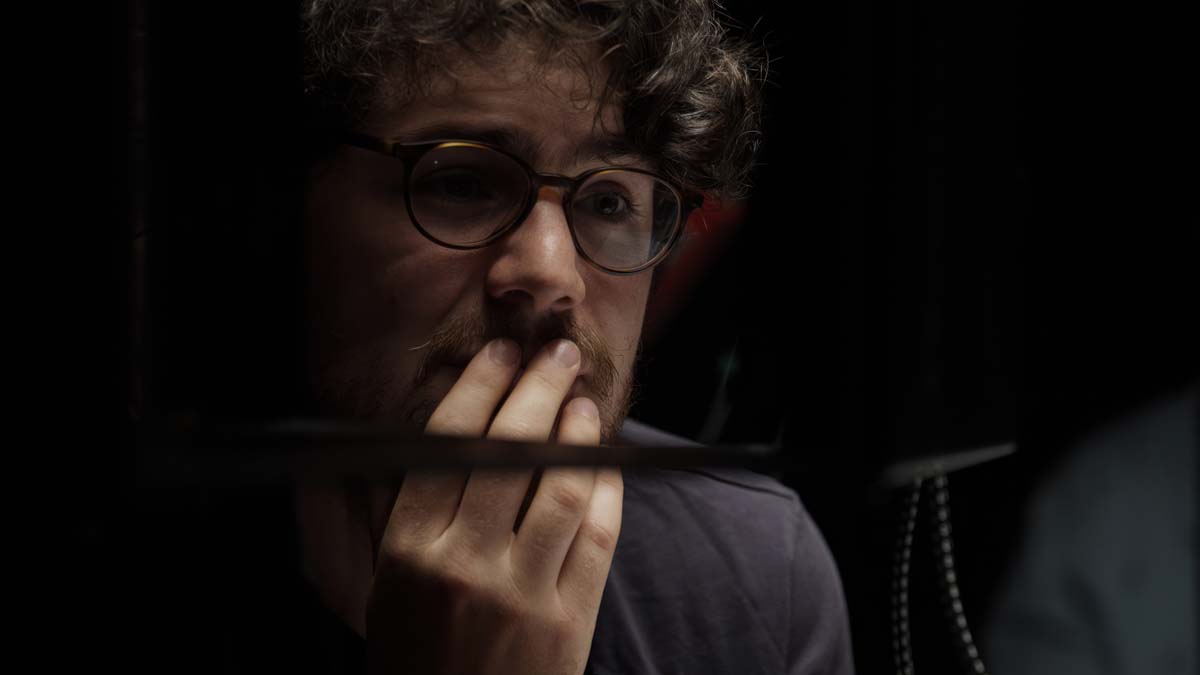
Why do you think that one shot from the laptop cam, worked in the place that it did?
Coombe: It’s the point in the film where Daniel is talking to the one person who has shot straight with him the most throughout this project. He asked this guy, “Tell me the truth. Are we doomed?” When he gets that answer is when we first look him right in the eye and we see Daniel’s face from the perspective of the interviewee.
That news lands on his face. We’re not watching him from askance when he is told that. That’s when you see him dead on. That’s when you’re forced to look him in the eye.
Broadway: It slows the pacing down as well, so I feel like it helps land that moment very well.
Talk to me about music and needle drops. Was there score?
Coombe: There was temp score from the beginning, but those needle drops: I have to give credit to Paul for some of those.
Broadway: Yeah, Paul had some really good ones. Paul Rogers is credited as additional editor on this film. Producer Ted Tremper and Charlie and Paul had a playlist on Spotify with a bunch of music initially just so that I could get an idea of the tone and what they were looking for. We would add music to the playlist as ideas came up. I would add music to it.
Coombe: As an editor, music is the most fun part of the process for me, but also often the most heartbreaking because, for instance, at the end of the process, we had to get help from a music supervisor because some of those needle drops we couldn’t clear and we had to replace them.
Once you have created a sequence that is built on the perfect needle drop, to find out at the end of the process that, “Oh, we can’t use that.”… So credit to our music supervisor.
To get back to cutting between angles in the interview footage, you’d say that most of the edits in there were for pace or emphasis instead of covering a cut?
Broadway: That’s the original goal of it. Like David said, you don’t want to cut. These people had a lot of personality and they were all so different. It was great to juxtapose them throughout. But initially the goal is to cut for pacing or to land something that’s being said - whether it be a joke or just a vital piece of information that we need to land on, cutting right before that line to Daniel can give you that. I think that’s always the goal, then if you need to Franken-bite somebody you have to try to cover it in the smoothest way possible without making it feel like it’s just chopped up.
Premiere Pro timeline screenshot
Talk to me about determining the length of each one of those segments. What determined those lengths?
Coombe: I generally don’t ever keep track of how long stuff it is when I’m cutting it. When I’m watching the cut I have to go somewhere else. I can’t watch it at my computer. Generally when I’m watching it, I can tell if it’s too long.
I can tell if every beat in every moment is too long, and it changes day to day. Sometimes something feels too long, sometimes it doesn’t. But in general, it’s a feel, like when this guy starts talking about this, I don’t care anymore and I don’t think that’s relevant and I want to get through it. I’m not really thinking about the total length.
I am generally not thinking too much about the total length of the whole movie either. I’m often surprised at how my first cut of a film is usually in the one hour 45 minutes to 80 minutes length. I feel like they just kind of shake out at the right length.
If they’re playing - if the scene is working - it’s going to be the right length. That’s kind of how I operate. The other really important thing to do along the way is to screen: whether that’s making your wife watch it or making your boyfriend watch it, or make your parents watch it, or invite 20 of your friends over, or hire a marketing company to organize a 300 person test screening.
Whatever it is, you have to get in a room with a bunch of people that you don’t necessarily know, and you don’t know what they’re going to think of it and who haven’t been in the room with making it and just watch the movie with those other warm bodies.
Whether you even get to see the questionnaires or not, you’re going to know when it’s too long and when it’s too short and when it’s confusing and when it’s working, because that shared experience of being in a room with other people will tell you if your movie is too long.
Broadway: That’s a very good attitude. I hate test screenings. I mean, they’re informative. They’re helpful.
Coombe: I hate them when you’re not ready for them. But like when you’re ready…
Broadway: Shade by the way.
Coombe: It’s not.
(laughter)
Daysha, you and I’ve talked about a bunch of different projects and I know a little bit about your filmography. You’ve certainly done documentary-style editing and reality stuff. How does documentary play into your career? And is documentary a different muscle for you than your narrative work?
Broadway: It’s a completely different muscle. I have to approach it with a completely different mindset. The first doc I did was a special on Bruce Jenner’s transition into Caitlyn Jenner. His kids were really devastated for reasons I understood.
You could see them trying to understand. It was the first time I had worked on something that felt like a documentary, even though it was a special. Then I did surviving R Kelly, which was an insane deep dive into something that I knew from growing up, just being a fan of this artist and being a fan of Aaliyah and knowing the backstory and just watching the interviews of these women who had been victimized by this person that I used to dance to.
Mentally when I’m working on a documentary - because I’m the type of editor who throws herself into the project, I think most editors are like this - we get on something, we want it to be great. We spent countless hours every week on it.
What the documentary is about is an important thing to note before you decide to work on it. The AI Doc was no different because I definitely knew this was something that was going to affect me. It was going to affect everybody. It was going to affect possibly my job.
It’s going to affect my job whether or not it just gives us great new tools to work with and helps our jobs become a little bit easier, or it’s the thing that takes our jobs away completely, especially for someone who works in commercials, because I can turn on the TV and there are AI commercials coming at me that look like crap.
Also, how you approach it as an editor and structurally each beat in the documentary is is different because you’re kind of writer, as part of your brain that’s trying to make sense of something that doesn’t have a script.
When you’re editing a narrative film or a narrative television show, you are always going to have that writer part of your brain, but you have a guide from the writer, from the director in a way where you at least know where we’re going.
But with the documentary editing you very much have to be a producer and a writer and an editor in your brain, and kind of figure out a way to piece things together from transcripts and from dailies and animation and stock footage and you’re trying to tell a story with all these different pieces.
You have to be kind of the most imaginative version of yourself. It’s great. And it’s also just sometimes really devastating. I think The AI Doc is the hardest thing I’ve ever done. When I watch it, I just kind of marvel at all the work that Davis did even after me. It’s such a heavy lift.
When I work on documentaries or when I read about them, or they’re pitched to me I have to think, “That’s really, really important. We have to talk about that.”
But it’s really hard for me to say yes to them because they can be quite devastating mentally, physically, but at the same time they’re very rewarding because as an editor, you have to flex every muscle, every tool that you know as an editor in order to get it right. So it’s always a big challenge. I love a challenge.
I would I like to take breaks from them… very long breaks.
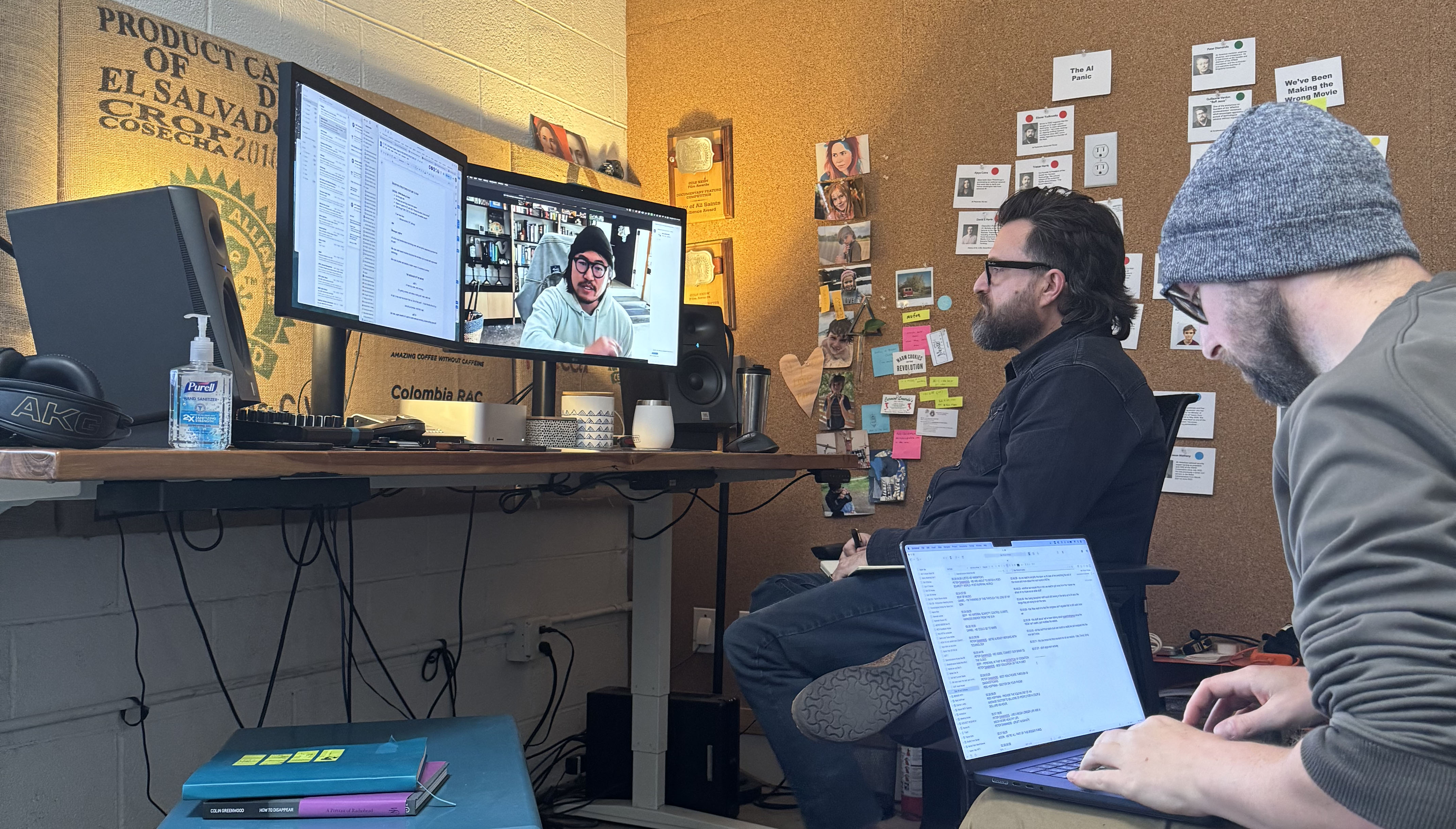
Davis, any thoughts on that? You seem to be all documentary, but I didn’t look too deep into your background.
Coombe: I’ve really just done doc’s my whole career. I’ve cut narrative things here or there or as part of docs, but people know me as a doc person, and that’s the kind of the work that comes my way. So, it’s really great to hear the way Daysha describes the differences.
Because a lot of people don’t understand how involved documentary editors are in shaping the film. Usually you’re kind of a co-director or a co-writer or writer. It’s always different on different projects. A lot more of the architecture of the final project falls in your lap and in your job description.
As a doc editor who sometimes gets to do narrative stuff, I think, “How hard can narrative be? There’s a script. You’re painting by numbers. What’s the big deal? I think of it differently now. I really do think it’s very different muscles.
They’re very different problems that you have working on docs than you do on narratives. Working on a documentary, you have this one advantage that you don’t have when you’re working in narrative projects and fiction films and that is that whatever you are putting together, the audience is going to think, “Well, that’s real.”
If you’re filming some event that’s happening, you don’t have to convince the audience that there is an event and it’s happening. But if you’re making a fiction film, there are 1,000,001 ways to screw it up before you even get to the edit so that the audience is like, “Well, this feels like a movie.”
As a fiction filmmaker, you have that suspension of disbelief. And there is so much work and so much expertise and craftsmanship that goes into that, and the performance of the actors that go into that. That has to work before the editor even gets their hands on it, and if that doesn’t work, you’re in trouble, and I don’t know if the editor can make it work always.
The few times that I’ve gotten to edit narrative stuff, there are times where you have a scene and it just doesn’t work, and it’s not because it doesn’t fit in the story. It’s just because it just doesn’t work. And you can’t make it work, and you’d have to figure out a way to get around it.
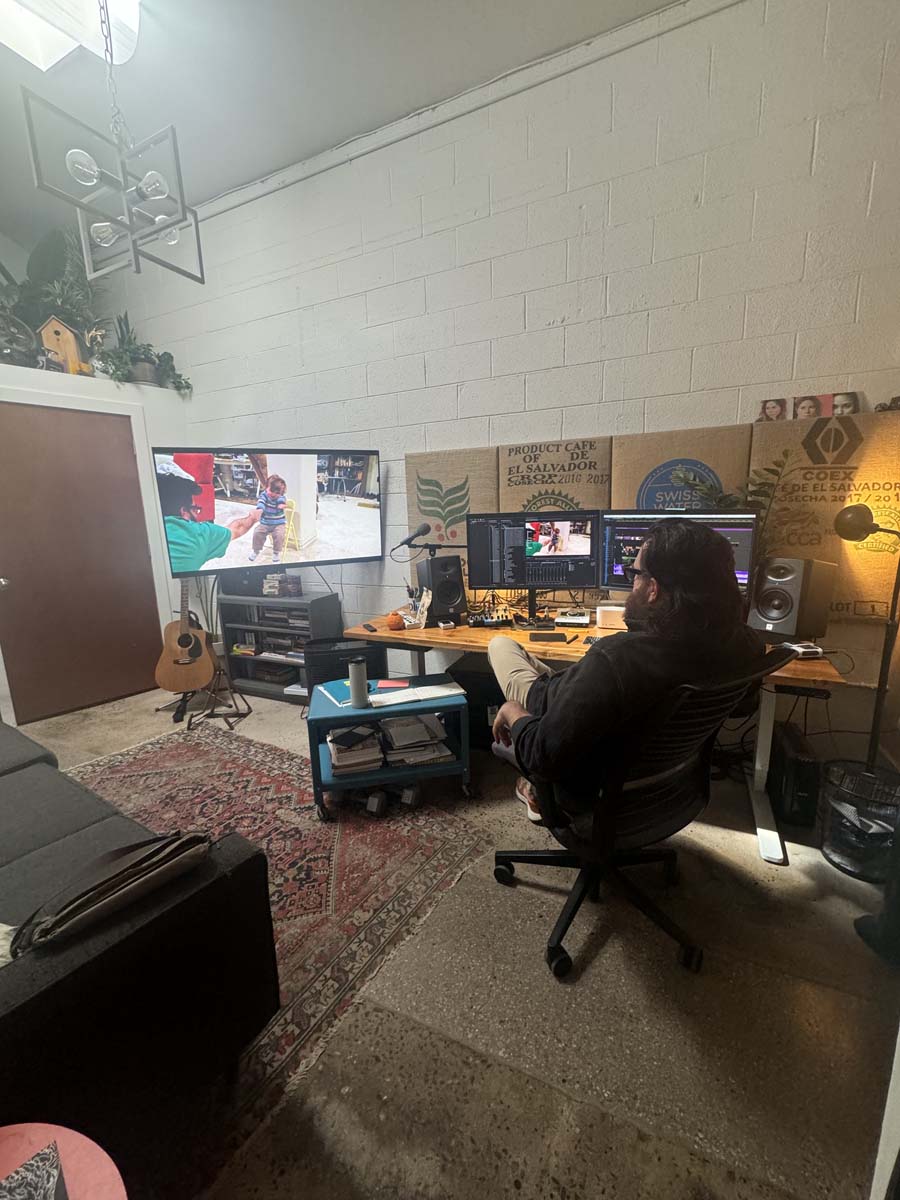
As a doc filmmaker, it’s really fun when the pieces of your film finally start to fall in place, then you get to worry about the sort of things that fiction filmmakers worry about, like, what to say? What if they said that just a little bit differently?
Can we get that line from another part of the interview where they say it with a little more gusto, and you’re starting to think about performance and you’re starting to think about the way things look and the way it sounds and what the music is doing.
All that stuff is really fun, and that’s kind of where the overlap is, in my experience. But it’s a lot harder to get there in a doc because nobody’s telling you where it is. But they are two different animals and require different skills
Broadway: Because I go back and forth a lot between film, television and documentary, as I’m getting older, I would like to stop doing that, but I do go back and forth a lot. But everything is a puzzle to me.
I really like puzzles, so I read a script, I meet a team and I think, “Okay, this is a 500 piece puzzle. We can do this.” They shot this really well. It’s got this going on.
I like this about it. I can do this. This’ll be really fun. And then sometimes I’ll work on a documentary - like the documentary Between the World and Me. That was a 500 piece puzzle. It was great. It had a great team, and there were a lot of editors on that.
We had a great time, but it was mostly archival and talking heads. Then, The AI Doc is a 2500 piece puzzle… with all solid colors. You’re staring at it and thinking, “How am I going to do this?” But eventually the puzzle pieces come together and you’ve got a great movie. We have a great team of people working on this puzzle.
I think we can approach the AI situation in the same way. We all have to come together. It is not clear how we’re going to make this thing work, but if we do it together, we can. I think of everything that way. And documentaries are always the bigger puzzle to solve to me.
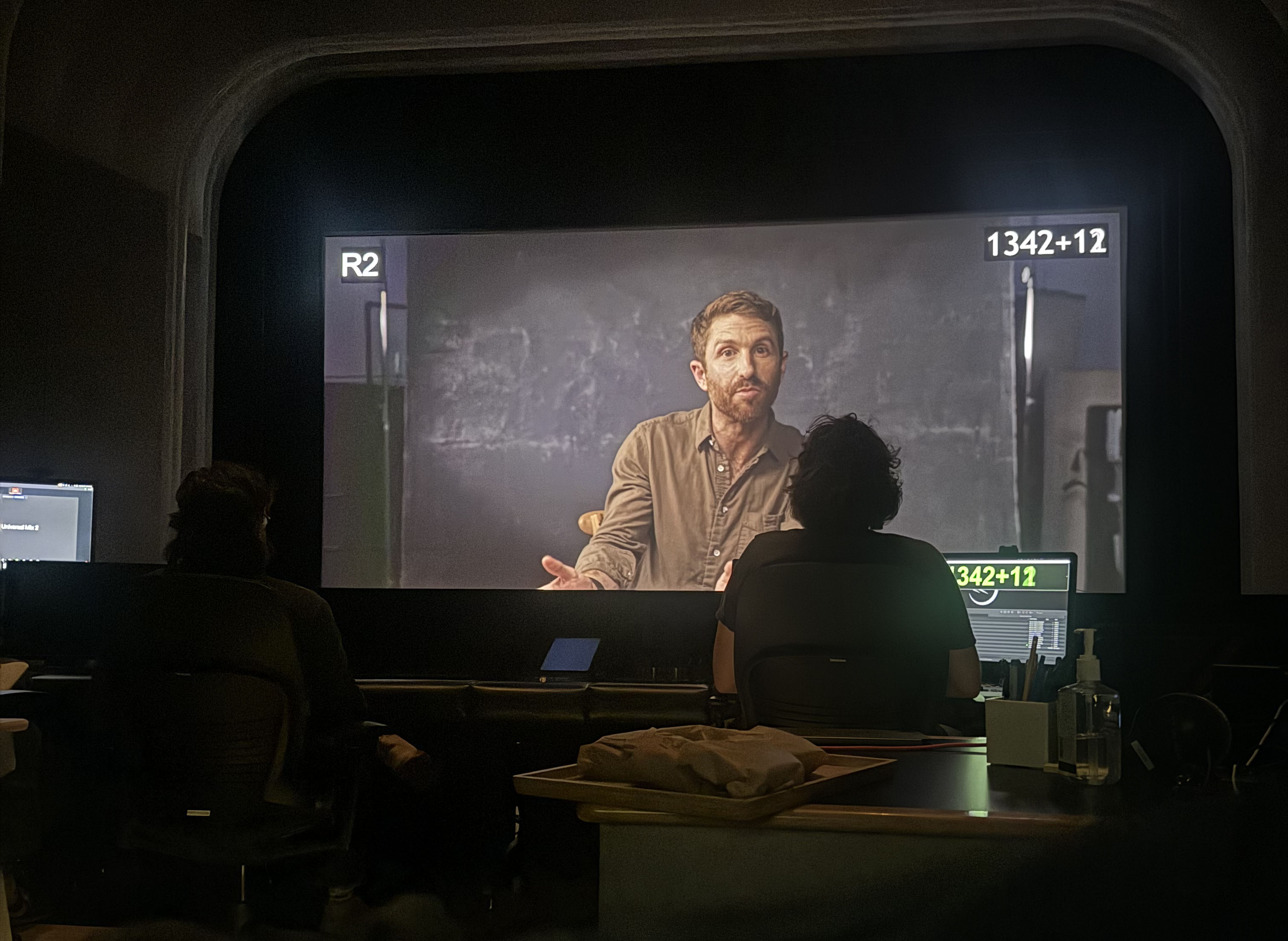
That is a great place to end this interview. Daysha and Davis, thank you so much for talking to me about this documentary.
Broadway: Thank you for having us.
Coombe: Yeah, thanks a lot.
 August 6, 2026
The Upshaws and Wanda Sykes Legacy
Today on Art of the Cut we speak with Angel Gamboa Bryant, ACE, who is nominated this year for both The Upshaws – for Outstanding ...
Read more March 8, 2024
Walter Murch, ACE, "Suddenly Something Clicked"
Today on Art of the Cut, we’re talking with multi-Oscar winner, Walter Murch, ACE. I interviewed Walter in person just before his appearance at the ...
Read more January 11, 2024
Poor Things
Yorgos was an ACE nominee for The Lobster. He was nominated for a BAFTA and an Oscar and won the ACE Eddie for The Favourite. ...
Read more
Subscribe to our newsletter
Get all the latest news, blog posts and product updates from Boris FX, delivered directly to your inbox.
Welcome!
Thanks for opting-in to our newsletter. You'll receive an email momentarily with your confirmation.