
















Hunger Games: Sunrise on the Reaping
A discussion of Mark’s dailies prep work including “KEM roll,” “outline,” and “apples” sequences, how VFX editing requires imagination first and precision later, and his “remove the final shot” technique for achieving flow and cutting time.


Today on Art of the Cut we speak with Mark Yoshikawa, ACE, about editing the latest Hunger Games movie, The Hunger Games: Sunrise on the Reaping.
Mark has been on Art of the Cut before for Hunger Games, and for Westworld. Mark’s other credits include The Long Walk, The Hunger Games: The Ballad of Songbirds & Snakes, The Hunger Games: Mockingjay - Part 1 and 2, and Tree of Life. He was also an editor on the TV series, Succession.
Mark, welcome to Art of the Cut. We’ve talked before for Hunger Games and Westworld. You’ve come up under - and alongside - some fantastic editors. I would love to hear your origin story.
I grew up doing stupid movies with my friends in high school - running around the camcorder back in the 80s, 90s - then film school at UC Santa Barbara. I found my love for editing there and made my migration down to LA.
Early in my career I was doing straight-to-video horror, schlocky stuff as an assistant. Then I got a break to work with Richard Chew on That Thing You Do!. Richard was my first mentor and my main mentor, along with Bob Leighton - those two early in my career.
I came up through the assistant ranks for about ten years, working with them and a few others. Then Richard and I went out to Austin to work with Terrence Malick on The New World. That’s where I got my first big bump up to the editing chair.
I’d been cutting before that, but between Hank Corwin and Saar Klein and Richard, they all said, “Mark should be a part of this team.” So that’s where I started cutting. I’ve been cutting since 2005.
You have edited back to back movies - plus a few others with this director, Francis Lawrence. Tell me about how that relationship began and why it’s so successful.
It really began due to my friendship with Alan Bell, who was his previous editor, who had started with him on Water for Elephants. When it came to the Mockingjay movies, they needed help because they were doing the Mockingjay parts one and two back to back.
Alan invited me into an interview with Francis and we hit it off. Once Alan decided to retire, I did a TV show with Francis, then jumped on to his movie called Slumberland for Netflix and been with him ever since. This is my seventh collaboration with Francis.
Alan was big on making films feel cinematic while he was editing them during post using a projector and a big screen and 5.1 surround. Is that something you’ve adopted, or what’s your cutting room feel like and look like?
I loved that aspect of what Alan’s room looked like and definitely adopted it for at least these bigger, cinematic events. When we’re doing something for Netflix or Apple, we can still cut on a big monitor because that’s more akin to what it’s eventually going to be seen on, but on these, we try to get the biggest rooms, the best projectors and at least enough of a throw that it feels a little bit more theatrical.
Francis will sit on a couch in front of the Avid. We’ve been set up over at Pivotal at 9000 Sunrise for the last few shows. We’ve been moving rooms around there, but they’ve been nice enough to accommodate us with a good sized room to cut in. Also screening rooms for the VFX guys to do our 4K reviews.
You’ve co-edited a few films with Hank and Richard and Alan. You’ve also done the same on TV series. How do you feel about collaborating with other editors versus cutting yourself? What are the advantages or disadvantages?
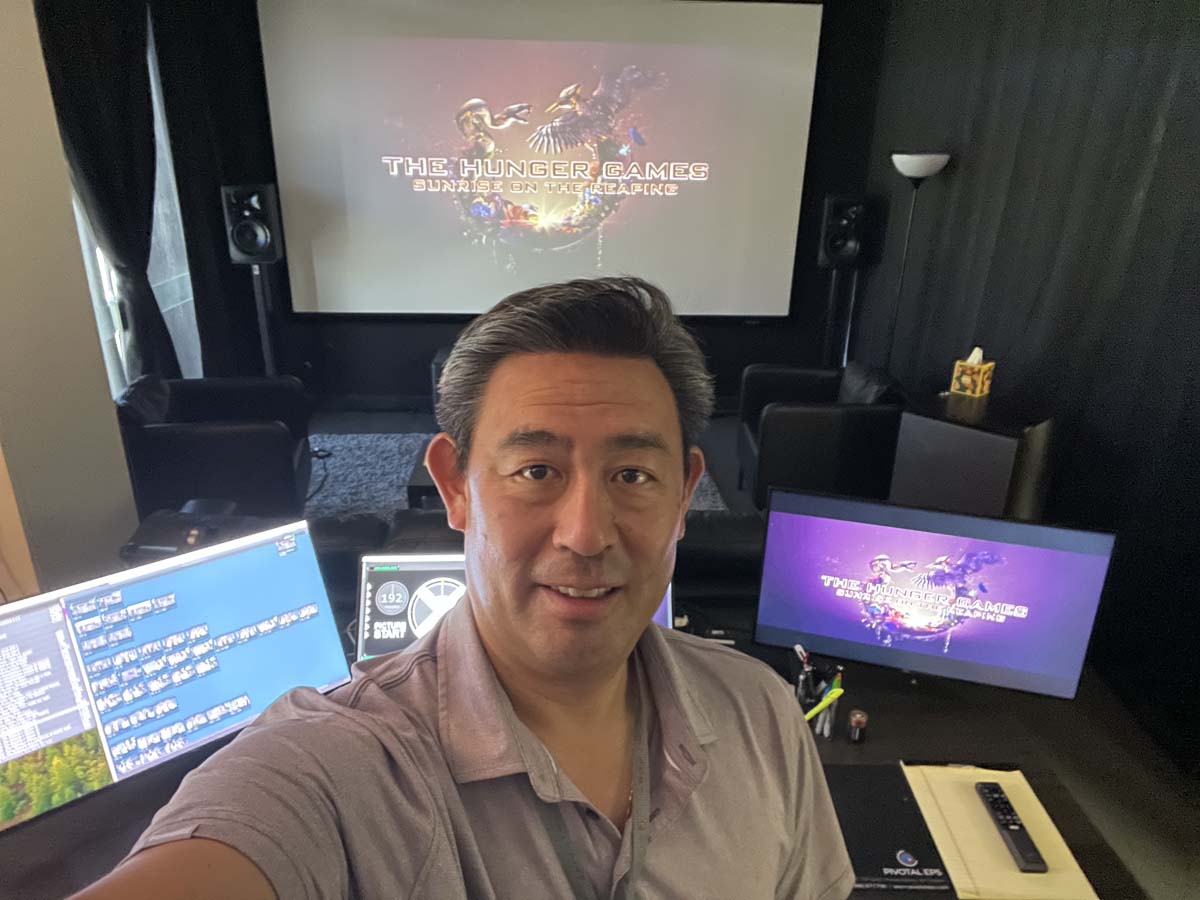
Editor Mark Yoshikawa, ACE in his Hunger Games cutting room.
I love both. Fortunately, all my collaborations have been very simpatico. There’s not a lot of ego going on and and they’re good friends, too, so that helps. In the Malick world, you get thrown into the blender.
Anyway, my job on those Malick films was more of an “overseer” and to “land the plane.” Terry used to always ask me to come back and “land the plane,” which ironically, I’m doing again right now. He asked me back for his current project.
I like the environment of working with people, sharing cuts and seeing what other people are working on, and whether you’re working on sections or you’re sharing scenes, I like that, especially in TV.
In TV it’s kind of nice because you are part of a huge group because if there are 3 or 4 editors and you’re all working on a common goal, it’s kind of nice to be a part of the team and a cog in the machine.
On the other hand, for features, it lives and dies with you in a way - especially if you’re doing solo editing like I’ve been doing lately. You take the blame or you take the credit, and it’s all on you whether or not people like it or not.
I prefer features. I prefer working alone working on features because you have the time to sit and think about things. Especially in a film like this, we still have a huge crew. I had five people in editorial. There’s a huge VFX department that’s in the same floor - sound and music - so you still get the communal environment.
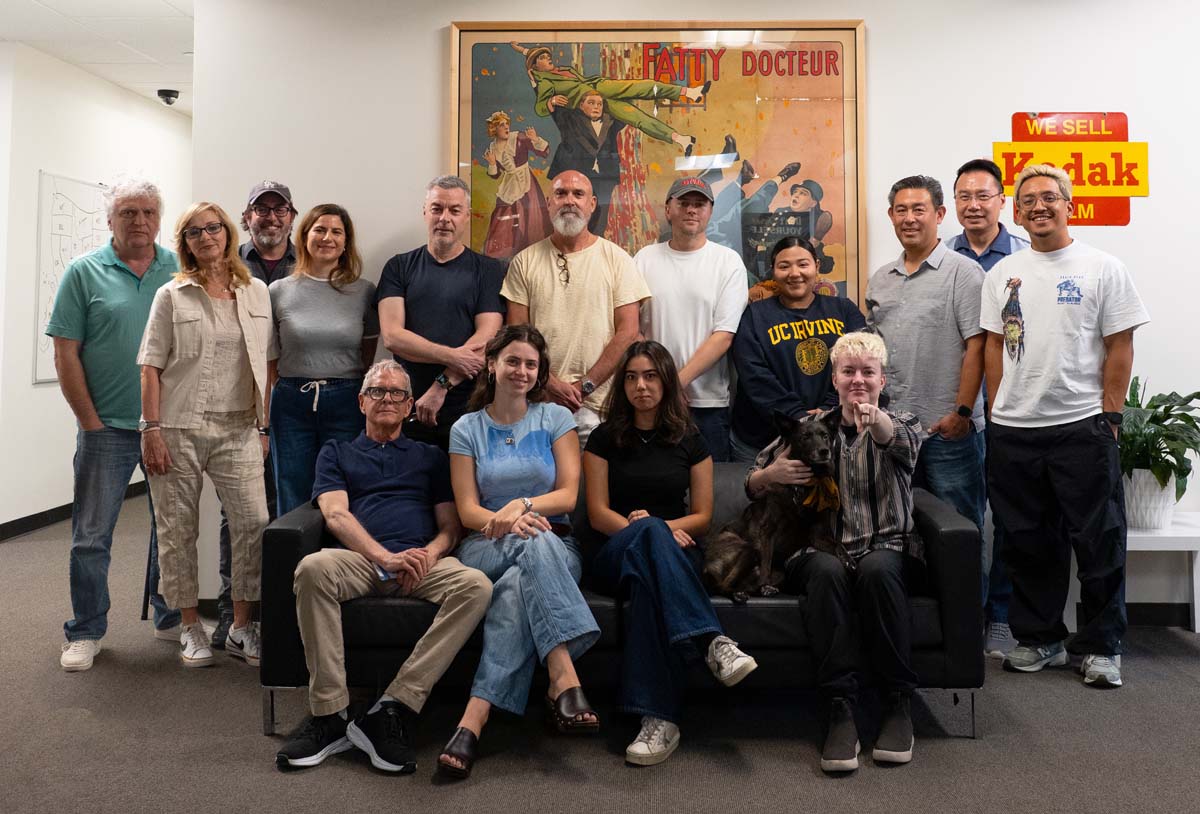
Standing L-R: Mark V. Phillips, Carolyn Calvert, Derek Drouin, Peggy Eghbalian, Janek Sirrs, Scott Shapiro, Cameron MacConomy, Adia Hernandez, Mark Yoshikawa, James Lu, Dean Gaddi. Seated L-R: Jeffrey Harlacker, Sylvie Foligno, Chloe Bolognini, AJ Laskos
Let’s give a shout out to some of that crew.
The additional editor on this film, Peggy Eghbalian, came up as a VFX editor on some of the earlier work I did with Francis. Starting with The Long Walk - the last film - she has really been helping out, cutting early cuts and sharing some early scenes. She’s an editor in her own right.
She had had an editing career going before I hijacked her into being a VFX editor for a while. My first assistant was Carolyn Calvert and second assistant was Dean Gaddi.
And MVP of the team, in my opinion, was Derek Drouin, who was our VFX editor. There were a lot of VFX in this movie. He could come up with solutions to things that would help us in the edit, just within the Avid.
Some of the rest of the post team includes Mark Phillips - VFX Editor, Jeff Harlacker and Jason Miller - Post Producers, James Lu - Marketing VFX Editor, and Sylvie Foligno - Editorial PA.
You mentioned how you prefer cutting features on your own - in collaboration with your team. But you’ve also done a lot of TV. Is there a different approach when you work on television, like Westworld or some of the other television you’ve done?
No, other than time schedule. It’s a really compressed time schedule. My methodology is always the same, as far as how I break down my selects and do my outlines and my reels. Usually there’s less footage. So it’s a little bit more manageable.
But then that, of course, provides more challenges and less choice.
Yeah, less choice. And less exactly of what you wanted. But as an editor, you’re only given what you have, so you have to make it work.
Did you watch all of the previous Hunger Games movies before you started working on them with Alan? And what about the books? Have you read all the books?
I’ve certainly read all the books. As far as the movies go, by the time they asked me on, they were finishing Catching Fire, so they had me come in and watch an early cut of Catching Fire before they finished.
So yes, I watched all the movies because I was a fan of the first movie and then essentially was involved with the rest. On the book side, when we were finishing the last one - Ballad of Songbirds and Snakes - we had no idea that Suzanne was writing another book.
She didn’t tell anybody, even Francis or Nina, the producers. So when it came out, it was a real welcome surprise and a pleasure to read because it was a good one. I really like this book. I really like this movie as well.
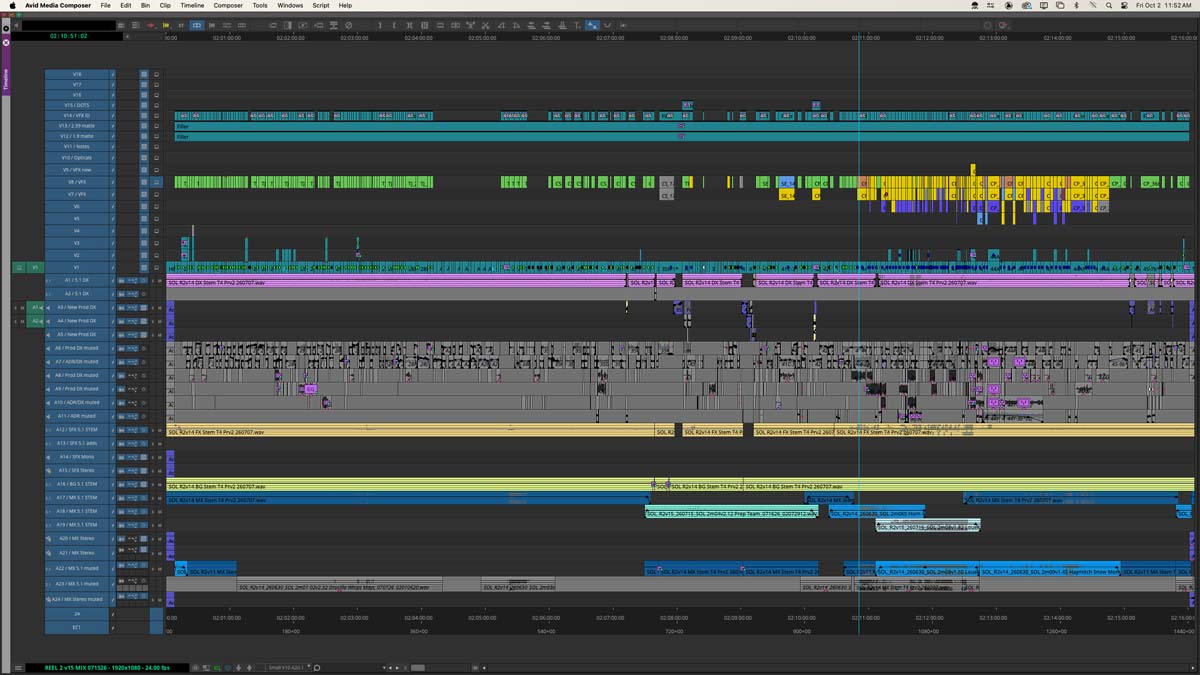
Avid timeline screenshot for Reel 2 (approximately from 20-40 minutes of the film)
Is there, any danger to being familiar to the previous IP, especially with the book?
The fan base is so huge on this movie and the readership, and there’s such a legacy going on here, and it fits into this huge continuum - which is ironic - because that’s sort of Plutarch’s big speech at the end of the movie: we’re all part of this continuum, which I totally agree with.
To have that initial IP or those original words and the themes that Suzanne Collins was presenting… I think it’s important to have that in mind as an editor and as a filmmaker, knowing what the original intent of the author was.
These themes of implicit submission and faulty logic and these things that she seeded into this movie, it’s nice to have those thematics, even though you can’t put in all the scenes, you can put in the ideas and know what she was going for.
And in this movie in particular, the story and performance are always first. Second was the length because it’s a lot of stuff to fit in there and a lot of pacing and a lot of story that we have to make sure it makes sense.
But the third thing was being true to the book. To me - and Francis and Nina and everybody that worked on it - it was really the idea that we’re not going to be able to fit in everything in the movie, but there are certain things that we had to decide: “This doesn’t necessarily move the story forward.”
If we didn’t have any IP or any original source material, we probably would have cut the scene. We probably would have gotten right through to the games quicker, but because the fans are expecting some of this… we used to joke that we could have lifted reel four completely and the story would have worked fine.
Because by the time Haymitch is getting ready to go to the games, you kind of want him to go to the games, but there’s this whole sequence where they’re doing interviews with tributes but it doesn’t really move the the story forward that much, and you don’t learn that much more about the characters, but it’s a Hunger Games staple. It’s something that fans expect.
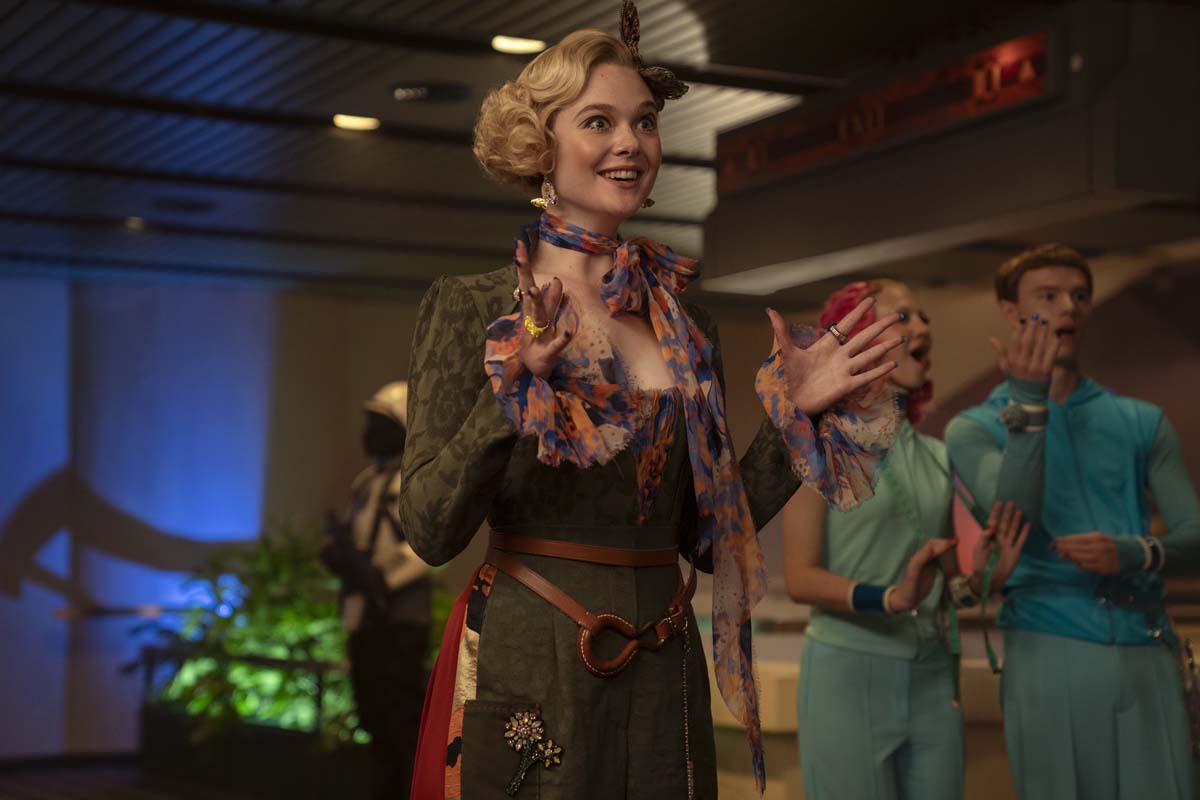
That’s also where you get to see more Flickerman. You get the introduction of Effie. You kind of need these moments. There’s huge chunks in the games that we actually did shoot that were fan favorites, but we just had to take them out because they didn’t move the story forward at that point.
So it’s a real balance between when you want to service the fan and when you want to move the story forward. That was the biggest challenge I found.
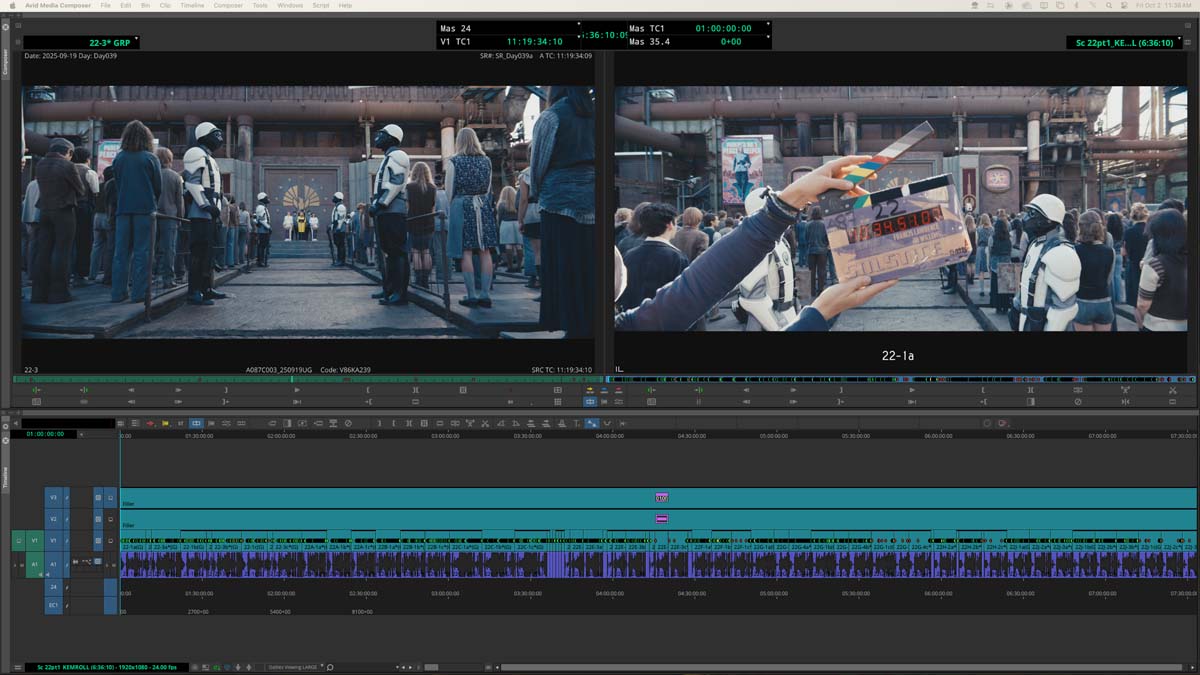
Mark’s KEM rolls
You mentioned your methodology in cutting TV series is similar to your methodology of cutting features. Let’s hear what that is at the daily stage. When you get in a fresh bin from your assistant editor prepared what do you do?
The main thing is I work in KEM rolls because I came up from the film days. In my bins, my assistants break down each take in groups, then kind of this specific layout of having them all going left to right, how all the shots - every individual shot then every group stacked next to it. I’m sure it’s not unfamiliar to what a lot of other editors do.
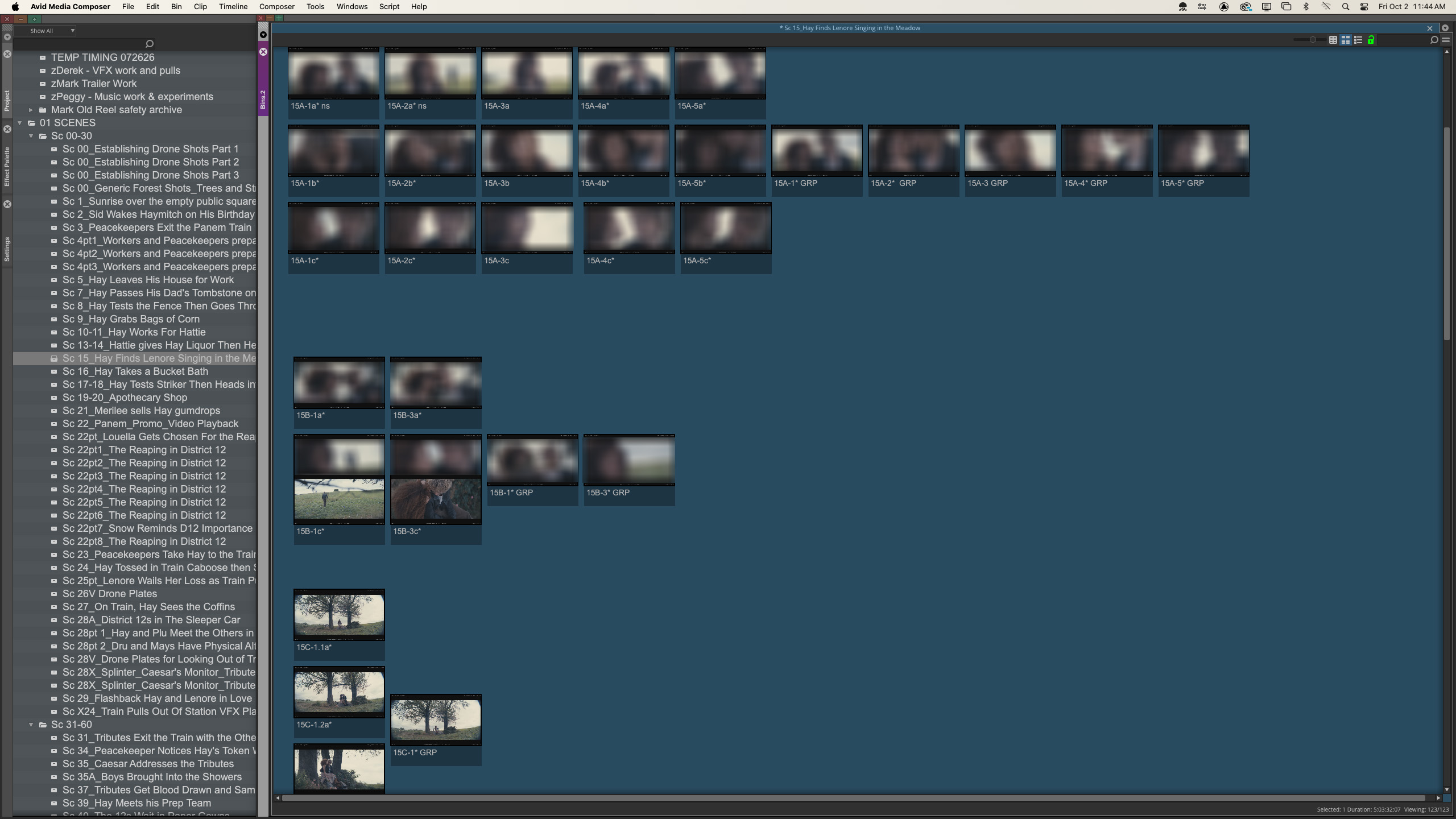
Avid bin layout
Those groups are camera setups?
They’re setups and takes that are stacked to the right. Then the groups up and down for the A-B-C camera, then left to right are all the takes one, two, three, four, five grouped. Then I could toggle between those groups as I go.
This is step one. Then I’ll use locators. I guess they’re called markers now. Remember whenever you touch the Avid, it would stop? You couldn’t do anything in the background. Eventually the one thing you could do in real time was add locators and they would appear once you stopped playback.
This was from the Malick days because we used to set him up on this Avid that we called “The Playskool Avid” and we’d say, “Terry, because you shoot so much material, sit in front of the Avid and hit the green locator button for anything you like.”
Then you could see on the timeline the things he liked. And when he really liked something it was like a seismograph kind of a thing where you could see a ton of markers… just from the visuals, you could see, “Oh, he really liked this area!”
I just heard somebody recently on your podcast call them “EKG dots” from hitting the marker button many times in a row for something they really liked. Anyway, I use that. So I don’t have a color coded method other than like maybe green for good and yellow for better. From there I could build out my select reels. I call them “outlines,” which is actually a breakdown of the string out of all the different takes.
The select reels are just my favorites which end up being a little bit of a misnomer because it’s almost everything, because I never know exactly what I’m going to need later. But then my outline is definitely more refined. Sometimes it’s weird - this terminology – but I call them “apples.”
Like “apples to apples” where I’ll compare things directly to each other. This is all in aid of me cutting. Then also for later when Francis, the director asks to go back and see the every line. I don’t use ScriptSync. I’ve toyed with it, but this method is much clearer to me. Then I just cut. I cut either from the middle out or the beginning, depending on the scene.
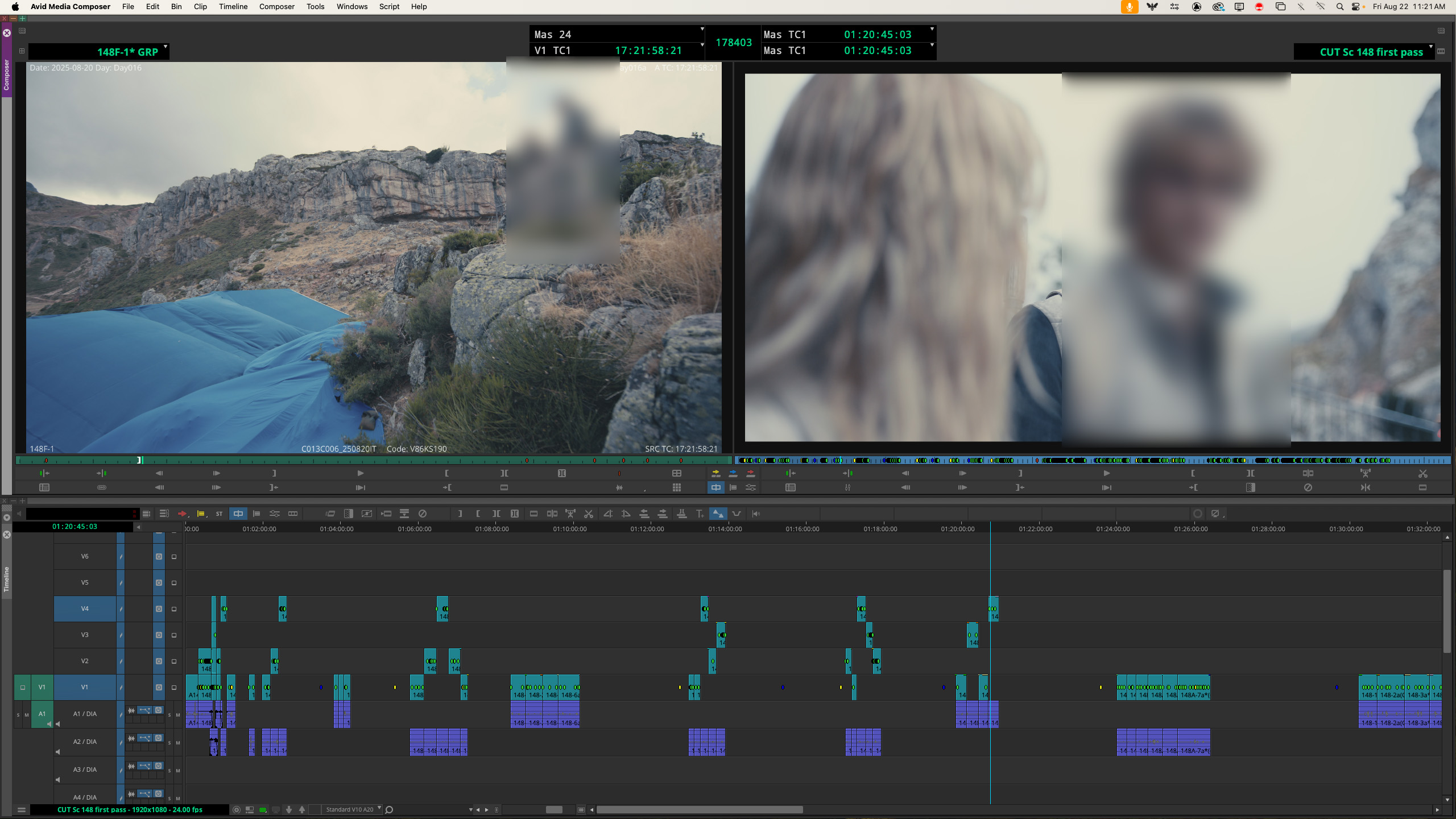
“Apples” sequence
That’s interesting. So if you choose to cut from the middle, you’re trying to reach a certain moment or something is appealing to you immediately that you want to work on?
Exactly. Sometimes I’m just not sure how to get into the scene because I haven’t yet seen the scene that comes before, and I know what the meat of the scene is. Honestly, usually the beginnings and ends of scenes end up on the cutting room floor anyway, so sometimes I start from the middle of the section, then figure out how to get in there.
That’s a very interesting way to work, I love that. When you were talking about creating your KEM rolls, it sounded like you were stacking things. So do you have a grouped multi-cam but then also a stacked multi-cam?
The KEM rolls aren’t stacked. They’re all linearly laid out just like it would be on an old film KEM roll, but in that case, they are all the group clips worked within that sequence. So let’s say it’s scene 45 setup A-CAM, take 1, 2, 3, then scene 45 B-CAM, take 1, 2, 3.
In my mind I can see the order that they shot it on the set chronologically, then work through it. I arrange my bins chronologically in shooting order, because if I organize it in scene order, I get all confused and I don’t know if I missed something.
That’s just the way my mind works. I know exactly where to go in that visual timeline of the KEM roll to find something I need, plus I have my locators to help guide me.
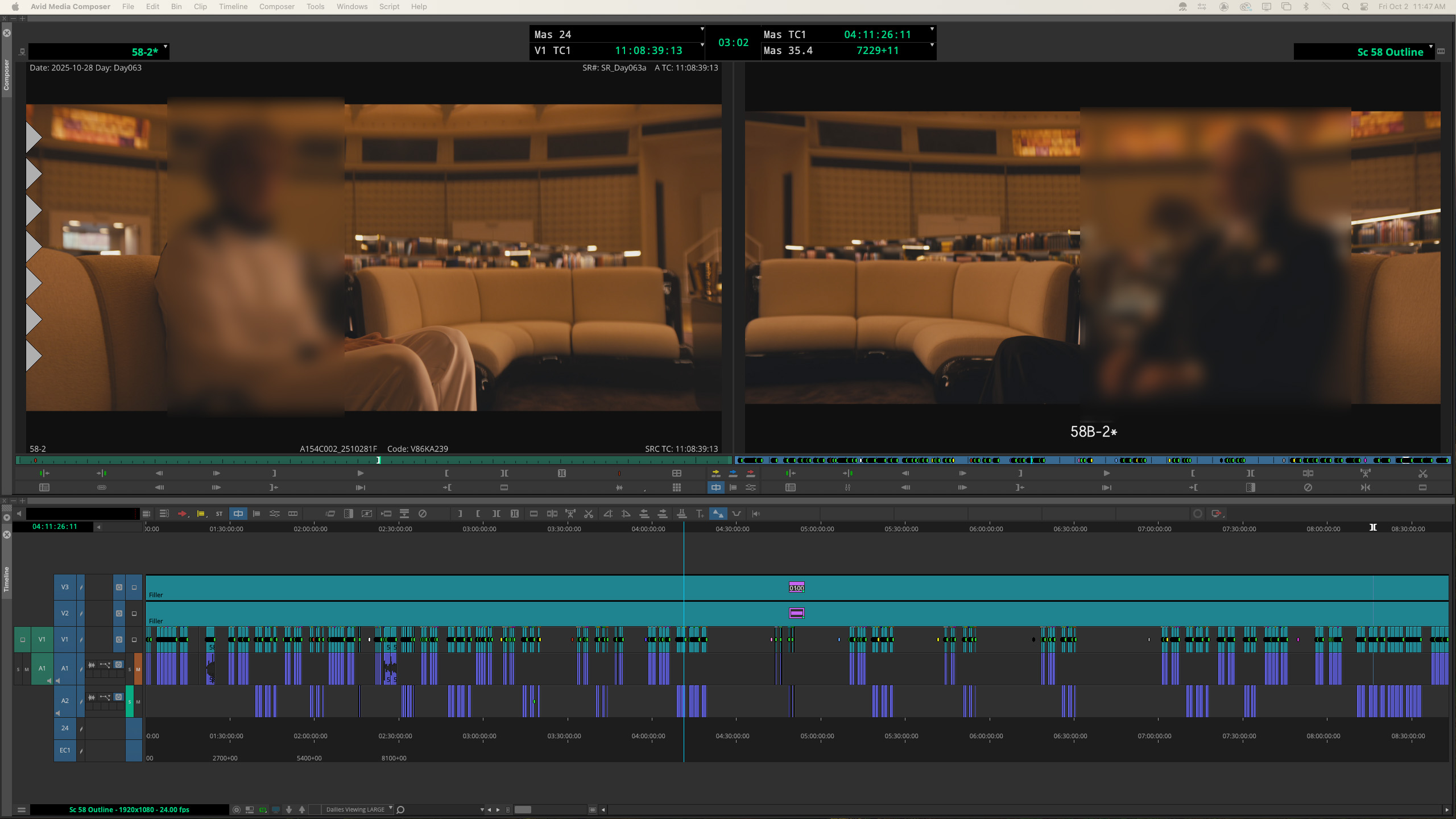
Mark’s “outline” sequence
Let’s talk about the opening birthday montage, before the first chapter marker. Talk to me about building that and what you might have had to get rid of.
That’s one of the few places in the movie that we did totally change, because they were full linear scenes. I don’t know why they were necessarily scripted like that. In the script Haymitch wakes up, then we go to all the setup of the Peacekeepers come in, then we go back out to the meadow? From this very first screening we all looked at each other and said, “This has to be a montage, doesn’t it? This has to be intercut.”
We were sitting in each of these long sequences for their entirety. I wrote Francis an email and said, “This is going to be a montage.” He said, “Let’s do it.” It made more sense because it also had the feeling of impending doom.
It’s his birthday - even though everybody knows it’s Reaping Day and everybody is keeping a good face. Meanwhile, you’re intercutting in the Capitol, setting up for the Reaping, and you just know that it’s all going to come to a head.
What was nice about that is we were able to finish what essentially ended up being a prologue, then go to a chapter card of “Part One - The Birthday.” We had these three chapter cards, and they had originally had that chapter card at the very beginning of the movie, but I said, “This is weird.
You start a movie with a title card? You come in with “Part One” on a title card. It just feels too novelistic or something. It allowed us to get through that entire prologue, get out of the way, say “Part One - The Birthday” title card, then go out to the meadow, then you can feel the audience settle into their seats and think, “Okay, now the movie’s starting, but we have the set up.”
We know who all these characters are. We know that it’s his birthday. We know it’s the Reaping. The scene is being set up.
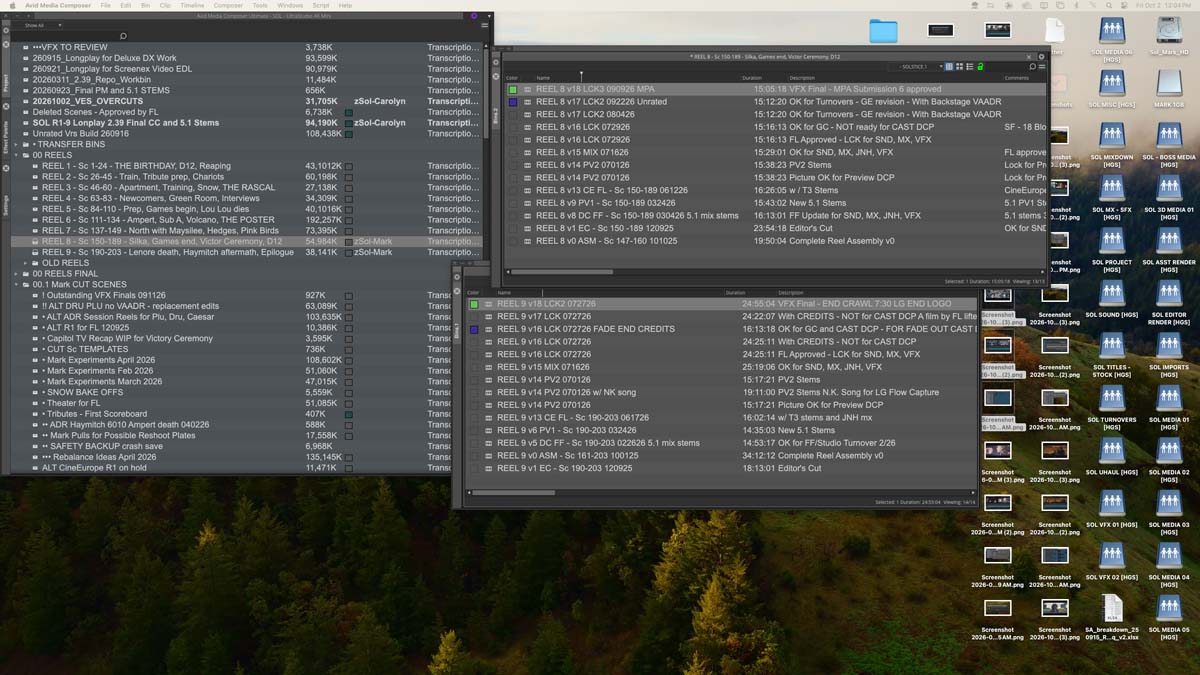
Avid Project and bins
But you didn’t need to do all that as their own separate scenes…
No, no. Not at all.
There is a romantic conversation between Haymitch and his girlfriend, Lenore, near the top of the film. They’re very close together, very intimate. There’s no way to get a single clean shot. Was that a difficult conversation to edit?
It was, and it was much longer. They shot it three camera, which helped, of course. In that case, you stick to your favorite takes and you’re going to have continuity between the camera angles - at least you have continuity until you start cutting out lines.
Fortunately, their body position is basically the same, but I’m sure there were a lot of split screens in there and re timings for head movements, and they’re overlapping each other.
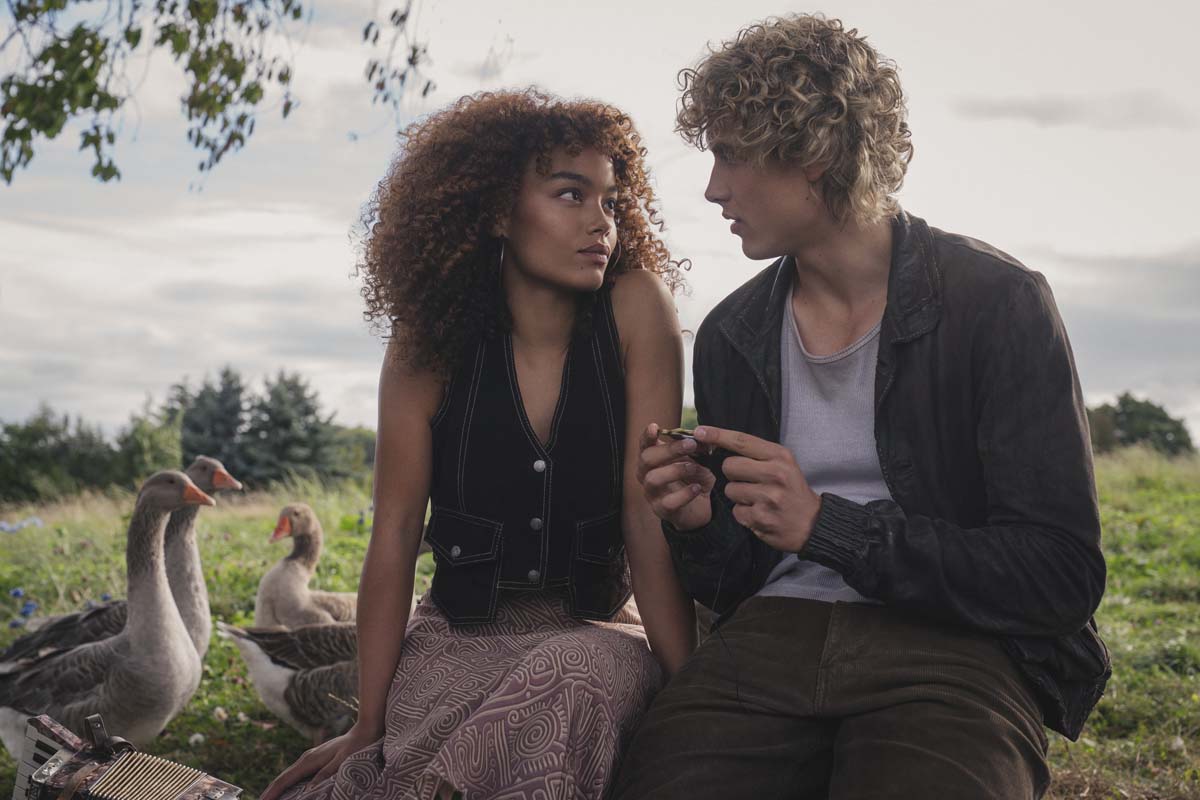
It was challenging in the sense that there was so much of it, but as far as the logistics of cutting three cameras, it helps a lot in those situations. They would do wides and then they would go in tighter. The ones we ended up using - as you mentioned - are very tight because of the intimacy and selling their love right from the start.
Both of those actors - everybody for that matter - are so wonderful in this movie. It was really easy to cut performances because for the whole series - Jen and Josh and Woody and Liam and all those guys - everybody were such good actors. It’s not just the young ones, but of course, the veterans. It’s a pleasure to cut all of them.
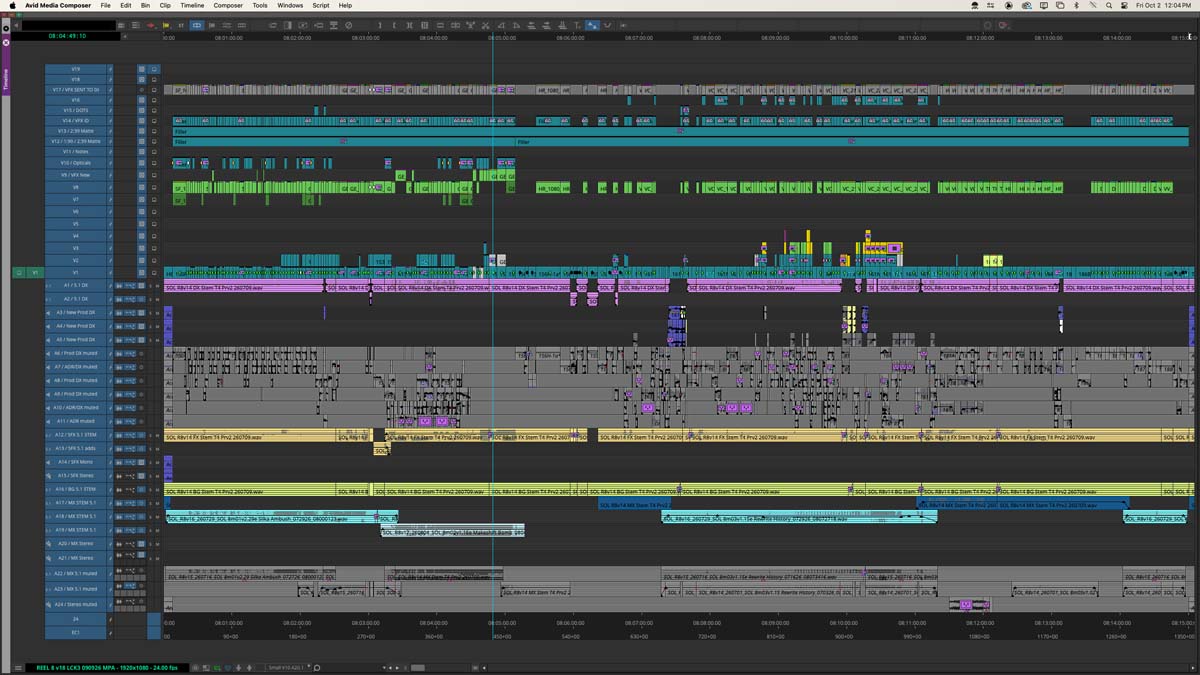
Avid timeline screenshot of Reel 8 near the end of the film
Let’s talk a little bit about score and what you used for temp. Did you know your composer from the beginning?
We definitely knew our composer from the beginning because he’s predated all of us! James Newton Howard has done all the Hunger Games movies and almost all of Francis’s movies too, so it was a nice collaboration when they started on Catching Fire together. I’ve known James since Mockingjay.
Like most of the rest of the crew, it really is a family affair because everybody’s been together for so long, so having James back just felt right.
The thing that was interesting about this – you were asking about temp score - Francis wanted to make it weirder because it’s got this whole ‘70s vibe, so it’s a different era than the original Katniss films, and it’s definitely different than Ballad of Songbirds and Snakes.
On the set Francis was listening to these tracks from Midsommer because of this idyllic, poisonous paradise - this dichotomy of this beautiful landscape but danger around every corner. I joked that felt like Midsommar, but it turned out it was in Francis’s mind to have that.
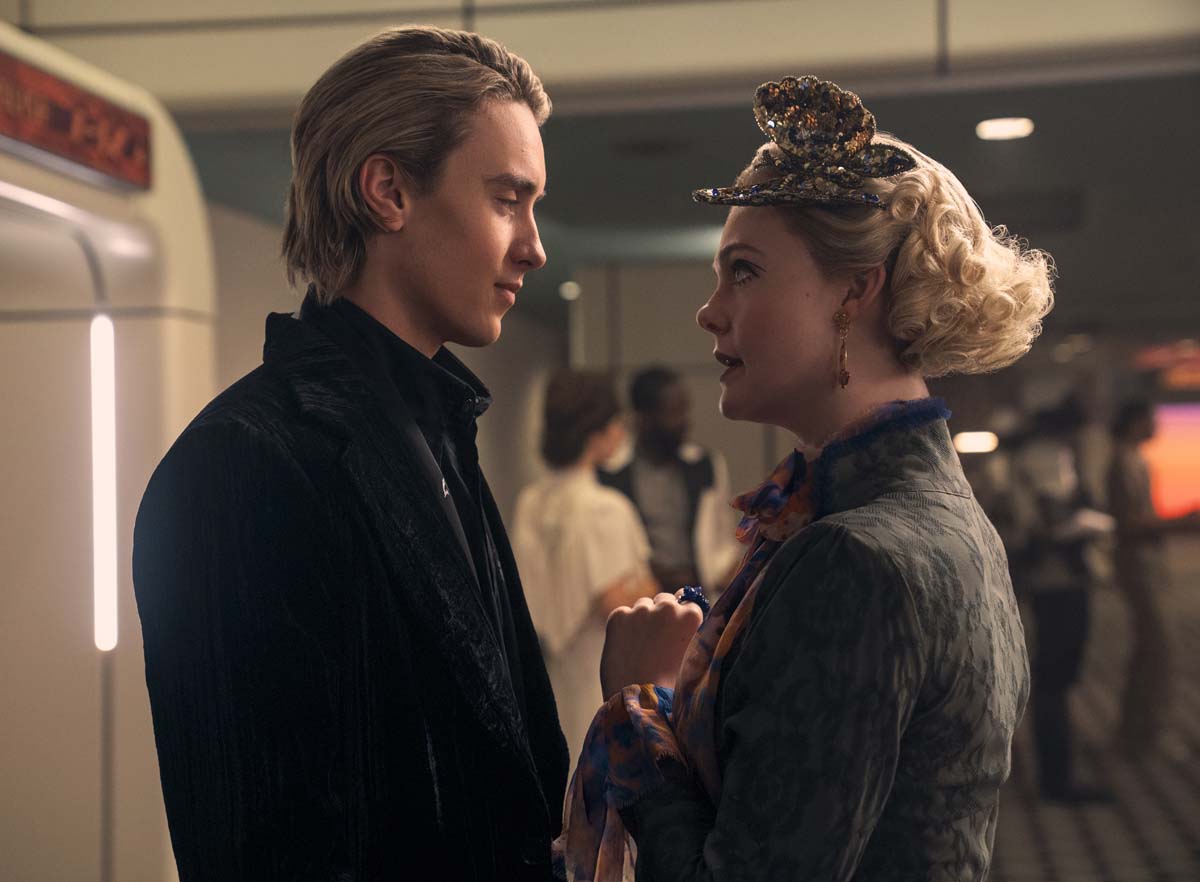
Bobby Krlic has a band called The Haxan Cloak. Peggy Eghbalian - who I put in charge of a lot of the music - was using a lot of his stuff, which was really weird and atonal and kind of not James Newton Howard orchestral big Abbey road score at all. It helped us get out of making this just a traditional Hunger Games movie, especially in the arena.
Then we brought on our music editor, Jason Ruder, who was fantastic, and he started playing some of the stuff from Volker Bertelmann, who did All Quiet on the Western Front and things like that.
We used a lot of House of Dynamite to keep that tension and a little bit of the weirdness, knowing in the end, that James was going to do his own thing, but that helped us set a tone, and we knew that we were probably going too far.
In fact, Jeremy Peirson, our long time sound designer supervisor. When he listened to it, he said, “You guys are going really off the deep end on some of this stuff. This is very not Hunger Games.” We said, “James will get it back.”
James can do weird too. He does a lot of M. Night stuff. So he brought it back into the Hunger Games world, whereas initially it was out of another world completely. It was kind of neat to experiment with that.
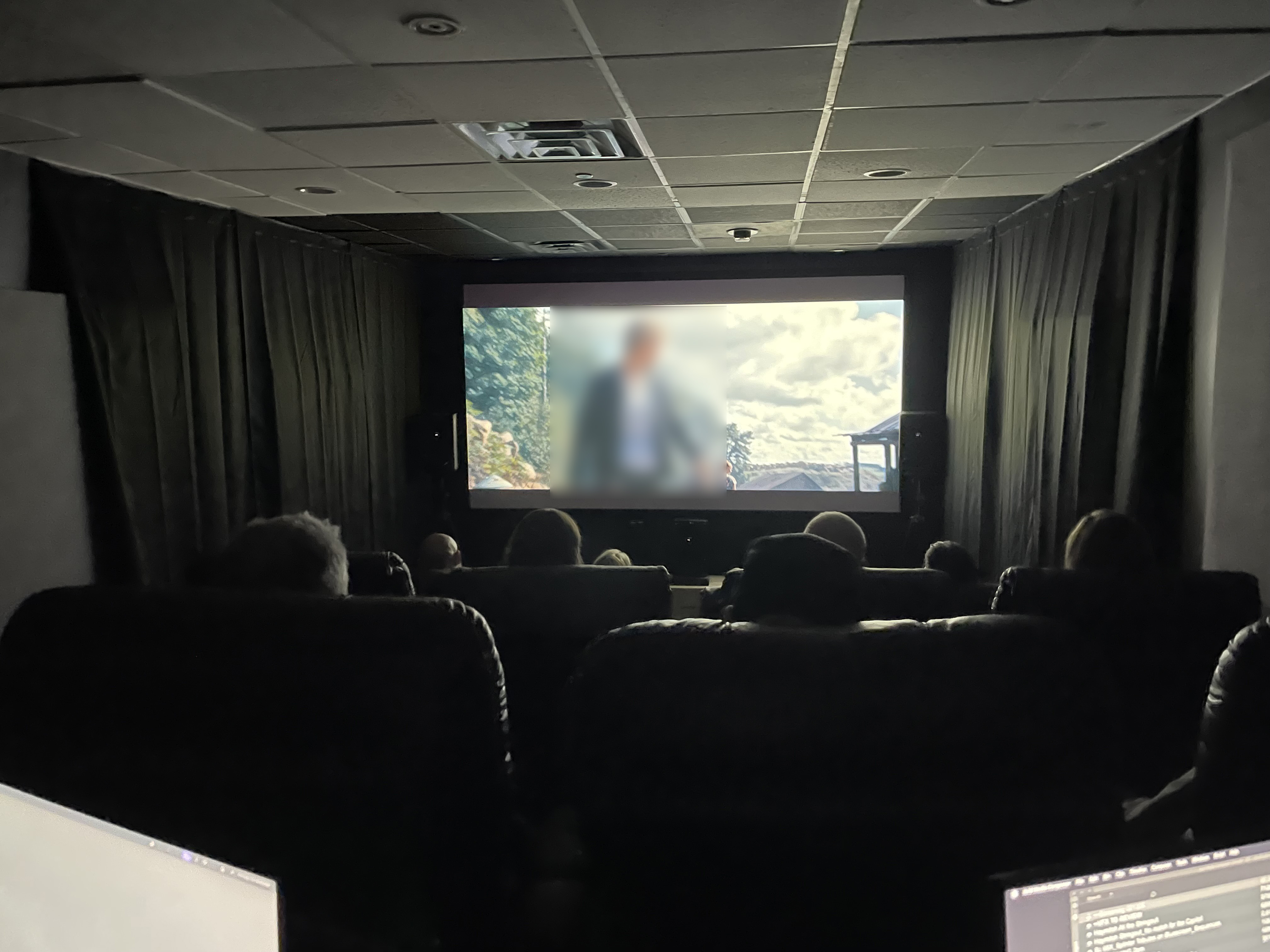
Screening room used for VFX review and other screening purposes at 900 Sunrise
It’d be interesting to talk to him about whether he was happy that you didn’t just use all of his previous music for temp.
On the last one I did. Steve Durkee works with James as his music editor, and he helped craft it. But I remember I almost temp scored Ballad of Songbirds and Snakes, entirely with past Hunger Games, because this was a complete new cast. No Katniss, none of that old story. There was a lot of district 12, there was a lot of Capitol.
I just wanted it to feel like you’re still in that world. But on this one, we decided, “Let’s not lean on that crutch because we can always go back there.” Having said that, James did amazing new themes - family themes and love themes - that blossomed throughout this film. Within 15 minutes into the film we knew we had to start giving the feeling of The Hunger Games again.
He snuck in some of the original themes and when Haymitch gets Reaped and he’s going away on the train, and Lenore is at the train station crying in the rain, it’s a big dramatic moment. Francis said, “If there’s any place we need to use a big, classic Hunger Games score, that’s the place.” James is the master.
Listening to it from the beginning to the end all the way to when we recorded at Abbey Road or in the final mix, getting to hear these things evolve, of all of that, my favorite time is sitting with him at the very beginning when he’s just playing us his very first sketches.
Sometimes he’ll just play them on the piano, sometimes a little something he’s prerecorded. But, that’s always my my favorite part of working with him.
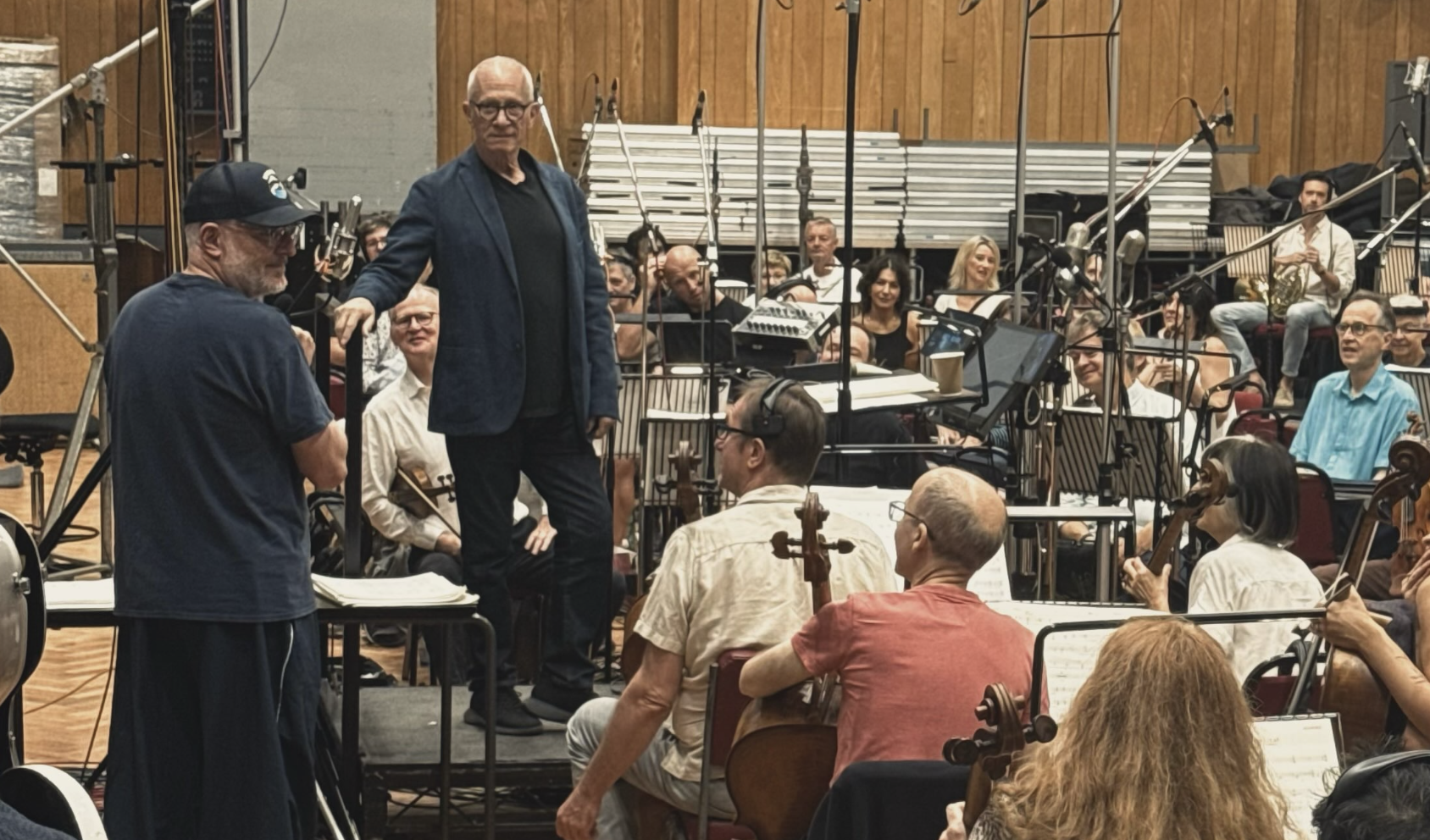
Photo from James Newton Howard’s instagram account recording the score at Abbey Road.
So you’ve got this great score. When do you not use score?
There’s a lot of music, and a lot of times we’ll put music in just as “scaffolding” just to take out later. In this one, we knew, especially in the arena, there’s so much solitary time with Haymitch because that’s the way the story is constructed.
He’s intentionally not making alliances, going off on his own, playing his own game. We felt like that solitary time needed less music or really quiet music. We noticed that that instinctually was better to play quiet and not play any sort of underscore or kind of ticking-clock feel. Story wise, that was a big decision, or at least a choice.
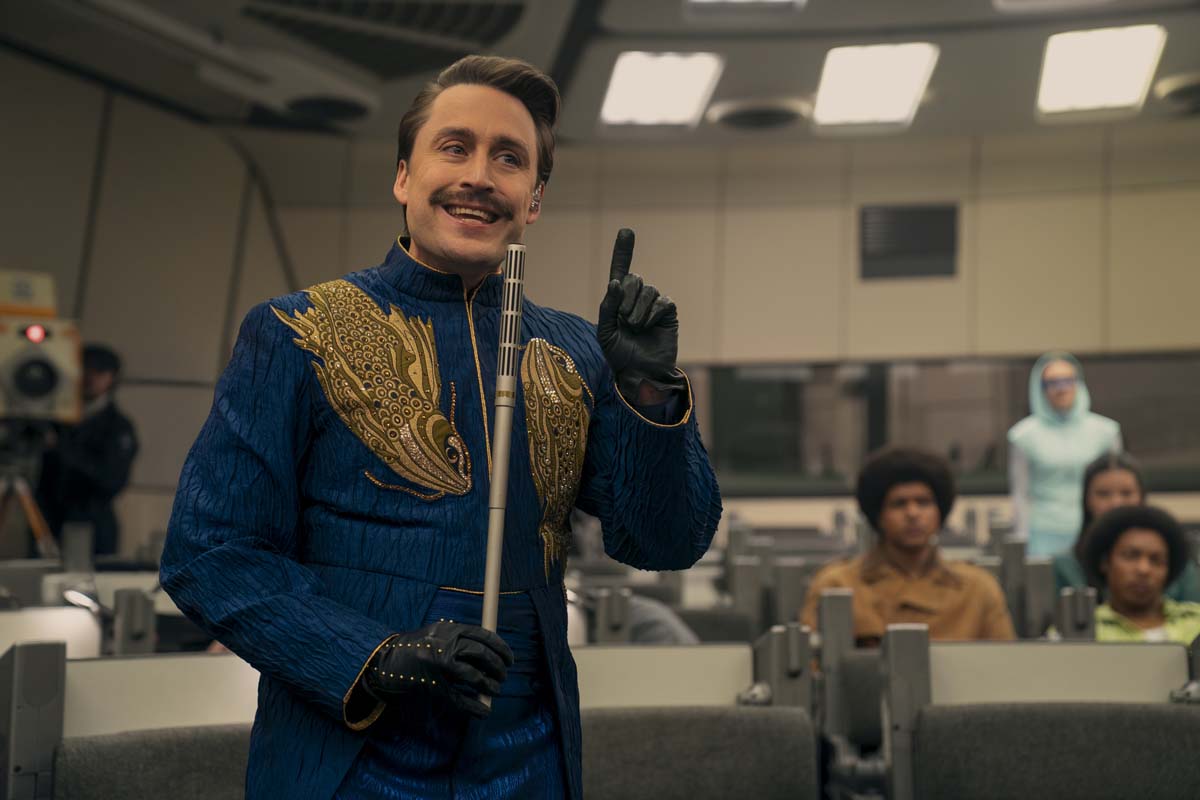
For example, there’s a scene of Flickerman when he first gets introduced. Kieran Culkin comes in and he’s very funny and he’s very big. We tried different things in there, but it almost made it too comical or too light.
Or if we tried to put dark music over it, it didn’t work against what the funny things he was saying, so that’s a perfect example of, “Let’s just play it with no music, because we’ve had plenty of music up to now and we’re going to have another mini montage right after this of them getting prepped.” So it’s just a matter of feeling.
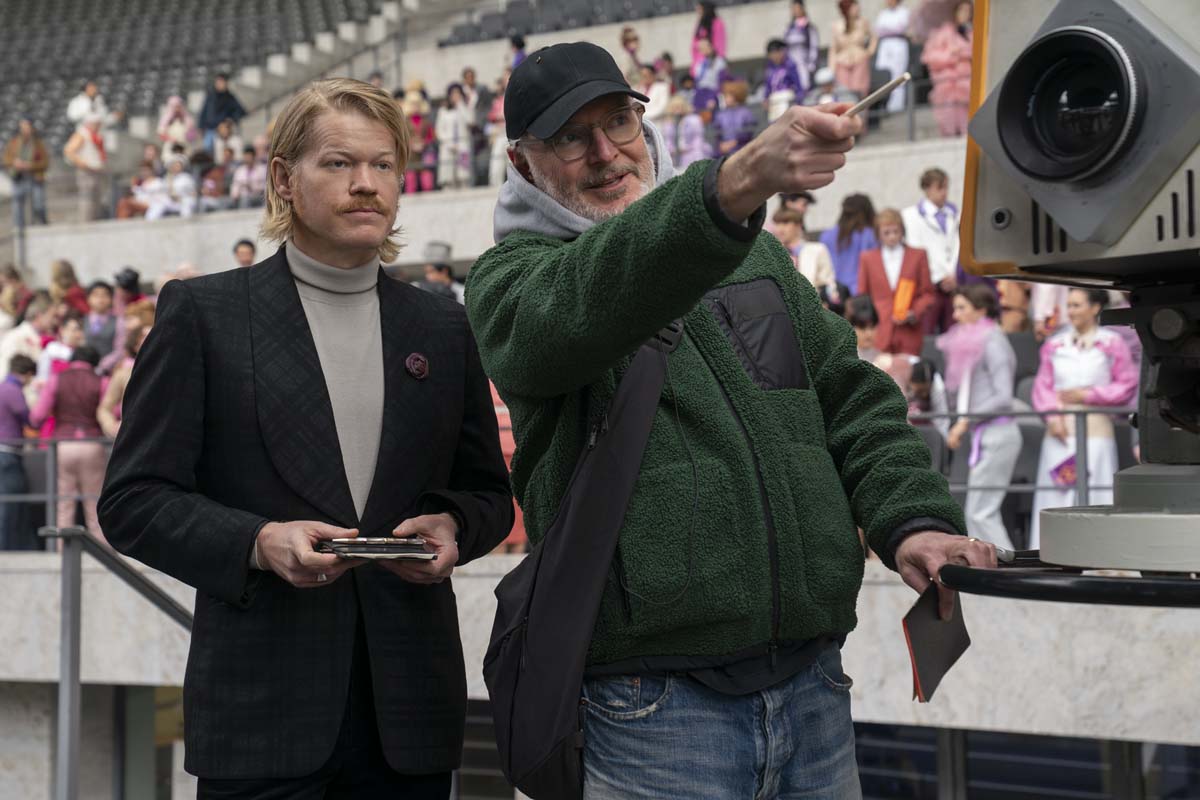
Once the dailies are cut and you have an editors cut, how does your role as an editor change?
We’re always trying to get down to time, so I’m always making other passes for Francis. His big joke is always that whenever he leaves the room he says, “Take out another five minutes and we’ll see if I miss it.” So I’m always tweaking the cut.
All of the VFX department was on our floor. Our music editors and sound and VFX assistants are there. So at that point, my job was more… you know when you’re at the dentist with the hygienist doing all the work, then the dentist just comes in at the end to check the work?
That’s what it feels like sometimes, especially in the VFX world, or when you’re just kind of checking on one little split screen or whatever it is, or some sound or music cue.
That’s what my job sometimes feels like. It’s much more like what Francis does all the time, because that’s what he’s doing with me. He’s just checking in and making sure that the ship is still going in the right direction.
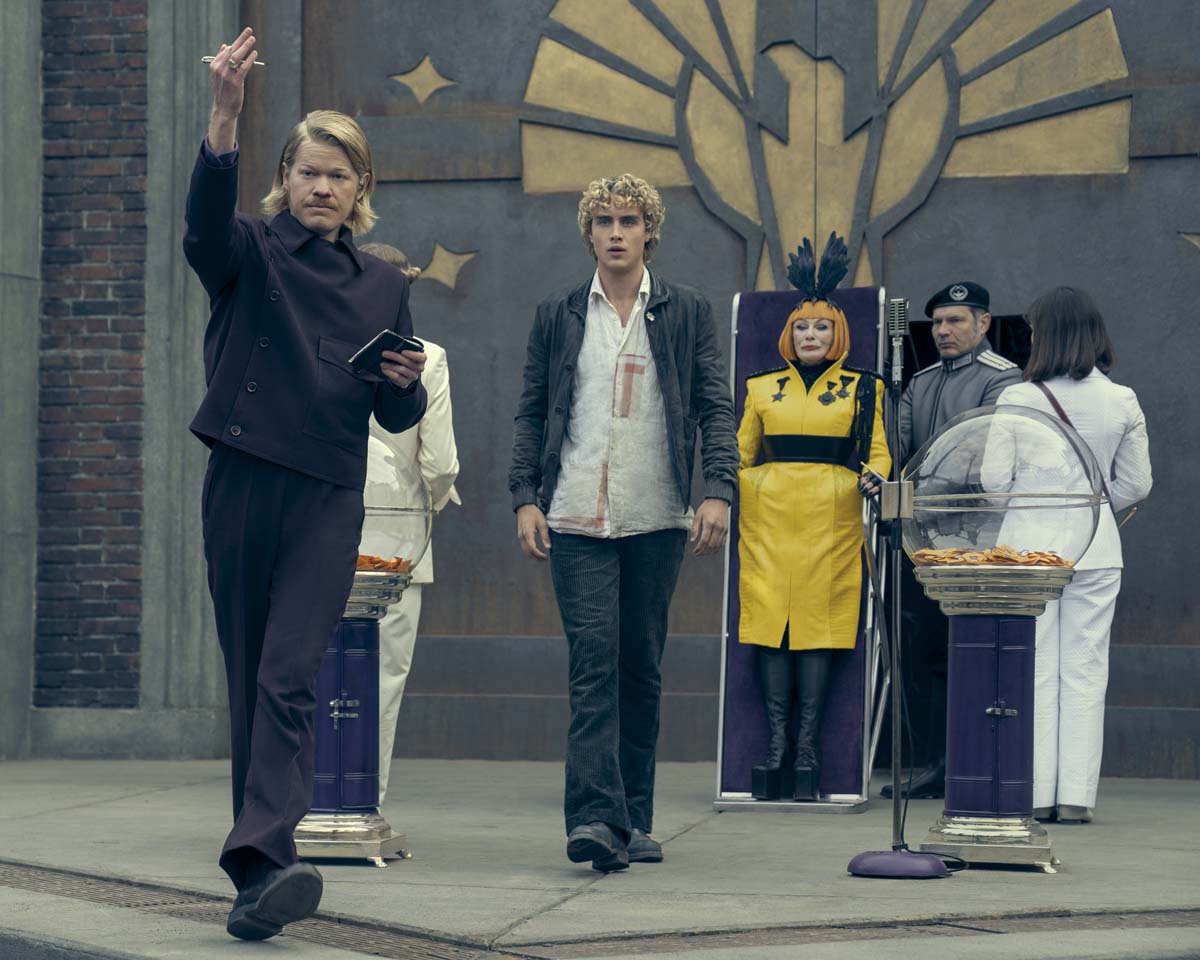
What about your time with Francis as part of the post-editor’s cut? How does your role as a storyteller change when you’re collaborating with him?
What’s nice about having this longer relationship with him is that we trust each other. It’s all about trust. At the very beginning I’ll send him cuts every Friday. This reached another level on the last movie we did - on The Long Walk - because I was sending him a cut every week of the entire movie.
At that point - because they were shooting chronologically - I just sort of added on scenes chronologically as we went, and he was giving me notes as we went. I’m sending cuts on Friday. He’s watching over the weekend. We’ll talk less often.
A lot of times I don’t even know that he’s really watched it or likes it until I hear that he showed the script supervisor a scene! So obviously he was happy with it. It’s kind of fast and loose during production.
I’m usually cutting from LA and they’re often on location so that when we come back the cut already has some notes done to it and we both know what we have.
Then it’s a daily grind. He’s very good. He’s very decisive and he knows what he likes and he’ll let me go off in any direction. If I have an idea, he says, “Just try it and show me later.” But once he likes something, he likes it, so that’s what’s kind of nice. We can move forward from certain spots.
We’ll always circle back as it changes contextually because of what’s changed around it or story-wise. Day by day, he comes in at 9 a.m., leaves at 4. Lets me work the rest of the day on whatever mess we made.
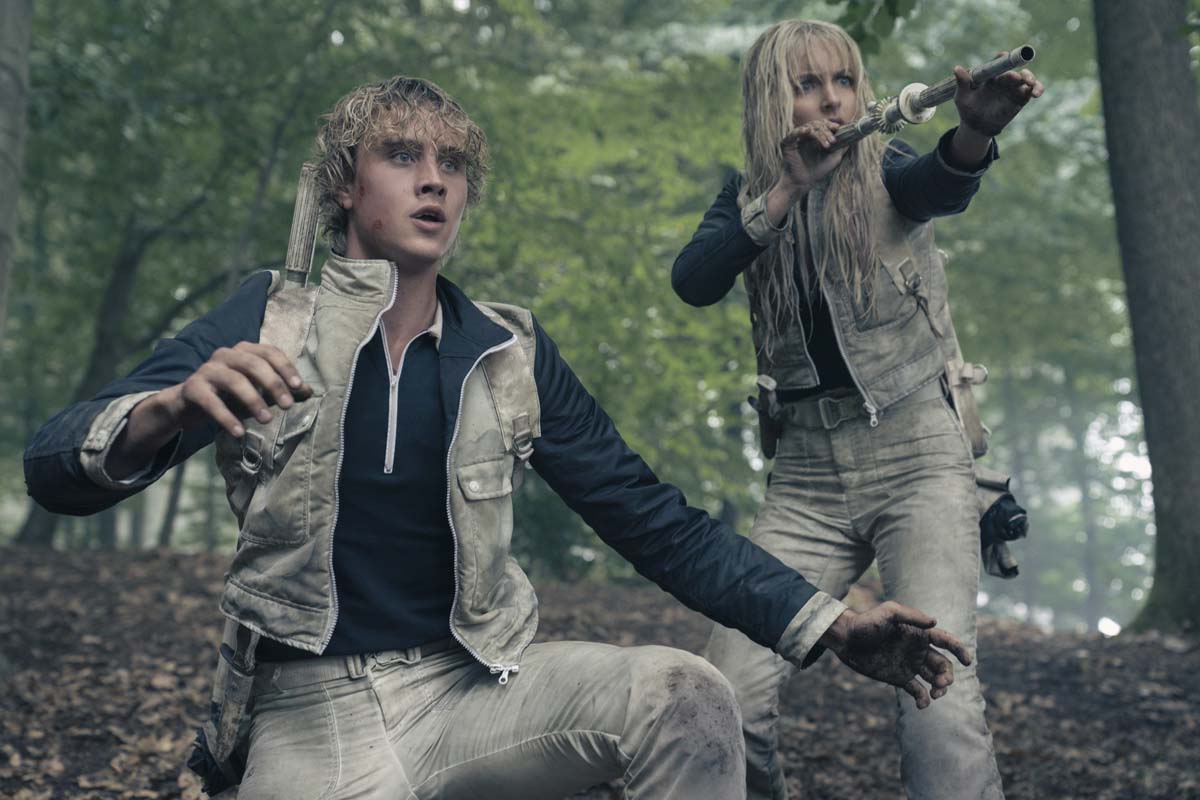
One of the thing that you mentioned was that Francis would tell you, “Cut another five minutes and see if I notice.”
He always says, “Let’s take another trim pass. See what you can get out.” This was something I learned from Alan [Bell] too, because when I was working on those Malick films, it was the opposite of that, right? Malick let things breathe and it’s all very poetic and experiential.
But cutting lines and cutting moments tighter really helps films like this. I think the propulsion of getting through a scene and getting right into the next scene.
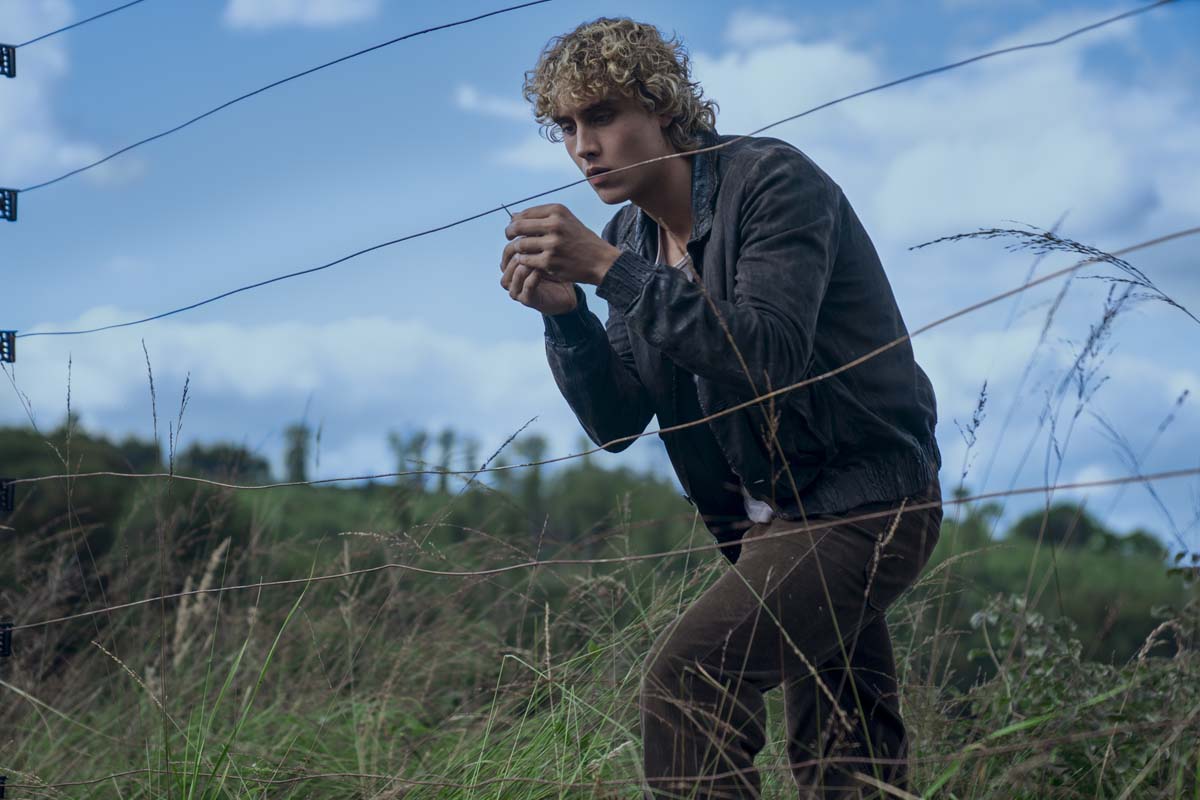
Actually, that’s one trick that I learned on this one that Francis actually started me on. I kind of pitched it as an experiment: “When we’re done with the scene, let’s get rid of the last shot.” Just pull the last shot to see what happens, because almost inevitably it was a shot that we didn’t really need unless there was some line being delivered.
But if it was just a last reaction shot – we called them soap opera shots, when you come back to somebody reacting to something - or somebody says a line then there’s one more beat where they were turning away or whatever it was, but then we said, “Let’s just cut the last shot and see if it gets us into the next scene.”
A lot of times it’s horrible, but sometimes you realized, “Oh yeah, I didn’t miss that at all” and now I’m launched right into the next scene.
In another interview, somebody mentioned that It’s like putting a comma instead of a period at the end of a scene.
Right.
Is it tricky with a film with a lot of VFX to still feel the vibe early on when you don’t have that stuff in? How does your dealing with VFX change as you go through the movie?
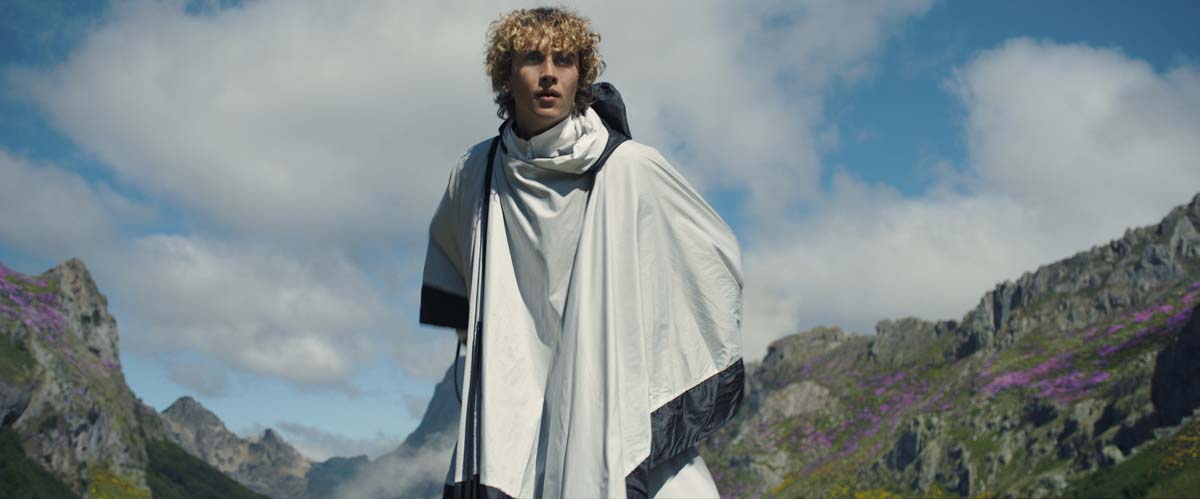
Especially something like this that has a lot of animated characters - or the “mutts” - you know, the butterflies and the squirrels and the birds. There’s nothing there. Those people are looking silly, running around, flailing about. So that is all instinct and imagination. You just have to imagine what’s going to be there.
Sometimes you have previs so you have an idea of the angles or things that are happening, then you just let Francis and the VFX department fill in the blanks. Then you keep crafting as you go and you react to the timing.
So many times, though, towards the end, especially like this big finale, the explosion at the end, or things like a squirrel attack, they’ll be doing things and I would think, “I would have taken off two frames there that if this was shot in camera,” I wouldn’t have cut on that frame or I’d have let it live a little bit longer.”
So it’s always nice to have the time to be able to react to the actual VFX instead of having them come in at the last second when you’re stuck with that timing.
Sometimes there are previs sequences that get you really close, but for example, the chariot parade, and that big crash thing that happens at the end, is shot specifically in a certain way.
Sometimes it’ll get you 90% there, but then you have to deal with what you have.
When you mention the VFX - if they come in at the very end - you can’t cut out those couple of frames. That’s because you’re already locked in with music and sound effects and sync? Or why can’t you cut it?
Yeah, that’s right. If it’s on the mix stage or you’re in the DI world, you’re locked into that. If you’re just waiting for that last shot to come in and you’re on the mix stage then it gets dropped in, and you realize, “It feels like a mis-cut it or something.” Sometimes you can roll the shot, then nobody will notice.
What about sound effects? How much did sound effects play in the pacing or in what you were trying to do in your picture cut?
A lot. Jeremy Peirson, who’s a fantastic sound designer, has worked with us all the way through. He’s worked with Francis before I even came on. He has a big library of Hunger Games … District 12… even if it’s just crickets or something that are out in District 12 or specific Capitol sound effects. He has a library to all of that, not to mention things like the booms for when one of the tributes die.
He’s on early. We have him on before the director’s cut is done. So we’re always listening to temp tracks and mixes in his room. He has a great set up. He’s part of the family and we include him and jump back and forth. Sometimes if I need a little time to work on something, Francis will go hang out with Jeremy.
One of the things I was really impressed with was the audience work Jeremy did. There are two big auditorium scenes. One is the interview montage section and the other one is the Victory Ceremony at the end. That audience really becomes a part of the scene.
It’s another character. Their reaction - like how the Capitol reacts to the tributes and laughing and call outs and all that ADR group work.
I should also mention Tom Jones, who’s a fantastic ADR supervisor/co-sound designer. That’s one of the few things that I get surprised by on the stage, because I’m usually aware of everything that’s done, but sometimes what’s done in “loop group”, I never know what they did, so I will either laugh or cringe when I hear something that the “group” guys have done.
There were a few shout outs in the crowd that I loved that people are just going to think that it was the crowd in the production sound that were doing it.
They’re getting all riled up or when Haymitch wins them over talking about making booze back in District 12 and hearing the crowd get more enlivened. It really helped the reactions of Haymitch and Caesar. Jeremy did a great job on those.
Not necessarily for our fellow editors that maybe listening to this, but for an audience of younger editors for students or non-editors: Why does it take so long to deliver a film once the editors cut is complete?
I was thinking about that because we wrapped last November - 2025. They probably gave us the ten weeks (DGA rules allow 10 weeks for a director’s cut.) and we didn’t take it all. Maybe we finished February 2026. So yeah, what were we doing in that time? There’s some misunderstanding about editor’s cuts versus assemblies.
Francis, for some reason out there in the press, mentioned that there was a 4 hour 12 minute cut. When he first saw the first cut, it was 4:12. With this fan base, they’re screaming, Release the four hour version!” The whole Zack Snyder thing, right?
That was the same with Project Hail Mary. It was revealed on Art of the Cut that the edtor’s cut was 6:45 or something. And all those fans were screaming, “We want the six hour and 45 minute Project Hail Mary!”
They would take away my ACE membership if they saw that first cut. In their minds there’s an hour and a half more stuff! When I do the editor’s cut, I intentionally leave everything. I think most editors do. It’s just so that we know what we have, because sometimes you take things out and you forget that you took them out.
For example, I might think, we need to do ADR or a reshoots so we can get this line where they say “this and this and this” then somebody will say, “Wasn’t that in the script? Wasn’t that already shot? Didn’t we have this idea? Wasn’t this brilliant idea seeded way back when?” Then we would go back to that or just find that moment and pull it from the editor’s cut.
The director’s cut does take some time and that’s my favorite part. Having said all of that, there are 20 minutes of good stuff that we had to cut out that will hopefully end up on a deleted scenes. I know I put together a reel of all the good stuff we took out.
To me, it’s the gestation time. That’s why it takes so long. Talking about the difference between TV and features, you have that time to sit and live with it a little bit and repent of your mistakes, and put things back in that you thought weren’t needed, or even frames for that matter.
Sometimes I have things cut too tight or kick things out. Or, things that you’ve been living with and after a while you think, “We’re just living with this. We don’t have to have it. It’s not necessary but we’ve been living with this for a long time.”
The most important thing, I think to me is test screenings or reactions of other people, because that’s why it takes so long. You need to sit with it and show it to other people, then get reactions to that. We had a couple of previews that were very instructive.
Is there a scene in the film that you’re particularly proud of or that was creatively or technically more challenging?
Obviously all the big fight scenes and the big spectacle numbers and the volcano explosions…the Reaping was really difficult because there was 21 hours of material just for that short scene because of all the different characters, so besides all that, my favorite scenes are the ones I really love digging into where there’s dialogue.
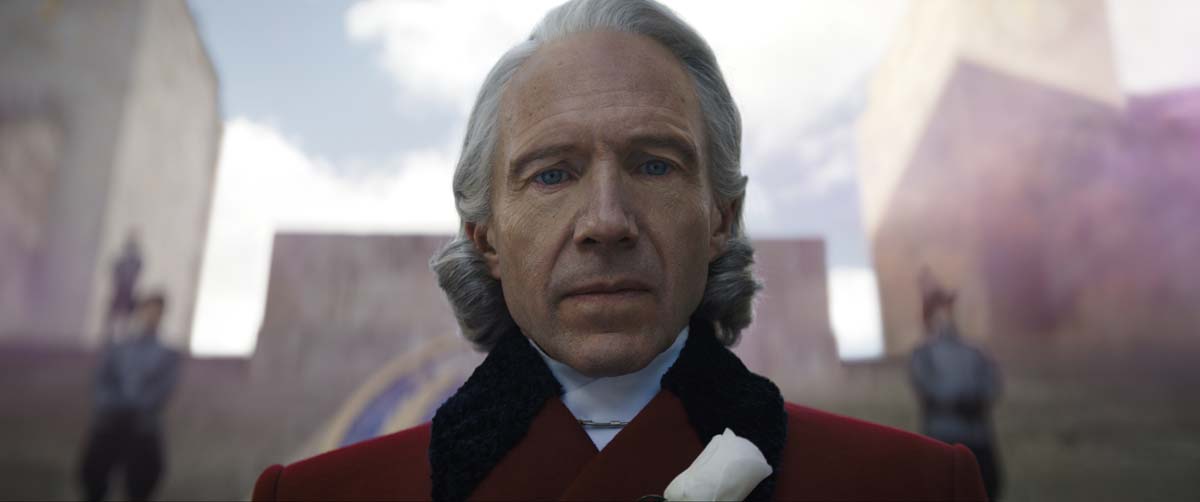
There were really two big ones. There was the first time Snow sits down with Haymitch. It’s the first time Ralph Fiennes really gets a big scene. Just cutting those performances between Ralph and Joe, who plays Haymitch … I love that stuff. It was a little longer.
This is one of those moments as an editor, when you’re the first audience and you’re sitting there feeling like you’re living with the scene and Ralph Fiennes is staring you down and kind of toying with you in those dailies. He is one of my favorite actors, too, so to have those kind of moments, those are my favorite scenes that I’ve cut.
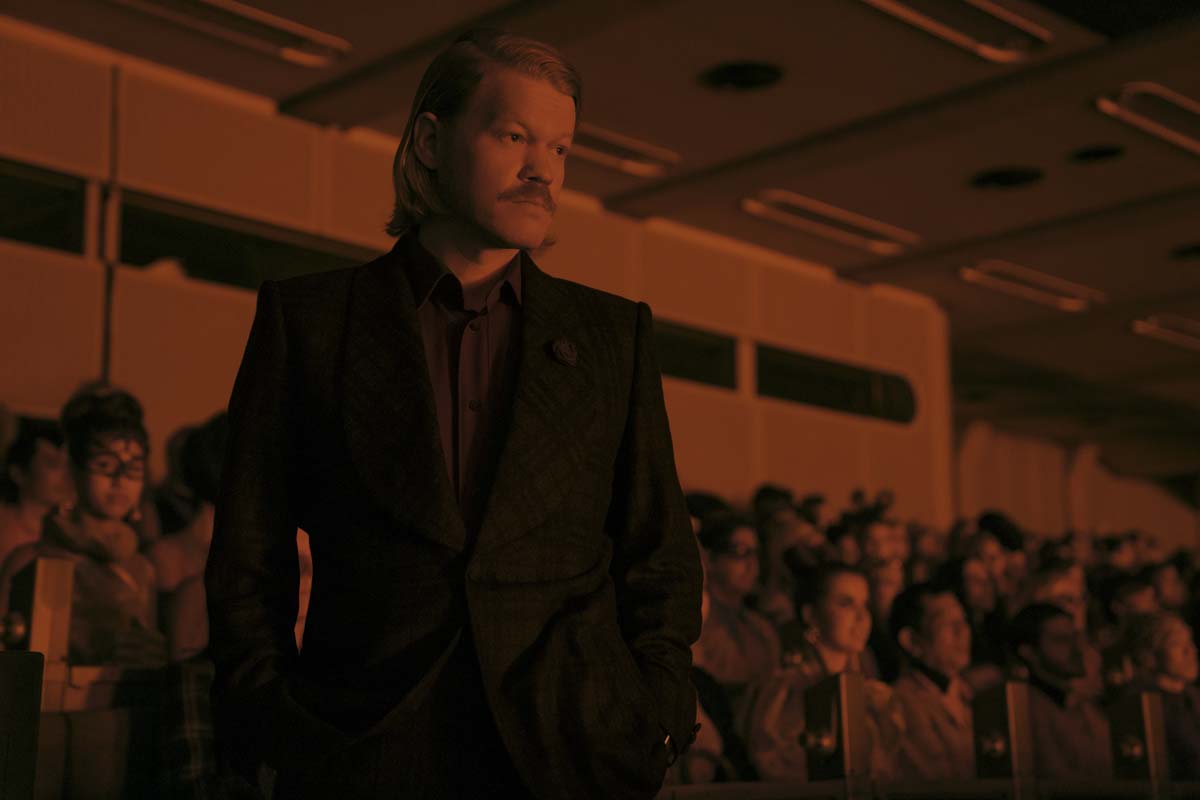
Also at the end, there’s a big scene with Plutarch and Haymitch - Jesse Plemons and Joe. It comes to a moment and the performances make you lean in. I love those. You’re watching dailies and of a sudden the entire day is gone and I’ve just been living with their performances.
So those are my favorites. The spectacle stuff is fun, but a lot of times it’s very linear. If there’s a chase scene or if there’s a fight scene it’s fun to cut the minutia and get into quick cutting. But, to me, it’s the big drama scenes.
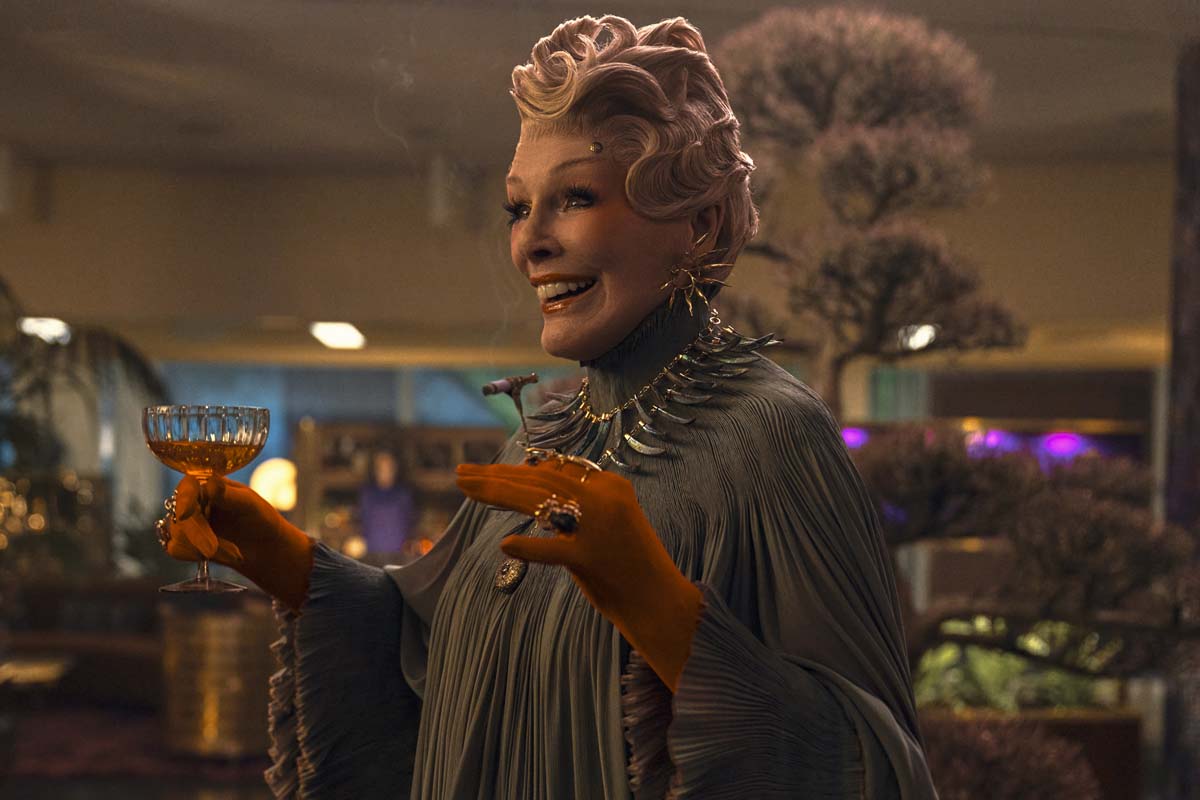
These films have a lot of big actors and really stellar performances. They get these “young’uns” that are doing all the action stuff, but then they have these big scenes like in the last one, Viola Davis, Peter Dinklage or people like that where you just kind of love cutting their performance. And Glenn Close was great on this one. Everybody was really great.
When you’re cutting a film like this, it’s going to be released in multiple formats. Sometimes it’s IMAX, sometimes it’s 3D. How does that affect you, or what’s the change that you have to deal with as an editor?
For IMAX we took a page from Catching Fire where we only opened up the aspect ratio during the arena. So it has a dynamic opening when you go into the arena, and I recommend people to see it on IMAX if they can, because it’s really a spectacle when you get that big.
It’s interesting on a film of this size with this kind of distribution, they do these things which I was unfamiliar with. I was familiar with 3D, obviously. We do a QC for that and we give our notes and they did a great job on the 3D on this one too. I’m not a big 3D fan, but I love seeing it through different eyes.
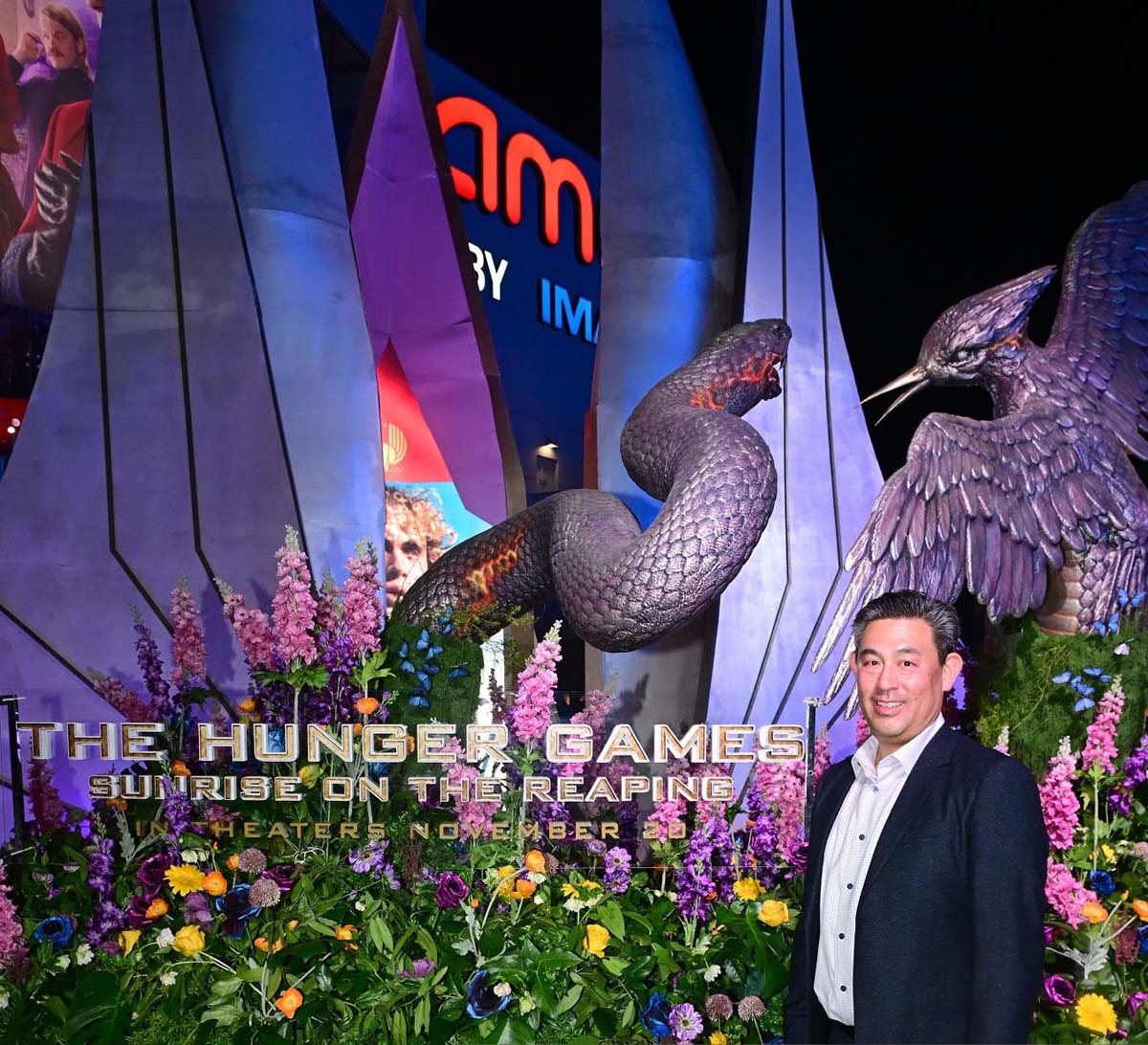
But there are also these formats now called ScreenX and another one 4DX that I was not familiar with, but they had me go and do the QC. But the ScreenX, is one where they open it up on the sides. They have these two panels, one on the left, one on the right. In Los Angeles they just opened one in Burbank this past year.
That’s where we were doing the QC. I thought it was a complete gimmick, which it is honestly, it’s a gimmick, but it was very cool and a lot of work they had to put into that because it’s supposed to be your peripheral vision. Sometimes they actually put real images.
They took our dailies. They had to extend the sets. If you imagine going up into that arena and it opens up horizontally. It’s like going into The Sphere or something. It’s pretty cool. I mean, I don’t know how popular it’s going to be.
Then there’s this thing called 4DX that they had me go check. I just wanted to see it as a lark, because it’s where the seats shake and everything. The seats are “flying” during drone shots and during action scenes are bumping around. I couldn’t stop laughing because they squirt stuff out at you.
It’s like being at Disneyland. Or when it starts raining, rain will come down from the ceiling. But if you want a good time with your friends or have a couple beers and go watch it, it’s such a different format. We didn’t have that experience on the last one, so that was different.
Mark, thank you so much for having this great conversation with us. And congratulations on another big film.
Thank you, Steve. It was great to talk to you again.
 September 23, 2026
Sean Combs: The Reckoning
Charles Divak has been on Art of the Cut in the past for Chimp Crazy, for which he was nominated for an Emmy and won ...
Read more August 6, 2026
The Upshaws and Wanda Sykes Legacy
Today on Art of the Cut we speak with Angel Gamboa Bryant, ACE, who is nominated this year for both The Upshaws – for Outstanding ...
Read more April 23, 2026
The AI Doc: Or How I Became an Apocaloptimist
Today on Art of the Cut we discuss the documentary, The AI Doc: Or How I Became an Apocaloptimist with the editors of the film, ...
Read more
Subscribe to our newsletter
Get all the latest news, blog posts and product updates from Boris FX, delivered directly to your inbox.
Welcome!
Thanks for opting-in to our newsletter. You'll receive an email momentarily with your confirmation.
