


Wild Horse Nine
Oscar-winning editor, Mikkel E.G. Nielsen, discusses the freedom of not worrying about performance when doing a rough assembly, finding the right place emotionally for an important flashback, and turning a phone call into a ballet.


Today, on Art of the Cut, Oscar-winning editor, Mikkel E.G. Nielsen, ACE, discusses teaming up again with Banshees of Inisherin director, Martin McDonagh, for Wild Horse Nine.
Mikkel has been on Art of the Cut for Banshees of Inisherin – for which he was nominated for an Oscar, a BAFTA and an ACE Eddie – and for Sound of Metal – for which he won the Oscar and the BAFTA for Best Editing, and was nominated for an ACE Eddie. His other films include Hamlet, Lee, and Beasts of No Nation.
Mikkel, it’s very nice to have you on Art of the Cut again. Congratulations on working on Wild Horse Nine, another project with Martin McDonagh.
Thank you so much for having me.
You’ve worked with this director before. Is there an advantage to working with the same director multiple times?
Oh, very much so. Especially a director like Martin. He’s very prepared. He balances, comedy and drama and then adds thriller to this story.
My process of doing an assembly and presenting it to him - knowing that it’s okay just to be mechanical. It’s only structure, because he comes into the edit learning from the last time on Banshees - knowing that he watches all the dailies. He writes down every single line how he likes it and what it does. So we line up line by line and we try everything.
So already just knowing that I don’t have to focus that much on the performance for that first assembly, then you can start playing around with the other stuff and try things. And what sort of music could this film have?
Are there any structural works that I could start working on? Just knowing what that would do when I present him as the script is and, also just relaxing because I knew that we had a sort of similar sensibility and I know what films he likes.
I think I know the balance of the rhythm of a scene, and when should we do what, at certain stages in the edit, how he likes to play with music and use music, the needle drops, all these things.
That’s a learning curve. Coming from Banshees and now on this one, adding the knowledge of how nice and how joyful it is and how rare also it is to be on a project like this.
You mentioned a very unique thing: that he watches all the dailies. When does that happen? You’re saying you create the assembly before he’s able to watch the dailies, correct?
I put everything together while they’re shooting, then I present him an assembly two or three weeks after the shoot. Right after the shoot he starts looking through all the footage. He has all the dailies, and he starts writing down and noting everything. Then he goes home.
We’ll work very strict, like from 9 to 6 or something. Then he also at night, he looks through a couple of scenes of some dailies.
We may spend four weeks or five weeks to do a complete pass on all the scenes and all the performances - trying stuff - but that also gives me an idea of what else he likes, so I collect everything. I put everything in strings and I mark everything.
So I know from my perspective what I initially react to when I saw the dailies, but I can now add that from - let’s say - eight takes, that he likes takes three, five and seven, for example. Just knowing that and playing with it and putting it up in order and trying it, it’s a tremendous way of working, really.
It sounds like you like to use selects reels to be able to edit from. Do you use them as a source? Or do you put them in your timeline and start working them as the actual edit?
I used them as a source. When watching dailies I put everything after each other and I do a string, then it’s really the string that I work from because I mark everything, which is more of an initial feeling of what it did.
So I already have these things, then I can put on a different layer Martin’s selects as well, so I can always see if there’s sometimes there’s a similarity. So I would always use it as a source, then I would just place everything after each other in the timeline.
The film starts out with some archival - I’m assuming 8mm footage. Was that scripted that way or is that something you discovered in post?
It was scripted that we wanted something. We didn’t really know what yet it should be. We had an idea of it. The idea was that if you use archival footage, then you enter the film through the same sort of device so it has the same feeling.
So you make a contract between the archival footage and our film footage. So the first time you see everything, it’s from that same square, for the 8mm footage of it going to Chris’s character being filmed by Lee.
That’s really where it mirrors that original footage of the young students and Aldiende in the opening. That was really to create that contract that we can use this footage throughout the film from Lee’s perspective. The device helps this information thing throughout the film, but also the relationships between the two characters.
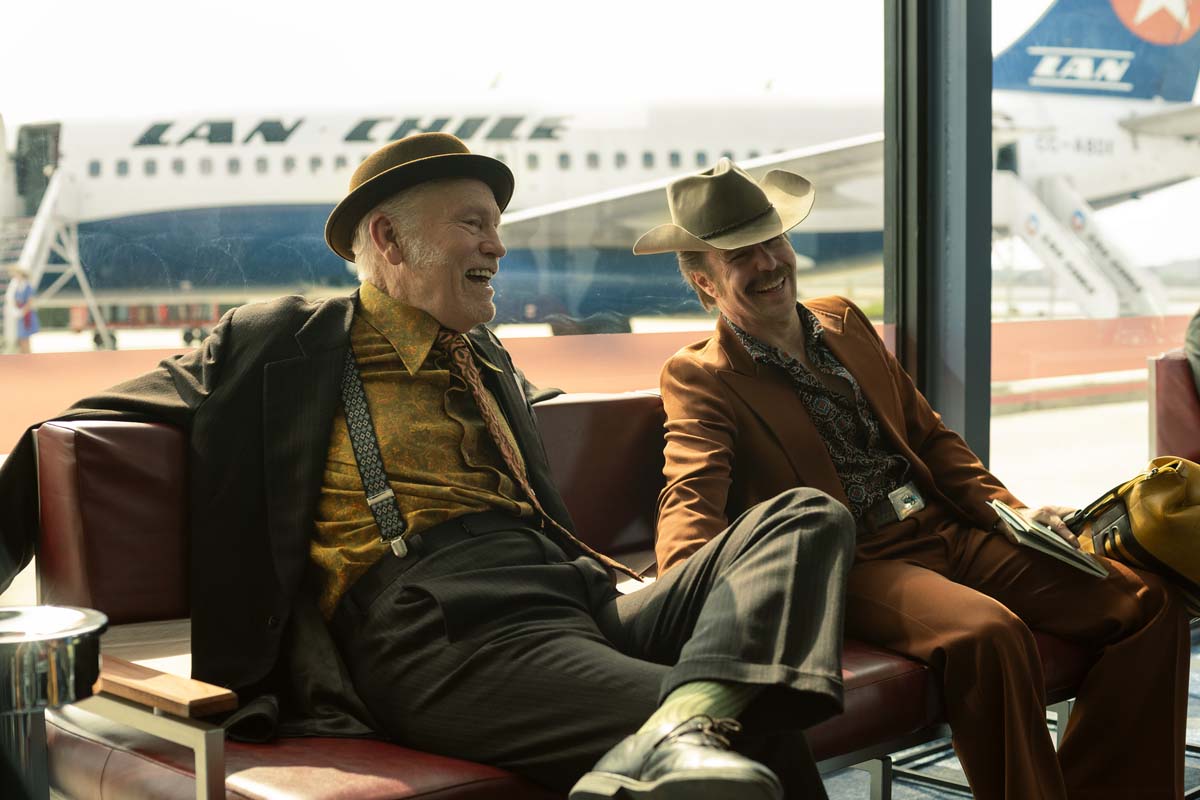
Let’s talk a little bit about the work that you did to have us care about the characters - understand who they were - before they arrived on Easter Island. Were there other scenes that were also character building that you felt “We’ve got enough of this?”
Before you got to Easter Island, no. We shortened a lot of the scenes down, so it was a little more precise on the characters. Less is more. And also because we wanted to get to the island at a certain time. We didn’t cut any scenes from the opening.
The structure is the same. There’s just less in some of the scenes, which is usual with Martin’s scripts because he gives you options. Like, how many jokes do you need? How much drama do you need in the scene?
That’s really where it becomes playful in the edit. I think he enjoys the edit process a lot because you can really control rewriting the script the way you want.
Sometimes when a word is added by a character, or how long to stay with your character? I think he enjoys the edit process a lot.
So you think that there’s possibly some overwriting of the script, because he knows that the molding is going to happen in post?
Yeah, because it’s one thing what you read on paper, and another thing what you see and what the characters adds to a thing. But also you don’t really know when is something too much and when there’s too little in terms of comedy and drama and also when do you need to shift it to go to a tragedy.
That was the learning process on Banshees really: how do you balance comedy and drama? Then you sort of dry it out towards the third act, which becomes much less funny because it’s much more about the anger and the situation between the two characters. There’s not a lot of laughs.
The learning from that: I knew that Martin likes to have the options, then we play and we see which one beats the other one. How many rounds do you need to go with these two guys in the cast? And we have the options.
Obviously we try all them and we play with all of them, and we then test it with the friends and family screenings or just on ourselves. Then hopefully in the end, the dream scenario, without even talking about it, at least from my perspective, is if there’s a set up, then there’s a payoff somewhere, but there’s just a quality to having something that brings a laugh or a surprise in a scene and suddenly it reveals itself.
That’s also storytelling, information or something that’s value for the story. That’s a really interesting thing that Martin works with in his scripts.
Then the rhythm and the way he writes things, and there’s a repetition in some of the lines which it becomes like a ballet. So it’s also about finding how funny it can be and when should it be truthful?
With him, you can really go from a laugh to a cry within a split second, which is super intriguing for us as editors to work with.
And how do you find the balance of that? So it’s really, really, really interesting to be in the edit room on a Martin McDonagh film.
You mentioned that you knew when you wanted to get to Easter Island by a certain point. Is that a point where you felt you needed to be to Easter Island, or was there an actual time, like 20 minutes, 30 minutes?
Martin’s scripts surprise you all the time. There’s always a surprise. You can never really foresee what is going to happen in the story. You know you will be surprised.
So us wanting to go to the island, having this moment where you just, see the beauty of the island then activating the audience with a hard cut, getting into a dialogue scene again. It forces you to get a little bit up in your seat.
Obviously you don’t want it too late because you know that this is what they’re talking about. You want to go there at a certain time and, you don’t want to stay too long in Santiago, but it also has to be earned and felt because they’re talking about going.
That’s the balance of finding that structure and the whole of the story. Like, how long do you stay here? How long do you have it here? How long for the third act?
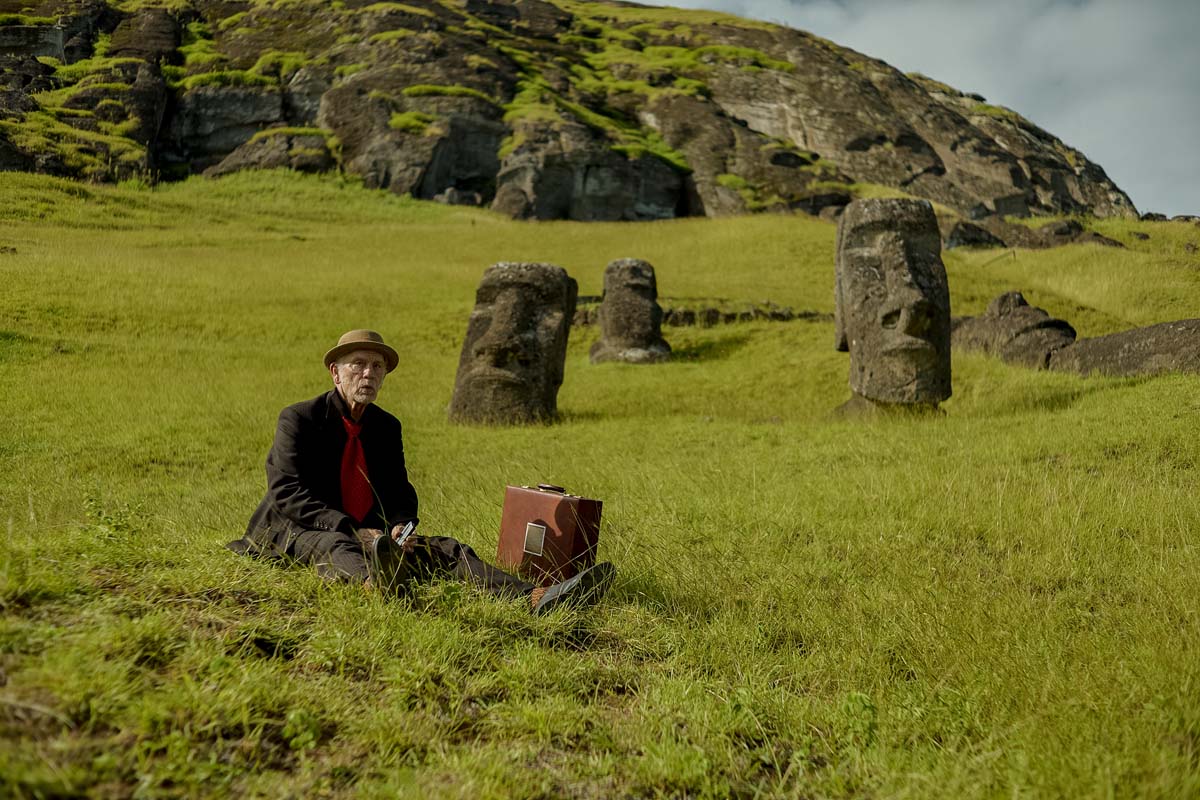
Tell me about the Easter Island montage. You know, you do get to that point where we are going to finally be at Easter Island, and then there’s a lovely montage with some very interesting music. Talk to me about building that and how long you felt it needed to be. How many shots?
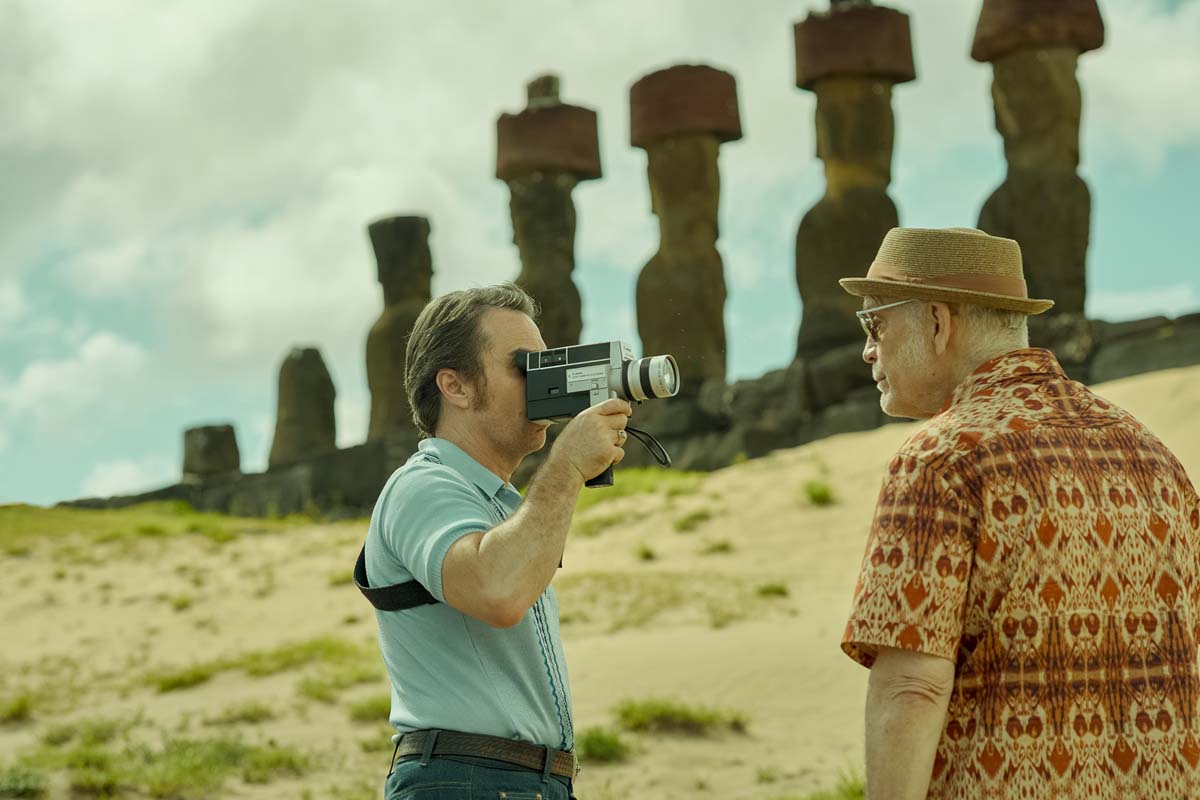
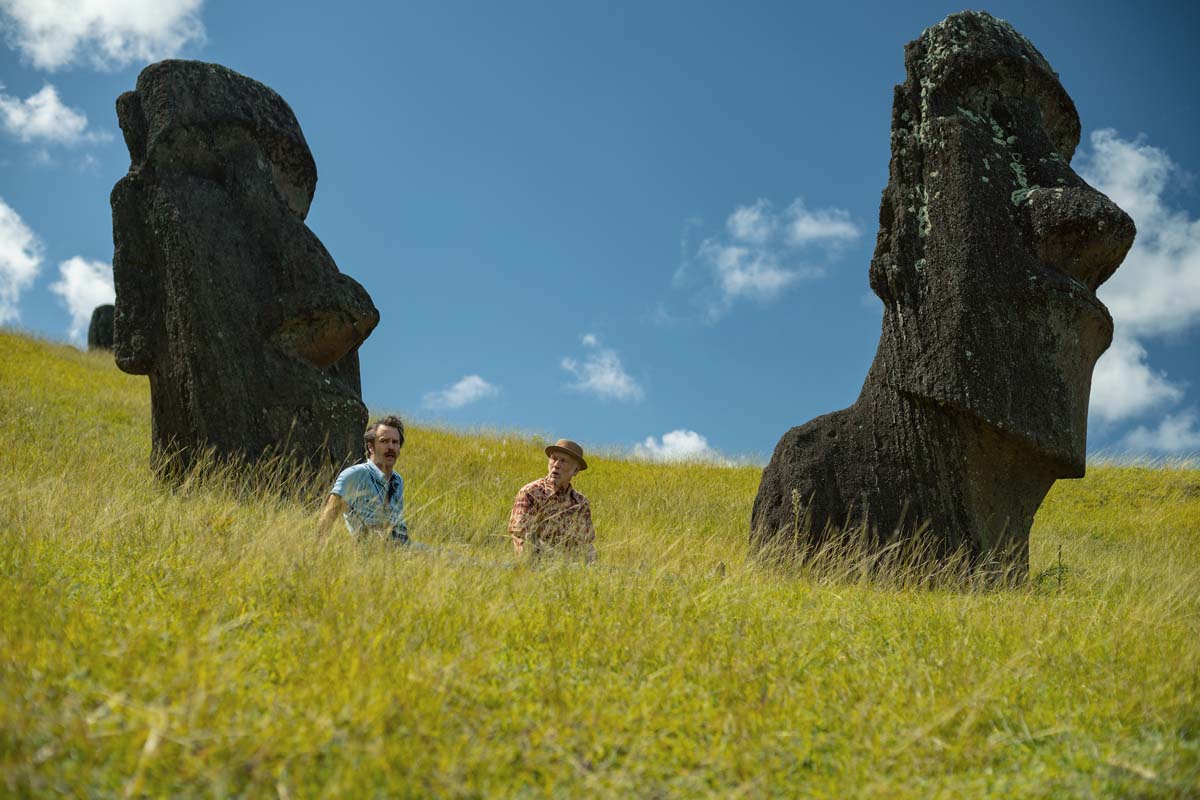
Well, there’s different versions of montages. One way is the reveal of the place that their going: the beauty, the nature, the island as a character. Your characters want to go and see these moais – the heads as they call them.
So it’s also about going on a journey with your main characters and not revealing too much. So you show a little bit, a tiny hint of it so you get engaged yourself as an audience. When they talk about they want to go there.
The first time you see the montage of him on his dictaphone, talking about his memoirs, you only show the faces, the stones, a silhouette. So you are getting intrigued because you want to go out and see them together with Chris as a character, which is the story that he wants to go and see them.
That’s why we hold back information, and you try to stay and have the same knowledge, or at least that you’re not ahead of your main character. You are going on the journey with your characters.
Then obviously the rhythm of it depends on first it’s like a needle drop of “Island in the Sun” and the other ones, mostly from [composer] Carter Burwell’s music, where it plays with loneliness and melancholy and grandness and almost like an homage to old Westerns and that feeling of this place as a mythical place, the most remote place on the earth, and his dialogue and his thoughts over the dictaphone and his memoirs, that’s also helping shape the rhythm of these scenes, of course.
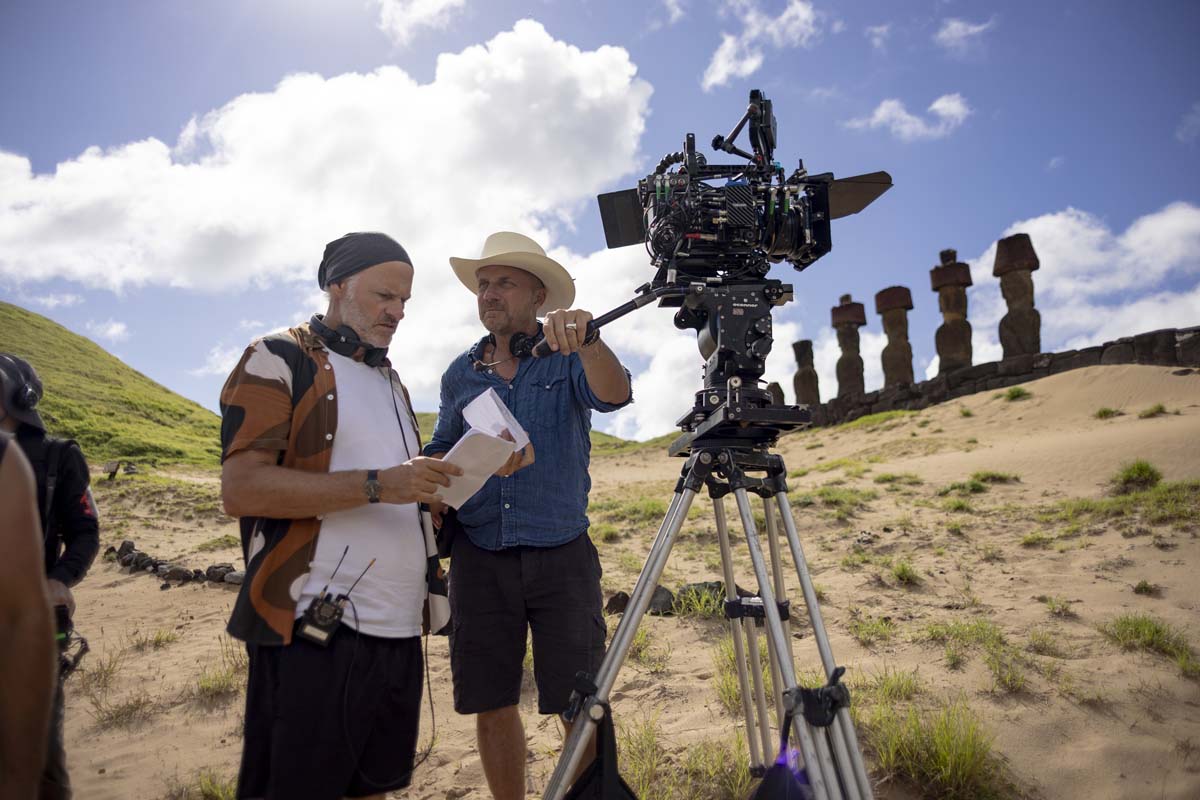
Speaking about those – the scenes with the Dictaphone - he’s narrating kind of into this dictaphone and he says, “What would my cancer say if it was narrating my memoirs?” Was the visual of the 8mm film of the moai scripted? Were the visuals over the Dictaphone scripted, or was that something discovered? And did you have coverage of Malkovich actually speaking those lines on camera?
For some scenes we did. For most scenes, we knew that we wanted to use the device from Lee’s character - the 8mm - we wanted to build the relationship as well from those montages of almost like feelings of happiness, of a past, or a time with just smiles.
Seeing Chris as a character with a smile on his face, surrounded by the horses - these, small, beautiful moments - and also the moais and what they’ve been traveling and seeing on the island. Some are specifically scripted, but we knew that was what we wanted.
And when Martin started talking about them - and me knowing what sort of material we shot for it - both from the 8mm but we also shot some 16mm. Then we had all the island stuff, like the horses, the nature, and all these things.
At film school, I was watching, Raging Bull, and I was just so surprised suddenly when it goes to Florida and it becomes like home video.
It becomes a familiar feeling of something which is completely different. And I was so intrigued by how did they do this? So I peeled it from each other in the edit, at film school.
We even went and shot stuff ourselves to see how do you actually do this? And worked on 8mm to try and put it together and see how do you use splices and how do you use this thing?
So when Martin brought it up and said that that was a style he would like, I completely knew how to do it because I had already been in that world before, and it was just opening the toolbox as an homage to Thelma and Scorsese of what they really did.
Obviously this is not done the same way they do it, but it’s definitely very much inspired by how we put things together and what sort of image should be with what is being said and stuff like that.
Those were fantastic days just to sit with that material and shaping it, then putting it together and feeling like, when does it feel like something so that it’s not us as professionals putting it together. It should feel like just a slice of life, really.
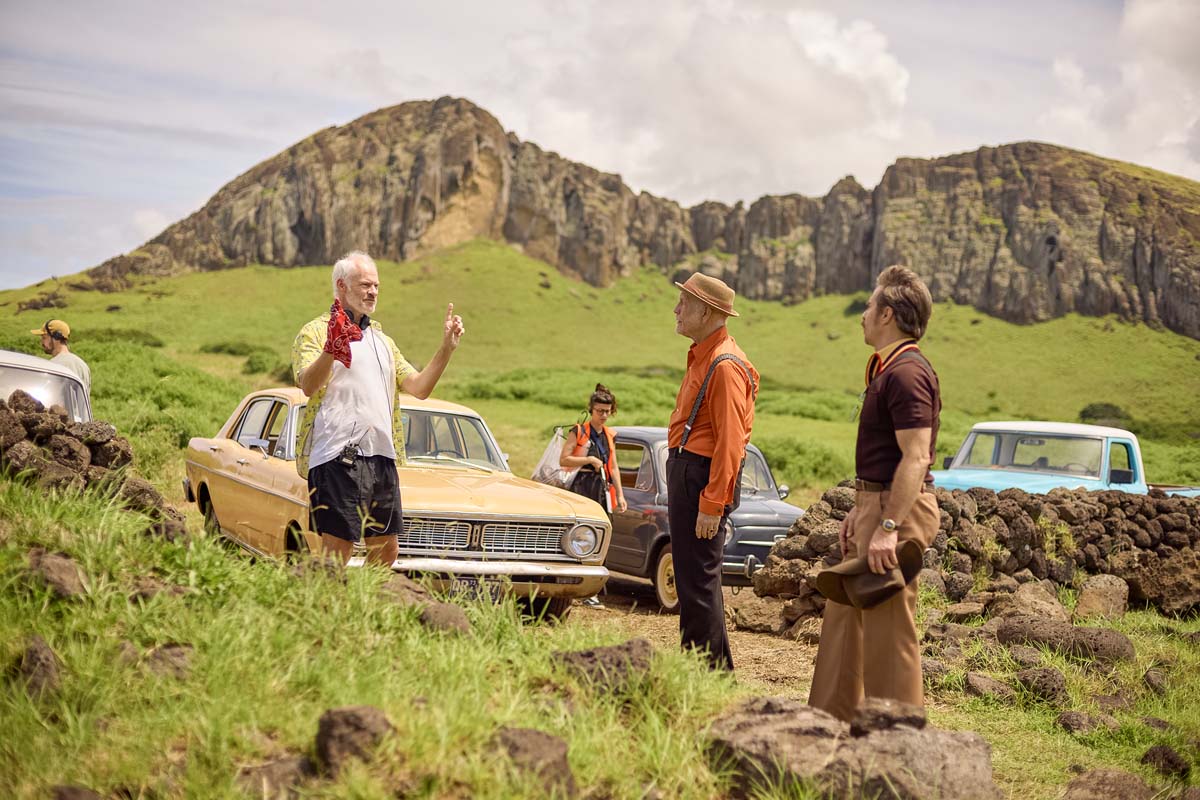
And did you have just one bin of that material, or were there multiple bins and bins for specific purposes, or how was that organized?
Martin is very specific and there’s a reason for everything. But he’s also open. So we shoot a lot of stuff that we know that this is a world that we would like to be in, but whether it’s a drone shot or it’s an 8mm or 16mm, we have the possibility of playing around.
But I have a feeling that the learning process from how we worked with montages on Banshees allowed Martin to know that this is also something I’m very intrigued and like to play around with.
So it felt a little bit like, “Okay, let’s at least have this very rich material that we can be playful and we can play around with it, because it’s something that I really like to do as well given my old work from music videos and from short films and all these things. It’s something that I just felt very familiar with it.
Most of the story is told linearly, but there is a flashback. It seemed like that flashback could go in multiple places. Was it scripted to go in that exact spot, or did you find a more poignant spot for it?
It was scripted differently, but it felt that it should come from an emotion, and that’s really the learning process. When Lee’s character starts crying and talks about [what they had been discussing (omitted because it’s a spoilter)], that felt like the right moment to enter that world.
It could go other places, but it’s really also how and what should the flashback color and what sort of scene should it color afterwards and beforehand?
But it just felt earned that this is the moment where it would come out of this emotion, which also helps the relationship work between the characters - between Chris and Lee - and the friendship. It feels very honest and real that this is where you would enter this world, but it’s something that could go multiple places, really.
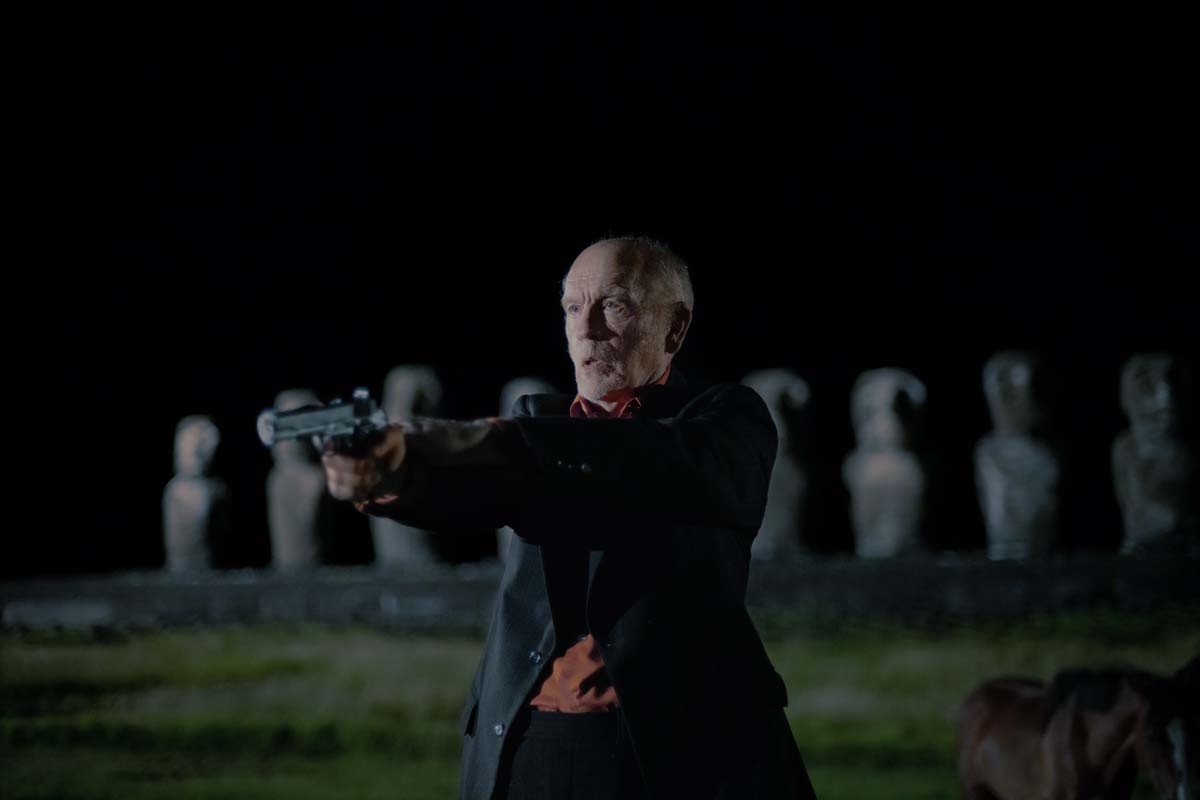
Was it scripted earlier than where you had it?
No. Later.
Talk about music and whether you had temp or whether you had very clear direction from Martin about music. It’s a very eclectic score.
There are a lot of needle drops from time period stuff. We knew we wanted to play with that. We knew we wanted it. That was already from the script that he wanted specific tracks. We had a learning process from Banshees, where we used a temped with some Carl Orff and played with that in the edit, and we still actually use one or two pieces of Carl Orff in the film.
Then obviously we knew that [composer Carter Burwell] always surprises you. You don’t know what it will be. Then he comes with this music and it has this incredible feeling of loneliness and Western Civilization and these very simple and very beautiful pieces of music that he’s created.
It’s something you try and a lot of it has the same rhythm from what we had done in the previous film, so we could reuse some of it because we knew that it’s not going to be the same, but it has the right rhythm or the feeling where we want to take it, especially for the third act.
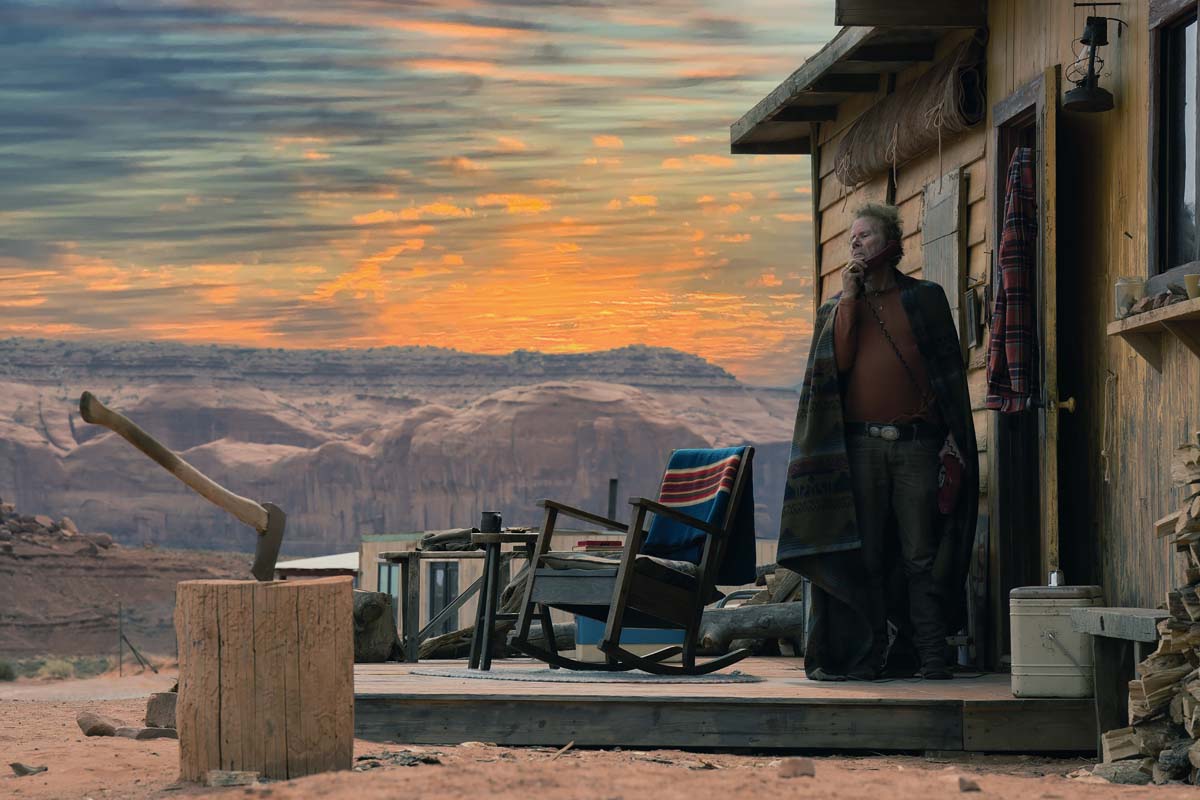
There are also a bunch of scenes where you might expect score, but they’re played without. Can you talk to me about the choices of where to spot score and where specifically not to score?
A few places we used score for tension - really for the thriller parts. It’s tiny, but it colors. We actually also did that in Banshees. But we never add score to heighten or to make an emotion stronger. It should stand on its own, and if it does, it becomes a little more real and feels earned and honest.
Then it’s something that you can start at the end of a scene, which brings you to something else. But it should never really be a score that points to whether you should feel sad or happy or anything. That’s something that I really learned from Martin as a filmmaker: we highlight the emotions. It should feel honest and raw and stand by itself, if possible.
But the tension for sure on the phone, between Lee and his wife, there are a few moments where we highlight and we create the tension where it’s more the thriller parts. Which is okay to do.
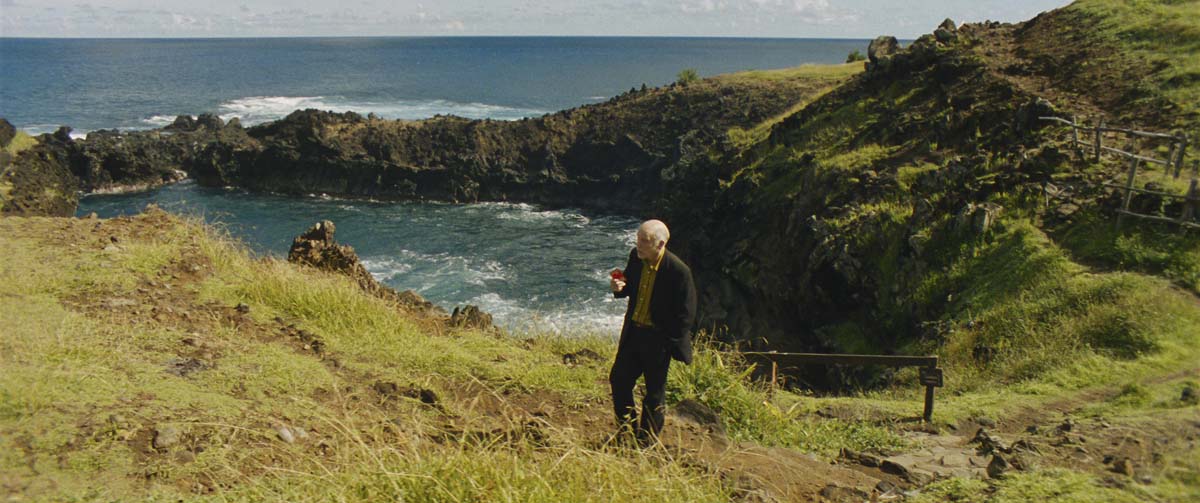
We’ve mentioned a couple of times this idea that Chris is narrating into this Dictaphone. It seemed like those narrations were movable, like you could put them in multiple places. Did you find that you were able to change where they were, other than where they were scripted?
Yes. What’s interesting about them was that most of the times it’s like you entered suddenly and it takes you on a completely different journey. The film is taking you in one direction, then suddenly it enters Chris’s former world - talking about what he did in Congo, for example.
So you engage as an audience. Like, “Okay, now we have to listen a little bit closer.” Those are scripted moments where it just surprises you. It enters that world and it adds a completely new layer to the story. It also brings you in a different direction. Suddenly it opens up a whole new world, which you didn’t know that this film was about.
Did you edit on location?
Yes, I did for a little bit. I was on location for two weeks prior to the shoot, which was mostly storyboards and talking and stuff. Then I was there for two weeks during the shoot, then I went back from Rapa Nui - Easter Island - to Copenhagen, to do the assembly on my own. We really don’t talk during that time.
The way Martin shoots is very prepared. Everything has been talked through beforehand, and with the impression that in the edit - if there’s a challenge or something - you can always find a solution to tell the story in a different way. Sometimes that’s even helpful for the film. You also know that he’s always going to come home with the performances for sure. I mean, it’s all about character, character, character.
Could you watch this scene and discuss the choices you’re making of which coverage to use at any specific moment? Also, I noticed the pause when Lee’s wife reveals that she cheated on him again.
As editors, we usually have to find the rhythm and the pace of a phone conversation because it’s the actors delivering the lines in different takes. But what Martin does - which is really interesting - is that he brings the characters together to have the conversation. When we were on Easter Island, he brought Parker Posey to do the whole scene with Lee so they can play it together.
We also then use that sound, because obviously that gives the color and the pacing of how they play it. Then he does the exact same thing when we are in Monument Valley [for Parker’s side of the conversation] with the actors actually in the scene, which is super rare.
So that means we are not the one in the edit that define the rhythm. The actors actually already give you that in the conversation.
Then – in that scene – it becomes like a ballet. You have someone walking, sitting down, someone else walking, looking, sitting down. The whole thing becomes like, “This person gets up, gets down, the other one gets up, gets down.” There’s a similarity, and in the end you place them: someone looking out of the window, someone sitting up against the wall. It’s dynamic.
There’s a rhythm to it. Then it becomes challenging because there was a lot more in the scene, so we have the possibilities of telling a different story. Should we hold back on this story if we needed it?
Obviously those scenes have multiple rounds, determining how to shape and how to find the rhythm of the scene and when to be on each character and when and how.
Then there are moments like - even though it’s a joke - there’s a pause when she reveals that she’s been cheating, but it’s something we’ve already set-up earlier in the film, so there’s a payoff to the setup.
You hold that moment for the laugh - it was a little bit funny, but also hurtful. It just becomes a little more truthful and honest from him as a character.
Then when we go to what’s really important - which is about the relationship between Lee and Chris - that is the real moment of what is actually at stake for Lee as a character, and that’s what brings you into the flashback.
But those are also the fun scenes to edit, because then it becomes like a ballet: Parker walking around yanking the phone cord with her, and him doing the same. That was fun.
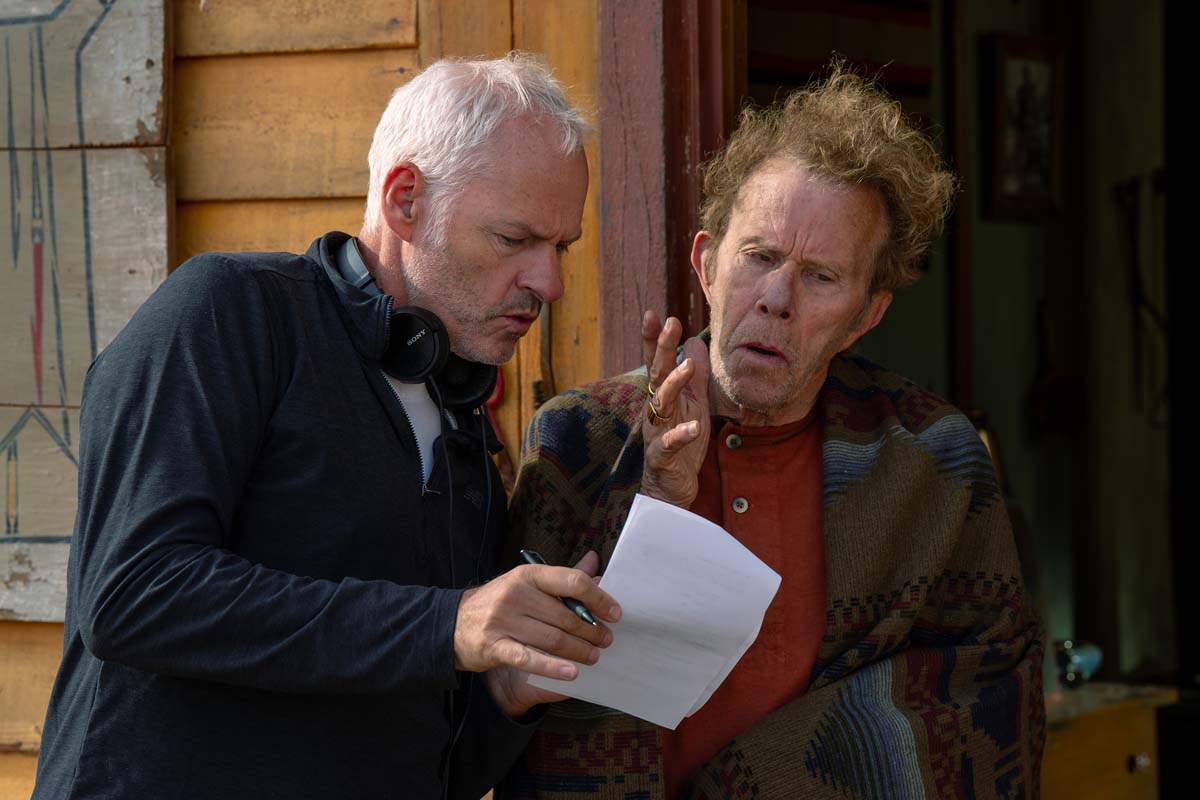
Mikkel, thank you so much for talking with us about this film. I really appreciate your insight into the making of it.
Thank you so much. Thanks for having me again.
 September 23, 2026
Sean Combs: The Reckoning
Charles Divak has been on Art of the Cut in the past for Chimp Crazy, for which he was nominated for an Emmy and won ...
Read more August 6, 2026
The Upshaws and Wanda Sykes Legacy
Today on Art of the Cut we speak with Angel Gamboa Bryant, ACE, who is nominated this year for both The Upshaws – for Outstanding ...
Read more April 23, 2026
The AI Doc: Or How I Became an Apocaloptimist
Today on Art of the Cut we discuss the documentary, The AI Doc: Or How I Became an Apocaloptimist with the editors of the film, ...
Read more
Subscribe to our newsletter
Get all the latest news, blog posts and product updates from Boris FX, delivered directly to your inbox.
Welcome!
Thanks for opting-in to our newsletter. You'll receive an email momentarily with your confirmation.
