













The Whisper Man
Oscar-nominated editor Chris Tellefsen, ACE, explains how The Whisper Man was radically re-shaped to speed the story and establish its thriller tone, plus developing a rhythm of the story beats to strengthen emotional revelations.


Today on Art of the Cut, we speak with Oscar-nominated editor Christopher Tellefsen, ACE, about his work on The Whisper Man.
Chris has been on Art of the Cut before for The Menu, The Many Saints of Newark, A Quiet Place, and Assassin’s Creed. He has an Oscar nomination for Money Ball. He has ACE Eddie nominations for The Menu, Joy, Money Ball, Analyze This, and Man on the Moon. Chris was an assistant editor to legendary editor, Thelma Schoonmaker.
Can you tell me about the start of the film? Was it scripted the way we’re watching it?
No, it was very, very, very much changed. The original script started with a scene that Peter Deming, the DP, made this toy that lights up the ceiling and you hear the tapping at the glass, and the little boy, Neil, the one who they’re looking for in the current beginning is in the room. Then you see a “Missing Boy” sign.
He had a full scene of the boy going to the glass and listening, and then it cuts to his grandmother, who’s tied to an oxygen tank, and she’s asleep, and she sees the doors open, the wind is blowing in, and she comes screaming out.
Then it went to Tom and Jake in the car going to the house and establishing the little girl in the blue sweater. From there it cut to the high drone shot with the cops screaming, “Neil! Neil!” So that was the shift. There was also a scene where the grandmother goes to the cops and talks to Detective Beck.
How long did those original opening scenes remain in your cut? What were the creative discussions concerning dropping them or changing things?
The opening had a little more of a horror sense. The bent of the movie was more thriller than horror. We had some previews, and Colin Stetson’s score was much more horror. It was not the right start for the film. It didn’t land in the place that we needed to go.
Also, there many, many scenes that were set-up scenes that were cut to get us to Robert De Niro’s character - to Pete – earlier. To get to the fact of the estrangement with his son and the connection of him looking for this missing boy for 30 years.
There was also a character that we cut out entirely, which was Detective Beck’s boss. His name was Colin Lyons, and he was always giving her a hard time. He also was very skeptical about Pete coming back in ‘cause he thought he was arrogant, and he mentions the fact he was an alcoholic, and he kind of trashes him and gives her a hard time.
There was also a whole thing of Detective Beck going to the Quaker Meeting House. There were four scenes of her at the Quaker Meeting House that established kind of a spiritual nature to her and how the work affects her. It was interesting, but it didn’t add enough.
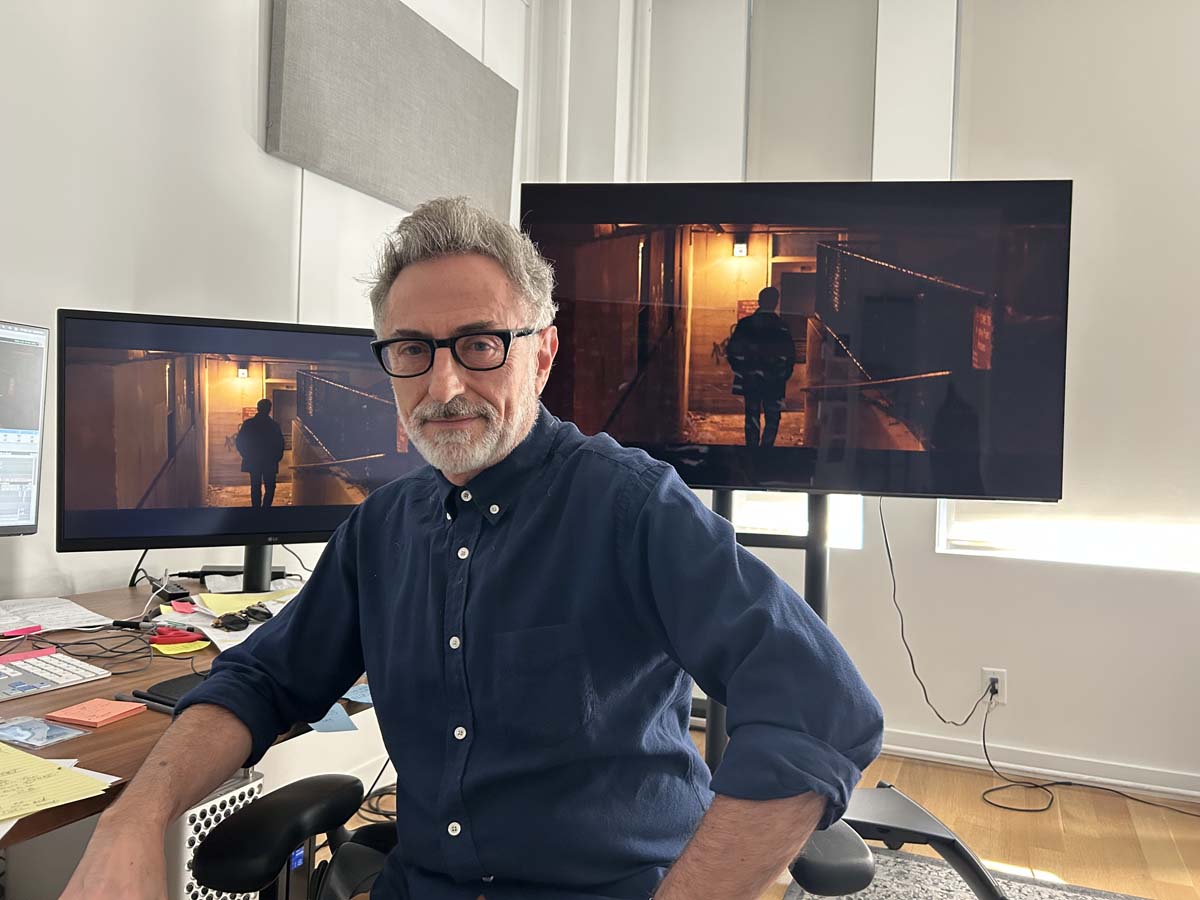
Oscar-nominated editor, Christopher Tellefsen, ACE
Did you find that you were dropping those elements to move the story along more, or because you weren’t happy with the direction and tone that it was taking the story?
A combination of the two, I’d say. It had to move forward faster. Also, the way we configured it we get the situation right up front of the fact that there’s a missing boy they’re looking for. They find a body that’s obviously been there for months, then we see Jake, so it gives it a little more of a 1-2-3 that’s rhythmically much better.
It was the consensus thing, too. It was not just myself. We had quite a few previews. I don’t know if anyone’s ever discussed the Netflix preview process with you? It’s very interesting. It’s remote, and they have this thing called the Preview Club, like 1,500 people. It’s a long process.
It tags two weeks on. With a normal preview – showing it in a theater - you get the results in a day and you’re working on it and making changes. They give them a 19-page survey. It’s kind of insane. There’s someone who works with them who has a PhD in human behavior and tracks everything.
Everything’s tracked. I found it frustrating, and I know that James Ashcroft, the director, found it very frustrating.
We did a bake-off between two cuts. The bake-off was between the current version and andother where we deleted the scene of Keaton’s character strangling his son at the end, which was so toothless. We were so frustrated.
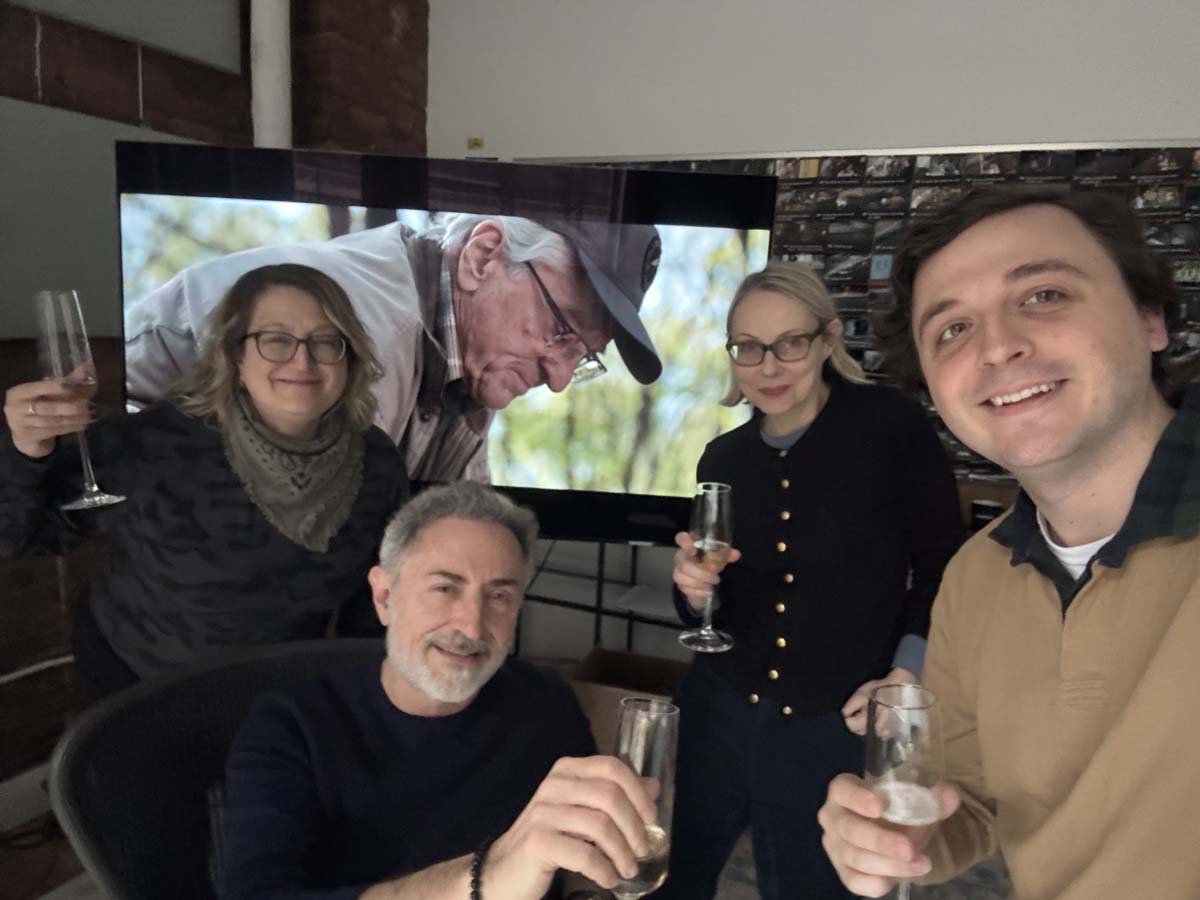
Chris’s post crew. Left to right: Julie Carr 1st Assistant, Chris Tellefsen, ACE, Perri Pivovar 1st Assistant, Mark Zawadiwsky Post PA
You’ve been through a traditional screening process. Don’t you love being in the room? That’s the other thing it takes away - you’re not there with the audience to feel it.
Tell me about it! At the end of the director’s cut, we had a nice theater screening experience. We had actually two. The first one was almost the assembly, so it was a little difficult. Then we had another in the 10th week that was really, really good.
We felt the movie. There were still certain things within it that we were playing with, but I love screening. Screening is extremely important to get perspective. It can be a little slavish… too many opinions. You have to have your head on straight and be able to filter out things.
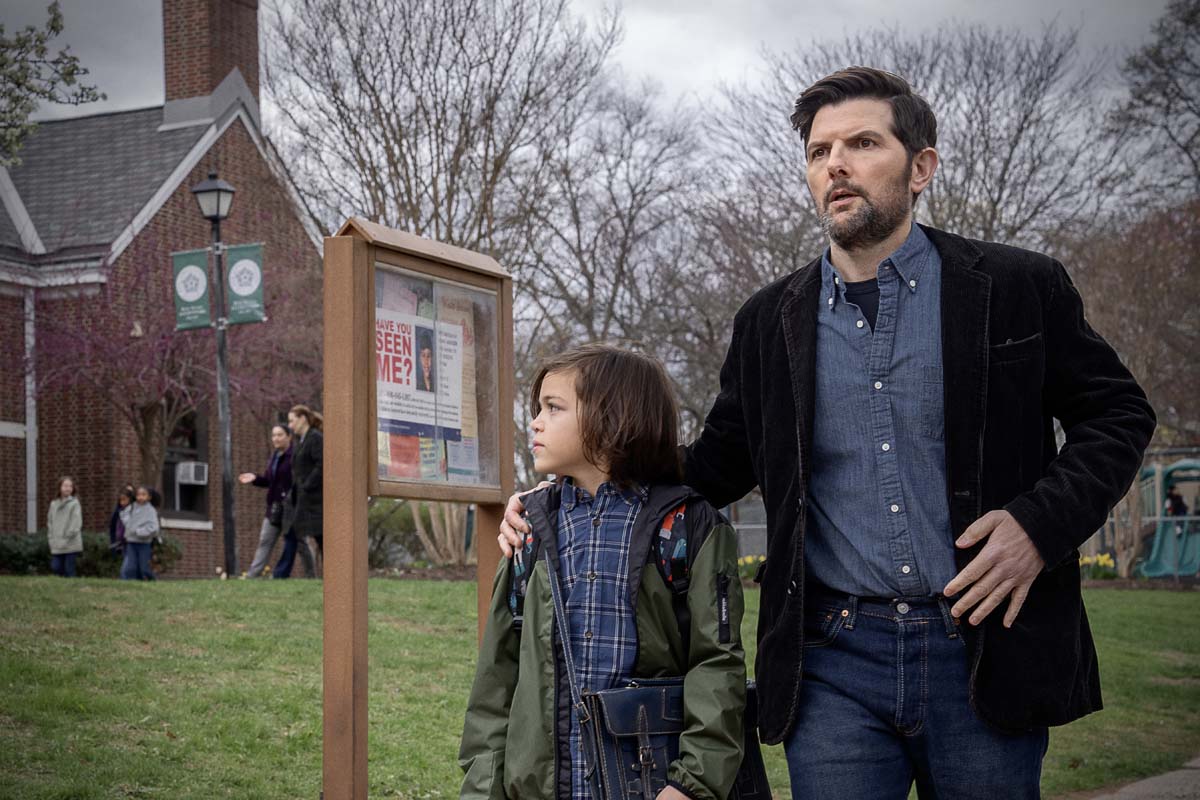
Let’s talk a little bit about score. There’s a great, unique score piece as the boy explores his room for the first time.
Colin’s wonderful. I’ve worked with Colin before on The Menu. Interestingly, James Ashcroft, the director, was a huge fan of The Menu and he put together all of us: Peter Deming, Colin, myself, and the sound team, Paul Urmson and Rich Bologna, who all worked on The Menu together.
Getting back to Colin, he came in while I was doing the first week of assembling just to feel things, and he also went to the set, and he started bringing in music within the first two weeks. It evolved beautifully. I barely used any temp score.
We had 90% original score. Colin’s a masterful musician. He’s a one-man band. He’s very sensitive, and he’s got some really lovely things going in the search in the house, and seeing the girl…
So in that scene where the boy explores his room, that wasn’t a temp score piece originally.
No. That was Colin’s original score. It evolved. It wasn’t as if it was always the absolute first version he sent.
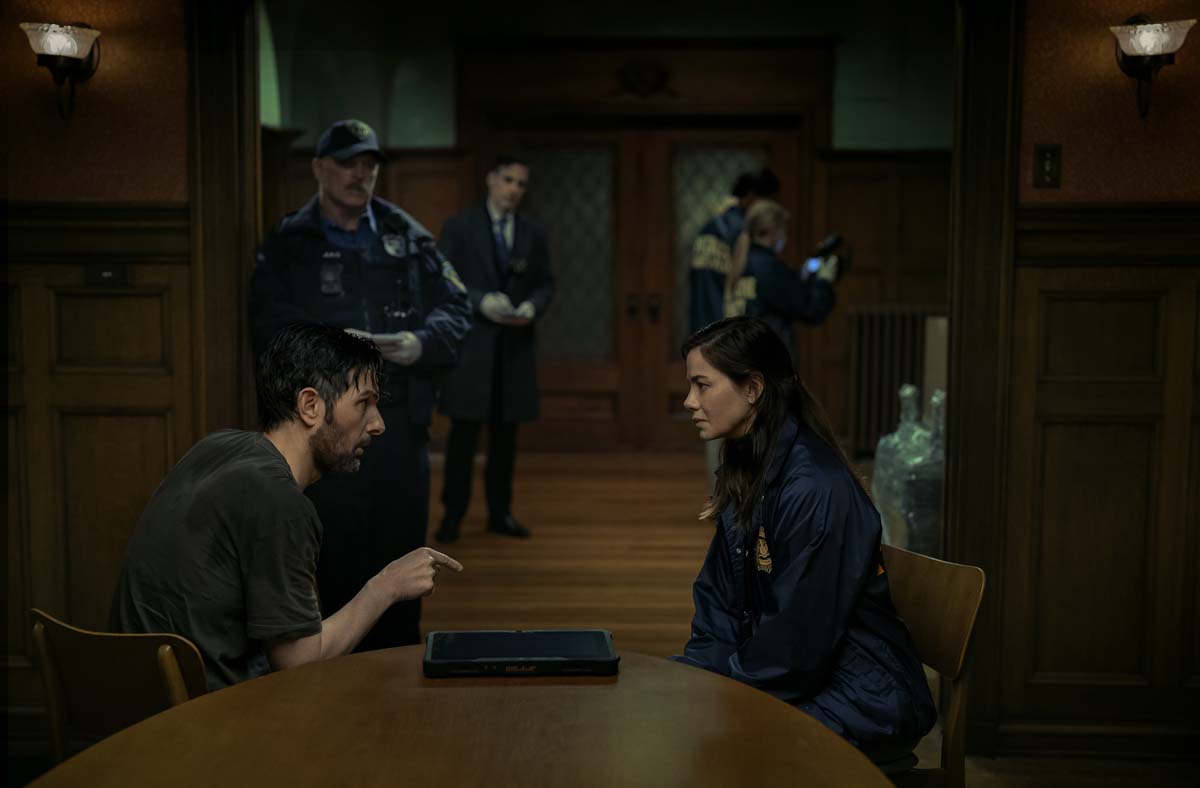
I’m always interested in intercutting. There’s some intercutting where you’re cutting between the killer in the blue gloves and the female detective, and there’s a great matching door opening shot.
I found that. It started out just because we were trying to get to Pete earlier. So I started paralleling. They shot almost a whole movie of De Niro cooking, so there was a lot to play with there.
It was definitely finding those parallels to just get to Pete’s character and the connection as the detective sees Pete’s connection to it, which draws her to him.
Then moving scenes around so that it goes from him to his son and grandson, and getting us closer and closer to the diner scene, where they finally get together after 30 years…
The son and the father get together after 30 years…
Yes. Tom and Pete. One thing that drew me to the film was the estrangement story is strong. They really played it beautifully as estranged father and son. It was heartbreaking.
Some things that were cut at the end: There were three hospital scenes. There was a visit to the cemetery to see Pete’s grave. There was a scene of Amanda going to the meeting house. They were just extraneous. I thought it was very strong.
In a pickup shoot, we added the move over all the early photographs of Pete, then the urn before we get to the little mention of Pearl Jam.
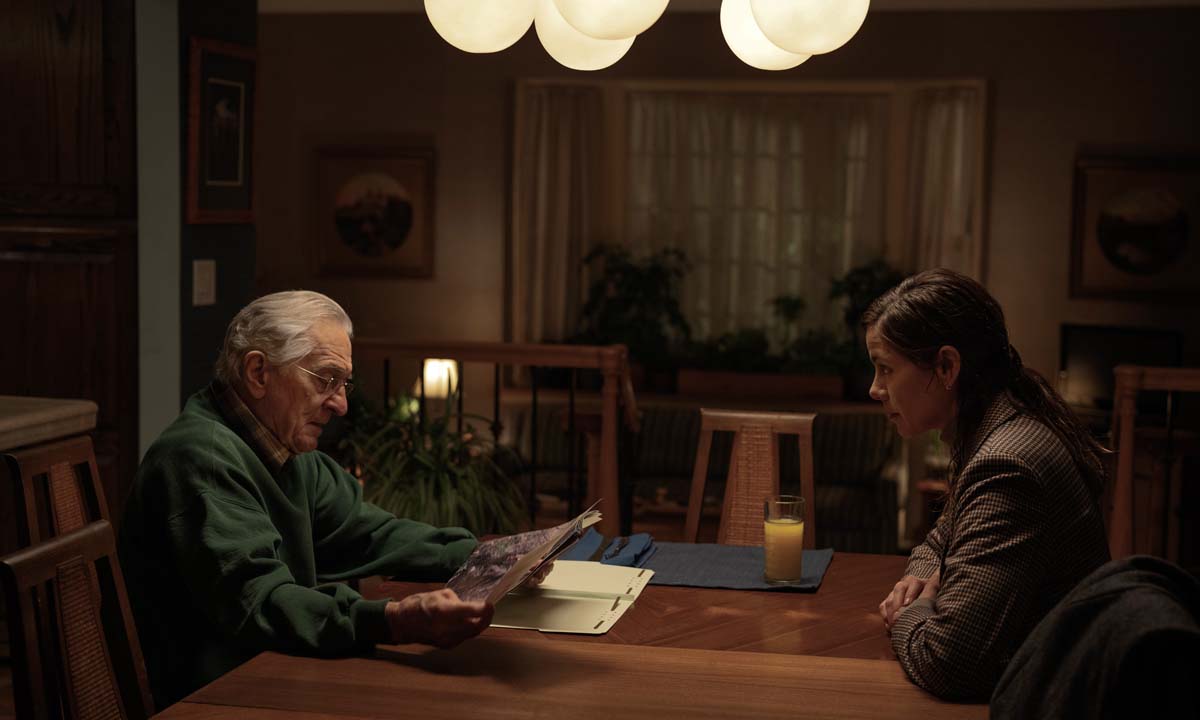
You mentioned the full movie of De Niro cooking which you masterfully jump-cut together.
Oh, I just love jump-cuts. That’s my bread and butter. I just love them. It was just looking for all the most fun rhythmic cuts of that to get it all across in an economic and entertaining way.
What else is the value of jump-cutting for you?
Energy. Definitely energy. It’s a filmic device to give rhythm and energy to a film.
Any other structural changes?
We rejiggered some things to make the connection clearer of like Hamish Linklater’s character - the collector. He mentions someone that he visited in the prison. We wanted to connect to that more. So there was a contraction within that, and also paralleling that with seeing a postal van.
There was a scene that was a little more pedestrian of Beck and Pete going through a metal detector and getting their stuff before going into the prison to talk to Victor.
We moved that later so it was just her picking up her phone and cheated it into her hearing that the tape had arrived, so it went directly from Norman to just a few shots of the… of the post van to right into seeing Victor and talking to Victor and… and cornering him so that he’s gonna have to give them the information, and then we get to the fact that Jake’s tape came, but also she is saying to the other detective, “Don’t let anybody see it.”
Then Tom is listening to it. We kind of contracted it to give you the moments - to bring it to the dramatic aspect of him listening - and know what he’s listening to. I just love when he throws the headphones down, and you hear the Partridge family…
Because the killer is recording his messages over old music cassettes…
Over ‘80s music tapes.
Speaking about the recordings that the killer is making, there’s some great sound design as the boy is being asked his name by the killer and there’s a big shot of the microphone.
Our sound designer, Rich Bologna, is wonderfully inventive and gets some great things going in our mix, then mixed by Paul to give it a real heightened feel. We played around a lot with that. We got it to a point where we felt that it really delivered.
Did you have temp sound design in there that was similar in your original picture cut?
We had the tape. I just sort of distorted it a little, but it really came to life in the mix.
Thinking of other parallels, when they figure out the killer, and it’s an all-points bullet, and everybody’s going out to find him. They know that he’s in the vicinity, and Pete directly goes to Michael Keaton.
That was not paralleled in the script. When he throws the tea in her face, it was all parallel up to that point.
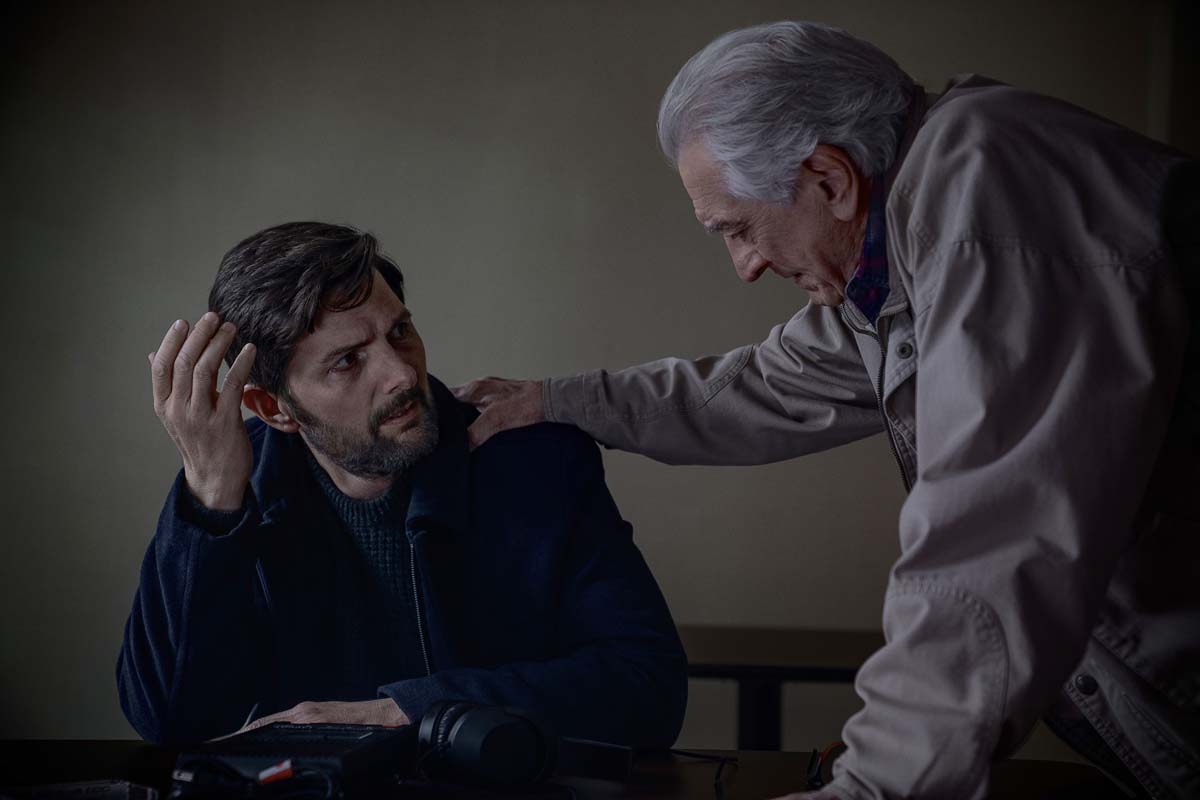
Were there any other scenes that were scripted as standalone scenes that you intercut?
We really needed to focus on Pete, Tom, and Jake. As I said, an entire character - Colin Lyons, who is the boss of Detective Beck. We cut him out entirely. It had nothing to do with his performance, it was just that the character wasn’t adding enough. It just seemed like his only purpose was blocking her. It just was not playing. Erasing him out of scenes was tough.
There are a lot of visual effects to get rid of him, but also cutting around certain things, like when Pete comes to the police station, so it really focuses on Pete. We show him looking at Tony Smith, the missing boy from ‘95 that he’s been obsessed with trying to find.
Then the montage at the end of that, with, when he says, the killer knew the kids that were vulnerable. And then you see that little montage of Jake and his dad. That brings us to Tom in his hotel room, jolting awake.
There were some other moments that were intercut later in the film. I was thinking about the dad moving into the hotel and the detectives searching the woods, and the killer making macaroni.
Also the addition of images of Jake in captivity in that room with the little girl that I recycled quite a bit, because it was only in the script about three times, but in the film we had her in five or six times to keep her present in your mind.
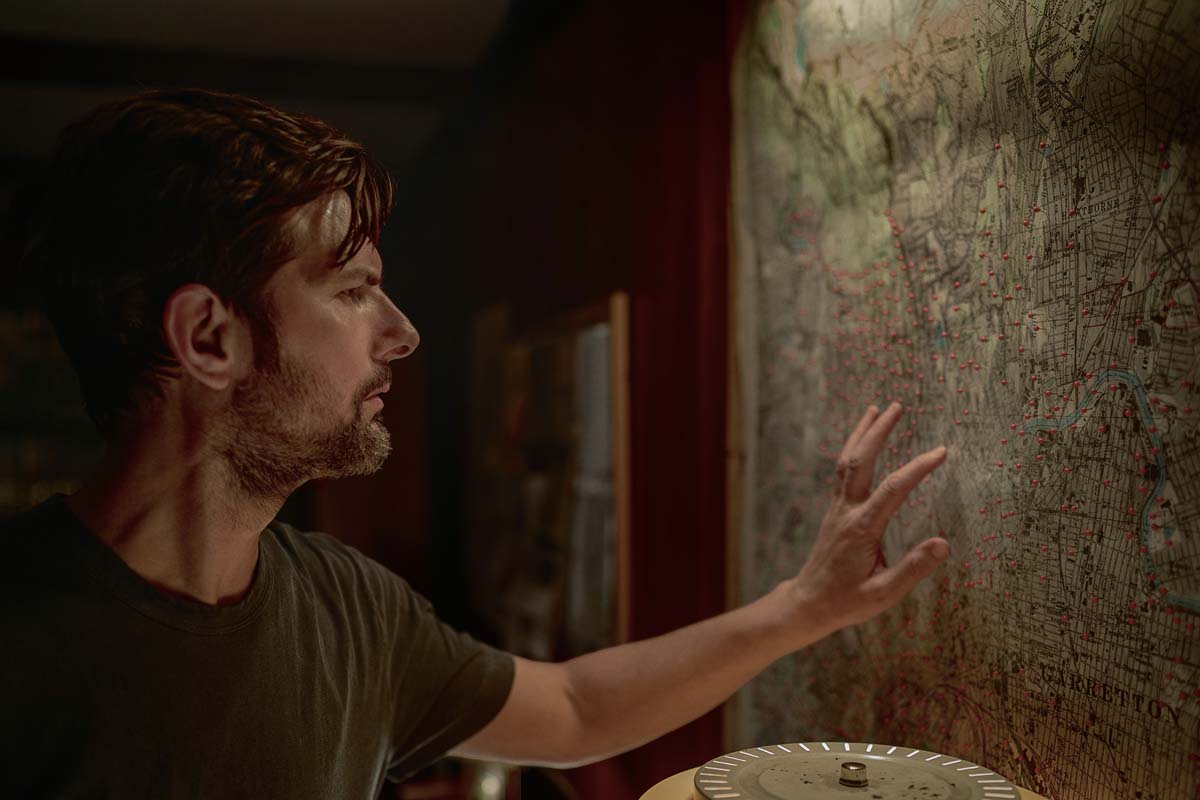
You wanted to make that tie-in so that there’s the payoff of the girl in the blue sweater at the end.
Yeah, so you had to keep her subtly there. Interestingly, we did things with her editorially. For example, she doesn’t have any Foleys, and we took away her shadows. So there are subtle things about her - upon second viewing - you could check out.
You mentioned the scene in the diner with the father of the boy and De Niro – the estranged father and son, Pete and Tom. I was struck by the fact that there was no score and very little background sound in that scene. Can you talk to me about not spotting score there?
We always felt that there was no need for any enhancement. We wanted their unease to play as well as possible. We didn’t need anything to enhance that because the performances were very strong and just wanted it to be tense without enhancement.
We talked a little bit about a couple of the montages. There’s a very fast montage as the dad – Tom - reads the letters to Pete from prison.
Well, they’re about him. We just wanted to make it as kind of abstract and difficult for him to absorb as possible.
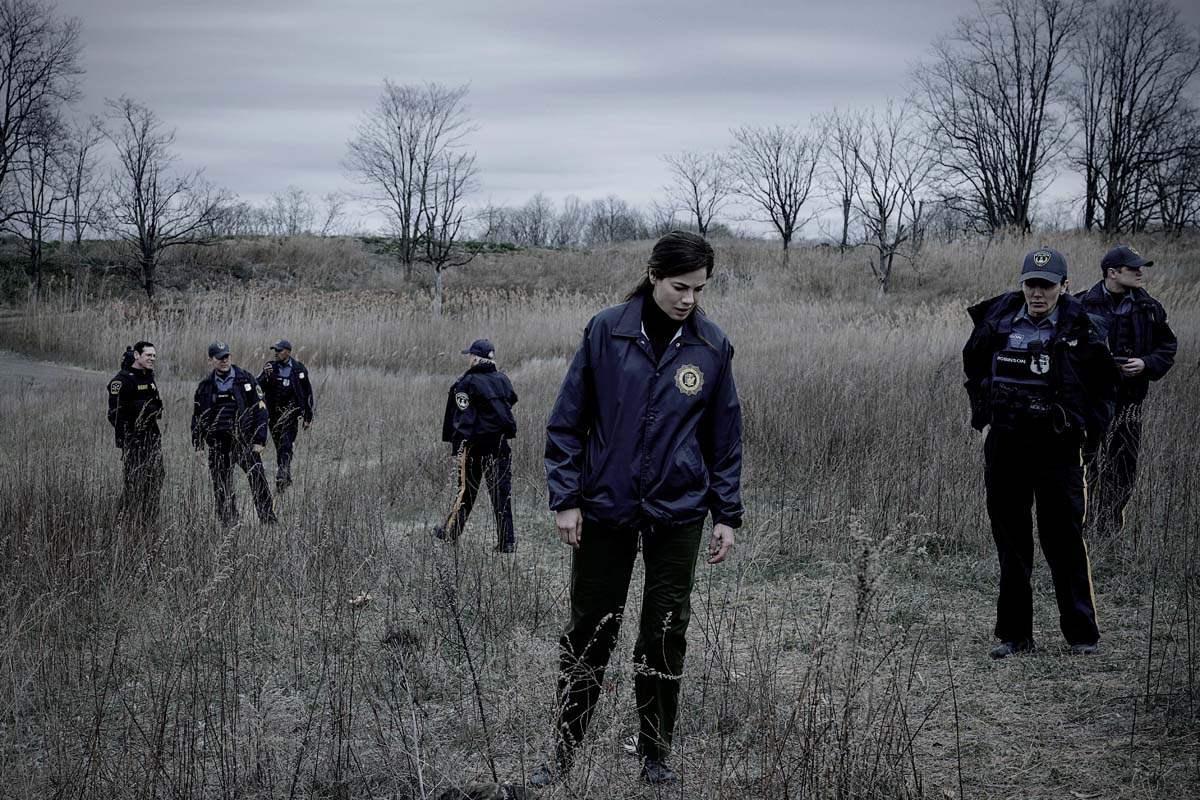
Was it scripted to have flashbacks?
No. I distorted the letters. The letters were very, very plain, but I really blew them up and moved them around and spun them around and punched them with flashbacks to the boys that were killed.
So you’re reading something on the page, and it’s basically, “Dad finds a box of letters and reads them.” How are you determining in your head as an editor: “What should this feel like?” And how to visualize that?
Tom had to be in absolute shock that Pete knew that Tom’s son was threatened. It’s so disgusting. You just see flashes of gross shit. It’s very foul.
Are there creative challenges or were there creative successes? Or even failures that you would think are going to be educational to discuss?
It was a challenge to get the right rhythm for the film, and to get the essence of it to play, to bring you to the end with the realization that it was his mom protecting him. Parsing out the link, the grains of an interest to pop here and there to bring it out. It was a film where the challenge was shape.
A lot of expository stuff just fell away. There are some scenes I wish had stayed. There’s a little bit of Jake in a playground that I wish was still there. It was an element that I would have liked to have kept.
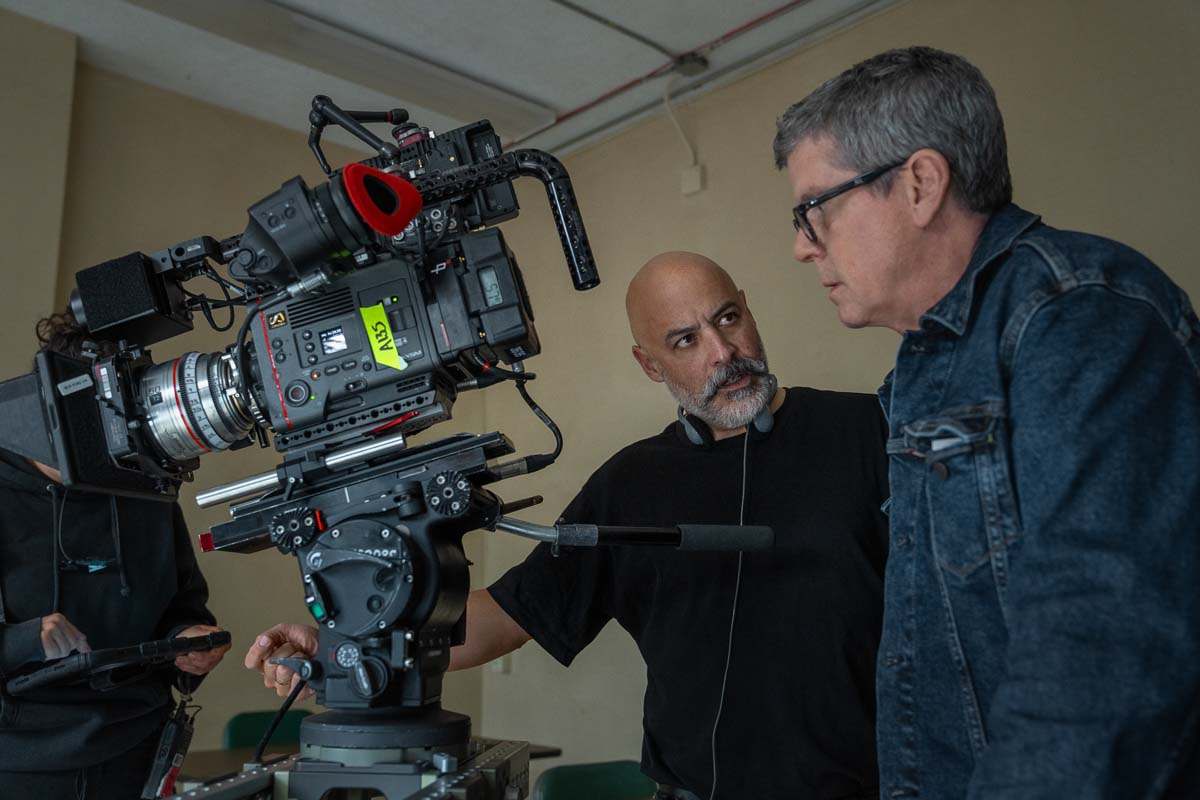
Director James Ashcroft and DP Peter Deming
You mentioned the shape of the film. When scenes get dropped - when stuff gets tightened - it’s not necessarily because you feel like the overall length is too long, it’s because you’re trying…
It’s not about length. Yeah, you’re right, it’s not about length. It’s more about where things land. It’s about trying to find the rhythm to make the penny drop to make the moment be felt. It’s all about feeling. That’s the essence of it. You want the short hairs to rise up on your neck.
So often people think of the rhythm being the edit-to-edit rhythm of a montage or something, but you’re talking about the broader rhythm over a period of 2 hours of where the story beats land across that time. Why does it really matter where a story beat lands as long as it lands?
You can have everything splayed out and it will feel flat, or it won’t be delivering the moment. So you work it until you find it. It’s a process.
Part of that shape is, “How soon can we get to De Niro?”
At first, it was like 40 minutes in! Everything was moved around.
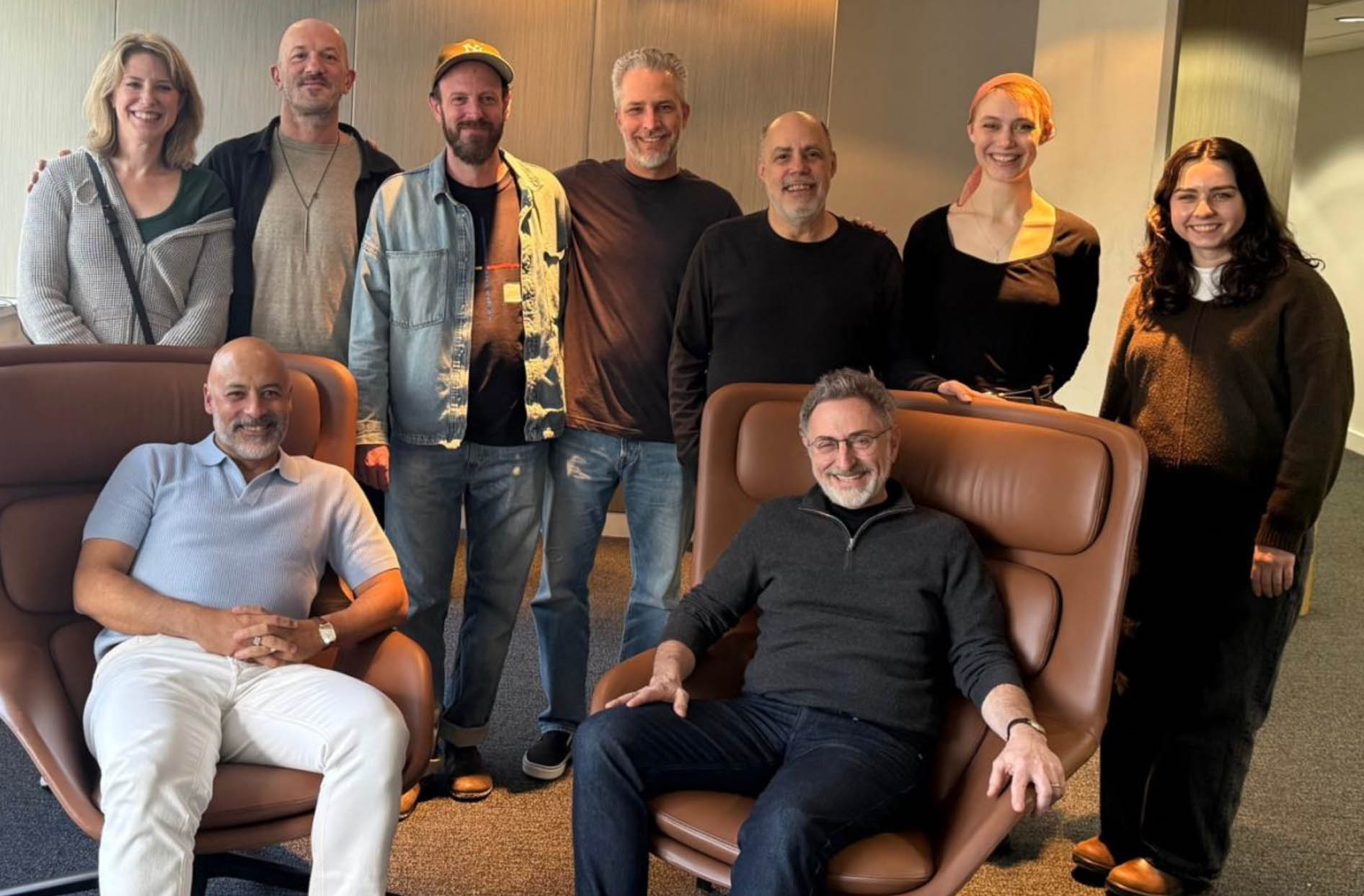
Post team and sound: From Left, Leslie Converse, James Ashcroft, Colin Stetson, Rich Bologna, Jim Schultz, Tony Martinez, Christopher Tellfsen, ACE, Emi Verhar, Kaiti Barta.
When you’re doing your first editor’s assembly are you a “I-have-to-go-exactly-by-the-script” kind of guy?
Not 100%, but I try to use everything that’s been shot, to use everything that’s been shot, unless I’m sure this is never gonna stay, so why bother? Give everything a chance. See what it does. Then, once everything’s put together, you can get an overview. That’s when the work starts. That’s when you start to define the shape.
How long does that usually take you to get that first pass done after production ends? I’m assuming you always stay up to camera during production.
I have the first assembly done a week after shooting. The director needs to clear their head. One week later I’ll have something assembled unless it’s something very difficult, like on Moneyball that wasn’t the case.
My basic timetable that I convey to people I work with is that I need five working days, maybe six, to deliver a first assembly after shooting ends.
Only certain scenes should have a beginning, a middle, and an end. Most scenes should find ways of tailing into others.
I like to be able to get a perspective as soon as possible with the director to start the conversation.
Has your approach to cutting a scene changed recently? Some people change their approach fairly regularly, and some people don’t. How do you do it?
It totally depends on the scene. Each scene is its own approach. I vet the dailies very carefully. Within that, I’m thinking in terms of the shape of the scene: angle-wise, where’s the starter?
Where are the key moments? Where are the real performance moments? Where are the key elements, then heightening the strengths of those things. That’s the way I always approach any scene.
When you’re watching dailies, do you have a methodology that you like? Do you like to watch them in shooting order, reverse shooting order? Do you like to watch preferred takes first?
Depending on time pressure, I’ll watch everything, but I’ll watch it all again a billion times. I try to to just look at everything very carefully, because you never know when there’s going to be a gem.
Are you a selects reel guy, or do you just hop into the bin and watch things?
It depends. I’ll vet the notes, too, and if the notes are very specific, then I’ll go direct to that. I always try and get a relationship with the script supervisor, because it’s hard for the director sometimes to be able to be on top of that. I always ask the script supervisor to really try and notate what they’re really feeling strong about.
I like to have a real relationship with the script supervisor.
They’re your eyes on the set.
This film was based on a book, right?
The writer of the book was very happy with it. He felt we really found the essence of the book. And the script was not slavish to the book, either. It left out a lot of characters. That was a wonderful thing to hear from from Alex Noel.
Was the book something you felt you needed to read before you worked on the film?
I read it, yeah. I think the script has the best of it, the kind of the essence of it. Then you have the reality of it. The process of adapting a book, then shooting the script and all of the aspects that go with that, and then bringing each scene to a new reality.
They become something else. You find the essence of the truth of what feels strongest and how to find the way by deletions and by rhythm. Finding your way through the process.
Experimentation…
Yeah, it’s endlessly fascinating, isn’t it? You’re a testament to that.
Thank you for that and thank you so much for chatting with me today.
Great. It’s a pleasure, Steve. Take care.
 September 23, 2026
Sean Combs: The Reckoning
Charles Divak has been on Art of the Cut in the past for Chimp Crazy, for which he was nominated for an Emmy and won ...
Read more August 6, 2026
The Upshaws and Wanda Sykes Legacy
Today on Art of the Cut we speak with Angel Gamboa Bryant, ACE, who is nominated this year for both The Upshaws – for Outstanding ...
Read more April 23, 2026
The AI Doc: Or How I Became an Apocaloptimist
Today on Art of the Cut we discuss the documentary, The AI Doc: Or How I Became an Apocaloptimist with the editors of the film, ...
Read more
Subscribe to our newsletter
Get all the latest news, blog posts and product updates from Boris FX, delivered directly to your inbox.
Welcome!
Thanks for opting-in to our newsletter. You'll receive an email momentarily with your confirmation.