













The Invite
A discussion of the rules of cutting comedy, how to talk about the performance of an actor who’s also the director, and the difficulty of editing overlapping dialogue.


Today on Art of the Cut, we discuss Olivia Wilde’s film, The Invite, with its two editors, Yorgos Mavropsaridis, ACE, and Ant Boys, ACE. Yorgos worked on the post through the assembly cut, then Anthony took over for most of the rest of the edit.
Yorgos has been on Art of the Cut multiple times for Bugonia, Poor Things, and The Favourite. Yorgos is a Greek editor and graduate of the London Film School. He was nominated for Oscars, BAFTAs, and ACE Eddies, for Poor Things and The Favourite. His other films include Kinds of Kindness, Killing of the Sacred Deer, and The Lobster.
Ant has been nominated for a BAFTA for The Thick of It. He also won an ACE Eddie for the TV series, Veep. He’s also edited The Marvelous Mrs. Maisel and The Great, among other work.
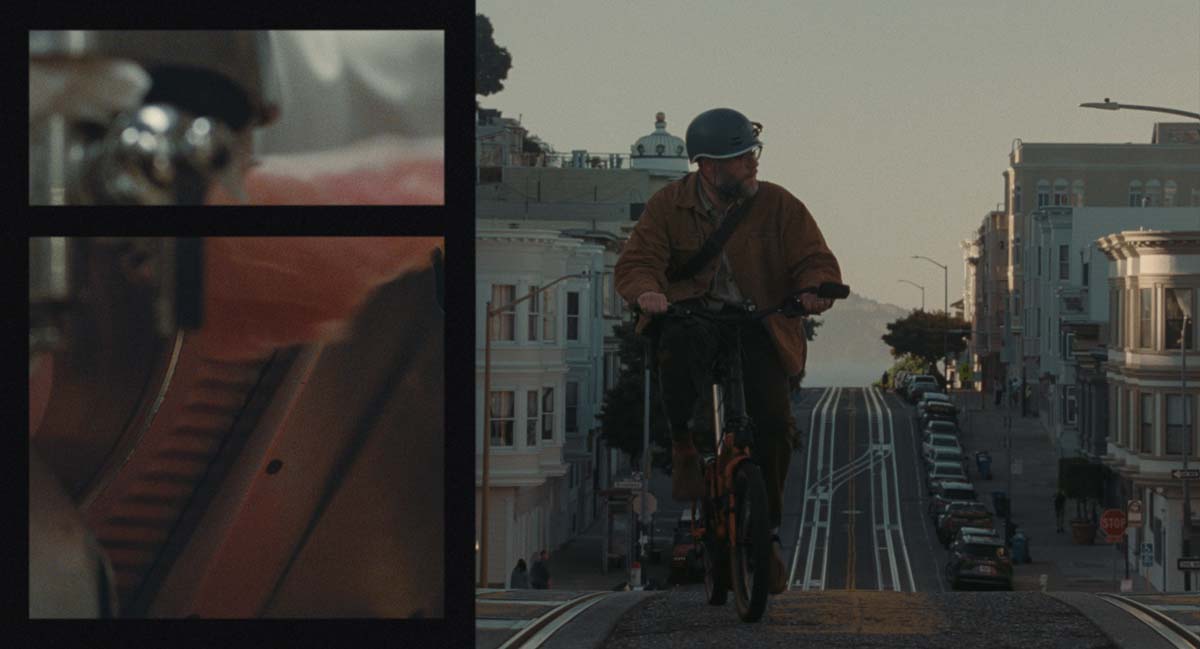
Seth Rogen, Credit: Courtesy of A24
At the beginning of the movie, the opening credits has a montage type section of split-screens. Can you talk to me about the creative purpose of setting up the movie with that section?
Boys: It’s an interesting piece, that. There were a number of things going on with the conversation when we’re cutting it. We spend the entirety of the film inside the flat - or the apartment – so the open is the only time that we’re outside, really, so you want to feel that there’s a world out there.
We also have to do a number of things with it. Firstly, we have to balance which character we’re introducing, at which point and what we want the audience to start thinking about them. We meet Joe first off, we want to get on Joe’s side. Then we see him have this grueling journey that’s really funny, but you need to know he’s going somewhere.
Then we have Angela’s little shots and you know she’s prepping something. So we understand he’s on a journey. Things looks proper and it just allows us to laugh at him on his journey, while having this intrigue as to what’s coming. We went “’round the houses” with it for quite a long time.
There are versions where there’s far more Angela in there. There are versions where there’s no Angela in there. We opened the film entirely differently at one point.
This is a movie. It’s not a stage play. It’s written and it feels like a play, but for me, when you go to the theater, you’re an observer, but in a movie you can get inside people’s heads. You can feel what they’re feeling. This film is all about the feelings that people have.
It really focuses on the relationships, so we really need to put the audience into the shoes of our characters as quickly as we possibly can. It’s really hard to do that with two characters at once. You want to pick a side, so we’re going to put you in Joe’s shoes.
I’m going to give him this grueling journey, he walks (into his apartment), and Angela is completely unsympathetic to his pain, and has sprung this surprise on him.
So we’re now on his side, and that allows us to then twist it later when Hawk and Pina show up and Joe’s a bit of an asshole. You start to think, “Oh, maybe I might be more on Angela’s side, actually.” So you get a surprise in that way.
It took us a long time to get that opening sequence just right, but we knew that was it was worth the effort.
Mavropsaridis: You did a very nice job, Ant, because I remember we had to do a lot of versions of that as well, but the end result, is really good.
Boys: Thank you very much. I only got there because of the work you had done already.
Mavropsaridis: It was a difficult sequence.
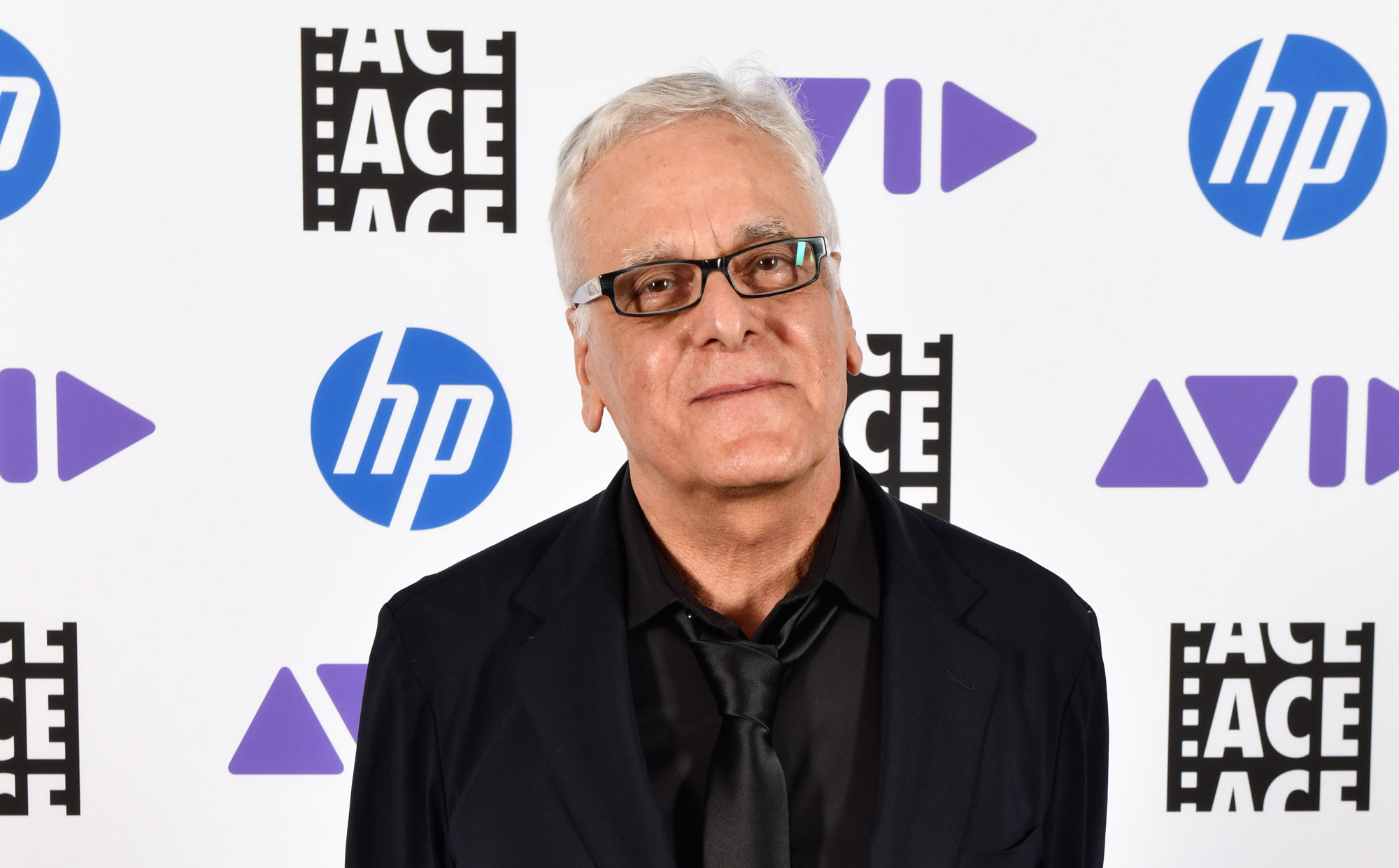
Editor Yorgos Mavropsaridis, ACE
The sequence also has a lot of split screens in it. Was that something that your version early on had?
Mavropsaridis: No, mine didn’t have split screens.
Boys: It came very late actually - very, very late. A lot of those were designed by the titles company, so the actual split screen themselves I didn’t do, but the balance of where shots should go is close to what we thought it could be.
Then we were sitting around thinking, “What else does it need? Then someone said, “Hey, what if we do this like the Thomas Crown Affair?” Then we were locked in.
You mentioned that the film started differently. Yorgos, do you remember how you started the film?
Mavropsaridis: It was a different version of the beginning, with different music as a placeholder. I remember, we used Louis Armstrong. The end result was a very good decision in the end, because it was a very difficult scene and after many versions we did, I’m happy that they completed it very nicely.
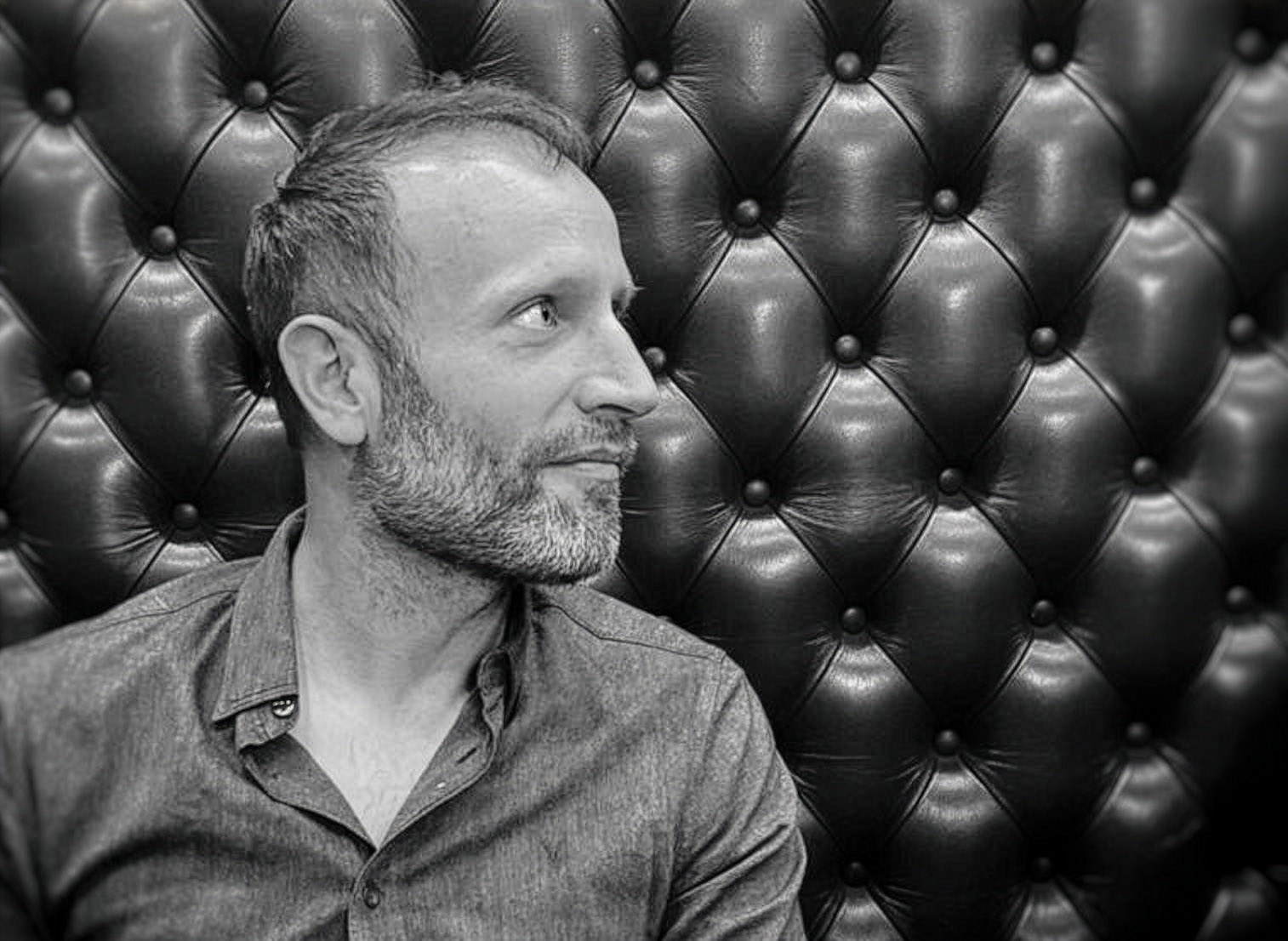
Editor Anthony “Ant” Boys, ACE
You temped with Louis Armstrong - at least an early version. The music that is used for that opening credit sequence is still very poppy and happy. What do you think the value or the creative necessity was for starting the film with that tone?
Boys: So we had Louis Armstrong and it was great, even in the versions I was working on. It gives us permission to laugh at Joe, because it’s fun.
Because the music later on become so strong and it’s such a big presence in the film. It was a weird tone to start with, so we made a whole bunch of versions that had a whole bunch of opera for this idea of a great Greek journey.
That was never quite as funny, but it gave us more of a sense of this journey, and it allowed us to - when he walks into the door - feel more relief that he’s finally gotten home, then to have Angela get straight on him and that’s set the tone.
It worked and it worked, then right towards the end it was a case of, I think we want to laugh now. I think we just want to be able to laugh at Joe a bit more than “we care,” so we went back to poppy songs or happy songs.
We knew it wasn’t going to quite be Louis Armstrong, but that’s when the decision was made: Maybe we need to go back. Maybe we just need to have something funny at the top to let everyone know it’s comedy. Sometimes it’s just as simple as that.
There’s a lot of overlapping dialogue. The characters, especially Angela and Joe, are always talking on top of each other. What is the challenge in editing that or being able to shape that?
Mavropsaridis: From the beginning it was a note from the director that “I want to let my actors improvise.” That was a decision made during shooting. I believe it helps the actors a lot. They feel free to improvise.
They sometimes improvised on the script, making a joke that was not in the script, and maybe it wouldn’t be in any other take. Technically, there were things that required – using that image with that kind of sound… So it’s a lot of work.
Ant, I’m not sure if and if you did a lot of ADR to smooth things out. But you have to accept that this is the convention that this is going to be happening all the time.
This is how people talk. The editor had to adapt to the way they talked and of course the performance, it was just the actors and how they talked. So we had to adapt.

(L-R) Edward Norton, Penelope Cruz, Credit: Courtesy of A24
It’s much harder to get in and out of parts of a conversation…
Boys: So much harder. You find yourself digging around random takes for just a bit of a syllable to cross over and put in. Whenever I’m cursing because I’m hunting for a random “the” sound, the value it gives to allow the actors to do what they do, and the performances you get from it are so worth it.
It’s so hard to capture those moments and those relationships in the moment, so anything that helps them get there, it’s our job to just deal with it, especially with actors like this.
You get these four people in a room, you’ve got to let them sing. You just got to let them do what they’re going to do because it’s going to be magic. So whatever it is we have to do to allow that: that’s our job.
I’m assuming this was edited in Avid. Did you use PhraseFind or anything like that to be able to find those little joining syllables?
Boys: I use ScriptSync. I’m a big proponent of ScriptSync for exactly this reason. You can just say, “Play me every version of the word “that” and you can find it from other lines as well. It doesn’t have to be the line you’re coming off. “Let’s find a word from another line elsewhere and we can sneak that in.”

Olivia Wilde, Credit: Courtesy of A24
There’s score and there’s also some classical music that’s not score, correct?
Boys: Correct. Yes.
What did you temp with?
Mavropsaridis: I did get some suggestions from Olivia about some music to try. I knew it was going to be temp, but it did give me a sense of the mood that she wanted to have on the scene. It was really helpful for the rhythm and everything.
There was much more music when I left the project. There was less when I saw the final edit. We had temp from beginning, even the assembly was done with music. I had never done temp music before for the assembly, but it was already decided that we wanted to have music on all the film.
Boys: This movie is so focused on relationships and it’s so focused on what it’s like to be in this sort of relationship where things aren’t going right and you feel so alone.
You feel like you’re the only person in the world. You feel like you’re not being listened to, and no one understands. You’re under this cloud. You feel like you’re being oppressed in some way.
So the really intense music - the classical music and the composed things in between it - really helped to give that feeling. It helps put the audience in the shoes of the characters - that’s what they’re going through - so we feel that as an audience. So, the first piece of music Yorgos temped with, I really felt that.
Mavropsaridis: In the opening argument, the music was in dialogue with the actors. Phrases of the music combined with the intensity of the dialogue.
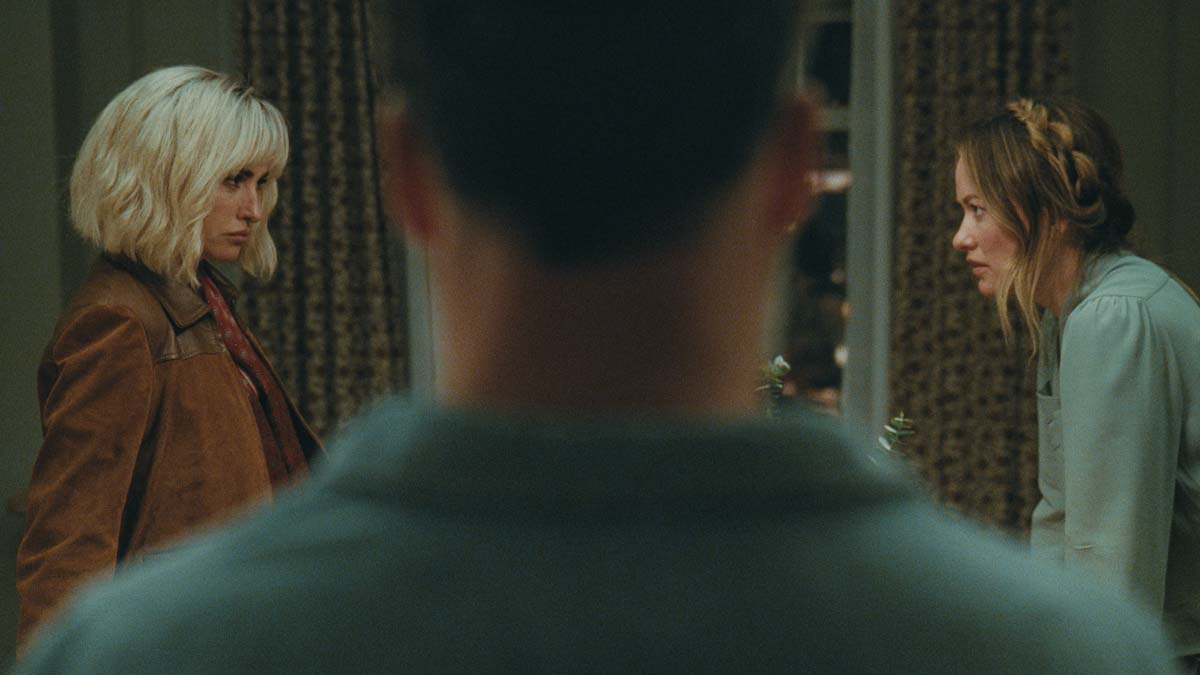
(L-R) Penelope Cruz, Edward Norton, Olivia Wilde, Credit: Courtesy of A24
It really felt like the score or the music was in conversation with the dialogue from the actors. What about the scenes where there’s no music? There were scenes that were very emotional that had music, and there were scenes that were very emotional that didn’t have any music. How were those determinations made?
Boys: Music is an accompaniment to what’s going on. And if it’s not going to accompany anything, then we don’t need it. Sometimes it’s better to just let it play and let the audience take what they’re going to take from it.
If you find a piece of music that really helps – that really feels like it belongs -it’s a wonderful thing to have. If that’s a struggle, then perhaps that’s telling you that you don’t need anything.
You don’t tell the audience what they’re supposed to be feeling, because the audience will then tell you, “No, no! I’m not going to do that!” There are so many movies that I love that have great scenes which don’t have music, and they’re somehow more impactful.
So if I can get away with it, I love doing it. It’s a bit like showing off. I think there’s a bit like, “Hey, look at us, we don’t need music. Look how good we are!”
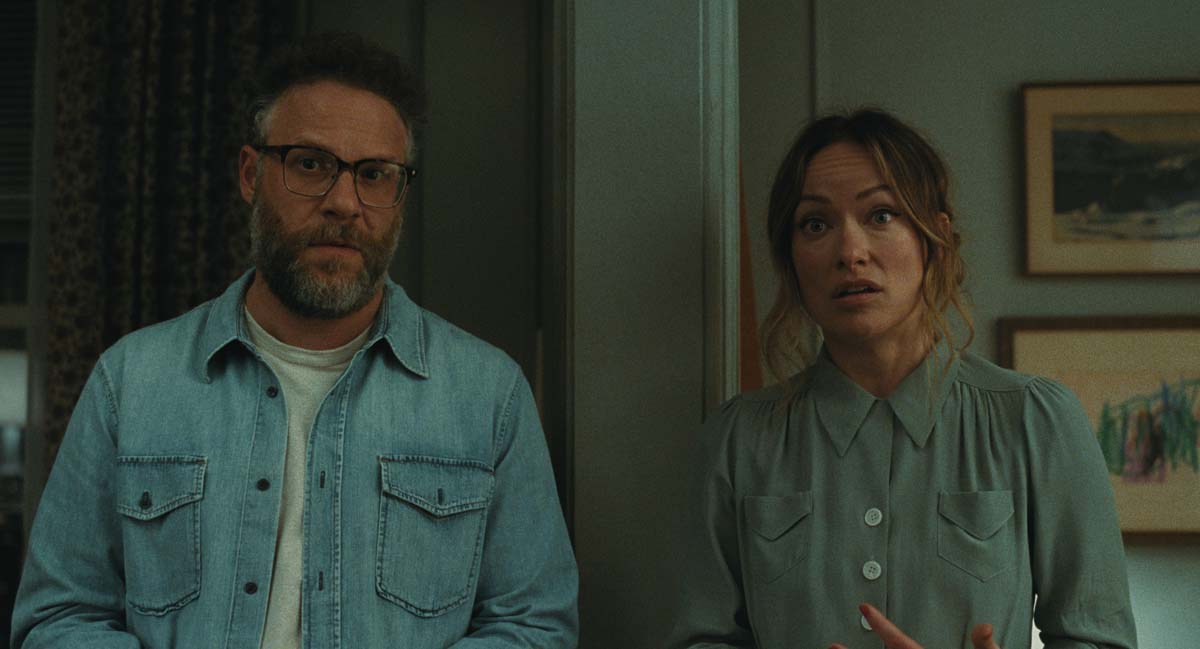
(L-R) Seth Rogen, Olivia Wilde, Credit: Courtesy of A24
Yorgos, any thoughts on scenes where you specifically chose that you didn’t need music? We’re just going to let this play dry.
Mavropsaridis: Honestly, it’s not the usual way I work, but I go along with the director. I wouldn’t try to do the music from the beginning.
Usually I try to edit and let the rhythm of the film be decided by what we see there. But that was a suggestion from the film director, so I had to comply with that.
Then I try to use music to maybe create this dialectic dialogue between two opposing people. Or maybe when it was more emotional not to be the first thing, but to support this feeling.
It was not like it decided my way of editing. I just had to adapt the music and also sometimes edit the music in the sense that it carried on this dialogue, as you said before, between what was happening and the music performance as well.
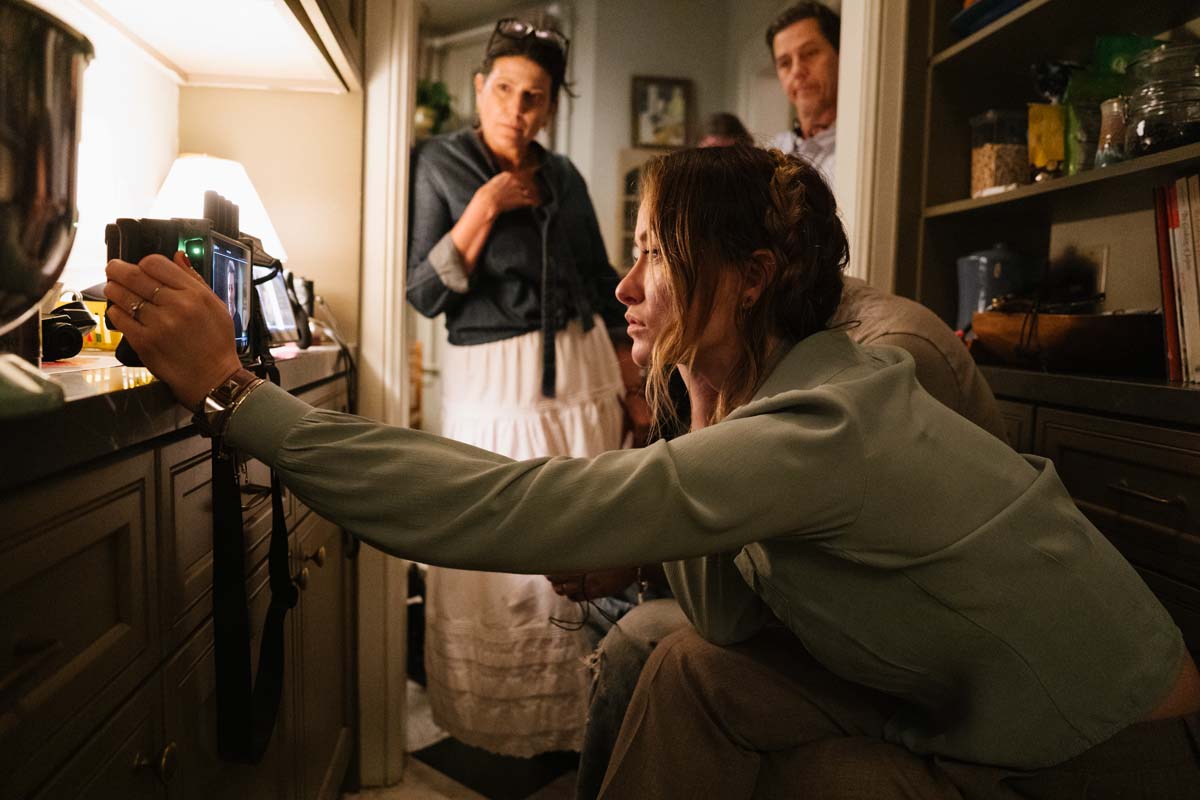
Director Olivia Wilde
At a certain point in the movie - and for a long section, like almost 30 minutes - the two couples break off and tour the apartment separately from each other. I wanted to know about the intercutting of that. First you’re with one couple in one area for a little bit of conversation, then it cuts to the couple in another spot of the apartment. How much of that was scripted exactly the way it intercut, and how much of it was choosing, “This is a better juxtaposition from this point to this point?
Mavropsaridis: Every edit you do that because if you went to the script, it would mean that it would be long, first of all, then you wouldn’t have the - as you said - the better place to cut.
So it was a tool for the edit, and I think Ant can agree that to use this parallel edit to create something more from the script – to extract more. It also allowed you to take out parts that you didn’t want in the film.
So that was a decision early, and it created places in the edit that meant something for the relation between the characters and what we would expect to happen.
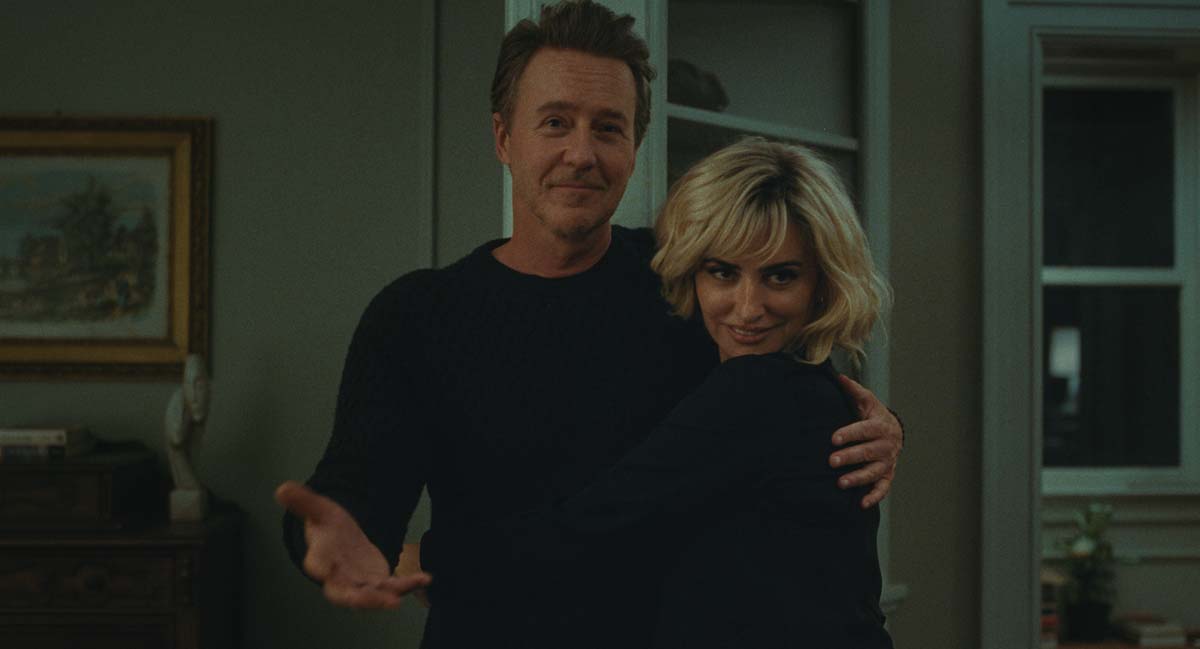
(L-R) Edward Norton, Penelope Cruz, Credit: Courtesy of A24
Boys: It’s an a really interesting section, because a lot of the film has this tension about it. And when you go into that section, what I hope the audience is feeling is: “Oh my God! They’re going to go off together! Joe is going off with Pina who has been giving him a hard time and sees right through him and Angela is going off with Hawk, who she’s enamored with because he keeps paying all these compliments.
How is this going to play out? What’s going to happen?” The fun of that is you can’t think of them as separate scenes. It’s a whole sequence rather than scenes.
The beginning was almost like a highlights reel. It’s just a splash of this and a splash of that. You allow the audience to laugh and enjoy and think, “Oh my God! It’s even worse or better than we thought!” Then you can almost trick them and slow it down just a little bit and hang on these moments here and hang these moments there.
The bit where Pina starts to be more interested in Joe and Joe doesn’t quite know what’s going on, you can then invoke new feelings.
And the connection that Angela and Hawk have with him letting her be comfortable with the fact that he sees her and his patience with her while she calms down.
The audience is thinking, “Where the hell are they going to do next? What’s going to happen here?” The rhythm of that is something I don’t think you can capture in the script.
I think you can write out all the bits you’d want, but I think it’d be almost impossible to write it in that way. I think you need to film it, get into the edit, then you work it out.
Because it’s all based on the performances. This is all based on what they’re feeling. Seeing, “How much of Joe’s reaction do we need of Pina paying attention to him?” If it’s one wide-eyed look and we’re off, then we can get on with it. Sometimes that’s all we need, but you can’t know until it’s filmed.
Let’s talk about reaction shots. They’re obviously a critical element of any editing, but in this movie I felt like reaction shots were really critical.
Boys: Reaction shots for me, when it comes to comedy, they’re an interesting tool. When they’re use badly, you’re saying to the audience now you laugh. And that never works. I said this earlier, but audiences will tend to rebel about what you’re telling them to do. You have to let them get there on their own.
With this cast, it was really hard because they’re all brilliant. When you’re working on a smaller movie or TV show and you’ve got your superstar and you’ve got a couple of day players, no matter how good the day players are, if you’re not sure where to put the camera, you can probably guess.
There’s one place you put it. But in this movie you’re thinking, “Do I want to see a reaction? What is Penelope Cruz doing? Oh, she’s doing something amazing because she’s Penelope Cruz.” And it’s the same across the board.
“What’s Edward Norton doing? Something amazing because he’s Edward Norton.” And so there’s always something amazing. There’s always a great shot.
There’s things you can steal from elsewhere, so we have to be so particular about the shots we’re using, and we have to know exactly why we’re using the shots and what they’re doing.
This movie is so much about POV. It’s all about who’s feeling what at what point. And we can inform the audience by using these reaction shots.
Let’s talk about the reaction shots in the editing of a scene the studio has provided called Energy. It’s an awkward exchange where the couples are getting to know each other.
Boys: Hawk and Pina have arrived at Angela and Joe’s apartment. Angela’s too anxious to impress them, and Joe’s being too much of a dick. Hawks trying to be all friendly. He’s batting away the idea that it’s a contentious atmosphere and he’s doing all that sort of thing, and Pina is just circling and she’s just looking.
So Angela’s the first to notice this, and Angela just follows Pina around. We made the decision to really not show a lot of that. Pina is like a predator when she’s circling, she’s almost waiting for her moment.
Then when Joe’s talking about the energies there’s one shot of Pina where she just looks at him and that tells you everything. That tells you something’s coming.
When she says the line to Joe about the energies, it doesn’t quite come out of nowhere. There’s an old comedy rule, which is: you want the cleanest possible line between your setup and your punchline. You want no new information to get in the way, because it ruins the joke. This isn’t necessarily a joke, but you need a little dab that something’s coming.
So when she interjects and when she starts to put him up on it, you’re ready for it. It doesn’t quite come out of nowhere. You can then enjoy Joe’s sudden backtracking because you’re not having to process. You’re not wondering, “What’s this side of Pina?” We’ve seen it. We’ve dripped that in towards what’s going to happen.
So we then get to enjoy Joe’s awkwardness. It also sets up when we go into the kitchen and there’s a discussion where Joe’s questioning whether Pina’s too old to have a baby.
That’s the old comedy adage of: when someone’s digging in, you just let them dig. The more he digs in, the funnier it is, but she just needs to let him do it. She needs to feed him the rope to hang himself. So all these little moments are just setting up these bits for later on.
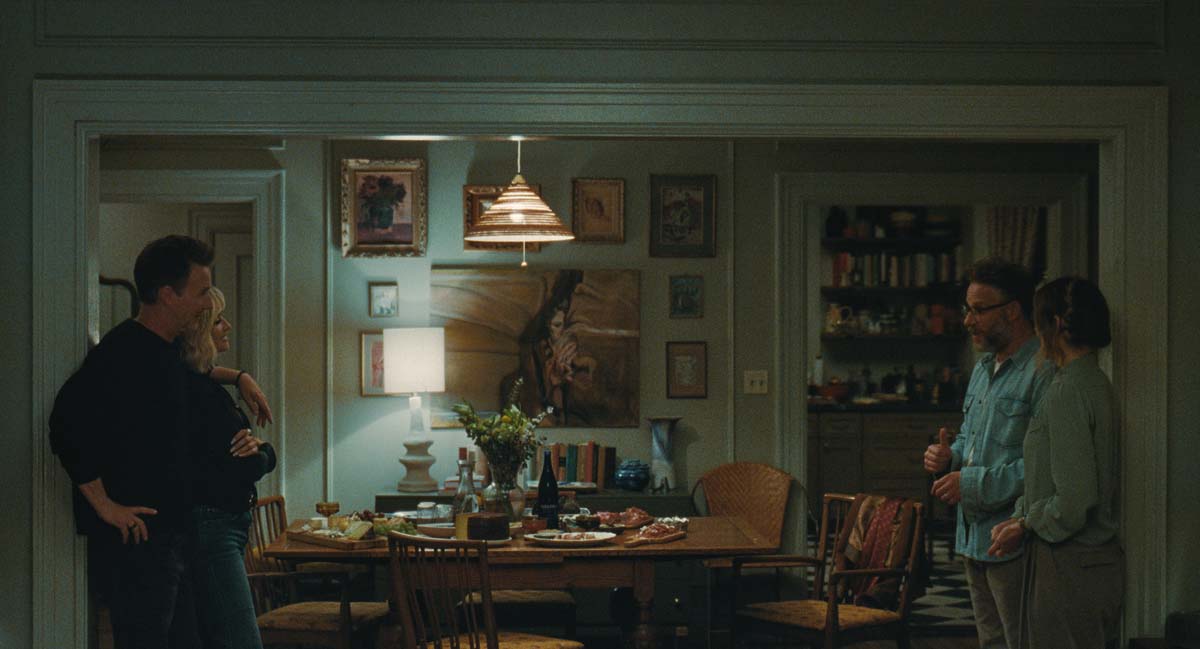
(L-R) Edward Norton, Penelope Cruz, Seth Rogen, Olivia Wilde, Credit: Courtesy of A24
Mavropsaridis: I was really surprised in a positive way about the reaction Seth Rogen gets when he looks at Penelope Cruz.
It was really clever the way that Ant used it because it shows me, “Okay, there’s a relationship maybe being developed - something that will pay off later in the film.
So yes, you can inform the viewer with “pro-oikonomia” (A Greek term for foreshadowing). Just give him some hints about what maybe will happen later, away from the dialogue. When I left the edit, there was a dialogue between the two and a reaction between Joe and Angela.
So that was really clever of Ant to introduce a shot between Pina and Joe. For me it meant something more. Of course, it would mean the same to the audience. Before that, Joe looks at Pina and he has this funny look. In that look is not only his reaction about what she says, but also him thinking that she maybe she’s nice or that he likes her.
Ant was talking about how these actors are so good and you can find these great reactions. But it’s not just that there’s a good reaction, it’s: “What is this reaction going to either set up or reveal about the conversation?” Another reason for a reaction is also that you know, as the editor, that the audience will want to know how someone is reacting at a certain point in the conversation. You’re fulfilling a curiosity.
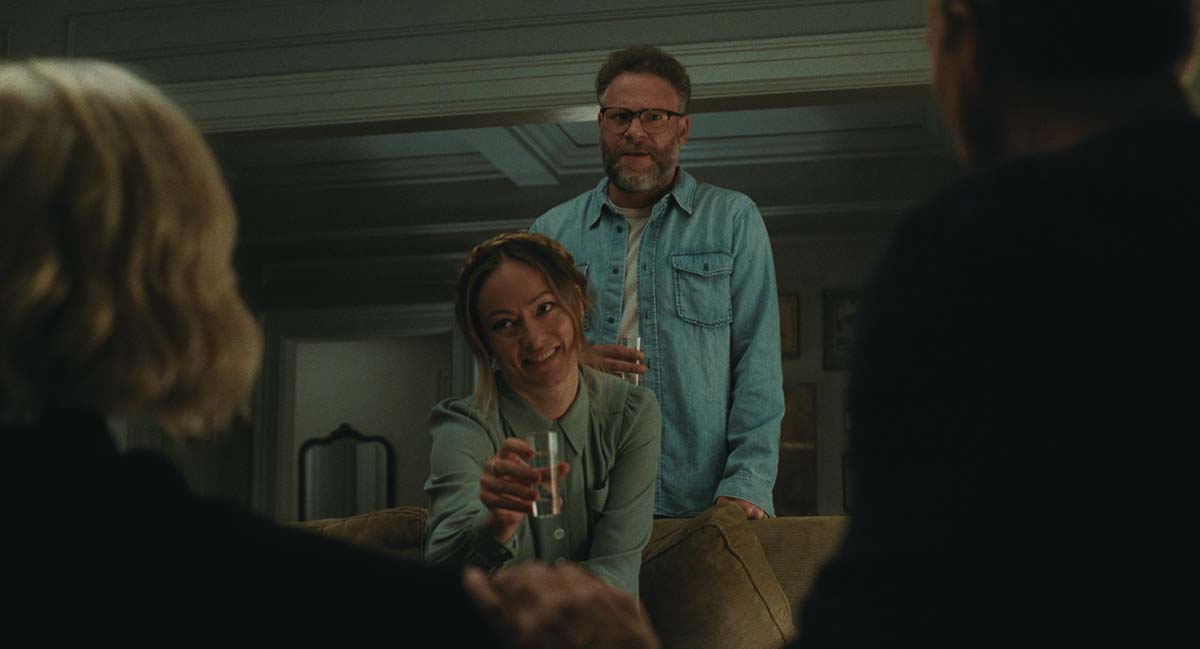
(L-R) Penelope Cruz, Olivia Wilde, Seth Rogen, Edward Norton, Credit: Courtesy of A24
Mavropsaridis: Definitely. I believe it’s a good way to say to the viewer, “No matter what they’re saying on the surface, it’s a way to reveal what he’s thinking about or what he feels. It’s a good way to inform your viewer, to create that kind of suspense: He’s saying that, but he’s also thinking something different, so it has this creative tension.
How much do either of you pay attention to script supervisor notes? Or are you just thinking, “I just want to look at the dailies. I just want my impressions.”
Mavropsaridis: Of course, the editor needs to know all the possibilities of the takes and use them in the proper way, so you need to know the good takes from the script supervisor. What those takes are later may mean something different.
When the director comes to the editing table it may be a different story. They can easily change according to the needs of the scene or the sequence or the whole film.
Boys: So I’m pretty much the same. I don’t want to get surprised. I don’t want to pick a take that isn’t the selected take, then have the director ask, “Why didn’t you use my take?” I want at least put in the thing that they saw and then watch it in a sequence.
Then I can decide if I agree or disagree. I will mark and register my own gut reactions to things. If I’m watching rushes, if I see a thing I like, I’ll mark it in some way.
I wasn’t part of the prep on this movie. It’s so much harder to get in on tone meetings and things like that. The director’s been around the film for a lot longer than I have. Maybe there have been conversations that I’m not party to. Maybe there’s a reason why they want this take.
Maybe it’s not necessarily the one that I think is right. We can have that conversation later. But I don’t want to be surprised by something. I don’t look like an idiot.
How do you watch dailies? Many people say they like to watch from beginning to end, chronologically, how it was shot. Some people like to do the reverse. How do you work and why do you work that way?
Boys: Once you’ve asked all the editors in the world and figured out the right way, please let me know.
I’ve asked 600 and there is no right way, as you know.
Boys: It almost changes project to project for me. It depends on a number of things. There are a couple of directors I work with quite a lot - and because I know their thought process - I like to go last take first, then go backwards because I know that I’m often going to agree with their last take because that’s the way it’s been in the past. Sometimes I just like to watch all of it in order because I like to see the progression of it.
I like to break stuff up. So if a scene is more than a minute long I might break it into minute-long chunks and watch all the takes of the first minute-ish, then build something out of that, then do the second minute, then do the third minute, then rewatch it with everything in mind.
I sometimes find it quite hard to keep everything in head if I’m doing 2 or 3 minute or longer takes. I keep trying new things.
Mavropsaridis: It does vary, but my usual way would be to watch from the first take to the last take, because it allows me to see the direction the director wants to go - how does he start and what does he change and why is it different on the second take?
What is he trying to achieve? I will use whatever take, but it just puts me into the mind of the director and his intention during the shooting.
Sometimes the takes are because of technical mistakes, but they can show the intention of the director pushing the his actors towards a specific direction.
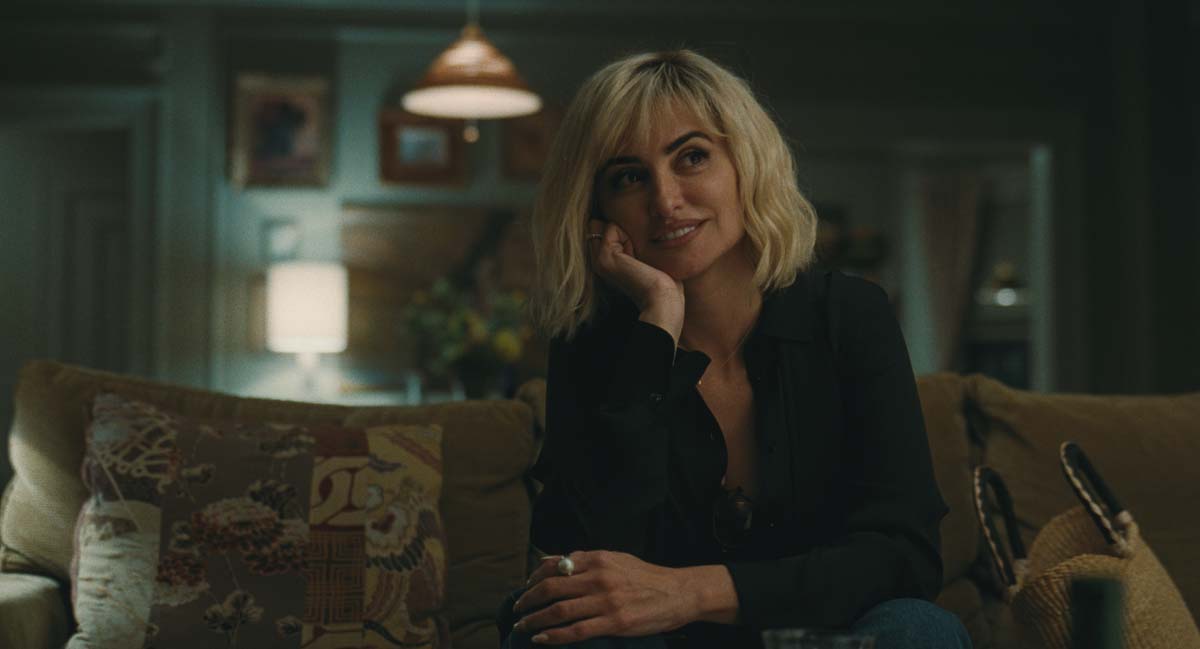
Penelope Cruz, Credit: Courtesy of A24
Talk to me about collaborating with Olivia. You have a director who is also on screen for most of the film.
Boys: The first thing I do - if I’m talking about the director’s character on screen - I will always use the character’s name. I find it really helpful to say, “Angela.” When I choose not to do that is if I am convincing a director that their performance is really good and should go in over someone else’s, in which case I say, “You’re really good in this.”
But I think it’s good to have that separation. It will often depend on the director and their own ways of seeing themselves. Olivia was really good at distancing herself from the character of Angela and her portrayal of it.
The only time it was really a discussion was she was conscious that she didn’t want to be a director who comes in and puts herself ahead of the performances of others.
She gave the actors so much freedom on set. That’s a great thing to do, but it does come with a responsibility. You have to look after them if you’re going to let them be free and risk things.
You have to make sure that they are really happy with the final result, so she was keen to not put herself in over someone else, so sometimes it was me saying, “I think being with Angela here is where the story is strongest. I want to feel what Angela’s feeling. I want to see her face.” There were very few conversations about that. She was very good at distancing herself in the edit.
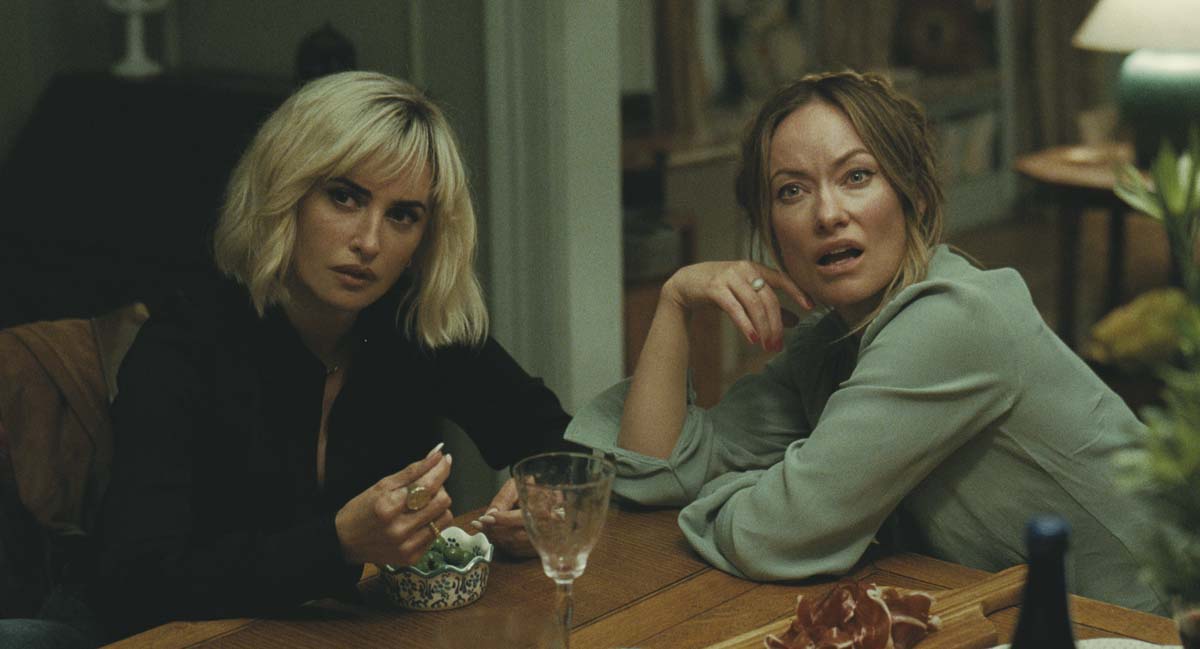
(L-R) Penelope Cruz, Olivia Wilde, Credit: Courtesy of A24
It really does come down to different directors and genres. I worked recently with Riz Ahmed and he’s an astonishingly good actor, and he was excellent at not worrying about his own performance.
He would just say, “What’s the story? What’s the story? What are we feeling? What do I want to tell?” It’s really easy to talk to him.
He’s a London boy and we got on in that way, so it’s a lot easier for me to say, “You’re not very good here. We can do better.” I mean, that happened once.
I think you have to tailor it for each person you’re working with. It really depends on who they are. You are just you just helping them find the core of the story.
Is there a key - when working with a director who might be considered “an actor’s director,” which of course, an actor would be. Somebody like Olivia, I would think they would be incredibly performance-based. But maybe you - as an editor - would think, “I want to be more on this angle or this wide shot or this close up than the performance.” Is that a discussion that you have or that you try to help?
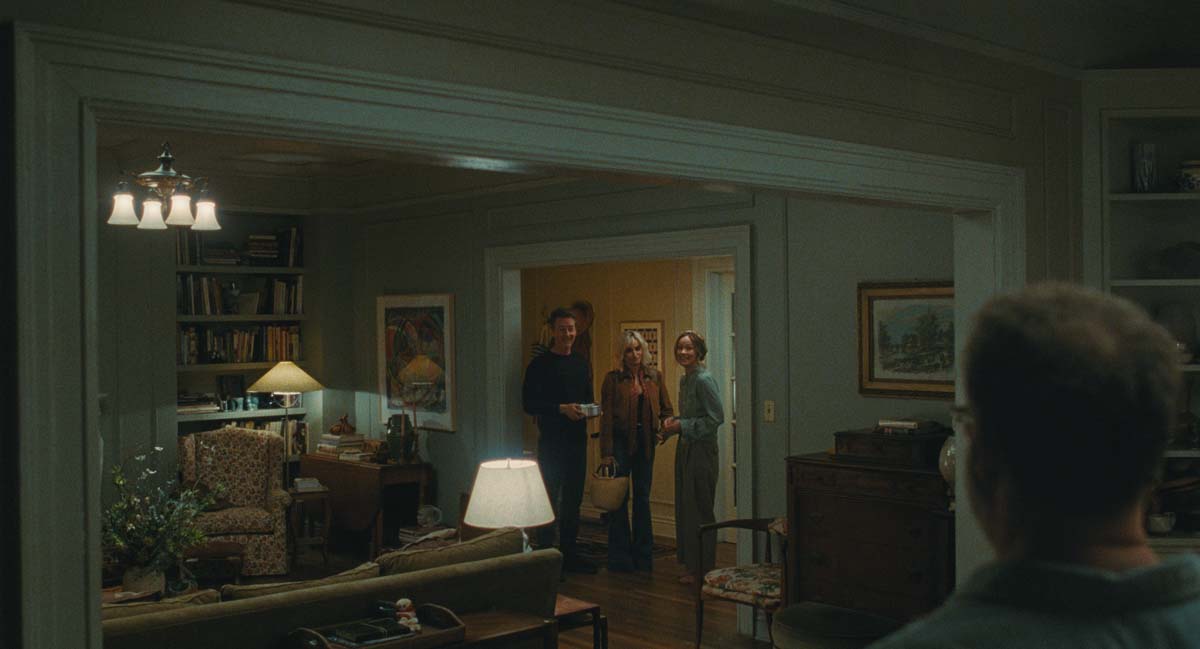
(L-R) Edward Norton, Penelope Cruz, Olivia Wilde, Seth Rogen, Credit: Courtesy of A24
Boys: I have a slightly different discussion. When I work with a more “actor’s director” it’s more about script. It’s more about me saying, “You don’t need these lines” and them saying, “But it’s such a good performance!” And me saying, “Yeah, but we don’t need it. The story’s been told. We can move on.”
That wasn’t the case here. This film was actually quite hard to get down. I think I’m one of the least precious editors out there.
I will just throw anything out at a whim because it can go back in if we miss it, or if it’s great, it can go back in. This one was very, very tough to get down. I generally find with actor’s directors you sometimes just need to convince them that sometimes less is more.
Yorgos, do you remember how long the first cut was?
Mavropsaridis: Not really.
Boys: There’s an assembly that’s like three hours and change – 3:10 or something.
Mavropsaridis: The assembly is always long because you have to put everything in. You cannot be allowed to take anything out. It wasn’t 3:10 when I left it, was it?
Boys: No no, no.
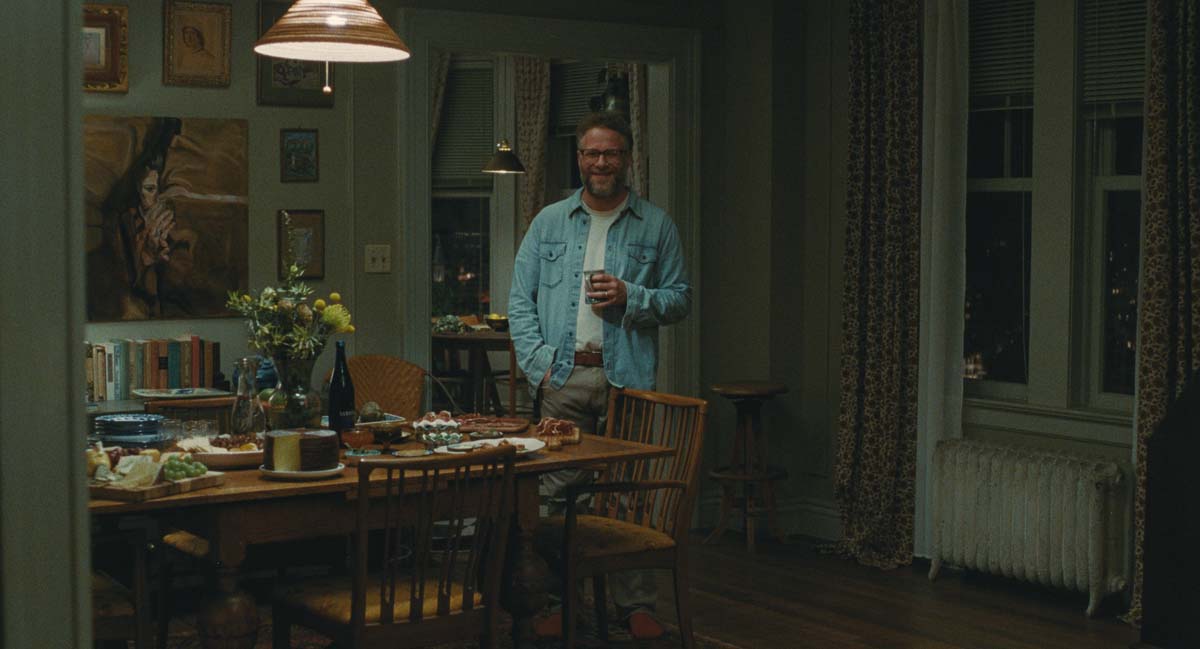
Seth Rogen, Credit: Courtesy of A24
When you do that first assembly, how much do you feel you can cut it down? How much do you say, “I have to deliver the script. I have to deliver what the director gave me in my first assembly.”
Mavropsaridis: I did the assembly and usually I just follow the script. I’m interpreting the script, but also I don’t know what the film is about, so then the decisions will be made later. I don’t think we are allowed to make decisions early on to take out parts or whatever.
We have to let it be and reveal itself to us. Then when it reveals itself to us and we dig in more, then we can find ways to shorten it. It is not about the length. Usually it’s about the rhythm. It’s about the performances. It’s about all the other things.
Then the length is the final thing, but the rhythm will decide and the performances will decide what can be left in or taken out if there’s a necessity to leave it there or if we over-say the same thing, if we repeat it, but that comes later.
My method is to let it be there for a time, then, of course, it will be reassembled and cut down.
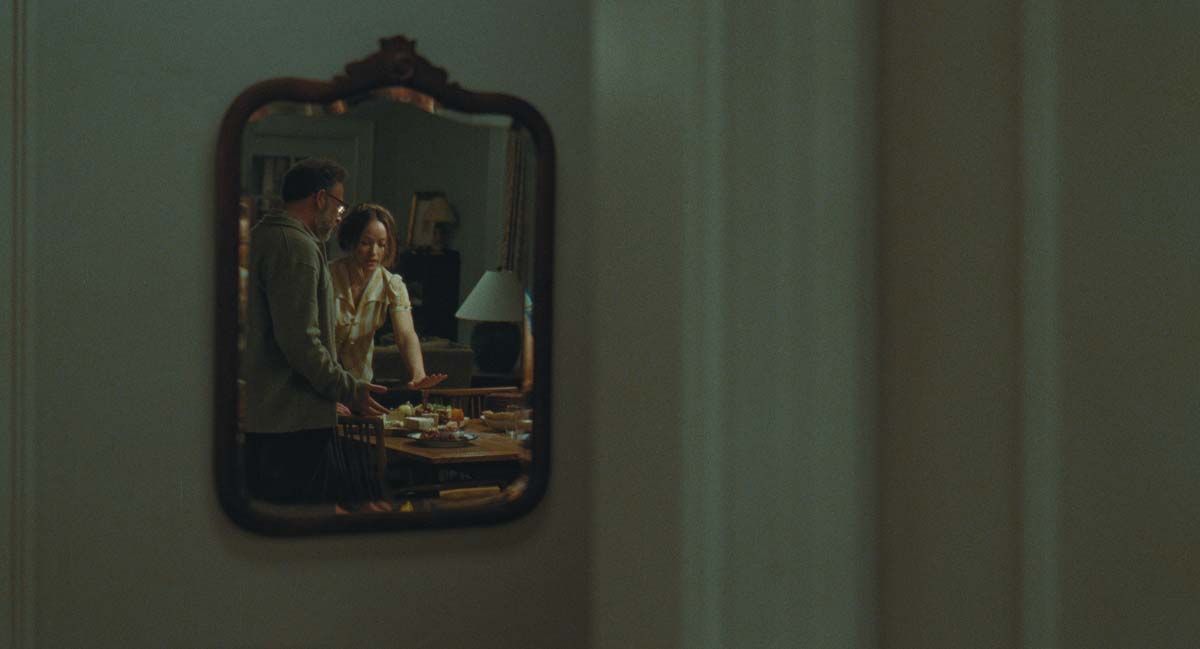
(L-R) Seth Rogen, Olivia Wilde, Credit: Courtesy of A24
Ant, have you had that experience where - with a new director - maybe you need to deliver on the first assembly exactly as scripted, but with somebody you worked with more often, you can make cuts?
Boys: Yeah, definitely. The assembly has to exist in its best version that you can make it for an assembly. You need all the lines in the script in order.
You never know what you’re going to need to come back to. If you’re on a project and the complete assembly isn’t there, then six months down the line you’re hunting through bins, and that’s a miserable place to be.
You want to be able to ask, “What did we have in the assembly?” Often on projects, you get to the point where you do get a bit stuck. You’re a bit like lost in the weeds, so you go back and watch the scripted version. Does that fire any new ideas? Does it give us a new insight into what we’re missing? So it has to exist as a thing.
I always deliver the film as scripted. With people I work with, often I’ll do the film as scripted, then I’ll just start - on my own - working at it, so they have the scripted assembly, then I’ll say, “And here are some things that I think we can start doing, and, here are some conversations that we can have of places where it’s lagging.”
I do want everyone to watch the scripted assembly, because there might be points that I feel are lagging, and they may feel the lack comes elsewhere.
Quite often - especially in comedy - it’s not the bit that feels slow, it’s the set-up – the bit that leads into it. It’s having too much information or lacking what you need to get to this.
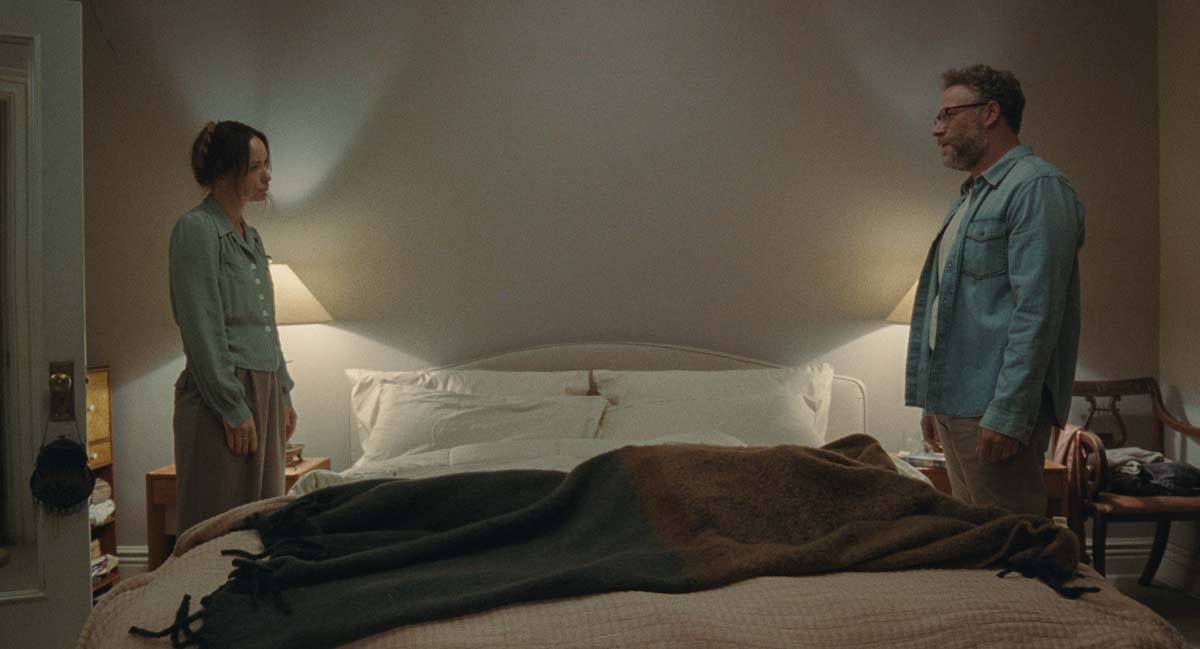
(L-R) Olivia Wilde, Seth Rogen, Credit: Courtesy of A24
In the case of The Invite we tried to cut down the section from the opening titles until Hawk and Pina come in. We tried to cut that down quite a lot.
We spent a lot of time trying to remove stuff from that section because - by conventional timing standards, modern timing standards - it was a bit long. It was quite a way into the process and it was after we tried taking out almost every line at one point, and putting them back and taking out a lot and putting them back where we determined that they all own their place.
It was that we’re just not quite hitting the tension bit or the comedy bit here, although we can move this here and move this quicker.
One bit that did go was where Angela and Joe are having this screaming match in the kitchen and the doorbell goes off and she opened the door. For the longest time this big, funny section, that went there where we had it cut where the doorbell rang, the title comes up, and when we go back to Joe and Angela, they say, “Oh my God! They’re here! What do we do?”
They become almost collaborative and it was hilarious! That stayed in for a really long time, then it just had to come out because we have spent so long building that tension, that you don’t want to break that. The audience is living in that moment.
The only reason we decided to cut those bits out is because we had to keep the tension. We don’t want to leave it, so we cut the middle bit out.
Near the end of the film, Angela goes to the kitchen to rinse out a pan that had flan in it. There’s a very dramatic piece of sound design under that. Can you discuss the use of that? Did that happen in your picture cut, or was it something that happened later?
Boys: Incredibly late. That came in last second almost for a very simple reason. It has to do with what comes later. That moment washing in the kitchen was in silence for a long time.
But if you have it in silence, what you’re doing is you’re diluting the next thing. You have all this argument and almost two hours of talking where Joe always has an answer.
He’s flippant and funny. He’s always got a comeback. He’ll answer with a joke. He’s such a verbal character. So, when Angela says, “I’m tired. I’m going to bed” if we’ve done our job properly, the whole audience will be screaming at the screen for Joe to say something.
And he doesn’t because he can’t. You want silence in that moment, but if you have silence before it in the kitchen, then you dilute it.
That’s what you mean by diluting it: that you can’t have two silent scenes back-to-back so you pick the scene that needs the silence.
Boys: Yeah, that’s the one to hit. And Olivia was actually worried that the audience would be a little bored at that point where they stood there looking at each other, not saying anything. But I said, “No, no. He can’t say anything.”
He actually had a couple lines in that scene that we took out, because he can’t say anything because he has nothing to say. He can only say something with the piano later on.
That’s the only way he can communicate. So we can’t say anything. It has to be silence. You want that to land as big as you can. So let’s not have any silence anywhere near it.
Let’s talk about shot angle and shot size choices and how they’re helping to tell the story. In another scene that the studio provided from near the beginning of the film, when Pina and Hawk first arrive at Joe and Angela’s apartment - arriving for a dinner party in the midst of a contentious argument. How are you using angles and shot sizes to tell the story and to set up the relationships for the rest of the film?
Boys: Sometimes it’s a case of doing something quite simply. So in this, it’s Joe’s on one side of the apartment. The other characters are on the other. It’s nice to separate them.
It’s nice to keep him apart because he doesn’t want to be part of this. So we’re keeping him separate. Let’s just do a nice big wide shot to really enhance that.
We’re in an apartment. It’s hard to get a real sense of space unless you go for a big wide. So we put the big wide. I wasn’t really sure about cutting from a big wide into the close-up on Angela, but that’s the funniest shot. That’s her funniest reaction to Joe, so you just put the funny shot in.
Mavropsaridis: Definitely the long shot with him very far away suggests that he’s not with them. And I did like the cut from the long shot straight to the close-up, because I like the sudden change of perspective. It was also funny.
Do you have anything else you want to talk about?
Boys: The only thing is that one “scene” that’s 32 minutes, which is all Yorgos’ work. That scene is 32 minutes! That’s longer than some sitcom episodes that have 20-odd scenes that I’ve cut. How he did what he did, I still have no idea. It’s a hell of a sequence, man.
Mavropsaridis: Well, I don’t know how I know that! There were some difficult choices. You had to find ways to go around it, then eliminate certain parts that were not needed, but still make it rhythmically correct.
They’re not really things an editor can explain. They just work. Sometimes it appears in front of you, “Okay, that’s the solution!” And I go with it. I’m as surprised with it, as you are.
Boys: I’m a little relieved to know that you don’t know how you did that. It makes you feel a lot better about my skills!
I think that makes everybody feel a little better. Sometimes it’s the happy accidents that save you.
Mavropsaridis: Yes. You just have to recognize them to accept them as that. It’s a conversation with all the material - letting it talk to you sometimes - letting it reveal itself to you.
Gentlemen, thank you so much for your time. It was a pleasure having you on the show.
Mavropsaridis: Thank you so much.
Boys: Thank you. It’s been a pleasure to be here. Cheers.
 October 5, 2026
The Whisper Man
Chris has been on Art of the Cut before for The Menu, The Many Saints of Newark, A Quiet Place, and Assassin’s Creed. He has ...
Read more September 23, 2026
Sean Combs: The Reckoning
Charles Divak has been on Art of the Cut in the past for Chimp Crazy, for which he was nominated for an Emmy and won ...
Read more August 6, 2026
The Upshaws and Wanda Sykes Legacy
Today on Art of the Cut we speak with Angel Gamboa Bryant, ACE, who is nominated this year for both The Upshaws – for Outstanding ...
Read more
Subscribe to our newsletter
Get all the latest news, blog posts and product updates from Boris FX, delivered directly to your inbox.
Welcome!
Thanks for opting-in to our newsletter. You'll receive an email momentarily with your confirmation.