













The End of Oak Street
Editor John Axelrad, ACE, and his first assistant (promoted to additional editor), Taylor Bynum, discuss how intercutting affects a film's rhythm, a classic cutting-room prank, how a codebook can free the creative process, and much more.


Today on Art of the Cut, editor John Axelrad, ACE, and additional editor, Taylor Bynum, discuss editing the summer blockbuster, The End of Oak Street.
John has been on Art of the Cut for a full decade with Lost City of Z, Antebellum, Ad Astra, and Chevalier. He also edited Spaceman and Papillon, among many others with editing credits going back almost 25 years.
Taylor was a first assistant promoted to additional editor on this film. He’s had various jobs on the post teams of Mickey 17, Spaceman, Ant-Man and the Wasp: Quantumania, and many others.
John, I’ve known you for quite a while, and you have always been somebody that is promoting your assistant editors, concerned about their careers, and willing to provide a credit. I think a lot of people are very appreciative of that.
Axelrad: Well, thank you. It’s something that’s in me to want to help people. My wife and I been married over 30 years. We don’t have children, and this is my way of giving back: having “adult children” who are very capable, and I can skip the diapers and go right to helping people in their careers.
Talk to me about the sound design in the opening block party. The production audio certainly doesn’t sound like that, I’m assuming. Did you have a vibe to the background audio that you were going for in the initial temp sound design?
Axelrad: [David Robert Mitchell] really wanted the crowd to seem robust. We use iZotope RX, to clean up production dialogue as best as we can in the Avid Media Composer. Then we’ve got to fill in all the backgrounds.
David wanted more and more to really make it feel lively. The trick was we had a lot of scene changes or location changes within the block party, so each time we cut, we wanted the ambiance to be a little different.
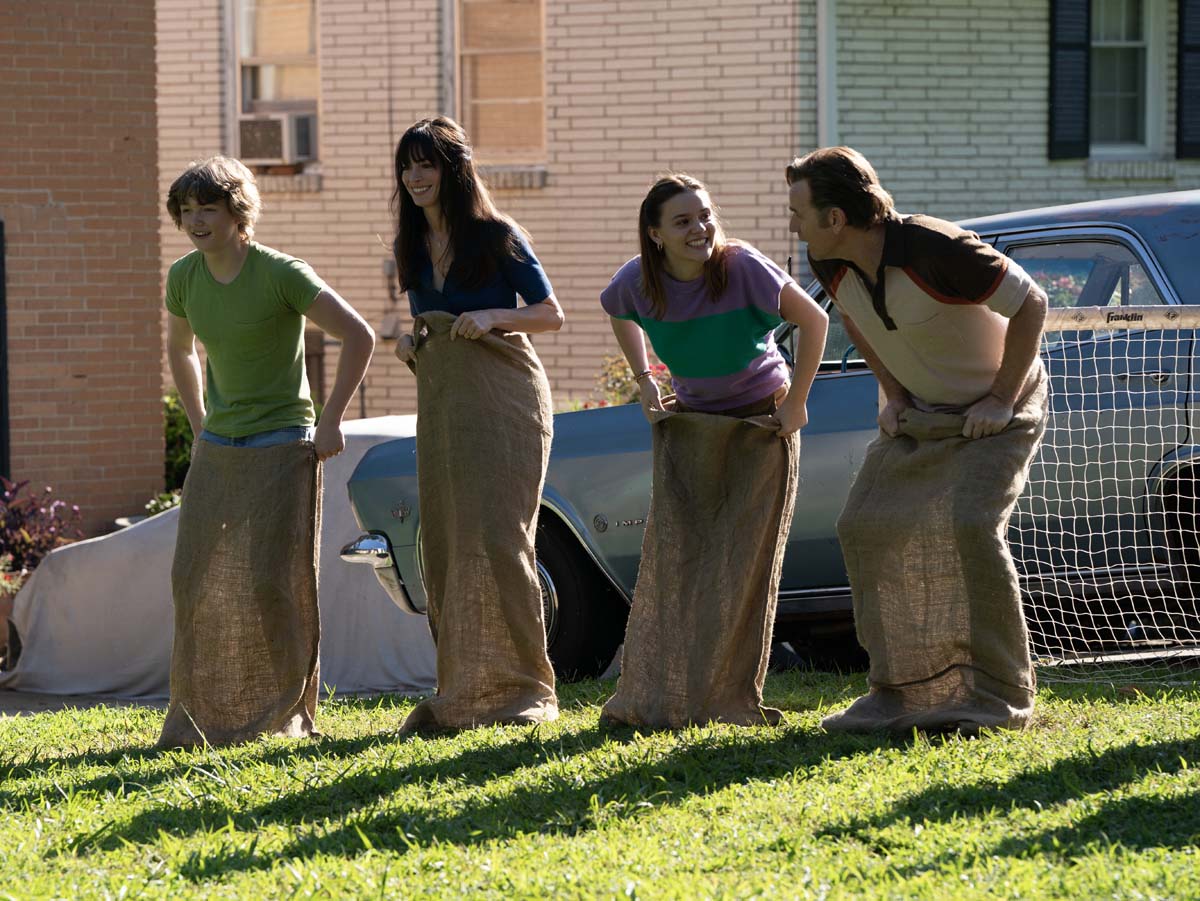
Ultimately, the biggest challenge was with Christian, who plays Brian, because the block party was additional shooting, but it was done almost a year after we started principal photography. We had to take a four-month hiatus to do some additional shooting, which is very common on a film like this.
You get to a point where you think, “Well, the audience really likes the movie, but this could be improved,” or we can improve the beginning or clarify things in the middle or whatnot. It was in the budget to do, but we had to wait for Anne Hathaway because she was just a little bit busy.
So there was a hiatus, and by the time we got to shooting, Christian was maybe 4 or 5 inches taller than he was, and his voice had deepened. So the biggest challenge in that scene was to manage not just him visually, but his voice.
That probably was one of the biggest issues. We did our best to pitch it ourselves, but ultimately we turned it over to the sound pros. He was playing 14 in the movie, but by the time we did the reshoots, he was closer to 16 and had gone through “the change.”
Taylor, did some of that temp sound design stuff fall to you? Did John, give you notes and say, “Hey, look, I’m going to start cutting this. Could you do this for me?” What was the process?
Bynum: John likes to talk about the way that sound feels. He won’t say, “This scene needs some sound effects.” He would say something more like, “I want the party to feel like we just dropped into it after it’s already been happening for two hours.” David, too.
They would both talk about how stuff that’s diegetic, that we can’t even hear, does a lot psychologically to embed us into the mood that he wanted. I took stabs at it and John would say, “No, it doesn’t feel frenetic enough” or “it’s too busy here.” In that way, John almost directs because he’s searching for feelings and energy, not specifics. It’s really a lovely way to work.

Editor John Axelrad, ACE
As part of that opening scene, Anne Hathaway’s character has a discussion with a woman about a book she’s writing, and there’s some cool use of profile shots and some interesting angles. Can you talk about your use of coverage and what determines that you’re on a specific angle or shot size?
Axelrad: It was interesting because that was David’s first use of the split diopter. He loves that. And it’s used again, later in the film. He definitely wanted those shots in. It’s just part of his style. He also really insisted on going outside, looking in.
So we needed to pop out from the window and look in. That was also part of some additional shooting because we shot the scene originally, but we changed some aspects of the story to streamline things. So that was one of the scenes we got to do a reshoot on, and it came together really well.
It was a little challenging because we also needed to find the right time on the inside to pop outside, and to reveal the desk and the picture of her husband and the writing awards and stuff like that. I did try to incorporate some of the older footage.
I think that was older footage from the original scene, that one shot, so any of the additional shooting that we did, we did tie it in with what we had originally, and they were able to get the sets to pretty much match exactly. He did give me a lot of coverage in that scene, and it was really about getting to the emotion.
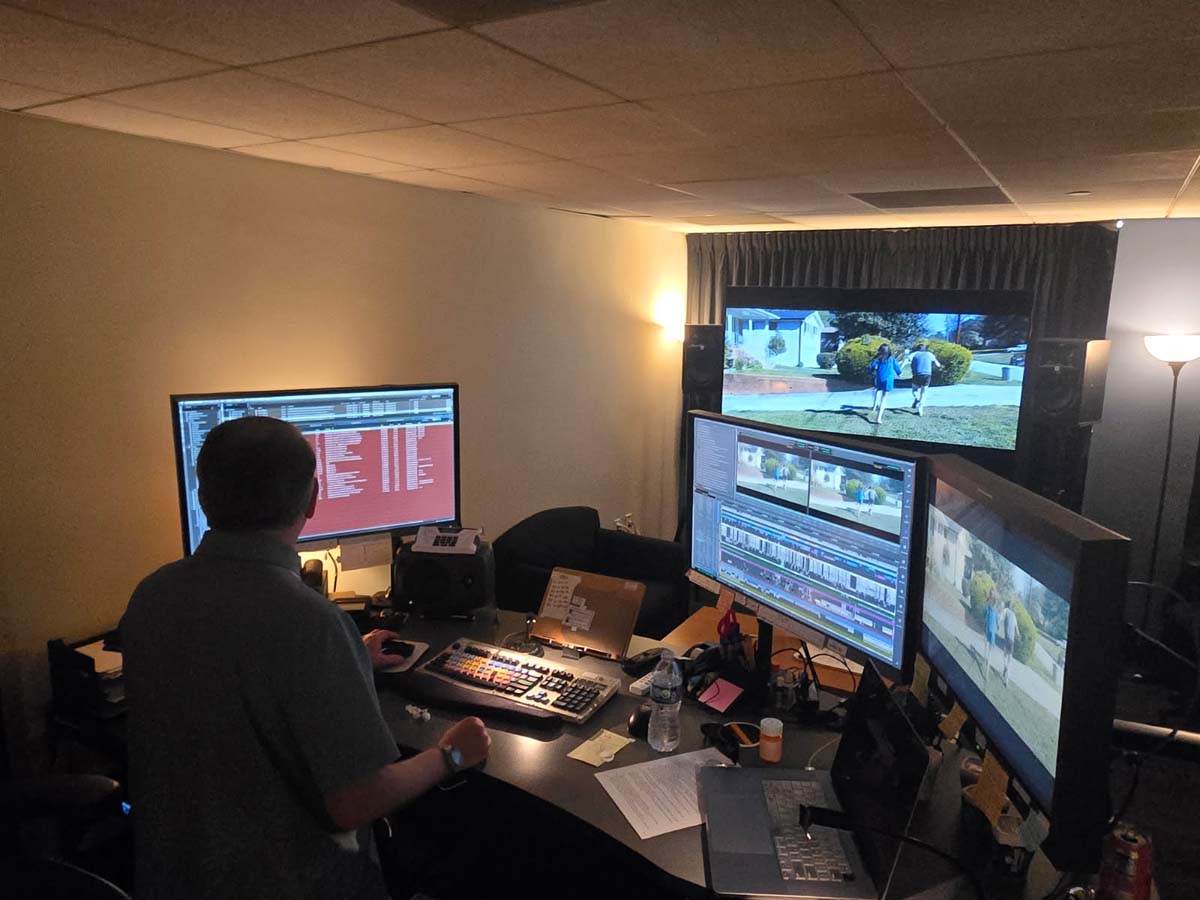
John’s editing set-up
I noticed things like being able to tell that the party was still going on outside. That seemed like the thing to explain to the audience that this isn’t another day. She didn’t leave. She’s still at the party. Basically, you could see past their faces out the window to see the party going on.
Axelrad: Yeah. And those were split-diopter, which means that both the foreground and the background are in sharp focus. That was important because they’re talking about the niece and her book writing and what the book is about. It’s about a woman thinking of leaving her family, unsatisfied with her life.
Mrs. Huddleston is describing the scene with the kids playing in the backyard as she’s packing her suitcase, so there was some emotional relevance to showing that the outside was as sharp and in focus as she on the inside.
It’s before the story really takes off, but we’re getting a hint of Denise’s unease and unhappiness, and we’re just beginning a journey to discover what is truly making her unhappy in her relationship.
Bynum: John, at one point you said this scene is about the transfer of thought between two people. Obviously, performance is king, and there was really great coverage, but when we process dailies, I always do like a “version zero” is what we call it. It’s just sort of like a “Hey, this is an initial assembly of a way to try to find the rhythm of this scene.
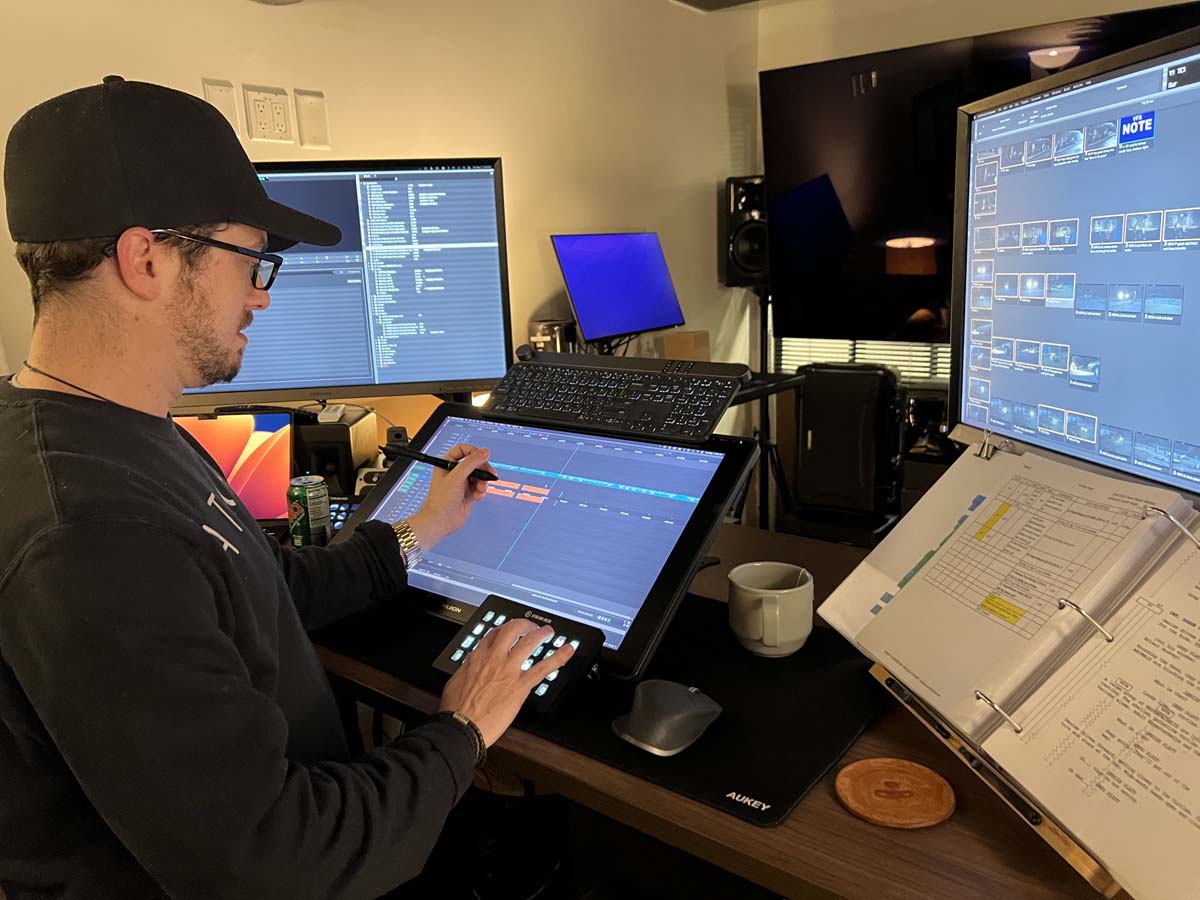
Additional editor, Taylor Bynum
The first “noodles I threw at the wall” on that scene were just completely wrong. It came from kind a more conventional approach: “Let’s establish it in the wide and find a motivated way to go into the two shot.”
On every single one of David’s scenes, John and I would say, “That’s the ‘David shot.’ because they would have these really interesting wides, but he wouldn’t want to go wide first and then into coverage.
There would always be some sort of pivot in the middle of the scene. John turned me on to that with that scene. I think it’s a really interesting cut when it goes outside to the window.
The first time I thought, “We have to put that into the middle of the scene” it felt really weird to me.It did. It really did. We tried it a couple of times, and then eventually - once we found the rhythm of it - I saw, “That’s so cool because it’s just a pop out.” It does something that’s unexpected, but it’s very motivated. The interesting background of it, is that this woman is sitting here having read a book that the other woman wrote.
That’s what I think John was getting at about this scene is about a transfer of thought between two people.
Axelrad: That’s probably the scene - both the original and this scene - one of the more re-edited scenes in the whole movie.
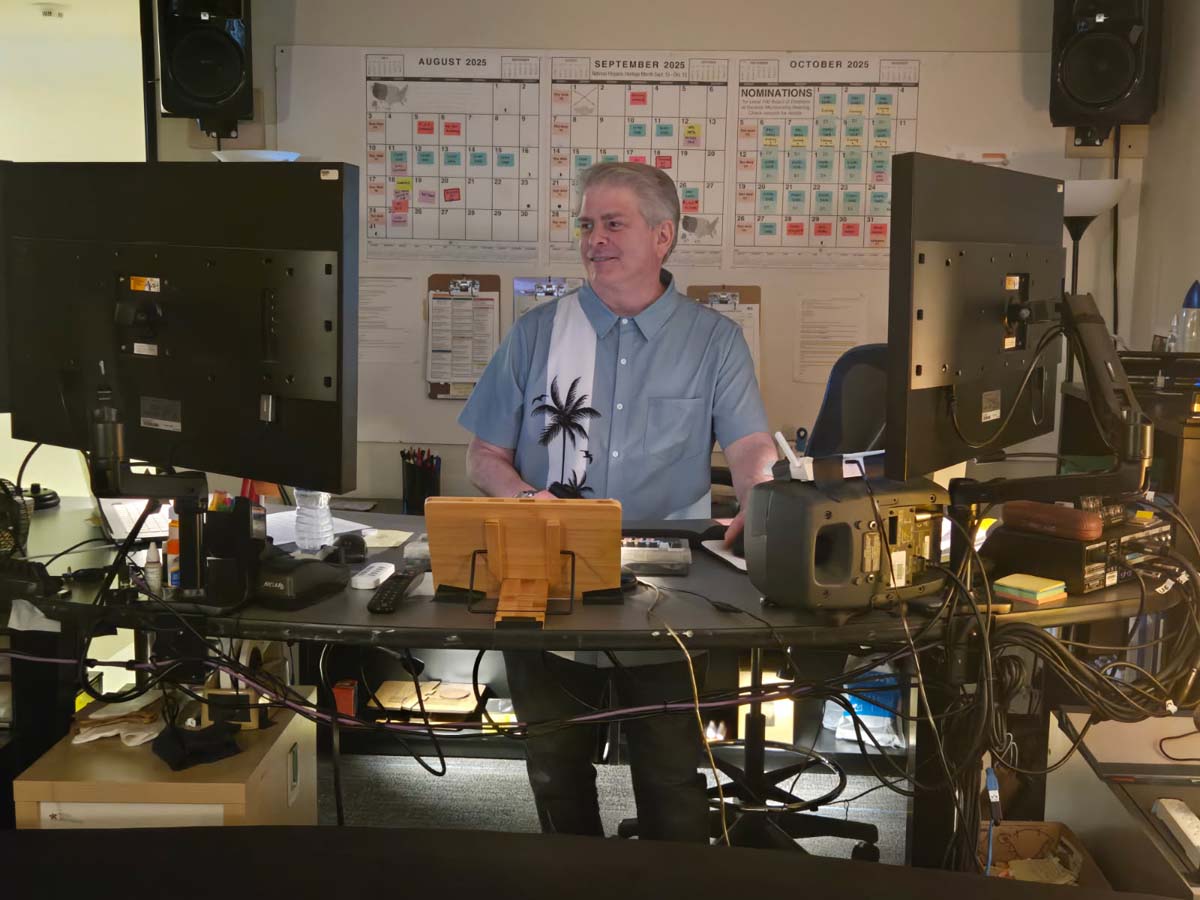
Axelrad at work
Interesting. It sounds like the director was not being prescriptive about when he wanted to use that outside shot. It was you finding the right moment.
Axelrad: Yeah. Just to match performances and things like that, he had an idea of doing it around that area, but it was very important to David. It felt like the later we got into the scene with the emotion - as the book is being described - was not the appropriate place. So we really aim to do it early in the scene.
You know when you can’t use it. Using it at the beginning was wrong because you know you don’t want to start off like that - the typical establishing shot - and you know you don’t want to use it after a certain point when the book gets mentioned, so that tightens your parameters. Right?
Axelrad: Exactly.
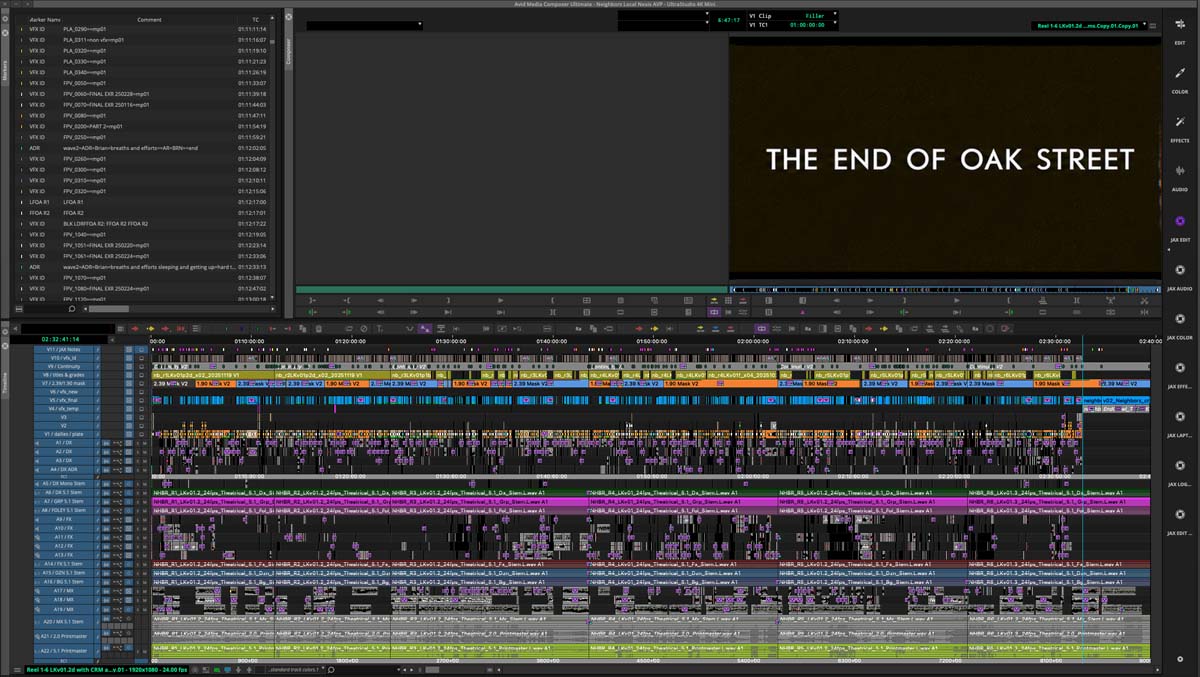
Avid timeline screenshot from The End of Oak Street
I love the idea that Taylor mentioned that you explained what the purpose of the scene was. How much do you feel like you need to understand not just the script, but the essence or the intention of a scene to be able to edit it?
Axelrad: This was a pivotal scene only because it really establishes the dysfunction in the family and the whole beginning of the movie, where we do meet all the characters at once, but then we kind of go with each character and see that they each have something that they’re hiding.
They each have a secret from each other, whether they know it or not, so this really does set up an important plot point in the film about Denise’s unhappiness.
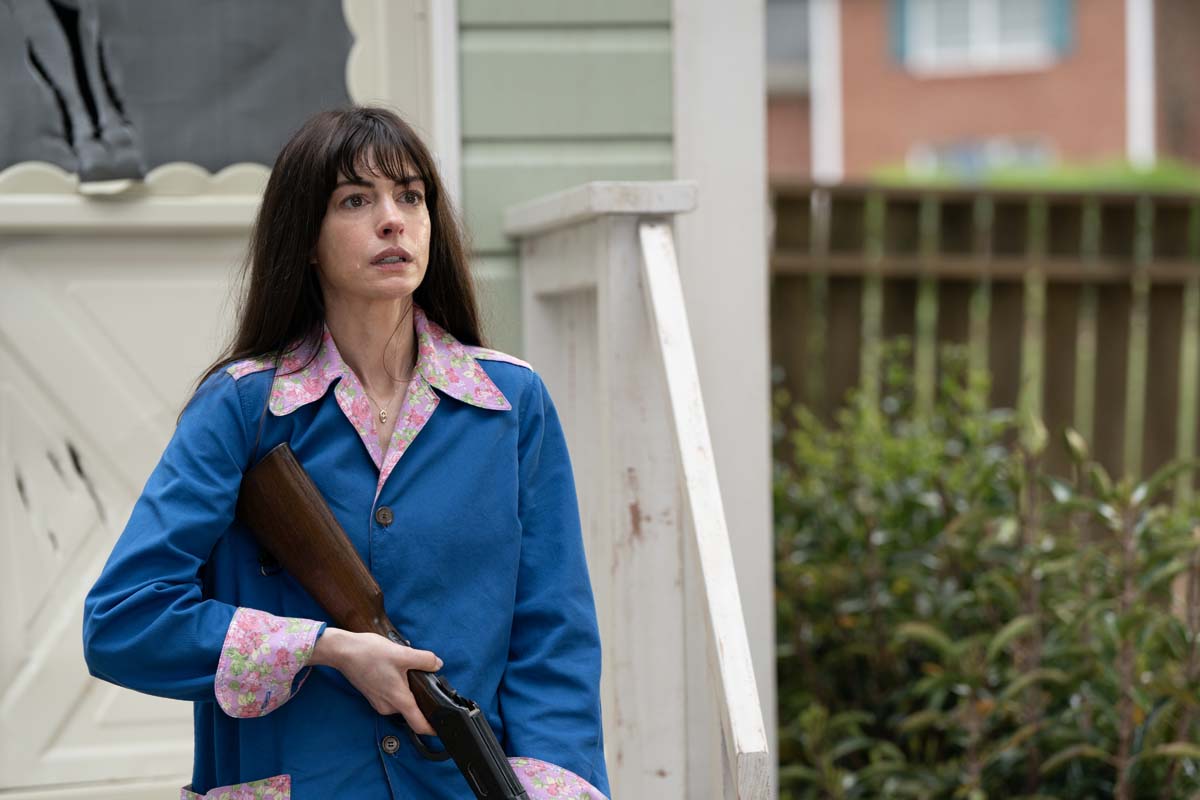
And we see it in the kitchen scene when they’re having a pizza dinner and everyone’s kind of clowning around - we see a very somber look on Anne Hathaway’s face to end the scene. We were trying to tap into the sense of motherhood versus career ambitions, and that she imagined a more active life for herself.
The entirety of the film is really about how these little things that seem so big, but when you’re thrust into a much bigger situation, you forget how much the little good things matter and you just take that for granted.
So in a sense, it really planted the seed about suburban distress for a middle class family that really needed a kick in the pants in the end.
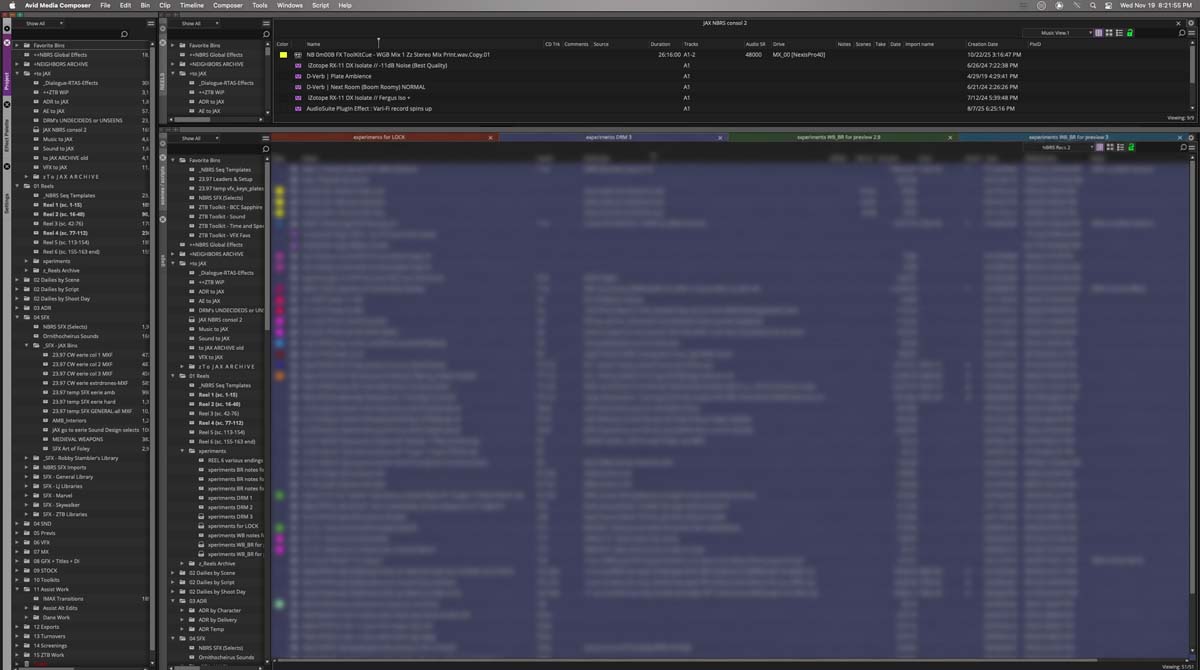
Avid screenshot source monitor
Right after that scene - or even kind of as part of the end of that scene - Mrs. Huddleston shows this weird pineapple tree that’s growing in her backyard to Anne’s character.
Axelrad: Pluramaya. Come on Steve! it’s a pluramaya!
Give me a break! I haven’t seen one in 250 million years!
Axelrad: Ok, you’re forgiven.
The score takes a turn right there. Talk to me about you thinking about that scene when you’re cutting it, maybe even out of context and deciding, “Where am I going to spot the cue?” And what kind of temp did you use?
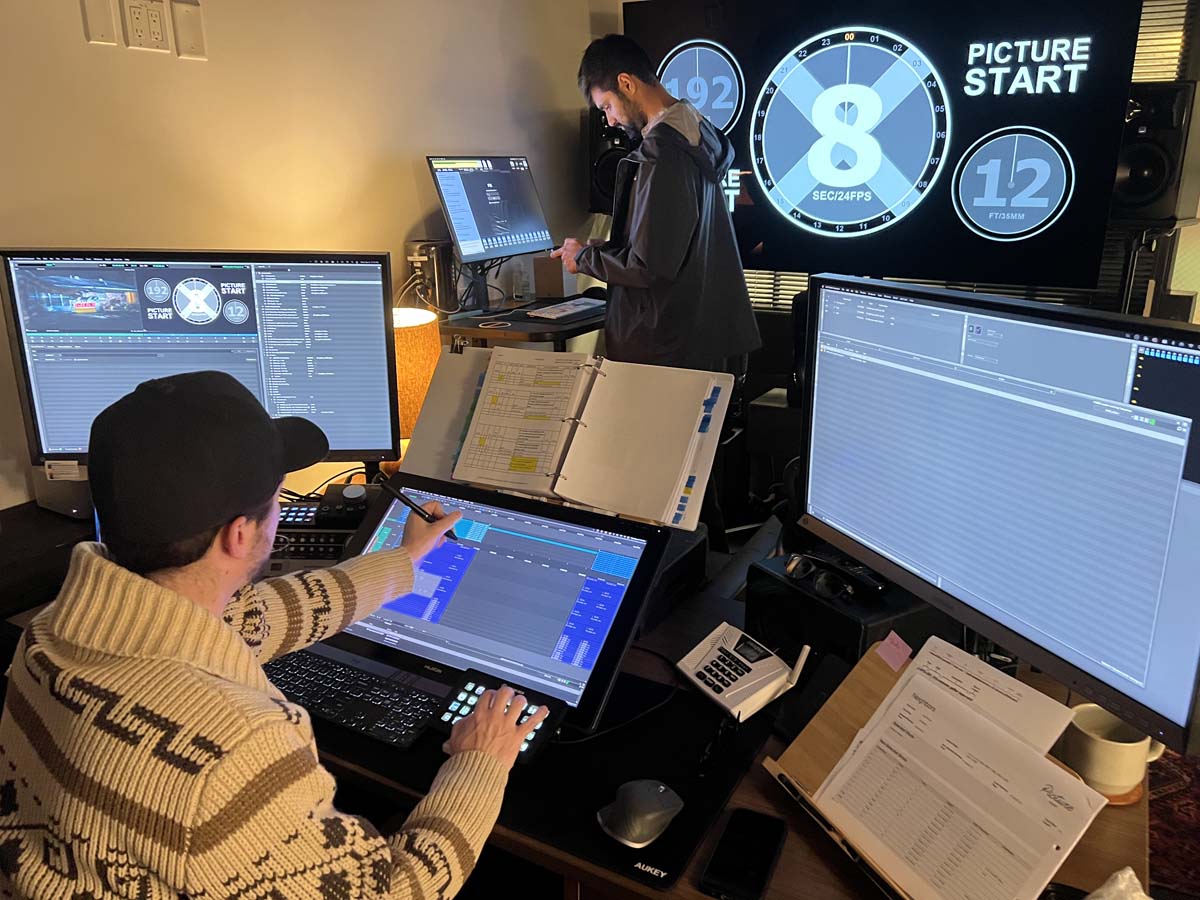
Taylor’s set up
Axelrad: I knew Michael Giacchino was our composer. He has just got a repertoire of scores from so many different types of films, it’s really pretty amazing. My commute was to Bad Robot in Santa Monica, and I live in Glendale, so it’s a very long commute, so I just gathered as many of his soundtracks as I could and listened to them all as I was driving.
I knew the script well, and as we’re getting the footage I would just take memos as I was driving and would say, “Okay, this track from this score is going to be good for scene 54.”
Personally, I love doing my own temp music and temp sound work and dialogue clean up. I enjoy it, but I did not have time for it. Shout out to my crew because we had Taylor obviously working, Alyse Kollerbohm Kerr, who was our second assistant, and she became, ultimately our VFX co-editor, and Sushant Chaudhary, who did amazing work with score based on tracks that I picked and some tracks I didn’t pick. I really was counting on them to spend the time to temp score the film.
Some directors don’t like temp score. Temp score can be a Band-Aid if the scene isn’t working visually. If you put score on it, it can sometimes cover up faults in the edit, but I just love it so much.
It’s icing on the cake. And if I’m given permission to do it, I will ask that we temp score it, but it does take a village, and my entire team did really good work. Even Jessica Pradhan, who was our PA, would listen to stuff and suggest tracks for certain scenes.
But in the one you’re talking about specifically, there was a gradual change, and we found a piece of music that started off a little slow and then built in its mystery. Nothing too hard or heavy, but just that something is amiss.
I’m with you that you want to use the composer’s music when you temp, but some other people have said never, ever use the composer’s music to temp. What’s the argument, one way or the other on using a composer’s own temp?
Bynum: I think it’s the same thing as actors who don’t like to see themselves. Some actors want to watch the cut and see every single bit of the coverage that’s used, and other actors don’t ever want to see one frame of the entire movie that they’ve been in. They say, “Nope, I know what happened. I was there for every take. I don’t want to watch it.”
Having done some scores and composing for short films - that’s sort of how I got into all of this stuff - I came out here as a musician. Every single cue that these composers and all of their composing assistants create, it’s like a scene in the film.
It goes through so many iterations and such a life cycle that I imagine for the school of thought that the composer has already heard it, and the temp from themselves transports them to such a specific place in time in their compositional journey that they don’t want to associate this new thing with that. I do know music editors and composers who will just mute the music temp.
Axelrad: Most of them do. A composer can choose just not to listen to it, and I understand why. Some composers listen to it and then try to mimic it, which is its own problem.
Then there’s the phenomenon of “temp love,” where - if the temp score is working so well and you’re living with it for so long - a director, producer or whomever may just fall in love with what it sounds like and force a composer’s hand, so a composer may come up with something that’s entirely different.
But if you’re so attached to what the temp conveyed, that composer may be asked to listen to it and do something similar, which – look, I understand - if I was in their shoes or had, someone tell me I had to edit something to match the animatics or edit just like the previs edit that someone else did, I would be a little put out.
In terms of using Michael’s music, I wanted to do it just because he has such a large body of work that really worked for this movie. And I felt for David’s sake and for our sake, we really wanted to get a sense of his sensibility from other scores. And it’s not like we exclusively used his music, but it was a really good body of work to pull from.
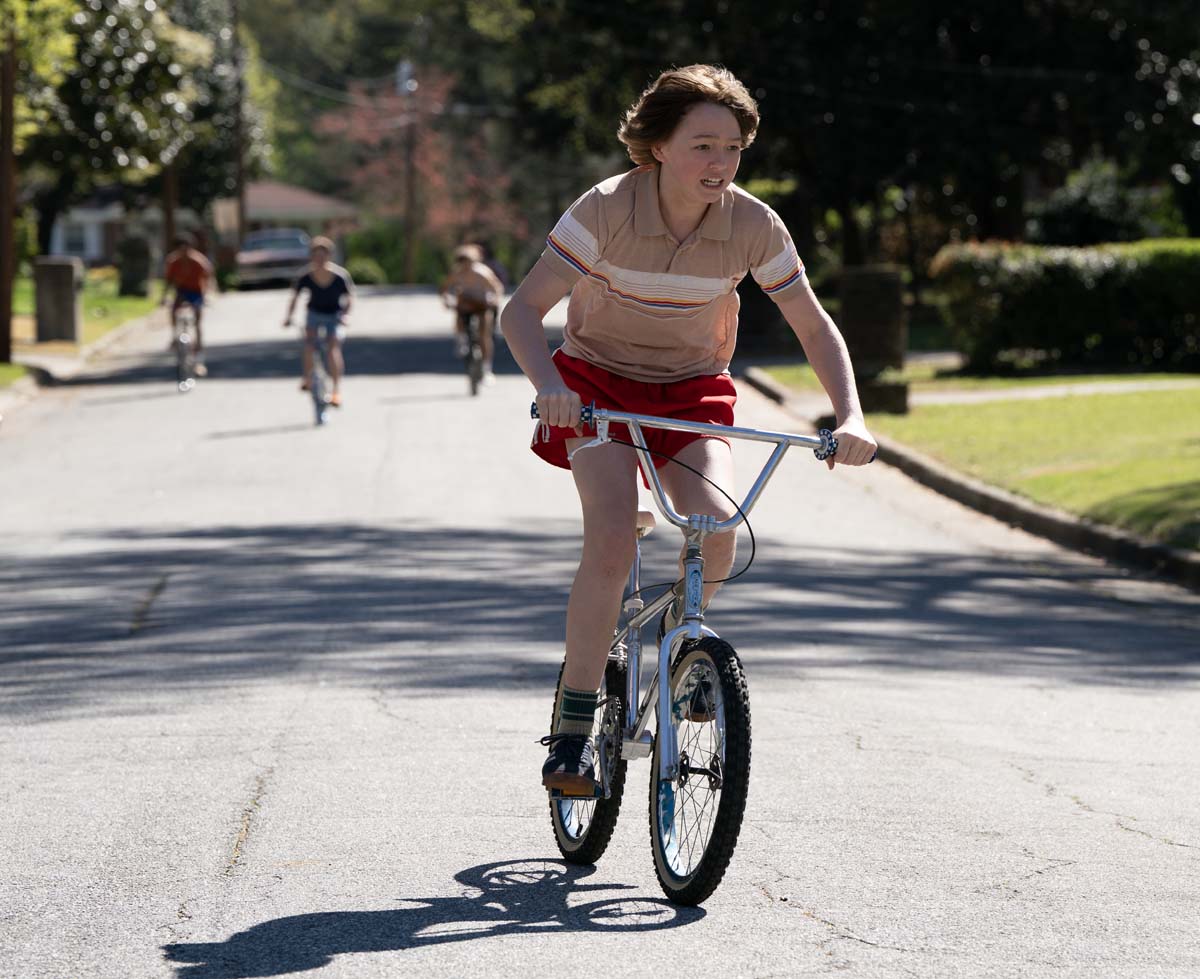
This movie felt very kind of “80s Steven Spielberg.” Did you use any scores or even listen to movies, watch movies from that time period?
Axelrad: For the opening, David did really like the opening of Poltergeist. That was one of his influences for this film. For a while we were experimenting with some score from it, Jerry Goldsmith. But for me personally, I avoid watching any of this.
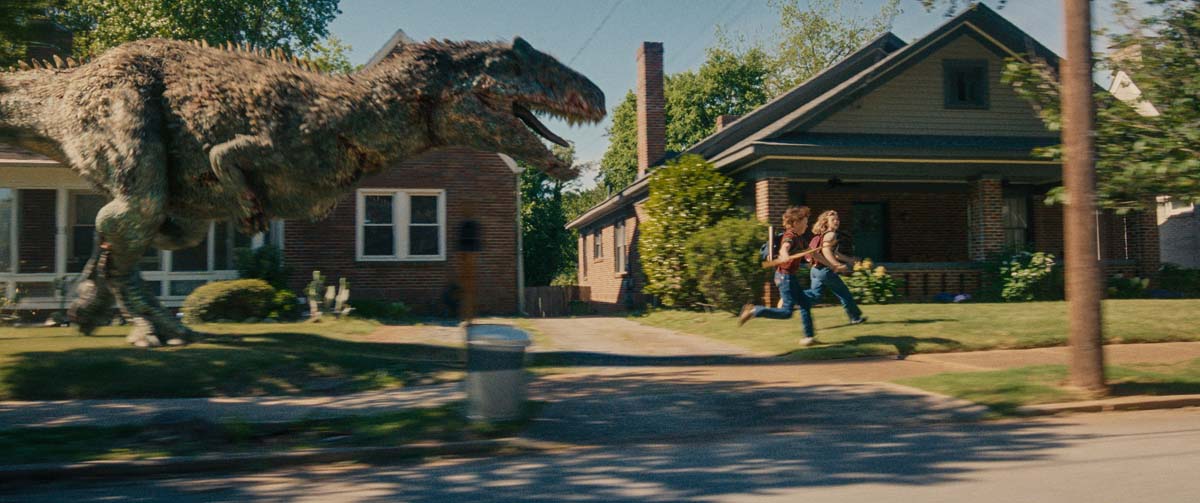
I did not rewatch Jurassic Park. Idid not watch Poltergeist or Twilight Zone or any other influences that David may have had, because I didn’t want to have that in my memory banks and try to emulate that. I just wanted to take the footage as it came to me, wanted to listen to what the footage is, understand what the footage is, and maximize the footage to its best potential.
Because if a director has a certain idea in mind, but it doesn’t come out that way, that doesn’t mean that it’s bad. This is the hardest thing for directors to adjust to is what they have in their head and what they shoot.
You’re dealing with actors who are maybe doing things a little differently or improv-ing, or you have to change locations and you don’t really get the coverage you want or whatnot. It doesn’t mean that the scene’s not good if it doesn’t come out the way you first thought.
I’ve had some directors say, “Well, I never really intended the scene to be funny,” but it became funny through performances and circumstance.
You want to lean into those moments and not try to fit a square peg in a round hole and say, “Okay, well, the director wanted it to be this, so for that reason, I just didn’t want to watch these movies again and think, “Okay, I need to create that vibe now.” It turned out in the entirety of the film, the film really has an Amblin’ vibe, but I was not aware of that when I was putting it together.
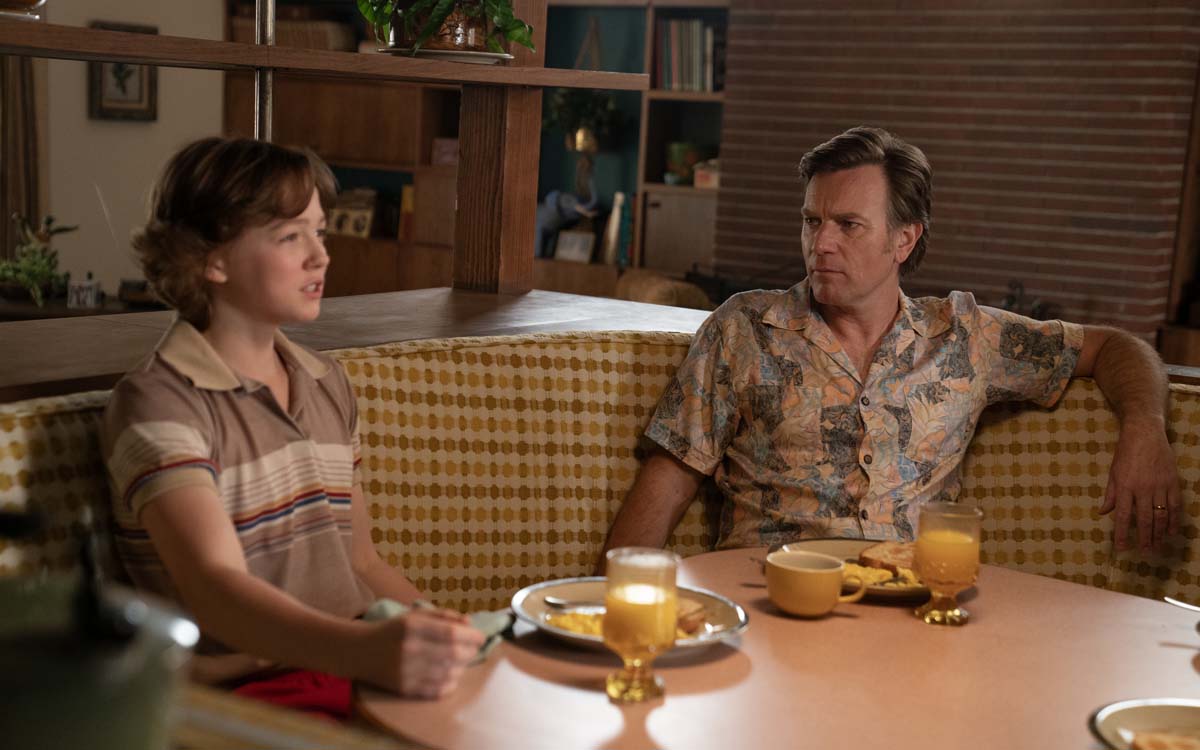
I wanted to ask about your thoughts on choosing coverage for important expositional moments. There’s a moment when the family kind of realizes that they’re trapped in their home and they’re sitting on the floor in the living room. The daughter is describing what Carl Sagan thinks about wormholes. It’s kind of an important expositional point. Can you talk about when you’re watching a scene like that - knowing what you’re going to do at that moment where the audience really needs to grasp something?
Axelrad: That scene is very interesting because it originally didn’t have that. David, doesn’t like expository scenes. He doesn’t like actors explaining things or characters explaining things.
He just wants you to naturally find out, but after several screenings, there was this thirst for people to get clued in to what the family thinks is happening, so we did a minor pick up in that scene, and I was able to integrate it pretty effectively.
That was shot a year later than the rest of the scene. We just cut to Audrey expounding on what she thinks - which definitely goes hand-in-hand with her character - she’s the smart one.
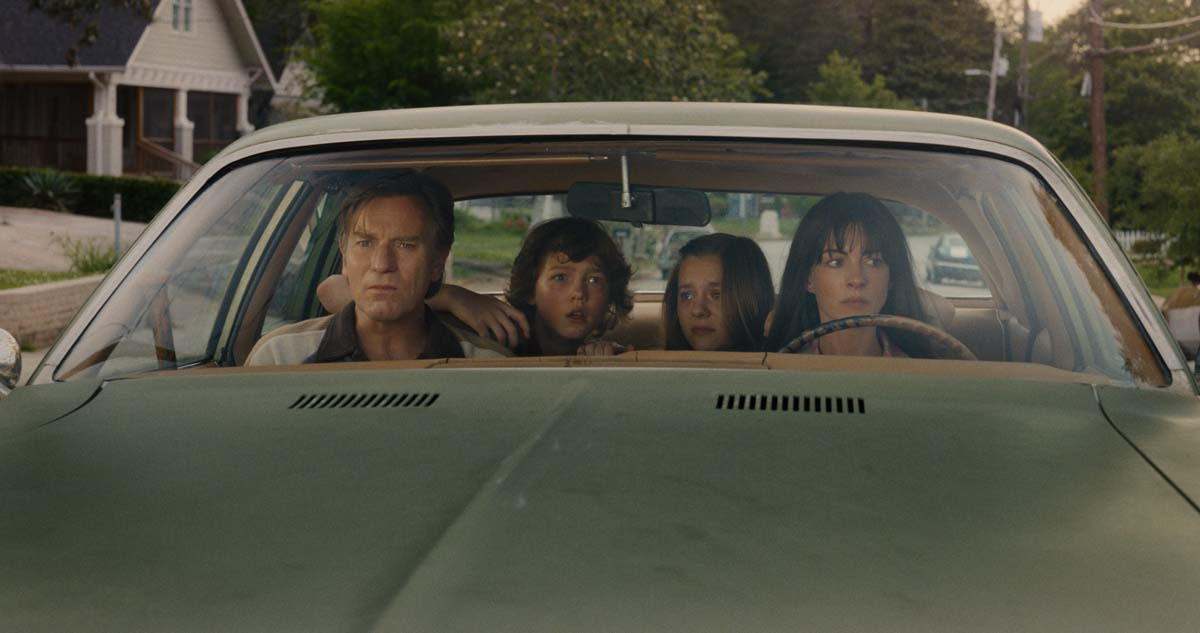
I was always a strong proponent that we really need this and I’m glad it worked out. The challenge, of course, is that Brian is in the scene. We’re also doing the split diopter again. We didn’t do full coverage. We did spot coverage.
Christian/Brian obviously was a year older and we had to resize and re-voice him to fit. That scene heavily involved the diopter shots, and it was a challenge to cut. It took a while, but I finally felt that I landed in a very, very good spot to the point where - when David and I worked on it together - we didn’t really make a whole bunch of changes.
It’s tricky. It can’t really cut from a certain diopter shot to another diopter shot. I do, but certain ones you can’t do because it’s too jarring.
A lot of times I would go to the other coverage I had - just straight-on shots of the actors’ singles, but there were wide singles, and it was just the right balance, plus matching performance.
I might have done a couple of split frames in there, Animattes to sync up head turns, and maybe if I needed to change of performance on one of the sides, I could, and I did.
Bynum: I think there were only two in the final. You ended up just picking the ones you liked.
Axelrad: So it remains, believe it or not, one of my favorite scenes in the movie.
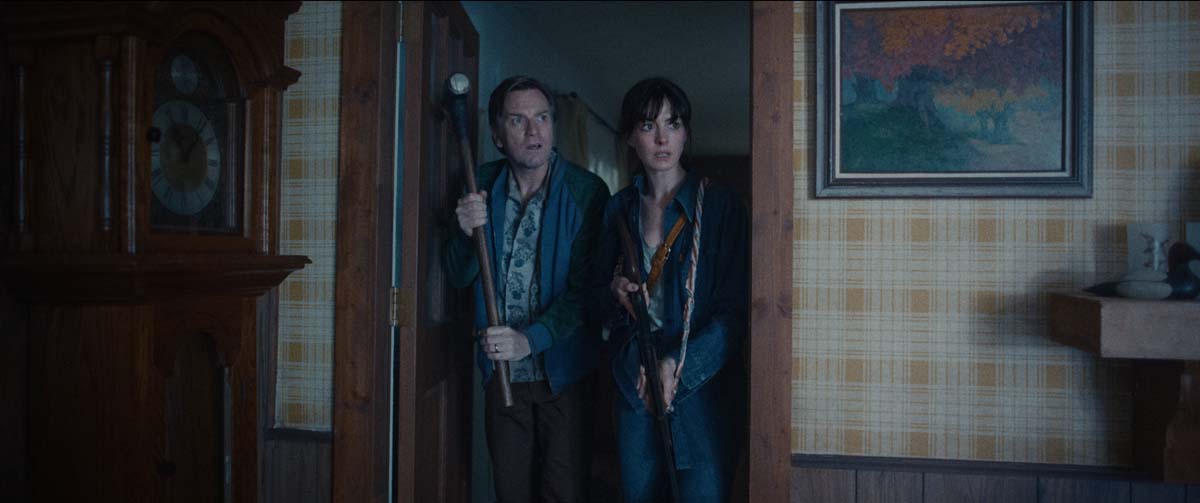
It’s interesting that they have those split diopters and it makes the other actor much more important than if it was somebody that was out of focus in the background.
Axelrad: There’s psychology behind it too, and I love David’s use of it, because the character in the foreground is so big, and you really get a sense of the family’s imprint on one another with the shots and how they’re both connected, but also isolated.
There’s a lot of psychology that goes into it, and that’s one reason why it’s my favorite scene. But it’s also just because it’s the family deciding what to do. And we’re also seeing the schisms in their philosophies of life and developing a strategy of how to survive. To me, it was pure drama gold.
Bynum: I think that one of the coolest things about that scene is - sometime around 2007 that everybody decided the cinema look is extremely shallow depth-of-focus, blurred out backgrounds with bokeh that isolates the person in the foreground.
That wasn’t really the cinema look. That was “Hey, it’s 2009! Let’s,all play with our DSLR cameras with some fancy glass we got off of eBay.” It’s not really the cinema look! If you go back and look at Lawrence of Arabia, edited by John’s mentor, Anne V. Coates, and everything that beautiful, deep telephoto.
The diopter kind of does a similar thing because with those shots - especially with Anne in the foreground on screen left and Maisy in the background on screen right - then the other side of that with Christian in the background and Ewan in the foreground - instead of isolating one dramatic subject or one person, or racking focus - you’re presented with both, and it invites the audience to scan the screen, especially when you’re in a movie theater looking at all of the this color and this huge screen, it engages the audience and it invites them to participate and not say, here’s what we’re being told. I really like that.
I like that somebody who’s less trained in what to look at might happen to have their view drift to screen left and watch Ewan when he’s reacting, and seeing Brian when he says, “I believe dad.”
You can see Ewan’s reaction and how he’s just doing a lot of non-verbal acting in that scene. The diopter really presents it in a beautiful way.
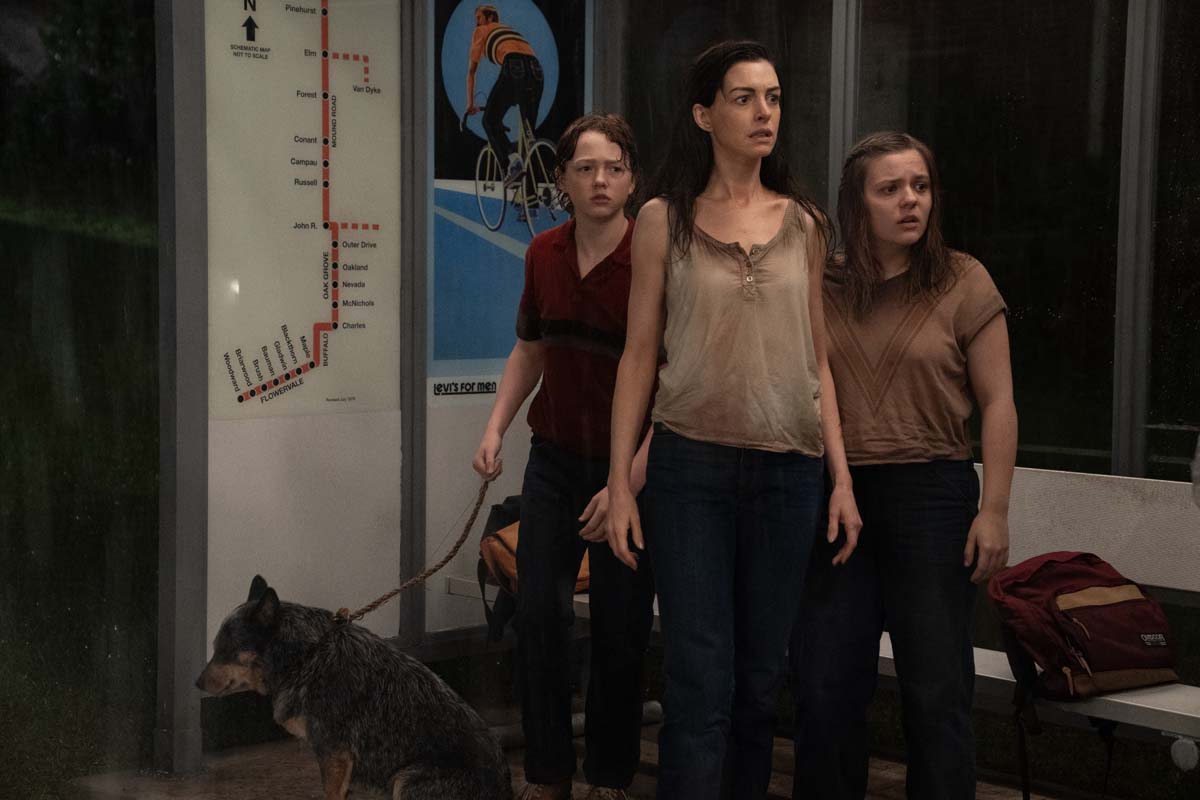
Let’s talk about setting up geography to help with the story. Something unimportant happens in the family’s basement. How do you set that up so the audience understands where Anne is or what she’s doing?
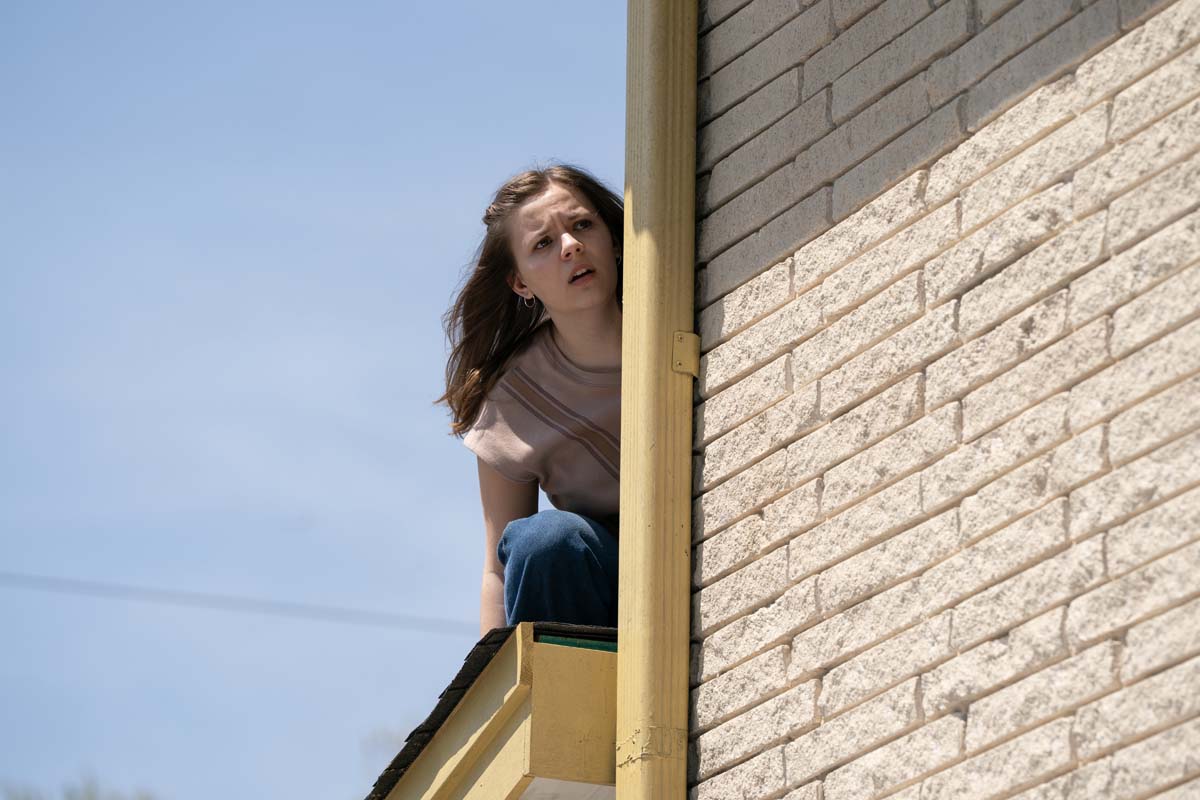
Axelrad: That’s where she’s got her little workshop. Audrey tends to go out on the roof, right outside her window for solace and to read, and Greg sleeps on the couch and the garage is his domain. Denise kind of is working in the basement writing a book.
Later in the film, we find out that the basement is flooded after the neighborhood gets transported. I think just psychologically, it was pretty fascinating because here they are - their whole lives are uprooted – they don’t even know if they’re going to live or be able to get back to normality.
And here in her previous life, before being transported to prehistoric times, all of that work got destroyed.
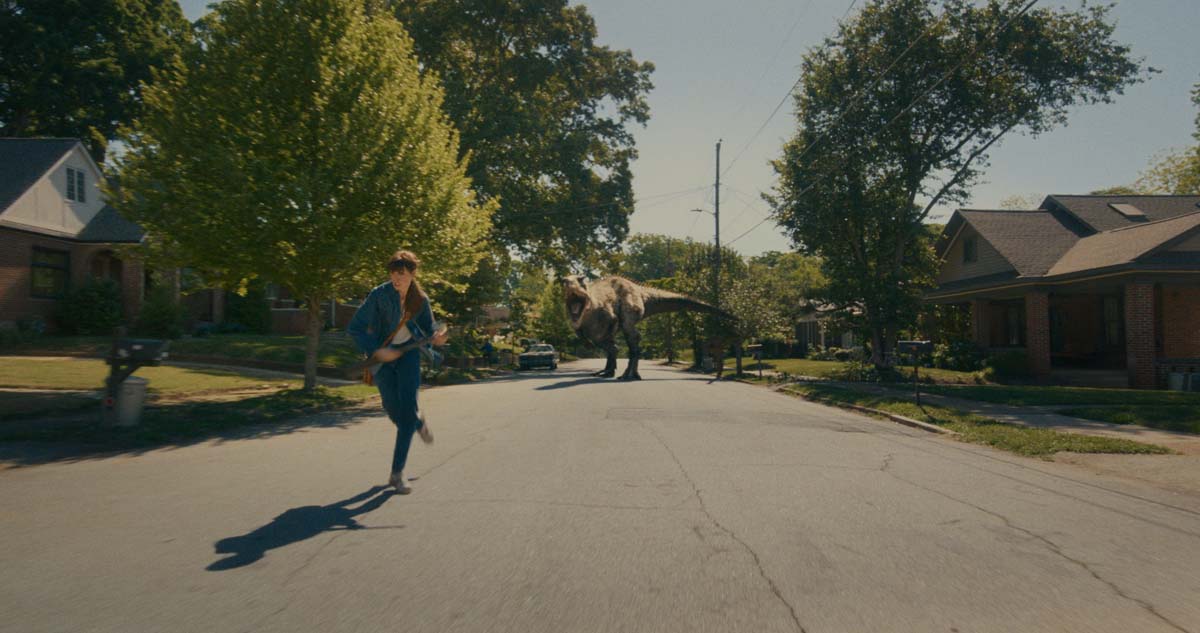
You set that up, though, right? You knew that she was in the basement earlier.
Axelrad: Yeah. We see her typing a couple of times down there. We go down the basement stairs and we establish her down there, then we see her again down there typing right before the portal flash happens.
When the family comes in, after power goes out, they call for her and she comes up from the basement, and she just said she was doing laundry, so we know from that scene we talked about it earlier - the Mrs. Huddleston scene - that she is writing a book.
Bynum: We established all the geography before the geography is important. There’s a throw-away laugh at the end of act two. Well, it’s sort of in the middle of the second half of Act two where it just cuts outside to a house that’s been cut in half.
That’s one of those things where people are laughing at the fact that they didn’t know that half of the house was missing. It’s kind of what you’re talking about, Steve. John would say, “You have to know the geography before the geography comes into play, so that nobody’s thinking, “Wait… I’m lost.”
Unless you’re using disorientation as an instrument - like in that gag scene with the mercurochrome - it would really be fighting against this if people were wondering, “What room is she in?” We would have failed our task.
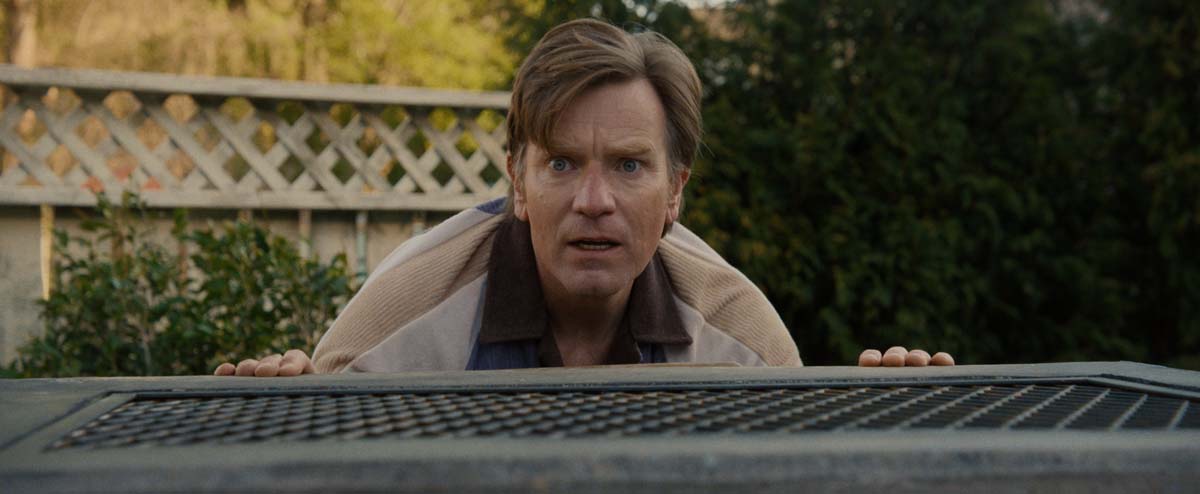
Let’s talk about building tension. There’s tension throughout the entire movie, of course, but, when the dog has disappeared and the dad goes out to see what’s going on in the neighborhood, the audience knows before the dad does that he’s in danger. Talk about building tension. How do you do it as an editor? What tools are you using?
Axelrad: That whole sequence is really pretty fascinating because we’re with each of the characters individually as they are discovering something is not quite right, and we didn’t want the audience getting too far ahead of the characters.
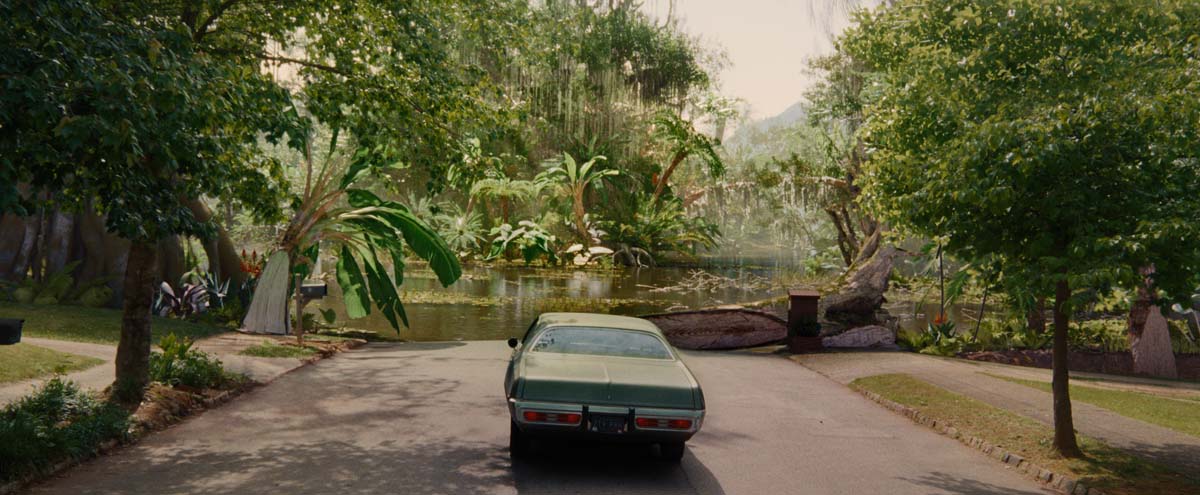
The audience kind of knew something isn’t right here, but we still don’t know what. We haven’t revealed the neighborhood has been transported. We haven’t revealed the aerial of seeing a cut out of suburbia surrounded by prehistoric land.
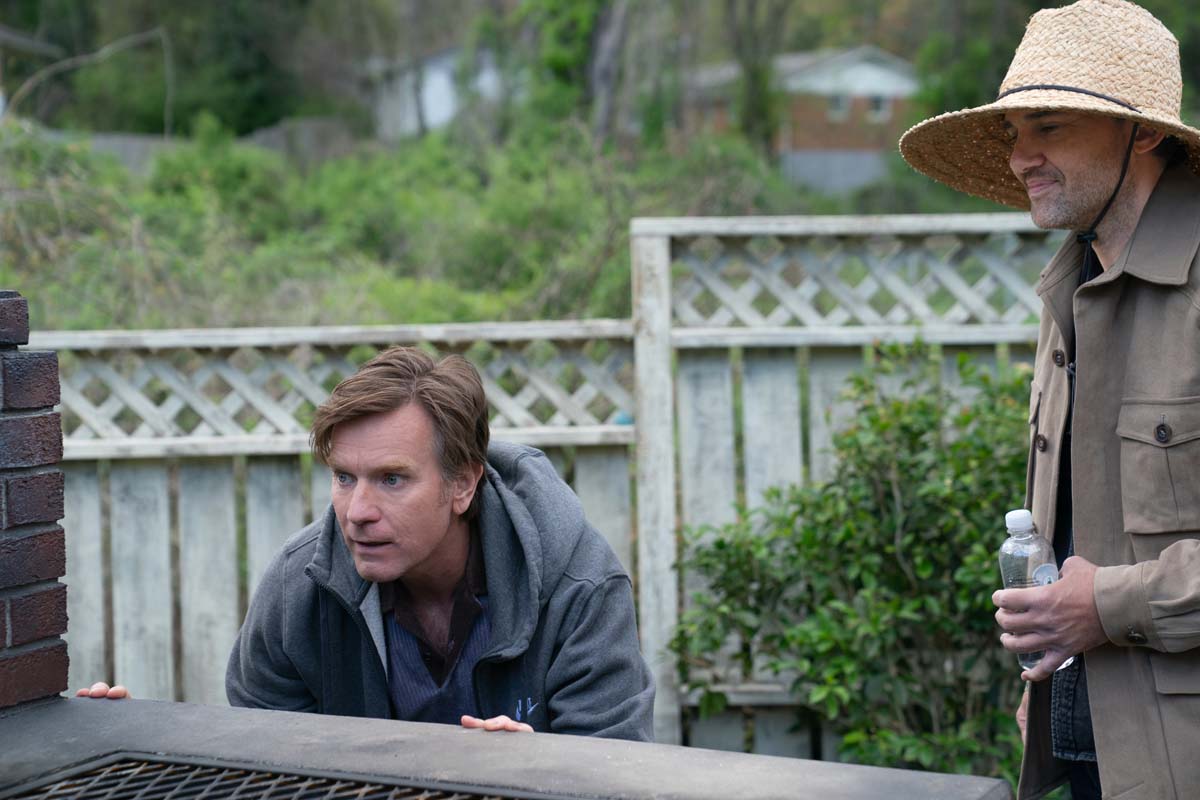
But we do sense that they’re in danger, and we get a sense that they’re a little concerned. They tell the kids to lock the door when they go out. They come upon a geyser. Anne thinks it’s a burst pipe and Ewan says, “That’s not a burst pipe.”
Then when they decide to split up. Anne goes to check on Mrs. Huddleston, and Greg continues to look for the dog. Meanwhile, Audrey is at home on her roof outside her bedroom window, reading, and she sees the neighbor across the street leave for work.
She hears some strange noises and goes into Mrs. Huddleston’s house and finds with bloody footprints leading out. Then Greg stumbles upon something eating out of the garbage cans past someone’s house.
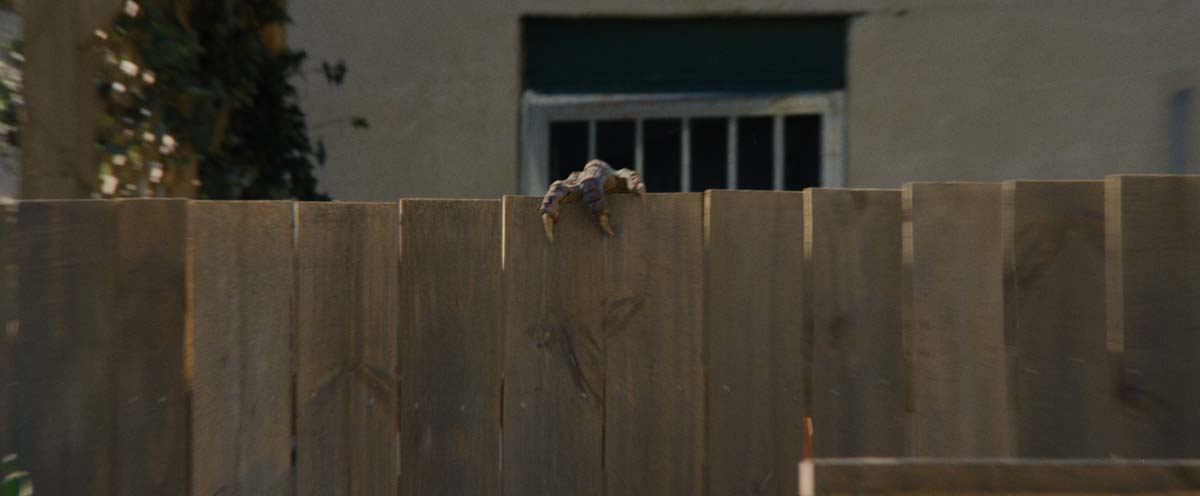
The great thing about this is all these scenes were malleable, so I was able to move things around. It read great in the script, but when you’re watching the whole sequence come together we don’t want to spend too much time with a certain character.
I think at one point in the script, we spent too much time with, Denise, as she’s going into Miss Huddleston’s house, so we decided to break that up a bit.
I tried a bunch of things and showed David, a reorder, and he seemed to really like it. We cut up Maisie on the roof. She hears a noise, I cut away, then Greg is walking. He hears a noise.
That way I was able to pace things better, heighten the tension and not let the audience get weary or bored as we’re revealing what’s happening, but to really lean in to discover these things as the characters are discovering them.
Bynum: That sequence in particular, as written, was very prescriptive. It was very sequential. This idea of cross-cutting helped because, instead of “beginning, middle and climax” with Brian then with Maisie “beginning middle and end” then with Ewan at the trashcans “beginning, middle and end” then climax finding Mrs. Huddleston on the floor in the kitchen.
As written, it was kind of like rising action climax, rising action climax, rising action climax. We thought, “Hey, what if we just make it all one big intercut rising action and one big climax so that you track all of them at the same time and they’re all getting closer to the truth. They’re getting closer to this explosion of revelation.”
It all culminates in that shadow shot with Ewan with the Huddleston reveal when she’s on the floor in the kitchen. The cross-cutting thing was really cool because it’s still exactly as scripted. It’s just what information is revealed in what order and how it’s woven together for rhythm. It found a cool balance there.
Did you discover that certain beats really needed to hit earlier or later in the overall structure? Like, “It’s taking us too long to get to the first dinosaur reveal or it’s too tight between these two places. We need to expand that.”
Axelrad: Yeah. And as I’m editing the project - especially during dailies, where we’re cutting out of order - we’re just trying to make each scene as strong as it can be. Then we assemble it together.
I always wish I had more time in the end to fine tune, but when I sit back and my crew and I watch the editor’s assembly before we show it to the director, it’s frustrating because all the scenes - as Taylor mentioned earlier - have a beginning, middle and end, so your pacing is kind of like a wave.
It keeps going up and down, whereas you want to modulate that wave if you want to keep the momentum going - especially in the first act - to keep people engaged, to get us to the point where some strange things are happening, to lean into the mystery, then when shit starts going off the rails, you are in for a wild ride.
Ultimately, we just kept whittling away and cutting down and shaping. The film wasn’t terribly long, but I felt that the pacing was a little topsy turvy and where we finally got it took a lot of effort. David’s a writer/director, and things were kind of precious to him.
A lot of that we were able to save and keep and preserve in the movie, but the slower moments had to be surrounded by moments that weren’t also slower, so we can have Audrey in the car listening to the Steve Winwood tape as she reflects that she may never learn to drive or get her driver’s license.
She may never find love. This is a young lady mourning that her life will never be fulfilled, so we really wanted to protect that very emotional, important scene. It was critical that - in order for us to earn that - that things had to be moving around it, so it just wasn’t a big lull in the middle of the movie.
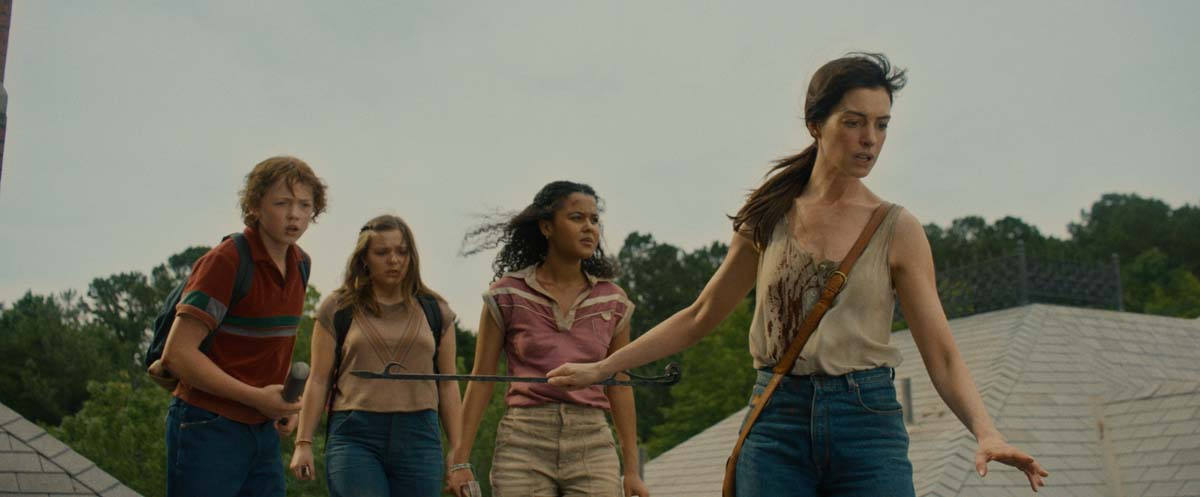
There was another scene that I pitched David on moving because I felt it was critical that once the family is up on the roof and the whole neighborhood is burning and they see the portal in the distance, I wanted them - once they see that flashing light of the portal - I just wanted them to go. That was the logical thing to do.
“Maybe that’s the way home.” “Okay, gather our things, let’s go.” And then boom, the next shot should be them leaving the house.
The way it was scripted was that whole Titanoboa - this giant boa snake scene - which is the showpiece of the movie, everyone loves that scene, but that came after they were up on the roof and they saw the portal. It just felt like a diversion as they’re packing up.
I wanted that momentum to continue, because who knows if this portal is still going to be there? So I really worked with David to find a way to get that scene to come earlier, so that we could go right from them seeing the portal to them taking action and going. So we did.
We were able to successfully move it earlier after they get back into the house for the first time. It took a little reworking of things, but we found a really good spot for it and it feels pretty seamless.
I love that idea! I had no idea, of course, that that would have been moved. An idea I’ve heard from many editors is that it’s very important to keep two ideas in the audience’s mind connected. So: “I see a goal, let’s go to the goal.” So you saw that the Titanoboa scene was a super exciting scene, but that it was breaking up “the goal” from “getting to the goal.”
Axelrad: Exactly. It read fine, but seeing the film as it was cut together with the scene in that place, you just wanted to shake them and say, “Get moving!”
Taylor, talk to me about seeing some of these lessons first hand. What are those lessons that you’re learning? Or, things that you’re seeing as you’re working on the film?
Bynum: Your podcast and Craig Mason’s are the only two that I actually listen to. I’m a fan of the podcast. As far as what the team is learning, we call it the School of Axelrod.
The very first day that I ever worked for John was on an Adam Sandler film. We were doing a recut on a Netflix film called Space Man.
I had been doing a lot of second assistant stuff for years and years and years. I was interviewing for two jobs at the time, and John just found me on the union database or something…
Axelrad: …union availability list, which is underutilized. I also found Elyse on there.
Bynum: He called me on a Saturday. I hadn’t inked a deal on this other project, but I had already started the motions of going for a different job. After speaking to John, one of the very first things he said when he called me out of the blue was, “What do you want to do?” Then “Why do you want to do this?” Nobody’s ever asked me that. It’s really cool to have somebody say, “Why are you trying to get this?”
It’s almost like what you were just talking about: the trajectory of the audience. The School of Axelrod has this thing where he asks, “Okay, where are you trying to get? Because we’re going to do exactly what needs to be done for the task at hand, but we’re also going to have this second idea in the audience’s mind of where are we going to also be going? Because you can you can arrive at two places at once.”
There are very pointed lessons that he’ll draw out. The other thing is that John won’t pull punches. If I cut a short version of a scene, he’ll tell me, “This doesn’t have energy. I’m not interested in this.” It’s easy to worry about offending people.
The whole politics of the cutting room. John’s cutting rooms aren’t like that. It’s just fiercely collaborative. It’s, “We’re all here to make the best movie we can.” Critical feedback is really cool.
I think the best thing that I’ve learned as a young editor is, there are so many different ways that the exact same scene can be cut beautifully and brilliantly.
Just because this one version of the scene -that is beautiful in and of itself - doesn’t mean it’s the right version of that scene for the entire film. That’s one of the things that John always talks about: sequencing. He wants to get into reels as soon as possible.
Christopher Nolan’s stuff is so wild with sequencing. The stuff that [editor] Jen Lame just did on The Odyssey is amazing. The way that it sequences just dovetails from one to the next. You never get that lull.
Did you have to drop anything from the story? Was that difficult because the director is the writer. I’ve edited films for a writer/director, and sometimes it can be difficult because they get a little precious with the script.
Axelrad: It is always challenging when they’ve written it. We agreed to trim the beginning of a scene or to trim the end of the scene just to keep the pacing going. David was very good about that later in the process: “Let’s cut this. Cut this.” So there are a lot of trims. There were a few lifts of scenes that were extraneous. I won’t go into too much detail, but things that seemed good in the script stage, but ultimately were slowing things down.
Sadly, there were other characters in the film - and this happens a lot - where you’ve got side stories and subplots in the film and stuff like that. We did have to cut out this other adult couple that were friends with the family.
There are several scenes. It was hard because there were really good scenes. I really liked them, but it’s just that side story was not playing well in terms of keeping the overall momentum and pacing and focus. It just wasn’t as focused with those scenes in there.
The story that ultimately you’re seeing on screen was tailored in a way where those other scenes just weren’t necessary or appropriate.
I want to ask Taylor about “the care and feeding of assistants.” Why is that important for our industry? What can editors do to join the School of Axelrod?
Axelrad: I should trademark that, right?
Yeah. Now’s the time. Grab the URL.
Bynum: There are so many different paths that people can take in post. Maybe a very good thing for the freshmen of the School of Axelrod would be to decide what it is exactly that you want to be your discipline? What do you want to be? Your focus? And if you don’t know, that’s absolutely fine.
It’s just interrogating yourself with that, because there are VFX editors that I know that all they wanted to do ever was edit VFX, and then there are VFX editors that just want to be in “the big chair.” They want to be the editor.
There are assistant editors, who are career first assistants. Interrogating yourself to know “What do I want to do?” Just to circle back to the very first day that I ever worked for John, I had been doing all of the second assistant stuff, and I showed up and he said, “I’d love to see what you could bring to this.”
He let me sit down and start working on a scene. It was a scene with Carey Mulligan and Isabella Rossellini. On my very first day on the job, John sits me at the Avid and says, “All right, kid, give it a shot.” It was unreal.
Axelrad: And what I didn’t tell you is that it was the hardest scene in the movie, and I didn’t know what to do with it.
What do you think the danger is of remote editing - where the assistant and the editor are not in the same room?
Axelrad: We got into that situation on this movie. It was a little bit uncomfortable because I love being with my crew. I find it very important to be with them for collaboration, to bring them in, to powwow, to have our little lunches together, to talk shop.
As I mentioned, I had a commute to Bad Robot. J.J. Abrams was producing. David Robert Mitchell lived in Silverlake at the time - hence his last film Under the Silverlake. I live in Glendale, so we’re both East Siders and he really wanted to be at Warner Brothers and I could not complain.
That was a much better commute and really good resources, but the contract was such that J.J. was supposed to have the rooms at Bad Robot, but they agreed to let David and me be at Warner Brothers for director’s Cut, but the rest of my crew was off in Santa Monica.
We used Lucid Link, SalonSync, Mimic to basically share an Avid Media Composer project in the cloud -which for me was amazing because we had very robust internet. Taylor can tell his side of the story because they were at Bad Robot and dealing with firewalls and slower internet.
The only hiccup I had was that media transfers through SalonSync took a while only because of the internet speeds in Santa Monica. At Bad Robot, when I got new VFX, I should have been able to receive them within 20 minutes after they’re loaded, but sometimes it just took hours and hours.
Taylor, what is the difference between when you’re able to sit in the room and when you are removed from the director and the editor?
Bynum: I think it’s night and day, honestly: being in the room with him. It sounds “woo woo” but it’s being able to feel the energy of the room and reading the room. I think it’s really critical for these things because it’s a collaborative medium and being able to actually collaborate with people that are in the same space with you, I think yields a lot better results.
And for a guy that’s trying to move up in his career it’s also a little bit of that face-time with the director.
Axelrad: Right. Which is very important. By not being together, I really felt my crew wasn’t getting time with David. The more David got comfortable with me, the less likely he was to mingle with the crew when we did finally reunite - everyone did move over to Warner Brothers at some point.
Bynum: David was very collaborative. I’ve worked with some directors that just let the editors edit. He has a background cutting trailers, so he knows the tools of the trade and the vocabulary and he knows what he wants.
Sometimes they would mess with me. Like with the Mrs. Huddleston scene. They did a cut that was intentionally awkward. Anne was in the middle of this beautifully eloquent monologue about the pain of suburban ennui: “I wrote this novel because my soul was…” And in the middle of it, they just cut outside and you can’t hear what she’s saying! But her mouth keeps moving.
John and David kept the straight looks on their face - just poker players. They looked at me and they ask, “What did you think?” I was like, “You guys are messing with me, right?” Then they burst into laughter. I thought, “Thank God!” You can’t do that over Zoom. You can’t do that with Clearview.
Axelrad: No. You can’t. I’m a big prankster. I love pranking. You miss that if you’re not in person.
Taylor, I’ve seen some great code books in John’s cutting room. What is the value of that, really? I know you’ve got to keep things organized, but is there a creative purpose? And is there a purpose outside of just building this book that no one in the audience ever sees?
Bynum: The answer is a two pronged thing. I don’t find that the book is exceedingly useful creatively, but it is exceedingly useful to eliminate busy “robot work” that - if you can do it intelligently and you can automate tools and tasks that would otherwise occupy huge amounts of your focus and concentration - then you have more time to create. It gives you time to focus on the things that you want to do.
Jared Simon [one of Axelrad’s previous firsts], who I love, is the master of FileMaker Pro. His code books are amazing. He was working for John before I came to work with him, just seeing how calibrated and tuned in his code book is… Brian Eno had this approach to music composition that was essentially kind of like rolling dice.
Jared has programed a little widget inside of his code book that will give different ideas for new approaches to a scene based on the Brian Eno method! So that is a creative example of something that a code book can do.
Give me some examples of how it frees you up, how it gives you time and opens you up to be able to do creative things.
Bynum: ADR lists, continuity, score tracking, keeping the dailies log, keeping all the sound reports, generating thumbnails for all of your different scenes. All of that stuff can be automated, and it can be automated so that when your cut changes and you need to update the continuity, you don’t have to give some poor PA or second assistant a horrible hell of a day where they go and update the time code in Excel.
You can output XML, output new markers from Avid and import them into the code book and it will update all of the stuff for you. Then you can go edit.
I don’t like FileMaker Pro as much as Jared does, but the workflow that John and I have talked about wanting to do is ShotGrid and Shotgun. They’re like those amazing FileMaker Pro code books with machine guns and skis.
Every single tool in them is JavaScript-enabled and has an embedded link in it that if you click it, it goes to the corresponding line up of the newest version from the vendor. And it’s engineered by engineers, not engineered by editors who are trying to figure out how to be engineers enough to build some goofy custom tool.
So what I’m working toward is AppleScripts and Python scripts right in MacOS that will automate and simplify things. I need to turn a sequence of 350 PDFs into a JPEG in 10 seconds. That can just be done with homebrew in Terminal.
What I want to do is use ShotGrid with some sort of custom, workflows, Automator stuff, AppleScript and Python scripts to treat each shot as having basically its own essence. It lends itself well to these larger productions that have 1500 to 2000 to 3000 VFX shots.
With Oak Street, our initial shot count was something like 900, but we ended up closer to 1100. It’s almost like the old school animation approach to filmmaking. The sooner that you can see visually: “These are the picture beats” the better your creative decisions down the road can be.
To answer the question about how does it inform the creative process? I would just say it frees you up. It allows for you to have brain space and bandwidth. It makes everything easier. The danger of it, - and I should say this is a huge caveat - you can invest a lot of your time in learning some program, and then that program goes the way the 8-track, and all of a sudden you’ve invested a big, big part of your valuable nascent career learning how to code in a dead coding language. I think it’s important to look at who has won the battles.
What tools are really taking over? You see Autodesk really having PIX and ShotGrid and all of these things. Look at what there is and what there has been and think about what is going to be.
Trying to invest the energy you have in learning those difficult, proprietary code type things in things that you think are going to be perennial things that are going to last - things that are going to be here in ten years.
John, you once mentioned to me the value of a code book in the production is that it shows how well your edit room runs and it gives confidence to the people at the studio that “these guys have it covered.”
Axelrad: I really value a well-run cutting room. I take a lot of pride in that. Taylor was telling me about all these new things he’s learning. I don’t care if it’s FileMakerPro or ShotGrid or whatever software he wants to use. For me, it’s peace of mind.
I don’t like when things fall through the cracks. Taylor, can attest to the fact that I’m really meticulous when it comes to using markers. I mark visual effects.
On this film we had a VFX editor so I didn’t have to prep VFX, but VFX, DI shots, things to be done in DI, especially ADR… I’m really big on ADR. If the director says, “Maybe we should loop this line” I mark it right away. I don’t want anything to fall through the cracks.
Even color notes and stuff like that for final color timing. As long as these things are conveyed and organized and categorized … Also for the producers or the studio, if they ask for a music cue sheet, for example.
When I worked with Jared, he designed music cue sheets in his FileMakerPro database and boom, we’re able to do it, which is very time consuming.
ADR lists, change lists, continuities… Studios will have their own way of doing certain formatting. Warner Brothers have their own proprietary system for continuity…
Bynum: Which was developed by Dane Maddock.
Axelrad: That’s right, Dane Maddock. He became a co-first assistant. After the hiatus, we lost some crew members to other jobs, then we hired Dane, who is a rock star.
Bynum: But he’s also the one who is responsible for the very elaborate and complicated continuity of Warner Brothers. I think he made it for a previous film and they thought, “Oh, this is awesome! We’re going to make them all do this now.” Yeah. Thanks, Dane, for that. (said smiling)
I’m sure we can talk about this for hours. Thank you so much for being on Art of the Cut. It was a pleasure having you both.
Axelrad: My pleasure. Steve. It’s always fun to do these things and just talk shop. I always feel it’s important to have a representative from my team on board as well, because as I say, it’s a collaborative group effort. I would not have success without my team of assistants working with me.
Bynum: Thank you to both of you guys. The fact that we’re having a conversation about editing movies in today’s climate, is pretty special. It’s pretty awesome. I think movies are harder to make now than they they really ever have been… And they’ve never been easy to make, so giving a platform to have conversations about editing is just really awesome.
Steve and John, giving paths and futures to people like me is the stuff dreams are made of. I just don’t want my gratitude to be lost. It’s very much appreciated. Thank you for having me.
 October 5, 2026
The Whisper Man
Chris has been on Art of the Cut before for The Menu, The Many Saints of Newark, A Quiet Place, and Assassin’s Creed. He has ...
Read more September 23, 2026
Sean Combs: The Reckoning
Charles Divak has been on Art of the Cut in the past for Chimp Crazy, for which he was nominated for an Emmy and won ...
Read more August 6, 2026
The Upshaws and Wanda Sykes Legacy
Today on Art of the Cut we speak with Angel Gamboa Bryant, ACE, who is nominated this year for both The Upshaws – for Outstanding ...
Read more
Subscribe to our newsletter
Get all the latest news, blog posts and product updates from Boris FX, delivered directly to your inbox.
Welcome!
Thanks for opting-in to our newsletter. You'll receive an email momentarily with your confirmation.