













The Drama
The Drama’s co-editor, Josh Lee, and first assistant editor, Devon Halliday, discuss co-editing with the director, editing the movie linearly – from start to finish, and editing in Adobe Premiere using Productions.


Today on Art of the Cut, we speak with Joshua Raymond Lee, the co-editor of The Drama, and his first assistant editor, Devon Halliday.
Joshua is an Emmy and ACE Eddie nominee for editing the limited TV series, Ripley. He also edited, We Own This City and Monsterland, among others.
Devon worked with Josh on Ripley and We Built this City. She also was an assistant editor on the TV series, And Just Like That and Blue Bloods.
There are spoilers in this interview. If you haven’t seen the movie, and you intend to, please do that before listening to the rest of this podcast.
Josh, Devon, welcome to Art of the Cut. So nice to have you on the podcast. Could you both introduce yourselves?
Halliday: My name is Devon Halliday. I was the first assistant editor on The Drama.
Lee: I’m Josh Lee. I’m the co-editor of The Drama, along with the director, Kristoffer Borgl.
I’ve co-edited a couple of films with the director, and it’s an interesting place to be as an editor, collaboratively, don’t you think? Tell me about how it’s different editing with a director than editing for a director.
Lee: To me, this was, by far, the most efficient and speedy, fruitful collaboration I’ve had with the director thus far. For one thing, Kristoffer is a very strong editor. He has a ton of ideas.
One of his mantras from day one was that we should try to have ten ideas per minute in the edit. So he was always pushing the form. That gave me a lot of confidence to try things too.
The way we worked was we had two computers side-by-side in an office. We began from the top of the movie, assembling. He didn’t want to have an assembly made during production, so I was watching dailies with Devon.
We made a lot of notes. I had a lot of very detailed notes about how I would approach scenes, but that in itself was a very interesting exercise to just be watching footage and talking about it with Kris and not handling it much at all.
There were some cases where you really can’t understand something until you start playing around with it, but for the most part, I tried to just watch dailies and be really objective about how I felt about them.
Then, when we began post, Kris and I sat side-by-side and started assembling things. We would leapfrog over one another. He’d start on one scene, I started on the next, then we’d share our cuts with each other as we worked and give each other notes and feedback.
Then in some cases, he would say, That’s not really working for me, and I can’t figure out why. Let me play with that.” Sometimes I would say, “I see a couple things that feel aren’t working. Let let me play with it.” Basically passing things back and forth like that until we had a complete assembly.
Devon just reminded me that our assembled cut was 1:48 and the final film was about 1:41. We had a really tight cut from the very beginning.
That is a very tight cut. Devon, were you able to be in the room? I know so many people are working remotely.
Halliday: Josh and I worked remotely, so I was doing dailies from home. Josh and I had a daily phone call, talking about the scenes in the dailies and catching up with what kind of footage there was, then they sent a unit to New Orleans for the younger, more stuff.
We started working in person at that point in New York City. So that was a great experience, because then when Kris joined us, it was kind of like Josh said: leapfrogging. Then they would throw a scene to me to do some sound effects on and whatnot.
We’d pass them back. It was a very collaborative process, much more than I’m used to, which was a great experience, being able to really feel like not just an assistant editor, but part of the edit as well.
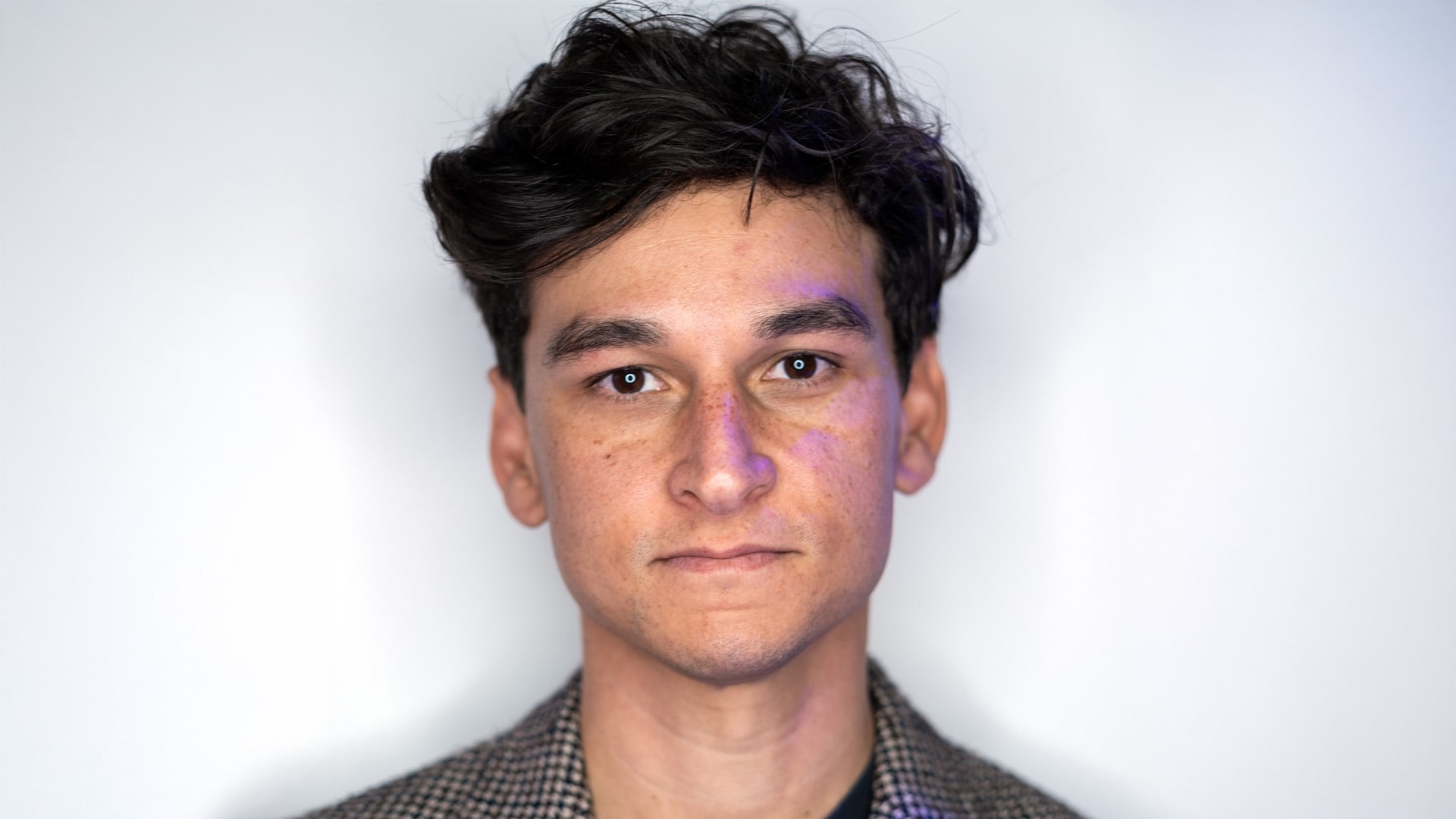
Editor Joshia Lee
Josh, it’s interesting that so many of the co-edited projects that I’ve heard of with directors are on Adobe Premiere.
Lee: I have a feeling that’s because a lot of these directors who would be editors of their own work came up making their own films and Premiere was the most accessible software for them. That seems to be the case with some of the students I work with.
I think nowadays maybe DaVinci might become something that more directors would be commonly using, but Premiere was great for us.
Devon did a lot to set that up because both of us were brand new to working with Productions - the way that that you can collaborate on shared media on servers with Premiere, and that worked really well.
Halliday: We had some help from the Adobe people setting it up. Josh and I had been working together since 2021, and we had primarily worked in Avid. When we joined this, we knew that Kris wanted to use Premiere, so I spent a lot of time prior to dailies, researching Premiere Productions and learning about all the differences and similarities between Avid.
It was great because even when we ran into issues of either not knowing how to do something or wondering how we could do something in Avid in Premiere, we got great contacts there, so we were able to touch base with them pretty frequently, which was nice.
So it was a really great experience. In Avid I’ll find myself getting mad at certain things, but then I go into Premiere and I feel the same. So it’s a constant battle.
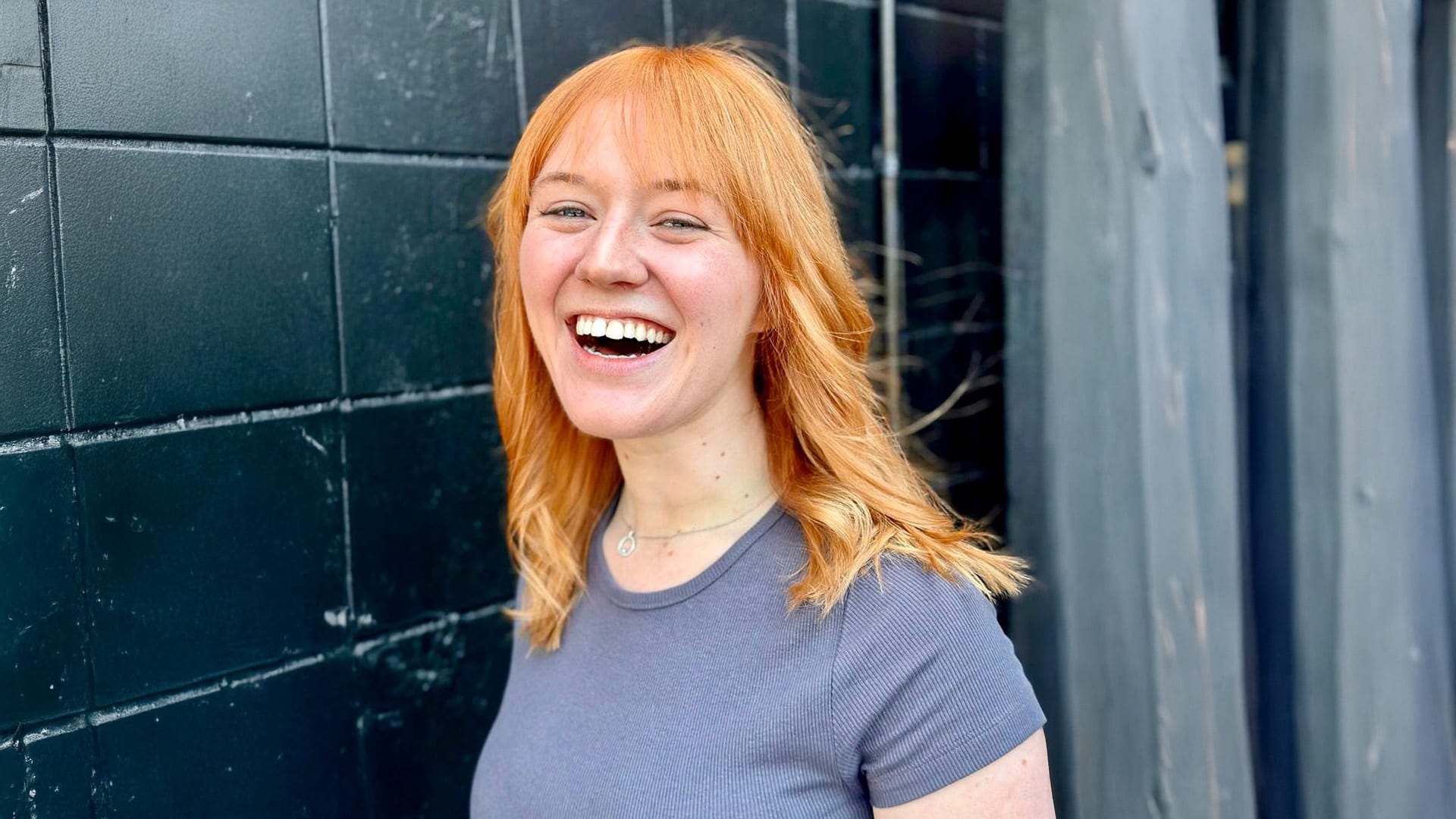
Assistant Editor Devon Halliday
No matter which one you’re on, you’re always wishing that it had the stuff that the other ones have.
Lee: There was a time when we were wrapping up The Drama, and I’d gone on to a new project, and Devin was still finishing things in The Drama and was - on a regular basis – hour-by-hour, switching between the two.
Halliday: It was interesting switching between both in that time period where there was an overlap.
You said you edited linearly - essentially starting from the beginning of the movie. Does that have an advantage for you as an editor then when you’re editing typical dailies where it could be scene 42, scene 9, scene 6?
Lee: You know how it is when you’re putting something together normally and you’re assembling scenes as they come from from production - you might be trying to figure out what a performance is deep in the second act.
It seems like you have it figured out one way, then once you actually have all the pieces around it, you realize things are kind of off and you have to recalibrate performances and timing and everything.
So, it was just another way that it was very efficient to start from the beginning of the story in post and calibrate performances based on context.
I think it helps you conceive of the story a little bit more clearly when you are starting at the beginning with characters, and by the time you get to their climax, you’ve been on that journey with them as you’ve been constructing their performance. I feel like it’s a more organic way to approach making a character.

I wanted to talk about the beginning of the movie. Our two lead characters - Charlie and Emma - meet in a coffee shop. I wanted to talk about sound design and music.
Lee: Well, that whole sequence as scripted was meant to play pretty quickly - not quite montage speed, but it’s a quick introduction to a lot of intimate moments in the course of a relationship between two people that’s lasted for at least a few years.
We wanted them to move as quickly as possible. It reminded me of when I’d worked on some Aaron Sorkin projects: how we would make that dialogue actually begin to overlap almost to the point that you couldn’t understand the language.
It was seeing how much you could compress things and overlap things so that people could still follow them, but have that pace that makes an audience really lean forward and pay attention. “Speed of thought” was a phrase that kept coming to me.
So that was a mantra we had about that opening and really for the whole film, just moving at the speed of thought and moving in and out of memory that’s non-linear and sometimes overlapping.
Things are like a palimpsest. (A palimpsest is a parchment that was used, erased, and used over, but traces of the former use are still there.)
An interesting reference for that opening was this mix tape that Kris shared with us during pre-production. The band Salem did this whole series of really interesting mix tapes in the 20-10s.
They’re not quite atonal, but they’re sort of like overlapping and have a messy feeling that has the quality of a submerged memory. That was a really interesting reference that Kris shared.
The term palimpsest comes to mind because it feels like these buried layers that are overlapping and you see a piece of one, but other parts are hidden.
That was generally the approach for the beginning - just to give you a series of quick glimpses and to move abruptly and jagged bits just to make it as entertaining and fun as possible, so that when we arrived at the credits sequence, you felt like you knew these people and you could live in this moment with them where they are and be poised at the precipice of their wedding day before things go terribly awry.
Get that really romantic feeling as quickly as possible so that you can relish it as they dance together. Then shortly after that, the rug gets pulled.

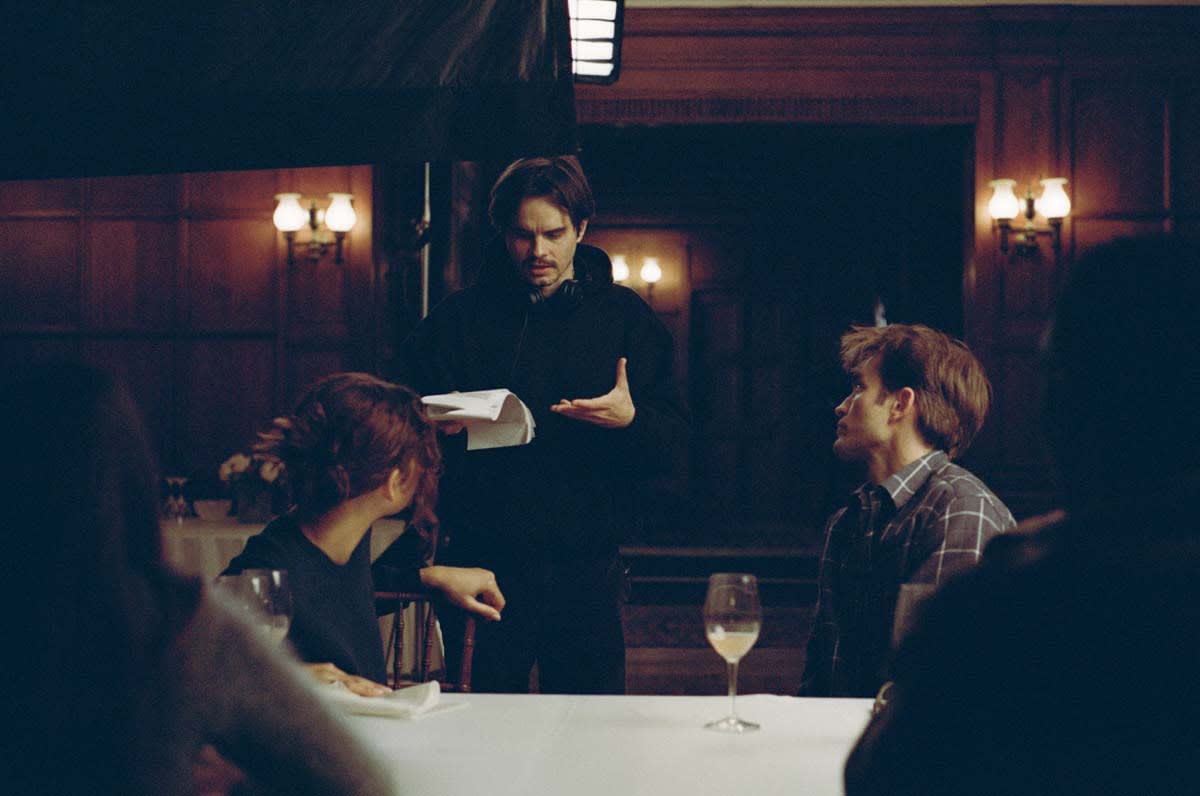
There is a scene where the two couples are sampling food and wine for the wedding, and they’re sitting around a table. Most editors will recognize that any conversation with a bunch of people around a table is a bitch.
Lee: How many days did they shoot that for, Devon?
Halliday: At least two. For most of the shoot, it was mainly one camera, but for that scene we had two cameras. At that point we got behind on dailies because it was shot on film.
They could only process the first half of the day, per day, so I was always half a day behind because I was getting part two the next day.
Lee: They shot a lot of footage for that. We were shooting in Boston and the film was being run down to New York, to our lab, so we had a bit of a delay.
They were working on that scene for a long time with two cameras, and there was a tremendous amount of coverage, like French overs, wide group shots, the locked off facing two shots of the couples from across the table, and then these singles, and there were some zooming singles – a bunch of different stuff.
This was a scene that Kris told me that he was daunted by having to edit by himself. It was one of the main reasons he wanted to bring on somebody to help him with this. This was a scene that he ended up never actually touching.
On almost every other scene both of us had our hands on, and this is a case where he never really touched the scene - only looked at my cuts and gave me feedback, then we would discuss it through many early iterations of the scene.
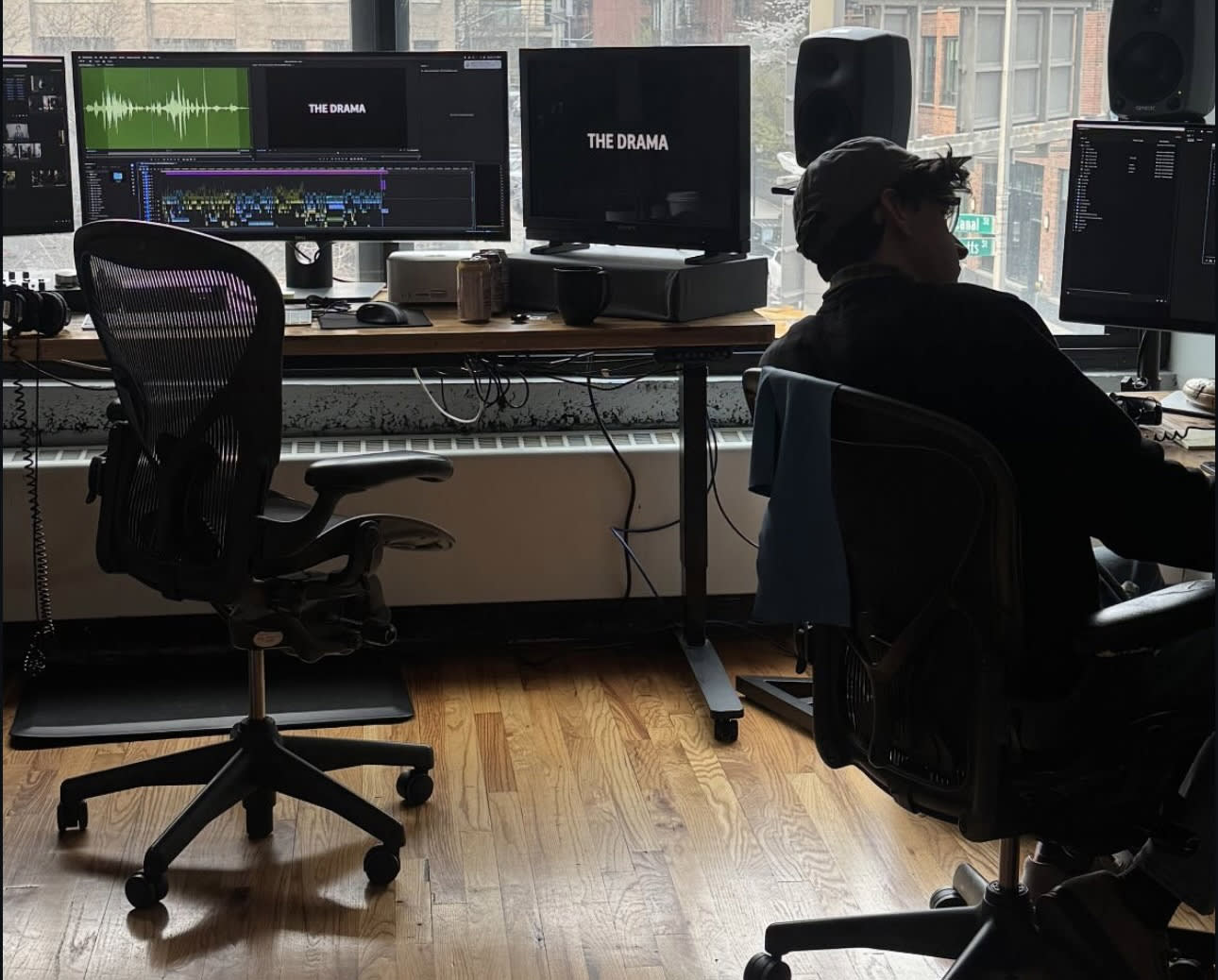
Josh working
We arrived at the theory for the scene - for how to construct it formally - which was that it made most sense to be as intimate as possible, and just those clean singles of the four individual characters for the whole opening of the scene as long as possible, and only to leave that intimacy when we got to the point that that the secrets started being shared.
So we’re really just in those singles. They’re surrounded by darkness in this big empty hall. It’s just this beautiful way to portray each character and give them their whole emotional landscape of their face and we live in that until Mike shares his secret.
Then we go into these two shots from across the table that are very locked off and lets the couples’ dynamics play out a little bit more as they begin to engage with each other - as they’re pushing each other to share each other’s secrets and recoiling from that. So that was a theory we arrived at after trying a whole bunch of different stuff.
I think one of the main references that helped us come to that construction was looking at a few different Michael Haneke films. The Piano Teacher was probably the biggest reference. Kris screened Benny’s Video (1992) - which is one of Haneke’s early films - for the whole crew during pre-production.
But we looked at The Piano Teacher more in post for the way things are so reserved in terms of cutting in that movie. In conversations, oftentimes you’ll just hold on one subject even as the other one as a dialogue is happening.
He’ll hold on one person and you end up kind of visualizing the other person and their reactions, which is really fascinating to do in cinema, to be able to show someone something and have them visualize and play out the other side of the conversation in their mind. So that was how we came around to the structure of that scene.
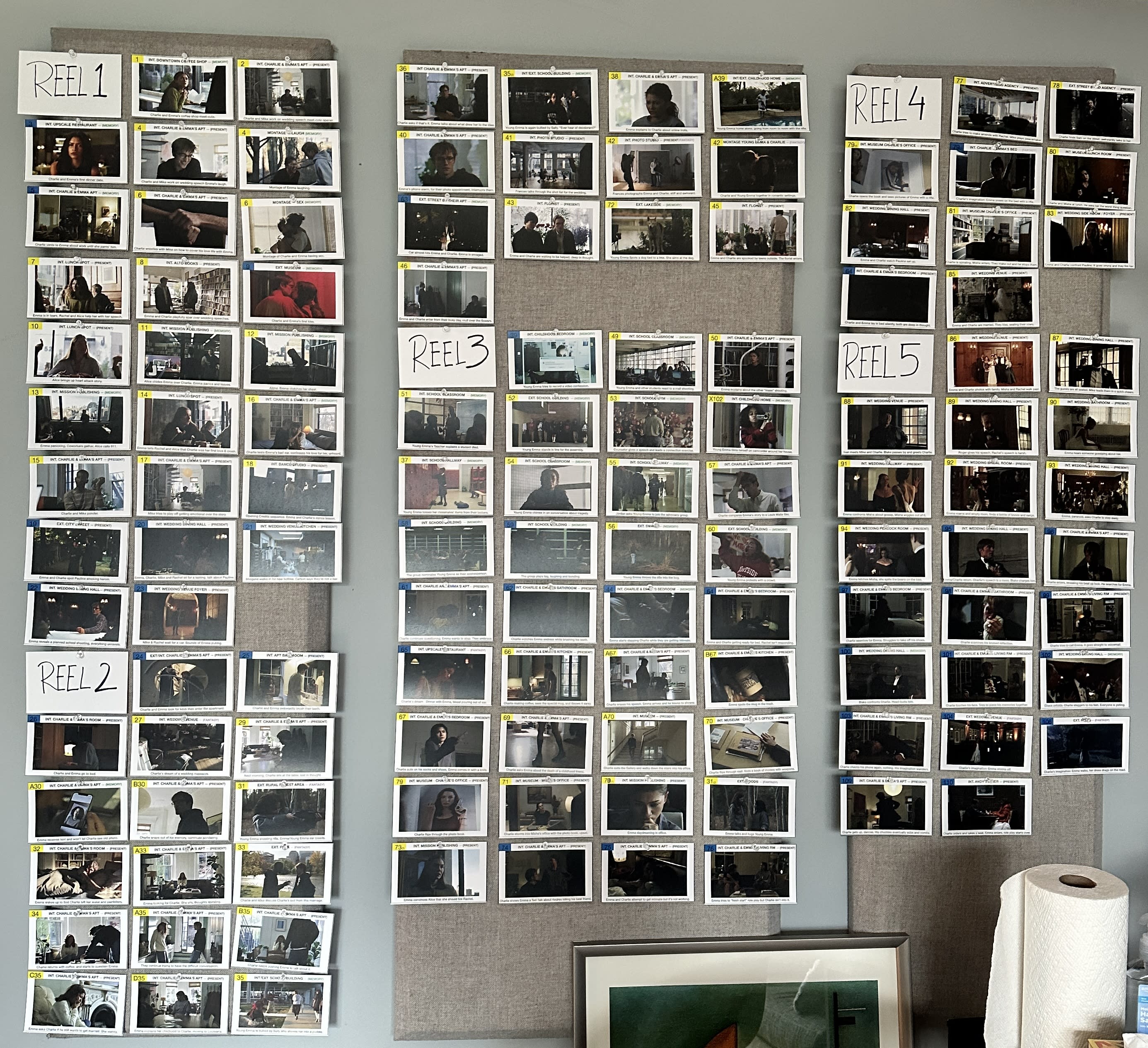
Cards on a wall, for The Drama
Devon, do you remember in that scene how they were using two cameras? Were they using them on both sides of the table? Were they using them on a wide and a close of the same person?
Halliday: They had a wide and a close on the same duo - so either, Mike and Rachel or Charlie and Emma. The interesting thing from that scene for me, from an assistant standpoint, was that we knew when we got that scene, Josh wanted to do the equivalent of ScriptSync in Premiere because there’s so much footage and it was going to be so daunting.
So I learned Premiere’s transcription tool, which was a fun time for me, because the actors are playing drunk and are talking over each other, so the transcription tool often had the characters saying each other’s lines.
So I became intimately familiar with that scene from watching the footage and correcting the dialogue. It became so helpful when Kris joined and they were really working on that scene, because there are so many small jokes in there.
There are a ton of little improvisations. I think it seems natural and it almost plays on screen as if it was a TV-style set up with multiple cameras on different individual actors at the same time.
But in fact, those things are usually looking in one direction, so there’s a lot of dialogue editing there, making those jokes feel really seamless and natural.

Transcription inside Adobe Premiere to help find elements inside a complex scene
Lee: I was going to mention when you were saying that, Devon, that the scene as scripted, I think was about 16 pages.
Halliday: The film reel would run out almost every single time. They basically never got through the scene on one film reel. I feel like you had a lot of options to pick from.
They definitely didn’t drink beforehand, but they were doing such a good job of pretending being drunk that I think they got sucked into it.
They had so many different jokes going on, which was really fun because I thought, “Josh and Kris will have so many things to pick from in terms of these moments.

So that transcription software: Josh, did you use that at the beginning of the process or did you just wait till you were dealing with Kris’s notes to be able to take advantage of all that transcription work?
Lee: The way I approached that scene was during production I watched all takes, all cameras, in a linear fashion as they shot and made myself notes. Usually my notes were timecode and a line that I liked, a reading I liked.
Can I interrupt? How are you making these notes? On pieces of paper? Locators in the timeline?
Lee: I was taking notes in my Apple Notes application. I had one document for each scene. At least for these big scenes where there was so much footage, I had notes with timecode and then dialogue, then once we started editing, I went back through my notes and put them in timecode order or scene order so that I had all these different setups and takes for my favorite lines and they were ordered.
Once I started actually trying to build it, I could use the “ScriptSync” that Devon had built to find those things quickly because scrubbing through a 20 minute take would be really difficult.
I was really interested in the idea that there was a conceit of how to edit it with the singles at the beginning, then coming out to the wide on the revelation of secrets. Correct me if I’m wrong, but at the end - when things are really tense - they go into tight close ups. Correct?
Lee: That’s right. There was one round of special singles that were zoom-ins. The others were locked off. Or at least they weren’t zooming. Then for that final passage of the scene when Rachel starts confronting Emma, those were slow zooms going in.
Kris is kind of a purist about post effects. He didn’t really ever want to do split screens or digital zooms or any kind of post effects. So, with the exception of a few clean up VFX shots… I think we have a total of less than 30 VFX cleanups or something, right?
Halliday: Yeah. And a lot of them are light reflections in glass, like wine glasses and stuff, but that was mostly the extent of that work. If something wasn’t working from a technical standpoint, Kris would just say we can’t use it, which was a nice discipline to have.
Those zooming shots at the end, obviously are really emphasizing emotion. I love the one that goes in so tight on the on Alana’s face that she’s almst the whole frame is just her. It’s really a very strong performance from her.
Can you talk to me about the Bloody Wedding nightmare? It seemed like time was fracturing and obviously it’s a nightmare.
Lee: It’s not real. It’s meant to play in this sort of fractured way, like shards of imagery from a dream that you can only remember those little pieces of when you wake up. It starts with these slow dolly shots of the empty venue, and you just get a little sense that there’s something off.
You see a couple people run through the frame, then there’s a long tilt down from the ceiling that reveals the massacre.
I think two people run through the room, then as the second person is running through the room, it quickly cuts to 4 or 5 shots of close-ups of people on the ground.
Then there’s almost a subliminal cut of Emma in her veil, which is actually a shot from the hair and makeup test.
Really?!?
Lee: Yeah. Yeah, yeah. Then a shot - a happy accident - of a car driving by out the window of their apartment. That created a reflection on that painting of the sad blob on the wall.
Cut from the close up of that to the wide shot of that, where a similar light effect was happening, just to make it all feel smooth and blend together.
So tell me about this hair and makeup shot: choosing to put something like that in the movie.
Halliday: There’s a couple shots from the hair and makeup tests in there.
Lee: What are the other ones?
Halliday: There might be one other flash of Emma somewhere.
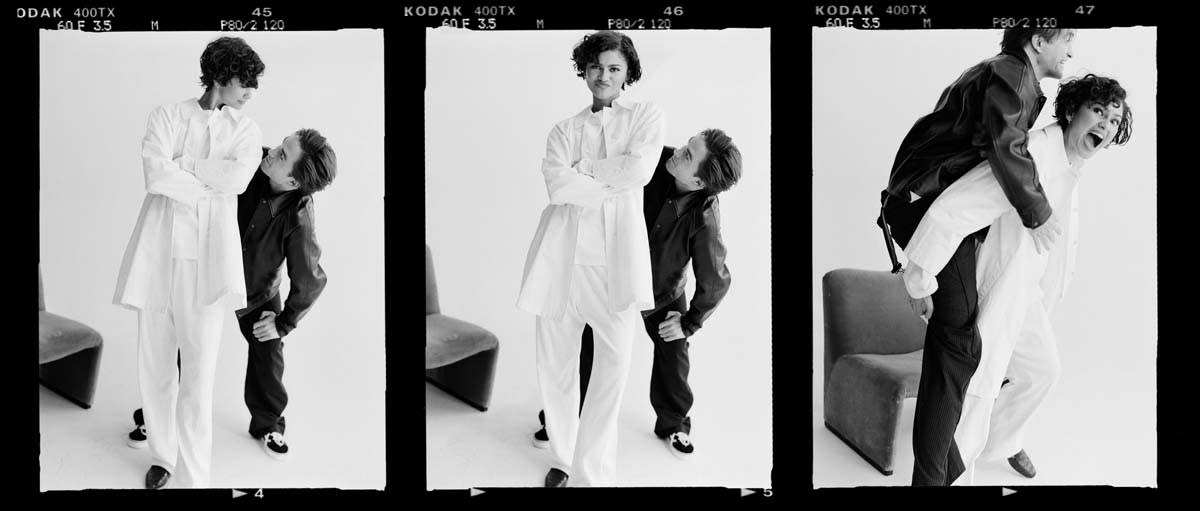
Lee: Yeah. Kris wanted to approach that hair and makeup test artfully, as he does everything. They were trying out a lot of production design elements. They’re trying out costumes.
They’re trying out makeup effects and lighting scenarios. He staged the whole thing with the actors in character, which is pretty common when you’re doing hair and makeup tests.
He did one at the table that was panning across them, drinking wine. It almost had the feeling of a real scene. We cut together a little montage of that while we were starting up with pre-production just to show A24 and get people excited about it. It had music from Battle of Algiers of all things.
That just happened to be the only time we had a super tight close up of Emma wearing a veil in a wedding dress, so that was just a glimpse into the future and also sort of a bare image of Emma’s character, kind of naked: that shot of her face in tight close up as a bride. So, it’s the right, evocative kind of note to end that montage with.

There’s a scene in their apartment immediately after the wedding tasting. Charlie comes back with the coffee and they’re debriefing: “Why did you tell them all this stuff?” Most of it is shot locked off - or at least on sticks. Then some of it is shot handheld. Devon, do you have anything to say about prepping that or what you had to do for that scene?
Halliday: The only time we used the handheld is when it’s in Charlie’s imagination. The handheld is what Charlie wants to have been happening. He wanted to be able to come home and just think, “That was crazy, right?” They joke. But then Josh and Kris did this really great thing with cutting back to reality where Emma is stone cold. Everything you thought happened, happened.
To me, using that handheld footage gave it a home-movie sense of feeling comforting versus the locked-off footage. “Oh no, this is what happened. You have to deal with it right now” because they don’t use handheld. When Emma’s sitting on the couch and thinking of what Charlie’s up to, it’s also a handheld shot of Mike saying, “I’ll call the police. I’ll beat her up!” That’s also not real.
Lee: And Young Emma and Charlie walking in the park and feeding squirrels: that’s handheld.
It’s interesting to me that I did not recognize that conceit as a regular movie-goer. But that doesn’t mean that you don’t do it, right? There’s this idea that you execute creatively and if the audience gets it or understands it or takes it in, that’s fine. And if they don’t, it’s fine. Talk to me about editing that scene and using those handheld shots.
Lee: The idea was always just for it to be a split-second wish fulfillment. Like, “What if you could just undo life for a second?” What if this is meaningless?
Something that seems to have such weight a few hours ago - as sometimes happens in life - what if there’s a way to just quickly move past it and not give it any weight?
I think they’re both trying to do that, and I think at first it’s Charlie’s imagination and then I think it’s meant to read as Emma’s imagination afterwards. I forget if there’s a reference to Joachim Trier (director of Sentimental Value).
I’m forgetting if there was something that Kris mentioned getting inspiration for that from, but that was just something he always wanted to do. I’m not sure if it was even scripted or if it just if they just picked it up on the day.

Halliday: There’s just one take where they were joking around and they did the handheld stuff, and they’re rolling on the couch. And I think in the actual dialogue, Emma is saying, “Can you believe if I actually did that?” or something like that, but they only did one take of it. I don’t think it was in the script, or maybe it was. I can’t remember.
Lee: Kris is often open to that kind of improvisation. I think he’s kind of a comedian first and foremost, although a more sophisticated one.
He talks about being inspired a lot by locations and the lighting – like the window as those fall colors are glistening outside. It’s all very evocative and a little sad. I think that just felt like a silent reverie there - poignant.
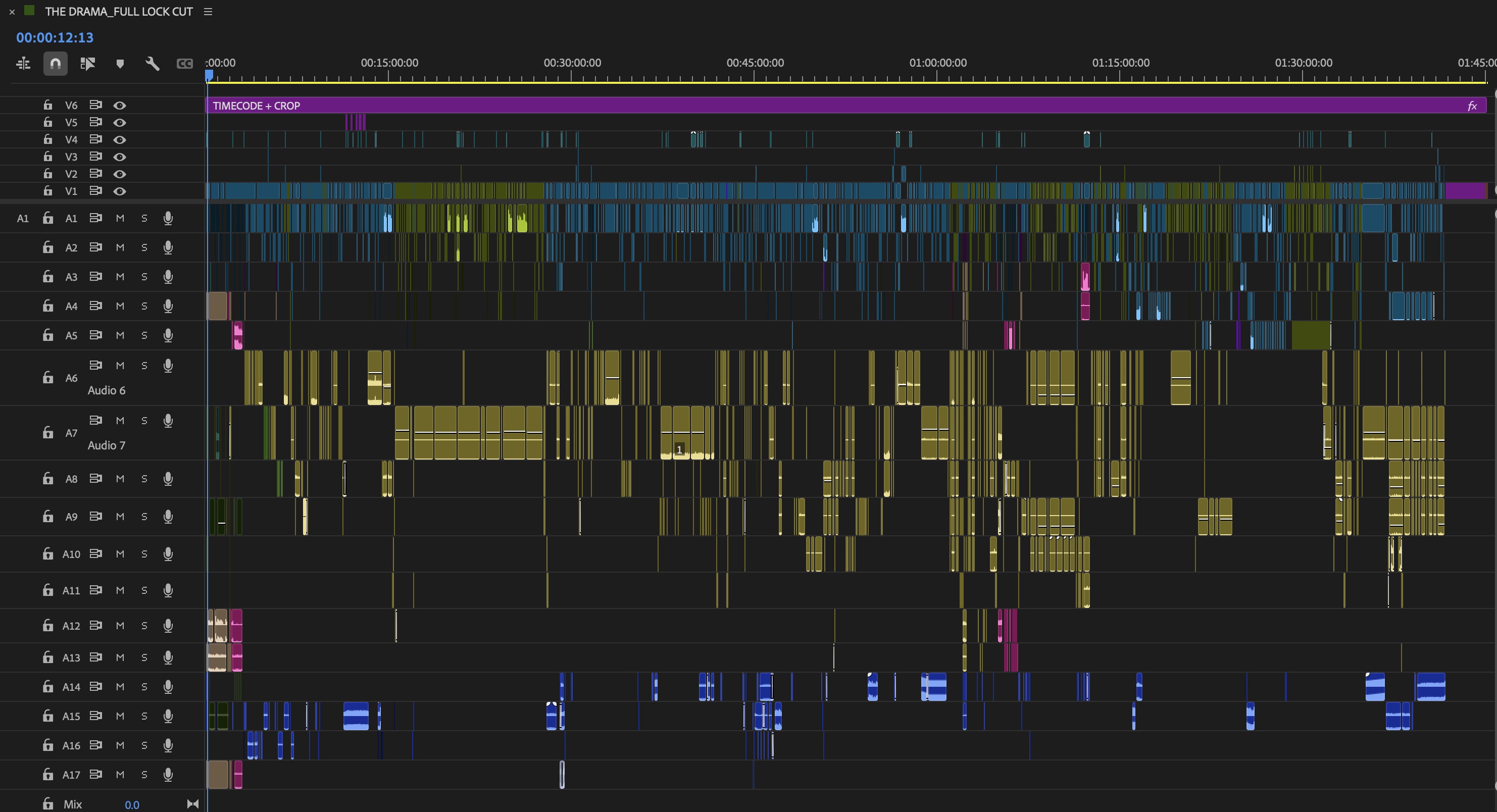
Premiere timeline screenshot of *The Drama*
As we get into that section of the movie, it seemed like time started fracturing more and more. Can you talk about how much of that was scripted that way, or how much of an evolution it was to come up with the way that time was fracturing in those scenes?
Lee: I think the entire section where Emma’s recounting to Charlie, her youth in Louisiana was scripted as it plays out, although probably not in the minutiae of it.
I think cutting in the middle of a sentence from adult Emma to young Emma saying the same dialogue was a discovery made during production. I think Kris ended up writing some of that dialogue.
Charlie and Emma’s apartment scenes were the last things shot in principal photography and then after principal photography wrapped, it was the holidays.
Then after the holidays, the crew went down to Louisiana to shoot all that young Emma stuff. Kris - prepping down there - got inspired by the locations and the nature there and wrote some more scenes.
A lot of the flashes of young Emma - like by a pond and throwing the gun into the swamp and all that stuff – were things I think he developed as he was prepping to shoot that flashback stuff.
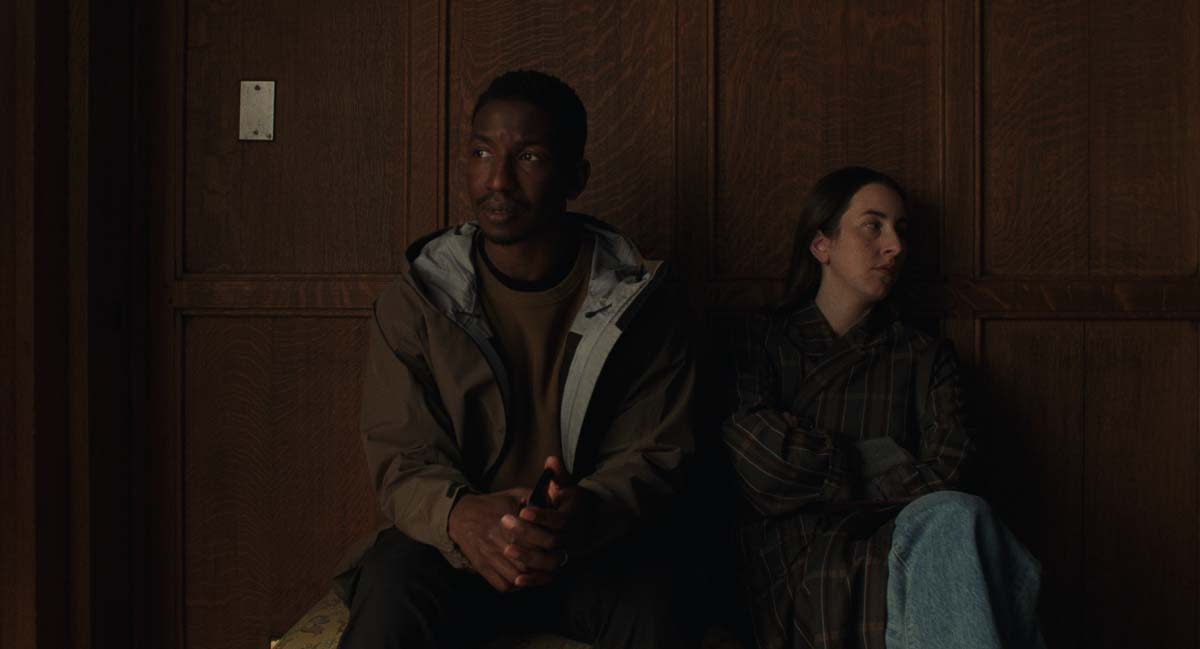
The nitty gritty of how those scenes are intercut evolved a lot in production prep, then production, then in post, and became more and more intricate and fractured just as the whole movie did.
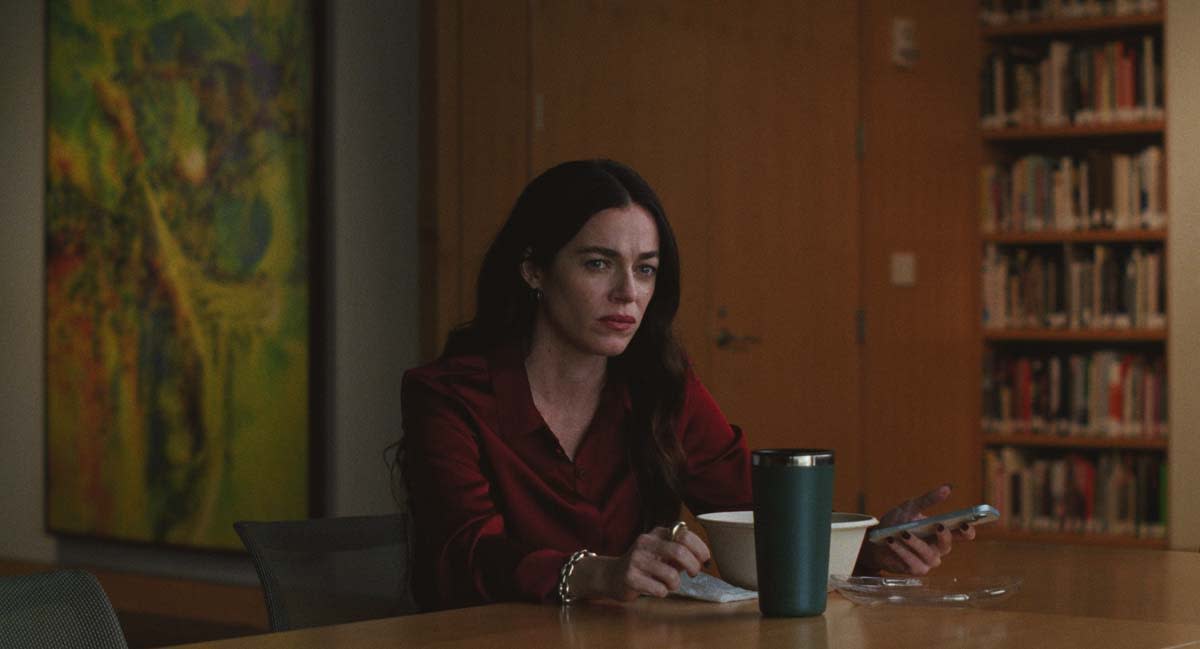
Another section I think that’s interesting in that regard is the climax of the second act before the wedding starts, the sequence of scenes that begins with Charlie having lunch with his coworker Misha and asking her what the worst thing she’s ever done. As scripted, those scenes played out as three linear scenes: He has lunch. He gets upset and storms off.
He goes to his office and is crying, and Misha comes to try to console him and he kisses her. Then they stop and he says, “Please don’t tell anyone about this.” Then she leaves and we cut to the wedding venue and Charlie and Emma as they’re going to go talk to Pauline, the DJ, to confront her, and Charlie can’t speak properly. Has a bit of a breakdown. It was all kind of evolving. As scripted, it transpired in a very linear fashion.
That was a section of the movie that - from the beginning - the producers at A24 were saying, “It’s good. It works. But maybe there’s a way to make it feel more like the first 20 minutes of the movie which really felt like they sang.” We tried tightening things.
It was only very late in post that we that we tried to really mix those scenes up, and we ended up cutting it in a way where it’s like Charlie storms out from his lunch.
We go to the next scene with Pauline and Charlie and Emma, and Charlie’s trying to confront her, and he starts kind of clamming up and breaking down, and you don’t really know why yet.
Then we intercut the revelation that he cheated with him trying to confront Pauline and breaking down, not being able to, and Emma confronting Pauline and telling her to be honest, and Charlie lying as he’s cheating and that just ended up feeling a lot more like the essence of Charlie’s breakdown and him totally being out of control and spiraling.
It took sharing it with people and getting that feedback to really figure out how to push it to get to that point.
It fascinates me how things evolve. Devon, as you watched this go together with the with director and with Josh, you could see things maybe not working quite the way they should, and nobody panicked. They got better later, right? I think it’s such an interesting lesson.
Halliday: Yeah. I feel like with this one it was so interesting because I feel like Kris, as a director, was so open to trying things, which I think is what Josh was saying earlier about intercutting those scenes when they were really written to be linear and being able to go for those things and any time someone had an idea, Kris would say, “Well, try it!” Then you would try it and he’d say, “That did not work. Toss it!” Or it’d be like, “Oh, wow, actually, there’s a glimmer of an idea in there! What would that look like if we expanded upon it?”
Kris and I worked a ton on the opening credits. He would come in and propose, “Okay, what if we tried this serif font or this font? What if we mixed the fonts?” I feel like there was this ability to not be afraid to not like something, but it was worth it to try.
I feel like that was a really great experience that I got to have on this. Also - working on a comedy - they wouldn’t always tell us when they would add new jokes, so we’d be talking and all of a sudden there would be, like, the shout out to Sally was a big one late in the game that got added - when he’s trying to kind of reconcile what happened in the ad agency.
So it was fun to be able to be on something that was evolving in a better way, but also they were throwing more jokes in. I’ve seen it probably 30-something times now and I still laugh.
Certain things get me every time. I know it’s coming, but it still makes me laugh every time. It was fun to see those things and how they played.
Josh would ask, “How’s this new joke landing?” And I’d say, “Oh, I didn’t even notice that one.” Or I’d say, “I had to rewind it because I missed the rest of the file!” So that was a fun part of the experience.
I wanted to ask about some needle drops. One of them that I thought of was interesting was when young Emma is trying to record a message on her computer with her webcam, and it keeps failing over and over again.
Lee: That part begins with Daniel Pemberton’s score, and it’s part of this whole suite where she’s getting very close to going through with her plan.
Then there’s news as she’s in the library of a shooting at a mall. Then, by living through that event with her schoolmates she’s drawn into this community of people who are trying to do something about gun violence and that clicks for her.
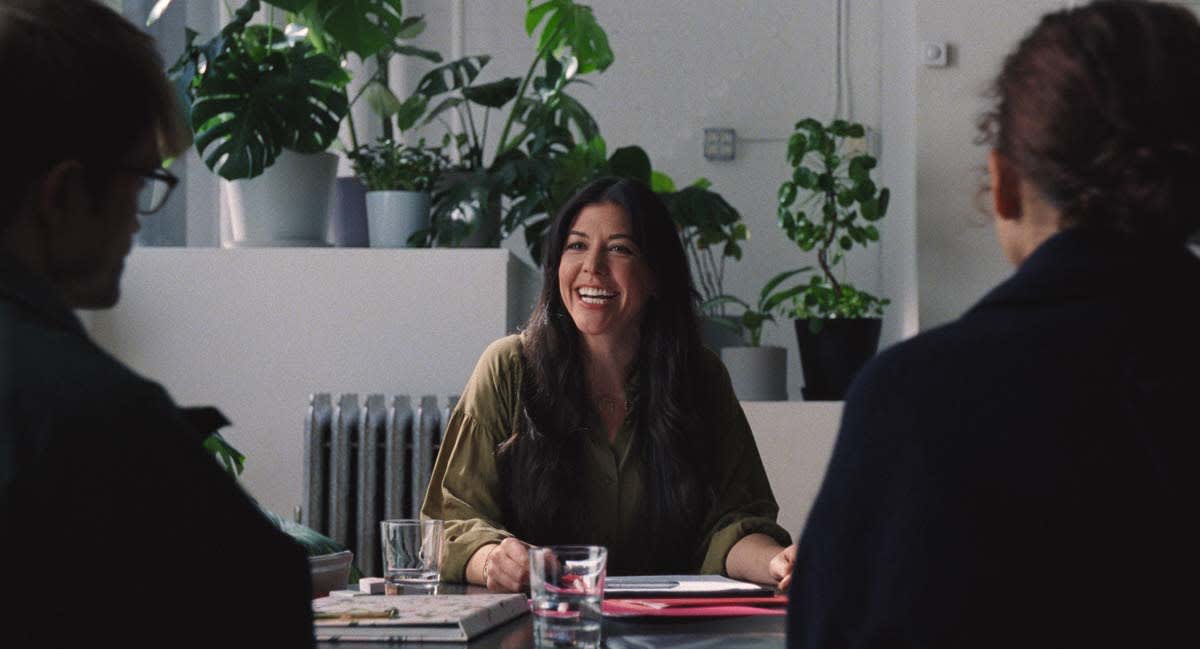
After we come out of that montage, Charlie asks, “You didn’t feel like a fraud?” And she says, “No, it was like waking up from a bad dream.” There’s a French song. What’s it called, Devon?
Halliday: Our post PA is French, and she’s going to murder me when she hears me mangle the pronunciation: “Sans Vous Aimer” by Juliette Greco.
Lee: It’s beautiful, and it felt like classic French cinema in this way, where it was kind of like speaking to the theme of how identity is constructed and selective and subjective, and we all kind of like, happened to be the way we are now through a series of - to some extent - a series of chance events that select us as much as we select them.
And what we choose to remember about ourselves is often more favorable than someone else might remember. We tried a lot of things - having score build and build to a climax there or go to silence. The thing that felt the most like an “a-ha” moment was that music landing.
There’s something about it being a little bit antique and artificial in this way that’s kind of Cinema with a capital C. That felt like this is the moment when her character crystallized and she was able to - for the first time - feel like she had some community, some agency over herself and wake up from this bad dream she was in.
Devon, can you remember how you were organizing things like needle drops or temp score so that it was easy for the guys to find and utilize?
Halliday: We had two different ways of doing it. Kris was very much a person who felt, “If I know where it is, I know where it is” kind of a thing, so we ended up just having a bin that was like all Kris music. So he would just throw everything in there and that was easier.
Then when we started getting score in, we kind of organized it in a way so cues that we got from the composer were thrown in there, but we used a lot of temp stuff for a long time. I feel like we didn’t really have a full-fledged piece of music from the composer until later in the game, so we used a lot of temp stuff.
So it came down to following behind Kris when he would bring stuff in and labeling that. Then also - for Josh - we had it organized like we had in the other projects we’ve worked on together. We’ve done a lot of movie score folders, so they’re organized by composer and Josh asking, “I want something that feels like this kind of movie.” So I feel like that’s helpful.
Then in terms of the needle drop music, in the past we’ve done it by happy, sad – emotional-based things. Sometimes we do it by composer or a scene.
With this one there was a couple songs written into the script that aren’t in the movie. So we had a couple bins that had just those songs in them, but they changed as things do.
Lee: And our temp score was mostly not movie score, per se. A lot of Mortin Feldman and Krzysztof Penderecki - kind of in the Kubrick realm of using classical music for score.
Halliday: There was a point where Kris just wanted to license all of Morton Feldman because he just loved how that was working in the cut. Kris was always listening to music and saying, “I listened to this random European pop album! Let’s bring it in!” I’d say, “All right. Cool!” It was cool for me too, because I feel like I got to find a lot of music that I probably wouldn’t have otherwise.

And did you label that stuff with comments or something like that? What kind of metadata or information did you provide to the editors?
Halliday: We had some comments - some more emotional-based types of things, like moods. If we had anything with tones trying to label those as just like, “has more of a pulsating tone to it” and that kind of stuff - trying to get them as much as I could.
But I feel like I was more doing sound effects and stuff like that. That was more what I was kind of focused on. For example, in the photographer scene - which is a very popular one that people love to react to…

SFX bin for sound design work inside Adobe Premiere
I was about to ask about that scene!
Halliday: He was big on wanting these plumes from the flash sound effect to sound really threatening, so I was trying to find a flash sound effect, but adding an extra boom underneath was something that was really fun to make.
Making something that doesn’t normally sound menacing, sound menacing, but also realistic was kind of a fun place to play in.
Lee: Devon’s always very good at the abstract sound design.
Halliday: I do love it! It’s fun.
Lee: On the music question, you always do a really good job of putting language to really weird, amorphous tonal music.
Halliday: I think without hearing it, it’s just going to be like, “What is she talking about?” I feel like trying to put descriptions that at least when you listen to it, you think, “Oh, yep, yep! I know what she’s talking about.” Putting in something that when they go back and reread it they think, “That’s the one that’s got the weird ‘bloop, bloop’ or something like that.
Walter Murch says when you’re taking notes on something - even if you use a word that has nothing to do with it, like “bananas” - it’s just a verbal cue to trigger a memory. It triggers something in your head, even if it doesn’t mean anything to anybody else.
I do want to talk about the photography scene. Throughout the film you’ve got some really fascinating fractured time and editing. Then we get to this photographer scene and it’s largely played on a static two shot, right? There’s very little editing. So what’s the value of having this really interesting, chaotic editing earlier in the film, and you get to this spot and it kind of stops.

Bin of music with notation by Devon inside Adobe Premiere
Lee: I think it’s just to make people have to sit in a situation that’s uncomfortable. it’s really a tableau at that moment. It’s a completely locked off static shot as they’re talking about what they like about each other for probably a good minute before there’s a cut. When Kris first did that I thought, “Wow! You’re really not cutting!” It was definitely the right call.
Then finding the right take of that 60 second clip is important. Which take?
Lee: Obviously their sync dialog is all real, then I think Zoe Winters - who’s playing photographer - she was improvising in every take so every take’s a little different.
I think we pepper in a couple lines in the scene, but maybe not at all in that locked off shot. It’s really very naturalistic.
You mentioned that one of the values of not cutting for that scene is to create the sense of unease. That plays into a lot of this movie, I think. Can you talk about developing that editorially: making the audience feel incredibly uncomfortable.
Lee: In the way that I was describing how we arrived at the approach to the initial dinner conversation scene was kind of the guiding light. We’re moving through memory in a non-linear way.
Let’s make it as frenetic and dynamic as possible, then when characters are confronting their emotions face-to-face with one another let’s really try to be as mature and reserved and dramatic as possible there, so the contrast is very apparent in that so that people actually do live in those scenes in an emotional way - from that dinner scene to when they’re discussing it on the couch the next day and when they’re lying in bed together in the dark…
Halliday: …or when Charlie’s in the room and Emma goes to get Misha. Then it just sits in that shot of Charlie realizing what’s about to happen when Misha comes in and the tea that is about to be spilled.
I feel like living in that take always - no matter how many times I watch it - I’m at the edge of my seat thinking “Nothing good’s going to happen here.”
I think it’s so fun the way that you guys constructed that scene where it’s this quiet moment where you’re watching him for probably a solid 30 to 40 seconds, just pacing around the room.
Then once she comes in with Misha and they start having the scene play out, it’s a lot more quick edits because you’re cutting between all three of them, realizing what’s happening, including Misha herself.
Did they shoot this other side of that event where Emma’s going to get Misha?
Lee: No. They were shooting it in a venue outside Boston. What’s it called, Devon?
Halliday: So it’s actually shot in the hometown I’m from Ipswich, Massachusetts. Random aside, but yeah, the hometown I grew up in has this beautiful castle in it that they filmed movies in from time to time. Witches of Eastwick shot there and like, stuff like that. Castle Hill (Ipswich, Massachusetts)
They happened to shoot in a different place because I think that would have looked way too much for their wedding, but it was a cool place that they were able to find and shoot it. I feel like it had nooks and crannies that were really interesting.
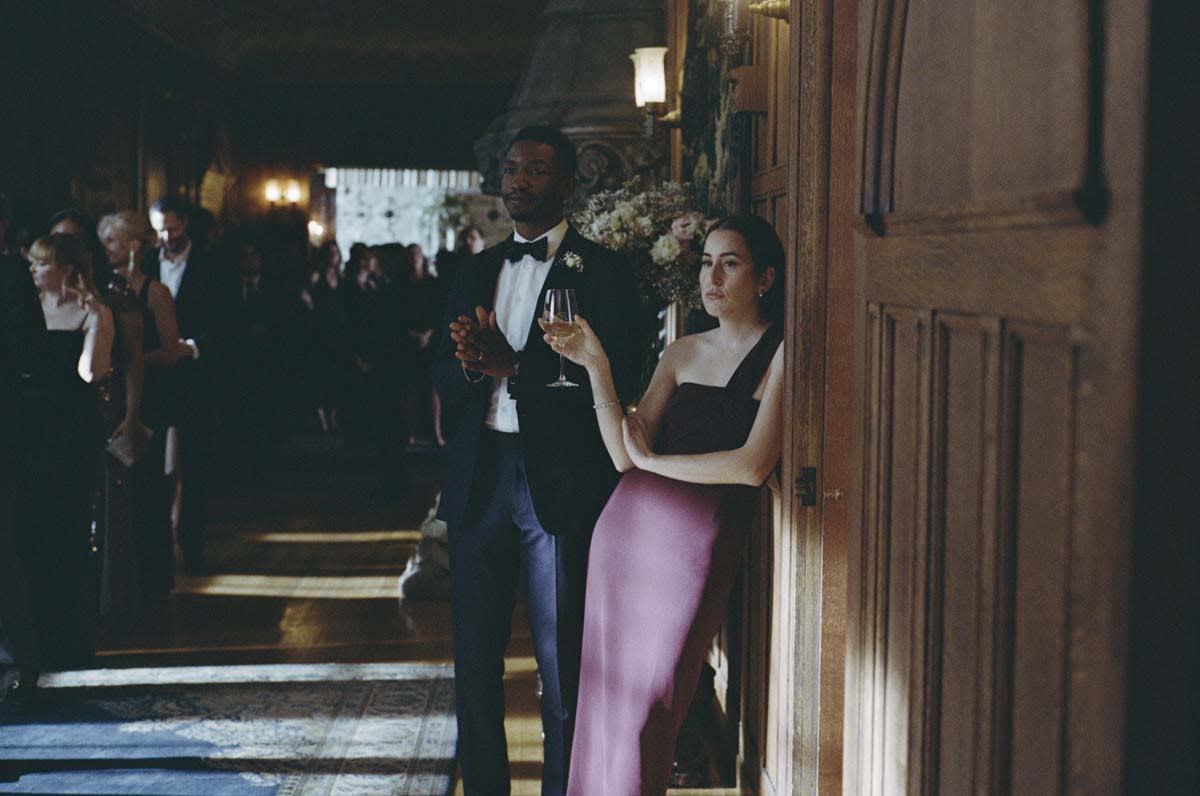
Lee: Part of what makes the whole wedding sequence feel so real is that they had the sun setting out the window, and the light changing throughout the day - going from mid-afternoon hot, like the sun is high - all the way to night.
Then the scene where Misha comes in with Charlie and Emma, the sun was rapidly setting out the windows behind Charlie and Emma.
Arseni Khachaturan, our DP, was having a minor nervous breakdown about light never matching because there can’t be lights outside the window when we’re shooting towards the windows. It’s just the sun and it’s hitting their faces in a bright, blazing orange.
The dailies were a little bit more uneven than the final color. He did a tremendous job making that work because Kris really wanted it to feel like the sun is going down on them.
That scene, it’s so evocative to have this glowing sunlight on Charlie’s face as he’s sitting there awaiting the doom of his relationship.
Halliday: It was like that with the rain, too, in the wedding, because they didn’t plan for it to rain when Emma storms out and she’s walking through with her dress - they didn’t plan for it to rain during the final scene, but the cinematic gods were like, “Yep! Here you go! Here’s your rain on the day.”
Lee: …as she’s running in the wedding dress…
Halliday: Yeah. The mud and everything! I said, “Wow, that’s cool!” And Kris said, “I totally just lucked out.”

Talk to me about building the tension in that wedding scene, as they get to the speeches and the toasts. I watched that like I was in a horror movie - just peering through my fingers.
Lee: That was great! That was the time in the edit when we were all kind of really clicking. We were six weeks in of working together and we were all really jiving. Kris was really excited to cut Charlie’s speech. I did the dad’s speech, then Alana’s speech.

There were early versions of Alana’s speech where Kris would do what he’d calls a “shits and giggles” take at the end of a set up where he would ask the actors to try whatever they wanted and go a little wild.
I loved Alana’s performance in her takes in a couple of those setups, so they were the takes for a while, but we screened it for Jeremy Barber, Kris’s agent, and a couple people very early on, and it was the feeling that Alana was kind of like torturing the rest of the wedding crowd, and that wasn’t quite right. It was still an unspoken secret at that point between her and Emma.
Emma wasn’t aware that anyone else knew at that point in the story. So we kind of dialed her down a little bit. Alana’s performance was incredible and naturalistic.
Those were just the takes where Kris told her to just “go ham” and she was really funny. I wanted to use them, but we ended up making her a little bit more restrained, which she also did a brilliant job of.
The pace and the tension of that builds. The music is also really helping build that whole wedding up to a head.
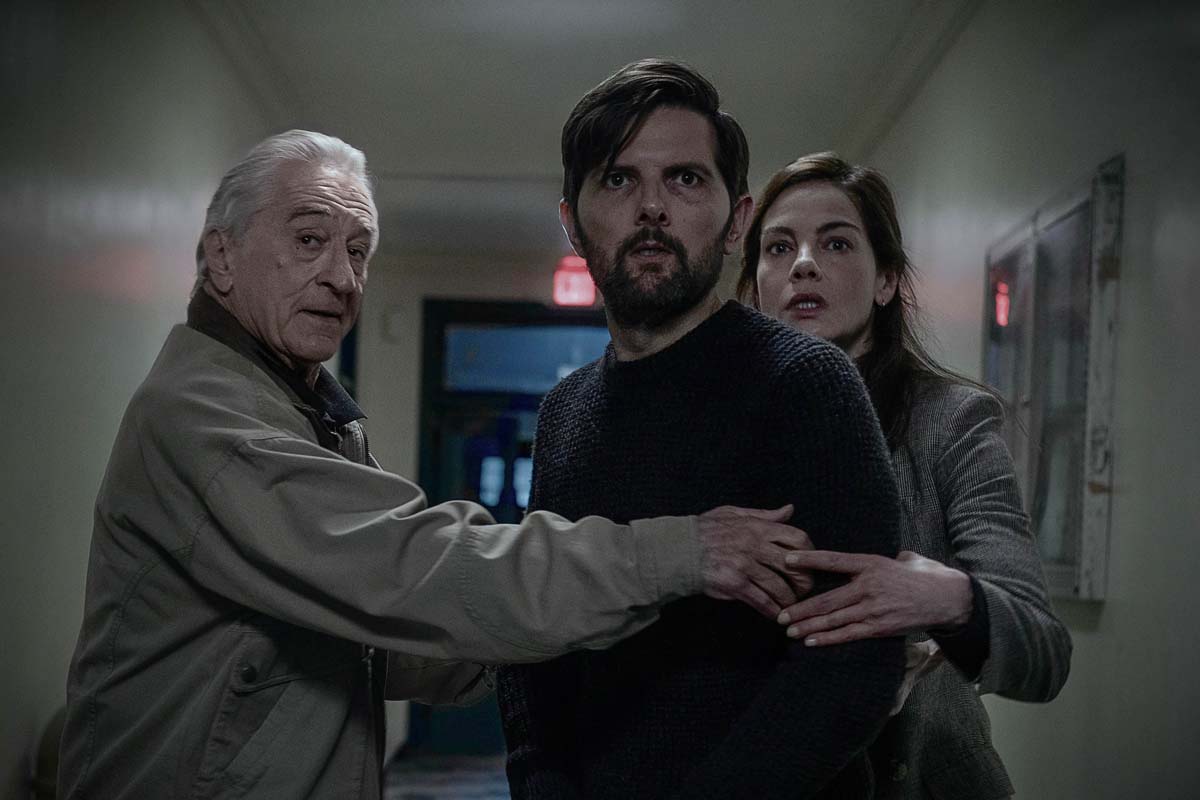
The decision to cut out of it at its climax is kind of an interesting one, because the first draft of the script that I read had the DJ blowing up the cables, making all that noise right in the middle of Charlie confessing to Emma that he loves her and he’s sorry, and saying all these things in public about her, and he yelled at the DJ and went up to hit the DJ.
Then Blake - Misha’s boyfriend - came up to defend the DJ. It was a very different scene, and the whole bedlam happened right then in a linear way.
Then, in pre-production, Kris was watching Big Little Lies. He told me there’s a scene where the women are all talking about a confrontation between probably Reese Witherspoon or maybe Laura Dern’s character and Zoe Kravitz’s character.
They’re talking about it like you’re in the real scene and she’s about to slap her or something, then it cuts away and much later in the episode they start talking about what happened there and that’s when you actually see it. Kris said, “That’s bold.
It feels like I want to commit to doing something that bold editorially at the script level.” There were a lot of things like that where the script was written to be fractured and non-linear in this way, so he committed to that in the script, and in pre-production, changed the script, then that’s how we cut it.
We have that long, fast dolly shot of Blake running up to Charlie, then we cut to the apartment and the aftermath and he’s already bruised and bloodied.
The movie’s been building up to this wedding, and the wedding ends, and you still have a certain amount of movie left. This happens in many films. After the climax, the denouement. What kind of discussions were there around how long that can go once the wedding is over?
Lee: Once we get back to their apartment and Charlie is bruised and battered and he’s trying to get Emma on the phone and can’t get ahold of her, he goes downstairs and he’s trying to think.
He’s just overwhelmed with emotion and we get to see - in glimpses - what happened at the wedding: the fact that Emma stormed off and he doesn’t know where she is, and then he decides to put on their song.
A reference that Kris had for that was from Oslo, August 31st (2011) Joachim Trier’s first film where the main character returns home and walks through his home in a similar kind of low angle following dolly shot.
It was important to Kris for Charlie to just live in that low moment without any cuts and listen to their song and reckon with what he’s lost and the choices that brought him there.
The thing that ends that scene is him vomiting. There was actually a lot of discussion with the studio about whether or not that vomit should be in that scene.
I think the feeling was always that it’s too gratuitous. I remember the first time reading the script feeling that it was tonally off to have him vomiting in the middle of the scene because it’s so emotional. It’s so like much about their relationship.
I think on the page it seemed crude to me to have him vomiting in that scene, but as we talked about it more and Kris pushed back against the studio about it, it became really apparent to all of us that this really illustrates that he’s sunk exactly to the level of Emma - if not lower - because he actually did transgress.
Halliday: We all were fighting for the puke because it really brings it full circle with him and her and he’s so judgmental throughout the movie and it’s like he becomes her at the tasting scene at the end.
“They’re mirroring each other’s puke,” is what we said at one point. And so it’s so cinematic and beautiful. Kris did cut it down, though.
Charlie used to puke into his hands, so I think that was the middle ground that they reached. And it’s kind of this last button moment before you go into the final scene, which I always feel like it’s such a nice way to have them come to terms with everything that we’ve just watched.

Lee: And that last scene was one that we worked on until the very last day of editing. Obviously, it’s so important. Figuring out who to end the movie on was really important and figuring out the timing of that.
That’s a scene that got longer and longer. It required more and more duration. And it was tricky because basically there’s just a series of long looks between them at the end.
We really had to max out everything we had between lines, and I think some of it might be from like earlier parts of the scene, just because we really needed to have enough time for Charlie to understand what was going on with Emma.
So to get the thing to land in a way that I hope is emotionally effective, it took every last minute of editing until we were told we had to stop.
You said it was really critical to decide who to end the movie on. I do not remember who you ended the movie on. Why was it critical and who did it end on?
Lee: Emma. I don’t know. Why do you think, Devon?
Halliday: That’s a big question. That scene went through so many iterations. I think you guys tried everything. You tried ending on Emma. You tried ending on Charlie. There’s a beautiful two shot of the two of them just in the booth that I always thought made sense.
But it made more sense to end on Emma and her final breath of. It’s hopeful that she can take a breath and be feel, “You know what? We can work through this.” Because we’ve already seen Charlie reject this idea of starting over with her a couple times and her really trying to fight for that, so I think it was important to see her reaction to that.
She’s been put through the wringer this whole movie and her finally getting a nice hopeful breath of like, “Okay, things are crazy, but we’ll get through it together.” That’s what I always took away from it.
Thank you both for talking about this film. It was really great having you on the show.
Lee: Absolutely. Thanks. It was a pleasure.
Halliday: Thanks, Stephen.
 October 5, 2026
The Whisper Man
Chris has been on Art of the Cut before for The Menu, The Many Saints of Newark, A Quiet Place, and Assassin’s Creed. He has ...
Read more September 23, 2026
Sean Combs: The Reckoning
Charles Divak has been on Art of the Cut in the past for Chimp Crazy, for which he was nominated for an Emmy and won ...
Read more August 27, 2026
The End of Oak Street
John has been on Art of the Cut for a full decade with Lost City of Z, Antebellum, Ad Astra, and Chevalier. He also edited ...
Read more
Subscribe to our newsletter
Get all the latest news, blog posts and product updates from Boris FX, delivered directly to your inbox.
Welcome!
Thanks for opting-in to our newsletter. You'll receive an email momentarily with your confirmation.