













The Dog Stars
Today’s discussion includes topics like the importance of setting up the movie with its meditative open, the careful use of aerial footage, and knowing when to let a powerful performance dictate the decision NOT to cut.


Today on Art of the Cut, editor Sam Restivo about editing Ridley Scott’s “The Dog Stars” with co-editor, Oscar-winning editor, Claire Simpson.
Sam has been on Art of the Cut before for Gladiator 2 and Napoleon. He was also an additional editor on House of Gucci, The Last Duel, and The Greatest Showman.
Sam, thank you for being on Art of the Cut. I really loved this movie.
Oh. Thanks, man. Oh, I appreciate it. We’re really proud of it. We really love this one.
I’ve seen all of Ridley’s movies. I am a huge Ridley Scott fan. I hope this isn’t an insult in some way, but it doesn’t feel like a Ridley Scott movie.
There’s nothing like The Dog Stars in his filmography. That’s a testament to him - that he is constantly interested in different stories and different genres, different forms and bringing his own unique perspective to things and his visual genius to things.
Sure, there are little elements you could pick up in the way that he composes shots or designs things, but generally speaking, there is no movie in his filmography that feels like this one, and that’s so exciting. That’s my favorite thing about it.
It’s got heart. It’s got a motion. It’s got a ton of action. How do you balance them all? Did you graph it out? Some people like to put colors on cards on a wall to see the tones visually. Or is it more instinct?
That’s a good question. I am aware of editors that do that. With Claire and me, it’s really way more intuitive.
We were both, big fans of Peter Heller’s novel. It’s a wonderful story. And one of the bigger challenges is just how do you adapt a novel like that? That is not necessarily plot-driven. The novel is first person narration from Hig.
It’s like stream-of-consciousness. He’s just talking the whole time and it has flashbacks to what happened. There was an initial challenge for Ridley and the screenwriter, Mark Smith, to adapt something like that into a narrative-based film.
It drew from a lot of the more plot-heavy things that happened in the book. We saw what they were doing with the script, then when Claire and I started to get the footage, it was important that we just get the tone right more than anything because we wanted to make a testament to the novel.
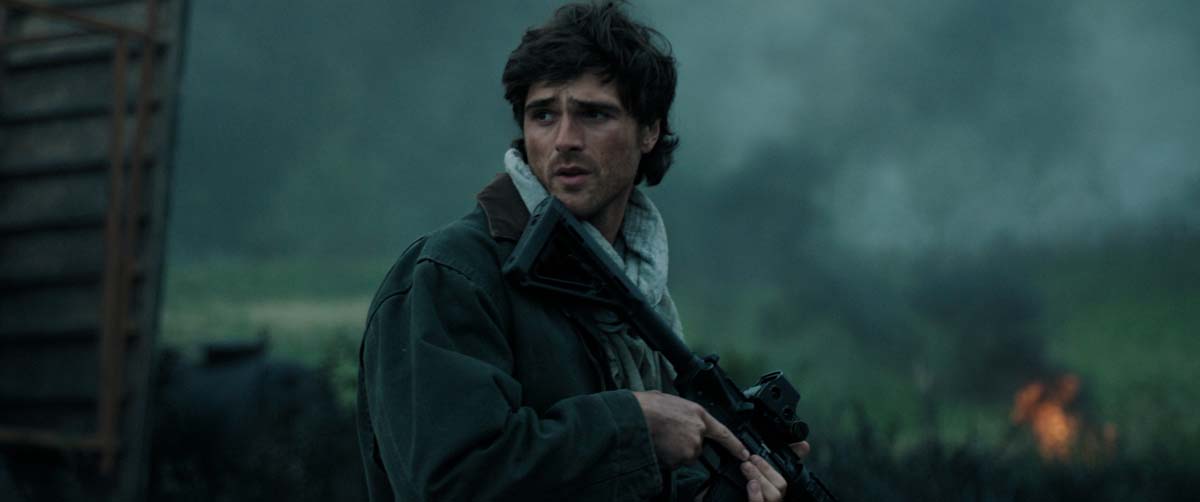
The novel is this wonderful meditation of grief, and we knew - especially upfront in the opening of the movie - is where we have to set the tone properly so people understand that this isn’t going to just be wall-to-wall action.
It’s a character piece. We really wanted people to connect with Hig and connect with Jasper from the jump. So the first third of the movie is a little bit quieter and a bit meditative before we get into more of the action stuff.
So we didn’t graph out exactly when we were going to hit certain beats or tonal changes. We just let that fly a bit. In the process of culling it down, we landed at a spot that we felt really good with.
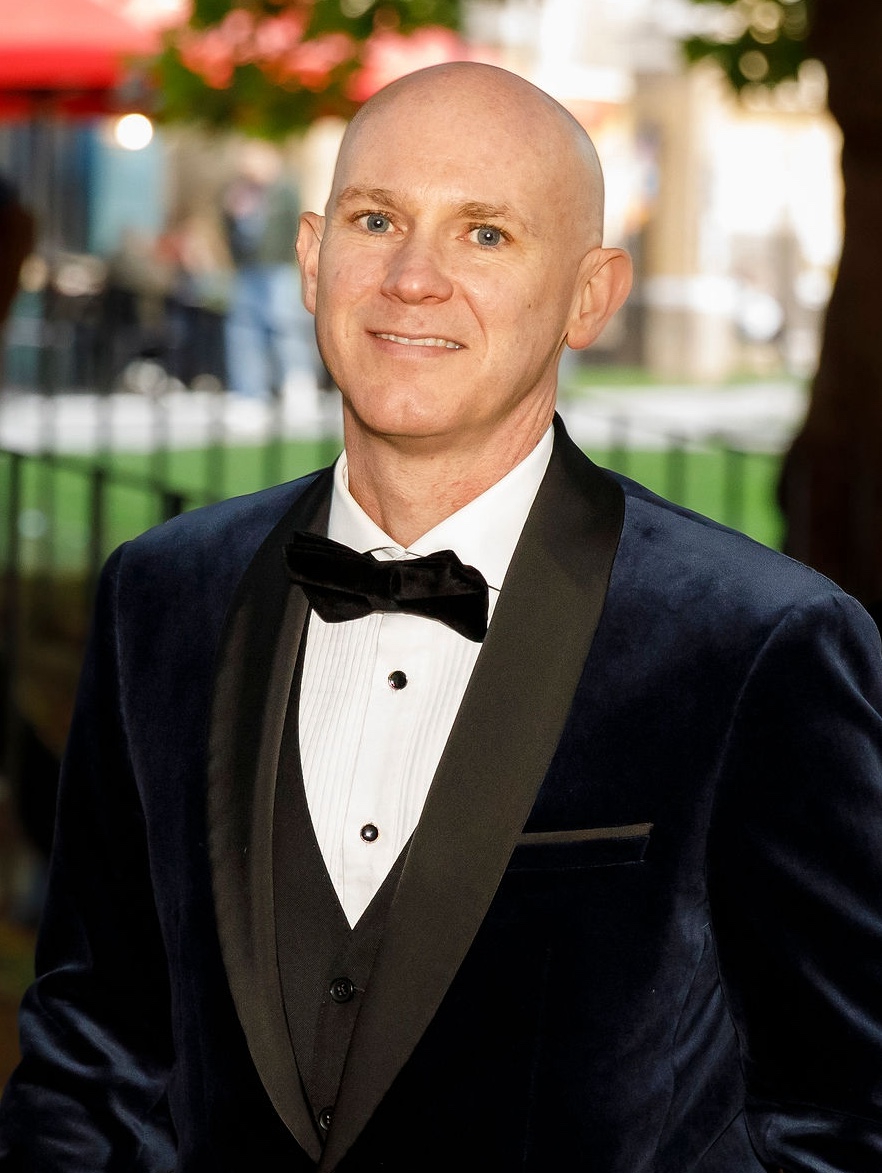
Editor Sam Restivo
Some editors say they don’t want to read that book or novel and some people say they have to or they want to. What is the danger and what is the value of that to you?
I’ve heard that. For me, being an editor, it’d be one thing if you were an actor and a previously existing version of a thing had been out there, maybe you want to avoid that. But as an editor crafting the story - all this is, is getting more information of the nuance of the emotion the character comes from.
I had no problem jumping into the novel on this one because it only just made it made it richer, and it helped us find ways to connect the audience to the story and to the characters. So for me, this was it was absolutely worthwhile. And it’s a fast read, too. It informed our cutting from the jump.
You have done multiple projects with Ridley at this point. 6 or 7, right?
Yep. Six.
Tell me about your collaboration with Ridley. How does he like to collaborate in the editing room?
It’s evolved over the years. He has so much respect for Claire – and just for editors in general - so over these past seven years that I’ve been working with him, he really respects us. He talks to us a bit before the show starts.
He’ll send us the script, ask what we think about it, from an editorial perspective. “Do I need to really need to shoot this scene?” Once we go, he wants to know things are going well, but he always has the respect to say, “Don’t show me till it’s ready.” He knows what he’s going to get.
He trusts his directorial vision for getting the dailies and - then once a week during the shoot, maybe on a Saturday or Sunday - he will sit with us and either look at footage he hasn’t watched yet or watch assemblies that we’ve already done and give some broad takes on things that he likes. That’s kind of how the process is during the shoot.
There is no more important screening for Claire and me than the first time we show him the whole thing put together. That’s where it separates a little bit from an assembly versus an editor’s cut - which is not really a thing in features - the spirit of everything that’s been photographed.
We put the whole thing together and we make it as awesomely presentable as can be with music, sound effects, visual effects, all these things. We show him the movie that we’ve already watched. We shape it in a way that we think is screenable.
Every time - on all six projects - he has been over-the-moon afterward because it’s a very scary proposition for a director to watch the thing for the first time, because you don’t know if you have a movie, even someone like Ridley.
Then he’ll watch that and say, “Okay, I see it.” In the director’s cut period, he’s with us every day or every couple of days. We go through every single scene, but he’s not sitting directly next to us the entire time that we’re cutting.
He has the respect to give us notes, then we’d reconvene once we’ve done things. It’s like that the rest of the way during the director’s cut.
At a certain point, he feels really comfortable with the movie - so much so that he’s ready to show the studio - at that point, he probably watched the movie enough times - not to say he’s not going to watch it anymore.
Of course he does, but at that point he becomes conscious of not over-screening the movie because you could just stare at a thing forever then just chop the heart out of it. There’s always that threat ourselves, with getting too close to the material.
But Ridley really respects us to interpret his vision and to get his vision done in the cut, so that by the time we’re on a mix stage - he really only watches the whole show a couple of times toward the end - because he’s secure in what he’s already made.
It’s a wonderful collaboration where he trusts us and we go back and forth on notes we want to do or not do. He’s open to all things, but he for sure knows what he wants and communicates that perfectly well to us.
It’s amazing that you say that he’s over the moon with an assembly because everybody knows - every director will tell you - that is the worst day of their life. They look at the assembly and just want to throw up.
Before, I worked with Ridley I’ve worked with plenty of directors that have had that experience. I can’t think of any of the projects I’ve been a part of where he didn’t enjoy the movie, and it was the sense of relief that “Okay, there’s a thing. We can work with this.
We can we can shape this. On set, he’s confident that he’s going to get the shot, but it’s one thing to be doing that on set and another thing to actually realize what you’ve got once it’s all over. He wasn’t blind to the fact that it needed work.
He knew it was going to change 100%. Even when we did Napoleon, that first assembly was four hours and 45 minutes long.
He said, “It’s in there. It’s in there.” He was even contemplating doing a road show with an intermission and have it actually be four hours for a hot minute and we said, “I think we can make this better.”
How long was this assembly?
2:40 is what I think the first assembly was. I wouldn’t say that there were a ton of things that didn’t make the cut. It’s more just these really meditative sequences of Hig in the airplane and with the dog.
A lot of things that were on the page may not read as repetitive emotional beats, but when you start watching it, you think, “I feel like we’re feeling the same thing over again,” so we started to condense it. Basically, we always wanted this film specifically to be a two hour movie.
Talk about the value of - I’m going to use the derogatory term – “shoe leather.” Talk about using the shoe leather of the flying. There’s tons of visually stunning shots of flying. Cinematic, yes. But what is the story or pacing value of some of those points where you put in flying footage?
Great point. Great question. Because of Hig’s character, we really need the audience to connect with him. Claire is one of the best editors of all time. She’s taught me so much about allowing scenes to breathe and allowing the audience to just sit with the character.
What I found - when we were looking at the aerial stuff and we were cutting it in with with him and the dog in the cockpit - there is a kind of chill mode to pilots. The opening sequence - after he mows the grass on the airfield, he takes off and he’s flying to Denver.
Those shots are just wonderful. I wanted to get a sense of what this guy’s full daily life is like and what it’s like to be somebody that gets to fly above everything. It’s helped by the fact that that [D.P. Eric] Messerschmidt’s photography is amazing and the aerial unit is so awesome. We had any shot we were looking for to make it both beautiful and meditative right from the jump.
Ultimately, it allows the audience to sit there and think about what this guy is going through, more so than “what is the plot that that is pushing a story forward?”
You mentioned the specialized aerial photography. When did you get that stuff in the shoot? Did you have that stuff to cut to while you were editing primary photography? What did you use in the edit?
The aerial unit started about a week into the shoot. It was a separate unit, but they were taking their cues from Ridley and Eric, then from us as we were getting things assembled.
They’d ask us, “What shots do you guys need?” And we would tell them, “We need this connective tissue.” They were so responsive. There is so much aerial footage, so we had a lot of different takes.
It’s interesting: we didn’t need that to be a transition every time, because after a while you’re just looking at: “here’s more airplane footage.”
We were always cognizant of not wanting the audience to be too restless. It was just a process of whittling that down.
I would say we are heavier on the aerial footage in the first half of the movie than we are in the second half. There were scenes where, “Okay, I’m going to this location. Show me going.” Then there were other times where Hig would just be there.
We just jumped. That’s a combination of Ridley and Claire and myself saying, “We are going to trust the audience to understand that you have already seen the journey to get to these places.” Especially in the back half of the movie.
In the novel there’s a ton of “We’ve got to get back to the plane and fly to the Mennonites.” Or “We’ve got to fly back to Denver to get more of the medicine.” At that point, we are trusting the audience and are
moving quickly through the story.
It makes for a better watch at that point because thematically, you can just keep the emotion going stronger between these small interludes without having to cut to an airplane.
How did you organize that specialized footage? I’m assuming they didn’t have: “This is scene 12. This is scene 42.”
It’s a testament to the second unit director and the aerial DP that they did assign broad scene numbers, though we will absolutely use whatever footage for whatever thing. If we could make it work, we weren’t necessarily strict to where what scene was marked for.
So it was organized as “this is for traveling from Erie Airport to Denver.” “This is traveling from Pops and Cima to Grand Junction.” It was mostly 3 or 4 enormous bins. The only way through it was just to watch absolutely everything.
Claire couldn’t be with us today, but she had a couple of things that she wanted to talk about, which were pilots and the double for Hig.
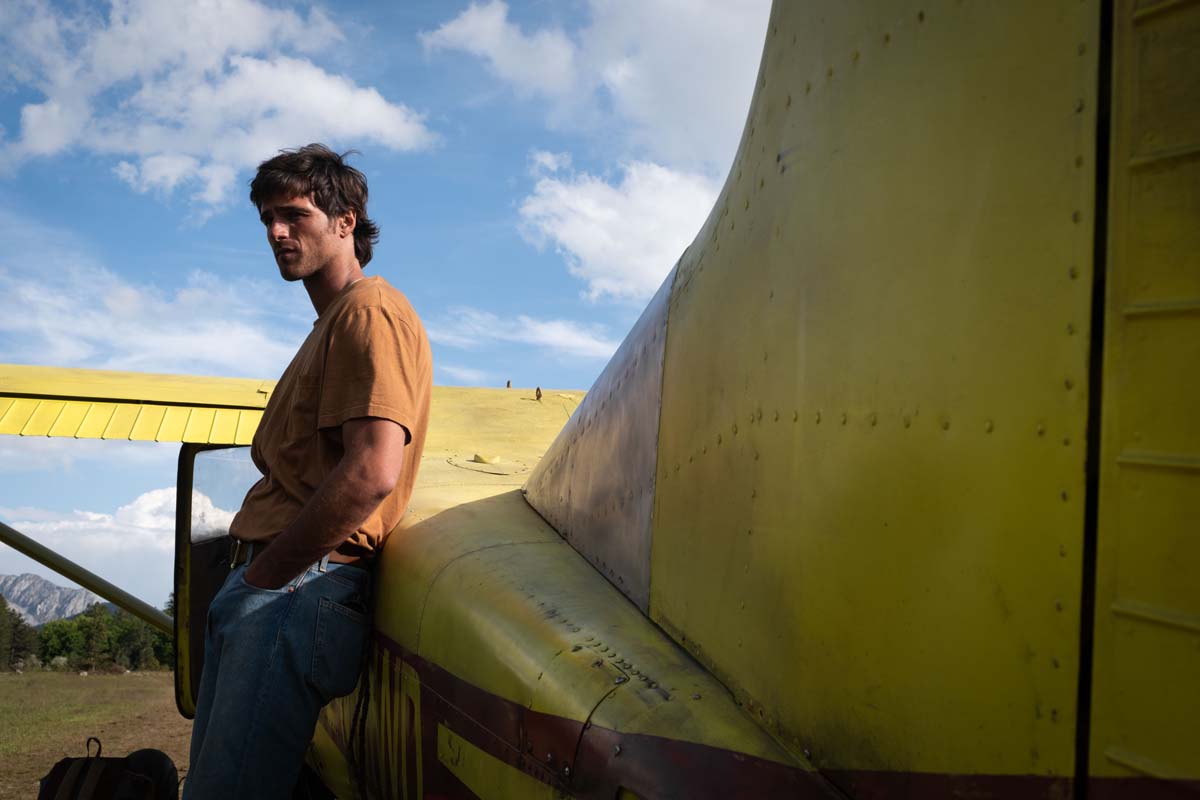
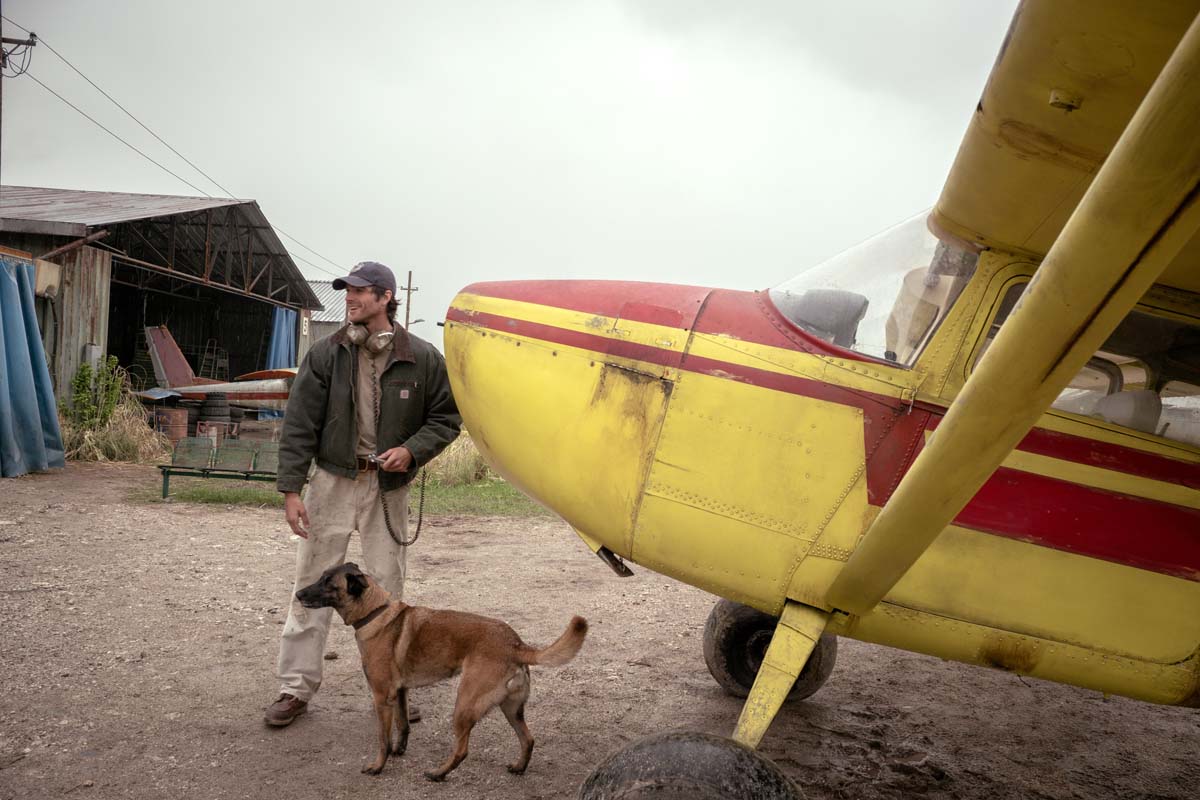
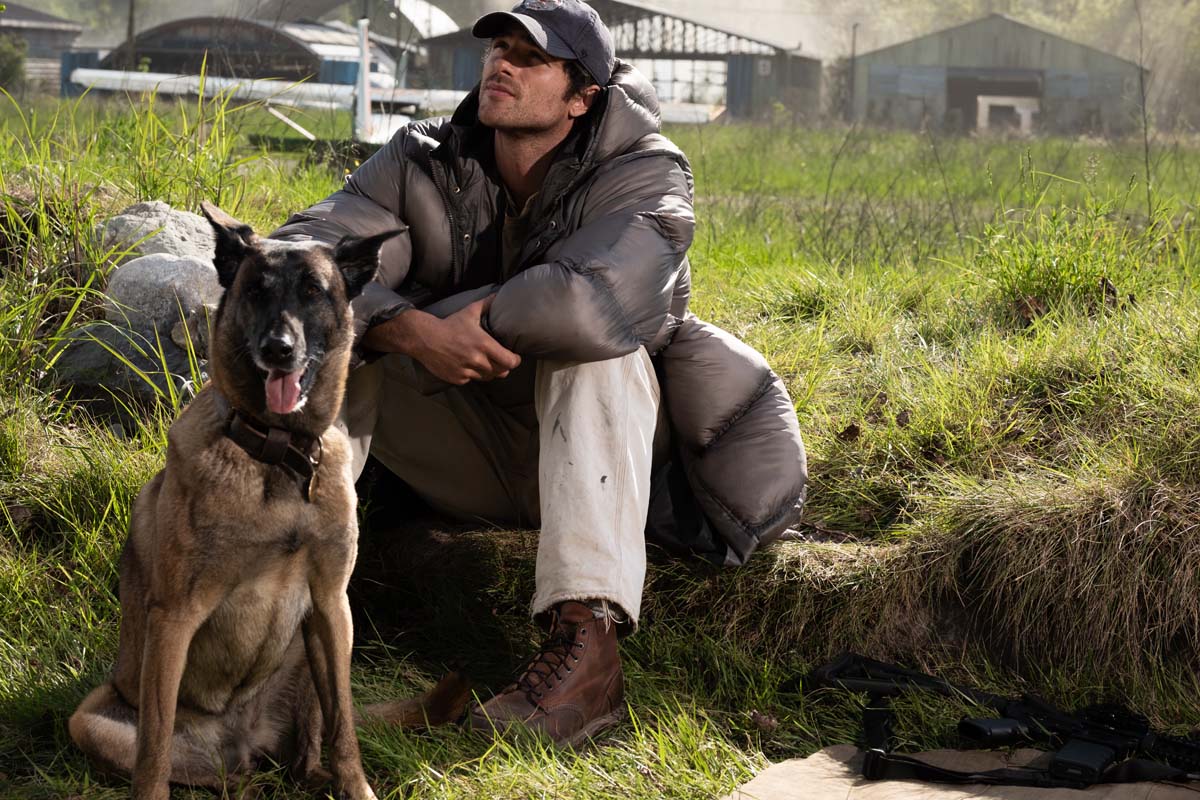
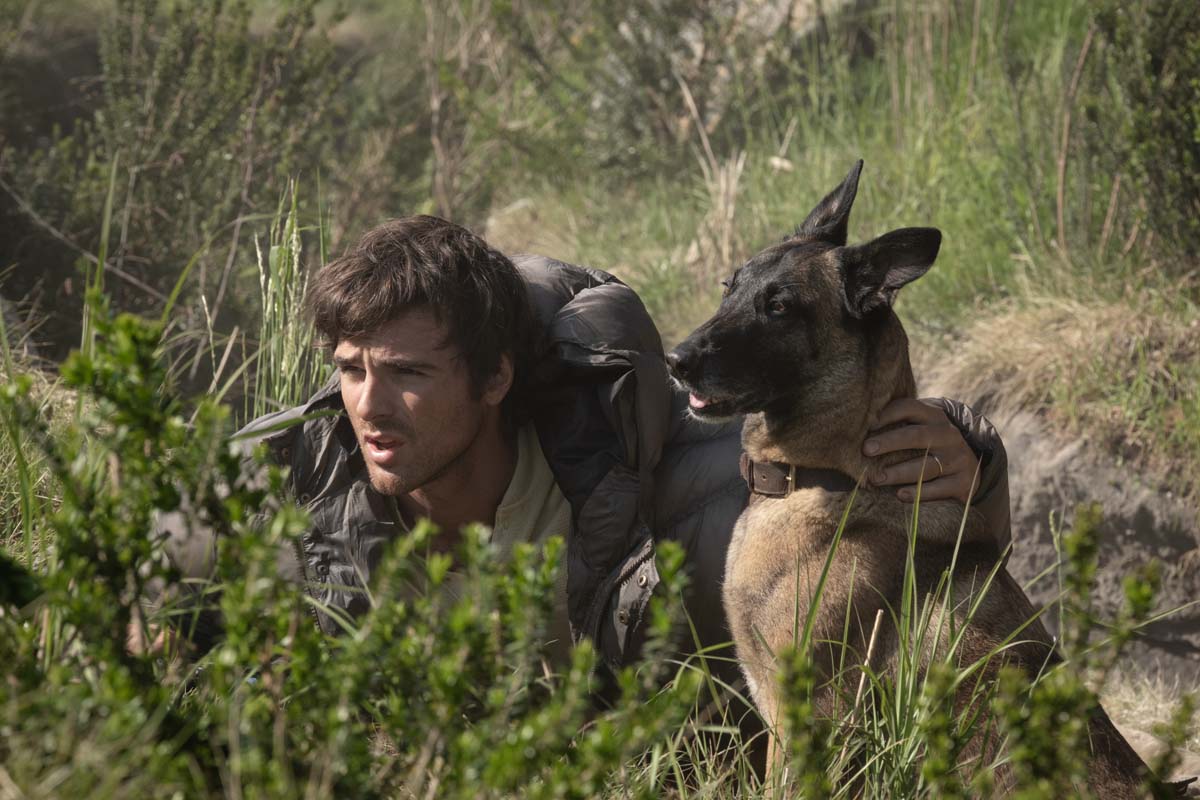
The aerial team was kind of off doing their Wild West flying around. This Cessna is just like a flying gas can. It’s a fully functional airplane, and the pilot that came with it - amazingly -looks like Jacob Elordi. He’s so good and was willing to try all of these crazy things.
One of the hardest things they had to do was in the opening of the film, when Hig lands in Commerce City. He has to land over some power lines onto an empty street. That’s a real shot. And it was a real challenge.
They only had one go at it because it was super dangerous. The people in Italy said, “We’re not really sure we’re up for this,” but the pilot, Thomas Berger, just nailed it in one take.
We used multiple shots of the camera mounted behind him because he looks exactly like Elordi. It’s crazy. Those guys were just game for anything that we needed.
“Do you guys need any connective thing?” “Well, it’d be great if we had a shot looking this direction with this particular mountain.” They’d just say, “Yep, we’re going to go get it.”
How do you like to watch dailies and that aerial footage? Are you are a “stringer-outer” or are you a “click on it in the bin” guy?
Both Claire and I watch all the footage together, and the only way to get through it on a really Scott show - where we have umpteen cameras - is to watch it in the Avid, either quad or nine-way split multi-camera format.
So we watch everything grouped. It’s such a testament to having great assistant editors, because that’s a really hard job during the shoot because they come in super early.
Claire and I are super lucky. We have worked with Danielle El-Hendi as our first assistant for the last three films. I think she joined us on Napoleon, and she really runs the edit rooms. She is associate editor. She has been cutting scenes for us on the last two films. She’s so good.
Our first assistant - who we’ve had since House of Gucc - is Stefano De Marco. He’s a delightful man who is so good at music and sound as well. From the jump on these last few films, that duo absolutely makes our lives way easier.
They have to usually resync stuff because Ridley shoots at different frame rates, and the only way for that to work is to get everything to 24 frames, then group it all, so that’s a big challenge.
Then Claire and I will sit together and watch the scenes - 5 or 6 cameras - that was the standard in this movie.
With the aerial footage a lot of that stuff was just one camera at a time. So we were just watching that individually. But by watching all of these things, we were getting a sense of what images are really transporting for an audience member and the stuff that you really latch onto because it’s a beautiful image. Also it can clearly define the story of that moment.
It’s one of the best parts of getting to edit on a movie like this: the variety of types of footage you get. We just get to embrace the spirit of the movie and let that guide us intuitively into what shots are going to go in.
I want to talk about a couple of specifics. At one point in the movie, Hig goes off on his own on a quest and leaves Bangley - who is Josh Brolin’s character – behind. Then you actually start intercutting between Josh Brolin’s character at the base and Hig in the air. Can you talk about how much of that was scripted and how much you found? Is it different than scripted? Feeling like, “We need a little Josh in here,” or “this is the time to make the transition back to Hig.”
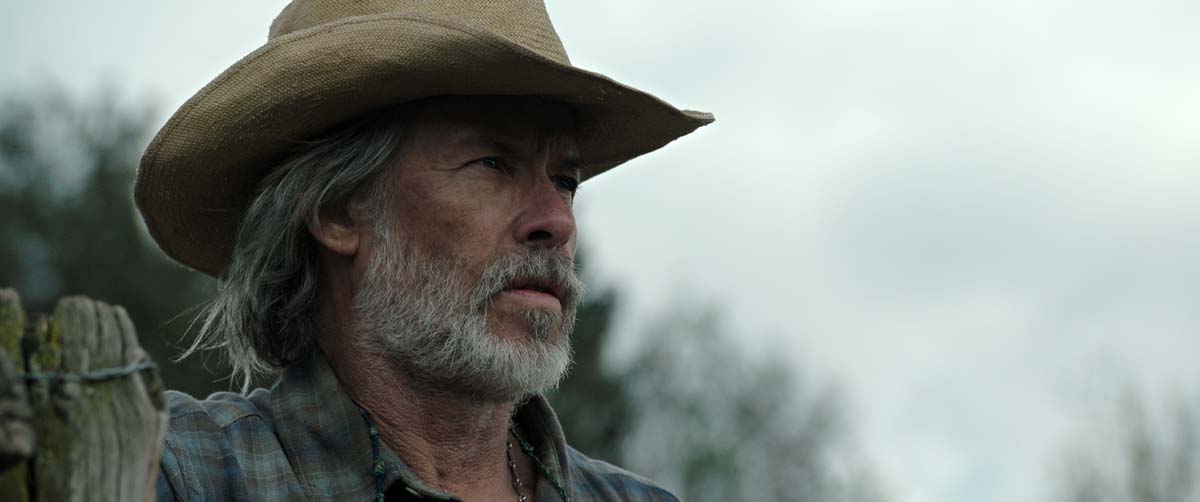
Yeah, exactly. In the novel, once he leaves Bangley, you don’t see him until the very end. We knew from the scriptwriting stage that they were going to put more Bangley in there, because that character is just so fascinating.
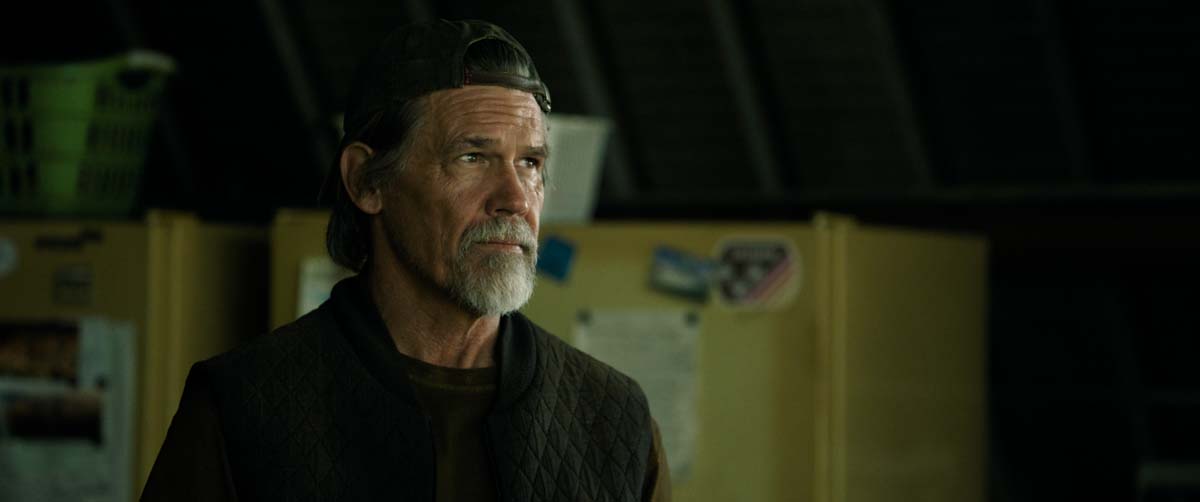
And Ridley loved how it was like the Odd Couple with these two guys, and that we wanted to balance them. Hig is the central part, but we don’t want to be away from Bangley too much because - especially once we we got Josh Brolin footage in there - this guy is just jumping off the screen.
He’s so good that it was a very conscious effort in the edit to balance those two things, because we never wanted to be too far away from one or the other.
Every time we go back to Bangley, it’s really illustrating the threat of the Reapers. We needed that to always be in the background so that we weren’t necessarily spending too much time being meditative with Hig, or later, the romance angle with Cima.
We wanted to give equal weight to all of those things because we wanted to balance it properly. We knew that we wanted to have this burgeoning romance between these two, but there was always going to be a threat that was going to come to them at some point toward the end of the film.
There was a lot of stuff with Bangley that was scripted, but we were even feeling in early assemblies that it wasn’t quite balanced yet, so we kind of concocted new cutaways to him to keep us as balanced as can be.
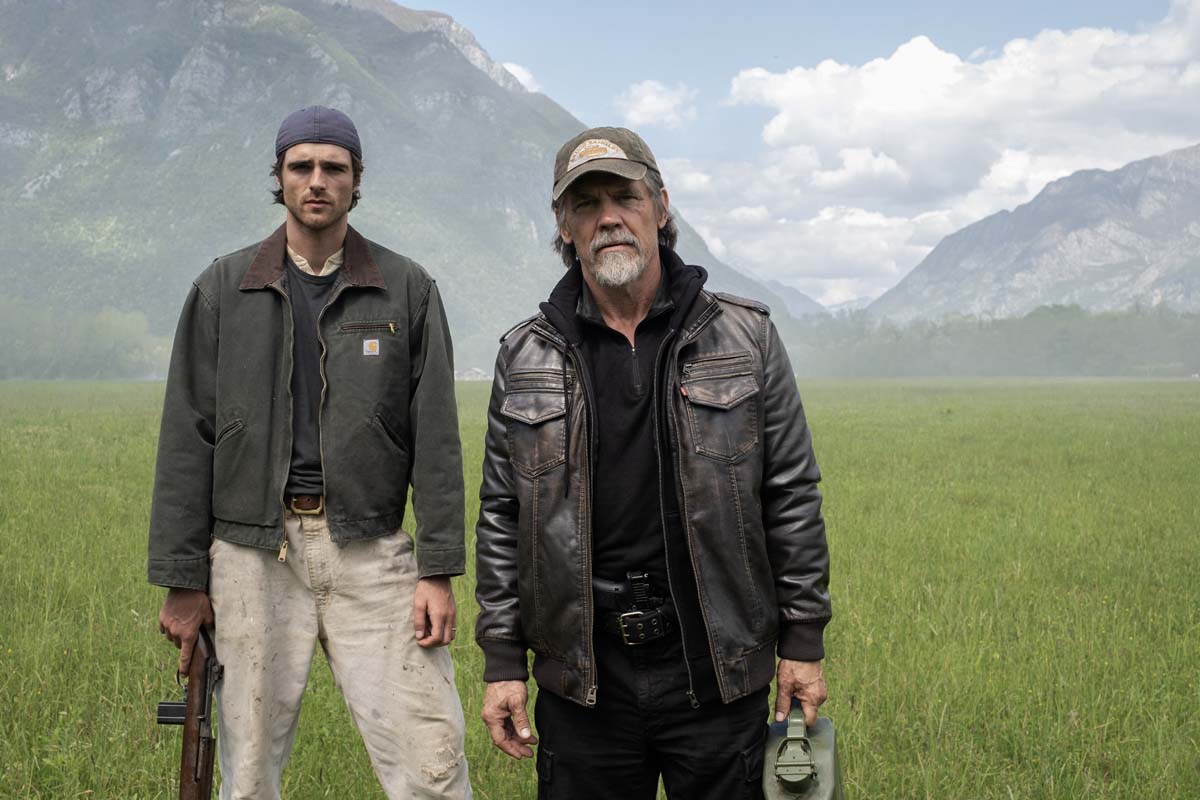
The two characters have a total different vibe, so if you’re feeling like the movie’s leveling off a bit, you might decide: “Let’s inject a little Josh Brolin.”
Yes, yes. I understand how that might be kind of strange for a movie to have tonal shifts like that, but that’s what living in this current life would be like.
You were trying to find peace and happiness and connection, but at any moment this stuff could just get blown apart. We weren’t afraid to try that and to have these total shifts where suddenly things are threatening then suddenly things are romantic or contemplative.
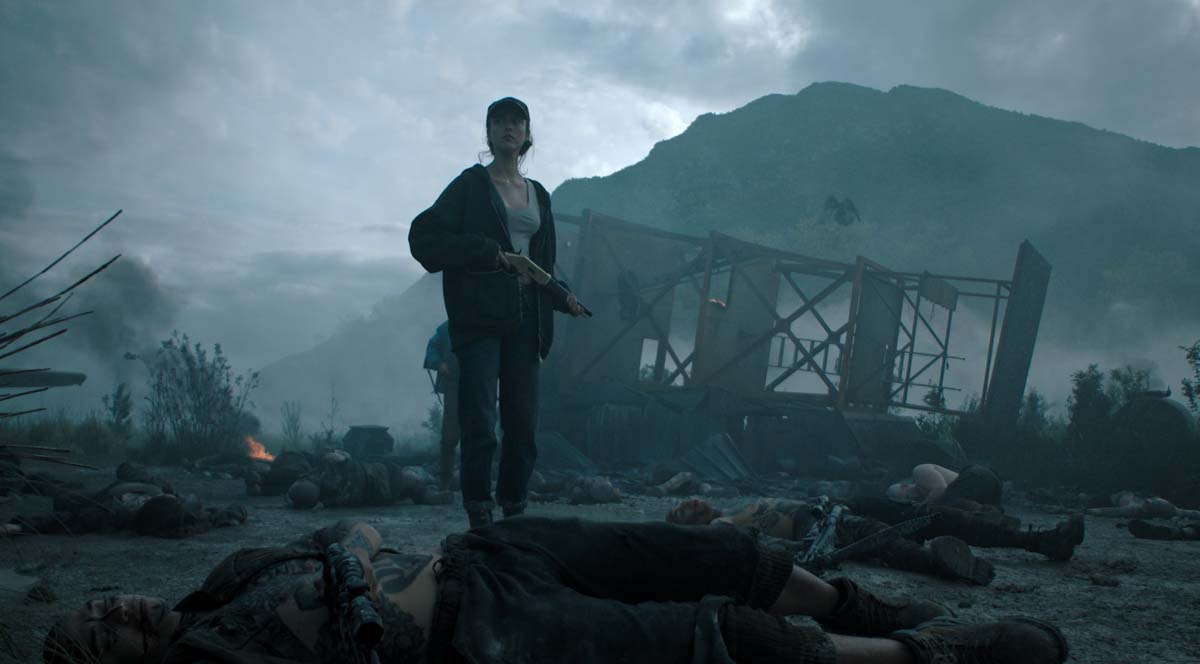
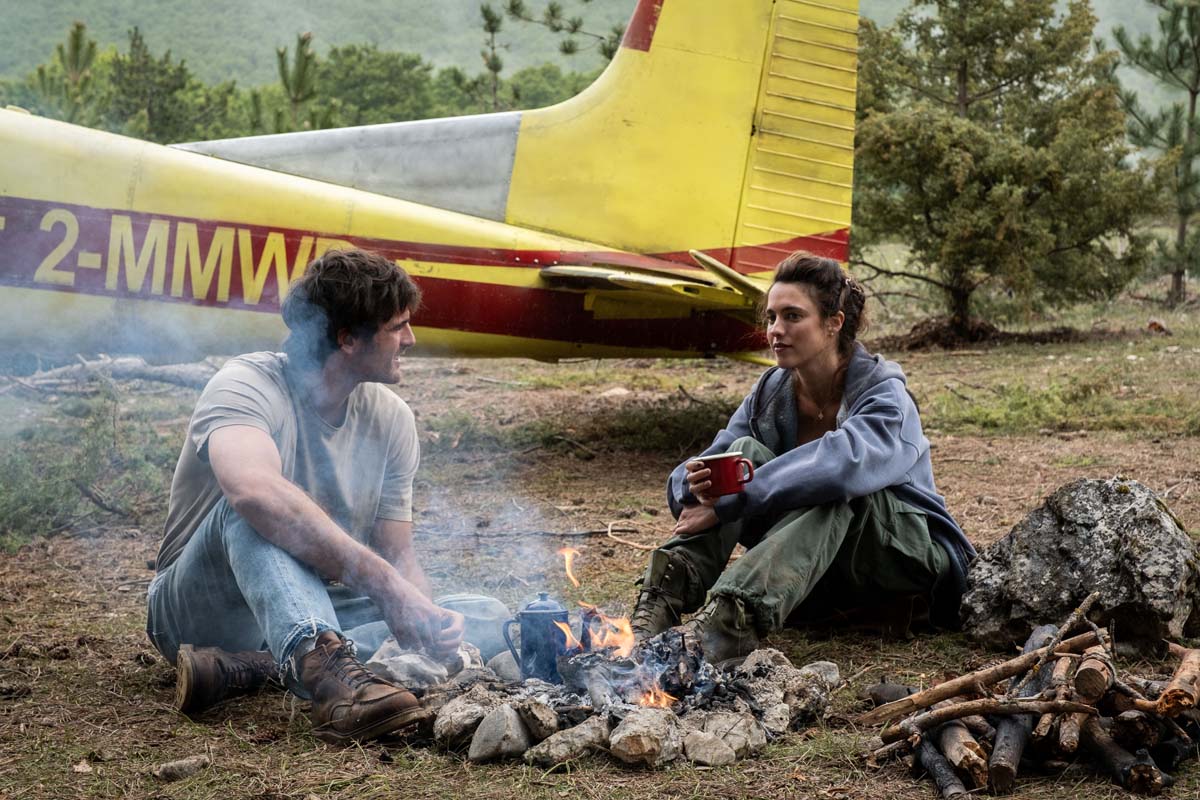
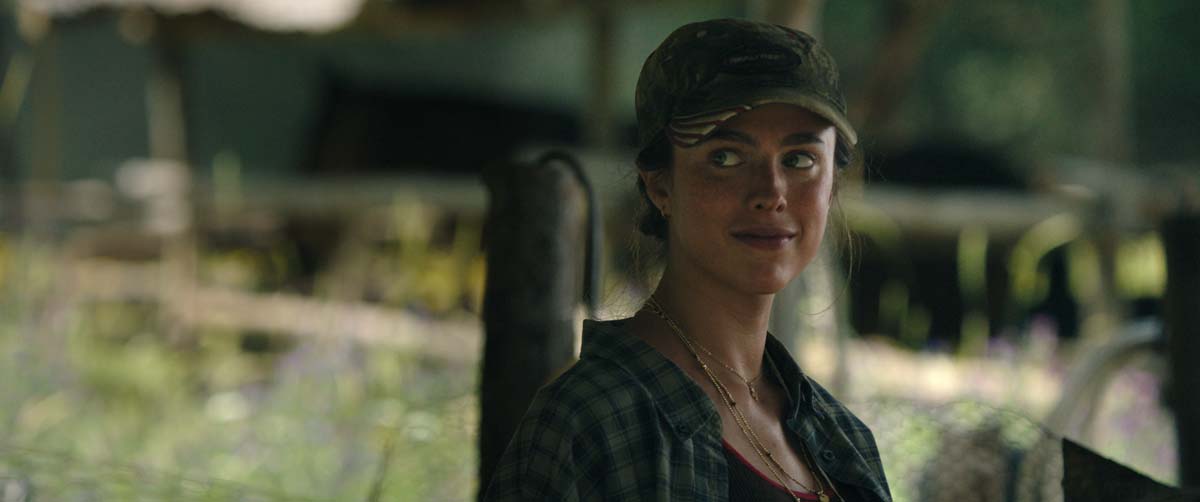
One of those romantic or contemplative moments that I loved was when Cima listens to music for the first time on headphones. You sit on that shot for a long time. It’s very emotional. You’re seeing the play of emotions on her face as she’s registering the music. It’s lovely, but no reaction shots, no coverage. Just a push in to her face, unedited.
That is straight from the novel. That scene is directly in the book. That was one of the emotional touch-points for all of us.
Ridley shot it that way. If I’m remembering correctly, he didn’t even do Jacob’s coverage on that. We knew that it was going to be one shot on Margaret [Qualley] and we were going to push slowly in on her. And it worked. I think it was like 4 or 5 takes.
SPOILER ALERT
The other moment I want to talk about is as Cima and Pops and Hig enter the passenger lounge at Grand Junction - slight spoiler alert. You mentioned that Ridley likes to shoot in multiple frame rates. That was one of the places where I recognized that you used the slo-mo that he had shot. Can you explain what led to that decision to use slo-mo in there?
END SPOILER ALERT
Ridley loves using different frame rates and slow motion – or “over-cranking” as he likes to call it - the old-school film term. This creates a sense of unease. It’s just strange. That was the plan with Grand Junction - to make this feel like “what is going on with these people? Something is not right.
This is really, really odd.” The Grand Junction stuff shows the trap that is nostalgia. He wanted it to look like “maybe this is great, but there is something off about it.”
Specifically using the technique of over-cranking really just gave that to us. And he’s pushing hard for us to use it as much of it as possible there.
In the hands of a lesser director, you would just say, “Let’s have the characters say, ‘ Jeez! This is weird!” Right? But instead you do it cinematically. I definitely had that sense of something being off. Things are not going to go the way they should.
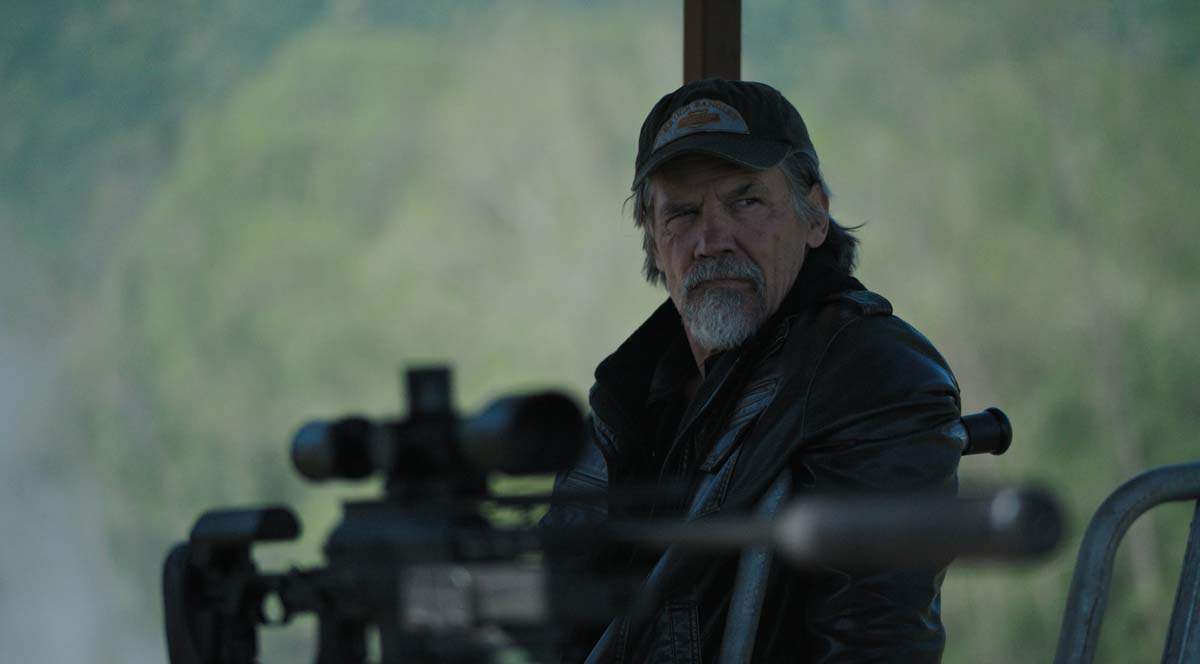
Another pace moment that I loved - a testament, obviously, to the performance - is at the end of the movie, there’s a monologue by Brolin’s character about a friend who failed to spend time with his wife and kids. Again, no cutaway, no coverage. It’s just on Brolin’s face. Let the man do his thing. Was there other coverage? Was it multiple cameras?
This is all Ridley. He’s explained it to us. So, on the day he shot Josh’s close-up doing that monologue, when he was shooting it, he said, “You know what? We’re not doing any other shots.” So there is no other coverage.
Josh was so good that we said, “Why would we cut away?” This is one of the most important monologues in the movie. Honestly, I think he only did it like 2 or 3 times, and every time was just perfect.
We don’t need anything else. It was wonderful. We were lucky to have all of these actors, but Josh Brolin knocked it out of the park on that scene.
It is a testament to somebody with the skills of Ridley to say, “I need nothing else.” I’ve heard that from a couple of other big directors. Kathryn Bigelow shot a scene in a wide shot, and was confident enough to say, “That’s it. We’re going to use the wide shot. I’m not going to shoot any closeups.”
For the VFX stuff, what did you use before you had VFX? Plates? Postvis? Title cards?
We have been very lucky the last three films. We have a wonderful duo of visual effects editors: Michael Chang and Jenna Chang. They are doing quick comps for us at a very high level. There is some element of blue screen and green screen.
Ridley doesn’t like to shoot with that. Often it creates more of a pain than not. It’s rare that we would have something that we couldn’t mock up very quickly. We had all of the plates.
Ridley doesn’t like to use previs at all. He’s got his storyboards and that get it done. There is an element of postvis that’s used whenever there are creatures. Postvis was a bigger thing in Gladiator 2 because we had to have stuff stand in for the baboons.
We really only had that for the buffalo stampede in this film. Otherwise most of it was pretty straight for compositing that Michael and Jenna could get done for us really quick so that by the time we screened the movie for the first time, there was no blue or green screen left. We had something standing in for every single element.
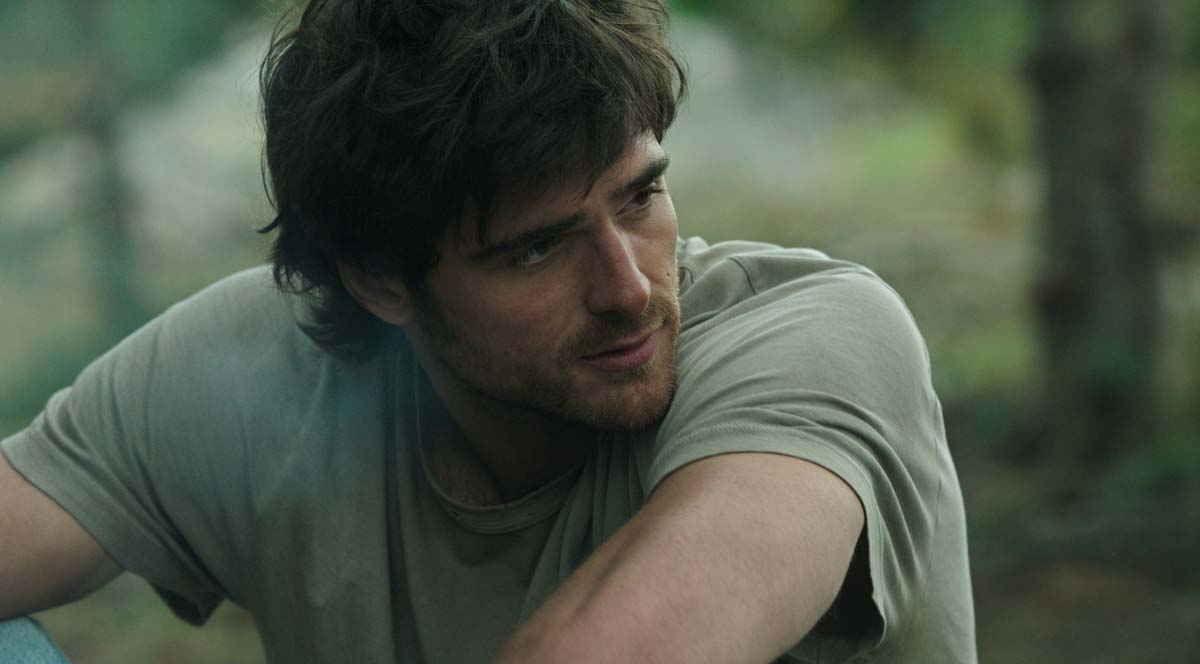
Let’s discuss music cues, needle drops and coming back to the same song at the end. Didn’t you use “Like Real People Do” at the very beginning and at the end? Both places, correct?
Yeah. Music is another absolutely fascinating thing. I love music. Claire does too. And this movie presented us with an opportunity to try as many things as we wanted to.
Both the novel and the scripts that Mark wrote had a lot of specific call-outs to songs, and we used a fair amount of those, but there was always the sense that - because we have the great Harry Gregson-Williams - we know that he is going to deliver some beautiful emotional score.
So that was probably the number one “back-and-forth” was: “How much on the needle drops and how much on the score?”
Ridley shot the opening stuff with Hig at Erie with Jasper. I think that was maybe week two of the shoot. Claire and I were scratching our heads a little bit about how we were going to assemble that stuff, because it’s one thing to do a scripted dialogue scene, or one thing to do a very storyboarded-out action scene.
But the opening of this movie gave us a big opportunity to introduce the audience to the movie, to the characters, to the tone and pacing in a way that we haven’t had on a lot of the other films.
We knew that we wanted to try a song first because that was going to connect with the audience. It’s set in 2035 and there would be some broad touchstone of a song.
So our friends at 20th Century Music had given us a few bins of about 30 plus songs to try throughout the film - not just at the opening. We weren’t quite sure how we were going to land on the opening. We tried a bunch of different things, but the moment – and I mean THE MOMENT - I cut in the Hozier song, “Like Real People Do” under some of our selects of the Eerie Airport - we knew we’d found it, immediately. We knew, “This is the tone.
That specific song is so haunting and it’s soulful, but it’s sweet without being saccharine. It’s melancholy, which really nailed Hig at the beginning of the movie. It was just beautiful, and the moment we turned that into a sequence, and showed it to Ridley, he said, “Yep, that’s it.”
From that point on, we knew we were going to transition into Harry’s score. We did kind of try to balance it, maybe not 50/50, but we always wanted to hear it.
Listening to music or being connected to the songs at the time, especially for the moment when Hig puts the headphones on Cima - that’s an important thing for people to connect via.
When it came to the end of the movie, we tried a bunch of different things and ultimately nothing really beat it emotionally and tonally. And it gave us a balance from the beginning to the end, so we thought it was just a perfect storybook way to end the film.
Was that a song in one of those bins that 20th Century gave you?
Yes, it was, it was. I was aware of Hozier from when he first on the scene with, “Take Me to Church” probably 10,15 years ago. It might have even actually been the last song in the bin.
He’s just got such a haunting voice and Claire is Irish, and once she found out he was an Irish guy, she said, “Yeah, we love this guy.” So, yeah, it was one of the songs in the bin along with the song by Camp that we use in the headphones. Both from 20th.
What do you use for temp? You knew who your composer was going to be. To me, it sounds like the soundtrack to Paris, Texas, which is my favorite soundtrack.
Good catch!!!
Really?
Absolutely! Good catch! We have endless amounts of respect for Harry and the work that he does. He’s a great composer, but we didn’t have something from his library that fit the tone of the movie. The Kingdom of Heaven stuff… we thought, “No.
That’s not going to work.” We were doing a more rustic-sounding thing. So yes, we had Ry Cooder in there from Paris, Texas, and I had some Explosions in the Sky in there for a little bit. We were conscious of never wanting to have temp love derail us, because that is a thing that happens on most movies.
We knew that Harry was going to knock it out of the park at a certain point, which he absolutely did, so we kept it spare on the temp music. It was things that were underlying the environment.
That’s what was so beautiful about Ry Cooder’s music from Paris, Texas, because it is its own character, but it’s just supporting the character on screen, more than anything.
People, if you have not listened to the Paris, Texas soundtrack, pick it up now!
Where did you shoot? You mentioned showing stuff to Ridley while he was shooting. Were you on location or remote from LA?
They shot the film entirely in Italy. They use the Dolomites of Italy for the Rocky Mountains – spaghetti-western style, basically.
Claire and I were based in Rome while they were up north, outside of Milan and outside of Lake Como for a time.
Why not edit there for heaven’s sake!
They were shooting at a breakneck pace. They’re only at these locations for like a couple of days. Honestly it’s just not really feasible. It made the most sense for us to be centrally located at the world famous Cinecitta Studios in Rome.
That’s where our cutting room was, and that’s where they were going to do stuff on stage - all of the interior cockpit stuff with blue screens. We had a good pipeline with our dailies team.
They were getting us footage very quickly, so that we could connect with Ridley wherever he was. We had a remote computer that we could log into and show him stuff remotely.
We’ve had a good system of working like that for the past few films, so it was really straightforward to send him stuff.
Then - once they got to Rome, which was the second half of the shoot - he came and saw us every few days. It’s so important for us to be near where he’s at. Both Claire and I think that we need to be close because you can just assess and solve problems so much faster.
With all movies there are problems with what they’re seeing on set, compared to what we are seeing in the cutting room.
There’s always some level of tweaking things and making sure with the camera department that we’re all on the same page and there’s just nothing better than having editorial - not on the set, but nearby - so that we can still have our exclusivity.
We don’t want everybody in the world coming in to see what we’re doing, but if the script supervisor has a question or Ridley or Eric Messerschmidt – they’d come and see us and solve a problem right away.
Sound design was important, especially the sound - I thought - of.the Cessna, which was almost its own character. But also one of the things that I appreciated, maybe because I’m getting older, but people are starting to complain that you cannot understand dialogue in movies anymore, but I felt like these people were speaking inside my head, it was so clear.
Excellent! Then the mission was accomplished. You are correct that dialogue is such a tough thing these days in movies and TV. It is a true testament to our sound designers, Matt Collins and Danny Sheehan and our rerecording mixer, Paul Massey. We want to make sure you can hear literally every line of dialogue. That is so, so important.
This movie sonically gave us a really unique challenge because the sounds of the Cessna and the sounds of nature are really all there is. There’s no more city life anymore, so that’s the stuff that we can really build depth into and understand what this world sounds like.
Now, if you were actually sitting inside a Cessna, you wouldn’t be able to hear anything, so we are playing with that because it is a movie, but these guys developed the depth of sound so beautifully that when we got to the mix stage with Paul, it’s wonderful.
Claire and I could just kind of sit back and say, “Yep! You guys got it.” It’s a fun collaboration these guys have. Matt and Danny, we’ve worked on a couple films together. They started very early trying to shape the sounds and record all of the Cessna stuff
They are in constant contact with our amazing production mixer, Stephane Boucher, who has been on the last five movies. He is so good at getting actual usable dialogue on these crazy locations.
This particular movie had a ton of wind machines and stuff going, so it’s really hard to get quality production stuff, but Stefan hits it out of the park every single time, so the sound designers have plenty to work with to shape it into something where you can understand everything that’s happening.
There’s some VFX sections of heat vision or infrared stuff. Did they really shoot stuff like that? Or was that VFX? And did it change the tone when you actually saw the heat vision effect?
Great question. That was one of the visual things that was constantly being discussed. They tried a lot of different versions of it. The night vision that Bangley uses in the sequence that we call “Bangley’s Last stand” when it goes up against all the Reapers.
There were many discussions with Charlie Henley, the VFX supervisor, and Ridley, about what this was going to look like. They did some tests of actual night vision, but it wasn’t quite what Ridley had in mind. So, in combination with Eric, they shot it kind of for real, but with a green tone to things.
They tried a more natural way in that we were going to have visual effects accentuate it, then put all the heads-up display stuff on it.
That look evolved constantly because Ridley had a very specific idea in his mind. He did not want it to look like anything he had seen before in movies. He wanted it to be kind of like a slightly fractured look and also like a hyper-speed look and just otherworldly.
It was an ongoing process. We finally locked the look maybe two-thirds of the way through the whole show. Once we saw that, that also informed the other departments. It informed the sound guys in the depth of what this was going to sound like.
And it informed Harry’s music, too, because it’s really, creepy and unsettling when you’re seeing these POVs of the Reapers.
Charlie does an amazing job of translating Ridley’s vision into action. That stuff really, really worked out well.
Sam, I want to thank you so much for the time you’ve given me. I really appreciate this discussion. I hope everybody gets a chance to see this movie in the theaters.
I really appreciate it. Steve. We really love this movie, so I’m happy to talk about it. Thanks very much. It’s so good to talk to you again.
 October 5, 2026
The Whisper Man
Chris has been on Art of the Cut before for The Menu, The Many Saints of Newark, A Quiet Place, and Assassin’s Creed. He has ...
Read more September 23, 2026
Sean Combs: The Reckoning
Charles Divak has been on Art of the Cut in the past for Chimp Crazy, for which he was nominated for an Emmy and won ...
Read more August 27, 2026
The End of Oak Street
John has been on Art of the Cut for a full decade with Lost City of Z, Antebellum, Ad Astra, and Chevalier. He also edited ...
Read more
Subscribe to our newsletter
Get all the latest news, blog posts and product updates from Boris FX, delivered directly to your inbox.
Welcome!
Thanks for opting-in to our newsletter. You'll receive an email momentarily with your confirmation.