













The Dinosaurs
Editing Amblin Entertainment and Netflix’s new documentary series meant walking the line between animation editing, natural history documentary storytelling — and calibrating science, entertainment, and emotion over eons of evolution.


Today on Art of the Cut, we have the lead editor and the VFX editor of Netflix and Amblin Entertainment’s documentary series, The Dinosaurs.
Ben Lavington Martin, BFE was the lead editor on the series and cut the first episode. His other work includes The World According to Jeff Goldblum, David Attenborough’s Natural History Museum Alive, One Strange Rock, and Nova, among many others.
Matt Howorth was the visual effects editor. His other credits include shorts: Rodents and Bull Shark Bandits.
This is a very unusual combination of a couple types of editing. It’s animated, obviously, though it looks live action, but it’s also very similar to a typical natural history doc where you see the eagle and the narrator says, “The eagle’s looking for the salmon.” Then you show the salmon swimming in the river. “Oh, there’s the salmon. It doesn’t know it’s about to get eaten!” How did you approach this editing? Was it similar to an animation style of editing, or was it more similar to a natural history, or did it combine?
Lavington Martin: It was definitely a bit of both, which was what made it so interesting. If you look at the cutting questions - action, tension, point-of-view, reveal, pay off - it behaved very much like natural history, but if you looked at how it was actually built - storyboards, blocking animation, back plates - it all had the grammar of animation.
Silverback [the production company] have an incredible track record in natural history, so getting the language right and making these feel like real creatures in a real world was never going to be the problem.
The trick was holding on to that sense of observation. through this process that was - by necessity - really constructed.
Dan Tapster, the showrunner and series producer, and all the directors had already shaped the stories like a drama, natural history hybrid, so there was a strong narrative spine on all the episodes.
Before we got really deep into the intercutting, on episode one, my director, Nick Jordan, worked really closely with the storyboard artists, to build all the visual beats, so by the time I was cutting those in our first storyboard cut, we weren’t inventing it from nothing.
We were refining and testing - and in quite a lot of places - rethinking something that really had a real shape to it. So once a honed[1] storyboard cut was ready, it would get priced up by Industrial Light Magic and Claire.
At that point we had to reduce or expand the sequences to balance the budget with the rest of the film. So the challenge was to keep the life… like the real life, the [2] breathing life in those scenes through all of that.
You wanted a natural history truth and that sort of cinematic spectacle and lift, but then you had all the scientific discipline, and all of them need to be pulling in the same direction.
But whether it leaned more towards animation or natural history at any given moment, the story was always the thing that mattered. You had to keep that flame burning from the first storyboard cut all the way through to final post.
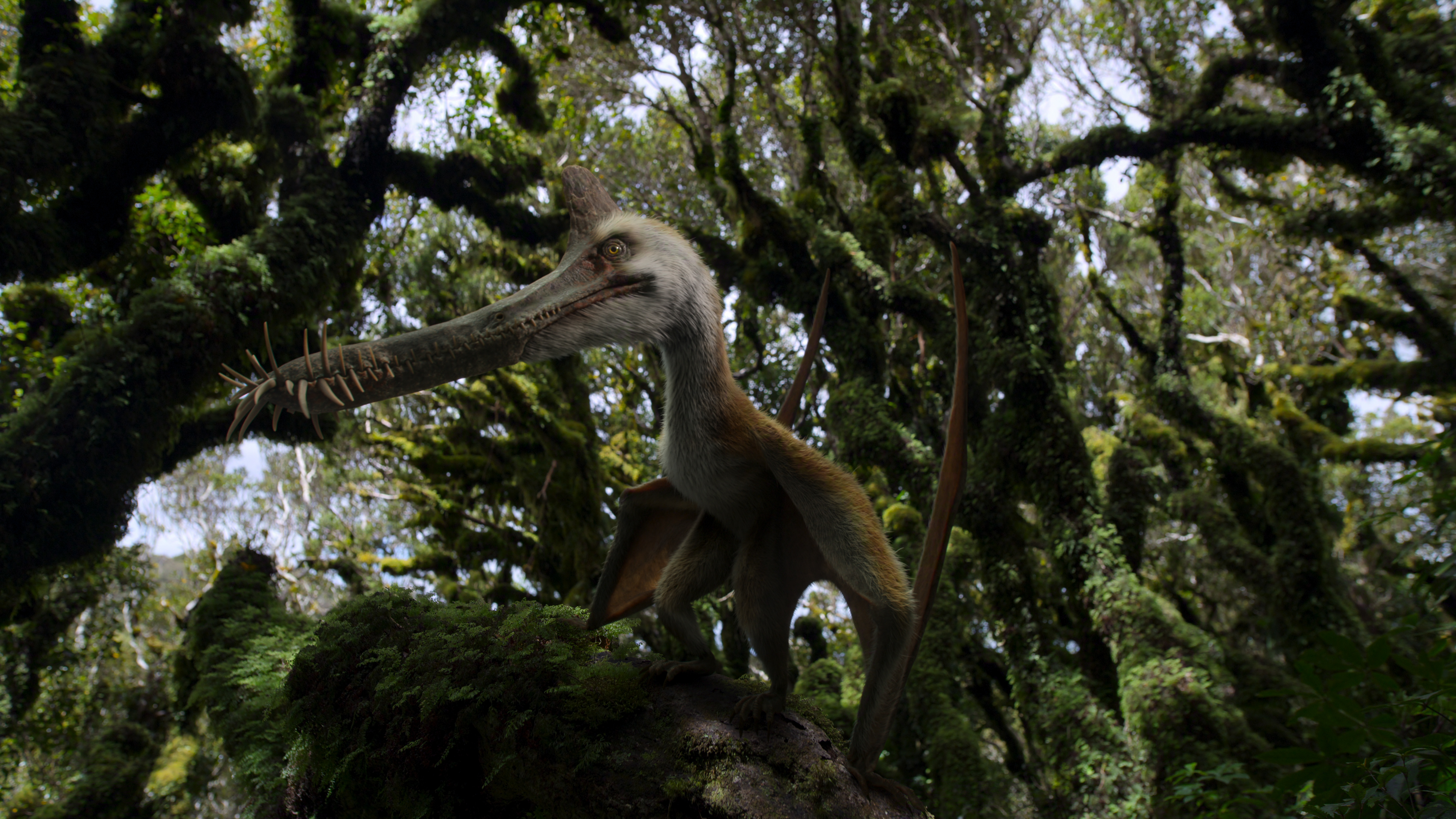
You mentioned how important story was. I want to talk about building some of those stories. In the scene with Marasuchus trying to get at the carcass of Luperosuchus and the two of them fighting over the carcass of a rhynchosaur, which is a strange, big-beaked reptile.
Lavington Martin: Yes, it looks like a snapping turtle without a shell. So, you’ve got this tiny, scrappy little creature trying to nick food from something that’s so much bigger than itself.
What I love about this sequence is that on paper it’s actually really simple, but the moment you start cutting it, you realize it has all the things you want in a good scene. You’ve got jeopardy, hesitation… like the tension.
All these little tactical advances and the setbacks and that constant feeling that it could all go wrong in a heartbeat, but it was one of the first places in the series, where the style and the feel of the narration starts to announce what it wants to be.
It’s not just saying, “Look, here are some prehistoric animals.” It’s asking the audience to read the behavior. To see the intention in the creatures, almost the way you would in a wildlife sequence.
You mentioned earlier that a lot of the narration was stripped out. It was really sparse, which I thought was lovely, but tell me why it went from denser to more sparse.
Lavington Martin: The real editorial job there was to make the behavior legible without over-explaining it or making the scene over-anthropomorphize the animals - giving them too many human characteristics or traits.
That’s where the timing does an enormous amount of heavy lifting: How long do you stay on a look? When do you cut away? When do you let the audience think that the little one might actually get away with it?
And because Morgan Freeman’s narration is so sparse. The scene really has a lot of space to play in the picture. The geography needs to be read. The eye-lines need to read. And the shifts in confidence need to move from one creature to the other.
Otherwise, it’s just a bunch of nonsense, so we obviously didn’t have the rushes of a living creature to cut, but the storyboard artists were brilliant, and once we had the next phase with the blocking animation – which is like “sliding, roller-skating, gray, blocky dinosaurs” - you suddenly had something to shape and you could work with geography.
Even in that very rough form you can feel where the tension wants to sit and where the scene needs to breathe.
So much of it came down to trusting that the audience would do quite a lot of the work. If you leave them enough space, they lean in, and that’s usually when a scene starts to feel alive.
Was that something that you discovered more in context, whereas when you were able to see an entire episode, you’d think, “We really could use less.” Or was it something that much earlier on that was getting distilled?
Lavington Martin: Our feeling was always that the sequence should work visually first. I’m a huge believer that the pictures can carry the story on their own.
Obviously, the sound design is more than half the experience. But if it was a comic-strip, the pictures of the scene tell a story that an audience can follow. Then you’ve kind of won half the battle.
So, if you can mute it in the sequence and it still basically makes sense, then you’ve got really good bones. Then the sound design gives it the physicality, and the music gives it emotion and shape, then the narration that comes in needs to genuinely add something rather than just handholding the audience.
Yes, the commentary is doing a lot of heavy lifting because in the early process of the series, when we’re doing all the rough edits, all you have is storyboards, temporary music, and rough guide-track narration, which is normally just one of the directors or one of the editors.
But as the sequence evolves - especially once the creature behavior starts to really land - you often realize, as with any any production - that you need less and less explanation. So you need an awful lot less than you thought. The scene starts to speak for itself.
Morgan’s voice arriving at the end was obviously a huge gift, because when he does come in, it really means something.
It has that authority and warmth without needing to dominate, and that does become an editorial judgment call, really - knowing when to abandon something, when to keep pushing and when to stop before you start ruining what was already working.
You can over-polish things in an edit if it goes on for long enough. There’s a lot of patience involved. You have to just stop when it’s good enough, and trust the process.

One of the great things about art is knowing when to stop.
Lavington Martin: That’s exactly it. One of the great dangers on a series like this is that there are so many moving parts. You can keep fussing forever. Boards, plates, animation, archive sound, music, narration.
You get all the notes from all the different departments. Then you’ve got our internal conversations.
All the edit suites were next to each other, so we could talk things through and everyone’s got great ideas about how a scene is and isn’t working. So there’s always one more thing you could add. But very often the stronger choice is restraint.
Once the animation is alive and the behavior is reading, you can usually take your foot off the pedal for a little while, at least if a sequence is already working. The worst you can do is panic and decorate it to death. So for us, knowing when to stop was really about a confidence. Dan would always say, “Trust the process.”
So confidence in the behavior, confidence in the cut and confidence that the audience will come with you. Always an easy thing to really believe in, but it’s usually the difference between something feeling elegant and something feeling overcooked.

Let’s talk about structure. Obviously this is something to do with writing. But, as you said, you’re collaborating with the writers. The documentary is not in chronological order. You start with dinosaurs, then you go backwards.
Lavington Martin: Kind of. For the first scene, we start with actual dinosaurs. Obviously, that’s not the start of the story. It boils down to the process. There was a lot of collaboration. David Fowler’s writing was a really important part of the process, helping a structure, because the challenge wasn’t simply to explain the science clearly, it was to make the science dramatically useful and, emotionally resonant, without tipping over into total nonsense that would lose the audience.
The editorial was constantly having a conversation with itself. You’re always asking whether a line sharpens the moment, gives it context, lifts it emotionally, or whether the pictures are already doing the job on their own.
So in that sense, it did have some of the back and forth you get on an animated project because the structure, script and visual storytelling are all in conversation at once.
They’re all having to work together. They were often much closer to natural history. David the writer, Dan, series producer, Nick and Julian and Darren, the other directors have a really, really strong feel for making science feel human and dramatic without losing any accuracy.
That was hugely useful. And because the team different strengths, none of them sat in one lane, story was being shaped by the writing, the direction, the editorial, ILM’s VFX, and the music all at once.
Structurally too, the priority was always and should always be dramatic clarity rather than just marching obediently from point A to point Z.
We’re dealing with deep time in this series, and it can go abstract really, really quickly. You’re talking hundreds of millions of years and the audience’s brains might have a hard time comprehending, so if you’re not careful, it can go crazy.
So we were always looking for the strongest story spine, rather than simply laying events out and hoping they become compelling.

We don’t usually have VFX editors on. We’ve had a couple on Mission: Impossible - movies like that. Matt, what were your roles in helping between the two groups?
Howorth: My role is the middleman, so I’m a the visual effects editor on the client side of things. It starts with giving these shots names. We’re saying, “We need a closeup of Marasuchus on his face or a wide with a Marasuchus and rhynchosaur. We start with nothing.
The first thing you need to give is a shot number, and it’s just making sure that all of these 802 shots that featured throughout the series are labeled in the correct way and go through the pipeline without ever missing a frame.
It’s really highly detailed and organized work, and it has to be maintained from the imagining of the shot to final render of the shot, and not only pass through ILM back-and-forth sometimes up to maybe 50 versions in some shots.
That gets sent to our post house, Harbor, who did a great job in sort of putting the final bells and whistles on the show.
It’s basically tracking every single shot going in and out of the edit that has any bit of visual effects, whether that be just a little bit of foreground “dingle” (small piece of foreground foliage) or whether that be actually throwing an asteroid at planet Earth and destroying it.
So from the edit’s point-of-view it starts with the shooting scripts and the storyboards, because that’s where the first shape of the sequences are established.
From there, the storyboard editors cut the guides for the back plate shoots. That’s when they go out and film the material that the dinosaurs will eventually live in - all the different environments in all the different countries around the world.

Lavington Martin: Editorial is involved very early on in working out what beats need to land - what sort of coverage the scene needs: cutaways, “dingles” being shot on blue screen - those little dangly bits of branch that we use in foreground to add more reality to the scene.
Determining what direction the camera is going to be moving. Jamie’s cinematography was brilliant. It was really good to give those template guides to the team.
I was involved in episode one for that process, which was invaluable because it meant that I was already thinking editorially before the plates were shot.
Then, once the back plates come in, those get combined with the storyboard material and the evolving VFX shots.
So the cut is constantly moving in this state of flux between something planned and something increasingly resolved.
Matt and Josh, were handling a lot of the VFX, on the editorial side. They’re bringing in the boards, the back plates and the updated shot versions as they progressed. Claire Tinsley, our VFX producer was key in keeping that whole machine moving.
She was the oil and the operator. There’s no way we could have, kept track of everything without her keeping everything moving smoothly. So as new versions started coming in from Industrial Light and Magic, the sequence keeps changing shape.
We’re constantly messing around with it - to everyone’s despair - but that’s how it works. You get the feedback in and we’re constantly striving for the best version.
Sometimes a beat suddenly becomes clearer because the creature behavior is now doing all the work, and sometimes you realize that a moment needs a little bit more space.
You need to make a shot longer. Sometimes you can simplify because a shot comes to life and you can lose a cutaway because you’re letting something breathe. So it’s a layered process.

You start with story and structure, then you build resolution step by step. And because the cut keeps on evolving alongside the shots, rather than just waiting for everything to be finished we didn’t just simply do a live-action version of the storyboard cut. The directors can keep honing what they want the episode to be.
The physical setup really helped as well. All the edit rooms are side-by-side. Production had an office area and a meeting room just outside. We had a huge screen up on the wall so we could talk with Netflix and Amblin and ILM and Lux Aeterna.
It really felt like people could have conversations about scenes and shots, and you could get ahead of things when someone was trying a new atmospheric or they were putting a look or a weather treatment on a scene.
It helped to inform other edits in other parts of the series because you were always aware of what everybody was doing and what stage everyone was at. If someone was having difficulty with something - like one of these science beats - we could all muck in and give our opinion. Everyone was really collaborative. So the physical set up was super helpful.
You had this formal review side of it, but you also had that lovely organic studio conversation where problems get solved really quickly and ideas travel from room to room.
I want to jump back to Matt for a minute to understand a little bit of the process. Maybe some of the technical stuff of being able to track all this stuff. You said you’re the middleman. So you start with these storyboards, then you start getting elements in, and you’re also getting stuff back from ILM. So give us a sense of an early day - where you’re sending stuff out - and a later day - when you’re getting stuff back in. How does that look and what’s happening on the timeline with what you’re doing?
Howorth: The way that we went through making the show every week, we’re trying to hit a review deadline from Netflix, and they wanted to see how each scene was progressing weekly, which was it’s quite a challenge to keep up with.
But it was also really great to have that challenge because Amblin - being part of the team, giving us this sort of help to really build those stories out - it gave them every opportunity to give us the tools that we needed to make the show everything it could be.

So we would still start the week with an aim to get at least 2 or 3 sequences out, but sometimes more if the schedule called for it. And that would start with some notes from Netflix and Amblin making changes to shots, adding shots, taking away shots whilst this process is happening in the edit.
Luckily, I was right outside of the edit rooms, so I was able to listen in to what’s happening, get in there and see all the changes that I’m making, which is really helpful when you’re trying to manage every single change that’s happening.
If I wasn’t there I would always get a review copy that would be sent to our series producer and all the other producers and that would trigger me to watch the sequence and see all the shots that have been added, or if shots have been shortened.
It’s all tracked through EDL’s that we turn into… basically frame count sheets, so that EDL takes the time code from the [4] backplate, then I convert that into a frame count and any discrepancies, I can track and note the changes and make sure that those changes are communicated to ILM, which is super-important because you definitely don’t want ILM working hours, or days, or weeks, even on frames that don’t exist anymore. Waste of money, waste of time, and probably will anger a couple of people if they found out.
So it’s really important to make sure what all of those discrepancies are and communicate that to every single person.
Whilst we’re doing that as we’re having weekly catch ups two days every week with ILM where they watch the sequence and go through with me and our visual effects producer, Claire Tinsley - who was instrumental in making sure that everything was tracked properly also. She kept me afloat whilst I was sinking. If I’m organized, she’s the god of organization.
She’s incredible. So we had those weekly catch ups with me, Claire Tinsley, Dan Tapster, our series producer, the director of each episode, and we would make sure I understood exactly what we’re trying to communicate in every scene, every week.
We’re always hashing this stuff out throughout the process. Then, with ILM starting to send us all the work back that they’ve been working on and, it’s up to me to get all of that stuff ingested and then updated on Ben or any of the other editor’s timelines where we’re starting the storyboards in most of the time Premiere, because it’s just a little bit easier to move things around and have freedom with the assets we’re given.

Also all of this stuff is being drawn in Photoshop, so the link just works perfectly. We’re taking all of that stuff out of Premiere and transporting it over to Avid, and making sure that all the back plates are seamless.
That’s sort of layer one of the visual effects timeline. Then layer two would be the first animation passes, then that just keeps stacking on top of each other until we get to the final, where then, me and tech lead, Shaun Pearce - he’s an amazing tech lead - would consolidate all of that stuff down.
So we just have the final and anything else that’s relevant to the show. That will get sent off to Harbor for the end of the process.
So really you’re going from v1, A1 and A2 all the way to v56 A131 with the editing tracks, then we whittle all of that stuff down, making sure that nothing changes, obviously. Then that gets sent off to Harbor for the final process.
So it goes from an ungodly looking timeline that basically breaks Avid - sometimes when you go in and out of Avid with our timelines, it took about 10 seconds for it to relinquish all the media and wake up again because it was just such a mammoth project.
Then you get down to just a track of archive, a track of especially shot stuff, and then a track of visual effects. It’s kind of incredible. The journey we went from massive to barely any tracks.

Matt, how much of the footage was 100% made up, then how much of it was comped 3D over back plates?
Howorth: Actually, a large percentage of our shots are live backplates with the dinosaurs comped in. We want it to be Hollywood, but we want to keep that natural history vibe. So it’s really important[6] that our backplates were live.
There were quite a few scenes that were basically impossible to achieve with live back plates, and we did those scenes fully CG. For instance, in episode two, you see a dinosaur called Massospondylus in a forest fire, that was obviously going to be a full CG scene.
And when you have ILM at your disposal, you can’t really tell the difference, especially when you’ve got fire atmosphere up to the level that ILM does it.

Tell me about the rainfall montage.
Lavington Martin: Those were some of the hardest sequences in the whole series. There’s nothing worse on a show like this than taking the audience back hundreds of millions of years with some glorious dinosaur material, then suddenly you’re asking them to sit through an Earth-process section that feels like homework - like a lecture.
So those scenes for us had to work as cinema and as story and not just explanation. I’ve cut a lot of hybrid documentaries where we mix styles of natural history and science. I’ve always loved those sequences that feel like a visual roller coaster.
The Earth itself also had to feel like a character in its own right. Not in a sentimental sense, and not anthropomorphic either. But like this huge, living, breathing force that’s constantly reshaping the conditions that these animals are trying to survive in. Not consciously.
It’s not a creature trying to manipulate what’s going on. It’s more like this massive entity that sort of rolls over in bed and crushes out a civilization without realizing it. It’s got to have that feeling of having its own timeline. In practice it meant being really selective.
We were drawing from Silverback’s vast catalog of material - some shot specifically by the dinosaur production team and archive that was carefully selected. Only the strongest stuff stays in: the gold, the shots with the clearest visual idea, the best momentum and the strongest story value.
And of course, in these sequences, rhythm is everything. You’re moving from really big ideas like these giant landscapes and unfathomable details about how long it rains for, or tectonic plates shifting, to these really little details - drops of water in puddles and tiny little shoots of green exploding on branches of trees and such.
There are these tiny little details that the audience can physically latch onto. I’ve always loved that contrast with the grandeur of a storm front and a tiny little raindrop hitting like a bomb in a puddle. Going super wide to super close. The job is to take the audience on that journey through change and not just hand in the information and lecture.
For other scenes, Lux Aeterna - who was another one of our VFX partners - created these epic shots moving across the surface of Earth. It’s like a drone as it transitions through deep time with the landscape changing and mountain ranges rising and falling and volcanoes and waterfalls and forests coming and going.

My memory of that sequence was that it was just one long shot through that landscape. How is that represented early in the edit? Was it just a single text card for 45 seconds that said “Earth transforms”?
Lavington Martin: A shot like that, you’re solving story problems first, because we need to know what needs to go in. You’re moving through a vast amount of time, so it’s very abstract, and the audience needs to follow the journey with you. So you don’t want to confuse them or throw in things which are unnecessary.
But it all needs to feel like it’s actually happening. You need to know what the audience needs to understand. You need to think, “Where’s the emphasis and how long do we stay with one beat before we move to the next?”
And in a continuously evolving shot, that’s really hard. So in the early cards, it might be represented by a sequence of storyboard beats or rough visual ideas like archives stitched together rather than one elegant final move.
It definitely wasn’t just a card saying, “Earth transforms 45 seconds.” That just wouldn’t cut it. You still have to shape it, even in rough form.
Otherwise no one knows what the shot is trying to do, and ideas can be dropped very early. If not, everybody’s going to kind of come on board. Then, once it starts coming back with more detail and more physicality, and we’re adding sound design and narration, it gradually reveals what it wants to be.
That’s where that side of the process becomes really important, because the handoff between the edit and the VFX is what lets that shot evolve from that little germination of an idea into something that feels fluid and finished.
How did that go from maybe 3 or 4 or 10 storyboards?
Lavington Martin: You might have three or 4 or 10 storyboard beats because you’re solving the scene in tiny little pieces.
Then later - once the visual language becomes clearer, and we were rolling these out across the series in - the material starts to feel more photographic, which is obviously an awful lot of hard work for the for the animators and the VFX teams.
The way that sort of started, we knew we needed a motif of like moving through millions of years. How do you visualize that? How does the audience understand what’s actually happening? We knew our motif was going to be stars going past us. In what way?
Faster than light speed. I don’t know how quick you need to go to go a million years in one second, but that’s how fast we were going.
So that was a motif that we always knew we wanted: seeing the tectonic plates move, because everything that people understand is that Earth looked a lot different throughout these millions of years than it does today, and that’s a really great way of visualizing it.
We came to Lux with that pitch pretty early on, I want to say when we were still going through our storyboards. It was sort of three shots that were like about 15 seconds long each. Through that, we had enough in the sort of offline process to understand what those shots would be.
We knew that we needed to establish this on-the-ground version of that because it’s all seeing it from space. But when you’re really on the ground and seeing it rise and fall around you, it’s much more epic, and the audience really engages with that. It’s a really difficult shot to pull off.
Lux had a hell of a job doing it, but it starts with a very rough looking gray landscape that frame by frame goes up, and frame by frame goes down.
We told them that we had to go through these different landscapes, so they gave us landscapes about 10 seconds of landscape and we passed through each one of those landscapes.
It was a case of speed-ramping through, breaking it down to fit the duration that we needed. From there, we get the frames off to Lux and they start making the bespoke one for the episodes. That’s when you start to see the detail come in.
So it starts from 12 frames a second, growing here to now we’re at 23 frames and we’re matching our frame rate and it looks smooth, but it’s still sort of blobby landscapes. And it constantly develops until you get to a sort of textured atmosphere, all the bells and whistles on it.
I think that shot’s one of the shots that had “version 50” next to it within three months of working on it, because it’s just constantly being updated by the directors. Like, “That mountain it’s looking a little bit to triangle.
Could we flatten the top of it?” or something like that. So it was constantly being updated, but we had 49 different versions to sort of splice and cut into it if we ever needed to extend it. We had more than enough media for that section to communicate that in the offline.

Editors often discuss other movies with their directors. For a shot like that, they might reference some similar shot from some other movie… trying to explain how they want something to look. Is that something that would you would have a discussion about?
Lavington Martin: Yeah, definitely. Not in a heavy-handed “copy this” kind of way, but in the sense of grammar, definitely. One touchstone for that earth process scene was talking about Darren Aronofsky’s Noah.
There’s an amazing shot in there. I think it’s actually one of the most expensive VFX shots ever produced. There’s definitely a sense of that scene where you’re moving through hundreds and thousands of years, but everything’s moving and changing and shifting, looking at things like that. And, having a sort of cinematic language.
I think all of us are in love with cinema, or documentary. It’s a very easy shorthand for us to be able to find these kind of visual, creative things we have in common and express your intention by talking about a scene from Blade Runner or a series that’s just come out on Netflix.
When you’re talking about point of view, proximity, scale, whether something wants to feel observational or immersive, whether we’re watching from safety or right inside the action, that kind of thing, the grammar’s really important.
Jamie McPherson, our cinematographer, was really important at this point because it isn’t just about beautiful photography. It’s about giving us a visual grammar that we can actually cut with.
When they went into the field to shoot the plates, they had big blue heads of the dinosaurs and some wonderful props and puppets that were incredibly useful for that.
Not just as performance reference for the animators, but because they let the camera team see where the dinosaur would be and see the dinosaur at scale in the frame on location.
And you really got a feel for the pace of movement. And to understand the eye lines and the mass of these creatures and work out where a shot would stop feeling real. If you’re filming real animals and then moving around, you can get that sense of how the physicality of the camera should move to counteract it.

Let’s talk about the meteor montage. This is a critical story beat for anybody who knows about dinosaurs. Also, it was a big emotional beat as well. Let’s talk about how long to make that and determining the number of shots in the coverage, so to speak.
Lavington Martin: The meteor scene. Charlie Dyer, the editor on episode four, did an amazing job with Dan Williams, the director. The meteor material is all about scale and shock, but it still has to be readable to the audience because it’s obviously a massive rock in space, and it’s hard for an audience who’ve never stood on one to imagine what that would be like. You can’t just make it feel fast and noisy and hope that the audience will feel that impact.
The audience has to understand the cause and effect and feel the immense scale of what’s changing, the way they cut the scene with the pacing and the timing just really builds the anticipation.
And then when it hits, it’s just this huge visceral explosion and this shockwave that emanates around the planet.
The sound design and the choice of music, along with the pacing - that’s all carefully structured and thought out over such a long period of time.
But it really paid off. It’s really about controlling the pace rather than simply just accelerating it. I think they did a really good job of knowing when to stay wide for scale and when to come in closer for the impact. I was talking before about this sort of super wide and super close perspectives.
You obviously don’t want to go into the grains of sand or the minerals in the asteroid, but that sort of wide/close has a huge visual impact on the scene.
And because the Earth is effectively a character in the series as well, you’re not just cutting for catastrophe, but it’s a world changing state. One of the characters you’ve gotten to know through the series is also being obliterated.

I really loved the montage of modern day birds. Can you talk about that? And what the creative choices were in choosing the various birds and types of shots that were in it and the pacing of it?
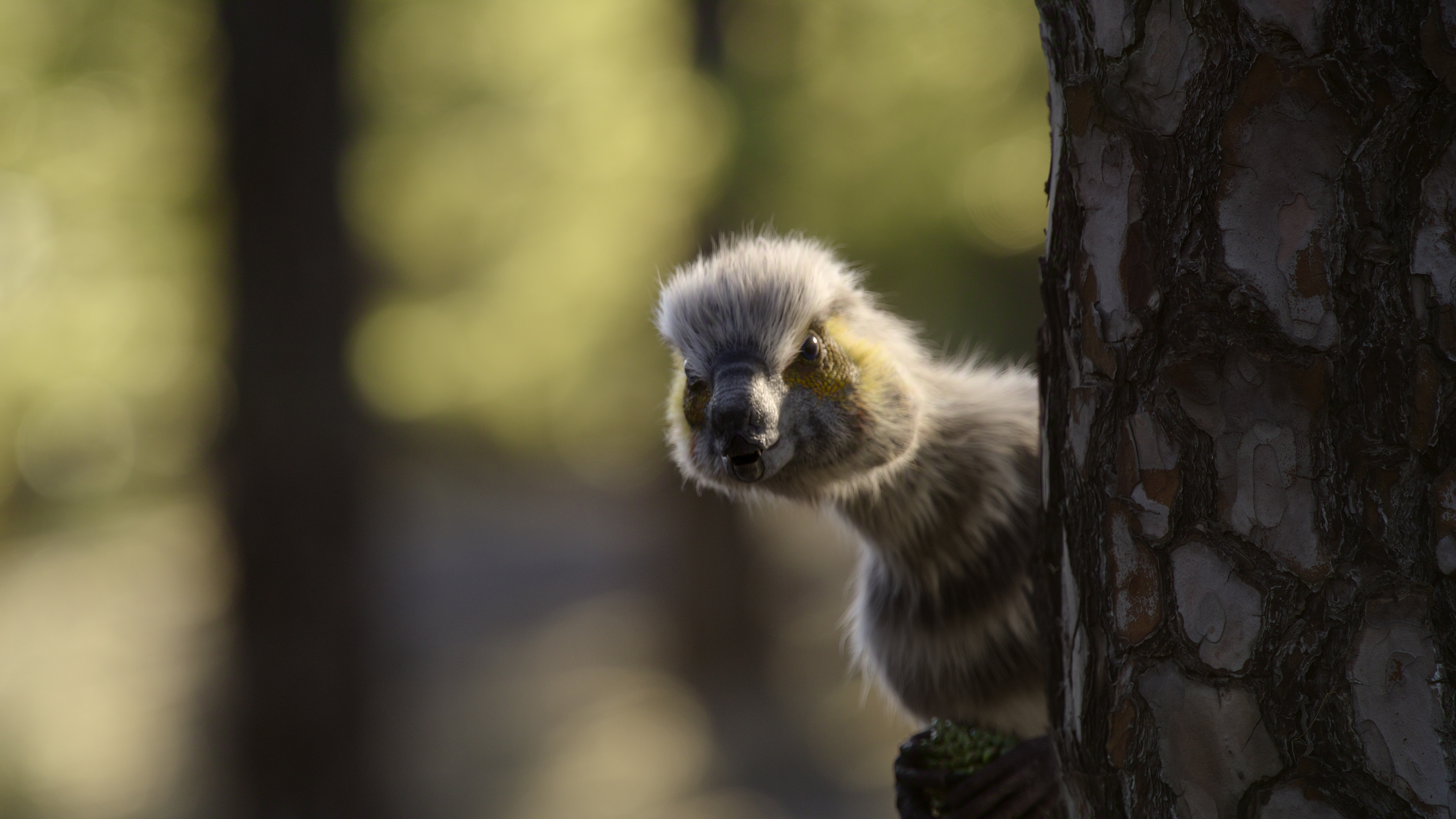
Lavington Martin: This is another one of Charlie’s sequences in episode four. That sequence is really about survival as much as an ending to the series. The whole show is about survival.
So it felt really important at this moment that we should end it on a massive high, rather than let it simply taper away into, “Oh yeah, birds are dinosaurs, by the way/” It’s not the first time most of the audience will have heard that said. You could just cut to the birds and say, “Well, birds! There you are.”
But that would feel really flat after everything the audience has been through. They really deserve to see something amazing. There’s a lot of deaths in the series and a lot of babies as well, so it really needed to feel like a final release of energy.
A visual firework display of birds and dinosaurs, but one that - like the Earth process scenes - it needs to really needs to carry meaning editorially. It wasn’t just about assembling those striking images, it was about shaping the idea, so it felt earned.
Charlie and Darren had a really good go at it. They passed it on to me. I had a little bit of a go at it too. The team discussed it like we did on most of the scenes in the series. That was very typical of the way that we worked across all the episodes.
If someone found a slightly different rhythm that might work a bit better or a stronger emotional route into something, the point was to let that thinking travel.
We took ideas from other episodes and rolled them in so that the series felt cohesive, and if it happened to a scene of mine, I would take it on board and I’d realize, “That’s it! They’ve cracked it! Let’s keep going.”
That was true across the team. Rob Davis on episode two, Andy Chesney on episode three, Charlie on four and me on one. With Matt and Josh holding so much of that connective tissue, it really did feel like a shared effort rather than four isolated editing islands.
In the end, that bird montage became less about simply wrapping up the story and more about, leaving the audience on an emotional high. Not just that something’s ended, but there’s something that’s endured. And if you read the comments on fan websites and Twitter and stuff, you get a lot of love for that scene.
That’s a great place to end this discussion and a great cap on the story. Thank you so much for being on Art of the Cut.
Lavington Martin: Cheers, Steve. Thanks for having us.
 October 5, 2026
The Whisper Man
Chris has been on Art of the Cut before for The Menu, The Many Saints of Newark, A Quiet Place, and Assassin’s Creed. He has ...
Read more September 23, 2026
Sean Combs: The Reckoning
Charles Divak has been on Art of the Cut in the past for Chimp Crazy, for which he was nominated for an Emmy and won ...
Read more September 3, 2026
The Dog Stars
There's nothing like The Dog Stars in his filmography. That's a testament to him - that he is constantly interested in different stories and different ...
Read more
Subscribe to our newsletter
Get all the latest news, blog posts and product updates from Boris FX, delivered directly to your inbox.
Welcome!
Thanks for opting-in to our newsletter. You'll receive an email momentarily with your confirmation.