













Remarkably Bright Creatures
Australian editor Tamara Meem discusses how story is structure, the ability of montage to mine the gold of deleted scenes, and the power of holding on a great performance.


Today on Art of the Cut, we speak with Tamara Meem, editor of Remarkably Bright Creatures, now on Netflix.
In addition to Tamara’s work on Remarkably Bright Creatures, she also edited Wander Darkly, First Match, The Sound of My Voice, and the TV series, The Decameron, and The Last Thing He Told Me. Tamara lives in Los Angeles, but is from Australia.
Tamara, it’s so nice to have you on the show. Welcome to Art of the Cut.
Thank you so much, Steve. I’m so honored to be here. Long time listener.
Did you read the book before you edited the movie?
I did, I read it in summer of ‘23, for one of my book clubs. loved it. In April of ’24, Livi [Director Olivia Newman] sent me the script that she was working on and it was not until March of [2025] that we actually started shooting. Livi and I have worked together before. We have a great relationship, so sometimes she lets me see the script as she’s still working on them.
Did you have comments?
Yeah. We talked about things. That’s been really exciting to be a part of that process with her.
I loved some of the changes between the book and the script. I thought they were very intelligent changes.
I’m glad you thought so. It’s always scary when you’re working on a book adaptation because of course you have to make some changes.
One of the things I was nervous about was the loss of the aunt, but it had to be done structurally and also it makes Cameron a little bit more adrift, and so he didn’t have a supportive family member to return to. We wanted him to be truly cut off from any sources of real, solid love to intensify his need for family.
What about differences between the edited film and the shooting script or between your editor’s cut and what we saw in the movies?
The editors cut was about two hours and 26 minutes with everything in it. We deleted 18 scenes by the end. About half of those came from the first half hour, which we tightened up a lot because everybody was just so excited to get to Tova and Cameron together because that’s when things really get going.
Right at the beginning of Director’s Cut, we reshuffled the first reel quite a bit and brought Cameron in about ten scenes earlier than he had been in the script.
We really felt that, especially for a streaming audience, we wanted our viewers who were under 60 to know that there would be characters that reflected them in the movie, too. If it was for theatrical we might not have done that.
We had to restructure a lot to do that at the beginning, which affected days and nights and different scene transitions, but we really just wanted to see Lewis Pullman and get that energy into the film.
As much as it’s really Sally’s story, we definitely set her up as the protagonist in the beginning. In the original script you met the Knitwits, and had her do some cleaning and have the inciting incident where she finds Marcellus under the desk, so in the script, we stayed with Tovah, we met Ethan and all the Knitwits.
Then we met Marcellus. Then she got hurt at work. She thought about Eric at home, then the next day, she visited Ethan at the shop, so we didn’t see him until scene 20.
So we brought him ten scenes earlier so that we meet him even before we meet the Knitwits. We didn’t cut out any of Cameron’s scenes.
There was a scene with his band breaking up over Zoom. That was the scene that kept moving around the movie. We couldn’t figure out where to put it.
We reshuffled our second reel so many times. It’s the section of the film where Tova and Cameron are separated. So he’s meeting Avery, and she’s dealing with Jessica and trying to sell her house secretly.
We’re cross-cutting between their stories. We kept reordering that section a lot, and we did take some scenes out of that section.
We really wanted to get through that - to get them back together. The problem with the band breakup scene - which we loved, it’s so emotional for Cameron and we would not cut it because it shows like the last piece of his former life being severed.
His performance is so amazing in it. I think it gives you a lot of sympathy for him, but it was in the same location that a bunch of these other scenes were in: his van. There were two other scenes in his van or outside his van in that section, so we couldn’t just cut from van to van. Reel two was the tough reel.
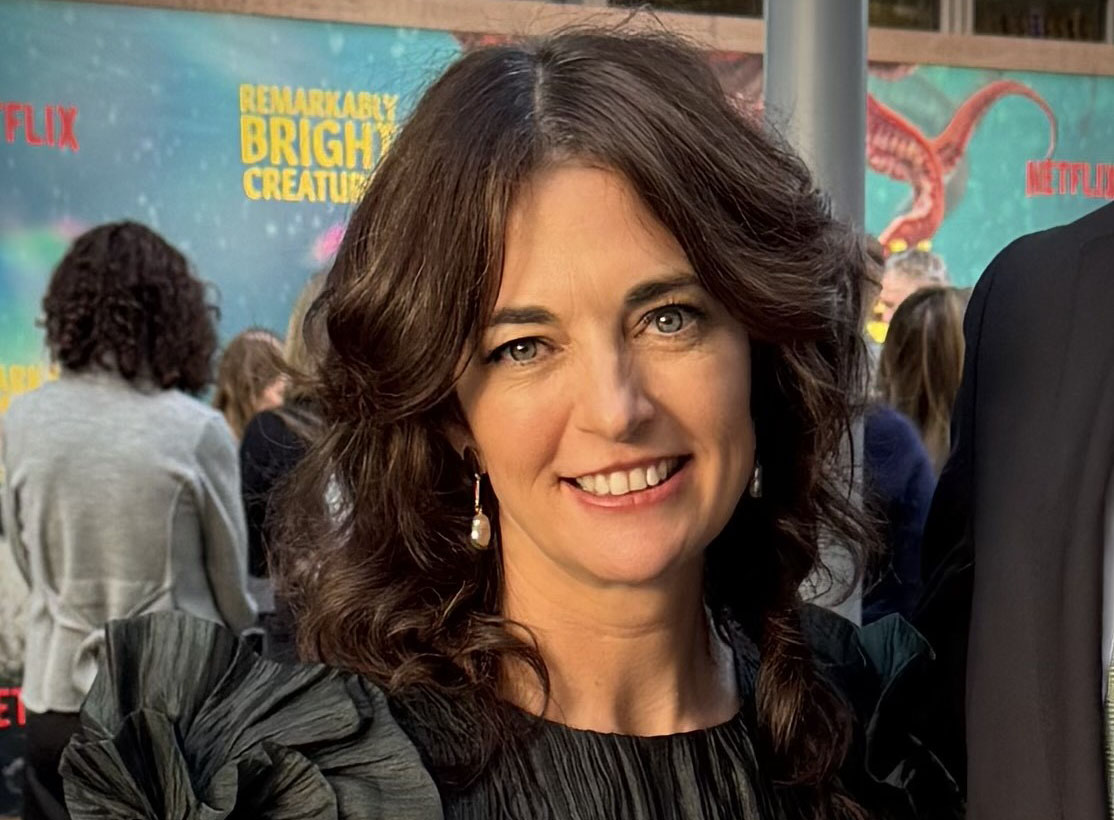
Editor Tamara Meem
I want to jump back to the beginning of the movie. Talk to me about editing the pre-title sequence, especially the ocean to captivity transition. There’s a great hard cut with audio with Marcellus.
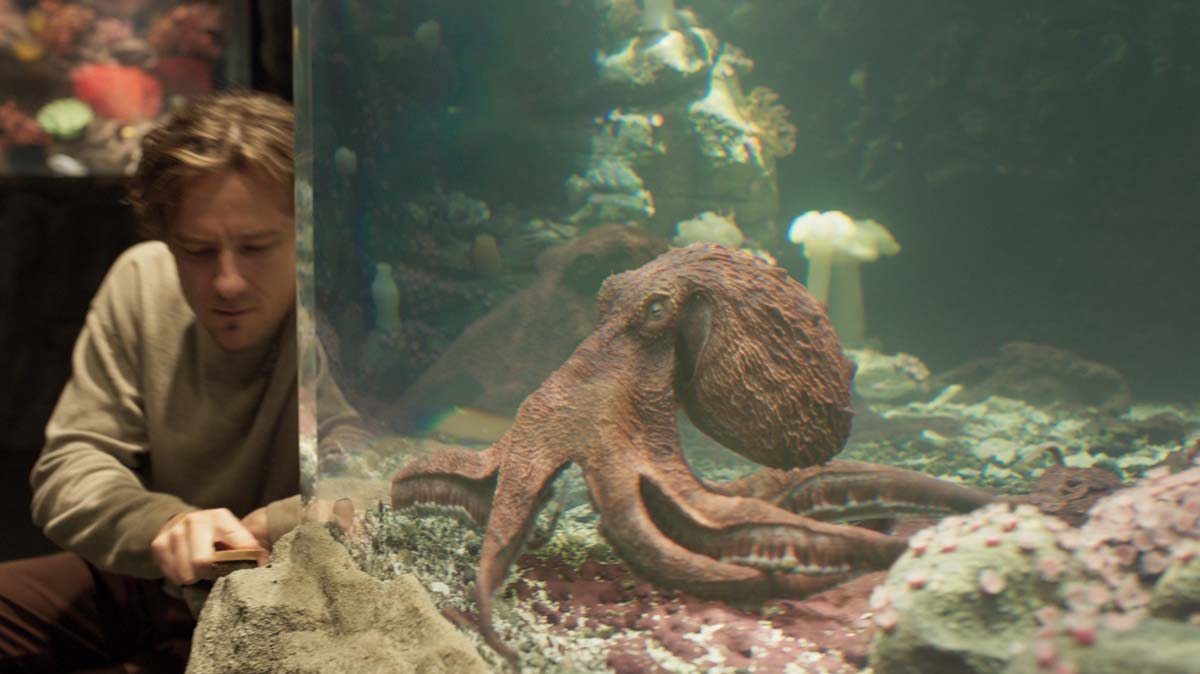
That cut was scripted. We had this incredible young diver that our DP, Ashley Connor, found on Instagram, John Roney. He lives in Vancouver and we licensed a lot of his shots. He has this kind of octopussy perspective and we combine that with our own footage.
In the beginning, I had these slow fades in and out of black and tried to create this sense that Marcellus - in the first few shots of the film - was trying to remember these little pieces of memory, then they would come closer and closer together and slowly reveal this oceanic world. We kept that for almost the whole year that we were cutting.
Right before we locked we decided to take out the dips to blacks and just streamline it. It felt really good. I didn’t think it would, but it did. It got you right into the world and just tightened the whole thing up.
One of the things that came out of our previews with Netflix - they do these previews where instead of having it in a theater, they send it out to about 1500 people in their Netflix accounts privately, then they do a questionnaire…
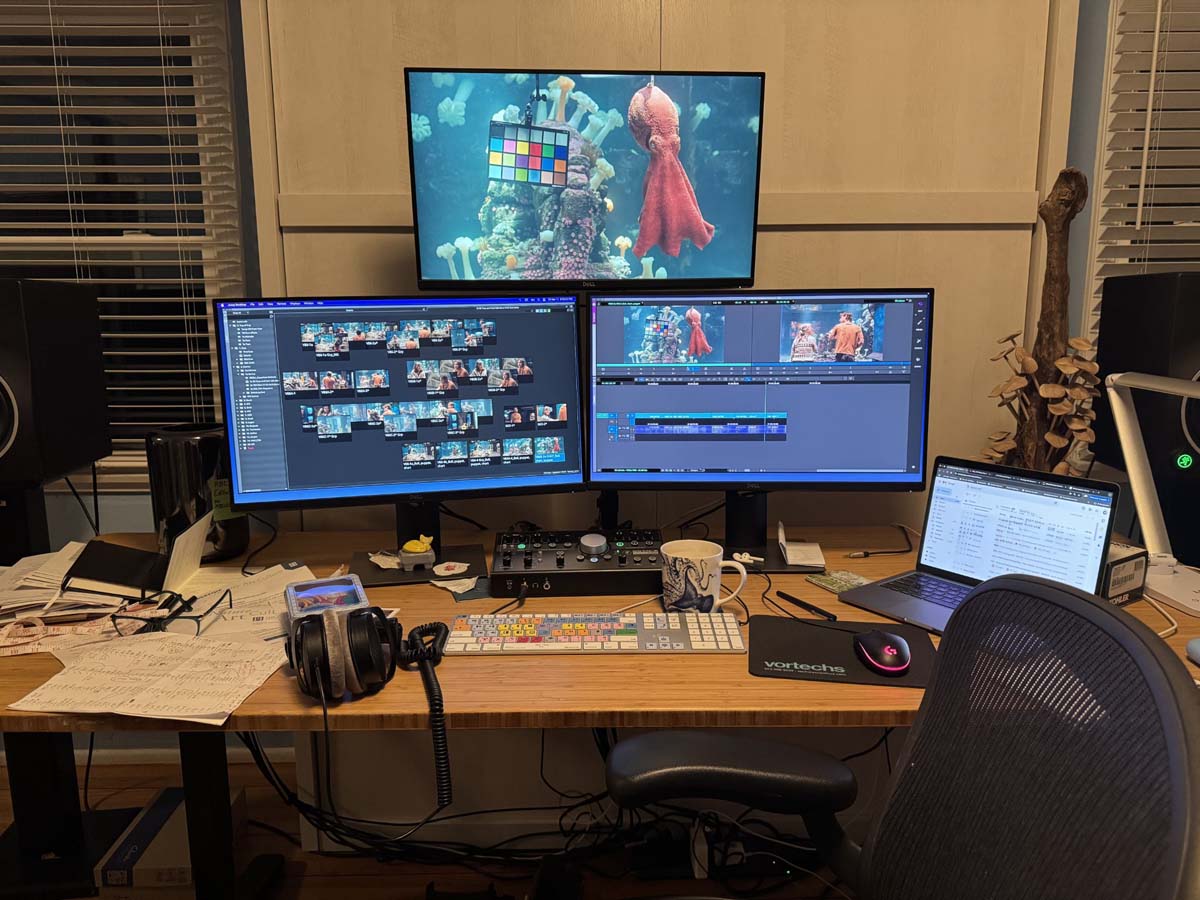
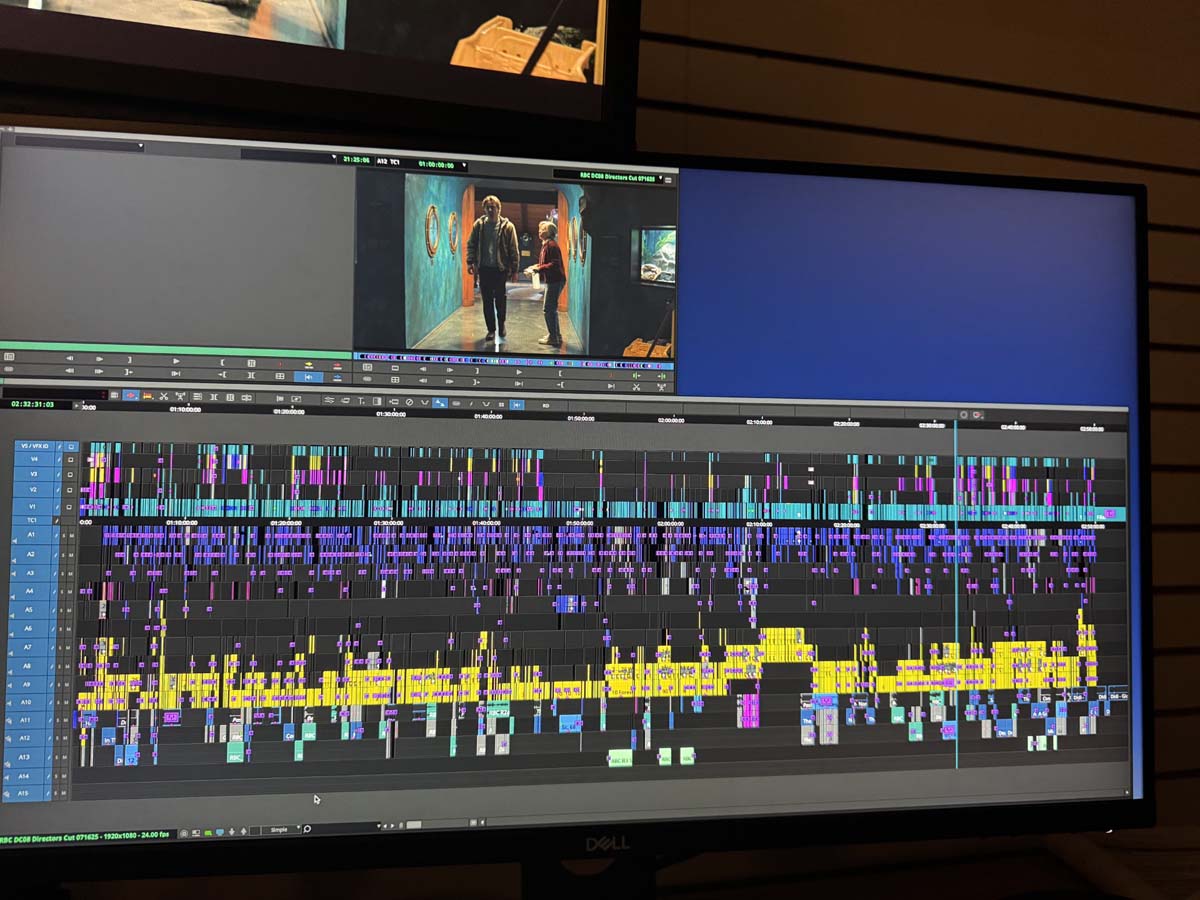
Tamara’s workstation
So you’re not getting the audience’s sense of it?
That’s right. You are not in the room with them, so you don’t know if they laughed at the jokes, but what you do know - this is so weird - you know when people dropped out, when people skipped ahead or rewound and watched something again and at what rate they dropped out at every minute in the film.
It’s really fascinating data. One of the things that we found was that people loved the movie. It tested great, but in the first few minutes we had too many drop outs.
So I think maybe people thought it was going to be a documentary about the sea. We didn’t know why this was happening. It might have just been because the VFX weren’t done. Now the octopus looks photoreal, but then it didn’t.
One of the things we tried to do is tighten that whole dreamy montage of the beauty of the sea and get to Sally Field. As you can imagine, we were a bit sad because we love some nature shots, but it had to be done and ultimately I think it was the right choice for sure. We both felt good about it by the end and we got all our best shots in.

Talk to me about the gentle pace of the post-title sequence. It starts very gently, leaving space to understand the character of the town and the vibe of the movie, then contrasting that with the chaos of the van breaking down scene.
That was important to us to retain that breath and give you the space to notice the silence of Tova’s loneliness - the quiet of a solitary life. You can’t really just breeze through it. Cameron is obviously a tornado force that shakes everything around him up. I love that scene where he just kicks the van.
I think the sound design is so good. We had this amazing sound designer, Ai Ling Lee. Our whole sound team was amazing. They just crushed it. The sound of that van is hilarious to me.
My assistant editor, Michelle Rueda, is kind of a car person, and she said, “This isn’t realistic, guys!” We said, “We don’t care!” My assistant editor was amazing and she did a lot of our temp sound design. I mean, all of it.
She made it sing for the previews. On the mix stage we tried taking out all the production sound - which was the van revving and braking, revving and braking to create that start/stop action. You could hear it in there and we said, “Let’s try with it out.” Then it really sounded like the van was out of juice and it was so good. You could just enjoy everything they had created with foley and effects.
We did get notes to take out some of those scenic shots, but it was really important to us. One of the things we did was put titles on them, which helped a lot, so we were still moving along. I think that helped it not feel so slow, but the shots are so beautiful.
The town is so beautiful and we really wanted to keep the nature shots and that feeling of the town throughout the film, like the shot of the eagles and the shot of the seal.
It’s things that they picked up: the birds flying over. It was really important to Livi and me to keep that stuff and to give a sense of the place. The Pacific Northwest is so spectacular.
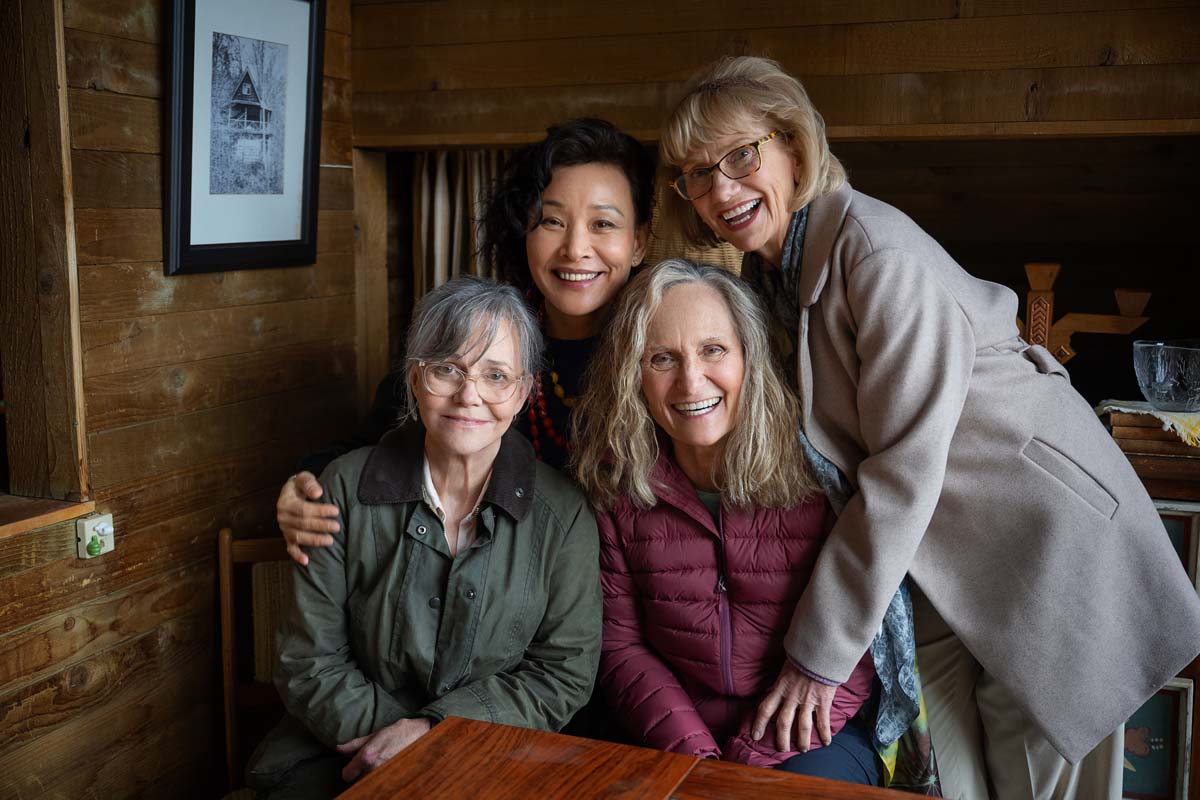
The Knitwits
I thought the transition seemed so planned out, like coming off the first Knitwits conversation back to the aquarium.
That one was scripted. We did experiment a lot with different reaction shots in that Knitwits scene. Tova says, “I don’t like gossip.” Then it cuts to her gossiping to Marcellus about them. It’s really funny. We experimented with the rhythm of it a lot - cutting to different reaction shots from different people to see which was the funniest.
In the end we did not use a reaction shot, but we inserted two shots of a closeup of a crab and a fish that were really funny looking, and it was as if the reaction shots came from the animals in the aquarium, not from the Knitwits, so the fish were reacting kind of bug-eyed to the gossip rather than having the classic cut “joke and out” kind of scene transition - a classic rhythm that didn’t feel right.
It was pretty late in the game that we found that it was funnier if we put in those goofy animal shots, and I just love the idea that the animals were watching this budding friendship between Tova and Marcellus and enjoying it and enjoying her gossip.

Let’s talk about film grammar, like the push in when Tova talks about her husband putting them on the old folks home list before he passed. Obviously, when you track into somebody, it has a meaning to the audience, but you don’t want to overuse it, and you need to use it at the right place.
There were a couple of really slow, beautiful track-ins that [our DP] Ashley did with Sally. One was that one, and the other was in the casserole scene where Sally breaks down talking about her son. In a sense, you don’t want to cut when there’s a tracking shot. It’s hard to cut into it because Sally is so incredible that you don’t need to cut.
You could just watch her all day. But we did want to have Marcellus in there and show his attentiveness and his perspective of her through the water. In the beginning of the film we needed to set up that he is listening and comprehending.
We wanted to create a sense that he had an intelligence that was beyond her comprehension. We needed to build the idea that he was listening more than she realized. And he identified with her because he, too, was left alone and was dealing with solitary confinement.
At the beginning Tova doesn’t know that Marcellus is listening, right? She’s just talking almost to herself.
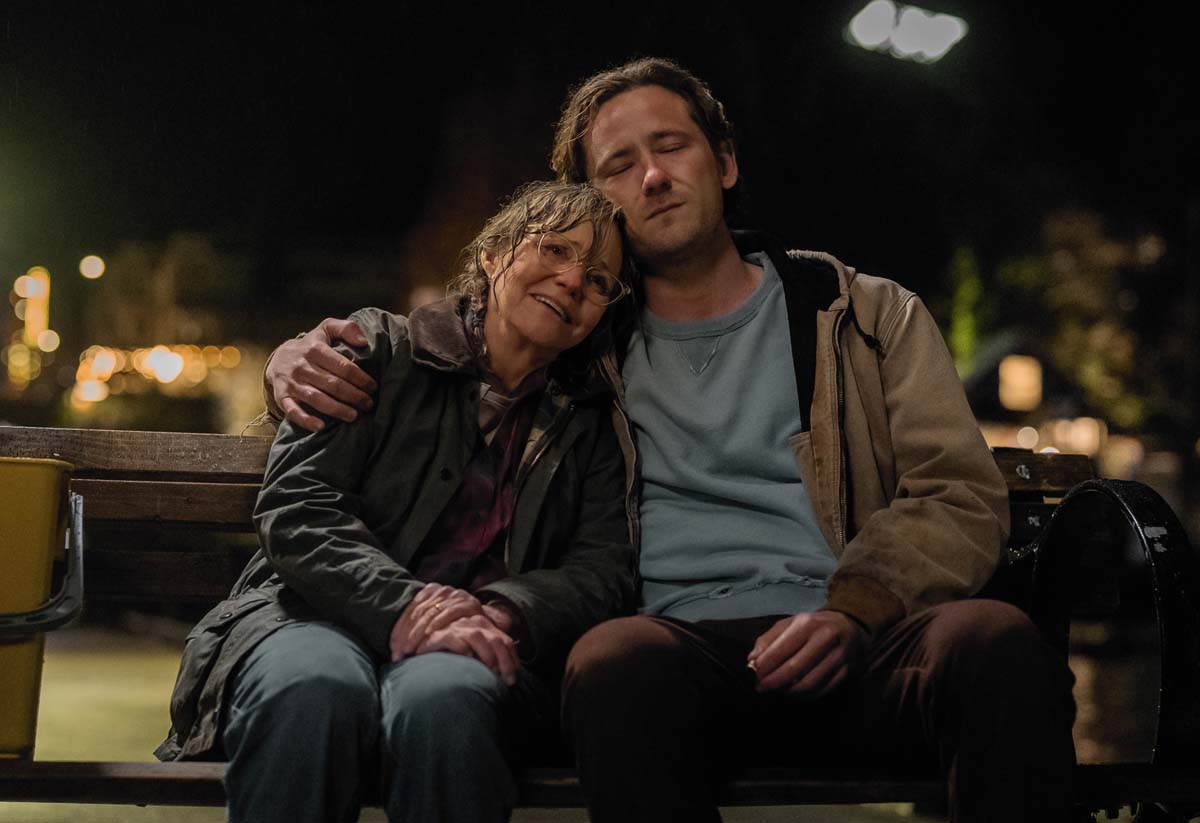
I think that is how it started between them. It’s a little vague at what point she truly starts to believe that he does understand, but I think at a point she does, and a lot of it’s in the eye contact between them and that he comes up to her and initiates the touch on the glass. He puts his tentacle up and then she puts her hand.
That is him trying to communicate with her that he understands. To me, that was the moment where she knew that he understood her deeply.
Were the P.O.V. shots of Marcellus looking at Tova VFX?
No, that was putting a camera in a water tank!
We just built the cut around that and the effects around that - around where her eyes were and her reactions. There was never a time where she wasn’t seeing him and feeling him.
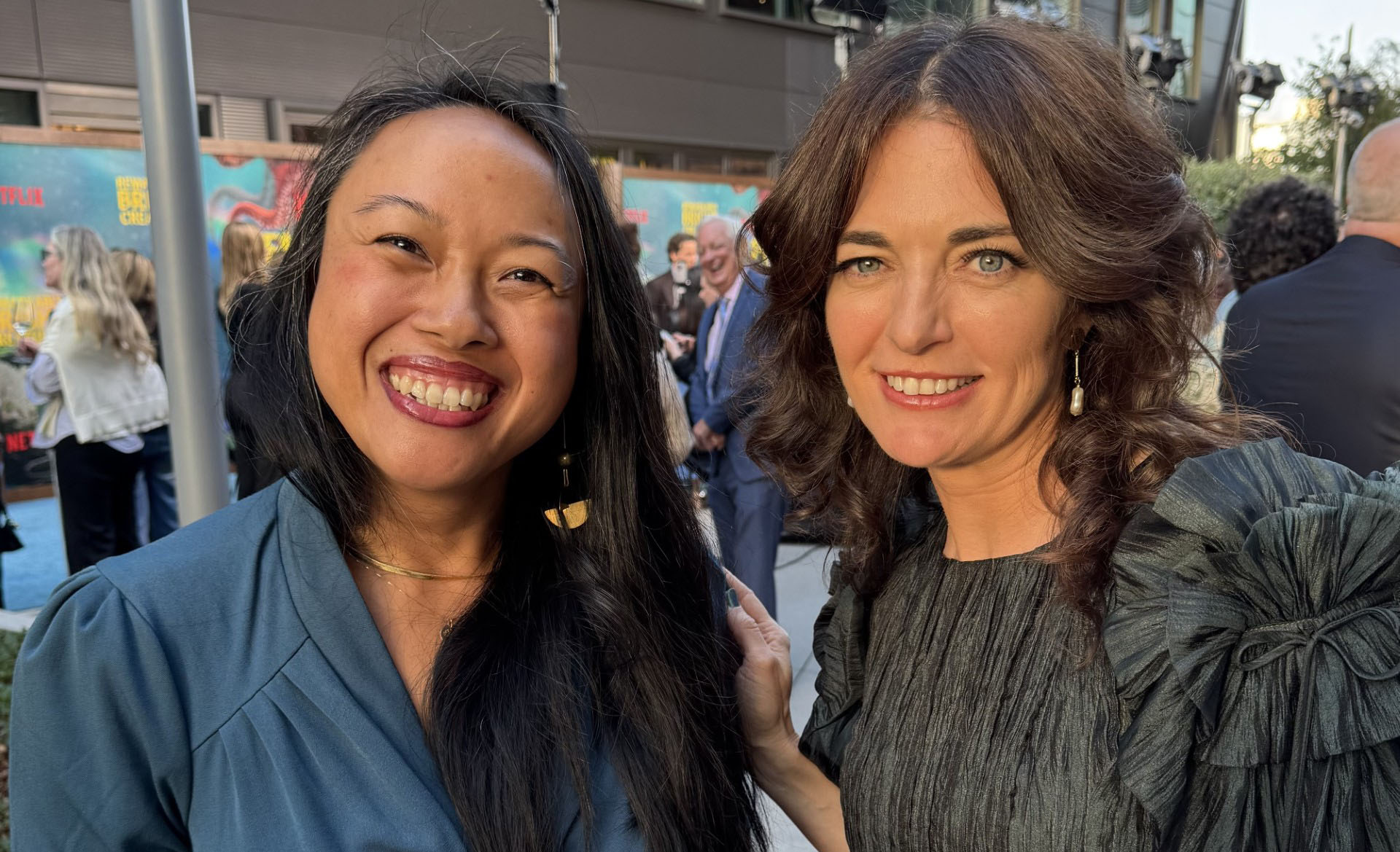
Assistant editor Michelle Rueda and editor Tamara Meem
Tell me about your director. This is somebody you’ve worked with a couple of times before, right?
Yeah. Livia and I met at the Sundance Lab in 2015. We weren’t working on the same project there, but luckily for me, she moved to Los Angeles and hired me to cut First Match in 2016. We cut First Match in my apartment.
It was super low budget and we loved working together and became friends. She wanted me to cut Where the Crawdads Sing, but I wasn’t approved. They didn’t feel like I had enough experience, so that was Alan Bell, who was lovely, but he’s retired now.
I did that interview.
Oh you did? Then we regrouped for the Apple show, The Last Thing He Told Me. Then she asked me to cut Remarkably Bright Creatures. Ashley Connor also shot First Match, Liv’s first film. And Liv worked with Chris Ritvo as the effects supervisor on Crawdads. She loved him and wanted him for this too, so it was kind of a reunion.
At this point, we’re close enough that she asks me to read the novels that she’s considering adapting and sends me the script she’s working on. I’m actually reading a book right now that she’s looking at. I’ve worked with a couple of directors that have written a script or cooperated in writing the script.
Tell me about how that works for you. Is it a benefit that the director has written the script? Is it difficult? Or doesn’t matter?
It really depends on the director. I think it also depends on how personal the story is to the director. It’s very different to do a literary adaptation and to do something that’s really personal.

It’s just about preciousness, right? Sometimes, with a writer who’s a director, their words mean more to them than other times. Or they’re such a storyteller that they say, “I love my words, but the story is more important.” If you cut things - like cut 15 or 18 scenes - that’s hard for somebody that wrote those 18 scenes.
Oh my God, yeah! But this is why I love working with Livy so much - because she has no preciousness about her writing at all, or her directing. She makes everybody from the set through post, through the mix, feels so safe and welcome.
Our thoughts and ideas are very welcome. You never feel scared to bring something up with her and it just makes you feel playful. We just had fun every day.
My assistant editor, Michelle, might have an idea. I might have an idea. With Livi, sometimes I’ll just turn and look at her and she’ll look at me and we’ll just laugh, then I’ll just make the change.
We don’t even talk because we just have such a similar taste in performance and rhythm. I just know her so well. We just laugh about it.
But, in terms of her as a writer, she always asks me for notes while she’s writing, which is great. Such an honor! Then she has an approach to editing where she sees it as further writing. Especially in this film, we were continually rewriting Marcellus right up until November when we recorded Alfred.
Did you have any kind of voiceover from him early? Or were you working with a scratch voice from someone else?
During the editor’s cut I had a neighbor’s dad do it. I really wanted it to be an older man. Then we got this incredible actor friend of Livi’s who’s an actor and an acting teacher. When we were doing our ADR, we actually had a professional voiceover guy, but we were still writing, because if you can keep writing, you do. So we were still writing after both previews, then we got Alfred Molina, who was perfect.
He was absolutely just hands down the best. He’s so funny and he’s so tender and sincere in his voice. He’s has so much good gravel in his voice, and he’s kind of cheeky, but he’s not too cheeky.
Let’s talk about compressing storybeats in this film, especially the section around Tova’s injury and introducing Cameron.
Everyone was excited to get Cameron and Tova together and enjoy them being together as the odd couple. We really took a lot of time out of the first two reels. We took probably 30 or 40 minutes out of the first two reels. To get to them together we had to make some painful cuts.
Towards the end you’re fine cutting, fine cutting, fine cutting, and sometimes you go too far then you have to pull it back a little bit and ease it out a little bit.
Talk to me about doing the cleaning tutoring montage.
Oh my God! So fun, right? That was just brilliantly executed on set. I can’t take much credit for that. It’s pretty close to the first cut. Dickon Hinchliffe, our amazing composer, just wrote a delightful waltz. I had temp scored with a waltz. I felt that that would be cute for both the montages, and he liked that idea. So the rhythm of it - the tempo of it - was not dissimilar.
Livy loves a montage. Like in First Match there are a couple of montages. That’s a film about a girl who is a high school wrestler and becomes a boxer- a street boxer.
We had a couple of training montages in that, which were really fun. Similarly, in this one we had a couple cleaning montages.
It’s something that Livy’s really good at. It just so fun. Plus, if you cut a bunch of scenes, you’ve just got more material for the montages! So then it’s less heartbreaking. You can take that gold and stick it in the montage.
The other thing that really helped us cut so many scenes in the beginning is that there was this device of the answering machine messages, so we were able to cut some scenes and put the important information into answering machine messages.
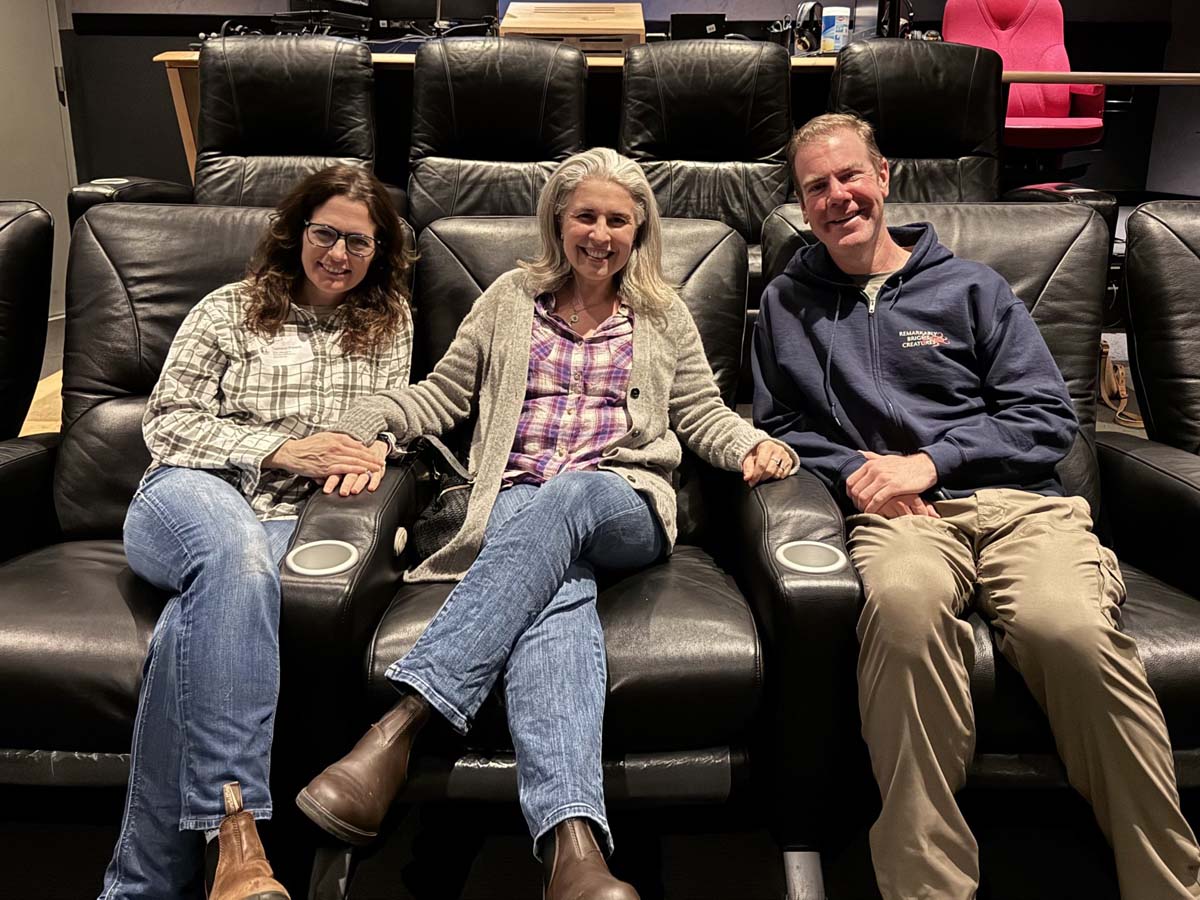
Meem, director Olivia Newman and Post Supervisor Ryan Price, checking the DCP
Can you talk a little bit more about - before you had an actual score - trying to generate that feeling and emotion or whatever you were looking for from the temp score?
Before I start on a movie - between when I know I’m going to do it and the time before the camera starts - I listen to a lot of music, and I make playlists myself that are based on different emotions particularly for that film, because of how hard it is to find temp music when you’re under the gun during dailies. It’s the last thing you want to do: spend 3 days finding the right temp score for your assembly.
I always have an “Oh, that’s weird” playlist and a sad one and one for each of the main characters. “What’s their soul” playlist? “Just a little tension” playlist or “big feelings.” Then, when I need something for this scene, I can go back and say, “This one works. Let’s stick that in.” I should add that my assistant editor, Michelle Rueda, is so good at finding temp music as well. She’s a huge help. She has exquisite taste, so she saved me a bunch of times.
We worked together on two other projects before this film. We met on The Last Thing He Told Me, which Livi was on as a director. Michelle and I worked together on that one and she found some great temp score.
Then, we worked together on The Decameron for Netflix - the bubonic plague comedy. I don’t know how I could ever function without Michelle again - though I’ll have to one day, because she’s really good at cutting.
So many assistants now are working remotely. What was your case?
We cut in our own homes while they were shooting, which is something I wanted to.
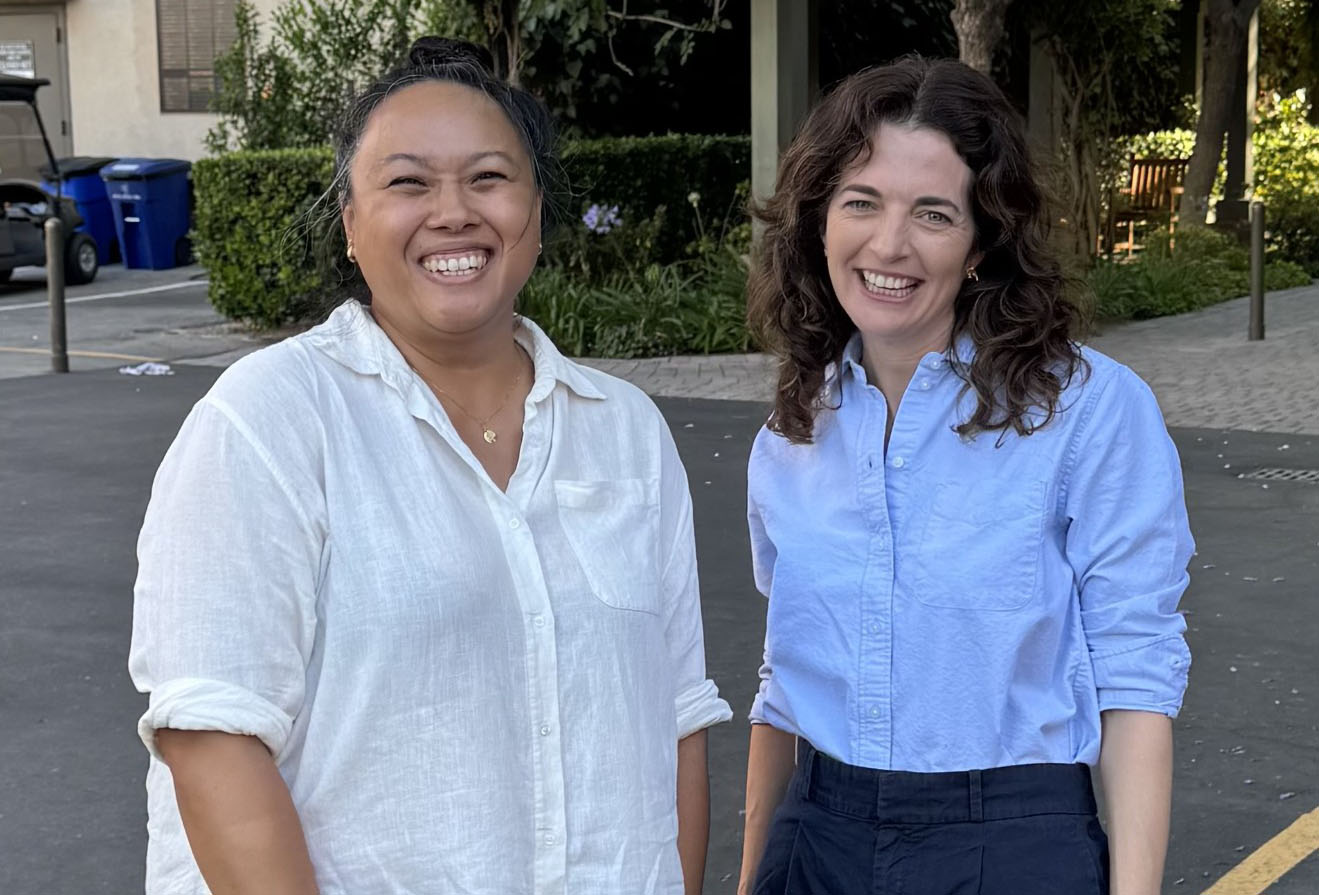
Rueda and Meem at a friends and family screening
You were in Los Angeles and they were in Portland?
They shot in a town called Deep Cove outside of Vancouver. We were in Los Angeles. Then we did the director’s cut in my house. Livy’s house actually burned down in the Altadena fires just a few days before she had to fly to Vancouver to shoot.
It was awful, obviously. Sally also lived in the Palisades and had not lost her house, but had lost all her neighbors’ houses. So they were just both completely spiraling at the beginning of prep. I asked if Livi would be comfortable cutting at my house. She was going to be living really close by me, and it just made sense.
I had a bit of survivor’s guilt. It was just really quiet and private and just the two of us.
So from January to June I was at my house, then we all went to Toluca Lake at Digital Vortex until January. So we were all together and that was really nice too. So it was a bit of both. It was about half of both.
My VFX editor, Pam, lives in Lake Arrowhead and she did the whole thing remotely. That’s her preference, and we were just so lucky to have her that I would have agreed to anything. She was fantastic. We’re all confident about working remotely together because we’ve done it so much.
Talk to me about the flashbacks.
I love cutting flashbacks. It’s one of my favorite things in editing, and I’m often drawn to projects that have flashbacks and dream sequences. And even if they’re not scripted, I’ll insert them anyway because I just enjoy it. You can use that more abstract part of your mind.
Get away from the dialogue-thinking brain and into the visual-matching, movement-matching dance brain. You can just find a connection of movement or color or a line or a graphic match.
There are a couple of flashbacks in there that haven’t really changed since the assembly. They were things that I found that worked and that we kept the first time. You see Eric when she touches the horse and you see that flash of them playing together.
And some others were continually changing. There’s lots of flashbacks that were shot to be used with another scene that we moved around.
Our DP, Ashley is really good at shooting hand-held, really intimate flashbacks, and she was wonderful with this kid who played the young Eric.
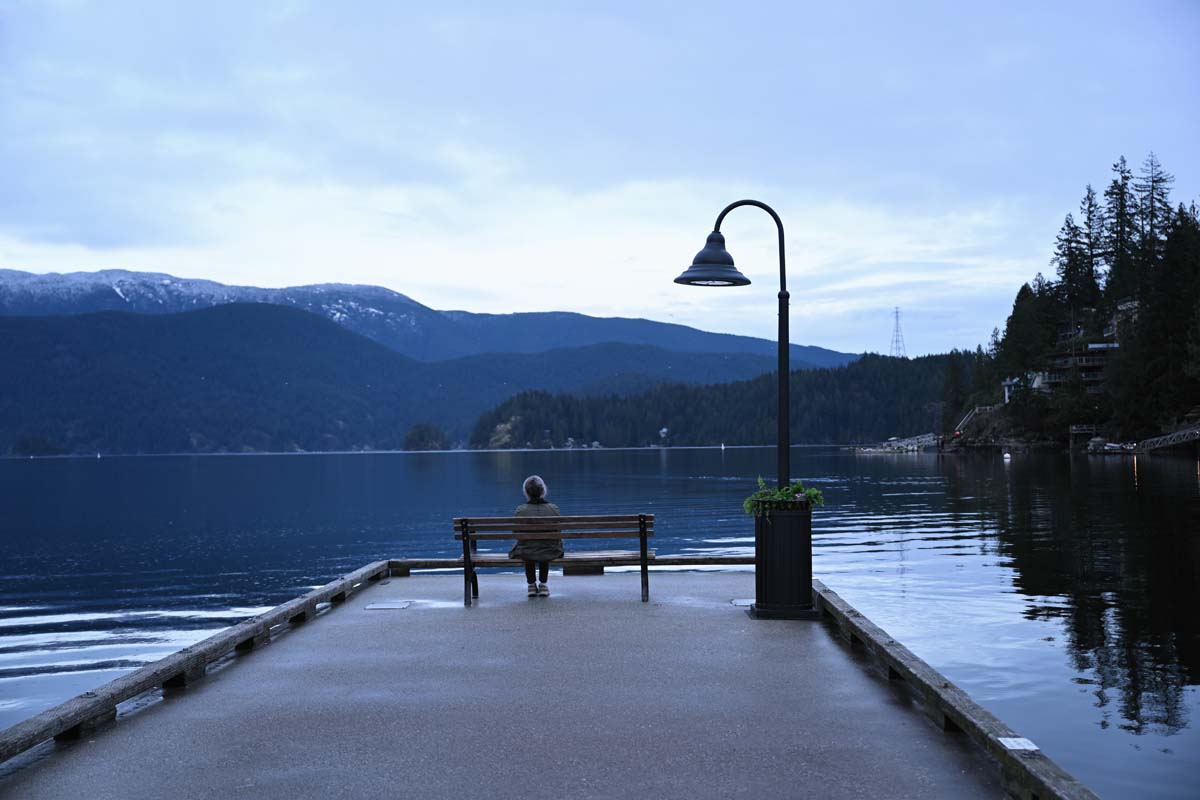
The last flashback of Eric at the pier came in really late. It was actually scripted to be in the first scene - when Tova sits at the pier, we decided not to have a flashback because we wanted to hold on that until after we chat with Tova a bit.
We cut out two flashbacks from the beginning, because we thought it was a little bit more mysterious to hear that line from Marcellus: “We both dream of the bottom of the sea, what we lost there” without having a flashback, then wonder, “What do you mean by that?”
Then she goes home and you get the little flash of her son. Then the last flashback of Eric at the pier came in really late in cutting. It was just something that we found.
We were trying to get a little bit more emotion into the scene and just experimenting with different things, using different audio takes, adding different breaths, different little gasps. It’s actually backwards.
I’m running it backwards so that we start on the pier, because I wanted to go from her face to the pier and then to his face, then back to her face, reacting to his face. So I ran it backwards.
When I’m in dailies, I like to pull selects - unless it’s like a very simple scene - I’ll usually go through and pull selects and I put them in order where they’re in the scene and within that order wide to close, which a lot of people do, but it’s really helpful with things like flashbacks and abstract footage. I knew I wanted to use that piece but it was just going the wrong way, so we just ran it backwards.
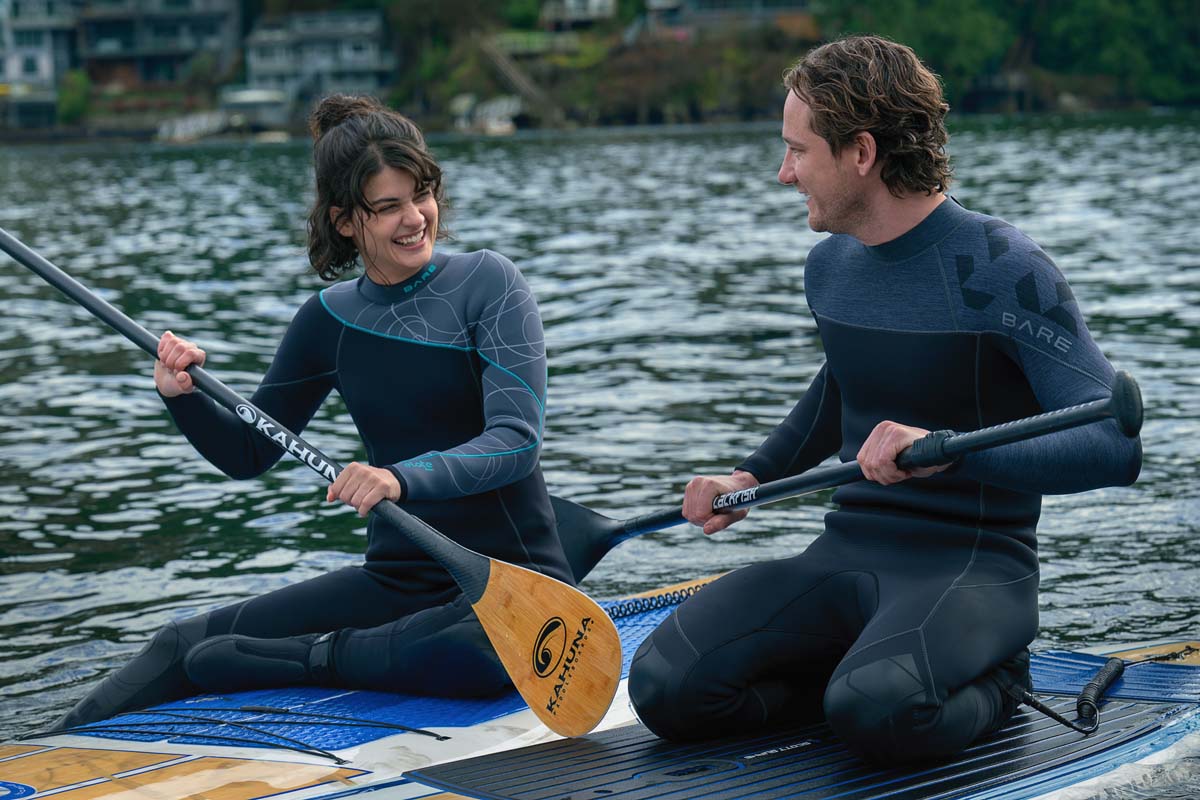
I love talking about intercutting and the one of the fun intercut things - maybe the only one I can remember - is that the two dates are intercut.
Cameron has a flirtation with this woman, Avery, who runs the local paddleboard shop. Tova is a recent widow who has known this man Ethan for 30 years at least, but he’s always had a crush on her, and he’s never dared to face it himself until he finally gets up the courage to ask her to have a cup of tea with him.
Colm Meaney is just so sweet. There’s a little section in reel three where they’re both going on a date. It was scripted to be intercut. I think we did move the cut points slightly.
The date scene was about showing how each of them had taught the other something that helped them open up. Cameron decides to take a chance and talk about his mother with Avery. In the past, Sally tells Cameron that flirting is nothing.
You have to spend time and effort to break through to intimacy with someone. Cameron pushed Ethan into having the gumption to ask Tova out, so he’s kind of instigated that date between them entirely. And Tova’s in total denial about it being a date at all.
We were enjoying the dates a lot, but we also wanted to get back to Cameron and Tova together, so we kind of tightened them up quite a bit.
There was a lot of really funny ad lib between Lewis Pullman and Sofia Black-D’Elia. They’re so funny together. I could have made that scene a lot longer, but we just had to get back to Cameron and Tova together.
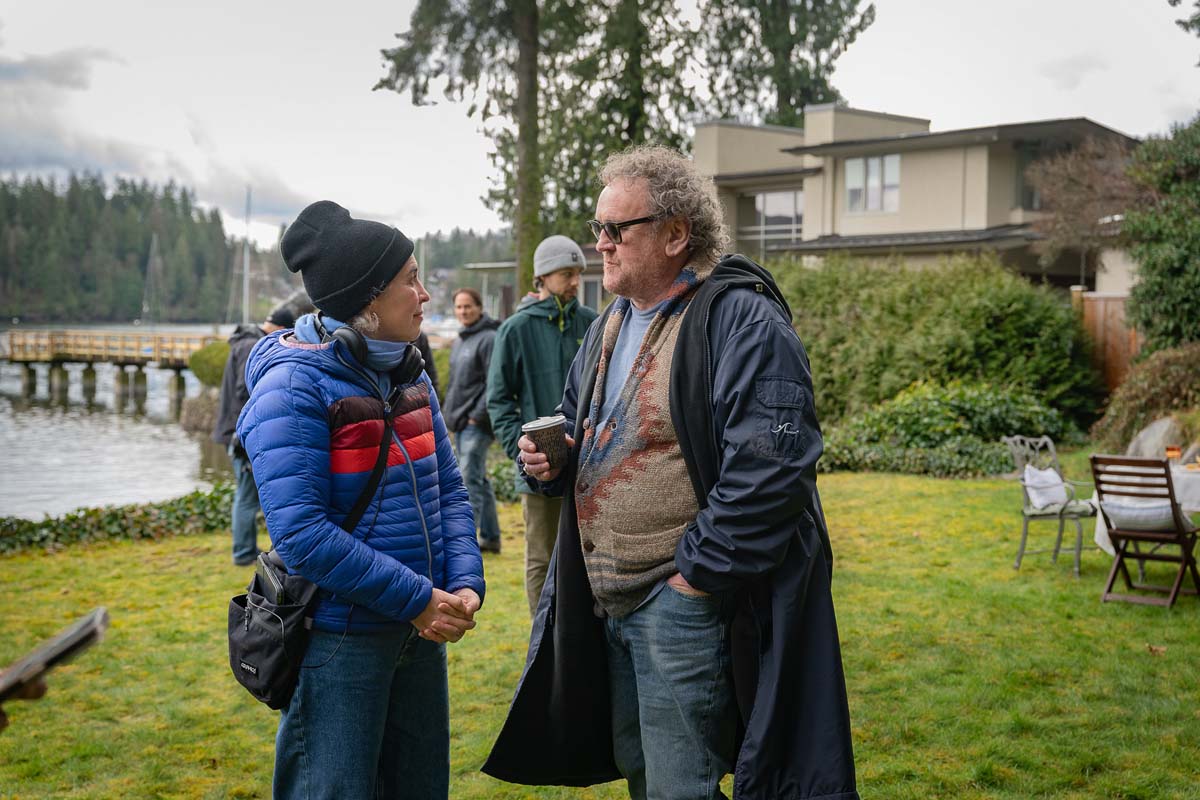
One of the places where I love the sound design is during an open mic night. Sound plays a huge part of that story making sense and meaning something. Can you talk about that scene and developing the pace of it and how the sound pays off?
Yes, that was my favorite scene! I think I drove them crazy in the mix. I had a very specific way that I wanted that scene mixed. I was always scared that Netflix was going to ask us to cut the scene down, and it was my favorite scene, but ultimately they loved it as much as we did - thank goodness - because to me it’s like five scenes in a scene. In the first section, when he gets on stage, it’s going so badly and I wanted it to be bad.

I wanted it to be going badly for him. We had some takes where Lewis was lip-syncing to a recording of him that was so beautiful that they had made in preproduction. There were some takes where they did a live vocal.
In the beginning we did a live vocal and he was performing it - it was less on the money, so I used some of those takes in the beginning and then in the mix we kind of made it sound bad. We wanted to hear the steel guitar strings and we even backed off on the perspective of him.
Kevin O’Connell, our mixer, let the room really actually overwhelm him in a way that you wouldn’t normally do, which I think worked so well. Then when we come in to these close ups of him and Sally, and she’s realizing that it’s the song they listened to in the car and that listening to the lyrics of the song and how they describe the problem of communication that both of them have that is trapping them inside themselves. It’s just so heartbreaking.
He’s describing what is wrong with the two of them, and looking at her and her lips like part. I wanted that section to be really intimate. There’s one point where we come in really close, and I asked Kevin if we could just take the whole room out and just be behind the mic with him really close.
Then in the next section, Cameron starts to win over the room and people start to turn to him and say, “This guy’s pretty good!” So we let the room come back in there, then it warms and his voice starts to sound better, and it slowly ramps to his voice sounding really good.
I held off on this one beautiful profile - like the Kurt Cobain shot of him - until the very end, where I think he just looks like a total rock star.
Then the last shot is a close-up of him not even knowing if he’s done it. Then he looks at Tova and she just looks at him and gives a little smile like, “Yeah! You did it.” And it’s just so beautiful.
Then the room comes in and they all cheer. I just love that scene so much. It always just made my heart beat faster when there’s this silence. He doesn’t know if he’s made an idiot of himself or if he’s succeeded. There’s this beat of silence, then they all cheer.
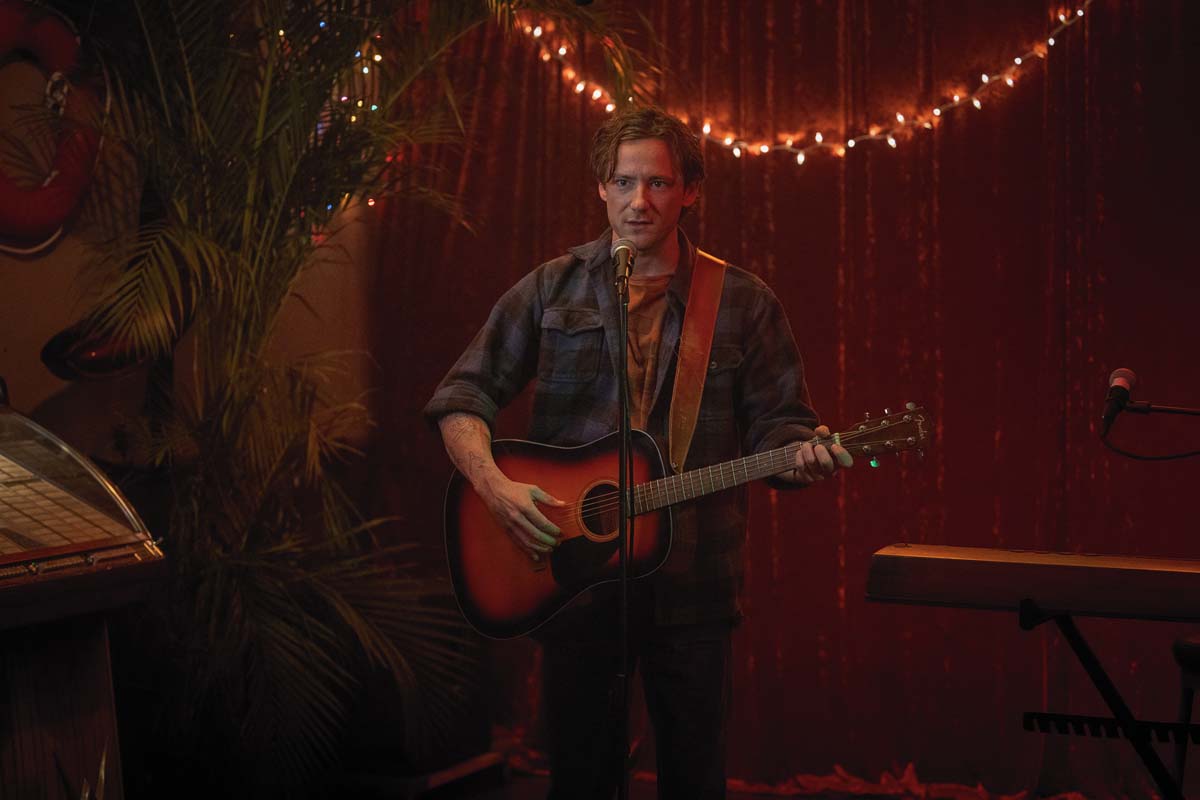
I love the fact that it’s a connection between them, too, because it’s her son’s music.
That’s right.
You were saying you could stay with Sally Field forever. And there’s a moment, a lovely moment of staying on her during her explanation of her son’s disappearance. When somebody is delivering a great performance, you just don’t cut.
Yes. That’s right. I mean, if Sally Field is crying, you are crying. If you’re watching Sally Field cry all day, then you are crying all day. She’s just one of those actors who is one of the “Top Three Criers of All Time.” There’s no one better.
She’s so good at that thing of trying not to cry. That was actually one of the easiest scenes to cut, because it was really clear to me which were the takes right from the first cut. We didn’t really change her takes. We changed where we cut to Lewis a little bit and we trimmed it here and there.
We actually added in an ADR to clarify something that people were confused about. For the most part it stayed and it was just such a beautiful performance.
Then Lewis just held it. He just looked at her and did almost nothing. His eyes just slowly started to tear up, but he just didn’t do too much, and I really liked that. One of the things that I really like about that scene is that they start out laughing, then they transition.
She’s incredible that she can do that. She can take a scene from comedy to drama so gracefully - lead you by the hand, from laughing to crying.
She does it more than once. It’s one of the things that makes her a movie star. Not many people can do that and be totally believable. And you don’t see the transition coming.

Talk to me about building the end after the big reveal. How long can you go on? Making sure that the audience is fulfilled… making sure that they’ve had a conclusion, and the emotion of that has been released?
We have this incredible sequence with Marcellus - the beauty of the world that he is able to come back to. It makes me so emotional.
Our composer, Dickon Hinchliffe, wrote the most beautiful score for it. The end score is one of my favorites ever. Liv sent me a video of it.
I couldn’t come to the recording. It was at Abbey Road in London. She sent me a video. I was just crying. When those strings come in, it’s like, “Oh my God!”
Then after all that, we’re ready to wrap it up, right? That was something that we kind of struggled with and found over a long time: how do we get these people back to a happy town? Livy had this long oner of the barbecue that we cut down a little bit, but it still has the feeling of a oner and it’s great.
Even though there are kind of different endings. You see the Lewis and Sally ending. You see the Sally and the Knitwits ending.
Then you see the Who She’s Become ending. We never had notes to shorten the last reel. It was always: “More please!” So I hope it’s not too long.

Marcellus is so lifelike, but most people have got to realize that he’s mostly - if not completely - a visual effect. Talk to me about visual effects and visual effects editing. You mentioned how excited you were to have this VFX editor working on the show. So let’s talk about that.
My VFX editor, Pamela Choules, is a total rockstar and has been doing it since the 90s. She is like the goddess of VFX editing, and I was so thrilled to have Chris Ritvo as our VFX supervisor. He studied footage of octopuses and went to aquariums and talked to aquarium octopus workers for months before he even started.
We had a lot of Zooms and discussion of octopus behavior. He’s extremely detail oriented. We thought, we’ve got the dream team. We had MPC doing Marcellus. They started design at the end of 2024.
They had done all their research. We thought, “These guys are the best in the business! This is so exciting!” Then about two weeks before we started shooting, MPC went out of business.
They had started to build the asset of Marcellus. But we lost a lot of that work and we lost our team. We lost - in the end - a month of work, but more importantly, we lost our team. We could not lose Chris Ritvo. We could not have made this film without him, and Netflix was fully aware of that. They hired him in the interim until we could figure it out.
He went to Vancouver for the shoot. Thankfully, this amazing English company, Untold, came in and they hired Chris and put a new team together - hired who they could from the old team. They were incredible. Such a joy to work with.

the VFX took a year to make, I got extra cutting time while we were waiting on these effects to be done, which was great. We were on it from March until we locked in November, then mixed in December. We did have soft lock in October, then recorded Alfred Molina and really locked in November.
I’ve never had a full time VFX editor before, and she was on right from dailies all through to turnovers. She was just incredible, and she could do anything.
So she was doing postvis?
I’m talking about splits. With Pam on full time to handle all the octopus shots, I started to get really cheeky with splits and FluidMorphs and trying things that I would never have dared to try: taking people out of frames. An idea of that Chris had during the cut: Tanner, the guy who works in the shop, is always appearing near Ethan.
To accentuate one of those jokes, we actually removed him from a shot, then had him in the shot when we cut back. That was something that Pam temped for us. I did way more splits than I would normally do.
There are a couple of places where we removed a line that we didn’t want - an unwanted ad lib – and she created an effect to keep the mouth closed and did mouth replacement so that we could hold on the person for the reaction, which was so helpful.
There were things that I tried with Pam that I wouldn’t have ever tried, because I wouldn’t have dared ask for them to spend the money on a visual effect.

So those splits are places where you want an actor on one side of the screen to react differently, or the timing to be different, or even use maybe another take?
Yes. And on over-the-shoulders, or on wides to get people into a position faster - to get them to hit their mark faster. Or on an over-the-shoulder shot, their mouth might be moving, or we want a different reaction, or we want their hand continuity to be different.
Just fixing those continuity errors. So instead of having to use a take I didn’t want to use for continuity, I can use the take I like and get them to fix the continuity, which is so nice because on a low budget thing, I would have to choose between the performance and the continuity.
It’s going to be really hard to not have Pam on my next one - when I go back to not having a full time visual effects editor. Everybody always wants Pam. She’s the best. I can’t believe we managed to get her. She’s amazing.
Our whole team on this film - every day at the office was just a joy. We were all feeling so grateful because everyone was lovely and there was no drama. It was so fun. We just had the best time with each other. It was such a great environment to work in and everybody felt really playful and safe and even the Netflix execs were really supportive and didn’t insist on anything.
They would give us notes and they’d say, “Hey, we trust you. We’re not going to insist on anything.” We felt so supported. Our producers, Bryan Unkeless and Alyssa Rodrigues were really great the whole time, giving really helpful notes and just no drama.

Keep the drama on the screen.
Yeah. It can be done.
That is a great place to end this. Tamara, thank you so much for such an interesting conversation.
Thank you. It was really fun.
 October 5, 2026
The Whisper Man
Chris has been on Art of the Cut before for The Menu, The Many Saints of Newark, A Quiet Place, and Assassin’s Creed. He has ...
Read more September 23, 2026
Sean Combs: The Reckoning
Charles Divak has been on Art of the Cut in the past for Chimp Crazy, for which he was nominated for an Emmy and won ...
Read more September 3, 2026
The Dog Stars
There's nothing like The Dog Stars in his filmography. That's a testament to him - that he is constantly interested in different stories and different ...
Read more
Subscribe to our newsletter
Get all the latest news, blog posts and product updates from Boris FX, delivered directly to your inbox.
Welcome!
Thanks for opting-in to our newsletter. You'll receive an email momentarily with your confirmation.