













Project Hail Mary
Editor Joel Negron, ACE, discusses cutting a six hour first assembly down to about 2 hours, his approach to exploring dailies, and his best tip for not losing an important moment.


Today on Art of the Cut we speak with editor Joel Negron, ACE about editing Project Hail Mary.
Joel was last on Art of the Cut for his work on the Disney film, Jungle Cruise. Joel’s other work includes Thor: Ragnarok, Transformers: Rise of the Beasts, Cocaine Bear, and 21 Jump Street.
Joel, it’s great having you back on Art of the Cut. We last spoke when you edited Jungle Cruise. Did you read the book before you started editing?
When Phil and Chris first called me about the show, the book wasn’t out yet. As soon as it was out, I got a copy of it and I read most of it, but I also commute to work, so I listened to it two and a half times.
That was super helpful when we started the movie. Then I read the script and it just got me more into the feeling for doing the movie.
Did you watch The Martian, which was also based on one of Andy Weir’s books?
I did. Also I read the book, Artemus, the other Andy Weir book, which is really good. You kind of get a sense of his style. You kind of get a sense of his comedy. So that was super helpful. We tried to stay true to that.
You’ve worked with these directors before. What’s the dynamic of working in post with two directors instead of one?
21 Jump Street* was the first live action movie they did. There’s a DGA rule that says that if it’s two directors in partnership, they always have to be on the set together whenever they’re shooting anything, even if they’re shooting inserts, both directors have to be there.
That’s a DGA rule, so they brought that into the cutting room. So during 21 Jump Street they both were there all the time. They’re writers as well as directors.
They collaborate with other people all the time. So the three of us together in the same room - collaborating is what they’re used to and what they like, so that’s what we did on 21 Jump Street.
I did two other projects with them before Hail Mary, so we just set that precedence. We worked together a lot in the same room. We eat lunch together a lot, so we’re constantly together and we’re always sharing ideas, debating ideas. It’s just super collaborative.
It’s always collaborative with one director, but with two directors more ideas get embellished and more experiments are done.
We do a lot of experimenting with two directors because one director might have one idea, one director has a different idea. So I try both of their ideas and we figure out which one works the best for the movie.

Directors Phil Lord and Chris Miller
There’s an opening montage with lights. Can you talk about the purpose of that or how that was scripted, or whether it was scripted at all?
The very beginning is Ryan Gosling’s character, Grace, waking up and what you’re seeing is the lights in the spaceship.
He’s on a bed in the spaceship that kind of moves, so as it’s moving out, it’s the light above him that you see. You don’t really know that, but that’s what it’s supposed to feel like.
That’s the very beginning. They’re colorful and they’re blurry and it’s just him waking up. It’s his brain kind of coming back to life.
Talk to me about flashbacks. They’re obviously a critical part of the book itself - similar to the structure of the book. How did the placement or use of those flashbacks differ from the script, and what were the discussions around that?
We obviously had to try and stay as close to the book as we could. Drew Goddard, the screenwriter, placed him in certain places that were similar to the book, but not always.
Then once we got all the footage captured, and we had our assembly of the whole movie, we put cards up and we stared at the board for hours and talked about the board for hours and figured out, story wise, what the audience needs to know.
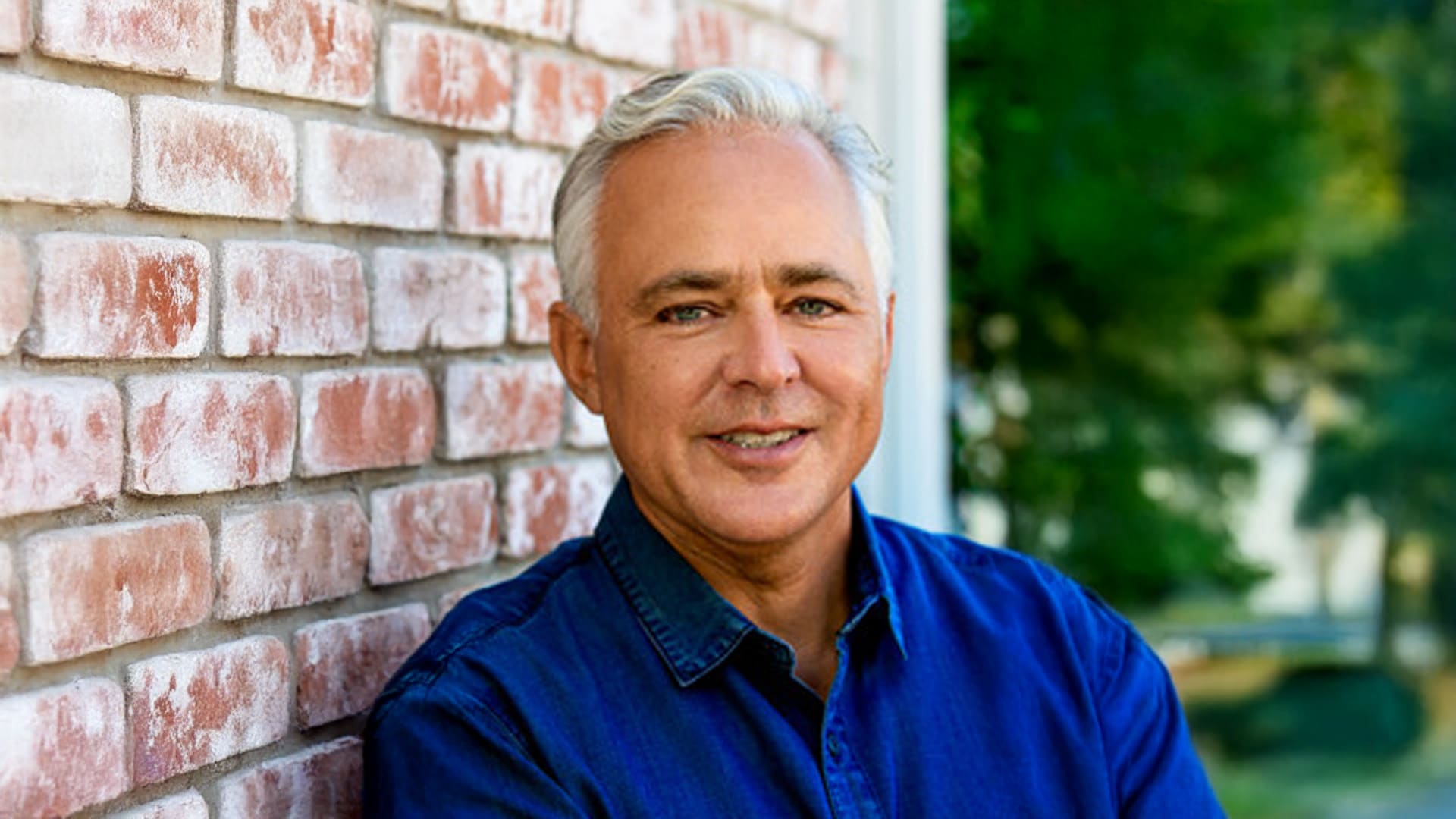
Editor Joel Negron, ACE
You and I know what you’re talking about with the cards, but I want to make sure the podcast audience does. You were saying “we put up cards.” You’re talking about literally putting index cards on a wall in the editing room.
Yeah. I have an assistant take an image from each scene, then print out a card with the scene number and a short description of the scene.
The reels (~20 minute subdivisions of film) are constantly changing, but let’s say the assembly had around nine reels. We had each card representing each scene lined up in a row with each row showing what’s on each reel.
A lot of the scenes are flashbacks. In most cases the flashbacks stayed where they were scripted, but once we got into fine cutting and once we’ve screened the movie a few times and got a better feeling for it, we decided to move some things around because we wanted to layout the story in a little bit different way than it was written. It just felt better once it was on screen.
We did that for a lot of the flashbacks. We also experimented with taking some out - not having a flashback at all - or combining more flashbacks together.
One of the things that we discovered early in the movie is that we were on Earth too long, so we broke that up by interjecting space into it a little bit. Editing really is trial and error.
We do a lot of trial and error. You put scenes together, you look at it, you see how it feels. You see if it’s making sense.
You see if you’re going the right direction that you want to go in story wise, then if it’s working, you let it sit for a while. Play it for an audience. If your audience likes it, then you go from there.
The big topic of discussion amongst fans of the show is this so-called 3:45 minute version of the movie. Both of us know that it’s pretty common to have a much longer “editor’s cut” of the show, but talk to me about building that and how you got it down to under half that length.
The editor’s cut was about six hours long. I like to put everything together so that we have everything and can go back and look at it later. It’s all got to be assembled at some point. It’s footage that I can insert into a sequence or insert into the movie.
If it’s a scene that was lifted - even though I know some of it, in my heart will definitely not go into the movie - I just have it edited so that it’s something that we can refer to.
Or maybe there’s a piece of it we can use after having an assembly and weeding out the stuff that’s absolutely not going to be in the movie.
We ended up with a 3:45 cut of the movie that we screened for test audiences. Funnily enough, when we showed people the longer version of the movie, two things always came up: They never get tired of Ryan.
Ryan is in every single scene in the movie and they still love him. And Rocky is so lovable. People fall in love with Rocky even in the long version of the movie.
It wasn’t practical to release a long movie like that, so we made some tough decisions and did some fancy montages and jump cutting just to make things go a little bit quicker and hone it down. The movie that was released - when all is said and done – was the best version of the movie.
I really believe it, because it’s entertaining. It holds your attention. You’re never bored. The other thing that’s telling is that when you screen the movie, people don’t get up to go to the bathroom. It must be so interesting they don’t want to get out of their seat.
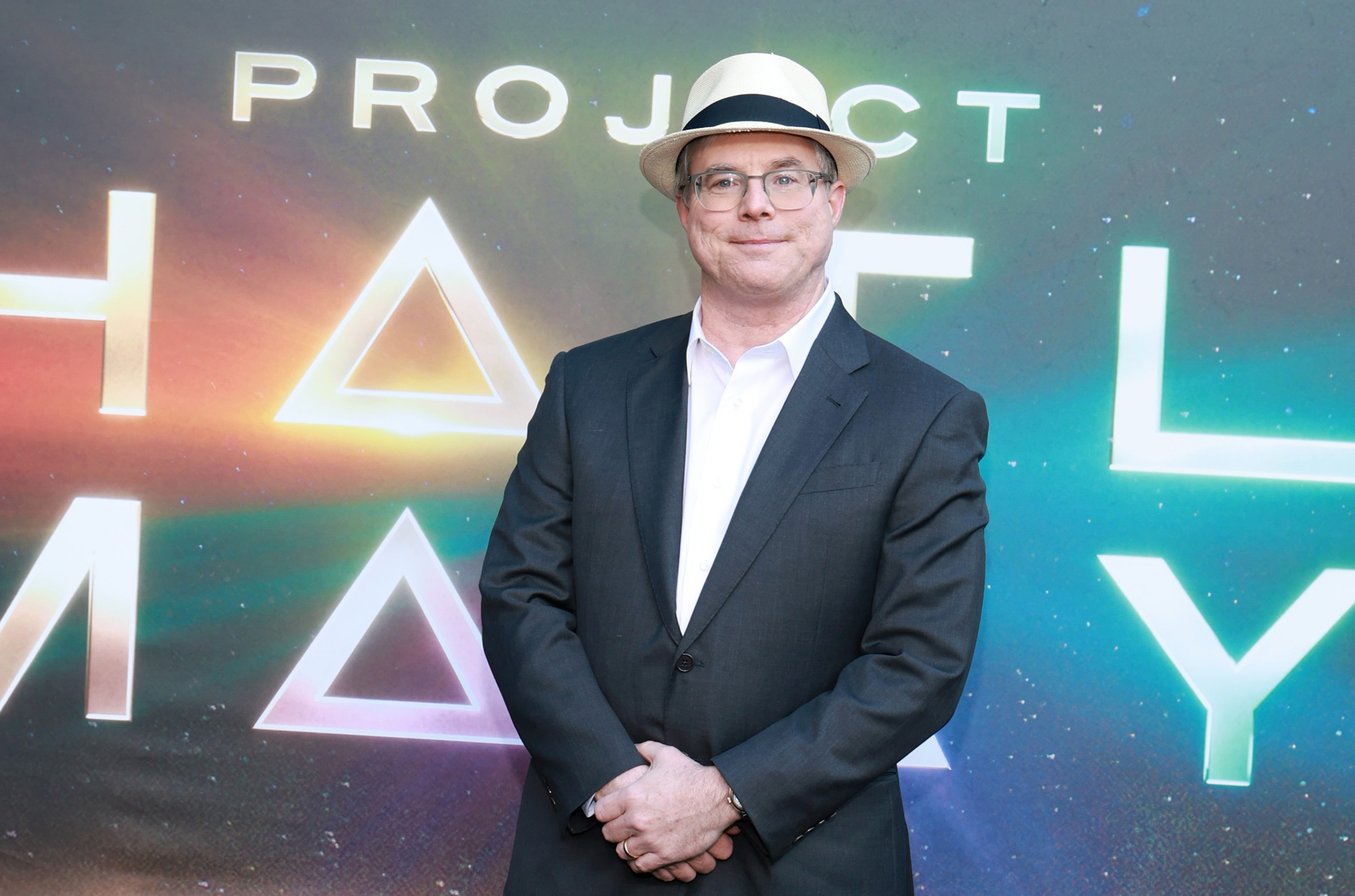
Project Hail Mary book author, Andy Weir
I didn’t know how long the movie was when I went to go see it, and was shocked when I later learned how long it was.
That’s what made it harder for us to cut down, because there’s a lot of good footage in there that we just had to bite our lip and just take it out.
So many people think that editing is cutting out the bad stuff, but really so much of it is cutting out the good stuff. Talk to me about some of those choices.
It’s actually the opposite, really. You’re cutting out a lot of good stuff. I think editing is mainly just feeling what comes next.
Feeling what is going to propel you into the next sequence, or what’s going to make you want to watch the next thing coming up.
When you’re in a scene and you’ve laid out everything that needs to be said into that scene then it’s time to move to the next scene. You have a feeling for when you haven’t overstayed your welcome.
You need to lay out what needs to be said and lay out what story needs to be told, then move on to the next thing.
We had sequences that were 3 or 4 times the length that you see them now in the movie, but we figured out how to put it together so that it’s just what you need.
There weren’t a lot of scenes that got cut out. They just got shortened. Maybe two or three scenes got cut out of the movie. Most of them got shortened.

What about audience screenings? You mentioned that people couldn’t get enough of Grace and Rocky. What did you learn from the audience screenings?
In the screenings, you felt where it’s sagging a little bit. It gave us areas to concentrate on. This is what made it hard. People loved it even in the longer version.
They always liked it, but there were some areas where it came up over and over again that those sections were a little bit slower or maybe there’s too much science. “You’re giving us too many complicated scientific equations” or whatever.
So after the screenings, we would gather the comments and go to those sections and try and hone them - try and make them work a little bit better.
There’s a big reveal in the film that I don’t want you to spoil, but can you talk about determining how long to allow the audience to sit with this big moment - to make it emotional and have weight, but not to overstay your welcome?
Once we made the big reveal to the audience - and once Grace found out this big reveal - we wanted to stay on him as long as we could.
We wanted to see his emotional reaction to it. There was a little bit of give and take, but I think what we have in there is what’s necessary. It was also done using jump-cutting.
He’s in two different locations as he’s realizing this and as he’s processing this information, so that helped a lot too.
He got a flashback, then you come back to him and see how he’s feeling. Then you go to another location and he’s still feeling the same way.
Then he goes and talks to Rocky. So that thought is still in your head while he’s talking to Rocky, which was a good way to piece those chunks together.

After Grace gives his eulogy for his flight mates, the tone changes.
The eulogy comes after a flashback when he’s learning about the Hail Mary project. The tone change is where he decides that he’s going to suck it up and do what he’s supposed to be doing because he knows what the mission is. In the scenes before that, he’s realizing that he’s too many miles away from Earth to get home.
Then he’s getting drunk because he’s upset and he doesn’t really care about anything. Then he has a flashback where he understands the mission. Just before the eulogy is where he cuts his hair and he’s in uniform. He chooses: “I am an astronaut. I don’t know exactly why I’m here.
I don’t even know how to be an astronaut, but I’m going to do what I need to do, and I’m going to give these fellow astronauts a good sendoff.”
So that’s where the tone change is: it goes from him not really wanting to be there, not knowing why he’s there to saying, “Okay, I don’t know why I’m here, but I’m going to follow this mission and get it taken care of.
The soundtrack was very eclectic. How many of the needle-drops were scripted or came from the directors? I think the directors are known to have some pretty interesting music. What was discovered in post?
It came from the directors. They, both definitely have an eclectic taste in music. There was a lot of trial and error for the cues we landed on - the ones that are there. The reason for those cues is because they’re from all over the world.
The idea is, as the whole world is coming together for Project Hail Mary, the whole world is coming together to help save the world.
So the music is a representation of all the different countries that are coming together to help the mission.

We talked about jump-cuts a bit already but talk to me about the value of those and what’s the purpose of them?
The biggest value is you can get through time quicker and get through sequences quicker. In the beginning - when Grace is waking up and trying to figure out why he’s there and what he’s doing there - the jump cuts help the disorientation a little bit. It also helps us get into the flashbacks because it’s kind of disorienting.
You don’t know where you are, what direction you’re in, then all of a sudden you’re in a flashback. The other thing, too, is when you’re in space you don’t know what direction you’re going. You don’t know what’s up or down.
A lot of the shots are upside down, they’re sideways. That was something that was also added to get that feeling of Grace not really knowing about his environment. They shot a lot of scenes upside down.
I want to talk about building suspense as an editor. There are two very suspenseful scenes: as Grace is about to meet an alien life form, there’s suspense that builds as Rocky is about to be revealed. Plus the jump scare off meeting Rocky. Then the other suspense is when they’re trying to lower the probe to the planet atmosphere. What you do to build tension in those scenes?
Those scenes are pretty different in terms of the suspense. In the first example, he’s in complete darkness and he’s going into the unknown. This alien has sent him a message, and he built the tunnel, now he’s got to go see what is this thing is.
We tried to make it a little scarier, but it didn’t really feel right. He’s going into darkness and nothingness, but he’s a brave person. We kept it in darkness as long as we should. Once we see Rocky - after that jump scare - it all of a sudden softens up. Even with the music.
The music’s a little scary, but then once that jump scare happens, it becomes a little a little softer and a little playful.
Then when Rocky starts showing Grace the models of his spaceship and of Grace, it becomes kind of funny, so it just loosens the tension there, which is kind of nice.
It’s interesting how that scene turned out. It was scary, but not really, then it became soft and kind of funny.
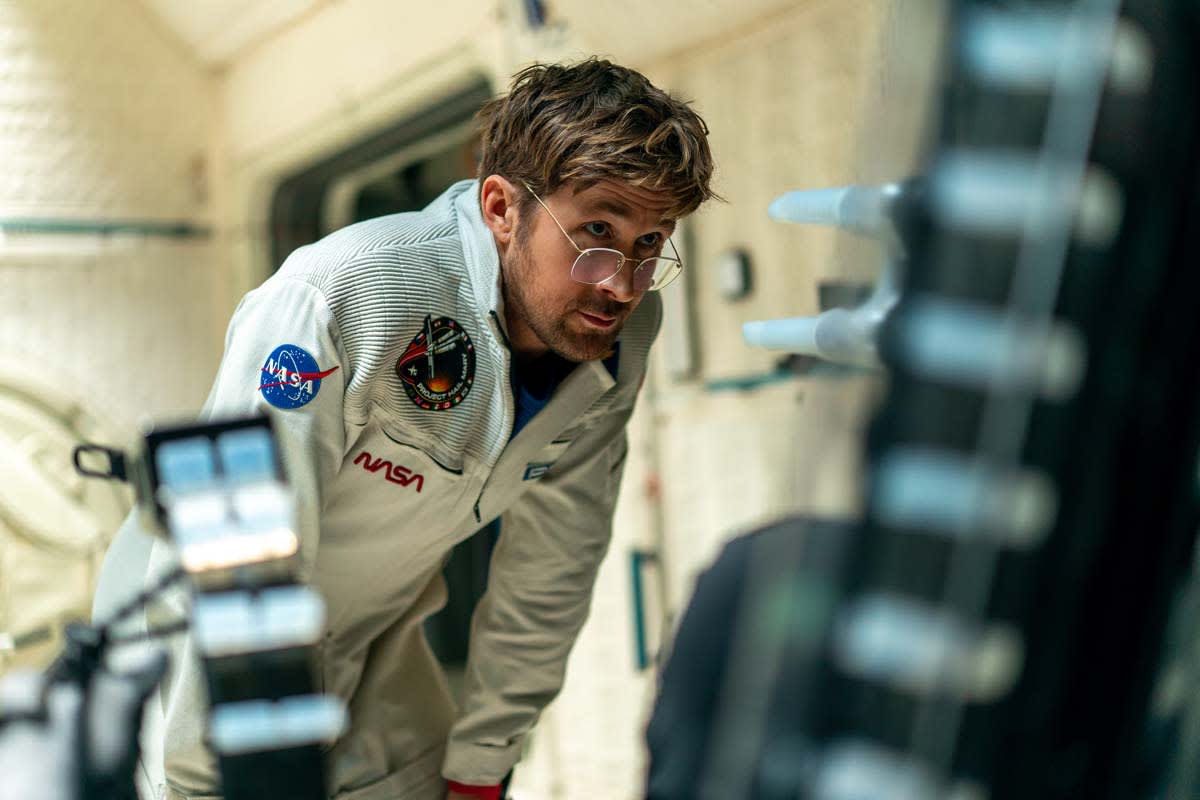
Was the music after they met score?
That was all score.
Talk to me about the structure of flashing back to meet the crew instead of revealing them earlier. Was that as-scripted, or did you find that there was a better emotional tug by introducing the crew when you did?
I think we were always thinking of this film in terms that this is Grace’s story. You need to know the crew a little bit, because we need to feel bad when we know that they’ve died.
We put a couple of flashbacks in the beginning - while he’s drunk - a quick flashback of the captain, then you see a quick flashback of the other officer, Ilyukhina.
But later on - when there’s a flashback and he actually meets the entire crew - we tried to keep it on Ryan, really. We try to be in his head. That’s kind of what we did with a lot of the flashbacks. We just wanted to stay with him because they’re his thoughts.
We wanted to stay as close to his thinking as possible, so there wasn’t a whole lot of dialogue from the other crew. It was mostly just what Ryan’s feeling at the time, which was - I thought - a good choice.

Let’s talk about the karaoke scene. It’s a great emotional moment in the film, and I wanted to talk about when you stay on Stratt - who’s the main person - and when you are choosing to go to reaction shots.
The original cut of the scene was really just between Grace and Stratt. I cut a version where she comes in, she starts to sing, and the other people in the room are really surprised that this harsh person is singing - this hardened lady.
It was all her looking at Ryan, then Ryan looking at her, because they just had that conversation outside.
But it seemed when we did that, like these two people are having a relationship. They do have a professional relationship, but maybe people are going to think it’s too much of a relationship.
So then we toned that down and went back to more of the crew watching, which I think was also the right thing to do, because you don’t want to think that Stratt and Grace have some sort of romantic relationship. We don’t want that at all.
So I it’s more of an emotional thing between the two. She’s showing him that she can be part of the group, because that’s what she kind of talked about earlier in the scene.
I think we did a pretty good job in balancing that. The first version was, “Oh, there’s definitely a real relationship.” Then we toned it down.
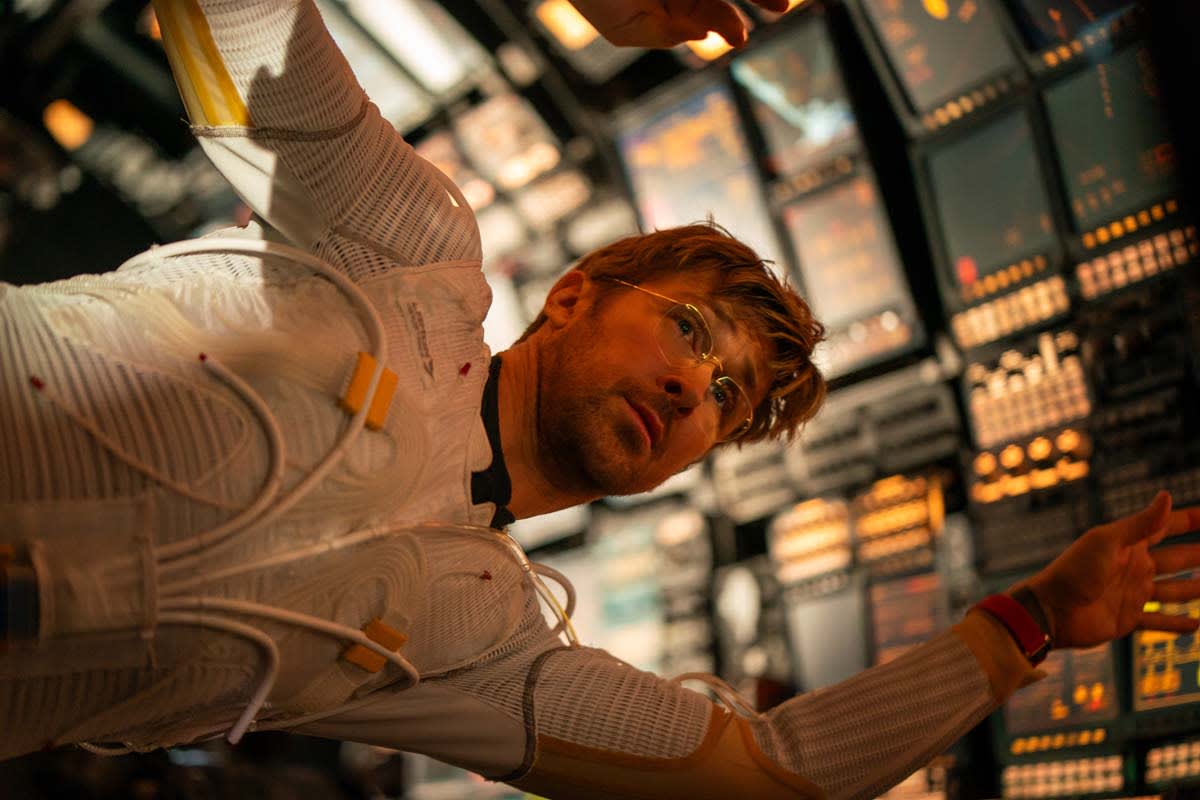
What about the Tau Ceti probe scene tension?
We call that the fishing scene. That goes back to how the cards on the wall were named. When you’ve got all the cards on the wall, the sequences all have these short names, then you can picture the whole movie in your brain and you can move things around better.
One of the things that I love about that sequence is the scene outside the ship where he’s dropping the probe and collecting the sample, then you have a whole other scene inside where they’re trying to get out of the gravitational pull of the planet and Rocky has to save Grace. The outside and the inside is all one sequence.
The tension on the inside is better because the tension on the outside works so well. The way that we played the outside was that we used a lot of these kind of earthquakes where Ryan gets knocked over. We also used a lot of shots where you can actually see the peril because you see how far down it is.
I tried to get through that whole outside section quickly – where he goes collects the sampler, then there are some obstacles and he gets knocked over.
But when we cut inside is where I feel like the meat of the sequence is, because that’s when he gets knocked out, and that’s when things go really bad. If he’s knocked out and he can’t drive the ship, it’s going to get pulled into the atmosphere. They’re both going to die.
People always tell me that the exterior has a lot of tension, but I always feel like the interior is the more tense part and it’s super emotional.
As soon as you see Rocky come out of his cage, you feel like, “Oh my God!” you know? We did a lot with sound and we did a lot with music there. We took out the sound, which was pretty good in some places, and we took out the music. We took everything out in a couple places.
I think that just helped that sequence. That sequence was a collaboration between the directors, the composer, the editor, the sound designers and of course everybody that was working on the set.
It turned into a really wonderful sequence that you feel a lot of emotion, which is the goal. The goal is to just make people feel the emotion, and I think we accomplished that.

Was there a film-out?
Yeah, it was Greig Frazier’s process (the cinematographer). He did it on Dune. He filmed it out and then scanned it back. We did that for the entire movie. It adds a pretty interesting grain to it. I think you see it more in the IMAX than you do in the DolbyVision or the standard format.
Also with some of the flashbacks early on, then some of them when he’s thinking about home later in the movie, Greig had this color process that he added that when he was filming it out, he added some color flashes to it, which was pretty interesting. He did it several times.
Some of it had a lot of color, some of it with hardly any color. He kind of mixed it up. Then I just picked the best pieces and put them in.
What about IMAX? I’ve talked to a couple people that have edited these films that are shot and projected in multiple format. Does it change the pace when you look at the film in a different aspect ratio - or rhythms?
We’re always aware of it. We edit the whole movie in the full frame. Then when we start to see different versions of the movie, we make adjustments. I don’t think we made a whole lot of adjustments.
The movie was kind of it was pretty much framed for every format. It was filmed in IMAX. When we had to, we did make some adjustments.

How do you approach a scene? Are you a selects reel guy? Or do you just look at the bins in the order they’re shot?
I’ve been doing this a long time, and I devised a methodology that I like, and I’ve been using that for a while. It’s almost like cutting on film, the way that I do things.
The first part is that I’ll take a sequence or a scene and I’ll put it together quickly. Maybe just picking the last take of every set up and putting it in scene order. Then I have my assistant build a string-out of all the dailies for that scene in shooting order.
Then I put that in my source monitor and I use that as my source. So it’s almost like the old days of having a KEM roll. Then you would pull pieces out of that and put it into your cut.
That’s how I do it. I have something to start with - like just a rough version of the entire sequence - and maybe there are some patterns in there that are that work pretty well.
Then I look at every frame of dailies, from my selects roll, and anytime I see something that catches my eye - a cool shot or a great performance or maybe the directors change something while they were shooting - I’m watching it in order so I can see what they were thinking while they were shooting it.
I work that into my sequence. That becomes my assembly. After I’ve looked at the entire dailies, then worked into my sequence, I just take that sequence that I’ve made and polish it and make it cleaner and fix the sound.
Sometimes I’ll look at the dailies again if I have time. But when I have multiple cameras I don’t look at the multi-group. I look at the entire A camera, the entire B camera, the entire C camera. But my string out is built with the groups.
It’s got the A camera, the B camera and the C camera, so any time I use the group in my sequence, I can always switch to the other camera if I need to, so I’m always cutting with groups and I’m watching everything in the order it was shot.

When you’re doing that, you get ideas, you try things. Since Greig does a lot of handheld, he’ll move the camera around and he’ll grab things, so if I’m not looking at every frame, I’ll miss those grabs.
The other thing I do is while I am going through the string out is that I make another little select roll, so I’m cutting the sequence and making a select roll all at the same time.
Do you know Joe Hutshing? One thing he told me - this was a few years ago when I was working with him - He says, “If you see something and you don’t pull it out, you’re probably never going to find it again or you’ll never see it again.
So that’s what I do. Every time I see something I like, even if it doesn’t go in the sequence, I just put it somewhere where I can always get to it. That’s a good tip.

I work fairly similarly to how you mentioned, which is to start with a really fast cut. What do you think that gets you? That you understand the shape of the scene? It helps give you an understanding of the scene before you really dive into it?
It gives you that. The other thing it does is - a lot of times while you’re shooting, the line producer will call me and say, “Hey, do we need anything else for the scene? Or have we covered everything? Do we need any inserts or anything?” If I take the scene and put it together really quick, I can kind of see every setup that they’ve done.
When I put it together quickly, I usually use every setup. I can quickly see where they’ve missed something or quickly see what else will help the scene.
The one thing that it also does is it helps you get a sense of the performances. You go through quickly and you get a sense of it and you can see once you’ve assembled the sequence if the performances are working.

Is there anything you want to talk about?
When I was on set, working in Shepperton, England, I would go to the set every day and talk to the directors and talk to the second unit. One day I said to the A.D. or some English guy on the crew, and I said, “Do you know what a Hail Mary is?” And he said, “It’s a prayer.”
And I say, “It’s not really a prayer. It has to do with American football. I asked all the English people and none of them knew what a Hail Mary was. I just thought that was really funny. It just made me laugh.
I had to explain to them actually what a Hail Mary is. It’s a last ditch effort in a football game. You throw the pass and you say a prayer, that someone’s going to catch it, and you’re going to score a touchdown.
There are cultural differences even in English-speaking countries for sure. Joel, thank you so much for talking to us again about this movie. I really enjoyed this. I’ve recommended it to everybody that I know to watch this film.
Thank you so much. I appreciate it. This was fun.
 March 26, 2026
Young Sherlock
Today on Art of the Cut, we speak with four of the editors on the buzzy new Amazon Prime series, Young Sherlock. With us are ...
Read more February 12, 2026
The Pitt
Today on Art of the Cut we speak with editor Mark Strand, ACE, who is nominated for an ACE Eddie for Best Edited Drama Series ...
Read more February 3, 2026
The Perfect Neighbor
Today on Art of the Cut we’re talking with editor Viridiana Lieberman about the Oscar-nominated and BAFTA-nominated Best Documentary, The Perfect Neighbor. The film was ...
Read more