













Miss You, Love You
A discussion of how to find the rhythm in the silences, the challenges of editing with very little music, and when to turn Walter Murch’s “blink” rule against itself.


Today on Art of the Cut, we speak with editor Doc Crotzer, ACE, about the HBO film, Miss you, Love You.
Doc is an ACE Eddie winner for Roadhouse, and an ACE Eddie nominee for his work on the TV series, Glee. A frequent collaborator of Doug Liman, Doc’s other work includes the John Wick spinoff Ballerina, Sons of Anarchy, and producing, directing and editing the TV series Good Behavior.
I’m so grateful that you contacted me about this movie. I watched it and really enjoyed it. It’s a very simple movie, but very powerful.
Crotzer: Thank you so much. I’m so happy that it resonated with you. And it was kind of the simplicity of it was one of the things that I think really got me excited about it, along with the themes of love, loss, grief, estrangement.
Anyone human being can relate to some of the things that are throughout this film. You can connect to it, and certainly I connected to it, and I’m excited to see it get out into the world and hopefully connect with a lot of people.
Let’s discuss the opening of the movie, the opening title sequence before you get into the plot. Tell me about that and how the movie started and how close that was to being as scripted.
Crotzer: Filmograph did the title sequence - and they did such a great job on it. We iterated a lot. That was all footage that production shot. We explored trying a bunch of different versions. We weren’t sure how long the credits were going to be with the “mains” – whether we would be doing the full mains, or not doing the full mains.
The real interesting part about the opening of the film is that there’s a scene that we omit it. The first scene of the movie - as scripted - is not in the movie. It’s the night before Jamie arrives and Allison is in her house by herself as she’s getting texts from her son, Tyler.
The texts kind of explain what’s about to happen: that Tyler can’t make it, and that he’s sending his assistant, Jamie. It is this very quiet scene played by Allison, beautifully.
The cast of this movie… I don’t have enough superlatives to talk about them. Allison Janney is someone who can sit with a cell phone receiving texts and make you cry somehow. The superpower she has is just amazing.
We had this opening scene. It lived in the movie for a very long time. It lived in it for friends-and-family screenings, but ultimately, towards the end, it became clear that you don’t actually need that scene.
If you drop into the movie as Jamie drops into Diane’s life, it’s a much more subjective way and it’s a lot more fun, because then you haven’t met this woman at all, and you’re meeting her at the exact same time that he does.
So that whole first scene - which is effectively the first act, in the house - is framed up differently by having not met her. That unlocks something that was a cool discovery for the movie.
And one of those editorial discoveries that you only find in the edit, because you’ve been living with the movie a certain way for a while and you say, “Well, what about this?” You try it, and it clicks.
I would think you’d have to almost watch the whole movie again once you cut that scene out? You need to say, “Now we have to watch the whole two hours” because how do you know if the whole film can survive without it?
Crotzer: It’s a great point because it just changes the whole framing of it. It doesn’t just change the scene after it, it changes everything after it. I think that speaks to how powerful it can be when you start talking about structure and you remove one scene and what that does, or you move a scene somewhere else.
This one was not a movie where we moved a lot of scenes around because it was very linear. Certainl, the scenes in the house with Diane and Jamie are these long scenes that are very deliberately in a particular order for the emotional arcs of those characters and their relationship together, so there wasn’t a lot of moving those around, but it was interesting - in a movie that stayed pretty much linear to the script - that we still wound up having a moment where you pull something out in it and unlock something else.
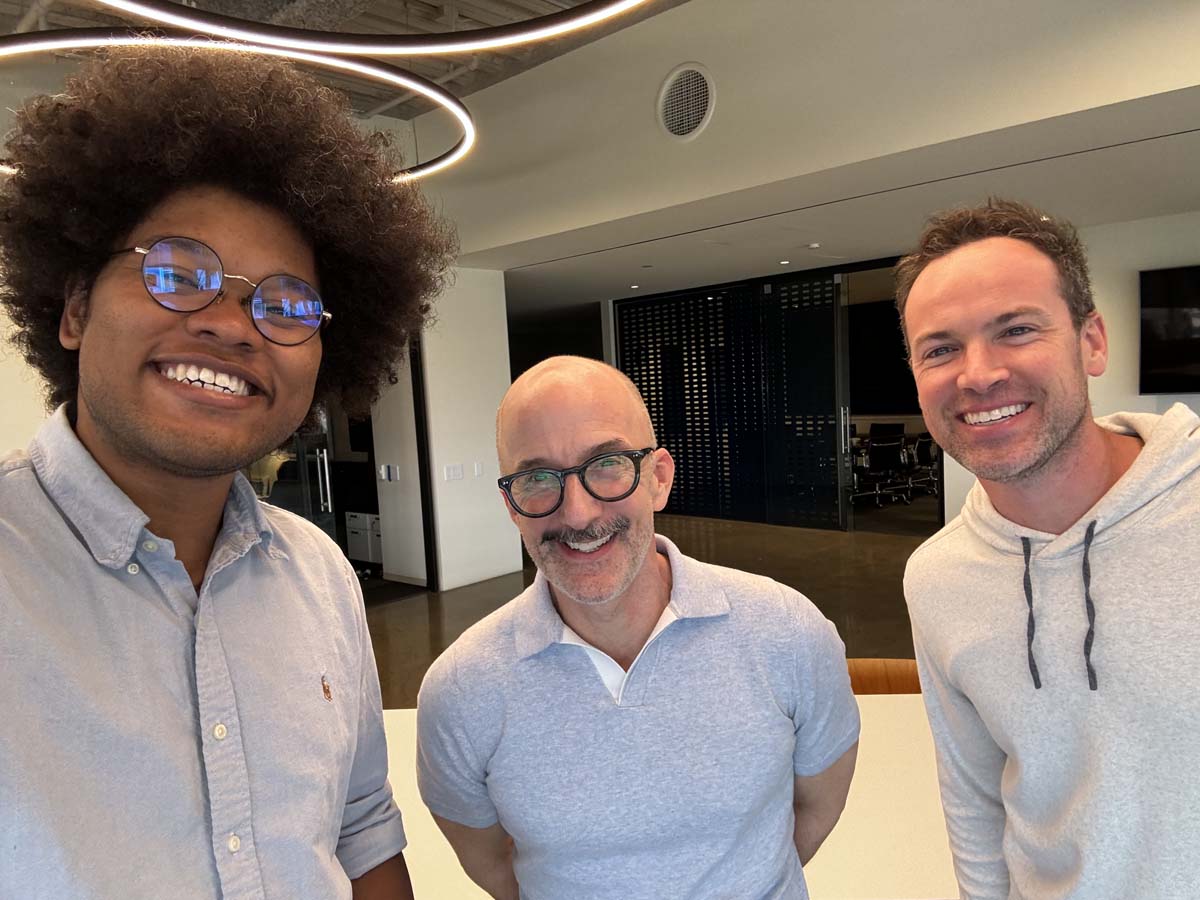
First assistant editor Haruka Gerald , director Jim Rash, editor Doc Crotzer
Tell me about the schedule. I would think they shot it very quickly.
Crotzer: They shot 17 days in New Mexico. We were cutting in Los Angeles and we had a really fast paced post schedule as well. They started shooting middle of February and we were picture locked or close to picture lock by middle of the summer.
We sort of picture locked, then there was a brief period where the movie was set down for a bit, then there was another unlocking with some adjustments and tweaks before finally locking up and finishing.
This went to Sundance, correct?
Crotzer: This had a special screening at Sundance. It didn’t play in the festival. It was a standalone promotional screening to get the word out about the movie.
But the spirit of the movie is such a Sundance movie! Jim Rash - who is just a lovely, lovely human being, I have to say that before I talk about how great of a writer and director he is. Jim wrote and directed this one on his own, but Jim’s writing partner, Nat Faxon, produced it with Jim and some other people.
Jim and Nat had a movie with Allison Janney called The Way, Way Back (2013, edited by Tatiana Riegel, ACE) that played at Sundance a number of years ago, which is one of my favorite movies from that era. Sundance was a natural place to have a screening, because it just feels so right with their history with the festival and also just with the movie itself. It played really well, and there was some buzz.
Is this a director that you’ve known for a while? I apologize for not doing my homework.
Crotzer: I only knew of Jim leading up to this movie. I was such a big fan of his movies. There’s like a five year period where three movies that I reference all the time and think about all the time and love to rewatch came out.
One of those was The Way, Way Back, which Jim co-directed with Nat Faxon, and they were also in the movie, and Allison Janney was in that movie.
Then, Me and Earl and the Dying Girl (2015, edited by David Trachtenberg, ACE) came out a few years after The Way, Way Back. Then also - kind of in that same era - was a movie called It’s Kind of a Funny Story, (2010, edited by Anna Boden). Those are just three beautiful, smaller movies that I love and love rewatching.
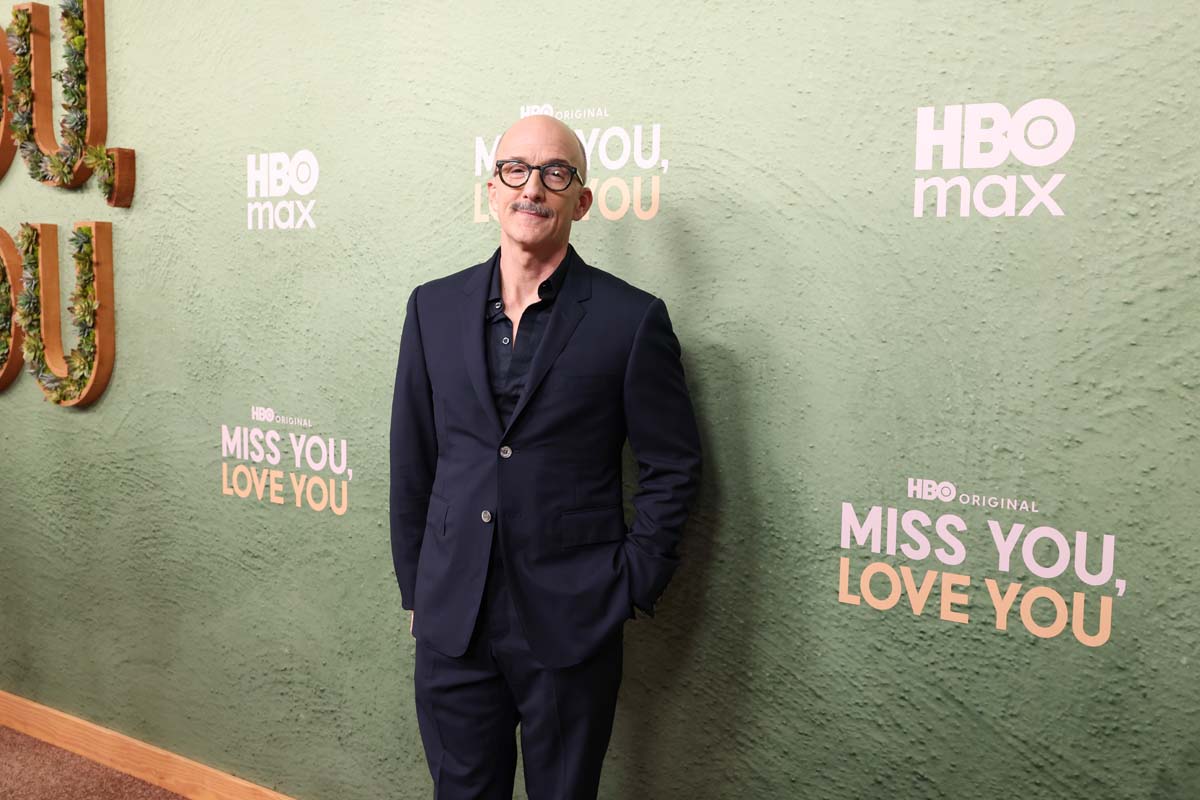
Director, Jim Rash
I had just finished Roadhouse. My agent, Jason Garber, at UTA, called me and said, “I know you. I know your tastes. I want to send you this script. It’s this little independent movie, and I know you’re going to love it. They’re looking for an editor.”
I read it and it just blew me away. I was crying, laughing, all the things that hopefully the movie does for people. Page by page, as I was going through this, I just thought, “This is incredible” and thinking about it as a challenge of it effectively being two actors in a room.
That’s most of the movie editorially. It was exciting to me because there’s just nowhere to hide with your edits. You have to be so spot on because there’s nothing that’s going to distract people from a bad edit, so I loved it for that challenge.
But I also loved it because it came at a time for me in my life where thematically, the things that I mentioned about the movie - love, grief, loss, heartbreak, estrangement - were things happening in my life at the time that were a little more in the foreground than normal, and I felt like the script really spoke to me.
A month before I read the script, a loved one had been diagnosed with Parkinson’s, and that was one of many things when I was reading this where it felt like, “Oh my God! How can I not do this movie?” I read it, and got way too excited about it.
Because you don’t have it yet…
Crotzer: You don’t have it yet. And there are a lot of great editors. And I thought, “If I’m excited about it, I’m sure other people are excited about it.” So I was way too excited, but I was just so lucky that I got it, because I would have been devastated if I didn’t in a way that I normally wouldn’t be. It felt so personal to me. It speaks to the beauty of Jim’s writing.
Then as we came to make the movie, his directing and Allison’s performance and Andrew’s performances, it just universally has so many things that we as humans have to push through in our daily lives. And it comes through in the movie, or at least I hope it does.
One of the tricks of this film - and I would love to see the script and how the script deals with it - is that the people are so often not saying what they mean, or they’re not saying anything at all. So much of the revelation of the characters is through reaction shots.
Crotzer: I think that the power of the movie is oftentimes in the silence. The silence is actually quite loud. You feel that. And because this is a movie that is primarily in one location - because we aren’t using score in the traditional way - every single micro-choice that you make as an editor is louder, too.
The performances were a gift because - as interesting as it is to watch Allison or Andrew say these incredibly well-written lines that are all part of this much bigger puzzle - they are also both actors who are so in it the whole time.
They performed these scenes like a pla, that at any moment, what they’re doing as they’re receiving the information that someone else is saying to them or as they’re receiving whatever the other character is saying to them is oftentimes, I think, more interesting and connects you more with the character.
And I always find myself when I’m editing, watching people receive information more than give it. I think that’s really interesting. There’s a tendency - especially currently - that lines play on camera all the time.
Of course, lines do need to play on camera. And in this movie most of the lines play on camera, but that being said, there are also these wonderful moments where you see people receiving lines instead, and I think that that connects you with them - connects them with each other - or in some cases it disconnects them from each other, which is was also part of the dance we were doing editorially: making sure that we felt, as you go through the film, with Allison’s character, that this is not what she signed up for and this is not what she wanted.
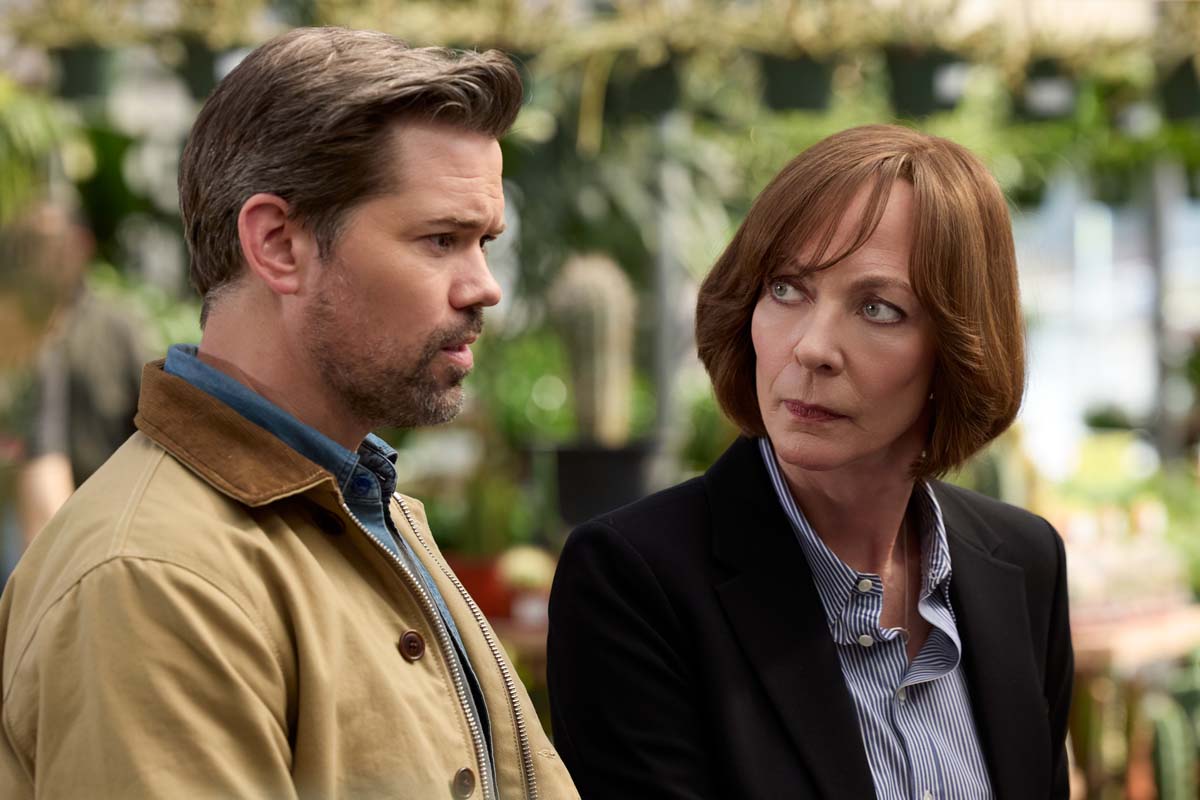
I’ve often thought that the difference between playing a line “on” and playing a line “off” is that “on” is a better way to receive information, and “off” - on the reaction - is a better way to receive emotion.
Crotzer: I think that’s a great way of putting it. When you watch some of the daggers that Diane says to Jamie in this movie, and you see those things land on Jamie, if you have any fraction of empathy in your body, you feel it for that poor man in those moments.
Editorially, that’s one of the most powerful things I think that you can do. We’re watching these things on a screen, yet you feel like you’re sitting right there with them. You want to give this person a hug so many times throughout this movie!
For me, reading it, then as we’re editing it, it was a whole other emotional experience. I’d be in the middle of a scene cutting something. Sometimes I find myself stopping because I just need it. I like felt like I want it to like, hug someone.
The editorial process on this movie was interesting because you’re so in it. It’s almost like one really long scene, the way it escalates. There are some really long scenes. That opening scene is basically the first act of the movie.
I think the takes were 15, 17 minutes long, something like that. Allison and Andrew were ready to go. They had memorized the whole movie like a play, so they were doing it like a play. The way that Jim blocked that space - and even the location itself - lent itself to shoot it that way.
I think it also allowed them to play in this way that you wouldn’t if you were shooting two minute takes. Allison said that because of the way they shot it, there was time for these things that she wasn’t even expecting emotionally to bubble up in her performance, and she was just letting it fly. So was Andrew. Watching the two of them go through that was incredible.
But because there are some real intense scenes, we had to keep it light in the cutting room and we had to take breaks.
Fortunately, Jim Rash is also a very funny human being, in addition to being an incredibly great writer/director, so we laughed a lot, too.
He has one of those laughs that - when you get a real one - it makes you laugh, so as we were cutting the movie, and as we would get to these comedic moments, I’d know that I nailed something when I got the real laugh.
That always lightened the mood. And I brought my dogs to the cutting rooms. The dogs are really good emotional support animals, so sometimes I’d be working on a scene and wearing it on my sleeve, and one of my dogs would crawl up on my lap and make me feel a little better.
It doesn’t happen to me on every show, but when you are cutting something where you get so in it emotionally with characters where you’re feeling it and living it, by the nature of what we do, you’re reliving it over and over and over, so it can be draining. It can be rewarding, and usually it’s both of those things.
Because of the nature of shooting primarily in one location and mostly during the day, did he shoot the script from beginning to end linearly?
Crotzer: My recollection is that we shot all the house stuff first at that practical location, then the end of the shoot was the location bits.
So I think the first 12 or 13 days was just Allison and Andrew in the house - shot pretty linearly. It was important to Jim and to the actors - as best they could given the limitations of the realities of scheduling a movie - to try and shoot that in a linear way so that they can follow the throughlines.
They were so incredibly good, and they gave us colors to paint with - both of them. Jim was aware from the start - and I’m sure the actors were too – that due to how this movie is constructed, we’re going to need some options to turn the knob one way or the other at certain emotional moments. We might want to turn it really hard somewhere and pull all the air out of the room, or we might not.
We might want to save that, and we might want to be able to have the moment in question play a little softer, so that 30 seconds later or two minutes later, the next dagger is even sharper. There were no bad choices. They gave us options, but everything was so good.
That was the challenge. I was sifting through it and figuring out which of these different, but equally viable and great performances, was the one for each moment. That was really the hardest part, because they were both just so in tune with the characters and the story.
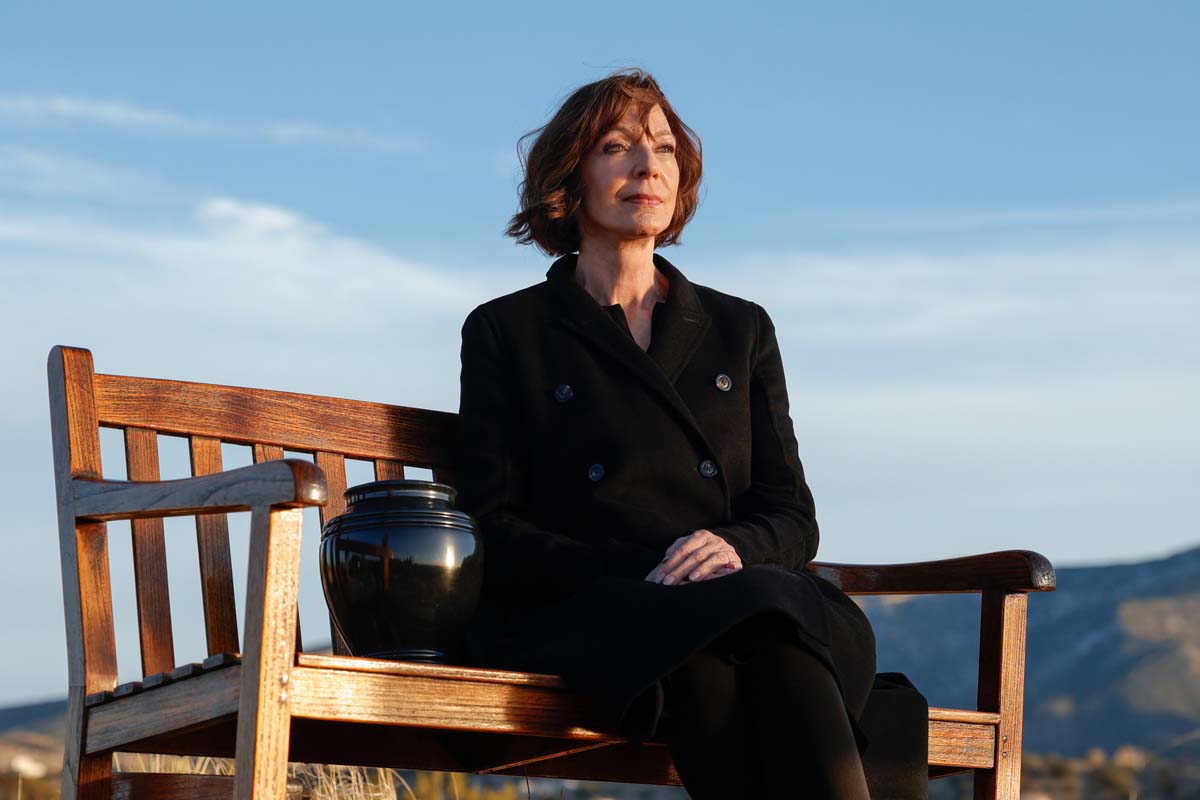
Did that tend to keep you in the same take once you’d chosen it for a scene?
Crotzer: Yeah, it did, especially in some of the longer scenes or some of the more emotional scenes, because the actors had the space to explore and they would ratchet things up or down in different takes. So oftentimes we would find one and then ride that horse as long as we could. Or at least it served as sort of the spine.
But we were always looking at the other takes to see: how can we augment this? Or what if this comes in here instead? and those types of things?
There’s a scene where they’re sitting on the couch the first night - after Diane makes dinner for them - in the living room of the house.
That one was one where we had our hero take and thought, “Yep, that’s the one.” The litmus test for me going through these dailies was oftentimes that I’d be watching and I’d almost forget I was watching dailies and think I was watching a finished film!
That’s the thing with Allison and Andrew: Any one of these scenes you could effectively play the whole scene on their face and it would be interesting. That’s what’s so crazy about both of them.
I’d forget I’m watching dailies, and the clip would just stop because I get to the end of the clip in the Avid, and I think, “Oh, right…I guess on to the next take.” Meanwhile, I’m bawling or my face hurts from laughing so much or some combination of the two. It was really a unique journey with the dailies.
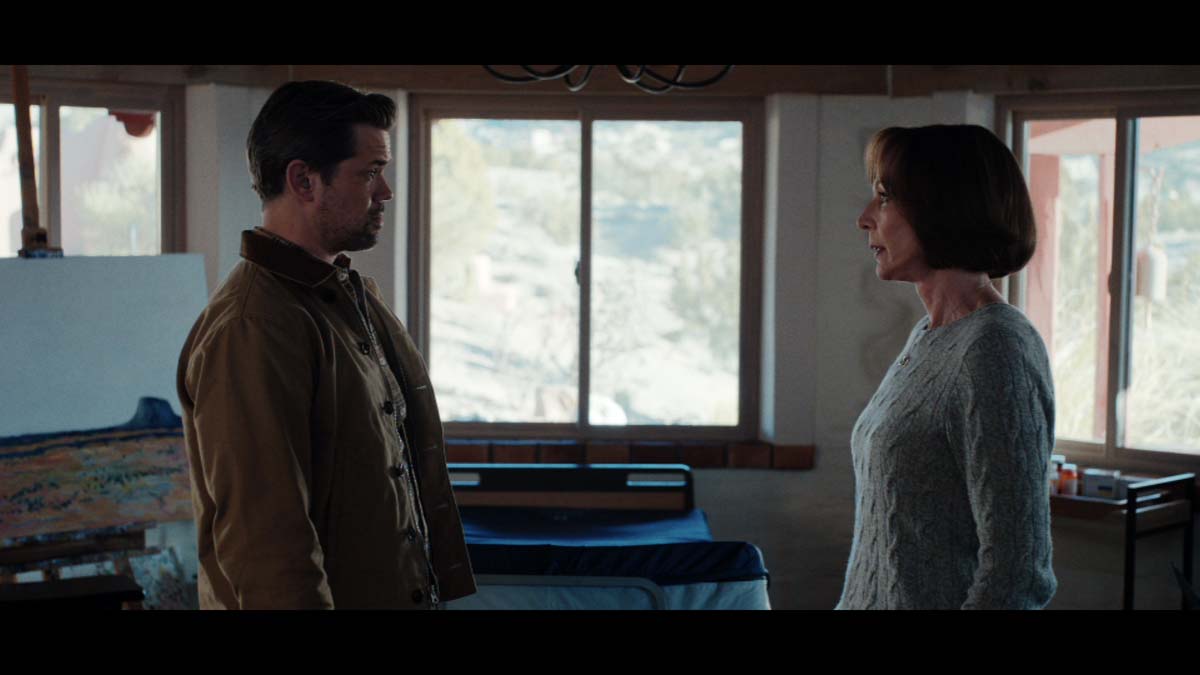
I want to ask about a specific moment. There’s a great one with Janney’s character, Diane, and you cut to her before she begins speaking by a second or two… sitting on her before she says, “I thought you’d be better at that… Lying.” It’s just brutal. Instead of cutting to her when she starts the sentence, you are looking at her as she’s coming up with this hurtful line.
Crotzer: Thank you for noticing that. That was part of the fun with Allison’s character. I think editorially – especially in the first 30 minutes or so of the movie – she’s doing these little micro things to keep her walled off from him and keep her strident, but also making sure that she’s still someone you relate to on some level.
She’s a complicated woman and she’s been through a lot. She says some things that are really mean, but she also says some things that are really not mean, and you want to be in it with her, so we are constantly looking for moments like that where you could make her take back control a little bit, too, because I think control for her character was a big thing that was going on in that first act of the movie. You lose a loved one and that’s not something you can control.
Then she has to put together this funeral, and now this stranger is in her house, and now things are really feeling out of control. By cutting to her and giving her a moment and then saying the line, it allows you to see her grabbing the reins back a little bit.
There are some edits in the first act that I would normally never do. I was cutting away from her as she blinked. Walter Mirch would probably make me turn in my editor’s guild card, but it was very deliberate. Whenever I’m cutting, I’m always looking at eyes.
To me is that’s everything. As sort of an experiment, there were a couple times where she’s still very walled off from Jamie. This intruder is in her home. In wanting to keep him at arm’s length - even though he’s trying to connect with her - I was experimenting with some cuts where I would cut on the blink.
She is ending the thought - the sentence, or whatever it is - and she’s not looking at him, tthen you’re cutting, which is not normally how I would do it, but I think it was effective - in that first scene in particular - of helping the audience in a very small, tiny, maybe subconscious way – to feel the distance in the walls between them.
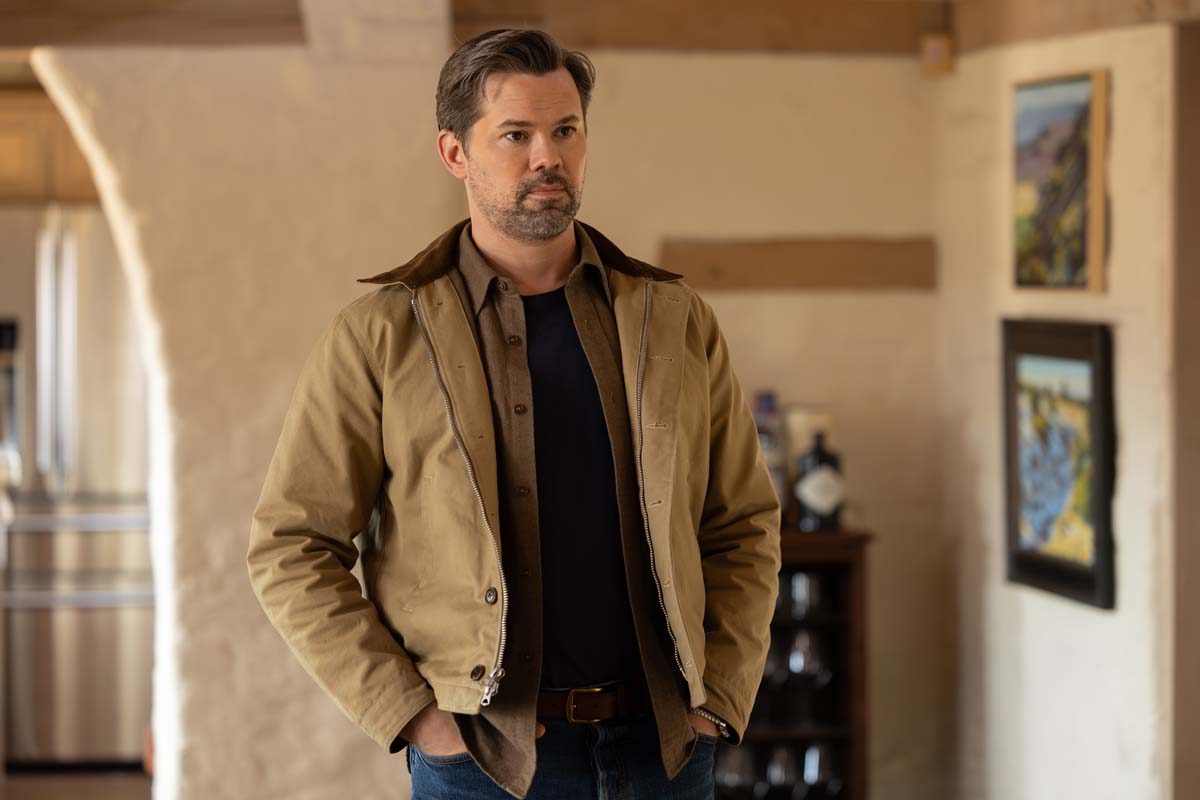
You’ll be happy to know that I interviewed Walter about that exact question of the blink, and he said that you should cut right before the blink, unless you want to make it purposefully uncomfortable, then you can cut on the blink or immediately after the blink. People won’t understand why they’re uncomfortable, but you’ve done it in the edit.
Crotzer: That’s amazing! So I can keep my Editors Guild card?
Yes, you can.
Crotzer: Good, good. Okay. Thank you. That’s awesome.
I want to talk about cutting to a big close-up on Allison when she says, “You’d be surprised how low that bar is” as she describes her relationship with her son. You used a big close-up at that point. What’s the value for you? Or what is the impetus for you to use a certain shot size.
Crotzer: Because the scenes were often very long, two person talking scenes. I was thinking about the different setups slightly different than normal. That particular close-up of Allison - because it is such a big close-up and because, as I was saying earlier in this movie - in the absence of a lot of other things going on - because it’s such a simple movie - everything is louder.
Every cut is a little more abrasive than if you’re watching a montage that has music, or if you’re watching action where there’s a bunch of movement and you’re cutting on movement. This was very still, so you felt all of the cuts more.
What we realized - or what I realized - Jim and I haven’t talked about this, but I would imagine he’d say something similar - is we realized is that for this particular movie, cutting between sizes was so much more noticeable than in a lot of other things.
So with that in mind - with a close-up like that- it’s a tool we’re going to deploy, but we’re going to be very deliberate about it the first time we use it. When do we use it in this scene? That moment was the first time in the scene.

Oscar Nunez, Lisa Schurga, Allison Janney, Jim Rash, Bonnie Hunt, Andrew Rannells and Suzy Nakamura
My favorite movie of all time is Back to the Future, and I can find a way to reference it in every conversation, which I’m clearly doing now. Thinking about that movie and the way it used the brilliant score by Alan Silvestri, you don’t hear the score of the movie until the reveal of the Delorean, which is about 15 minutes into the movie.
That’s a very deliberate choice. In our own way, in a very different movie - and we’re not even talking about score here - but it’s similar in that it’s going to be a huge moment when you do do this, so let’s make sure that we pick the right time and we hold it back until then so that it matters when we do it. That was the driving philosophy with shot sizes in this movie.
We are very classical in how we cut the movie. As shot sizes go, we’re not mixing different shot sizes. If we’re cutting back and forth between them, we’re using complimentary shot sizes. Of course you’re going in, you’re going out.
You’re going to profiles and things like that, but this isn’t a movie where your maybe on a medium frontal shot on one character and you’re playing most of that dialogue there, then on the other character you’re playing a lot of their dialog in a close-up profile.
We’re sticking very complimentary because it was so jarring when we didn’t, and the last thing you want with a movie like this is for people to be thinking about the editing.
We want the editing to stay so far out of the way and be so quiet in a movie that’s incredibly quiet. What we found by doing that was then when we did go to shots like the one you mentioned, that close up, they were just incredibly powerful, and they carried so much more weight and gravitas.
Of course, you can’t talk about that shot without mentioning Allison. That was one of those shots where I think we initially sat on it even longer than we did, because she’s so interesting to watch, and she’s so in it, and you believe it so much that you’re there and whatever she’s doing, you’re going with it.
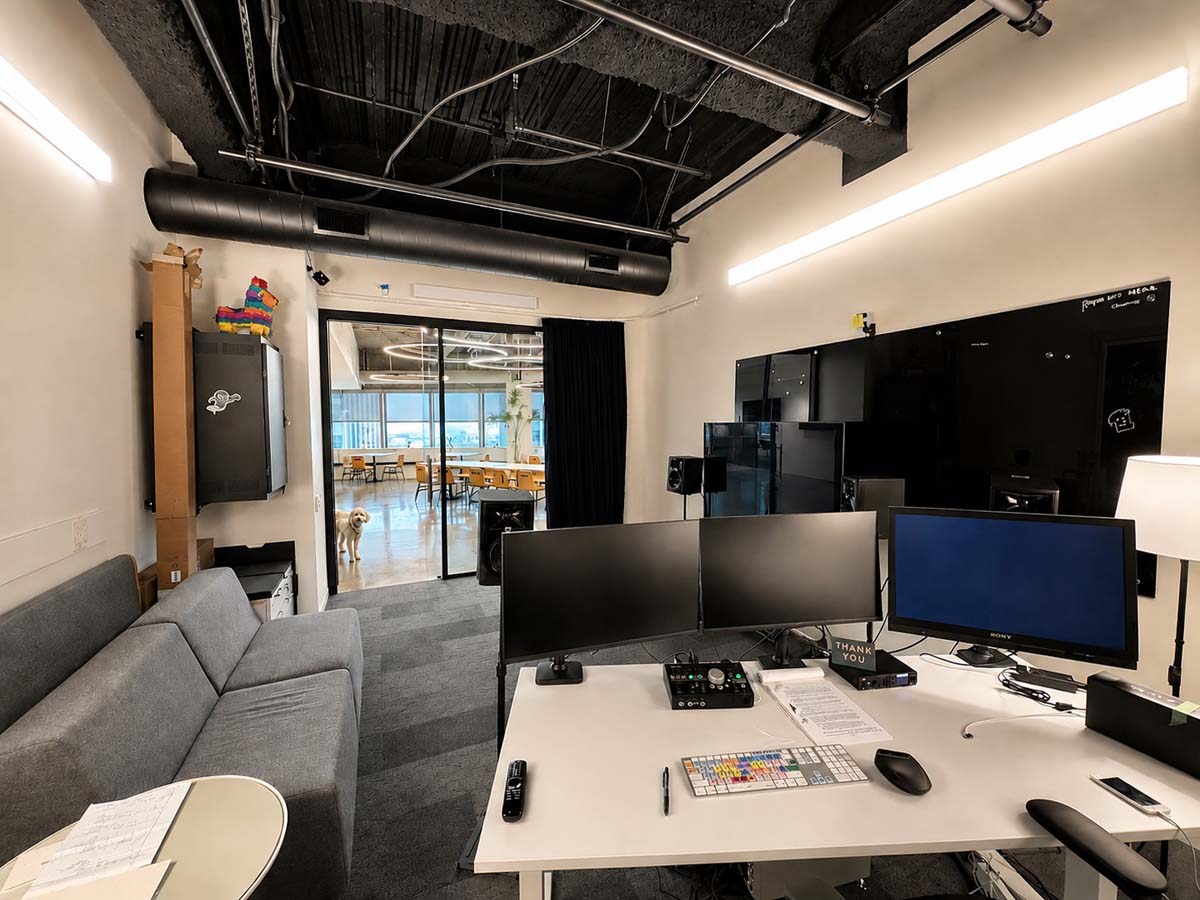
The Miss You, Love You editorial offices in Century City at Madison Wells.
I always feel bad when I come up with these questions because it seems like, “Oh, I noticed that.” But I noticed the craft of it as a fellow editor - there was a close-up and why you used it -only because we’re in the same business.
Crotzer: It’s a great observation.
The other scene that we spent a lot of time on – and we probably spent the most time on working and reworking editorially - was the dinner scene which leads to big blow up fight and it’s shot very different than the rest of the movie. It has this swirling camera.
Jim was inspired by Hannah and her Sisters (1986) where the camera doesn’t move that much otherwise. When Allison starts is at that dinner scene with Jamie, he wanted to feel like the walls were sort of closing in.
There are a couple of dinners, actually, but the one you’re talking about is much deeper into the movie.
Crotzer: It’s later in the film and starts with a salad, then it turns into a big argument, and it’s this wonderful scene where Allison gets vulnerable and reveals things to Jamie and to the audience that she’s been holding inside to that point.
The camera was moving a lot, very slowly circling around the two characters, panning between them at times. It’s just a very different style than the rest of the movie, and we spent a lot of time on that experimenting with how these pieces fit together.
Does this work better in complementary shot sizes? Or do we want to not have complementary shot sizes because effectively - for that part of the scene - one character is very much in control. Allison is very much in control, and she’s going in on Jamie in a way.
You feel for the guy, so you could make the argument that while you play Allison in powerful looking shots, you want Jamie to feel small, I think that’s where we ultimately landed.
Not to sound like a broken record, but on the strength of the performances between the two of them, I don’t think we had to rely on the visual language to do any heavy lifting in there. It ended up: let’s let the edit stay out of the way and trust that these performances that are making us laugh and cry will do the same for people as they watch it.
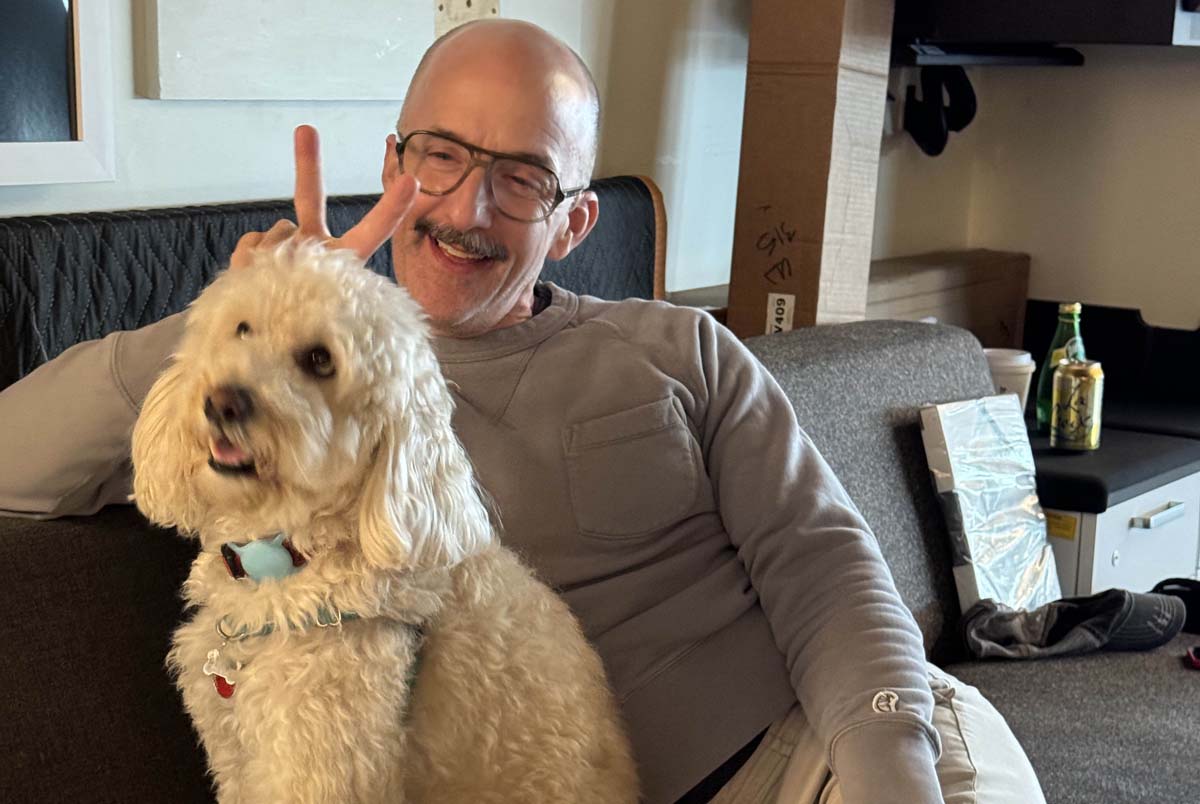
Director Jim Rash and Leo Crotzer
There’s very little score. Tell me about the creative decisions around using it and not using score, and maybe what you temped with.
Crotzer: I think Jim went in knowing that we wouldn’t have a ton of music, but where we ended up was realizing that maybe it was on the strength of the performances - because we certainly experimented with more traditional scoring of scenes at some stage - but you would just feel the hands of the filmmakers creeping in, saying, “Okay, now feel this. Now we want you to feel a little bit more like that.”
It just never really sat in the texture of the movie. It always kind of sat on top of it. When we were traditionally trying pieces of music to score, I think that led us down a path, then when Mark Orton - who’s brilliant, one of my favorite composers - came on board, his instincts and the music that he wrote was so perfect.
He knows how to get in and and do some things that make the movie so much better, and when to get out of the way. He was really a gift to the film.
Pretty early on, we were feeling that maybe this one’s different. Maybe we don’t need to deploy music in the traditional way, and I get excited about that. I love experiments and I thought, “That’s a fun experiment.”
This was written originally as a play. If you were watching this as a play, there wouldn’t be music underscoring these scenes. So, what if we present the movie like you would present a play? And that’s what we did.
Then we had a friends and family screening five or six weeks into the director’s cut, and the feedback was especially emotionally, resoundingly, that it was working for people. That to me said, “Okay, this approach with music is correct. We don’t need it.” And how fun to do some things a little outside the box!
There’s a version of this movie that’s traditionally scored and you have score telling you what to feel or trying to push you as an audience member in certain directions in certain scenes, but I also think that that would have just felt repetitive because we are just in basically one space for 90 minutes.
How do you shape that in a way that still feels like it’s escalating and building on itself and not being repetitive? The ultimate answer was: you don’t. You have one less thing standing in the way of the performances, and let those create the emotion and the feelings and let people live in that.
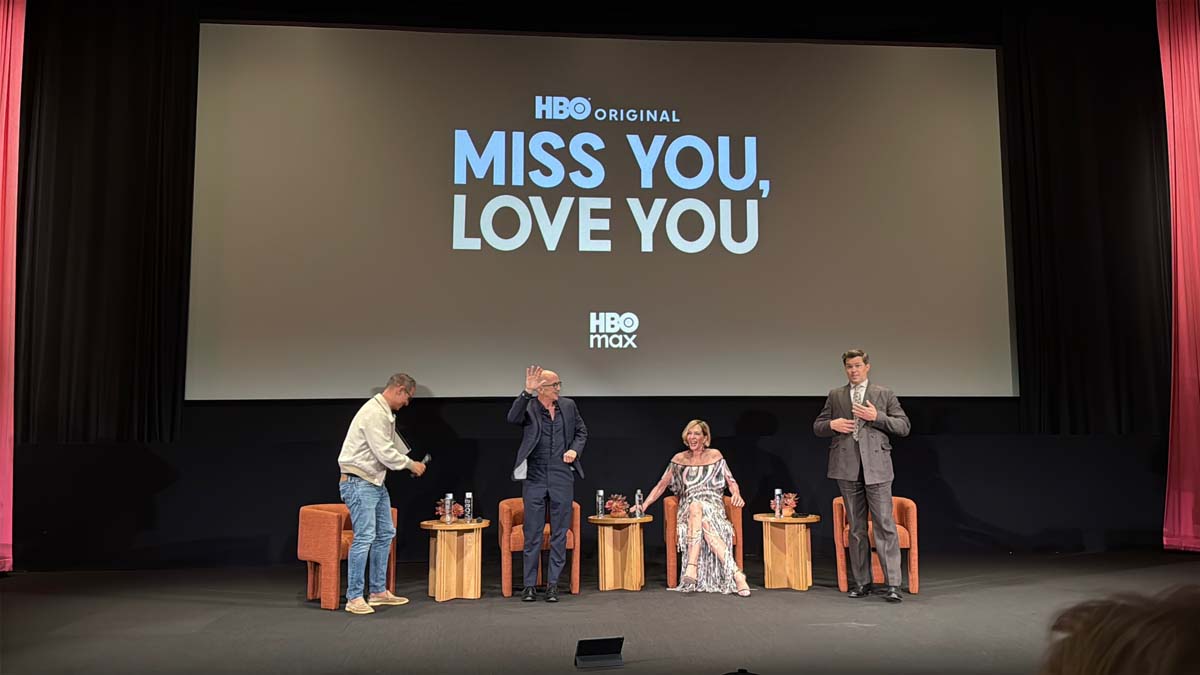
Moderator Greg Berlanti, director Jim Rash, Allison Janney and Andrew Rannells at the premiere Q&A.
Did they shoot multicam?
Crotzer: Some, yeah. We had two cameras going sometimes. Other times we were just shooting one camera, but they were shooting so much each day. They were moving at such a quick clip that having two cameras was helpful. But it wasn’t like every time we have a setup, we have an A cam and a B cam. It just depended upon the needs of the particular setups.
When they used two cameras, was it two angles of the same actor, or were they cross shooting with a camera on each person?
Crotzer: We did some cross coverage, but by and large we were shooting in the same direction most of the time. There were certain scenes that were cross covered, which was very helpful because of Allison and Andrew for matching reasons, also because there are a lot of these scenes that we had multiple sizes, but I think the scenes would have been completely fine playing in one size on each side, and that was all you needed.
And in some cases, I think there were scenes that we had a tighter shot or we had a shot that was in between a wider and a medium, and we just didn’t even wind up using all the pieces we had because as we were building it, we were just finding that the simplicity of the edit is what allowed the emotion and the performances to come through the loudest.
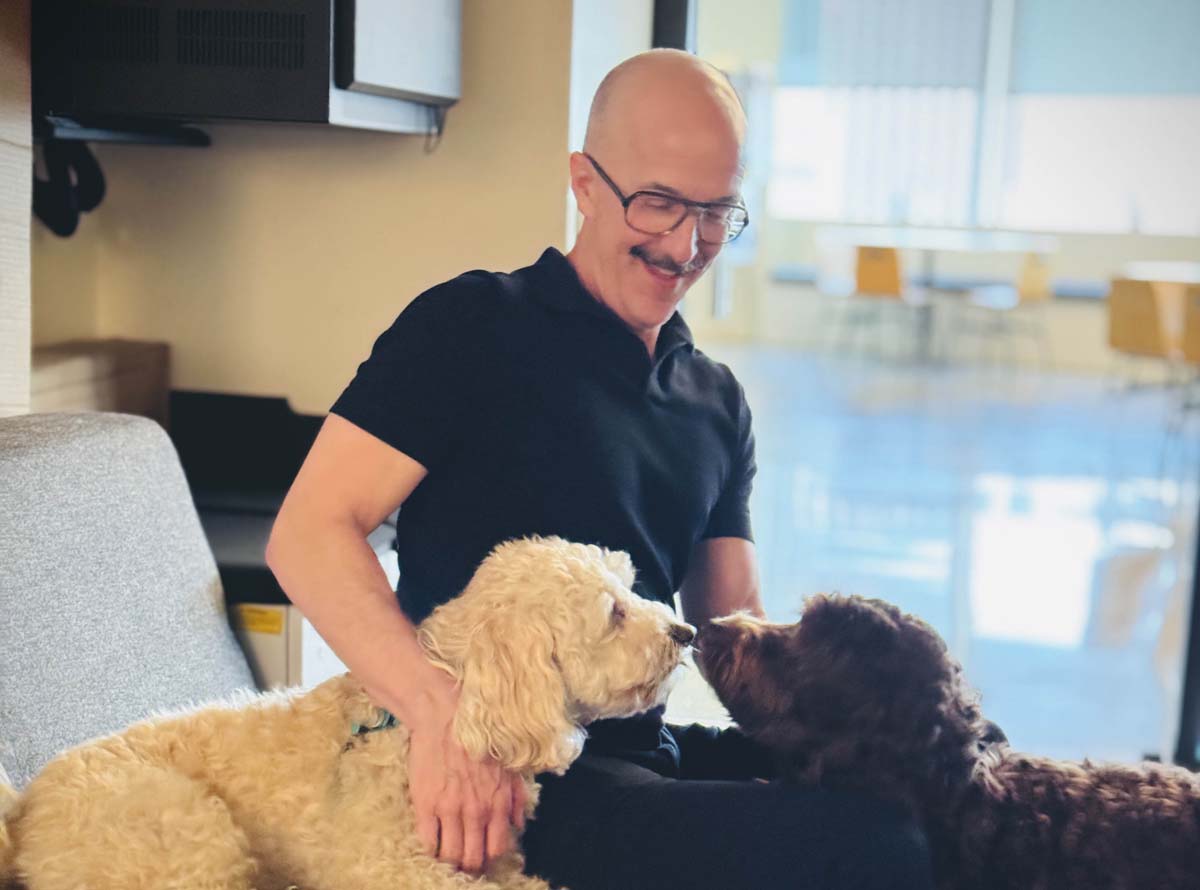
Director Jim Rash with Leo Crotzer and Zoe Crotzer
I laughed out loud at the hold when Janney’s character says, “What has Taylor said about me?” and you cut to Jamie for a long beat. He just tries to figure out what he can possibly say.
Crotzer: We’ve all been there right in some way, shape or form… that part of a conversation, like “There’s nothing that I can say here that is going to do anything but dig me further into a hole.” It’s a super-relatable moment.
It’s so funny you come up to these moments that are supposed to be funny and they are funny because of the people doing it, but always wanting it to play as good as it can. That was one where I thought, “Oh, I’ve got a got a good one, and a gem.”
The way you know you’re on to something - the way I like to set up the room is where I can watch them watching without being obnoxious about it.
I can just sort of see the director out of the corner of my eye. So I set up my desk either at a 45 degree angle or in this case, with this movie, because of the dimensions of the room we were in, it was more like a perpendicular angle to the couch.
And the main reason I like doing that is not to be able to watch the director or whoever’s on the couch watching, but it’s because it means that nobody has to crane their necks to talk to each other.
You’re sitting in a room together, having a conversation the whole time you’re working together, and you’re not turning around or leaning forward, or they’re not talking to the back of my head.
That’s why I do it. But one of the biggest benefits of doing it that way is then when people are watching, you can kind of covertly watch them watch, and that tells you so much about whether you’re on to something or whether it’s not working as well as you thought it was.
I cut TV spots for agencies for a long time, and I got to design my own room with a custom desk and monitoring, and I built the room exactly like you said. Basically, when I looked at the monitor, the client was looking at their monitor and we could both see each other over our monitors. So as we were watching cuts, I could see them at the same time that we were both watching the cuts, and oftentimes the client wouldn’t say anything, but because I could see their reaction, I’d say, “There’s something wrong there.” It’s great.
Crotzer: It’s really great because you can you can read people. One of my favorite parts of the preview process with movies - when you put it up for 250 strangers in Burbank or Orange County or wherever - is to be able to watch people watch the movie.
Sure, it might be what they’re saying or whether they’re laughing or crying, but just the body language when they shift their bodies, when they get up to go to the bathroom.
That tells you a lot about the pacing of your movie and so many other little things that you can bring back to the cutting room and apply.
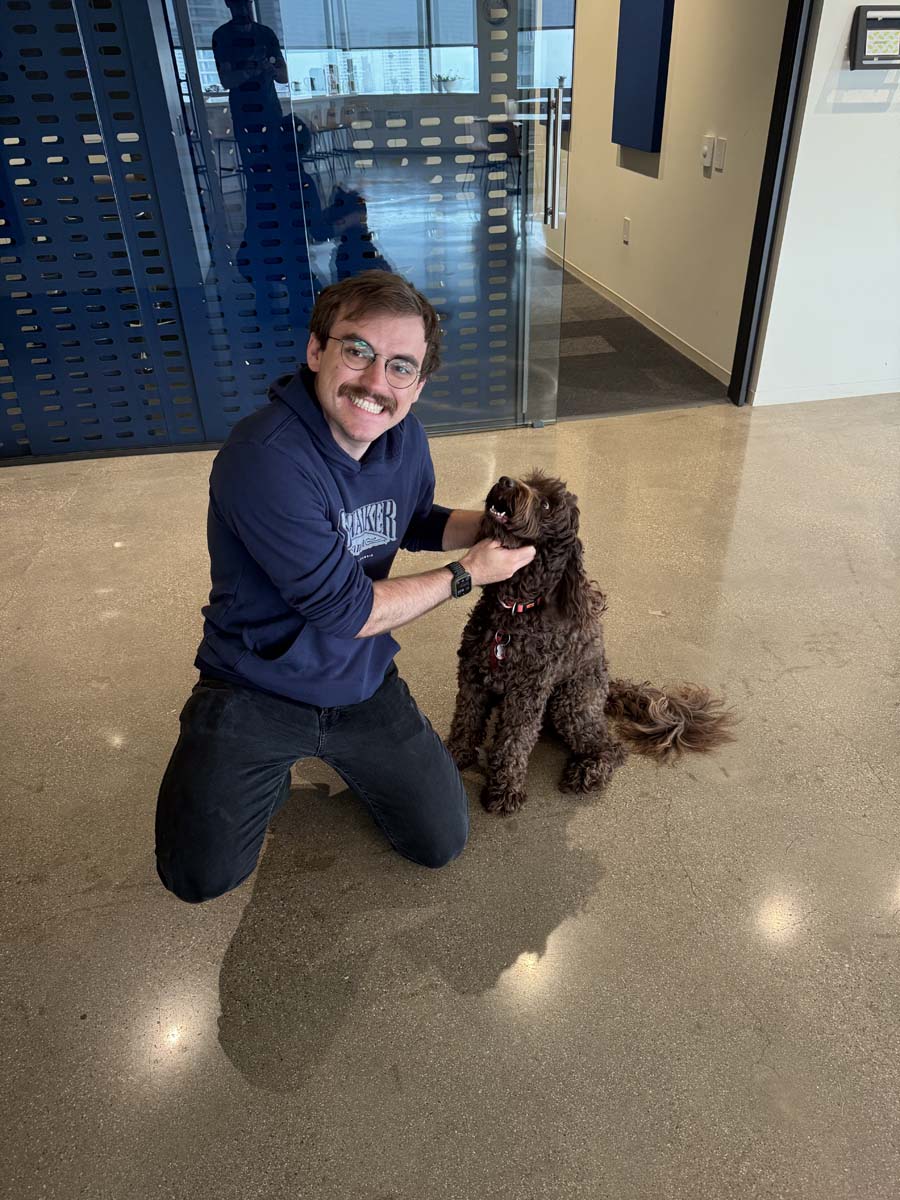
First assistant editor Michael Shusterman and Zoe Crotzer.
There’s a standard rule in editing that you don’t let the audience get ahead of you, but you can do it for a short period of time, and I think you did that when you cut to a two shot with a hospital bed between Jamie and Diane. They’re talking about where he’s going to sleep and the audience is thinking, “Oh, no, oh no! He’s going to sleep in that!”
Crotzer: And what’s so funny about that moment is that the audience is thinking, “Oh, no! Is he going to have to sleep in a hospital bed?” And she says, “You can sleep on the hospital bed.” And you laugh at that. Then she says, “Or you can sleep on the couch.”
So Jamie says, “I’ll sleep on the couch.” Then she says, “….but that’s where he died.” Jim is so sharp with that humor that the audience thinks they know the joke, but then the joke after it is the one that really gets them.
As much as I talk about the emotion. It’s such a funny movie, that speaks to me. Finding humor out of sadness or tough situations is a gift that we could all probably be better at. And I think this movie manages to show the value of that.
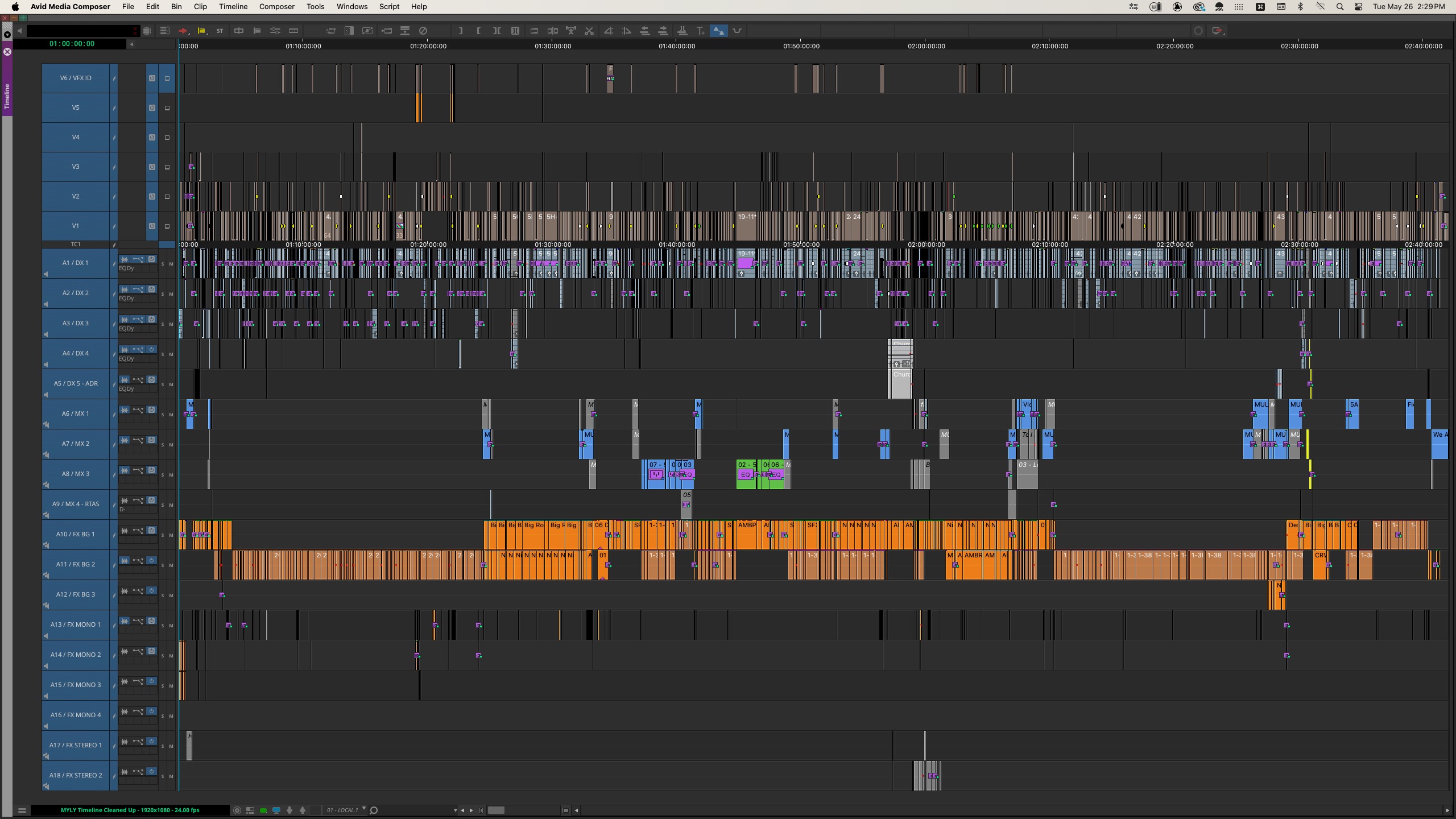
Avid timeline of *Miss You, Love You
There’s a great scene - one of the few scenes that’s outside of the house - that’s played in the church. There are three people in the scene, and I was just struck by the importance of eye lines and being not just the right person at the right moment, but the right angle of the person - which direction they were looking.
Crotzer: That was a tricky scene because of the fact that they’re sort of triangulated in this space. Going back to your question about multi-camera, a lot of that was shot with two cameras, which was very helpful - having reactions that were authentic to what a character was saying on the other side - because we weren’t shooting two sizes on one character in that scene, we were on Allison with maybe the A camera, then we were across Allison on Bonnie Hunt with the B camera.
But that was a tricky one, because the danger with a scene like that is you can mess up the eye lines and then the audience’s brain - whether they would articulate it this way or not - starts to do work that you don’t want it to have to do at the moment.
It’s not listening or not listening as much to what’s being said, or it’s not paying as much attention to the emotion of the performances happening on screen. So I really just wanted it to flow and be easy.
You just want to feel like you’re a fly on the wall as part of that conversation, without being aware of the fact that we’re shooting in three different directions and cutting between multiple cameras.
That was one where there were a couple particular setups that Jim had strategically shot for specific moments in the scene, and that was very helpful because those were sort of the North Stars.
One was for the very end shot of the scene where it sort of pushes in on Allison, then it hard cut to a wide shot inside her house, and she explodes through the door because she’s so pissed off. That was by design.
So we had a couple of those where it was really clear, “Okay, for this line, this is where it should play.” We built the scene around those moments because we knew which corners we were going to paint ourselves into at any given point.
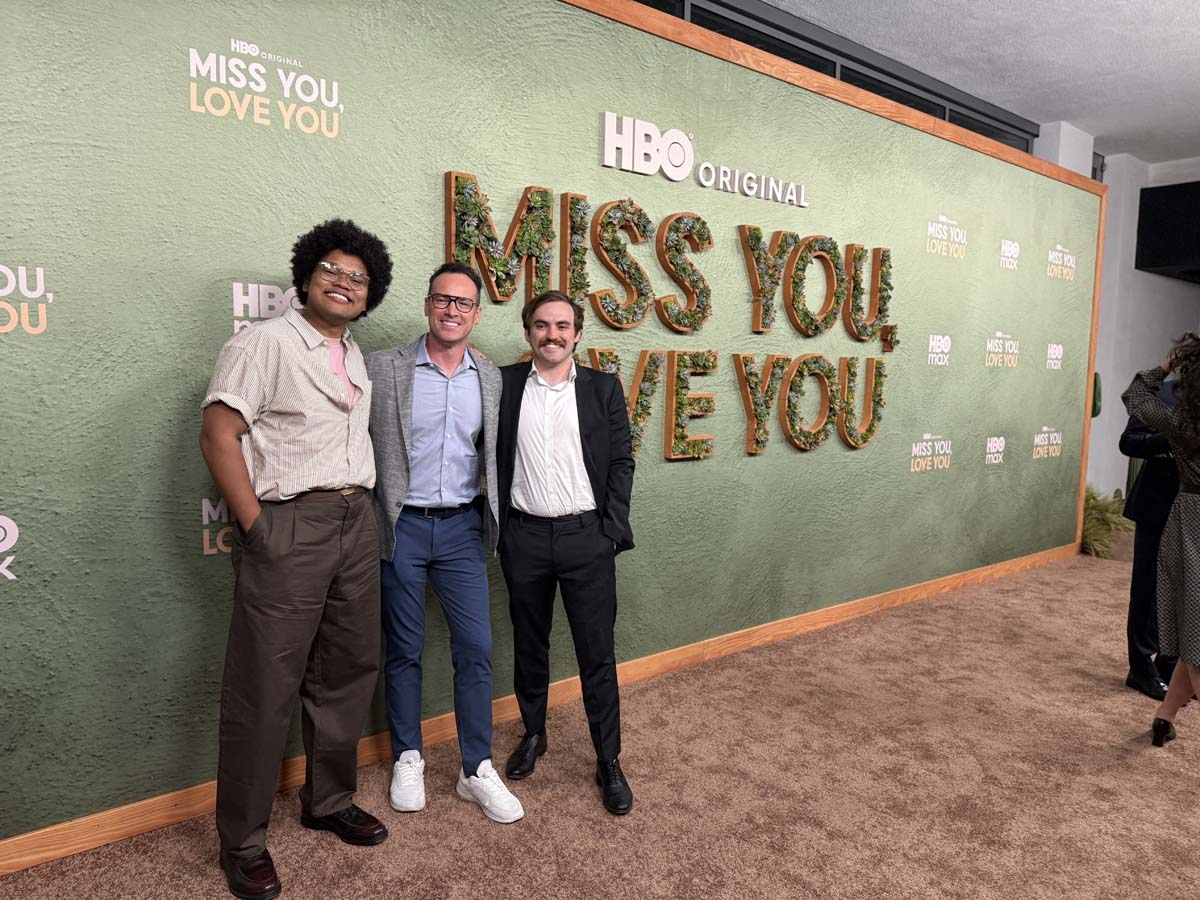
Haruka Gerald, Doc Crotzer and Michael Shusterman at the Miss You, Love You Premiere.
Tell me a little bit about the team that worked on this with you.
Crotzer: We had a great team on this movie. Haruka Gerald and Michael Shusterman were my guys in the trenches, my assistant editors - brilliant editors - and also just lovely people.
Anne McCabe (additional editor) and Mariana Benevello came on too, late in the game, to help us get to the finish line and did amazing work. Louie Schultz and Nevin Seuss were our music editors.
Jim is such a lovely human being and made the whole experience so much fun for all of us. It was really a dream.
It’s how making every movie should be. We laughed and we cried and had a bunch of great lunches together.
We saw a solar eclipse one day outside our offices, and my dogs were running around the whole time. It was just a blast. I wish everything could be this much fun.
The movie has very little music in it, but there’s a rare use of music when Jamie is in the storage locker. Can you explain what the purpose of that was?
Crotzer: Because it was a scene with Jamie going through belongings, and he learned probably more about Diane in those 30 or 45 seconds in the storage locker than he did in the whole time he had been with her.
I don’t know that we ever articulated the rule this way about music with the movie, but there’s music when we are outside of the house, and in this case, he’s outside of the house and away from her. Having a more traditionally scored moment with a character who’s away from Allison at that time makes sense.
But then when you get back into them together, you’re back into sort of the auditory language that we’ve established prior in the movie, which is we really aren’t using music in the traditional way. That montage that ends with the storage locker, starts with Allison mad at him and she starts having him do more tasks, but she’s very cold and standoffish about it.
My favorite band of all time is the Beach Boys, so the fact that “God Only Knows” was mentioned in the script and of course is mentioned in the movie was yet another small detail as I was reading it where I thought, “I have to do this movie.”
We tried a Beach Boys instrumental from “Pet Sounds,” in that section as well at a point, and I don’t think we ever thought we would get a Beach Boys song or that it would ever live there, but it was really helpful just to sort of feel out that section with music, because there had been no music otherwise. It helped us shape it in a way that I think ultimately led to it being cut picture-wise, so that Mark could come in and do his brilliant thing with it musically.
The movie is largely shot locked off on sticks. Then all of a sudden you’ve got this big dinner scene that we talked about. Talk to me about - not only just the dolly shots and the pans between characters - but it seemed like it also went to handheld.
Crotzer: Once she gets up from this kind of dolly swirling table shots, then we’re handheld for the first time in the movie, which I think was a really cool choice that Jim made. Because Allison was vulnerable in a way that she hadn’t been to us as the audience prior to that, having a little bit of that handheld feel in that camera shake and you feel her bubbling up and everything just feels like it’s not quite as off and on, as steady of ground as as it has been to that point.
I think it was really effective for Daniel Moder, the cinematographer on this movie, and for Jim to use that handheld. Because we had a movie that was primarily at one location, having sections or sequences that were shot slightly different helped break up the visual language of the movie as well.
But more importantly than the visual language, it was emotionally true for those moments with what her character was going through and what Jamie was going through as well.
I have a weird obsessions with prelaps. I think you did it with the music from the church on the day of the funeral. Can you talk to me about the value of a prelap to you or why you use one?
Crotzer: I think pre lapping is always great as a transitional device. In that moment - going to the church - the thought was really about that we’re in Allison’s emotional point of view in that shot in the house, and she sees what Jamie has just done for her.
To her knowledge - and to our knowledge as the audience - he’s left, but he still did the work he promised to do. He got her house set up for the funeral lunch before he left, which is a very sweet gesture, especially given how they had ended things the night before.
The hope - by prelapping some of the church - is that it also helps carry some of the emotion from Allison in that moment in her house, into the church to bridge it in a smoother way.
Going back to what I’d said earlier about how every cut in this movie, you felt it a little more because everything was very quiet and restrained in a lot of ways, that a prelap just naturally helps the cut, too. It makes it feel a little smoother and makes it feel a little less abrupt.
There are times in this movie where the edits are very deliberately abrupt, and that’s part of the language we found and part of the approach we took.
But this wasn’t a moment where you want it to be abrupt. You want it to just smooth and almost roll downhill into the church from the emotion of the house, so bringing the music in early was a part of that equation.
It’s also an interesting first shot to the church. You could have prelapped into the typical establishing shot of a church, but you come to the back of Bonnie Hunt’s head as she’s directing the choir.
Crotzer: We had some good laughs in the edit about that because she has this line about turquoise, and she’s got all her turquoise stuff in the back of her head.
The dance that was being done in the script, and the directing, and the editing, was that when the movie gets really emotional, it’s really fun to undercut it with humor, to go off of an emotional thing, like the gesture that Jamie had just done for Diane.
Also the entire reason we’re here is because Diane just lost her husband, so to go between two very emotional things - the gesture by Jamie and the actual funeral – it’s great to immediately cut to something that becomes a very funny moment with Bonnie Hunt spinning around and her character thinking she’s the greatest singer in the world… and she’s not.
It keeps it from going too far into emotional territory for too long, because you still have movie left. You still need somewhere to go with it. So there were moments where we wanted to bring it back with humor so that we could really hopefully stick the landing.
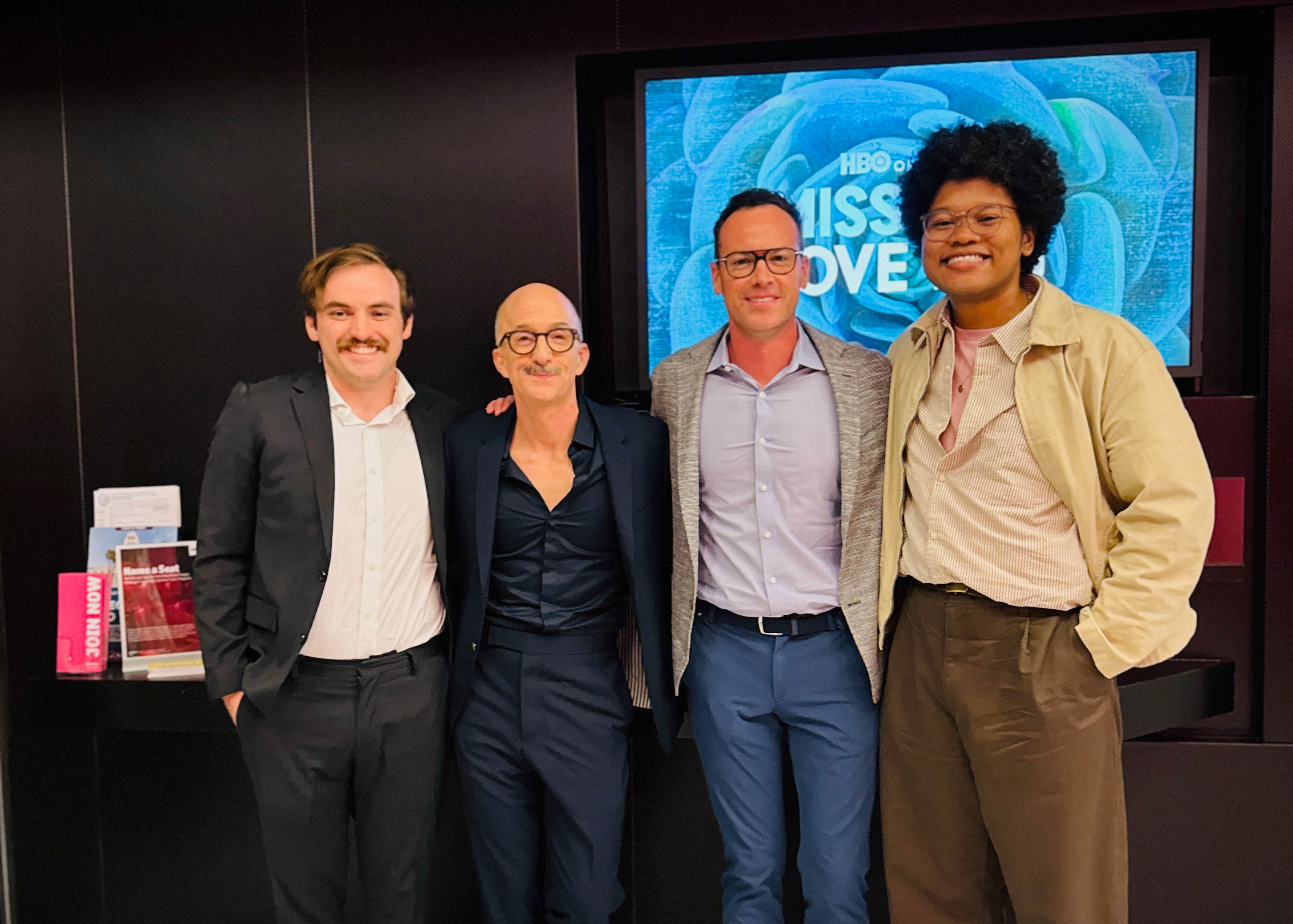
Post team with the director
When you come out of Bonnie singing, Janney’s character says, “Oh dear God!” or something like that. Then she’s almost immediately up at the podium giving her speech. You don’t show her getting up from her chair. You don’t show her walking across the church. You cut right to her at the podium. Was that scripted that way? It’s a great way to do it.
Crotzer: I don’t remember how it was scripted, but I do remember that being a choice. There were some times in the movie where you wanted to make percussive choices, and a cut like that is percussive.
Speaking of percussive: even though we didn’t have score, we used the sounds of the phone as percussion. We spent a lot of time spotting the sounds of the text messages, just like you would spot music.
Does it come here or does it come five frames later? Or five frames earlier? Are there two quick ones or is there one and then… a beat…then another?
So whether it’s the text sounds or something like this cut you mentioned, where it is a jump cut and you’re doing a quick time jump. It’s more to keep us on the track, to keep us moving, and to have a little bit of a percussive thing happening so that you don’t get swallowed up in something too slow.
The other benefit of it is Allison’s about to go up and say something very heartfelt. And by doing the jump cut, you’re coming off of humor. And that humor is closer to something that’s very heartfelt.
A lot of what we found in the edit was buttressing these two things together was kind of the magic sauce of the movie, because you still have a smile on your face, then all of a sudden the emotion creeps in, or you’re emotional, then a joke creeps in and humor creeps in.
So it was fun to bounce between those two and jump cutting. It probably allowed us to put those a little closer together.
We kind of talked about this before, but I want you to talk about it in the context of this final eulogy scene. Allison Jenny’s performance is Oscar winning stuff. It’s fantastic. You could obviously stay with her for the entire eulogy on a close-up. It’s that powerful. But you’re also trying to tell a story with other people and their reactions and their share of the film as well. So how do you cut away from Allison Janney when she’s giving this eulogy?
Crotzer: It’s hard. It’s really hard. The key moment in my mind in that scene, of course, is when she sees that Jamie is there and that he didn’t, in fact, leave, but he’s there to support her. So you want to land that. My thought was always, “Let’s just be with her.” Depending upon sizes, we probably had 10 or 12 takes where you could just sit on Allison.
And in every single one of those takes, she’s going to give you that absolutely crushing performance and you don’t need to do anything else. I don’t know how to answer your question, because I always was of the mindset: “I don’t ever want to cut away from her.”
The North Star for the movie was following her truth because she is who she is as an actress. That meant being with her as much as you could in moments like that.
Do you remember whether the script had a specific scripted moment where she saw Jamie, or was that up to her to decide when she noticed Jamie?
Crotzer: You mean the actual timing of it?
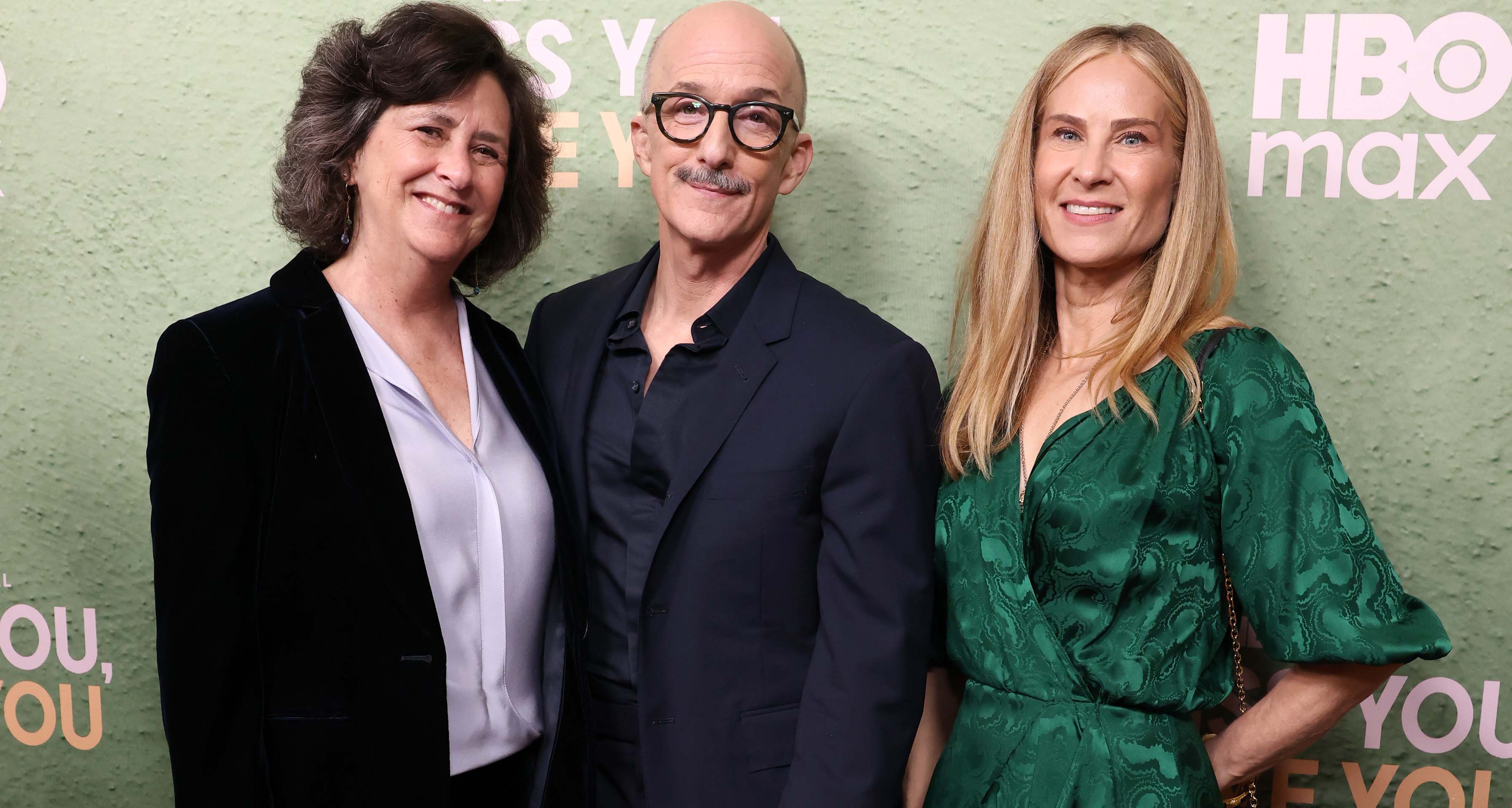
Gigi Pritzker Jim Rash Rachel Shane
Yeah, because you probably chose the cut point based on her eyes, when you see the realization in her face, and that’s when you got to Jamie.
Crotzer: It’s a good question. I think it was in the ballpark in the script of where it happened. But I also remember we had some flexibility with that first look, and it’s such a nice little moment, but it’s such a beautiful moment between those two characters. That whole scene just gets to me.
The other thing I’m just thinking of now is that you let the audience learn it at the same time Diane learns it. You could have revealed him earlier, like when she’s walking up to the podium.
Crotzer: I think you want to be in her emotional space as she’s walking up and starting that thing. You don’t want to be thinking about Jamie in that moment. I also think that you don’t want the audience to get ahead.
If you see Jamie there, then you start to anticipate something with him happening or you start anticipating the look, and it just felt more effective for the look to be the first thing.
Going back to what we were talking about, about the opening of the movie, in the same way that by lifting that opening scene, that was Allison receiving the text, kind of explaining what was about to happen.
It threw you into the movie in Jamie’s point of view, and you’re learning as Jamie learns these things. The flip of that is in this scene. By not showing Jamie, it throws you into Diane’s point of view, then you’re with Diane in real time there.
Most of the time I feel like that’s the path as you want the audience right there with you. But it’s always a question of when does the audience know something? What do they know? How much of it do they know, and when did they know it? Because that’s the name of the game with how you kind of ratcheted some of these things - up or down.
Doc, thank you so much for a fantastic discussion. I hope everybody gets a chance to see this movie and phenomenal performances. And you stewarded them beautifully.
Crotzer: Thank you so much, Steve, I appreciate it.
 October 5, 2026
The Whisper Man
Chris has been on Art of the Cut before for The Menu, The Many Saints of Newark, A Quiet Place, and Assassin’s Creed. He has ...
Read more September 23, 2026
Sean Combs: The Reckoning
Charles Divak has been on Art of the Cut in the past for Chimp Crazy, for which he was nominated for an Emmy and won ...
Read more September 3, 2026
The Dog Stars
There's nothing like The Dog Stars in his filmography. That's a testament to him - that he is constantly interested in different stories and different ...
Read more
Subscribe to our newsletter
Get all the latest news, blog posts and product updates from Boris FX, delivered directly to your inbox.
Welcome!
Thanks for opting-in to our newsletter. You'll receive an email momentarily with your confirmation.