













Marty, Life is Short
Emmy-nominated editor Sierra Neal, ACE discusses the importance of structure and when things are revealed to the audience, the use of selects reels as a muse, and the importance of tone.


Today on Art of the Cut, editor Sierra Neal, ACE, discusses her Emmy-nominated work on the Netflix documentary from Imagine Documentaries, Marty, Life is Short.
Sierra has been on Art of the Cut several times on the documentaries, Jim Henson: Idea Man, for which she received an Emmy, and for three other documentaries, Music by John Williams, Pavarotti, and The Beatles: Eight Days a Week. She was also an additional editor on the documentary Carlos, about Carlos Santana, which was also covered on Art of the Cut.
Sierra, it’s so nice to have you on Art of the Cut again. Congratulations on your Emmy nomination.
Thank you so much, Steve.
My wife and I watched it today. It was like a big, warm hug. I just I felt so good at the end! What a wonderful story. It was life affirming.
So glad to hear that. We wanted to leave people with that feeling at the end.
The thing that I did not know until I looked on the IMDb page for this was that Lawrence Kasdan was the director. That’s crazy! The writer of Raiders of the Lost Ark and The Big Chill and multiple Star Wars films, director of Body Heat… and he’s done documentaries before, too, like the Light and Magic series about ILM. I noticed Ron Howard’s in this documentary and also an executive producer. Is that how you came to be on this project?
I’ve worked with Imagine Documentaries for a number of years on a number of projects now. They came to Larry because he had done the ILM Light and Magic documentary, as you said, which was wonderful. That was, I believe, one of his first documentary directing experiences.
They knew that they wanted to work with each other again. And Larry is friends with Martin Short. They’re in the same circle - as you learn as you watch the film. I know that Larry was passionate about making a film about Marty from early on.
Then I got pinged somewhere along the way to work with them again. I had never met Larry before. We had a meeting early on and got to know each other, but it was really a relationship that developed over the course of about a year and a half.
That’s how things should happen anyway. You never know if you’re going to align creatively, but I had tremendous respect for him and by learning his sensibilities and trying to get an understanding of what he wanted for this film. I took it very cautiously and took my time to really settle into what he wanted to do with this film. It took time to figure it out.
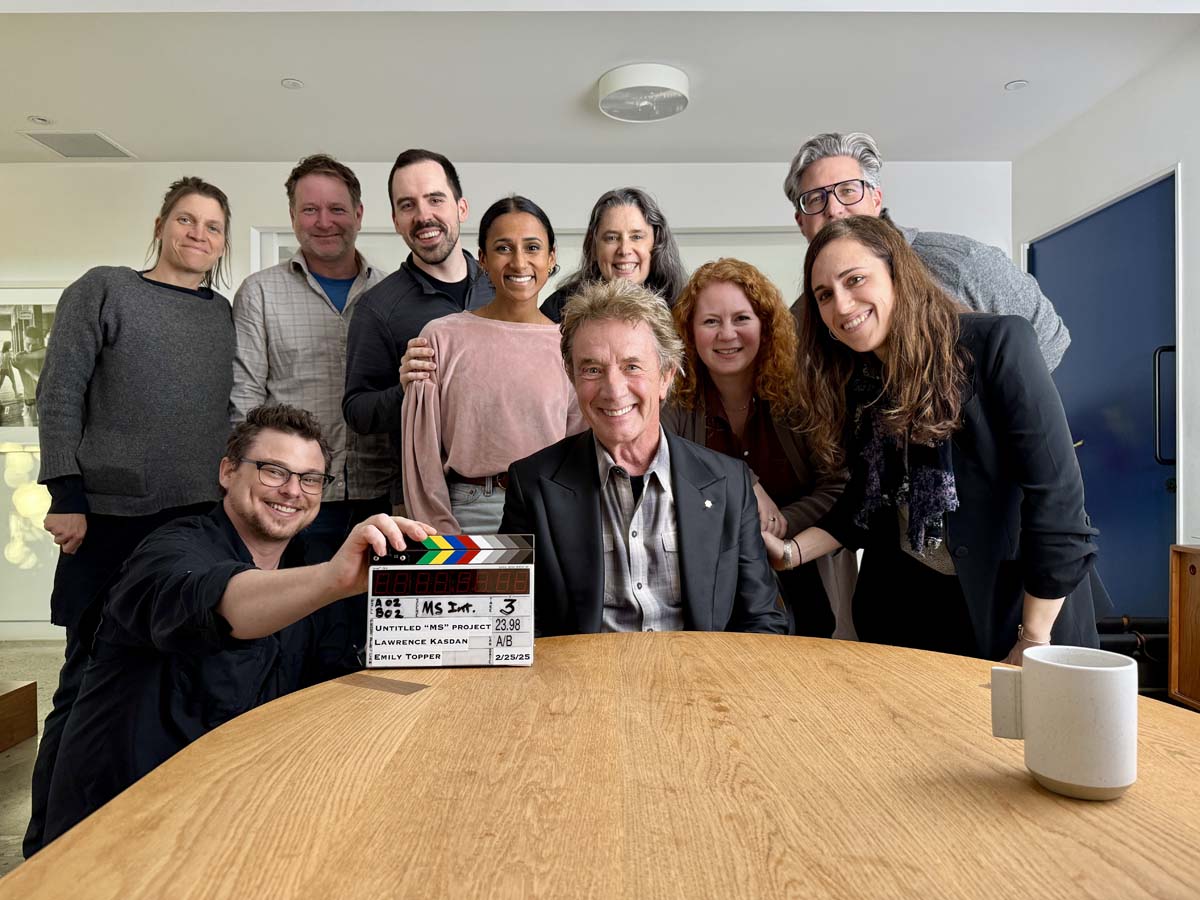
Clockwise from bottom left, 1st AC: Aaron Brenner, DP: Emily Topper, Gaffer: David Sheetz, PA: Dylan Scott, Co Producer: Madhura Scott, Producer: Blair Foster, Audio Mixer: Douglas Edge, Editor: Sierra Neal, ACE, Producer: Meredith Kaulfers, Martin Short
I interviewed another editor, and she said that that conversation that you have for the first time with the new director is like going on a first date and deciding to get married.
Everyone on my team had good instincts that we would get along well and that we had similar sensibilities. I like to follow the director’s initial vision for the film, and how can I make that come to life. How can I figure out what that is?
He had some ideas, but we had a very rigorous pre-production editing period because we had a lot of archive, and that was one of the strongest suits that we had at our disposal for this film.
We did a lot of cutting in the beginning, so there was a trial period to see what the language was going to be and to see what the film was. So we had some testing in the beginning and that helped as well to get to know him.
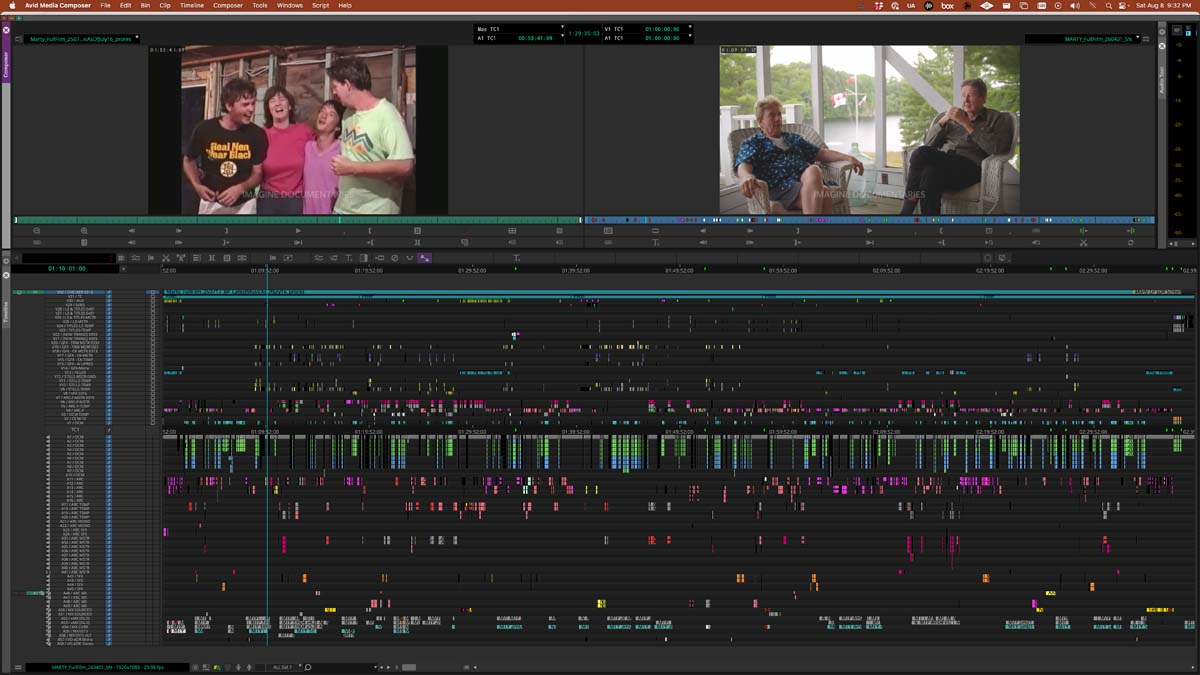
Avid timeline screenshot
I’m sure it helped to know the archival when you went into the interviews.
Yes, it did. We looked through a lot of it, there is a lot of archival, but much of it is from Marty himself, from his personal library. I’ve worked on a lot of films with Imagine Documentaries that have a very wide span of where the sources come from - all over the place - and I always love a film that draws from a lot of different places, but we have mostly one piece of archive to work with for the meat of our film. It came from Marty, then we started to see where the relationships were.
Another theme that Larry - I know him as Larry - Lawrence Kasdan wanted early on was the sense that this is really about a group of people, and Marty and his wife are sort of at the center and a magnetic force for this group of funny, smart, wonderful, kind, warm people.
Lawrence was within that group for certain periods of time. We looked at the relationships, we looked at the dynamics, we looked at the story.
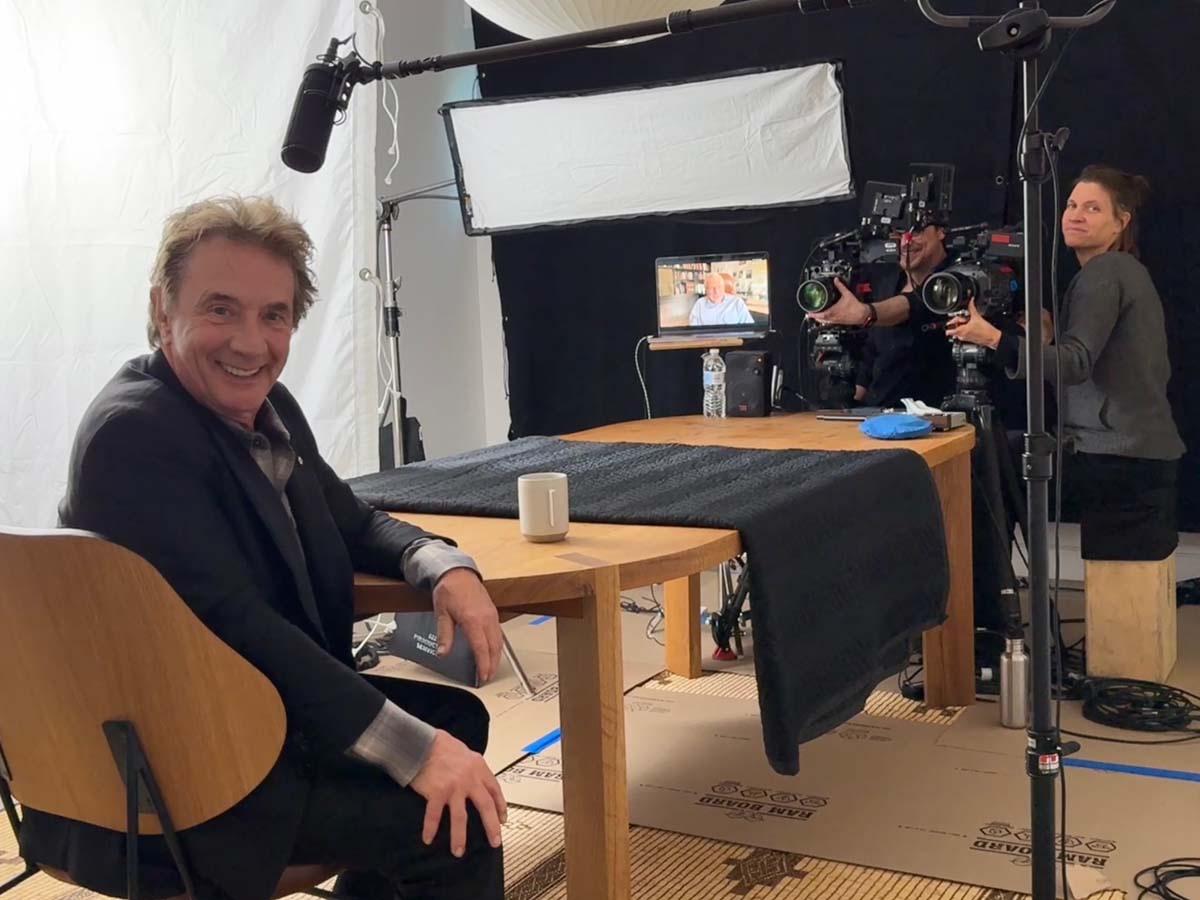
We looked at the fun pieces that we knew we would want to use in the film and then went out and did interviews based on that and where we wanted to take it. But the interviews were done very loosely.
Also, it was really always meant to find the feeling of what it is to hang around Martin Short and be friends with him and be lucky enough to be invited to one of his parties or something. That was sort of the main guiding force to the interviews.
Larry is a writer, and as you pointed out, he’s a very close friend of Martin. Did either one of those things play into the dynamic of you trying to work with him? You’re working with a very close friend of the person who’s the subject of the film. Also, I think of documentary editing as writing. Walter Murch says that we – as documentary editors - should all get credit as writers. Tell me about working with him and how those two things - him being a writer and him being a friend - played into the experience.
The medium of documentary filmmaking - as it is now - I think is a factor because we’re discovering it as we start to put the pieces together. We didn’t know what the structure was going to be at first. We didn’t write it in that way.
We really experimented with scenes that we knew that we liked with a feeling that we one wanted to get. It sounds abstract, but we really did start with an idea of soulfulness: that Marty is a man who you just want to hang around all the time, and you want to hear his stories, and you want to hear what he has to say about life. We really started with that idea, then we just started to put the pieces together.
We started to create scenes in different orders that we knew we would want in the film. The ones that were the most emotionally resonant were the ones that stayed. We wanted to tell a clear story about a great comedian, actor, all around person, Martin Short. But we wanted to tell it from a tonal perspective.
You talked about scenes and how you edited scenes and then figured out how the scenes went together. Can you talk about specifics?
There are two scenes that come to mind. One is the famous Christmas party that he had. You find that footage in Marty’s archive and you think, “Oh my God! I just can’t believe there are all these people just hanging around!
My favorite actors and comedians all in one room, making each other laugh, singing songs, telling stories… Finding the place for that in the film wasn’t exactly easy.
You work with it, but it really was in the end - with the help of Tom Hanks and and Rita to kind of sum it all up - it finds its purpose somewhere along the way.
Then the other scene is the famous boat scene where you’ve got Tom Hanks acting as Forrest Gump and Marty playing Ed Grimly doing a scene from Butch Cassidy and the Sundance Kid, directed behind the camera by Steven Spielberg!
So you’ve got this bizarre scenario that people need to see and are going to just laugh at and how do you cut that? We cut it about a million different ways. You want to get the laugh, but you want to tell the story quickly. You don’t want to linger too long.
The Christmas party scene - correct me if I’m wrong - plays immediately before “the storm” about Martin’s wife’s cancer diagnosis.
I think you’re right.
Was that one of the ways that you chose to place the Christmas scene? - because you knew that you needed this lift before “the storm?”
Absolutely. The Christmas party scene ends up being a scene about Marty’s wife, Nancy. It ends on an anecdote about her that makes you laugh and fills you with emotion. And that’s what you want to be reminded of before you get into the heavy scenes that are to come.
I can’t remember exactly how we landed there, but that’s the emotional turn that you want to take audiences on. Sometimes it matches the story we’re telling about Marty, which is one of quite a lot of tragedy, but it’s contrasted with immense joy and laughter all along the way kind of goes back and forth, and it’s part of the rhythm of life for many people. That’s what this film is about. It’s about coming back from tragedy and trying to live in a place of joy.
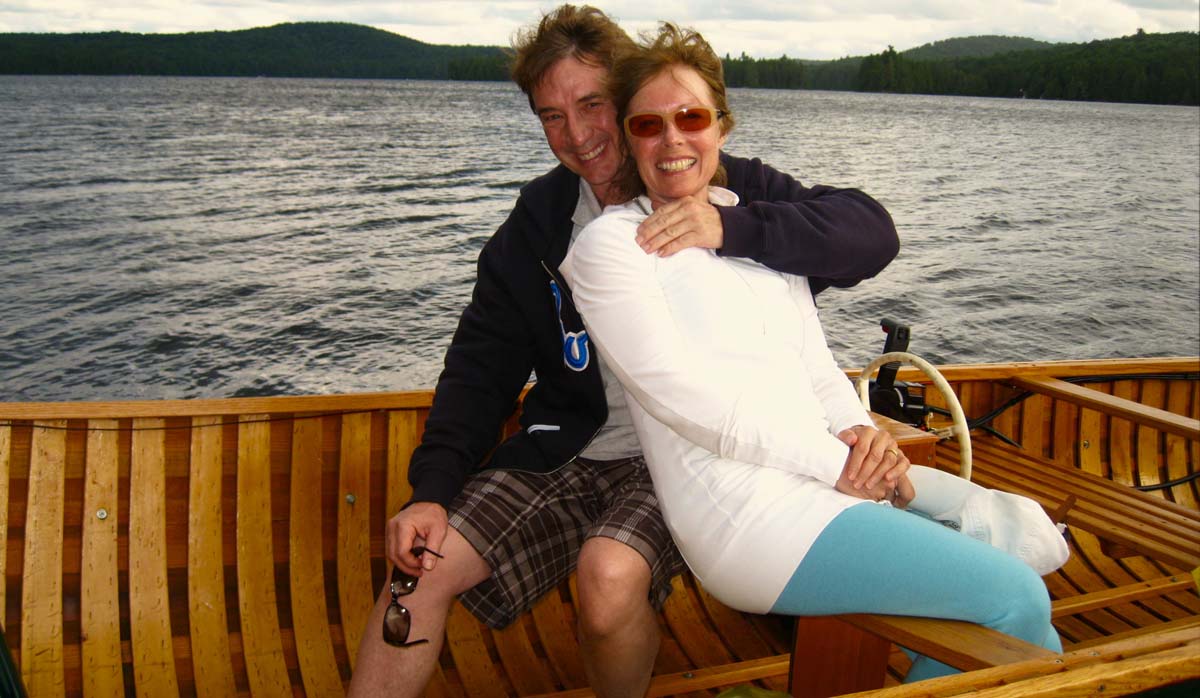
How much material are we talking about? You’ve got all this VHS and maybe DV or Hi-8 footage from Marty, but you’ve also got another set of archive, which is all the times he’s been on TV.
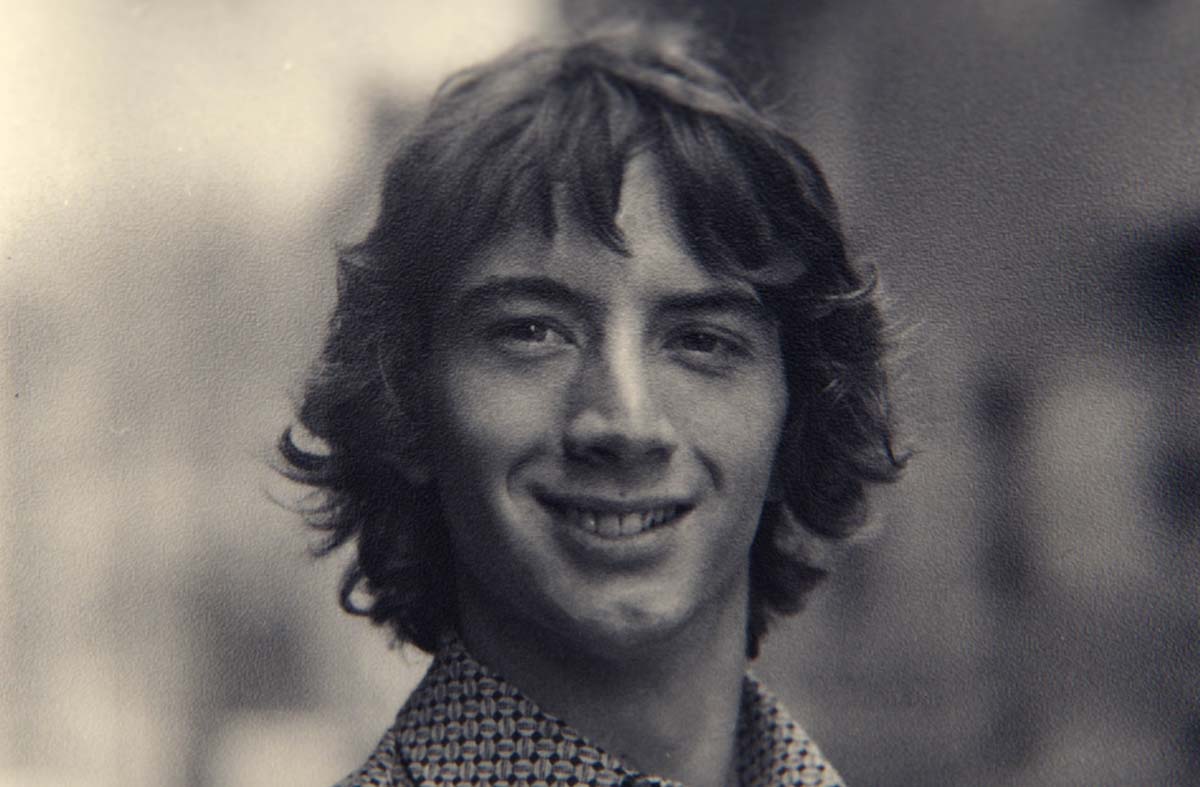
There were a few seasons of SCTV that Marty was on. There was one season of SNL that Marty was on. There were all sorts of appearances on talk shows. There were his movies and some behind-the-scenes. It was certainly a heavy lift. I think the heaviest lift was going through Marty’s personal archives. They’re just like everybody else’s family home videos.
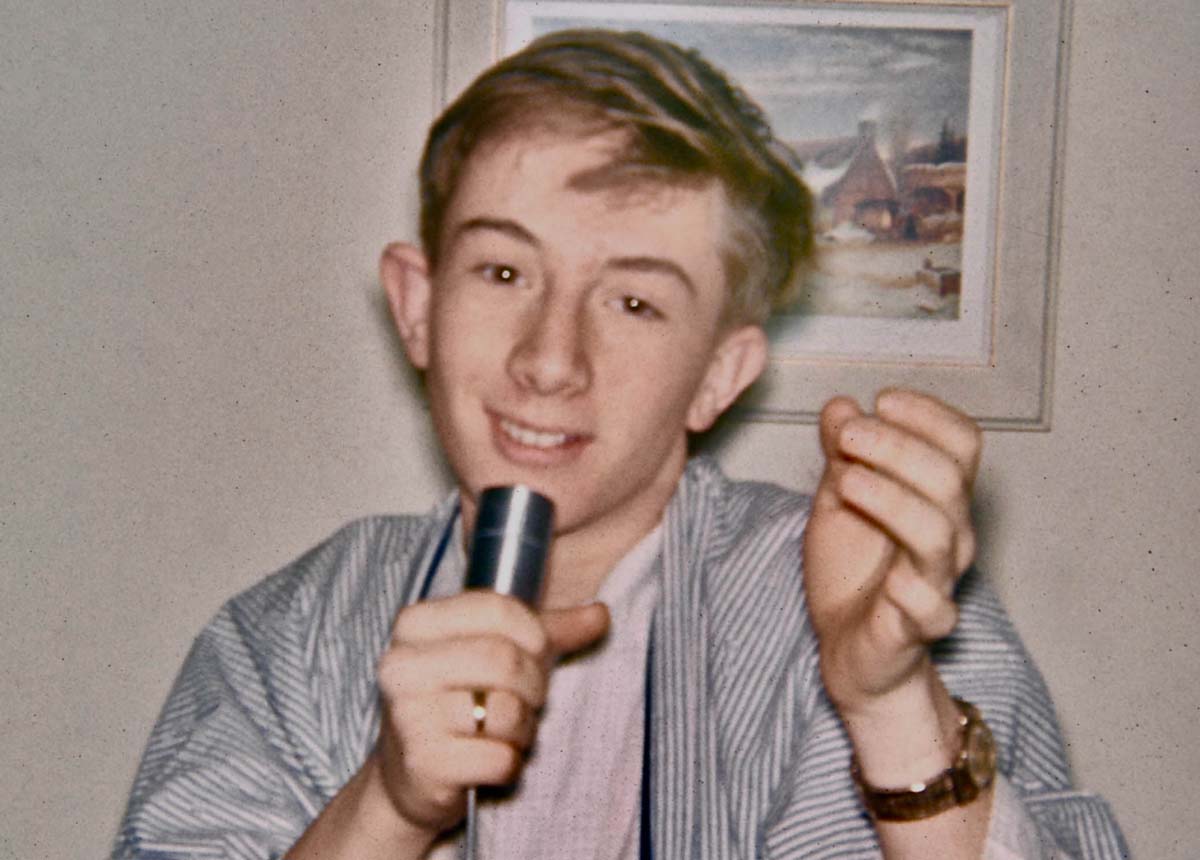
They had them on a shelf at his Snug Harbor home, and they were all labeled by what summer was. You would just go pull one off the shelf, like, “Oh, 1993. Let’s pull it off and watch it and have a laugh.” From the very beginning, it reminded me of my own family’s home videos. I think it kind of has that feeling for everybody, in a way. Then all of a sudden the celebrities show up. That’s where it takes a turn.
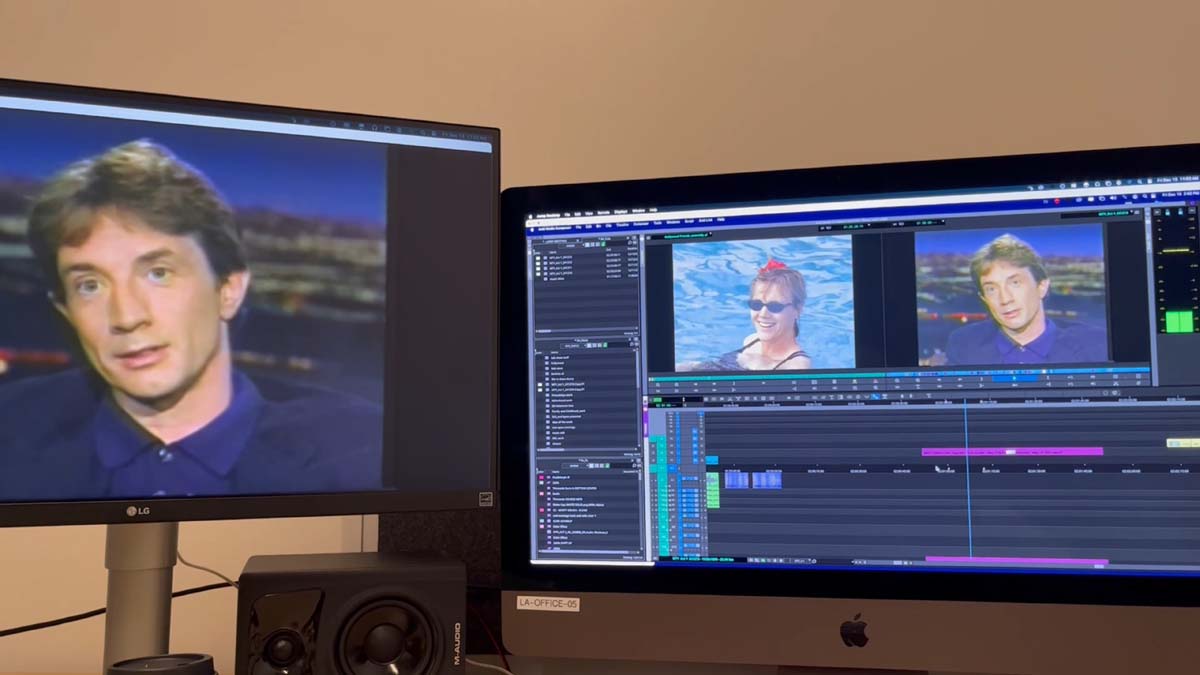
But it was going through those… What am I looking for in footage of somebody who’s just like hanging around playing ping pong with their cousins, or whatever it is? You watch it all and you break it into categories in some way in the bins.
Over time connections start to form. Over time you start to see the themes that are coming out: the children, the love, how Marty is with not just his own children, but with everyone else’s children, how he looks at his wife and his wife looks back at him.
He may be filming, but he’s making the person on the other end laugh or be their best self. Eugene Levy, Catherine O’Hara, Harold Ramis, Robin Duke, all of his friends that are just hanging out on the beach or in the backyard or whatever it is.
He always seems to make them feel comfortable. That was sort of the idea for the beginning of the movie: that Marty’s inviting everyone in to the house and to the party, so to speak.
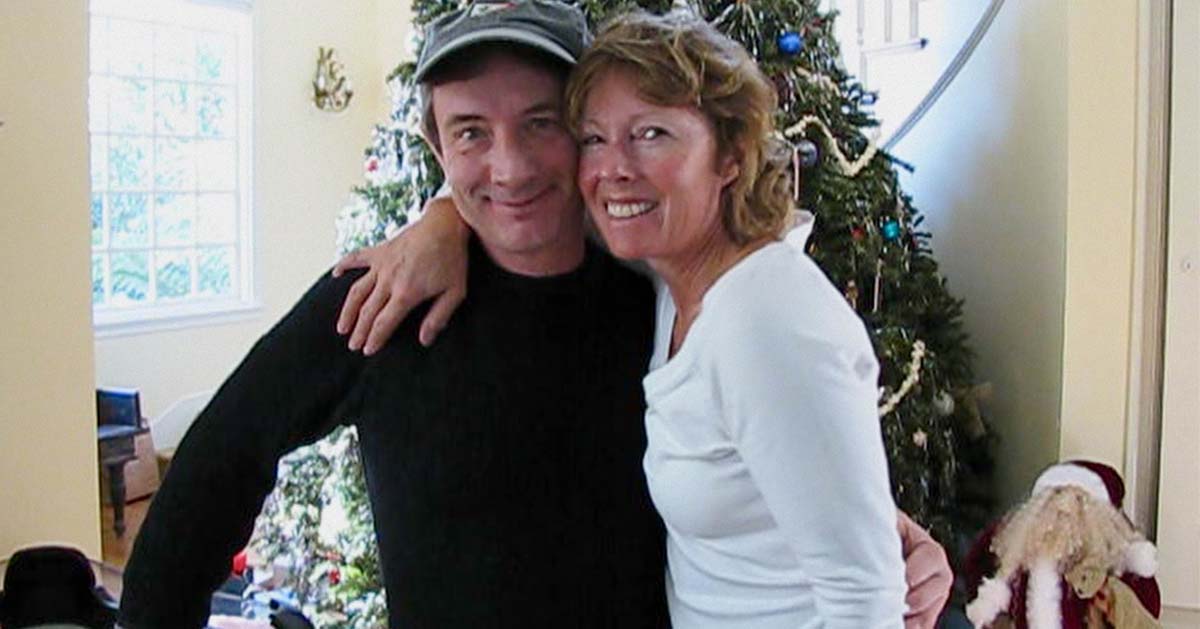
The idea of starting the film on Boxing Day with that kind of “welcome into the party, welcome to my house,” was that the first idea for the opening of the film, or did you find that as you went?
Far from it. As you do in these films, you often either struggle with the beginning - how to open - or you struggle with the ending - how to close it. We had a number of different things. Larry didn’t know what he exactly wanted, but he knew what he was looking for, which was a quiet moment with the family.
Or a moment of Marty that’s not being silly or goofy on camera. He’s an incredible comedian, but the open wasn’t necessarily Marty being produced and funny on camera…
…and as a matter of fact, not on camera at all.
Exactly, exactly that. It was about catching an intimate moment. Maybe instead of a quiet moment, it was about catching an intimate moment with Marty. We tried a lot of different things. This was a good way to show the group, but also show his personality to a tee.
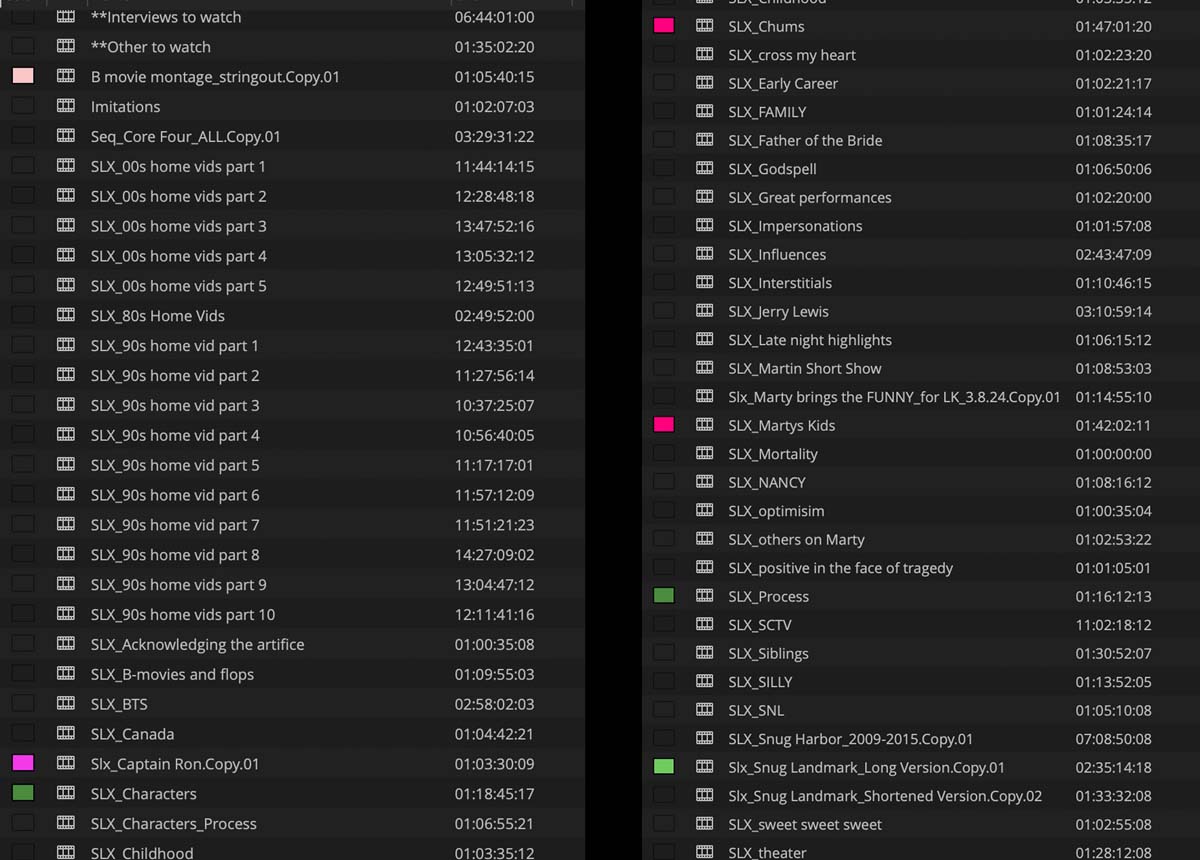
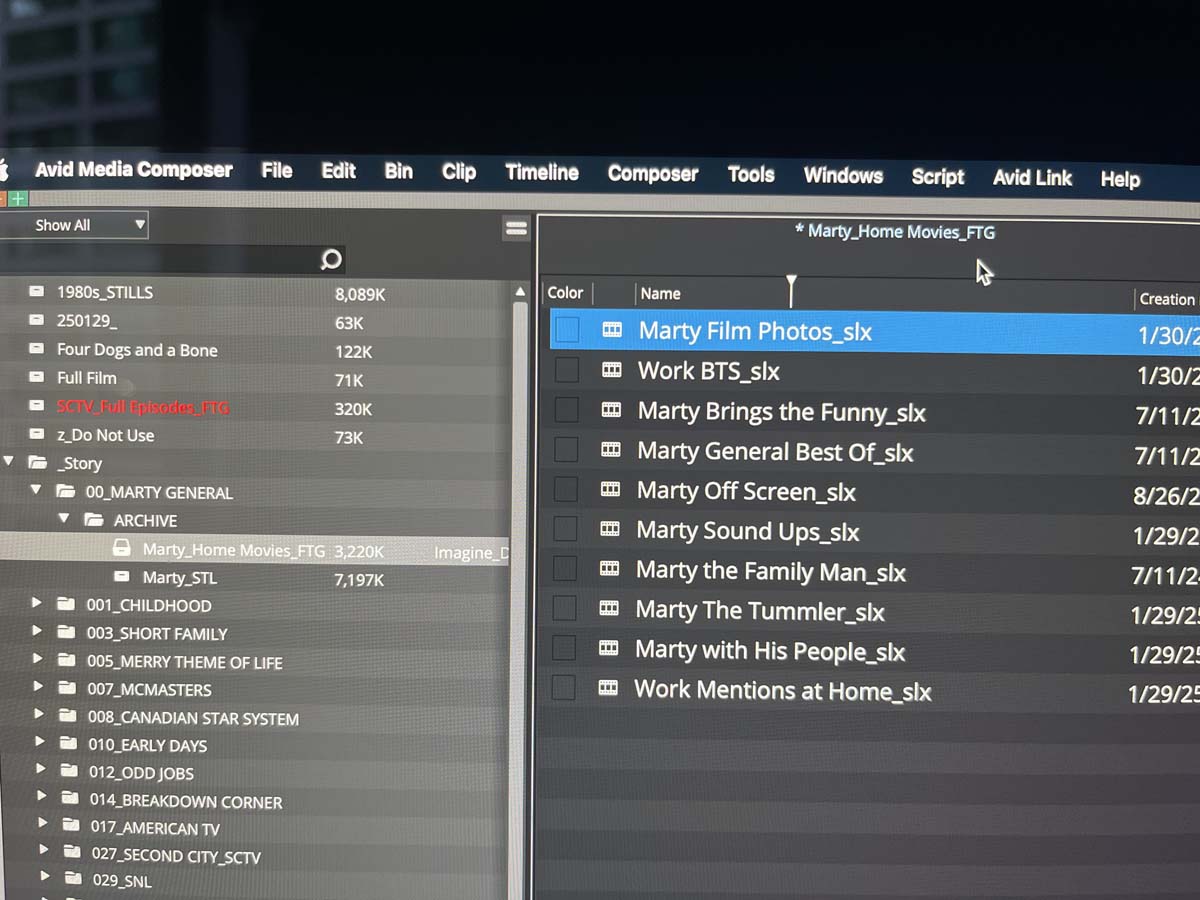
A list of selects sequences in an Avid bin (Photoshopped from a long vertical bin to this)
I say that organizing is editing. Tell me about organizing the footage. How do you put it in bins? How do you organize it? Does the organizing even go through a process of evolution? Do you find that you started by organizing it one way, but then realizing how you’re dealing with the material now, you have to organize it a different way?
Yeah, I think of it always as a living, breathing thing. As the cut evolves, as the film evolves – as where you’re taking the film evolves - you start to look for different things, so I just keep sequences in bins. Depends on which project it is, but new things just keep popping up each day. “Okay, today, I’m looking for Marty doing something silly.
Making the person laugh. Marty looking serious.” Different themes that you that you find with his siblings, with his children, with his friends. You start to compile little bits and pieces as you’re scrubbing through that 2.5 hour long home video - I guess hundreds of them or close to a couple hundred of them - times however long the VHS or the mini DV tape is. So yeah, it was it was a lot.
There were a lot of little moments that we were looking for, so we would keep going back through them. “Hey, go check that year for a little moment.” That’s how we found “the storm is coming.” It was a moment that I always love because Nancy pops in with her curlers in her hair. You don’t expect it.
It’s a wonderful moment - that intimate moment between the two of them that would make anybody laugh, but it happens to be in the context of a thunderstorm. Then that’s how you find this other meaning. You’re looking for something else and you make a connection somewhere else.
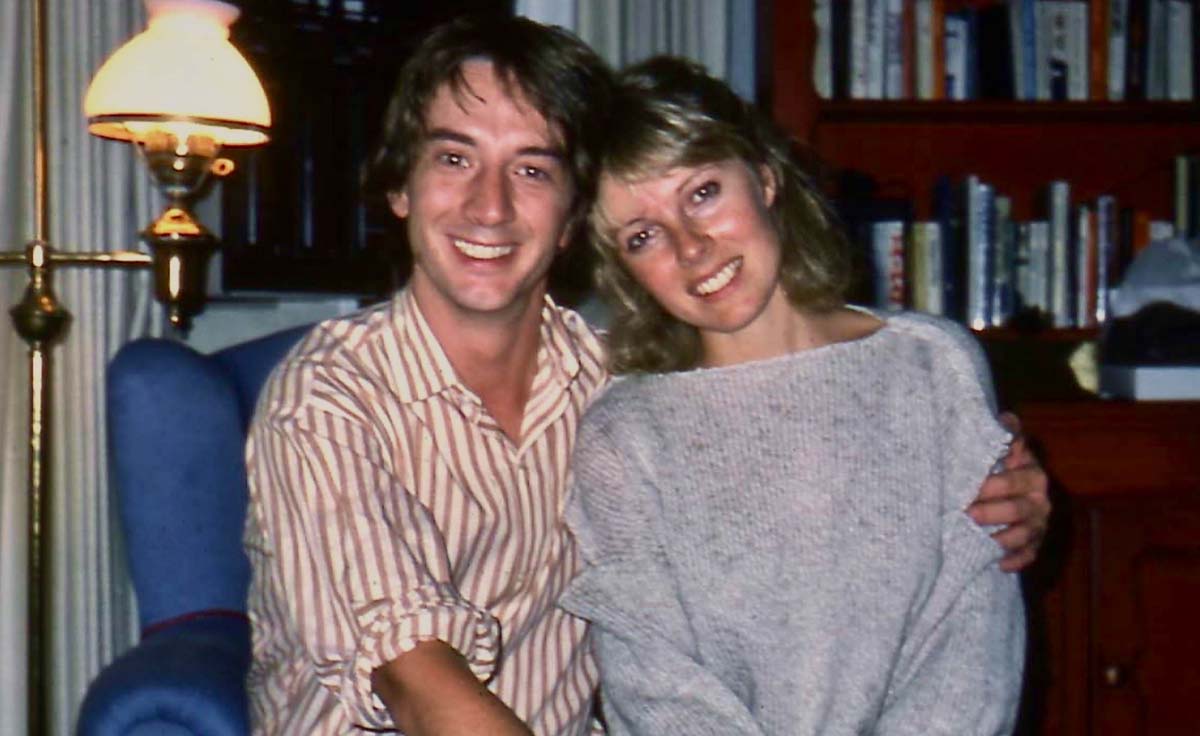
How are you utilizing your assistant editors and the archival producers in finding that material?
The assistant editor I worked with - Liz Lê - was wonderful in putting those categories together for me. I would be looking for something, or one of the producers or Larry would be looking for something, and she would go all the way through all those tapes. Absolutely crucial.
We had an archival producer on this but we had a minimal need for her, except for specific things. We certainly came up with an idea of what we were looking for and put it out to whoever was going to find it.
Imagine Documentaries always put a great deal of resources and help into using archival in the documentaries that we’ve worked on. Whatever came up that day, the assistant editor was helping to compile.
What was the schedule like?
We had a preproduction period with editing, which was great, and we had a team that was doing research. We also had a lot of audiotapes. Marty had recorded audio tapes of just friends hanging out, and singing in the attic, and plays that he put on with his sister and brothers and all sorts of family tapes that are difficult to go through.
So we had a period of time in the beginning of schedule where we went through a lot of Marty’s archive. That was really a crucial period for understanding the material and what we could work with and where we had gaps and needed to fill in.
I don’t I don’t really remember the exact edit schedule. It was healthy - nine months more - a little bit more on and off at the end. We worked on it for a long time before Netflix signed on to it. We done a great deal of work before that.
I’m assuming you were cutting in Avid. Have you ever worked in Premiere or Resolve? What do you think about the importance of a specific kind of NLE to your documentary editing style?
I have done several projects in Premiere. I have never done a project in DaVinci yet - not a big documentary project. Being honest, I think Avid is the way to go for documentary filmmaking.
It is solid enough to take all the living, breathing organization that I talked about earlier better than any other program that I’ve seen.
“With great power comes great responsibility,” as someone told me about Avid once, and I think that’s absolutely true.
It’s not without its faults, but, I find that with the amount of sources that we work with - working with a single format for the most part or as much as you can - is the right way to go and to avoid the most headaches.
I think Avid does a great job of that and allows you to just keep categorizing and categorizing and categorizing. I found that that could was difficult in Premiere at times.
Do you sub-clip a lot? How do you do that organizing in Avid?
I create selects sequences. I like to have a few bins. I have a Sierra Selects bin, essentially. Within that it’ll say “driving,” “traveling, “this album,” “that album,” “this period,” “SCTV,” “SNL,” “Best SNL with Marty only,” or whatever I’m looking for and I’ll have dozens of little tags, select sequences, then we’ll just keep dropping clips in there, and those sequences will get longer and longer and longer.
I like that because when it comes time that I’m looking for Marty making a silly face, I just drop that sequence in my source monitor and I scrub through them and see, “I’ll try that one.” “Oh, I’ll try this one.” That kind of thing.
I like the idea of select sequences because it gives you more of a chance to discover things because as you’re sliding through, you’re scanning options instead of thinking, “I’m going to go to this specific shot of Marty.”
Absolutely. And you don’t see any other shots except the shot you’re going for. Yes.
Let’s talk about temp music. Where did you pull it from? How did you choose those resources? Did you say, “Oh, he’s a funny guy. What other comedian documentaries are there?” Or did you think tonally, like, “We need grieving” or “I need ‘discovery’” and that’s how you found temp music?
Definitely tonally. And, music was inherent in the material. Marty is a singer. He’s been on Broadway. He’s singing all the time. He’s singing all the time. He’s singing Frank Sinatra, he’s singing Stevie Wonder, he’s singing Ethel Merman. He’s singing all the time.
So I used that as an inspiration tonally in the beginning. He’s also very good friends with Paul Shaffer, who has such a musical presence, in the way that he plays piano and rock and roll, and he’s friends with this wonderful musician, Marc Shaiman.
Often you see Marty lying on the piano and somebody tinkling the keys and him making fun of that person, so there was a little bit of swing influence in the beginning -Frank Sinatra, a little bit, but we didn’t necessarily want to go in that direction, so at a certain point we stripped away a lot of the music. We did a lot of cutting with very, very little music - only where it was really, really needed.
Then when the time was right, we brought in the amazing James Newton Howard. He helped to figure out what the tone of the movie really was, and what that sound for Marty was. There was a theme that was eventually written, but it took time to get there.
It was different for me and other films that I’ve done where we have temp tracks and then we come in and we write specifically for each cue.
This was a little bit more free and open for the composers to take it which way they needed to take it. We really came out with a beautiful theme in the end and something that really carried through the whole film, emotionally.

There are great moments of quiet. There are moments where there is no music. What about the discussions around when to spot music?
When we spotted things, the question was: do we need it or not? We would often surprise ourselves that the answer was no.
What do you think the value is for a documentary editor to be at the Mix Stage?
Well, for me it’s a lot because I’m a musician. I work with the music very closely in the edit. Some editors do, some editors don’t. Whether it’s scratch music, temp music, composed music in an early form, composed music that’s fine-tuned… I work with the dialogue and the music and the sound like I’m working with the visuals to a very fine-tuned level.
Being on the mix stage is great because, for an editor, that’s often the first time we really see it on a big screen, and it sounds good and it looks good. You may have done some test screenings before, but it’s probably with temp footage and temp sound.
On the Mix Stage you can get in there and really see if you’ve created something that’s cinematic or not. That’s when the music ties in, the sound design ties in, obviously the clarity of the dialogue is so important. That’s when I really make sure that all the “feels” that I’m looking for are there.

SCTV/Toronto friends and actors from Godspell performance
I love the transition from the end of SNL backwards into his childhood. But it’s not the first time we visit his childhood. Why split up the childhood?
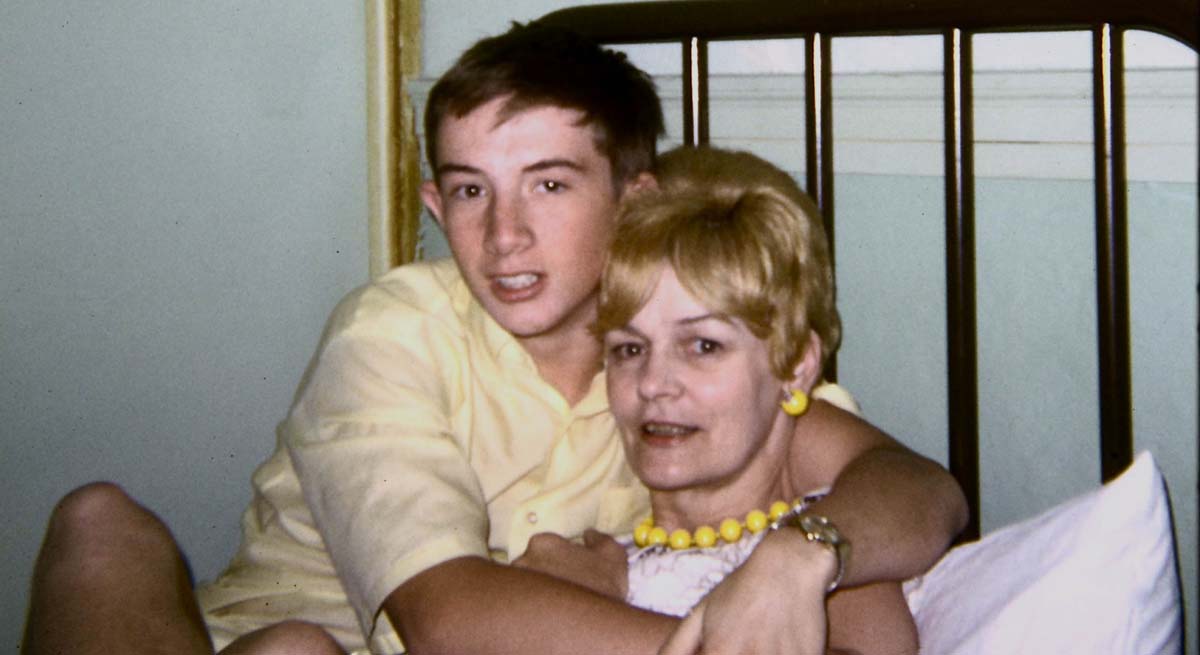
This was a difficult thing to figure out. We got to a point where we knew that we didn’t want to start the film by revealing all the tragedy that happened early in his life. That was sort of the problem. Essentially he would be a victim right from the beginning, and we didn’t want that. We knew that his childhood was a very important part of his story, but that it should be revealed at the right time - when you’re ready for it and when you can learn from it.
We really started the film with his unbelievably positive outlook on life, and we lived there for a long time. We did the family a little bit early because we sort of had to.
There were various reasons why we landed there. I can’t exactly remember, but I know that it was important for us to not start with the tragedy that happened in his early life.
I loved the little quiet moments. Marty’s public persona is so high-energy and kind of loud, but you also allow these beautiful, quiet moments in the middle of this stuff. One of them was the “staged breakfast” at Snug Harbor, where Marty says, “This breakfast is being staged, by the way. I’ve already eaten.”
Part of the approach to that is you don’t really need to tell Marty to be funny. He’s going to be funny whether you ask him to or not. He’s just great with the camera, so it was a very hands-off approach in terms of finding the quiet moments.
We didn’t want to make a film that was a goofball comedy - one scene after the next - we knew it would be funny no matter what, so we really didn’t push the funny. We just highlighted it when we found it, so I think it’s almost clear when you need a breath.
I don’t exactly recall where that Snug Harbor breath landed, but when you’ve been on a long run of comedy, it’s time for a break. You let the film tell you where it needs it.

Let’s talk about editing montage. One of them was the “Unforgettable” montage. Do you remember that? It’s a very emotional scene. It’s a very powerful moment in his life, which was his wife’s passing.
You try to let her personality come out. You try to show that person’s personality in photos or if there’s a piece of footage. She was singing that song, “Unforgettable.” That was a real moment that really summed up all the beautiful qualities of her.
In one frame, you were seeing all of these beautiful qualities of this woman - who is not famous to most people - but over the course of the film, you’ve gotten to know her and be on her side and understand her and love her.
You want to see the best pictures of that person. You want to see their love and their lust for life, and she happened to be singing a beautiful song - and singing it beautifully. As the song takes over, you approach it with all those feelings.

Talk to me about building the end of the film so that you’re left with this beautiful feeling that I remember having.
There was a sort of short run of soundbites about Marty at the end that didn’t last for too long. They were short - but potent - sound bites that end with Tom Hanks, saying something really beautiful and really eloquent and really summing up the whole film, which is that: “Marty operates at the speed of joy.” It was clear that we had said all we needed to say at that point.
Then we go into a place to rest with those emotions for a little bit, which is a montage of mostly Marty behind the camera. You’ll notice again, it’s mostly of all the people in the story that we just experienced for the last hour and forty minutes.
Marty behind the camera and interacting with them. That’s what’s mostly happening in that montage. That montage at one point was the opening of the film. You could maybe imagine that it was one of the first things I cut.
It was about what it’s like to hang out with Martin Short. That’s what that montage is, and it just seemed to fit really well, as a place to put those emotions at the end of the film.
Can you think of any good scenes that maybe got cut out? Maybe you knew it was a good scene, but there’s just no place for it, or it slows the film down.
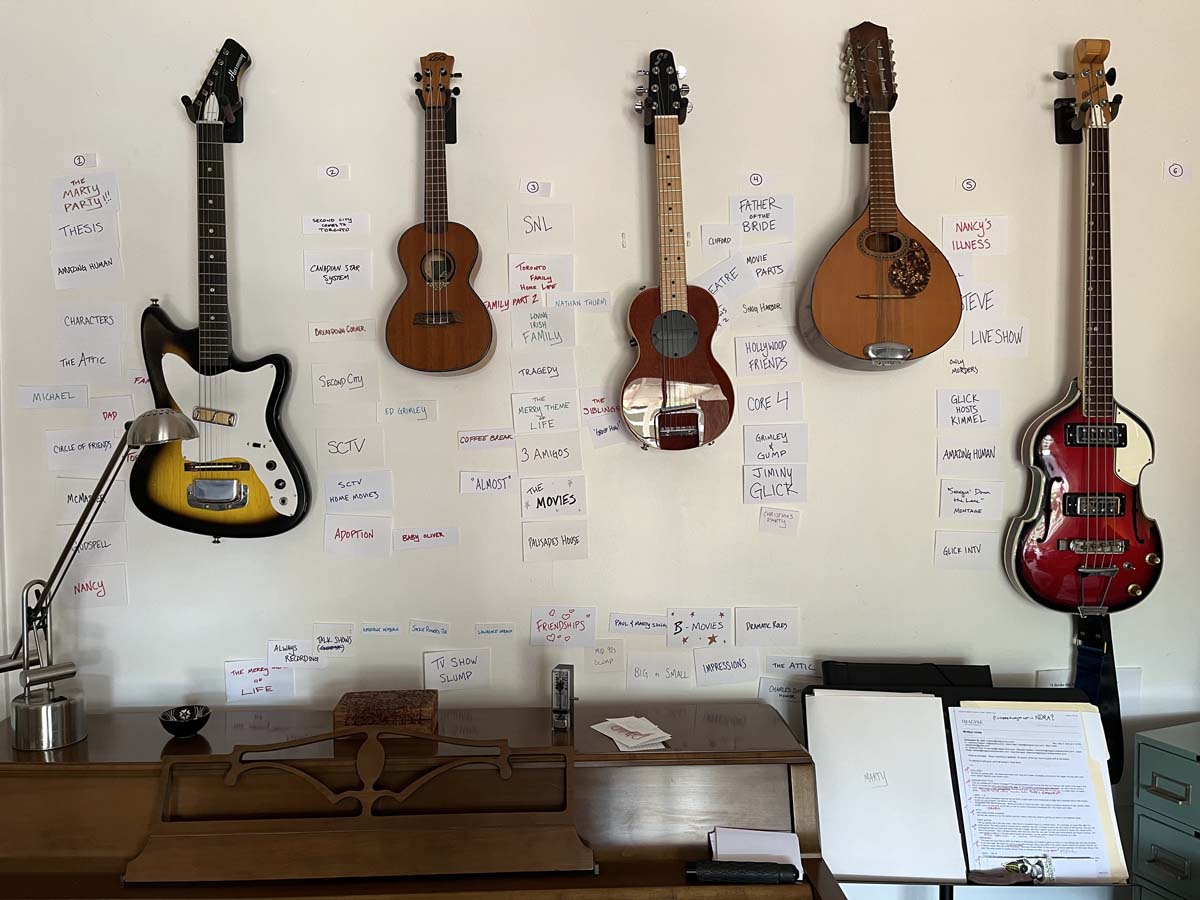
I don’t know. It’s too bad. Just a couple months ago I took the cards off the wall for that project.
I would like to say that I worked very closely with my producer, Blair Foster, back and forth, day in and day out, trying to find the structure to connect the scenes together, trying to create a tonal movie.
Another word we used a lot was “tapestry.” It was a tapestry kind of movie that still made sense and still had a through-line and had its ups and downs.
That was our task, going through that archive and the interviews of people talking about the essence of Marty - not always the specific events of his life. Of course, we have some of that, too. But Blair and I just kind of hammered through each one of these scenes and tried to find the how the puzzle pieces fit together.
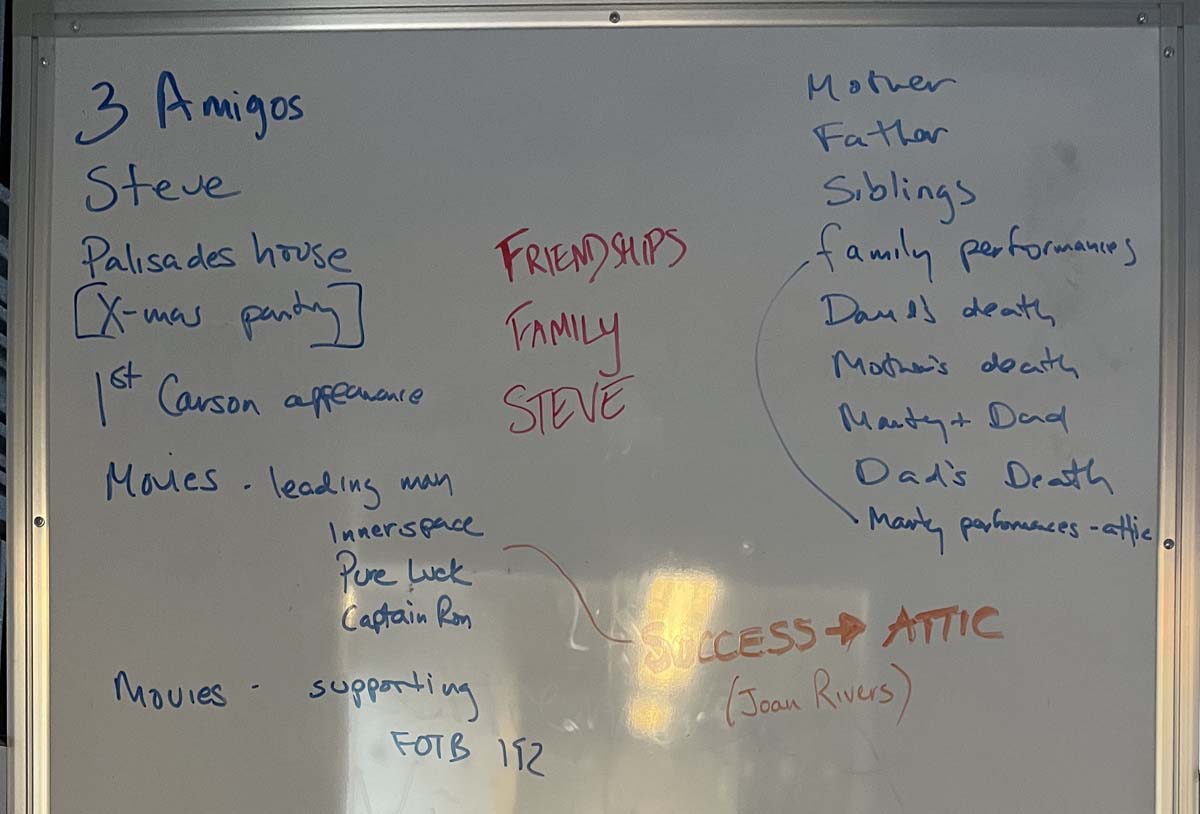
How much of that work was done up on the wall with the cards, and how much of it was done in the timeline?
Of course, both, but the cards are very helpful for me, and we use whiteboards. A lot of documentaries these days are done completely remote - and we were mostly remote - but my producer and I were able to get together at least once a month for a couple days to be in person, write things down on the whiteboard, get together with Larry.
It just helps to have those brainstorming sessions in person. We would do a lot of it on Zoom. Obviously, most of our days were spent with Larry, Blair, and me on Zoom, churning through different ideas of how we could mold each of the scenes.
Another thing I will say about this process is there was a lot of shuffling. There was also a lot of taking a scene and molding it a slightly different way over and over and over and over again. Make it tighter, make it shorter, make it longer, make it breathe. Make it not breathe.
I always like the cards on the wall. It helps me to quickly glance at it and understand where I am in the context that you’re thinking of in that moment, because you want to be thinking of where you’re at - the bigger picture - always. Where you’ve come from and where you’re going.

You won an Emmy two years ago in the same category for Jim Henson: Idea Man. You and I got a chance to talk about that on a previous Art of the Cut. You’ve been nominated for an Emmy for this. How do you judge editing, especially for docs?
You’re not always looking for originality in the editing. You’re looking for originality in how you feel when you walk away, like you said. “Did it leave me feeling something that I’m not going to forget for a while?” I find that those are the best editors: who evoke emotion without you even knowing it.
You’ve been on a journey for an hour and a half or two hours. Is the story clear? Is the story fun in some cases, or captivating or powerful or whatever that film is going for? Finding the language of the film is a way that I tend to see it a lot.
What is the language of this film? Whether it’s a celebrity bio doc or whether it’s something a little bit more complex or dramatic or whatever, I think it’s finding the style and the language and bringing it to the forefront.

Sierra, thank you so much for talking to us about this film. I absolutely loved it. If you want to feel good, if you want something that makes you feel happy, this is a great documentary to watch. Thank you for bringing it to us.
Thank you so much, Steve, for saying that.
 October 5, 2026
The Whisper Man
Chris has been on Art of the Cut before for The Menu, The Many Saints of Newark, A Quiet Place, and Assassin’s Creed. He has ...
Read more September 23, 2026
Sean Combs: The Reckoning
Charles Divak has been on Art of the Cut in the past for Chimp Crazy, for which he was nominated for an Emmy and won ...
Read more September 3, 2026
The Dog Stars
There's nothing like The Dog Stars in his filmography. That's a testament to him - that he is constantly interested in different stories and different ...
Read more
Subscribe to our newsletter
Get all the latest news, blog posts and product updates from Boris FX, delivered directly to your inbox.
Welcome!
Thanks for opting-in to our newsletter. You'll receive an email momentarily with your confirmation.