













Hoppers
ACE Eddie-winner Axel Geddes, ACE, talks about sculpting Pixar’s “Hoppers” in the cutting room. How POV affects the film’s score, and the editor’s role in sculpting the performance of a single shot.


Today, we speak with Axel Geddes, ACE, about the latest Pixar film, Hoppers.
Axel and I previously talked about Toy Story 4 for which he won an ACE Eddie. He also has Annie nominations for Best Editing for Toy Story 4, Toy Story of Terror, and Lightyear. His other credits include Finding Dory, and second editor or additional second editor work on Elio, Lightyear, Turning Red, Toy Story 3, and WALL-E.
Congratulations on a really fun project.
Thank you so much. It’s really, really a joy to be here again. I really enjoyed our conversation back in 2019 about Toy Story 4. That was a real pleasure. I really love being back, so thank you.
I noticed sound effects early on and how much that must be a part of what you do to make storyboards come alive at the at the beginning of the process.
Absolutely. In the early process - storyboards and all that stuff - we build a pretty deep soundscape. We do early sound design where we find what the movie’s going to sound like. What helps tell the story?
There’re definitely some scenes where we did more of that, especially later in the film when things get really weird.
We definitely got more freaky with the sound effects and it becomes kind of like a template when Skywalker Sound gets involved. In this case, we worked with Ren Klyce, who I also worked with on Toy Story 4 and his team of people who are all just lovely, wonderful collaborators.
When they get involved, they kind of look to what we’ve built over the years and think, “Okay, what story point to we trying to get across or what kind of like feeling or emotion are we trying to get across with those sound effects?”
Then they replace most of them with stuff that sounds even better. But it’s part of the job of an editor in animation to build that soundscape to begin with, because when you’re in storyboards all you have is a drawing on a piece of paper and you’ve got to bring it to life somehow - the dialogue, music, and sound effects - that’s it.
All you have is a drawing then another drawing and another drawing, and you have to interpolate what will be happening when it’s animated.
Then there’s performance and acting and what storyboards are indicating, what that acting and performance will be, so whatever we can do to help bring it to life and help people when they’re watching it, feel like they’re watching a movie.
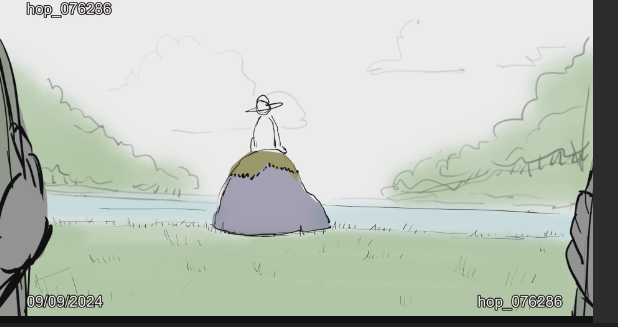
One place I noticed sound effects was at the beginning. The movie starts with this little girl, Mabel. Her grandmother’s trying to show her the beauty of the outdoors. That scene is very dependent on sound effects because she’s trying to explain that you just have to be quiet. The ironic thing is, by being quiet, you hear the sound.
It’s really interesting you bring that up because that was a sequence that we really played with sound. We have a tendency to fill out the sound a lot, and in that one we had to kind of strip it all down to as little as possible. So much ambiance is animals, birds, crickets or whatever. We actually don’t want to hear any of that until you see [the animals making the sounds].
How do you get those ideas across. You want it to be comfortable. If you use too much wind, that will make you feel like the characters are cold, when they’re not cold. That’s one of the ways you convey an atmosphere, so it was really finding the moments and slowly bringing those sounds in.
Mabel starts to lean in and see these animals that are all around her. She starts to hear them as well. You have to do it with a light touch.
It’s a very long crescendo of building our soundscape, and you really need to be in the head of the main character of Mabel as she’s experiencing it and trying to think about it that way - introduce these sounds as she’s starting to pay attention to them.
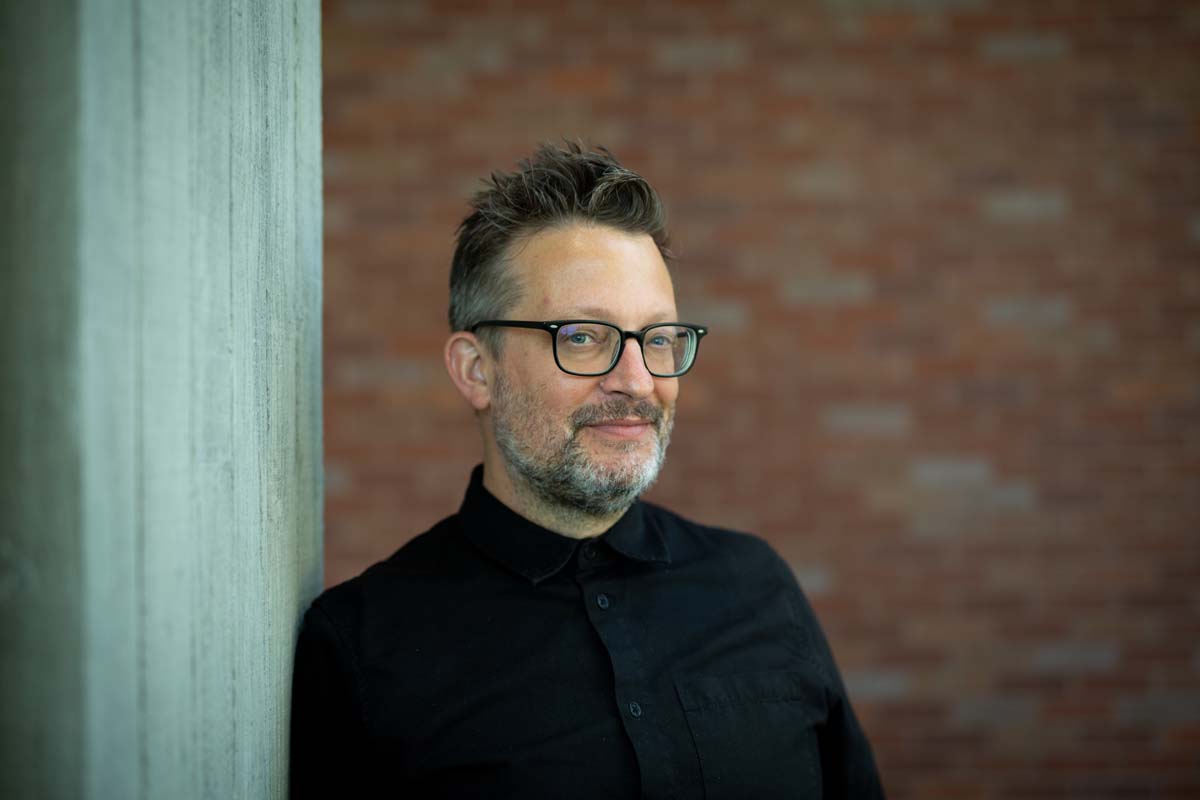
Axel Geddes, ACE
It’s her POV, so you need to go from her not being able to hear them to being aware.
Exactly. And you want to get the audience as excited about it as Mabel is. You want to bring them along the journey that she’s on. We also have to convince the audience - that may or may not have a strong feeling about nature - to love nature, and this place specifically. We want them to be rooting for her to protect this place as much as she cares about it.
I don’t know how many different versions of that sequence we made as we were cutting. As we’ve talked about before, the way we make these movies is that we’re rewriting them all the time.
There were probably 12 different versions, 20 different versions of that sequence. And we’d put it in all kinds of different places in act one. It wasn’t always the second scene in the movie.
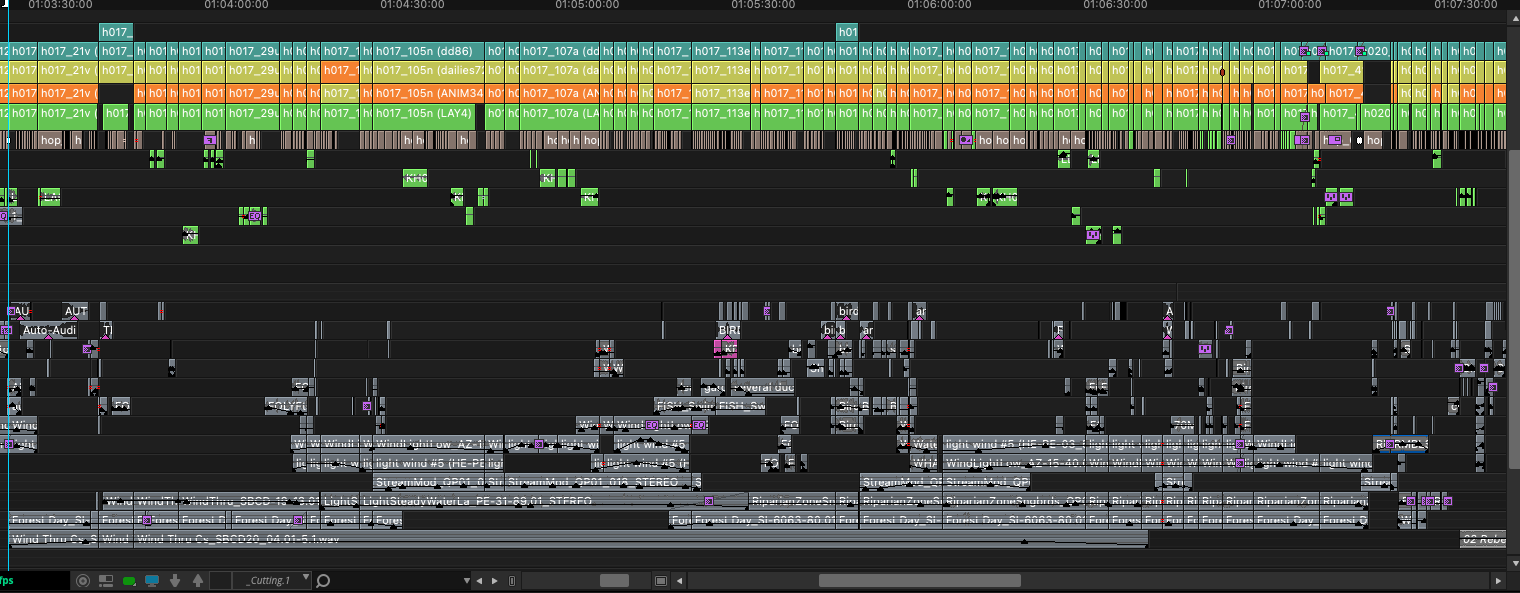
Avid timeline screenshot of the actual “Grandma Tanaka” scene
Oh, really?
Yeah. We used to play it as a flashback. Right now we have a little bit of a flashback in the same location, which is later in act one. Mabel has tried to lure a beaver to the area, and she’s been unsuccessful.
I think the original location we had for this scene, she reflects back on why she cares and why this failure hit so hard. That’s when we introduce all the reasons that she cared about it.
That was where it started. Then we moved it to the beginning. We tried it after she went home before she sees the commercial with Mayor Jerry. We had her having a reverie, looking out from her back porch over the glade.
Every single one of these had an intellectual reason why it would be the right place to go, but ultimately the place where it is - which is the second scene in the movie - was the most emotional place for it to go.
It felt like we had more connection with Mabel and with her grandmother by placing it in the beginning of the movie, and it gave us more drive.
One of the last sequences that we wrote and put into the movie was actually part of that scene, but we added this beat at the end, which is a montage of them living in that space.
We didn’t used to have that, but we realized we kind of needed to feel Mabel living there and loving this place in order to get behind her. So if she doesn’t have her grandma anymore, she at least has this place.
We found this old montage that we had cut for a completely different part of the movie. We watched it again and thought, “That’s it!” So I just quickly threw it into the reel.
Then we looked at it and thought, “Well, that doesn’t work the way it is, but that is what we need to do.” We did that just a couple months before we finished the movie!
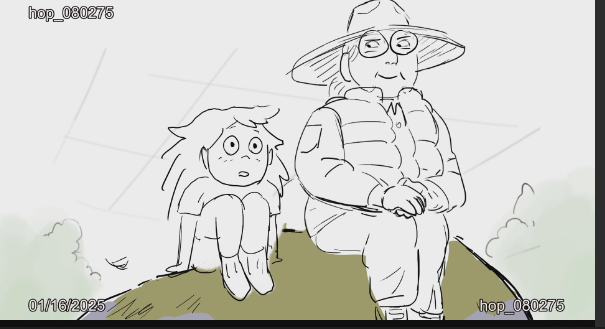
Even if you thought that montage isn’t going to work there, it provokes a better idea.
Exactly. This is the kind of experimentation we do all the time. The only place where the movie exists is in the edit until it exists out in the world, when it’s finished. In editorial, we get to bring it in and put all those pieces together.
By having one shot juxtaposed with another shot, or one scene by juxtaposed with another scene, then putting them into the mix of the whole movie, we get to bring meaning to all those pieces.
Sometimes by moving a scene from the beginning of the first act to later in the first act it gives that sequence more emotional resonance… or less. So you have to be open to playing around with those things and trying it.
You don’t want to be the “vibe-killer” saying, “I don’t think that’s going to work. We shouldn’t do that!” You want to say, “I don’t know.
Let’s try it! Let’s see what happens!” Even if - intellectually – you think it won’t work. I’ve found that frequently I’m wrong. You’ve got to listen to the movie. The movie tells you what it wants to be.
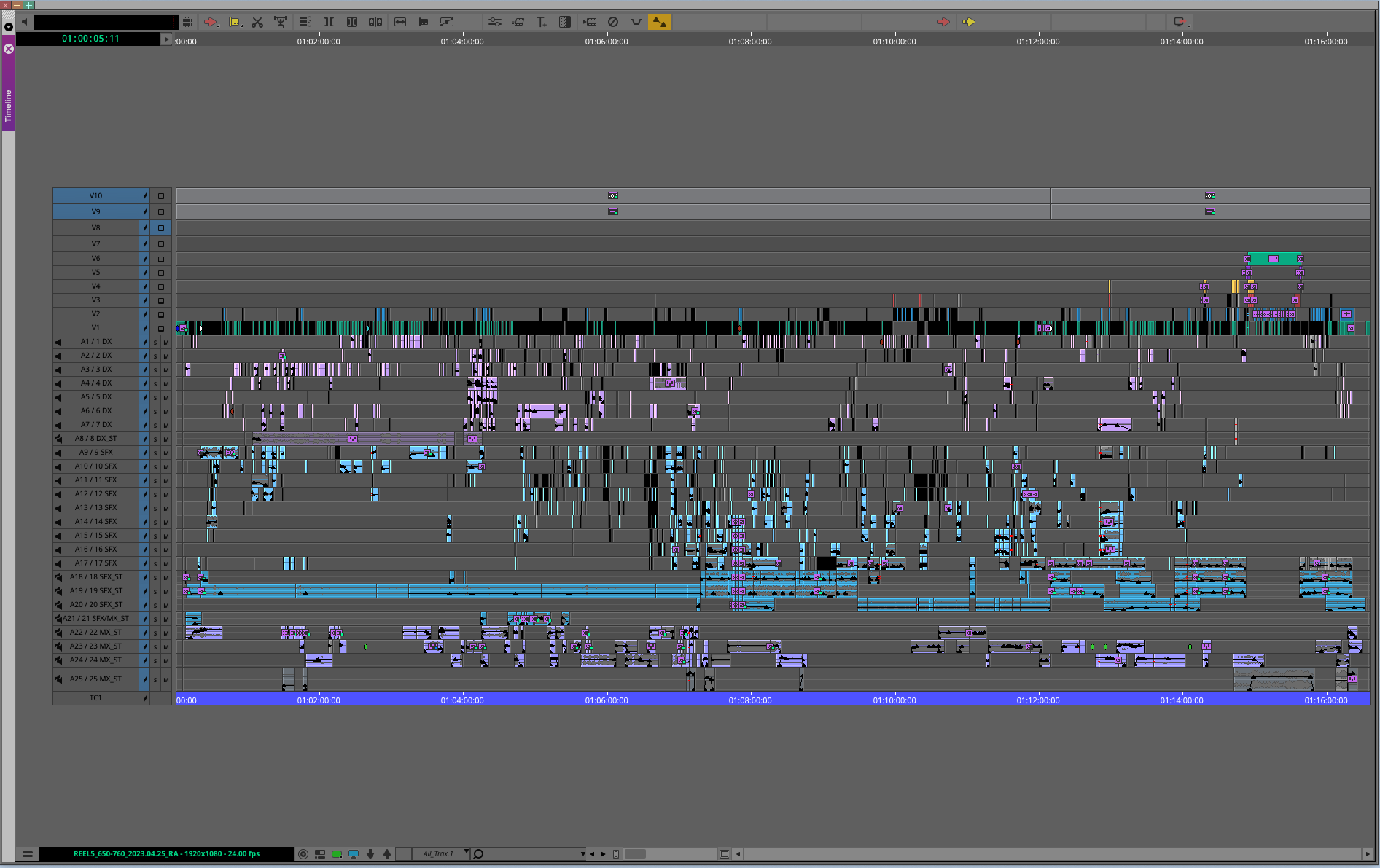
Avid timeline screenshot of Reel 5 of the Storyboards stage of the movie.
It’s the old improv adage of “Yes, and…”
Right. 100%. Improv rules are definitely something that we talk about and think about. In my office, we’ll have a version of the sequence that doesn’t work. We’re all wanting to make that scene work. We’ll just start talking about why it doesn’t work, then we’ll start talking about what it needs in order to work. It can be very abstract, so you kind of want to make it concrete.
What can we do to make this idea - this abstract idea - a concrete idea. So someone will start drawing a drawing or coming up with a new line. Rewrites would happen in my office. There’s a drawing tablet right next to me, and our head of story, John Kim or Margaret, one of the leads, or Hannah, or there’s a bunch of other story artists. They might all be sitting there and then just start drawing this idea quickly.
They would send it to me. I could be cutting it into the scene - basically getting a new shot and a new emotion from the set, but getting it within minutes. Then we’d think, “Now this needs a new piece of dialogue,” so the writer or director might write a new piece of dialogue, then we’ll just go over to one of my assistant’s offices.
Deanna had an office right outside mine. We’d go to her office and we’d record the line of dialogue, and I’d be cutting it in a couple minutes later. I’d have a new version of the scene within an hour, then we can test it and look at it and say, “Okay, that’s a rough version of it.
Does that get us closer to the emotional beat we’re looking for?” If we do get closer to that emotional resonance, then we start refining.
Otherwise, we haven’t spent a lot of time investing into whether that works or not. It hasn’t been days, it’s just been maybe a half an hour or an hour. Then we’ve proven whether an idea works or doesn’t work.
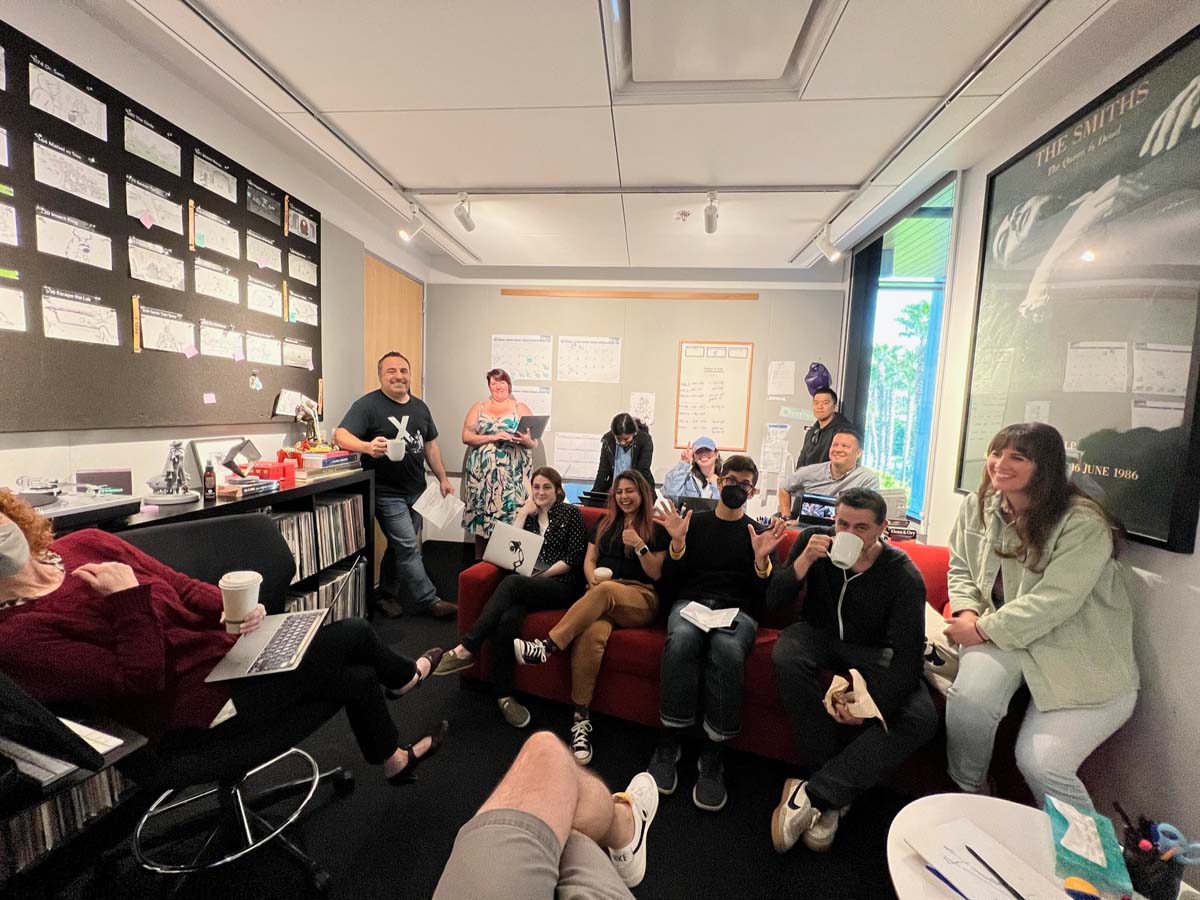
The Hoppers Edit crew “early days.”
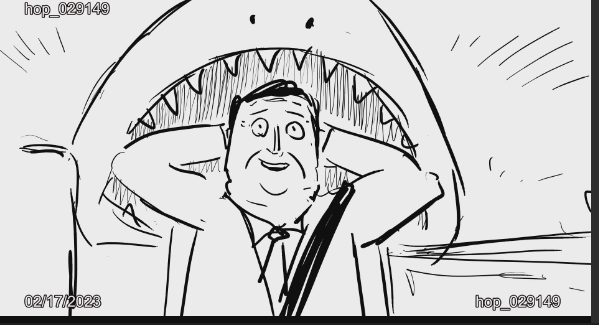
With animation, and some of these very “animated” shots with lots of camera motion or complicated motion and blocking, each single shot might be comprised of multiple storyboards.
In order to really cut it, you have to craft the performance first. When you have one shot, you have to kind of think about whatever the characters are that are in this shot and you get about ten storyboards, then I will time out those storyboards, depending upon what’s happening in the shot: Is the character feeling mirth?
Are they unhappy? Did something disappointing happen to them? Are they getting excited? Each of the drawings might have a new expression for the character, or a mouth open or a mouth closed, or an eye dart or something like that.
I time out each of those changes depending upon how I feel like the character would be feeling in that moment. The story artist has done their first pass of the acting and then the dialogue. Whoever performs a dialogue does their pass of the acting, then I have to put those two things together.
I have to talk about the performance of the dialogue. I have to time out the performance through the facial expressions and kind of synthesize what it will be like to have that moment.
Once you’ve created the shot, then you put it next to another shot and you say, “All right, do those two things go together?” That’s just in storyboards, but then eventually - in CG animation - we have to translate it into three dimensions with a virtual camera.
That’s when we start interfacing with the camera department, which is run by - in this case - Jeremy Lasky, who is our director of photography for layout or camera and staging. At that point they start figuring out, “Okay, the original shot is just a single close-up, but, I wonder if maybe if we had a slow push in here, would that bring more to it?
Or what if it’s an arc around that can bring dimension and parallax to the character in the moment?” It all depends on what the emotion is that we’re trying to get across. What’s in the character’s head? They’re sending their versions to us.
We’re cutting them in, then we’re trying to figure out, “Is that the right thing? Do I need a different version? If I’m going to use that shot, do I have to ask for a different shot before that, so they’ll hook up together?” We become the first line, trying to figure out how to make that work before we show it to the director.
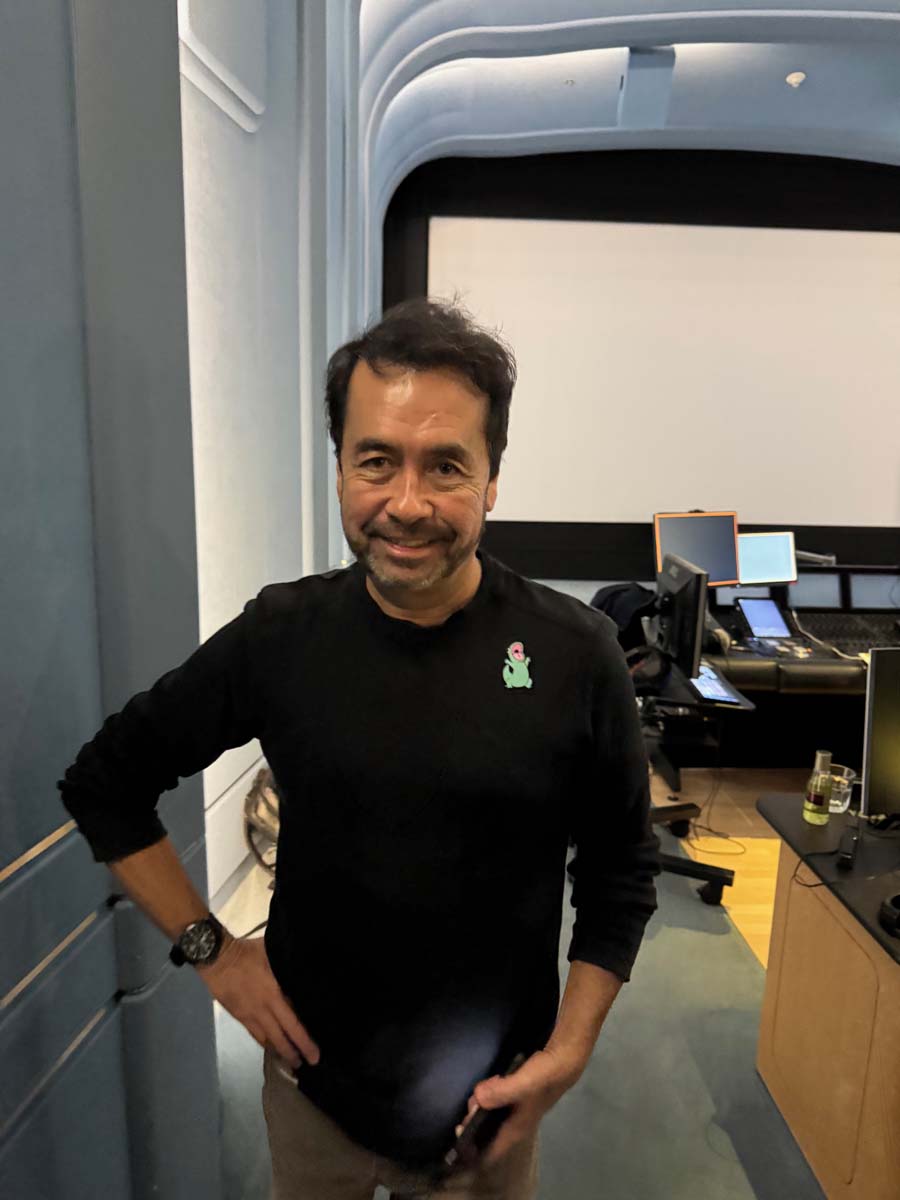
Ren Klyce
Are they trying to be careful with the timings you’ve established, or are they playing a little bit fast and loose because they understand the time it’ll take for the movement in 3D?
The layout department tries to honor the intentions of whatever the shot was in the boards, but sometimes they have an idea, so they might try something where they slow down the camera movement. They might slow down the pacing of the shot, but then frequently I’ll speed it up.
Or take frames out of it. Once we lock it, we go through a process called timing changes: we send it back to layout, then they take our janky speed-ups and stuff like that, and they make them pretty. But there are times - when in storyboards - they don’t know what the set’s going to look like necessarily.
They don’t know how big the set is going to be, so if we time something out for a character to go from point A to point B in 15 frames or something, then we get into the set and we realize where the character is supposed to be at the beginning of that. We might have to rethink that.
Maybe we open it up because it’s going to take them longer than 15 frames to get from point A to point B, but sometimes we may decide that we have to think of a new way to shoot this. Maybe we’ll have to make their movement across time and space faster by the magic of travel by cutting. It just all depends.
Do you have a favorite part of the process? You’re contributing in different ways during each part of the process, right? During storyboarding you’re participating in a certain way. When you get the layout, you’re participating a certain way. Then when you’re getting finals are you less participating at that point?
I kind of have to be awake for the entire process.
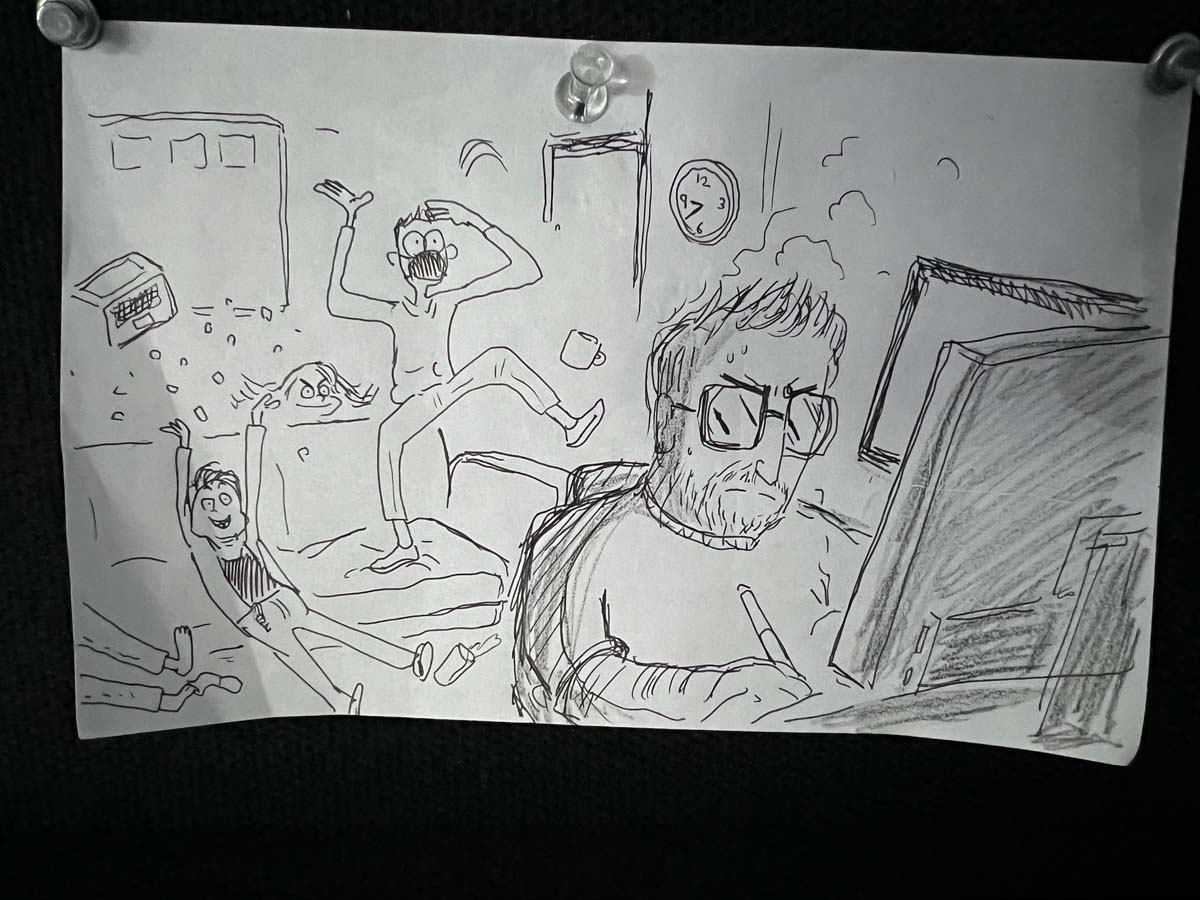
John Kim’s drawing “Late Night in Edit”
The people paying your paycheck will be happy to know that.
I have to be present and accounted for, for it. From the storyboards to the very, very, very end. I sit in on animation dailies because the animators - when they’re getting into it - they have their 1 or 3 or 5 shots to think about.
They’ve got to get into the heads of the characters and think about what they need to do. They’re not thinking about the whole scene or the whole movie - they try to as much as they can, but they can get myopic about it. I totally understand why because they have to figure out what’s happening for this character in this moment.
This character came from here and it’s going to be there. That’s kind of where they need to be. But sometimes in doing that, they might add a bunch of frames into the middle of the shot or they might move some dialogue around. That can work sometimes, but sometimes when I get it back into editorial, I think, “What happened to my rhythm? The rhythm of the scene is messed up.”
So I go to animation dailies. I sit in the back, usually with next to Jeremy Lasky, who’s the head of layout, because we have crafted what we’re sending to animation together and we have an idea of what it is, then I’ll keep an eye on it. Sometimes they say, “Look, I physically can’t get from point A to point B, or sometimes they emotionally feel like this character needs a beat here.
So I’ll say, “Okay, let’s try it.” Or they may have an idea that may not work in the movie at that particular moment for whatever reason.
If I don’t think the shot is working, I’ll say, “Can we look at layout again?” Because I know that’s the roadmap that we’ve created. Then we can compare and contrast. Frequently when we do that, the animators and everybody in the room and the director will say, “I see what happened.
We got off base from the original intent in this way because it’s really clear in the layout,” but sometimes they say, “I tried that in the layout, but it didn’t work. This is why I tried this.” Then we might have to come up with a third solution, something that’ll work for them and work for me, and work for the movie.
That’s actually really fun, because we’re all collaborating, we’re all working together, and we’re all trying to make the movie the best movie it possibly can be.
I read that the wild car chase was inspired by Mad Max, Jaws, and The Birds.
For temp score we used some of that JunkieXL Fury Road score. Of course we used Jaws because we’ve got the shark. When Mayor Jerry first exits his house and goes to his vehicle and we have that wide shot - before we reveal that the animals are inside the vehicle - there is a shot of the phone wires and all the birds are settling down and coming in. We wanted that to be menacing, like in the movie The Birds.
That’s the pressure we’re putting onto Mabel as she’s trying to communicate with Jerry, “You’re in a lot of trouble. You’ve got to get out of here.” That’s why she’s able to convince him to go. We set it up with the birds all sitting on the wires.
Then, of course, the birds catch up later. So we did have inspiration from them. We had inspiration from Mission: Impossible. We had inspiration from Jaws. Daniel Chong, the director, is a real cinephile, as are a lot of us, and John Kim, who was head of story, is also a big cinephile. We all love movies so much. It’s part of the language that we speak to each other.
John Kim boarded the sequence “Beaver Party” after they have knocked down the Sonic Tree, and they have the montage to Loverboy’s “Working for the Weekend.”
I saw the pitch. The story artist pitches “Here’s what happens.” The whole time he was pitching, I’m thinking, “This reminds me of the barn-building scene from Witness. I mentioned that to John and he said, “That was my inspiration.”
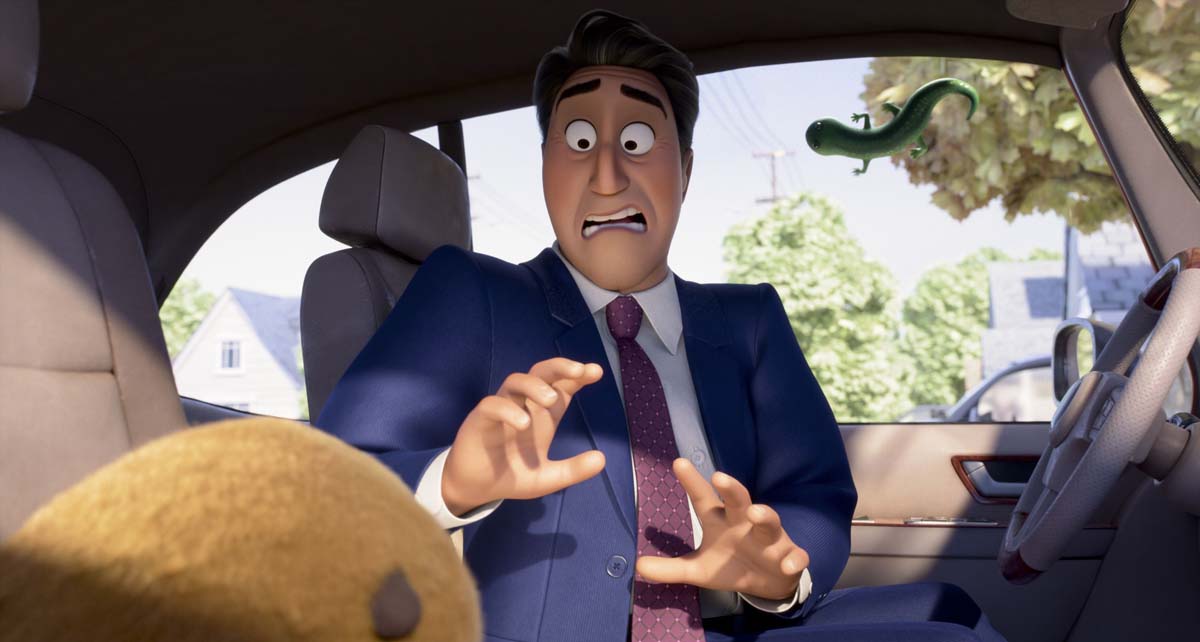
There is a great little flurry of edits in the scene that you just mentioned when Jerry leaves his driveway. There’s great dynamism to the editing. Slower movements, then bursts o f action. Jerry’s been getting ready to go to a rally. He’s in his house. It’s very fun. But when he takes off in his car, I don’t know how many edits there are in that little moment. There’s a bunch. Talk about building that rhythm in that section.
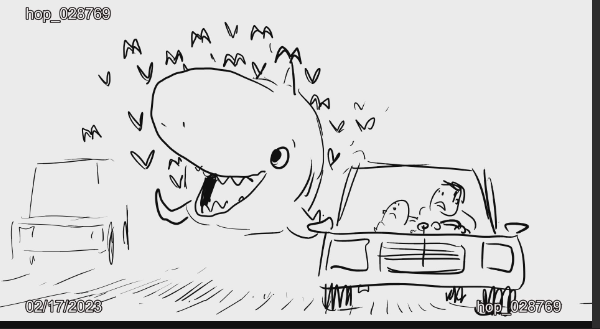
Apex predator during the epic car chase
We talked about the Edgar Wright kind of rhythm that he has in his TV show Spaced and some of the other stuff that he’s done. We loved that idea of really giving it this force, kind of helps build the tension.
I remember playing around with all that stuff and trying to figure out what’s the right beats there. It does feel like music when you’re coming up with those kinds of quick shots.
You want to be on the shot just long enough to be able to understand what’s happening in the shot and not a frame longer, so I remember analyzing that several times before I locked that sequence. I did it first in storyboards and thought, “This is good.”
But in storyboards everything is more clear, because you don’t have as much noise. Usually all they draw is the foot going down on the pedal. When you have the final version of it, you’ve got more information in the shot, you have the background and all the things around it, so you have to be more aware of what’s happening.
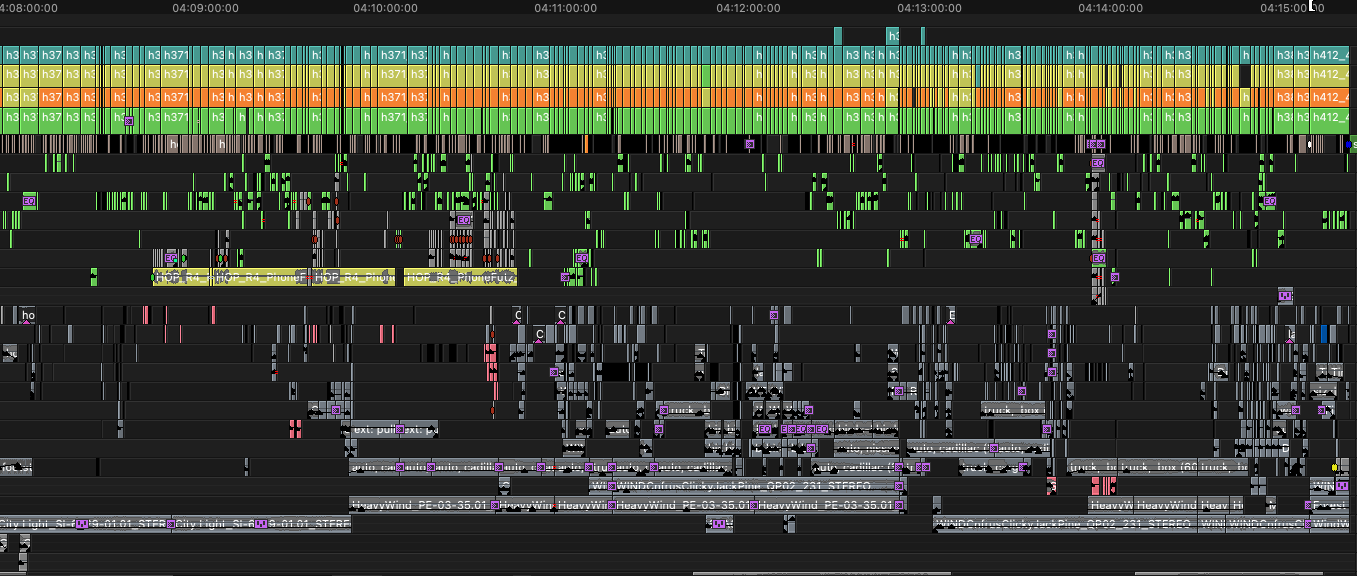
Avid timeline of the actual sequence of Mayor Jerry leaving his house
Your brain can’t take the new animated shot in as easily as it could a bunch of lines…
Exactly. But you still want it snappy. Sometimes it meant adding a couple frames that weren’t there and asking for that from animation. Sometimes it meant adding a couple of frames to the head to make sure that you could lock into what you were looking at before the hand comes in and does something.
We had to evaluate that as we went because in live action filming the camera would roll for a while before the action happened, but in animation, “there’s no there there.”
You have to ask for every frame that you want. You have to anticipate that you might need extra frames at the head or the tail of a shot, and ask for it.
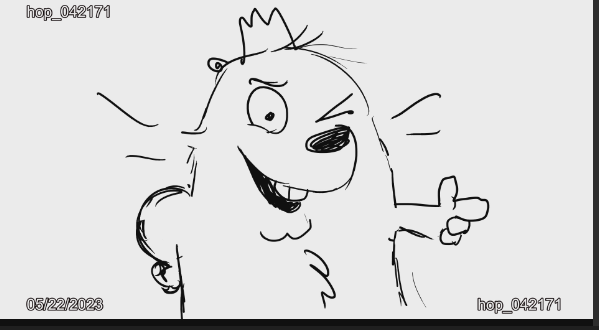
Towards the end of the movie, there was a scene I noticed with the King Beaver when Mabel realizes that he’s giving her another a second chance…after they’ve gotten out of the river. It’s a very emotional moment. You would think there would be score. There’s not complete silence, but there’s no music. Then eventually the music comes in. Talk to me about the decision not to put music in from the first moment, but that you’ll leave it open for a while.
My philosophy on music in general is that I don’t want to play the music before the audience has had a moment to understand how they feel. Sometimes you break this rule, sometimes it works anyway. In this scene, Mabel is broken up.
She’s feeling shame for what she did. She’s feeling lost. The things she’s trying to achieve have gotten crazy, not better. She’s feeling all these complicated feelings, and I think it takes us a little bit of time. She’s processing those feelings.
The time we introduce the music is when she’s actually starting to recognize where she feels deep down and what’s been driving her. We wanted to sneak that music in and made it very subtle so that you wouldn’t even hear it start.
I definitely have a bad reaction when the music comes in and I’m not ready to feel that feeling. I start to feel manipulated. The director, Daniel Chung, has a very similar sensibility. If I start music too early in a scene, he’ll say, “Oh! I’m not feeling that!”
It did feel a little weird for a little bit to have it be as naked there as we were. We wanted to make sure that the soundscape was there - just enough of the river sound. You’re not really paying attention to it.
Just enough of the Foley comes in to ground them in reality so they feel like they’re in that spot, but you also want to be able to make sure that this is really about this moment and her feelings and her trying to express something that she really only can express because she has - in this very short time - developed this bond with George [the Beaver King].
I don’t think she’s ever expressed these ideas to anybody else before this. It’s the specialness of that. It felt like you need to wait on the music. Working with Mark Mothersbaugh - who I’d worked with on a short film before…
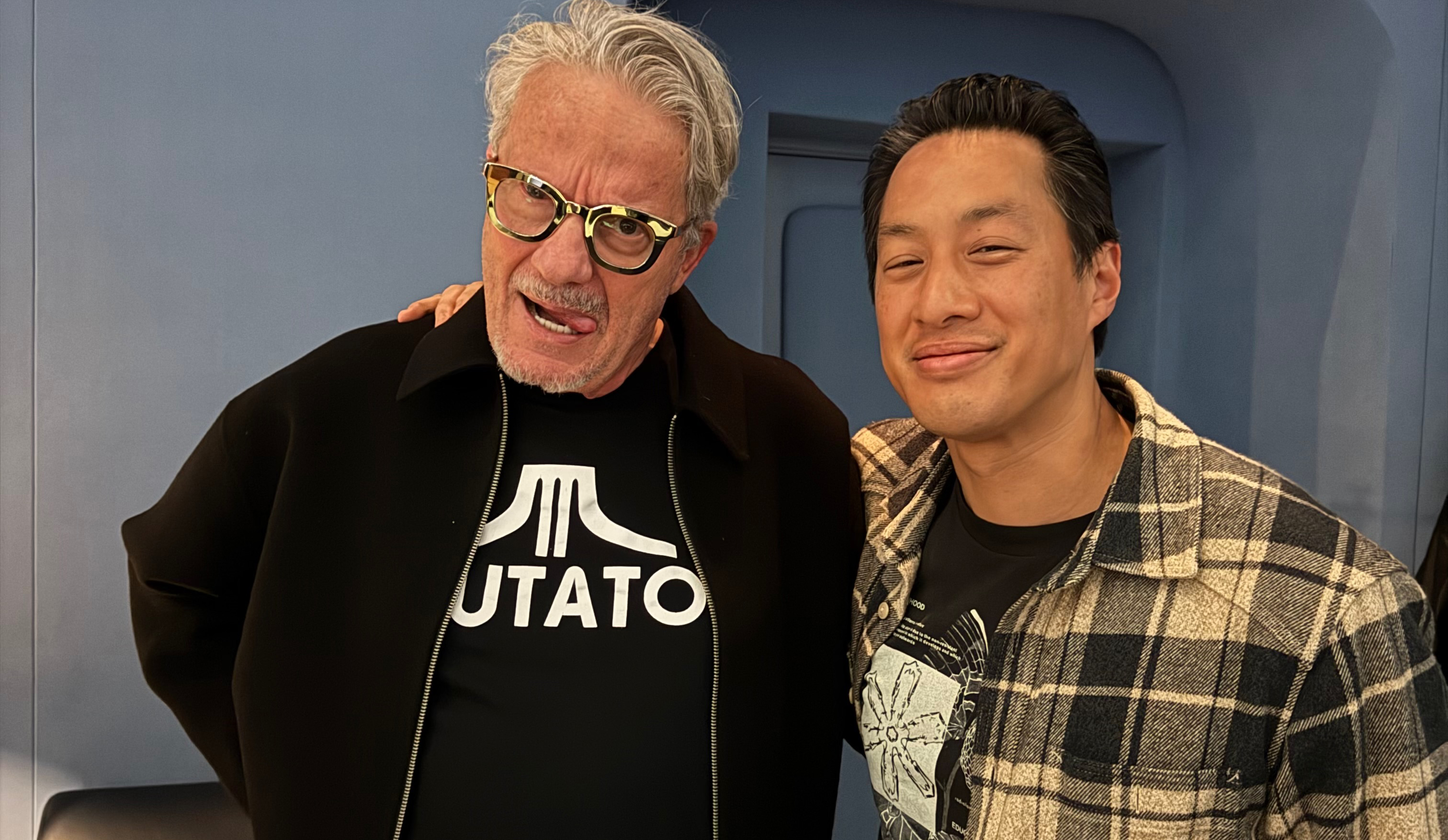
Composer Mark Mothersbaugh and Director Daniel Chong
He’s the composer.
Yeah. He’s just a lovely collaborator. He has great ideas, and he brings so much to the score of himself, but there’s no ego. He’s just willing to give us what we want or make sure that we feel like the movie is getting what it needs from the score. He’s just a lovely person.
I really loved working with everybody who works at Mutato Muzika, which is Mark’s company. Mark Mothersbaugh was the lead singer of Devo. He’s been a rock star for 50 years. You expect he’s going to have this big ego and he doesn’t.
He’s just loves doing what he’s doing, and he loves making cool stuff. He just has an almost child-like enthusiasm for making music and art. He’s constantly doing it. It was a real joy working with him.
We get into these roles. We’re searching for some way to express ourselves. Filmmaking is super-collaborative. We frequently think about it as being like a band. Everybody is contributing to how the song gets created. I think some of these musicians like that collaboration, you know, being in a band, working with other musicians, and I think working with filmmakers can bring some of that collaboration to them.
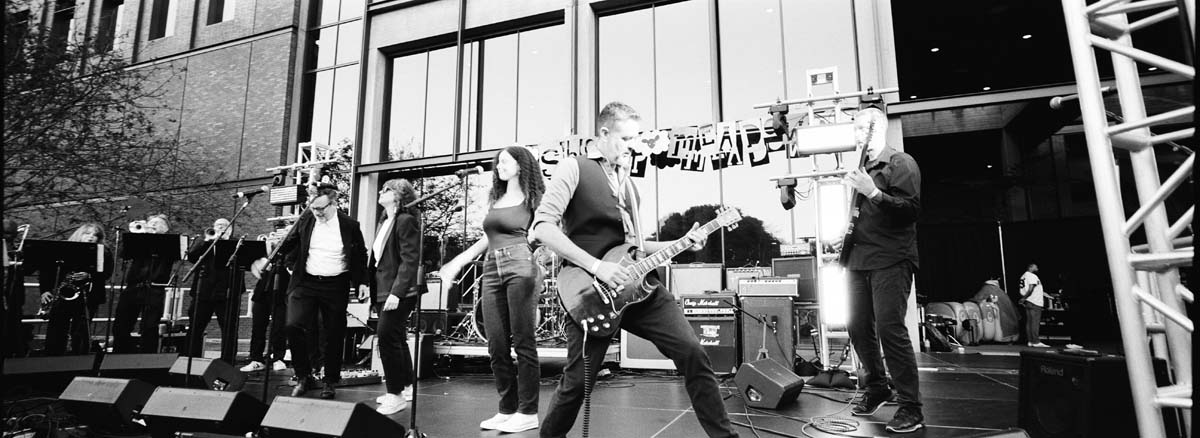
Schnittmeister at Pixapalooza
Before we started “rolling tape” on this interview, you and I talked about how Pixar has Pixar-palooza. You’re in a band there, and one of my friends is in a Pixar band. I interviewed the guy that cut the 50 years of SNL Music doc. He had something which I had never thought of. He studied as a serious professional musician. He pointed out that he was used to sitting in a practice room for ten hours straight without thinking that’s weird. That he was trained to concentrate for that long. And he pointed out that when you play in bands, you’ve got to play with other musicians, right?
100%.
Editing is collaborative. Filmmaking is collaborative. Being a musician is usually collaborative. You’ve got to be a good hang. There are a ton of good reasons why being a good musician leads to being a good editor outside of the more obvious reasons of rhythm and understanding dynamics, and temporal tension. Thoughts?
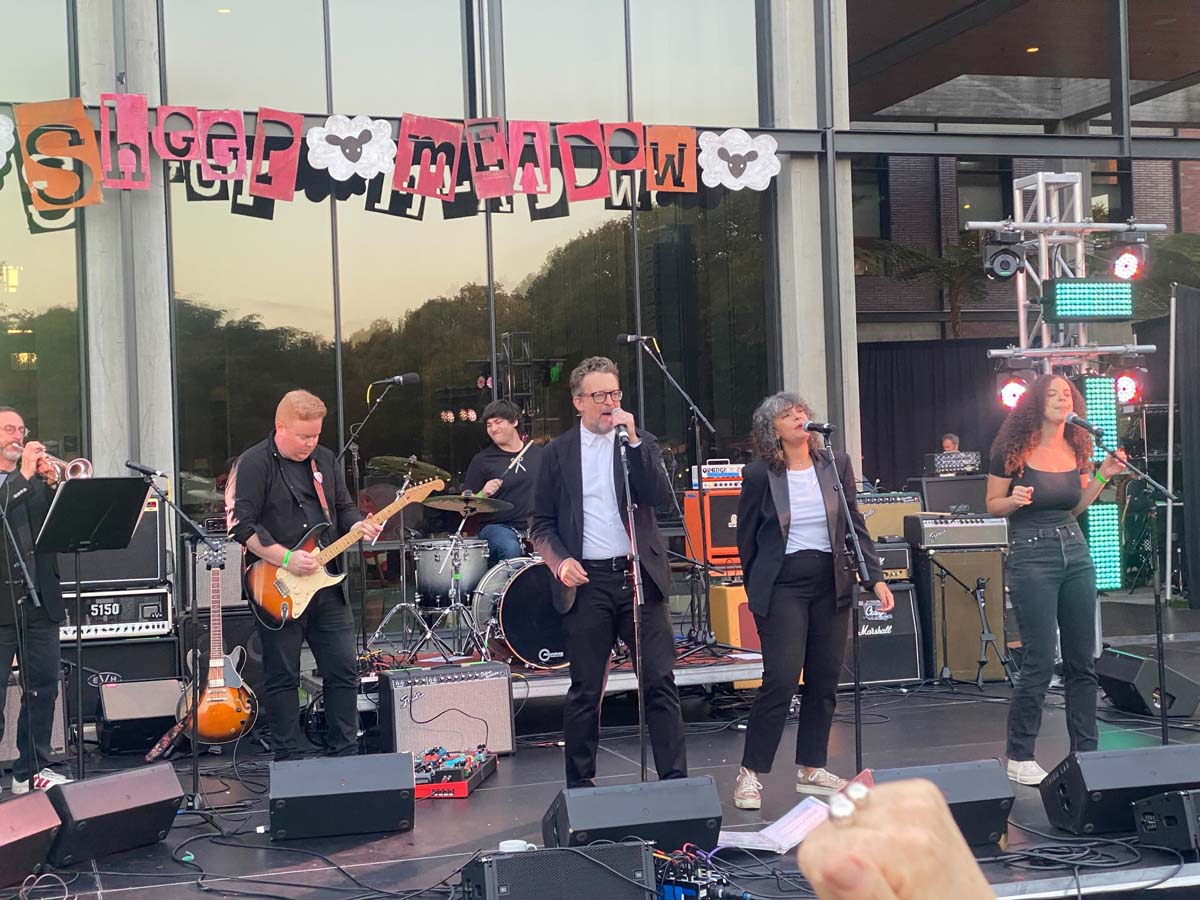
Schnittmeister at Pixapalooza
I 100% agree. I think if you’ve ever been in a band that has lasted for longer than six months, you get the idea of how it is that you can collaborate with one another, how you can come together and make some sacrifices, like, “Okay, I’m going to let this one go because this part is really important to the drummer.
This is really important to the guitarist or the singer” or whatever it is. You know what I mean? I’m going to let my ego go on that, then hopefully when something comes up that’s really important to me, they’re going to listen to me when I have an opinion about something.
That give and take is how you make something great - listening to each other, recognizing what they’re saying, being able to take feedback and know it’s not personal, even if sometimes it feels personal, and just thinking, “This is going to make the song better, the movie better.”
I hadn’t been in a band for a few years because I had small kids and stuff, but we started this band at Pixar, which was formed by a lot of people in editorial. We called it Schnitt-Meister, which is like, “Cut Master.”
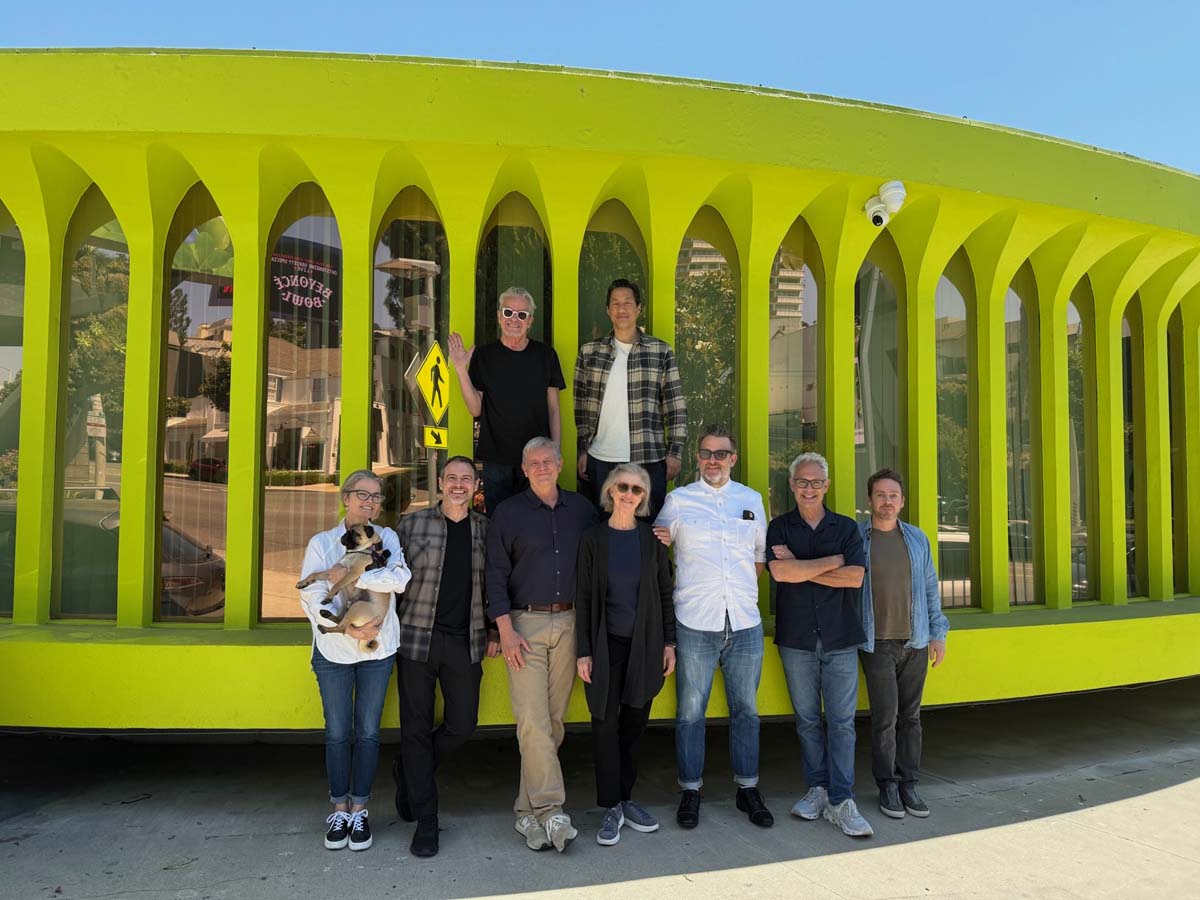
Mutato at Pixar
Schnitt is German for cut…
Yeah. And our symbol was scissors. It actually helped me with my relationships with all the people I’m in editorial. Sometimes it’d be like 12 people in this band, and there was some fighting - like any band - we’re just playing cover songs. We’re not writing new material.
We all kind of got closer to one another. We played at Pixar-palozza in September, which is such a fun day.
There’re 20 or 30 other bands playing and they’re all made out of people from Pixar. There’s like 1200 people here or something, and there’re all these people with so much talent and they’re all great.
They all have something to offer and something they want to express. I think that ability to be able to be in these bands is part of the way we’re all able to collaborate - these 1200 people - making films together.
That’s probably why we have so many bands, so when they say, “We’re putting on a talent show, any takers?” It’s like 30 takers.
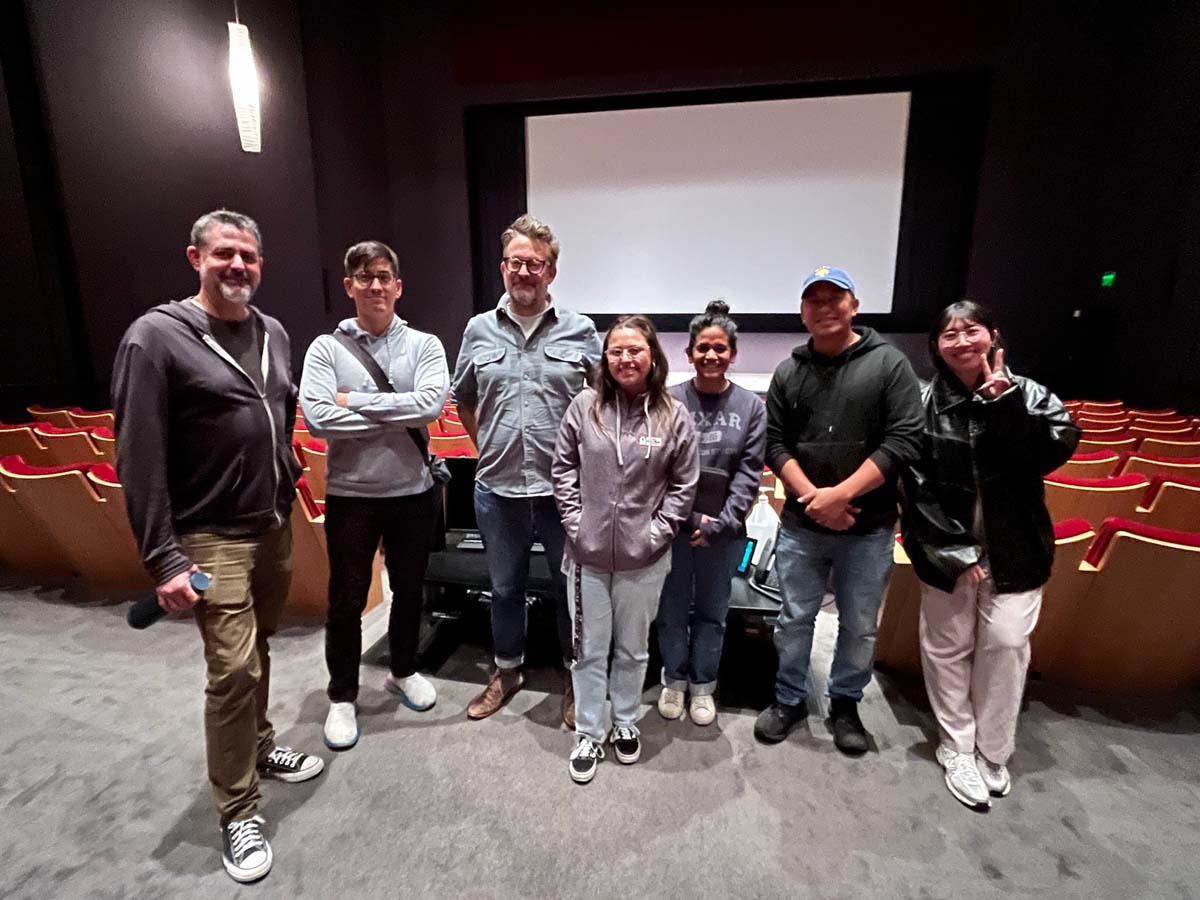
Hoppers Edit Team at a Screening
It sounds like you had a big team on this in post. Tell me a little bit about who you were working with.
Over the course of the film. I had Geoff Sledge, who was a second editor on the film. He started off as the first assistant, but he got promoted to editor. This was the first film he worked on as an editor. Then we had Chloe Kloezeman.
This is the fourth movie or project I’ve worked on with her. Tony Greenberg came on at a certain point. I’d worked with him on Lightyear. He was the lead editor on Lightyear. My first assistant, Ayesha Johannes, who was my rock.
Your assistants are so important. Having a great first assistant is phenomenal. This is her first time doing it. I think she may be the gold standard for first assistants. We had a couple of other second assistant editors, Diana Flores and Brian Perry and Jaraed Bello.
Then we also had Christina and Jared and Mark, our manager.
It feels like a lot of people because it is, and they’re all contributing in some special way because we have this big apparatus of Pixar that we’re working with. We have to interface with the other departments. We have to feed layout, we have to feed animation, we have to bring all this stuff in. We have to be able to give people information about everything.
So it’s just a lot of media to manage and a lot of screenings and everything. So I just had a wonderful, wonderful team and each of the other editors on the film - Geoff, Tony and Chloe - all contributed in some special way. They all could cut all the scenes themselves.
They all could cut any type of scene, but each of them have the things that they’re really great at. Tony is always great at sound design and action. He just really takes the action really well.
Geoff turned out to be a wonderful editor of comedy. He also cut the big chase scene. He took it from like a really long scene and took it to a manageable length of scene. It’s still not short, but I love that scene.
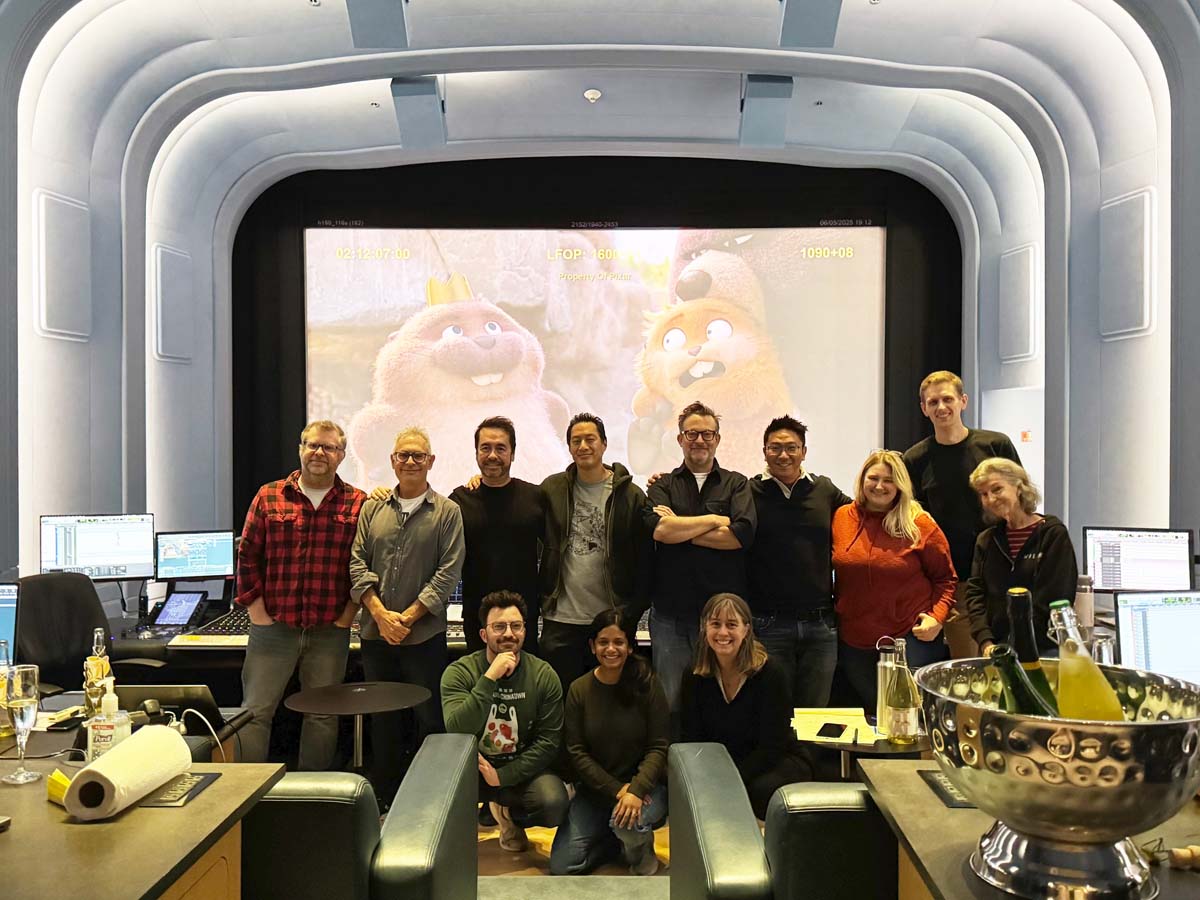
The team at the Final Mix
Chef’s kiss.
Chef’s kiss! Exactly! And Chloe was always pushing for more heart and emotion in the movie. She and John were trying to get as much emotional juice out of the movie as they could by trying alternative versions of things, whether it’s like different version to the flashbacks or different versions of the scenes with grandma, different versions of things that Mabel says or grandma says to her, and they kept showing us these alternative versions.
They’d show them Daniel and me, and we say, “No. No. No.” But then they’d show us something and we’d say, “Yes! That is much better!” They had a real impact on like three scenes in the movie. The movie just wouldn’t be the same without every single person in this department’s point of view and their contribution.
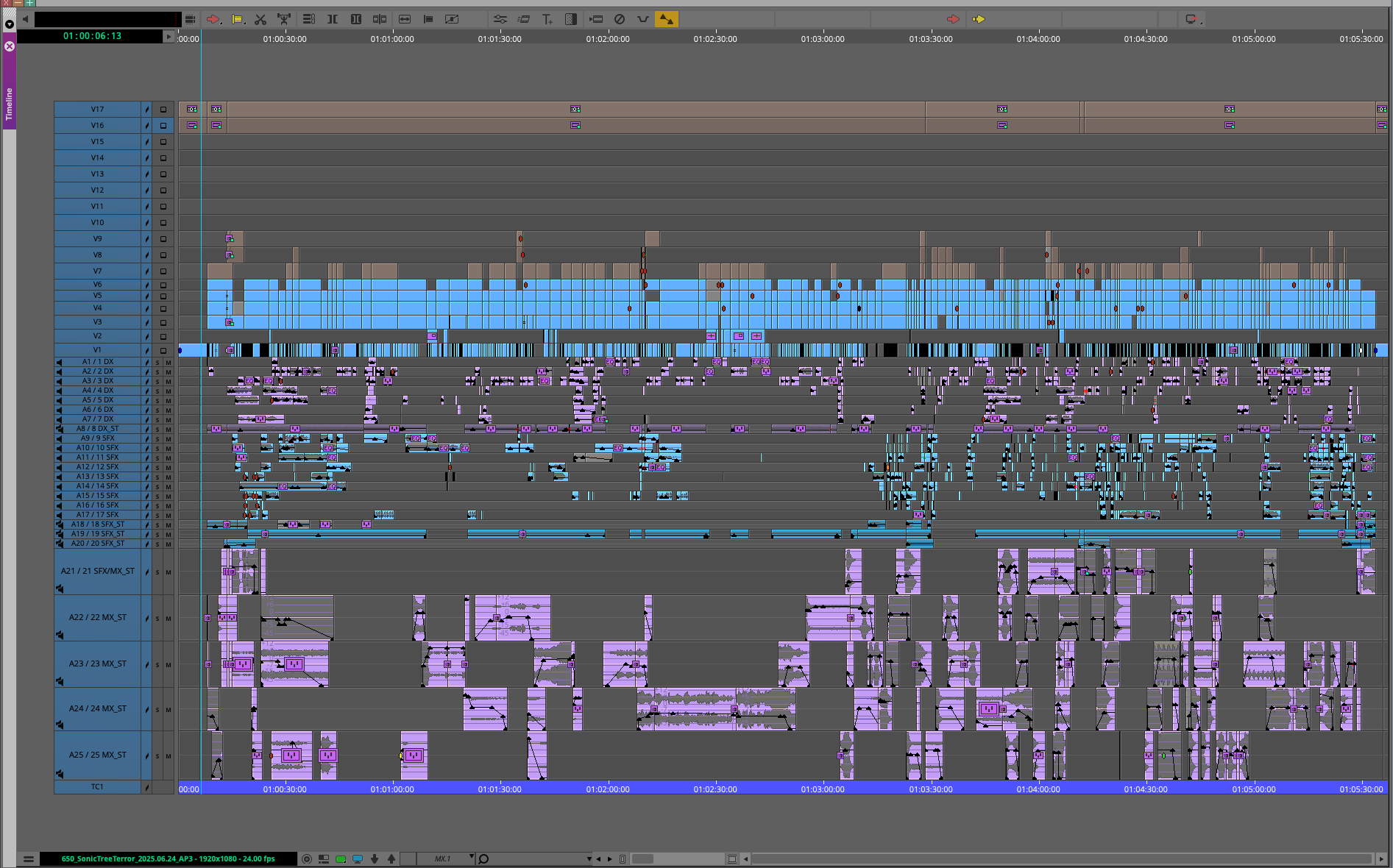
Hoppers timeline screenshot with the Music tracks highlighted (tracks magnified)
I want to know why Ayesha Johannes, the first assistant, is now the gold standard for first assistants. What makes her the gold standard?
She has great emotional intelligence. She’s a wonderful team leader. She can corral her assistants and give them the jobs that they need to do while also giving them ownership and agency. She’s also great at making sure I’m getting what I need.
She’s advocating for the department and working with the manager to advocate for our department to the producer and stuff like that. She made everybody feel at home on the show and heard and seen and never was flustered.
We had three audience previews on this film, and those are never easy because we’re having to get all the shots from everywhere, all over the departments, from effects, from lighting - the most up-to-date shots - corral hundreds and hundreds of shots into the movie in a very short amount of time.
She’s just never flustered. She didn’t get angry. She didn’t have an ego. She just made everybody’s job easier. She’s just wonderful. I was so thrilled that she worked on the film and that we all got to work together.
Talk to me about the temp score. There’s a point where the king beaver has to call on this council of other kingdoms, like birds and insects and fish. What did you temp with?
The original version of that sequence, we wanted it to be imposing and kind of scary. So we had more of like a scary, imposing, operatic piece of music there that was we thought was really funny, but we realized it wasn’t true to where Mabel’s head was at that moment, because she was seeing the Council of Animals as being a lifeline.
These are people who can help her with what she’s trying to do. We had several screenings where we had it with that operatic, heavy score.
Somebody - I can’t remember who - said, “But what’s Mabel’s headspace? Her head space should be different than this. We should have a different score here.” So we threw in something with more heroism to it. We wanted to feel like this is the cavalry that’s coming to save Mabel.
Of course, it goes pear-shaped, but she doesn’t know that yet. She doesn’t know that these people are going to be skeptical of her and are going to run away with this in a way that she doesn’t expect. She just thinks these are people who are going to help me and save the day.
When we did that, it really turned the scene around. It’s almost exactly the same scene, but when we put this new, heroic music in, it changed everything and we thought, “Okay, this scene now works.”
I don’t love relying on music to tell me that, but sometimes … you gotta use all the tools. Then when we talked to Mark Mothersbaugh about it, we said we needed something heroic to come in - to introduce something regal - because they’re all kings and queens.
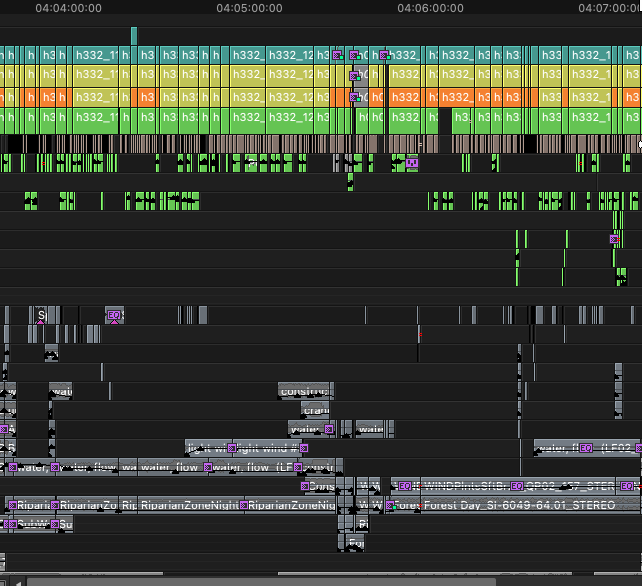
“Now What?” scene timeline
How open was he or interested in listening to your temp music?
He definitely listens to the temp. He’s definitely paying attention to the choices we had made and thinking about why we made those choices. We would also have meetings with him and the other folks at Mutato, and we would talk about what the intention was, what the emotional intention was, and what Mabel was feeling at that time, because it’s almost always scored from her point of view.
He would listen to that and he would ask questions and then he would come up with some sketches. But if the sketch wasn’t working for us, we would give him notes and he would really listen to it. Sometimes the notes were very granular, which I know can be really annoying for some composers and which I understand.
This poured out of you and feels like a part of you, so to get a granular note on the music that’s poured out of you, I’m sure doesn’t feel great. Mark’s just really a great partner and really wonderful collaborator.
I wanted to talk about structure. Structure for you is a lot different than for a live action editor who has structure much more imposed. You get to choose much more of this structure than most other editors do. Talk to me about hitting certain moments, like when does Mabel get into the Hoppers Lab.
That’s a big, turning point in the movie. Then there’s when she knocks over the tree. Talk to me about having those conversations about needing to get to certain milestones in the movie’s plot.
I did several trim passes on the movie over the course of last year. I think maybe there was one in 2025 and two in 2024. Everybody always wanted us to get Mabel into the beaver body as fast as we could, because that’s when the movie really takes off.
Sometimes you cut and trim and get there faster, but you don’t care as much because you haven’t invested as much time with what she’s trying to achieve. And if you’re not on the same page with Mabel, you can get there faster, but you won’t care as much, so it may even feel slower.
So we experimented with all kinds of stuff. I tried trimming act one down by taking out the scene where Mabel’s going door-to-door, just to see whether that would work or not, and ultimately decided it didn’t work.
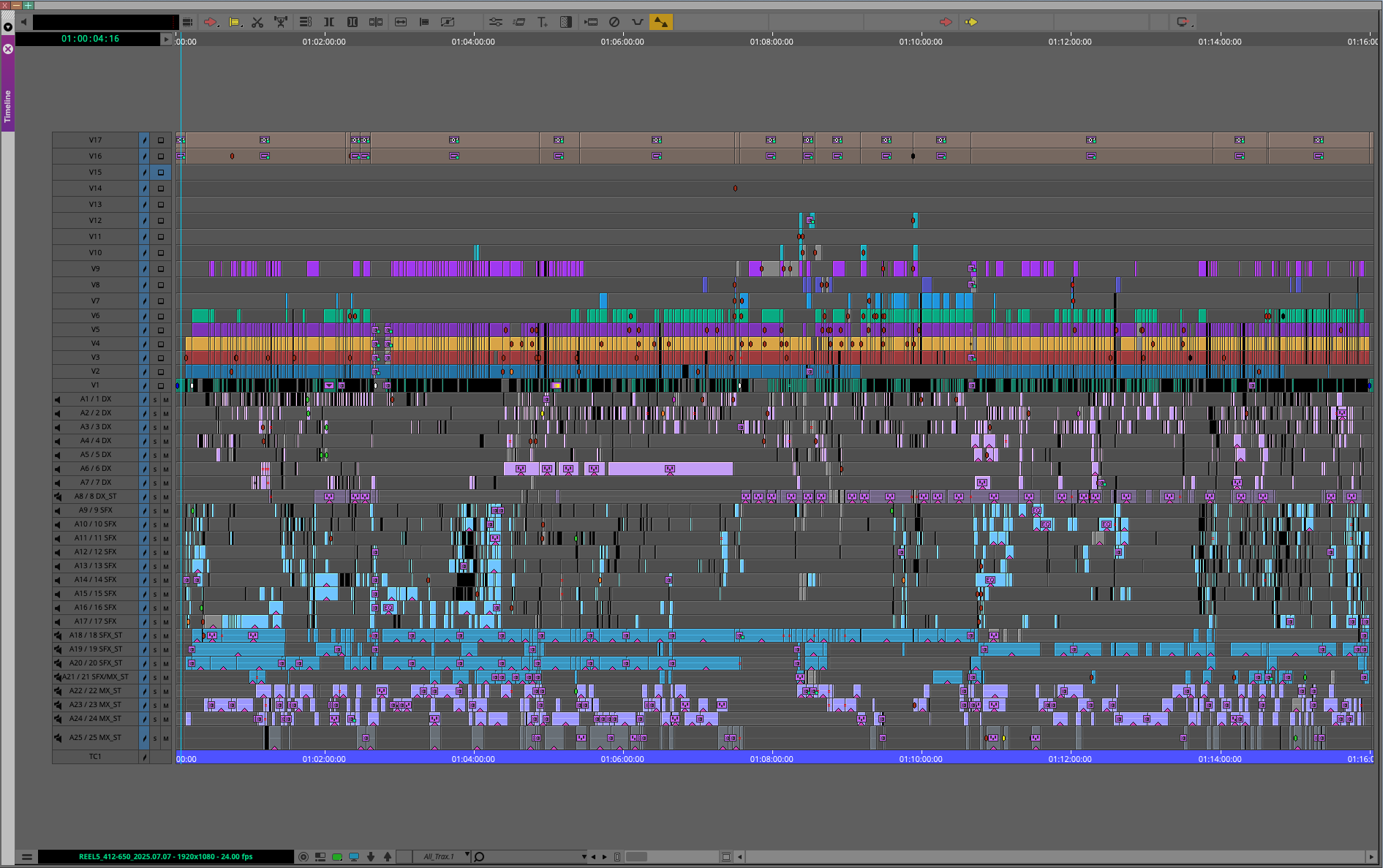
Reel 5 timeline screenshot at the end of production (compare to earlier Storyboard version)
We moved all the flashbacks to different places in the movie. Sometimes we’d take them all out and ask, “Can we tell this story without any of these flashbacks?” No. We’d try it and stress test it and break it sometimes to just know whether you’re on the right path or not.
For instance, the first internal screening we had, our first act was 43 minutes long. It ended at what is now the middle of the movie. I had a strong feeling that what is the middle of the movie was not our act two break.
Editing animation is all part of the writing, so you don’t want to pooh-pooh too many things. You want to feed and water the creative growth.
So I wasn’t gonna sit there and say, “Excuse me. I think that is the middle of the movie! I think that’s too much to put into our act one.” But it was clear when we looked at the whole movie that that’s too much for act one. So we ended up realizing the beginning of act two is when she takes the beaver body.
That is when the act two starts, which meant we had to simplify our plot because we had way too much plot for a 90 minute movie, or still a pretty plot-heavy movie.
I think in that first version of the movie, we had two movies put into one. Through this process you just try things out. You experiment. You pull things out. You move things around, and you just say, “Does that work or does not work?”
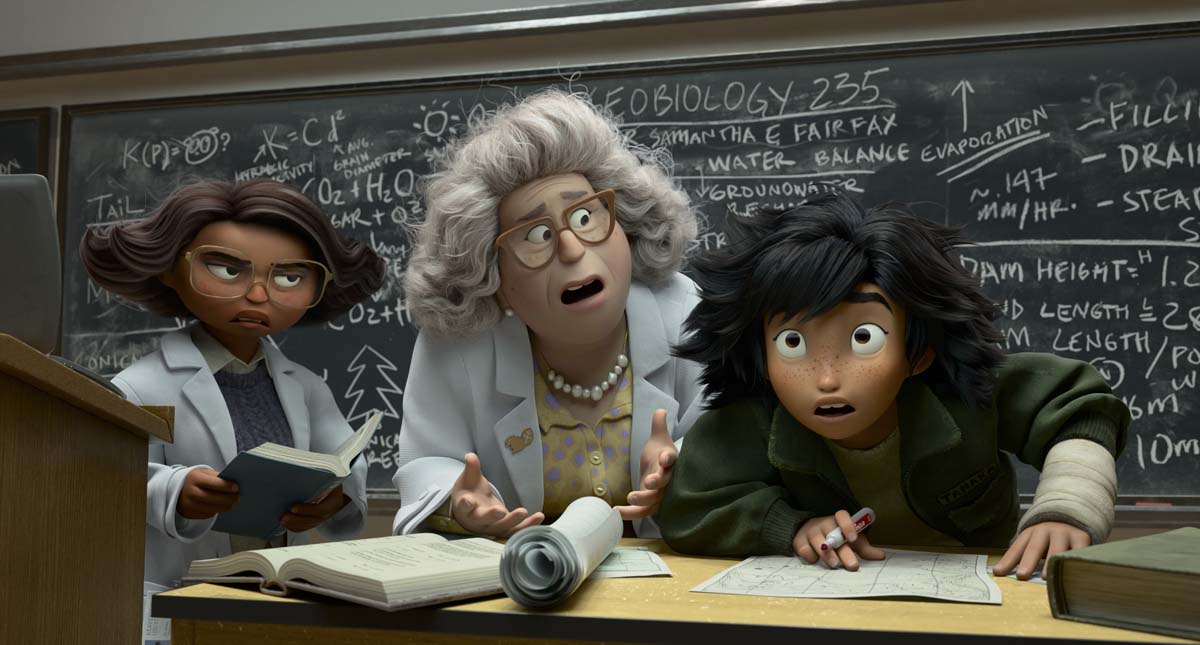
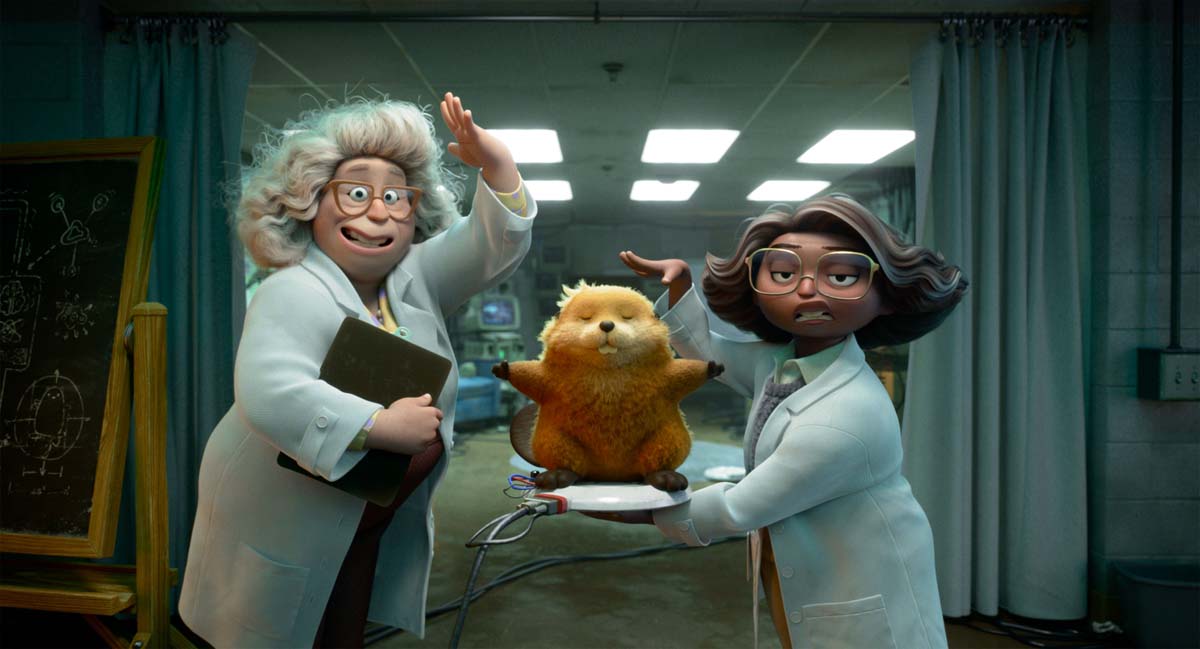
The scene where Mabel is in the mouth of the bear and they’re going to be go see the King? We felt like it was too long traveling. We had a whole mini-scene in there, and it was too much. When Mabel was talking to the scientists – when she turns the earpiece back on – we thought, “That’s just too long.”
So we just pulled all the scientists out of that scene - when we meet George in that scene and all the animals are doing aerobics - and for some reason, it wasn’t funny anymore.
And we realized we needed the audience of the scientists looking through Mabel’s eyes, wondering, “What the heck is this? This is crazy!” In an animated film, anything can happen, so we have to remind the audience every once in a while that, “No, this is weird!”
You were talking about realizing that the version that you cut was too long and act one needed to be compressed, but there’s a real collaborative wisdom to keeping your mouth shut.
Yeah, yeah. When you are working with a bunch of people and you’re trying to encourage creativity, it’s really helpful sometimes to just be patient. I frequently think that being patient is one of the biggest skills we as editors need.
I work with a bunch of other editors on the team. I had three second editors at our height. Sometimes they’re saying, “We should fix this. We should do that.” And I say, “You’re right. We should totally do that. Let’s chill until this moment.
Let’s just see when they’re ready to hear that.” But also - in their defense - there’re many times when they’re telling me, “We need to make this change and we need to do it now.” And I say, “You’re right. We’ll do that.”
So I listen to them when they do that too. But there are times when you just need to relax and let the idea just have its moment, because you actually don’t know if the idea is wrong, even if you think the idea is wrong, you don’t know for certain until you try it.
Also frequently the idea will create something else. That idea didn’t work, but circling around something that you know needs to be fixed. By pursuing this idea that is ultimately not the way we’re going to fix this problem, we discover something new.
Beaver Party Avid timeline screenshot
One of those things in this film is probably that scene we were talking about earlier where Mabel and George are by the river. At one point that scene - in a very old movie version of the movie - happened on a helicopter. I’m not even gonna get into how they’re on a helicopter, but there was this thing that happened.
George kind of saw what humans do to the environment, and Mabel expressed this feeling about her grandmother. We knew that helicopter ride was not the right thing for the movie, but we knew that scene in some way, shape or form needed to be in the movie.
We needed that moment, that beat. For when she has this realization and she shares it, she feels like she can share it with George, so even though the helicopter ride is not right, the scene is right.
I always want to be the guy that comes up with the solution, so after that screening, I’d say, “Here’s what we can do. Let’s let’s fix it.” But that might be wrong because you could take out the wrong stuff.
Sometimes you just need a placeholder to remind you that we need to fix it, but we need something that does “this.” We have all these crazy ideas. There’s too much plot, so we pull all these things out. But you remember, “We had that montage.
We didn’t use it. It didn’t feel right for that version of the movie. But what if we take it and we put different music under it and we put it after the scene with grandma?
Does that work? Yes it does!” It didn’t work in the other way. It didn’t work with the other music. Didn’t work with the other thing, but the sentiment of that works in this new version of the movie, and that opens up something that we didn’t even know we needed. But suddenly people are connecting with Mabel in a much stronger way than they were before.
All this stuff is alchemy. It’s not science. We’re just trying to throw these things together and see what happens. I think sometimes when you get to the end of a movie, you think, “That movie taught me how to make movies.” But ultimately, it really just taught you how to make that movie.
If you think you’re going to the next movie with “I learned all these lessons on the last movie, so therefore I will never use flashbacks” or whatever it is. Well, the next movie might need flashbacks, or it might need a lot of dissolves…
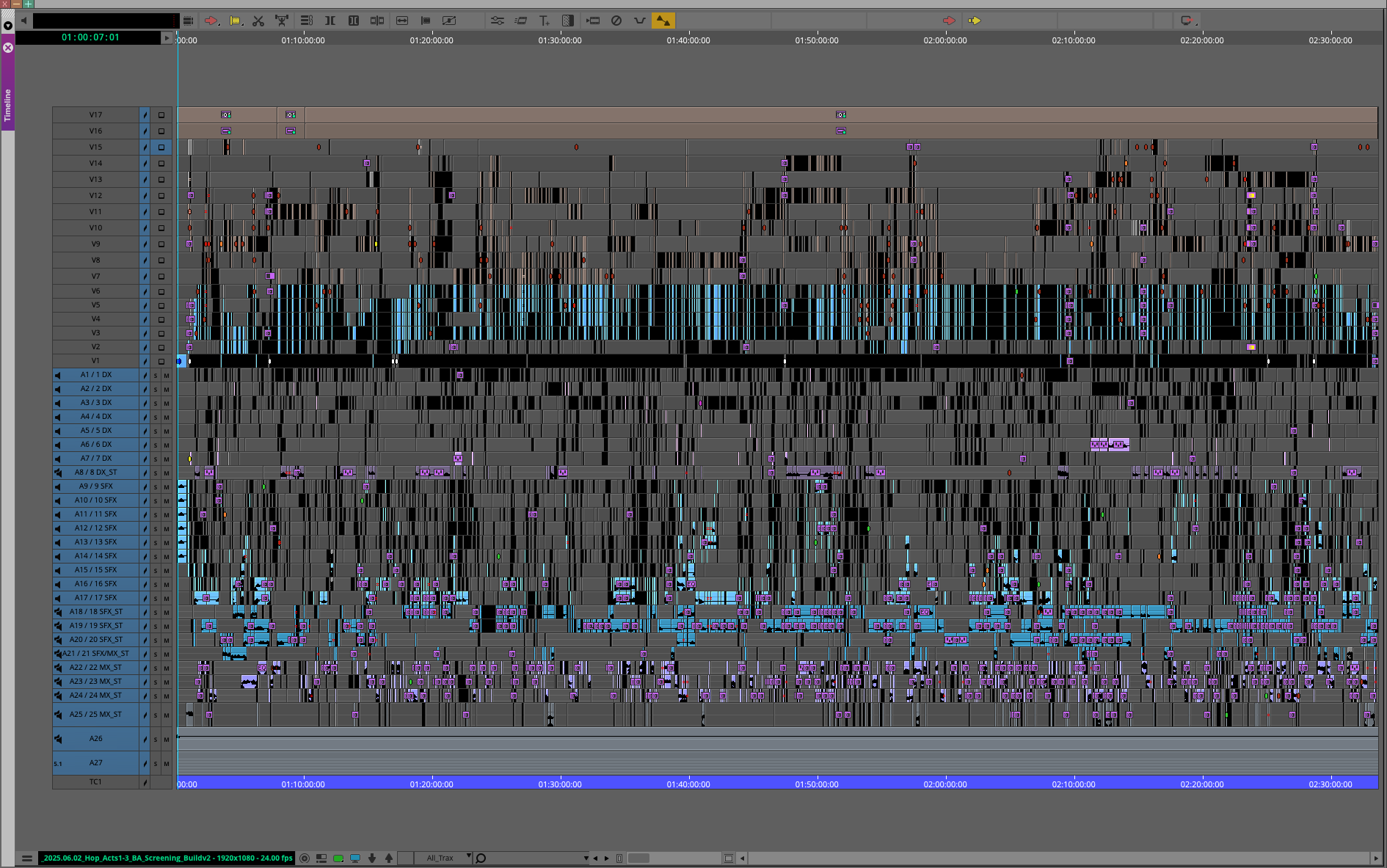
Last Screening, all shots. Avid timeline screenshot
…or it might need voiceover…
Voiceover! That’s a perfect example. This movie might need voiceover. But you’re thinking, “I don’t like voiceover.” Well, this movie wants voiceover, and the more you push it away, the longer it’s going to take for you to discover that. You just have to be open.
“It’s got to be open and you just got to be patient.” Two great rules of thumb for this interview. Axel, thank you so much for talking to us about this movie. I really enjoyed it.
Thank you so much, Steve. I really appreciated it and I enjoyed talking to you.
 March 26, 2026
Young Sherlock
Today on Art of the Cut, we speak with four of the editors on the buzzy new Amazon Prime series, Young Sherlock. With us are ...
Read more March 18, 2026
KPop Demon Hunters
Today on Art of the Cut we speak with editor Nathan Schauf about his ACE Eddie and Annie award-winning work on the Oscar-winning Best Animated ...
Read more February 26, 2026
Marty Supreme
Today on Art of the Cut we speak with director/editor Josh Safdie and his co-editor and co-writer, Ronald Bronstein. Safdie and Bronstein are nominated this ...
Read more