













Heart of the Beast
An in-depth interview including discussions about repurposing the end of the movie to be the new beginning, the editing challenges of a dog co-star, and placing flashbacks for maximum emotional and story value.


Today on Art of the Cut, we speak with Oscar-nominated editor Dody Dorn, ACE, about her work on David Ayer’s film, Heart of the Beast.
Dody’s been on Art of the Cut before for Power Rangers and Army of the Dead. Her other work includes Memento, for which she was nominated for an Oscar, Fury, and Insomnia, among many other film and TV shows.
Please be aware that there may be spoilers in this discussion.
Dody, thank you so much for being on Art of the Cut. I went to go see Heart of the Beast the other day, and I cried. It had all the feels. It had action. It was great. Congratulations.
Thank you. That’s exactly what we were going for.
I’m sure it was. Let’s talk about the setup of the film – pre-title. It’s set up with a woman driving down a road and coming across this dog. Is that the way that the film was scripted?
Not exactly. During post, we decided to use Amber, played by Anna Lambe, encountering Odin on the road as a flash forward. We toyed around with how much to show - enough to pique one’s interest, to want to know what’s going on with the dog.
Obviously, this flash-forward makes the dog a very central character. It might also tell some audience members that the dog doesn’t die. That was all anybody cared about in advance, was whether the dog died.
We decided that it was better for the movie to divulge this, even in the marketing – because there were quite a few people who said they weren’t willing to watch a movie if the dog died.
Was the woman coming across the dog done in pickups or reshoots?
It was shot during principal photography and was always at the end of the movie.
Oh. It was at the end of the movie and it just got recycled to the beginning.
It’s a flash forward.
What was the beginning of the movie before?
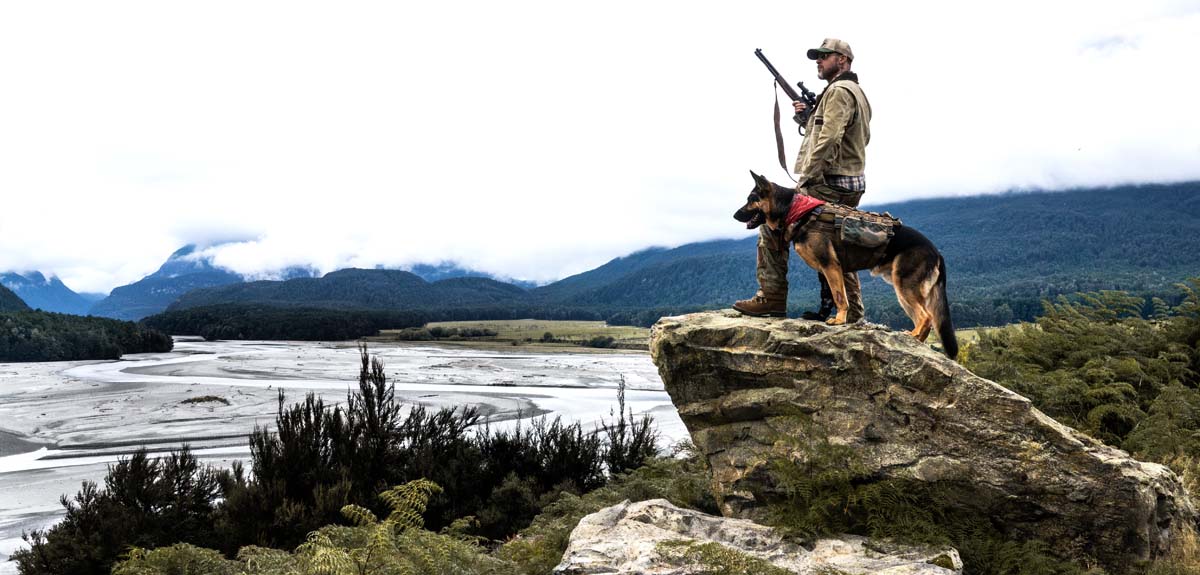
James flying through the Alaska wilderness with Odin.
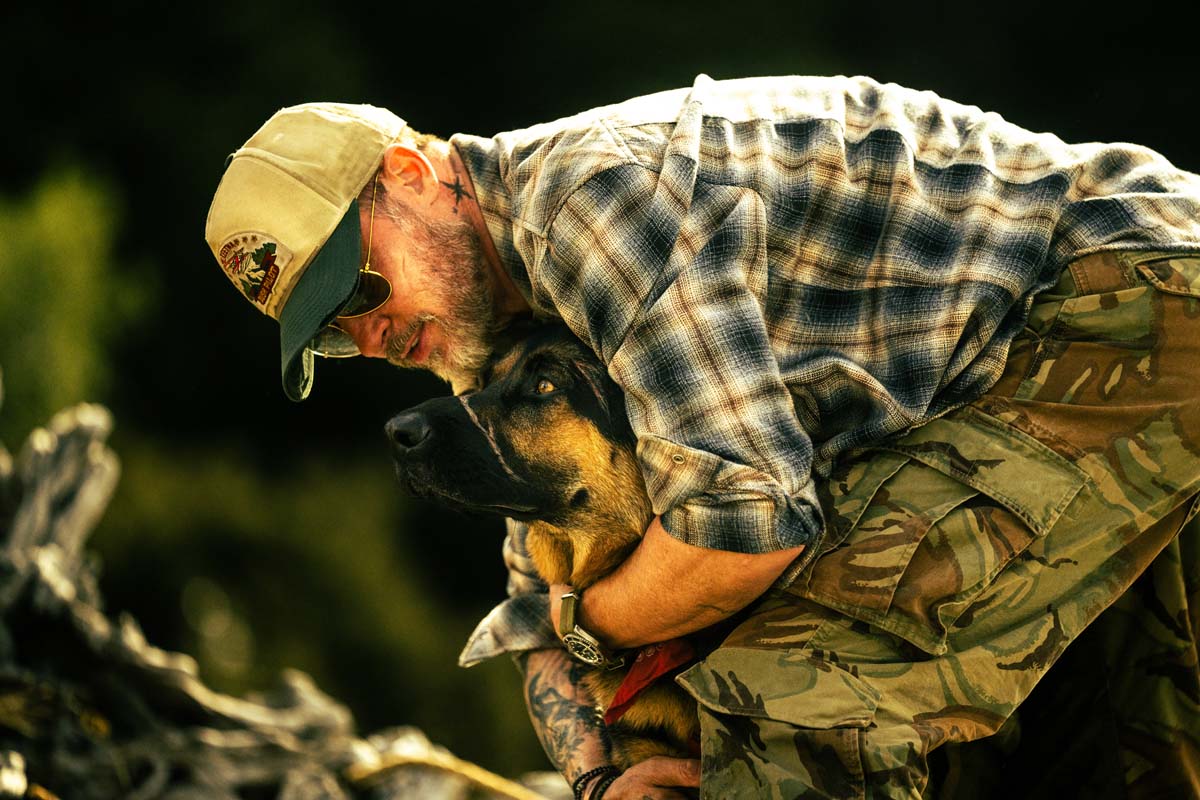
There’s very little dialogue to help set the pace. One of the things that I think of when I’m watching a scene is that I’m somewhat locked into the pace by the way the dialogue is given by the actors. You are not afforded that in this movie. What’s driving your sense of pace?
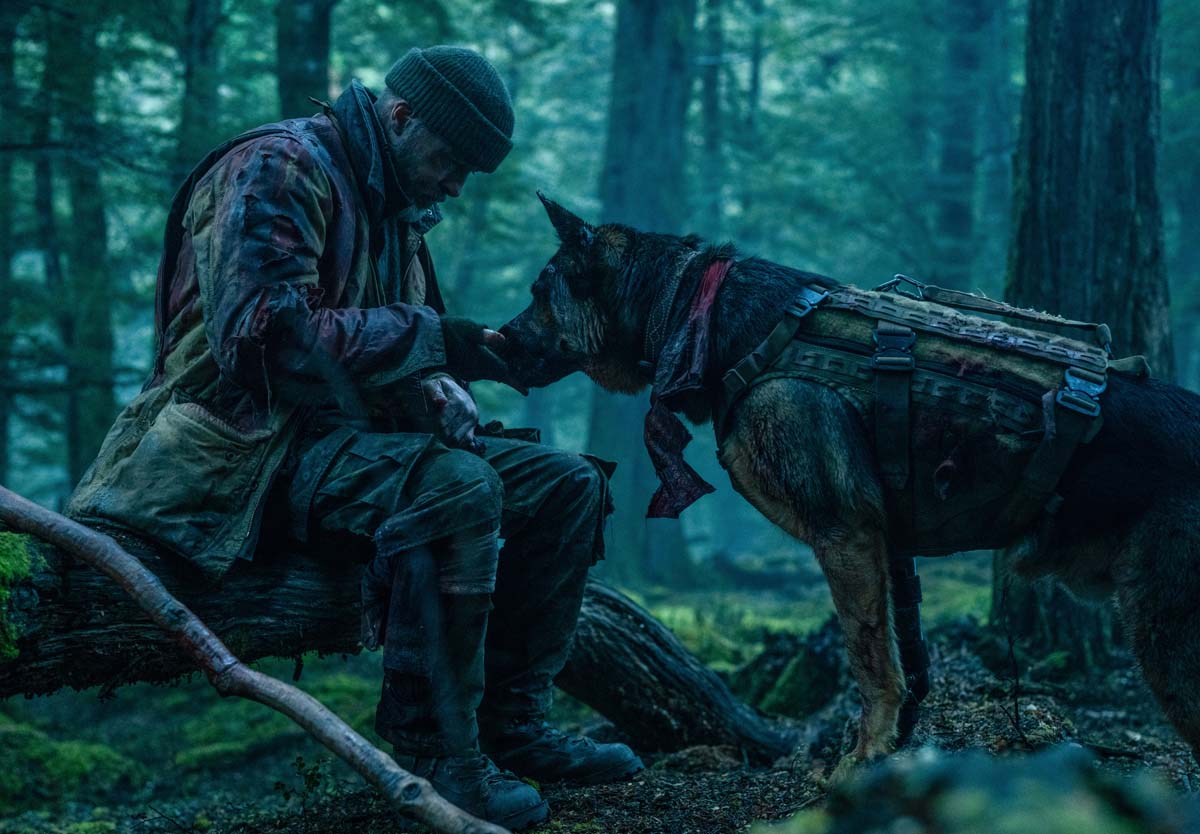
The real emphasis is on the love story between Odin and James - and also James’ psychological and emotional state as a retired Green Beret, and his own PTSD, why he and Odin are out there, and why he’s not so thrilled to see other people - as we witness in the scene with J.K. Simmons. So that’s driving the pace of everything: how long you need to get into James’s head.
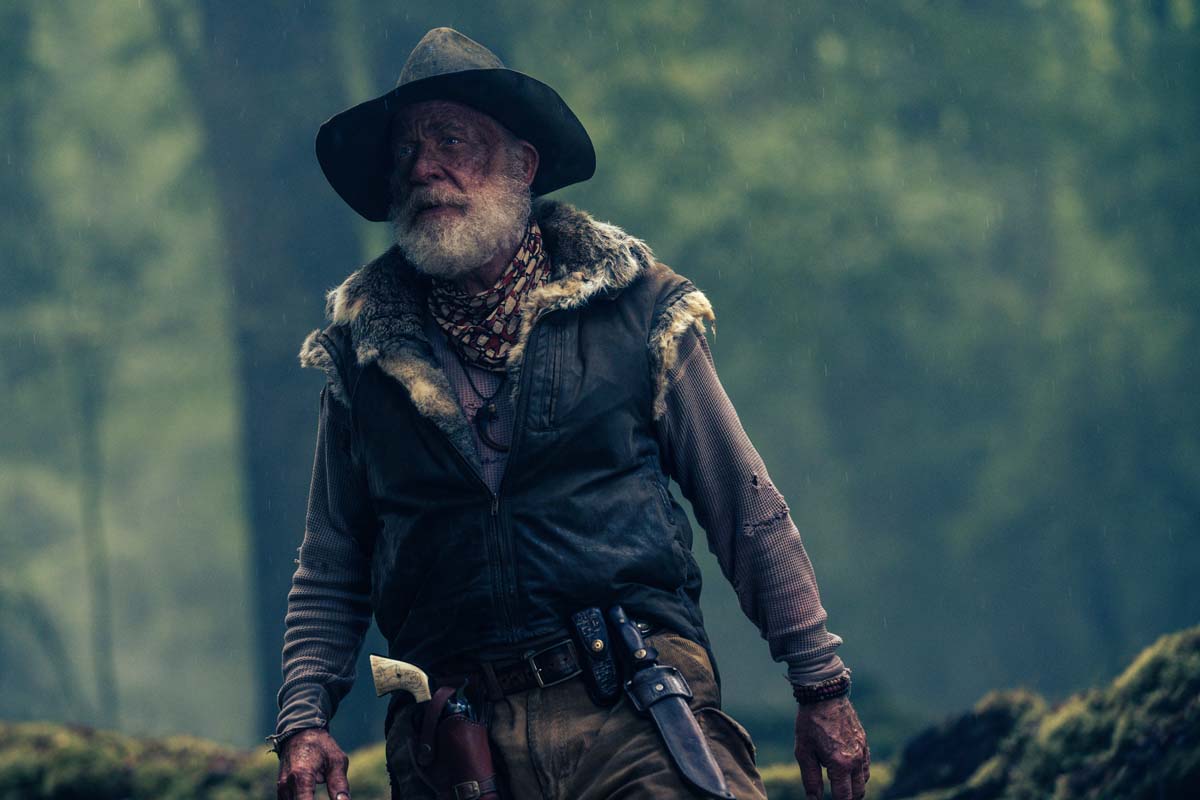
J.K. Simmons as Watkins
You edited Brad in Fury. Is there an advantage for an editor to have worked with a specific actor?
Brad brings something new - very different - to every project. I knew that the material was going to be incredible, but it didn’t change the way that I worked.
There’s an old saying, “Never work with kids or animals.” What were the difficulties or joys with working with Odin?
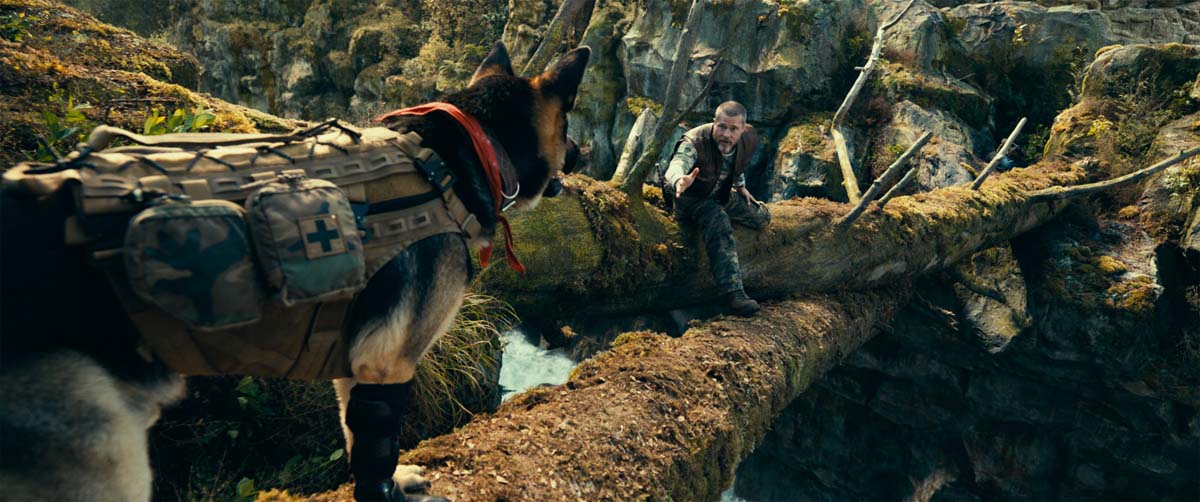
The dog’s behavior determined how the shoot day was going to go. By the way, Odin is played by four dogs. It’s a dad dog and three sons. Uber, the dad, is a retired search and rescue dog, and he does most of the acting.
Even though he was highly trained, sometimes the dog might get distracted, run off to check out a squirrel, or - I don’t know if they have squirrels in New Zealand - but check out whatever it is, then Brad and the whole crew would adapt and do a reset to get the moment that they were going for.
The movie centers entirely on the two of them, so everybody was on board with being patient and doing whatever it took to capture these great moments.
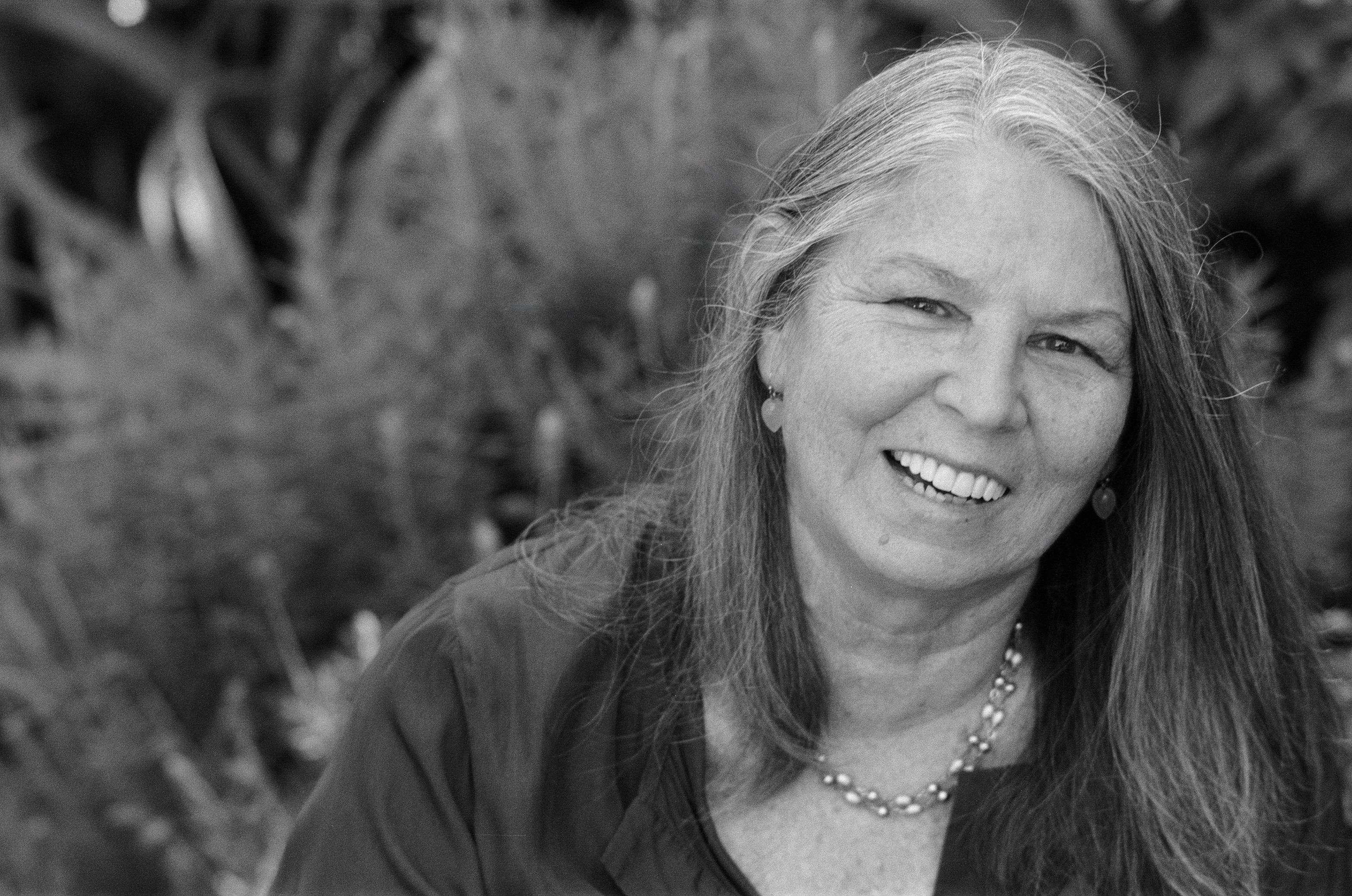
Oscar-nominated editor, Dody Dorn, ACE
What was that like for you in dailies, trying to find those moments where the dog is truthful or revealing something?
Just searching. Searching and reviewing and searching again and watching every frame and looking for the very best shots.
Brad’s character and Odin had been in the war together, and both are damaged by that experience. That’s shown in flashbacks. Were those flashbacks always as scripted?
We moved them around quite a bit, they got longer, shorter, we experimented with more of them, fewer of them. We actually had a version at one point where we put all the flashbacks together at the front of the film.
That didn’t work, because suddenly people thought they were going to see a war movie. As I said, it’s a love story. So that was not a good way to start the film.
The flashback material was shot with the intention of being used as glimpses to give you more insight into James’ character throughout the film. During post, we tried to make that backstory clear while still being impressionistic – revealing that James was in a battle where all of his teammates died, except for him and Odin.
That hinted at what kind of trauma he was living with, what’s behind his PTSD, and why he wants to be alone in the Alaska wilderness with Odin.
It was fascinating to me that the dog also has PTSD. I wasn’t expecting that.
We played around with how much PTSD we should show for the dog, and we landed where we focused more on James’ trauma, but we let the audience know that Odin also had PTSD.
You mentioned that the flashbacks were moved around. What were the creative decisions that you and David made in determining where to place those? Spreading them out or putting them in specific places for the most emotional value?
We would put them in one place and see how that worked, then put them in another place and see how that worked. With flashbacks it’s a trial and error process. We were happy with where they landed.
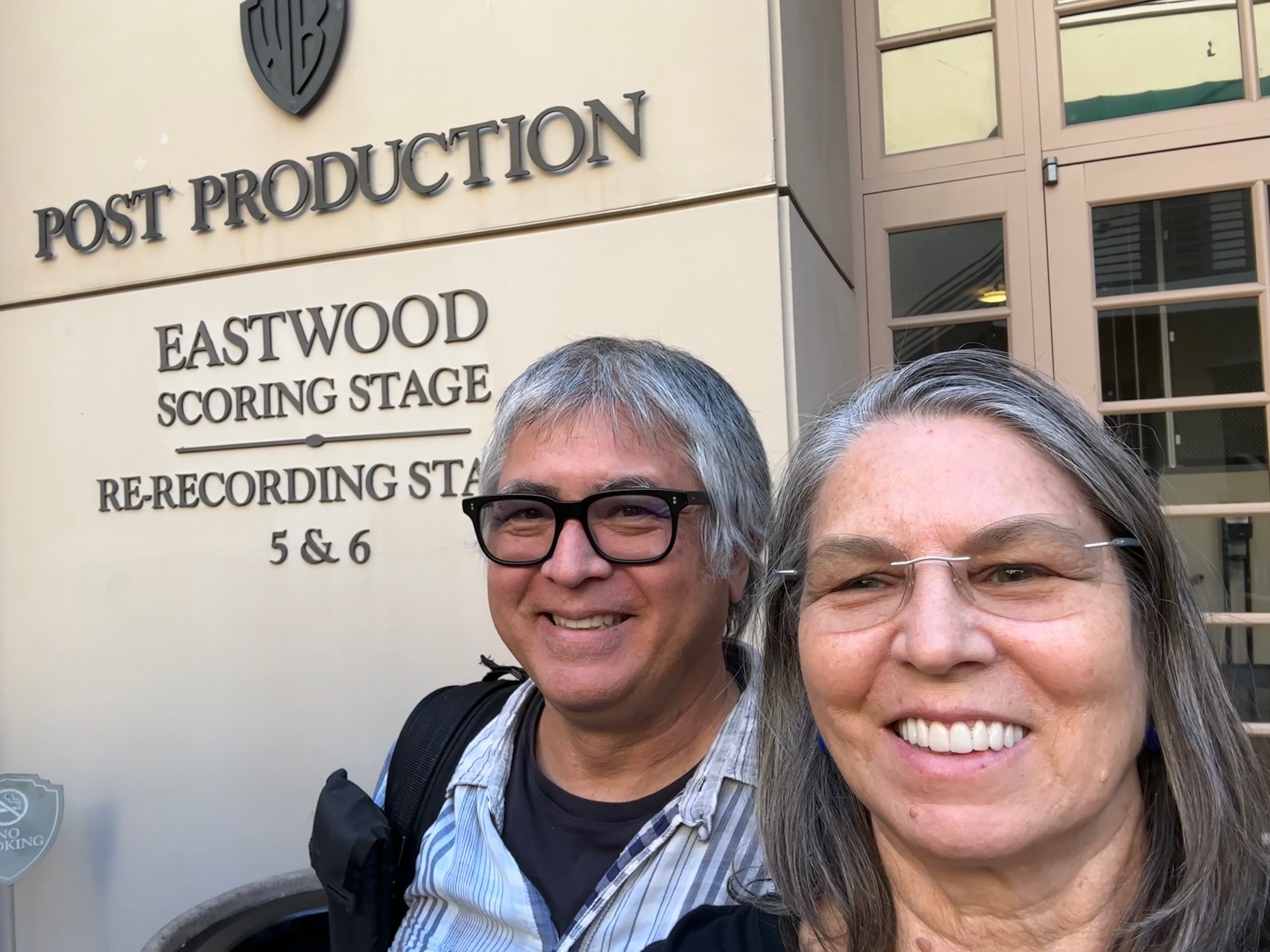
Aaron Glascock and Dody
Correct me if I’m wrong: do all those flashbacks start with sound, then move to the visual, or sometimes does it just kick right into the visual?
We have a little pre-lap to pull you into the flashbacks. Much of the dialogue in the flashbacks was ADR recorded during post with the help of our military advisor Shaun DeZern and then shaped with dialogue editing from Daniel Saxlid and sound design by Aaron Glascock.
What kind of temp sound design did you have in your picture cut?
We were working with Sound Designer/re-recording mixer Laurent Kossayan and his team from the very beginning, so we had access to a lot of material from them. Whenever we found a shape to something that we liked, that would also get passed to the sound team to be improved upon.
A major player was sound effects editor Mitch Osias who painstakingly edited Odin’s vocals throughout, using practical, library and new recordings.
Mitch’s work really contributed to Odin’s personality. We also did 2 temp dubs with Laurent and re-recording mixer Chris Aud which we imported into the Avid and worked with those tracks whenever we could. They created a beautifully detailed and nuanced soundscape.

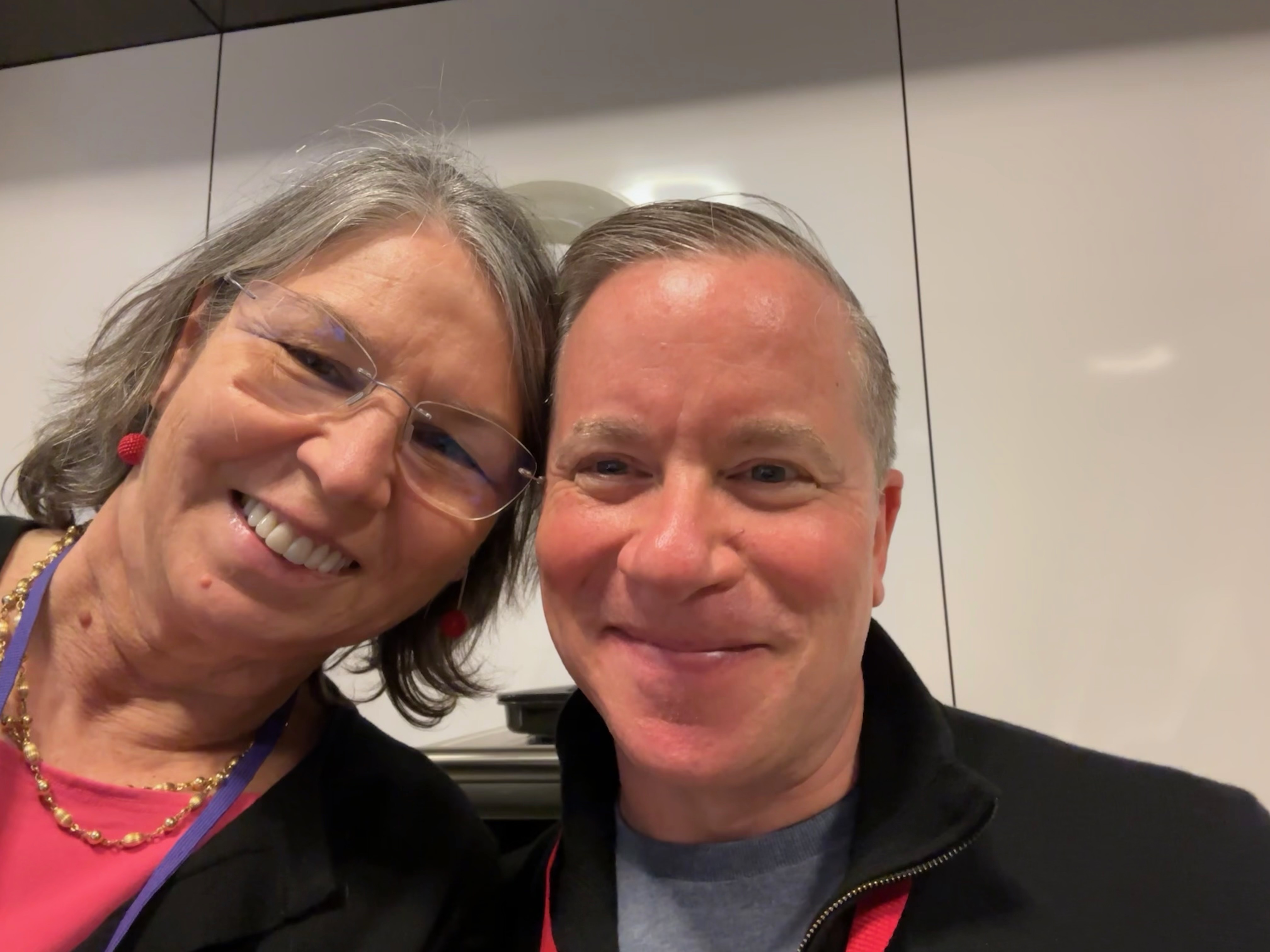
At the Mix: Stephanie Brown, Marty Bowen, Chris Aud, Jared Fry, Laurent Kossayan
The flashbacks had a great look to them, very visceral-feeling. Was that baked into the original dailes that you got, or was that something that was developed, almost like VFX?
All of the flashbacks are treated in VFX. There are cross-dissolves, and speed changes, and speed ramps. There’s a case where we ramped an explosion and slowed down a soldier in the same shot.
I did a mock-up in the Avid, then the VFX team, headed up by VFX Supervisor François Dumoulin and VFX producer Rene Sekula, would do a version and give it back for notes, requesting revisions as needed.
Thankfully, our amazing VFX editor Dan Urrutia kept track of everything. The grainy sepia look was the last thing added. That was also done by VFX.
The letter flashback is another example of applying a treatment with VFX. Because it was a montage that was a series of dissolves along with speed changes, we weren’t going to be able to open up the cut or change the rhythm of the reading of the letter later.
I had to be careful to get that right before the VFX were created because it came back as eight VFX shots with all of the speed changes, dissolves and the look baked in.
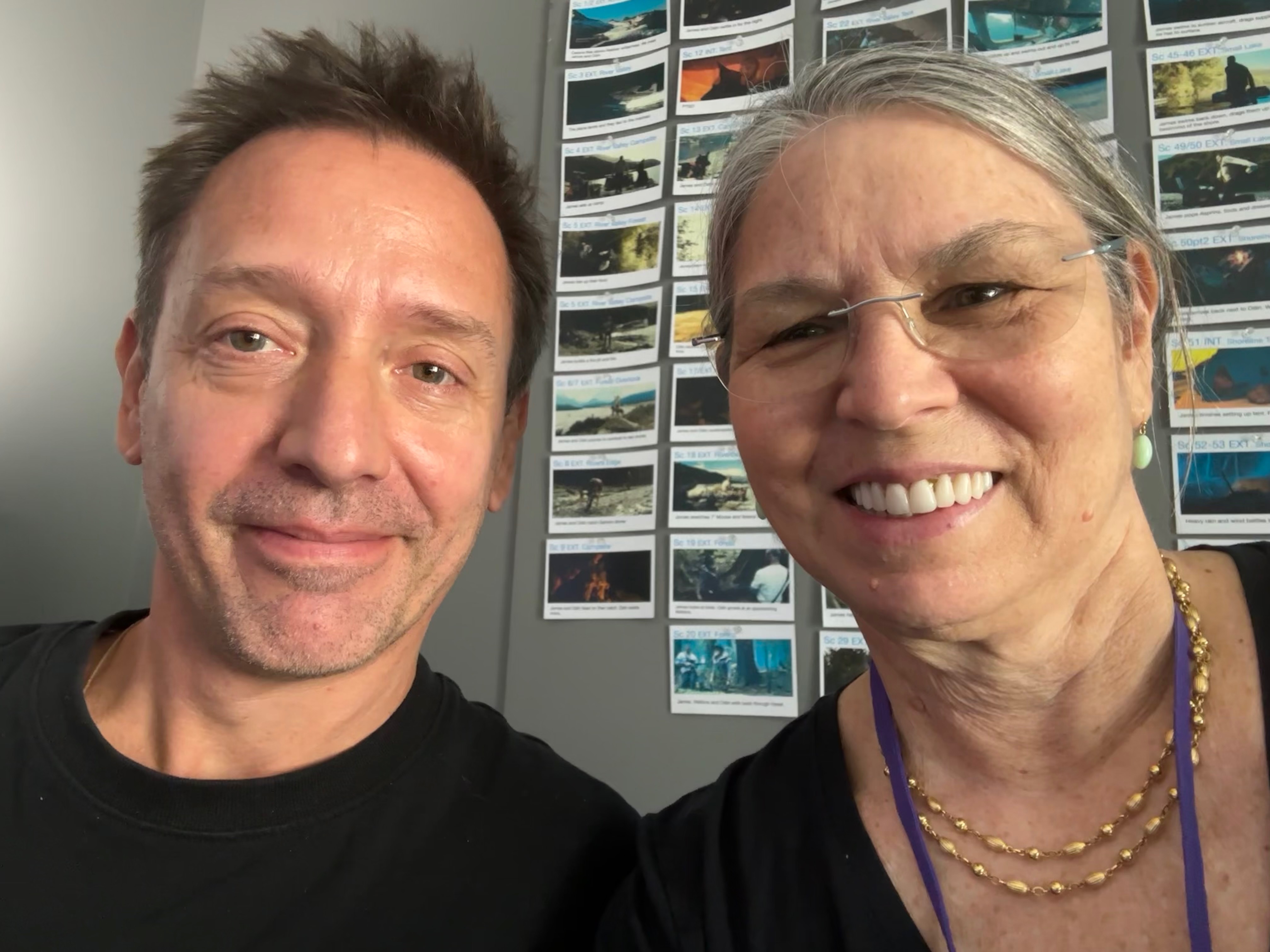
Francois Dumoulin and Dody (the queen of the selfie)
I had to deal with a similar letter in a movie that I cut. Did you get Brad’s read from the beginning, or were you working with temp voiceover for that?
During the shoot, Brad recorded about five total readings. In post, we added a few lines, changed a few lines and omitted a few lines, so we had to change a couple of prepositions here and there to make the letter flow as a cohesive whole, but for the most part, 95% of it is from the production recording.
When Brad’s character meets J.K. Simmons’ character, they’re initially distrustful, but are finally in a conversation. Was anything cut out in there?
The initial conversation is pretty much as scripted. There was one line that was taken out when they’re walking, but basically, the mistrust was the entire point of the scene. There’s also a sort of mythological quality to the character Watkins that J.K. Simmons is playing, and he may be a ghostly presence who is helping James come to terms with his mortality.
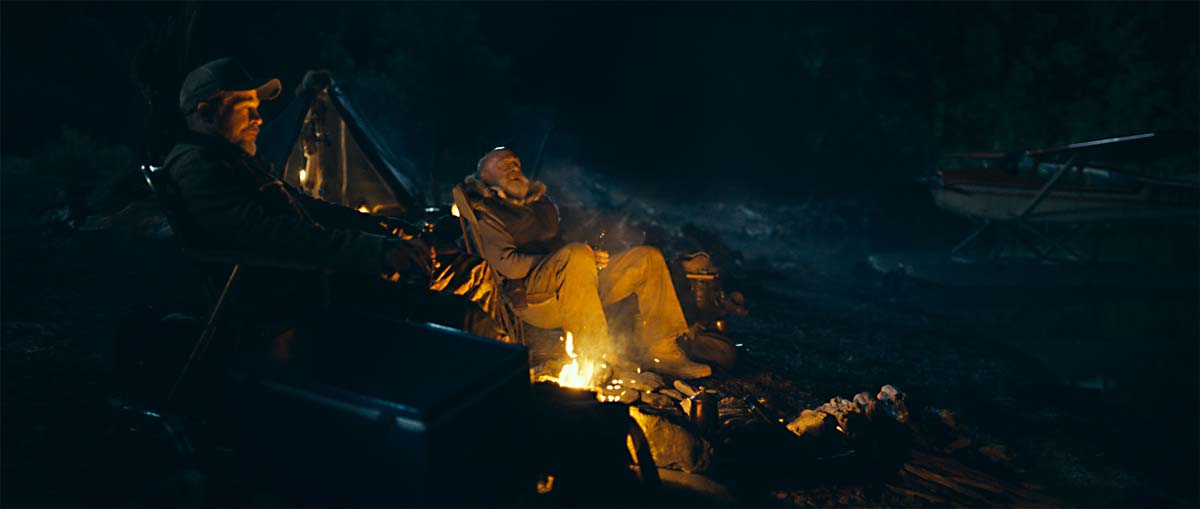
In the next scene, when they’re sitting by the campfire, and James offers Watkins a beer, James loosens up a little bit, but we stayed in a more introspective state with James, so that he is thinking about the parallels of his life to Watkins’ life as a gold miner.
There was some more jovial back and forth dialogue between them that we didn’t use in order to stay more with James.
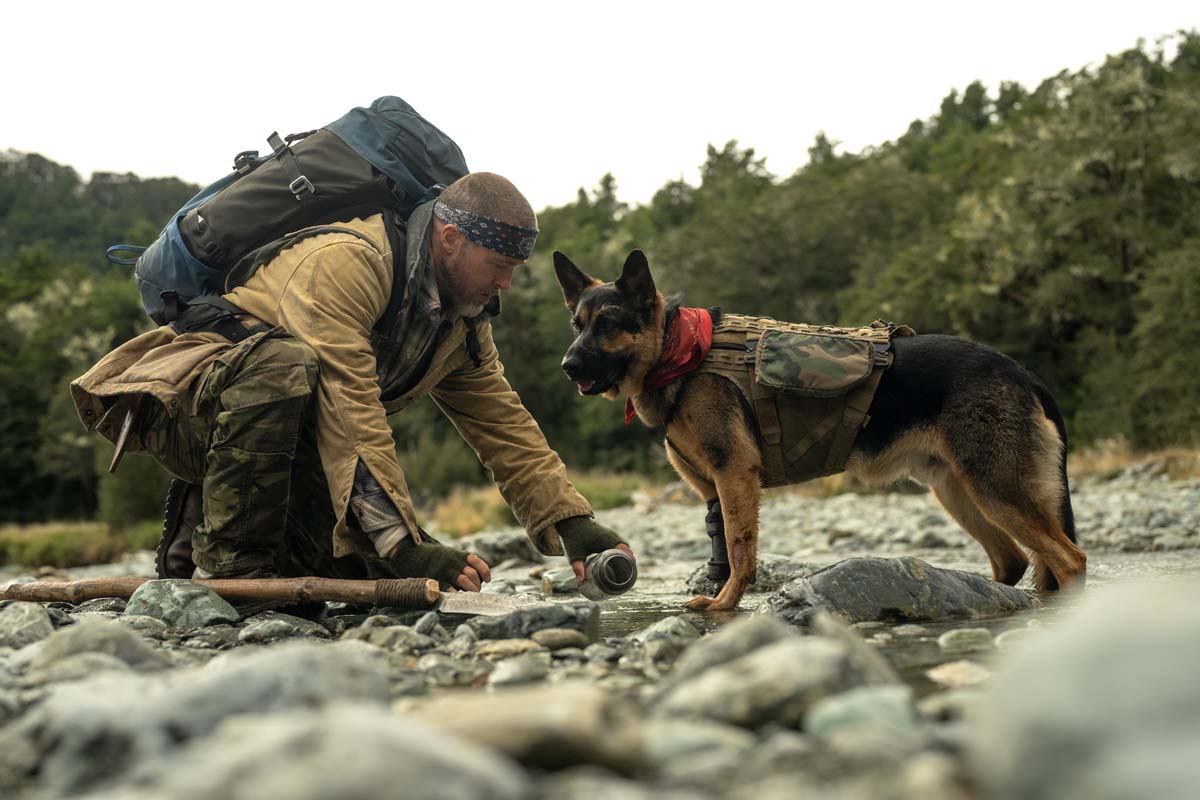
I would love for you to talk about that conversation and the use of reaction shots to James. There are certainly parallels between the two men’s lives and you got the sense that James was feeling that.
Exactly. That was the goal when we were editing, to really zoom into James’ emotional state. He’s reflecting on his own life.
That was the thrust, just looking for the most introspective moments with James. There is one take in particular where you can really see his gears turning and of course that’s what we ended up using.
You point out that that J.K. Simmons’ character is perhaps a ghost or mythological in some way, because there’s that great shot of him leaving in the canoe. I thought, “That’s no normal canoe!”
It’s very intentional on David’s part. He wanted Watkins to feel like a character who’s there to help James cross over. I don’t know how much that’s been talked about, and I don’t think it comes across to everyone, but for those who get it, it’s a win.
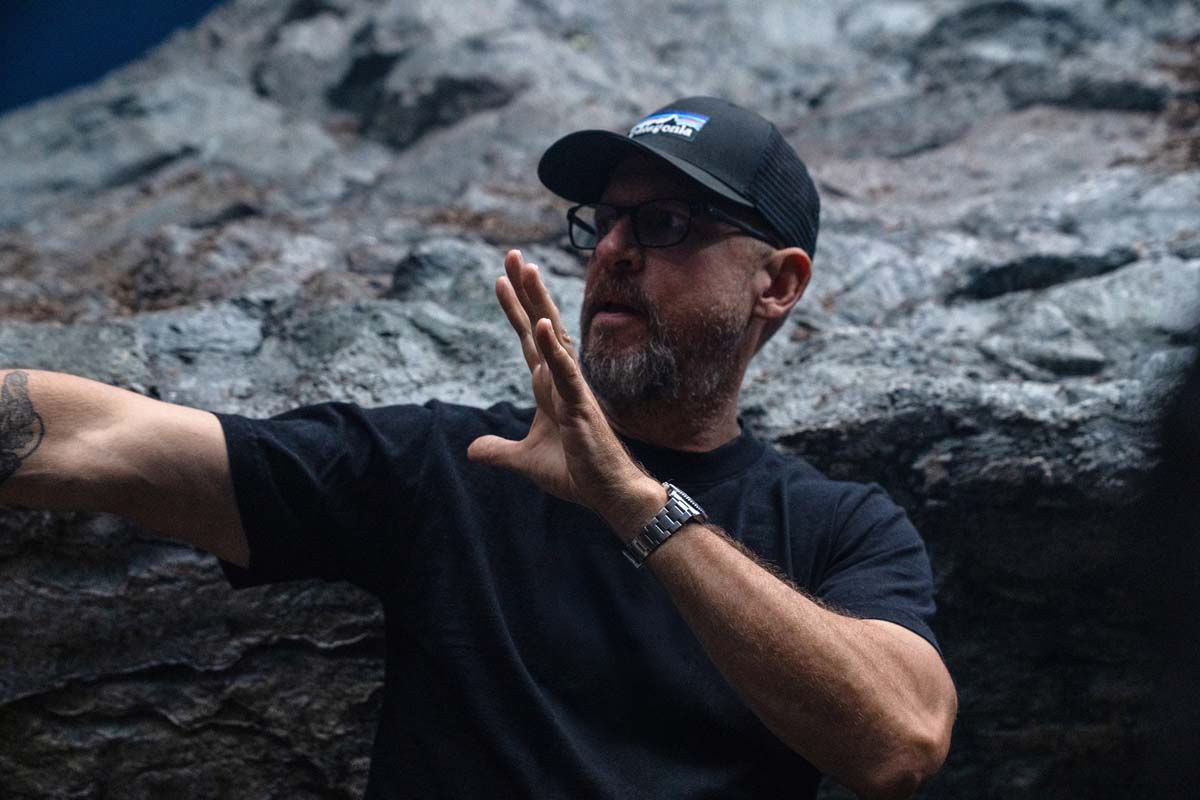
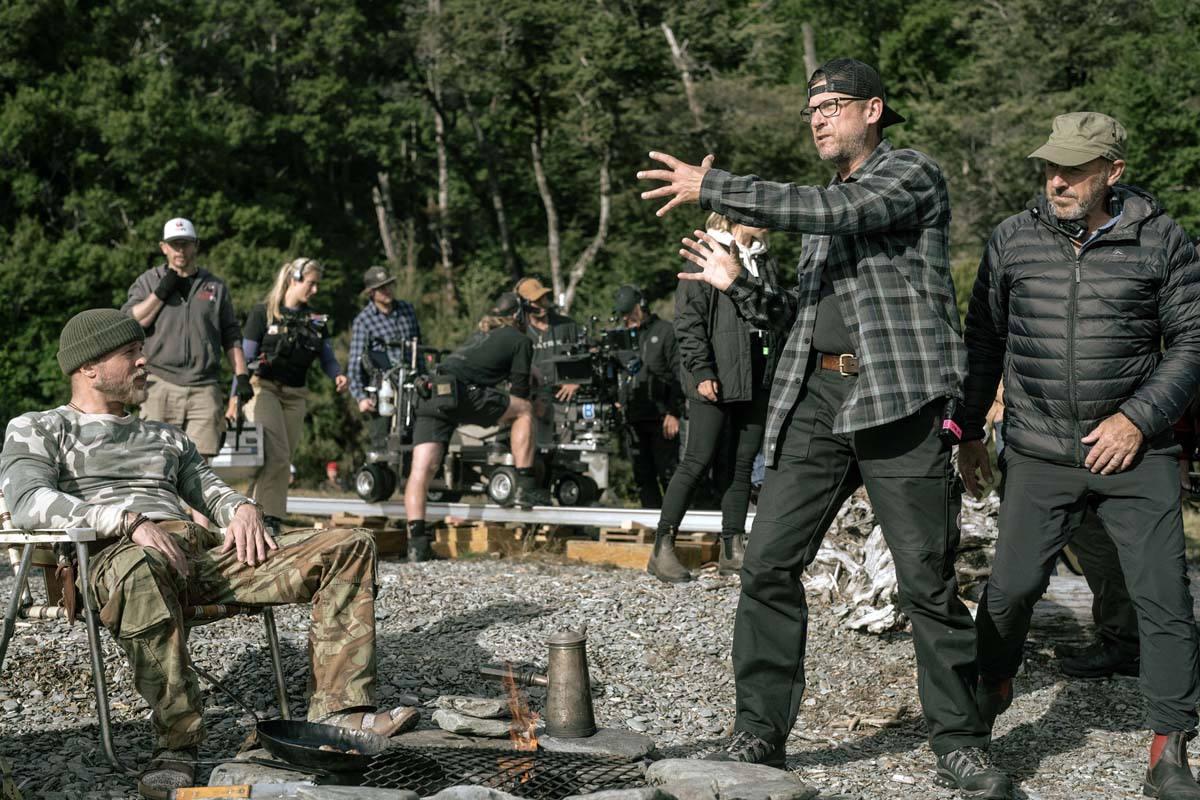
Director David Ayer on location
The shot of Simmons leaving is almost like the river Styx. The boat floating across with the lantern on the back. It was beautiful.
That’s no mistake. It was very carefully thought out by David.
Nice work, David. Let’s talk about the structure of the film: how long to stay in each story section? Did those expand and contract as you saw them in context?
The opening of the film was contracted. We took out one night. As scripted, we originally had a longer section of them enjoying themselves without any obstacles. Once we brought that down to its final length, we were able to move the pace along for the rest of the film accordingly. There are bits and pieces that we took out after the plane crash.
We knew that we were leaning on the emotional aspects. We also wanted to show the process of what James does to help both of them survive, but those are the kinds of scenes that could easily have been jump cut. Instead, we opened them up to show the hardship and the difficulty of what they both had to do to make it through.
Things like building a tent was more challenging after James was injured. We show him do that, more or less, in real time. Then, as we go on, some beats are shorthanded, but we still show his skills and determination in detail, like starting a fire with wet wood, gathering the wood with one arm in a sling, retrieving the crates from underwater, and carrying a heavy dog.
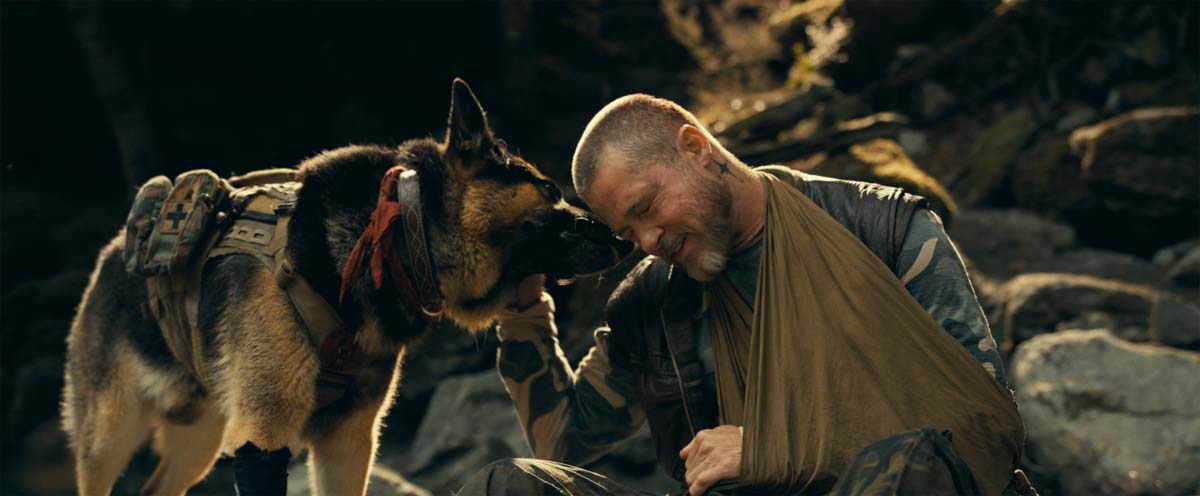
You needed the time length to carry the emotional weight.
Absolutely, and to show that Brad actually did all of these things himself. He talks about having read the script, cried tears, read it again, cried tears again - that allowed him to say yes to the project - but that he had forgotten that he was going to have to be the one to do all of that in the film.
It was a grueling shoot with Brad in every scene doing amazing and physically taxing feats, while turning in a very emotional performance.
Was there any shuffling of scenes? It seemed pretty linear to me.
There might have been a few traveling scenes that we moved around. The bear scene was much earlier. We moved that later. It used to be right after he left the post-crash camp. That was a good move because it felt too obvious to have him walk out of the camp and immediately encounter a bear. Other than that, I think all the scenes stayed in script order, aside from the scenes that were trimmed out.
You mentioned that you tightened things up before the plane crash. Was that something that – when that extra day was still in there – that you just felt you needed to get to the plane crash sooner, or was it something else?
In story terms, the plane crash is the inciting incident. Originally, it was almost 25 minutes in, but we needed to get to it sooner.
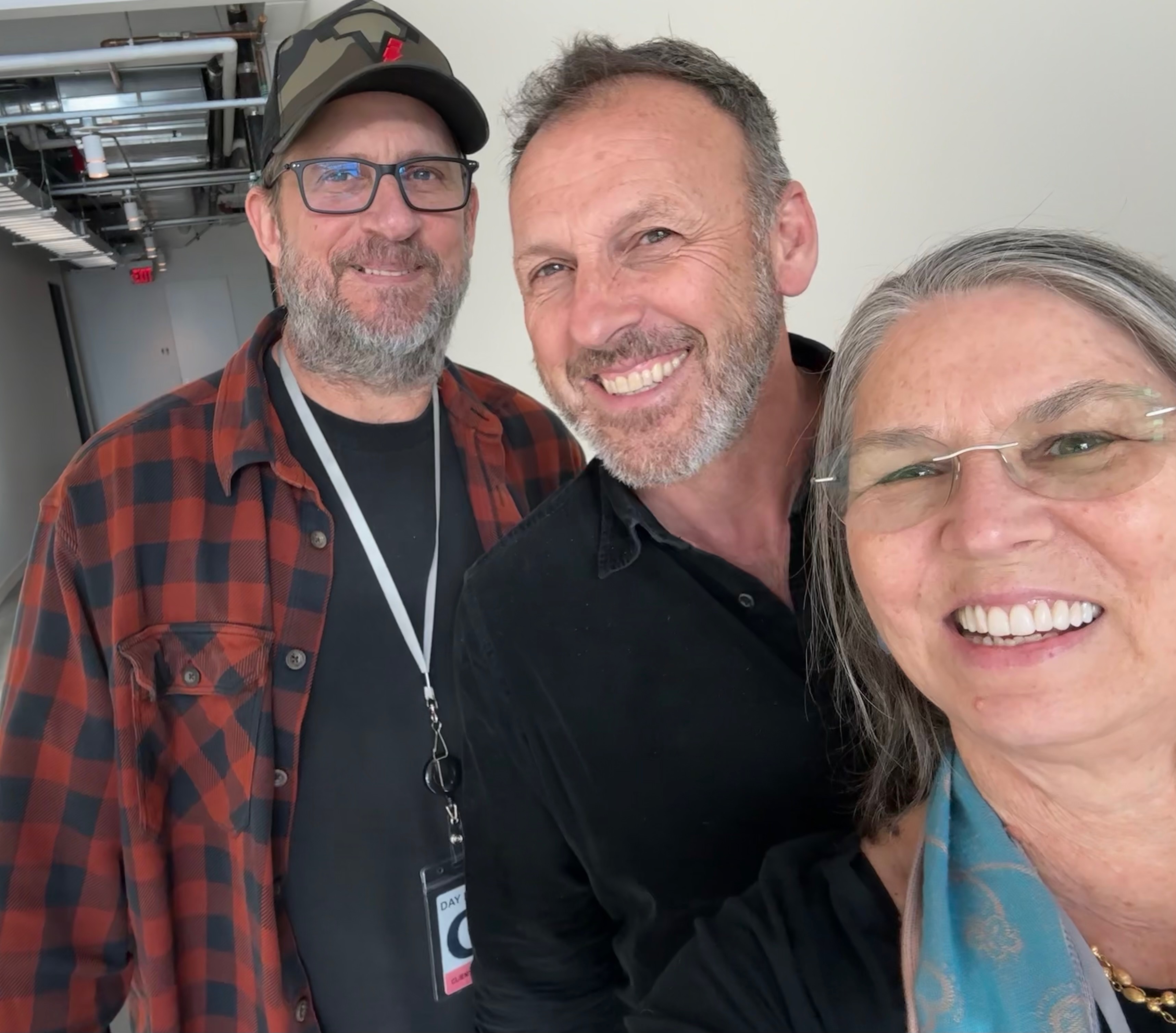
Dody and Mitch Osias, sound effect editor
I would love to talk about the ending montage. What were the creative choices around that?
The performance of the letter was what guided it, because Brad’s performance was so heartfelt, but at the same time, kind of dry. Even though we see him sniffling through snot and tears while writing the letter, when he reads it, it’s more profound, deep, something he’s thought about for a while. It’s not the voice of the person who’s writing the letter in the moment.
It’s more the voice of someone who’s lived this whole life. It’s not hanging on that moment where he’s about to die. It’s more about the love story…his devotion to the dog and the dog’s loyalty to him. The other big thing in that performance is the love for Odin that he conveys to Odin’s new owner, and the joys that are received from having a dog like Odin.
That’s what guided the choices of the images. We cut back to Amber a couple of times, appreciating their life story and all they’ve gone through together, and she cries while reading the letter. She’s clearly very concerned about the dog, which is an important part of her character.
You see that she’s an animal lover, that she cares about Odin, and will provide a good new family for him. The flashback material was an embarrassment of riches and was really fun to edit.
The shots with the puppy - everybody wanted more puppy, more puppy, more puppy - but we couldn’t just show the puppy. We had to show James and Odin working together. We had to show them relaxing together by the stream.
David Ayer, Dave Gallagher, Mauro Fiore, Dody Dorn
You mentioned that when we see him writing the letter, he’s in tears, but the letter itself is much drier. Did you have multiple options or did Brad choose for it to be dry, or David wanted it to be dry?
Interesting question, because the reading that he did on the day, one usually assumes that he will have an opportunity to re-record it later. And in fact, we did have that opportunity, and he re-recorded it with a much more teary and emotional voice.
I cut both versions, and David chose the one from production. I also think that something happens for an actor when they’re recording on the day when they’re in character versus months and months later and they’ve already played two or three other characters in other movies.
I think this is your fourth film with David Ayer: Fury, Sabotage, End of Watch, and now Heart of the Beast. What’s your collaboration method between the two of you?
I think it’s probably similar to most editor-director relationships. I cut material, I show it to David, he makes comments. I revise and there’s always a certain amount of discussion, and - I don’t want to say disagreement - but one sees it one way, or one sees it the other way. We try variations.
Also, I love a challenge, so I’ll cut something 10 different ways if David wants to see it like that. I’m happy to experiment. That’s the most fun part of editing. And he always gives concise notes. It’s amazing to work with him.
What brought you two back together? You’ve done a bunch of movies apart. It’s nice to have you back together again.
One of the hardest things to deal with in the film industry - for film editors in particular is how to stay in sync with a director, schedule-wise. In this case, the timing worked out, and I feel lucky that it did.
You’ve worked with some of the greatest film directors on the planet - Ridley Scott, Christopher Nolan, and Ayers, of course - does each need his own collaborative method?
I think each needs his or her own method. Every creative artist - filmmaker, director - is going to have particularities that I adapt to.
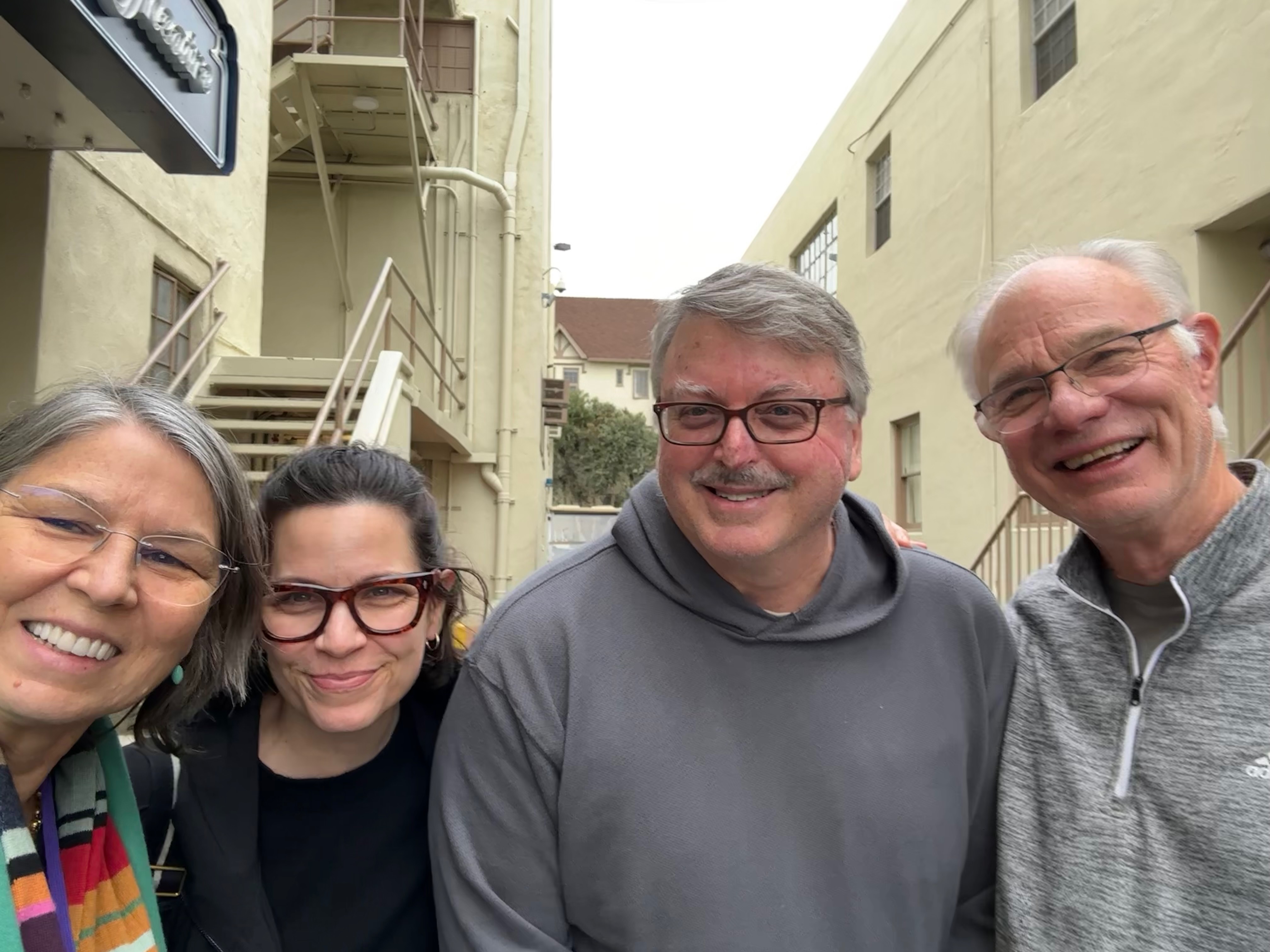
VFX Producer Rene Sekula, First Assistant Editor Bob Allen, Post Production Sup. Michael Tinger
When you’re working with a new director how do you suss that out? How do you figure out how to collaborate with someone new?
I think that process starts in the interview. During the interview, you may be asked questions about what you thought of the script, and how you normally work. They’re going to tell you how they work. It’s like two cats batting a toy back and forth. Through this exchange, it’s going to be decided, to some degree, whether you get hired.
My favorite kind of job interview is a working interview, when you’re already talking about the script, talking about the visuals, what the director has in mind, even talking about music. Those meetings are fantastic.
Did you have those kind of discussions about music with this film?
Because I had worked with David before, we just hit the ground running. I read the script. I have to admit I cried. David said, “Right???” meaning, “It’s amazing, isn’t it?” It just felt great to be working with this material. We did talk about the music quite a bit during post, of course.
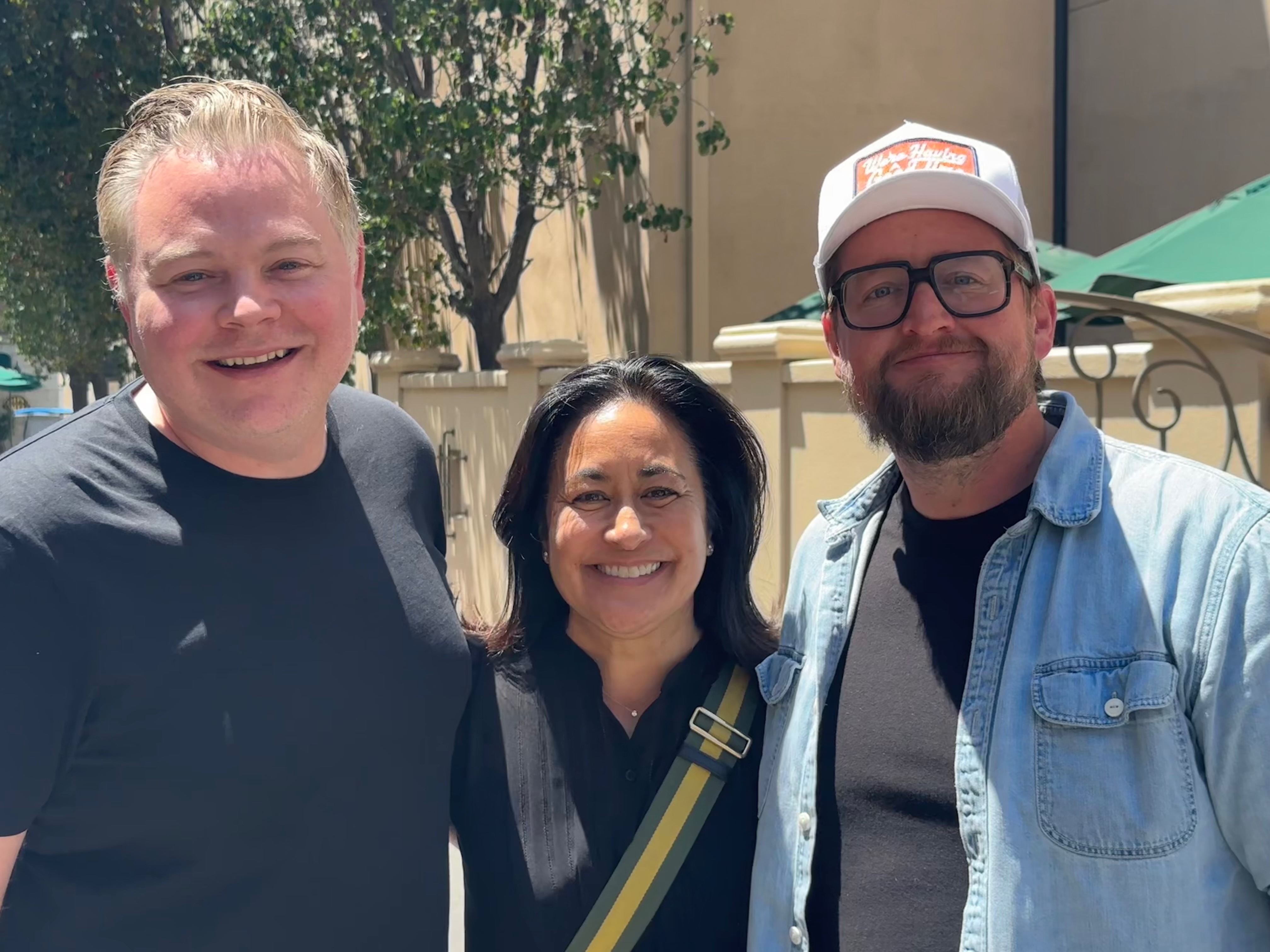
Music editor Bryan Lawson, Head of Post Stephanie Ito, Composer Jared Michael Fry
What did you temp with? Did you know your composer?
The composer, Jared Fry, was already on board, having worked with David before, and he provided sketches from the very beginning. Then those evolved with the help of our amazing music editor Bryan Lawson.
Bryan responded to picture changes and notes from David. We tried several different directions with the tone of the score: more action, more adventure, more family, more emotional. Where we landed is probably in the middle of all of those and we leaned into the emotional state of James, his trauma and the love story.
Anything particular that you’re proud of in the editing of this film? A difficult scene or a revelation that delivered a great editorial solution?
For me, from the time that James gets to the top of the hill, and he says, “Find the road” and from there to the end of the movie, that is the culmination of all of the hardship that they’ve gone through. It’s beautiful, and emotional and the audience can really relax into James and Odin just being together.
I think that’s why people are willing to have the tears. There’s so much connection and love between the two of them while they’re sitting quietly together on that rock.
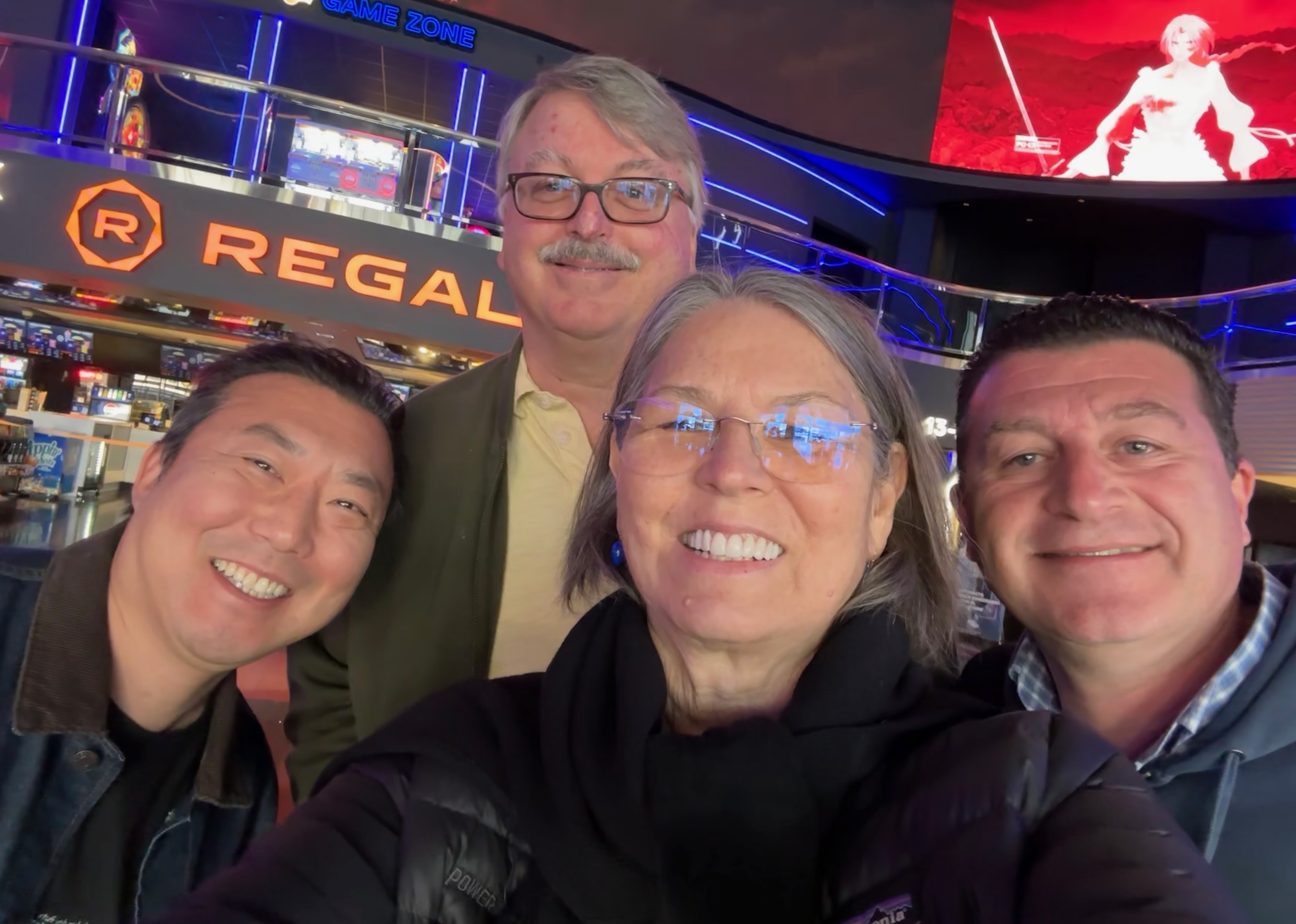
Bob Allen, Brian Kim, Dody, Laurent Kossayan
What is your approach to a new scene? How do you have your assistant prepare a scene for you? Then what steps do you go through to get to a finished first pass of that scene?
First, I look at all the material for a given scene, then from that, craft a story beat. Usually, it’s hanging on the actor’s performance, and in this case the dog’s performance. You just start putting it together.
I had two fabulous assistants, Bob Allen, my first assistant on many other projects, and Brian Kim. The way they prepped for me is to create a daily roll, where they’ve taken out the so-called junk. That’s a little bit harder to do when there’s an animal involved, because something that could be deemed junk is actually a really good piece.
But I don’t necessarily want to see all the slates and ramp up to “action”. I just like to press play and watch everything. I don’t drop locators. I might make some notes, and then I go back. I usually start with that daily roll and start cutting away from it, cutting things out. I make a copy of it and I pare it down.
So, like a piece of granite, chipping away what isn’t the “statue.”
Right. Also for certain beats with a lot of options, I’ll do stacks of alternate takes and shots so that it’s easy to review them in context. I don’t use ScriptSync. It’s not very helpful for a film like this with so little dialogue anyway, but even for a film with a lot of dialogue, I don’t use it.
I know a lot of editors really love it, but I would rather have a tight string out of a line that I’m reviewing than have an assistant spend hours and days doing ScriptSync that may or may not get used.
When that daily roll is built for you of the dailies, is it always edited together in shooting order? In other words, chronologically the way they shot it, or do you like it in reverse order, or some other order?
Generally, I ask for wide, medium, close, inserts, and wild lines, so that there’s some kind of standard organization. That doesn’t mean the shots will get used in that order.
A lot of what I’m doing during dailies is preparing for the director, so that I’m familiar with all the material and it’s easy for me to find things later.
The director says “I know there was a take where…” this happened or that happened, so I tell my assistant, “This is me preparing for the director when he or she comes in for the director’s cut.” Being fleet-of-foot during that time is really helpful and much appreciated.
If you have to spend time searching for something, you can derail the creative impulse that was being explored.
The other thing that is different these days is that we no longer watch dailies together with the director. In the days of film, during projected dailies, there would have been communication back and forth between the editor and the director about which parts of any given take were preferred, and for what reason.
Even though that doesn’t mean those selections will end up in the finished film, it’s still a pointer toward what the director had in mind.
Absolutely. Then obviously when you have that daily roll created, you’re duplicating it to then chop it down - keeping the original daily roll so that you can use that in your discussions with the director.
Correct. After it’s been sculpted, I’ll make another copy and name it “version two,” then try other approaches to the scene. I’ll end up with six or seven or even eight versions of that scene before I move on.
Oftentimes, I call my assistants, Bob or Brian, in and say, “Hey, watch this. Can I move on? Have I done enough for now?” because I know I’ll likely be reworking things later.
And a big part of having the editor on during production is to let the director know that they have all the material needed to tell the story.
You mentioned these discussions that happened during production. Where were you during the shoot in New Zealand?
I was in Los Angeles. I visited New Zealand once.
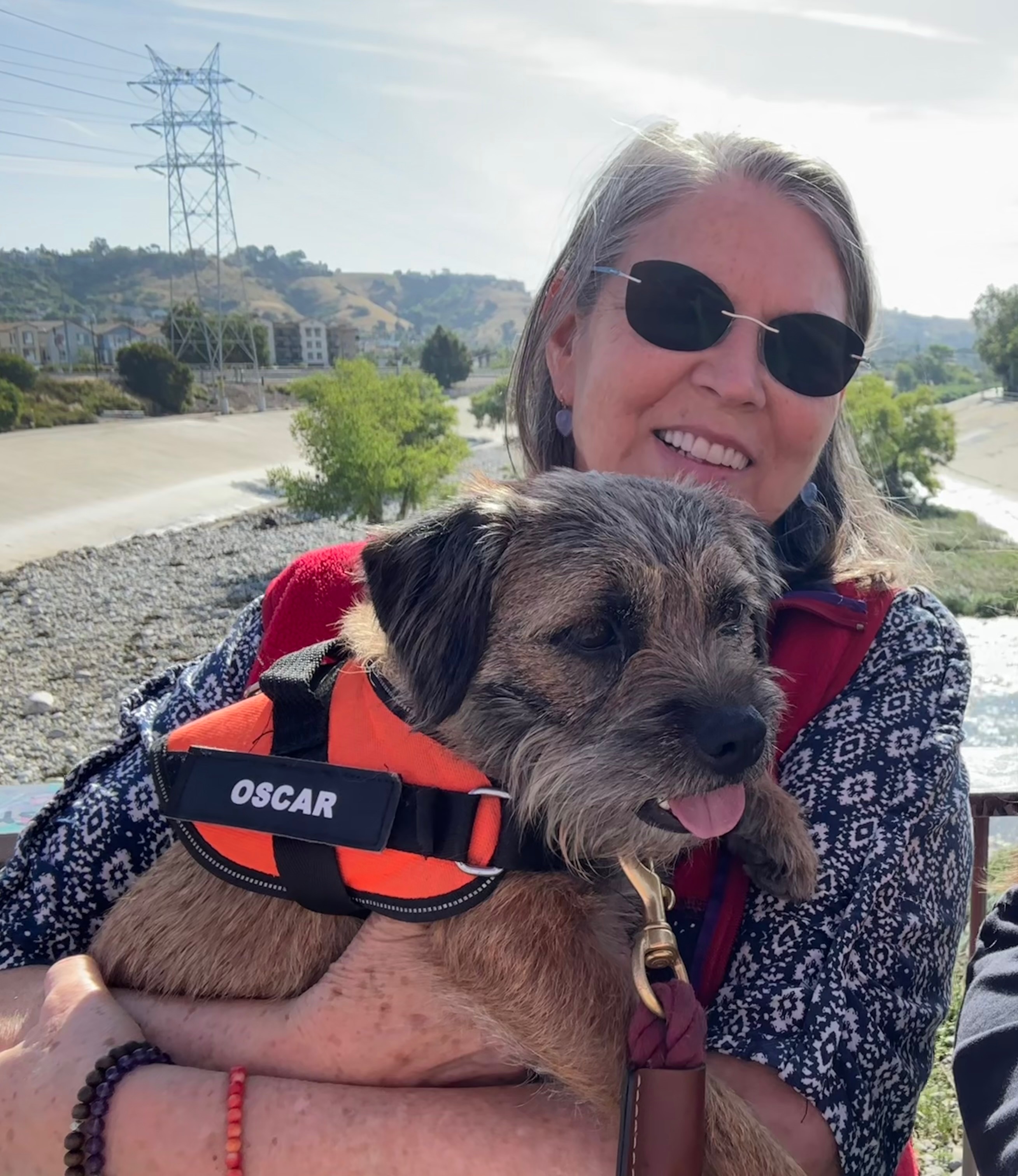
Dody and her dog, Oscar :-)
What was your favorite thing about having worked on this film?
My favorite thing is the love story between Odin and James. I am a dog owner. I love dogs. I think that the communication between them is largely wordless but very palpable.
People who have dogs can really relate to it, and I feel fortunate to help bring that to the screen for people to enjoy.
As a fellow dog owner, you got me.
Yay!
There’s a famous idea in editing: the Kuleshov effect, which is: you show a person, then you show something else, and that’s what they person is thinking about. Since the dog couldn’t talk, do you think that was a big part of editing this film? The Kuleshov effect of showing the dog’s face and then cutting to something that the dog is thinking about, or vice versa?
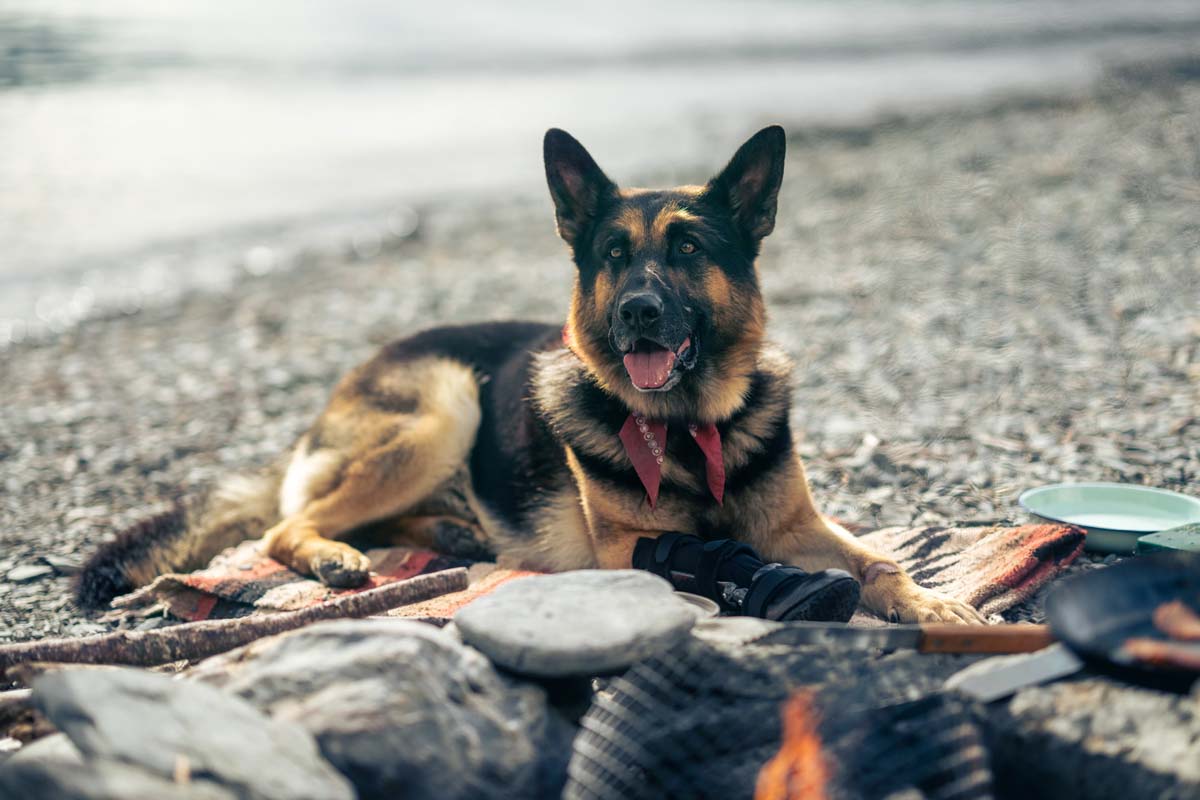
For sure, there’s a lot of the Kuleshov effect going on. If we cut back and forth between Odin and James, and James is expressing love, sadness, or fear, and the dog is just looking at James, you’re going to feel that Odin is expressing that same emotion. I do feel like this dog emotes a lot. He has big, beautiful brown eyes, and he holds a look without blinking. This is the kind of performance an editor is looking for from any actor.
Was the scene at the end of the film with the aurora borealis reflected in the dog’s eyes… was that VFX?
It was planned that they would be looking up at the Aurora Borealis. The Aurora itself is VFX, but there were colored lights on the set to reflect in Odin’s eyes.
Some of it was enhanced with VFX and during the DI. But it’s not just reflected in his eyes, there are also colored lights dancing across his fur.
Dody, thank you so much for a great film and for a great conversation. I really appreciate it.
My pleasure. It’s always fun to talk to you, Steve. Thank you.
(This transcript is mostly word-for-word, but has been edited for clarity and readability.)
 October 5, 2026
The Whisper Man
Chris has been on Art of the Cut before for The Menu, The Many Saints of Newark, A Quiet Place, and Assassin’s Creed. He has ...
Read more September 23, 2026
Sean Combs: The Reckoning
Charles Divak has been on Art of the Cut in the past for Chimp Crazy, for which he was nominated for an Emmy and won ...
Read more September 3, 2026
The Dog Stars
There's nothing like The Dog Stars in his filmography. That's a testament to him - that he is constantly interested in different stories and different ...
Read more
Subscribe to our newsletter
Get all the latest news, blog posts and product updates from Boris FX, delivered directly to your inbox.
Welcome!
Thanks for opting-in to our newsletter. You'll receive an email momentarily with your confirmation.