













EPIC: Elvis Presley in Concert
A discussion of Baz Luhrmann’s EPIC: Elvis Presley in Concert, including honing the film from over 100 music cues, creating dynamics, and the key to unlocking the film.


Today, on Art of the Cut, we discuss Baz Luhrmann’s “fever dream” EPIC: Elvis Presley in Concert. I say, “fever dream” because Luhrmann won’t label the film as either concert film nor documentary. The film was edited and produced by Jonathan Redmond.
Redmond has been on Art of the Cut before for Luhrmann’s scripted narrative feature, Elvis (2022)
Jonathan has edited the film The Great Gatsby and the TV series, including The Get Down, Wonders of Australia’s National Parks, Romeo & Juliet: A Monkey’s Tale, and Pelicans of the Ghost Lakes. He was also First Assistant Editor on Moulin Rouge.
Jonathan, it’s really great having you on Art of the Cut again. I really loved this film. I’ve told everybody about it. I’m not even an Elvis fan, and I loved this movie.
Thanks for that, Steve. We very much set out to make the film something for everybody really - something for Elvis fans and people who wouldn’t really necessarily choose to come and see a film about Elvis Presley. It’s for people who want 90 minutes of watching one of the greatest performers I think the world’s ever seen singing, dancing, and telling stories.
How did you organize the material? What did your bins look like?
Taking a step back, we first got our hands on this footage when we were in pre-production on the Elvis film, so it was probably about eight years ago. It was 59 hours worth of film scans, which were primarily made up of outtakes from two concert films shot in the 1970s.
At the time we were looking at this footage with the intention of potentially using it in [Baz’s scripted theatrical] Elvis film (2022). We did use bits of it in a subliminal “blink-and-you’ll-miss-it” kind of way in montages and stuff like that. But at that time it was just 59 hours worth of picture: just raw scans. There was no sound, none of it was synced up.
So it was a monumental effort to actually sync all that footage ‘cause there were no camera sheets, there were no production notes. It took about two years for one of the in-house Warner Brothers assistants to sync it all up - kind of lip-syncing, eye-matching footage, guessing what he was saying, what he was dancing to.
So it was a huge effort to organize that. At certain times there was one camera shooting, but sometimes there were five or sometimes seven cameras. So it was a lot of kind of multi-camera footage which then had to be synced and grouped.
Another challenge we had initially, was that all the original production audio was missing - and remains missing. Anytime Elvis was backstage, talking with his backup singers or with the band, all the audio for that footage was missing.
It took a monumental effort to find alternative sources for all that original audio. We found old work prints and work tracks, and we had two KEMs - a 35mm and 16mm - and we went through a very lengthy process of going through all those scraps.
It was all cut to bits, but we found bits and pieces of it - enough to make a movie - but that whole process took a long time. It was a real detective journey. Half this project was finding stuff. Then the other half was putting stuff together.
To get back to your original question, from an organizational point of view, once we had everything synced up there were 10 concerts that were filmed over a period of several nights. My first task was basically to kick the wheels on all the performances that we had.
When I started this project, I didn’t know what I didn’t know. We didn’t have any of the production logs. It was unclear as to what they shot, so my first task was to basically attack all the performances. I cut everything, trying to work out what’s the best version of a song.
Sometimes I’d have five different versions of “Suspicious Minds,” for example. I had to pick the best one. and the only way to do that is to cut it.
My idea of a good time is cutting musical performances. It was a lengthy but enjoyable process, going through all this footage and coming up with a shortlist.
Editor/Producer Jonathan Redmond “with Elvis” at Graceland
I’m sure when you were cutting those - even though you knew you probably weren’t gonna be able to use the entire performance in the final film - you cut the entire performance at that point.
Absolutely, I did. Yeah. There was so much footage. The interesting thing about Elvis was that he never sang the same song in the same way.
He’d always mix things up. He’d change tempo in the middle of a song. So that kept things interesting and made things tricky to combine different performances together, which we did quite a bit of.

Redmond and director Baz Luhrmann examine some of the archival film
Did you treat the interviews the same way or did you treat that material differently?
A little bit differently, actually, Steve. One of the keys that unlocked this film for us was finding this rare 45-minute interview that the director of Elvis on Tour recorded with Elvis back in 1972. That interview hadn’t been used before. Strangely enough, they didn’t use it in the original film.
Maybe because Colonel Parker didn’t like Elvis talking about himself… for whatever reason, we found this interview and it really unlocked the narrative structure for the film.
Elvis is telling his story in his own voice. For anyone who has read the books or seen the documentaries or seen the film, you know his story. But hearing Elvis tell his own story in his own voice felt really special to us. So that very much affected the narrative structure of the film.
In that particular case, I cut the whole interview and found all the good bits, and that dictated the structure of the film in many ways. On top of that, we had hours and hours of old radio interviews with Elvis. mostly from the fifties. There was a lot of material to go through and sort out.
In terms of how I managed hours and hours worth of interview, I grouped it into different themes: Elvis, talking about his Hollywood career, going to the Army, his family, his early career, how he moved in the fifties, and how that was so controversial. I had buckets of different themed interviews which I organized.
In the first few minutes - but throughout the film - there’s so much archival that I’d never seen before. was that a goal of yours to say “There’s Elvis footage people have seen and there’s Elvis footage people haven’t seen, I wanna show ’em the Elvis people haven’t seen!”
Absolutely. The archival section at the beginning of the film was important. We needed to give audiences who weren’t that familiar with Elvis’s backstory a little recap on why he was controversial in the fifties and what happened to him in the sixties – going into the Army, then his Hollywood career, and so forth.
We’re lucky enough to have this amazing archive producer and researcher who did a deep dive into all the stock libraries around the world. We made this movie for the big screen in terms of the archival. It was important for us to have film backing for all this stuff.
We were pretty successful in finding some unique material. We also went to Graceland and went into the Graceland archives and pulled lots of old 8mm film stuff that was shot sometimes by Priscilla, sometimes by Elvis’s Memphis Mafia guys, and friends.
So, we had some pretty unique footage that we had access to and we felt it was important to try and show as much footage as possible that people have not seen before.
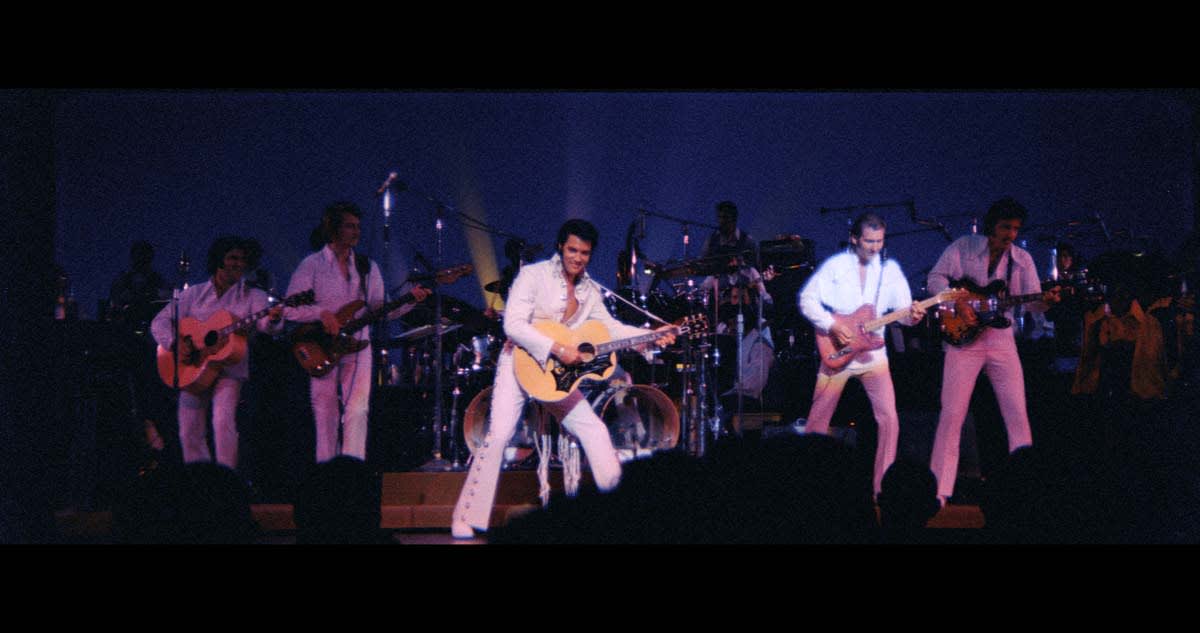
That continued into the concert footage as well. There were so many performances that were not used before in the original films. So many outtakes. We tried to use as much new material that fans and non-fans alike have not seen before.
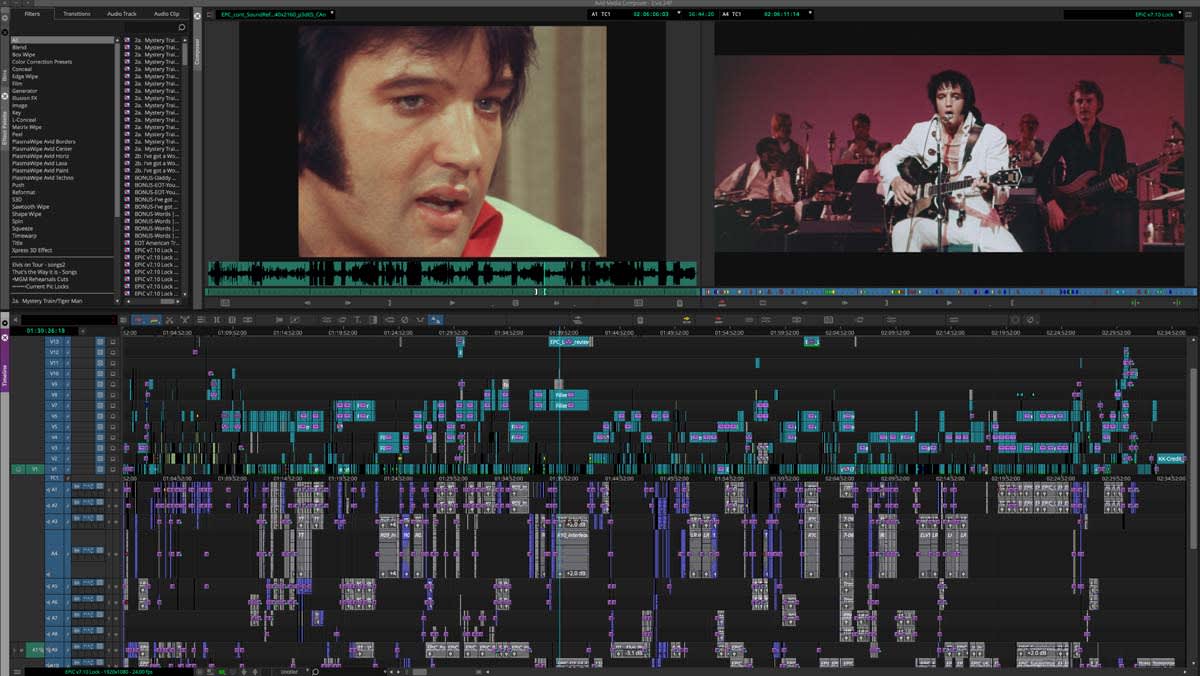
Avid timeline screenshot from the film
There’s a really cool “stacked photo montage” at the beginning. How did that evolve? How did you contribute? Then how was it finished?
In terms of the opening sequence, it encompasses Elvis from the fifties through the sixties and his various different careers and his different looks. We felt it important to showcase as much imagery of Elvis as possible. We came up with this visual device for the opening titles with all these still images that we got from Graceland.
We stacked them using his face as a visual anchor on the screen. It was a really quick and effective way of showing the audience that this guy had so many different careers, so many different looks. It was just a cool visual device that we used. I did not put it together frame-by-frame my myself.
We had this great graphic artist who built it in After Effects. He did a few rounds and came up with something which we felt was pretty effective and pretty cool.
I always think of the early days of editing a documentary where you’re not really thinking about the entire film, but you’re just saying, “I need to cut the “Elvis goes to the Army” or “Elvis in Hollywood” scenes. Talk about building those scenes and how they evolved. Maybe they “accordion” from longer to shorter and back out?
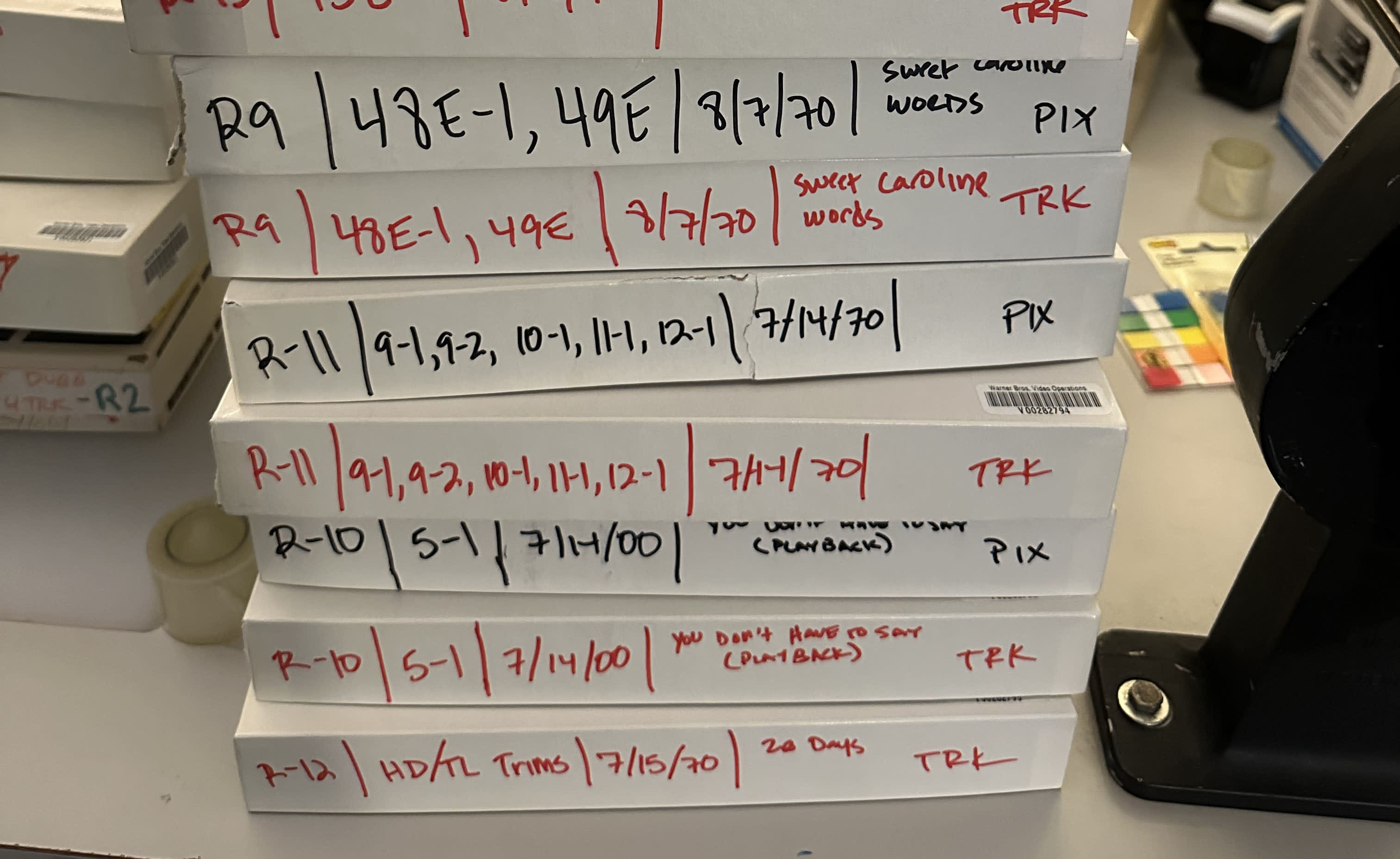
Archival reels of film
Eight years ago we had 59 hours worth of film. We didn’t know what was going on ‘cause it was all mute, but we knew there was something special there. About four years ago - after [Baz’s] Elvis movie came out - Baz turned to me and asked, “Jona, what’s happening with this doco idea we had?” I said, “I’m not too sure Baz. You tell me!” So we started kicking the wheels on the project.
The footage had been synced up by that point. I started cutting it and had various different doco-bits left over from the development of the movie. All Baz projects start with a deep dive into research and with Elvis Presley there’s so much visual material to work with.
Even before there was a script on Elvis, I was cutting stuff together. I had some of these Elvis in Hollywood bits preassembled when it came to this film – E.P.i.C.
It was a really good starting point for me to build those doco elements of this film. That Elvis interview really unlocked the narrative structure of this film for us, and that was a big help in building that early segment where Elvis talks about going to the army, the Hollywood career.
That dictated the flow and the pace of it. To your point: it did expand and contract and also had a very kind of musical element to it. So that was something which we worked on a lot, to find a structure, to get through it in as efficient and entertaining a way as possible.
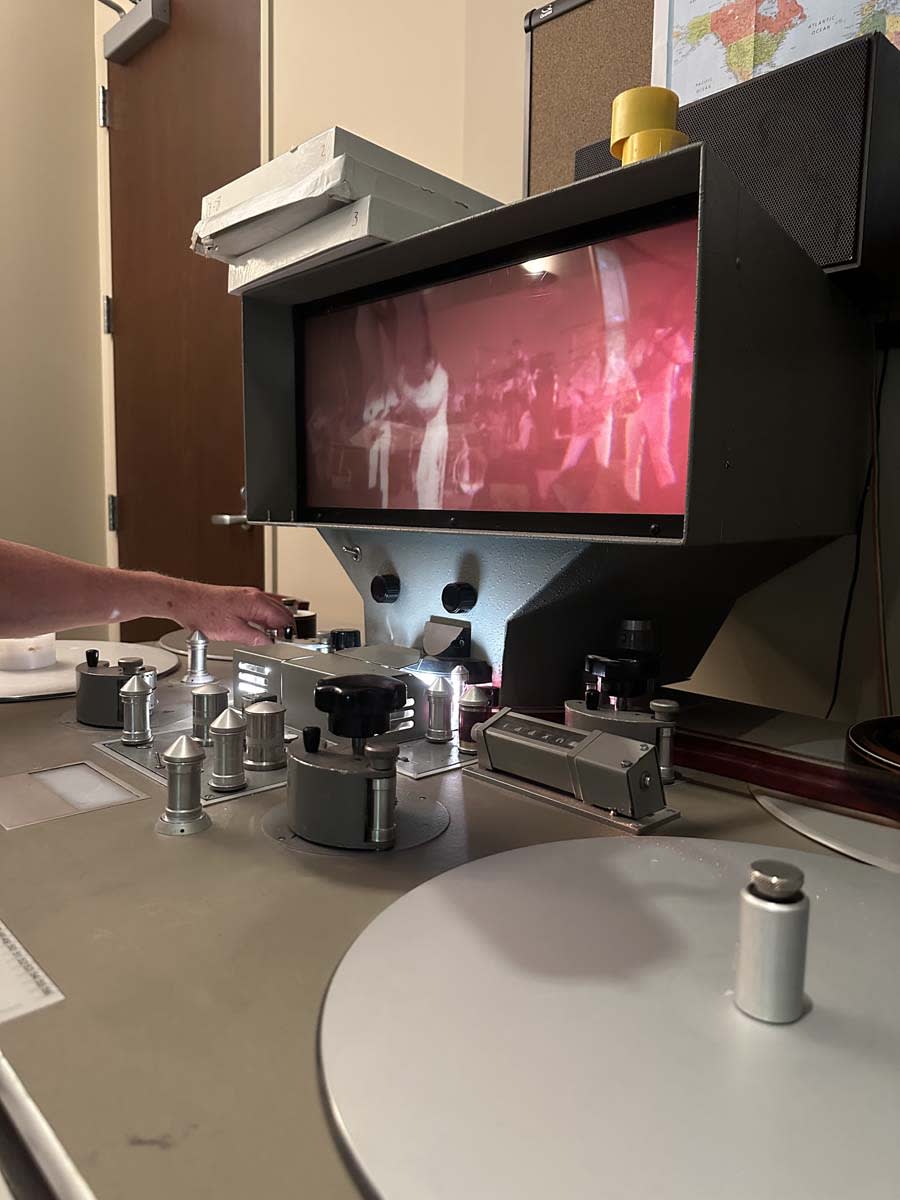
Viewing archival film on a KEM flatbed
What did you do to develop the overall structure? Do you have cards on a wall?
It was quite an organic process, really. We did have cards. Baz loves a good wall of notes and imagery and so forth. His work process is pretty incredible. It was quite an organic process really. I keep going back to this Elvis interview, which dictated the structure. At the end of the day, this isn’t a pure documentary, and it’s not a pure concert film, either.
Those two words were kind of taboo. He said, “This is not a documentary. It’s not a concert film.” It kind of begs the question: what is it? Some people call it a tone poem or a fever dream.
It was just really a case of moving things around all the time and just seeing what feels good. So it, it was a very organic process. It wasn’t really something that you could sit down and write: “Well, we’re gonna do this.”
Let’s talk about the editing of the song “Poke Salad Annie.” I want to talk about the intercutting. There are rehearsals and different performances and things all intercut.
That was probably the classic example of intercutting several different performances and rehearsals together into kind of a mashup. It’s one of the first things I did on this project. We had so many great performances and it was very hard sometimes to pick which one to use, so I thought, “Well, why do we have to pick?
Why can’t we just use them all?” I remember sitting at home one night thinking about the film and came with this idea of mashing all these different performances together. It was one of those occasions where you think, “I can’t wait to do that!” In the middle of the night, you’re lying awake, and you think, “I can’t wait to go to work to try this!” But that was one of those, those occasions.
It was one of the first things I did and it was just so much fun to put together. Elvis did change tempo mid-song all the time, which made it kind of tricky to cut a song together.
When the tempo keeps on shifting…. It still worked. We had an amazing music team who ironed out the bumps in the tempo changes and made it really effective. It’s showing a couple of performances that people may have seen before, but using them in a new and different way.
While I was watching the movie I made a note “that’s about all they had to eat.”
That’s a line from “Poke Salad Annie.” It really spoke to Elvis’s youth. He grew up in a dirt-poor family – a really poor family. His dad went to jail at one point, so he was raised by his mom. They were very, very poor. Though he didn’t write his own songs, the fact that he chose a song to perform, kinda spoke to him in a very personal way.
We talked a little bit about structure already. One of the things that I thought was interesting about structure is that - coming out of a song like “Poke Salad Annie” - you come out of that into a much quieter section of the film. Talk to me about building dynamics over the range of the film.
We very much tried to follow the ebb and flow of Elvis’s own shows. When he performed a song - as most bands do - they start off strong and come in hard and excite the audience, then they tone it back a bit and give the audience a breather - not to mention to give themselves a breather. Elvis was a very energetic, visceral performer.
He was almost doing cartwheels across the stage at times. Often after a song like “Poke Salad Annie” he’d slow it down a bit, so we tried to do the same with the structure that we use in the film to give the audience a bit of a breather. We had a good teacher in Elvis, in how he put together his shows and we followed a similar structure.
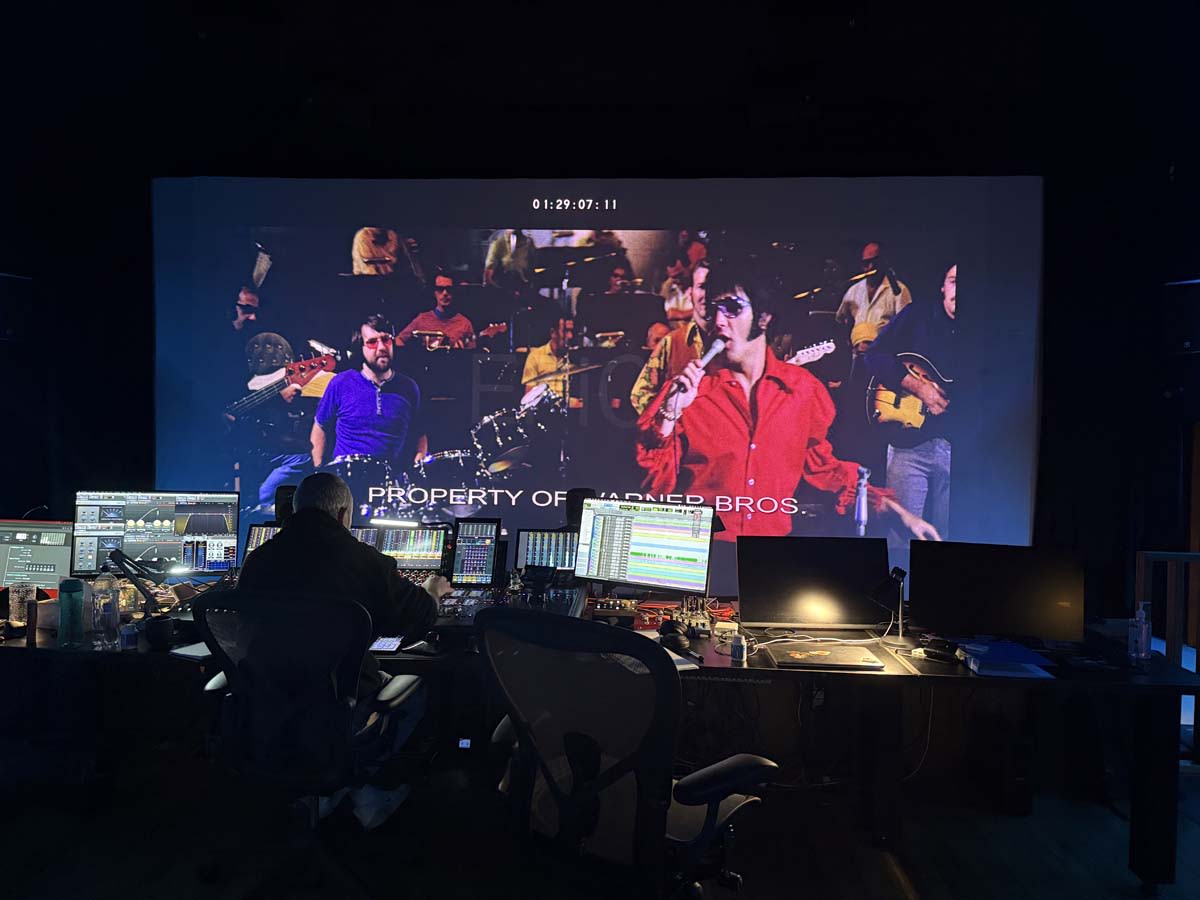
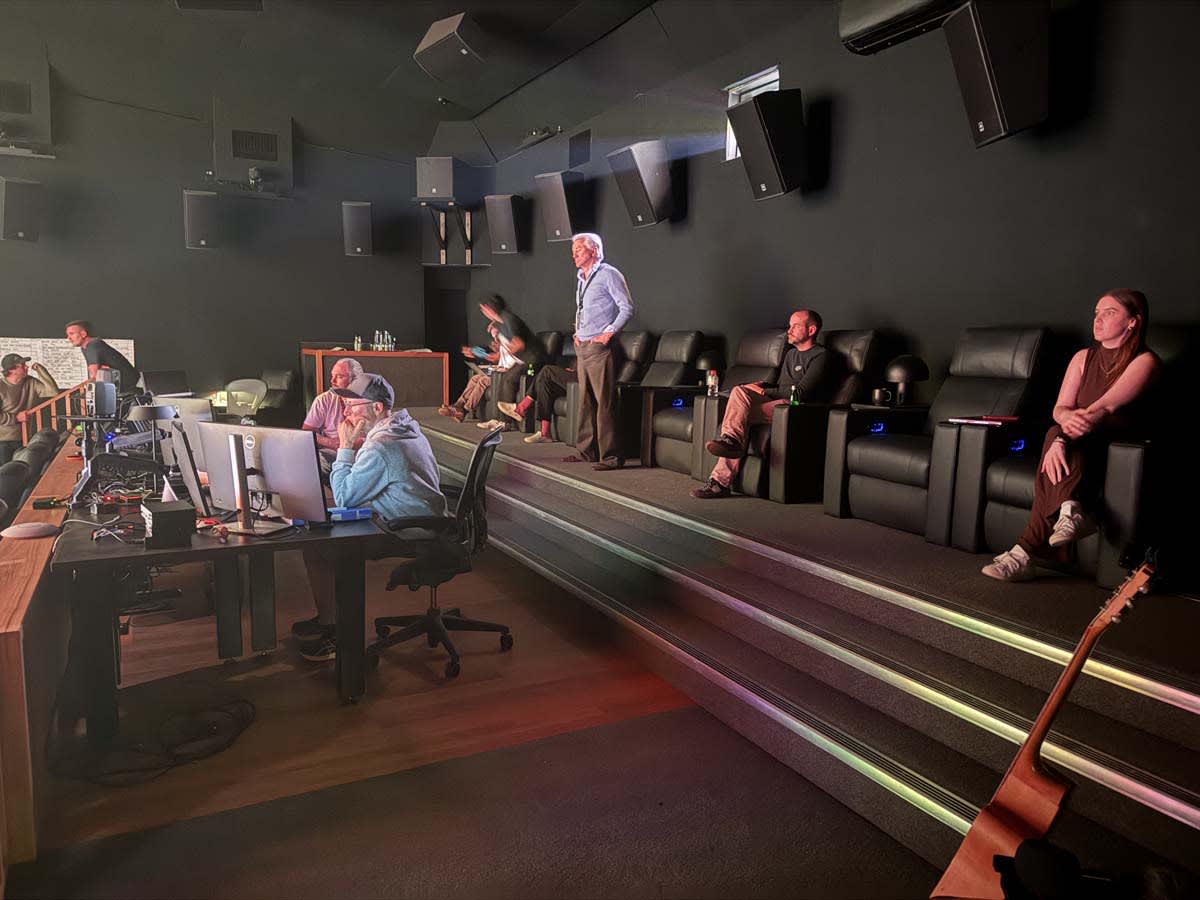
One of the places where I noticed that was at the very beginning. You’ve got this kind of crazy, montage-y open, then it goes into the quiet before the first show. They’re backstage and all of a sudden things just slow down and there’s not a lot of sound, even.
We almost completely drop out the sound. Yeah. There’s a bit of atmospheric echo just as you see Elvis walking towards the stage. And we knew we were gonna come in hard when Elvis is backstage and the curtain’s going back and the drums kick in and we wanted to create this sense of quiet, then hit you with something really loud and exciting. So we did create these moments where you’re telling the audience something’s gonna happen soon. “This is quiet, but it’s not gonna stay quiet very long.”
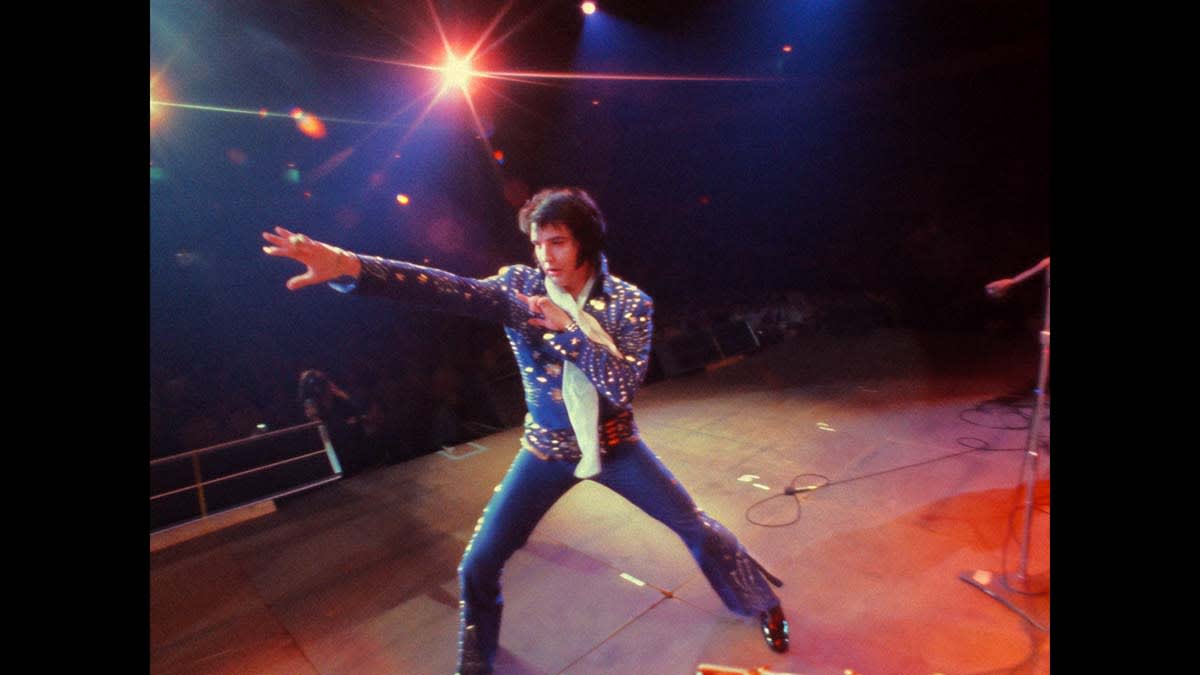
In the structure of the film, are you and Baz thinking “We gotta have Elvis performing a song in concert by the 10 minute mark?”
Absolutely. Baz is always very particular about when he introduces the main character. In a movie like “Gatsby” it was him turning around with a champagne glass and saying, “I’m Gatsby.” The timing of that is always very important to him. You don’t want it too late. You also don’t want it too early. Baz likes to give his stars a grand entrance.
We had a similar thing here with Elvis in the sense that we wanted him to be on stage performing not too early, but not too late. We tease in the opening - there’s the end of a song called “American Trilogy” which is a big bombastic song at the very beginning, but then we go away to this kind of recap of Elvis’s life. Baz didn’t want that to go on too long. He wanted the audience to see Elvis Presley in concert at a certain time which dictated how much screen time we spent telling his backstory.
You’ve got these full length versions of these pieces of music. Did you have a very, very long editor’s cut of the film where musical performances were much longer than they are the way we see them now? Then you realized. “We gotta get this down to 90 minutes, so that means each one of these pieces has gotta be 90 seconds” or something.
That’s a good question Steve. There was a longer cut of the film, but it was longer because there were more songs. There are about 70-something cues in this film.
I remember my music supervisor said, “Johno, you’re using 99 cues!” So I said, “Gimme five minutes and I’m gonna break a hundred!” which I did. I think it was up to 105 at one point, which is a lot of music.
I think that the style of film we were making dictated the fact that we weren’t gonna be playing full songs. We wanted to use a lot of music - a lot of different performances - and if we played the songs full length, we wouldn’t have been able to show as much music.
We also wanted to keep the audience excited. If you play full song after full song after full song, people’s minds just drift. Whereas if you try and churn through stuff as rapidly as possible, it kind of keeps people on their toes. You can go too far. We didn’t want that either, so it was finding the right balance.
The other kind of important thing that we kind of set out from the very beginning, I remember when I pitched this film to Baz, I said, “Let’s make a 90 minute film.” Don’t get me wrong, with so many film long films, I never want them to end, but because we made this film something for everybody - we were trying to make this film for the hardcore Elvis fans, but also people who don’t necessarily like either concert films or documentaries or even Elvis. The idea of a 90-minute film was a good one. particularly for the style of film.
There’s a lot of breaking of continuity in time. Like Elvis will be performing or practicing one song and all of a sudden he’s in a totally different costume in the next edit. Talk to me about making those choices and developing a style of the film where that’s acceptable and exciting.
Another good question, Steve, and it, it’s something I was initially a little worried about. The body of the film that was at our disposal came from two concert films, one shot in 1970 in Vegas, and the other shot in 1972 with Elvis on tour.
One was shot in 35mm, the other was shot in 16mm. You’re talking about two years. Elvis changed quite a bit in two years, so I was initially a little concerned about intercutting the 35mm and the 16mm footage because the aspect ratio kept changing, but also he looked different.
His muttonchops were much, much bushier and his hair was longer. It was one of these organic processes where we tried it and it worked. We weren’t going for a linear flow. It was quite abstract at times. It seemed to work so we just kept going.
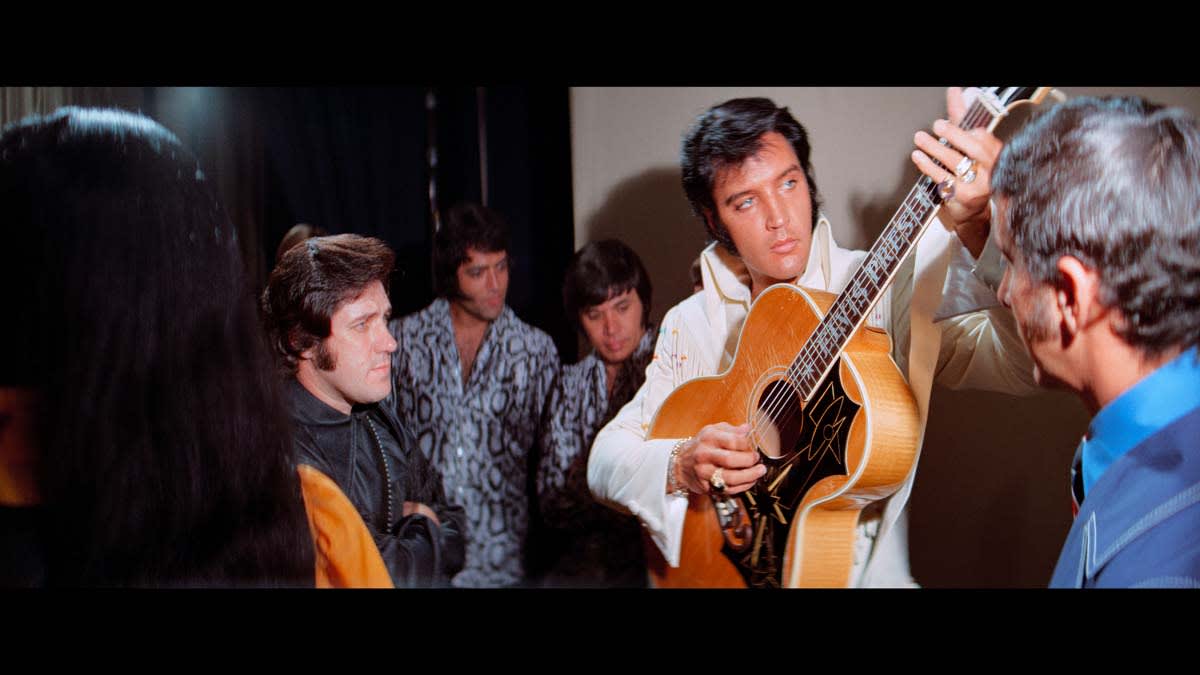
Tell me a little bit about the “Burning Love” montage.
We start the “Burning Love” montage with a rehearsal clip of him singing the song. He kind of ran into a bit of a problem when he was singing that song because he couldn’t work out how to finish the song.
It’s quite different recording an album where you could just a long fade at the end of the song and that would be it. That was perfectly acceptable for most people, but you can’t do that on stage.
So I love that moment where he’s asking the band, “How are we gonna end the song?” He has a little gag about one of his backup singers just staying on stage while everyone else finishes.
We used the main “Burning Love” sequence as an excuse to delve into more of the backstage stuff of Elvis walking on stage, playing around with his guys backstage, and we also had quite a few different performances of him rehearsing the song.
I ended up intercutting all this stuff together, hopefully in an entertaining way, then we actually cut back to another onstage performances where Elvis actually sings the song for the first time in front of an audience.
His band - which are usually incredibly tight, who follows every hand movement – just missed it. Elvis is trying to finish the song and his drummer keeps on going and it felt like a cute moment.
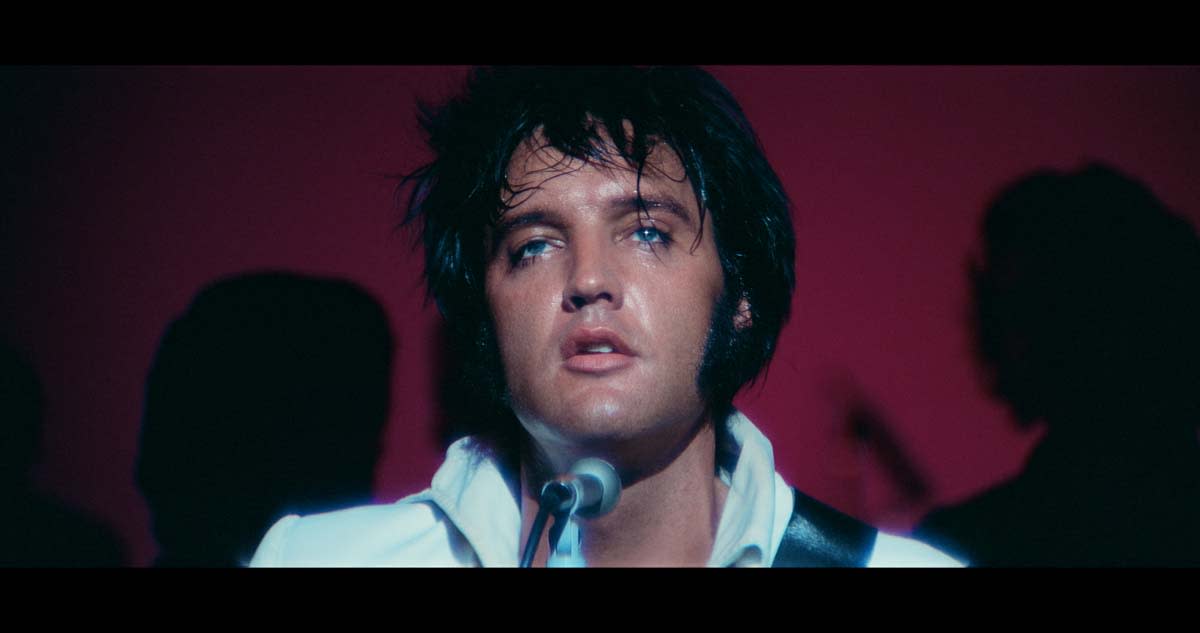
If I remember correctly, he performs that song with sheet music in his hand?
He famously didn’t want to do that song. He didn’t like it and he got convinced to do it. He was reading the lyrics on stage ‘cause it was literally his first time singing it in front of an audience.
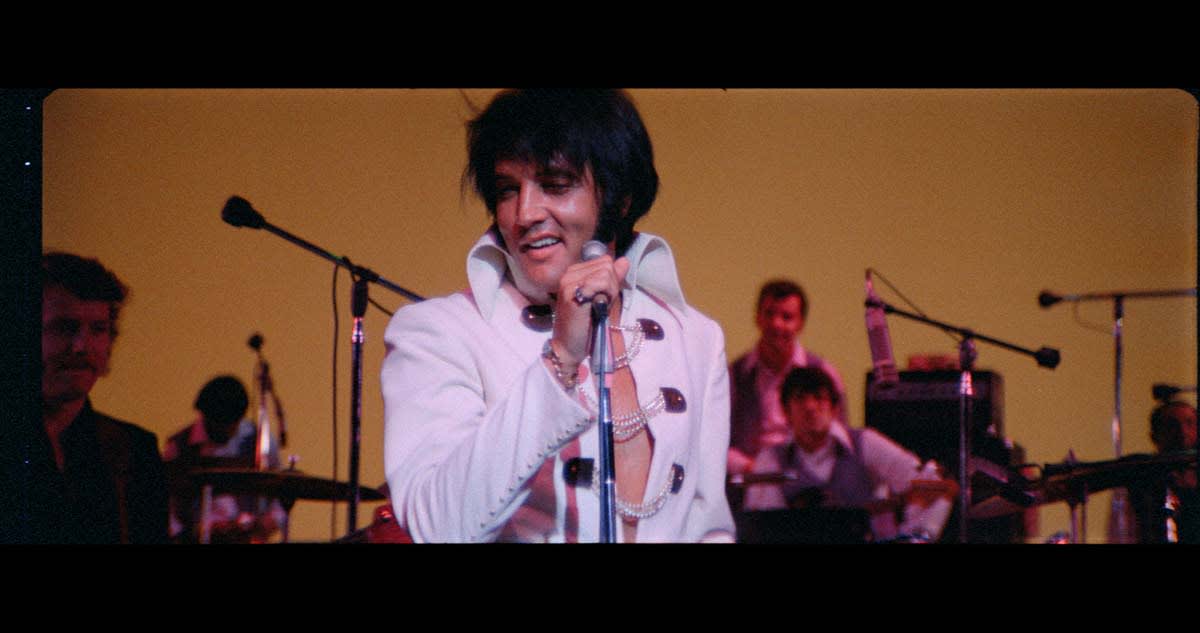
You mentioned a little bit about the technical aspects of the restoration, but I would really love to hear more about the quality of the film, and the quality of the audio. I have never heard Elvis sound as good as what I heard in this film. It was fantastic.
You saw an IMAX, Steve, didn’t you?
I did see it in IMAX. Yeah.
Eight years ago - when Warners went into the salt mines to pull this stuff out of archive - they did a good 4K scan on everything.
Visually we’re coming from a good place in the sense that the film was kept quite well, but then we also went through a secondary process with Peter Jackson’s company, Wingnut, down in New Zealand.
Peter has basically written the book on film restoration, from his work on the Beatles films and the World War I film he did. [They Shall Not Grow Old (2019)]
When we’d finished the film and we had the final cut, we sent it through Peter Jackson’s Wing Nuts process, and that was the icing on the cake. We had the fresh 4K scans, but then he did this beautiful job of cleaning up a lot of the dirt and a bit of grain reduction.
It really came out beautifully. It still feels like film. We didn’t want this film to become too clean. I love film and I love grain, so it’s very important for us to, to maintain that.
The work they did was great in making it feel as fresh as possible, as we didn’t want this to feel nostalgic in any. They wanted the colors to punch and the film to look as beautiful as possible.
We also had an amazing sound team who did an incredible job in terms of kind of cleaning up the tracks. We had access to the multi-tracks from the original performances.
They did an amazing job of cleaning up the tracks. Our amazing re-recording mixer did an incredible job of mixing this film.
There were certain instances where we did have to rerecord some brass and a few kind of musical elements. There was one song where you see the backing singers clapping and we had our amazing sound editor put his own claps into the mix, which really brought the song alive, but we couldn’t have a white guy in Australia clapping for the wonderful, Sweet Inspirations, so Baz got a gospel group in Nashville to clap, and we replaced the claps with their claps. It felt just a little bit more authentic.
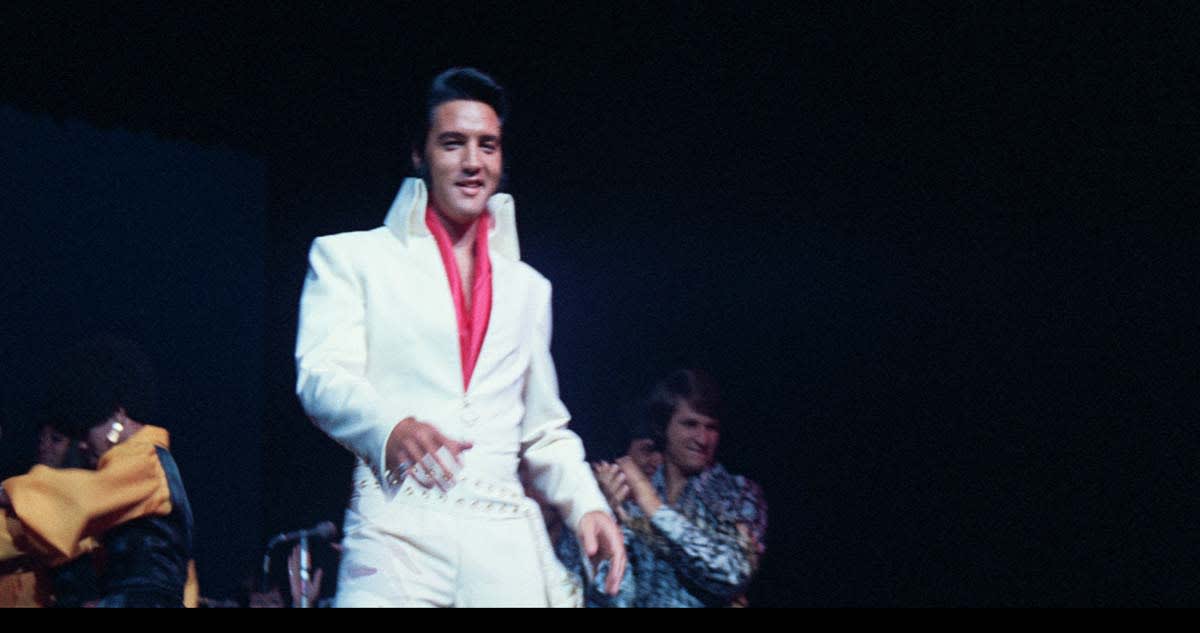
You were talking about the sound team, and one of the places where I noticed sound design was the “Love Me” sound design and several other places too. That was very trippy. and not just the mix of the music. How much of that did you do in the offline cut.
A combination. We had an amazing music producer/music editor, Jamieson Shaw, who did a lot of cool, interesting experiments musically. It was a bit of back and forth. Sometimes I’d come up with an idea and say, “Hey, Jame, I want to combine these different performances. I’ve got all this footage of these girls losing their minds in the audience. I wanna do something kind of cool here.” Then he’d fire me back a bit of a remix, then we go back and forth. It was a very organic process of finding a groove that kind of works.
Another place I remember the sound design was “In the Ghetto.”
“In the Ghetto” was a performance where Baz wasn’t crazy about the instrumentation from the original performance. We had this quite cool remix that Jamieson had done - a little bit more abstract, a little different to what you’d expect. I love the song “In the Ghetto.” Baz is huge fan of it, too.
So we decided, “Let’s try and do something different and new, going from “In the Ghetto” to that spoken word poem. It kind of gels. Plus, Elvis talking about his reluctance to talk about political views worked as well.
The “Lonesome Tonight” song also had interesting sound design.
We used bits of that in a couple of different places in the film. I had this idea of merging a poem that he performs in “Are You Lonesome Tonight” with some of the spoken word elements from “American Trilogy: Hush Little Baby Don’t Cry.” It seemed to kind of gel.
Again, it was a back-and-forth process with me and Jamieson in terms of picture and sound. Trying to find lyrics that worked together, to create something new and poetic was very much something we set out to do from the get-go.
One of the things I haven’t asked about is the schedule.
It took a long time to make this film. Eight years ago, we knew we had something special to work with. When we saw the archive of footage, we knew there was a lot there, and we knew this deserved its own project.
At the time it was meant to be a parallel project to the Elvis film, but because of so many reasons – Baz’s films are always huge and a massive undertaking, and COVID and everything else - it became impossible to do two things at the same time. So then the movie came out and Baz said, “Well, what’s happening with the film?”
So we started exploring it. It was a very hard film to get people interested in financing. I kicked the wheels on the project, created a kind of a sizzle reel for it. It looked like it was not gonna happen. I remember ringing up Baz to tell him that I’d been asked on another film. I told him I was going to take it.
He said, “Johno, whatever you need to do, I completely understand.” Two days later, Baz rings me up and says, “Johno, don’t take that film.” As only Baz can do, he ends up in this random dinner party, seated
beside the CEO of IMAX.
He mentioned this idea, and the IMAX guy said, “Oh my God! This sounds amazing!” Prior to that we were telling him, “Baz, just go off and make your next feature film. Forget about Elvis. You’ve done Elvis.” All of a sudden we had this new level of excitement which got things going again. But from that point, there was another year that went by until we finally got our ducks in a row.
There are lots of different interested parties with Elvis. Warner Brothers owns half the footage. Someone else owns the other half. Music publishing is scattered in the wind. We ended up partnering with, Sony Music Vision, which is a picture division of Sony Music.
They came to the party with the financing for it. It took a long time for all those pieces to fall into place. When they finally did it took us about a year to make the film.
Jonathan, anything else?
It really has been an unusual project to make in so many ways. It’s Baz’s first kind of foray into nonfiction, so to speak.
Non-fiction, but not documentary and not music performance.
That’s right. I remember someone asked me at the beginning of the project, “Johno, are you gonna start with the death or end with the death?”
No! There’s not gonna be death in this film!” This this isn’t meant to be a “warts-and-all” documentary about Elvis’s entire life. It’s just meant to be a celebration of Elvis - the performer, the showman.
Well in that you succeeded. Jonathan, thank you so much for your time today. I really appreciate it and I hope everybody gets a chance to see this. I wish it was still gonna be an IMAX, but at least watch the film because you will have a new appreciation for Elvis Presley.
Thank you, Steve.
 April 2, 2026
Project Hail Mary
Joel was last on Art of the Cut for his work on the Disney film, Jungle Cruise. Joel’s other work includes Thor: Ragnarok, Transformers: Rise ...
Read more March 26, 2026
Young Sherlock
Today on Art of the Cut, we speak with four of the editors on the buzzy new Amazon Prime series, Young Sherlock. With us are ...
Read more March 18, 2026
KPop Demon Hunters
Today on Art of the Cut we speak with editor Nathan Schauf about his ACE Eddie and Annie award-winning work on the Oscar-winning Best Animated ...
Read more