













Disclosure Day
Editor Sarah Broshar, ACE, discusses the keys to building suspense and enhancing emotion, Spielberg’s rule about temping in music for legendary composer John Williams, and why she can’t reveal how long the editor’s cut was.


Today on Art of the Cut, we speak with editor Sarah Broshar, ACE, about editing Steven Spielberg’s Disclosure Day.
Sarah has been a guest on Art of the Cut several times, most recently for her editing of The Fablemans. She was nominated for an ACE Eddie for Spielberg’s The Post. Her credits also include Ready Player One, Pet Sematary, and West Side Story.
Sarah, welcome to Art of the Cut. It’s nice to have you on the show again.
Thank you. It’s great to be back.
Can you give us the backstory on how you started working on Spielberg’s editorial team and how that evolved to where you’re sitting now in the enviable position of being Steven’s full time editor?
I went to AFI for grad school, for editing. After my first summer, a director that I was friends with, and was working with, said, “The actor in my short film, her boyfriend is an assistant editor for Sky Captain and the World of Tomorrow (edited by Sabrina Plisco).
I wonder if we could get you in there?” So I got an internship working with Sabrina for the summer and it was just incredible. I got to wander around this warehouse in Van Nuys and sit in on visual effects meetings and get people lunches and ask a lot of questions. That was my intro to the film industry in a feature film cutting room.
Then, the next summer, when I was finishing up my program at AFI, somebody else was looking for an intern, and Sabrina, through the connection of an editor/producer friend sent my name over for an internship for the movie called Ten Items or Less, which was a very small movie that Michael [Kahn] cut with Pat Crane as first assistant.
So they brought me in on that movie. I just tried to help in any way I could possibly be helpful. I was driven and got creative to do things to help the cutting room out in any way I could.
By the end of that movie, the Avid assistant had moved on to something else and they needed some help with turnovers, so I actually got to do some of the turnovers as it was a very small budget indie movie.
I didn’t get to know Michael during that film, but Pat really liked me and brought me back to work with them on The Spiderwick Chronicles.
Between those things, I was editing promos for Fox International, I was editing some independent documentary projects out of my apartment, and I got myself into the union through freelance editing jobs. I joined the union as an editor, piecing together many days of pay stubs and doing the whole thing that we do. I was on The Spiderwick Chronicles. That was a great experience.
Then I got hired to do [The Adventures of Tintin (2011)] test shoot. Michael actually wasn’t involved in the movie yet at that point. It was Adam Gerstel who was doing the test shoot set up and figuring out the pipeline and the workflow with motion capture.
It was a really fun, exciting project to be a part of. I got to sit on stage with an Avid, watching Steven direct the actors and experiment and see how a movie set worked. It was an out-of-this-world, mind blowing experience.
Then, the next year when they geared up for the full shoot, Michael was cutting it, and I’d worked with them on Spiderwick Chronicles, and I was on the test shoot, so they brought me in to sit with Michael and run the Avid while he cut and help manage the workflow.
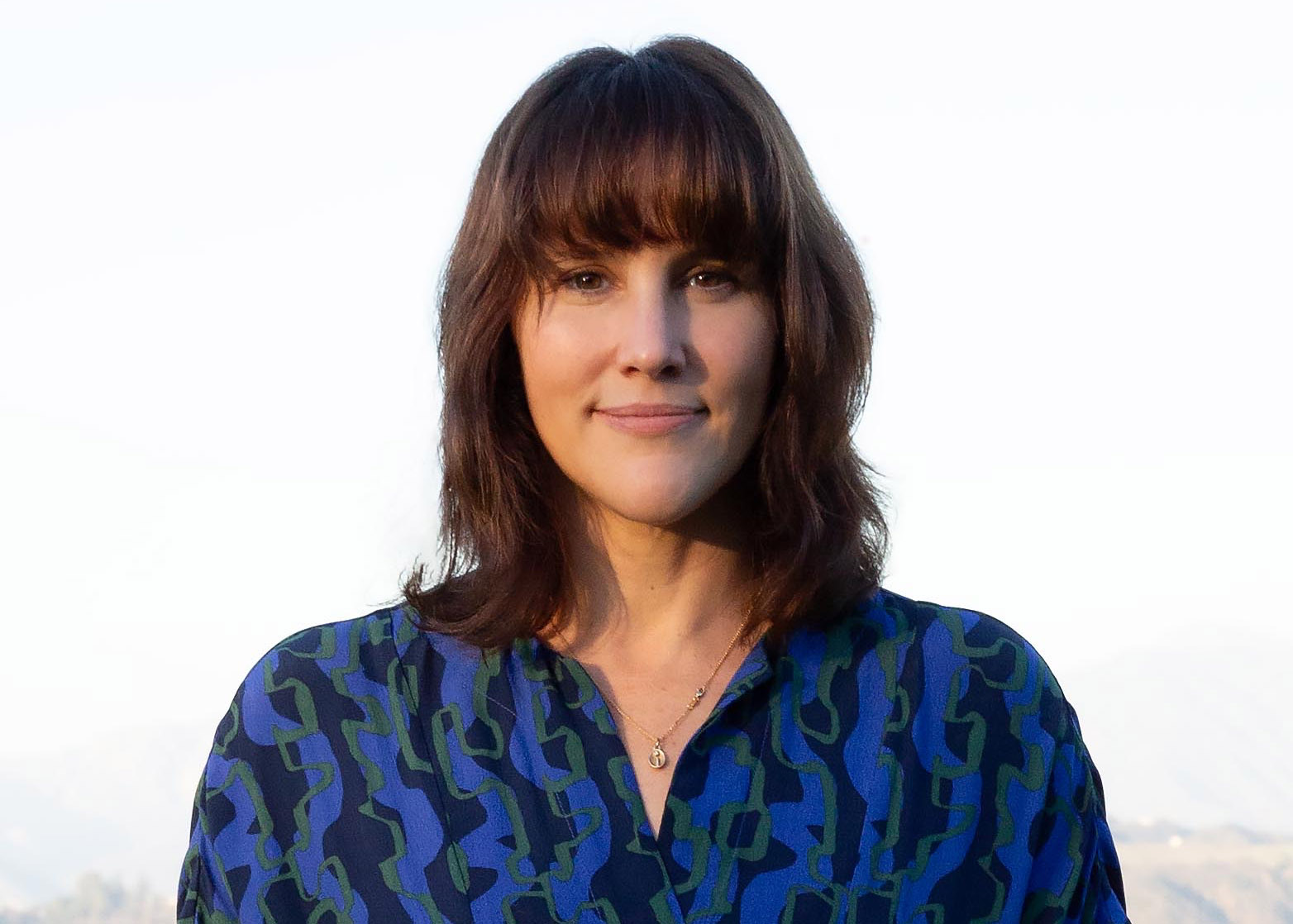
Editor Sarah Broshar, ACE (photo credit: LeeAnn Nickel)
It was pretty great experience to be there, because every time Michael wanted to do something I was there to help him.
Then any time Steven was in the room, I was running the Avid for them while they’re cutting the movie. I had a great film school experience at AFI, but a REALLY great film school experience at the start on Tintin.
Then I just was very lucky to keep working with Michael and Steven and the crew and the team. I was in the cutting room with them from that point on and was given more editorial responsibility as things progressed: additional editing, then co-editing. So that’s my beginning story.
I want to talk about the matching of the pace of the scene with the pace of the editing itself. The very beginning of the movie starts with this crazy wrestling match, then immediately after that is a much slower scene. The editorial pace matches the energy of those scenes. Talk me about how - when you’re watching dailies - how you choose how fast you’re going to cut or what the pace is going to be of your editorial based on what you’re looking at.
Pace is something that’s usually dictated by how Steven shoots the scene. The wrestling scene is kinetic. It is supposed to be in your face. It is supposed to jolt you into the movie. Then we’re dropped into the midpoint of a story – more of a slow boil standoff. Steven dictates the pace as he blocks and stages and directs the actors with the pace of the dialogue.
It’s important as an editor to stay with the characters, stay with the feelings. Of course, there are times where you’re intentionally slowing things down to make a moment, or intentionally speeding things up. But in this case, we’re moving through the story and trying find and hold the tension the scene calls for.
Some of the characters go to a safe house and I noticed the sound effects of wind noise. How do you use sound effects for tone or storytelling in your picture cut?
That wind noise was a great addition by Gary Rydstrom. We did not use that particular sound in our picture cut. We’re pretty minimal with our sound design elements. We temp anything that has to do with timing and practical effects or that we see on screen, and we’ll do a little bit of design for special moments.
We added design elements in the dive scenes, but often we let music handle tone, and give Gary a blank slate to create his magic.
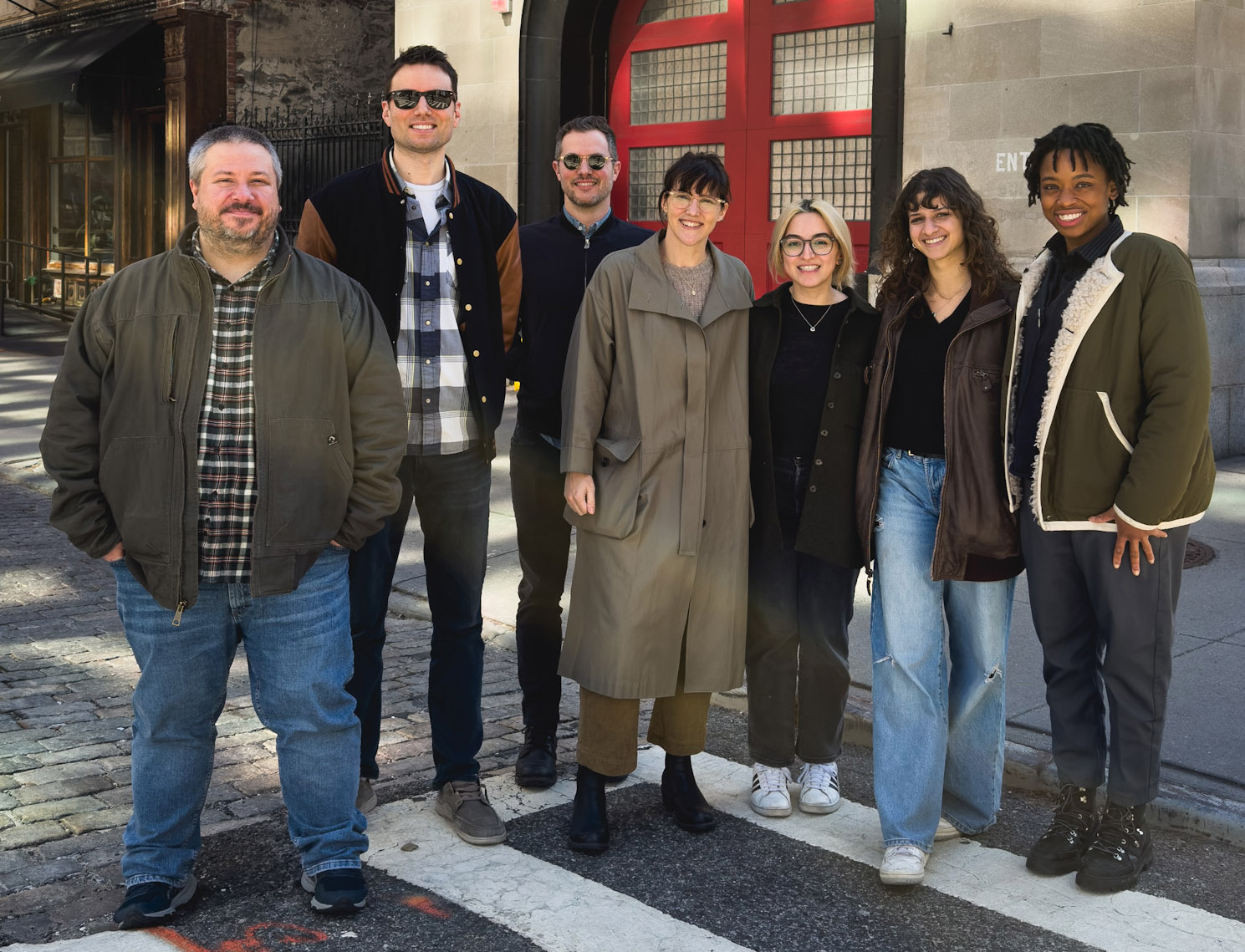
New York Post crew in front of the Ghostbusters firehouse. Left to right below: Andrey Ragozin, David Thomashower, Corbin Mehl, Sarah Broshar, Ruby De La Rosa, Soraya Dubdoub, Simone Wright
You’ve cut a few films with Steven and Michael. What did you learn about the way they interacted with each other that guided you when you took over the reins?
I’ve been working with them for so long, I think a lot of it is really subtle. Michael always says, “Never show a director something that doesn’t work.”
Some of my latest conversations have been about the issue of having assistants be remote - where they don’t even get to be in the in-person experience that you’ve had for so many years. Hearing the conversations, seeing the interactions. That’s so much of the job, don’t you think?
Yes. I am a very strong believer of in-person cutting rooms. Our team for this movie, we were so tight. And our cutting room geography at Amblin is still kind of set up like a film cutting room - where all the assistants are basically in a giant room. It makes communication and togetherness a lot easier to be in the same space.
The value of working in person is for the assistant getting to see the cut evolve, hear the conversations about the cut, be a part of that. It’s also the sense of camaraderie. I felt like we were all really supportive of each other. We were a really great team and had a lot of fun, and it really made the experience much more special.
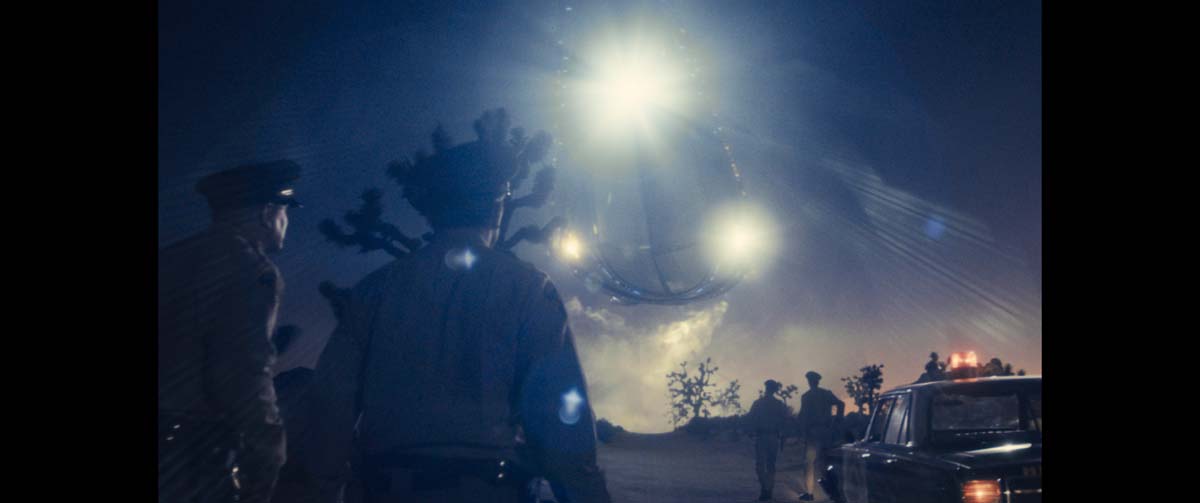
The big ending sequence in particular was one of the hardest sequences I’ve ever done in a movie before, and it was all hands on deck. It was an incredibly complicated visual effects sequence shot at 30 Rock often with only blue screens. You could have several hundred screens that were changing within one shot that lasted two seconds.
How do you divide up these giant panels into all these tiny monitors? We were coordinating with the art department – what are the graphics and transitions and VFX and stock footage? They shot some international anchors. International text, transitions, coordinating with visual effects.
What are all the elements? Where are we putting the elements? It was this mind-blowing thing to wrap our heads communally around how to put the sequence together.
It was months of us coming up with the system for our shared After Effects projects per shot, making the system work so we could easily re-render the sequence as VFX updates came in or as we decided to move or rearrange elements within or across the shots.
We were all working on it together. When exported a temp effect you’d make it your own color so you know who did the latest version of the shot. Even Elise our PA was going into the After Effects projects and going through our layers and keeping a database of which elements we were using in which shots. It was utter madness, but also so much fun and it really was a great community.
As far as the art of learning to edit, I think a big part of it is getting to sit in the room while it’s happening. Andrey Ragozin, our first assistant on this movie, sits down with me and Steven every single moment and helps take notes, helps coordinate phone calls and things that are going on behind the scenes, but also is there and gets to watch and be a part of the cutting experience.
When Steven is not in the room, other assistants come in and I show them cuts. You talk about things. I think we’re very interactive. It’s so valuable to have a great team.
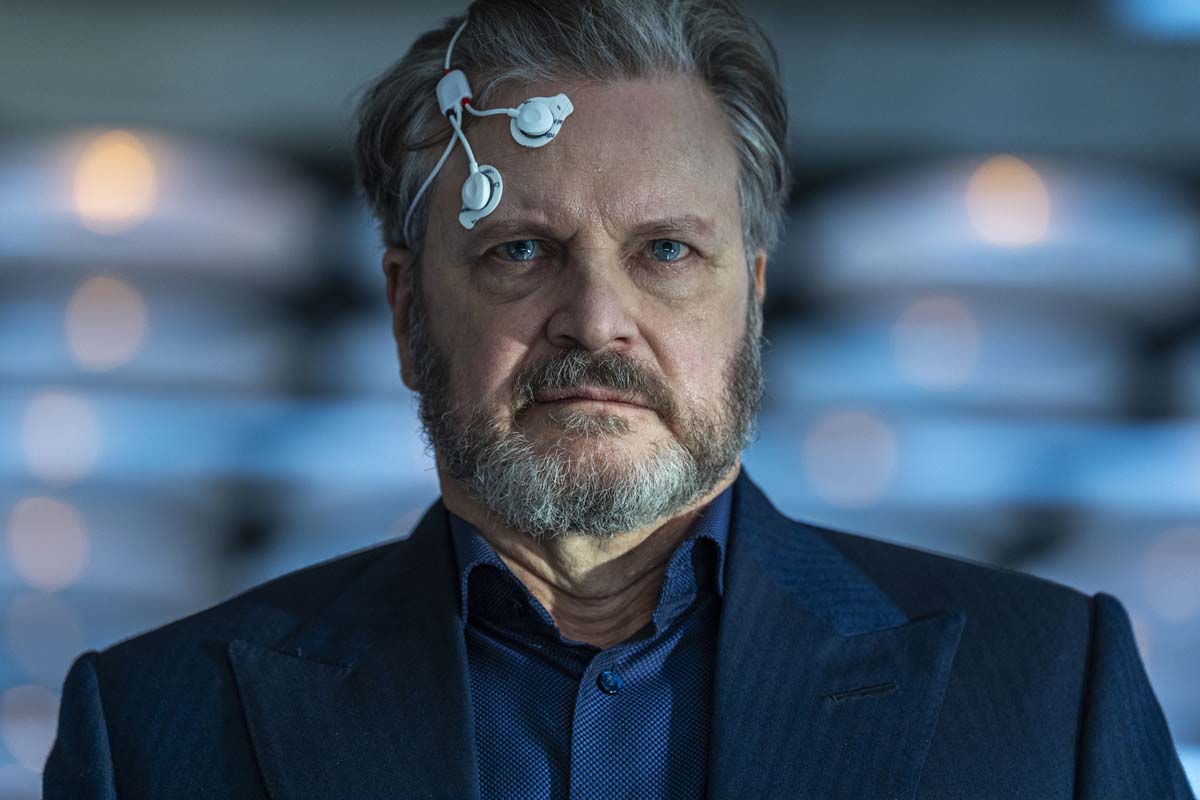
Let’s talk about building tension through editorial. The scene I’d like to discuss is in the trailer for the film, so I don’t think we’re spoiling anything. There’s a character named Jane, and she’s being contacted telepathically by a character named Noah. That scene had a lot of tension. How do you build that in editorial?
I don’t know how you intellectually do it. My feeling about this is: How much anxiety do you have while you’re watching the scene? And if you’re loosening up or lapsing or thinking about lunch, then something’s not working.
Throughout the whole film you’re trying to create the feeling like your stomach is churning a little bit. That’s always the goal: to be a little bit on the edge of your seat, a little bit off balance, feel the mystery, feel the tension.
Talking about constructing the scene, we use temp score. You’re looking at the images and seeing what the images are doing to you. It’s always a question of how literal you are versus how evocative.
How literal are you with cause and effect, and how much can the audience bring to it themselves? I think what you do is you watch and you go with what evokes the most feeling.
In that scene there are things happening, but they’re in altered states, so you don’t have to follow a linear continuity rule. That scene was shot so well: the lighting, the camera angles, and I think we had a very effective temp track in there. Then, when John Williams did the music, it just took it all to a whole new level.
You mentioned a couple of times, using temp score, knowing who your composer is, I would be very nervous about temp score. Tell me about what you used. Did you use all John Williams music?
I’m not allowed to use any John Williams music, per Steven. The temp score is something that is one of the most fun things about cutting a Steven movie, and also one of the most daunting. We had some great finds early on in this film. I try to listen to scores before we even get dailies and pick out a few soundtracks.
These are sort of the feeling for the chases. This is the feeling for this character or this theme. I tried to get an animal theme, then really try to find tone and that kind of thing. Obviously it can change when you see what the footage is.
And we try not to go too electronic – although we did use some electronics in the temp and John used some for the score as well - synth elements woven into the orchestral score.
So no John Williams because I don’t think Steven wants John to influence himself. But if he hears another composer, he listens to it once in the movie when we do the spotting and probably never listens to it again.
But Steven listens to the temp score when he watches a movie while we’re cutting it over and over again for 6 or 8 months or whatever it is, so it has to be something that works for the film. It’s a fun process for sure. I love doing music.

Another scene I wanted to talk about was when Emily Blunt’s character has a panic attack on a train.
Her performance was beautiful and heartbreaking. I was crying watching the dailies. When you have a scene that really hinges on a great performance, we don’t spend too much time second guessing it.
You watch the dailies, you respond to the takes. That scene is probably one of the scenes that changed the least in the movie, from the first cut to the final cut, because she’s leading it.
Partly what we’re watching when you watch dailies is in what parts of a scene is this really effective? You’re watching the wide shot and you kind of know, “Okay, we’re going to not be playing a lot of this in this super wide shot, but then all of a sudden something clicks, “Yep, that’s where we want to see this.”
So a very important part of especially an emotional or performance-based scene is your initial reaction to watching the dailies. Watching dailies together with Steven, he’ll make his own notes. I always take my own notes as well.
I also write down his thoughts, of course. I make a lined script of our selects for a scene, drawing a line on the script from here to here, showing where it’s really working. I felt like that scene was one where the actor in the performance really showed where we cut and when we cut.
Josh was really great and supportive. The last moment in that scene was just so beautiful, and Steven really took the time to let them have a resolution.
We don’t take a lot of breaths in between scenes in this movie. We’re generally moving on to the next thing. But that was one of the only places where we really take a long breath.
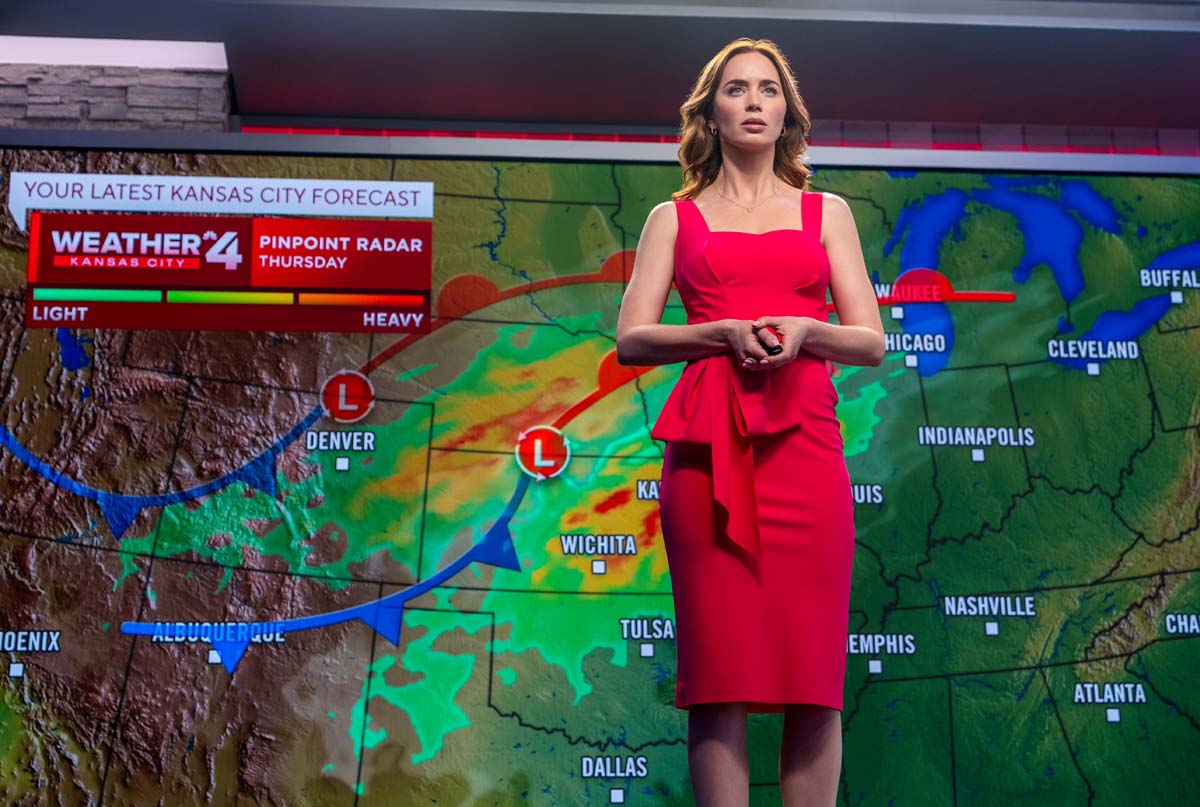
How was the structure and order different between the script and what we saw in the final film? Can you talk about scenes that got flipped or deleted?
As scripted you’re in the movie for quite a while before we meet Emily Blunt’s character, then - when we do meet her character - it’s like yin and yang, like totally different energy and vibe from what we’ve been watching in the movie so far.
As we were going through the shoot - because we cut while we’re shooting - there were many quicker beats with great production value of Daniel and Jane escaping through different locations, meeting up with Santiago in an earlier car scene.
There were several beats through a giant warehouse with millions of extras. It was a cool thing. You get a sense of the world, and even though it was fast cut, Steven said, “This feels like too much stuff before we get to Margaret. We need to condense it.”
So basically they rewrote and reshot the car scene so that they didn’t have all these beats of places they were going and things they were doing so they could get to Margaret faster.
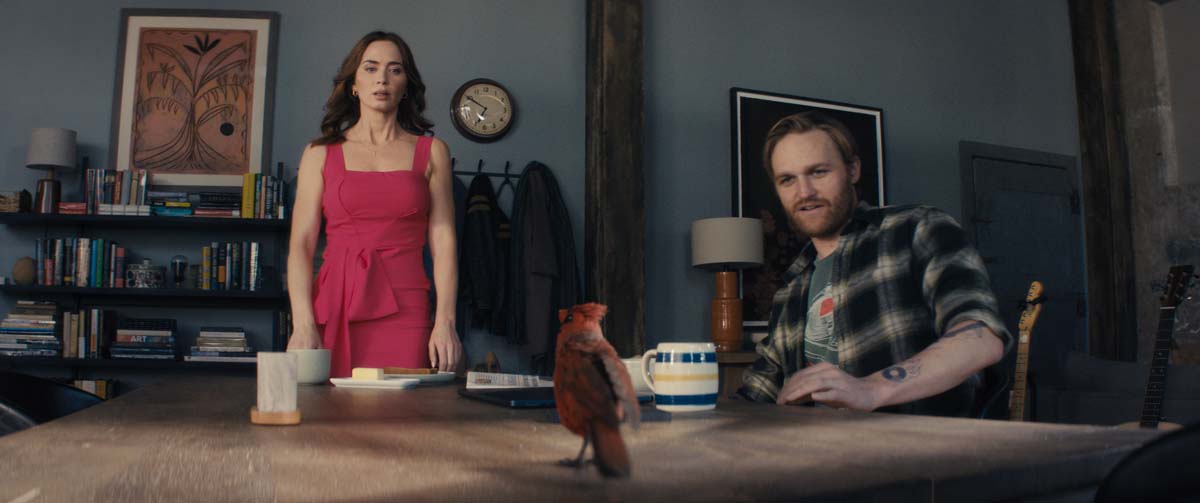
That’s one of the advantages of cutting while you’re shooting and working with someone like Steven, who looks at something and says, “I love this Margaret character.
Why are we going to all these different places and this beat, then that beat? I want to get to her. I don’t know if I care about all this cyber tech background espionage stuff. I want to get to Margaret. We’re going to make this as simple as we can and get on with the story.”
In another place, there was a big action sequence that was a total crowd pleaser that got cut from the movie. It was early on in the film, and it was Wardex going after Daniel with the drives, trying to get the drives before Scanlon decides to “dive” on anybody.
First they have to do their ground surveillance method. It was a great set piece. It was very entertaining, and had a great payoff, but it took away from how much time you’re spending with Margaret and getting into Margaret’s story.
When it was lifted from the film, you didn’t miss it. Pieces of that actually went into Scanlon’s dive on Jane. We used elements of the surveillance walls at Wardex and the Wardex cars on the road. Those were all shot for a different sequence earlier in the film.
The biggest thing is this: when we took out that big four minute chase in reel two, it affected the structure of a lot of things how we intercut between Margaret and Daniel, but nothing crazy.
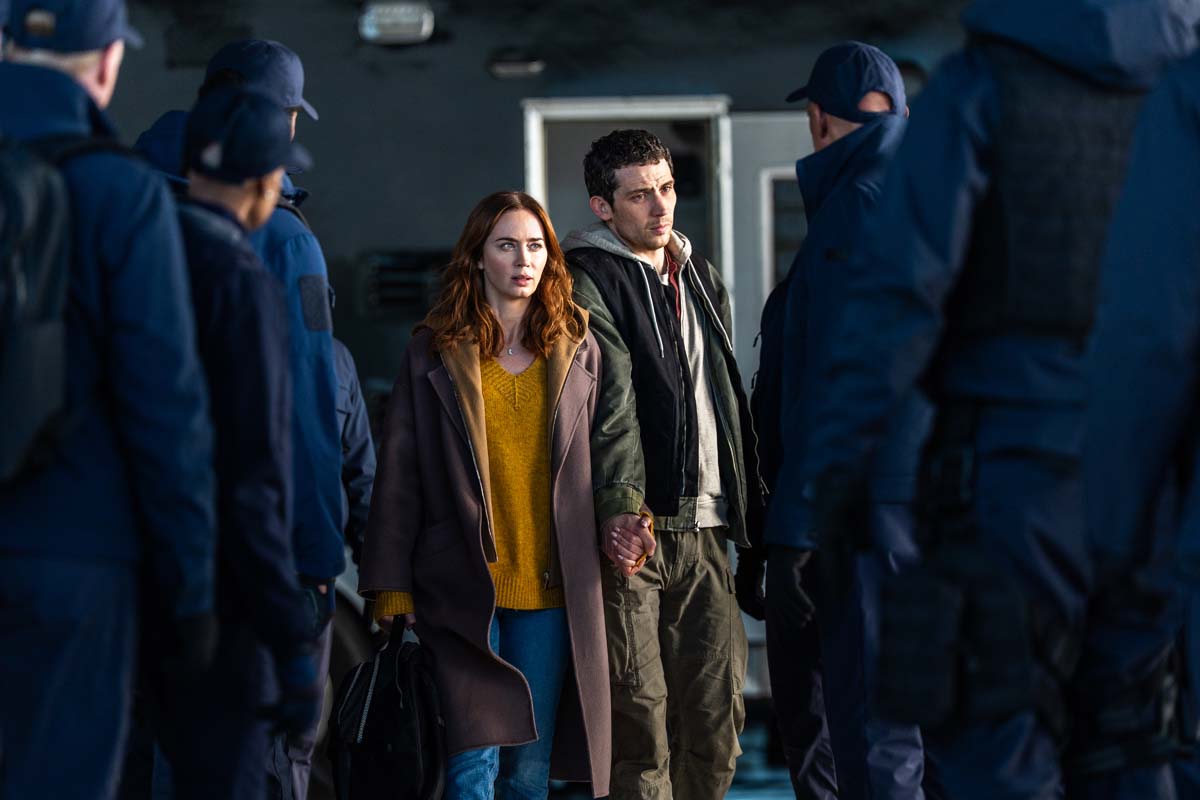
Let’s discuss the construction of a character arc over time, depending on the temperatures of a performances. You’ve got Emily Blunt’s character starting out kind of goofy and frivolous, then she becomes incredibly deep by the end of the movie, understanding her herself and her world. Were there multiple tones or temperatures of performance that you and Steven were looking at to say, “She can’t be at this point yet. We need to hold this until here.”? How do you choose performance based on where you are in an overall character arc?
I feel like a lot of that happened on the set in this movie – more so than in the cutting room. Of course, we had a gorgeous variation on performance and tone from all the actors.
They were great, but Steven knew emotionally what he was going for when he was directing them on set, so it wasn’t like we had a take that was here (places her hand low) or here (raises her hand high).
It was more that you had the take where the actor really entered the state that you felt. It’s always about how you’re feeling when you’re watching the dailies.
Especially at the beginning, there’s a scene where Margaret is talking to a cop, and she sort of flips into this otherworldly state. There are three takes. Two takes were great, then there was the take that we used where we felt, “Oh, there’s something else happening here!” So, a lot of it is just the actor really getting into this state or really feeling the feeling.
Tell me about the train crash sequence, because that was riveting.
The train sequence was a really fun sequence to put together. They shot for about a week in South New Jersey. All that exterior stunt work, that was a real train. That was a real road. They were really driving a car. Often all in one shot.
So you had all of those elements – some with actors some with doubles. Then later in the shoot, they shot the actors in close-ups on stage. It’s a mix. The whole scene is a mix of real production stunt doubles. The actors were actually in the car and doing a lot of it as well.
That was a really fun scene to put together, to control. When do you show what you’re showing?? When do you see the train? When do you see Boyd? How long of the pushing before they hit the train? There were a lot of decisions to be made, and that was a really, exciting thing to put together.
Our assistant team did really good sound work. That scene was so much about the sound. There’s no score. It was all about the feelings of the car getting dragged on railroad tracks and the screeching of the metal and the oncoming train and the looks.
A lot of it was dictated by sound, and they did a great job. Then it was so fun to get to the mix stage and hear it with the full Skywalker treatment, the Gary Rydstrom treatment and all the surrounds. Let me tell you, that was a loud scene!

You mentioned that there was no score in that scene. I didn’t realize that. Talk to me about that decision. Was it just them knowing that the sound effects were going to be so important that score would compete with it?
Yeah, there’s no room for it. During the dialogue scene, it starts with the bell. You’re at a train crossing and the the arm is down and you’re hearing ding ding ding ding ding ding. Then you hear the train coming. The trains are loud, cars are loud.
You need to have space. What becomes score are the beats and the hits or the accents or the sound effects that’s giving you your propulsion or your pace. Obviously the camerawork and the performances are as well, but a lot of the rhythm is emphasized by the sound instead of score.
Similarly, the next scene in the train car is a very signature auditory sound that was part of the script. That was something that Gary gave us tracks for very early on, that we could incorporate into our edit to give it the feeling, the vibrations, and there is no room for a score when you have this bed of vibrating strings that are built into the set. And we knew the performance didn’t need it.
The performance was here (raises her hand above her head), so you can’t add score to that performance. The performance is already giving you everything that you need emotionally.
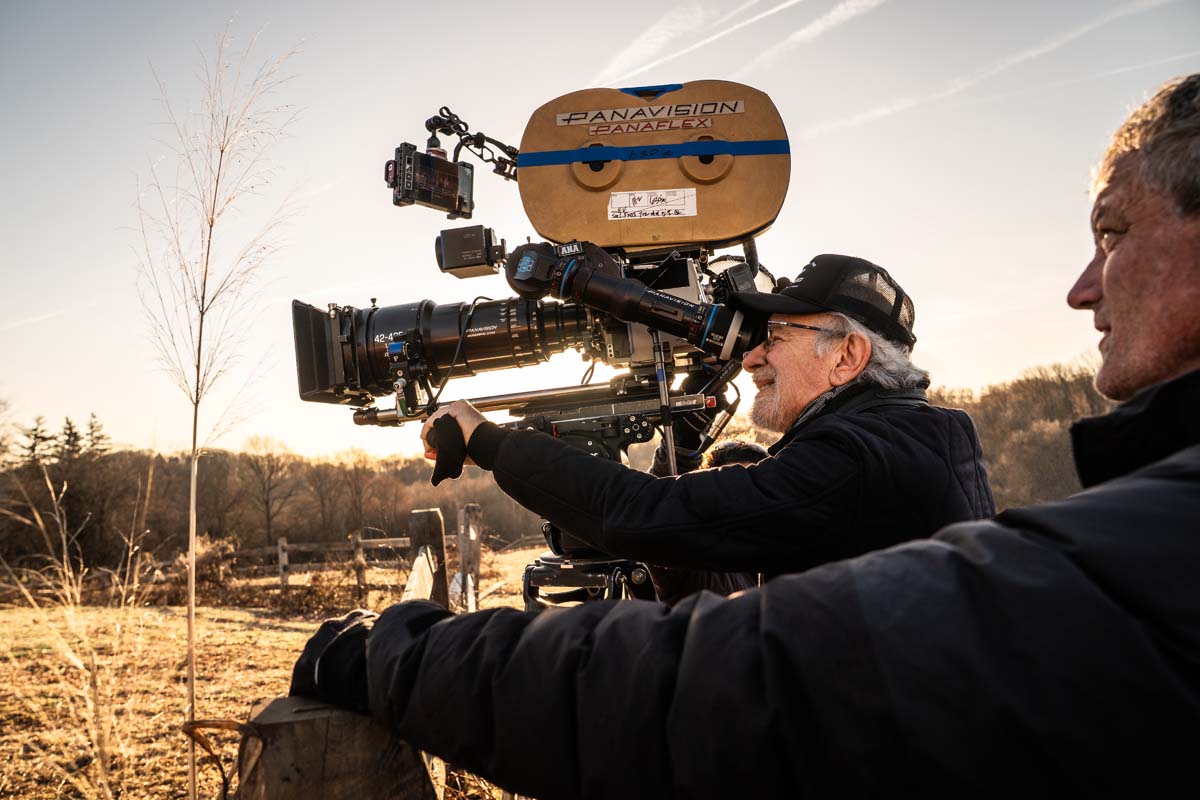
You mentioned early in the conversation that you don’t add much sound effects, but obviously that train crash scene would have been one that the sound effects themselves would have been a big part of the rhythm of the scene, correct?
Oh, absolutely. When I say we don’t add much sound, my assistants are going to listen to this and say, “What are you talking about?! I spent months doing sound effects on this movie!” What I actually meant was “design.”
We do a ton of effects. We do a ton of foot stuff. We do pats on the shoulder. Anything that you feel that is a physical touch or would help dictate the rhythm of the scene. Sometimes you don’t want that stuff. You take it out. Sometimes we’ll have touches or hits in production sound that we decide, “Actually, we don’t even want that there.
We’re not going to hear it.” We do a lot of sound work in editorial. We don’t do a lot of design. We don’t do the musicianship of sound design, like tones or feelings. That’s the stuff that we let Gary bring his magic to.
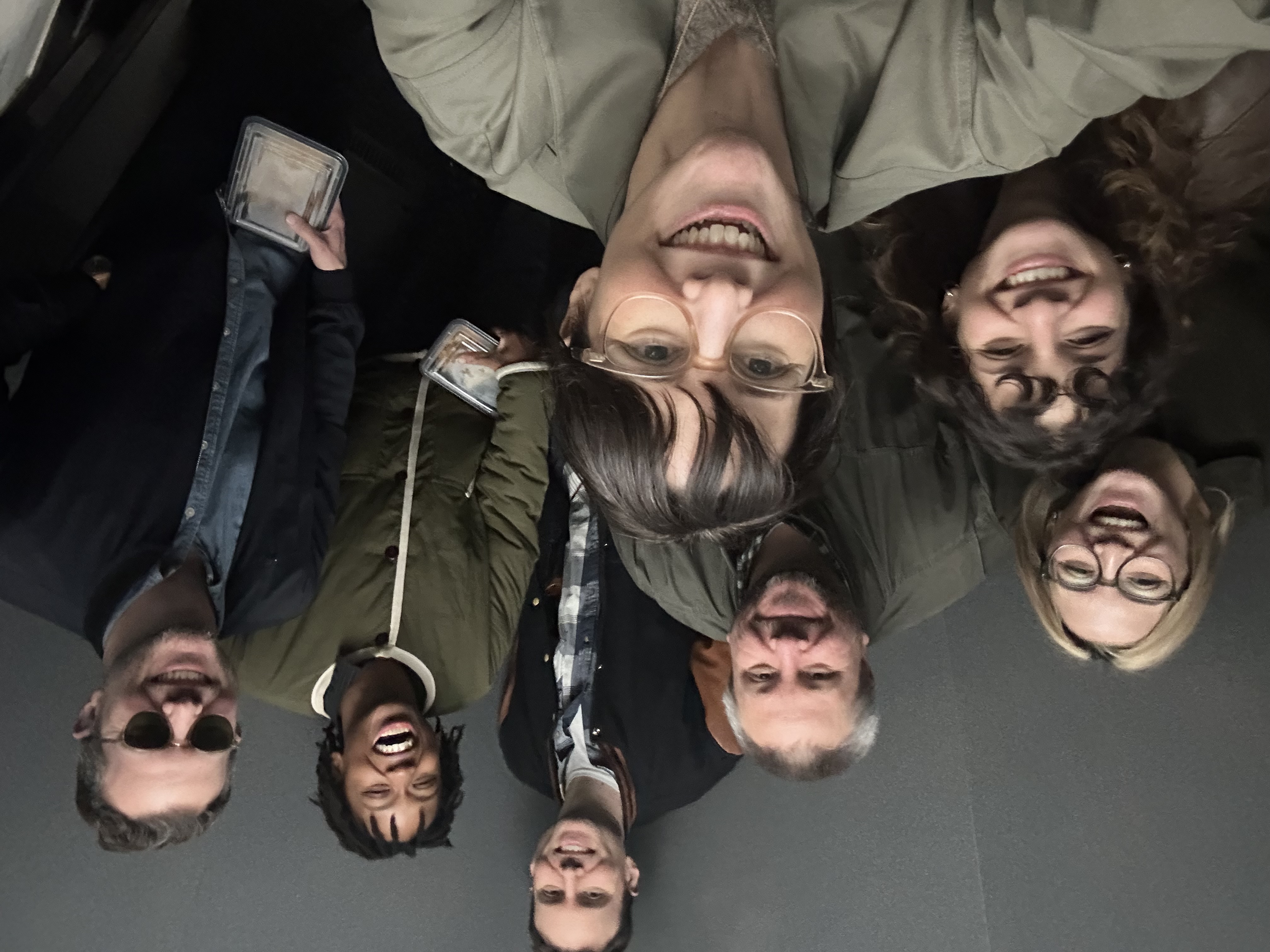
Ruby De La Rosa, Soraya Dubdoub, Andrey Ragozin, Sarah Broshar, David Thomashower, Simone Wright, Corbin Mehl
You mentioned assistants a couple of times. Let’s give them a shout out. Who was on the team?
Let me just say it was the dream team from day one in New York. Andrey Ragozin was the first assistant. I’ve been working with him since The Post, plus on the non-Steven movies I’ve been working on. Andrey knows so much about what’s going on in the cutting room - what’s going on with everything because he’s sitting in the room with us while we’re cutting, so he really knows what’s going on in the cut and can translate that to other people.
He’s got a handle on everything. He’s also doing some of the dailies and doing some of the turnovers himself, but supervising, too, because he would also go in the car and go on the road with us.
Back in New York, we had David Thomashower. Our New York assistant was Ruby de la Rosa. She and David were doing all of our dailies.
We were shooting half on film, half on digital, depending on what the scene was and what their needs were on set. If it was film we would not get it the next morning, but the morning after that. Digital footage we would get from set the next morning.
The assistant would organize all the dailies, put them together into what we still call KEM rolls, which are organized in cutting order, not shooting order. So they follow the lined script, put it together in the order we think we’re going to cut the scene in.
Scene bins are also organized in frame view in the same order. We have paperwork. I still write all my notes on paper. I might try to switch to one of those digital writing things. We’ll see. Andrey did it on this movie. I had piles of notebooks everywhere.
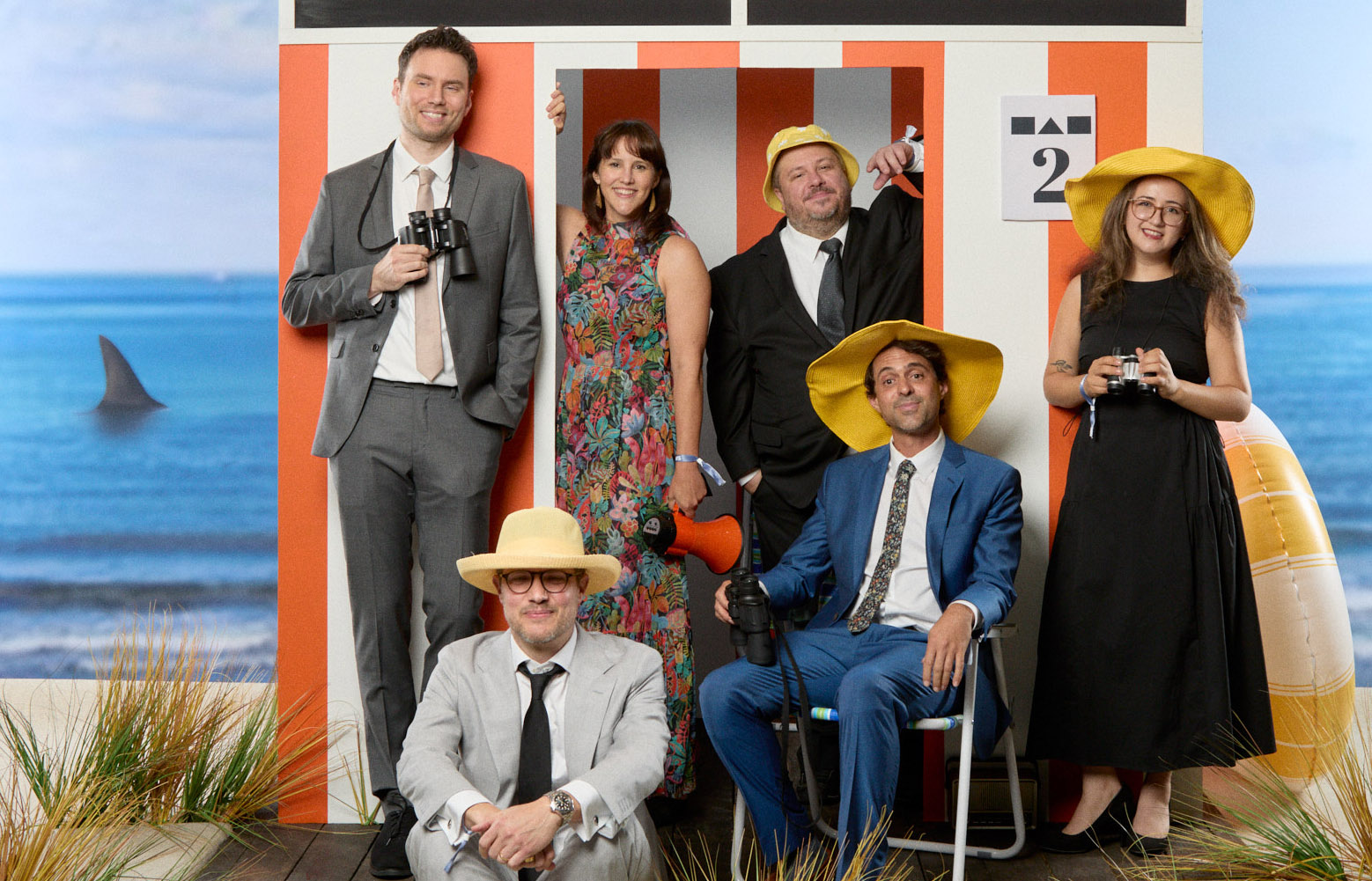
Post Crew at the Jaws exhibit in NYC
I can’t read my own writing anymore. Steven also writes his own notes on legal pads. Writing helps your brain remember things. Also, I don’t want to be looking at screens. I’ve got the movie in front of me, so I’m not on my laptop at all.
Also, we had Corbin Mehl, visual effects editor, who came to New York with us and was helping with some fantastic temps. Then we all came back to LA, and Ruby worked remotely with us for a few weeks to help finish up all the dailies.
Ruby did so much sound for the wrestling scene and for the train sequence. David Thomashower did a lot of sound on the whole film. He’s a really talented guy. We started working with him on Snow White. We couldn’t keep Ruby in New York working with us remotely, so we had to say goodbye to our New York cutting room and hired David Scorca, who is a fellow AFI alum and a super talented guy who did a lot of our visual effects temps, while Corbin was doing a lot of the vfx managing and turnovers and technical important things. Our crew was really collaborative.
I’ll also say our PAs were fantastic. We had two PAs in New York. Soraya Dabdoub was our PA that would go to set with us. She was in the trailer with us on set, and Simone Wright was back in the cutting room with the crew there, helping everybody out and also helping Justin Ostensen, our post supervisor, with drive management and whatever he needed.
He was here back in L.A. Then in L.A. we had the amazing Elise Ferencz as our PA extraordinaire, who we also met on Snow White, and she just is the greatest. I love to talk to her about our movie and other movies – she sees everything. It’s great, great vibes.
You keep talking about going on set. Why did you need to do that and what was the creative purpose behind that?
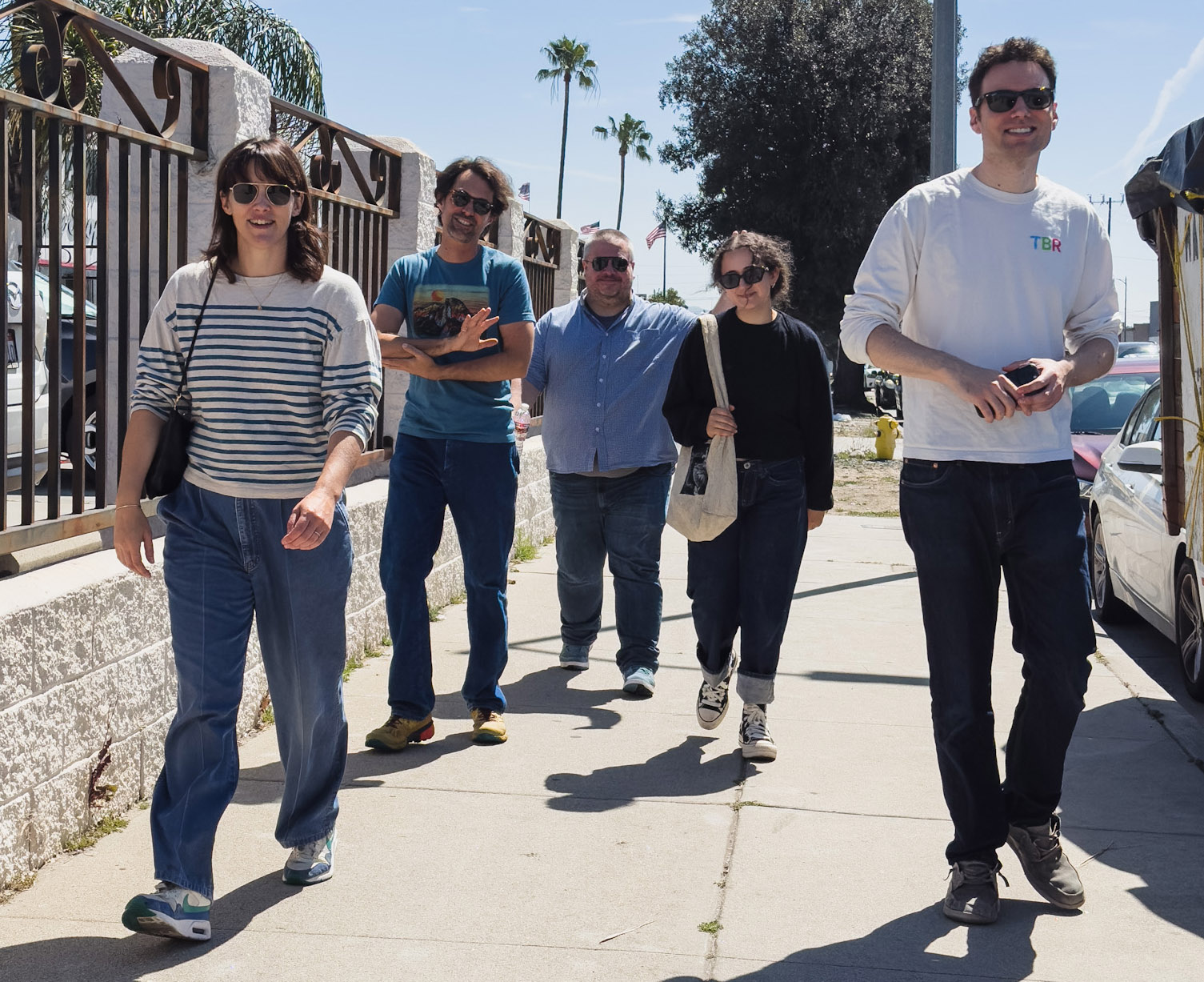
We have a trailer that goes to set and is set up next to Steven’s trailer - either at base camp or in front of set, depending on what the needs are for the day. We bring a drive. We don’t do anything online on these movies.
No Jump. No anything. Either you’re in the cutting room or you’re not working. We would take a hard drive to set that was a mirror copy of our Nexis system, and we’d take two, just in case something happened to one of them.
That was part of leaving for set: making sure the drives were updated and all the bins were transferred over and the project settings were good. We’d call Steven’s assistant and say, “Okay, we’re 45 minutes out.” We’d try to get there before lunch.
Sometimes we get there even earlier in the day, and if Steven has time and it works out, he’d come during lunch and watch dailies. Then he’d come back after an hour or two and see the cut scene, so we’re working fast.
I always try to get eyes on dailies as well before we leave for set. So as the assistants are finishing them up, I’m going through the stuff that we cut the day before, making iterations on that. I’m going through 24-hour-old cuts, finishing up cuts to show Steven on set, but also, trying to get eyes on dailies, so I have a sense of what we’re going to get into.
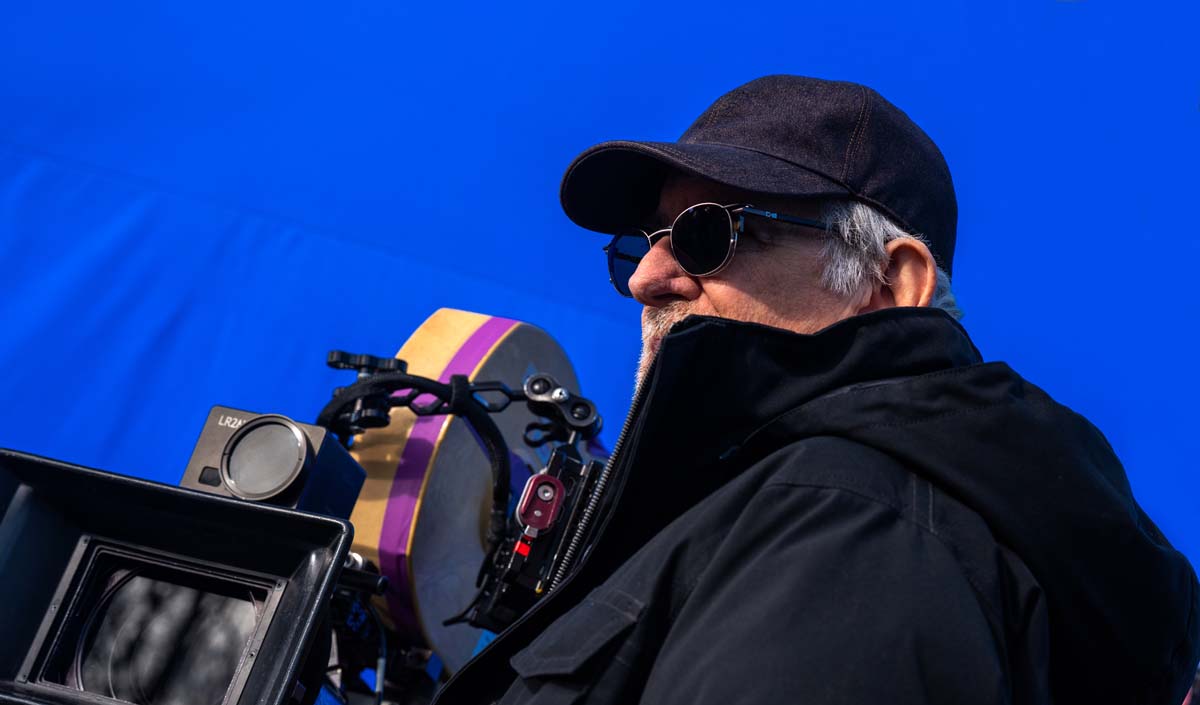
Steven will tell me sometimes, “Don’t watch the dailies before we’re together,” because he wants my fresh reaction… as much as I want to see his reactions. There’s also an interesting thing when you watch dailies with the director especially if it’s something they’ve just shot, they certainly have their feelings about it and their reactions, but then you revisit the dailies two months later when they’ve forgotten everything they shot and they can see things in different ways, so it never hurts to go back to the dailies. Just keep going back to the dailies.
Once you’ve lived with the same cut for a month or two, go back and watch the dailies again and you’ll find things.
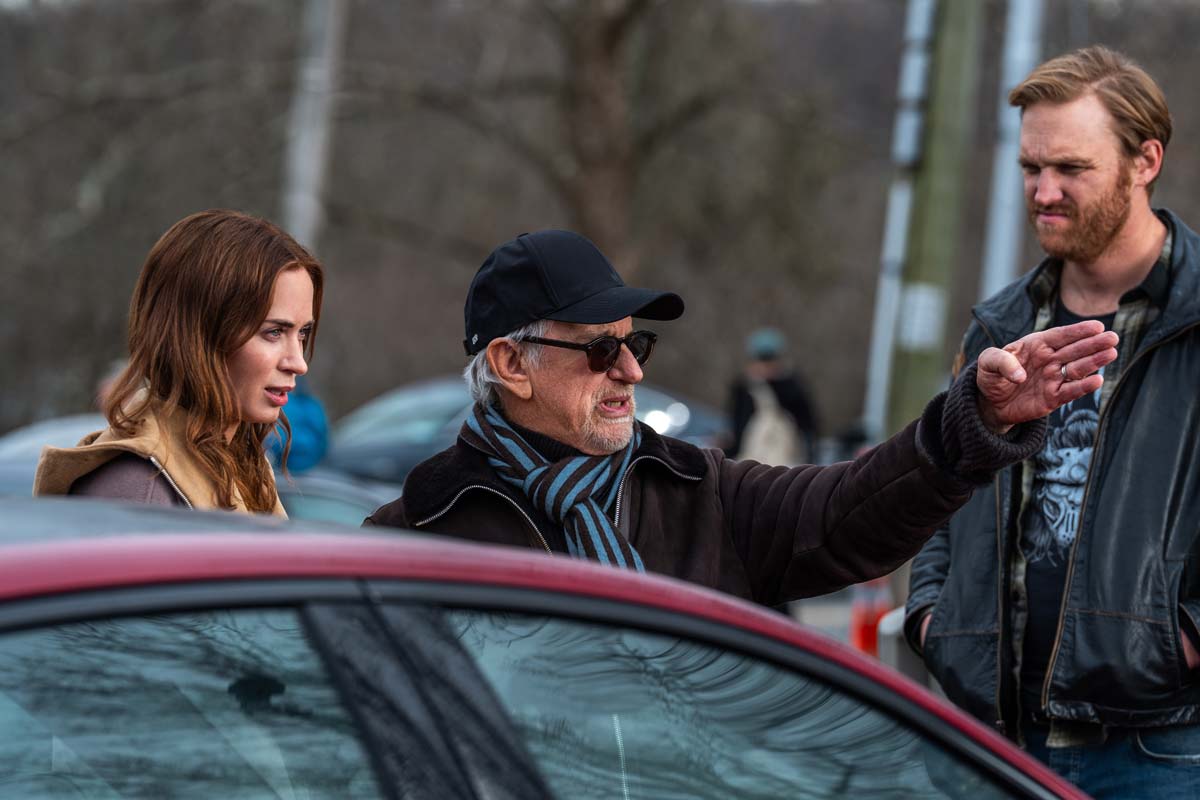
So the point of being on set was more to have access for Steven, and to Steven.
Yes. To Steven. Yes, so Steven had access to the movie. There weren’t dailies on PIX, so if a department needed to see something, they had playback, but sometimes a department head needed to come and check - like costumes would need to check a few days or a few looks or makeup wanting to come in and check, so we would be available for that, but that was not the primary thing.
Like, the morning we finished the train sequence, we already had cut the first half of the sequence for them, from arriving at the train tracks up until the train catches them. That was all shot practically on location.
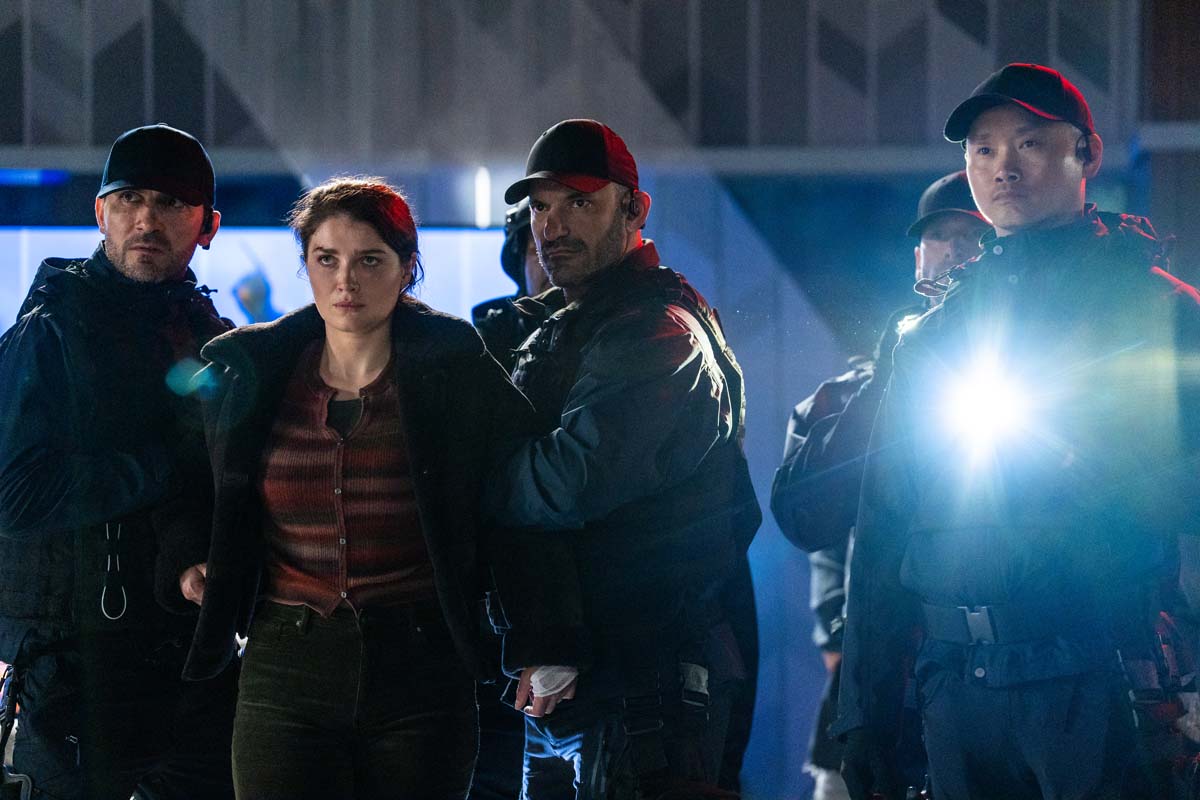
We had already shot, but not cut, the whole train ride because the principal actors were shot on the soundstage.
The stunt double actors were shot two months before in practical location. I had gone through the dailies that we’d already shot and made some selects and roughed it out with boards as placeholders, but Steven said, “I don’t want to see it.”
Then, Monday morning, we’re there at 10 a.m. with all the dailies. He watches the thing. He’s like, “Great. Cut it together!” He comes back an hour later, “Let me see it.” I hadn’t even had time to watch the whole thing down myself! And I just literally put the last piece in the timeline right before he walked in, so we might as well watch it together and go from there.”
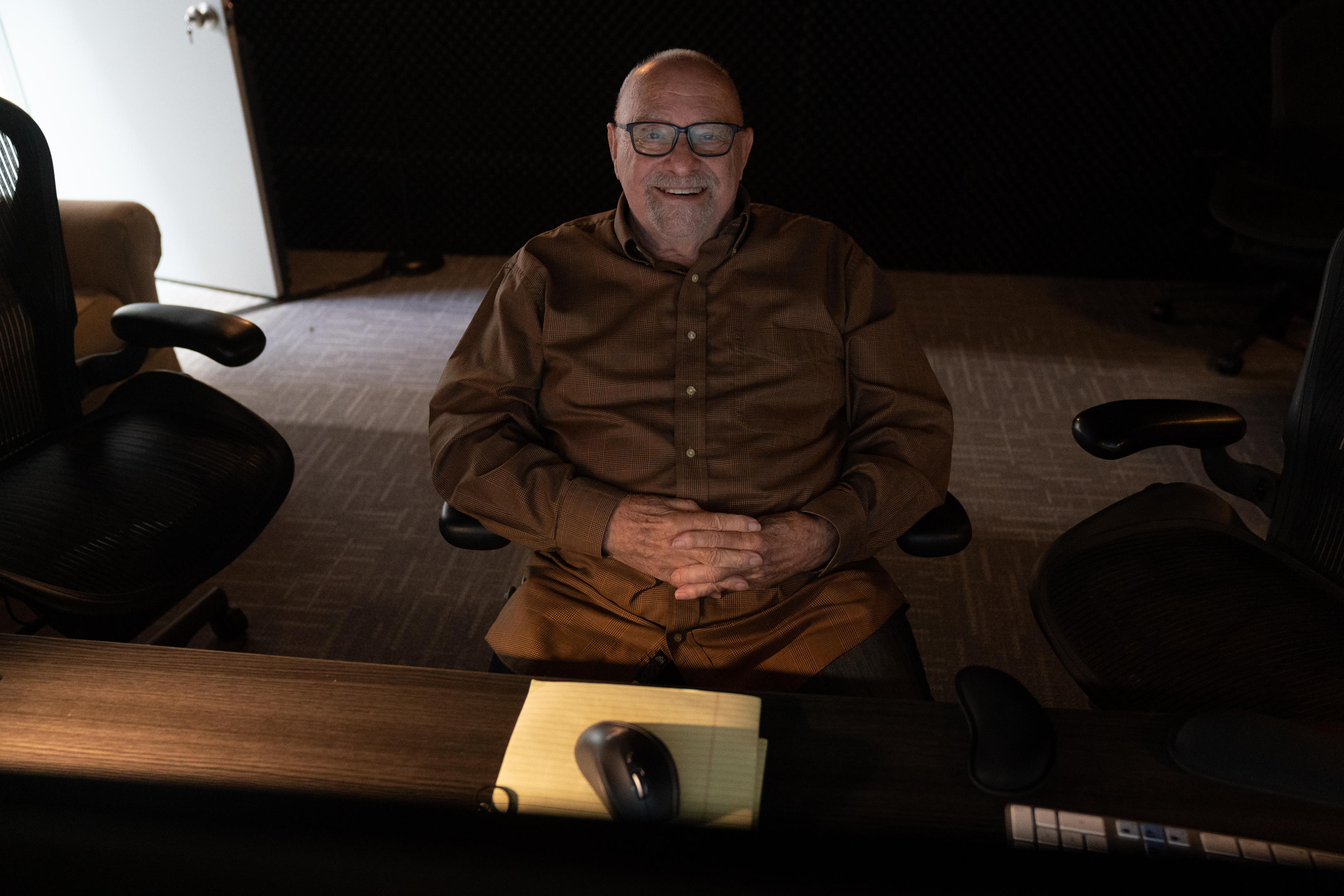
Michael Kahn, ACE (photo from The Fablemans)
I’m sure it worked great, but that’s one of those places where Michael Kahn’s rule about never show it to a director unless it’s working was out the window because you hadn’t even seen the cut yet, so how do you know if it’s working?
Oh, yeah. And I said that to Steven. I literally just was putting the pieces in place. I have not watched it yet, but he said, “That’s okay, I want to see it.” What Michael was saying by that actually wasn’t so much about “Play with the cut until it’s perfect.”
That’s not at all what it was. It was saying - and this is also about really knowing when to do this or not to do it – if you the director wants something a certain way and you put it together that way and it doesn’t work?
Make it work before you show it to the director. Have the thing that doesn’t work - what you think doesn’t work - in your back pocket. Michael meant, “Make sure you believe in what you’re presenting. Don’t present something just because you think it’s what somebody wants.”
There’s no such thing as perfection in editorial. Everything’s subjective. A scene can be great six different ways. It can be terrible six different ways. I think it was more about: “If you see something and you know it doesn’t work, but you think it’s what the director wants, don’t just stop there and show it to the director. Make it work and then show that to the director.”
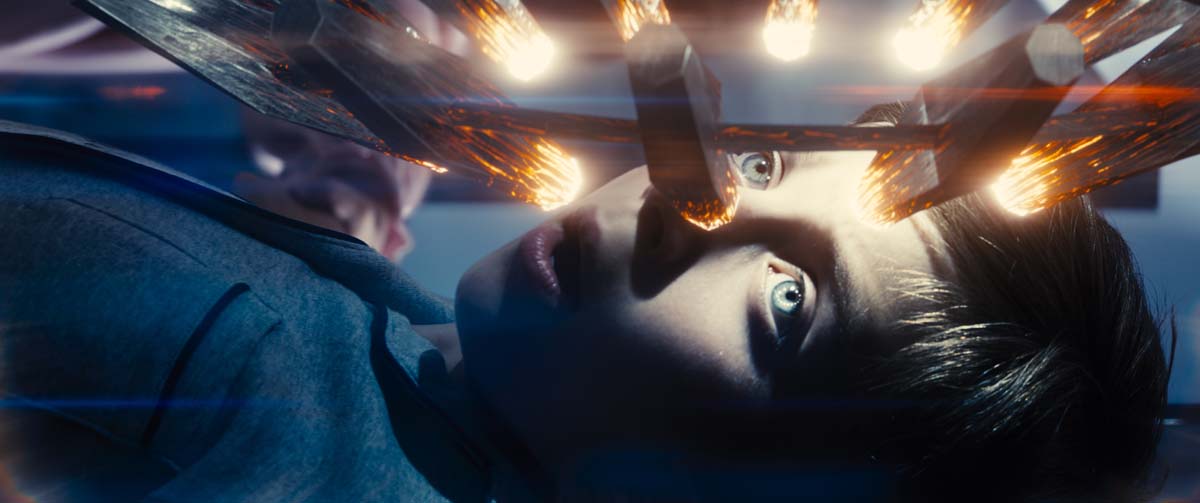
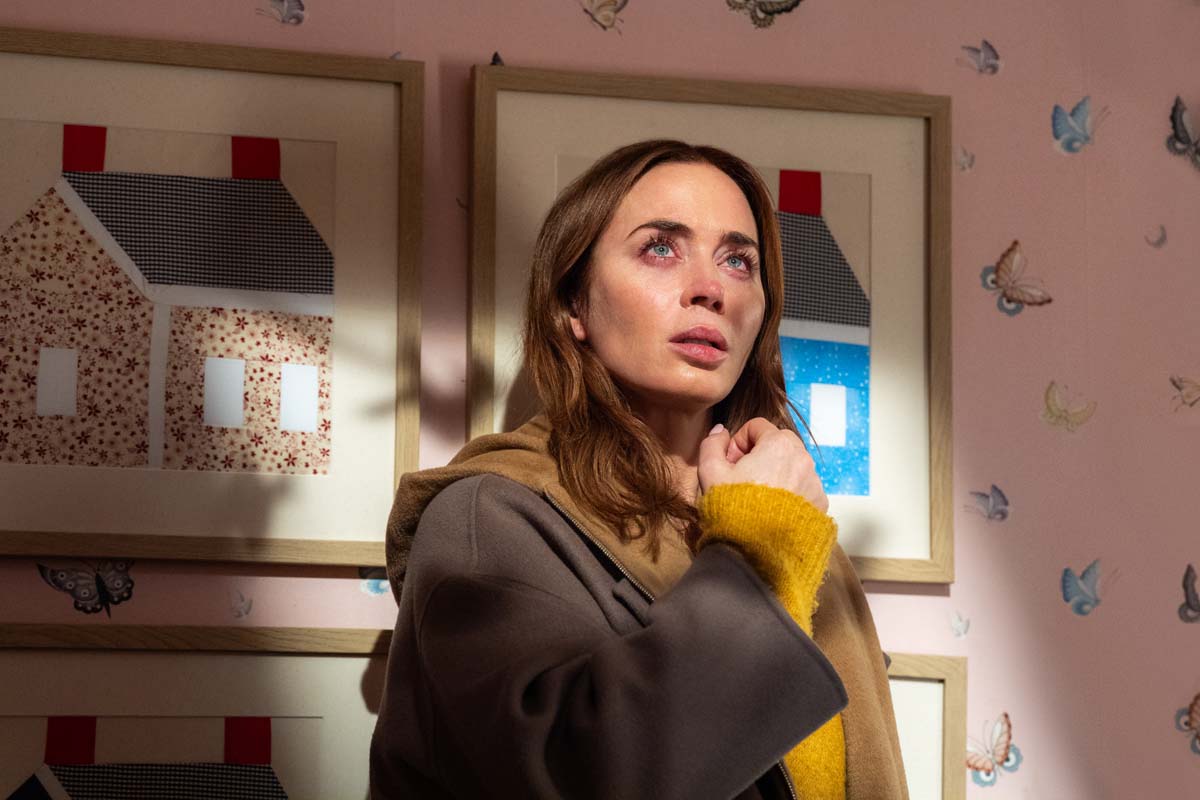
This film is packed with emotion. Talk about your discussions with Steven about how to enhance the emotion and the distillation of the film that needed to happen to have so much emotion. A big emotional moment is when a character goes back to their childhood room in their home. That’s classic Spielberg. Back to the childhood experience, the childlike sense of home. That was another scene packed with emotion.
We’re with this character who’s sort of outwardly focused for a lot of the movie, and this is where she turns it all back, thinking: “This is about me, and I don’t want to feel it. I don’t want to share myself with all of you.”
That is so interesting because, of course, Steven designed his own childhood home for The Fabelmans. I think a lot of that was that he’d walked through his own home, and all the feelings that that evoked.
How long was the editor’s cut? Is it pretty close to the final length? When you’ve finished cutting the dailies and you have maybe a week to assemble the whole film together, how close is that to what was just released in the theater?
Not close. Not because it’s bloated, but because - like anything - you have a script that is great, but there are so many dialogue scenes in the movie that lost a few minutes. And some of those were particularly challenging to do that to.
But it wasn’t because they’re cut loose. What we’re doing from the end of the shoot till the movie comes out is that we’re getting it to a point where we have to lose time. We have to make the movie shorter for the studio, and we have to make it shorter for the audience.
You have to keep the thing moving. I’m not going to tell you how much time we lost from the editor’s cut. Steven doesn’t even ask about what the running time is until we’re about a month and a half into post.
He’s always nervous about that – and I’ll always know it from the second we get all the footage put together, I’ll know what it is in my head - but we don’t ever say what it is out loud. No one talks about it. Nobody knows.
Then there’s a lot of time that’s like: “Let’s get the movie down as short as possible.” Then we get to the point where the movie’s working and we show it to the sound team and the producers and other people that are involved. Then we’re less picky about the time.
If you add 30 seconds back or if you add a minute back - but it improves a scene or character - it’s not all about the time, it’s about how it feels.
But there’s plenty of condensing and you’re we’re always looking for things to make it more efficient or to keep things moving.
So you’re not going to tell me the editors cut length?
BWe’re not going to discuss that! Oh, goodness, no! Like I said, I can’t even tell Steven. I can’t tell the world if Steven doesn’t know! Editor’s cut is such a weird word because, for us, three days after dailies, and it’s already close to a director’s cut because he’s been going in there. So we’re always past that point.
Sarah, thank you so much for a great conversation. Congratulations on a great project.
Thanks so much.
 October 8, 2026
Heart of the Beast
Today on Art of the Cut, we speak with Oscar-nominated editor Dody Dorn, ACE, about her work on David Ayer’s film, Heart of the Beast.
Read more October 5, 2026
The Whisper Man
Chris has been on Art of the Cut before for The Menu, The Many Saints of Newark, A Quiet Place, and Assassin’s Creed. He has ...
Read more September 23, 2026
Sean Combs: The Reckoning
Charles Divak has been on Art of the Cut in the past for Chimp Crazy, for which he was nominated for an Emmy and won ...
Read more
Subscribe to our newsletter
Get all the latest news, blog posts and product updates from Boris FX, delivered directly to your inbox.
Welcome!
Thanks for opting-in to our newsletter. You'll receive an email momentarily with your confirmation.