













Digger
A discussion about he value of screening dailies with the director, how Hamnet influenced Digger, and what not to say in a job interview.


Today on Art of the Cut we speak with Conor O’Neill and Oscar-winning editor Stephen Mirrione, ACE about editing Alejandro G. Iñárritu’s Digger.
Stephen’s been on Art of the Cut before for F1 and for The Revenant, for which he was nominated for an Oscar, a BAFTA and an ACE Eddie. He was nominated for a BAFTA and an ACE Eddie for Birdman. He was nominated for an Oscar and a BAFTA and won an ACE Eddie for Babel.
And he won the Oscar and was nominated for a BAFTA and an ACE Eddie for editing Traffic. Not to mention - though I guess I AM mentioning - editing Oceans 11, 12 AND 13.
Conor has edited numerous documentaries including Cobain: Montage of Heck, and Capitalism: A Love Story, and Crossfire Hurricane for which he won an Emmy, He was an additional editor on Moneyball, and was an editor on the TV series, Lioness. He also won a Special Jury prize at Sundance for the editing of Murderball.
Stephen, you and I’ve talked before for a couple of films, but you have done many with Alejandro: The Revenant, Birdman, Biutiful. Babel, 21 Grams. How did you first connect?
Mirrione: I was working on Ocean’s 11. We were in the screening room at Warner Brothers watching dailies. After dailies were finished, Steven Soderbergh said, “None of us are filmmakers.
If we want to be filmmakers, you all need to go see the movie Amores Perros and see what real filmmakers are.” So of course, I went and saw the movie and was really, really obviously struck by how incredible it was and how visceral, how emotional it was.
After I was done with Ocean’s, I found out through a connection with Benito del Toro, that Alejandro was going to be making his first English language movie in the US, so I arranged to get an interview on that project with him.
I didn’t get hired. I basically blew the interview, because one question in particular he asked me was, “How flexible are you?” In my mind, the entire job is flexibility, so sarcastically I said, “Not at all. Of course not. I never change anything” - kind of laughing about it.
That might have been fine, except Alejandro then gets a call from Mr. Soderbergh and he’s obviously trying to encourage him to hire me, but his way of encouraging him is saying “I never touch his work. He always does it perfect the first time.
I never change anything.” Which is obviously not true, a total exaggeration. He’s just being very sweet. But in Alejandro’s mind, he’s thinking, “This is not someone I can work with,” so I think they may move forward with someone else and that person became unavailable.
In the meantime Alejandro, watched a Criterion version of Traffic, and he listened to my commentary, and he liked a lot of the things that I was saying and describing about my process and where I was coming from, so he brought me in for a second interview, and he explained his concerns.
I said, “No, no, no! Please understand: in some ways, I don’t even care about what the movie is that actually gets made. For me, It’s all about the process and the exploration and learning a director’s creative process.”
One of my favorite things about working with Alejandro, especially on that first movie, is the way he really encouraged breaking down the things that I was used to doing - the kind of tricks that I had learned along the way - then breaking that down.
I think he does that with performances and stuff as well, so that you can do something that’s new and fresh and different, and that’s really tied into the immediacy of the moment of the art. You’re now creating the movie you’re now creating. That’s kind of my path to getting to work with him.

Conor, what was your path to getting on this film?
O’Neill: I met Alejandro through a director, Bennett Miller, who, is one of Alejandro’s friends and director confidants. He was looking for somebody. Bennett suggested me and I met him at an art show. Bennett was doing an art show, and I met Alejandro there. We started talking and went from there. He sent me the script, and I read it, then had a proper interview with him.
I say this to young editors: “I’m not here to make my thing. I’m here to help the director make his thing.” Now, I put my entire self and I hopefully bring what I bring that’s unique to me and add that in, but at the end of the day, it’s his thing. Anything that a director wants to try.
I was having lunch with a friend director friend the other day, Brett Morgan, a great documentary filmmaker, and he was saying how he was working with some editor who wouldn’t do something that he invested. I thought, “That is so crazy to me!” How can you say, “I can tell you that’s not going to work without trying it?” I think, “No, that’s not our job!”
I’ve interviewed Brett before. He directed and edited the David Bowie film, Moonage Daydeam.
O’Neill: I helped out a little on that film during Covid.
Have you done other documentary work or is all your work narrative?
O’Neill: I started in documentaries then kind of moved into features. I’ve done commercials as well. So I kind of do a bit of everything.

What do you think the value of having a documentary background is in doing a film like this one.
O’Neill: Documentary is a little bit more “authorial,” If that’s a word. There’s no script, so you’re making things out of looser parameters. I remember the first time that I worked on a narrative film.
I couldn’t believe that the character said exactly what you needed him to say, and they said it multiple times from different angles! One thing is that documentary just gives you a freedom to not be so attached to the script. You make the script, then you start breaking it apart.
Mirrione: I could especially see that at play with Conor’s work on this, because Alejandro loves to work through the process and kind of jokingly will say, that he doesn’t just shoot the movie once. He shoots it 2 or 3 times.
Because he’s in there doing heavy, heavy rehearsals and shooting rehearsals. And there are several scenes in the movie that he and Conor - after shooting it - would go through it the next day then completely rework it, rewrite it.
Conor would edit a version of it together with placeholder cards and things, so that they could then go shoot it again. But Conor would then take all three versions of the scene and weave them together to make something that felt like it was on purpose all along.
O’Neill: I think that process with Alejandro being so receptive to the material - that’s part of the dynamic of being engaged with the thing you’re working on and not just being rigid about, “Okay, it has to be A plus B equals “finish line.”
That’s never how it goes. So that dialogue with the work was great. Alejandro had a more generous schedule maybe than younger directors might have, so he had the time to experiment with the actors and find new things and find new angles and rewrite.
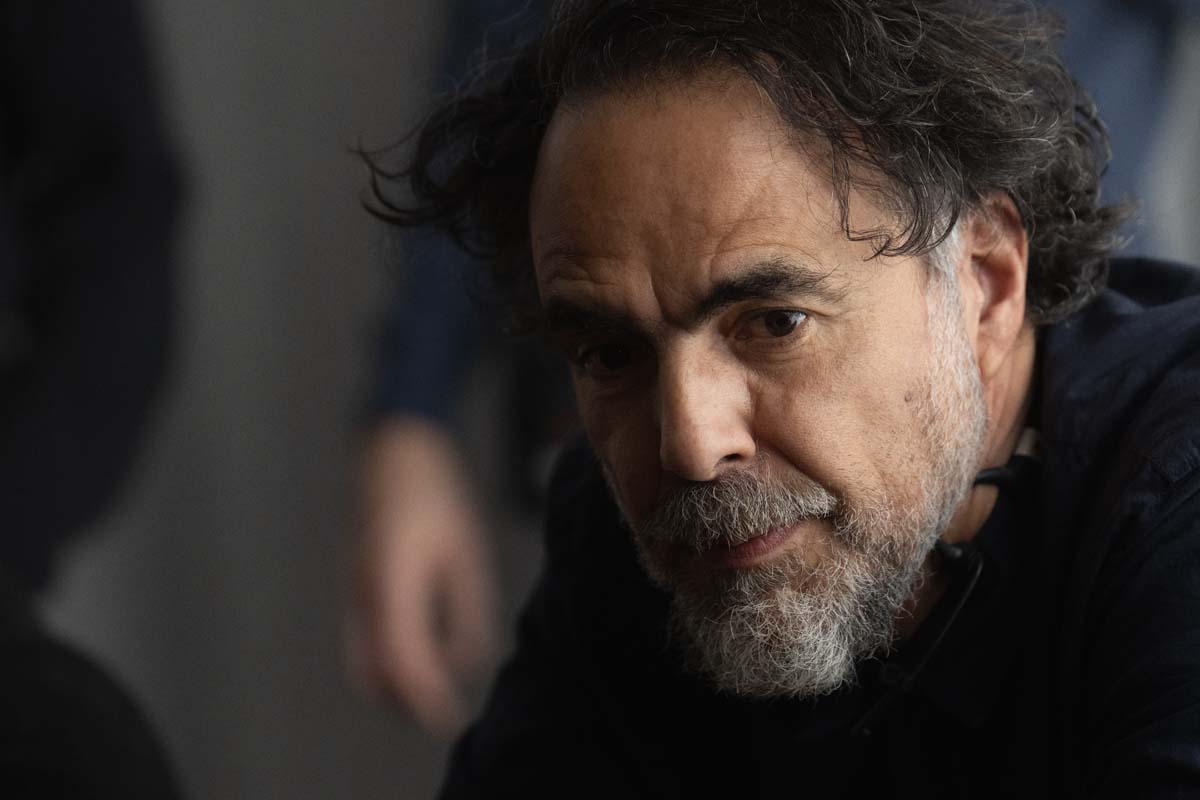
Director Alejandro G. Iñárritu
It’s funny, by the end of the shoot, because of this process, we had a really strong editors assembly. We watched it - the three of us together - when Stephen first came. Alejandro’s take on it was, “This is great. It gives me a really good idea, but It’s like when you get the first ultrasound of your baby and you’re like, there it is, but that’s not really my baby, you know what I mean?
That’s kind of a hand and that’s kind of a head. But now we need to make the full baby.” So that was a really interesting process for him to have something that was sort of a shape by the time they wrapped camera, which was a sort of a function of that process with such a long relationship with Alejandro.
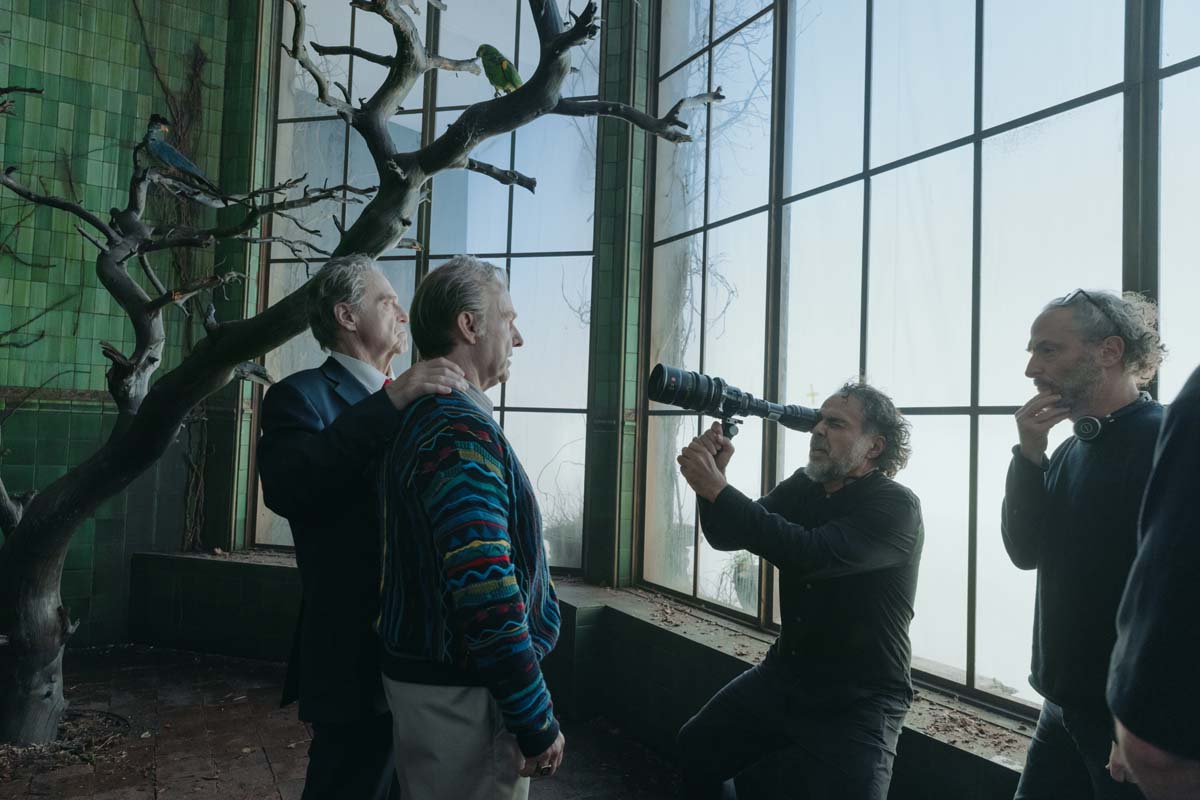
Stephen, when does Alejandro bring you on to projects and how early are you seeing a script, and are you speaking into that script?
Mirrione: He, like most directors that I work with over and over again. Once he’s got a script that he’s happy with - or sometimes when the script is in an early stage, maybe - and he wants some feedback, I will get that script and read it and react to it. It’s also so he can let me know that this is a thing that’s on the horizon. It may or may not happen.
I remember reading this script - it was not too long after we finished The Revenant. It was about nine years ago that I first read the script for this movie, which ultimately was not this movie. It was very, very different.
This movie evolved into something that was much more theatrical. The original version of the movie was just straight up hyper-realism. All locations, scenes with with military vehicles and them out in the middle of the ocean. It was enormous in its scope and what they would have had to do to shoot it.
I even had a deal to edit, then within a few weeks of that, it all kind of fell apart. That was also around the time when I was brought in to help out on Top Gun Maverick. I can remember when I got onto that, I told them that I might have a limited amount of time on this because there’s this other secret project that I can’t tell you about that might be happening.
So I get there and I’ve worked on several things with Tom, and he immediately starts talking about this secret project! I couldn’t say anything about it, but there he was on set and everybody can hear the conversation.

Alejandro then shifted his focus to another project that he was going to finance himself, Bardo, that ended up being bought by Netflix. He spent his time doing that. I wasn’t available for that - not to mention it was all in Spanish.
Maybe a year or so after that came out, he came back to me again, with this version of the movie and said, “Hey, I think this is going to happen.” Unfortunately, because of the actors strike and the schedule getting extended I wasn’t going to be available when they were going to be shooting, so he said, “Let’s be in touch.” But then we got really lucky because he found Conor. Conor was perfect to come in.
Then luckily my work on F1 finished right at the time that they were finishing up with production. So once we knew that the window was going to open and I could come on, then he started sending me dailies via Pix.
Something that a lot of people don’t quite understand about editing is that you start editing when they start shooting, not only so that you can just be done by the time they’re done shooting.
It’s so that you can learn the movie so that when the director comes in - because obviously the director is there on set watching everything happen in front of him - you need to have time to learn the movie.
So even though they were very far along, I had some time to backtrack and watch dailies and get a sense of what was happening.
O’Neill: We all owe John Goodman, a big thank you for sadly falling down and injuring himself on the set. That’s what created the timing to work out perfectly.

That has happened on multiple films. Harrison Ford, I think, broke his ankle shooting one of the Star Wars movies. Tom Cruise, I think, broke his ankle on one of the Mission Impossible movies. Did that give you time also to reimagine or rethink about the dailies that you’d already received at that point?
O’Neill: Yes and no. It was a constant process during the shoot. As soon as there is a scene to assemble, Alejandro was keen to have it assembled and to start working it, so he had an immense amount of energy considering what he had to do during the course of any given day: go to dailies screenings in the theater.
Watching scenes and getting some ideas or “why don’t you try this” or “that gives me an idea for what I need to reshoot.” So the fact that we had a sort of schedule shift when John Goodman hurt himself didn’t really have a Eureka effect, because we are already in that mode.
Mirrione: Part of making those decisions of wanting to make changes is him being able to work quickly and move quickly, with Conor having an assembly so that he can look at the assembly and then make those decisions.
I think that’s something that when we were doing Birdman, he incorporated that. There was this idea of “I can get ahead of this and not wait until we’re completely done with the shoot to start to really evaluate what’s working, what’s not working.”

Conor, you mentioned that you - or at least Alejandro - were looking at dailies in a theater. Is that something you’re able to do with him, like the old way that an editor and a director used to work?
O’Neill: It was great. It was super old-school at Pinewood Studios in their big screening room every night. There’d be a production call sheet, whether it would happen or not, but I’d say it happened probably 90% of the nights.
We were over there in the theater, watching dailies with the colorist and with costume people and the production designers and everyone ready to evaluate yesterday’s film.
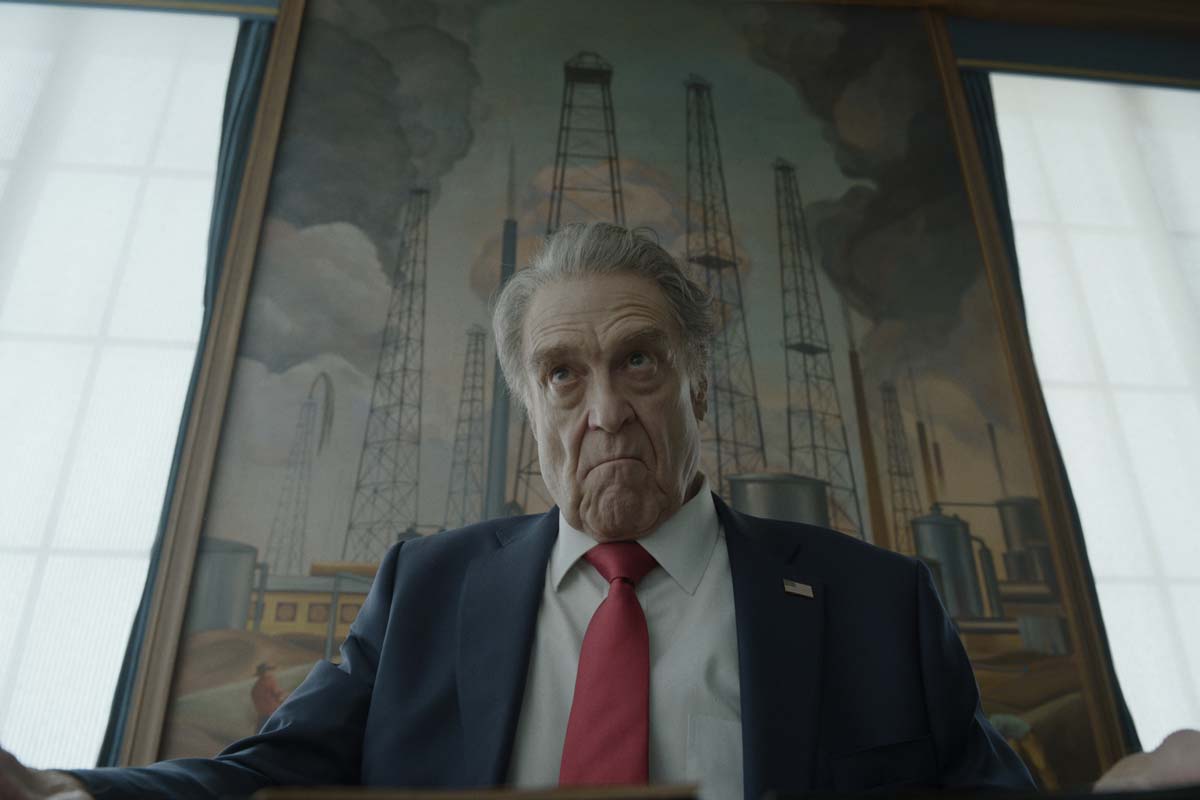
Wow. What advantage do you think that has for you as an editor to have been able to screen the dailies with the director?
O’Neill: There’s a sense of a consensus when you see something good. Even if you’re watching it alone, you’re getting your own ideas, but hearing Alejandro and Chivo (D.P. Emmanuel Lubezki) and every other department head all talking and understanding what some of the issues are around some of the shots… Because during the day I’m in the edit suite.
Most of the time I’m in the edit suite, I’m not there on the set, seeing every single decision that’s getting made, so I got to hear those decisions afterwards as we’re looking at the shots. All of these things really go into the DNA of your decisions that you make as you put something together.
It’s like Stephen said, it’s getting to know the movie, but it’s like getting to watch the movie with the DVD commentary on, because you’re hearing the department heads talk about it, so you have that much more insight.

What is your methodology for how you work when you’re cutting dailies?
O’Neill: Everyone’s different, I guess. I like to watch in sequences. I like to have an assistant lay out a sequence of a scene with all the different shots and coverages, and I’ll just make selects as I go by lifting them up to a higher video track.
So I just watch it, and if something strikes me, I’ll lift it up. There’s many reasons why a particular shot might jump out to you - why you think it’s good or why it’s useful or whatever.
That’s all I do. I just like to watch the sequence, then when I start to assemble it, I go to those raised up pieces as a place of beginning.
Now that’s just the beginning, because oftentimes those aren’t the things that end up in the thing when it’s done, but that’s how I start.
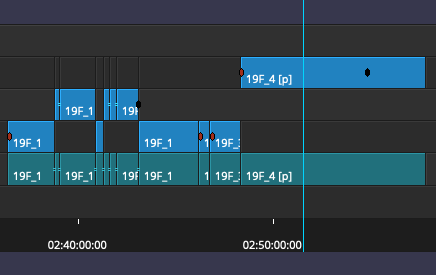
And are you raising up the entire take occasionally?
O’Neill: If there’s a “double star” take in a script note that’s like “love, love, love” you raise the whole thing up, but I think beyond that, you also have to scrutinize everything on your own, with your own instincts and taste and sense of what might work and just make your own choices because oftentimes the director will say, “That’s the best take.” Then you come in when you’re putting it together in the edit room, and they say, “Why did I think that was the best take?”
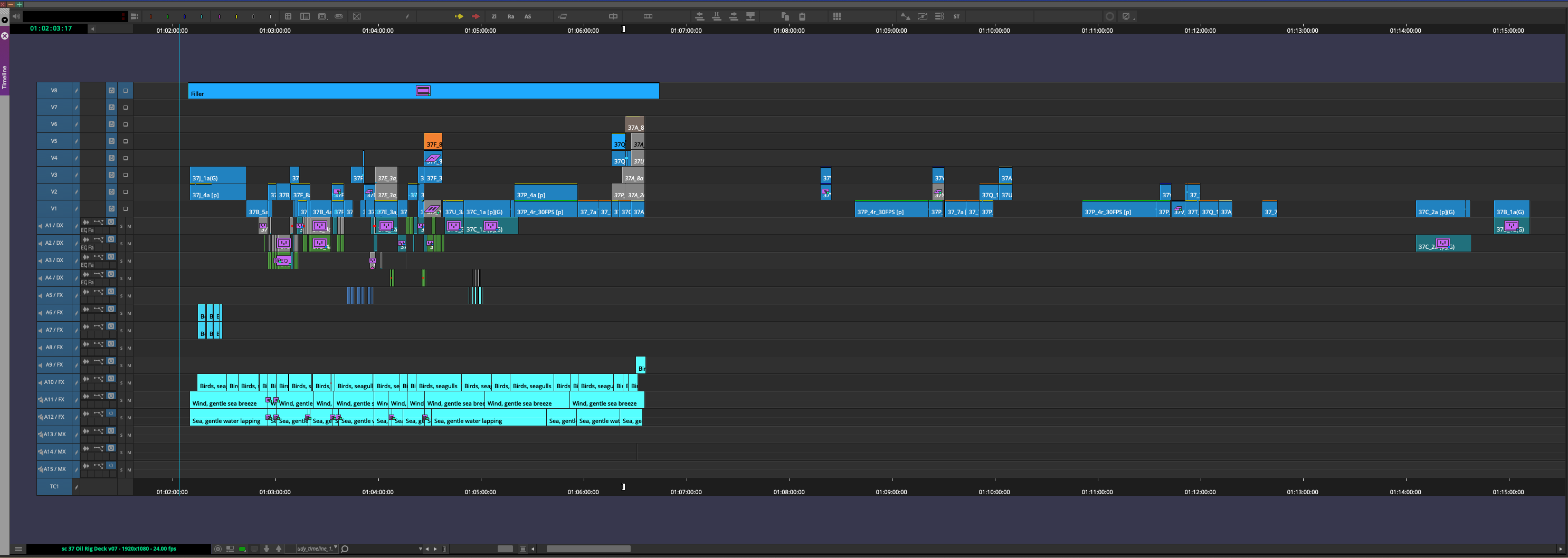
Oil rig scene early cut
Happens all the time. Stephen, what about you? Did you take any of the scenes in this film from absolute dailies and start from scratch?
Mirrione: Yes and no. Mostly what I did was I took scenes that were complete and recut what Alejandro had already worked through with Conor. Either I would attack some note that Alejandro wanted me to explore - like try finding another way through this or try this with different sorts of coverage or “we shot this with lots of wide shots, can you see if there’s a way to incorporate more of those?” Things like that. That was mostly what I was doing.
But occasionally I’d get to a point where an exploration can break the scene. Coming to the rhythm and cutting pattern of a scene is an evolution. You can’t always just swap shots out. Sometimes you can and you do, but you have to be true to the DNA of how it was already woven together, because they’re all the decisions that went one shot to the other.
So there were times where - in order to pursue what he wanted - I might go back to dailies, start watching, and do my process of how I would put the scene together. Obviously not completely blind - because I had already seen a cut of it.
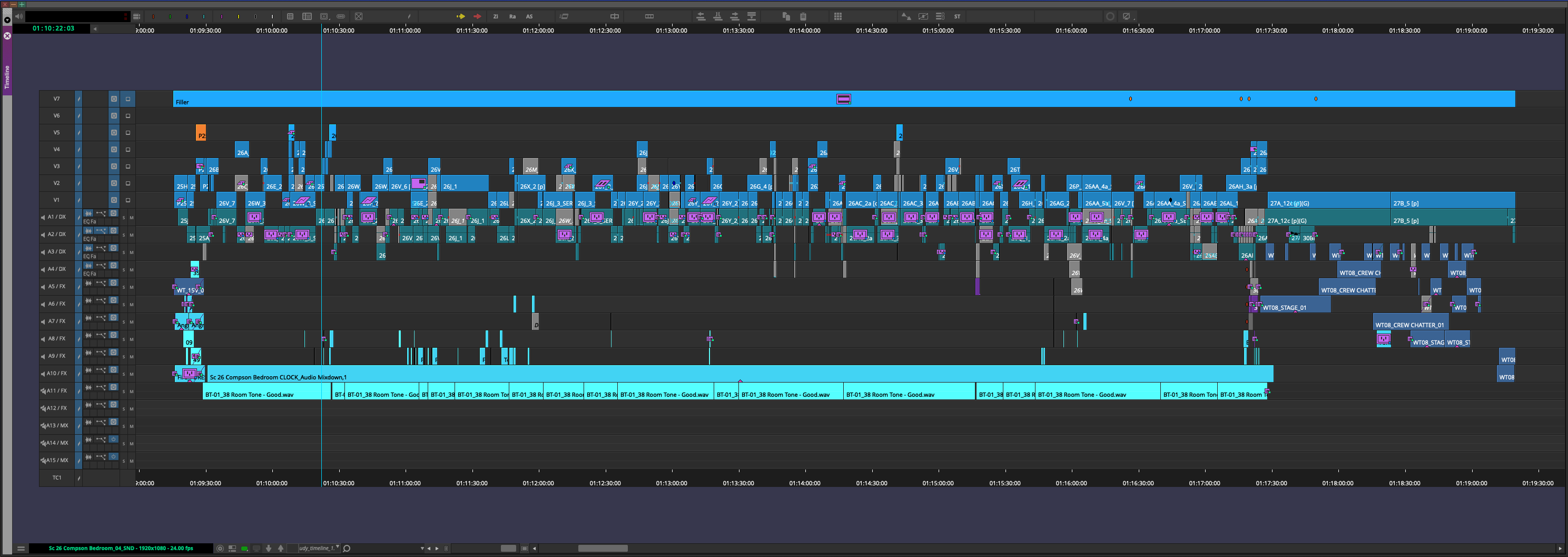
Compson bedroom early cut
It always depends on the scene. Conor’s system of moving things up to higher tracks was super useful for me, because I could go back into scenes and see, “Oh, these were the takes that were already liked” so a lot of times I would start there, then check out other things. So it was a really great roadmap for me to get through it quickly.
I’ll look for something to hang on to and grab that piece, then build around it. Sometimes that means starting at the beginning and just going all the way through line by line. I try to do it very quickly, then once that’s done, evaluate it.
Sometimes that means finding a take that I love and just taking that and then punching in and finding things to support that take.
There was one scene in particular - the scene that has Jesse Plemons speech, right before the third act. They shot that in a much different way than a lot of the rest of the movie. It was a lot of handheld, lots of coverage, lots of masters where the camera was just following people around - so every take is different.
I had the freedom to really go for it. It’s really about just finding a way to not worry so much about what I’m doing and just try to get through it quickly so I can respond to what I did.
O’Neill: Because you guys have such a long standing relationship. It was a great thing for him to be able to go into a scene and just do his thing on it. I’ve got to say, when you first came on, I was a bit jealous. I thought, “I wish I was just by myself getting to just freestyle.”
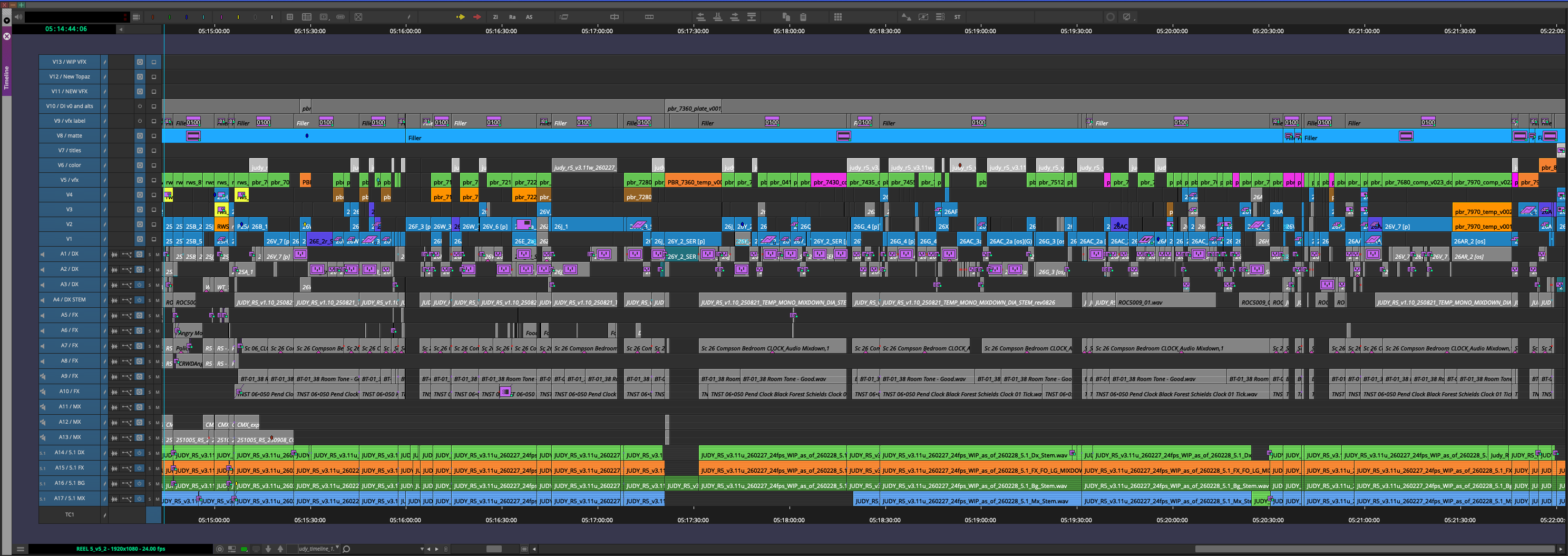
Compson bedroom final
Mirrione: Correct me if I’m wrong, but it did ultimately come back around.
O’Neill: Everybody gets a different turn to do the thing and that’s great. Not all directors work differently, but I think that’s a real asset of Alejandro, that he was able to do that and have like Stephen come in and he’d say, “I’m going to be focusing on this.
I really want you to do something with this because I know it’s going to show me something.” I know where I’m going to be able to get more insight to what I want the scene to be, because we’re all discovering it together.
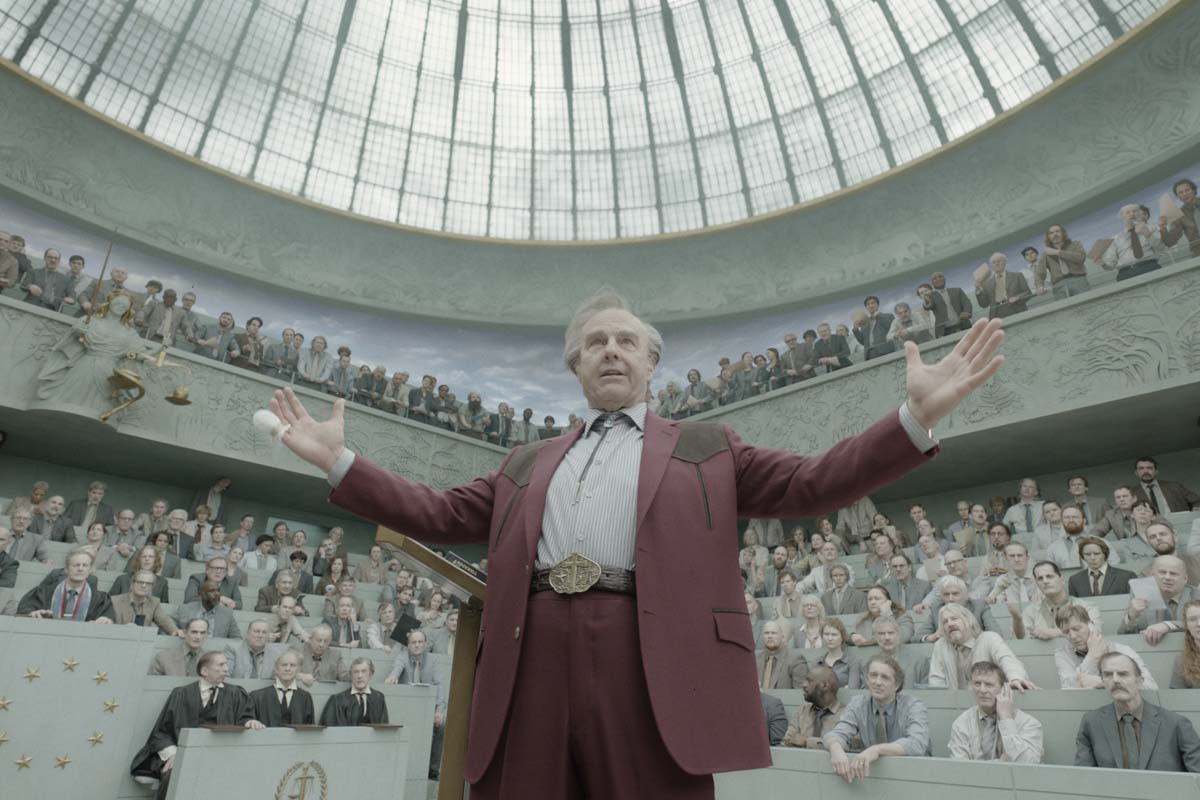
Mirrione: Yeah, there’s some very specific examples of things where we unlocked something or discovered something, and sometimes it unlocked something that was like, “Oh, that’s completely wrong!” For example, in Tom’s big monologue, he had me go through and do a version where we were taking that long take and doing a lot more cutting around to the audience and just a lot more cuts, just to confirm that if we kept the magic of the oner that we weren’t leaving money on the table by not using some of those other details.
It was really clear once I did it that the power of his performance and the body language and all of that was lost once you started cutting around.
For him it’s a luxury - and for me too - it was a luxury to be able to take certain scenes… Because there were two of us you have the time to really dig in for if it takes a week, it takes a week of it takes a couple of weeks, it takes a couple of weeks. On other movies, you’d be constantly moving, and wouldn’t have time to be that precise.
O’Neill: Talking about “money on the table” there is such great, great footage. On every film there’s always great stuff left behind, but this film was so rich. That scene in particular - the visuals, the background actors and what they were doing and the level of commitment in the shots and the bizarreness of it, there’s a lot of rich material.
The process of me doing a scene or Stephen doing a scene, the performances that were on film were so great, and there are so many different colors and ways of doing it that would have worked. There wasn’t one way to do any scene.
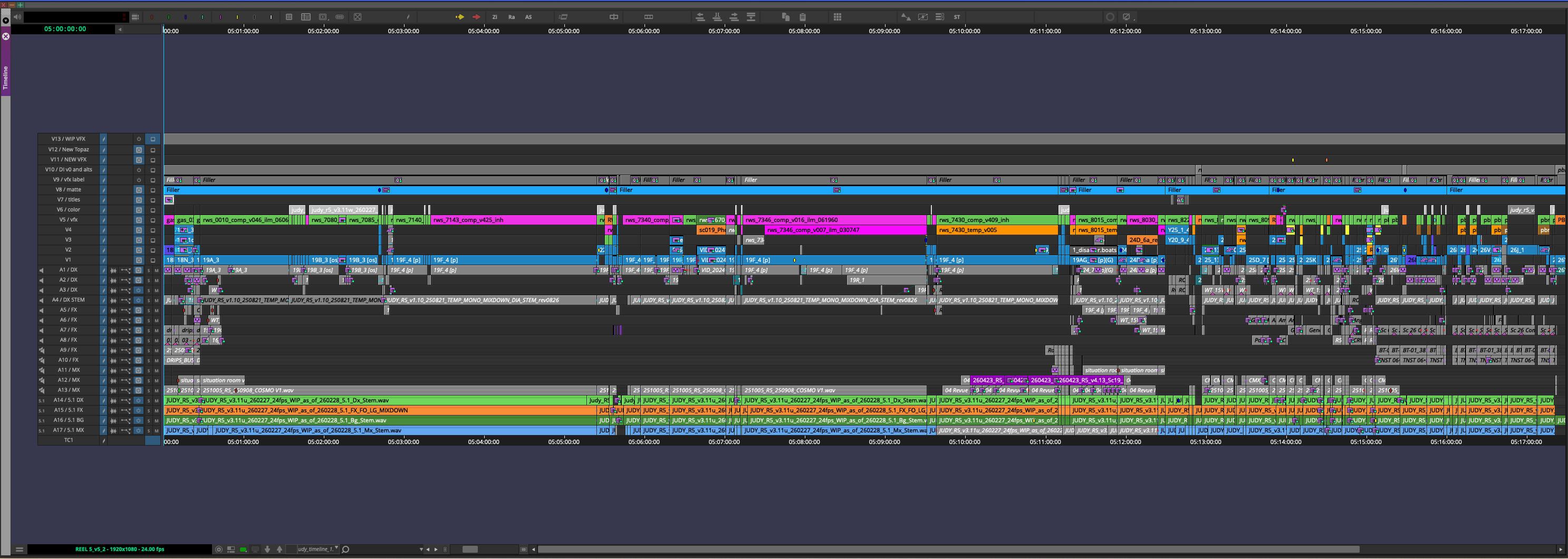
Timeline for the final speech scene from the Avid.
Mirrione: Just an anecdote: In relation to the big Tom Cruise speech to the assembly, I remember Alejandro telling me that he had visited the set of Hamnet when they were shooting that big theater scene with the entire audience.
He was describing to me what it was like to be on that set and that essentially all of the extras in that theater had been going through like a deep therapy session for days and were kind of hypnotized to be time travelers in a sense.
That really moved him. There was a certain point where they did a take and he just got up and left. He said, “What I saw just now was so magic!”
What about temperatures of performance? I’m thinking especially for Digger and John Goodman’s character of the president.
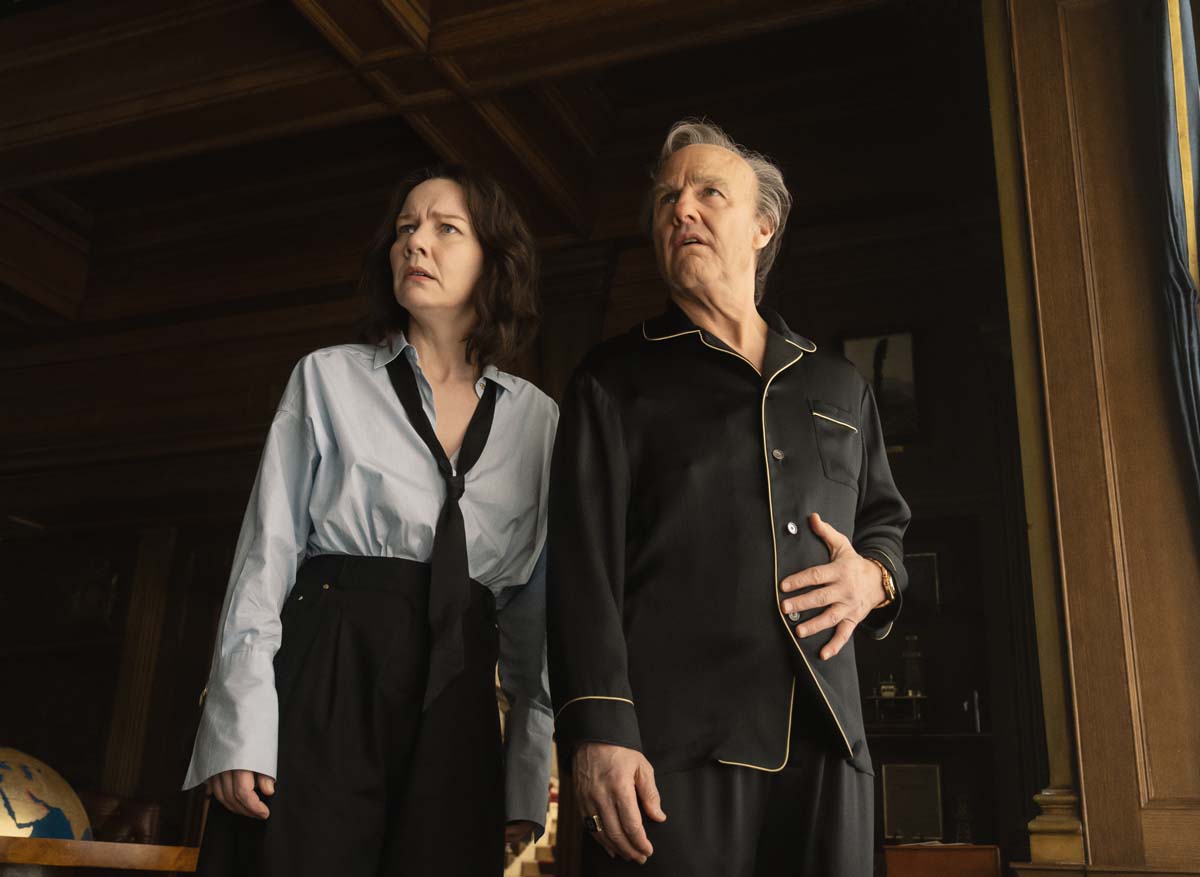
O’Neill: I’ll talk about the John Goodman scene. There’s a specific scene when they come to see him in his bedroom, and they tell him about the iceberg. He gave a lot of different colors, and it was just a matter of Alejandro kind of dialing him up and dialing him up, and then them finding it together.
The first day they shot, I watched it, and I thought it was great. But when they did more and I saw it and I was thought, “Okay, I get it.”
But then when you’re putting it together, you end up - like Stephen said earlier - using elements of both because when you’re shooting two scenes in different temperatures on two different days, you’re getting a nice roundness.
And you can’t really necessarily tell when you watch the film that they’re from different days, or the mood may have been slightly different, but that’s sort of how they come together.

Mirrione: For me, that was one of my favorite scenes of the movie. The first time I saw it, I couldn’t stop laughing. One of the great things about coming onto a project like this - when you’re not on it from the very beginning - is you get to watch a scene that’s already working so great and experience it for the first time that way, because then there was a certain point where later on where we tried to to adjust certain things in the scene, and I got to kind of see under the hood.
Once we did that, it didn’t work because what was so magic about the first way they put it together was there was an insanity, and if you tried to clean it up too much, the insanity got muted.
It was mainly from how Alejandro worked with the actors to get them to try different things so that he knew he would have the flexibility later on.
Talk to me a little bit about temp Score. Did you know who your composer was going to be and how did you deal with that? Some people say, “I never want to use the same score from my composer to temp with.” Some people say the opposite, and sometimes the composer’s creating sketches the whole time.
O’Neill: There was really no temp score. The composer was Cosmo Sheldrake. He did such a wonderful job, and it’s so unique and was all built around the first cue in the film. That sort of opening title sequence was sort of the guiding light for the rest of it.
Mirrione: Before he landed on that, he was really struggling because he knew how important and how tricky the music for this was going to be, because he didn’t want it to be a traditional movie score, and finding a composer that would be able to kind of break some rules a little bit with how they were working and not feel so formulated.

Then he sent me the track that ended up being the first cue the movie. He asked, “Is this too crazy? Is this too weird?” I loved it immediately and just felt that it shares DNA with the story that we’re telling. The beautiful thing, though, is that because Cosmo is not a film composer per se, Alejandro was able to really work with him and get exciting things.
Again, that process where he’ll take the department heads or other artistic people and break down the habits that they’ve formed in how they do their creative process. And with Cosmo, he was able to really create that creative process between the two of them.
Alejandro really liked what Cosmo did when he wasn’t trying to write to picture. Cosmo doesn’t have a lot of experience doing that, but he has such a magical, offbeat musical sensibility. Alejandro would just want Cosmo to write the music that fits the scene, that fits the mood, that fits the vibe without trying to score it per se.
There was never really temp. Any temp music we were using was from Cosmo, then we would manipulate that, then send it back to him, and he would then redo it based on Alejandro’s and our feedback. It was constant. And it was great to be able to work with him all the way through.

Have either one of you worked like that before where you’re getting sketches during the production instead of temping?
Mirrione: Absolutely. Yeah, a lot of times with Alejandro. I remember on 21 Grams Gustavo had written most of the music just from the script and sent all these cues, so we would watch dailies with Gustavo’s music playing!
That’s not to say that the composer’s job is done. It’s a great base. That way you’re not aping the emotion from the temp score. It’s coming from a more pure, artistic place - from the composer themselves.

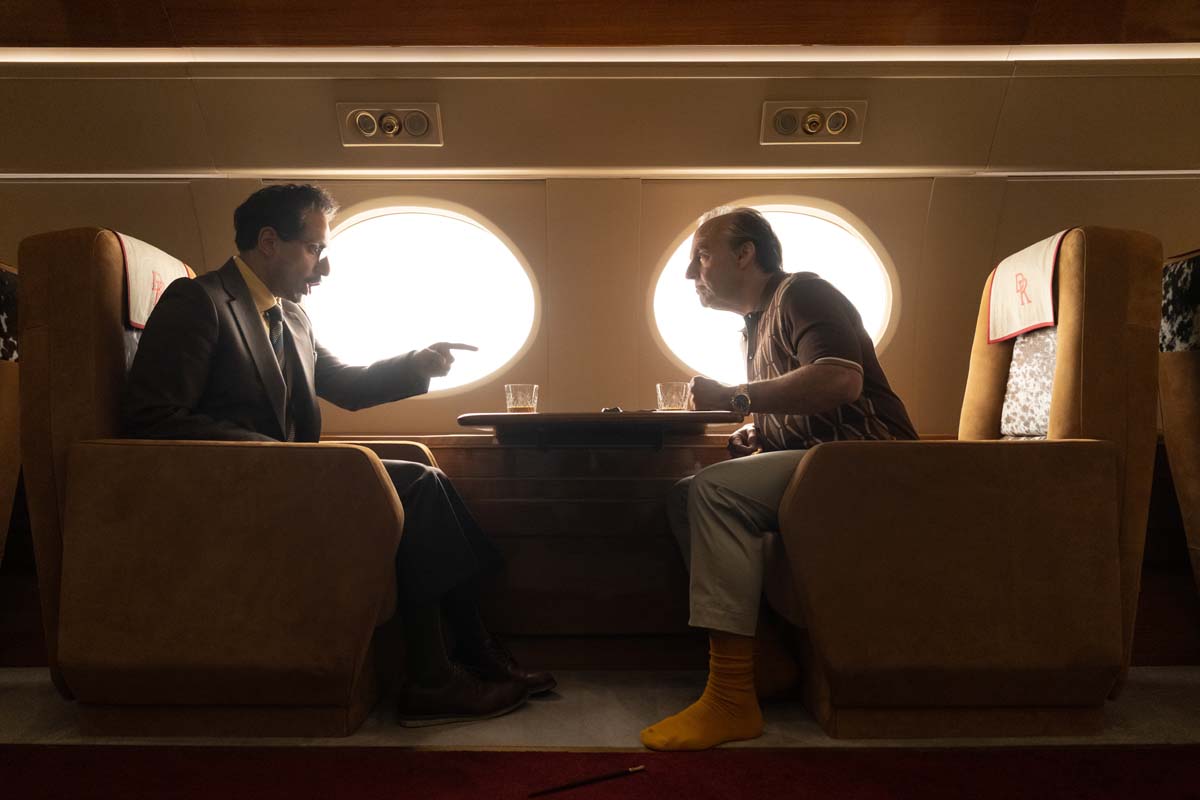
Let’s talk about dealing with the editing of dialogue overlapping, like in the scene where the explosion is first revealed, and it also happens on the private jet. What are the complexities and what are the values of overlapping dialogue?
O’Neill: The big challenge of this movie with the dialogue was the sound because of the VistaVision camera. It’s super loud. In the Avid we had to put noise canceling on it, which then causes it to distort and phase and stuff, and the voices don’t really sound right.
So that was a big challenge because Alejandro is very sonically attuned. He’d say, “The voices don’t sound the way I want them to sound.” We had to have a lot of conversations, so that was a challenge with the dialogue, regardless of whether it was overlapping or clean.
Mirrione: We were using filters within the timelines to try to get rid of some of that noise, which helped tremendously. It got us through some screenings but it ended up being a really big deal towards the end of the process, because during our mix, we got kind of used to the filters that we were using to clean up that camera noise.
It was kind of hurting the depth of the performances a little bit. We were able to then find another process. Basically, after we had finished our mix, we went back in again and redid all the dialoue with a different kind of filtering process. That filter didn’t exist when we started. It’s amazing how fast technology is moving that that happened.

In terms of overlapping dialogue on this movie, there was a lot less trying to manipulate the rhythm of the dialogue with cuts. The style of the kind of 30s and 40s screwball comedy with which he was approaching these scenes - he really wanted the actors to have that rhythm there. We certainly played around with that and made adjustments.
But the way they were shooting it, he was really hoping to keep things running in masters as much as possible and not have a lot of cutting. Because of that, it meant that - in scenes where we wanted to reduce dialogue, for example - the scene might be great, but they’re saying the same thing three times. We need to reduce it as you always do.
The way they covered it, it became a much trickier process to do that and make it feel like it was on purpose. But for me, the way they shot it, I think that the actors spent a lot of time getting their rhythms. Even though we were doing some significant stuff to manipulate, it was more fine tuning.
O’Neill: it was definitely in the DNA. The actors had a big rehearsal process. The film was really put on like a play. The actors all talked about how it felt like doing a play .They all got to be put together in a rehearsal process, like theater actors would.
Alejandro was always saying, “It has to bite. It has to bite! I want the line to bite, so one line’s biting the next.” So he’d work on that in the performances, but then also in the edit as well. It was in there and we helped sharpen it a bit. But it was all it was all in there.

“KEM roll” timeline for selects
I loved the dynamics to the pacing and the rhythm of the dialogue. There were these moments of rapid-fire dialogue, then it would just come to a halt and there would be a long pause. So it sounds like it was in the DNA of the performance but also in how you edited it.
O’Neill: It’s both. And I think it goes to Alejandro’s vision for the film, which is it’s like a jazz thing. It has a rhythm that you establish then you break it. There’s elements of that 30s, 40s screwball comedy that Stephen just mentioned that were definitely considered.
It’s a really long script and it’s a lot of dialogue, and it’s all about the rhythm. It was finding those rhythms. You might go into a scene thinking the rhythm is that it goes “bopbopbopbopBOP” but in fact it goes “bopbop stop bopBOP” so it’s discovering that stuff.
Mirrione: A lot of it is built into the script and knowing that there was a plan. I remember one of our very early screenings where we were showing it to a couple of people. The feeling that they had was that it was just relentless, and there were moments that they felt like it needed to breathe so that they could just appreciate what they just saw.
We were still in that process and felt like we had to jam in every single detail. You’re constantly making those macro evaluations and then making adjustments.

Alejandro has this thing that he always does on almost all of his movies that I work with him on: I think it’s partly a process to just experiment. It’s kind of, a test, but instead of wasting it as just a test, he tries to infuse it with something.
It’s like a dream sequence. A lot of that stuff ended up being used for the marketing. Hours of Tom dancing with a shovel in all the different sets and locations. I’m watching this and it’s just fascinating. Obviously it came to great use for us.
But there were a lot of things like that. And especially things with these beautiful miniatures that they had created. When we needed to make those adjustments, we were able to kind of dive into that material and repurpose it.
He does this on all his movies, like for The Revenant, we had miles of great B-roll and experimental dream sequences stuff. Even in Birdman, he built in moments knowing he wasn’t going to be able to do a lot of manipulation of the cut.
He built in moments that he could let the camera sit in a hallway a little bit longer, or tighten it up if he needed to, if he needed a break and needed a pause.
One of the really cool things, that we came up with very late in the process is the transition to the third act. Originally, there was a very stylized shot that went from one character and then drifted to this very dreamy shot of all these extras dead on the floor that then turns into a pool table. It was absolutely stunning. Really beautiful.
Cool shot. But unfortunately, the way it existed in the film, we’re about to make this major shift in the third act, and I have no idea where I am or what’s happening. Then suddenly the dialogue starts going “badadadadadadada” and it’s confusing. We worked really, really hard to try to find our way through it. It just slowly evolved until we felt we could get rid of it.
Eventually I went back and I found one of these exterior shots of this oil rig that they’re on, and I put that in. Alejandro came up with the idea from that to really change the color of it and make it beautiful, because the shot that I had was kind of not a very beautiful shot.
He and Chivo were able to manipulate it, then Conor came up with a completely crazy new idea that just perfectly solved it. You watch it now and think, “How could it ever have been anything but that?” because it just works so great.

O’Neill: It’s about that discovery. The shot that Stephen mentioned was one of my favorite shots in the whole film. It’s incredible. You go from the little kid, then you pan and it’s his POV looking and you’re walking through the European Assembly, and it’s all the dead bodies.
It’s one of those Alejandro/Chivo things that you just know: “Of course this is going in the movie. The movie tells you what it needs and it didn’t need it and it wasn’t helping it. And so it’s more of that being in dialogue with what the movie wants.
Mirrione: Connor’s solve allowed us to change the style a little bit, but still being true to the ultimate style of the movie - to announce to the audience and give them kind of a voiceover of okay, “This is the passage of time that has happened, etc., etc.,” to just have everybody grounded and ready for the third act.

Talk about pre-lapping audio as you go into the first cabinet meeting when the president comes to Digger’s house. You pre-lap the audio going into that cabinet meeting. What is the value or purpose of a pre-lap.
Mirrione: It moves you along quicker. It’s a pacing thing. You can be pulling the audience into the next thing. But in that one in particular what’s nice about it is it’s taking the words that are being said and putting them in a different context than just a face talking about it.
In that particular shot, it’s also showing Curtis going from feeling a certain way to then him having to project a kind of a different spin on what he’s saying. By combining those two things you’re creating something new.
Pre lapping is one of those kind of magic things that you can do when you’re editing. You can take these two ideas that are completely separate and turn it into something completely different that only exists like in a movie. In that instance you’ve just spent the first 20 minutes of this film, you woke up in bed with this guy Rockwell, all this crazy stuff has happened and you know that he loves his cat.
And there he is with his cat that his sister tells him it’s falling apart in his arms. It’s this moment of all the pressure on a close-up pushing in on this guy, and you hear the pressure it’s about to be hitting him in incoming scene, which is an even greater amount of pressure.
I hope people get a chance to see it in the theater. Thanks for chatting with me about it.
O’Neill: Thank you Steve.
Mirrione: For sure. Thank you.

 October 8, 2026
Heart of the Beast
Today on Art of the Cut, we speak with Oscar-nominated editor Dody Dorn, ACE, about her work on David Ayer’s film, Heart of the Beast.
Read more October 5, 2026
The Whisper Man
Chris has been on Art of the Cut before for The Menu, The Many Saints of Newark, A Quiet Place, and Assassin’s Creed. He has ...
Read more September 23, 2026
Sean Combs: The Reckoning
Charles Divak has been on Art of the Cut in the past for Chimp Crazy, for which he was nominated for an Emmy and won ...
Read more
Subscribe to our newsletter
Get all the latest news, blog posts and product updates from Boris FX, delivered directly to your inbox.
Welcome!
Thanks for opting-in to our newsletter. You'll receive an email momentarily with your confirmation.