













DTF St. Louis
Today’s discussion is of topics including manipulating the chronological story to improve the storytelling, working with a showrunner who is also the director and writers, and the value of editing a the same scene with two different intentions.


Today on Art of the Cut, the Emmy-winning editors for Best Picture Editing for a Limited Series: Kevin Ross, ACE, and Max Koepke (KEP-key) and their HBO series, DTF St. Louis.
Kevin has been on Art of the Cut in the past for his work on Stranger Things for which he was an Emmy and ACE Eddie nominee. His other work includes Yellowjackets and Halt and Catch Fire, among others.
Max has also been on Art of the Cut before for his work on Winning Time: The Rise of the Lakers Dynasty and Chad Powers, among others.
How did you guys find yourself on this project together?
Koepke: There’s another great editor, Chris McCaleb, who [showrunner Steve Conrad] had worked with a lot in the past. I actually just met Chris the other night. It was really great to finally meet him. He was booked.
Steve liked the editing of Winning Time so he asked our showrunner, Max Borenstein, who was to blame for that, and that’s how I connected with Steve. We got along very quickly after a couple of conversations, and Kevin was already in place, and I just kind of joined the team.
Ross: I had worked with Steve on Perpetual Grace, his second live action after, Patriot.
Let’s hear a little bit about the production schedule and where you guys were editing. Ross: It was a 70 day shoot. We started in the middle of February of 2025. It was cross boarded. Max and Juliana, his assistant, were planned to start, but they just hadn’t come on. I think it was four weeks or five weeks later.
Koepke: I think I started the second week of March, so about month later,
Ross: I had two assistants, Whitfield Scheideggerand Janet Ross. They were organizing the dailies for all seven episodes and had them ready to go for Max and Juliana to set up how they wanted in their projects. I like to have ScriptSync, but manual ScriptSync, not the automatic one. They ScriptSync’ed everything throughout the entire 70 day shoot.
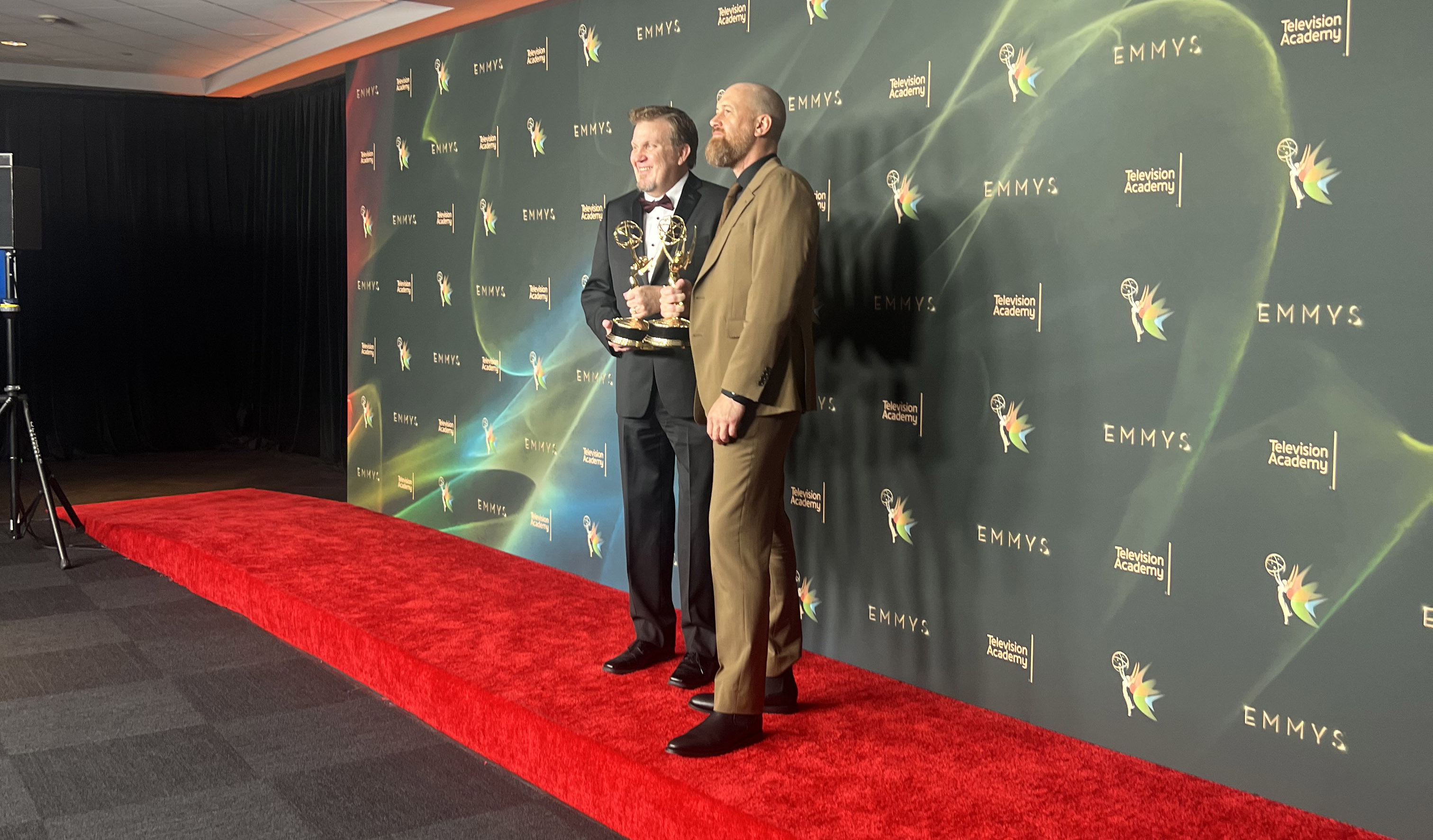
Editors Kevin Ross, ACE, (left) and Max Koepke at the 2026 Emmys
We were lucky we had office rooms at PostScript in Toluca Lake, North Hollywood, which was an awesome facility. I love PostScript. I wasn’t familiar with them before, but they’re just an awesome crew. We also had work-from-home Avids.
We made it a point to only go in one day a week to the office in North Hollywood while we were shooting, and mostly we had to get home. The post crew was all at the offices already. Our post producer was, Christina Fitzgerald. We had Bob Dussault as AP, Victoria Hadeler and our post coordinator was Maria Cuadro.
So you did a little bit of remote editing, it sounds like, then, once you got into the director’s cut, I’m assuming you’re always in the office or mostly…
Ross: Yes, we were always in the office after that, unless Steve went back to Chicago for something because he’s based in Chicago,
He should drop by and visit me.
Ross: Yes, he should! He might go home for a few days to do something. We would be able to still do Pac Post Live, which is how we remote edit it with Steve.
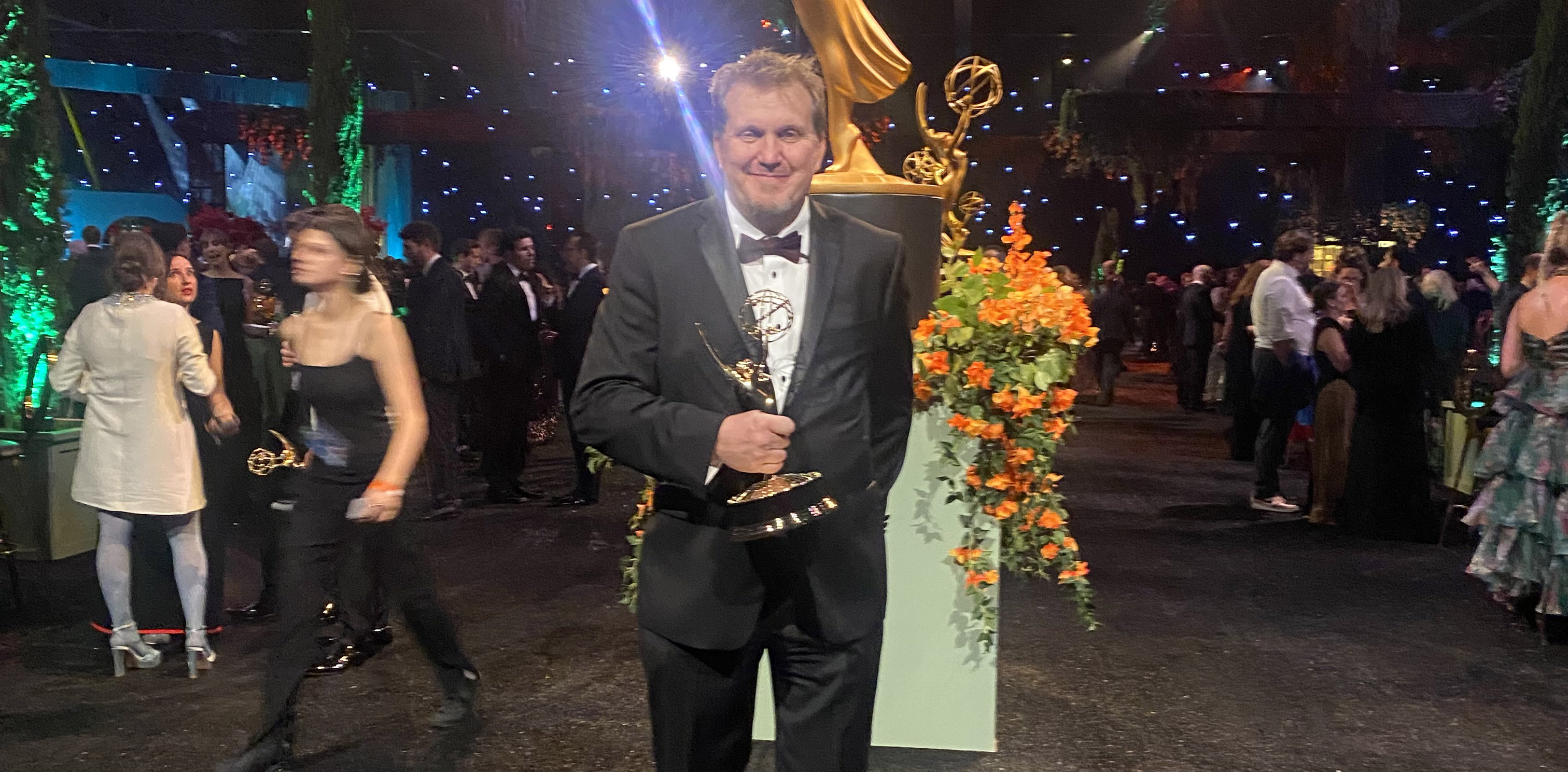
Editor Kevin Ross, ACE at the 2026 Emmys
What do you think the value is for having your assistants in the physical space with you for their career advancement?
Koepke: I think that’s huge. It kind of unnerves me a little bit. How much remote work happens for that reason, even for myself. When you get to know somebody in person, you’re able to do a better job for them and just become friends with them a little bit easier.
When you work remotely, you’re just only kind of down to the brass tacks. What’s to happen that day? You’re kind of communicating as quickly as shortly as possible, but especially for younger people and assistants. I can’t imagine coming up now. We were lucky to work in person on this one, and my next job is going to be in person.
I feel fortunate for that because you get to know someone more deeply. You can understand how to work with them better… what their actual hopes and fears are for a project more than just what their notes are.
I think we all lack a little community these days, and if you’re working, you might as well have that community at work. For both of our assistants it’s useful to be in the office.
Ross: I love being in person, even though it’s a commute for me, because that’s how I came up through the ranks. Even on features, as an assistant, we would go on location.
We’d be in San Francisco or Chicago or Florida, but we had our little camaraderie of our group, and we had that personal interaction. It’s weird to not have that all the time, but Covid caused that.
And you got used to it. But I couldn’t wait - when I was back in the office, the first show I got to go back on was Seal team at CBS Radford. It was such a nice change to be in the physical office and joking around with the other editors.
The same thing in this situation, if I had a question or when Steve and I would work and we’d say, “We’re going to move that scene to Max’s episode,” I just walked one door down and talked to Max about it. I didn’t have to try to get a hold of him on Slack. It’s just such a nice experience.
What’s your approach to a blank timeline when you’re cutting dailies?
Koepke: I go really slow at first. I like to watch the takes very slowly. You learn what an actor does with the character over time. So, maybe after a few weeks you start to cut a little more quickly. You might learn, “This guy is good on his first takes.” Or the last take or somewhere in between for somebody else, or someone needs to find it.
I really just try to wrap my head around what the character should be and what the best performances, and just kind of put one great take of as long as, you know, without cutting of a character and just that’s kind of my North Star.
It just sits there in the timeline for a while, and I know that it needs to feel like this, and there might not be anything on either side of it.
As far as the way it’s broken down, our assistants make sure that if there’s multi-cam that they’re synced and organized by set. Julianna, my assistant for many years now, she usually has her own opinion in the process of breaking down the dailies: what takes are good and what aren’t?
If I get a little stuck or I’m not really sure - I’m getting frustrated with performance – she might ask, “Have you seen this take? You should watch this take again.” I like to be collaborative with my assistant because two brains are better than one.
Ross: Whatever the dailies are for that day, have them [ScriptSynced] and ready to go. But I like to watch them and just get a feel for everything. I tend to look at the script notes and see what is marked as a favorite, but that’s not going to limit me.
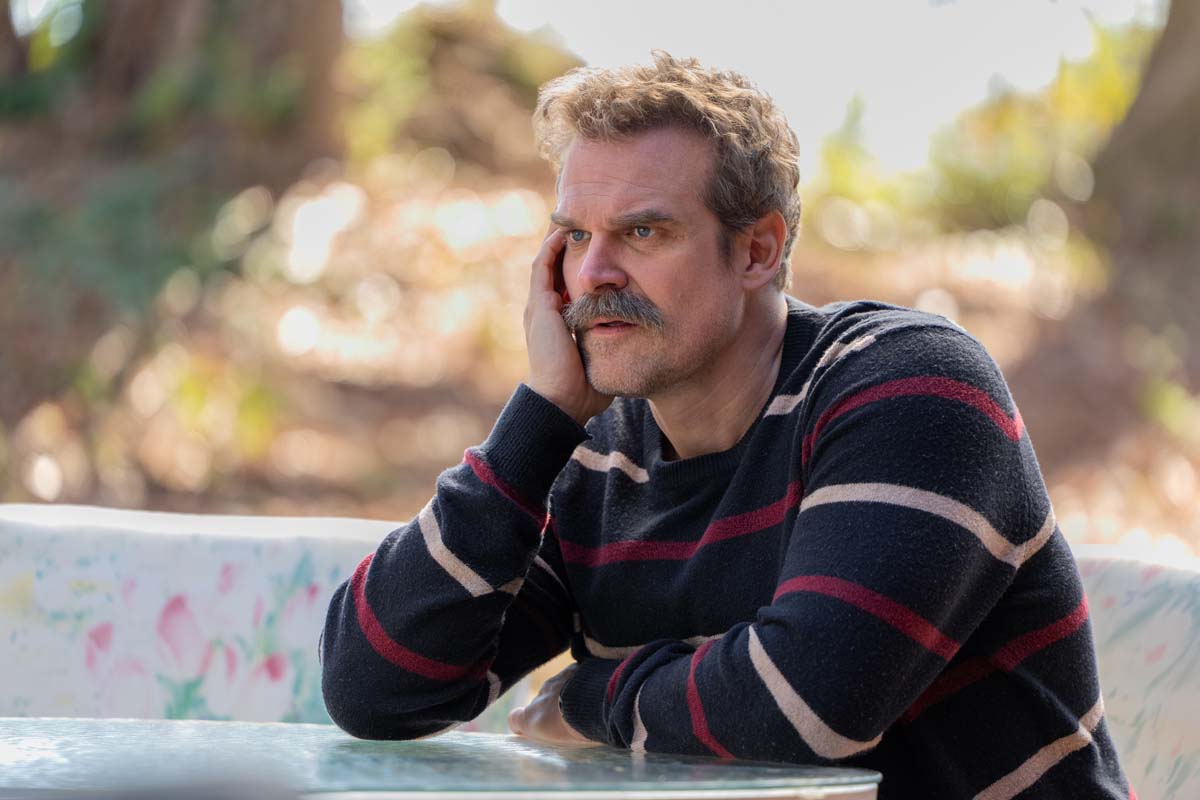
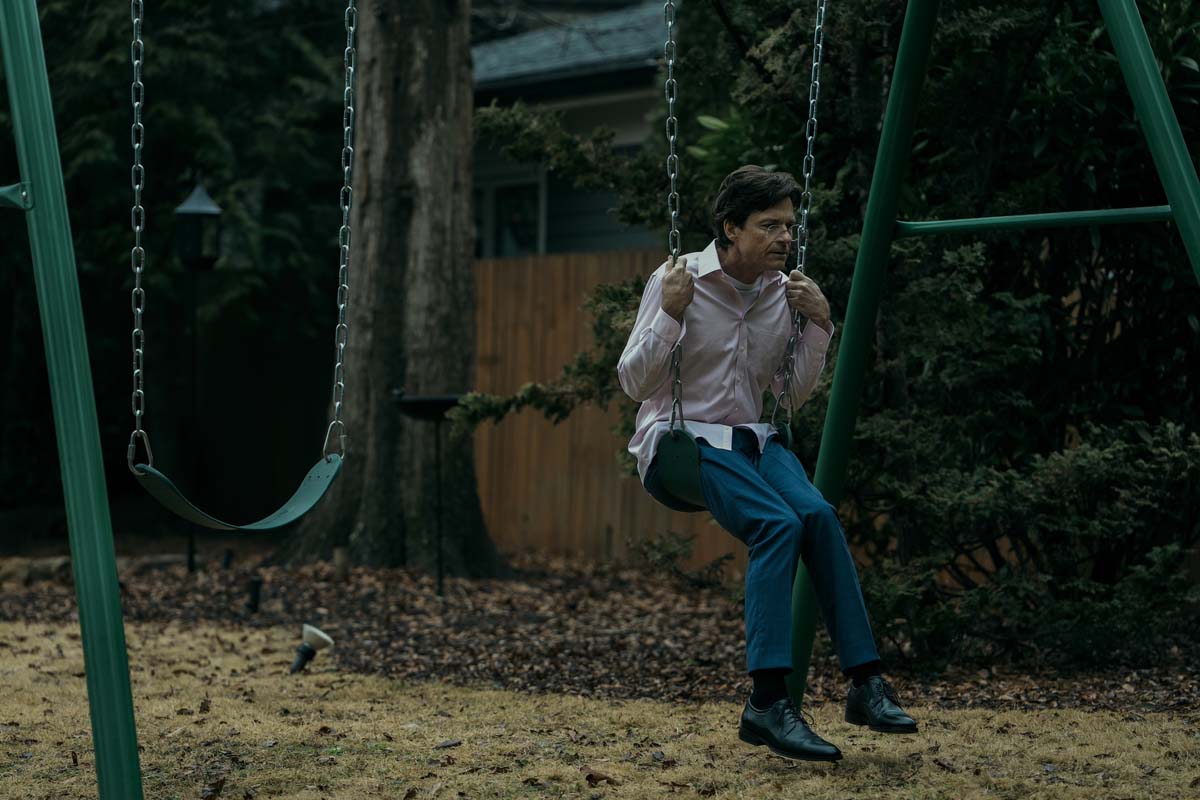
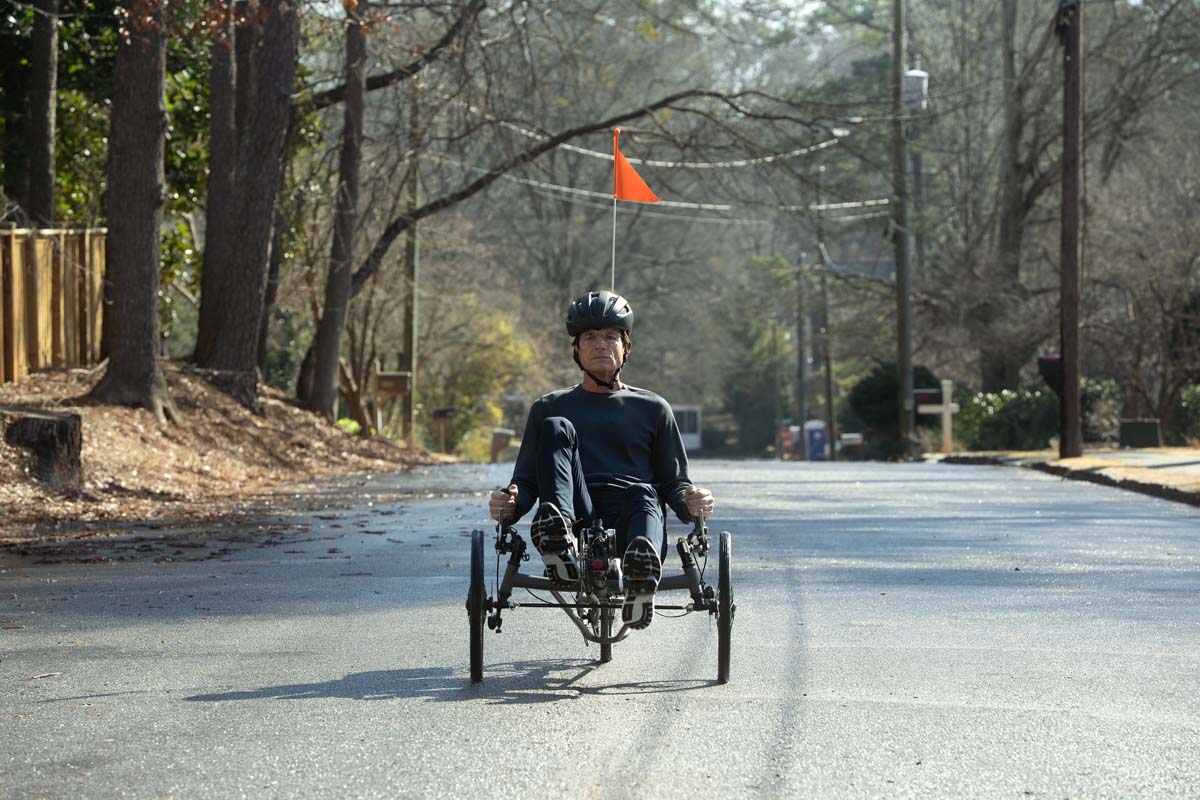
I’m going to work backwards and see what the early takes were. We were blessed on this show to have such great performers so it wasn’t cutting around performances, it was stopping and trying to figure out: “What is the character supposed to be at this moment, and which of these great takes am I using?” because they were such subtle differences in the takes and the performances, which then Max and I actually took advantage of later on in the series because – for example - I had the scene in episode one where Clark tells Floyd about DTF on the swing set. Well I did it more childlike, like these guys are just sharing a dirty secret.
Then when that same scene is used later in the series, Max cut it with other takes that made it more sinister, I felt for the Clark character.
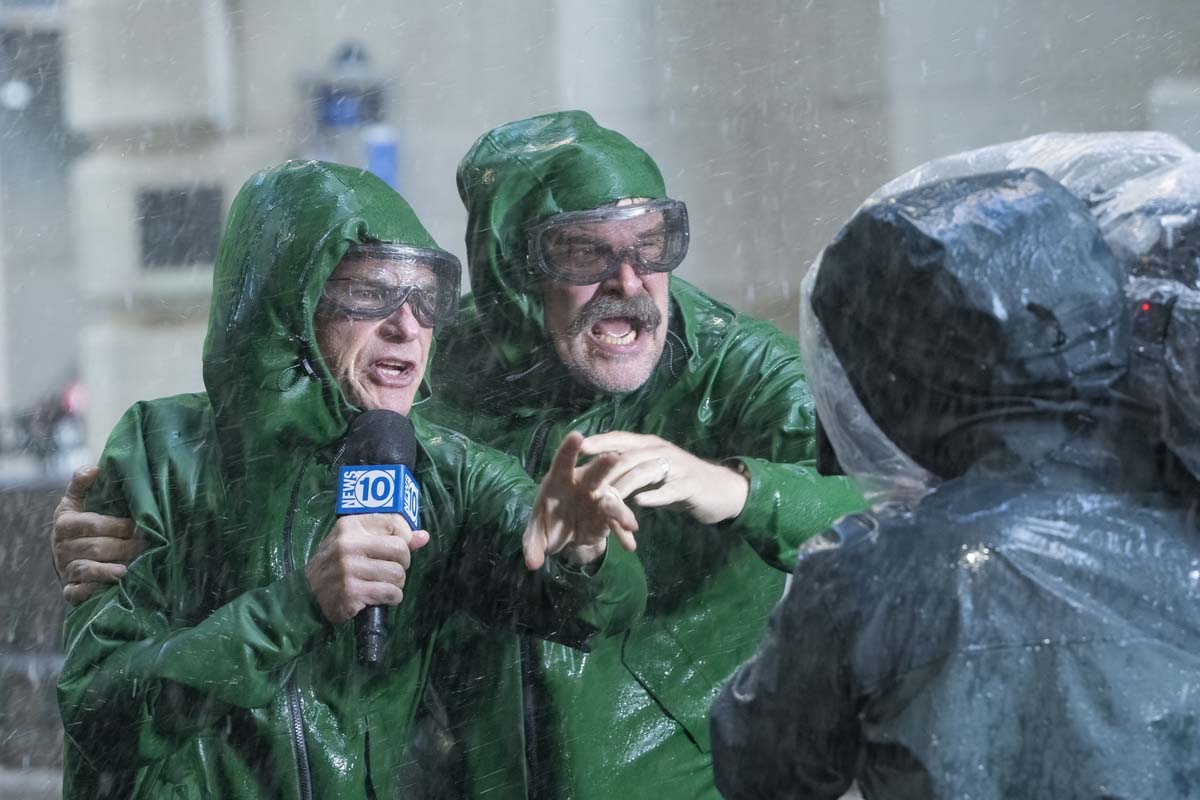
That was one of the things about our editing: we had to be masters of misdirection. We had to lie to the audience. We lied - not in the way that we used a scene the way it was cut in episode one, because now it’s a different telling of the story, so I’m going to shape it somewhere else.
And that’s how Max would do his scenes. I thought it worked really well because that was part of what built to no one knowing who to blame during the storyline of the show.
Getting back to how do I build a scene: a lot of times I’ll start with the best master performance, then work my way in with what I think is the best performances and how I feel: when do I cut? I came from Steve Conrad’s previous show called Perpetual Grace, that was a Western modern film noir with Ben Kingsley. We had a really weird style.
We stayed in masters for two and three minutes, they were beautiful shots. It was a very slow burn, a great burn, but a very slow one. So I told Max when we started, “This is Steve’s style…” But then with this show, I realized, “This isn’t his style at all.” I was cutting longer thinking that was what Steve would want, but then I realized that wasn’t the style of this show. We had to up-cut things pretty quickly.
It’s very interesting that the style changes per project, right? Even for a specific director.
Ross: Absolutely. They shot this in Atlanta. Normally, back when I was an assistant on a feature, our crew would’ve been on location, so the editor would sit every night watching dailies with the director and talk about the takes they liked, so you knew what they were looking for.
But we have this distance where we don’t really interact with the director while they’re on set so far away. We’re on our own, making our best guess. If we had been close, I could have gone to Steve and said, “Hey Steve, I’m thinking about this scene…” or “Do you want to check this out?” And he would have seen it. We would have had much more immediate reactions to the editing.
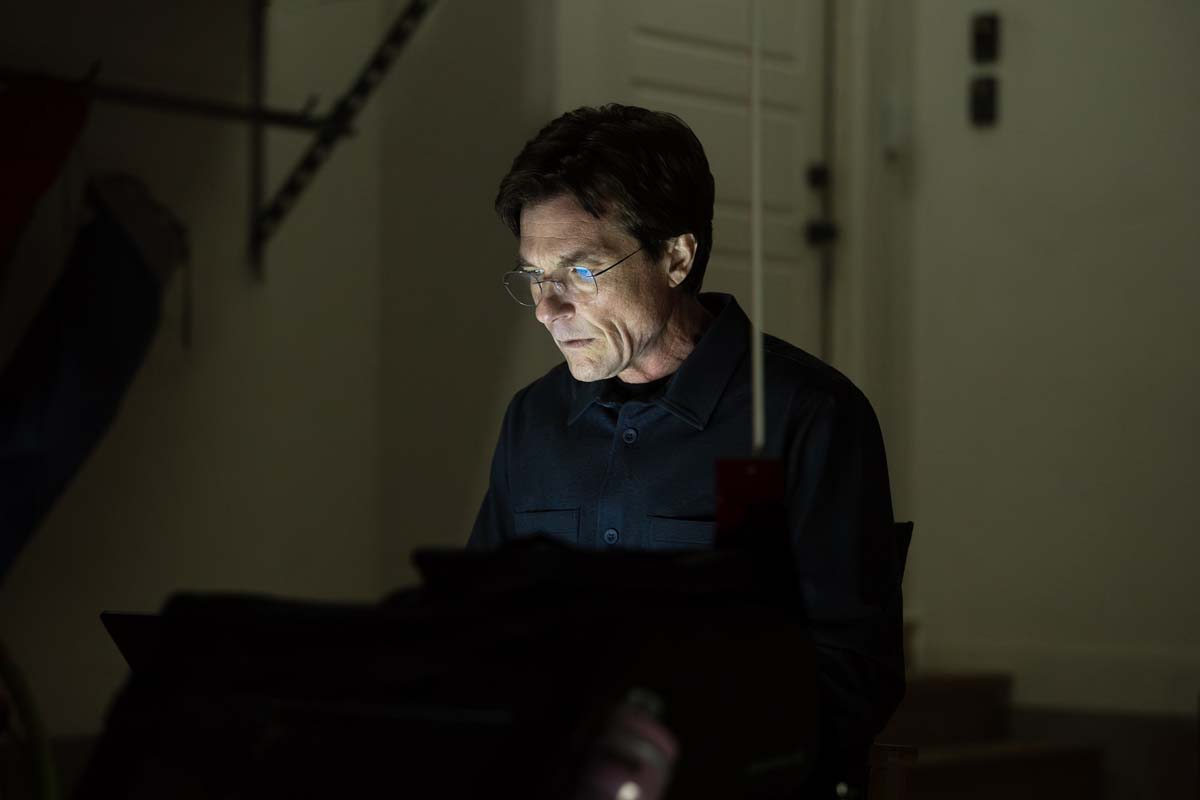
Koepke: One thing that’s interesting about Steve is that he is really good at wanting you to come to your own conclusions. There are times where you ask him, “Hey, what do you think of this or that?” He doesn’t really want to tell you because he wants you to complete your thought first, because I think he was hoping we’d surprise him here and there with something he hadn’t really thought of. That’s a really great quality to have as a director.
Kevin was talking about how Perpetual Grace used longer takes, but this is more intercut and paced up a little bit. There are a lot of ways you can tell a story. I think one of Steve strengths - and what’s really refreshing as an editor - is that he allows anything to be the answer as long as it is giving you the emotion and pushing the story along the way that he wants.
You can almost do anything as long as it communicates where it needs to. For a director to be open to stuff like that’s pretty cool.
Ross: And we took swings. Some were misses and some were home runs, but it was nice to get to surprise Steve. Sometimes it was with montages where we would just piece together stuff from all the episodes to make an emotional moment for a character. Steve didn’t expect it, then he would see it and say, “Wow, I love that! Let’s keep it in.”
Koepke: And if he didn’t like it, we were able to laugh about it. You’re not out at sea. You’re able to – together - hone in on what it is that’s working, and that goes back to working in person. You really feel someone’s body language when they’re watching it with you in the room compared to over a computer - if they just shift or take a deep breath or whatever - you don’t pick up on things like that when you’re remote.
Ross: Steve’s the type of director/writer/producer that you’re not afraid of showing things. You know you’re not going to get screamed at, or you’re not going to be threatened, that you’re not going to lose your job, because it’s so supportive. It was a great editing experience.
Those are the things that allow you to take those big swings, right? It’s okay if you strike out as long as you’re able to hit the home runs.
Ross: Yeah, totally.
So we’ve talked a little bit about Steve Conrad as the director. He was also the showrunner and the writer. How did that change the usual TV editing dynamic of the director as some hired gun, then the showrunner steps in afterward and says, “He did a good job, but now it’s going to be my turn.”?
Ross: On the schedule at one point it said, “The director’s cut is due.” Now it’s producer’s cut because Steve would say, “Oh, I’m producer now” because it was the same thing.
Koepke: And when he was producer, he gave away worse notes.
Ross: Yeah, absolutely. And we’d say, “The director doesn’t want to do that.”
This felt like an extended feature experience. It didn’t feel like television because it was a mini series, limited series. It felt different than typical churn-out-episodes-every-couple-of-weeks feel that I’ve worked on plenty of those shows before.
What was the total amount of time you spent in post on this?
Ross: My start date was February 11th of 2025, and my last day was February 13th of 2026. So a whole year I got to be on this.
Koepke: Yeah. And I was about 11.5 months in the end. The idea that Steve is a writer, director and showrunner. When a show is new, you’re trying to find the style and the tone of it, and everybody has to agree on it.
With this arrangement, there are just fewer people to have to agree this way, so when you go to the studio, we’re more unified than we typically would be and more confident that we’re in the right zone because we’re really only working with 1 or 2 other people, me and Kevin and Steve and our assistants. That’s kind of it.
And when you kind of get hung up going back and forth with the studio who’s got really high hopes for it - when you look at who the actors are - they have their own expectations of what it would be in their own mind’s eye. But having Steve there the entire process going back and forth, he never wavered from what he knew the tone and the style had to be for it to be successful.
So there were things that were taken out because the studio couldn’t really wrap their heads around why it was important. And he just put it back in later without hesitation. I think it allowed them to live in the show long enough where they started to kind of see that all these little things are important.
All these little moments with our characters are important, otherwise you don’t love them and they’re just a bunch of assholes fucking around on each other. I think the unified point of Steve really helped us, and helped the studio in the long run.
For a show that went on for a long time it didn’t feel like we were spinning our wheels too much. It was more of a straight line than it felt like.
I love that he would cut stuff out and then it would just go back in later.
Koepke: Yeah, somewhere different in the story, in different context.
Ross: He completely made it work. Steve’s just so amazing when he sits there because you realize his brain is just rapid-firing and knows everything about all seven episodes - where things can go and fit to start to tell the story he wants to tell the way he wants to present it. It was a great experience.
Did Jason Bateman and David Harbour - as producers - have any interaction in post?
Ross: One time Jason came in just to say hi. They were sent cuts at producer level, but I don’t believe they ever gave Steve any type of notes or direction. They let Steve do his thing.
Koepke: Yeah. Jason was more than anything like a cheerleader. One time I was sitting with him before Steve joined us, and he was just saying, “Can you believe how great Steve is? This is just so exciting. The episodes are great. You must be so excited as an editor.” I think they were just good support for him, some clout.
For the Emmys that are given for one specific episode, it always seems like it’s the first or last episode that gets chosen.
Ross: We submitted the finale. We co-edited that, and it felt like we should proceed as coeditors because it was a team effort to do this. It would be weird if I put in the pilot and somehow that had won, then Max is left out. It seemed like it was the right thing to do, to have one representative of both of us. That was our thinking and why we proceeded with that episode.
The final episode was very fractured as far as linear time was concerned. How scripted was all that time fracturing?
Ross: It was scripted to be revealed that way. We added more moments and made it more fractured. And the ending changed where when Floyd is found out by his stepson, that played differently in the original scripted version, but then it was put off until after the fact, so you didn’t reveal it. Max had done that with Steve, where they decided to hold off on that reveal till later on and changed that.
We also originally had three endings, three little tag scenes, which just went on too long basically, and you wanted to finish the show. So those actually moved back and were incorporated somewhere else. We had no wasted footage in the show at all. Matter of fact, we repurposed footage along the way.
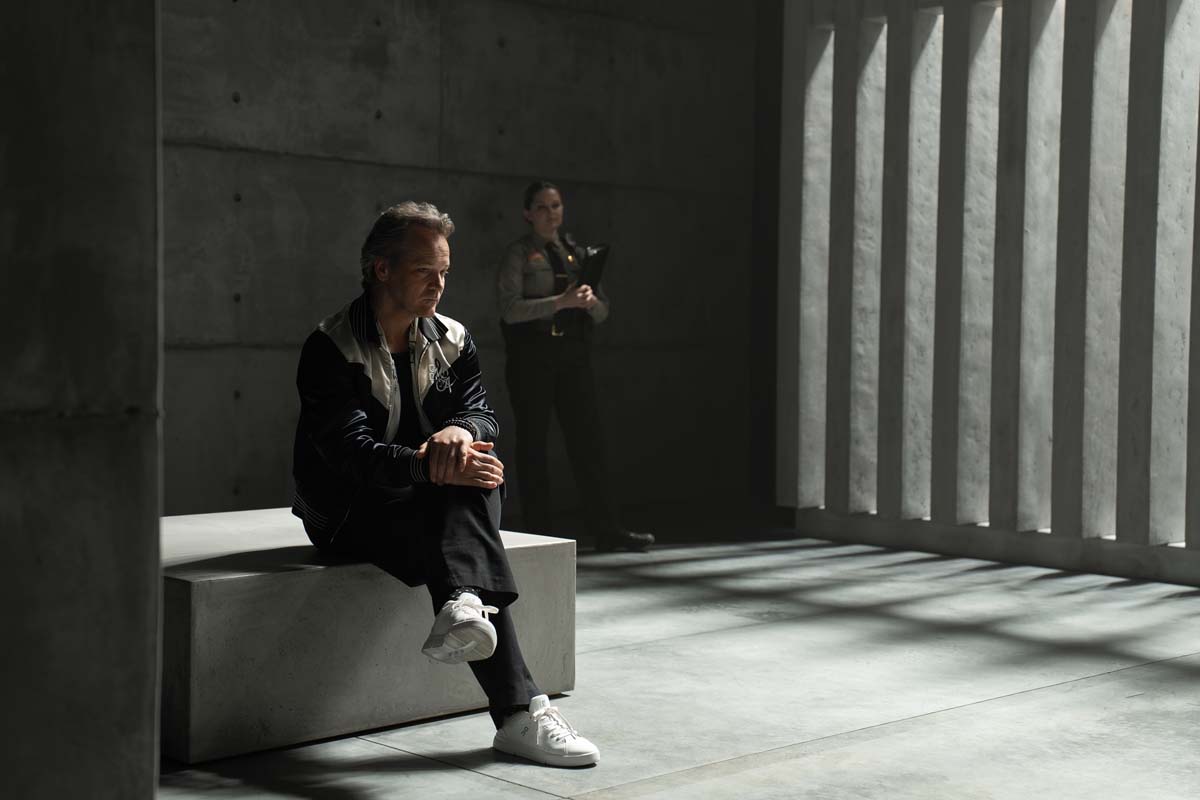
One of the scenes that was cut from the end, Homer sitting at the bar, actually joining DTF. That was like an aside. Like he’s going to try it out. Well, we didn’t end up using that at all. But then, Max, used that footage in one of his episodes to have Homer decide to check out the gay porn. I used different setups, but the same scene, when Homer is submitting his affidavit for the murder, the indictment.
But we cheated it, and Steve said, “Hey, why don’t we have him do that at the bar?” We said, “Okay, cool, we have the footage.” So it was great to play with all this footage like a jigsaw puzzle. It was a lot of playing around in the cutting room.
Koepke: It’s scripted very non-linear, but by the time we got to the last episode - speaking of creating a language for like a new show or a movie or something - we knew what language we were speaking and we were free to make it more non-linear, at least timewise as long as the emotional arc remained where it needed to be.
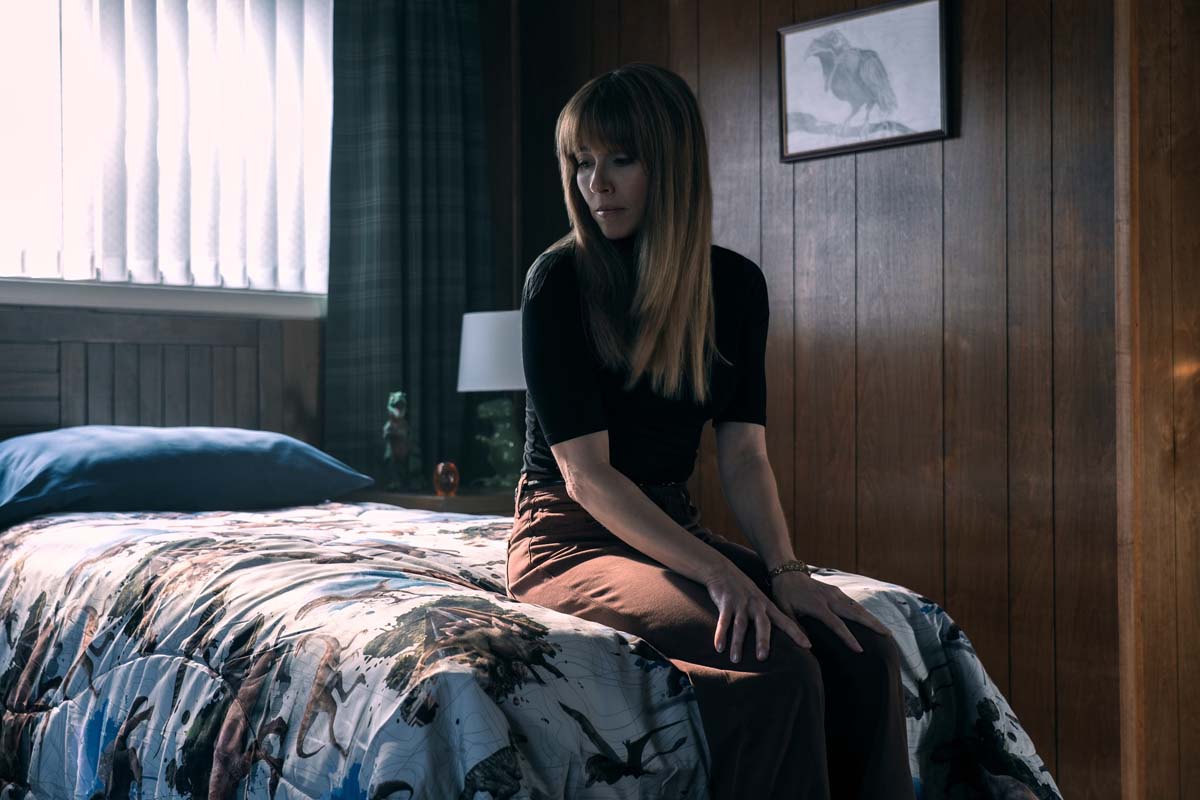
I think at a certain point we start really thinking about the time aspect of it, as long as this was making you feel the way it needs to make you feel. Time is kind of irrelevant at a certain point, as long as you’re feeling what you need to.
Really, moving things around so much was more on your gut. You have an institutional knowledge on a show at that point, and you try to use that as much as you can - what you’ve learned along the way to know where to go next.
It sounds like maybe the first cut of episode seven and where you ended up were pretty radically different. Was that something you discovered in context?
Ross: I wouldn’t say it was radically different. It was long and it was more linear and we were able to make it more non-linear because of the intercuts that we did. But the scenes were basically the same.
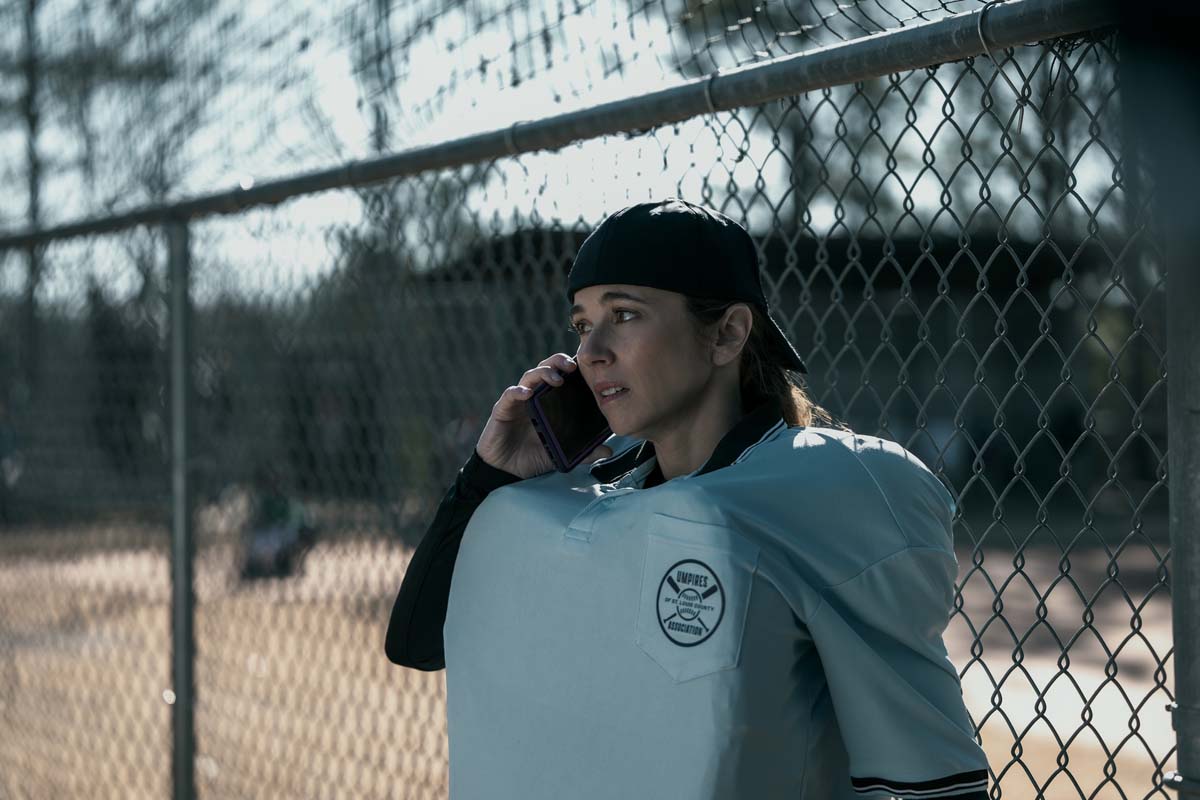
It was the little moments in between that we were adding - those little flourishes wanting to know what’s inside someone’s head, so you cut to Carol as an umpire again, so you could get her emotion. Those were shots that weren’t in there before.
We also moved scenes from episode 6 to 7 and 7 to 6 and 5 to 6 and 6 to 5, those things started moving around.
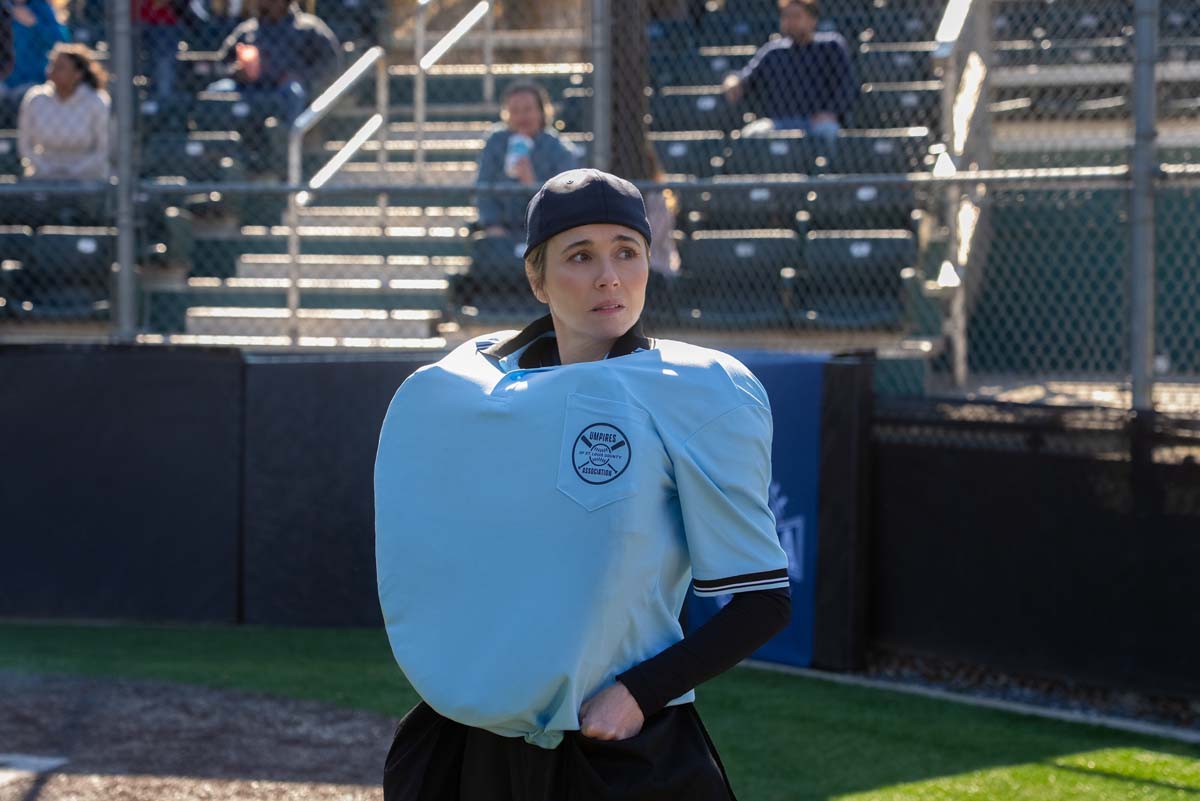
Koepke: Just shaping it. The scenes were the scenes but we were cutting out of the scene for a while to go somewhere else and coming back to it after 30 seconds – or whatever - to keep the viewer’s attention or just some momentum going or a little suspense at the right time, or just kind of shaping the scenes.
Someone needed to be quick and some needed to be long, and sometimes you needed to kind of hang on a character and just let them kind of think with the audience a little bit. And sometimes you had to get out. Or you could just tell where it needed a big song.
Any little trick you could do just to kind of keep the momentum. And since the script was so strong, honestly, it really makes it easier to mold it to your will. It’s already in a strong place, then you just have to push it further.
What were some of the biggest creative challenges in either the series or this episode?
Koepke: I’m very proud of the pool house scene where they take their clothes off and dance in their underwear. The Barry White song that we put on it came from an experience I had when I was with a bunch of friends in New Orleans many years ago, and I noticed everybody was really tired. I put that song on and everybody responded really well, really quietly to it.
And it just kind of always stuck with me. I can remember my friends really well through that song. It was just kind of a sweet moment, so when Clark and Floyd came to their sweet moment … you draw from your personal experiences.
Sometimes it’s horrifying to do that, and sometimes it can be really nice and can really work. So I was just proud that feeling that I had had with that close group of friends translated to something and worked. Steve and Kevin responded to it positively, and felt the same way I did about it, so we’re all in the same boat there.
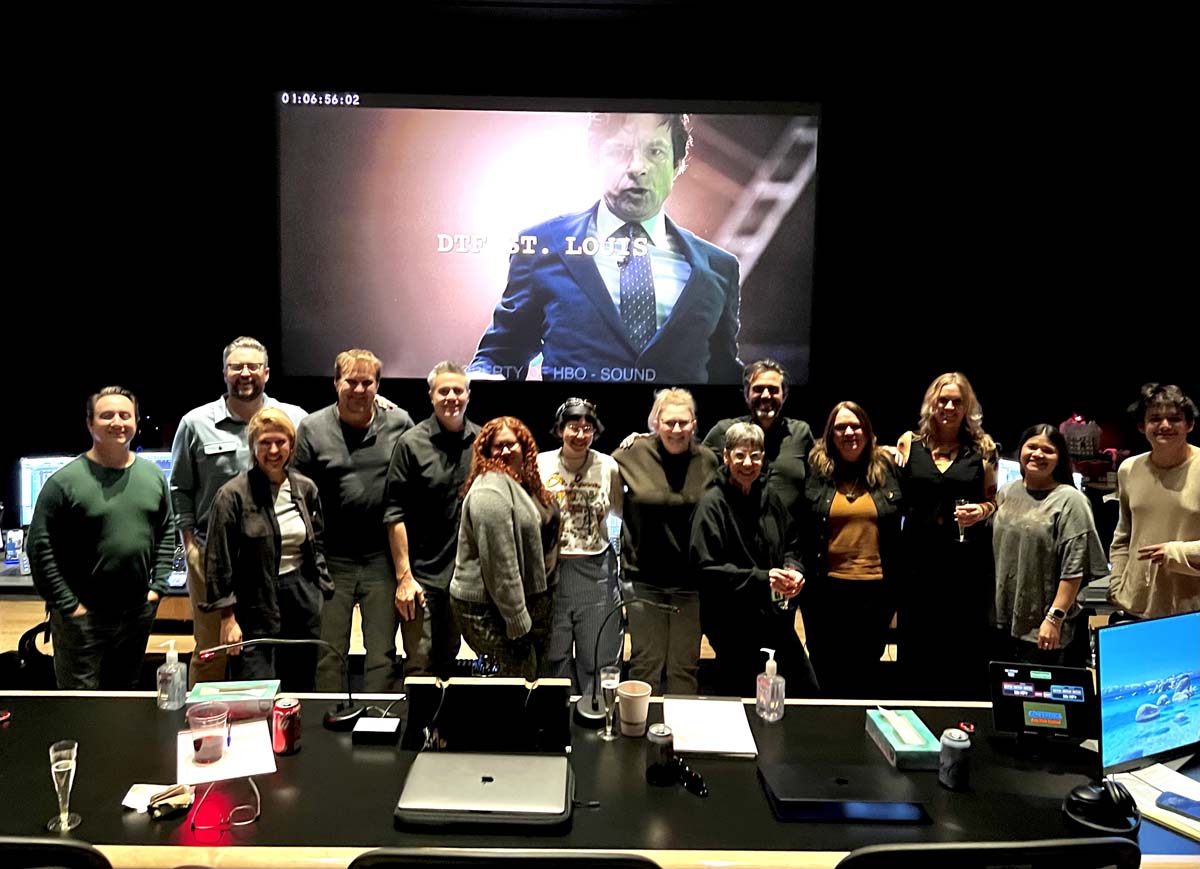
On the Mix Stage for DTF St. Louis
What did they dance to on set?
Ross: It was Erykah Badu because I had cut it as the longer version and Max up-cut it where he jump cut when the song came on. Also, by the point that we got to episode seven we had changed the whole feel of the music and the vibes of the songs.
Steve and his assistants and the music supervisor created this gigantic list of songs with weather-based themes, and we started dropping those in and that became the overriding musical bent of the show. Barry White doesn’t really count, but it had that vibe.
Koepke: That’s what made it kind of interesting, is that it kind of broke out from the show for a moment. It plays definitely in the point of view of Clark and Floyd there for a really long time. And then the boy shows up and suddenly it’s through his point of view, which is just incredibly heartbreaking.
The hook of the song kind of starts as he sees his stepfather in this weird situation, through his eyes. The dichotomy of Steve’s writing and these two guys are just being so sweet with each other, and then this kid has to see that, and he has no context or ability to understand what is happening.
The song just somehow like switches to his point of view in a really lovely way, at least the way I always saw it.
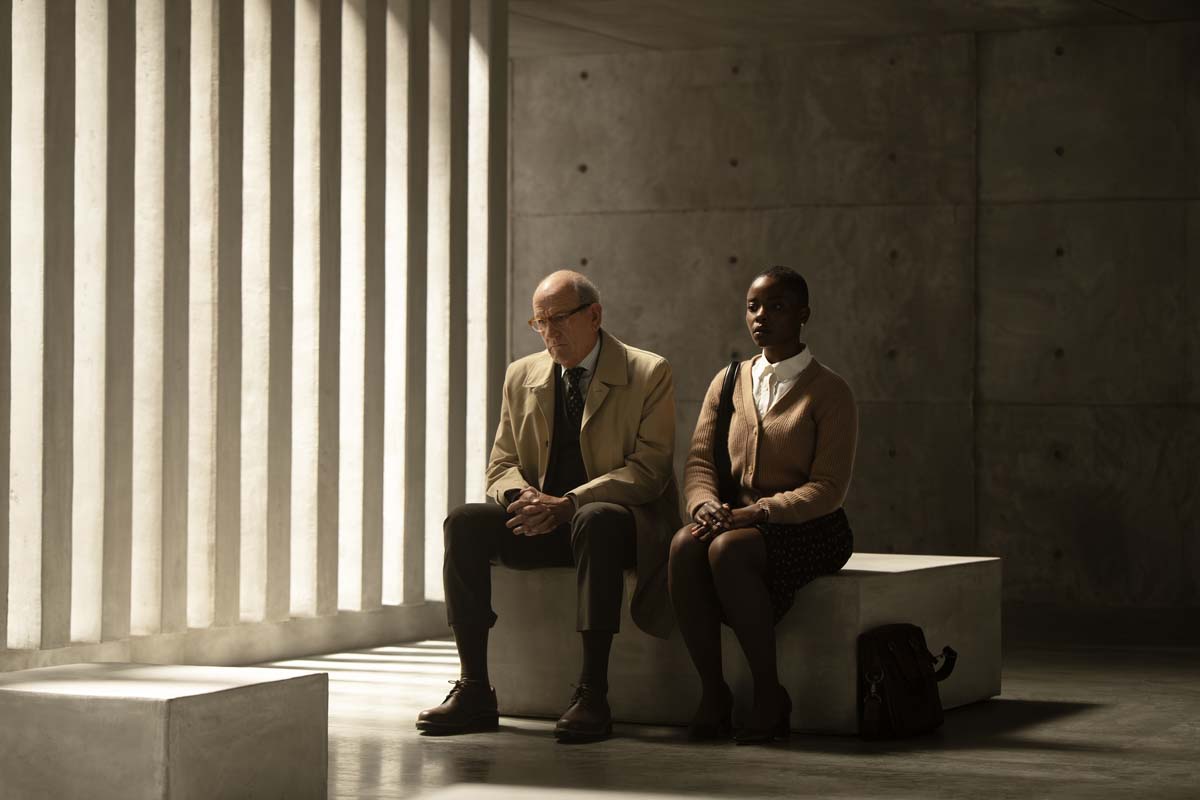
I loved the mistaking of the hand gesture for “Rock on” when it was really “I love you.”
Koepke: When I read that in the script, I cried. I’m not like an easy crier either. I thought, “Whoa, you can tell how powerful that was going to be.”
Ross: It’s a very powerful moment. It’s also funny because in my family - growing up in the 70s - that was a thing in the late 70s and that was our go to sign: the “I love you.” My mom and dad would always give that to us as we drove off somewhere, so that connected with me a lot. I never told Steve that, actually.
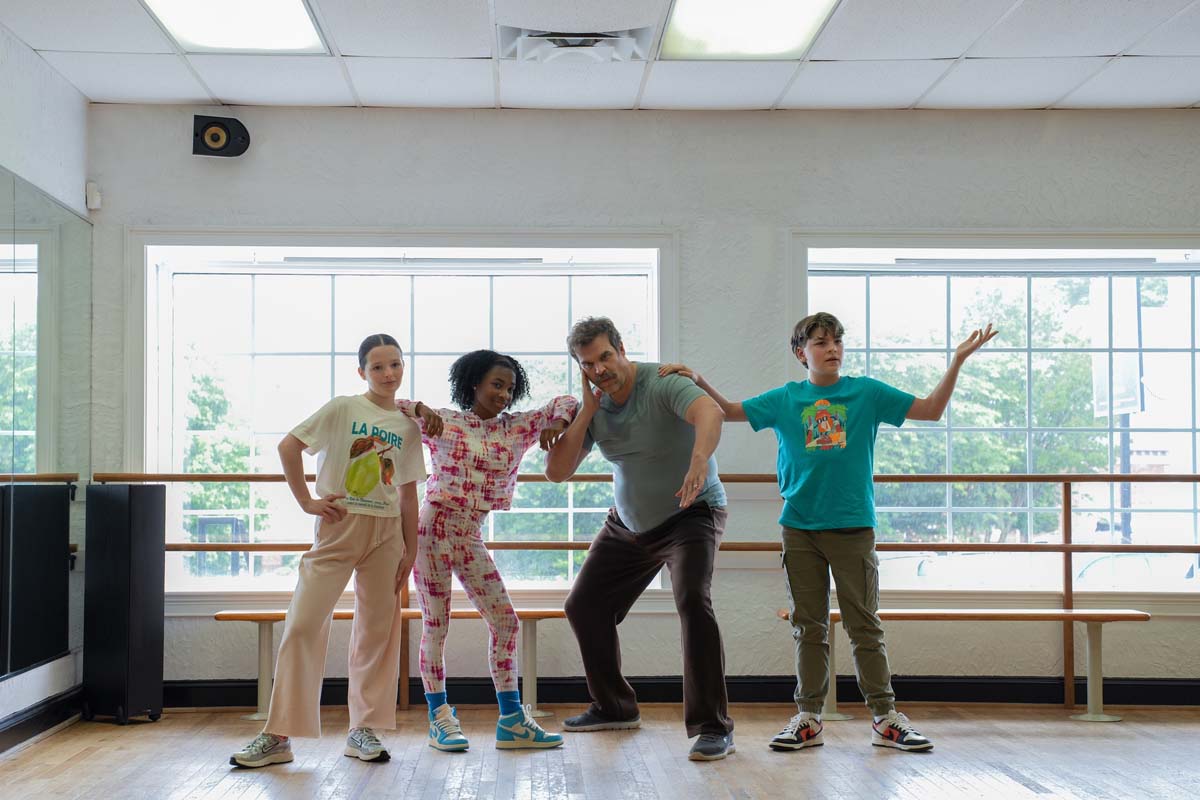
Koepke: What’s funny about that scene is when I was playing around with it - to the point of Steve letting you kind of go off on your little planet - Steve and I were watching it and he said, “It’s good, but we need to make more of it.
I always thought this would just be M.O.S. - that you wouldn’t hear anybody talking for the next five minutes. He shot it like that. He wrote it on the page, but he always knew that he wanted to take a lot of the dialogue out. He wanted lips moving and hearing nothing.
He had known that probably for a year and a half, then I’m recutting it and he doesn’t mention that to me once! Then he tells me, “That’s all going to be M.O.S anyways. I just want to see what you would do.”
It makes so much sense for a director to do that. They have their vision that they can always get back to. Why not see whatever your version is ass the editor?
Koepke: It takes so much confidence to do that in yourself. He’s so precise in what he wants with the way the setups are and the way the acting is. I feel like when you - as an editor - know the box you’re in, you can be more creative when you know the limits, even if that’s really limited. You know exactly where you are and what you can do.
I just posted this idea recently on my socials: “The impediment to action advances action.” Marcus Aurelius. True and drama for sure. But what about creativity? I’d say this also works for creative thinking. Obstacles and impediments often generate the most creative solutions. Don’t hate the obstacle. Embrace it!
Ross: That’s great.
Koepke: I love that.
Ross: Is that from the stoic stuff on Instagram?
I pulled the quote from the guy that talks about all the stoic stuff. I think he’s really interesting, but then I added my editor spin to it.
Ross: That’s awesome. I think I get that stoic stuff because of you.
Kevin, any thoughts on a creative moment for you?
Ross: Two of my favorite scenes in the show were when Floyd kisses Modern Love outside the Denny’s diner. Just the reactions. I just love the way that David played it, and just being able to cut that and find the right beat and be very proud when I finish that, “Hey, I know I cut this right.
This feels great to me.” The awkwardness, the embarrassment and getting it to come across because as I’m cutting, that’s what I’m feeling. I’m feeling the emotion of that character and I find myself reacting like, “How can I make this even more awkward and sweet at the same time?”
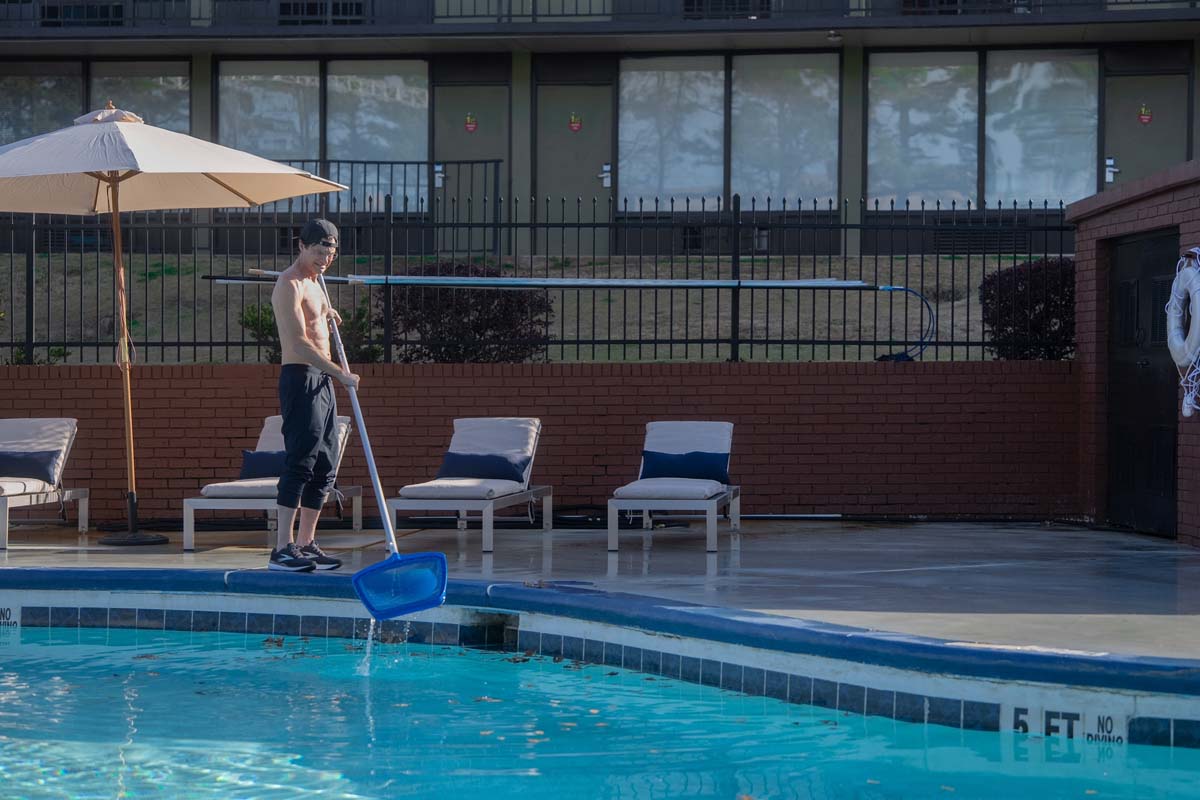
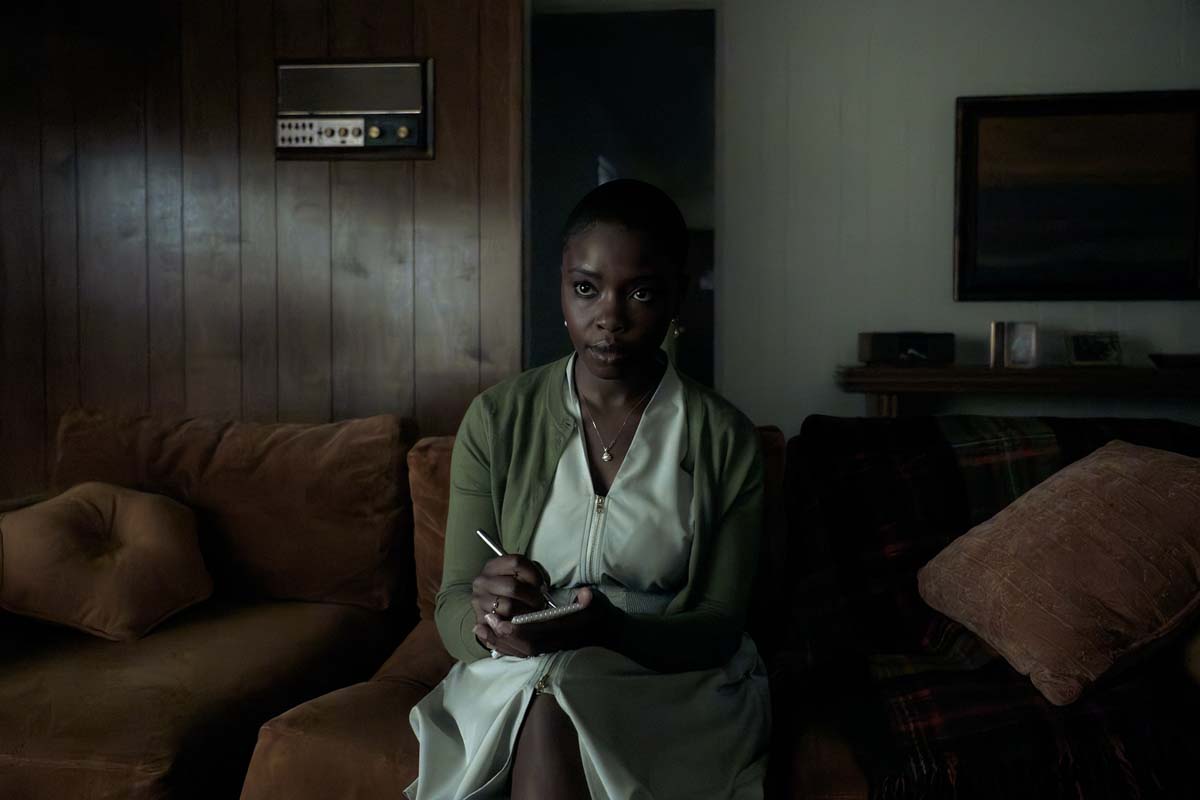
To biggest sequence that I really was proud of was the blind kid going toward the pool, and that scene itself was a scene of contention, because we had notes that maybe that scene wasn’t working but we said, “No! That is the emotional core of Floyd, where you fall in love with him. You have to have that moment. It’s stayed as it is, except for a couple of changes at the very end with Clark and Carol.
That scene, and sticking to our guns and making sure that we kept it the way it should be presented, and Steve going to bat to keep it that way was very important. We did enhance that by spending so many months going through, and then you come back to an episode because we didn’t have really have to lock anything right away.
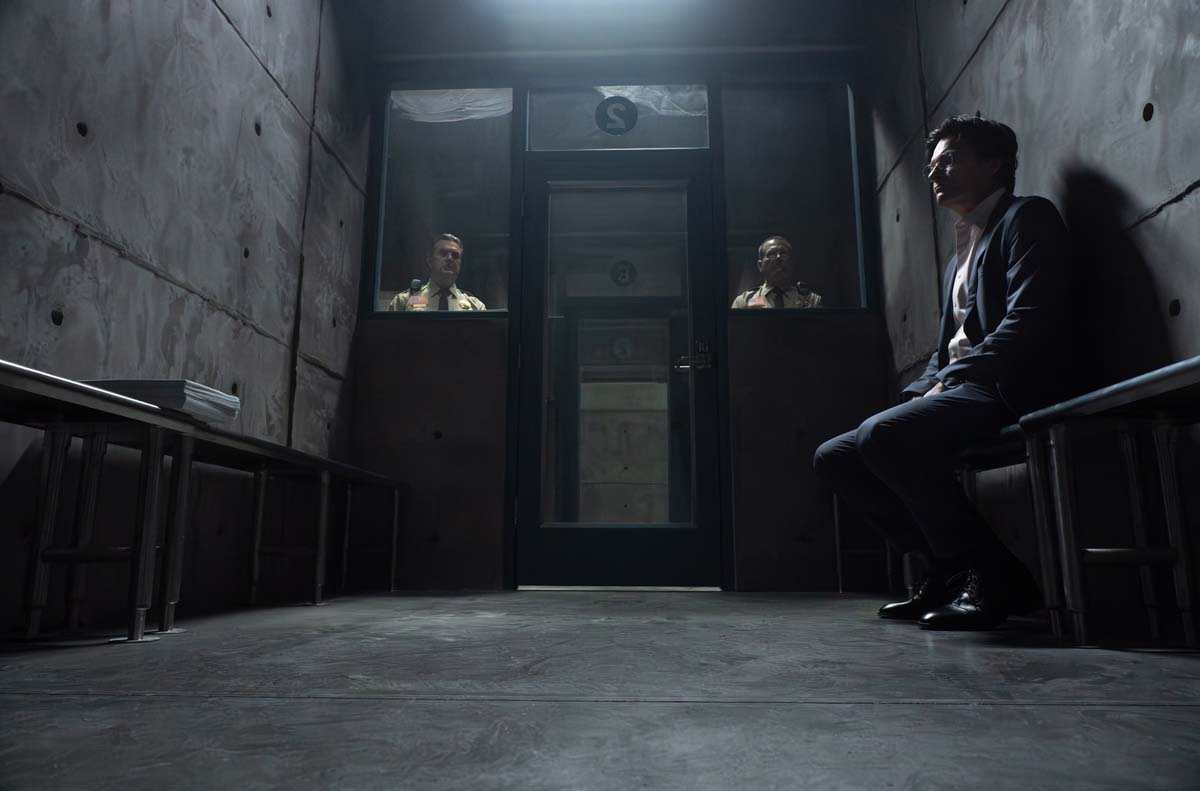
I always thought it was funny that Clark was writing “Rim job” on Carol’s back, and she’s saying “R-I-M…”, but we thought the joke was too subtle. So she’s saying “R-I-M…” then Floyd bursts out the door to save the kid.
Steve and I were just sitting there laughing, talking about “Wouldn’t it be hilarious if he just shouts, “Rim job” as he runs out and Steve says, “We’ve got to do it!” Immediately, he temped it on my phone and we got it in the Avid and we had David Harbour ADR it later.
We’re hitting them over the head, but it’s still subtle in the scheme of other people, but for us, that was like a hammer to explain that joke to people. But it’s it was just such a great moment: “Rim job” as he runs out!
Koepke: I mean, how lucky are we to be working like that?
Ross: Yeah! I never thought I’d be on a show where I was doing a montage of Playgirl nude photos to start an episode.
Koepke: I love that, I love that beginning. That’s one of my favorite parts in the series. It’s so ridiculous!
Ross: It’s so ridiculous. And that was not scripted. We added that. We thought, “Let’s start this with this montage.” And I think we actually originally might have had that in a different spot and said, “No, no. We’re going to start episode five with the montage. This is this is going to be awesome.”
Koepke: I remember when you guys put that at the beginning, I just heard like cackling next door! Steve’s like, “You got to come in here!”
Ross: That was what’s great about in person!
Koepke: Exactly.
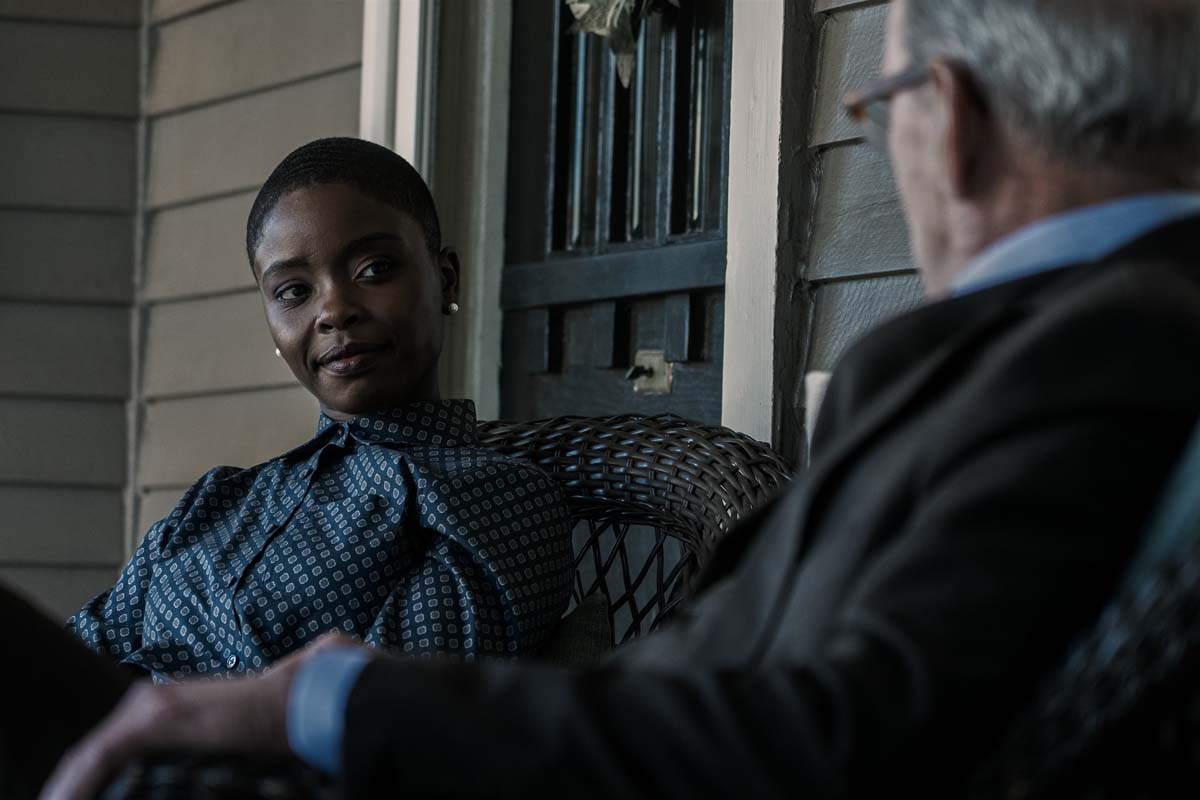
Ross: Because then we would say, “Come here and check this out!” or Steve would come get me out of my room and say, “Come check out what Max has done!” This has just been a great experience on this show.
Koepke: You feel more accomplished when you’re in person. I remember a bunch of times – we wouldn’t quit early necessarily, but as editors, you’re used to working until 9:00 or 10:00 at night on the regular. And Steve was really good at honoring people’s personal space and time. So many days ended just with some laughter at 6:00pm.
Steve would say, “Well, I think we’ve got to go out on top today. We were not going to do any better than that. Let’s just get on it tomorrow because this is great. Now we can come in and the ball’s already rolling.” There was a good cadence to the way we worked.
Ross: Plus we got free food and crafty. O f course I gained 10 pounds from that.
Crafty in post is kind of dangerous.
Ross: Oh, it was bad because they’d ask us, “What do you want?” and we would just name it and the shelves would be filled!
You guys won an Emmy against some pretty stiff competition. What do you think your fellow editors responded to in the editing of this?
Ross: I think the emotion of the characters.
Koepke: Yeah. I was going to say the honesty. I think they can probably see that we got out of the way of the acting and the writing a little bit and didn’t try to slick it up too much.
Ross: But it was lit up with the intercuts. But it wasn’t like a stand out type of thing.
I’m not sure what they responded to. I’m happy they responded. I think it’s hard to judge editing. Honestly, if we judged editors on their ability to shape scenes and make something we would have won 100 Emmys for the bad network shows we had to try to make scenes work.
I think my friends would feel the same way. They’d all say, “If someone knew what I just did to make that scene not be crap…” That wasn’t the case with this. This was beautiful material to work with.
I’ve had that discussion: there needs to be an Emmy for Turned Something Unwatchable Into Something That at Least Could be Broadcast.
Ross: Absolutely.
Koepke: What the other editors would have seen in our edit is that we trusted our own process. Like when someone believes in what they’re doing. I think that there was a real belief in what we were doing for all the reasons we’ve been talking about, and that can come across and earn trust with the viewer.
I think when it just feels very intentional it starts to feel handmade. As humans, we can kind of sense that, I think, even in filmmaking, when something is cared for.
The subject matter was very sweet and human, and I think the editing had to kind of follow suit. If there wasn’t like some sweetness to it, I think no one really would have cared.
Ross: The style we had we attempted to go for was continuous throughout. We were moderate in our flourishes. We were telling the story. And that was the most important thing: telling the story, not getting in the way. But I feel like the editing did add to the storytelling itself in a way that made it stand out versus just a normal story that you would forget about right away.
I think we aided Steve’s desire to tell the story he wanted to tell, and our choices helped push that, so I hope that it’s part of what people were drawn to.
How do you judge the editing of others?
Ross: I can’t.
Koepke: It’s hard.
Ross: My first thing is emotion. And do I emotionally react to the scene? That is the most important thing: am I getting the character’s emotion across properly? Am I making the audience feel what I want them to feel in this scene. When I have that reaction to someone else’s editing I count that as “That really works for me, and I really like that editing.” I’m also drawn to the flashy stuff. When I saw the Scott Pilgrim movie, I was like, “Oh my God! Look at that!” Or Everything Everywhere All at Once.
Koepke: For me I try not to judge. I think I’m so hard on myself to be an editor. You really have to be hard on yourself. You have to make sure that every cut is awesome. One bad cut and you lose everybody.
So I try not to assume I knew what the other editors were going through to get to where they had to go, but sometimes you see some editing and it just is inspiring and it makes you wish that you could look at the footage.
I’ve been watching Pluribus this week. There’s a couple episodes where I thought, “This would have been fun to work on.” So I think it’s less judgment and more just sometimes you feel the inspiration from what other people are doing. That’s a good feeling. It makes you want to do more.
Ross: And what’s funny about Pluribus is Chris McCaleb and Joe Louis were both on Perpetual Grace with me. Great editing.
Gentlemen, thank you so much for being on Art of the Cut with me this week. It was so great talking about this. Congratulations on your Emmy win.
Ross: Thank you so much for having us.
Koepke: Really appreciate it. As always, great talking to you.
 October 5, 2026
The Whisper Man
Chris has been on Art of the Cut before for The Menu, The Many Saints of Newark, A Quiet Place, and Assassin’s Creed. He has ...
Read more September 23, 2026
Sean Combs: The Reckoning
Charles Divak has been on Art of the Cut in the past for Chimp Crazy, for which he was nominated for an Emmy and won ...
Read more September 3, 2026
The Dog Stars
There's nothing like The Dog Stars in his filmography. That's a testament to him - that he is constantly interested in different stories and different ...
Read more
Subscribe to our newsletter
Get all the latest news, blog posts and product updates from Boris FX, delivered directly to your inbox.
Welcome!
Thanks for opting-in to our newsletter. You'll receive an email momentarily with your confirmation.