













Death By Lightning
A discussion of how to keep a historical drama feeling contemporary, how performance can affect then need for a flashback, and the impossibility of judging editing.


Today on Art of the Cut we speak with the editors of Death by Lightning, which was nominated for an Emmy for Outstanding Picture Editing for a Limited or Anthology series. We spoke with Joseph Krings, ACE, Anna Hauger, ACE, Michael Ruscio, ACE, and Joe Leonard, ACE. Additional Editors, Bridget Case and Derek Desmond were not on the call, but we want to acknowledge their part on the series and in the show’s Emmy nomination.
Anna has been on Art of the Cut in the past for her work on The Three Body Problem and for Dune Prophecy. She’s also been nominated for Emmys for Watchmen and Station Eleven. She’s also edited on Westworld.
Michael was on Art of the Cut with Anna for The Three Body Problem, for which he was nominated for an Emmy. His other work includes Altered Carbon, House of Cards, and Homeland.
Joseph Krings has also edited Captain Fantastic, Supermensch, and Rosemead, among others.
Joe Leonard has been nominated for Emmys for Gaslit and Glee. His other work includes Dark Matter, Mr. Robot, The Man in the High Castle, and Empire.
Death by Lightning Crew, thank you so much for joining me on Art of the Cut. I know that there were a couple of additional editors who worked on the show that we want to acknowledge. Anna, could you tell us about them?
Hauger: We had two fantastic assistants, Bridget Case and Derek Desmond, who received additional editor credit for all of their help, and in bringing this to the finish line.
Michael and Anna, you were both on Art of the cut before for The Three Body Problem. Is there a connection between that show and this show? The producing team or something?
Ruscio: Yeah, absolutely. As a matter of fact, I’m in Budapest right now. We filmed Three Body Problem Season 3 in one of the locations that Death by Lightning shot for the farm where Garfield lives with his family. We came on with the producing team.
This mini series was based on a book. Did all of you read the book before editing, or did you intentionally decide not to?
Leonard: I had read the book prior, and I’d also gotten to work with Matt Ross prior. So when he mentioned the project, I was pretty excited because I’m kind of already an American history geek, and the story of the book is really incredible.
I was really very excited with what Mike Markowski did with the script. It was sort of, a dream project from the beginning for me. I did reread the book. I listened to it on audiobook just for fun as we were going.
Krings: I consciously avoided the book for what it’s worth. I didn’t want to know anything about the book, and I didn’t want to know the historical accuracy of anything.
I figured Joe had already read it and Matt was aware of it. I just let that go. I had read a lot of scripts even before it was down to four episodes. I did a lot of consulting in the script stage, so I knew the story pretty well, but I did not want to know the book.
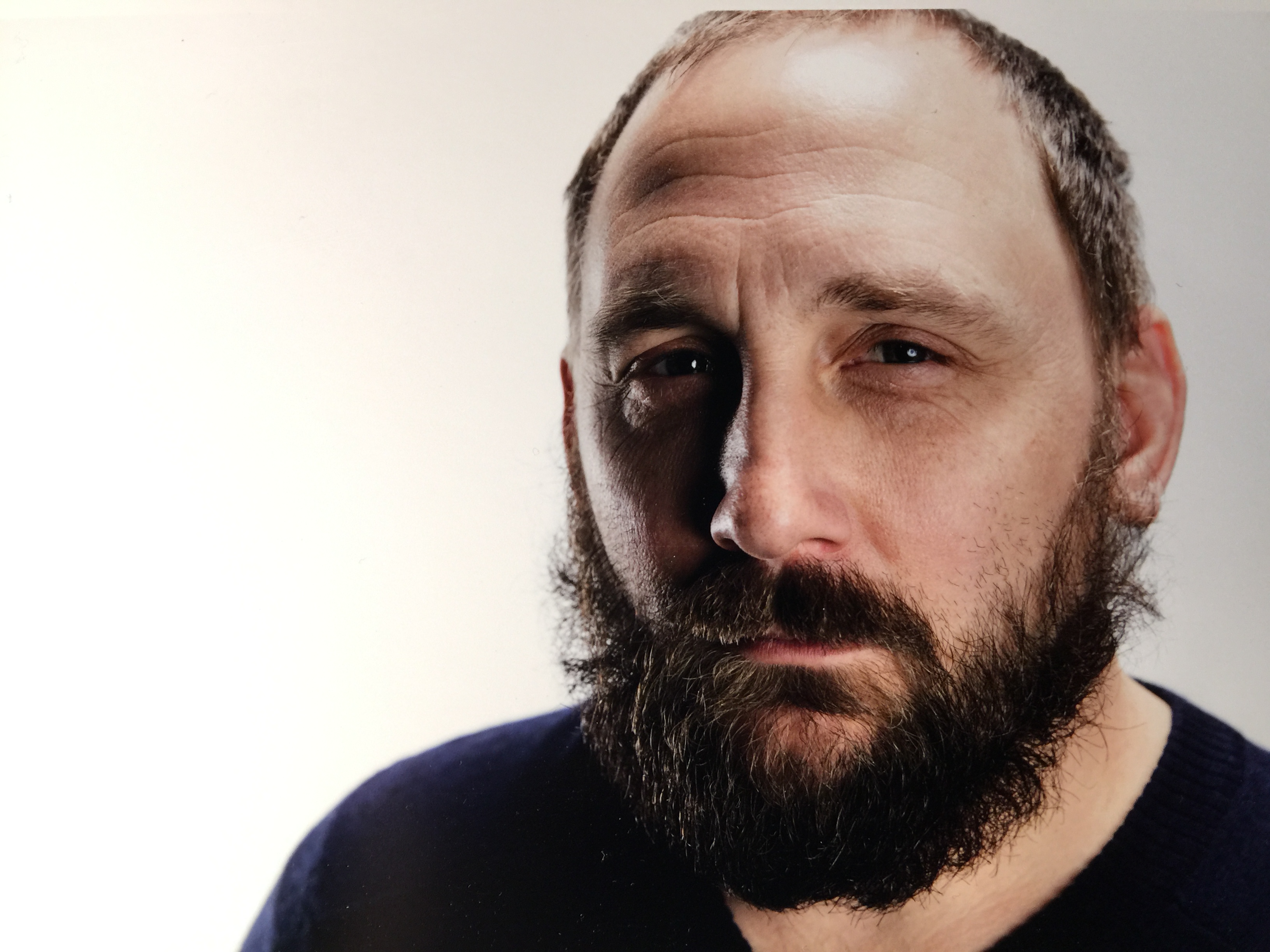
Joseph Krings, ACE
What were some of the differences with the script episode structure or number of episodes?
Krings: It was definitely more episodes. There was at one point 6 episodes, and five episodes, then four episodes. This was part of the process of figuring out what the best version of the show would be. And I did read and just give feedback on that.
But there’s just more story, basically. It was a process. They were working to figure out what the best streamlined version of it was, and they ultimately landed on four.
Leonard: In the book there’s an entire chapter on Alexander Graham Bell, for example.
Ruscio: And it goes more in depth to about the whole idea of sepsis. That is a whole sub-plot which is touched on in the series: Basically, had Garfield been left alone, he probably wouldn’t have died.
There were also racial implications to that, because the doctor who understood sepsis was African-American, so he was discounted and the role of the doctor who stays on to treat Garfield becomes almost a zealot.
In the series, that sepsis sub-plot is abbreviated, but it’s a really big factor in why Garfield actually died because he was assassinated. But he could have survived.
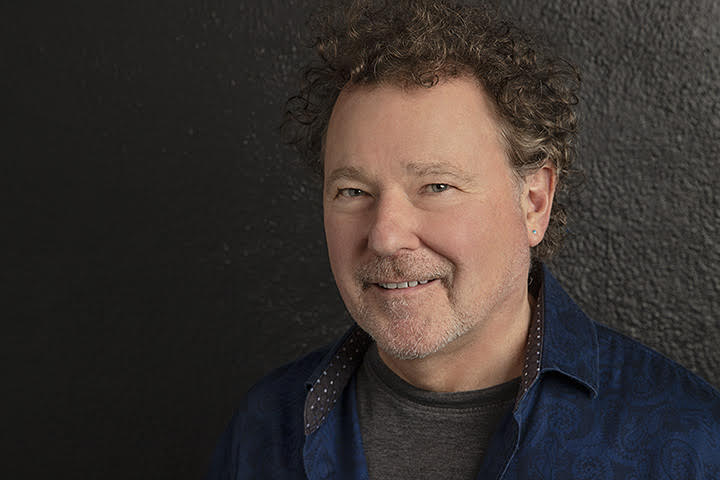
Michael Ruscio, ACE
You shot in Budapest. I am assuming that you edited in the States.
Krings: While production happened in Budapest, I was in New York. Joe Leonard was in LA. I thought that that worked pretty well because there were a couple different time zones.
I was a little bit closer to their time zone, then we would do work with them after their shoot day because we’d still be in our normal work day.
And Matt was hungry to get in and start playing with stuff, so we would work with them right after the shoot and a little bit on the weekends, but we’d do that all remote.
Leonard: We had like a tri-coastal system, Budapest being on some river in Georgia…
Ruscio: The Danube, The Hudson, and the L.A. River.
Leonard: It was kind of a baton pass between these different locations throughout the shoot. Joseph and I, we were very in touch because he had a team in New York, and I had my team in L.A., and we were constantly getting dailies for his episodes that he was working on, which at that point were the first and the third and mine were the second and the fourth, so we were constantly trying to explore the material, then share it with Matt and get feedback.
I was a process I did with him on Gaslit as well, which was really helpful, particularly getting these blocks of stuff because we’re discovering the characters and finding them.
Ruscio: And the constant in that were Bridget and Derek, who were on the show throughout, so there was sort of a continuity thread throughout the whole process. Derek and Bridget took us to the finish line, so they were there at the starting gate all the way through to the end.
Leonard: They’re very involved and knew where all the bodies were buried and all the dailies as well as anybody.
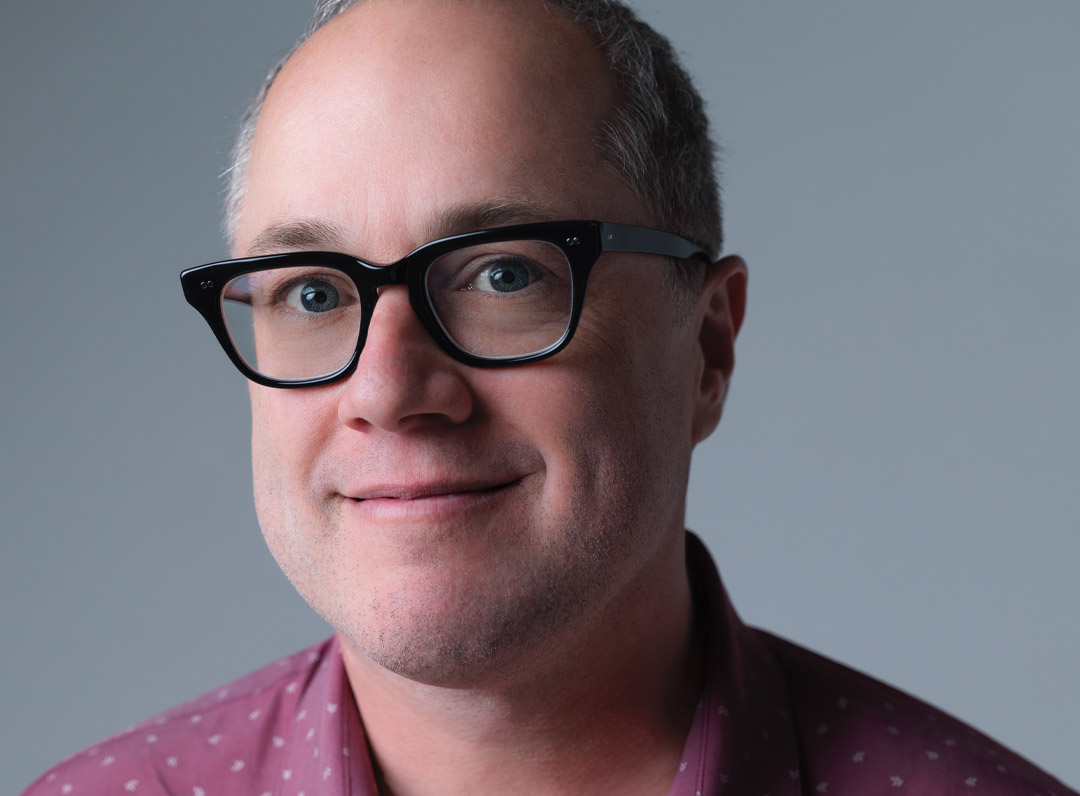
Joe Leonard, ACE
Geographically you were spread out and Joe and Joseph started out working on specific episodes. How were editing duties distributed?
Hauger: When Michael and I came on the director’s cut, we took a look at all four episodes, then spent a couple of weeks just getting familiar with the episodes and the dailies. We are familiar with collaboration.
We’ve collaborated on Three Body Problem season one and season two that we’re just wrapping up now, and we have a great dynamic of being able to get into the episodes together concurrently and dividing things up.
Michael would say, “Oh, I really like this scene. It’s calling to me so I can work on this.” And I would grab something that better suited my sensibilities. Then we’d always bounce things back and forth and show each other what we’ve done. So all four episodes were completely collaborative.
Ruscio: Anna and I were on the second floor of the post house. Everybody else was on the first floor, so we could just go to each other’s rooms right next to each other, so I could just go over and say, “Anna, could you look at this?” Or Anna would have a great idea, and I’d think, “Damn, I gotta steal that!” Or she would see something that I had done.
It was very, very collaborative between the two of us because of the proximity - that ability to just go to your partner and say, “Can we just look at this together?” It’s not like, “I’ll send it to you on PIX” or “Let’s look at it on Slack.”
So that was really a privilege, and I think helped us to shape in the later stage of the process because we had that back and forth and there wasn’t really any kind of an ego or possessiveness about it. It was just: Here’s the material that we’ve been given. What can we do to take this to the next stage?

Anna Hauger, ACE
Were the assistants able to be in physical proximity to any of the four of you? And what kind of technology were you using to access the media and collaborate? Where was the media? Did you each have drives or were you on a Nexis?
Krings: While production happened in Budapest, I was in New York. Joe Leonard was in LA. I thought that that worked pretty well because there were a couple different time zones. I was a little bit closer to their time zone, then we would do work with them after their shoot day because we’d still be in our normal work day.
And Matt was hungry to get in and start playing with stuff, so we would work with them right after the shoot and a little bit on the weekends, but we’d do that all remote.
I was in New York and Joe was in L.A. We were in an office space. I had an assistant editor, Susannah Kalb, who’s the best assistant I’ve ever worked with. We had a Post PA, Christopher Coby, who was great also, and we all worked hand in hand.
I would show them stuff, and I had an immediate collaboration with them. We had Evercast from the very beginning, and we had a constant communication with Derek, Bridget and Joe, and we would all watch things together and we would all give feedback together.
So it was not isolating, not all just working at home. It was still very collaborative. It was just through the medium of having to use a streaming output.
At that point there was my episodes and Joe’s episodes, but we gave heavy feedback to each other on those episodes as we built everything together.
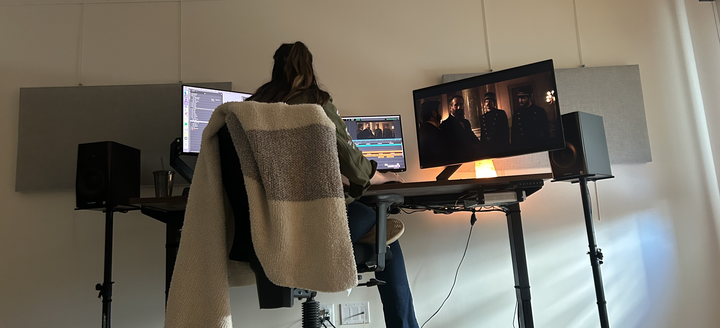
Additional Editor Bridget Case, working
Leonard: Like a daily meeting, almost. My assistant Bridget and I both worked remotely in L.A. and Bridget ended up working through the entire show with everybody. But she and I had a very collaborative relationship from the beginning as well.
She was cutting scenes and we were working together and she and Joseph’s assistant in New York also were very tight. So it was a virtual collaboration from the beginning for us. Bridget and I, having worked on a few shows before, there was a very quick shorthand using Evercast.
Ruscio: Joseph and Joe did you do Evercast with Matt?
Krings: Matt would check in at the end of a shoot. He was tireless. He wanted to see things. He want to see how performances were being shaped - if he could learn something from it and take it back – because nobody does the whole dailies process anymore where everybody gets to see it and share it.
Matt found that more productive than just sitting at home and watching his dailies on PIX or something.
Leonard: Typically Joe would have a few scenes to show them, and I’d have a few scenes to show them. He would give his knee jerk reactions about performances or about tone.
He’d give little hints along the way, and it really helped us shape those performances. Some of his intentions made them a part of the process from the beginning.
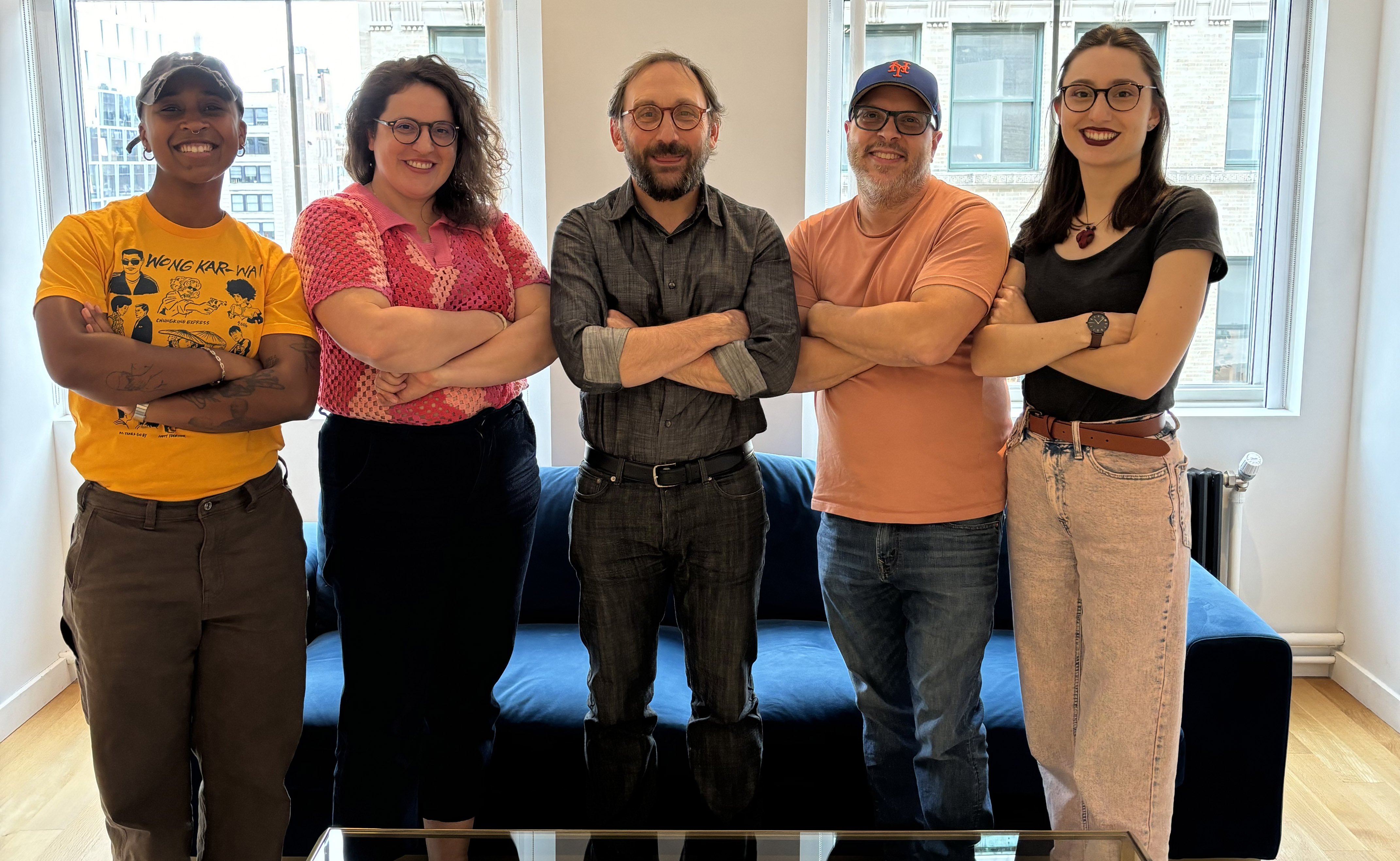
NY Post team, L-R ACE Intern Kennisa Ragland, First AE Susannah Kalb, Joseph Krings, ACE, Post PA Christopher Coby, ACE Intern Margot Maxwell.
During that part of the process, where was the media?
Krings: The Nexis in LA had everything.
Leonard: … we were “jumping” into the LA Nexis (with Jump Desktop).
There’s modern-day music. It’s certainly in the opening credits. Was the structure always to start in kind of modern day America before leaping back to the 1800s?
Ruscio: When Anna and I saw the project, it was a different opening. There was something that Matt and Joseph had designed where it really reflected back to the very end. We delved into some of the bins that Joseph had, where he had done this really great opening with this Sly and the Family Stone song.
As editors, it’s really a win if the song that you chose ends up in the final product. The opening has the brain rolling on the cart.
Then we have this moment of, “Who the fuck is Charles Guiteau?” We tried like seven, eight different songs, but we came back to “Everyday People.” That was Joseph’s decision.
That was part of what was really great about the collaboration and having those bins, because the initial sendoff to the whole episode really was kind of Joseph’s choice.
Krings: I think you’re speaking about the graphic open and the modern song that’s put in there, and that came after us.
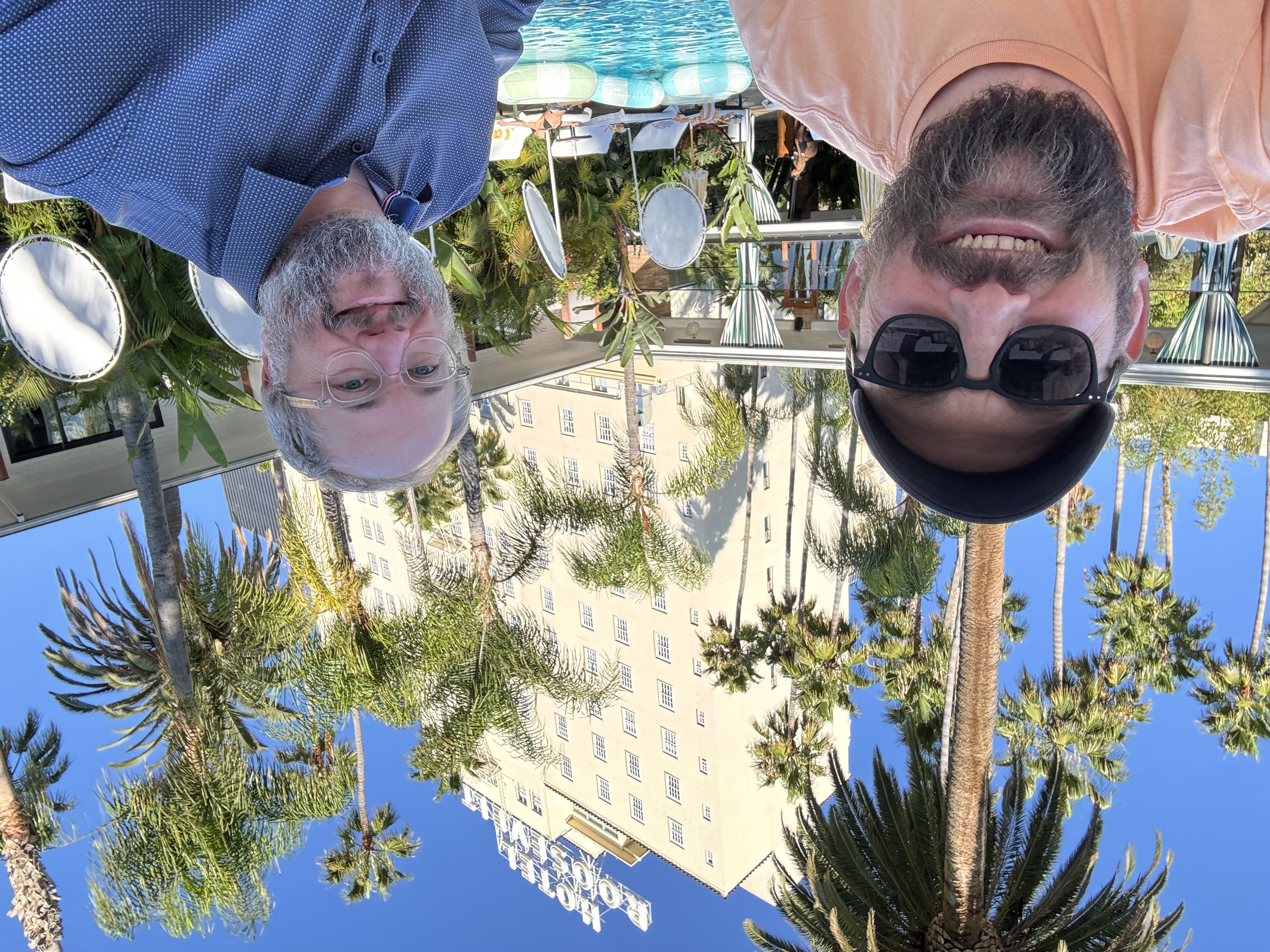
Joe and Joseph and their “editing beards” in honor of 1800s facial hair
Ruscio: That was really like a David and Dan thing. That whole opening credit animation was in process early on. If you pay attention to the main title of the entire series, the main titles reflect what’s happening in that episode, even to the point where there’s a chopped off head and everything.
We didn’t want to be doing a John Addams “coffee table” Howard’s End type of a historical drama. We wanted to have something that was contemporary and I think that the tone is set for sure in the main title and music, and also in that Joseph choice of the Sly and The Family Stone.
We wanted it to be contemporary, even in the opening scene with Guiteau in jail, where we have quick cuts of flashbacks. What used to be a scene is now flashes and there’s even nudity in the very beginning of the show. So I think there was a conscious effort to not make it a stodgy historical drama.
I think that Matt and David and Dan and Mike wanted to breathe that kind of contemporary life into the story.
We never wanted to cross over to the point where we were making a commentary about the US today - which we easily could have - but it’s there, so pregnantly, that we just dialed into it, and I think people just embraced that and just made that part of the show. And a lot of that is a musical choice that we’re telling this from this other lens.
Leonard: I think also the performances from these incredible actors relate to exactly what you’re saying. Michael. To have these actors embodying these roles and not necessarily trying to have a perfect Daniel Day-Lewis in Gangs of New York or There Will Be Blood kind of affect – which: beautiful job, Daniel Day-Lewis - but they were bringing themselves to it in a way that was honest and embodying these characters and is a little bit inevitably contemporary.
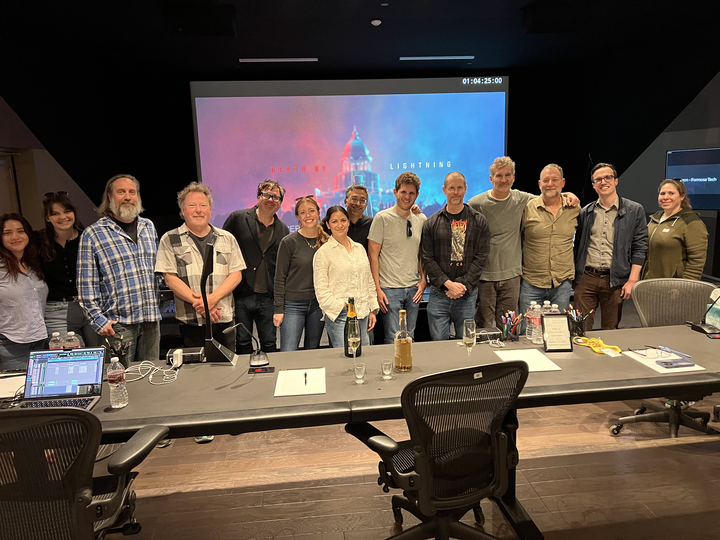
At the Mix Stage
Krings: We never went so far as to go anachronistic music within a scene. It wasn’t like we’re going to all of a sudden have a needle drop of some Romeo and Juliet, Baz Luhrmann type of thing…
Ruscio: …It wasn’t going to be A Knight’s Tale.
Krings: So we found appropriate music of the time, like the strip scene or even episode three starts off with a source cue, but it’s more of an old English baudy tale.
Ruscio: Which, I will add that was another Joseph Kring’s choice and made it through the final cut.
Krings: Thank you. That one was really a surprise. That song, every step of the way. I was thinking I’d play it for Joe and he’s going to tell me it’s bad and I’ll take it out. Then I’d think about playing it for Matt, and he’s going to tell me it’s awful and I’ll take it out. There’s no way it’s going to make it all the way to the end, then when it did, I was very happy.
Leonard: It was a huge win. Gilbert and Sullivan didn’t stay, but Joseph had some good wins.
Ruscio: There was this operatic, classical music. That’s another part of it, to try to find kind of an operatic sense of Guiteau.
Everything we did was based on character, and I think that all four of us really embraced the performances and found a way to imbue a humanity to them and make them feel as if that you could relate to each of their different points of view. I feel like that’s a real success editorially.
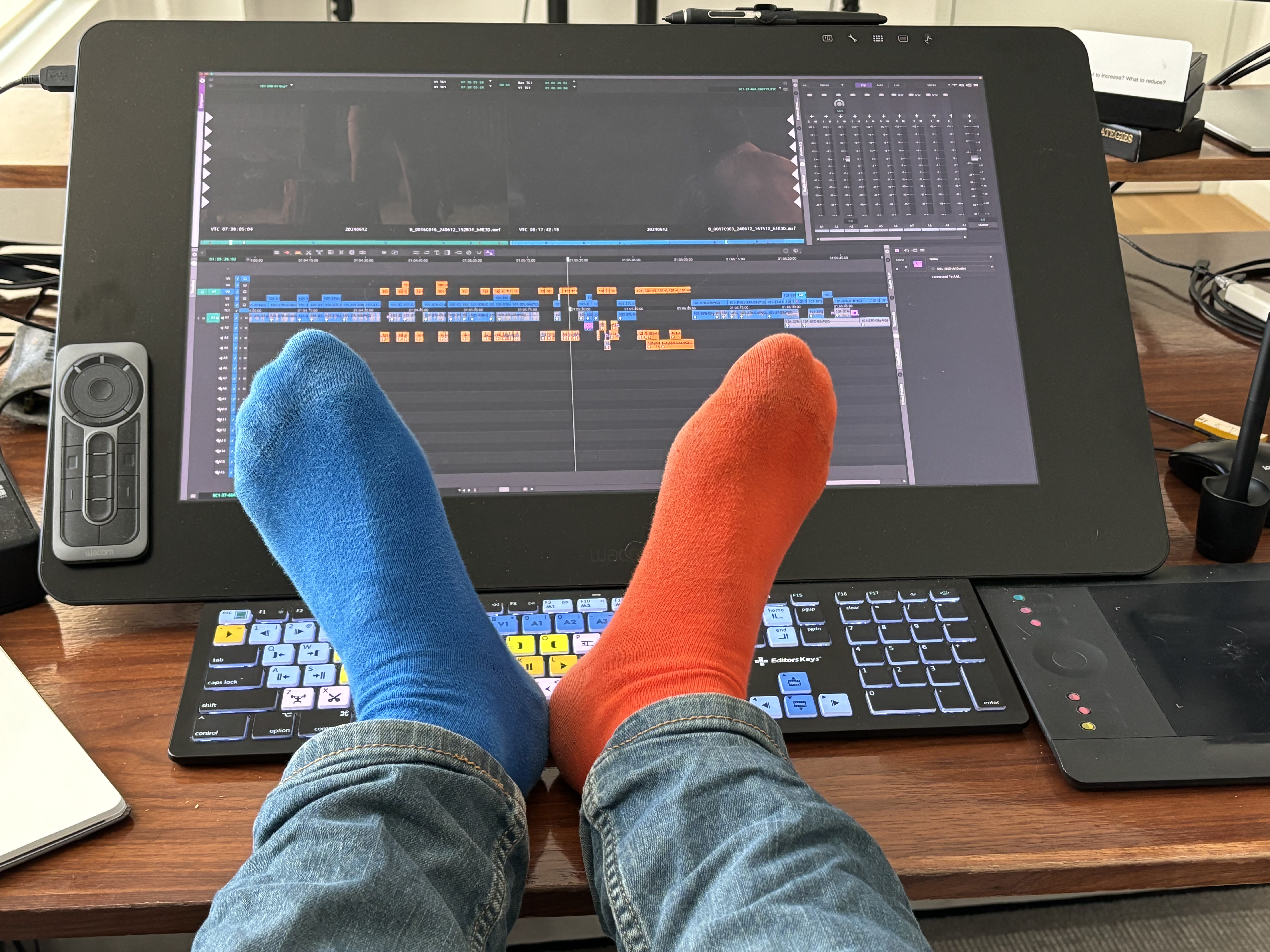
Joseph Krings editing socks and timeline
You’ve got these two characters – Garfield and Guiteau - that occasionally are together, but most often their stories are being told completely separately. Therefore, you can intertwine them any way you want, and you can also weight them towards one person or the other. What decisions were made about the weights or the positioning of those two characters’ stories?
Hauger: We did a lot of work and kind of restructuring and trying to juxtapose the characters a little bit better and draw more parallels between their storylines, and kind of set them on a collision course to their ultimate meeting in episode three, which I think is such a powerful scene and really showcases both of those actors so well.
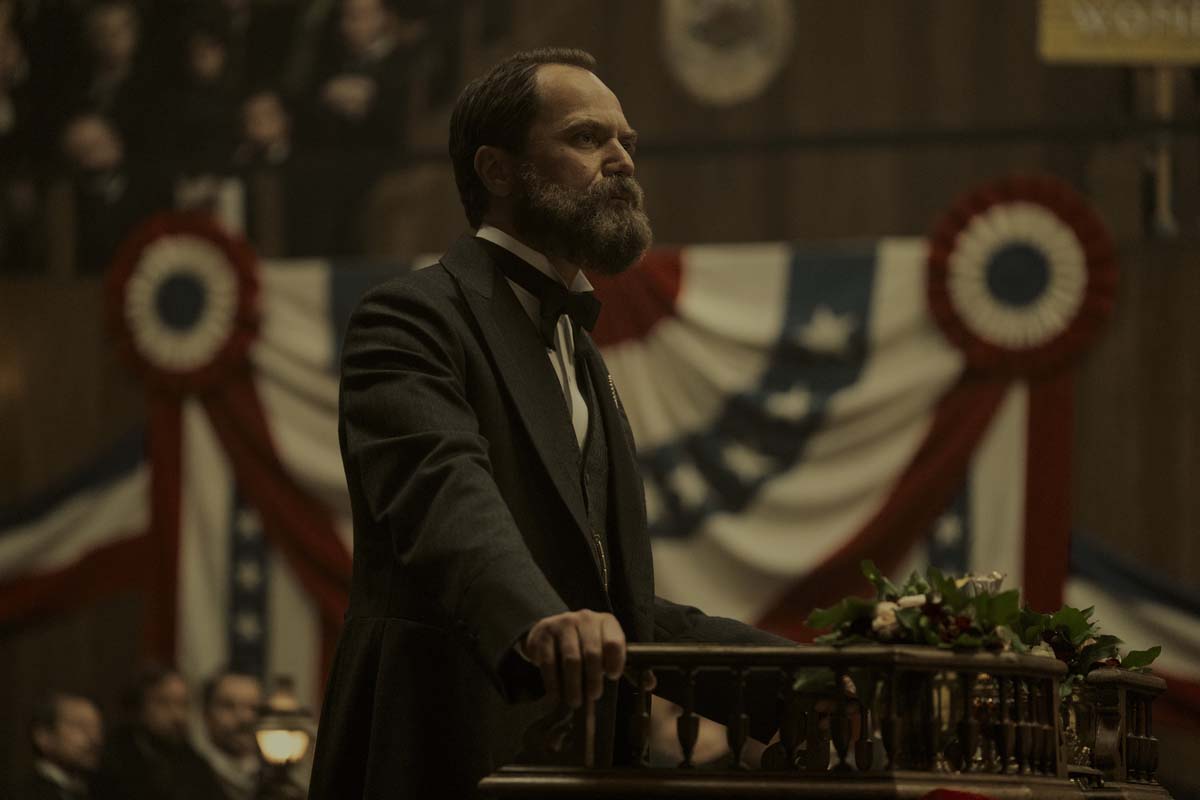
Michael and I spent a lot of time moving scenes around and even within scenes. And in the first episode, the intercut of Garfield’s speech with Guiteau chopping wood, that took a lot of refinement and figuring out when to cut and keep the power of Garfield’s speech going and the power of the ax cutting, and the emotion behind that and drawing the parallels between the speech and what was happening with Guiteau. It took a lot of work, a lot of versions, a lot of watching it down to get it right.
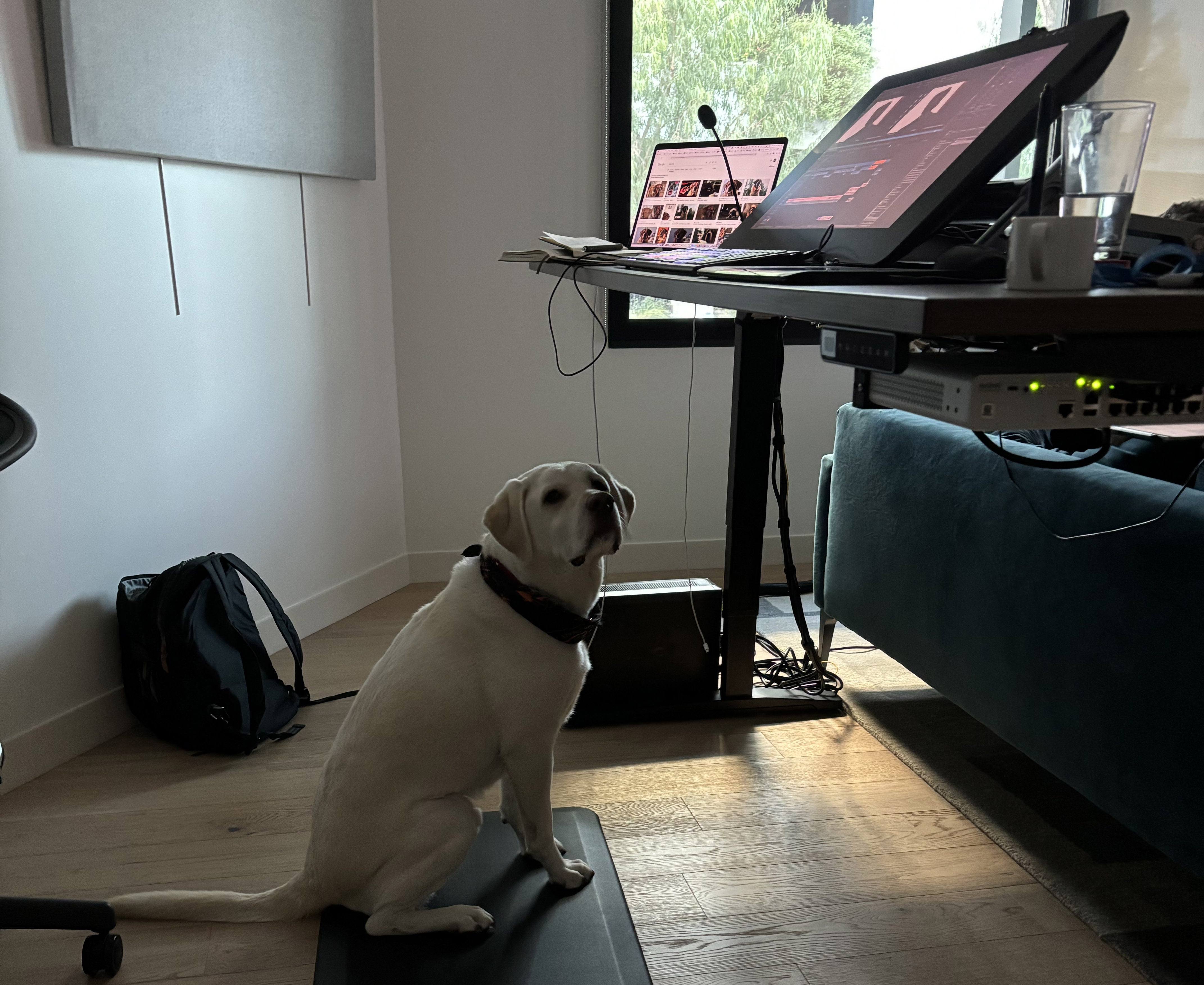
Bodhi the editing dog.
So that was scripted as intercut?
Hauger: Yes, I believe it was.
Krings: It was. And it was a project from the beginning. They actually made a storyboard. They sent me an exact version of how they wanted it intercut - which of course didn’t work exactly as they wanted it.
I even remember at that point when they were talking about it, because they reshot some of the ax cutting stuff to change the performance, and they asked me to cut it to the storyboard.
I said, “Okay, I’ll cut the storyboards, but do you also want to see how I think it should be?” They said, “Absolutely! Show us how you think it should be.”
Then, of course, it just continued to evolve because it’s a very tricky thing that you just have to feel. Many people have touched that. It became what it became, which is very good. But it was scripted, but you really don’t know what it’s going to feel like until you get in there and play with it.
Hauger: The music has such a big effect on that as well. It’s like we tried so many different pieces to, to try to kind of elevate it.
Ruscio: It was a tricky one. And I would add, though, that before the ax even happens is that there was a real conscientiousness to make sure that we were cutting from one man to the other man so that, for example, there’s a scene with Garfield, and Garfield leaves the farm, and then Guiteau comes out of prison, so we flop the shot of Guiteau, so it was on the other side of the screen. So that basically he emerged out of Garfield’s leaving.
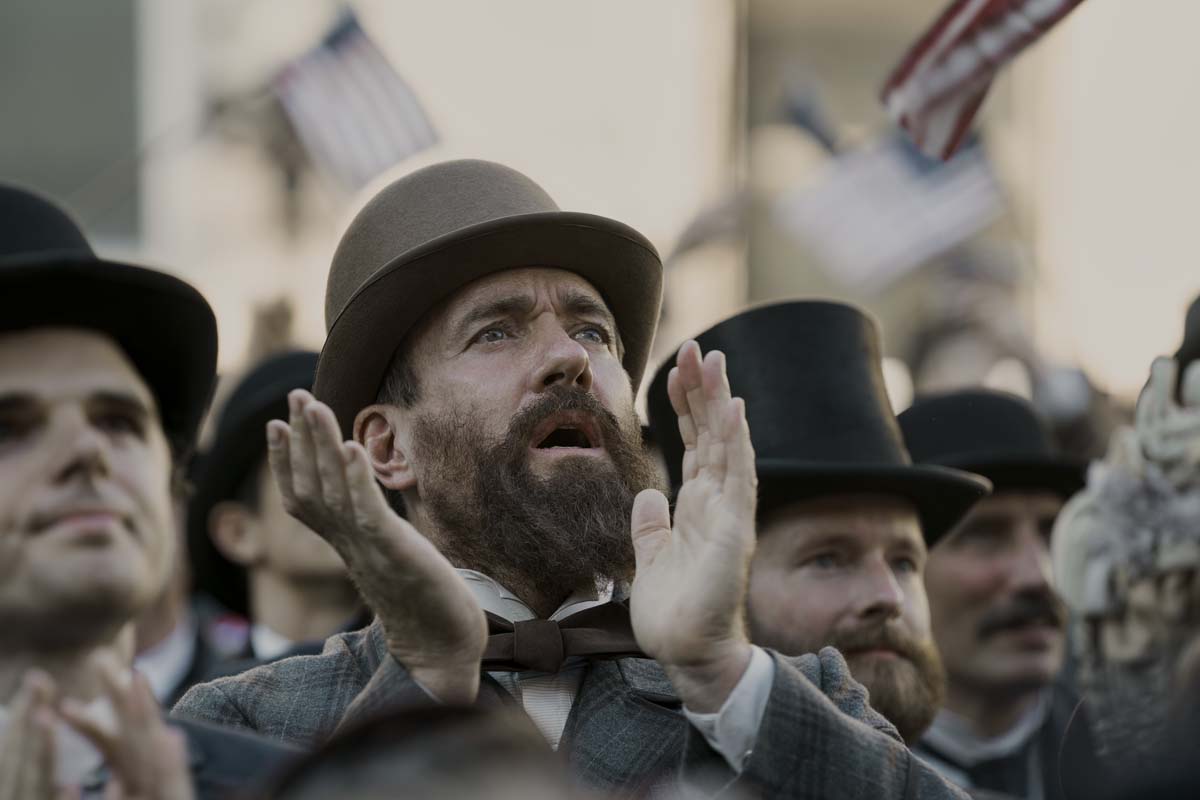
So before the ax even happened, we made this choice to make sure that we were cutting man to man. There was a great thing that Matt Ross had done where - at one point - Guiteau is in Chicago, and when he walks away in distress because he’s been dissed by Chester Arthur, then Matt had Garfield coming out of the same building. We reinstated that to try to get those connections as much as that we could.
We made that be our Bible a little bit, because they don’t get together until episode three, really, other than the handshake at the end of episode one. So I think that all along the way - above and beyond the ax - there was that sense of “Will these titans meet?”
I know that for the Joes, it was a great scene that they really responded to in episode three, which is kind of like when Pacino and De Niro meet in Heat. Basically you want to build up to that so that you’re really waiting for that powerhouse scene, which they deliver beautifully.
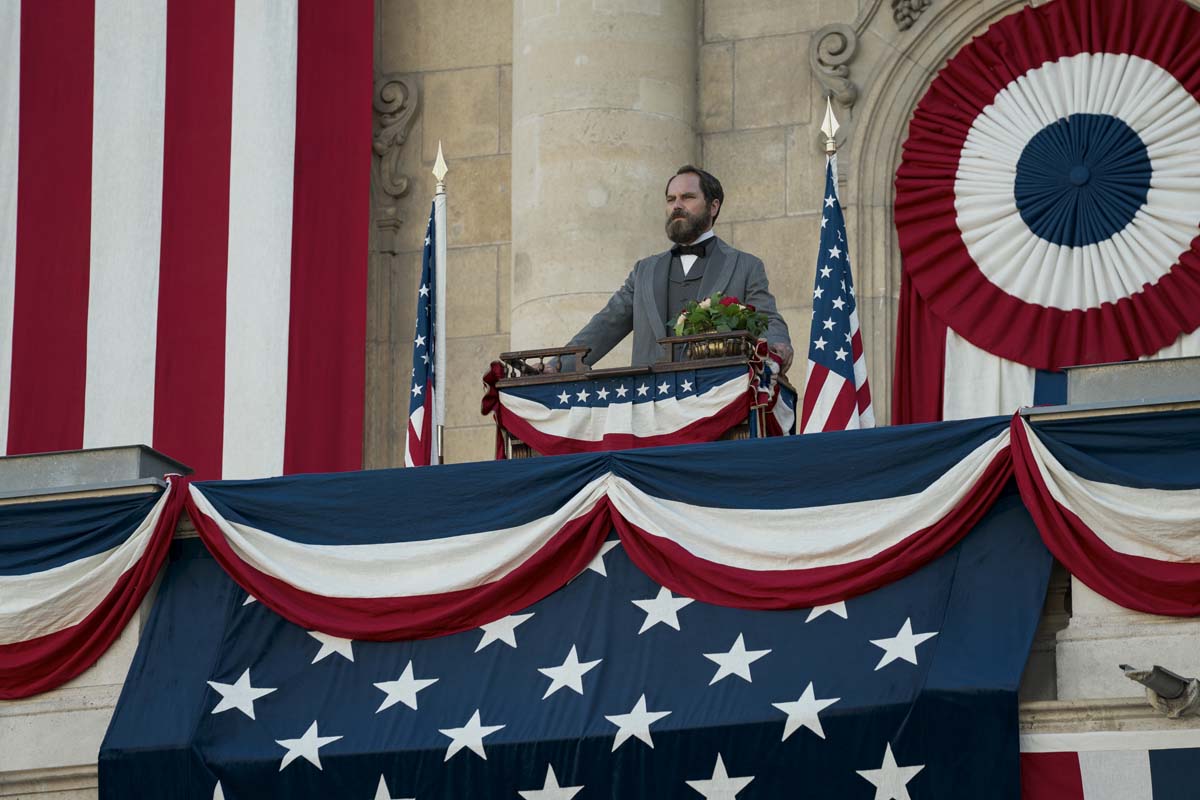
Talk to me a little bit about flashbacks. I really loved trusting the audience with a very short, kind of elliptical flashback when the River of Death is mentioned, but the only reference to that is a single bloody eye of a horse. Was there more there? Did they have a bunch of Civil War footage, but then that got stripped out? What was the evolution of that?
Krings: The final version of it is Michael and Anna, but Joe Leonard had a whole River of Death sequence. That was its own dream sequence.
Leonard: Even during the filming, they’re reaching for what it would be, and there are multiple different versions of what they’d written and what Matt wanted to do, but somewhere on some backup drive is there’s a version of the River of Death where Garfield is walking through a nightmare of the boys and the men that he led into battle that died in this battle.
I think it was always very tough to integrate into the story. Underneath it, in the cut, as Michael and Anna brought it all together, it’s in Garfield’s performance.
You can tell he’s not proud of being a hero. War is not like that, and he knows that. This was a scene that very literally was telling us in a dreamlike way. I liked how it how it ended up in the show as it is.
Ruscio: I have to pivot this to Anna, because she had a lot of really dope ideas that didn’t necessarily survive.
Hauger: It definitely went through a lot of iterations. We had a lot of fancy flashes to multiple images. I think I had a version when Garfield ultimately wins the nomination and the fireworks are going off, and there’s this shot where he’s on horseback and there’s a young soldier beside him, and that young soldier gets shot and the blood sprays onto Garfield, and I juxtaposed the fireworks with that gunshot sound effect of the firework, elevating the sound of the gunshot, and then we cut to the fireworks going off. So there was a lot that didn’t make the final cut.
Probably 20 different versions of flashes in different places, figuring out how much you need to add to Michael Shannon’s performance to underline that the Civil War affected him. I don’t think you actually need that much. I think keeping it simple and minimal is the most effective.
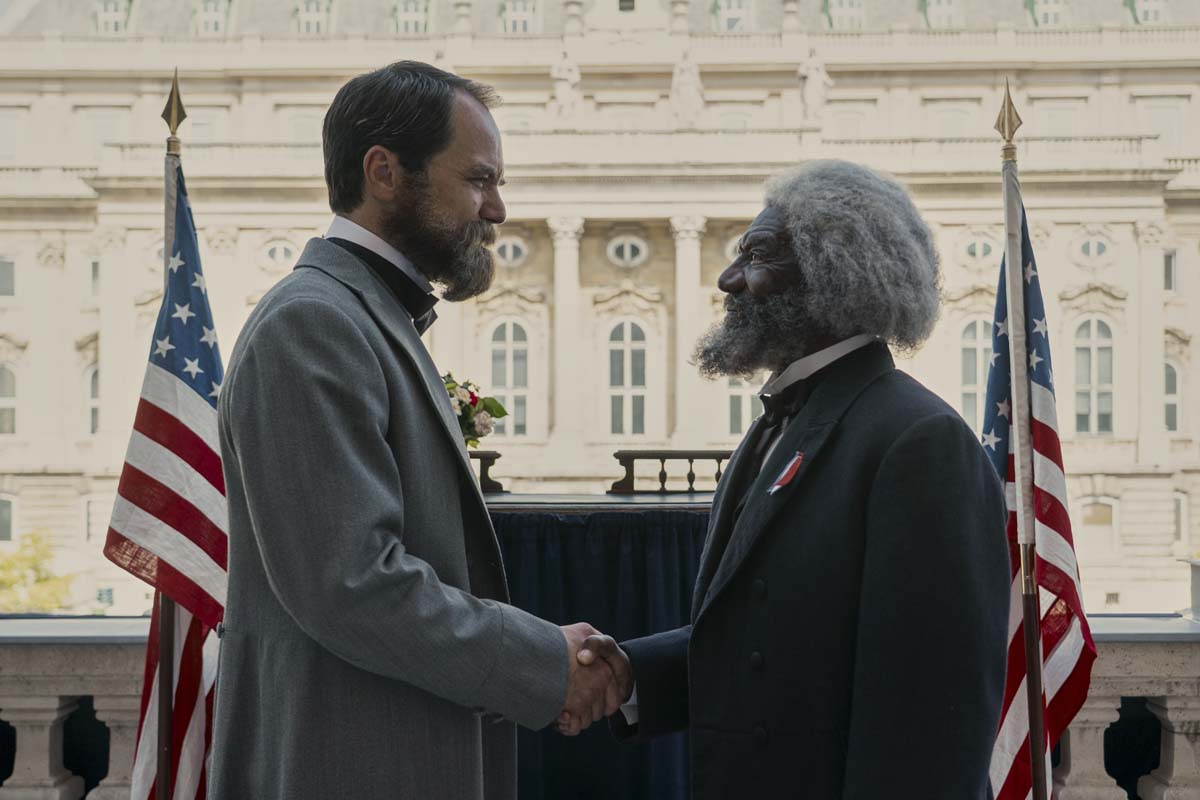
I was impressed by how economically the story is told. I had that sense of getting in as late as possible and you getting out as early as possible. And the scenes all had a purpose.
Krings: So it went through many, many evolutions. I read some scripts and was asked about cutting it down, and that was always the goal. They wanted this show to move. It doesn’t need to get mired down in a lot of historical details and facts.
That’s not the point of the show, you know? So even then I was questioning, “What is this subplot? Does it really pay off? Is it only here for some other reason that’s not germane to the to the dramatic arc of the show? Does it really pay off?”
That was always the goal right from the beginning. Then as we got into the edit, you know, of course we were looking for that same thing.
We wanted this show to have a tremendous pulse and pace and just keep you on the ride for a long time. And that was always what we were doing. That’s what Michael and Anna continued very well.
Hauger: I think, for example, the River of Death was a dream sequence that was supposed to start in episode 2 or 3, I can’t remember.
Ruscio: Episode 2.
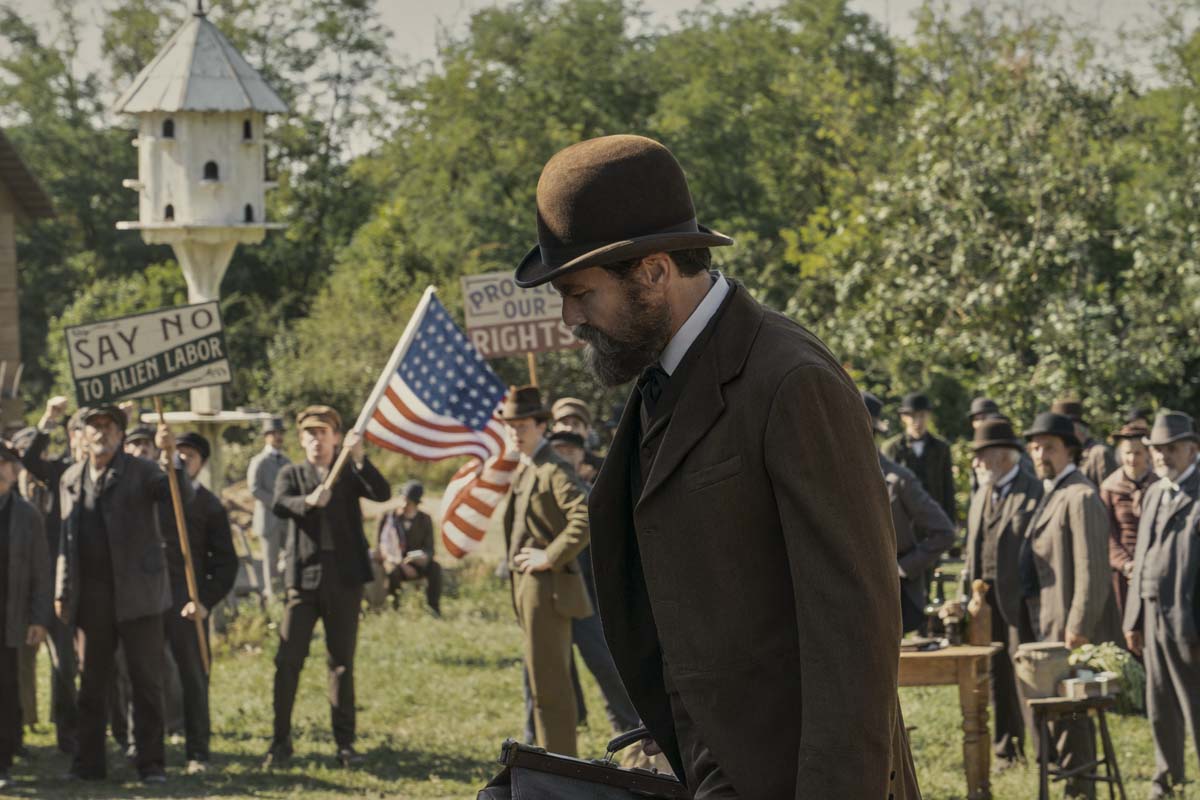
Hauger: Then it led into this whole scene with Robert Todd Lincoln, and it just it was too much to start the episode. Poor Robert Todd Lincoln’s role kept getting smaller and smaller. Not because of anything with the actor.
He did a tremendous job, but it just was superfluous. It wasn’t necessary. So I think that was kind of the impetus to losing the River of Death, just because that whole sequence with Garfield and Robert Todd Lincoln wasn’t helping us.
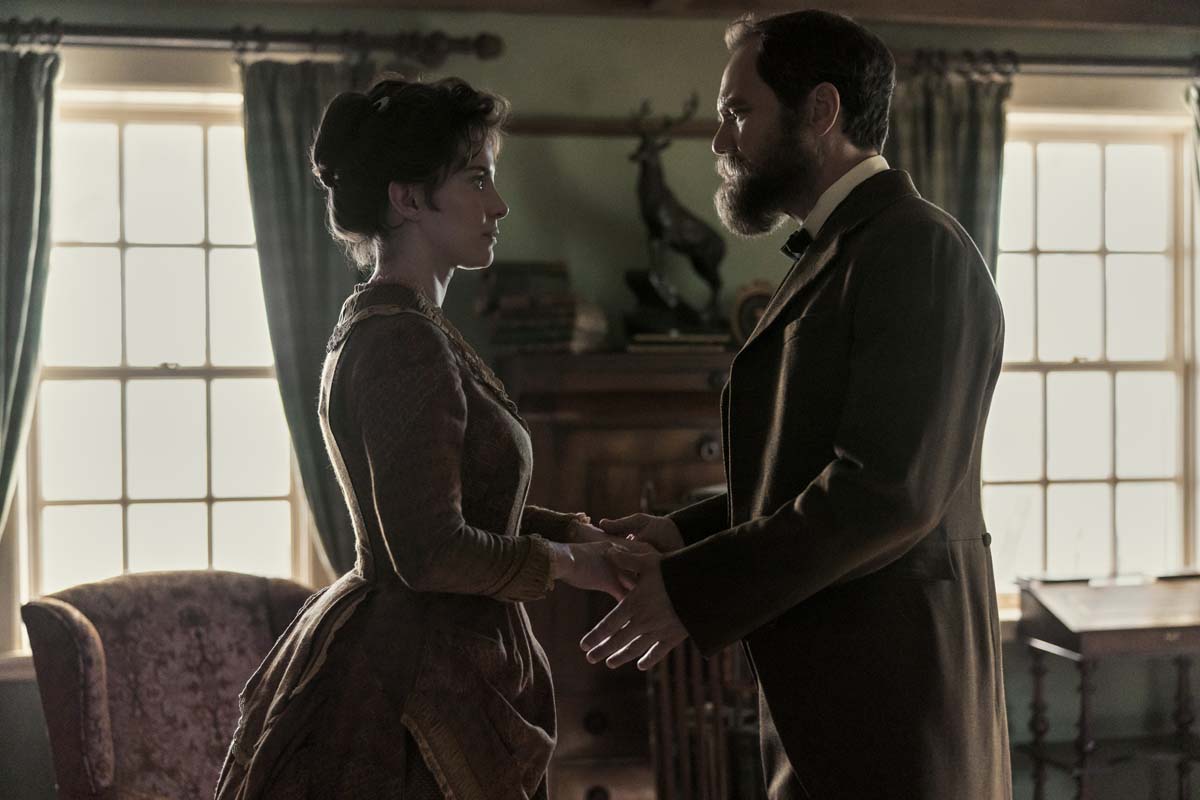
Ruscio: There was a later sequence with Robert Todd Lincoln. There’s this whole dream/nightmare with Garfield and Robert Todd Lincoln basically sort of appropriates Abraham Lincoln. There’s an assassination premonition and there’s a big dream/nightmare. It was really good.
I remember early on getting notes from Mike and David and Dan. We knew that was seriously on the chopping block. It’s one of those things that once you take it out, it went out without a problem, but the editors know where the bodies are buried.
But it was really great. Shannon had built all of that into his own performance. He has the line - which is the title of the series – “There is as much a chance of death by lightning.”
So it is on his mind and you feel that without having to have him have the worst nightmare of his life, where he wakes up in a cold sweat - which was really well done.
Leonard: Ultimately, you’re right, it wasn’t necessary because it stops the story to a certain extent, like Big Picture in terms of where it was already in the performance.
Krings: Even in the hours that I spent on that particular scene - because I loved it - I knew that it was going to be the first thing to drop out.
Ruscio: It screamed “lift” unfortunately.
Leonard: Because it stops things. It also creates an anticipation that is unnecessary for him to have.
Krings: The whole point was to try to create a little more interiority for a figure who could be a cardboard hero. He does everything right all the time. He’s a little bit one dimensional in that way. And I think the dramaturgical attempt, was to create a little more interiority for him, for us to see that he’s haunted by this stuff.
That’s also the point of the flashbacks. But we kept saying, you don’t need a lot with Michael Shannon. He’s got a lot of interiority. He shows you he’s a troubled person. He’s not just Mr. America.
Ruscio: Basically, they say that Michael Shannon was cast against type, that he should have been Guiteau, because these actors bring their baggage to the performance for the audience that you’re having to take that time to really see them as a different character.
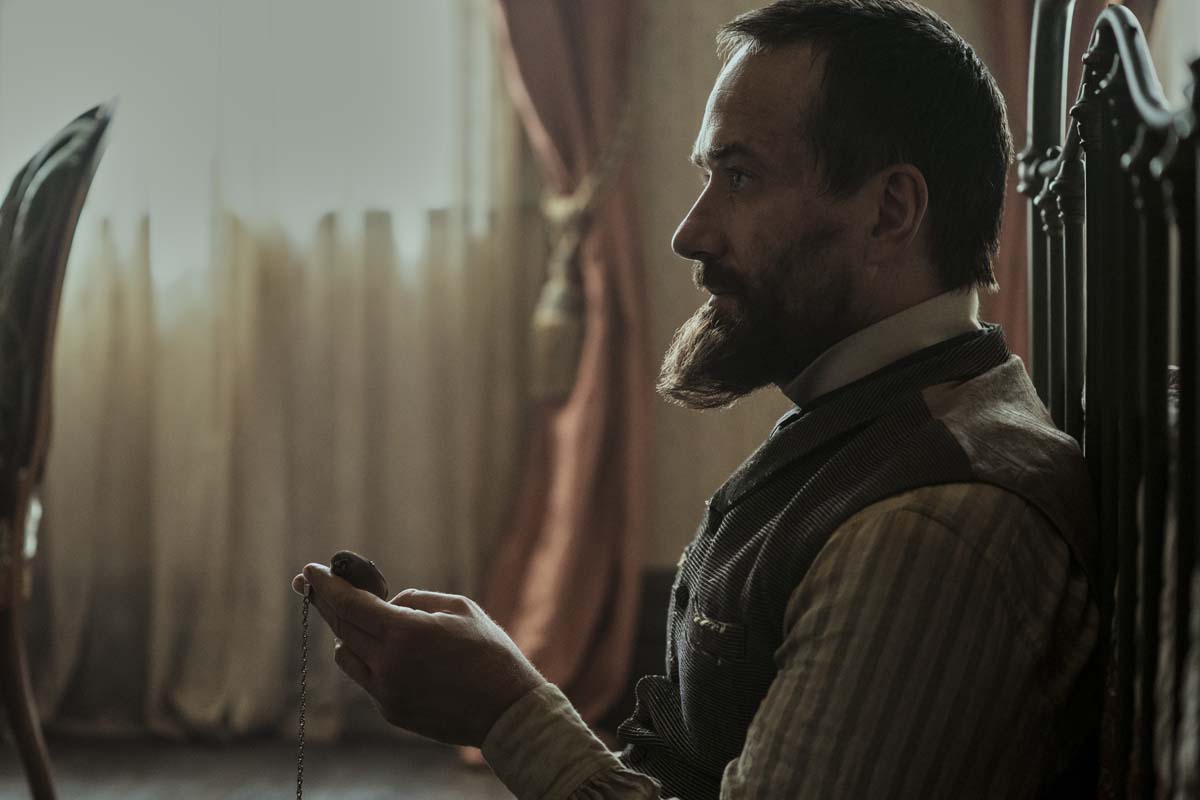
We lean heavily on Guiteau before we even meet Garfield. He sort of is the primary person that we’re seeing the story through, but we’re spending a lot of time on him, and I think sort of psychologically, for an audience, you’re erasing the prior performances that you think of, and Matthew Macfadyen just came up fresh from Succession.
So you’re trying to get an audience to accept, “Oh, this is who this actor is portraying.” I think that everyone experiences this when you’re working with someone who is well known or known for a certain role and is portraying something really different from that prior role, there is that time where you need the audience to lean on them a little bit more so that you can say like, “Okay, look, this is who they are now on this show. So just absolve yourself of all of that and come along for the ride.”
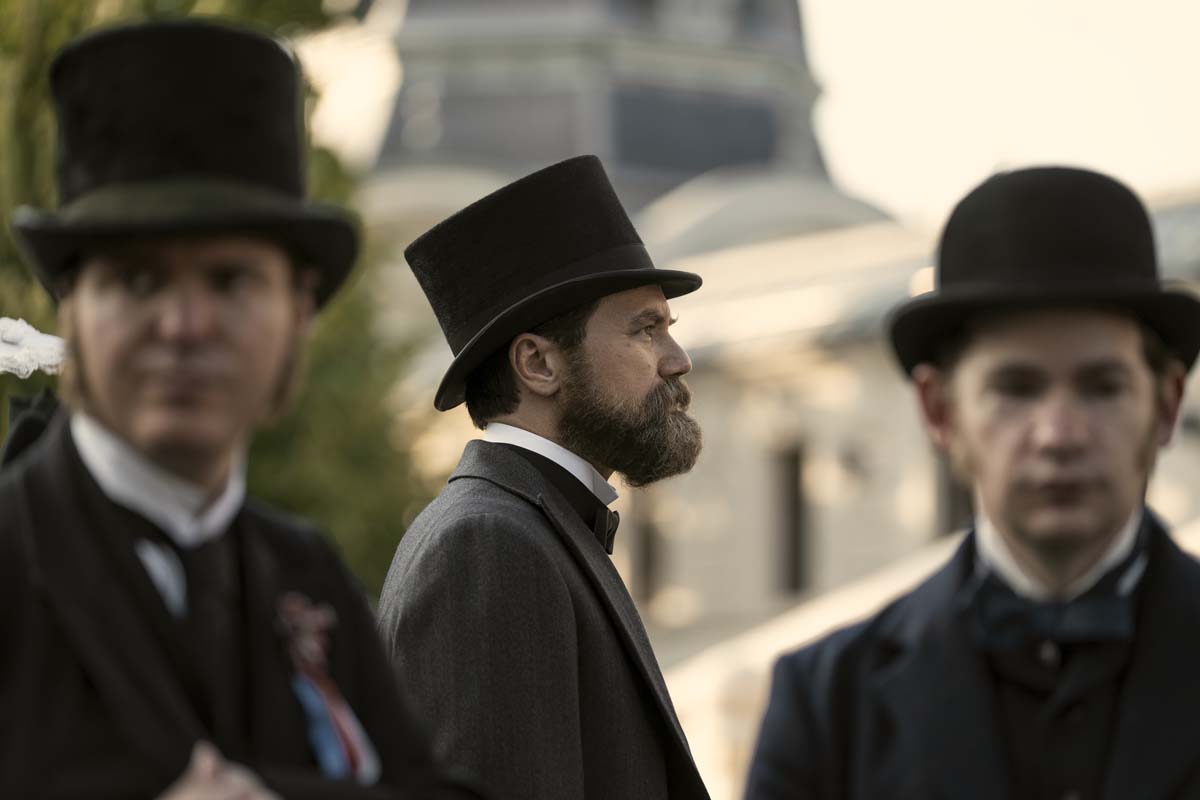
Leonard: To piggyback on Michael’s comment, the performances were so interesting in this to work with on this show, and Michael Shannon in particular. I was just dying to edit and watching his dailies and then watching him in a cut was fascinating.
You’d watch his dailies and sort of see these micro movements and kind of have a sense of what you liked, then you put them into the scene and let the scene cook a little bit.
And man, there was so much going on. It would go from watching the dailies and thinking, “He’s not really doing much, but he’s fascinating to look at because he’s Michael Shannon.” Then within the scene, all of a sudden this performance is clicking in and hitting on a really interesting deep level.
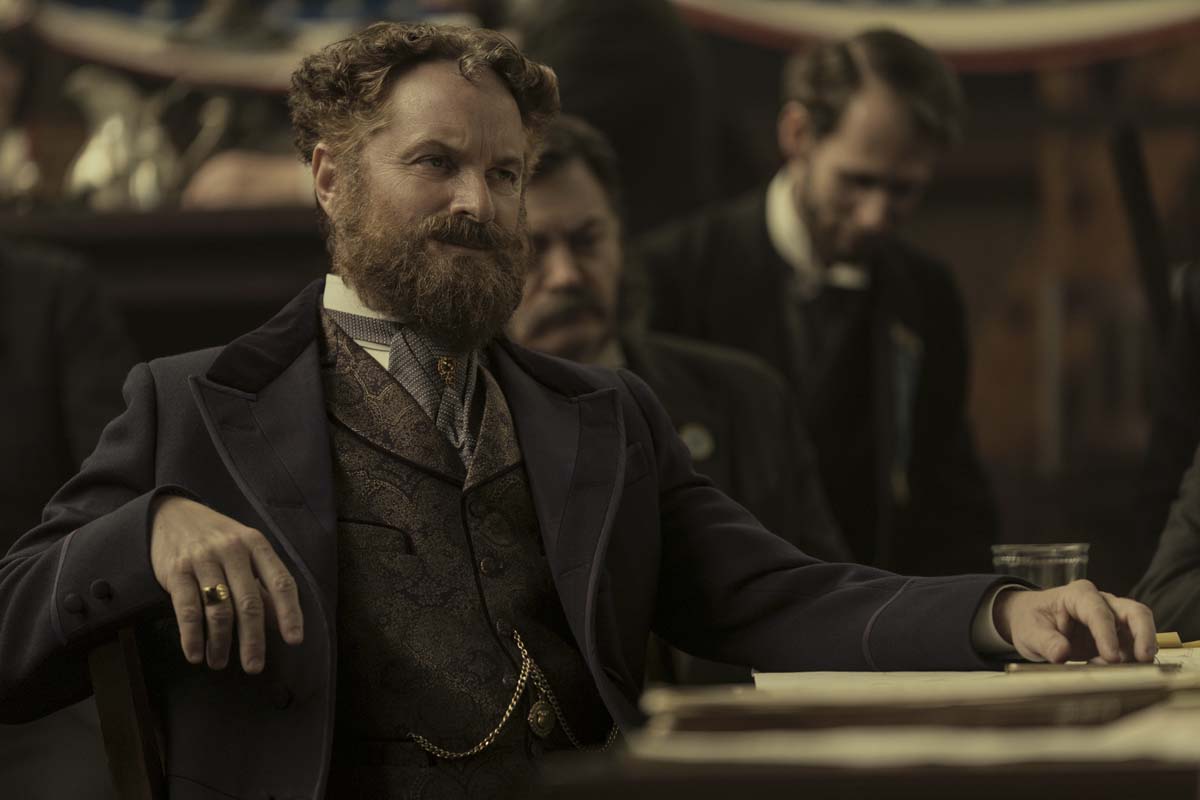
Then people like Shea Whigham (as Conkling) who are just a fireball as an actor and a fireball in this character, you’re looking at the opposite. It’s like he’s a ten and 11 and 12, and then you have like five and six and seven.
But over this wide range of performances that you’re, you’re choosing from and playing with really was a treat, like an embarrassment of riches.
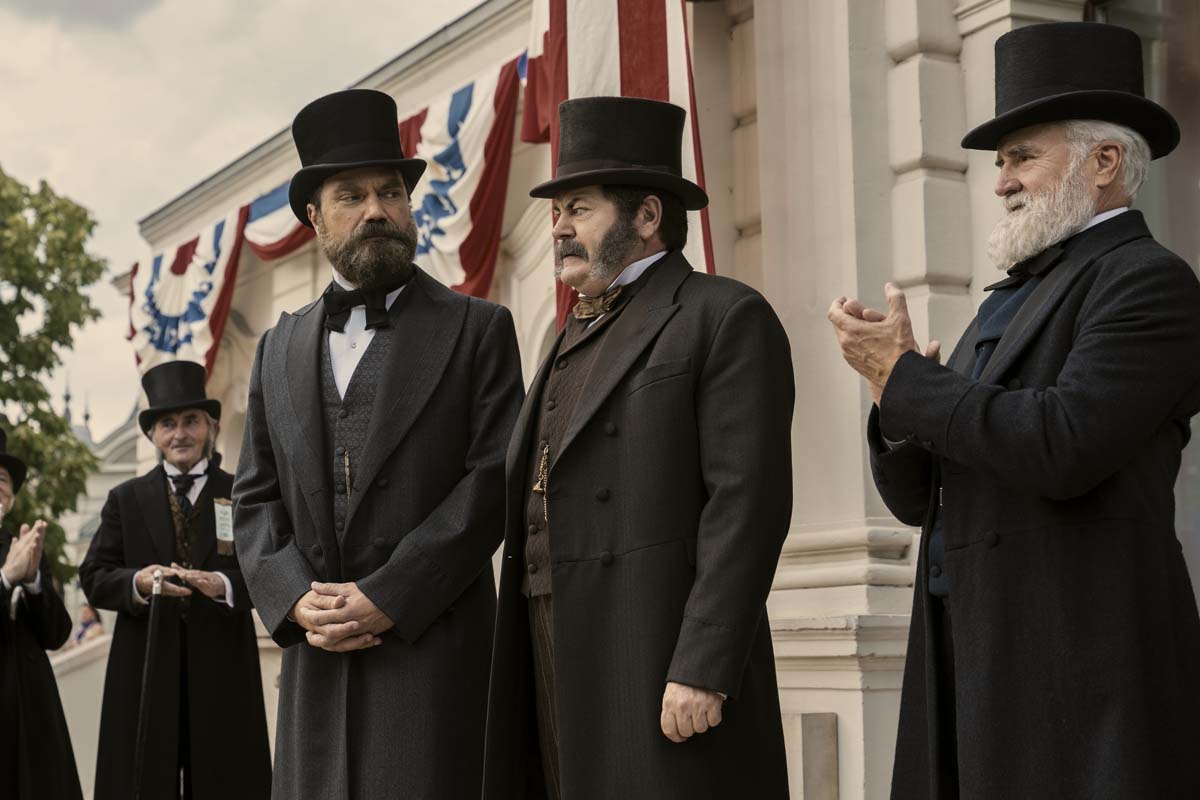
I want to talk about a sequence that I thought would have been very difficult to properly pace or choose how long the whole scene should be: After Garfield does his speech and the delegates go through the voting process, that could have been almost any length. There’s also a ramp in intensity.
Krings: I think this was a good design - the way it was scripted. We couldn’t just make it really a quick, rapid cut to the end. We’d have no episode. The entire design of that episode is an arc that is built on this guy who shows up to do his duty and ends up well beyond where he ever expected to be.
And you have to build a personal journey in there, and then you have to understand the machinations of everything else that’s going on in there, too.
The audience needs to understand who Conkling is and who Chester Arthur is and what Sherman’s whole deal is. You’ve got to introduce these people, see what their motivations are, figure all that out and figure out how to balance it.
But you’re right the voting stuff did “accordion.” It’s just one of those things that you have to refine and refine until you find the right balance.
Ruscio: Anna took that to the finish line and it would be good to hear her perspective on that, because she had already inherited a lot of variations and then made even more.
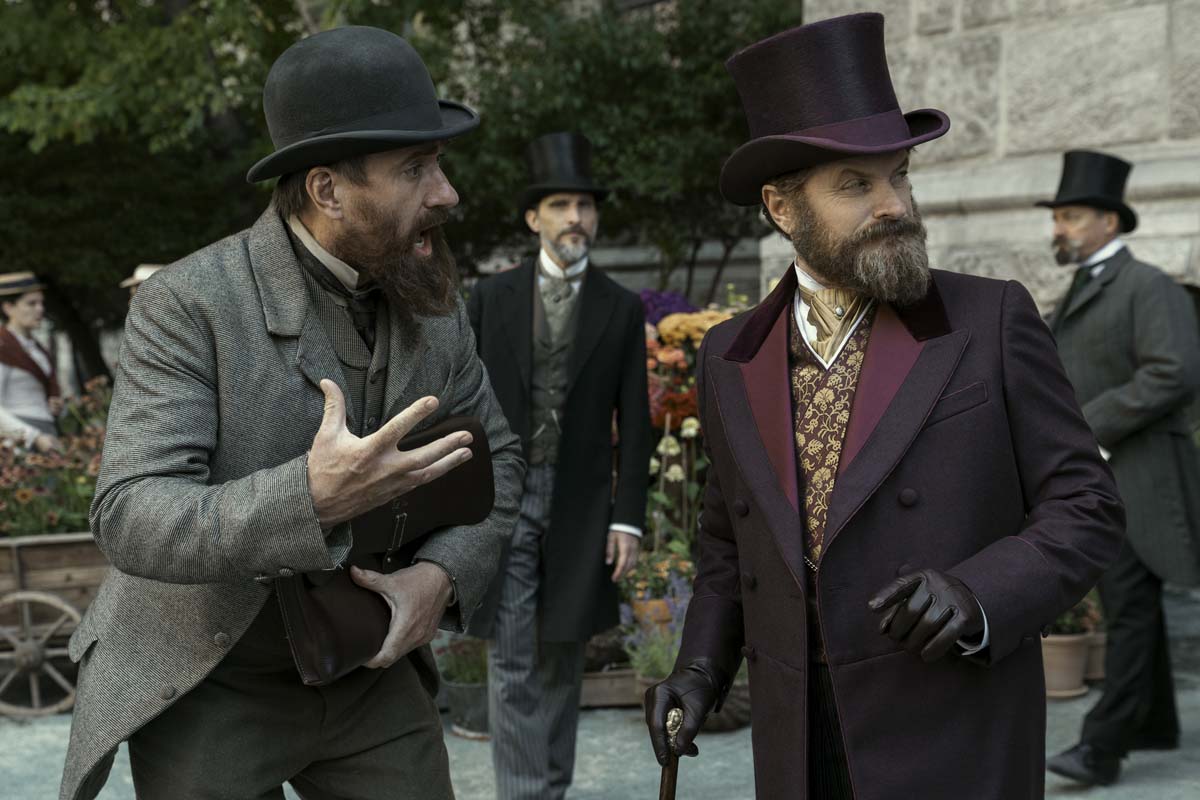
Hauger: It was in a great place when I inherited it, so it was just kind of fine-tuning at that point. There was a balance between pacing it up and maintaining the historical accuracy of the vote count and who voted when.
So there was a little bit of trying to figure out what we could get away with to make it exciting but still try to keep a little bit of reality in there. It’s an exciting scene, but it takes time to figure it out and try lots of different variations.
Krings: We actually did have a chart of the historical accounts through all the different versions, so I would rely on that to look at to make sure that the people said the right thing. I think we swapped out some lines and some ADR.
But mainly I was just in there searching for my home state of Nebraska because they didn’t have a delegate from Nebraska.
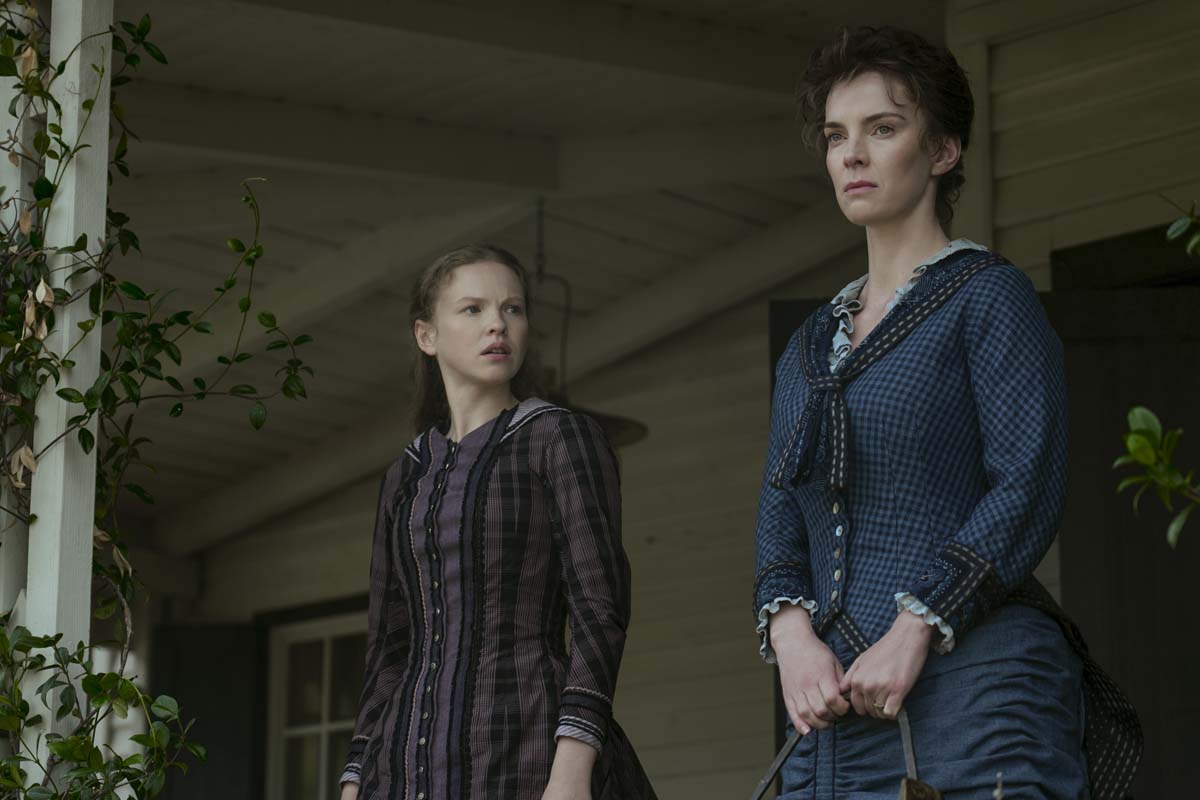
I wanted to talk about tone. You’ve got these two characters that are tonally very different. You’ve got a bumbling, tragi-comic character in Guiteau, then this very stately, staid, internal character of Garfield. Did you need to shape the transitions between them?
Ruscio: I adopted the opening episode of The Man from Ohio, and there were so many different performances that Matthew gave, unlike Michael, who maybe did three interesting variations, Matthew would do a whole Pantone of colors. My approach to him was that you wanted to be on his side. You can’t really play a crazy person crazy.
He has a viable argument. When I looked back through it and felt like we want to really understand what his point of view is because the rest of it’s kind of baked in. We know that he’s the assassin, but here is a person who’s really trying.
He’s deluded, but he’s not overtly crazy, and that there is sort of a base to him. So I think that tonally throughout, let’s ground all the people even like Nick Offerman, who’s fantastic, who had performances where he was really, really toasted.
And so we did ultimately tone that down a little bit because he does become the vice president. Stranger things have happened in our own time, but like basically giving an authenticity to it.
Performance-wise, the tone of it as Anna and I worked on it was that to get it where everyone had a valid point of view.
Everyone had something that was at stake that was genuine, and we tried to respect that, so that no commentary was happening about the people because it was already there in the story. And so with Guiteau, I think it was like, “Okay, let’s be with him and not judge him.”
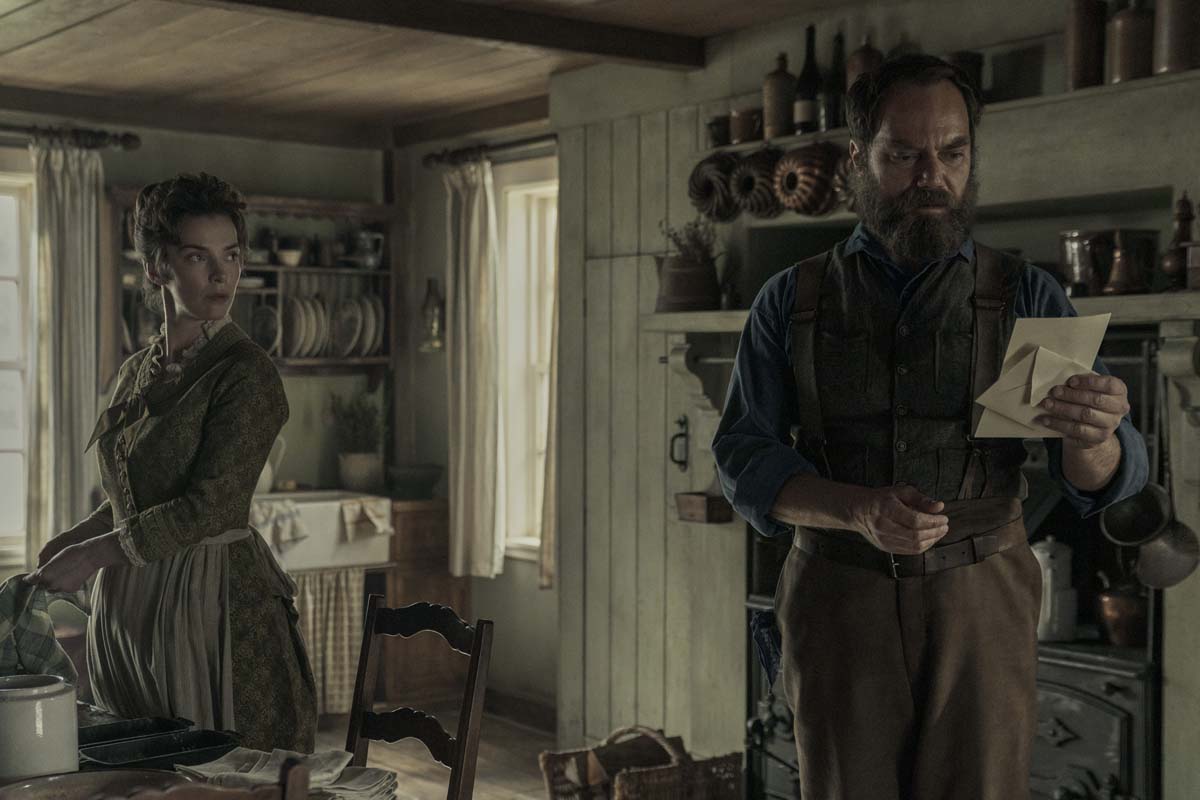
Hauger: For me it was finding the humanity in Guiteau and having a reason for him doing what he did. Even with Conklin, having a certain amount of empathy for these characters helps sell their performances and gets the audience on their side and gets the audience more invested in these characters.
Krings: That said, I do miss Nick Offerman as Chester Arthur, pouring whiskey in his coffee in the morning.
Ruscio: That was a pace issue actually, because he did come into the room. He poured whiskey and it ended up just being him looking at the news. So that was something that happened strictly for pace, I think actually more than for tone, really.
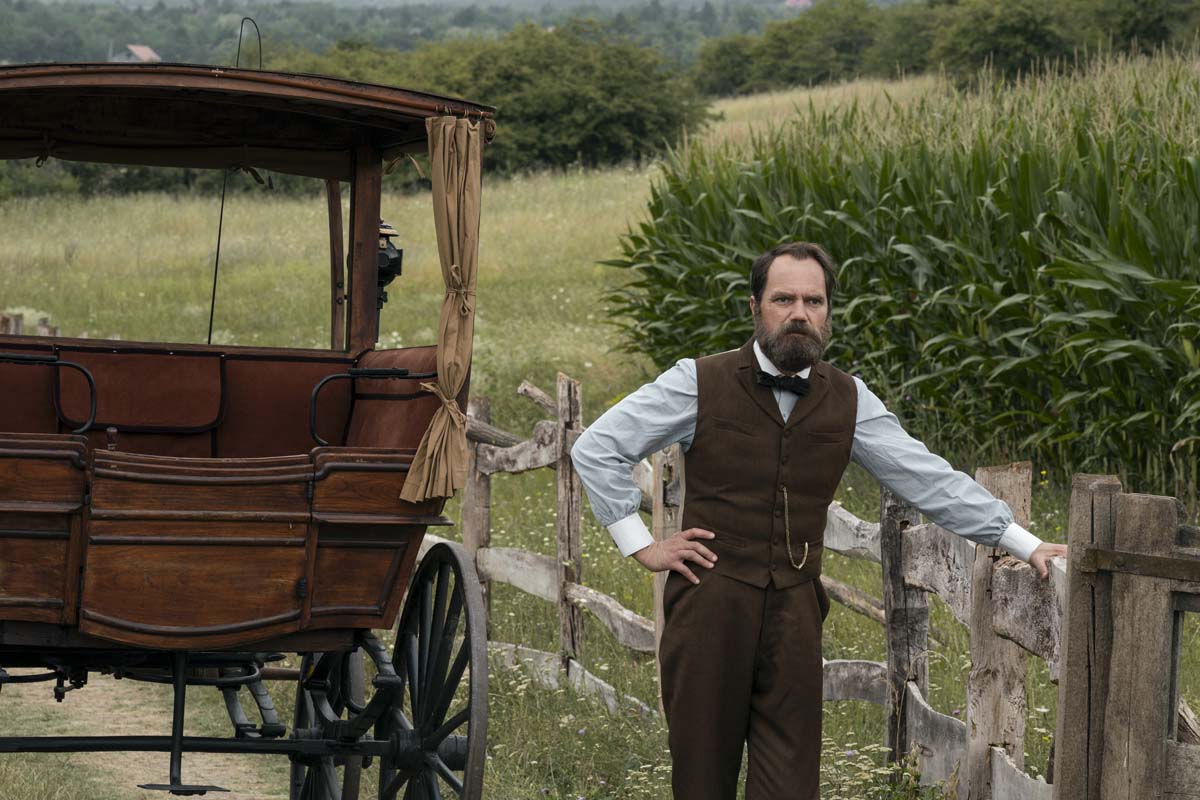
You do want moments where you’re learning about the character. I think about all the early scenes with Garfield chopping wood and trying to build a table. Do we really need that in the story of him becoming president? But it shows his humanity and it shows the type of person he is. But you have to choose: do we keep these character scenes or do we cut them out to pace the show up?
Krings: That was an interesting evolution because they had what was in the script, and they shot some stuff of Garfield on the farm, then they thought they didn’t have enough. We don’t understand him enough. And then they shot more scenes.
Ultimately, we paced up the scenes we had and took out some of the extra stuff they shot. I think we kept some of it. They knew we needed to spend time with him and understand him as a human and as a family man.
And they actually tried to embellish it more than what was in the original script. They added stuff, then that ended up actually falling away because we had enough with what we had.
Ruscio: Then there was this whole thing where Garfield told Latin dad jokes. So we basically took out all the Latin - where he was teaching Latin to his son. Dad jokes are one thing, but dad jokes in another language? No, thanks.
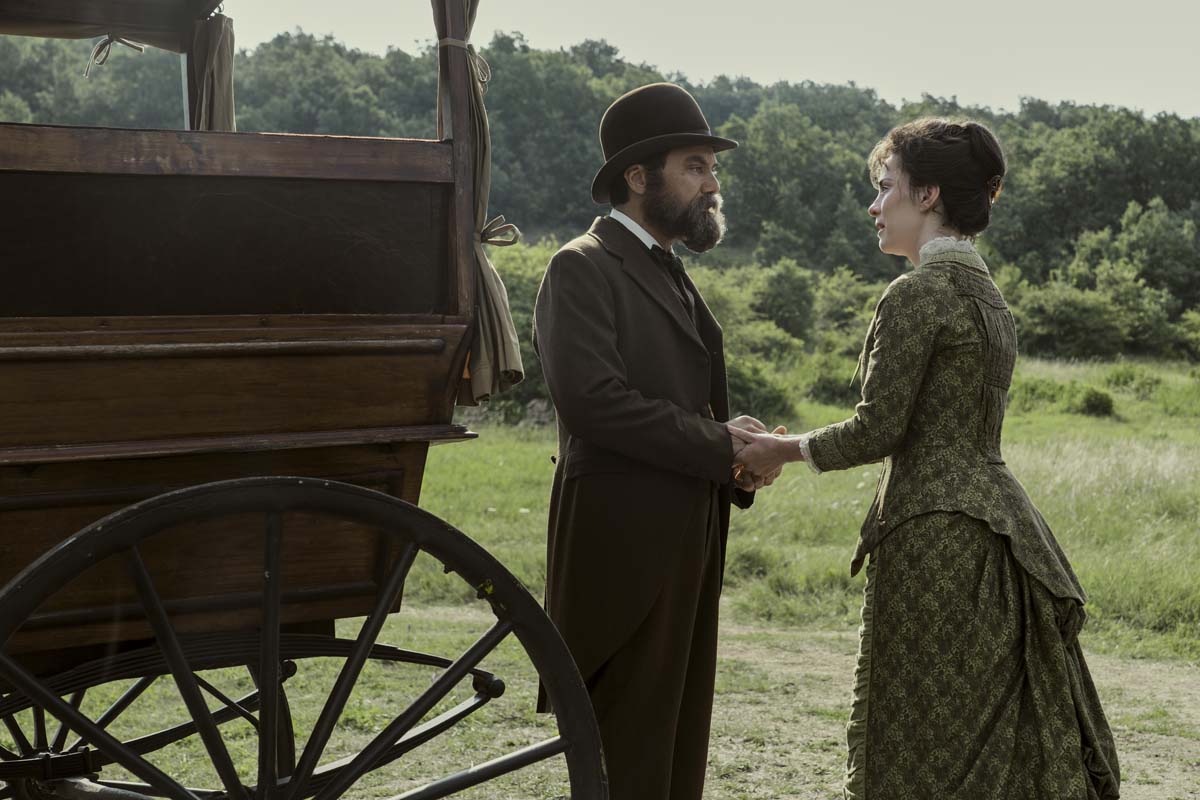
I want to talk about the scene where Garfield has made this commitment to meet the common man. He actually receives everyday people at the White House. They’re all angling for a job. It’s cut as kind of a comic montage.
Krings: I can start on that. There was definitely a very long version. It was interesting. We built scene in that it wasn’t following an exact strict script. It was more like they brought in several characters who had a specific petition for the president, and then they did a lot of improv. This was not common for the show, but they just found these great people for these characters.
One of them is actually one of the payroll accountants. He was the guy who doesn’t speak at all. His wife has to speak for him about why she believes he should be on the Supreme Court. There was just so much fun to be had and you could have a really long sequence there, but of course, ultimately you’ve got to find the right length for the show.
Ruscio: There were a lot of repeats of the people. There wasn’t a huge cast of characters. And so to protect the idea, we needed to kind of have like the greatest hits. Initially there were some really great funny lines.
I think that ultimately it got trimmed down just so it was the lean meat, not even just the meat. It was like: no fat.
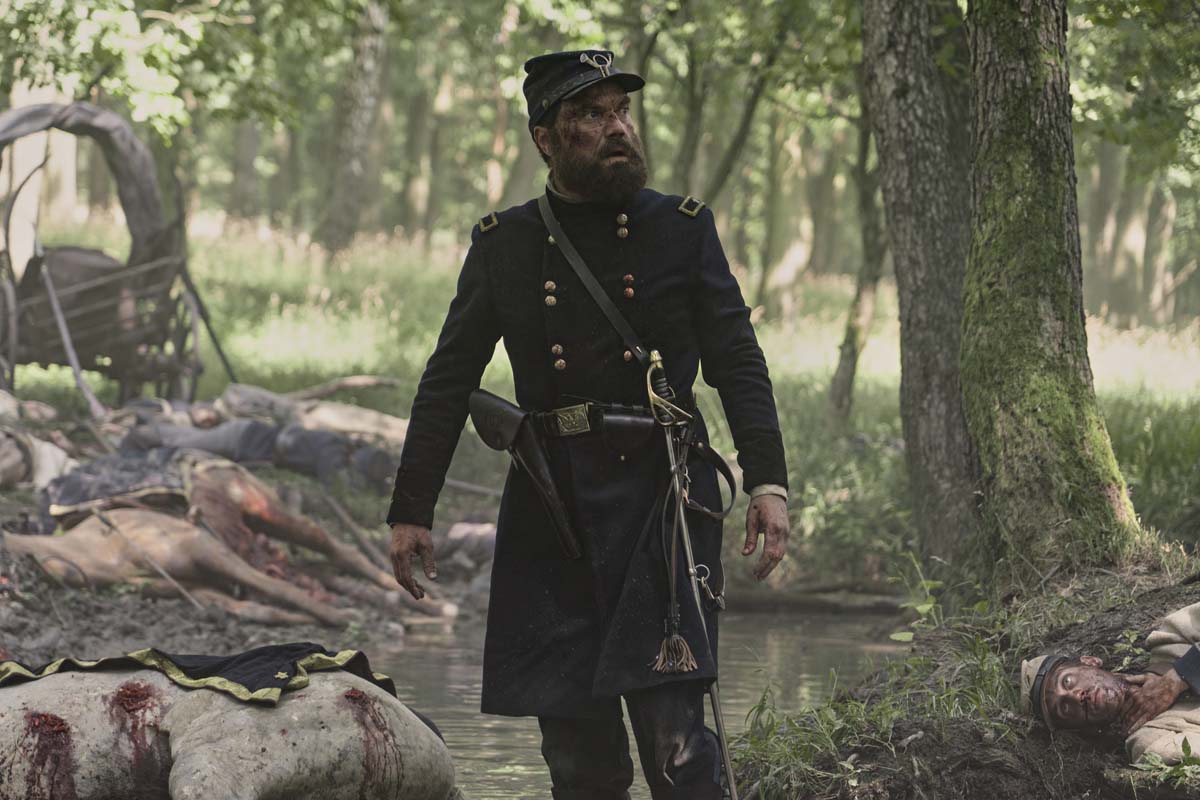
I thought the length of that sequence was fantastic, but I had the feeling that it could have gone much longer. A lot of people who don’t understand editing think an editor’s job is to cut out the bad stuff, yet so much of what we do is cutting out the good stuff.
Krings: Yeah. It’s true! That’s what I’m going to start telling people. When they ask what I do, I’m just going to say, “I just cut out all the good stuff.”
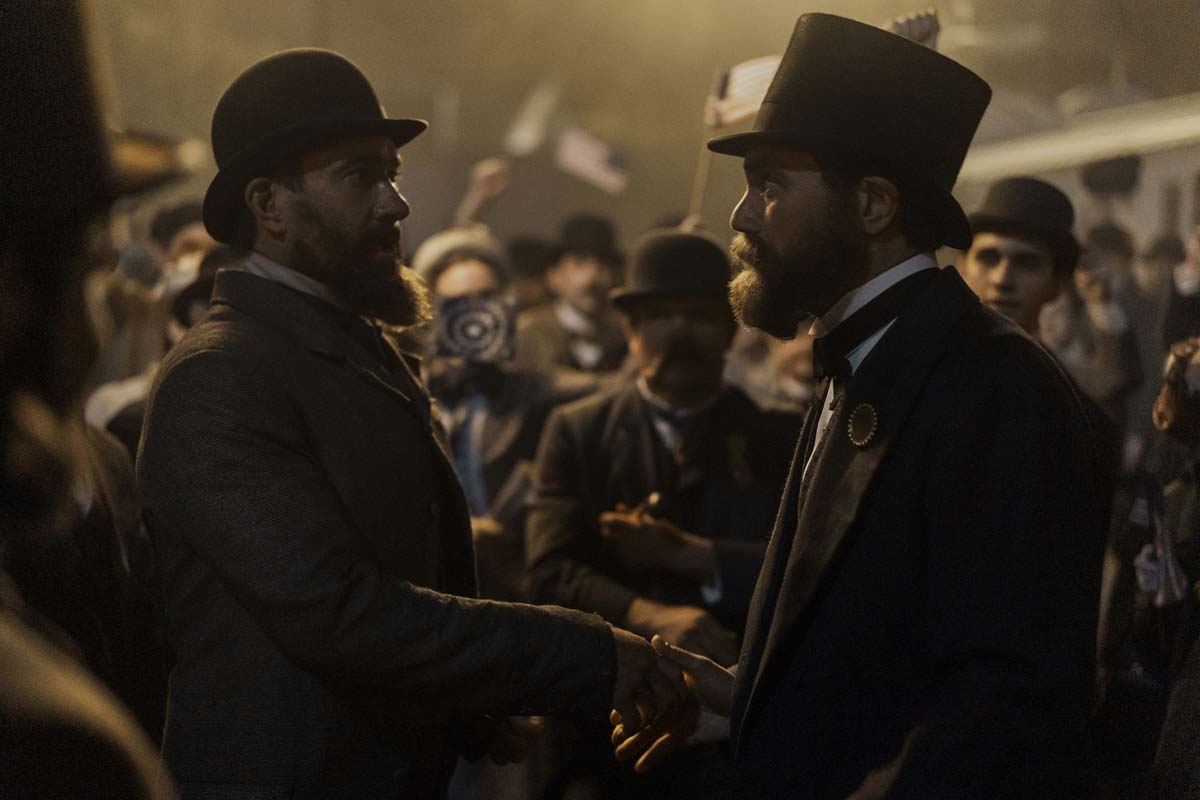
Another sequence I want to discuss is when Guitteau is in prison, talking to the press and getting his photo taken. I can’t remember how close that scene is to the scene where Garfield’s wife shows up at the prison, because the other idea is that scene with Guiteau is cut fairly quickly, then we have a scene with a lot more weight and deliberate pacing with the Garfield’s wife shortly after it to give you that rollercoaster of speed versus slowness.
Leonard: I actually have to give most of the credit for that to Bridget Case, my assistant, who was also an additional editor on the show. She really did a ton of work on that sequence. She would put together a cut, and I would sort of give her guidance on the next thing, then she would come back with another cut and we went back and forth on that because it was in the last episode, and the last episode was very heavy with material. There was just tons of stuff to be working through. She did a fantastic job on it.
I remember it was like the third or fourth pass. She brought it and it was just exactly what I imagined it should be.
All I did was one quick pass on it, then that was the version that I handed off. So she deserves a ton of credit for that. It was a great example of that assistant editor cutting, mentor kind of relationship, mentor/mentee relationship. She’s a fantastic cutter. So it makes it easy and fun.
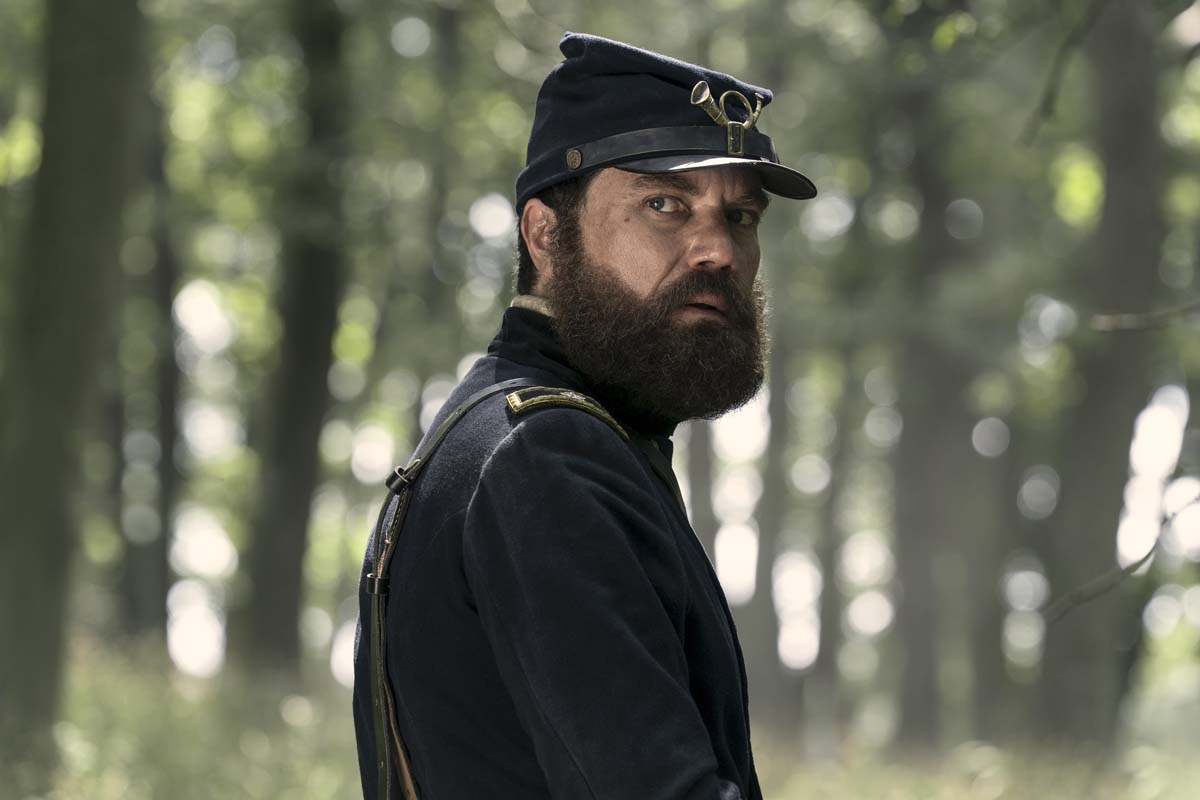
And how close is that fast montage scene to the one with Crete – Garfield’s wife – in the prison with Guiteau? Because that scene has a lot of weight. So you’re on this rollercoaster of emotion.
Leonard: Guiteau is really at the point when he’s meeting the press, where he’s full on delusional that he’s going to be received as a hero. By the time Crete comes, she really completely turns the table and sort of leads him into his next act of realizing that he is going to die and be forgotten and that he won’t be celebrated and all of his delusions are crumbling .
A lot of it came from the performance of Betty Gilpin, who is really just incredible in that scene. It was really a matter of following her and giving her her moments in this episode so that she’s gotten to this place of having gone through so much.
She is in such a place of power in that scene. She was in control of that scene. Guiteau even tries to wrest it back from her and shut her down, but the power of what she had brought to that scene demanded the kind of pacing and energy that it had.
Ruscio: I think that was the real heart of her character, and that the tables turn so brilliantly and that she expresses her grief, then it’s so poignant and he’s left a little bit gobsmacked. He goes out in the gallows and he’s doing his little song and it’s very empty and there’s no one there to see him die. So she prophesies what happens in the very next scene.
You’ve all been nominated for Emmys for this show. How do you judge editing?
Krings: There’s no way for anybody to know what happens between the script, the shooting and the edit to know what actually happened, what transpired, whose ideas were whose?
In order to truly judge editing, what we would have to do is read the real shooting script, then maybe look at every single continuity that happened from cut to cut.
Have interviews, like the PGA does to figure out who they’re going to give the PGA mark to. We’d have to talk to the director and to the editor and to the producers, and you’d have to do this massive inquiry to truly understand the forensic evidence of what happened between A to B. It’s impossible.
Honestly, when I see something where I just don’t think about the editing and I truly love and I feel like it’s very good and I don’t feel like, “Oh wow, that was way too long” so, I feel like that’s good editing. Again, I don’t know who’s responsible for that.
In the end, I do have to make a judgment and vote for things, but I do that with the knowledge from having done it so many times that you don’t really know even who ends up in the credits sometimes.
I’ve done projects where I’ve done a lot of work, but I didn’t take a credit. I’ve done projects where I’m the only one credited and other people did a lot of work. There are so many mysteries that I find it’s really impossible to judge.
Hauger: Very well said. If you don’t read the script. If you don’t watch the dailies, if you don’t know the process, you have no idea how difficult it was to put together. It’s so hard to say, and I do the same kind of thing as Joseph: if you don’t really notice the editing, in my estimation, that’s great editing. You’re just along for the ride.
Leonard: I agree with everything that Joseph and Anna said. For me, I think the way that I approach all of the work I do is feeling like what emotions and feelings do I get from something. That also comes down to touch and the feel. It’s such a subtle thing. I therefore completely agree with you, Joseph and Anna.
And I do particularly admire when observing how edits are sort of set up in the language of different projects like the rules and the world building that goes on. And some of that is very invisible, and other parts are really noticeable to me. When you get a show like Pluribus or something that is kind of creating a new language.
How much of that is the editors and how much of that is the filmmakers is a mystery, but I do think that I tend to really respond to shows that have a feel and a confidence in that feel, and that set up tricky new rules that are maybe not so obvious.
But in this cut, it’s going to play by these rules and we’re going to stick to it. So I really enjoy seeing that whenever I am able to notice it. And typically I’m enjoying it too much to even break it down, but I know when I go and reference other people’s work to kind of try to figure out my own work that I’m doing, I know that looking back at it and looking at the intricacy is: how do they do that? I really, really enjoy that part of observing other people’s editing.
Ruscio: I agree with what all you eloquently said is that in this particular instance, for the six of us, we all were able to look at each other’s work and know what happened and what evolved, and that we saw how it could be different, how it could be shaped in another way and respect whatever one had contributed to the process.
And so in that sense, this particular project made a wonderful experience for us all as editors to see: “Okay, I see why that made it into the final cut.” And for us coming on to it, I see why those decisions were made. And is there another way to express that?
We all had that chance to riff off of each other and to see each other as editors and all these different points of views of how to contribute to it and not judge what was best, but to sort of understand the process of how editing evolves and the different voices that are involved with it, which is why it’s really impossible - as everyone is said - to completely judge editing, because there’s so many camps and there’s producers and there’s directors and there’s studios, and so that we six have been together in this ride and been able to really give props to each other to me is so meaningful as an editor that I think transcends all judging what is best, because it’s just important that we’re able to be collaborators throughout the entire event, which is making the final cut of a show.
That’s a great place to end this interview. Michael and Anna and Joe and Joseph, thank you so much for your time.
Ruscio: Thank you, Steve.
Krings: Thank you.
Hauger: Thank you.
Leonard: Thank you, Steve.
 October 15, 2026
Digger
Stephen’s been on Art of the Cut before for F1 and for The Revenant, for which he was nominated for an Oscar, a BAFTA and ...
Read more October 8, 2026
Heart of the Beast
Today on Art of the Cut, we speak with Oscar-nominated editor Dody Dorn, ACE, about her work on David Ayer’s film, Heart of the Beast.
Read more October 5, 2026
The Whisper Man
Chris has been on Art of the Cut before for The Menu, The Many Saints of Newark, A Quiet Place, and Assassin’s Creed. He has ...
Read more
Subscribe to our newsletter
Get all the latest news, blog posts and product updates from Boris FX, delivered directly to your inbox.
Welcome!
Thanks for opting-in to our newsletter. You'll receive an email momentarily with your confirmation.