


 Marco Sebastiano Alessi |
December 12, 2025
Marco Sebastiano Alessi |
December 12, 2025


EQ and compression are essential in audio engineering and music production; two tools that have always been used since the days of analogue consoles and are key in shaping the music we listen to today. The same question has been asked throughout the years: When should I use EQ, before or after compression? The answer has always been "it depends," at least for the most part.
Today, I'll help you find the answer that works best for you. Diving into EQ and compression itself to later find out the advantages and disadvantages of using EQ before or after compression.
Let’s dive in!
What is EQ?
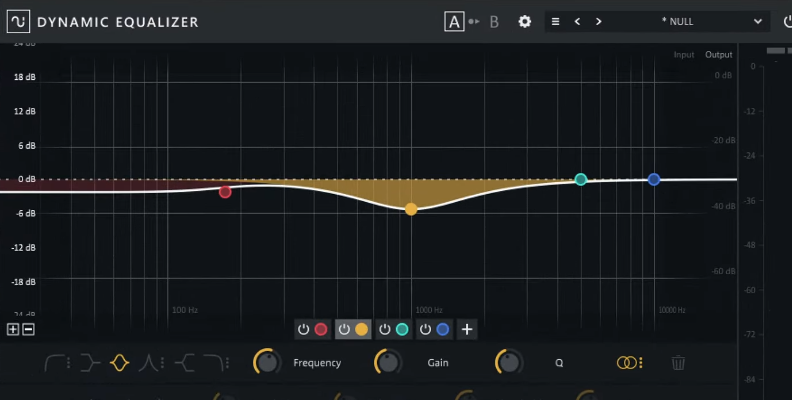
EQ is a process of adjusting the volume of a frequency band in an audio signal. Audio engineers use EQ to make the frequencies louder (boost) or softer (cut) to fix issues, shape audio, or make all instruments work together in a mix. To better understand what EQ is and why we use it in audio production. Let’s review one of the basics of sound properties: frequencies.
The frequency determines the pitch of a sound, also known as the tone. All sounds are made up of a range of frequencies, from low to high. The low pitches correspond to the lower frequencies, and the high pitches correspond to the higher frequencies.
In audio production, we use EQ to give each instrument in a mix its place in the sonic field. It prevents instruments from overlapping in shared frequencies and competing for the same space. EQ allows you to manipulate these frequencies, and by increasing or lowering their volume, you give certain frequencies room to shine while hiding unwanted ones.
EQ is also used to eliminate unwanted frequencies from undesirable noises. For example, with a high-pass filter, you can reduce all frequencies below 80-100 Hz to remove plosive sounds, mic rumble, low-end noise, or excessive bass in the mix.
The human ear can only hear as low as 20Hz and as high as 20kHz; we call this the human hearing range. We may not be able to listen to these frequencies, but they are still processed and captured by your recording equipment. Often, you can use EQ to cut all frequencies outside the human hearing range to prevent them from affecting your audio.
What is Compression?
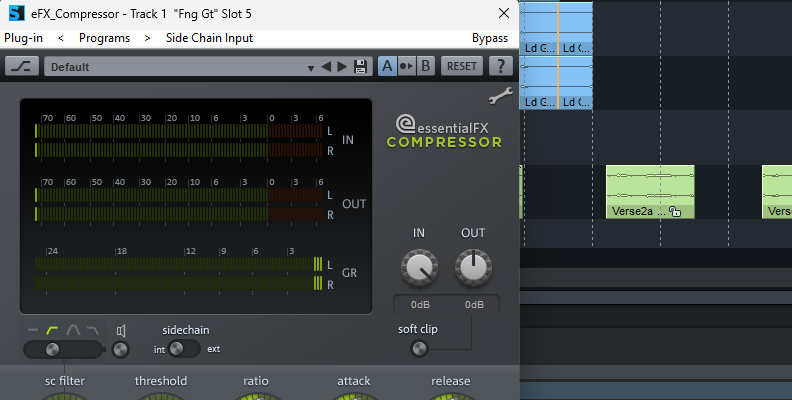
Compression is an audio processing technique to reduce the dynamic range of an audio signal. The dynamic range of an audio signal refers to the difference between the loudest and quietest parts of a sound.
Compression is used in audio engineering to automatically reduce the volume of loud parts and raise the volume of quiet parts, resulting in a more consistent, pleasant frequency response. It can also help make the whole mix sound louder without clipping.
You can think of a compressor like an automatic volume control, ruled by key parameters that you set once, and it does the rest. The compressor threshold is the volume level at which the compressor starts to reduce volume, and the ratio determines the amount of reduction. Other parameters, like attack and release, control how quickly the compressor engages and disengages.
Compressors are used to fix dynamic range issues and create a consistent, audible, and steady audio signal. However, they can also be used creatively to add punch, sustain, and glue all elements together, creating a cohesive sound.
Since compression affects the dynamic range of the audio signal, questions arise about when to place EQ in the signal chain. Let's find out what happens when used before and after compression, and the pros and cons of each method.
EQ Before or After Compression? Short Answer
There is no golden rule, but a common approach is to use EQ before compression to fix problems and after compression to shape the sound. Using EQ before compression helps clean up the signal, which gives you a cleaner overall sound. On the other hand, EQ after compression allows you to adjust the tone of the already balanced signal, creating a warmer mix. Often, the best results come from using both methods at different stages to get the sound you want.
EQ Before Compression: Subtractive EQ First
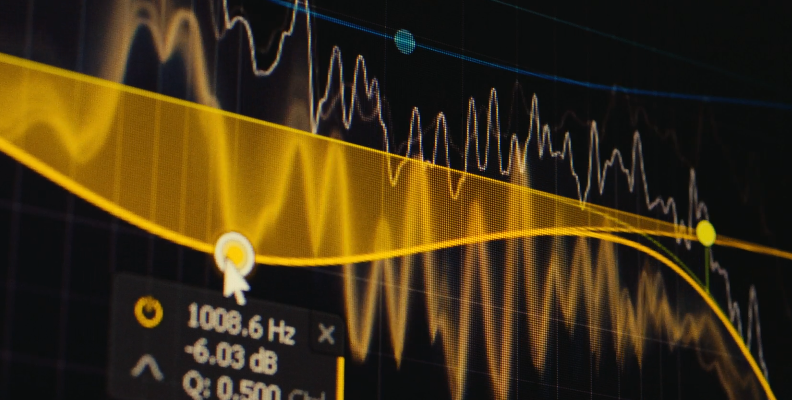
Now that you know what EQ and compression are and why we use them in audio production, let's look at our first scenario: when to use EQ before compression.
We call subtractive EQ when we apply EQ first in the effects chain, usually to pre-shape, fix, and clean up the audio so the compressor can work more effectively on a cleaner signal. You may also hear audio engineers refer to it as Technical EQ. We can narrow the uses of subtractive EQ to two:
Create space and remove clutter. EQ first shapes the sound to reduce overlap, enhance clarity, and remove cluttering in the low-mid frequencies that can make the mix sound muddy.
Influence the compressor. By cutting or boosting specific frequencies with an EQ first, you can make the compressor focus or "look" at those frequencies and ensure the audio sounds the way you want it to. For example, if you boost the low frequencies and cut the higher ones, the compressor will push down the bass and try to bring up the treble sounds.
Tame wild frequencies. Sometimes, after you apply a compressor, you notice that certain frequencies are overreacting to it. An EQ before compression can help you cut those problematic frequencies to avoid creating or reducing an unwanted pumping rhythm or to remove harsh, ear-piercing frequencies.
Keep in mind that when you apply EQ first, the compressor is feeding from the equalized signal, not the original one.
Pros:
Helps achieve cleaner compression, reducing unwanted pumping and gain reduction.
Targeted compression by boosting the frequencies you want to make them more sensitive to the compressor.
Tame peaks. Control harsh frequencies before they reach the compressor.
Cons:
Adding a compressor after EQ can squash the boosted frequencies, reducing the EQ's impact.
You may need to EQ again after compression if the frequency balance has been altered.
Make you work double.
Compression Before EQ: Additive EQ After
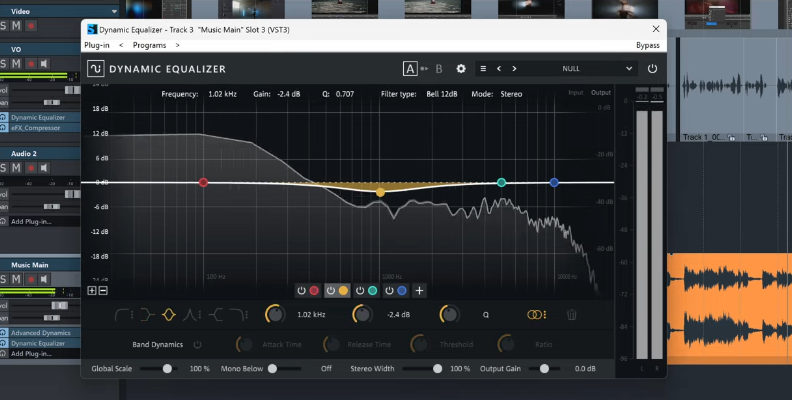
So, you decided to go the compression before EQ route. We call this additive EQ, or creative EQ, and it is used for polishing and tone-shaping. This way, the EQ is applied to an already-compressed sound, enhancing it. Additive EQ can be used in the following scenarios:
Tone correction. Compression can subtly change the frequency balance of an audio signal. Using EQ after the compressor lets you make tonal adjustments without affecting the compressor, unlike when you use EQ first.
Bring up the details. You can bring up more details that have been compressed to enhance and polish the sound. For example, boosting the higher frequencies to add more presence to high-frequency sounds, or boosting the bass to add more impact to the drums.
General sound polish. Creative EQ adds the final touch to an instrument or vocal track, helping achieve a cohesive mix.
When you compress before EQ, the compressor isn't affected by the EQ, so any adjustments won't alter its consistent sound.
Pros:
Tonal control. Controlling dynamics first with compression lets you adjust EQ to shape the sound without worrying about altering the compressor's behaviour.
Helps you enhance and polish the sound by boosting the frequencies of your main instruments.
Since you have a consistent, stable volume, you can hear frequencies accurately and make easier EQ decisions.
Fix compression artifacts. Sometimes compression can introduce unwanted artifacts in the signal, which post EQ can fix.
Cons:
The compressor works on an untreated signal, which can amplify troublesome frequencies and resonances that are harder to fix with post EQ.
Post-EQ can boost frequencies that have already been raised, making them sound unnatural.
Compression could be affected by the EQ adjustments and unstabilize the overall volume.
Common Mistakes You Should Avoid

Now, let's talk about common mistakes. When it comes to EQ and compression, we will make mistakes at every stage of your journey, from the early days to the advanced ones. Here are the most common mistakes and how to avoid them.
Over-Compression
This is probably the most common mistake in audio production. We think that with a low threshold and a high ratio, we can clean the audio, but we end up removing its natural dynamics, making it flat and squashed. A good way to avoid over-compression is to use multiple compressors for subtle processing rather than extreme compression with only one.
EQ Boost-Only
We often focus too much on boosting frequency bands. But then, we use more headroom, and they can clutter and mess up the mix. Sometimes, to enhance a frequency, we need to cut other frequencies that hide it so that it can shine naturally. Try cutting first what does not belong, and leave the essential frequencies. Then, you can boost whatever is needed.
Over-Filtering the Low-End
Using high-pass filters aggressively can affect instruments that need the low end, such as the kick drum and bass guitar. The best approach is to start with a high-pass filter to cut the low frequencies, with a gradual roll-off.
Using a Fast Attack
Using fast attack in the compressor to start gain reduction immediately at the beginning of the sound. While it can work in certain scenarios, it may mute the sound, making it dull and unnatural.
Final Words
To summarize, subtractive EQ (before compression) is like sculpting the sound by removing unnecessary frequencies to reveal and enhance the ones we want. We use it to correct, clean up, and focus the compressor on the frequencies we want to keep. Additive EQ (after compression) highlights the important parts of the sound to draw the listener's attention. We use it to shape tonality and polish the sound once the dynamics are controlled.
However, the question remains: which one should I use? What sounds best for you and what you want to achieve. Trust your ears and experiment by interchanging the EQ and compressor order, and the effects that follow, until you find what works and sounds best to you.
If you're a beginner or struggling to decide which to use first, a good approach is to start with EQ to cut unwanted frequencies, then add a compressor. If needed, you can always use an EQ after the compressor, like in the sandwich technique: EQ - Compressor - EQ.
Good luck!
FAQ
Should I EQ Before or After Compression on Drums?
The best and most flexible approach for drums is to use subtractive EQ first, then compression, and last, additive EQ after compression. This way, you run the compressor through a clean signal, focusing only on the frequencies you want, and then you can boost to polish the sound. With more practice, you will find a workflow that sounds good for you.
Can we use EQ and Compressor at the Same Time?
Yes, EQ and compressors are almost always used together in audio production. Whether you choose to add them to the signal chain, EQ, and compression go hand in hand. Just keep your ears tuned to achieve the best sound.