


Young Sherlock
The editors of Young Sherlock discuss the importance of in-person collaboration, the power of adjusting the tonal dial “just so,” and the benefit of re-thinking how the show begins.


Today on Art of the Cut, we speak with four of the editors on the buzzy new Amazon Prime series, Young Sherlock. With us are Cheryl Potter, Callum Ross, Phil Hookway, and Tim Murrell. Miikka Leskinen couldn’t be on the call, but also edited the series.
Cheryl’s been on Art of the Cut before, starting back when she was an additional editor for Pietro Scalia, ACE, on Ridley Scott’s The Martian. We’ve also talked to her about the TV series, Snowpiercer. Her other credits include The Lord of the Rings: Rings of Power.
Tim Murrell has edited features like Monkey Man and 21 Bridges, and TV series like The Terror and Patrick Melrose.
Philip Hookway has edited TV series, Deep State, Being Human, and Torchwood.
Calum Ross has edited TV series including Loki, The Devil’s Hour, Sex Education, and Not Another Happy Ending.
Congratulations everybody on a really great series. I absolutely loved it. Can you please introduce yourselves?
Potter: I’m Cheryl Potter. I edited episode five.
Ross: I’m Calum Ross, and I edited episodes seven and eight.
Hookway: I’m Phil Hookway and I edited episode six, and was additional editor on episode four.
Murrell: I’m Tim Murrell. I edited episodes 1 to 5.
And we should point out that Miikka Leskinen couldn’t join us on this call, but was also an editor on the series. Did any of you read any Sherlock Holmes recently, or, did you read the Young Sherlock series? Or did you feel like you didn’t want to know the source material?
Murrell: The series is not very closely aligned with the books. The books were the origin of the idea - from what Matthew Parkhill, the showrunner has told me.
He changed the age of Sherlock, and the story arc is quite different. That was the genesis of it from what I know about it, so I didn’t feel any need to read the books.
Did any of you go back and watch a couple of Guy Ritchie movies?
Murrell: Episodes one and two were a little way down the road, so we got a chance to watch those before starting the job. Although the style hadn’t been set at that point, we got an idea of the direction it was going in.
Tim, since you edited episode one, the pilot episode, and I believe Guy Ritchie directed that episode, can you talk about what kind of either discussions you had with him about the feel of the edit, or was it more evident in just the material you were getting?
Murrell: I took over from Miikka Leskinen. Miikka was editing with Guy directly for quite a period of time before he had to move on.
He was on another project for Guy, so I was asked to step into his shoes. At that point, Guy had also moved on to his other projects as, he’s the busiest man in the British film business.
My relationship was probably more with Matthew Parkhill and the executive producers at that point. We were sending cuts off to Guy and getting notes back, but it was far more working with Matthew to find the tone of the show at that point. It was nailing what that was going to be for episodes one and two.
I did watch both the Sherlock movies again before I started, just because I felt from the scripts that they were the closest in tone to any of the other Sherlock canon.
It was a useful and insightful thing to do, I think. The TV show is very different, but there are certainly some elements that cross over.
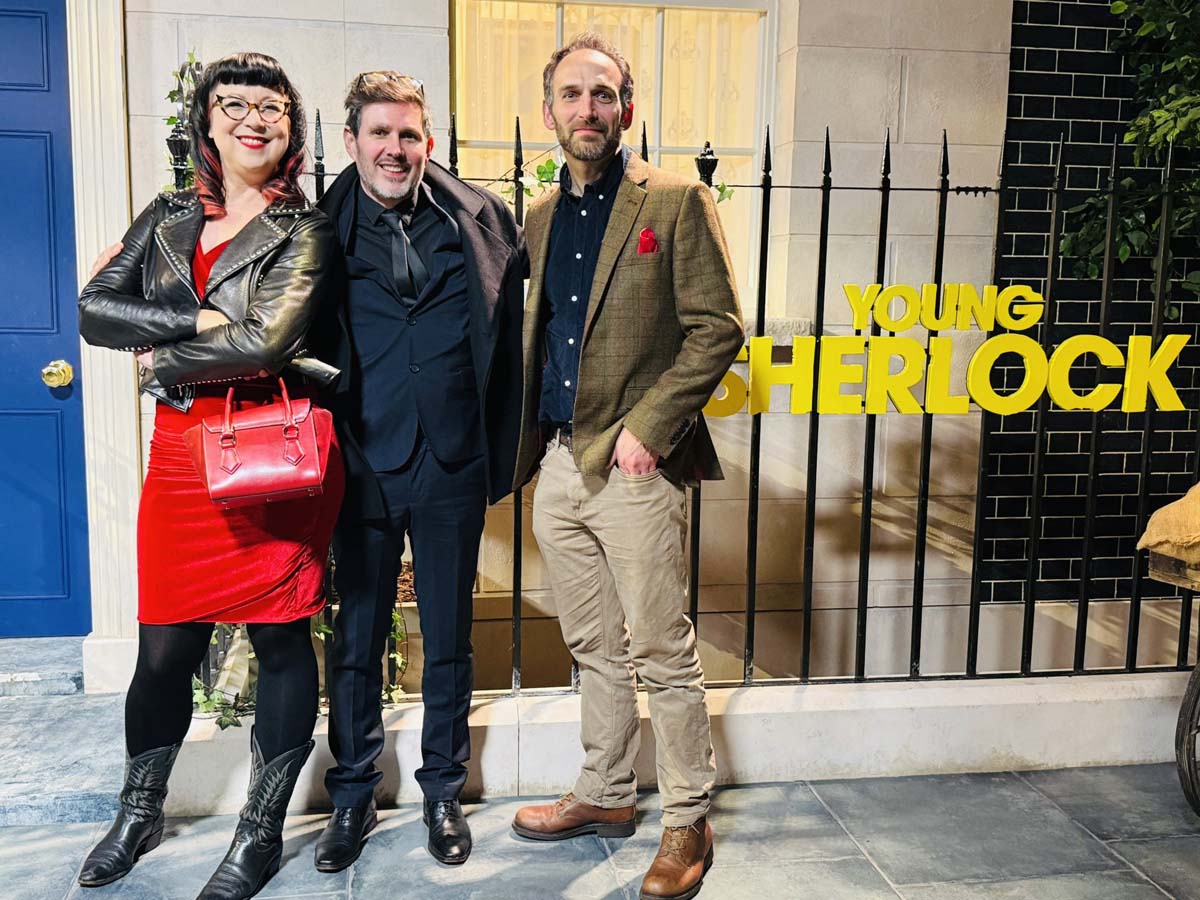
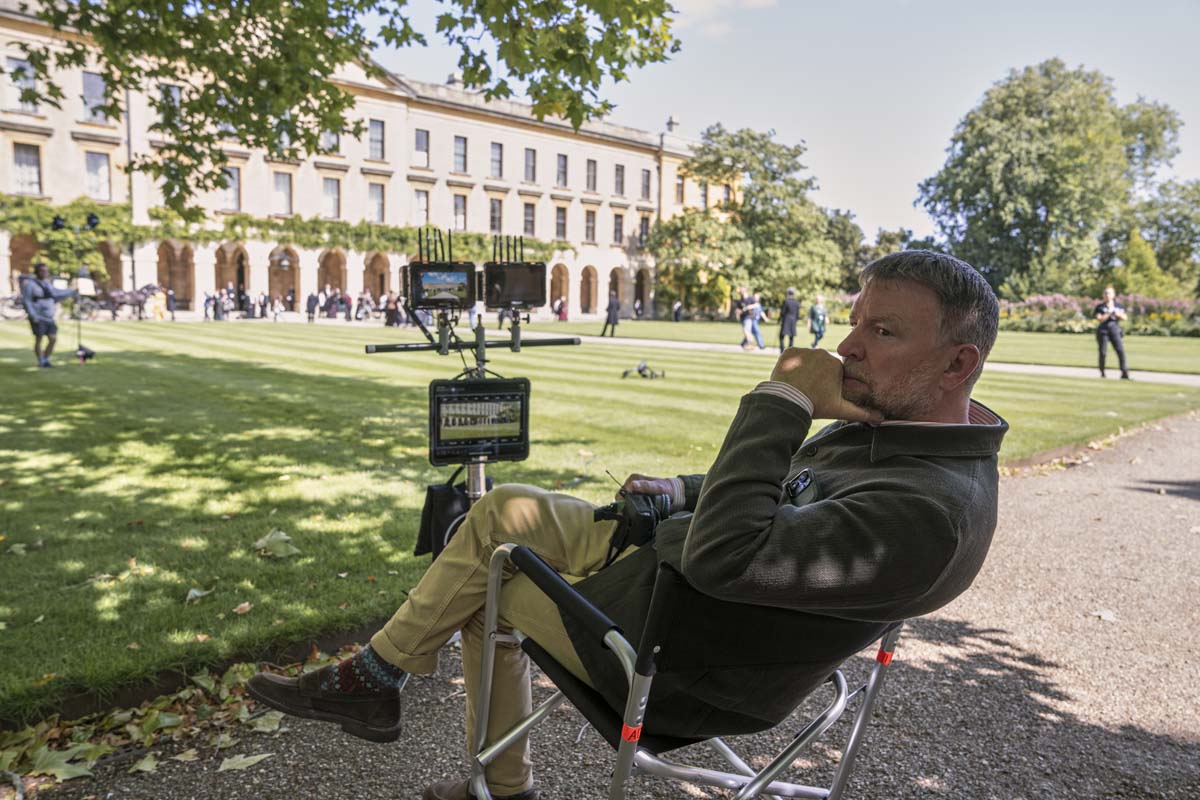
Editors Cheryl Potter, Calum Ross, and Philip Hookway
You mentioned tone. What were the discussions around tone? And how did the editing affect the tone beyond the material you were getting?
Murrell: For the first couple, I think it was about making sure the fun of the series was inherent. There’s a lot of darkness in the show, but it has to embrace the light when the light is there.
By episode five it’s incredibly dark, but there’s a kind of inherent fun to this show that is really important and a kind of energy. It has a journey that it goes on. But it was important to get the show off to its fast and fun footing.
I was definitely noticing the speed of the dialogue. Very snappy. Can you talk about how much that was crafted and how much it was followed?
Potter: We were aware of the pace that had been set in the earlier episodes, so - at least in my experience for episode five - especially when you’ve got James and Sherlock bouncing off each other, it is snappy, but we, as editors, will go in and eke a little bit more time out of it to make that more extreme.
Murrell: Every time I thought I’d edited a scene with the dialogue, as snappy is possible. We had James Herbert as an editorial consultant across the whole series.
He’s Guy’s main editor. He came in and did a pass on everything. Every time I thought I’d got everything as snappy as it could be, James would take a little bit more air out. It was quite informative.
In episode one, I noticed a really interesting thing. I went back and watched episode one a second time. The first time I watched it, I didn’t notice this, but the second time I watched the opening scene with Bea and Sherlock at the river, she is in a sling but there’s a shot of Bea where she doesn’t have the sling on. Are you doing some foreshadowing?
Murrell: Absolutely. I can’t take any credit for that. That was James who came up with that idea. There’s other stuff that sort of is woven into that that is quite plot-revealing.
It has a cornucopia of moments and beats that are all going to get played out throughout the series. It was just really cleverly put together.
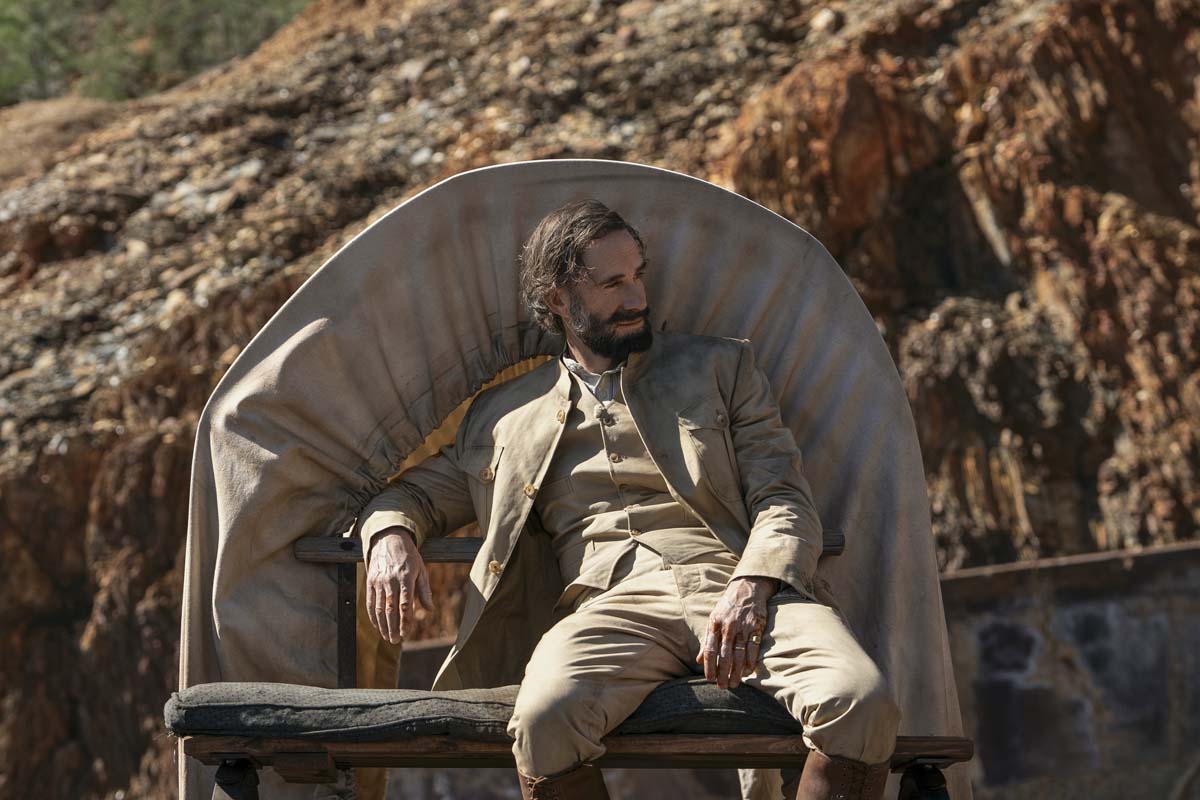
One of the things I did when I took it over was start with the dream. It was originally scripted to start with the coach heist, but it felt much better to start with Sherlock and his emotional life. James is the one who took that original montage and turned it into what you saw.
I thought it was just a very clever idea because it played with the idea of memory. What ehe remembered gets called into question in episode six. The stuff about her arm being broken is an important story question, to sow the seeds of doubt, woven into that.
Hookway: There are only a couple of scenes that we moved from episode to episode, but the flashback material was the biggest thing that could move throughout the series.
Potter: There’s the reveal and about Beatrice in the sling. There was a lot of stuff that was just shot for the flashbacks in episode five that got planted a lot earlier in the show.
Murrell: There were a bunch we moved into four, wasn’t there?
Hookway: Yeah, there was the coach scene when Sherlock is sent off to boarding school by Silas. I think that was originally scripted for episode five.
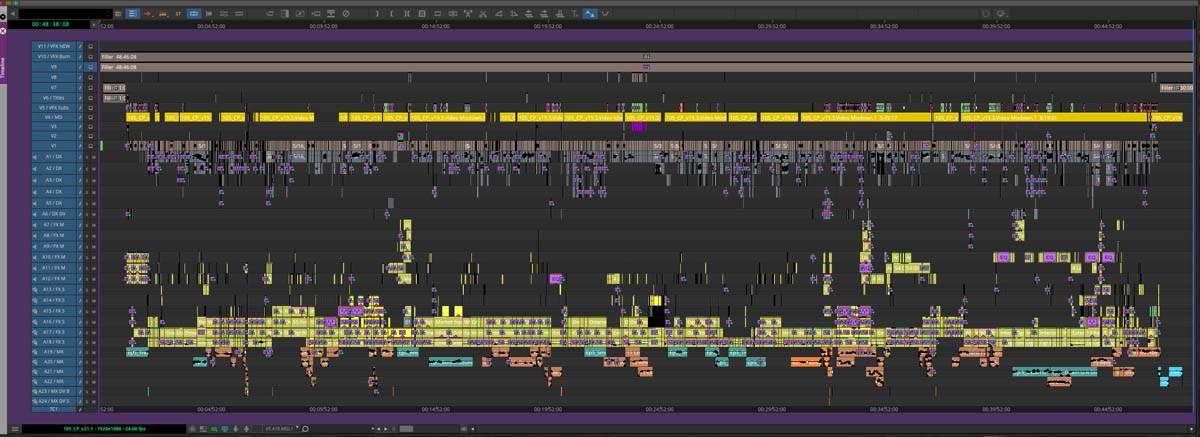
Avid timeline screenshot of episode 5
Cheryl, that’s a really interesting point that some of the flashbacks would have been scripted and therefore organized and slated as “this is for this moment” even though it might seem to a viewer that everything that happened at the river is one scene. Instead it’s multiple scenes. Can you talk about how that was organized and maybe how that stuff was organized and planned?
Potter: I remember opening up the folder with all the scenes for episode five, and there were a couple of bins at the top that were specifically from episodes one and two: the stuff at the River, because it was stuff that was scripted to be the original memories of what we see at the beginning of the show.
Then obviously during episode five, we’ve got Sherlock when he’s questioning his mother about the events at the river where we go into the Mine Palace, so there’s that footage as well, then there’s the straight up memories that we see when Sherlock’s back in his childhood home and slowly piecing it together and remembering things.
There was stuff that would have been shot for episode one that found its way into episode five, and stuff that was shot in episode five that found its way into the montage at the beginning of episode one, and various other places. It was just part of the language of the show so there’s a lot of borrowing happening.
For example, there was a section in episode five where we’re talking about Jaggers, the lawyer who goes to visit Cordelia. Originally that was just James and Sherlock but we thought, “Should we be putting flashbacks in here?”
It was a very late change to episode five: “Let’s put the visuals of these events since this is part of the language of the show. That was happening constantly throughout all the episodes.
Ross: Yeah, certainly in episode eight there are a lot of Beatrice flashbacks that are so dotted throughout episode eight.
They were scripted to be dotted through, but the longer we went with the episode and as the styles were being settled, we just felt the flashes weren’t working as well in the positions they were in, so we decided, “Let’s tell the story as one block at the beginning of episode eight.”
So we were creating montages and flashbacks that all told Beatrice’s story right from the beginning of episode eight. And although there were a couple of flashes throughout the episode, most of her story was told at the beginning of eight as one block of a long montage.
Potter: So you did the reverse. In your case, you took the flashes and turned them into one thing. But for us it was one block that became flashes.
Murrell: The language really evolved didn’t it?
Ross: Tim, I think your episode four really informed a lot of the other episodes as well, backwards and forwards, particularly The Bird’s Claw scene.
Murrell: That whole Mine Palace language, which took a while to sort of find and to understand and work out. Part of that was liberating, that we didn’t have any particular rules. So each one could be its own thing.
It didn’t have to follow some rigid path. It was fairly open to interpretation. We all found our own way of doing those and finding a way in and out of those scenes.

Calum, I’m interested in the idea of taking these flashbacks that were spread out and putting them at the beginning. Had you originally edited them in the order they were scripted? Then as you watched it in context, you didn’t feel connected enough or you didn’t feel like there’s enough set up? What was it that moved everything to the front?
Ross: One of the reasons was that my first assembly of episode eight was about an hour and 25 minutes, so we had to find one way of crunching that episode down and getting the pace and rhythms right, so that dictated some of that.
The flashbacks just weren’t settling into the episode as well as they could, so it was basically to create this sequence to tell the story, not necessarily in the quickest way we can, but in the best way we can. It took a while to get right.
Episode eight has a lot of long scenes right at the beginning of it, so we wanted to inject a little bit of pace into the episode anyway, so this was another vehicle that we could do that with. And as soon as we did it, we realized it was the right move to make.
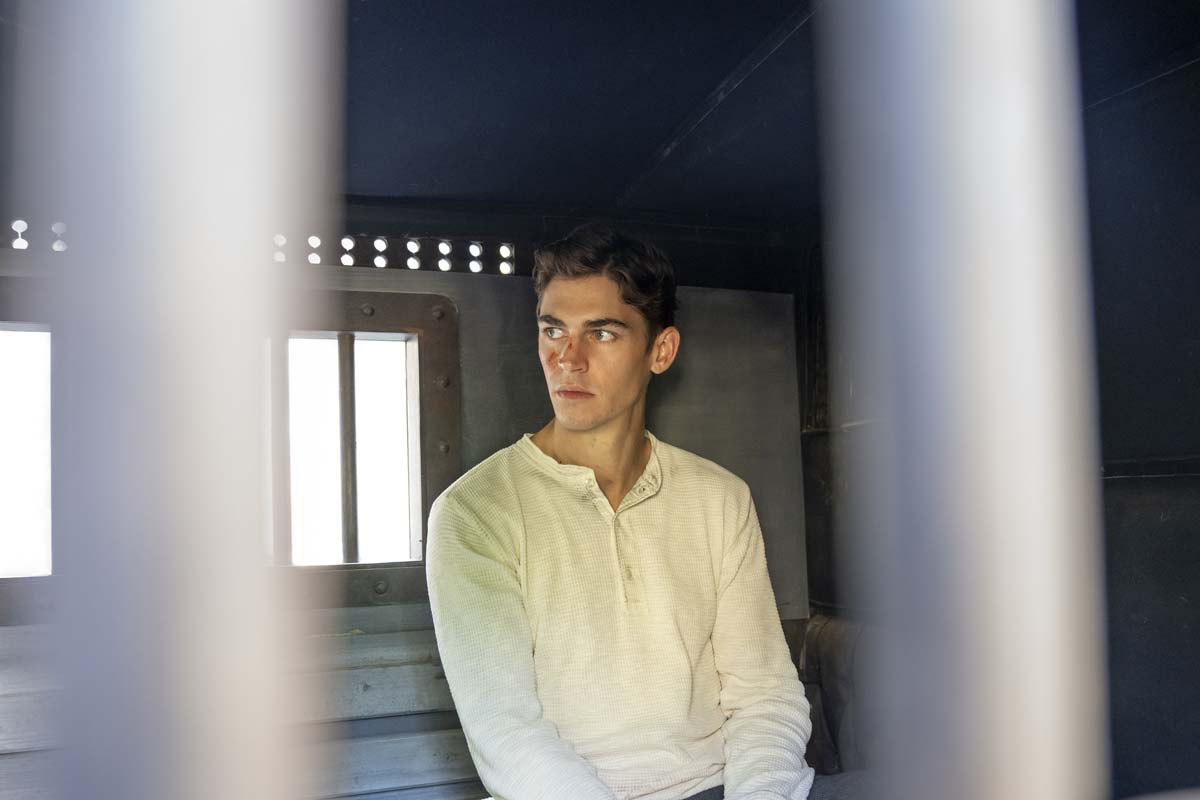
Phil, did you have anything like that where you needed to move things out of the order that they were scripted and why you felt that needed to be done?
Hookway: Not particularly with episode six, but Tim had done a great assemble and fine cut on episode four, but because he had been moved across to the other earlier episodes, they needed episode four to be moving forward as well, so we did a bit of work on episode four and Matthew Parkhill, the showrunner, gave us freedom to look at any material that other editors dropped by the wayside.
I incorporated a flashback into full from episode five, and then it was just kind of stylistic things, really, that I was involved in. Move with episode four.
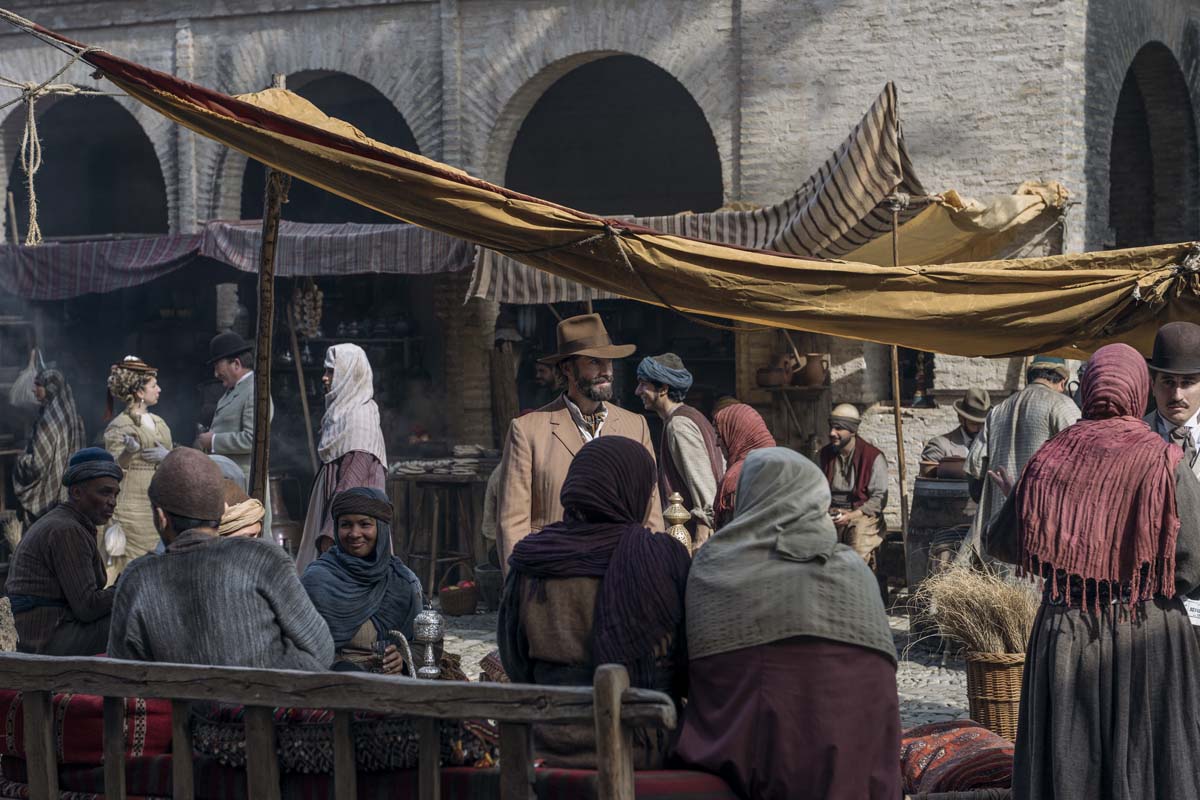
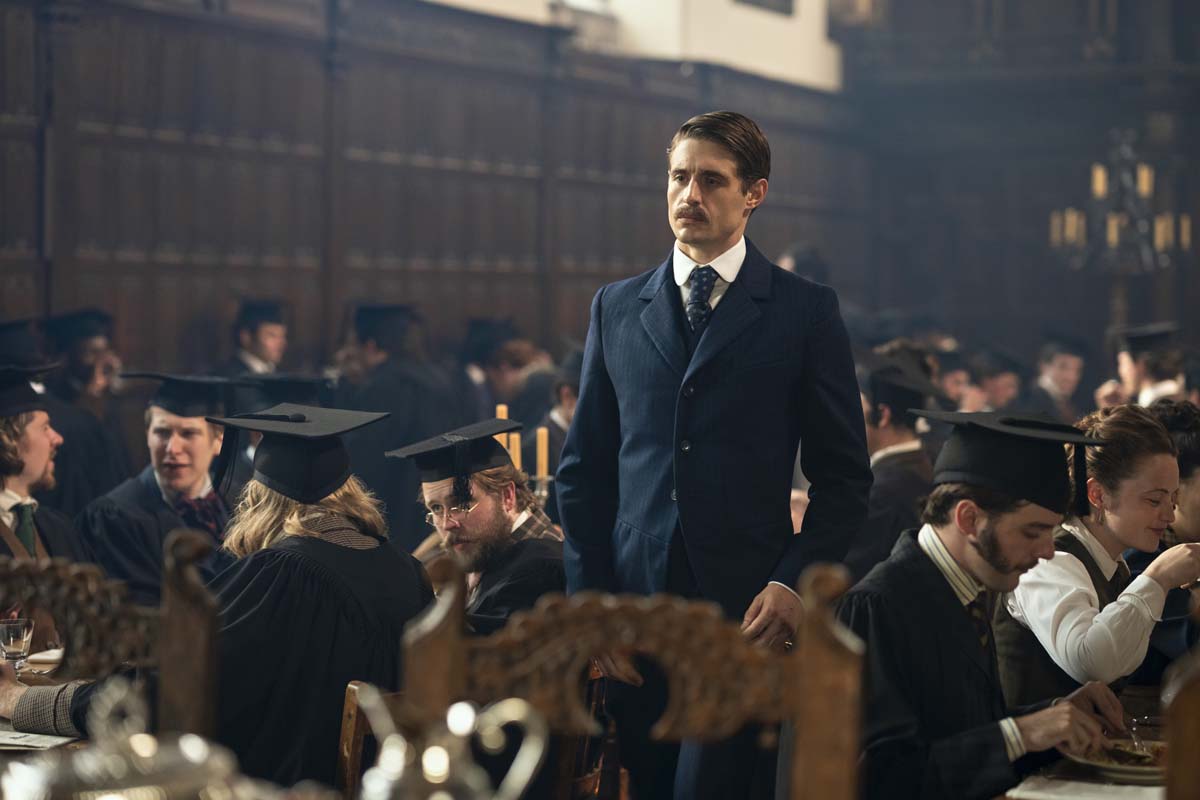
Tim, I’m really interested in the idea that the whole series was supposed to start when the Chinese princess arrives at Oxford?
Murrell: It was about how you get into it and it felt right to start with Sherlock. Start with the dream. He’s kind of in an emotional turmoil, which is the thing that is the big constant arc throughout the whole series.
The Coach Heist is fun and exciting. It’s easy to see why it was put there to draw the viewers in, but I think it works that the first character you meet properly in the current timeline is Sherlock sitting up in his bed, looking kind of forlorn and in a bad place.
Then the fun of meeting Mycroft and maybe thinking he’s Sherlock since he’s at Baker Street - It just felt a more fun way in, as well as a more emotional way in. You just wanted to stay with that character until we hit the titles. It also felt great to establish Oxford.
We kept trying to move the pieces around. The coach heist is great but it lives really well where it is, and it allows you to buy into Sherlock, his origins, which is the whole point of the show before we start stepping off into all the plots.
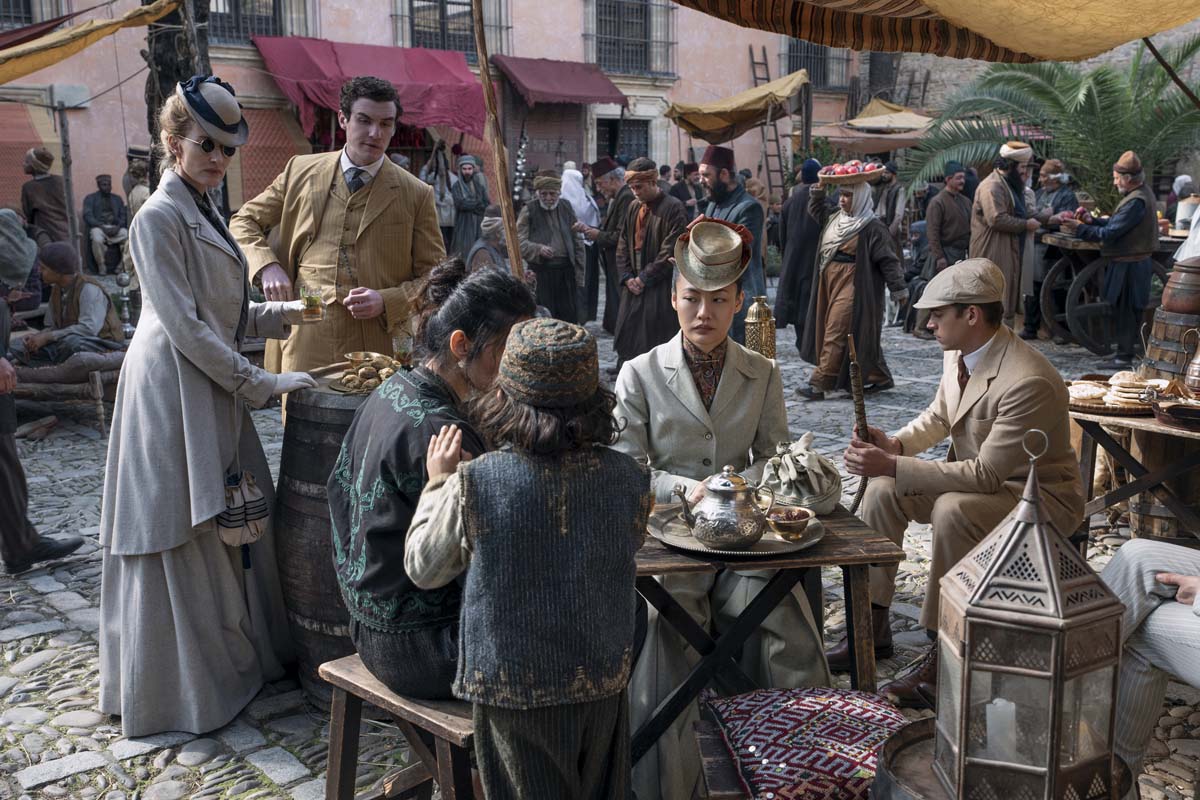
The music has a lot of variety to it. There’s modern day needle drops and there’s old timey music and there’s score. How much of that was either scripted or given by the showrunner, and what was determined by the editors?
Hookway: I don’t think any of it was scripted. I remember Amazon giving us the steer, which was that they really didn’t want BBC period drama. So that kind of gave us the liberty to try anything really. Then it just evolved between all of us.
Ross: We were given a bin with copious number of tracks that we could play with, and suddenly we get to episodes seven and eight… In the beginning, the tracks were going down really, really well, but the tone of the series shifted to a slightly darker tone, so a lot of the music that was working really well in the first two episodes, was working less so, so I had to rethink the music for seven and eight.
Potter: There’s a real tonal shift because I think we have a lot of fun in the beginning, then episode five is a bit of a turning point in terms of we get a bit darker. It’s almost like we switch genres for a bit with five.
We lean into the gothic horror of it all, and the idea that it’s a bit of a ghost story. It’s a bit haunted. Once you go there you feel a bit of a shift for the rest of the episodes.
We go to a bit of a different place musically. Being able to have so many needle drops and being encouraged to look for needle drops… It’s funny because episode five is the one episode that really wasn’t anywhere to put them, which was kind of sad for me, but I got to put The Cure in the credits.

Murrell: That’s one of the best ones in the show. When I took over episides one and two, there was folk music all the way through that. That came from Guy. That was an original idea that he had.
I decided it could do with some more contemporary music. So if they didn’t love the track, they loved the idea of it and what it did to the show.
You have to put that stuff early on because you can’t introduce that sort of idea towards the end of the first episode, or even into the second.
So you had to sort of begin with it. Ian Neil - who was our music supervisor - did a brilliant job suggesting tracks and everyone contributed. Everyone was coming in with ideas. Everyone just loves finding music for the show. It was a lot of fun, and there was a lot of experimentation.
Christopher Benstead, our composer, wrote this idiosyncratic and clever score that managed to weave its way between all of these disparate elements. Just the way he managed to keep these three or four different musical ideas running through the whole series and make it feel like it was one.
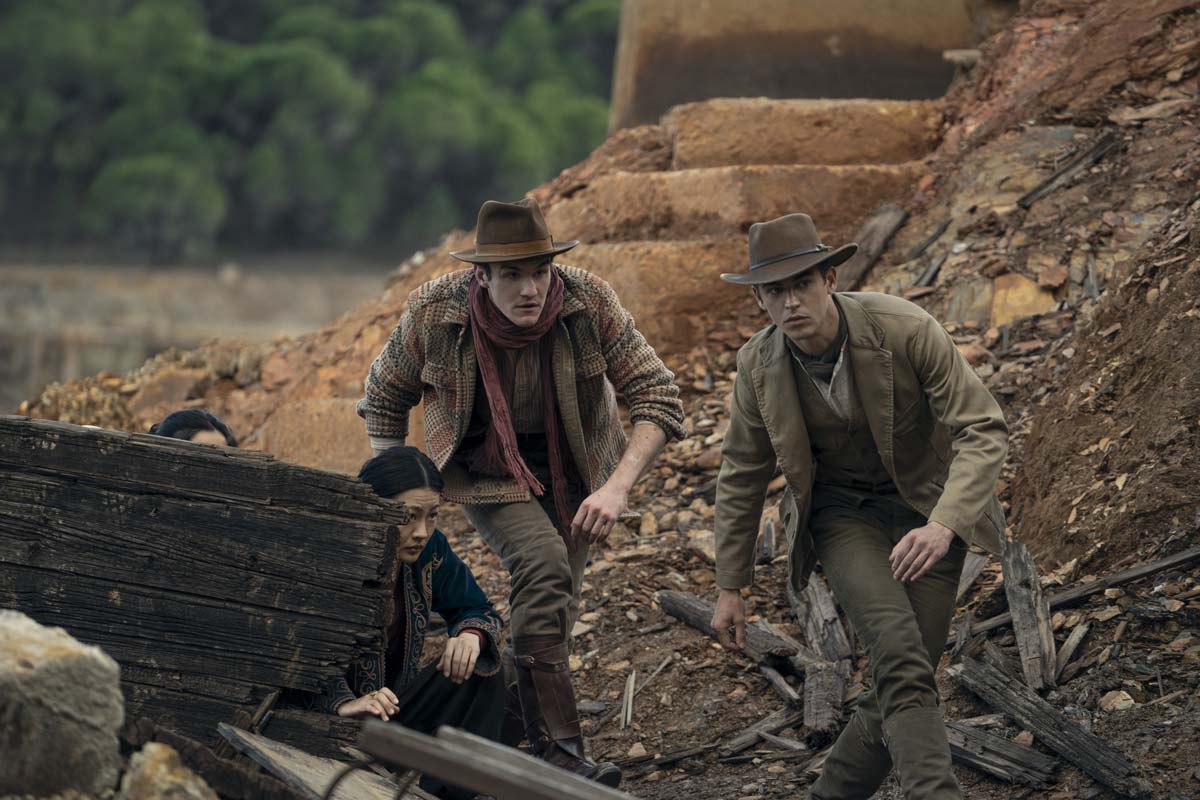
I want to talk about visual storytelling and subtext. In episode one, when Mycroft and Sherlock go to visit their mother, there’s great stuff with eyes. People looking. Tells on faces. You’re hearing one thing, but by seeing somebody else’s reaction, you’re learning the story without dialogue. Can you talk about the idea of revealing subtext in editing?
Murrell: It was just about the relationship between those two boys and their mother. It’s our first window into the family dynamics - which is the crux of the show - their family dynamic. So I was finding those moments that allowed those ideas to come through.
But at the same time, you have to understand what’s happening in the scene within itself, too: using that as the window into them and their past, and where they are now.
In episode five, that stuff comes way to the fore because that family are constantly talking but meaning completely different things. Cheryl can probably speak very well to that.
Potter: Five is when you kind of peel back the curtain and get a sense of what’s really happening. It really is the turning point till the beginning of six - the very opening scene between Sherlock and his father.
That’s a perfect example of where you’re saying one thing, but what’s really happening is something completely different.

Cheryl was saying your scene between Sherlock and his dad has a lot of subtext to it. Talk about revealing that subtext in the edit and where you’re getting that subtext from.
Hookway: I guess it’s in the performance.
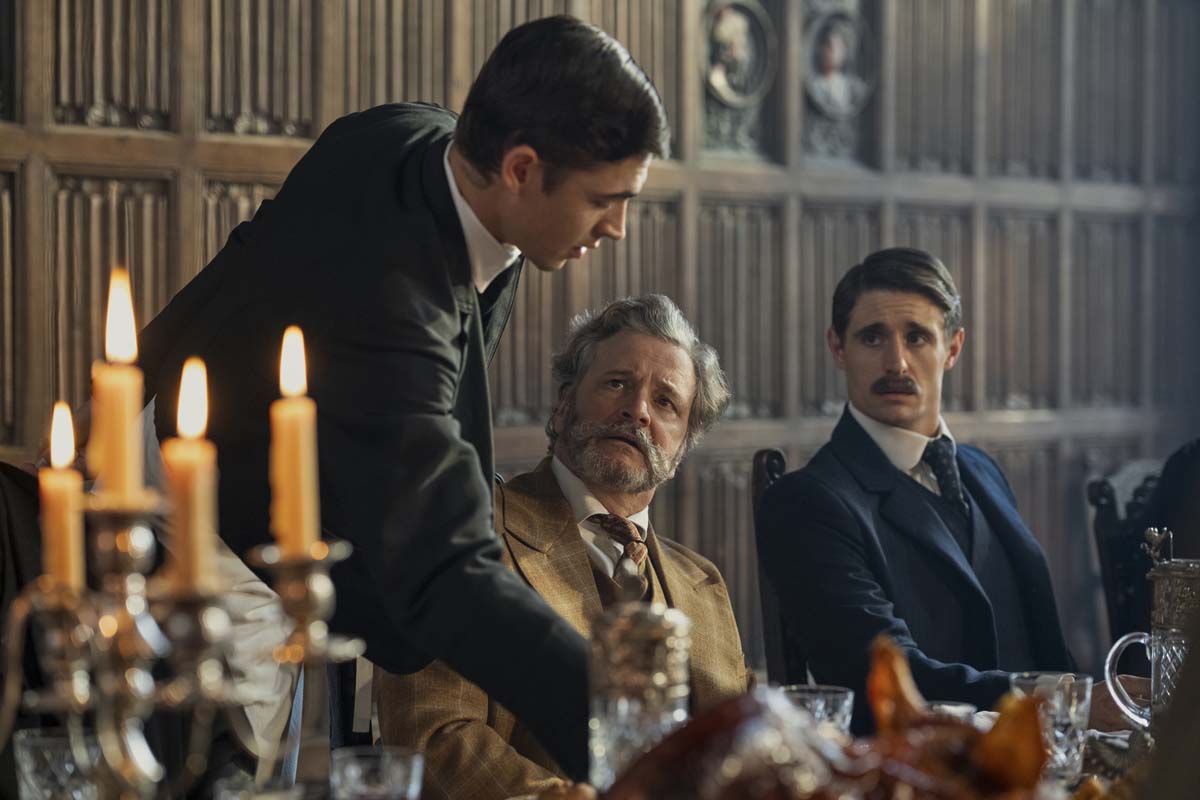
Potter: We have it in five as well. The family comes together and sits around the table and have a lovely family dinner. It starts very joyful. There’s a moment between Silas, the father, and Sherlock, where he gives him the gift of the microscope.
It’s all very light and chatty. Then there’s this moment where it shifts, and suddenly Sherlock has a vision of Beatrice across the table and from that point on in the scene, the mood is completely different. It’s a bit awkward. Nobody feels comfortable anymore.
There’s a point where Sherlock is staring at the empty chair where he saw Beatrice. She’s not there anymore.
One subtle thing that we did from that point on in the scene is that we changed the sound design. It goes from the sort of warm sounds of the fire. There wasn’t a lot of echo in the room from that point.
After he sees the vision of Beatrice - for the rest of the scene - you can hear the clock ticking quite loudly. You can hear a sort of emptiness in the room, and the tone just changes to help that sense of uncomfortableness that settles into the scene.
But a lot of it is – as you say – in the reactions. Cutting to the sideways looks and someone filling their mouth with food so that they don’t have to say anything.
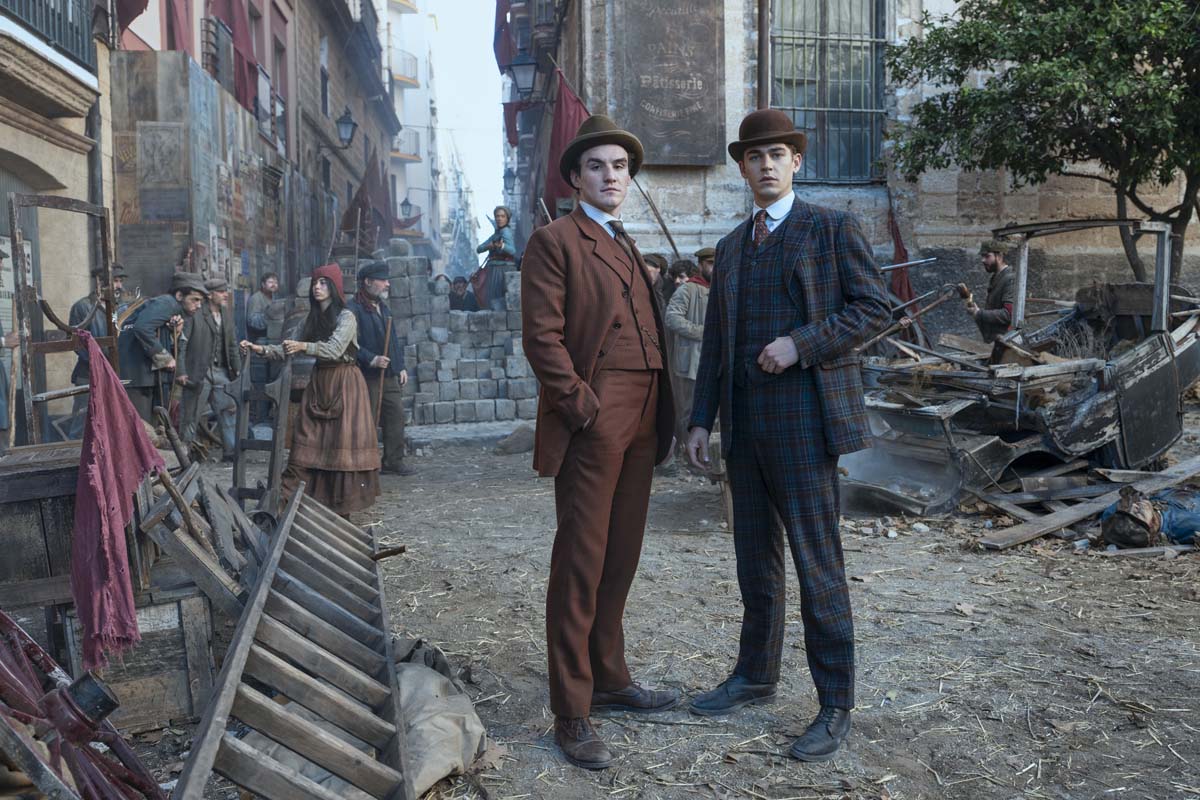
In episode four, Mycroft, Sherlock and Moriarty are discussing bees and Malik’s disappearance. It’s all based on looks between each other. And the pace of dialogue is very snappy. Do you find that a certain pace helps reveal character?
Murrell: With those character, particularly Moriarty and Sherlock, they’re constantly jousting intellectually. Similarly with Sherlock and Mycroft and their brother relationship, there’s a constant attempt by Mycroft to get the upper hand but he’s always outwitted by Sherlock. They’re constantly in competition with each other.
In episode three they discover the glove. Mycroft is exasperated and Moriarty and Sherlock are jousting off each other. But Moriarty is also delighting in all these family details he gets about about Sherlock’s past that gives him a window into Sherlock, but also a little bit of leverage as well, which I think he always really enjoys. So was it there was just, you know, Phil was cutting those scenes with me as well. It was just finding that rhythm.
That was very hard to score that, wasn’t it, Phil?
Hookway: We went through about 30 different tracks with that one. In terms of that jousting it’s very much in Matthew’s scripts. It read that way and obviously it was shot that way. Then we edited it that way, so it’s kind of in the DNA of the show. It’s just embellishing it and finding the right tone of the show.
Why was that so difficult to score?
Hookway: Everybody brought something different in terms of music to the show. It meant finding something coherent between all of us. Sometimes things weren’t working in places that they really were working.
You turn the dial up slightly too much and it becomes too comic, too, exaggerated. You turn the tone down slightly and it kind of fits. Musically it was doing similar things. You put the wrong track on there, and all of a sudden the scene felt too big and too arch.
Murrell: There was a Guy note at the beginning which I think really worked for the whole series:
“Don’t get too earnest.”
We all had to sort of ride this tonal tightrope because when it got emotional, it had to mean something. It couldn’t sort of become too much of a romp, and it couldn’t become too darkly mired. Apart from episode five - which is allowed to go there - the balance really shifts for five.
Part of our job with episode four was to try and help us steer the ship into the harbor that Cheryl was kind of waiting for it.
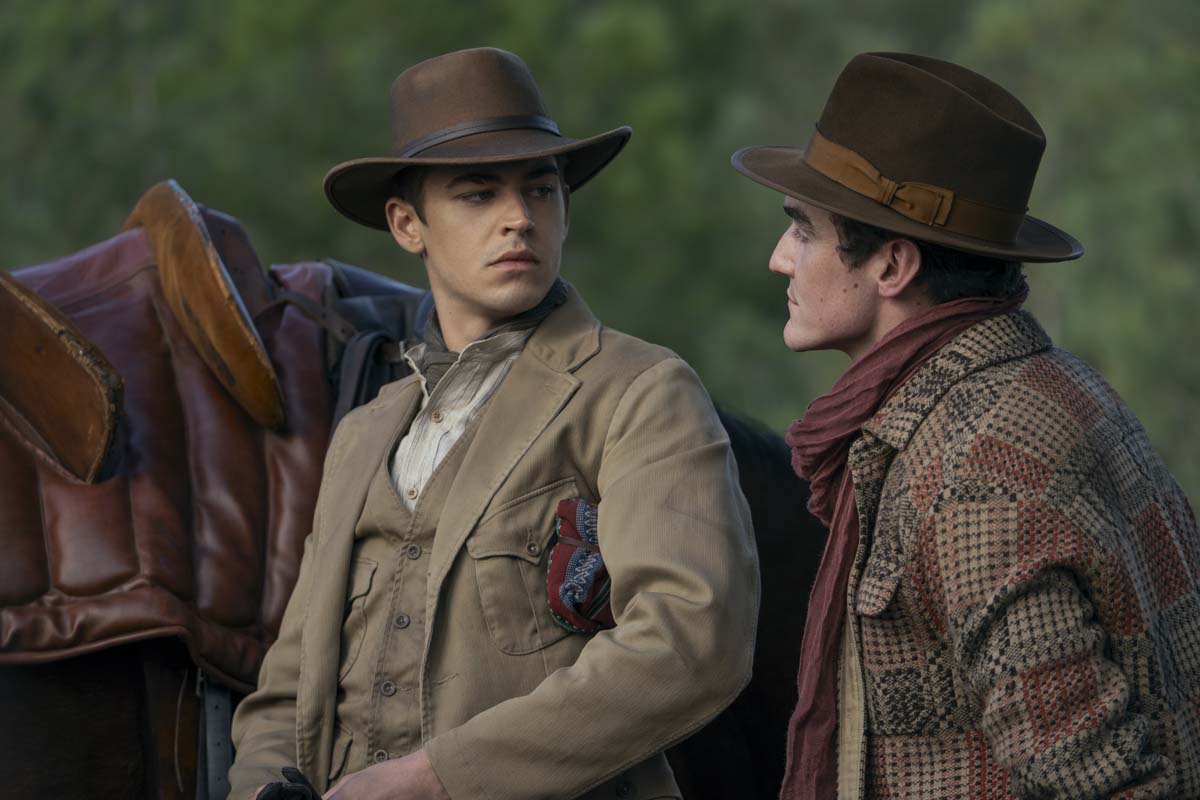
I wanted to talk about this scene where they go to the Folies Bergere. The editing in that is just a fantastic chaotic explosion.
Hookway: it was originally scored with the Can-Can music. I give credit to James Herbert because he came in with a more contemporary needle-drop there. So he actually pushed it in a slightly different direction. The music very much drives that sequence.
Tim mentioned the fine tightrope walk of tone. I wanted to talk about a scene that I just loved. Moriarty kills a soldier in an alleyway and things really slow down. Talk to me about the sense that you need to feel what Moriarty’s feeling or the change that comes over him.
Ross: That’s a huge moment for Moriarty, because that’s the first time he’s killed someone. At that point, he doesn’t know how he’s going to be gripped by that moment and the journey that he begins to go on from that time.
When it came to the assembly stage of it, I wanted to really feel that moment - his world changed at that point. So even in the early stages with that scene, I was losing all the sound of the battles taking place around him, trying to bring up his heartbeat into the scene.
Slow it all down for a moment to really show the impact that was going to happen on his journey. Then along with that, we used a little bit of that scene later as a flashback at the hospital.
That was always going to be a huge moment for him. So with that we were allowed to slow everything down and create a bit of a soundscape in that moment.
Potter: There’s a beautiful tension for the people who know who Moriarty is throughout the whole series. You know they’re having such a good time.
Their connection is the heart of the show. That’s where the fun ends and I think that’s what draws you in as an audience and makes you keep clicking: “I want to watch another one.
I want to watch another one!” because they’re just so much fun. So this almost Easter egg - if you don’t know who Moriarty is - the idea is this slow change that’s coming over him.
There’s a scene in eight where Moriarty’s talking with Shou’an, and it’s kind of the birth of the person he’s going to be.
Ross: Yeah, absolutely. The scene Cheryl is talking about is when they’re outside the Eagle and the Olive and they’re watching out for Silas’s right-hand man. We revisit that scene where he does kill for the first time.
Then as the episodes go on, he almost begins to feel like he enjoyed what he’s done, and we wanted to weave that feeling into a few different places throughout the episodes.
His journey very much begins on that scene and continues. He definitely gets darker from that point onwards.
Potter: And there’s a darkness to the end of that scene when she describes how she felt after her first kill and Moriarty says, “I didn’t feel any of that.”
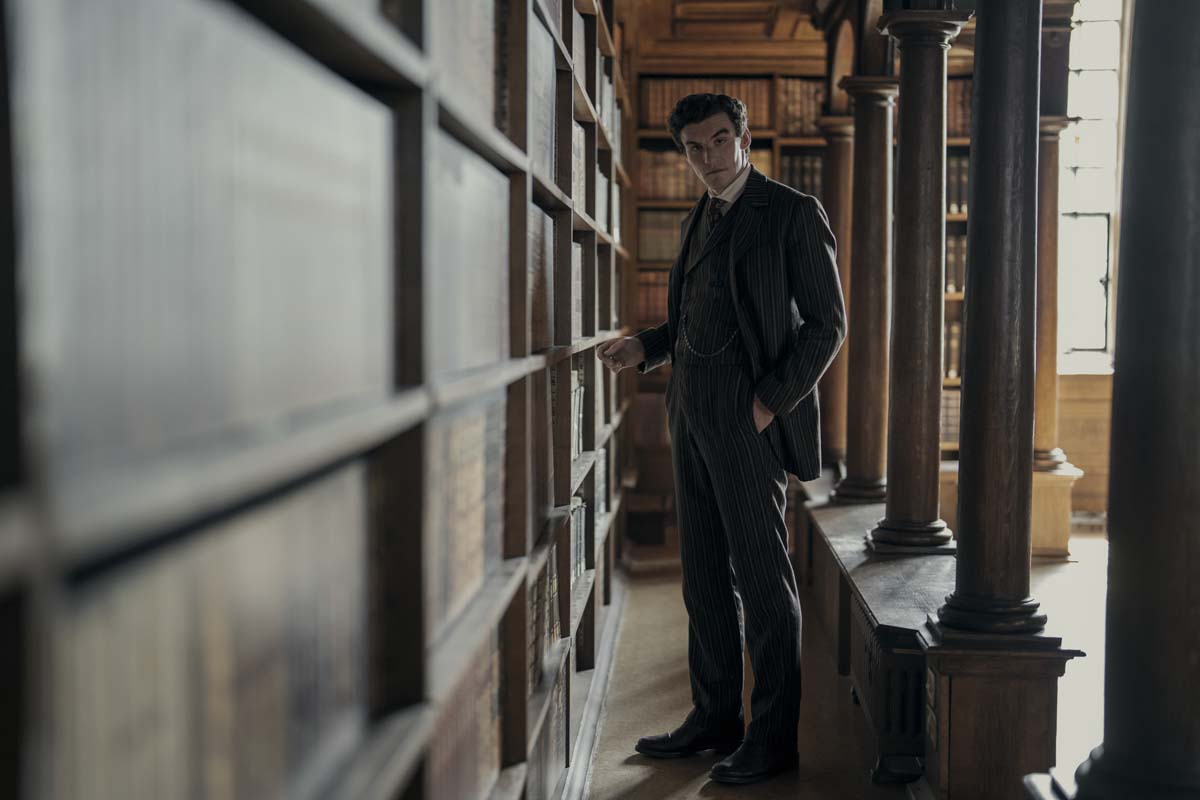
We’ve talked a little bit about moving scenes and moments around, and I’m wondering whether this was one of them: Mycroft waiting in the embassy, then later in the final episode, there’s flashbacks to it. Was that scripted that way, or is that something that you guys found in the edit?
Ross: Yeah, that was something we found. I just felt that you already knew the information that Mycroft was about to tell them and it felt like it was a more interesting way if you just lost it from episode seven and kept it from the viewer until that dinner party scene.
Another one I wanted to talk about was a little bit of time displacement. There’s been time displacement from the very beginning. I noticed jump cuts at the river and when Mycroft is picking out his cane at Baker Street before the title sequence. So, in the final episode Edie is on the balcony with Silas. As they are in mid-conversation, you edit to her walking towards the Holmes family - like a flash-forward. Talk to me about the reason for that. What was the benefit of that? What was the value?
Ross: It’s a good question, and none of us can answer that one. That was a James Herbert thing.
Potter: At that point in time I was caretaking for Callum because he’d had to move on to another show. It was something that James had sort of played with. It was a shot that hadn’t been used.
But James was trying to have a way to work it in, giving you that sense of place of where you are.
But I think it also helps that you understand that the Holmes family can’t leave. You’re getting more of a glimpse of the security guards.
You get more of a sense of how locked down they are. I think it was something that we were kind of reaching for a bit in that episode to feel like they’re not here by their own will.
They can’t leave. They’re under duress. I think that’s something that he was looking to try and help us visually understand a little bit more.
It does sound like editors were kind of coming in and going out of episodes. What about the continuity of carrying an episode into the mix stage, or even color grade? How much of that do you feel you need to do, and what’s the value of that for you if you’ve got to drop out to move on to your next project? What’s the value or the danger of not doing that?
Murrell: It’s very painful when you can’t and you’ve moved on to something else. There is the capacity for editors to go to the mix, like you would normally do on a feature. We do a lot of sound work in our edits and there’s so much emotion.
There are narrative ideas in the sound mix You just want to be there and see how they get translated and enjoy it. When it’s something brilliant and you sort of argue if it’s not feeling quite how you wanted it to work or it’s not hitting the beats that you wanted to hear. If we were available we were allowed to go to all of our mixes and spend time with Gareth.
He and his team did such a brilliant job. It was a wonderful experience - once the pressure of the edit was off - and you can sit in the back of the room and enjoy watching the show come to life in that way.
Potter: When you get to sit in the mix and hear it elevated. But also you are the shortcut because you know why you made the decisions that you made. There were definitely times – like at the end of episode six - the moment where the gunshot goes off and he hits the ground and all the air gets sucked out of the room.
The way that that the sound was in the edit and the offline, then being able to be the caretaker of that episode. I was on the mix stage. We just kept going back and listening, asking “What is the the key thing that is working about this that we need to make sure that we’re paying homage to, but elevating and taking advantage of all of the tools that we have on a mix stage to create that sensation? But take it up to 11.”
Let me play the bean-counting producer and say, “Isn’t it the sound mixers job to do all this stuff?
Murrell: It is the sound mixers job to translate what we’ve done, but things can get very lost in the translation. I’m sure you guys feel that same experience where you think, “That’s not what I meant!” So then it’s about having that relationship with the sound mixer.
If you’re talking to a producer about why the editor should be there, it will A) make the mix so much better, or B) they’ll be able to get it done in the time that they have, because, as Cheryl said, the editor is the person with the shortcut to all of the ideas.
Everything that everyone signs off on in the edit - the producers, by signing off, are almost subconsciously agreeging to a sound design pass that they’ve been experiencing for a long time.
You’ve already had the discussions about why it gets echoey or why the conversation gets dropped out You’re the steward of that.
Ross: In the scene where Moriarty has his first kill, listening back in the mix, the heartbeat wasn’t quite coming through as strongly as what we had in the off-line, and the sounds weren’t quite as muted.
So by going there and being able to tweak these things, certainly can take them to a level that sort of matched what you were doing in the offline.
My assistant Katrina she’s brilliant with sound - awesome. We have a lot of dialogue where we talk about the sounds within scenes and what we’re trying to get to. She’s brilliant with that.
She gets things to a great place in the off-line. So, when you do go to the mixes, if things aren’t feeling quite right, you’re in a place where you can get it there, basically.
Talk about whatever kind of collaborative discussions there were between editors. It sounds like many people had their hands in other people’s episodes or touched other people’s episodes. What kind of discussion is there? Or is everything discussed through the timeline and through the bins that you’re looking at?
Potter: There were some sequences that I would say, “I’ve just done a new version of this. Come in and watch it and tell me what you think.” It’s the beauty of working in television with other editors.
You can bounce stuff off each other. It’s great when you can say, “I’ve done this thing. It’s a bit weird. I don’t know if it works. Can you just come and watch it and just tell me what your reaction is?”
Ross: Yeah, certainly. The Beatrice montage.
Hookway: We were working remotely up until the fine cut. Once we got to the fine cut stage, the edit was able to move on because we could all have communication and discussions between us. That was a key element of post-production - was being in the same building together.
What was the timeline of that?
Murrell: They started shooting episodes 1 and 2 in August 2024. I came on September 24th. I was doing 3 to 5 at that point. By February, we were still remote, then I was asked to cover episodes one and two. It was around mid-February that we moved into Hireworks.
Long story short, we all end up on the same corridor with our assistants. Visual effects were around the corner and they had their own corridor and we were able to just walk in and out of each other’s rooms and kind of watch stuff and talk about things, and just having that literal proximity is just invaluable.
You just don’t get that if everyone’s working remotely. It’s just not the same thing. That allowed us all to collaborate and ended up a very collegiate sort of effort. That’s a big part of the show’s success is the editors and our relationship with visual effects. The producers were there and it was a very kind of open forum.
Cheryl, you and I have been talking for many, many years, going back to your assistant days on The Martian with Pietro Scalia. Talk to me about the importance of having an assistant with you instead of this remote situation where assistants either don’t get to see you, or they don’t get to see the director, and what that means for career development.
Potter: When the working from home genie got let out of the bottle during Covid, and suddenly there’s this option of “you could be here, your assistant could be there,” and you’re not in the same place. It’s just a barrier of you can’t just walk out of your room and walk into your assistant’s room and have a conversation.
Suddenly there’s a barrier to every task that you might need to ask them to do. You have to open up Slack or you’re sending an email or a WhatsApp. It’s an extra level of admin. There’s almost a sense of “I’m bothering someone. I’m interrupting them to ask them to do something.”
But, if you can look in someone’s doorway and see that they’re free and that they’re ready to to help, or they’re walking past your doorway, you can say, “I was looking at that sequence… Can you do X,Y,Z?” It is just easier when you’re in the same place, but also it means that you are around to witness the process of what happens.
So much about being a good editor is knowing how to collaborate and how to talk to producers and directors. There are always visual effects producers and supervisors and understanding those relationships and understanding how to make sure that the lines of communication are open and it’s easier to get things done.
If you’re in a room by yourself in your home, you’re not in the room to see how those conversations happen, and to learn that sort of non-technical side of being a good editor.
As much as it’s really helpful for people who find remote work really useful - people who have families, people who live in in places where it’s not easy to get to where the cutting rooms are -we need to be really careful that we’re not robbing the next generation of assistants from the skill sets that they need to become good editors.
So much of what I learned from Pietro and Dody Dorn and all the wonderful editors I got to work with - so much of what I learned was just through being in the room and witnessing. It wasn’t me being sat down and being told how things worked. I just absorbed it.
Murrell: Well, I certainly echo everything Cheryl just said. It’s like the comment about subtext before. It doesn’t allow us to communicate in the way we can if we’re all sitting in the same room. The same goes when you’re you’ve got your producers all remote and you’re sending them cuts, and they just send you notes back.
It’s different having them in the room. You sit down and you watch it together and you talk about everything there and then. It’s night-and-day in terms of how that helps and speeds the process, and how the remote viewing and sending notes thing can really clog it up.
So, I’m a huge fan of being in the room, when you can. Obviously - like Cheryl said - for some people it’s incredibly important to have that flexibility, and it’s great that you can, but I think being in the room is always going to be the best.
Ross: On VFX-heavy shows, being in a room with VFX is priceless.
Potter: If you’re doing it over email or over messages, you can go back and forth so many times. You want to just try something out really quickly, or you get a note and they ask you to do something and because it’s not working.
I’m not going to send them something that’s not working, so then you’re tearing your hair out trying to find another solution so that you can send them something.
Whereas if they’ve been in the room with you, then they’ve seen straight away it wasn’t working, then you could find a new solution together. Something that should take 20 minutes could take three days.
 August 28, 2025
Nobody 2
Elisabet has been on Art of the Cut before. Elisabet for Atomic Blonde, Shang Chi and the Legend of the 10 Rings, Bullet Train, and ...
Read more October 31, 2024
Young Woman and the Sea
Una was first nominated for an editing BAFTA 15 years ago. And again in 2013 and THREE TIMES in 2015. She won a BAFTA for ...
Read more July 11, 2024
Jim Henson: Idea Man
Today on Art of the Cut, we speak with Emmy and ACE Eddie winner, Paul Crowder, ACE, and Sierra Neal about Ron Howard’s documentary, Jim ...
Read more