













Train Dreams
A discussion with the editor of the Oscar-nominated Best Picture, Train Dreams, about how a background in documentary editing helps with editing narrative features, creating dynamics by changing structure, and the power of a cut to black.


Today on Art of the Cut a discussion of the Oscar-nominated Best Picture film, Train Dreams with editor Parker Laramie.
Parker was the 2025 Winner of the Jonathan Oppenheim Editing for the documentary André Is an Idiot. He has also been nominated for 2 Emmys and a Cinema Eye Honors Award for his writing and editing on the non-fiction program, Allen v. Farrow.
His other work includes the feature film Sing Sing, and the TV mini-series Dancing for the Devil: The 7M TikTok Cult, among many other projects.
It’s so nice to have you on Art of the Cut. Thank you for joining us.
Thank you. Pleasure to be here.
The movie is based on a novella. Did you read the novella before you started editing?
I had worked with director Clint Bentley on his first film, and as that film was coming out, Train Dreams came to him. Clint had been in love with the novella for years and was really excited about the opportunity to adapt it, and I think he had also mentioned that he and his co-writer, Greg Kwedar, who’s another director that I’ve worked with quite a bit.
They were going up to Idaho to sort of see Bonner’s Ferry and really absorb the landscape and the atmosphere of the film.
At the time I was on a long road trip with my wife and we decided to listen to the audiobook version, which is read by Wil Patton, who ended up doing the narration in the film.
I was really excited that they were going to be adapting it. The book even has more sort of eccentric characters.
There’s 3 or 4 characters that are like Arn (William H. Macy’s character) throughout the book, then they had a version of the script a couple of months later, and I read the script and I was I was absolutely floored by it. I felt like it really captured the essence of the book and the things that really stuck with me.
Then I revisited the novella as I was doing the first assembly. When you’re assembling the film, then you have the script, you’re still sort of grasping at, “What is this movie really about?” And “What is this really going to feel like?”
And reading the book, for me, was a way of accessing that and being able to see the movie as a whole, even before they had finished shooting. But I also noticed there was a lot of narration in the book that I really connected with that I felt would help us in certain sections of the film. The narrator was present in the film, but more sparingly.
Then we ended up landing on the final film that everyone’s seeing. I brought in a lot of the narration, sort of as a crutch - as sort of training wheels for those early versions of the film - get it rolling and get it moving. Then you can slowly take those things away and let the audience experience the film without having to spoon feed.
I’ve heard of other editors doing something similar. A lot of movies have chapter title cards that they use while they’re editing, then find, later on, before the movie is released, that they can take all those out.
I’ve done that a couple of times in documentaries that I’ve cut because documentaries are inherently much more episodic. Having chapter headings sort of gives you transitions and stuff between things that - in the early stages - feel very disconnected.
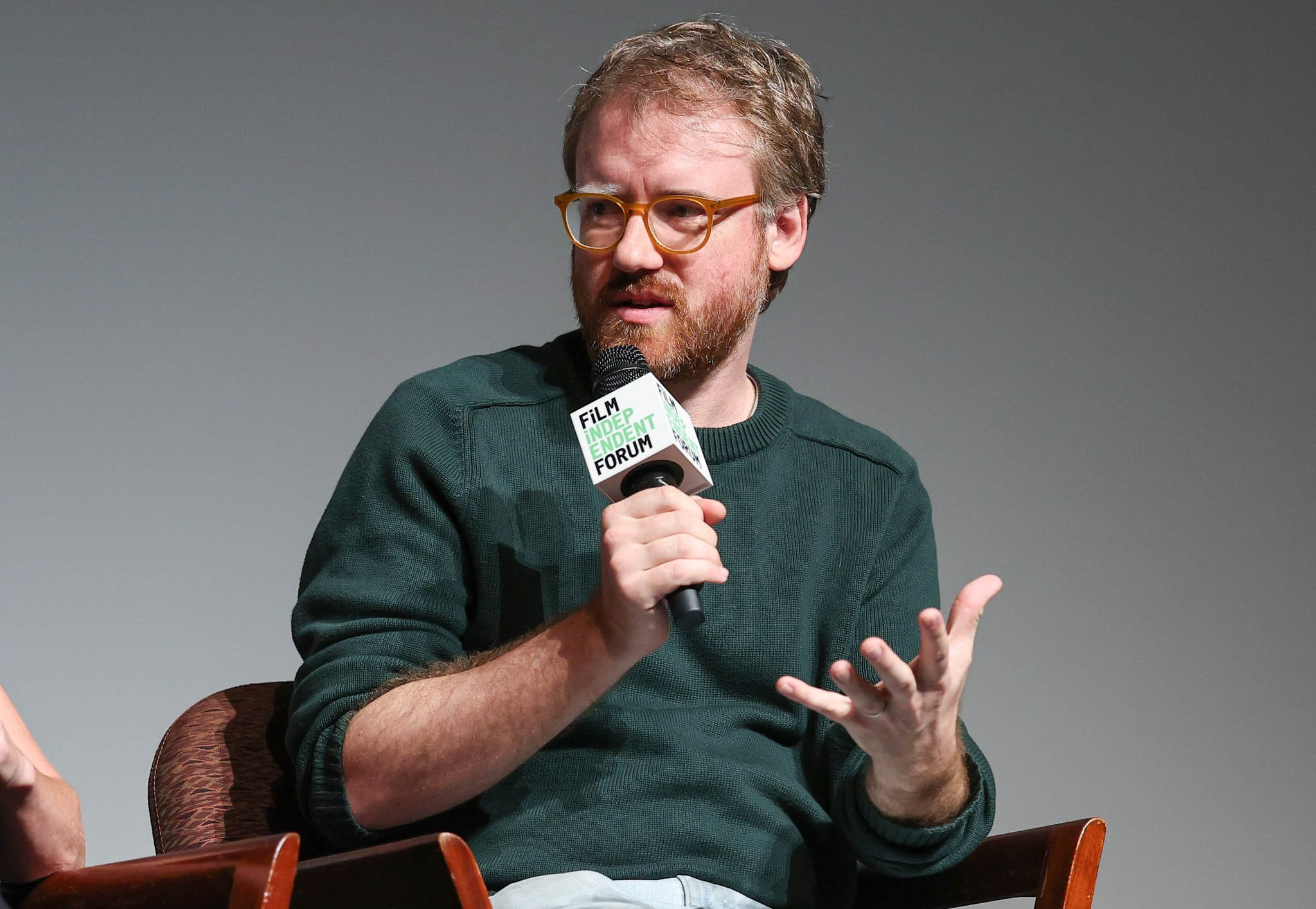
Editor Parker Laramie
Did you have access to the audio version of the book? Is that what you were using as narration, or did you have to do scratch narration yourself or an assistant editor or something?
I did the scratch narration myself. We were using my scratch narration for much longer than I expected to. When I would lift stuff back from the book, I would sort of compress, and the editor in me was like, “Well, I can take this line from here and this line from here and create a new thing.”
So I had to redo it. We also wanted the intonation to be different at the time. Once we landed on bringing Will back to do the narration we went back to a delivery more like the book. Clint initially wanted something that was much more flat.
You mentioned that you’d edited documentaries, and I know you’ve won some awards for those. Is documentary editing a different muscle? What do you think you can bring from documentary into your scripted work or vice versa?
Documentary editing is very much a completely different muscle. I’m not sure I would be able to cut scripted stuff nearly as well if I hadn’t spent so much time in documentary. Documentary editing - like everyone says - is really a writing process.
Even when you’re cutting scripted stuff, there are certain story questions that you have to answer. A lot of what I do in the scripted stuff - at least when I’m working with Clint Bentley and Greg - we are rearranging the structure of a lot of what they’ve done, or recognizing that a scene - or dialogue scene, for example - is actually about two things. It needs to be about one thing.
I think that’s a really common idea that you return to when you’re cutting documentary, and probably something that screenwriters also do. I just don’t have a ton of experience screenwriting myself, but it is a completely different muscle.
But I find that I also am a bit of a musician - a terrible musician - but enough of one to recognize that when you switch between instruments as a musician, it makes you better at the other instrument.
If your main instrument is guitar, for example, if you switch to even bass guitar or a piano, it changes the way you approach the other instrument. I feel that way about moving between non-scripted and scripted.
That’s a great analogy. I want to talk about a specific edit. As Gladys and Robert are lying in the grass talking about getting married, you cut into the future as they’re laying out the foundation of their house, then cut back to them in the grass. Was that scripted?
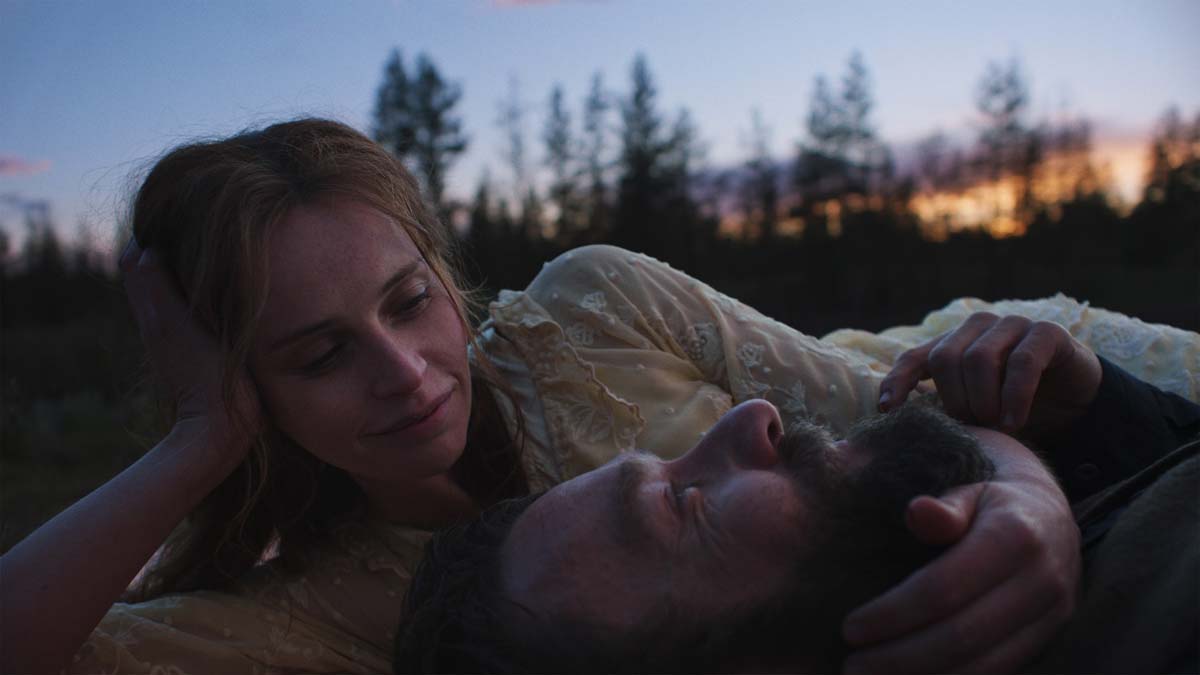
Those two scenes were scripted next to each other, but intercutting them wasn’t scripted. Actually, that whole sequence originally wasn’t in the beginning of the film. It was more in the middle.
The way the film was structured in the script was there was the section of the story that you see in the film from about the point that Robert witnesses the Chinese laborer getting tossed, through to the end.
Then there was sort of a backwards moving flashback structure of the origins of Kim and Gladys as a couple. Because that scene was essentially the beginning of their relationship. It was, I think, the turn into the third act or something like that, because of where it was originally and the way it was shot.
As beautiful as it is - laying with them next to the river - I had this instinct that I want to bring another element into this. I want to hear all the things that they’re saying, and I want to be in that space.
There’s something to mixing that sort of that laziness in the grass with what they gave us when they put the stones down, which is all this improv they did of him coming into the house and them laughing - we can kind of wind up mixing those things and suddenly it gave life to it all.
It was one of the first things that I cut. They shot all the stuff with Robert and Gladys early. It was one of the first things that Clint saw, and he said, “That’s the movie. That’s the language we want to be using.” Even when we ended up moving it all the way to the front of the movie, it stayed almost exactly as it was.
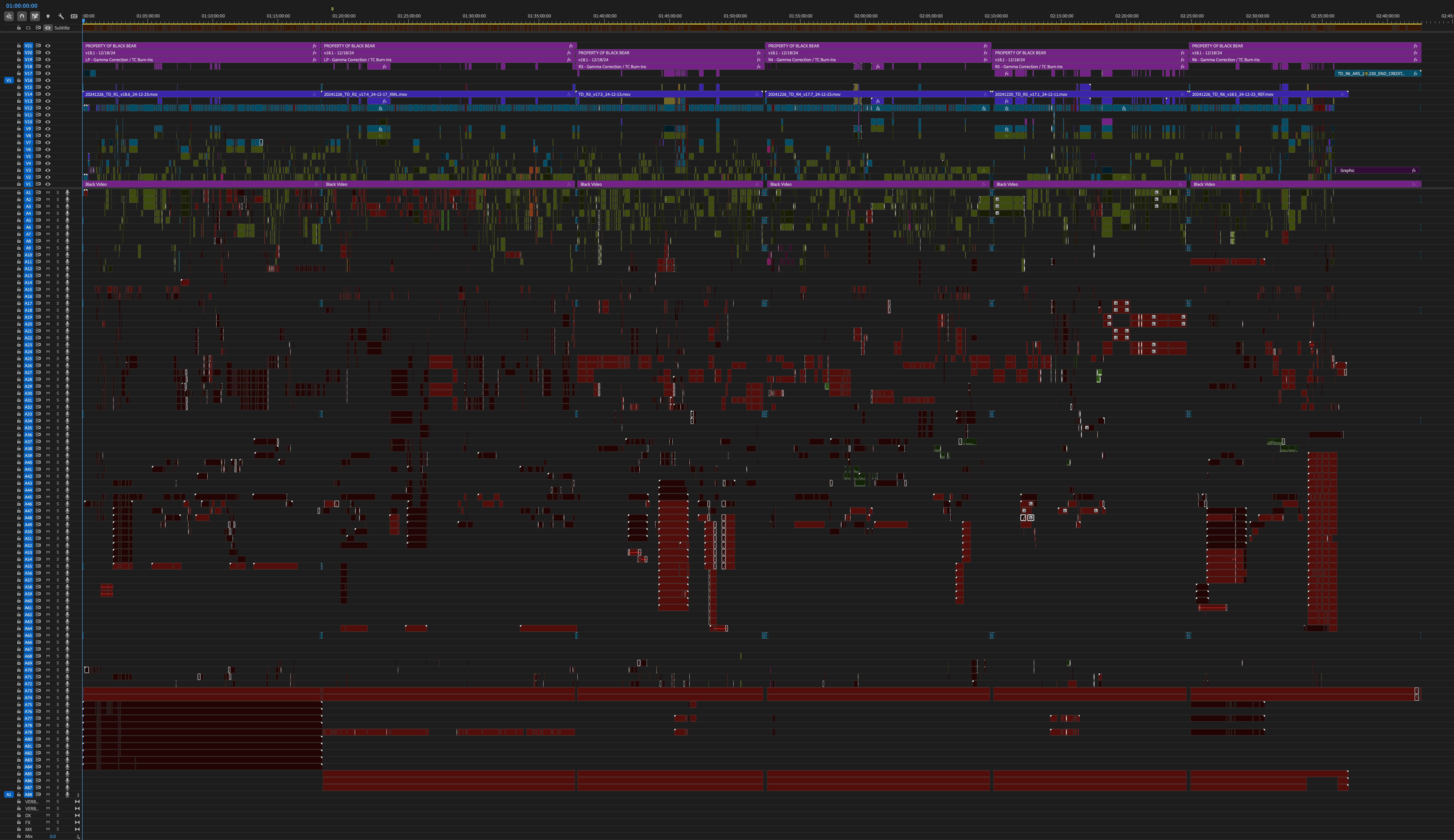
Premiere Pro timeline screenshot of Train Dreams
What were the discussions around moving the structure around and pulling Gladys earlier into the movie?
In the past, when I had worked with clients and when I worked with Greg on Sing Sing, the script certainly was very intentional. There’s a lot of care and time put into what the script is, but what we’ve always found when we get into the edit is that what you’ve shot changes so much.
It doesn’t play the same way that it reads on the page - just to state the obvious. But with this one I was surprised. Clint sort of put everything back where it was, then we slowly realized, “No, we want to move things around - move more stuff up.” We sort of split the difference.
Half of it still was in the back half of the movie. The reason they did that was because they wanted to keep Gladys alive throughout the whole film. If you completely lose her visually, it becomes very difficult to remember what is pushing Robert forward.
It is this kind of longing to be back with them or some sort of tricking himself into thinking they’re still coming back or whatever it is that is the engine of the back half of the movie.
Yes, there were a lot of discussions, and there was a lot of not wanting to let that go. Not wanting to let go completely, of being able to see and feel Gladys’ presence in the back half of the movie.
I think the balance we were able to strike was that once we found that sort of that dream language, we were able to really bring those little bits in while still being able to front-load the real meat of that relationship: the meeting at the church, the stones we were talking about - that kind of thing.
There was a lot of that back and forth and moving ahead and then moving it back. It wasn’t an easy, obvious thing.
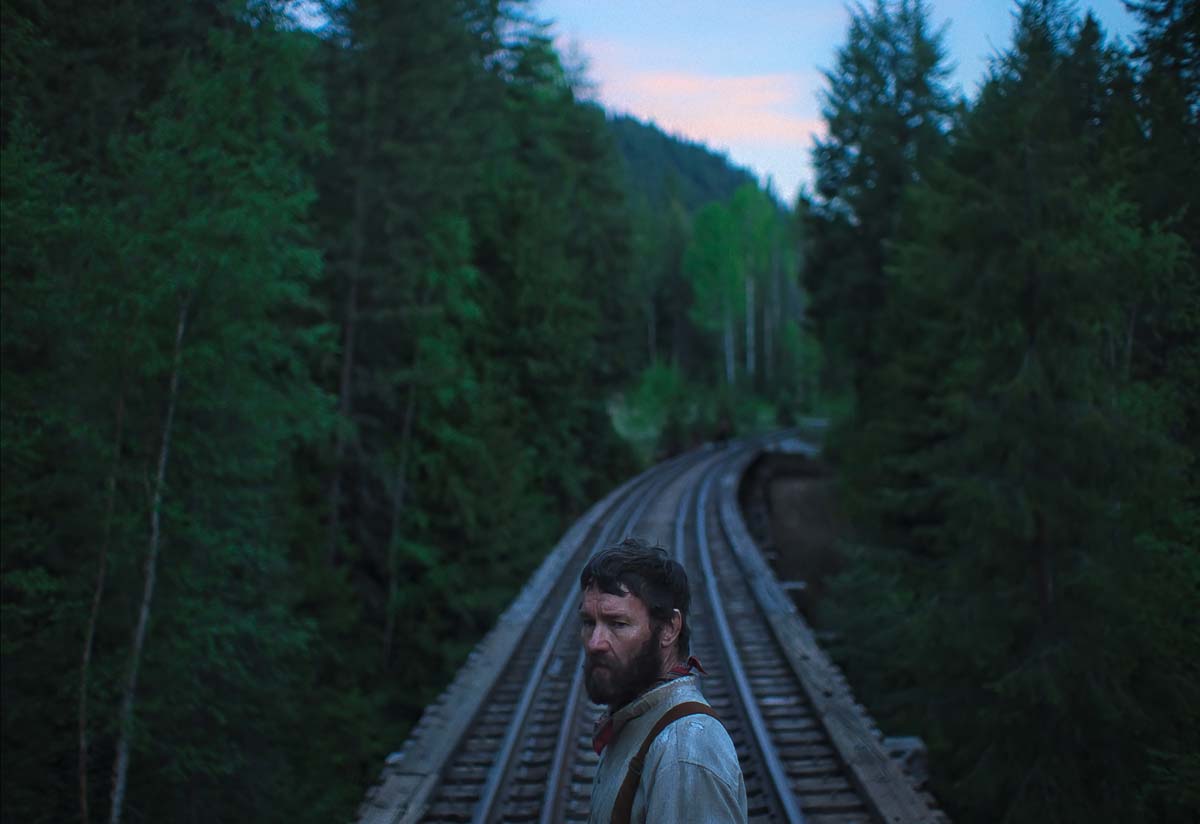
I’ve talked to a couple editors about this idea of “landscaping,” which is kind of: if you’re going to have a fast section, that you have slower sections around it. There’s an early nightmare montage where Robert wakes up from remembering this incident at the railroad bridge, and that’s edited fairly quickly, but around it are very sedate scenes. It’s a much slower pace. Can you talk about that kind of dynamism of slower things butted up against faster things?
Landscaping is a huge, huge thing. One of the most difficult parts about working on Train Dreams, which, by its nature, is a movie that really wants to take its time. From the get-go, though, the intention with those dream sequences was always to do that.
Those were designed to be that injection of energy and momentum that can carry you through those more lingering scenes. That first dream sequence was a real group effort.
The first stab at it was actually from my additional editor, Karl Stieg, who was also my assistant editor on this - a really talented editor.
He cut it sort of as it was scripted, but he still was able to find a bit of a language and find a way to use those beautiful shots of the train wheels that look so dreamy and almost artificial.
But originally, the Chinese laborer wasn’t in that dream sequence. It was just about the train barreling towards the childhood version of Robert. I think similarly to Gladys, we found that we needed to keep the Chinese laborer alive.
You see glimpses of him in the tent, and when Robert is sitting under the bridge that they just finished building, but we still were craving more of him throughout. It was also a way of sort of linking – foreshadowing - the idea that the Chinese laborer eventually somehow brings on the fire that upends Robert’s life and connecting it to the train, which is sort of this metaphor of the forward momentum of industrialization of the country and all of that modernization.
It was an incremental process. I think I brought the Chinese laborer and then Clint took the sequence for a moment. I can’t remember.
We passed it back and forth a lot. That was very formative, not only as a story thing. And as an energy injection in those delicate early moments of the film it was also sort of a stylistic hero sequence, if you will.
There’s a scene where an African-American guy is avenging his brother’s death at a lumber camp. I believe it’s played out in a wide oner. Did you have coverage and what was the thought process of playing a pretty powerful scene on a wide shot?
No, there was not additional coverage. There were a handful of scenes that they shot that way, primarily because it is such a low-budget movie.
They just didn’t have time with some of these really complicated scenes where there’s a lot of potential for cutaways, and when it’s like an action thing.
The other one that they shot that way, to be honest, was the Chinese laborer attack, that was originally a oner. It’s still somewhat of a oner.
Early versions, we left it as a oner, but that scene just wasn’t quite landing for people. It’s the beginning of the movie. It’s the inciting incident. It needs to be perfect. They had shot B-roll of the other railroad workers covered in mud and tar and stuff.
Those were originally designed to just be these sort of transitional, almost B-roll sort of portrait shots. I had the idea to use them as these guys sort of also witnessing this thing along with Robert. It had a way of putting you in Robert’s head, witnessing this horrible atrocity, and made the scene land for people.
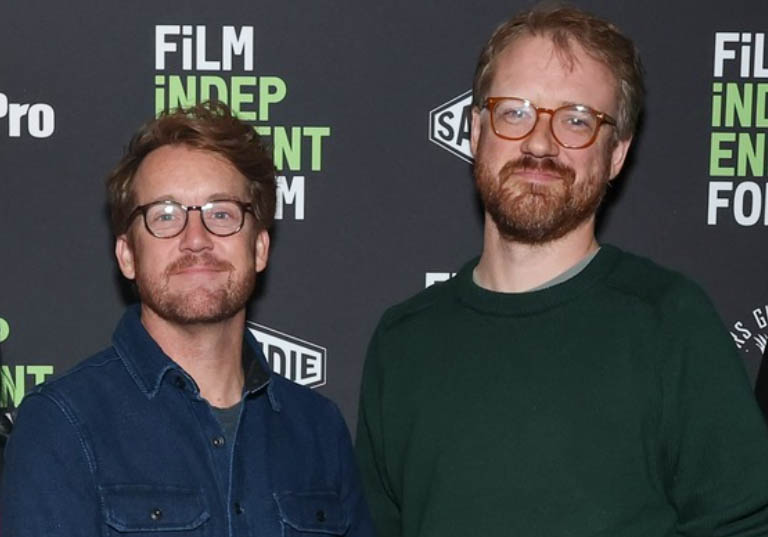
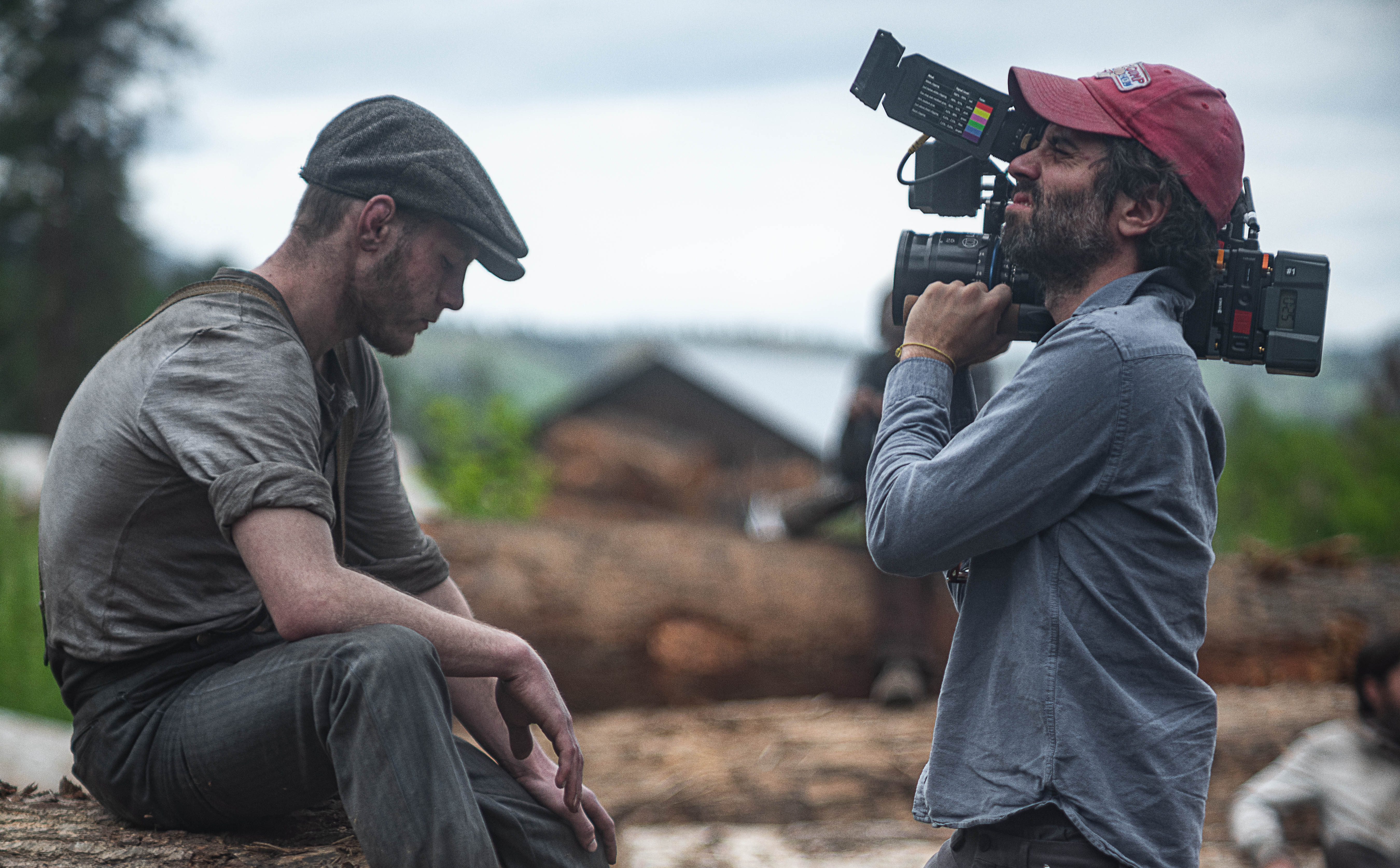
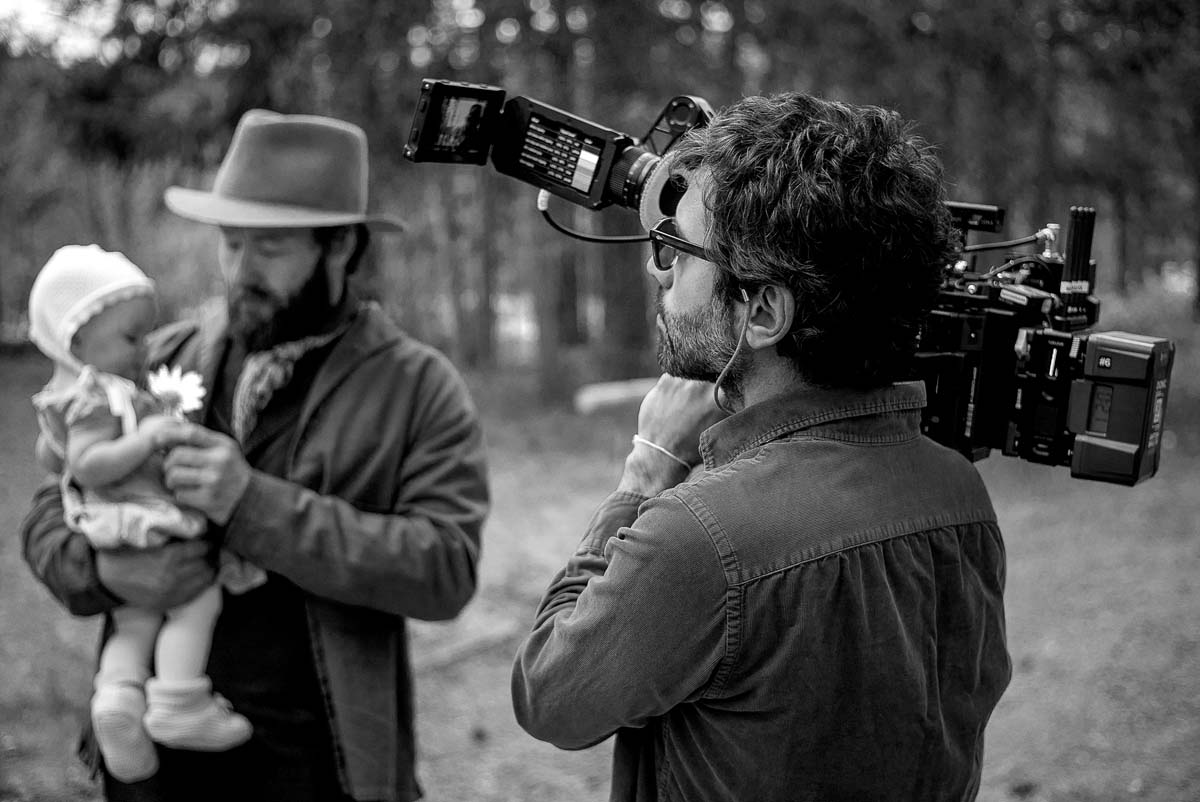
Director Clint Bentley and editor Parker Laramie
And there’s a whole back half - after the labor gets thrown off - They had originally shot this whole thing where everyone slowly goes back to work, and it was really haunting and weird, but we decided to cut out of it, right as the body hits the ground and cut to a shot of trees.
That was originally intended to be a transitional shot, but we thought of it as sort of the point-of-view of the laborer after he’d fallen. There were a couple of other scenes that were like that.
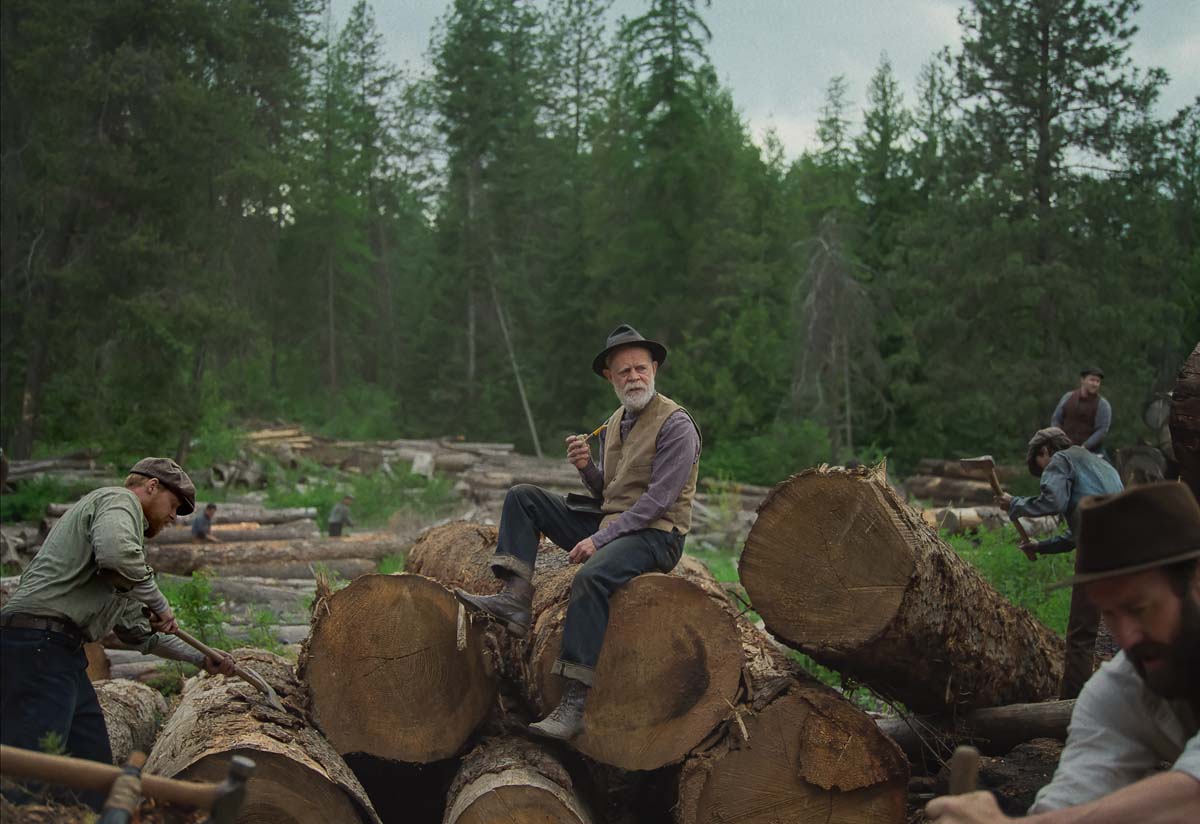
Then there were scenes where they did shoot additional coverage. There’s a very small scene towards the end as Robert is loading bags of something into a wagon - the wagon eventually into purchasing - and the other guy that he’s working with keels over and dies on the spot.
That scene originally had more coverage. It had the wide that we used, then it turned around and it was close on Robert. The guy who keels over, his parents come out and mourn his death. It was this whole other thing, and we just felt like the movie needed to keep moving.
Also, that wide shot fit the language that they had decided for all these other moments in the film. It is a person dying, but you kind of it needs to feel a little absurd in a slightly funny way.
I think the wide shot helped with that. People chuckle. If it was shot in a close-up, it felt to emotional. And it wasn’t like you’re supposed to feel for this person.
You’ve never met them. You’re not going to care about them for the rest of the movie, so it was just odd.
Yeah, that person doesn’t have a place in the story other than getting Robert to be able to buy the horse and the carriage.
Yeah. So the wide worked really well.
We started this conversation talking about the trench coat avenging his brother’s death. I actually think that scene works spectacularly in a wide, for a similar reason as the guy who dies loading the carriage.
In the book and in the movie, death is around every corner. They were minor characters. There are people you literally meet just so that you can then watch them die. I think keeping the camera at a distance helps with that.
Another intercutting scene that I had a question about was the introduction of William H. Macy’s character. He’s kind of the guy that blows stuff up in the movie. He’s trying - for the first time in the movie - to rig an explosion. It doesn’t go off, then we break away to some of his backstory, then we come back to him trying to complete this explosion. Was that scripted like that?
Yeah. Credit for that sequence goes entirely to Adolpho Veloso, the cinematographer. It was his idea to shoot all of those moments with the William H. Macy character in the zooms like that.
That was another sequence that sort of worked right out of the gate from the assembly, because it was so meticulously planned and calculated in the timing of the zooms. I just needed to stay out of the way.
The trick with sequences that are planned that meticulously is that once they’re planned, it’s hard to - like if you wanted to cut halfway through one of those zooms - you’d be in trouble.
I will admit, I think there’s 1 or 2 of them where we are cutting out sooner. We’re getting in and out at different points than what is really there, so it’s a really delicate thing of needing to look very planned and intentional where the ins and outs are, but we we did play with those a little bit.
You’ve talked a little bit about the structure changing and - like so many films as an audience member - the film seemed kind of inevitable. This is the way it was always planned to be, or it couldn’t be any other way.
Great. Glad to hear that.
But they’re built from little slices of life that seem like they could be in almost any order. It sounds like some of them did move.
To a certain extent, Robert’s aging in a very specific progression.
There are two sequences where he comes back home and both of them were shot and scripted in the same way - just these little snippets of moments - sort of in that Terrence Malick tradition - dipping in and out of scenes and it’s really being about the essence of an experience of a moment rather than pushing the story forward.
And that was tricky for us, because I think we were doing something that was much more structured. We were attempting to do something that was much more structured, and we wanted each thing to be pushing the story forward in very specific ways. So there was a lot of rearranging of those moments within those sequences.
I don’t think we ever traded moments or scenes between those two things, but what we did do a lot of was sort of take those moments and reappropriate them.
There are a handful of scenes and moments that we just dropped entirely, but others that we brought back as some of those dream moments that you see throughout the film.
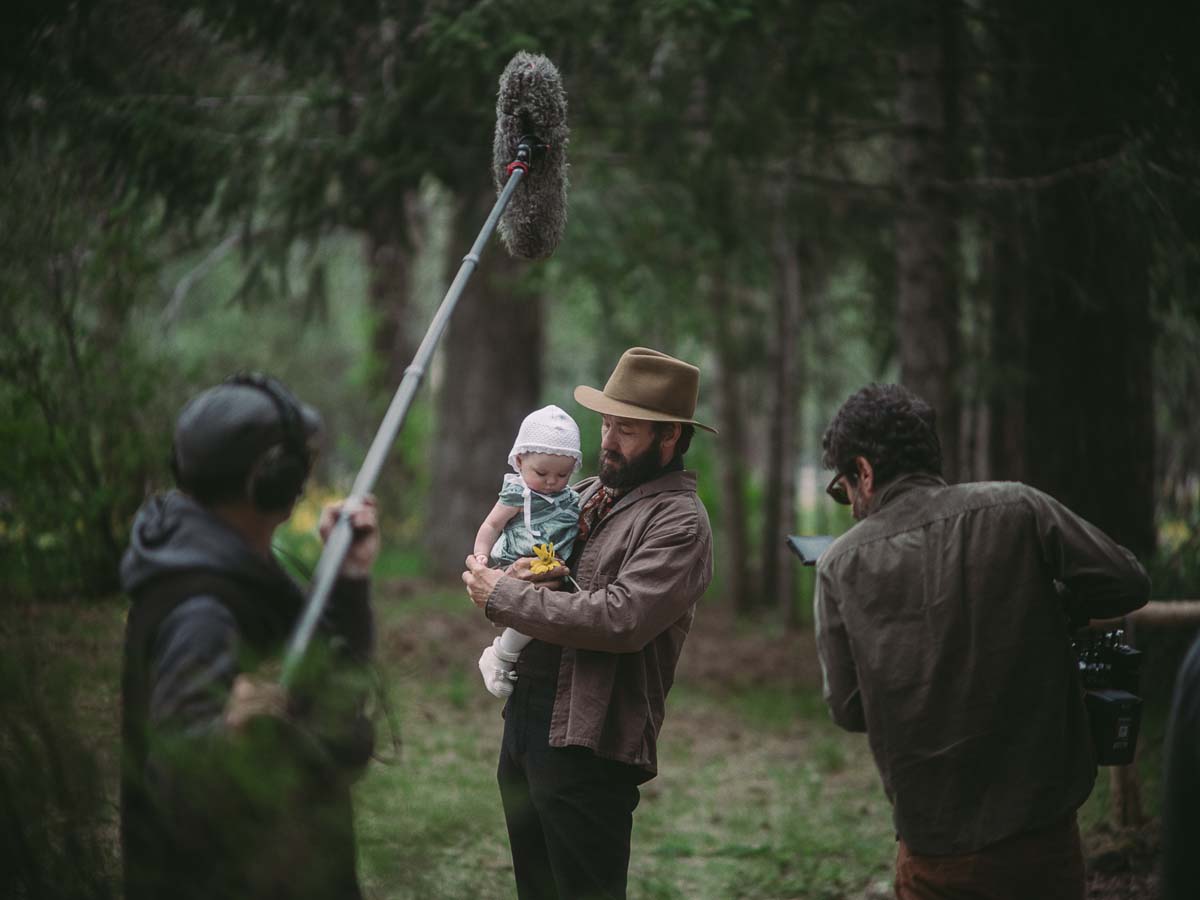
Like maybe the one with the child by the river when she throws something in the river? Was that one of those that was reappropriated?
Yes, definitely. This is really great! You’re like picking out a lot of the things that were things that we found in the edit that are some of my favorite serendipitous choices that we made.
I’m an editor, so I’m used to seeing when things like that happen where it could have come from a full scene that got dropped.
That little moment was definitely improvised. It was very much like, “Let’s just pick up the kid and go down to the river and see what happens. Give her something to play with.” Originally, it was supposed to be used chronologically, as she’s waving goodbye around the midpoint.
That was the last time he leaves his family. You don’t know that he’s never going to see them again, but that was how that was originally intended, and it was great. But that section of the movie was just moving too slowly, and we took it out. It was a real heartbreaker.
We were trying to find a way putting it where it was, because originally we really didn’t want the narrator in that sequence when he finds the girl outside his house, and we wanted to just experience that with him and make that connection more “felt” more than “told.”
He is convinced that this is his daughter, or it is his daughter, or whatever you find in that sequence. I don’t think it’s clear. So that was our attempt to do that.
I picked it because it was a goodbye. He wakes up and she’s gone and it ended up being such a touching thing that - even when we ended up caving and including the narration to make it clear - we kept that sequence because it operates on a purely poetic level.
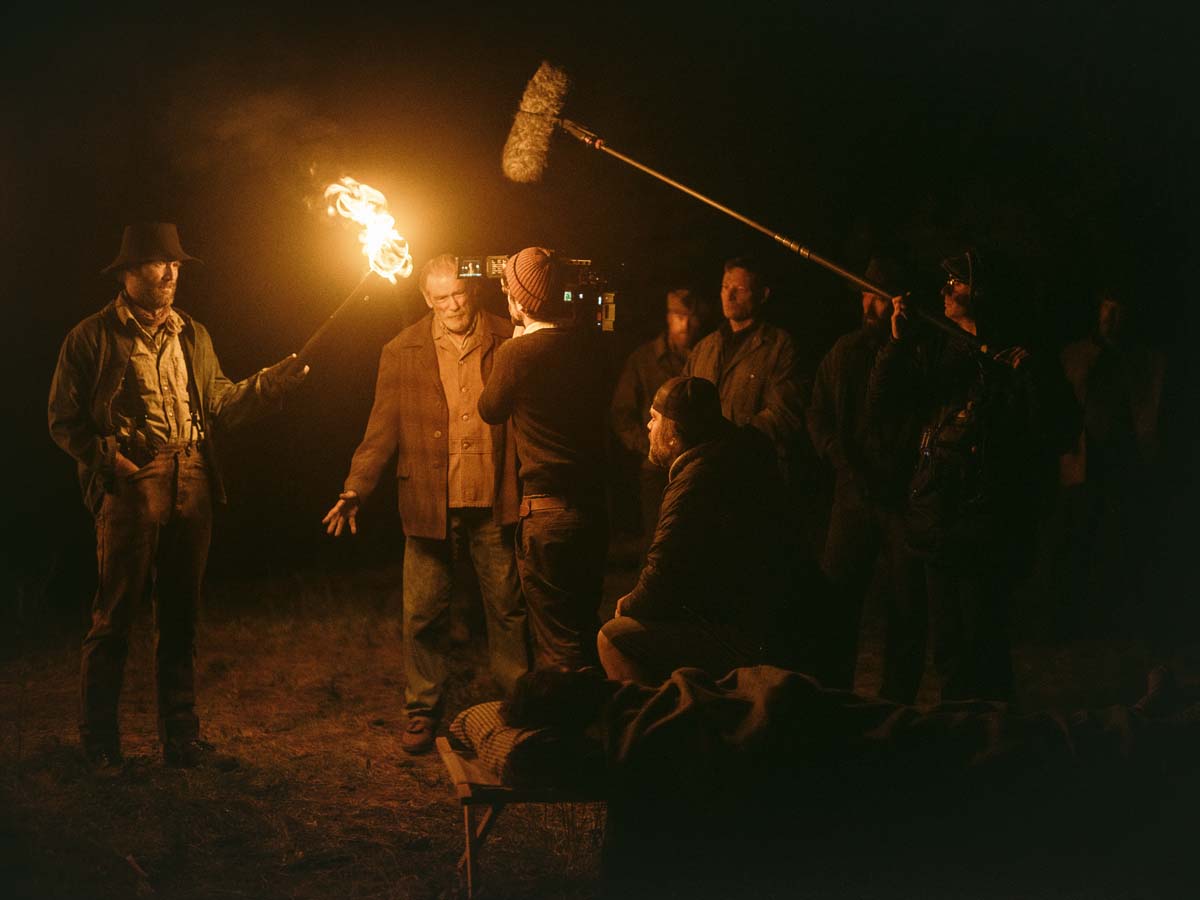
I wanted to talk about the use of a cut to black which is in the fire scene. The cabin’s burning, and we cut to black. What’s the value of a cut to black for you? Why use that instead of a cut to the trees?
Early on, when I first started as an editor, I worked really closely with a brilliant doc editor and director, Pedro Kos. I remember I kept trying to cut to black and he said, “You’ve got to be really careful with that. That’s not something you can just do.”
Part of it is because - for him - when you cut to black, whatever the image is right before you cut to black is imprinted on your eyes in a different way. It’s different than when you cut to trees - for example - you’re already on to the next thing as scripted.
It was a cut to black because originally he’s in the fire and then it cuts to black and he’s lying on the ground in the storeroom, which we ended up moving later after he’s already been to his acre and seen the ashes.
But originally that was the first moment right after the fire burnt out, so it was a cut to black, then natural light enters the room through the opening door to reveal him lying on the ground. It was beautiful because it really captured emotionally where he was at, and it was this elegant “cut to black/reveal of light.”
But we ended up switching it around because there was a part of it that was a bit confusing. So the cut to black was actually scripted. Then even after we moved stuff around, we realized we needed to cut to black just for that shock value.
I’ve been watching it with people, and when it cuts to black like that - particularly after they did the sound mix - people will audibly say, “Whoa!” because it’s a dramatic shift and it sort of comes out of nowhere.
There are a lot of people dying in the movie before that, but I don’t think you expect something that extreme to happen.
That’s a huge reversal, so it’s something that’s really impactful. You can’t just do it all the time. You really have to use it judiciously.
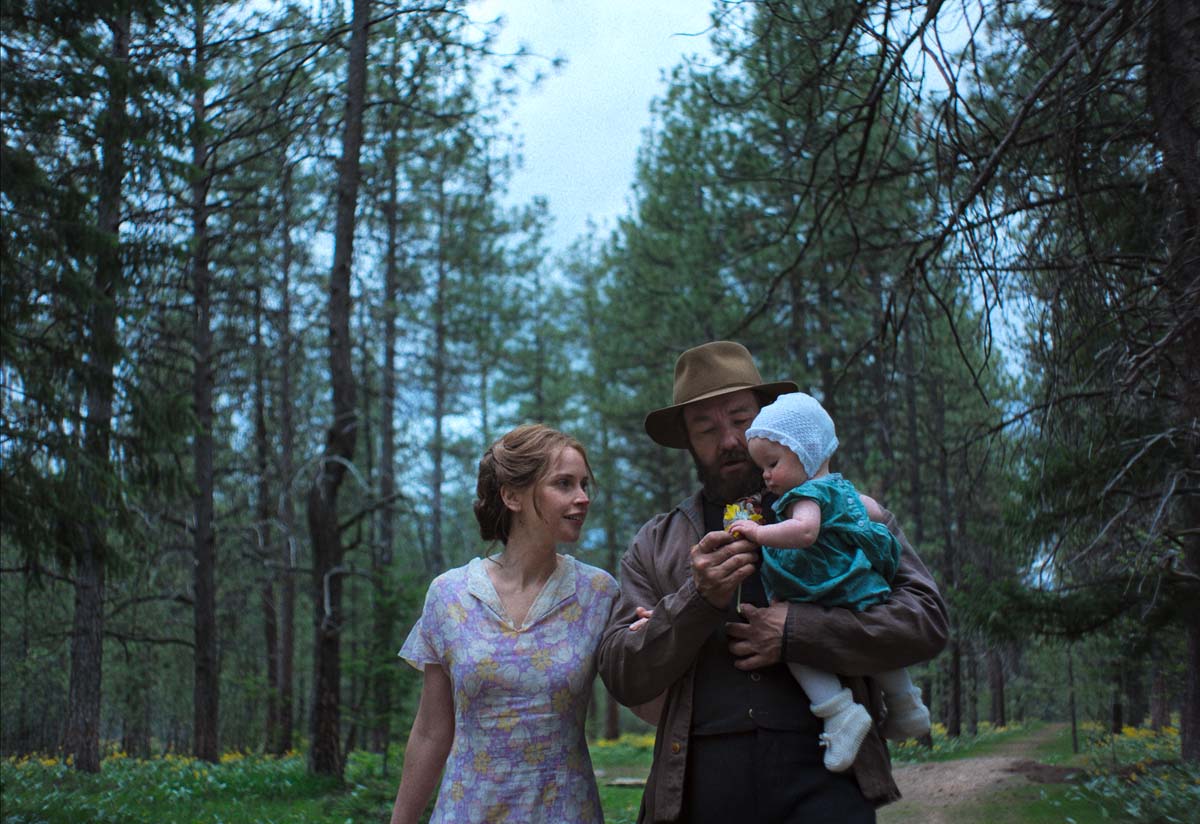
Walter Murch talked about cutting to black in a documentary he did and said that it’s like in poetry where the line breaks are. The line break in poetry is so that you remember that last word in the line. The word isn’t buried in the middle of the line. It’s at the end. And having that white space at the end of the word imprints that word on your brain, just like you’re saying that the last image is imprinted on your brain when you cut to black.
Yes, and I find that that’s very much true with dialogue scenes as well. When there’s a line in a dialog scene that is the big takeaway, but as scripted or as it was shot, there are a couple lines after it.
That’s when you know you need to get out of that scene, because that’s the line that you want to be imprinted on you, to carry you through the next section of the movie.
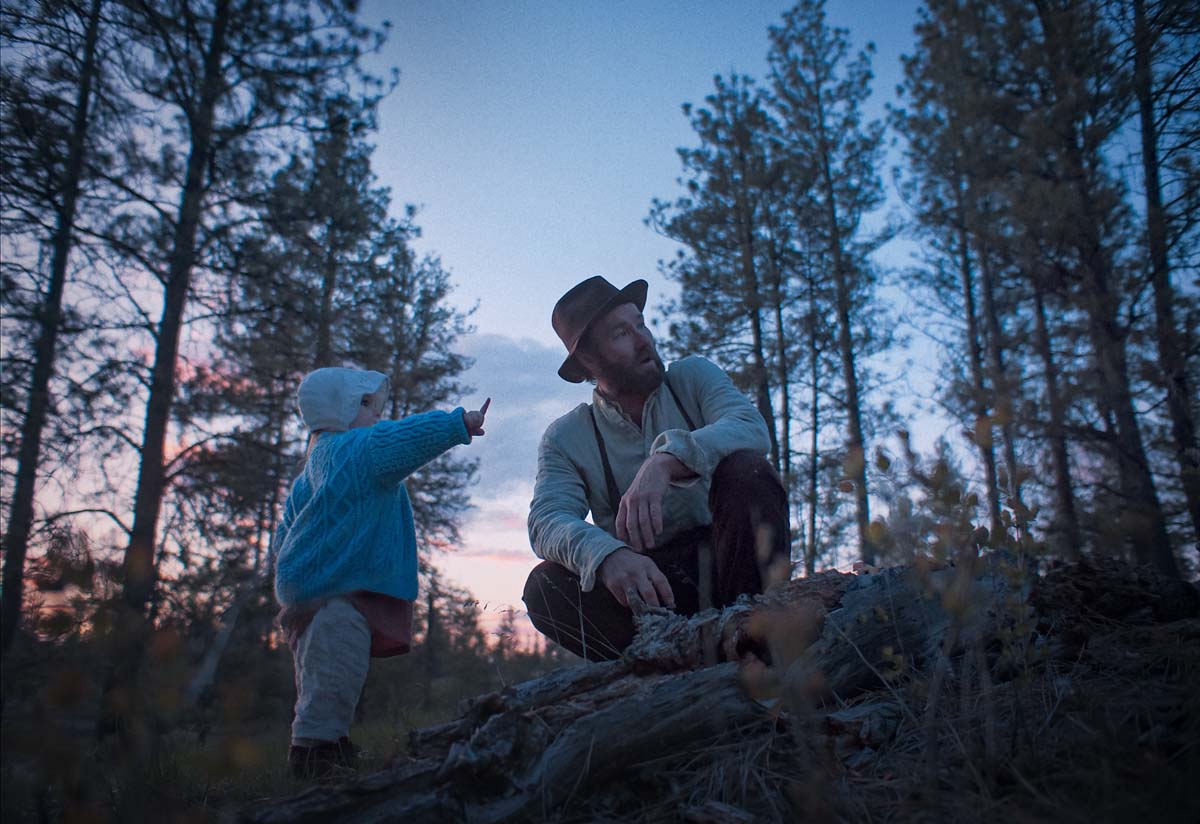
There is a moment in the movie where a Native American shoots a deer or a moose and you do a series of flashbacks to the family. Can you talk about that little series of flashbacks? Was that scripted?
That was not scripted that way. That was one of the trickiest scenes to cut. Definitely one of the last scenes that we cracked. That was another scene that was shot as a oner. The light is so sensitive in that scene. They only had the light that really made it work to do one or two takes.
Plus it’s such an intense place to ask Joel to go. You’re only going to get one, maybe two of those with him. There were just a lot of challenges in making that scene land. Ironically, when I saw the dailies for that scene, I wept openly when he wept. I was so struck by the raw footage.
As an editor, I think it’s more common that you sort of see the footage for what it is rather than how it feels on the day, but for me it was a weird exception where I experienced it as it was on set. Then as soon as I started to cut with it, I thought, “There’s some sort of emotion that is lost if you just let it play as a oner.”
We must have tried every possible thing. We had cutaways to Ignatius Jack that we tried to use a lot more of. I was very resistant - I think more so than Clint - to doing a flashback there. I think I was starting to feel like we were leaning on that trick a little bit too much.
I was happy to be proven wrong. I think what really opened it up was the main moment that those glimpses are built around.
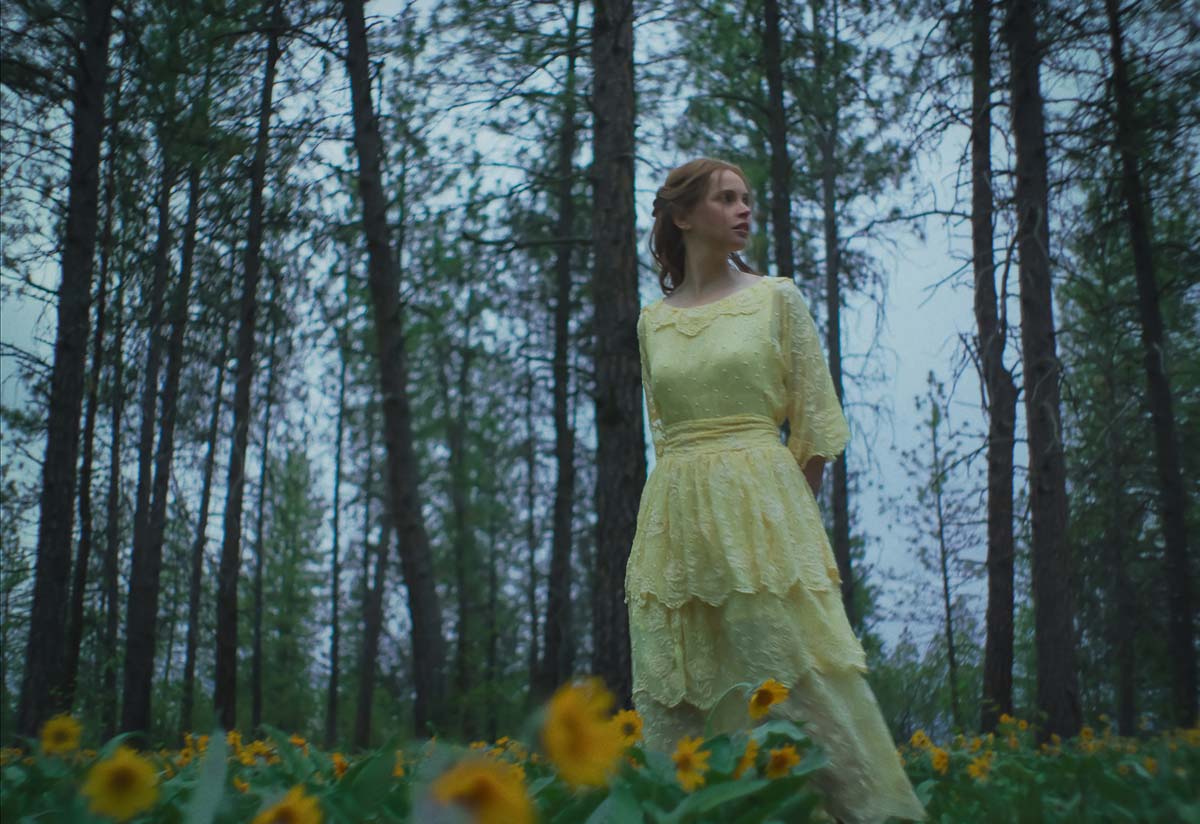
That beautiful scene of Gladys walking through the yellow flowers in that field, which - as Clint has talked about in some other interviews about the film - was totally serendipitous.
When they scouted that location, it was just a grassy clearing, then they showed up on the day and there were all these yellow flowers. And yellow was the color that Gladys was associated with from the early days of prep. It was just like, “Well, this is perfect!” That yellow flower scene was its own scene for the longest time.
There’s a whole long dialogue scene between the two of them, and it was one of my favorite scenes. I really felt like that scene - more than any other scene - really captured their chemistry, but for whatever reason, it didn’t work anywhere that we put it and it kept feeling like it was getting in the way, so eventually we cut it.
Then I come back to this cursed bane of my existence - that deer hunting deer scene. And I thought, “Oh, we can use the most beautiful visuals from that, because - even though I felt like it worked as a scene - it was too long and it didn’t really push the story forward at all. So we got to use the most beautiful parts, Gladys just traipsing through the flowers, then the kiss.
I love how many editors I’ve talked to are willing to state that something that they believed: like “We can’t do another flashback sequence after the moose killing!” Then realizing you’re wrong. That happens all the time.
Editors are very willing - or you have to be willing - to say, “I didn’t think it was going to work, but it did.” That might be the number one most important thing about being in an editor for me. And it’s hard. It’s really easy to forget. But you have to let things roll off your shoulders.
You really have to check your ego out at the door, and the director does too. It’s way harder for the director to do it. They are so much more invested in what they’ve shot.
But as the editor, you’re in a dark room all the time and really close to the material. Both the director and the editor really have to be ready and willing to admit you were totally wrong about something. And it’s really hard sometimes.
I’ve been there, everybody’s been there, and it’s a common thread in these conversations that I have with editors. I think most of us know that we’re not infallible, but you also know, “I’ve done this long enough that I can tell you that this flashback thing isn’t going to work.”
But then it does. What I found too, is that the opposite is true. Early on, with a film that I worked on, I had all these instincts, and I was really green, so I didn’t fight for them. I was very much saying, “Okay, we’ll go with what everyone else wants to do.”
But I noticed, by the time we got to the end, “I was right about that.” I remember feeling that way early on, which made me realize you don’t need to fight that hard for anything. The good ideas are going to trickle back up eventually.
That’s the mantra that I recite to myself whenever I feel like I need to be hanging on really tight to something: If I’m right, then eventually it’s going to find its way back into the movie in one form or another. I don’t have to hang on to it. Plus you got to let it go because you might be wrong.
I’ve told this story a couple of times on this podcast where the first movie ever cut, I knew that there was this whole beginning of a scene, that I knew shouldn’t be there. We can just start the scene much later. That’s the way I cut it, and the director freaked out: “Where’s the rest of my scene!?” I said, “We don’t need it.” And he said, “Let’s put it back in.” We put it back in, and sure enough, by the end of the movie, it was definitely gone.
So I was right. But the director needed to know that it needed to go. He couldn’t just rely on me saying it needed to go. He needed to experience for himself that it needed to go.
That is the Jedi mind trick aspect of being an editor.
I want you to talk about building that final montage with the biplane or how you started to develop that or how it evolved.
It had a lot of stages. The initial assembly of the film didn’t even have that sequence in it, because they had had problems with the airplane. It was in reshoots maybe halfway through the director’s cut. It was tricky because there was a lot of footage of the airplane.
To go back to your question about cutting documentaries, that really comes in handy when you’re on a scripted thing and stuff like that comes in, you’re undaunted. You just think, “If I can find a documentary out of all that footage, I can figure out this one plane sequence.”
But it was daunting. I think the first version we did, Clint was in the room with me as I was watching all the dailies, and he was talking about moments that he really loved, which is not the process we usually do. Usually he doesn’t even give notes to the script supervisor.
On his first film, they didn’t even have a script supervisor, it was so low budget. He shoots stuff, then he says, “Okay, Parker, do whatever you’re going to do, then I’ll come in and we’ll reconcile our ideas.”
With the airplane - because he was already in the edit - it was sort of the opposite. That was good, but it was also really difficult to do that first assembly of a scene with someone else in the room. It’s something that I have to do alone.
So I politely said, “Give me the rest of the day and I’ll figure this out.” He very graciously stepped away and checked in around like 5 or 6 to ask, “Do we have anything?” I was like in another dimension with it. I told him, “It’s going to work, but it doesn’t work yet, so I need more time.” He’s a lovely man, so he gave it to me.
I chose a piece of music and I made it all work, but it was just the plane sequence, basically the way that it was scripted - where there were 3 or 4 flashes of his life. There were these moments from his life and maybe two of them were flashbacks to scenes that are in other parts of the film.
Then two of the other moments were unique to the sequence - things that they shot specifically for that moment. I remember there was this little moment of him as a child being hugged by someone, presumably his mother. We had definitely found a structure for the scene, but it was not very close to where we ended up.
Music didn’t come in until about halfway through - as he starts to turn over and things start to change. The way it is now, the music sort of comes in right from the get-go. And obviously there are way more flashbacks.
We had tried a couple of stabs at pulling glimpses from his life, and everything we were doing was very off the cuff, very unstructured: following our nose. Just picking beautiful visuals - maybe visuals that had to get cut out for one reason or another that we wanted to bring back, but it wasn’t totally landing.
Then our producer, Teddy Schwarzman, came in to the edit and asked, “Can I work with Parker on this?” Clint had to catch a flight, but he was very gracious and just said, “I trust you. Go with God.” Teddy was the one that brought structure to it. There are sort of three sections.
You cut to flashbacks then you cut back to him in the plane, then there’s flashbacks, then plane, then flashbacks again. So three sections. The first one is all family.
The second one is sort of all the tertiary friends. Then the third one is saying goodbye to all of them. It’s all these shots of him looking out the window, waving goodbye, and suddenly that made it click.
Then Clint came in. What Clint is really, really great at - particularly on a film like this that is shot so uniquely framed by Adolfo - was he really got into details of which shots work well next to each other?
He’s a very talented editor in that way, so once he came in and tidied it up - once we had found the bones - he came in and actually made it sing. Then Bryce wrote that beautiful piece that’s at the end of it.
What were you cutting in? Premiere? Avid?
I cut this one in premiere because Clint also likes to cut and is more comfortable on Prmeiere.
It’s interesting. A lot of the people that I talked to that cut in Premiere, do it because the director likes to cut, and prefers Premiere. I’ve cut a couple of movies with directors in Premiere.
For me, it’s been 50/50 for a couple of years, both scripted and non-scripted. They’re very much on even footing.
Did you go up to Idaho with them to edit?
No, I actually edited it out of my own home here in LA for most of the edit. Clint was actually in Dallas, where he was based. He would come out for a week a couple of times during the edit.
What technology did you use to get the dailies from set?
It’s called Constellation. It’s a dailies processing platform. (postmachina.ai/about-constellation) It’s mostly used on lower budget films. A lot of it is automated. They had a computer in a hotel room on location, and they would plug the drive in. It runs a series of automated processes that copies over all the footage and makes the proxies.
Then because we were using Adobe Premiere, we were using software from LucidLink to share storage space, mostly between myself and the assistant editor.
This Constellation company was also on the drive, so they would upload the dailies directly to that, then it would come down on our side.
Parker, thank you so much for talking to me today. It was a really interesting conversation and, good luck, in awards season.
Thank you so much.
 March 26, 2026
Young Sherlock
Today on Art of the Cut, we speak with four of the editors on the buzzy new Amazon Prime series, Young Sherlock. With us are ...
Read more November 19, 2025
Wicked for Good
Chu and Kerstein last worked together - of course - on Wicked. And before that on tick, tick… BOOM. Before THAT they collaborated on In ...
Read more October 22, 2025
Tron Ares
Tyler’s been on Art of the Cut before numerous times including for his editing of The Batman, Creed III, and Mindhunter. He’s also been an ...
Read more