













The Running Man
A discussion of the value of editing on-set, the technology that kept the whole post machine whirring, and an early career as an on-line editor can help a picture editor.


Today we’re speaking with Oscar-nominated, Australian-born editor, Paul Machliss, ACE. We’ll be talking about his latest collaboration with director Edgar Wright on The Running Man.
Paul last chatted with Art of the Cut when he cut Wright’s Last Night in Soho, and before that for Wright’s Baby Driver for which he won a BAFTA, and was nominated for an ACE Eddie and an Oscar.
Paul was also nominated for an ACE Eddie for his work on Scott Pilgrim versus the World. He’s edited TV, including Fleabag. And dozens of musical specials, documentaries and concerts for the likes of Led Zeppelin and Diana Krall.
Paul, it’s lovely to have you on Art of the Cut. You and I have talked before for, Baby Driver and for Last Night in Soho. It’s so nice to be talking to you again.
Indeed. Thank you for inviting me back.
This is at least your third film or more with Edgar Wright.
So, Scott Pilgrim versus the World, Baby Driver, Last Night in Soho, and Running Man.
Tell me about how your collaborative relationship has evolved over the years.
I was working in London as an online editor, using a machine called Smoke, by Discrete Logic. A very exciting machine in its day. As an online editor your principal role is finishing other people’s productions, so you’re doing some grading.
You’re doing some keying - adding captions and effects and maybe removing boom shadows - and all that kind of stuff.
That’s basically how I started out.
Long gone are the days that you edited in a very low resolution then finished, but those were much more distinctive roles back then. If you worked full time for a facility, you got told which jobs you were doing. You were assigned projects.
I remember being told that someone was going to come in I’d be doing the online for the first series of their sitcom. On the chosen day, a very young chap called Edgar Wright - who must have been 24 or 25 at the time, back in ‘98 or ‘99 - came in and we started working on the first series of Spaced for Channel 4.
Chris Dickens cut that first series, so I did a lot of the visual side of it: making sure all of the transitions and the wipes worked and things like that.
Even then we realized we shared a feeling of… rather than working to the time sheet – which was 10 a.m. to 6 p.m. – we felt, “It’s going to take as long as it takes to get it done.” Especially once I saw what the series was like.
It was really worth spending time on and getting it right. So we worked a few weeks on that. Everyone said their goodbyes. Then I moved on to another project thinking, “Well, that was a lot of fun. I don’t know if I’ll ever see that going again, but that was fun while it lasted.”
Over the next kind of year or so, I was losing interest in online editing, and decided around the middle of 2000 that I was going to give up a nice, well-paid, steady, full time job to become a picture editor - freelance with almost no clients to my name.
I’d just finished a documentary about David Beckham, and just as that was coming to an end, I get a call from Edgar’s line producer who said Chris Dickens wasn’t able to complete the editing of the second series of Spaced and Edgar was wondering if I might take over. It only took me about half a second to make up my mind on that.
I said, “When would you like me to start?” They said, “Tomorrow.” So I went straight in. At that point I was still getting my chops together. I remember thinking, “I won’t do anything too crazy. I’ll cut a little bit how Chris Dickens cut the first series, because I don’t want to do anything that’ll kind of put him off.
I want him to feel comfortable. Subsequently I realized that one reason why Edgar was taking me on board was not because I had years and years of experience - because, of course, there were editors with far longer CVs - but it because we got on so well together and he was willing to take the time for me to learn on the job, which I realize now was a very important thing that he did.
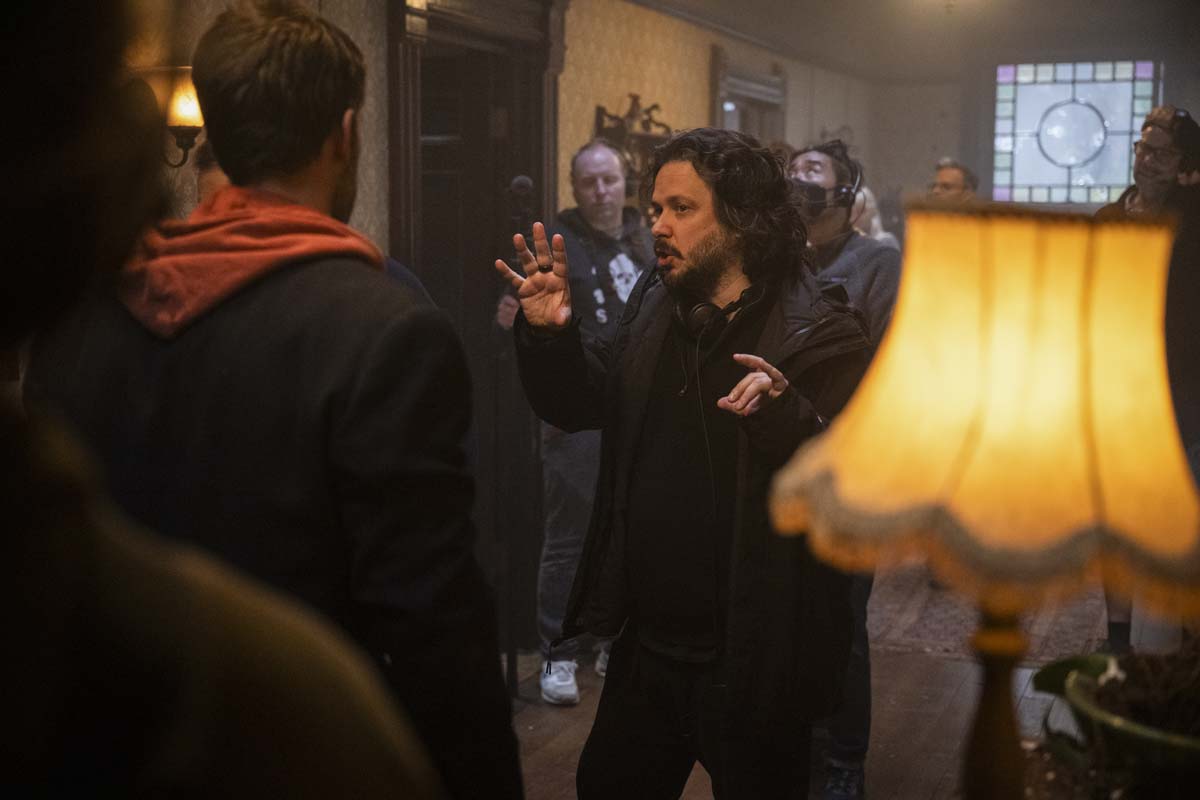
That was another good lesson that I learned: that a lot of this business is about who you work with. I’ve been fortunate over the years to work with some pretty amazing people - directors, producers and writers. Obviously, with Edgar and I, something clicked.
Chris Dickens then went off and cut Shawn of the Dead and Hot Fuzz, which was brilliant for me because I spent the best part of a decade working on some really good comedies and dramas and documentaries and music things, and really got act together.
Then around the end of 2008 I got the call from Edgar wondering if I might do Scott Pilgrim. I have to thank him and the producers for giving me a kick up to the next rung of the ladder as I started getting into actual picture cutting, then getting into feature films and getting into the slightly more complicated stuff that Edgar is has done.
All that knowledge proved completely invaluable, especially when it graduated to being on set with Edgar, then working and liaising directly with the DoPs and the VFX supervisors and all of that. We could all really work as one team on Baby Driver.
It was really a symbiotic relationship. The cut was informing the shoot, and the shoot was informing the cut. They were working side by side at the moment of creation of the shot.
By that stage, it was good to be armed with all that pre-knowledge of on-line. The technology obviously changed but the mindset and the approach was still very much in evidence.
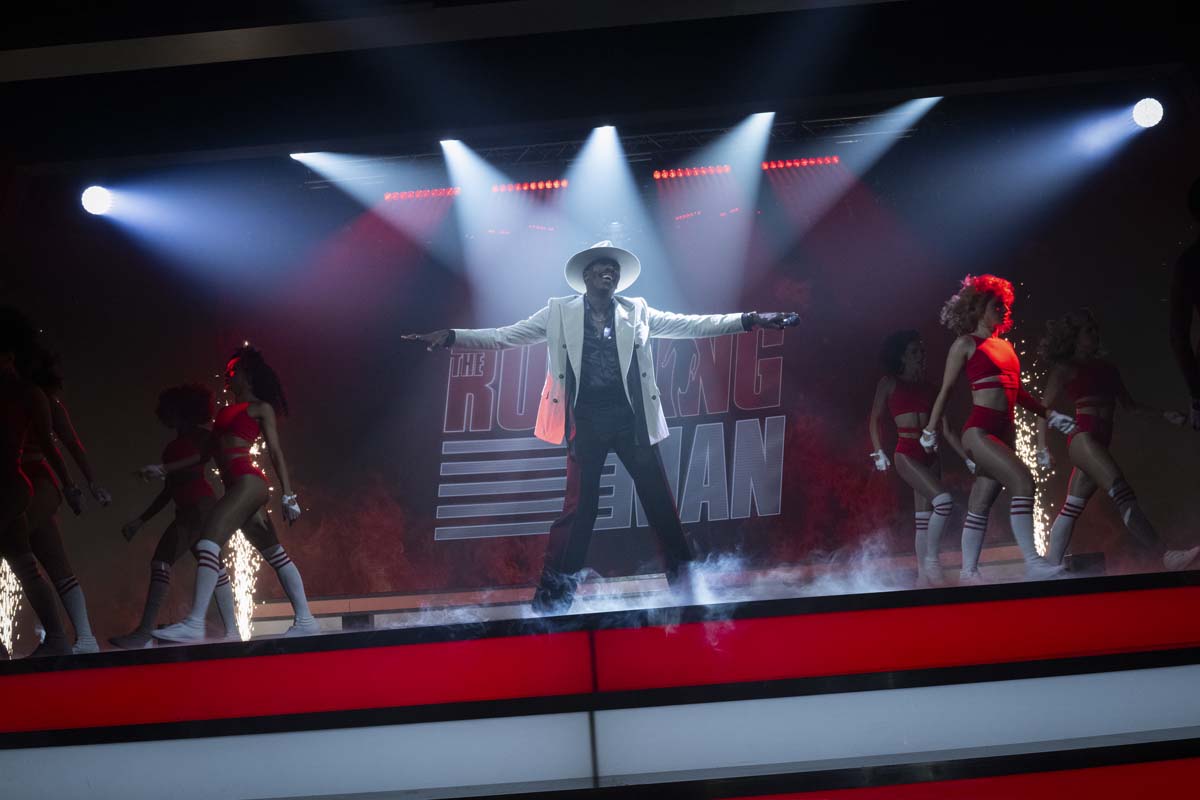
Obviously, Running Man is a based on a book by Stephen King and it’s had a previous movie version. Did you read the book or watch the old movie?
I watched the old movie probably back in the day. I reacquainted myself with the book prior to filming, particularly as I think the big difference is that we didn’t do a remake of the 1987 Running Man.
That’s the one distinction which kind of needs to be cleared up from the outset, because, to be fair, this is the first proper adaptation of Stephen King’s book. The ‘87 Running Man varies wildly. Once the game starts, it’s a completely different set up.
Whereas I think Edgar and Michael Bacall decided that, as they’re adapting the book, he is now free to run throughout the United States in order to evade capture, so the scope immediately has become much bigger, more encompassing with the stakes a lot higher because anyone anywhere can find you and hunt you.
I was excited to be working on that version, especially when I started seeing the animatic ideas that Edgar was thinking of. I knew it would have a big scale brought to the big screen. So that was an exciting thing.
Did you use any of the animatics or was there previs? And did you cut with any of that stuff as the movie evolved?
I actually came in pretty late to the shoot, but - like Baby Driver - there was an animatic made of the entire script. We didn’t do a table read, as we did for Baby Driver.
Much of the dialog was text on screen, and I have to actually credit my first assistant, Elisha McCormick, who actually started about three months before me - as I was on another feature at the time.
She almost single-handedly put it together with the help of other members of the team. I was a relative newbie to seeing the animatic.
My only actual contribution at the start was that in April of ’24, Iput together an animatic of the title sequence that used the Underdog track when Ben’s walking from the slum side to the network building.
We had such an amazing team who actually put something eminently watchable.
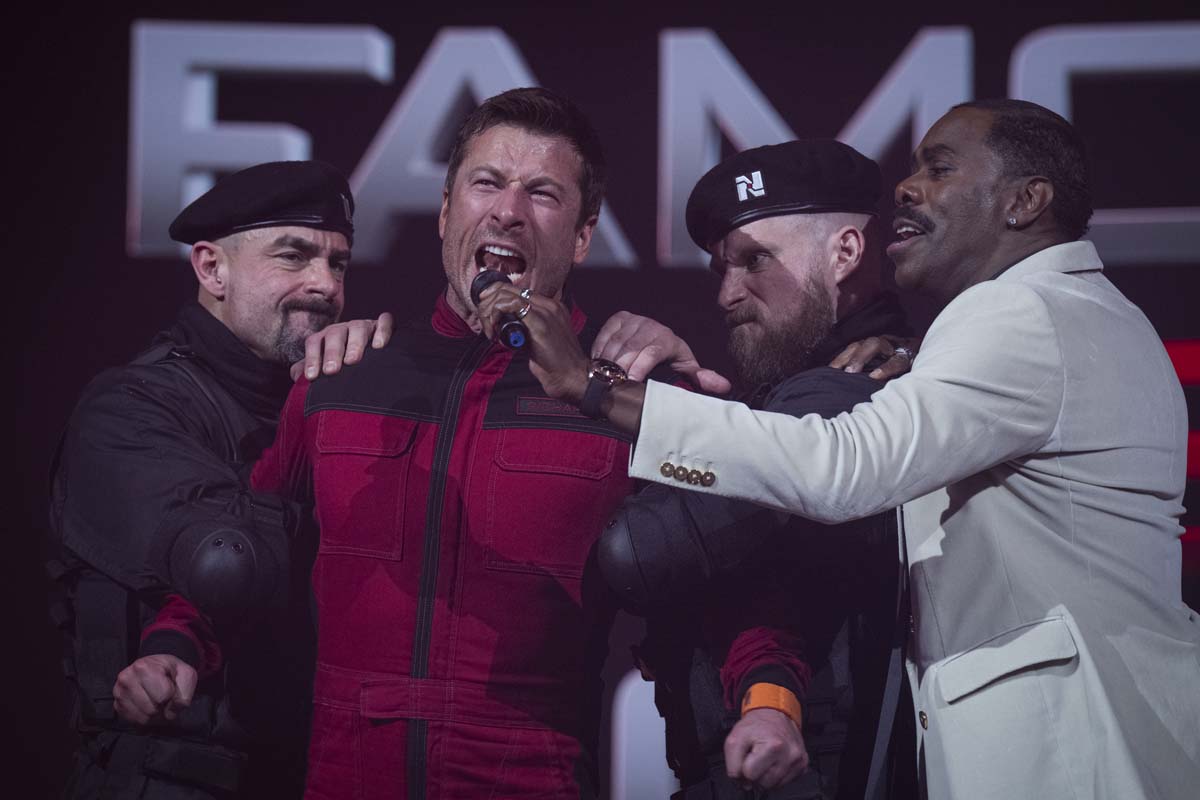
Did you - like Baby Driver - edit on set?
Absolutely. The big request from Paramount was that if we started shooting at the end of October 2024 that we’d be able to deliver for release in the middle of November 2025. 12 months from absolute start to absolute finish.
That was 10 or 11 weeks less than we had on Baby Driver, so the pressure was on from the beginning. The requirement to be on set was - if you’ll pardon the expression - paramount, because, we had to do a lot of things ahead of time to get a lot of graphics ready.
We were turning over shots within the first or second week of filming. We had to turn some sequences over to ILM that early because the schedule was that tight.
We had a couple of other chaps come on board because there was just no way - given the scale of what was required for this - especially the world within the world, all the other TV shows like the “Speed the Wheel” game show, the Apostle video, all the little commercials and advertisements and the reality show.
All that stuff that was taking place within the universe of their world. I had my hands full just trying to keep up with the shoot every day and trying to keep on top of the stuff as it was being shot. We had a chap called David Webb who had worked with Edgar before as an editor doing his TV commercials.
My ex first assistant, Jerry Ramsbottom - who was my first assistant on Baby Driver and Last Night in Soho - who has now failed upwards and become a really good editor in his own right.
He was amazing. He came on board as an additional editor during the directors cut period and took care of some of the commercials and all the Apostle stuff, which really needed a full time editor on their own.
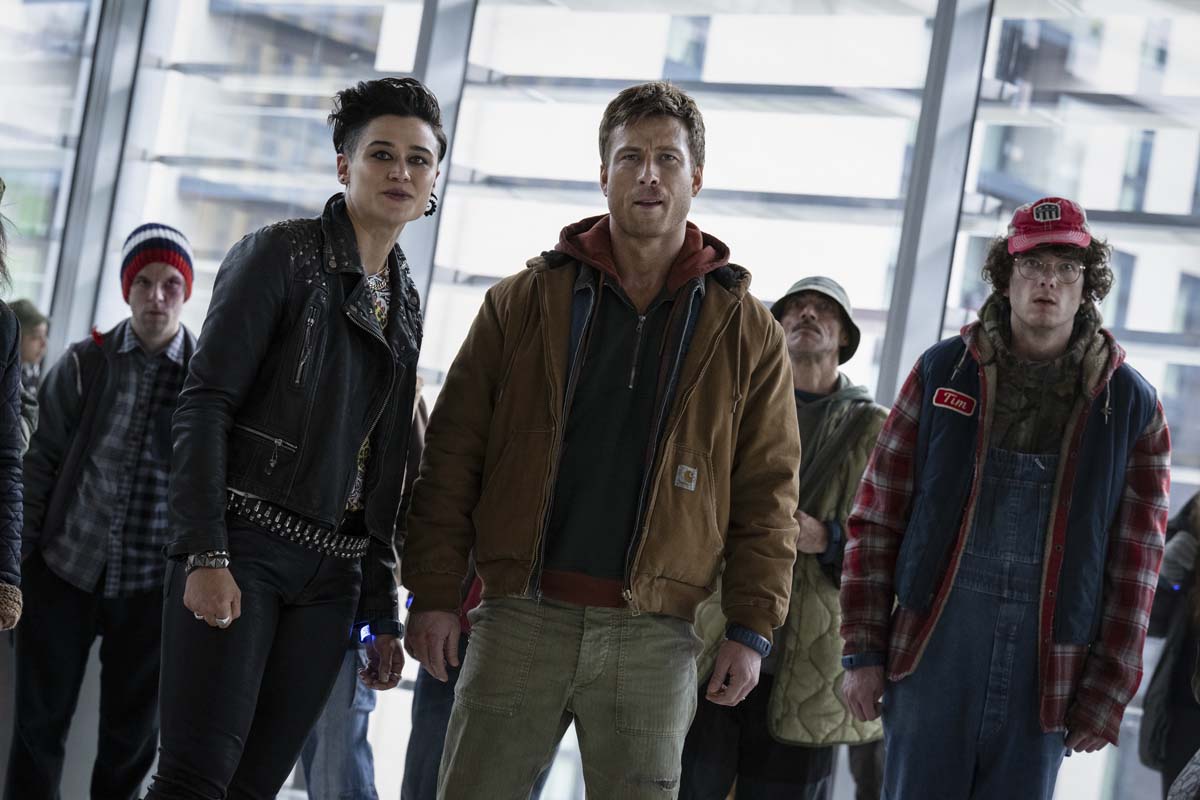
I couldn’t have done it without those guys, and of course, PJ Harling, who was another editor who basically did my job for second unit because second unit was running almost as every day concurrently to main unit. We worked together on that.
One big advantage was that we used a SalonSync box. I used to edit on set on something like a little LaCie Rugged. We had about 3 or 4 of those in circulation. On wrap it would go back to editorial. They’d copy the material off. I’d have a clean drive ready for the following day, and this would kind of cycle.
Instead, I suggested we use what I’d used on the film that I worked on just prior to Running Man. It was basically a NAS effectively, which was connected to the Avid, which was on the edit trolley. Basically it meant that when I was at the soundstage at Warner Brothers Studios at Leavesden, I was connected via Ethernet to editorial.
So it meant that as soon as I had done an edit, or generated some media, it was available in editorial. The premise of the system is as soon as you do something, it uploads that to the NEXIS server, which then will download it to whichever editors are part of that system.
It meant that the editorial department immediately had everything that I had done, not only on the previous day, but actually as I was doing it. So it meant particularly the following day when the actual media came in, they already had my edits.
Likewise, it meant that if new previews came in - or new storyboards or anything that was an update from any other department - as soon as Elisha had put it on her system, it was immediately available on my system.
She would text me that something new arrived: “There’s a new bin at the top of the project, wait a couple of minutes.” And there it was with the media, with the sequences and the clips ready for me to integrate. That was really useful, especially when we were up in Scotland and in Bulgaria, and PJ and I were on two separate units.
Anything that he did I could immediately access and vice versa. The other thing about it being the huge time saver was to have that real time ability to share the edit as it was being made with every department that was using an Avid.
In that respect, it was a godsend because VFX could see how sequences were going and could get an understanding what Edgar was after.
In terms of turning over sequences and shots, Edgar and I would tend to either come in an hour before call time or an hour after wrap, or he’d sit with me on location and say, “This one, this one, this one.”
I could build a little sequence and say to Elisha, “These are the shots that are going over. Could you tag them and bag them?” without having to rush back to set or explain things.
I could just put things together and say, “These.” That was amazing to have that speed and functionality and especially to be able to tie first unit and second unit. Second unit could see exactly what we were doing on first unit.
Especially with Edgar not being able to be in two places at once, it meant that he could say, “What’s going on over on second?”
And I could call up PJ’s sequences and show Edgar to see if there was anything that was needed, because obviously there was a lot of tag-teaming going on.
Second unit would invariably take over from main. Once we had finished, second unit would come in for inserts, some cutaways, and various things. It basically meant that then PJ would actually have my edit ready to go.
I would sometimes have to leave gaps or keep the storyboards in on the shots that I knew they were going to shoot. Then, at the end of the day, I could call up PJ’s and say, “They’ve done this. They’ve done that. They’ve replaced the boards. These are the shots they’ve done.
This is what I’m going to do tomorrow.” That immediate feedback was brilliant because it meant that even Edgar and I could chime in and say, “PJ, any other takes of that? Could you try that one or could you try that one?” Literally, within an hour or two of them shooting it, you could be cycling through alternatives.
I’ve heard of a couple people using that Salon system. Salon is an editorial company in London?
That’s right. They provide bespoke systems. They’ve written the software that runs all these units and allows you to basically - as long as you have access to the outside world via internet, whether it’s a cable port on the wall on one of the soundstages or if you’re on location – sync post.
Wherever a unit travels, Wi-Fi travels with them, because now that’s the main system for distribution on things like Q Take (qtakehd.com). Q take is basically one of the video-assist systems run by the video system operator.
Rather than just being a resource for the director, it now becomes something that anyone who has the Q Take app running on their iPad or laptop or iPhone if they want to check reference for continuity, costume, makeup, that kind of thing. It’s an incredibly useful tool and something that people are using more and more. It’s become a staple in filmmaking.
Is that what you were cutting with while you were on set?
Yeah. I was basically tie-lined to the Mac that was running the Q Take from Liam Beard, who was our main video assist. I created a network with him.
The great thing about Q Take is it can output multiple formats at once, so once he stopped recording, it saves a ProRes, but then will quickly render out an H264, so that allows me to use his media as a resource in my edit. I don’t even have to import the clip, convert it, transcode it, then use it.
If I need to see something in a hurry, I can just grab his clips from his folder, and populate the timeline with his edits. I color them differently so I can look at the timeline and see the media that doesn’t belong to me. Then, as a background task between setups, I convert those to my media, then relink the timeline.
Also, he would take a BNC of the SDI output from my Avid and feed it into his little vision mixer that he has as part of his setup in video village.
I would put the Avid on a loop - playing a sequence over and over of a relevant section – and I could run to video village on set - where Edgar was - and I could ask to punch up the Avid, and without Edgar having to come to me, he could just sit there and watch what I was doing. It was a fantastic time-saver.
The footage that came from the Q take had to get overcut, correct? There was no real meatdata link to the Q Take Avid media?
No. That’s correct. You manually have to overcut. However, I will say now with all the metadata available - we were shooting on Alexa 35 - you have all the time codes, you have file names, clip media - so many more advantages in order to expedite that overcutting process than you had back in the day, if we were shooting on on 35mm. Literally all you had was the audio timecode from the clip.
And if you shot something MOS, then you’d have no reference because there was just potentially no timecode. I always used to ask them to use digi-slates, so you’d have some kind of burnin at the start or tail of the clip for the editorial team to match to.
But it certainly made their job a lot easier when it came to overcutting this time ‘round. My media was on V1, so they would start populating on V2 so they could very easily match and jump between the two.
Did Stephen King actually have any creative input on the movie outside of writing the original material?
I think [writer] Michael [Bacall] and Edgar sent him the screenplay when it was done. I think he put a lot of faith in Michael and Edgar, since they were going to be very true to the novel.
I think - having read the screenplay - Stephen gave it his blessing, then really left us alone almost until the very end when we were getting to a locked edit. When we achieved picture lock we sent him a cut.
I believe the last time that Edgar was in America we sent the cut to Stephen, then Edgar and Stephen, met up. I believe that Stephen was very fulsome in his praise.
The movie’s a nice, tight 133 minutes. Did you have to lose any full scenes? How long was the editor’s cut?
I think my assemble came to almost exactly 180 minutes. I think three hours and five seconds. Obviously, much more stuff was shot. There were some scenes that - in the course of editing - you’re trimming down, you’re pruning. You’re trying to describe this man’s journey.
You have to show the premise, show the background, show the set up, have him get into the game show, have the game show start, have him go through all the experiences that he hass throughout his 18 days. Ultimately, we get to a satisfying conclusion within roughly a two hour period. We weren’t out to make a three hour film.
I remember Edgar saying specifically that the plan was to get to two hours, including credits. The running time is two hours, 13 minutes with credits, so without credits - which is always how you judge it when you’re cutting it – it’s probably 2 hours, 7 or 8 minutes, so it was a little longer than planned, but we really got to the point where we couldn’t take it down too much further than we already had.
But to get all that stuff in - to try and maintain the pace and to get all the story points across - that kept us very busy.
And don’t forget, I said we’d lost about ten weeks where we would normally have to edit, which means we only did two preview screenings instead of three, although we did manage to do some additional photography in August to pick some things up and change a few things.
It was an incredible effort from when we started editing in April to when we picture-locked towards the end of September. All of October was the grade.
It was a huge effort. Between August 28th and October 7th we may have only had one day or two days off throughout the entire time to make the schedule and get it to a point where Edgar was happy.
Throughout the film, graphics are telling you what day it is - that he’s in the middle of this game. Did you have to lose any full days to get to that 45 minutes out? How did you get 45 minutes?
There were longer set ups. Basically, there was more going on, for example, in the night before the game was due to start. You cut things as you go. We would think, “Well, that exchange could go” and certainly as you’re on the final stretch, you think “Maybe we could do without that shot.” Or “Maybe that line could go.” Can we still tell the story if we take two more shots out of that sequence?
At the end we were working to that level of intricacy. You have to try and keep tabs and make sure your audience is following the day to day routine of Ben’s run.
That’s where our extraordinary script supervisor, Lizzie Pritchard, came up with a crib sheet that explained every day of the Running Man game. It outlined: this would all take place on day one, this would be on day three. If it’s this location, it’s day five.
It’s day seven, so that means he’s earned this much money and this is the bonus that he would have earned by the end of the first week.
That was a godsend because you’re trying to make each scene work on its own merits. But of course, you have to remember that you are structuring a contiguous narrative in terms of the development of his running, so when it came down to emulating the little device he has on his wrist - which shows kind of the days, the hours left in that day, the amount won - that was fantastic because it allowed us to say, “This scene is three days later.
Certainly the first couple of days we were more true to what happened on a day-by-day basis. And as the film gets on, we kind of realize that we’ve gone from day five to day seven to day ten, because you obviously can’t cover all 30 days, otherwise you’re making a mini series.
Part of that was it was was how to make sure that clock is always ticking, but ticking at the right time and in the right direction.
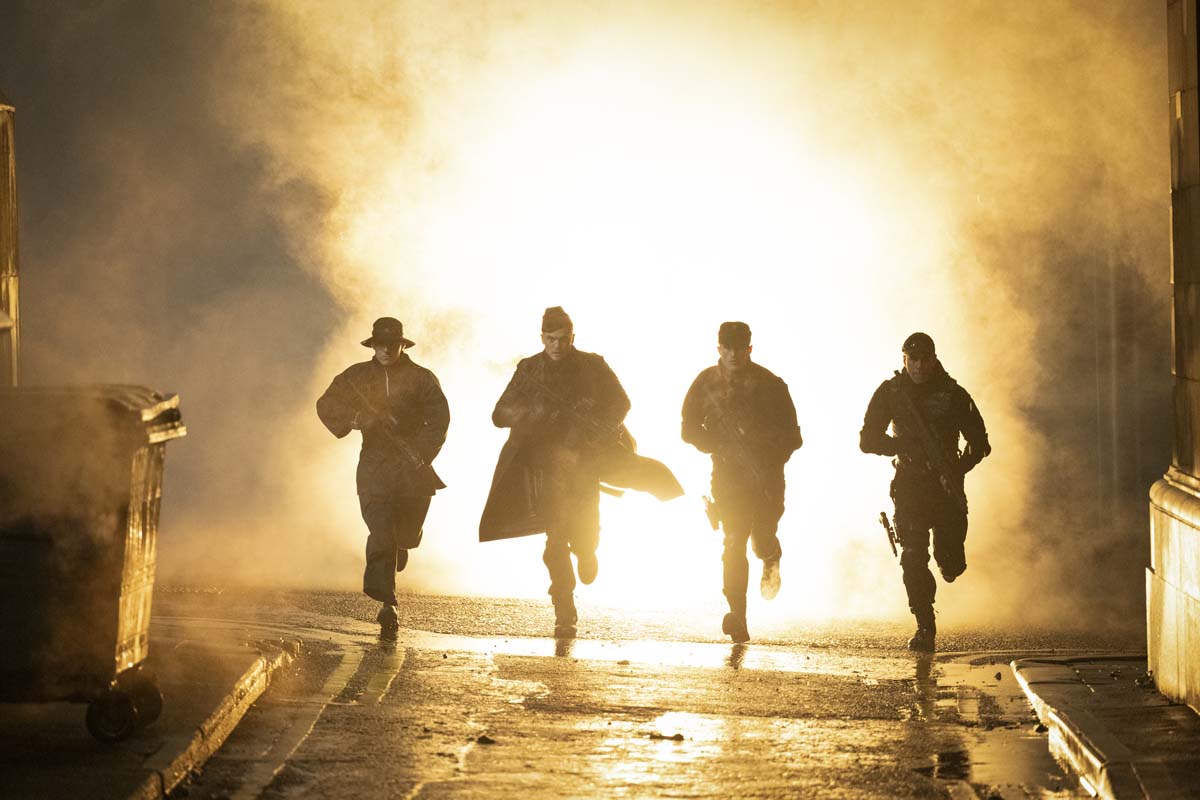
There are a bunch of explosions. Tell me about that classic triple or quadruple explosion editing technique where you’re not revealing the event in real time, but showing it over and over again to create the best impact for the audience.
That was a massive series of bangs, which we set off on the backlot of the studios in Bulgaria. They’re very good at setting up those kind of pyrotechnics. And if you are going to the trouble of making something that massive, you want to make sure you get good coverage.
So of course, you have 6 or 7 cameras to capture the explosion for maximum impact. I don’t know if we actually had a second take. We had lots of rehearsals, but I think on the night, it was just one big bang. I remember at the time trying to work out how we could best utilize the explosions.
We may have just started showing it the once. He then falls through the duct into the little underground sewer system and the fireball chases after him.
It’s like the thing when you’re cutting a fight scene you repeat frames occasionally, because if you kept it absolutely linear, sometimes you miss the impact or you miss the actual bit of action that you’re trying to emphasize, so you do that subtle thing of occasionally replaying the outgoing frames again from the other angle.
Just to see the bulk of explosions the way they were caught on camera, it was too good to waste, sso we did that quick montage.
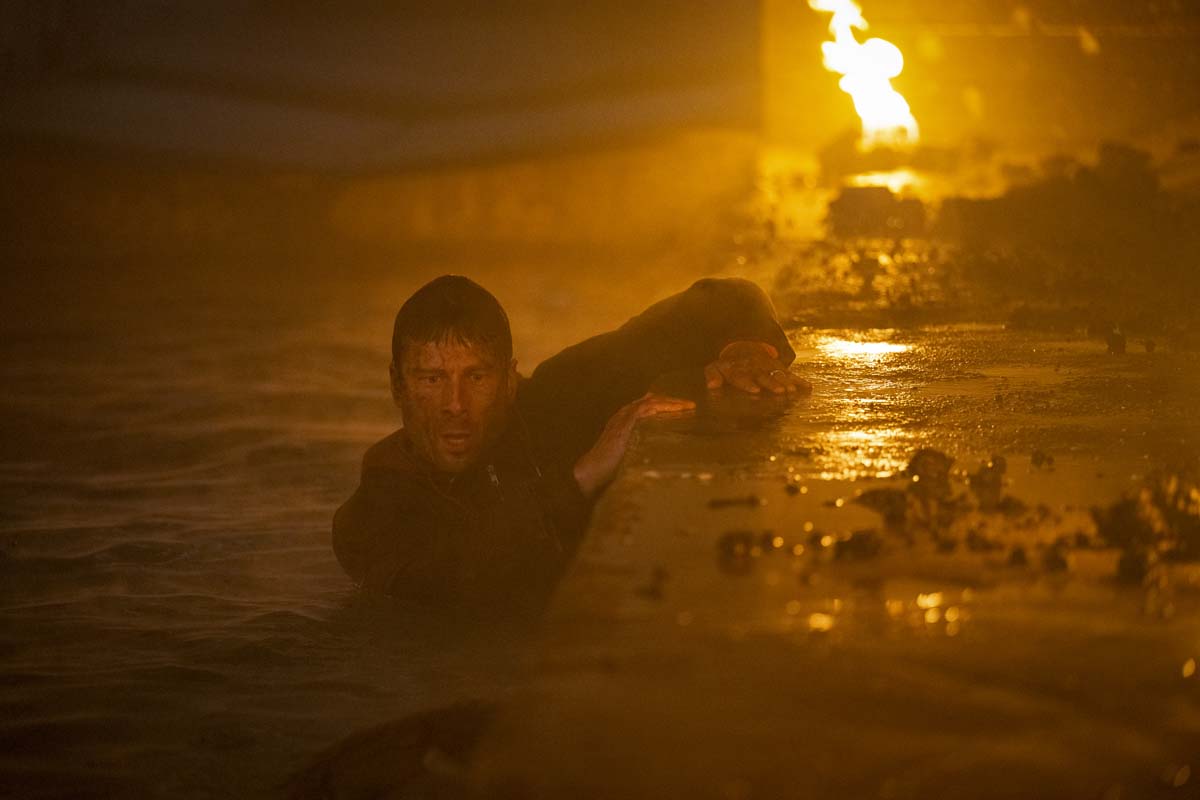
Then at the very end of the last one, there was one camera angle which almost filled the screen with that fireball of orange and yellow.
I noticed that I could do a nice match to the color of the water when we had an underwater camera with the fireball taking place above the camera.
It’s one of the few dissolves in the whole film. It goes from the fireball explosion to underwater. You want to use everything in the arsenal to make that moment sing.
There’s a character – The Apostle - who is essentially a YouTube channel star - who talks about the Running Man TV show. That editing was very different than the rest of the film. Talk to me about having that edited and what role you played in tweaking that, and who did that editing.
I have to give all credit to my team - PJ, Jerry and David - without whom I’d still be working on that sequence now. We just shot hours and hours and hours of footage. We shot against greenscreen. During the shoot, I thought, “I might just sit this one out.”
I watched the material come in, I digitized it, and I just thought, “This is such a big thing that I could spend a week just assembling that sequence. I didn’t have time for that, because the very next day I had to be cutting what was being shot the next day.
On the second Apostle scene I was able to keep up with the speed of the shoot, so I put together a very, very rough version, then I think PJ did a pass on the first Apostle tape, then it stayed like that to the end of the shoot. All credit to David Webb and Jerry.
They just spent weeks and weeks and weeks finessing it. Lots of graphics. Looking at Jerry’s timeline, I could see the video layers were going to v14 and v15 because there were so many layers of keys and nested effects. We worked with some companies – a company called 2Fresh was also responsible for punching up all the graphical elements of it.
They kept offering up versions. Jerry would come into the edit and show Edgar and myself. Edgar would give notes in terms of content, then I might have a few suggestions in terms of “that transition could come a bit early or a bit late.”
When we were getting near the end and we were getting to the tightening part, then I would just tell him, “I’ve taken 10 seconds out of that section and four seconds out of that section, could you smooth over those cracks for me, please?”
Because I couldn’t have a 16 later three minute sequence in my timeline. It made more sense if he would just give me a video mix down. So I would do a slash edit and he could see what I’d done, then go back to his edit - where it was much easier for him to undo and redo - then smooth those transitions over.
But they are they are stonking pieces of work, and I have to give all credit to those three guys for putting that together.
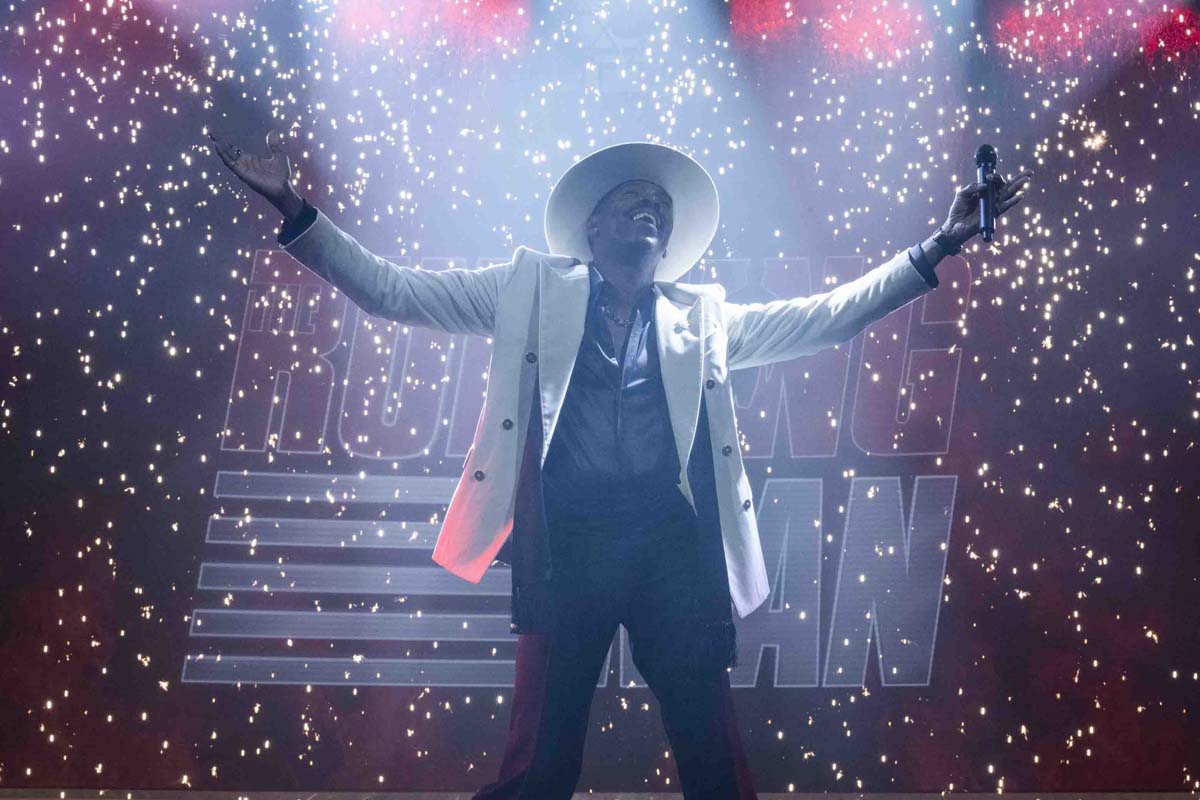
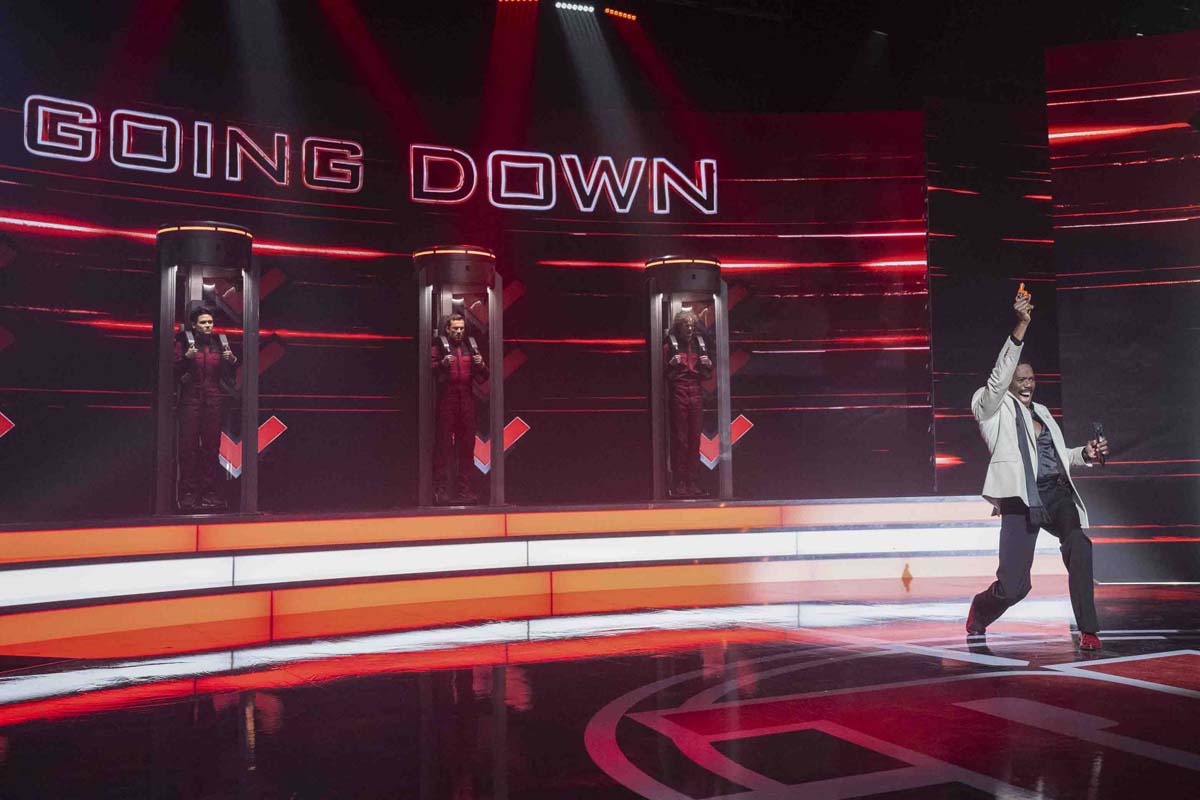
One of our biggest challenges - where Ben stumbles on an open-air viewing of the game show - was probably the most technically challenging scene, because I kind of described it as a sequence full of Russian nesting dolls, because if you watch that sequence, it starts with the game show itself, but then there’s the footage within the game show. Lachlan - one of the other runners - meets with her demise, so you have to edit that.
Then you have to edit Bobby as the game show host, watching that sequence. Then you have the audience in the studio with Bobby T, and you have to make sure you’re cutting to them, watching the game show.
Then you go out and have to decide how to cut the open-air audience and cut all their reactions in time to what the audience in the game show, to the host, to the editor, to watching. Then you have to watch Ben watching the audience, watching the audience, watching the game show, watching the host.
That is a series of Russian nesting dolls right there!
Very much so. I think it took us a week to cut that because you had to sign off every layer, then build the following one, then say, “Actually, now that I’ve done that, really I want to put an insert there. So what angle am I going to next?
Well now I’m on the wrong shot because I don’t want to be on that shot. Now where do I want to cut? There was so much back and forth, and in the end, I had to resort to a lot of picture-in-picture. I couldn’t do clever keys.
I just set the scene. If you want to make a change, great, but let’s sort them all out first then I can put them into the screens because on Avid once you get into 4 or 5 layers the ability in real time and it’ll start stuttering. So that was probably the single biggest challenge.
When you are editing action, do you have a different methodology as an editor for editing those scenes than you would for a dialog scene, for example?
Oh, 100%. You start most action scenes with stuntvis a lot of the time. The second unit director and the stunt coordinator - Darren Prescott in this case - helped us incredibly on Baby Driver with a lot of those action sequences.
And Darren’s extraordinary team of people who worked with him on that. They’ve worked out certain things, for example, the cockpit fight, how it should go. So you’re actually presented with a sequence that the stunt team has looked at the angles.
They’re offering up a series of camera angles. They’re offering up the action – plus, to make it understandable for the rest of us - they’ve then cut that together. So for the cockpit fight when it comes to the day that you’ve got to put that together, you’re part of that team, but of course there are more challenges because when they’re doing the stuntvis, they’re on a large, empty soundstage.
There are a lot of cardboard boxes and things which stands in for the set you’re going to be in.
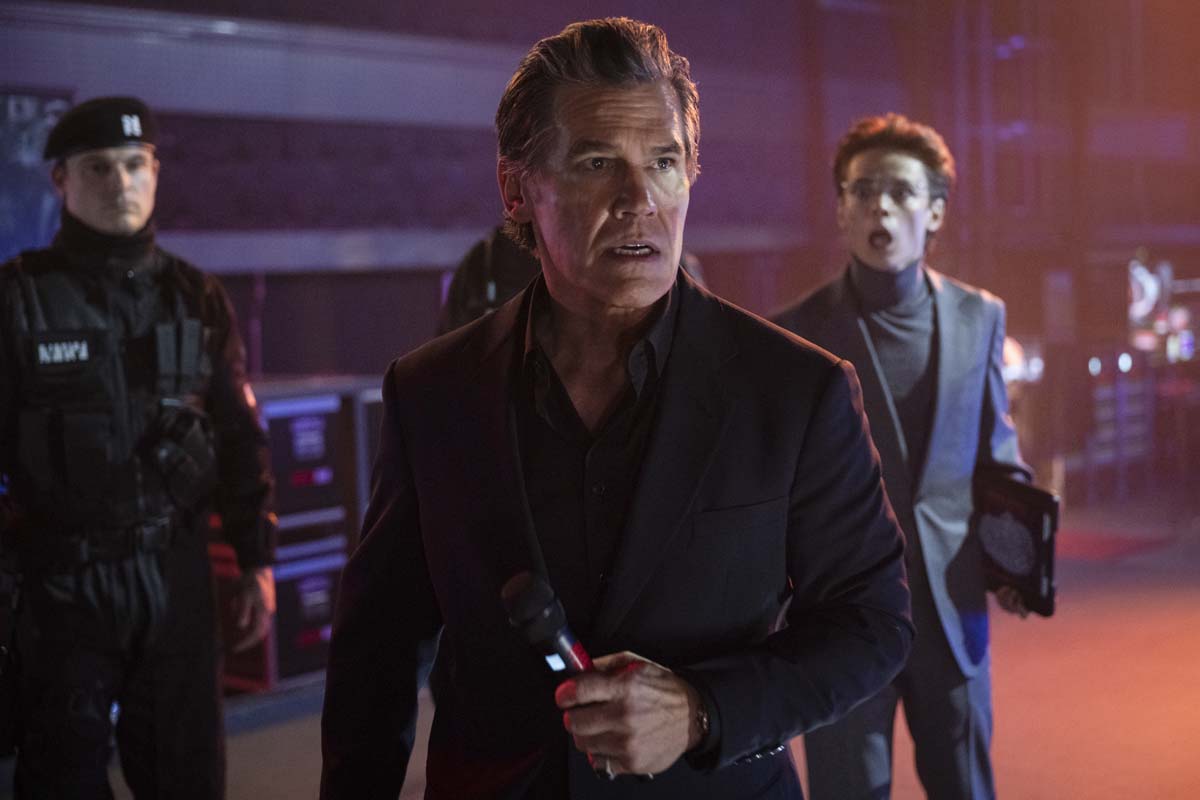
At the end of the day, once you’re in the actual location, you realize that you are restricted about where you could put the camera.
Even though they’re offering up an angle, you have counter coverage and our extra little element as you probably saw, is that we have these “rover cams” which are those spherical, droid cameras, which are basically coverage for the Running Man game show itself for the network.
So for almost every shot, not only do we have two of our cameras covering the action, but there is a third camera, which was usually a smaller Sony FX 7 or 6 camera on a pole.
That was the Rover cam. So not only did I have that coverage, but I have to think about how the gameshow would have covered the fight sequence, because when you look at all the screens on all the seatbacks on the plane, they’re showing what we’re watching, but from the point of view of how the gameshow is covering it, and sometimes that would be Rover cams doing that.
So you would have to do the intercut as someone vision-mixing a live - in their world - output of the game show. And you have to reconcile that with your edit of the action sequence for your audience - the cinema-going audience - to follow. So you’re always working with those multiple layers.
We had the plane fuselage, which was actually on hydraulics, so when the camera’s tilting, we actually have a guy who cantilevers the whole set up to about 10 or 15 degrees, which was great fun because when you’re shooting in the cockpit, all of us crew was sitting in economy, so to speak, on the rows and rows of chairs - make up, camera, so they’d tell us “strap in” because the whole fuselage is tilting.
And for some people it did get a little bit nauseating because the action can be quite extreme.
Then we had a separate cockpit rig that was on a gimbal, so the cockpit was on a much more extreme set of movements that could actually tilt up and down, as well as side to side. It had to contain the camera operator, sound recorders, as well as the action.
That sequence was shot over a period of weeks. We’d go away for a few days. We come back, we shoot another section, second unit would come back and do inserts. I’d grab those. Main unit would shoot the next section then we’d all work together.
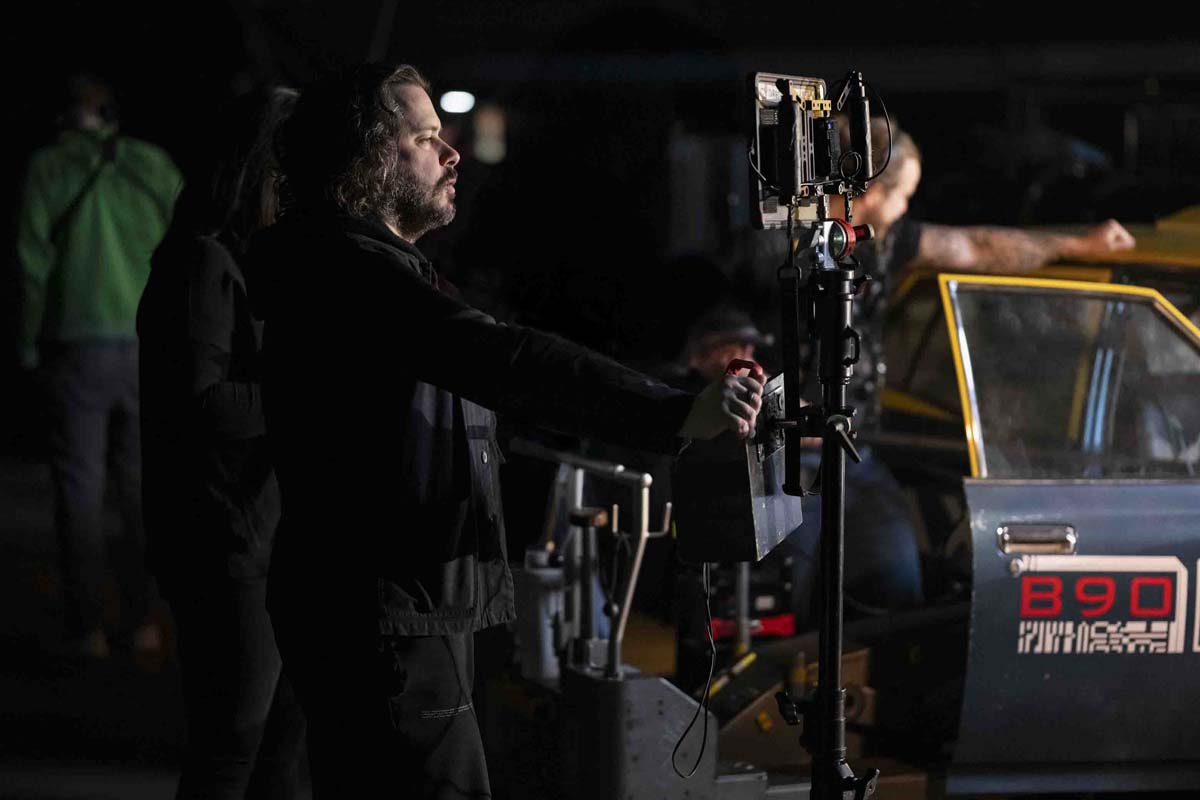
You would initially use the stuntviz as a blueprint, but everyone is on set trying to improve things. The benefit of actually editing on set is a benefit to absolutely everyone.
I’ve gptten to know Darren extraordinarily well on Baby Driver. I’d say, “Do you feel that at this point we need an insert of the gun on the floor?
Because you’ve just got to make sure geographically everything is following because otherwise, you know, you can discombobulating the audience.” Everyone says, “Yeah. Great.”
Eddie was fantastic because he’s so open to people chipping in with ideas and thoughts because it’s all going to make the sequence look and work better.
So on set in that circumstance, I’m putting together a fairly tight version of how the sequence is going to work. When you get to the edit, that’s where you kind of say, “Okay, now I can lose two frames out of that, three frames out of that.
There’s a whole bit of business here that we don’t need if I can find some clever way to get from that to that.” The other big thing was we shot a couple of longer takes, and there are some moments that I’m quite pleased with that were actually on an unbroken handheld camera shot.
We’re actually jumping takes in the middle of the action, so you have to hide where the cuts going in the hope that - with a handheld camera - the camera move is going to be close enough that you can hide a match cut.
And sometimes you can help by doing a little bit of operation on the Avid - zooming in a little bit, say 20% more than the operator did - and you can find a moment to hide an edit.
Sometimes, Edgar would say, “I love the first half of that take and the second half of that. Is there any way you could put it together” on what is meant to be one unbroken shot? That’s a lot of fun.
There’s one sequence where Lee Pace - as Evan McCone - comes out from hiding underneath the walkway and the two of them have a fight by the lavatories on the plane. There was a great take where there’s a lot of rapid fire punching.
Then, McCone grabs Ben and smashes his face into the mirror. Well, the best face smash was possibly take five and the best punching was take two. There’s no cutaway, so you have to work out how you can do it.
I realized there was a point where Lee pushed Glenn into the cubicle that you could go in just enough to match, that you could actually do an invisible edit between those two bits and string it together.
I know it’s good because even I’ve got no idea where the actual edit point is. Those are the little eureka moments that make it all worthwhile.
With something like Baby Driver, the music was so integral to the story. What about the needle drops in this? How much did that evolve as you went through the edit?
Edgar is a master of choosing the right music for the right moment. We weren’t emulating Baby Driver about having commercial music all the way through.
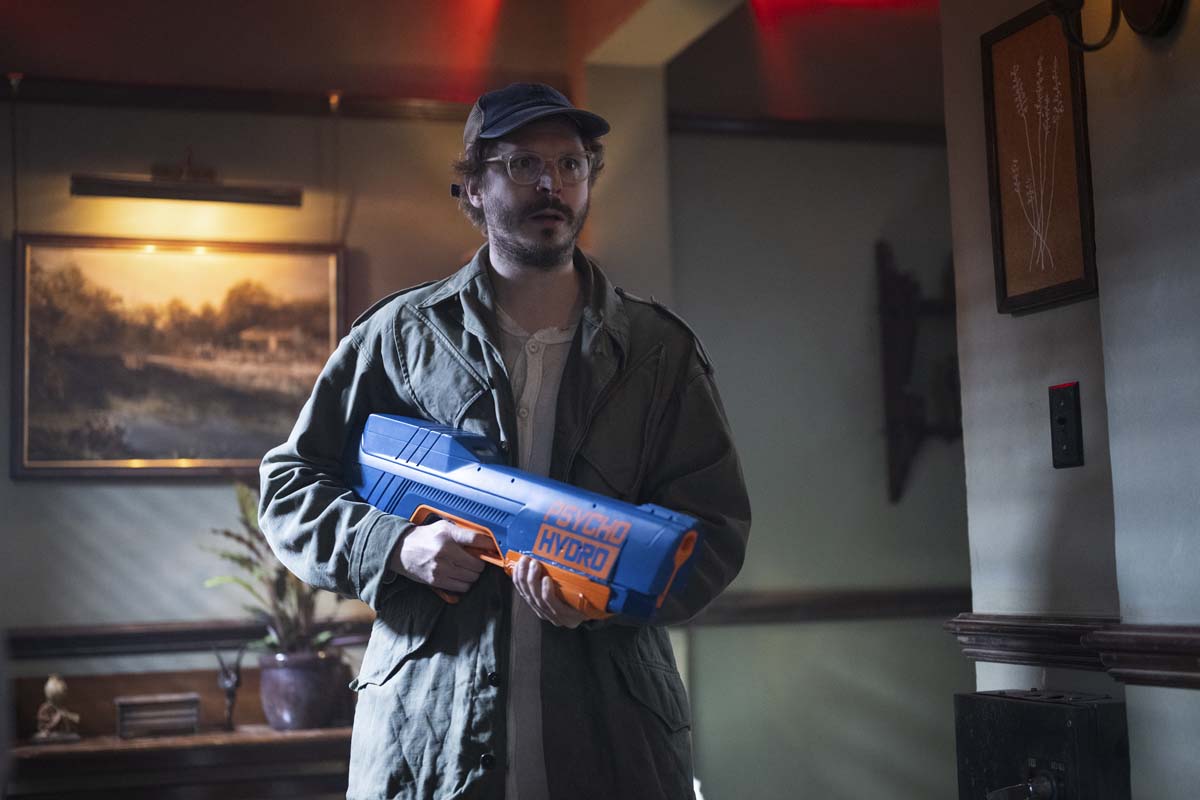
We’d always chosen, the, “Underdog,” Sly and the family Stone for the opening titles. We always knew we were going to use Rolling Stones for the sequence with Michael Cera, which was a lot of fun to put together. I believe we discovered Tom Jones’s version of “Keep On Running” in the edit.
We were actually going into it with something different. Edgar’s original idea was having the end credits with Peter Gabriel’s, “Games Without Frontiers” which makes total sense, but actually, when we tried the Tom Jones one, it was such a vibe.
It was still relevant, but it just felt to be a really strong, punchy piece of end title music. So we had those 3 or 4 tracks which were a dream.
We did Last Night in Soho with an incredible composer - Steve Price - and without really seeing anything that we had done he offered us up a whole kit of tracks of musical ideas and themes. He underscored a lot of them with pulsating low frequency pulses and rumbles almost like a heartbeat, almost like a pulse.
So the whole film has this low frequency pulse running through things, even on the quietest pieces of music. Actually, there are lots of the really low impulse noises going on.
And once again, Steve offered us up a ton of great stuff. So it meant that in the assemble I had some pieces, but particularly when Edgar and I did the director’s cut, we would cut a scene and say, “So what works from Steve’s little bag of tricks here.”
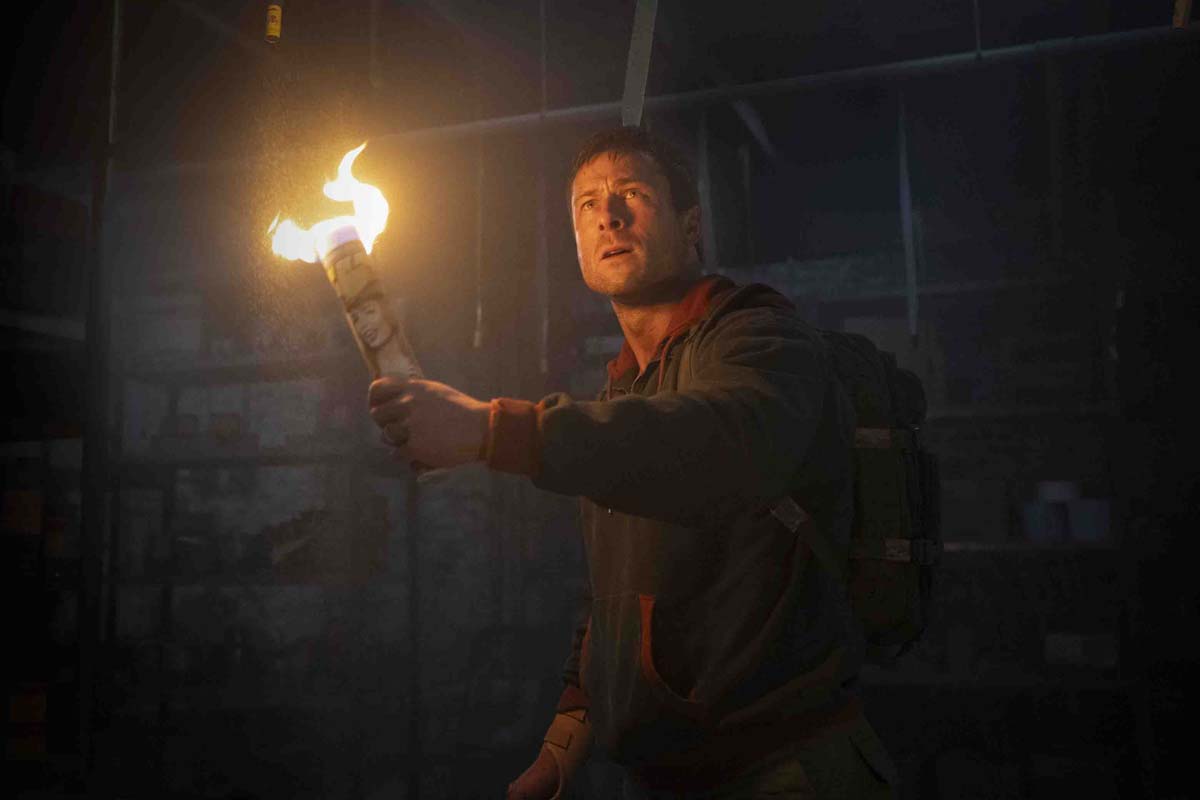
So from the very beginning we could start putting original score into the director’s cut, which helped enormously to start giving any potential viewers an idea of the scene, but it also influenced Steve Price. “They’re using that bit there that becomes that thematic moment.
Oh, I see how that’s going, so I can now write something that bridges that theme with that theme.” Music is so important for Edgar because even though it isn’t totally tied to the rhythm, as in Baby Driver, there’s a lot of stuff that is.
Even for dialogue scenes we’re using the rhythm of the music track as a kind of subtle metronome that assists with the edit. It doesn’t mean that you don’t have total freedom to cut when you need.
There could be moments and little bits of human expression or bits of action that if you can tie it subtly with what’s going on with the score – and Steve understands that he totally sees what we’re doing.
Certainly when we got to the mix, Bradley Farmer, our incredible music editor, had all the stems at hand so he could emphasize the low frequency things.
If things got a bit busy, we could take out some sections. Steve did an incredible score, so we were able - even in the mix - to still carry on fashioning the music to work with the cut.
Paul. Thank you so much for your time today.
Thank you, Steve. It’s been a pleasure.
 March 26, 2026
Young Sherlock
Today on Art of the Cut, we speak with four of the editors on the buzzy new Amazon Prime series, Young Sherlock. With us are ...
Read more January 28, 2026
Train Dreams
Parker was the 2025 Winner of the Jonathan Oppenheim Editing for the documentary André Is an Idiot. He has also been nominated for 2 Emmys ...
Read more November 19, 2025
Wicked for Good
Chu and Kerstein last worked together - of course - on Wicked. And before that on tick, tick… BOOM. Before THAT they collaborated on In ...
Read more