












The Perfect Neighbor
Viridiana Lieberman discusses editing the Oscar and BAFTA-nominated Best Documentary, The Perfect Neighbor, including using structure to hook the audience, and how sometimes an iPhone is an editing tool.


Today on Art of the Cut we’re talking with editor Viridiana Lieberman about the Oscar-nominated and BAFTA-nominated Best Documentary, The Perfect Neighbor. The film was also nominated for the Grand Jury prize at Sundance, and the Audience Award at SXSW, it won the Cinema Eye Honors Award for Best Directing and Viri was nominated for Best Editing. Viri was also nominated for an ACE Eddie and won the Critics Choice Documentary Award for Best Editing.
Viri was last on Art of the Cut for her work on the documentary, Carlos. Her other work includes directing and editing the ESPN film, Born to Play, and editing on docs like The Sentence, 30 for 30, and Lowndes County and the Road to Black Power.
Viri, it’s so nice to have you on the show again. The last time we talked was for Carlos. Yes. I’m very excited to be back.
This film has gotten a lot of press in the last couple of months. It does feel like it has permeated the culture in a way that is thrilling and certainly more far-reaching than anything I’ve been a part of.
I’ve been a part of films that have felt like they’ve resonated, but nothing like this. My brain can barely fathom the amount of people that have seen it. It’s beyond our wildest dreams, but also just incredible, and what we all strive for.
I almost always start my questions about documentaries with the choice of where to start the documentary. You started with the shooting. Was that scripted or found in post? It was found in post. The cold open was something we had some other ideas for. Some of them were more character-driven and there were other ideas that were more atmospheric. But to come out of title into everything that’s happening, you don’t know who it particularly it may be happening to.
I think for us, the reality of that energy, that momentum that also allows us to be able to settle in and take a much more observational patient approach -which we knew the film needed to have - in its raw approach to making an entire film out of this evidence, but also acknowledging that these calls should be in real time as best we can.
All of that helped us make that choice on that cold open to earn the pace of the film, to set something in motion and realize the height of the stakes of what’s coming, then also to acclimate the viewer to the bodycam footage - how sensory all the different angles that we will be in - and kind of what this narrative experience will be.

Coming out of the title, we have an opening drone shot… We had all these canvasing interviews that the police did in the following days after the event. The entire film is comprised of the evidence (bodycam footage) with the exception of some shot footage of the neighborhood. For those, we specifically chose really unique angles, some that feel unsettling, some that feel intimate, some that feel voyeuristic.
Those shots were to keep a tone but almost be invisible, to be able to be in conversation with the bodycam footage. So it didn’t take away and it wasn’t there to be additive and doing different work. It was to be with it, but creating the space and staying rooted there.
That drone shot that comes out of the opening - that resting place for us to get settled and get used to focusing our ears and listening to these details that aren’t just people talking. It’s also the space, you’re hearing them get out of the car, close the door.
Some people playing off in the distance, adding that value of looking at that empty lot that created the space for it.
Those were all sensory choices to be able to get grounded. It’s funny to use that word when it’s a drone shot, but get our feet in what this story is and how we’re telling it.
So if the energy’s coming in that cold open and this kind of awareness of how fast we’ll move in and through what lenses to then land in this overhead shot, looking at that patch of land allows us to peek in the space.
… to better understand the geography… Yes, the geography. And that is a literal and figurative thing. There are literal elements to it, but it’s also where everything will happen. Everything, with the exception of the police station and interrogations later.
I’ve never been somebody who’s very drawn to drones. In fact, I’ve probably been known to be pretty anti. I just want it to be motivated. I want people to use drones in intentional ways. I’ve seen it done in films where it kind of blows my mind. I think, “That’s how you do it!” The whole point of this was to stay rooted with the community. To start in that way allows you to understand where you are and what it is. From then on we are on the ground.
I also think it’s in such juxtaposition with what you just experienced in the cold open, that it really resets the palette. Like cleanse of the palette to the other end of the spectrum. It almost feels like this ghostly presence - an understanding of that hollowed ground of what’s about to happen. And then let us begin.
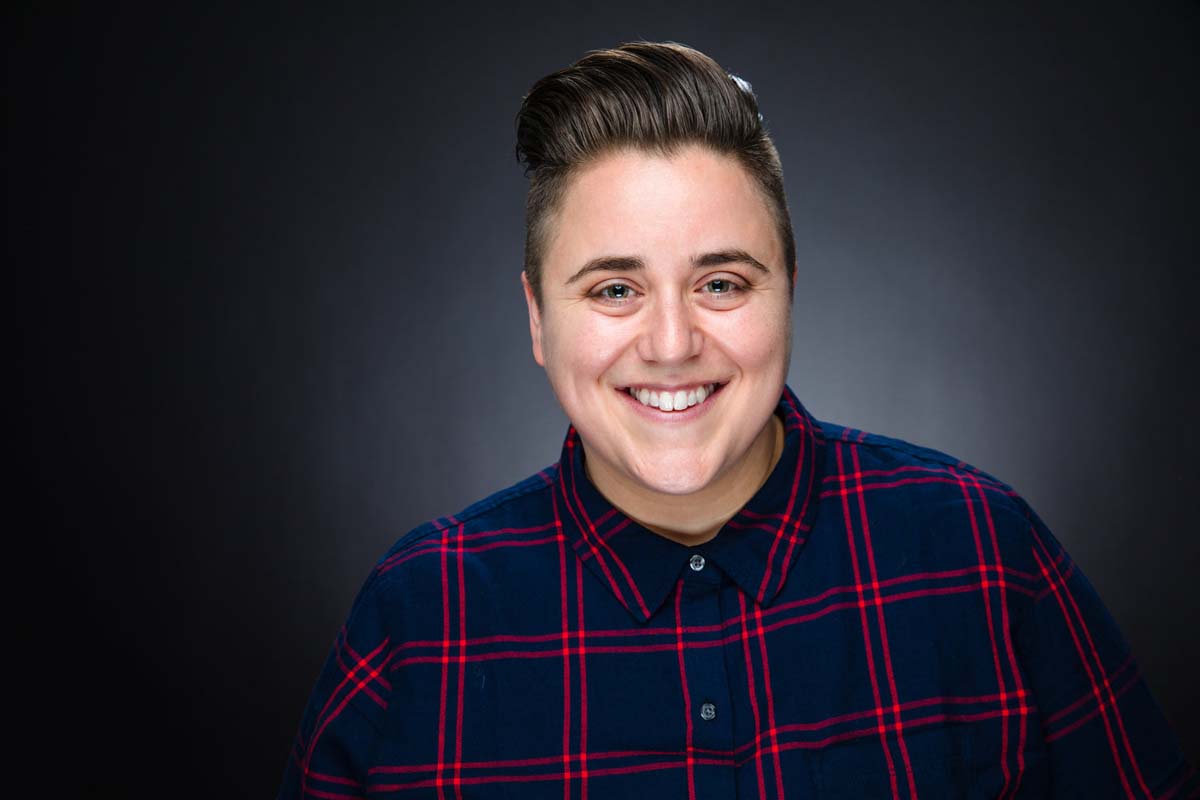
Editor Viridiana Lieberman
Most of the documentary is from bodycam footage. But it’s not just used for the interactions the cops have. You also allowed us to see the doors closing doors or getting in and out of the car? What was the purpose of that?
The instinct in the edit was very much to remind the audience that they’re watching evidence, that they’re watching the real footage of what was collected by these bodycams.
And if we had overly-edited that – coming in late and leaving early, and do all of that work all the time - I think that the mind would start to experience it in a way that doesn’t feel natural.
I think we kind of lose track of the human element of it and the personal nature of it. So though this film is not about the police, it has inspired some really nuanced conversations about police. I was so sensitive to that camera being attached to their bodies and that they are people. On the first call, when she’s walking to the door, you see the kids playing basketball.
The peripheral [action]. You hear them talking about a Spanish teacher. That stuff matters. The idea of what this neighborhood was before. Some audiences chuckle when they’re swearing, and the camera turns off, but that is exactly when it turned off! I think they thought it was edited.
Any time that we get to live in that space and it’s most kind of natural reality, I was hyper-aware and wanted to preserve that.
So there’s the story that’s happening when they’re interviewing people and we’re talking to them, but there’s also just the fabric of that space. I think in those moments there’s the human element, but there really are those details that are becoming part of the experience and help you feel very rooted in the neighborhood.
What did you call the footage that wasn’t bodycam footage? The stuff that was shot by the cinematographer? Do you call that “custom footage” or “shot footage?” or what?
I called it shot footage. I would just call it the interstitial bridges. It was the canvas for us to listen to canvasing interviews. I would just call it the transitions. I am not alone in this, but, as a term, “b-roll” has started to take on a value that is so “cringe” because it feels unmotivated.
It’s just doesn’t feel emotional or with intent. It’s kind of become this Band-Aid. But we say, “No! Every frame counts.”
It’s wallpaper.
Yeah. Wallpaper. Exactly. So with those bridges - I always call them the bridges - but I whatever imagery we picked for that allowed the audience to listen. But we were intentional about what those frames were, where they went and why, but in an interesting way.
It was really more about emotion - sensory invisibility. It was supposed to lend the space for us to stay in that neighborhood, but focus on what we’re listening to.
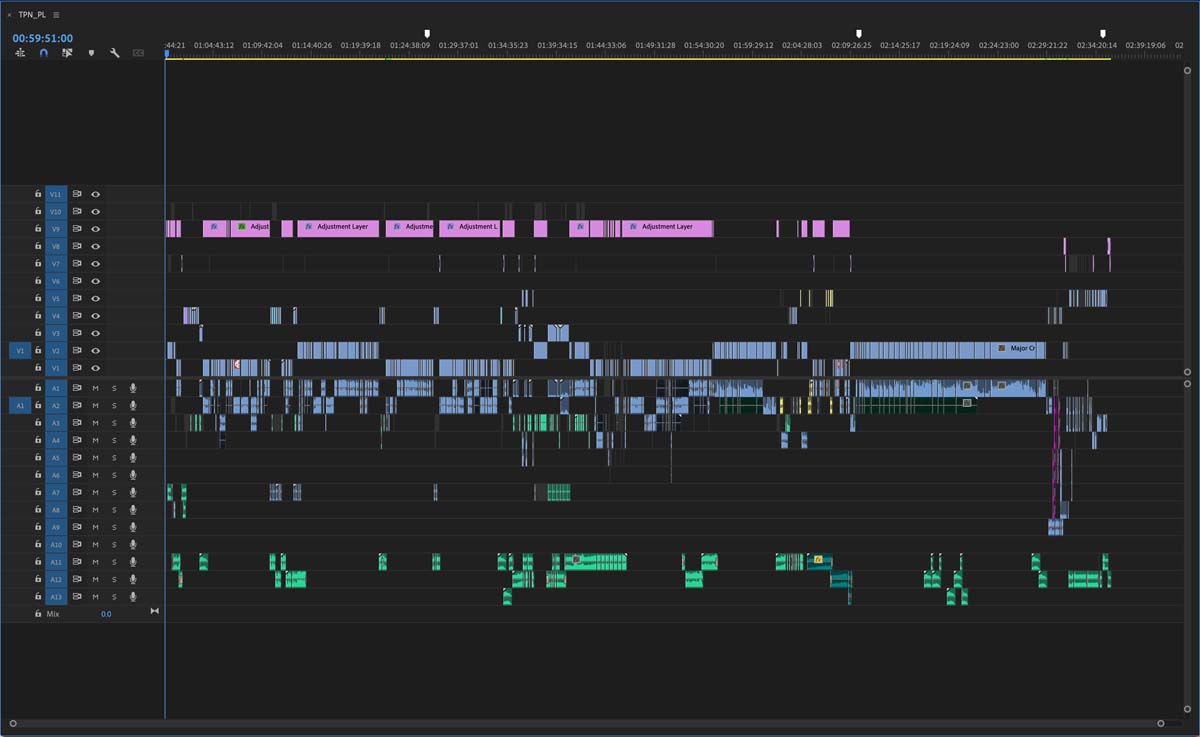
Premiere Pro timeline for The Perfect Neighbor
Did you drop in those interstitials where they had to go because of the story, or did you feel like, “I’ve watched enough bodycam footage? We need to get out of this, and do something else?” Oh no! It was absolutely for the story. In the first pass, I knew that - in the way that we’d be telling the story - you wouldn’t be able to see some of the most important things that happened because they were between calls.
It was like the truth of what it was to each of the people involved. It wasn’t about every time they come on and turn on the lens, it was because they would come and all of a sudden there’s no kids out there and we’re just hearing what happened.
So I knew that I would be bridging those with these canvasing interviews. Very early on it was about honing which calls we’re going to use in the story, then separating them by which interview beats can thematically speak to what we just saw and point the arrow to what’s coming next.
And peeling those layers of that simmering that was happening in the neighborhood. And also, as the stakes get higher - as we get closer to the incident - we’re starting to hear details that are more disturbing, that are more explicit, and all of that is compounding as the story is going on. So that was very much in the structure of it.
I went out with my iPhone and took temp footage just to throw in there to try to find some feeling of what those could elicit before we had someone go to the neighborhood to kind of mimic some of that and find a zone. That was always in the plan. For a while it was stock and it was just about listening, but that was always there.
You went out and shot temp footage? I did. I’m going to give you this top secret news: there’s a couple that are still in there from my iPhone that we just really loved and couldn’t find replacements for.
Our wonderful camera operator grabbed not only the drone footage, but was able to evoke that feeling with some of the stuff. I have family in South Florida, so when I went out with my iPhone, I was able to like literally get blades of grass and Florida stuff.
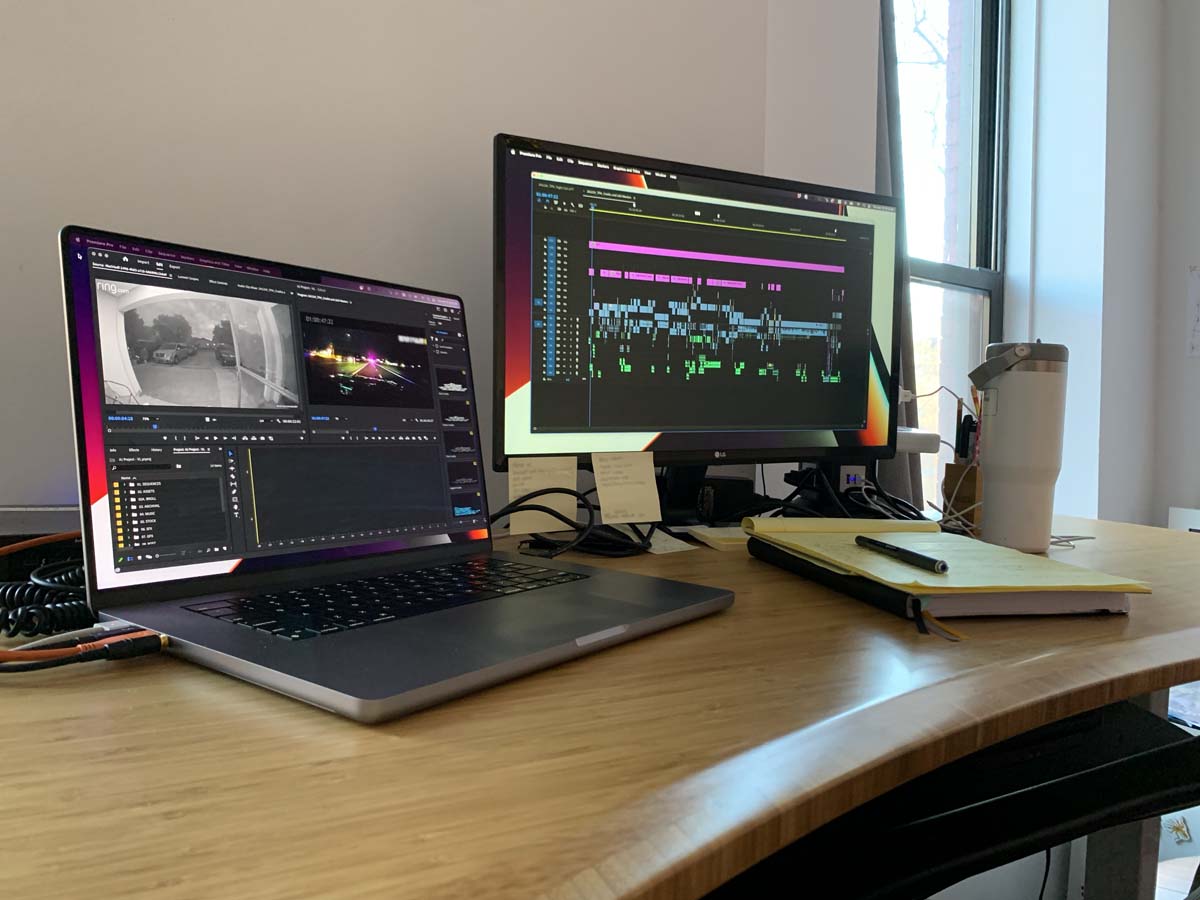
To get geeky about it, did you just use the camera app, or something like the BlackMagic app or FilmicPro? Just the camera. I’m no DP, though I have filmed things and made my own movies with proper cameras and lenses. Since it was intended to be temp, I was just giving a vibe and I just hit the button and captured it. But amazingly, it holds up. I think particularly because the landscape of the film - the foundation being bodycam footage - lends to a free-er space for quality.
How did you decide how many police events to show before the shooting? Well-edited movies feel inevitable, the way they are presented, but you had to choose the events. How many other times did the cops go out there?
There were a few more. There weren’t tons. Some neighbors said that the cops are coming out 2 or 3 times a week. When the lawyers sued the police department to get all of these, I’m not sure if there are some we didn’t get, or they weren’t recorded.
Whatever the case may be, there were more than what we had. However, there were a couple that didn’t seem pertinent to the case that we didn’t use, or were repetitive – which was also part of our story - but making sure that every call was giving us new information, making sure that every call was showing us something new and that they were all in dialogue in the build.
I obviously came in knowing it was going to be chronological because we wanted to create a film that was stating the facts - hoping to make it undeniable what happened. So as an editor, right off the bat, you know - with the exception of the cold open - what goes where because they’re going to be chronological.
So now it’s about what each call is doing: what is new? That first call was an incredible way to meet the neighborhood, hear everybody. It gave an understanding of where we are and to get our bearing straight. We take the time to do that in that call.
Then every other call is trying to expand that knowledge or interact with it, or be in conversation while also acknowledging that we are building tension.
Perhaps it’s not about inevitability, because it’s how it happened. Every call ranged between 30 minutes and 3 hours. The night of the event there were about six hours. So I am making choices.
There are choices being made of how to cut those calls down and still make them feel real time, and also honoring the 360 degree perspective of it, and making sure you hear everything you need to hear to get to the truth of what that call was about. Did you have other calls that were edited into any version of the film?
No. The other calls that we did not use never came into the film. There was one 911 call that was taken in a cop car, and it’s just a dashcam, but Susan says the same exact thing she says on the next call.
So it was one of those: “Which one do we use?” They were both comparable, but we had committed to being in the neighborhood because we wanted to stay rooted with them. Did you have any structural decisions about how much time to spend pre-shooting and post-shooting? Oh yeah. And a lot of that was dictated by how long that night was going to be. My first cut of that night was almost 40 minutes. That contracted and expanded.
We knew that it was clearly the climax and also not knowing what that third act is going to be when we have to break away from the bodycam footage and perhaps expand our lens that we’re using while still staying close to this kind of outside-looking-in surveillance version of a visual language where we can all of a sudden break away and begin a whole new film.
So there wasn’t a specific runtime that I was driving towards, but there was an understanding of when the walls are starting to close in and you’re getting closer to that night, how much more work you can do to amplify that moment that’s about to come that everybody kind of knows is coming, but we don’t know when.
But also living that night for all the things we needed to. So those calls - trusting that the audience can sit through those and gather the evidence and stay captivated that whole time - before we inject the moment, that was the delicate dance.
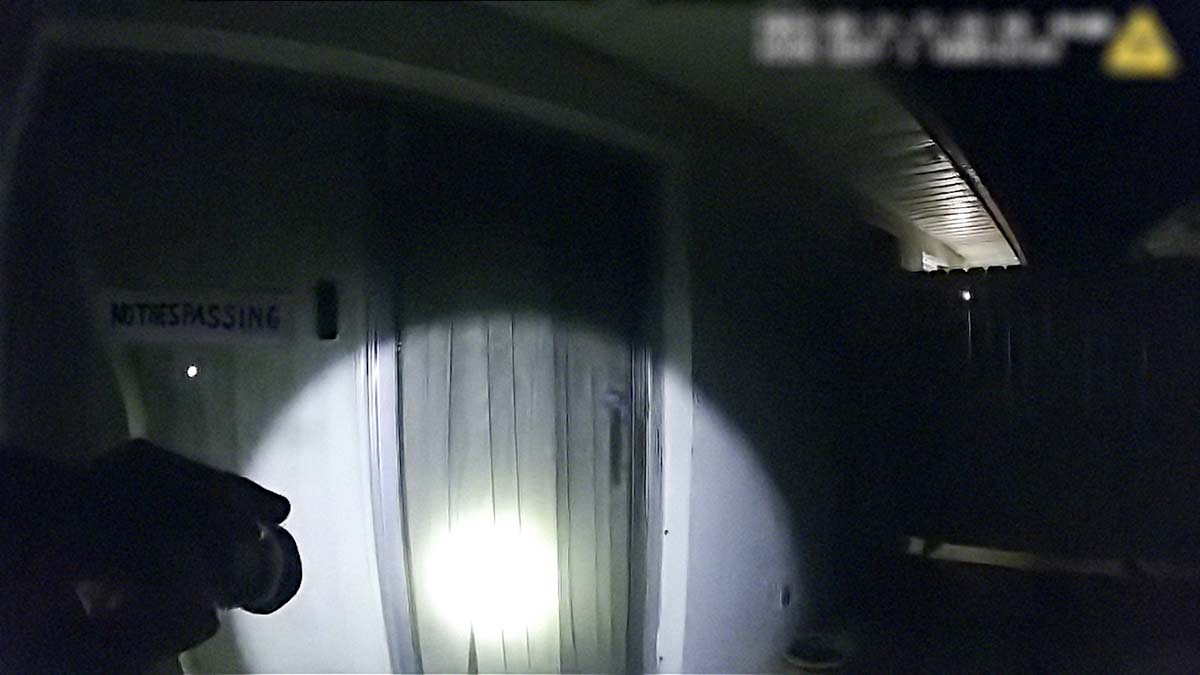
I love talking about intercutting, and there’s some intercutting when the ambulance shows up that night. The cops are clearing the house. How are you determining how to get in and out of those intercuts between two things that are happening at the same time?
Part of that was dictated by what happened. I was pretty strict about following the evidence and making sure we were showing it as it was. I was so strict about that,e that anything you’re hearing is synced to the shot you’re watching.
When I cut to the dashcams, that’s the video fro when that call was being blasted in the car. I was trying to be so strict and precious about that, to make sure that the film was doing the work that we intended it to.
Obviously I had to condense time. They’re in Susan’s house longer, but that helps condense time for us to cut to the different places people were in at the same time. So when we’re jumping, we’re moving faster through time. But those things were happening simultaneously.
The important part of that whole sequence – [Director Geeta Gandbhir] told me early on, “This feels like a horror film.” In her head there is some genre-playing, intentionally, in that sequence in particular with the score, with everything about it, with the momentum, with the pace, when we choose to slow down and when we chose to amp it up.
If you watched the raw footage, you would know that it was slower. The tension is there because they don’t know what’s about to happen, but that is probably one of the most cinematic sensory edited on purpose, genre-ish stretches of the film.
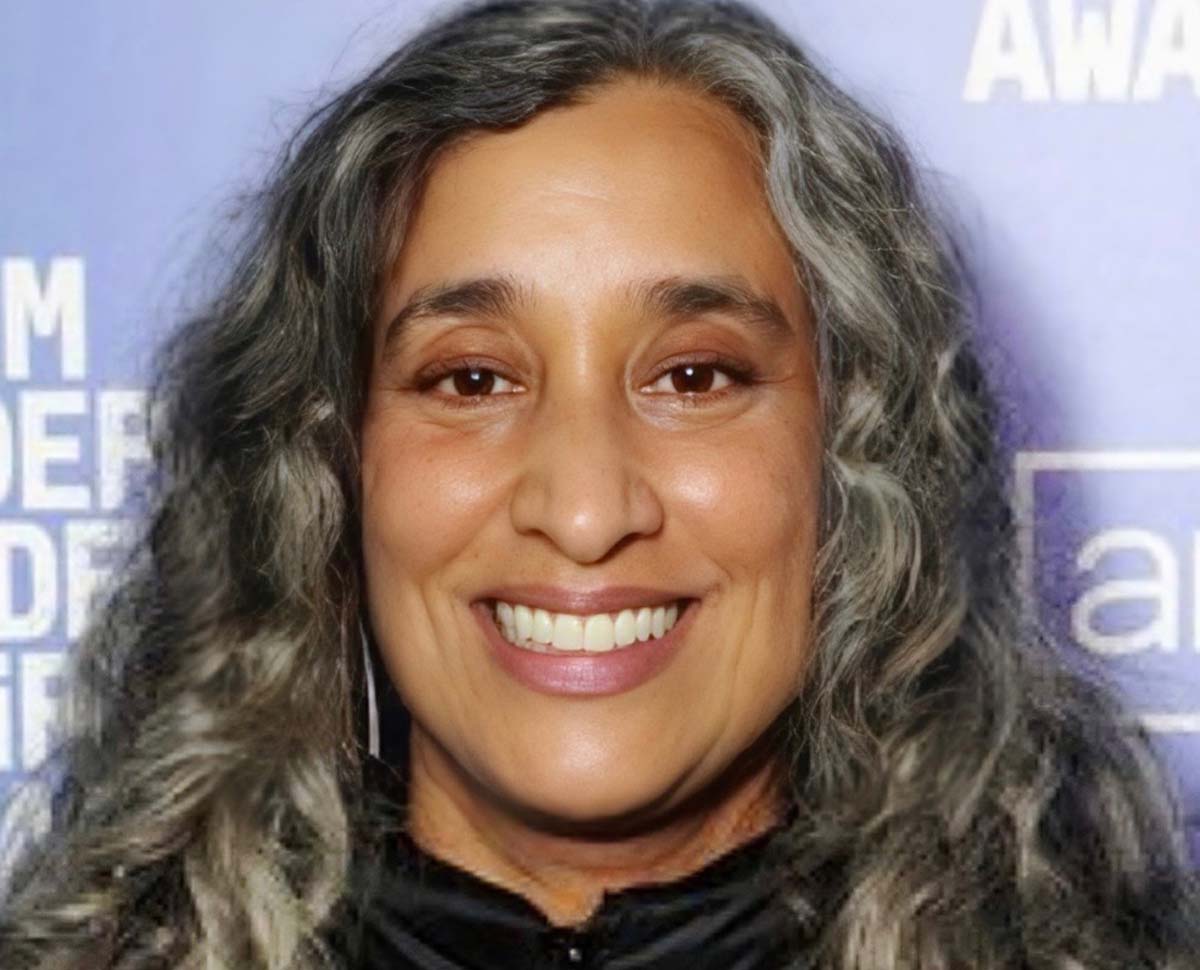
Director Geeta Gandbhir
Let’s talk a little bit about the music throughout the film. What were you temping with? Were you temping with other documentaries? Were you temping with features? Temping with features. I have go-to composers that I love. Oh? Let’s hear them!
I love Max Richter and Cliff Martinez. There are lots of people that if you go deep… Like with Cliff Martinez there are tracks that everybody uses, but when you go deep in their catalog, there are gems nobody’s using.
I watch things and I can tell who people temped with when they mimic it in the score. I watch movies all the time and think, “I know what this is!” I feel like people have tapped into my secret stash without me even telling them, because I’ll sometimes hear things.
I’m sure Cliff was in there because I like some of his more sparse tracks. I’m a very tonal, ambient person. The temp track I pulled for “the night” was one of the most active temp tracks I think I’ve ever used in my life. It just felt right.
It had this pulse to it and it was getting bigger and was almost borderline techno. Laura Heinzinger, our incredible composer, found her own way to make this cohesive language in the film. We’ve worked with her before on films and I always lay this very tonal world for her, then she makes it her own.
This one in particular, she took some big swings that I think are incredible. Her score is phenomenal in this because it does walk the line of the genre, but at the end it’s still feels very human and personal and not pushed in the language of our film. And it makes moments feel really big, but yet still highly intimate. That track in particular.
But I do pull from narrative films. I say that with guilt because I think there are some incredible documentary scores. Let’s put this out there: put more documentary scores out into the world, because I think sometimes I can’t even find them.
Those composers could be as recognized and accessible as narrative. I think we would all love that very much, and I’m sure they would, too, so that they’re not always just mimicking these same narrative feature soundscapes.

What about spotting those cues? Where were you finding that you’re not going to put the score in at the beginning, you’re going to wait until the end, or you’re not going to score a specific scene at all? I am someone who does not cut to music. My instinct is never to just put a track in there and see what happens. I will cut picture first and that guides me. Then there are times where it’s quiet for a half an hour.
It was clear that the transitional bridges that we were looking at would have some semblance of air and for there to be some kind of musical soundscape to be able to differentiate purposefully. It wasn’t because of a fear of pace. It was also just about separation during the bodycam footage.
I really wanted that to feel as raw as possible. So there was never a thought in my brain of having music anywhere under that except for the night of the event. The perfect example is during the interrogations. We have this light instrument come in right at the break.
It’s something that I really love and I can’t wait to explore more in future films, which is that not every cue drops in and becomes a fully composed piece - it is just in the soundscape, and it can kind of come and take on its own value and how it interacts with the film.
And with that idea in mind, I always kind of cut in a very raw, quiet way. Then music comes in later, or when it does, I really investigate why. And if I’m doing it because it feels like a crutch and I’m doing it because I just feel bored, then I have to ask myself, “Is this moment doing what it needs to be doing?”
I respect those that guide with music, then take the exercise of stripping it away to see what the film is doing in that pace. And that is something I’ve done too, in certain films, but particularly with this one, I wanted it to feel as raw as possible.
And early on, in a very experimental nod, I thought, “Could we have no music?” because it doesn’t come with the evidence. So I had to kind of toy with how strict I was going to be with things. But the idea of genre played a role in me embracing it in a way that I thought was really effective.
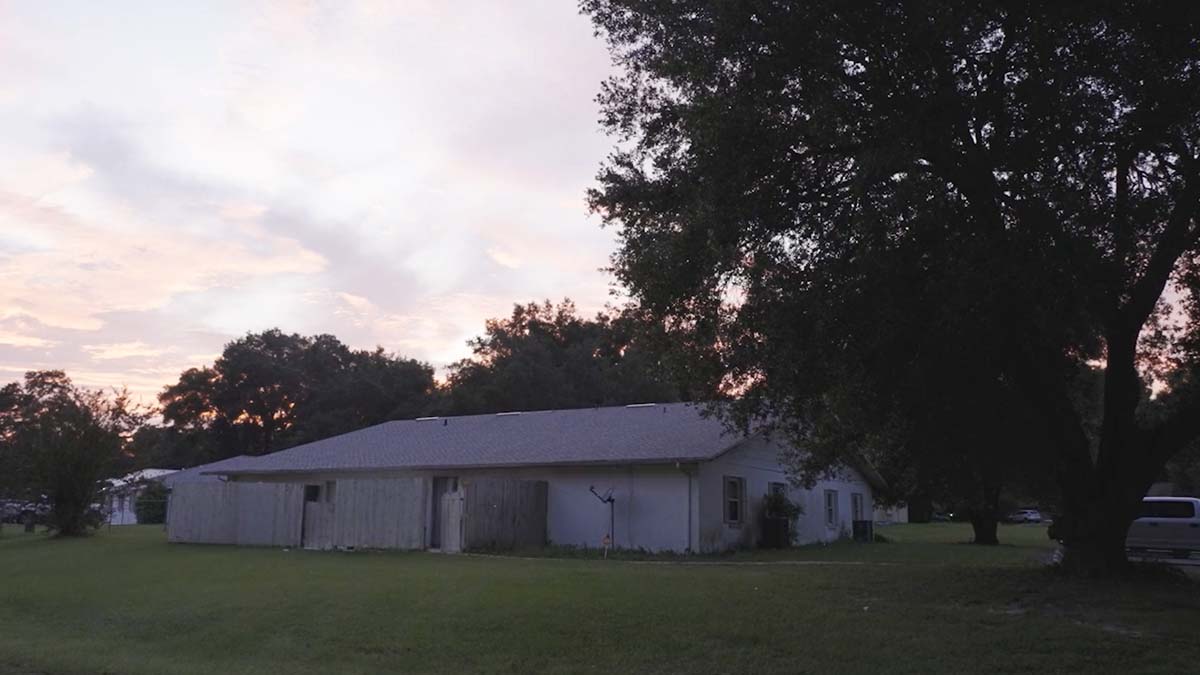
You mentioned six hours of footage for the night of the shooting. Was that six hours of footage or six hours of TIME, multiplied by ten cops or something? The cops got there around 8pm and they left around 1:30 or 2am. The tension of what was happening in there when they first get there is very different than after she has been taken away in the ambulance. Then they’re starting to ask questions and hear everybody’s story.
That spanned four hours – probably - of active time. For us, early on, the goal was to always stay rooted with the neighborhood. So that was an easy way to focus that footage and hone it, because it wasn’t about procedure. It was about the experience of our neighbors. I think we had up to 12 or 15 cops on the scene. They come and they go. It was a mountain of video layers.
Did you multicam that stuff? This time I did not because I just wanted so much control. I wanted to see everything on the timeline. I know that there are a lot of techniques that probably would have worked and helped me, but I wouldn’t have trusted it.
I wanted to see the blank spaces between cameras - when they came and they went. I wanted to see all of the audio. In some ways this timeline was the most simple I think I’ve ever edited, then in some ways it was the most complicated, because I was so precious.
So I did not multicam. It was a real challenge sync it all up. There’s audio, there’s Ring cams and so many elements to navigate. I just always wanted to see everything that was happening at each moment.
Was that something that you assigned to an assistant editor or something that you had to do? I don’t think people realize how small this was. It was an independently made film. The director liked to joke that she was my first assistant editor, because she had initially strung everything out. I had an assistant who came on at the end to help with deliverables, just to get it out of the system and navigate that.
The edit was all at my fingertips, which I was very proud to do. It was a very tiny film. No money. But we were on a mission and nobody believed we could do it.
When we finished the cut and we locked it before we got into Sundance, we just said, “This is the film. Either people get it or they don’t.” Working in a vacuum with such a small team was what made it possible.

I think of editors as being empaths - people that are deeply concerned for other people. How do you deal with this darkness over the length of the edit? Personally? Psychologically?
It’s a great question. I cried a lot while I was editing this film. I’ve been a part of films that were very difficult and affecting, but there was some part of me that I don’t know if it disassociated, but I would jus think, “I’m on a task. This is what I’m here to do. I will find what is effective.” And I would absorb it. Then, six months after we lock picture, I would just burst into tears. I’d think, “Oh, there’s something going on in here. I am pushing it out.”
I am a very emotional person, so it’s been incredible that I’ve survived this long without finally just cracking. In an important way I accepted this film for what it was going to do to me. As I was editing, I’d be crying, literally, editing. That’s the truth of it.
This was not my full time job. I was on another film full time and Geeta came to me and said, “It has to be you. We’ve worked together before. She knows what I love to do and why I love to do it. I said, “I’m booked, but I want to do it.” She said, “I don’t care how you do it, we just want to get it done in this next year. I said, “Okay.” She just trusted. There were months I didn’t touch it - when I was consumed by this other project and I’d say, “Don’t worry. Trust me. We’re going to get it done.”
There were moments where I was in the thick of it on nights and weekends. Then there were moments where there was time, and I came back to it. Then near the end, we kind of brought it in for a landing. When I think about that, I think it actually made this possible because I would step away from it.
And it’s not about fresh eyes or anything like that. I think it’s that distance, that time for it to marinate, but not live in it all the time, because I don’t know what that would have done to my psyche, and for me to be able to see the film for what it’s doing, because I think I would have been consumed.
After we’ve toured with the film, I’ve gotten to know the family. It’s very hard to watch that film. It always was for me, but there was something about it that I could still find in the call to action and the gratitude for being a part of it, and kind of some of the nuance of the craft of it that I couldn’t wait to talk about.
And I’m still so grateful to talk about, and I want to talk about it for the rest of my life. With that all said, it resonates with me differently now that I feel closer to the people who are in it. It’s wild because I’ve had the privilege of cutting a few people’s personal films.

This was a personal film. For Geeta, it’s a family friend who died. She’s looking at that footage. It’s frozen in time. All the possibilities of what could have been versus what was. Self-care is such an incredible conversation we’re all having now.
I think it’s really empowering for editors in particular. We always nerd out about the idea that every time we get to work on a film, it’s almost like we get a mini graduate degree. With this film, it was an incredible emotional journey.

The Sentence - which was one of the first films that broke me on the scene - was ten years of watching kids grow up, and that stuck with me forever. I mean, it will forever.
I’m still working on the self-care. I haven’t found the salve yet, but I think us admitting that it can take a toll is important versus kind of all of us steeling ourselves and just talking about the technical stuff.
No, we’re a part of this too, and how we feel about what we do. I think a part of what I do is care a lot about what I’m doing, and the story and not just in like an ethical way, in a human way.
Let’s talk about a little bit of the very interesting editing that happens after the arrest, because there are some very cool choices, like sitting on an empty chair after the arrest or cutting to some noisy black static as the camera is trying to find an image in the darkness.
I think nowadays there are wonderful conversations happening about the power of not cutting, which is something I get excited about as an editor, the responsibility to acknowledge what happens when you don’t cut.
That chair sat there for a long time, much longer than you’re seeing. It was there for 30 minutes. The first time we saw that footage, it was undeniable to us that resting on that chair meant something to what you just witnessed in that room.
It was a way to take in and absorb the whole film. For a while we thought the film was going to end on that chair. We thought, “We’ll just roll that chair.” We’re talking about after Susan’s been removed from the cell.
So there are two interrogations. There’s one when they first arrest her, but they let her go. “We have to gather more evidence.” So they let her go, which is wild. Even offering her a hotel! It’s really wild and disturbing!
So she leaves, then a week later they bring her back in and that’s when they charge her with manslaughter. So they’re going to arrest her and she resists arrest.
It’s this incredible moment that I play uncut because I think it says so much about Susan, and it also says so much about the police and ultimately the system of how that moment is navigated.

I was watching that thinking, “If that was a black guy, they would have had him on the floor in handcuffs, hogtied in five seconds.” 100%. They treat her like a toddler. It’s insane that she has the entitlement to act that way. It was another truth-telling scene for Susan.
The other one is the fence sequence. There are very few moments where I think you’re seeing the real her. So that was an important moment to really live out as a summation of everything we’ve just witnessed.
Then she leaves and the camera is sitting there for a long time. Then the detective comes back in to read her note, which is an interesting conversation people have had, “Why? Why did he read it? Why did they ask her to write it?”
People think there’s some strategy in that, in a confessional way for them to write that note. Some people think it’s literally an attempt at an act of kindness, but regardless, I didn’t do anything to that footage to make that note unreadable.
That was also fascinating, watching it and wanting so desperately to know what Susan wrote to the children of Ajike. So then it’s sitting there. So there’s the chair - which is like the absence of Susan – in this room where you just saw this confrontation, where she resisted arrest, but ultimately all things were revealed.
Then there’s this note, and the detective comes back in to read it, which I think most of us believe is because he knew it was being recorded. So he’s reading it for evidence if anything happens. But the way he reads it, then he puts it back down, we wanted to again, stick to the evidence.
That chair sat there for a long time. That’s the reality of what that footage did, for everybody to really think about everything that happened, take in that air and look at that note and think about the stakes of what it says.
So when he comes back and reads it, and when he left and turned off the light, the first couple seconds of that is what happens with the camera when it’s rolling. We didn’t manufacture that.
We extended it, but that camera kept rolling and then it was just grasping for any noise. We didn’t want Susan to have the last word in that moment of the story, and also the acknowledgment that we didn’t spend as much time with Ajike as everybody wished we could have, and really understanding who she was.

You mentioned that it was possible to end the documentary on the chair. I think it would have done a lot of the work that we intended for the film to do as a whole, but there was something missing.
Instead, there is this lovely bit of hopefulness or joy or a celebration of her life that you choose to lift the film a little bit.
It was more to honor Ajike. It was a heavy moment - a heavy threshold to cross for Geeta. But I think it was in my first assembly that I cut that piece together. I think I knew it had to exist for the heart in the motivation of making this film, which was about creating this objective or unbiased view of all of this evidence, but also to acknowledge the name of a person who was lost.
There’s footage of the neighborhood finding out that Susan was arrested. It is active storytelling that’s happening, but the style of it is purposefully very different because it is clearly outside of the language of our film and an active choice to honor Ajike in her life for those who loved her.
Also, we hope this film always creates a platform to talk about her. So that moment is opening that door for that first step.

What about the structural decision - or is it simply chronological - that you do this little Ajike memorial, then the trial? The story beat of finding out that Susan was arrested - which is how that beat starts - that all happened before the trial. So in an effort to stay chronological, those things happened before the trial, which was many, many months later.
Emotionally speaking, I think if we had done it after the trial, it would have felt more like a coda than a part of the story. Less like an active moment of acknowledgment and the truth of how they were processing that grief and how that work was beginning - that call to action - the advocacy around her name. So that is a part of our story. It was just treated in a new medium because we were giving it a different emotion and feeling in this kind of afterlife.
Then the trial happened right before we locked picture. We didn’t know if it would be in the documentary. We did not think the film needed to have the trial. The film was never made contingent on what the outcome of the trial was.
It was made to tell the story and engage with the conversations of how it all happened. But when it happened and we were watching it the trial lasted around for days, I believe - Geeta and I were watching it and texting each other.
The incredible power of seeing the faces of the people and giving faces to the voices that we heard… seeing also the court strategy that was being used. There was so much in there. I always had this fantasy to tell a story from the opening frame to the last frame, and I never knew what that meant.
Then with this film, it made sense where - if we can find a tasteful way to put the credits over this - I think we should cut this in a way that that is scene-work. It isn’t a montage.
It isn’t an inset box. It is literally scene-work. Then we’ll put the credits through it, and we’ll give the end of the film its actual closure.

I’m still blown away by that screen that they put up where they say, “If you are anywhere on this chart, you have to say ‘not guilty.’” There are so many little elements to that court moment that was so telling on how these things happen.
As an editor, I’ve kind of been to boot camp cutting this film for so long that having to cut a four day trial down to this couple of minutes had to happen in a day or two. eI just watched it and kept cutting down and figuring out what the things were that felt most important, while also staying sensitive to where we had to put names for the credits.
There’s something really empowering about having the end of the film with the verdict and then walking out. You knew you had a finished film before the court thing happened. So how did you determine how long to edit the court scene? Because that seemed relatively quick to me, the trial. But you also, as you said, that the outcome of the trial didn’t matter.
It didn’t matter to us in the sense that we didn’t have to use it. When she was convicted and sentence that was pretty incredible. We were literally right before they announced it all, just texting each other, pretty sure Susan would be found innocent, based on the way that the defense was going.
It was a dance between the credits, like literally the amount of credits we had to show and making sure you actually felt the ebb and flow of those four days. There’s an insane amount of hours of trial you’re not seeing.
The witnesses that I did not use were people that we felt weren’t pivotal to what the decision that the jury was making, or weren’t speaking to the evidence that we watched in our film. So it wasn’t about creating new information, it was about seeing the information you’ve seen through a new lens in this court structure and how it was being processed.
I do want to congratulate you for your Cinema Eye Honors Award. Thank you very much. It was incredible. That was a dream. What an inspiration and a powerhouse room to be in, and to win. I was so emotional. I was overwhelmed but so proud as well.
You should be. A great project. Thank you Viri, for talking to us on Art of the Cut.
Thank you very much.
 March 26, 2026
Young Sherlock
Today on Art of the Cut, we speak with four of the editors on the buzzy new Amazon Prime series, Young Sherlock. With us are ...
Read more February 12, 2026
The Pitt
Today on Art of the Cut we speak with editor Mark Strand, ACE, who is nominated for an ACE Eddie for Best Edited Drama Series ...
Read more January 28, 2026
Train Dreams
Parker was the 2025 Winner of the Jonathan Oppenheim Editing for the documentary André Is an Idiot. He has also been nominated for 2 Emmys ...
Read more