


Orwell 2+2=5
The director and editor of the documentary Orwell 2+2=5 discuss the importance of voice-over in documentary, delivering tone, and the power of juxtaposing archival and modern news footage.


Today on Art of the Cut we have the director and editor of the documentary Orwell 2+2=5, Raoul Peck, and Alexandra Strauss, respectively. They’ve both been on Art of the Cut before for their documentary, Ernest Cole: Lost and Found.
Raoul is an Oscar-nominated, BAFTA-winning and Emmy-winning director/producer for his documentary I Am Not Your Negro. He was also a winner of Cannes Golden Eye Award for Ernest Cole: Lost and Found and a nominee for Orwell: 2+2=5.
He was an International Documentary Award winner for Exterminate All the Brutes. And received Cinema Eye Honors Award nominations for I Am Not Your Negro, and Exterminate all the Brutes.
Alexandra has been nominated for numerous awards for her editing, including Cinema Eye Honors Awards for Best Editing for Orwell 2+2=5, Ernest Cole: Lost and Found, I Am Not Your Negro, and Exterminate all the Brutes.
Raoul and Alexandra, thank you so much for being on Art of the Cut again. The last time we spoke was for Ernest Cole, another fantastic film. Congratulations on this one.
PECK: Thank you.
STRAUSS: Thank you.
It’s so nice to have both of you on: the director and the editor. Do you like the word documentary? Do you feel like that’s a good term for what your films are?
PECK: We have a term - for which we have been fighting for decades - which we call the type of film that we do as documentaire de creation - which means creative documentary.
At the time - in the 80s and 90s - it was a way to distinguish ourselves from what TV was starting to do more and more, which was basically more elaborate reports.
Because the technology was lighter journalists could travel everywhere, and there were more openings for that kind of product.
But still, that has nothing to do with the work of the classical documentarians who would go for five years in Tibet or spend a long time with a family doing an observing documentary and also people would document their journal and do their work in their bedroom.
Our work was very open, very creative and it was dedicated to be seen in a theater. It was not for TV.
So I remember the fights within the unions and ESCAM - which is the union in charge of the percentage of money in France and in Europe that we get for our work.
You still have a percentage on your work and in those companies, and a lot of new creative forces were coming in and wanted to also be included. So there have been a lot of negotiations, et cetera. There have been wide world confusion about the genre.
STRAUSS: I would say this film is a documentary because everything is true in it. I mean, the images are really shot in the places and the documents are really news images are from the reality.
Nothing is reenacted and all the texts are from Orwell. So everything is pointing to reality. So it’s not fiction.
I wanted to talk a little bit about some of the interesting visual themes. The film starts unusually, I think, for what you would consider for an Orwell documentary with images of bacterias and cells. I guess it’s tuberculosis?
PECK: Yes. Those are, tuberculosis bacilium. Yeah. It was an idea that came while we were working on the film.
The way we approach that is always how many different layers of metaphor or of analogy we can find to enrich the story, because there are so many ways to get to the audience, to make them feel the richness of the content.
That’s what we use to determine music and for graphics. It’s really to extend the connection or the connectivity of different elements in your subject to give it coherence and also different multiple view, multiple feelings, multiple emotions.
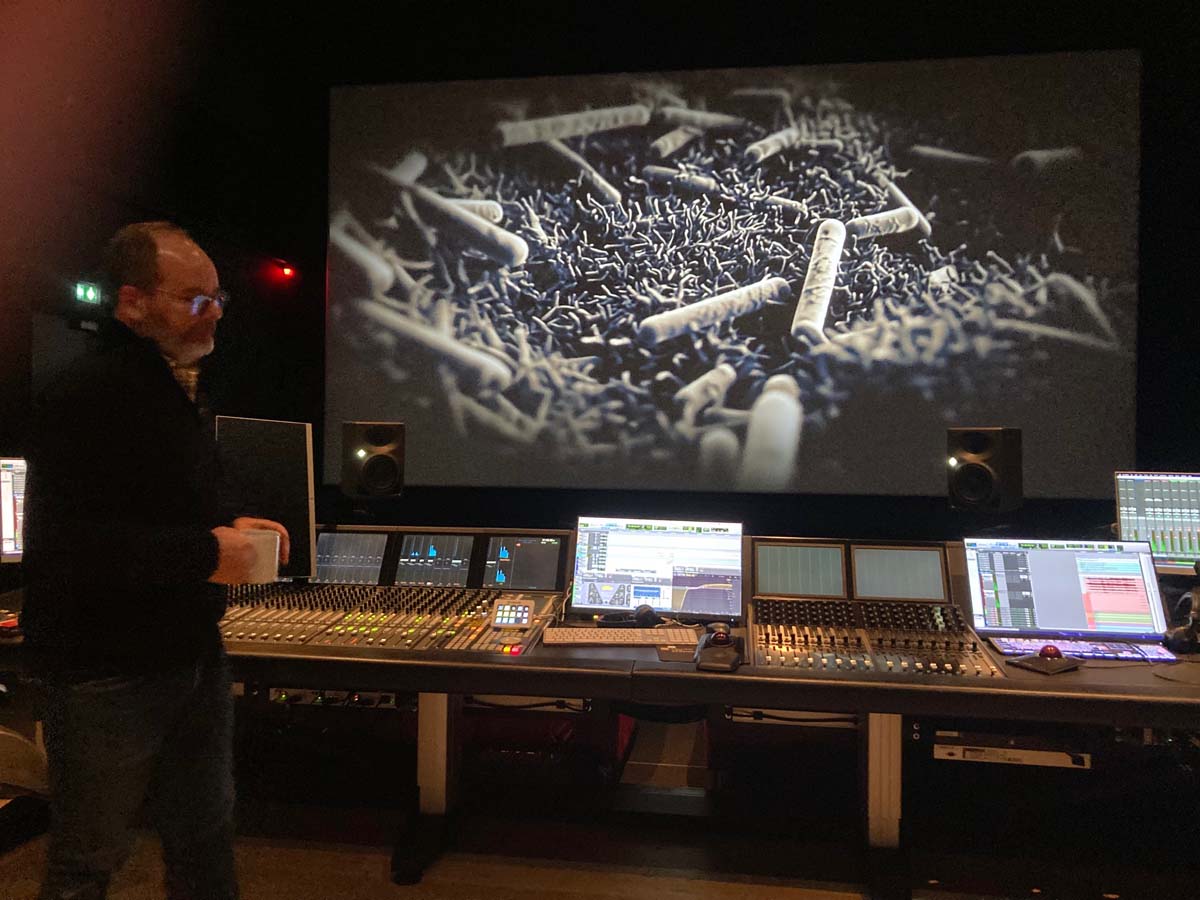
From the Mix Stage, the image in the monitor is the tuberculosis bacteria
I loved the voiceover. The voiceover is fantastic. When in the process, did you actually have the voiceover artist and did it affect the editing when you moved from the scratch track to the final narration?
PECK: The first ten or 15 minutes of the film is when we really struggle and really need to feel what’s the soul of the film? Usually I write a few pages: how do I catch that character? Because it’s about the story. It’s not about an archive being edited.
It’s really the same way I would go into writing a screenplay. The same way I do about doing my fiction movies.
It’s really: how do I grasp what is the soul of my main character and what is he saying? How does he feel at that moment? Usually it comes from a lot of reading, a lot of watching stuff from the character. Then I write something. It’s like an actor trying to understand the character he has to portray.
Alexandra does the same as well with editing. How do we feel from the get-go? And to do that you need the voice. You need a voice that helps you frame those first 10-15 minutes. Usually either I do it or my brother does it. But the discrepancy with my brother’s American accent and and Orwell was a catastrophe.
We decide to find a British journalist friend/actor in Paris because we need somebody who is very in the proximity so that we can give him lines every day to read for us as the film goes.
Then it was magic. So that shows you how important those details are. You don’t think about the finished film, but you have to think about the atmosphere and the emotion that you are putting in the edit.
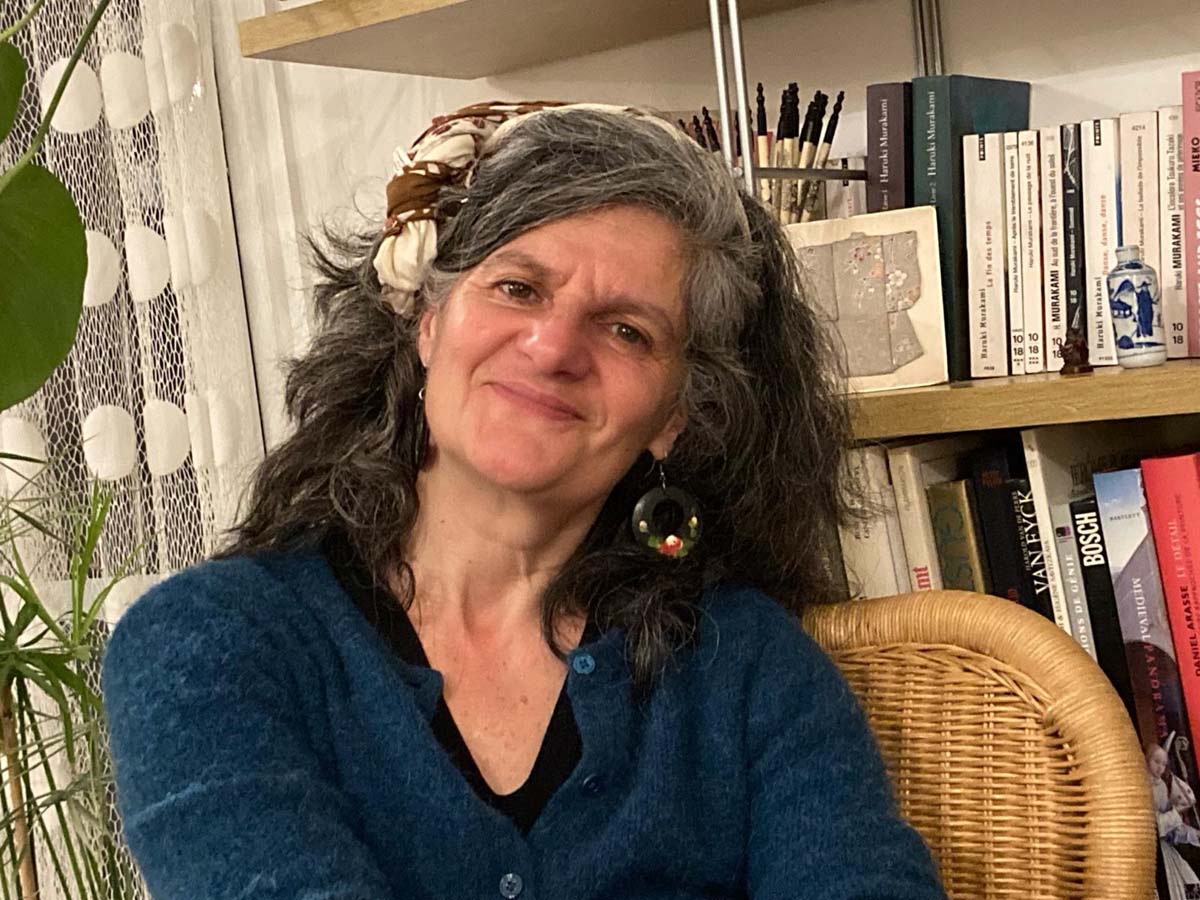
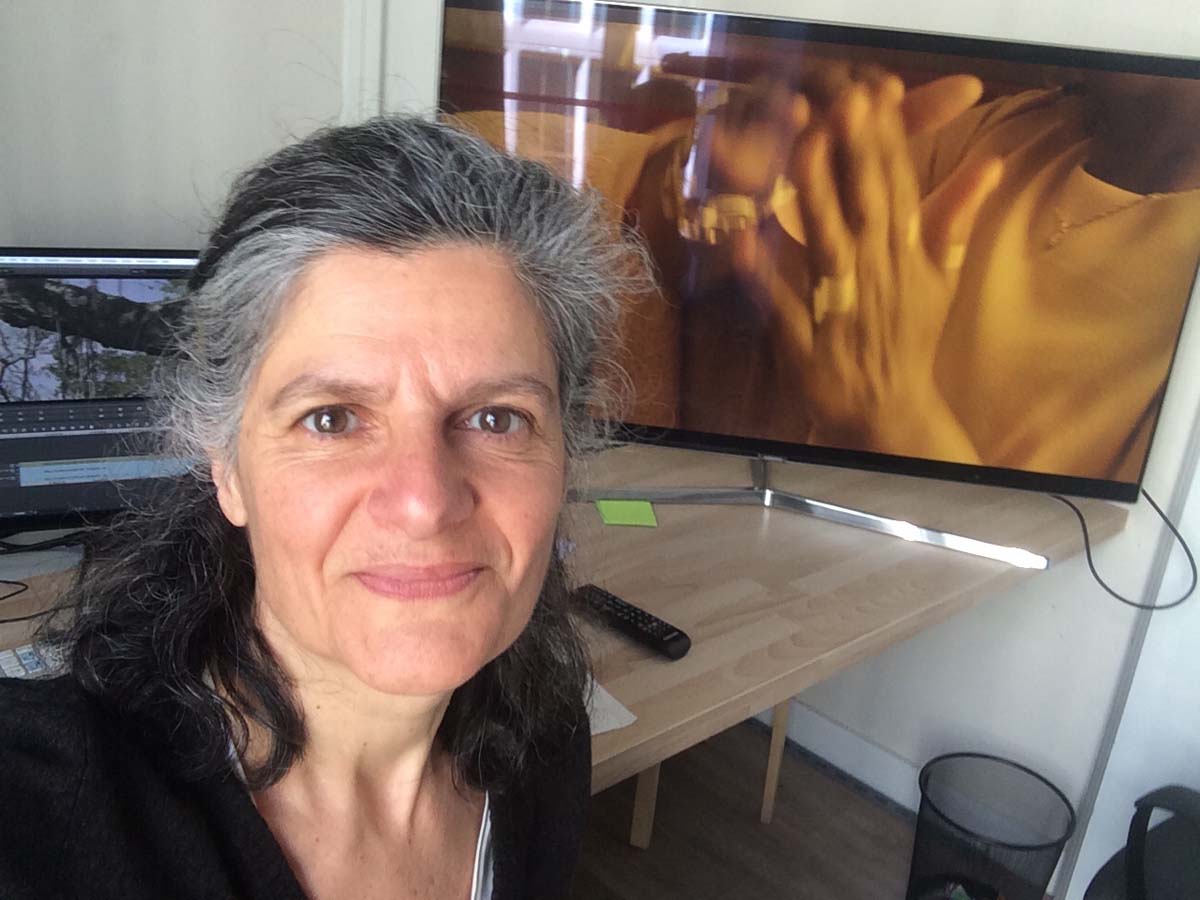
Editor Alexandra Strauss
STRAUSS: It didn’t really change the pace of the film, nor any content because we didn’t have Damian Lewis until it was really finished. Our scratch narrator was just doing disconnected lines with no context. But when the actor came, everything is there so he really can act.
So the biggest change is really that you get some acting and you get some more intentional differences between the biographical moments or letters or diary readings and the political moments. So we get really different voices and different feelings.
So that’s what he added. I don’t remember that I really shortened or lengthened any shots.
PECK: But it does influence because we can see what works and what doesn’t work. Usually we ask the actor to do it again or to do it quicker or to do it slower. It’s a sort of a test run for each sequence. It’s great because you are building it together. It’s not just, ”Do those two lines” or “Do that paragraph.”
We are expecting some sort of result. Sometimes it’s there, sometimes it’s not there. When it’s not there we do it differently. We find another entrance into solving the sequence.
Why is it not working emotionally? Or sometimes there’s a problem with the script. Then you can assess it very early. So it’s really a building process. It’s a process all the time, and we keep modifying that process as we go.
STRAUSS: Yeah. That’s true.
You were talking about the first sequence with the tuberculosis bacilium. That came quite quickly because I remember as I worked with the script Raoul gave me and with the voice - the first phrase is “When I sit down to write a book…”
So the first images I was looking for was about his office. Where was his desk? So I begin with Jorah - with the island, the waves, the rocks, all these things.
Then we watched and said, “We need something stronger in the beginning.” It came very quickly - this image of these dark materials - which related to the sickness but also related to fascism because in France we call fascism The Brown Plague.
So it was connected and this came really quickly from Raoul. So we work and we change all the time.
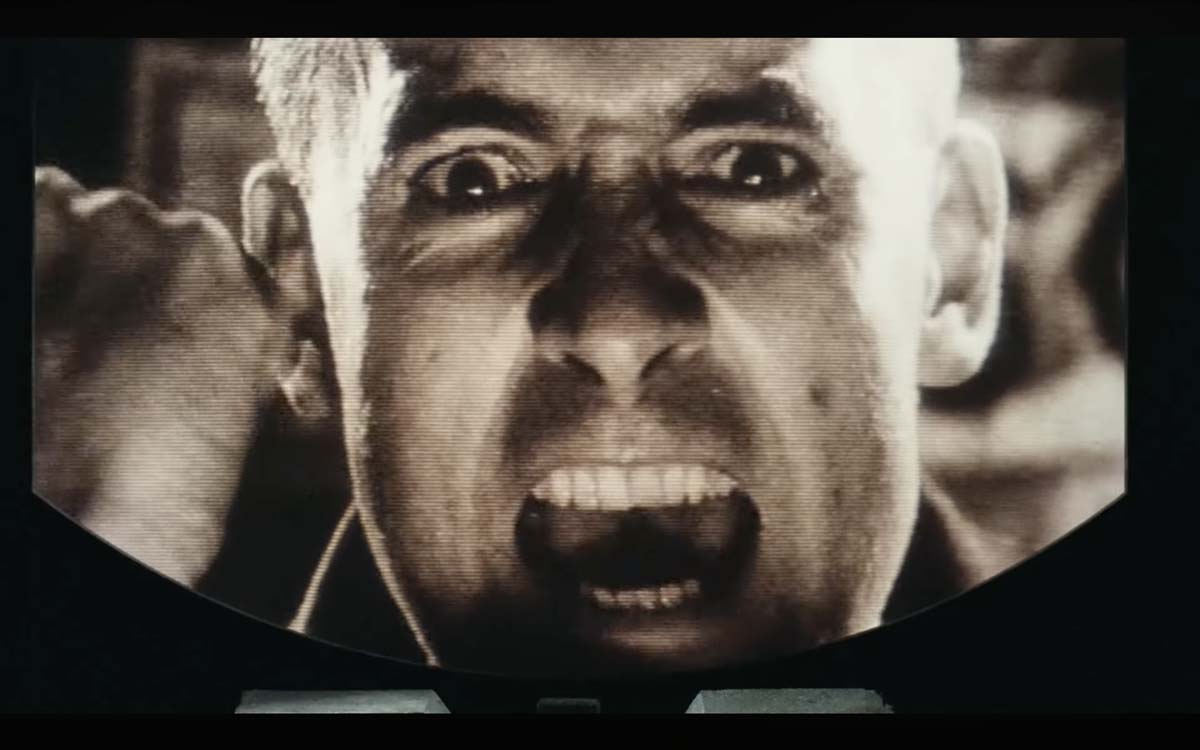
I hear that you’re working on the French version now. How different is the French version from the English version?
PECK: That was an interesting experience. It happened for I Am Not Your Negro as well, and for Exterminate All the Brutes and for Ernest Cole as well.
There is an English original version and a French original version, and with some of my films, a German original version. We redo it - not from scratch - because obviously you don’t want to re-do all of the music and sound mix.
I have to take as truthful the work I do with the actor. I have to also accept what the next actor is bringing - his personality, his gravitas, his patina, and his own understanding of the subject. So you can’t just adapt the translation itself.
A good friend of mine is the French translator of Russell Banks. It’s really an adaptation where we have to find the rhythm of the phrase. We have to find the length that we need, so it’s really a real, original version.
I chose Éric Ruf who is an incredible actor at the Comédie-Française in France, and the head for ten years of the Comédie-Française - one of the most important institutions for theatrical acting in France. He has his own originality. Some of it I have to push back, because that’s how he is.
That’s how he talks - from that place. The way he speaks French. But at the same time, I had to accept his particularity. We finished that last week. We were two days in the studio and for me, it’s a different version of the film. It’s a different atmosphere.
Alexandra edited that version a few days ago. She can tell her own experience, but I felt it was like a totally original story with a new character, who is still Orwell, but with a different gaze.
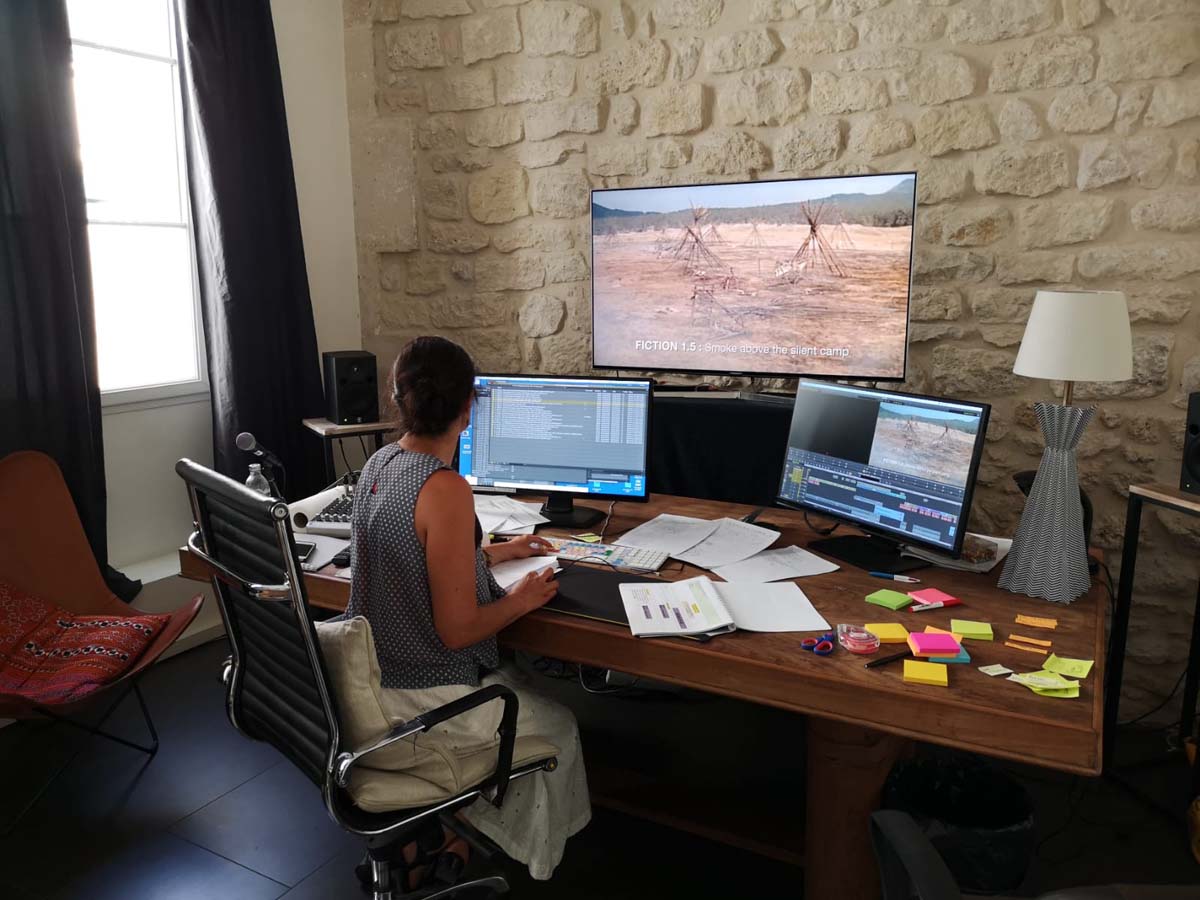
STRAUSS: It’s a different Orwell. It’s really different. It doesn’t has the same British humor, but he has a really French sensibility that he gives and it’s maybe more intimate, so different.
PECK: It brings you to something, about what it is we are making. Because the more I work on that kind of film, the more we are basically - Alexandra and I - are opening a different way. We are at a stage where it’s like fiction, but it’s reality.
We use the tools of fiction. We use what the actor brings to a material. It’s not just documenting 1 to 1. Audiences for me today are very hard to penetrate. They are so bombarded with images with feelings, and they don’t trust images anymore.
They don’t trust the makers of a film. They have an allergy to so many things. So we have to try harder to get their confidence… for acceptance. You have to come with an open hand and say, “I’m just offering you that. Let yourself go and go into that story.”
You have to use the tools of fiction. Fiction knows quite well how to do that. You’re mastering everything in documentary. You could say, “I’m the victim of whatever I catch with my camera or whatever my interviewer gives me.”
But you have to go beyond that. You need to take more artistic control. You have to find different type of control to give something that is much more than just capturing a reality. You have to tell a story.
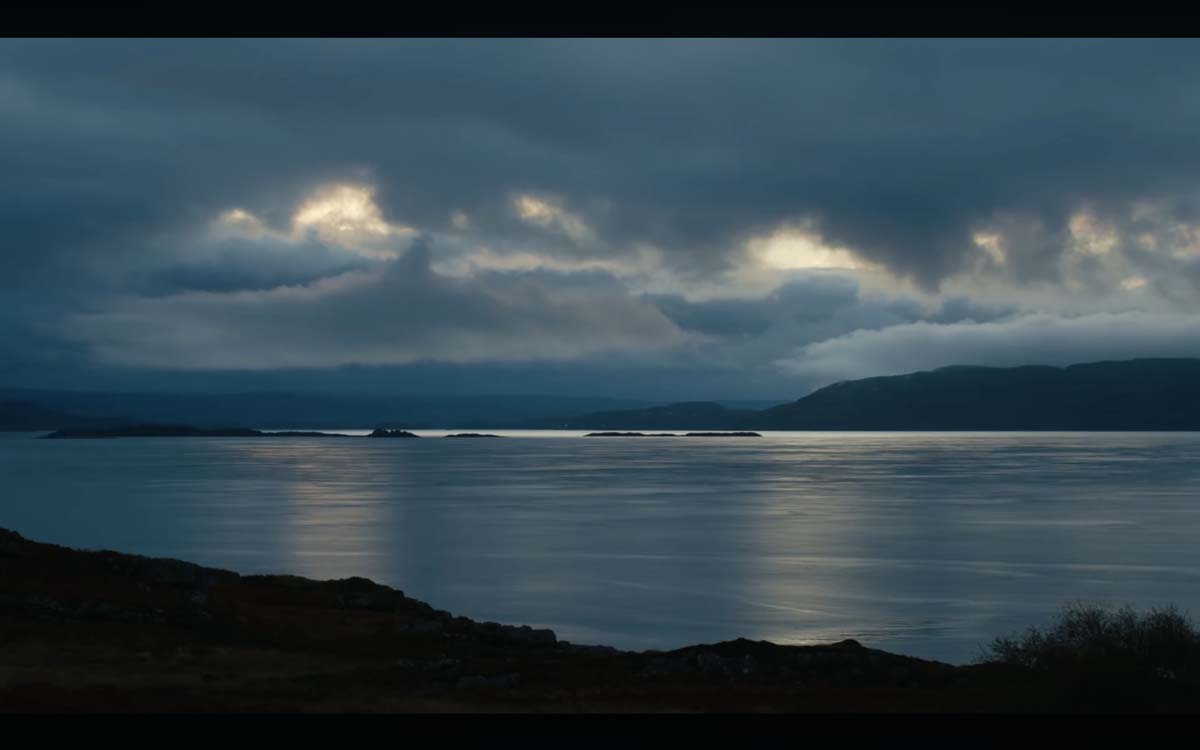
I want to talk a little bit about the pacing of the film. There’s a lovely moment early on - the first time we go to Jura. There’s been some voiceover, but then that goes away and it’s just wind noise and beautiful landscapes. Talk to me about the value of allowing that to happen and not just running narration underneath all of that.
STRAUSS: In this film we had to make someone come alive and allow his writings to reach people from today. So we established a character through the voice, but also with this layer of writing in Jura and spending his last year of life.
So it was really like fiction from the very beginning to establish this place - which is this Scottish island - remote, very far north from England. So we had to take this time to show the place.
We went twice to shoot there - in two different seasons - so we could get this feeling of Orwell writing there and living there and being this man between sickness and better moments and writing.
So really Jura is one of the characters. We come back regularly to the island, and you discover the house. We use fiction tools to establish that.
PECK: Let’s say a Shakespearean actor comes on stage. He has just a few minutes to catch the audience and you know whether it’s going to be a success or failure. Those few minutes at the beginning, that’s when they capture everything. For me, it’s the same.
The moment that the first phrase says, “Why I write a book…” I know it’s like the first big phrase of the play where everything goes or not.
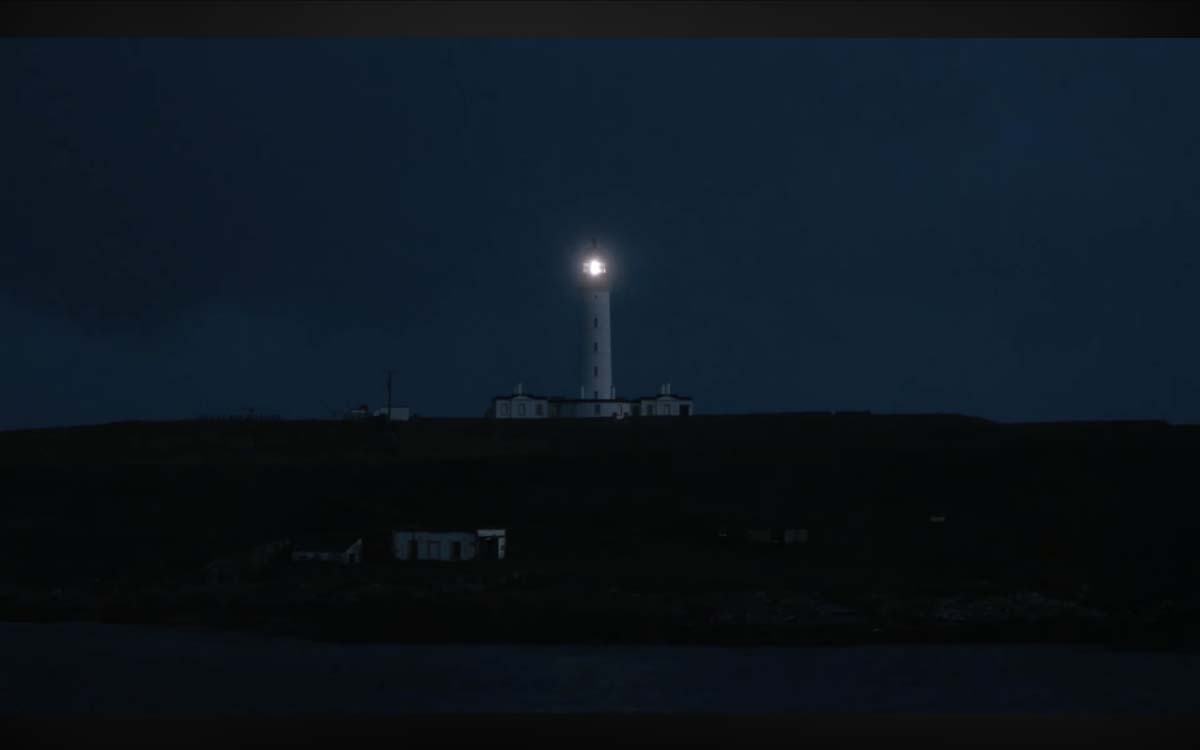
By the way, when we record the voice over, we usually record chronologically, but when we finish, I re-record the beginning because by then the actor really knows his character. He is the character.
It’s the moment where you grab everything and you have you take control. With James Baldwin - I Am Not Your Negro - it was the same.
I knew that’s when everything is played because I am bringing you into that world. I am bringing you into that piece. That means everything else you have to let go. I’m introducing the written as well. Introducing the way you should listen.
The way it’s mixed. That means the words are important. Consciously or unconsciously you realize, “Okay, the words are important. It’s not just a commentary. It’s not just a narrator.
It’s not just Attenborough. It’s the real voice. It’s somebody talking to me.” So those are the moments where you have just a few minutes to do that.
When you are editing those - maybe not the final because you’re locked into a pace and a timing at that point - but when you were dealing with the earlier scratch narration, how much did you feel you needed to open up moments to give them weight, or was that more something that you did in the directing of the actor?
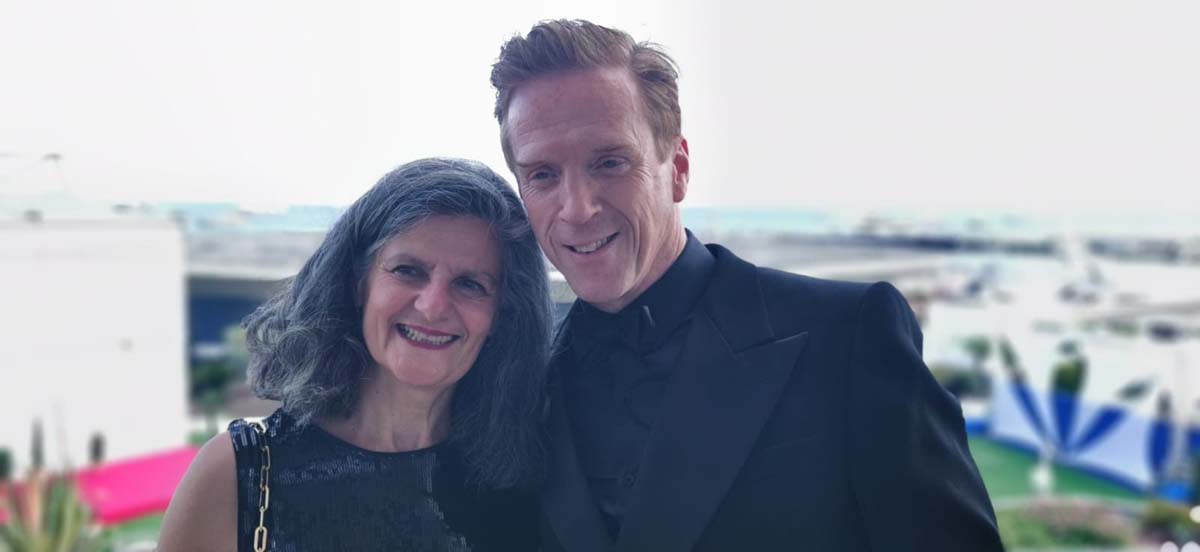
Editor Alexandra Strauss with Damian Lewis, who voiced Orwell
PECK: No, because the weight is already in the choices you made in the text. It’s a very intense text. So the way you do it, and the way you dramatize the sequences. It’s not that I look for a lot of text and put them in the back.
No, I know what I’m reading and choosing. I know, “Okay, that text will go toward the beginning. That one will be somewhere in the middle, and that other part will go toward the end.” So we are constantly building a dramatic structure. The texts respond to each other.
The text sometimes says something and 20 minutes later it says exactly the contrary. I’m keeping the audience on their toes. It’s a participative process.
So when the whole scenario is finished, then of course, now you have an actor who will embody it and will bring additional layers, additional expectation, additional contradictions, additional humor. So you are constantly enriching the whole process.
That’s why it’s really multi-layered. It’s not something you can just write down from your head. No! It’s like being a partner in a process. You can’t write about running while sitting in your chair. You have to be running, then see, “Oh, yeah! So after five kilometers, that’s how I feel.”
Then you interact with it, you know, “Oh, I’m thirsty now. Oh I’m sweating.” You have to go through the process. It’s not linear or brainy. It’s all multiple ways to grasp what you’re actually doing and the impact on you.
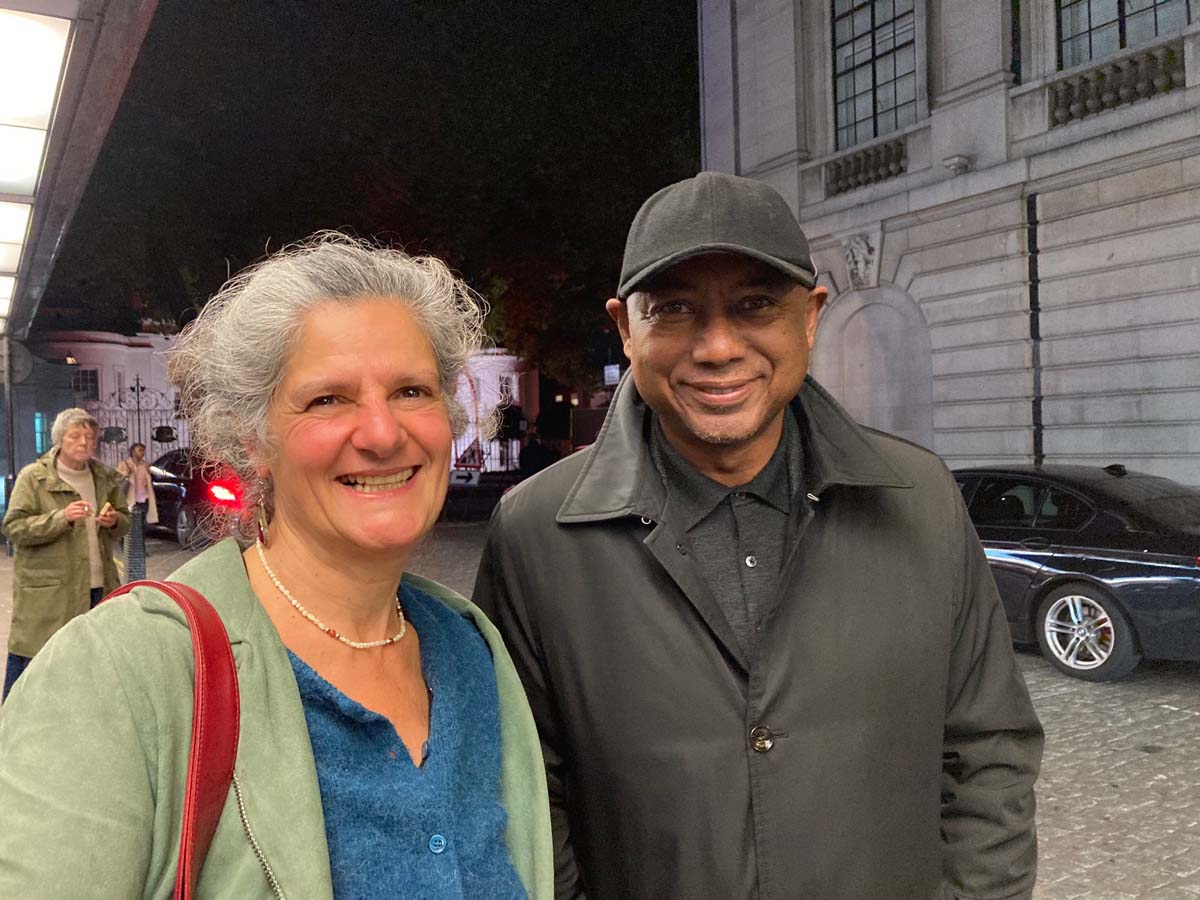
Editor Alexandra Strauss and director Raoul Peck
I want to talk about some of the tonal choices that you made that I loved, both visually and in audio. For example, coming out of the opening titles, there’s a beautiful train sound effect there for tonal purposes - I would think - for of the way it makes you feel, and also the images to cover a given concept, like using the Oliver Twist movie clip. Can you talk to me about the choices you made in editorial to deliver a tone?
PECK: First of all, we make sure that we have the budget to hire a good sound engineer to work on that. We used to make documentaries for not much money. It’s usually, a 1 or 2 or 3 member band. Now I go about making documentaries the same way I go about fiction.
I know the layers you need to give quality to your film. I don’t take it lightly.
The sounds that we invent or that we use, we take a lot of time to perform them, to find them, to replace them because they are important layers of the whole system. If the sound person is somebody that I have never worked with, I have to educate him.
A sound guy from fiction films put all sort of sounds. I tell them, “I don’t want all of this because I want organic sounds to the subject itself.” There has to be a reason why I use that sound. It has to be an organic reason, not just the sound exists for itself.” For example, “I need something harder, and at the same time, it has to be scratchier because that’s what he’s talking about and that’s what I feel.” I have to be able to explain why I use that sound.
Nothing can be random. You have to give yourself time for that. You have to find the right people to do that. People who are not just technicians doing their job.
No, it’s a creative process for everybody. I want to pick his brain. I want him to bring me everything he knows. It’s a communion. It’s finding things together.
We miss that more and more because of the technology. You have younger people who don’t care sometimes or don’t know that organic link that you need.
It’s not just having beautiful pictures, beautiful sounds. No! What makes the force of it is that it’s organic. It’s the difference between making a product or making a work of art.
STRAUSS: The sound must support the voice and the text. The text is really pure and you get it, but you also have to give some more meaning.
So the sounds chosen are giving more meaning. I also needs to make you feel as if you were sitting with Orwell in some sequences.
So it has to give the sensation of being in the same space as him, but also - because we work with photography or all the black and white archives - we also have to recreate all the background sounds of the photography and old archives, to give it life, which is cinema. So sound is there for all these reasons. And music, of course, which we work with from the beginning.
There’s a fascinating montage of direct-to-camera modern portraits as Orwell describes his return to England and his memories of his time in India. Can you talk to me about whether those portraits were something you discovered later? Did you originally have archive or something else in there?
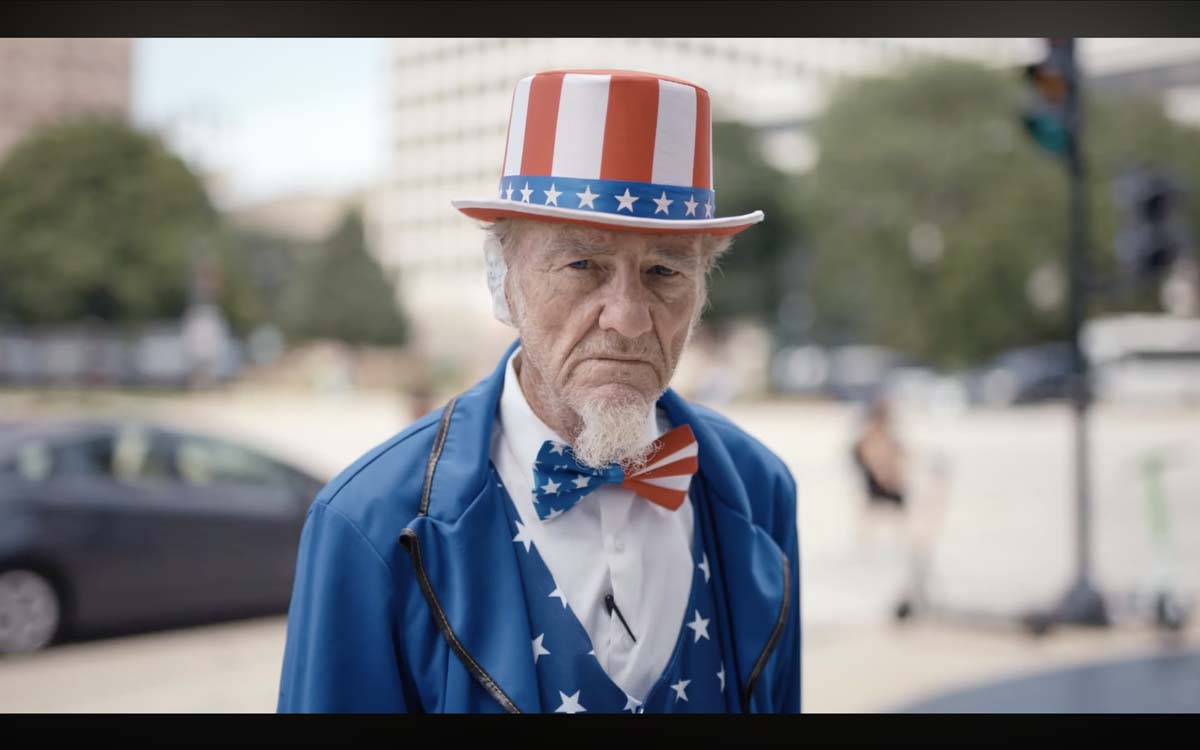
STRAUSS: That was something that Raoul wanted from the beginning, but we didn’t have it from the beginning. Because we discover the film little by little, Raoul went to shoot them later on. The portraits came in the middle of the process.
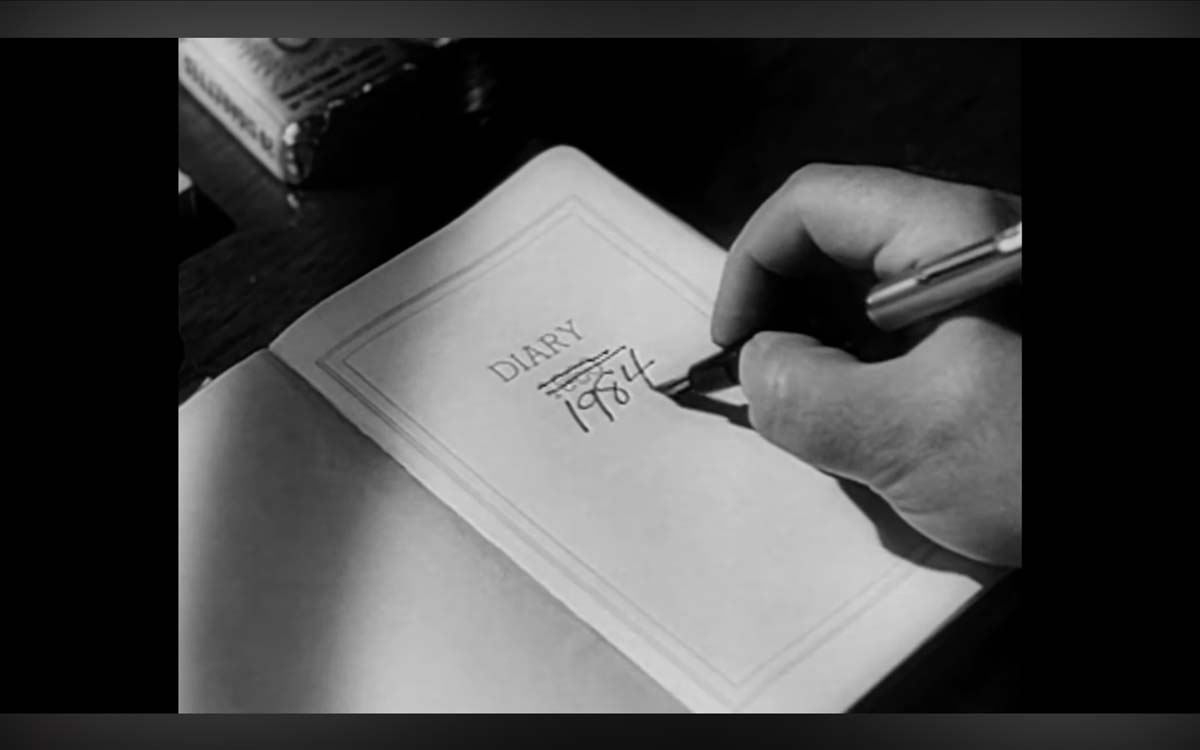
This film is about Orwell, but he was never filmed. There were only pictures of him from his childhood. And a few photographs of him as an adult. It’s crazy how few pictures exist. We also had the movie adaptations of his books, like 1984.
We had research about the time he lived in Burma, and the Spanish War, or the life of the workers in England.
When we put the modern portraits in, it was to make a really musical sequence that was integrated in the body of the rest of the film.
That was an idea that was linked to Raoul’s idea to make Orwell’s words contemporary to now, which was something that we really wanted to build. Having all these people from the three places where he had lived was also saying, “We are talking to you now.”
PECK: We are making film about people. We are making film about life. We are making film to have an impact about what’s going on today.
For me, those people are the people for whom we are making those films, and they are also witnesses. They can be also victims, but it’s important for them to be human beings and it gives a sort of universality.
For me, it reflected my own life. I’ve met people from many different continents, and I call a lot of them my friends. And for me, those portraits reflect that too. You know that we are all the same human race. There is only one race.
There is class distinction. Yes. Of course. But, we are still trying to survive this planet. So those portraits bring us sort of “liaison.” A link to a humanistic genre. Humanistic feelings of belonging together.
Talk to me about the choice to use images like the Oliver Twist movie or Buster Keaton, things like that, that don’t have a direct connection with Orwell to deliver what? The story? The tone?
PECK: I come from Haiti. And in Haiti, if there is something I learned it’s that when you don’t have what you need, you need to invent something. In Haiti there are mechanics who can repair a car just using something that they’ve found…like Cuban mechanics do.
They keep all the American cars running even though they don’t have the pieces. We don’t have time to complain, like, “Oh my God! I don’t have pictures for this!”
I knew that in order to tell my story, I needed huge folders of images. You have access to a writer’s whole body of work. That’s a lot of stories. That’s a lot of motives. So you better have a chest where you can go grab stuff and find stuff to tell your story.
So you need pieces of stories that people can connect to. I had the idea: Universal negotiated the rights with the Orwell estate, so Universal has a film library! So we decided to go and ask them, “Could you give us access to that film library, possibly with a very low price?” It was not a long negotiation.
They were kind enough to allow us to have access to everything, something that you normally can’t do because of the price and because of the rights that they usually don’t want to give.
Finding that incredible shot in a Swedish film. Or that incredible shot in an American classic. Then you recreate this whole magic of cinema. You can connect to people because people will remember those shots. I remember that shot from Out of Africa.
I remember watching that film. It’s an incredible film, but I had mixed feeling for the film. The same mixed feeling that you see on Meryl Streep’s face. It’s incredible when you can find those moments. It’s says so much about cinema.
So much about who is telling the story. When you see Meryl Streep’s face in that moment where the German actor says, “This is your cook.” She doesn’t know how to react. She gets it.
That’s an incredible moment! Making all choices is really not just random choice. It’s really stuff that has an organic emotional connection.
STRAUSS: We watched a lot of catastrophe films and end-of-the-world films. In the end, we didn’t use much of them – just the Tom Cruise at the end. We watched monster films, but they didn’t find their place. Using Oliver Twist was really from when Orwell says, “From a very early age, I wanted to be a writer.”
So you can think: “What did he read when he was ten? Probably British writers. It’s also a social story, so it fit so well.
Raoul, I know you have many interviews to do today. I’ve enjoyed talking to you. I’m going to let you go, but Alexandra and I will continue talking about the editing of the film. Thank you so much for joining us.
PECK: Thank you.
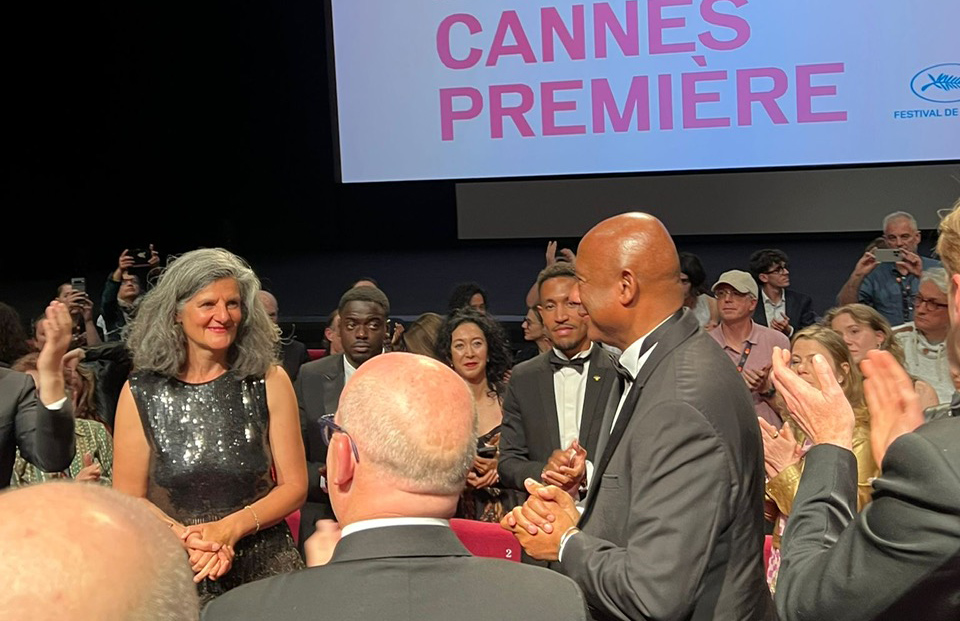
Editor Alexandra Strauss and director Raoul Peck at Cannes.
I wanted to talk about the structure of the film. Early in the film there’s some time devoted to Orwell as a writer. Then there’s a short montage of government terms like “collateral damage” and “peacekeeping mission,” then we go back to the writing. Talk to me about how the structure of topics was created.
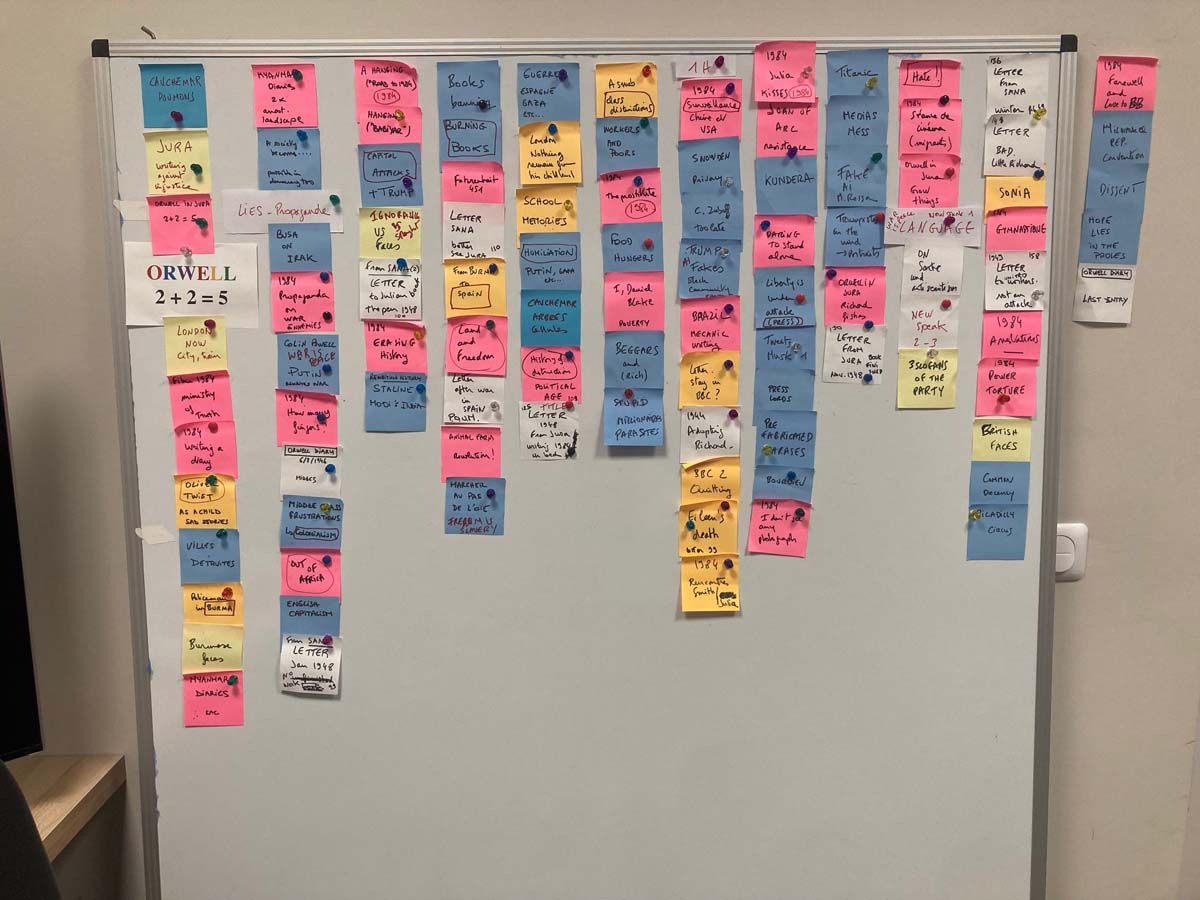
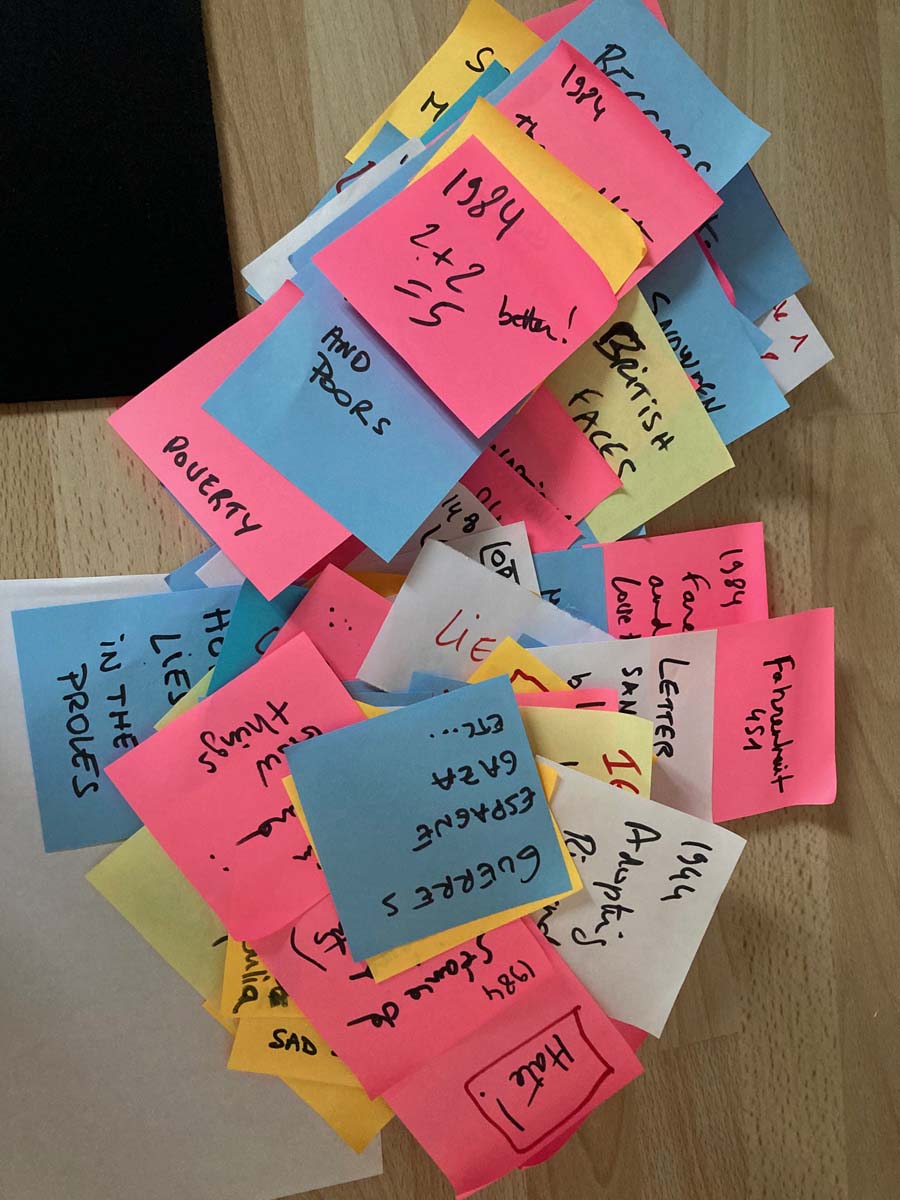
STRAUSS: When you listen to the text you can see that you have different layers, so I put colors on each section of the text so I could count how many layers I had.
I’m sorry. Can I interrupt? What do you mean? Did you put colors in the timeline or on cards on a wall or in the script?
STRAUSS: I put it on the wall. Each morning, I read the script for what I was working on and thought: “What is this?” Then I put it on the wall. So with the text you have really different moments.
Some are biographical moments which were easier to put images on. We had photography and archives about the period he was talking about. But there were also very political sections of the script that Raoul took from Orwell’s essays. It was really political and abstract.
They were more difficult because you have really to understand what it means. If you want the audience to understand, you have to really work and try many different images over the voice over to feel what it means. It has to act like a glue so that the meaning comes out.
When I work with Raoul, I try many things, so that it seems as if there could not have been another image at this moment. What was difficult there is that Orwell is speaking about the 30s but Raoul and I wanted to make this text resound now.
We had to find how to go from the past to today. I remember the first sequence where I really got it was this part of the script about hanging.
Orwell was speaking about his memories of Burma - when he was a policeman there. I was looking at all these pictures, trying to figure out how to make them resonate now?
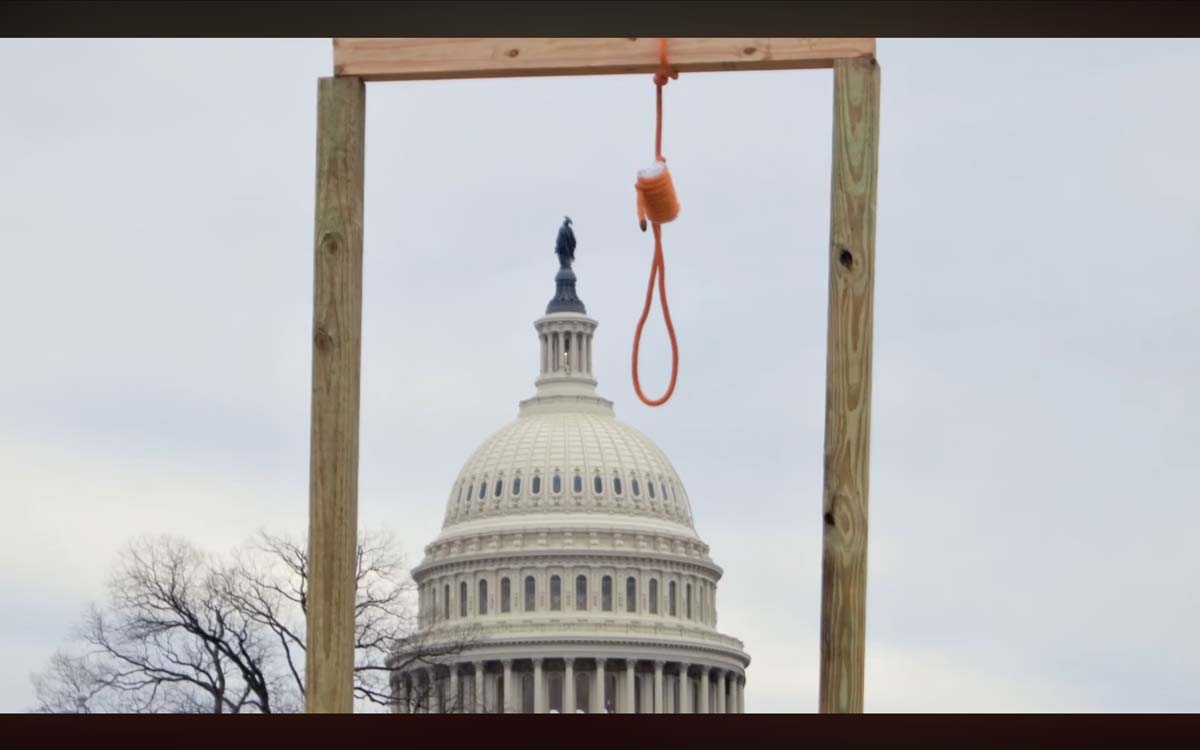
Suddenly I found this picture of Washington, D.C., on the day when the Trump supporters went to the Capitol and there was a gallows and a noose.
I used it and suddenly I was into this sequence. That was really an important moment in the edit because we jumped from one classical moment in the script to suddenly nowadays.
That was an important moment. Then I could try with other moments when he speaking about the state lying.
Then I found a George Bush moment about the Iraq war. So after ten minutes in the film we make this big jump and try to go to now and be very free with this.
You mentioned that there were a couple of places where you had concepts that you were trying to explain, and that you would try multiple sets of images over them. Can you think of some of the scenes that - maybe now they feel completely natural, the way that we’re looking at them - but maybe you’d tried something else originally?
STRAUSS: There was a section in the script about totalitarianism, which begins with, “Society becomes totalitarian” and Orwell speaks about the ruling class. Quickly I tried using portraits of dictators all around the world. Then you have this moment about changing history.
We were wondering: who were the first people in history to really work with propaganda? And of course, it was the Soviet times.
That’s how we came up with the image of Stalin erasing his collaborators from the photograph, because he just killed them or sent them to the Gulag.
Then you can go to also nowadays in America with the lies and how politicians now can really say anything they want in the newspapers or on TV and how people believe it.
We were speaking about layers: I was speaking about the biographical, then more theoretical, but there was also this layer of excerpts from 1984.
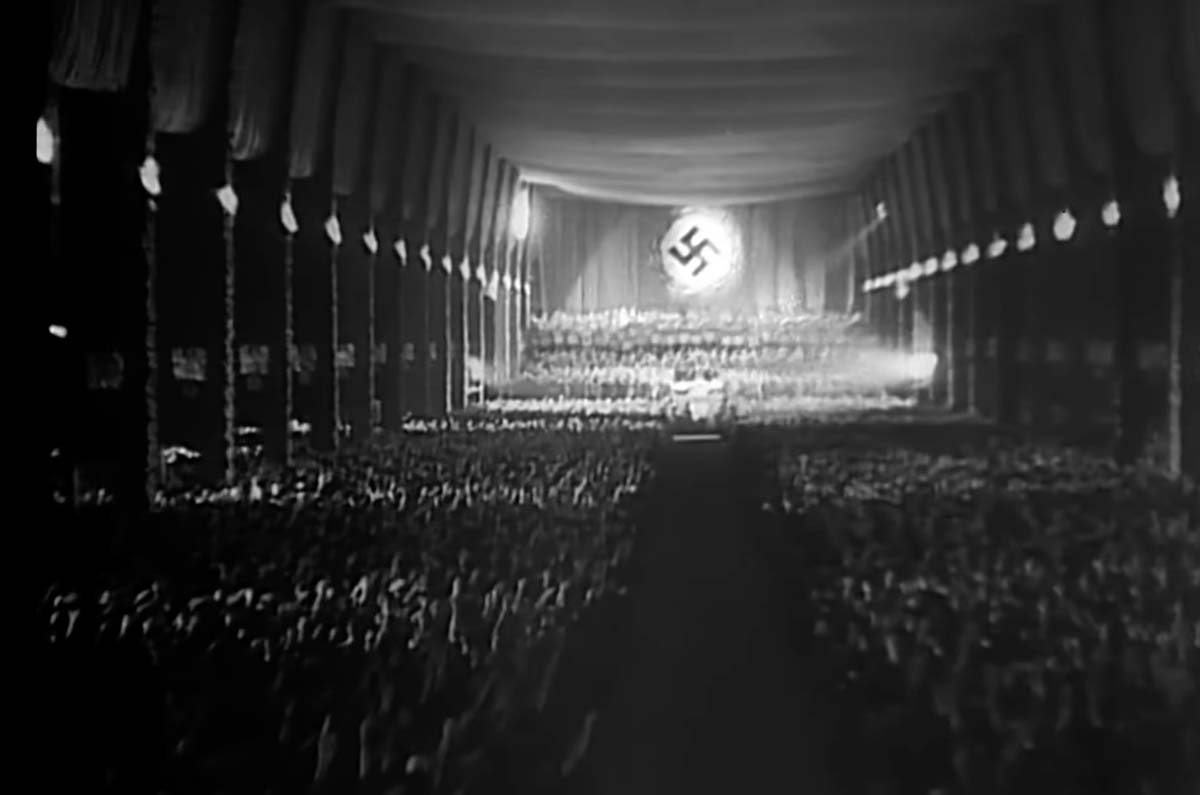
We had many films from the 50s and the 80s that I could use. So that was helping a lot. I could try to give - not the whole story of the book, of course - but to try to help people remember about reading the book as all of us did when we were in school.
Who were the characters? So I used clips of the film to help people remember this book that Orwell is trying to write.
There is some very nice animation when they’re talking about the school book bans and they’re showing all of the books that have been banned in America. There were like 3,000 books, so there’s no way you’re going to show 3,000 books. So how do you pace that animation? How do you know how long you should spend on that topic?
STRAUSS: I work with the graphics very closely. I make a maquette with text. (A maquette is a French term, used here to mean “placeholder.” More formally it means a scaled-down model or sketch of a sculpture or building.)
Then I make some sketches so we can see how long it will be, often it’s connected to music. We send the sketches back and forth with the animation company and we don’t know how long it will be. Often it’s really longer and I make it shorter.
For example, the section about the lies in the newspaper was made from an article in the New York Times. Raoul proposed this and we made many attempts before we found the real form that fit the film.
Graphic artists work with colors and shapes, but in the edit room I really need to have this slow pace so that people can read and people can understand first, then you can accelerate once they understand the idea.
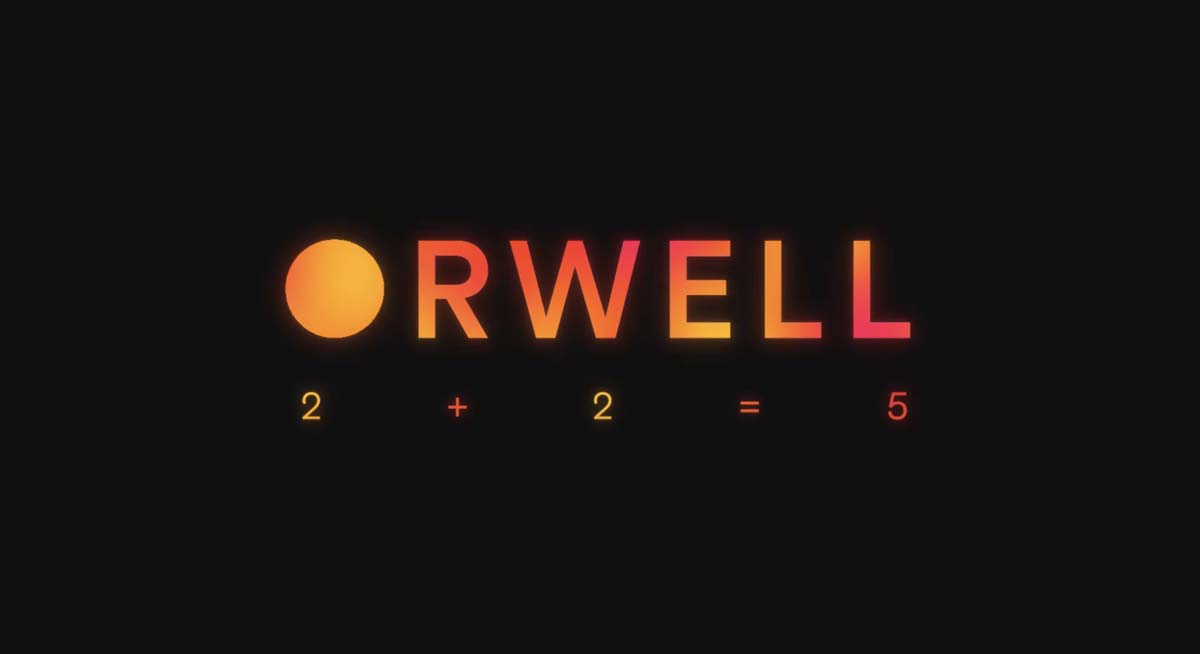
The graphics company wants to put everything in the beginning, but you have to really give them the idea that it has to be readable and has to be slow.
The same with the animation of the prohibited books. We wanted to give so much information about the books, that it was very different writers, very different places, very different stupid reasons.
I think it was Raoul’s idea to use the idea of a saloon jackpot (slot machine). It was a good way, because we could show the faces of the writers and the different columns of information and it was really playful, which we always try to achieve, so it’s not only things to read or information to get, but something that is also cinematic and playful.
Talk to me a little bit about the structure of the story. So much of this is about Orwell’s vision of the government and corporations lying to you: trying to get you to believe a lie. But the other part of the film is Orwell’s illness. You could cut between those two things at any time. You could have put the illness all at the beginning. You could have put it all at the end. How did you decide how to break that up or when?
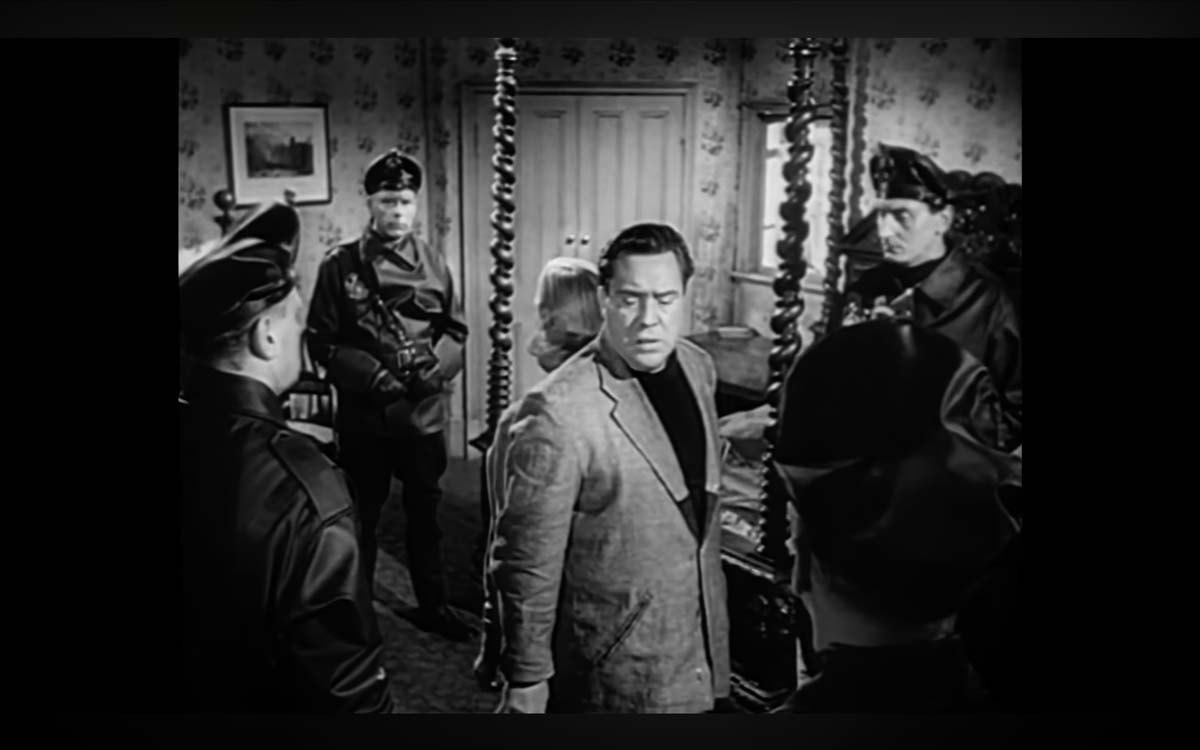
STRAUSS: That really begins with the script. The first images I used - the very first day of the edit - I stole some images of the island of Jura from an old BBC film from the 80s that we use in the film twice.
The sequence in the car with the little boy and the sequence when they are fishing and going to the beach. Those clips were from a fiction film about Orwell on Jura.
So at the beginning, I used a lot of images from this film that are not there anymore because Raoul went shooting on the island, so we replaced them. But the very first day, I began with these images from this film and setting the set, which was this island.
Obviously the chronology of the film would be these last, let’s say, two years, when you began to visit this island and sat there writing, which was also the moment when he was sick. We knew that the end was his death and that the beginning was when he begins to go to this island.
In between you had him remembering his life and the more political parts of the script. It’s about regulation. Going back to Jura - to the island - was like going back to the main story. From there you open the branches of the tree to the different chapters.
So it’s really while working that you feel that, “Woof! I need to breathe and I need to go back to the main characters.”
We need to speak about his writing, speak about his health, and also to mark the time going on and on. It was natural to chapter the whole film with these sanatorium moments, also because he couldn’t stay on Jura the whole last year. He was really, really sick.
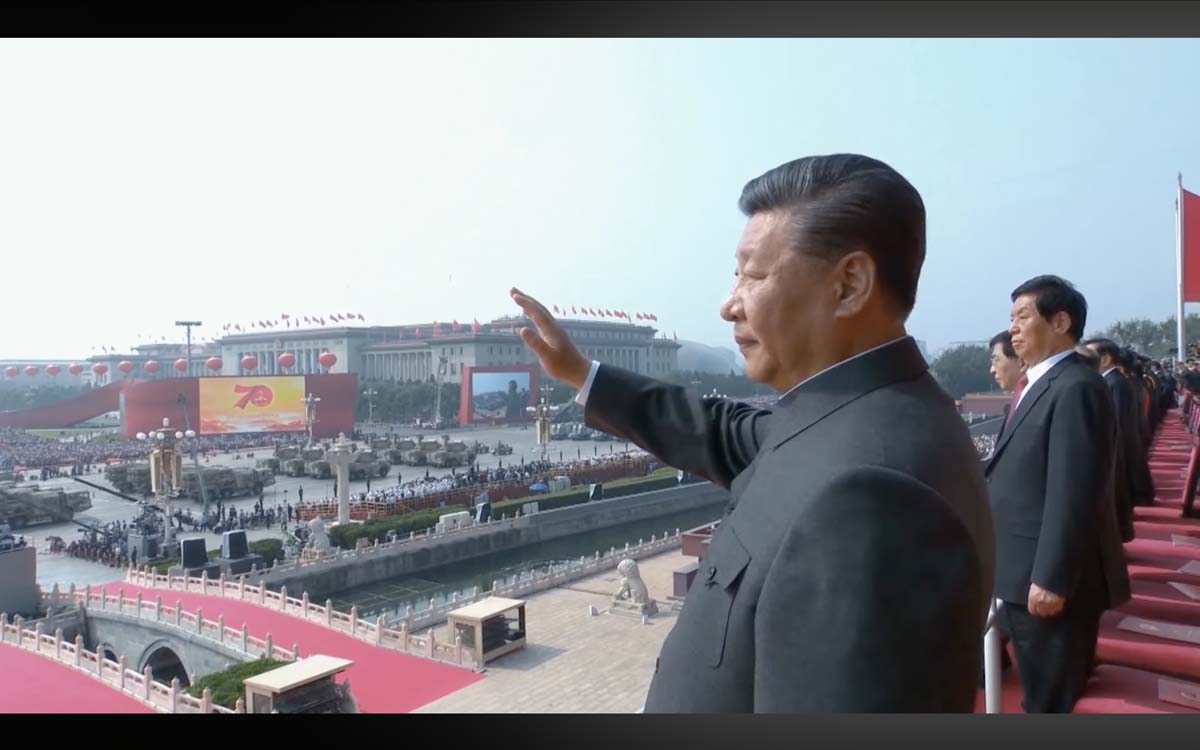
I had images from these British sanatoriums. There were a few in the archives, so I could make different chapters with this archival which are absolutely not connected to Orwell, but they are from his time and they are real images from these places that he could have visited.
I think the last part - because he gets sicker - there were more of these sequences because we are getting really close to his being really ill and finishing the book. I try to be kind of regular, so the layers are coming naturally, in a way.
The same with the biography, when he speaks about his youth, or about Burma, where he was a young policeman, or about coming back to England, then about the war in England. His life was not so long. Also about the school where he learned a lot about power and the world of men and males.
Talk to me about intercutting archival - like escaping the Spanish war - with the modern - like Gaza - and tying those together. What drove you to say these archival and modern images are going to be tied together? You already talked about it a little with the January 6 footage and the Burma hangings…
STRAUSS: It’s by working, of course! For the war in Spain we had 1 or 2 pictures of him with his wife there. Then we used some fiction film clips to give the ambiance of the English people that went to the Spanish War.
I think the script has this turning point where suddenly Orwell himself leaves the Spanish war literally, and goes to more general ideas about how people can think, so that’s how - at the end of the sequence - we go to Gaza because we were speaking about how people like to not be aware of things they don’t like, when they like people.
Orwell was speaking about Spain, but wondered what could we tie that to now? We were working on this film last year (2024), from spring to December. It was a hard film because usually when you work on fiction or even documentary, you have this distance – for example on Ernest Cole it’s about apartheid or it’s about life in the United States in the 60s.
But with Orwell it’s kind of terrible because when I left the edit room and going back home, it was the same world! It was not easy! It was the moment of the Gaza War. It was a moment of the first year of Trump’s coming to power.
So we were grabbing and trying things, but also trying to ensure that the film will not be stuck in this year, but could still be seen in five years or ten years - so trying to find things that were really general. How to find the good news footage and how to find the good archives that could survive, which was very difficult at the end because so many things were happening all the time. So we had to resist putting them in the film.
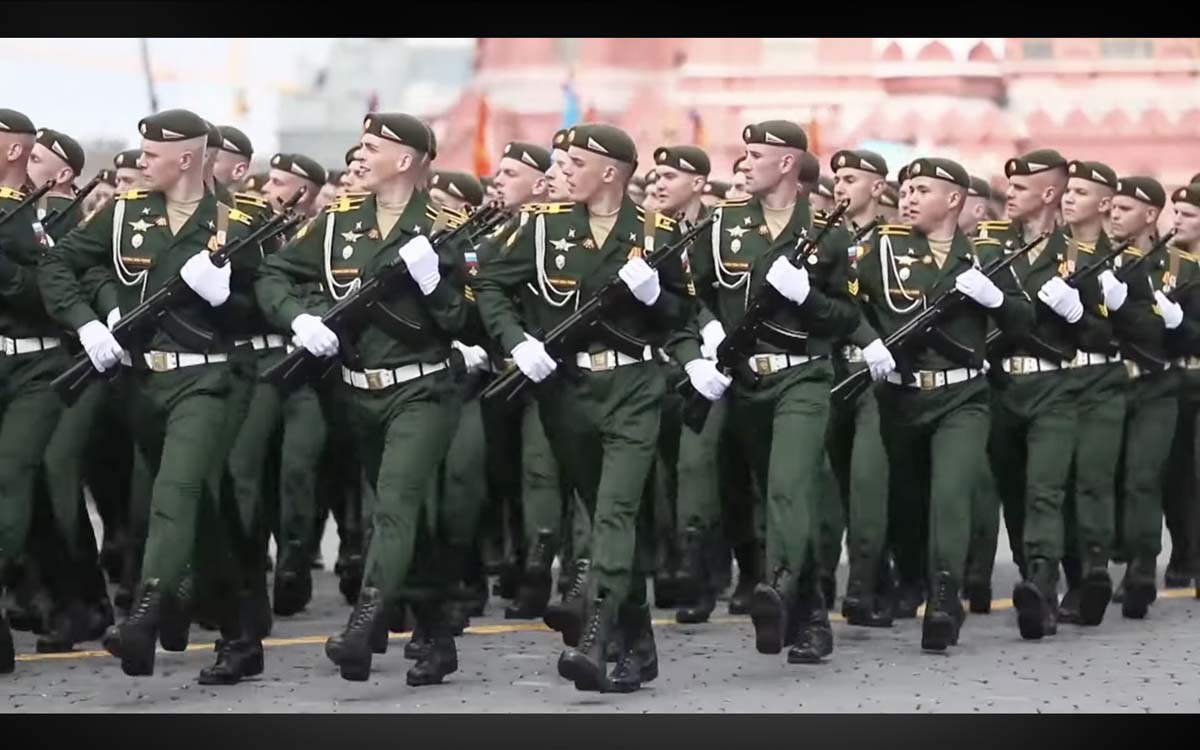
Talk to me about the importance of organizing or how you organized, because it seemed like every scene you could be pulling from feature films, modern day news footage, archival footage, stuff that Raoul shot… any single scene could have all those things. So how were you organizing your imagery and your audio?
STRAUSS: I’m not analyzing a lot. I’m working from day to day with all the material. I try to find a balance between all the types of material. I try to keep the audience following with the script. The closer they can be to the character and that they can feel all the feelings that he goes through. So it’s fear or weakness or happiness. So this leads my choices.
There was a also a demand from Raoul to pay tribute to English cinema, British cinema. I watched a lot of films from those three years and tried to find images that were appropriate to the moment. Then I try it to see if it works or it doesn’t work.
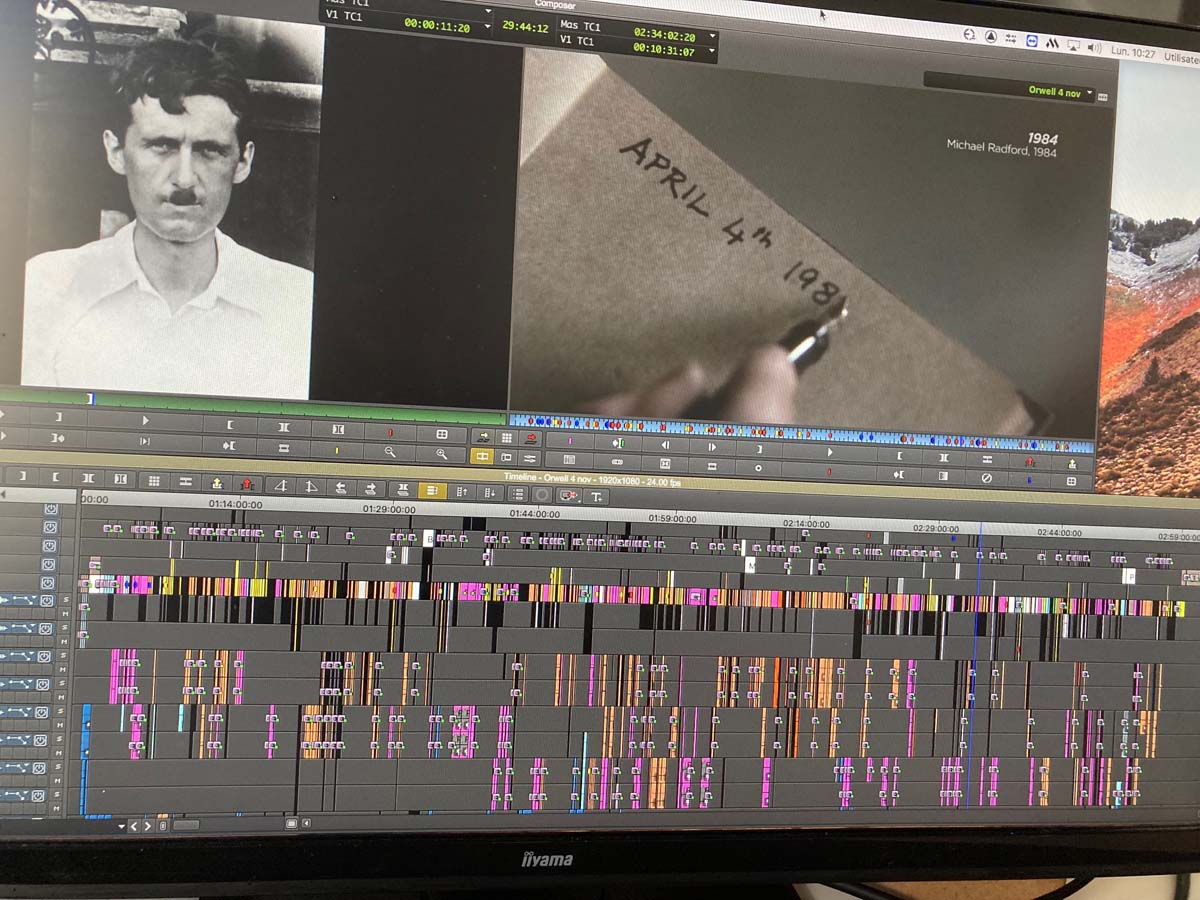
I asked my assistant – when she was bringing things into the Avid - to organize it by first video things, then photography, also news - because we used a lot of TV stuff in this film. Then by topics, of course, like Burma or colonialism in Burma in the 20s.
Then England in the 30s. And the BBC from the BBC archives, for the time where Orwell worked there - which was a very short time. The oldest British films that I watched were to illustrate when Orwell studied at Eton College. I tried some films about Cambridge from British cinema that didn’t work at all.
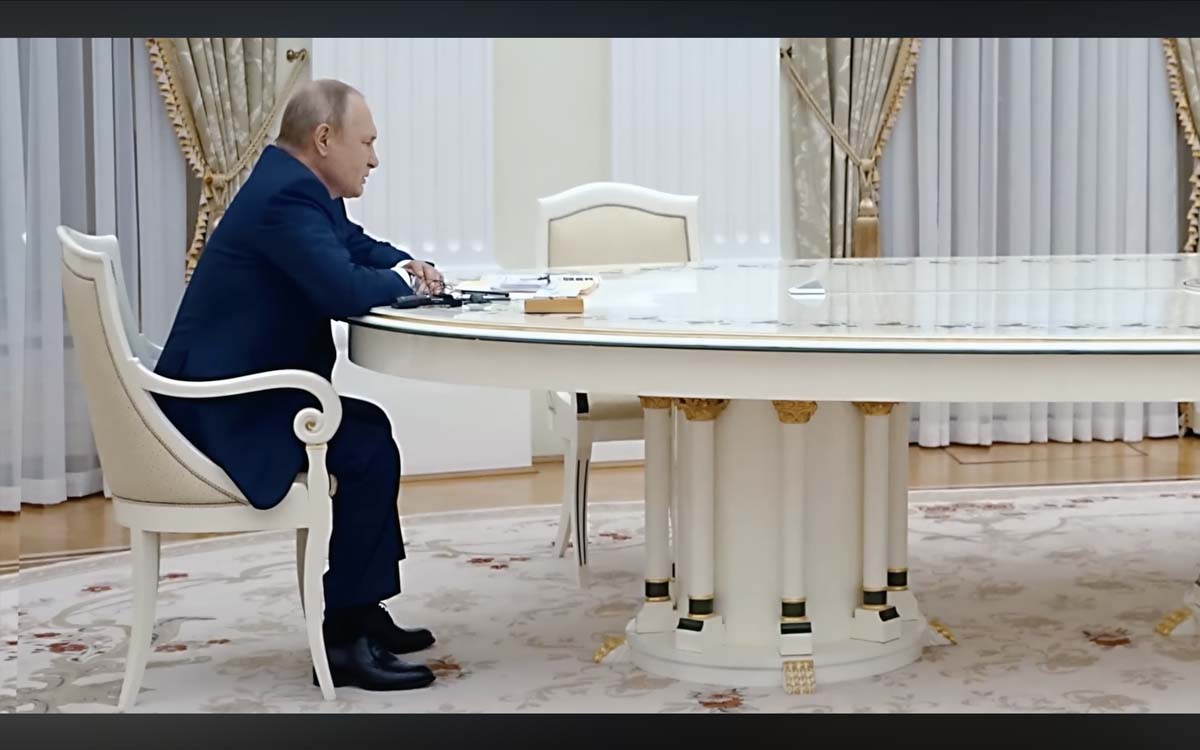
Because I know the script very well, at some point when I watch something, I don’t always know what I’m looking for, but something suddenly is seems to say, “Oh, I could try this!” For example, in the trilogy, there’s this moment when a child is eating in an asylum for poor people.
I had thought about this trilogy from the beginning, because it was so much about England in these years, and I had a great memory of these films. When Orwell was speaking about the poor and the rich I immediately tried to find scenes from these films that could fit.
If you remember I used two scenes from this Bill Douglas trilogy of this canteen and the scene when the boy is trying this suit which is too big for him. I thought it was a fitting moment for a section where Orwell was speaking about: “I was not a gentlemen” when he was a young boy in this college where everybody was from high class English families.
Sometime you take time to find a moment that really fits. Also, I’m trying to make sure that I’m not always using footage fomr fiction films, or not always in archival, or too long with photos. You have to make a flow that it’s going in a lively way, and balanced.
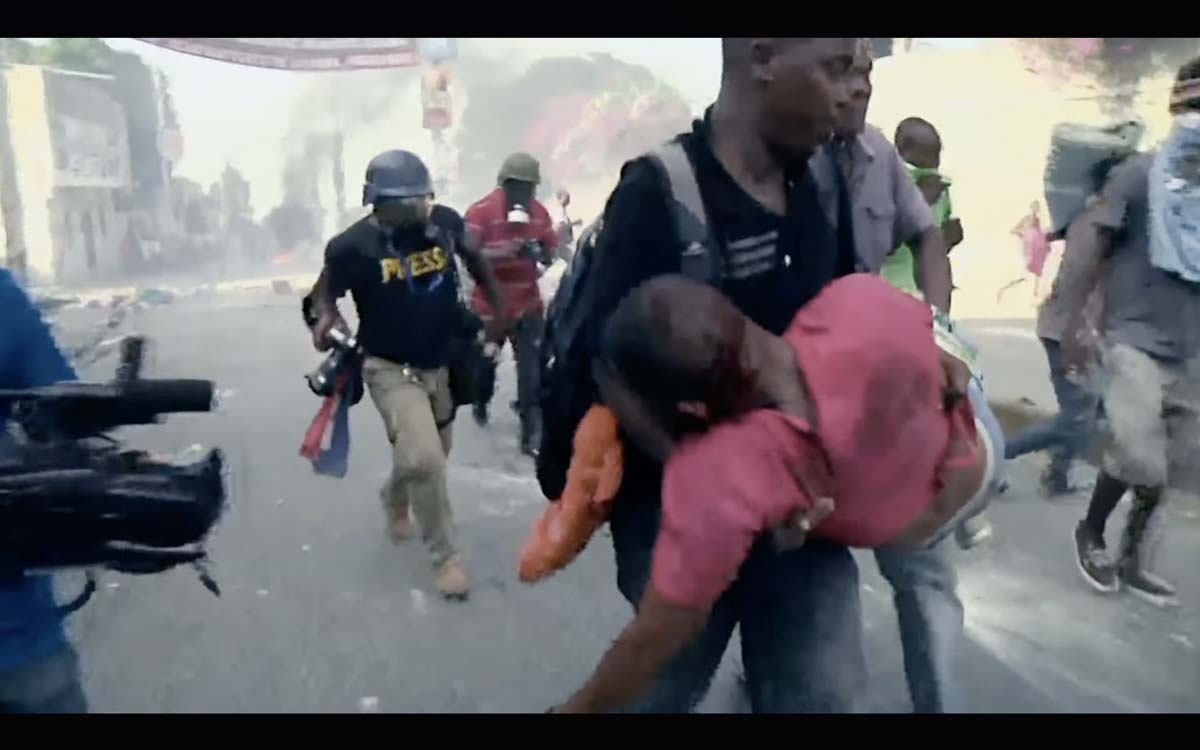
Talk to me about an amazing montage which I can only call the “Inflicting Pain” montage. Can you talk about building that and how that came up with that?
STRAUSS: I asked my assistant to make a montage with a lot of excerpts from torture scenes from many films, so I could choose in between them. Also, when he speaks about love, I asked her to choose about 30 films with kisses, then I could do something out of it.
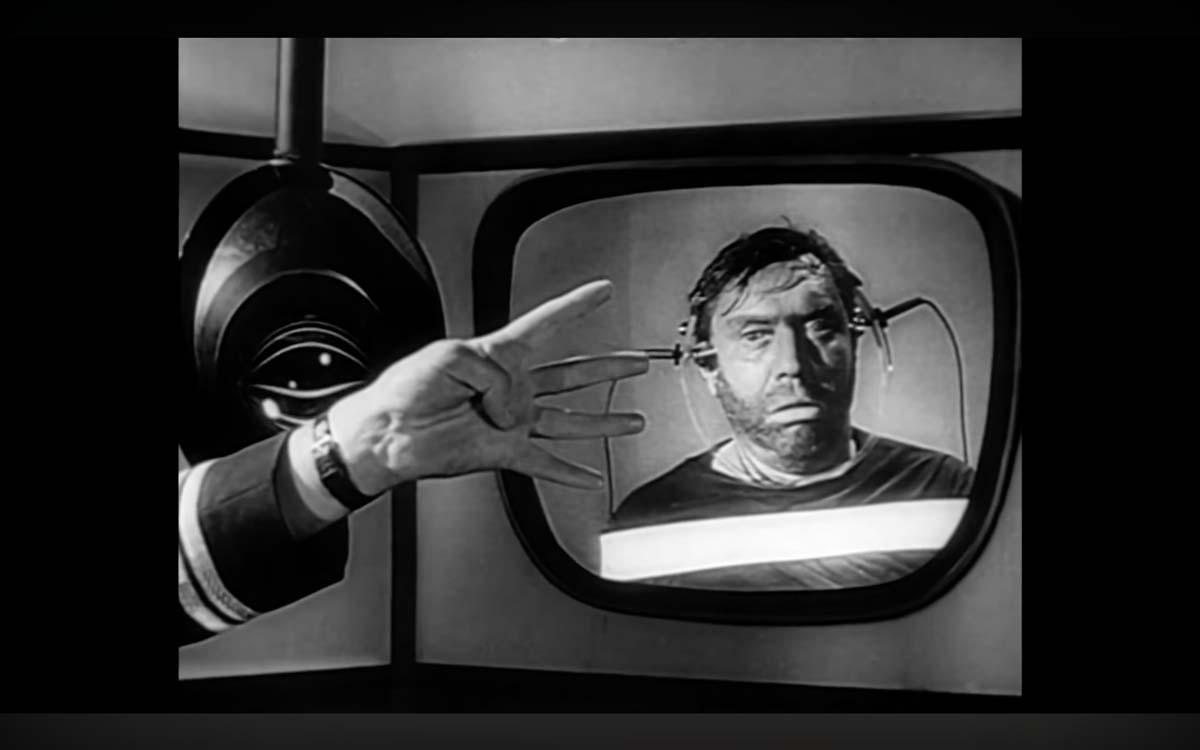
Inflicting pain was an excerpt from 1984. Of course I had to work from this film adaptation of 1984. I had four different versions of that film - three from the 50s and one from the 80s. So that was something very playful to begin the scene with.
So I’d use one phrase from the book from one film, then continue with another film and continue with another film. That’s really fun for an editor, to play with this. I did that technique a few times with how the characters of 1984 meet.
She gives him a little paper and then in opens it in his office, then he burns it. I could recreate that scene with different shots from different films. That was really fun.
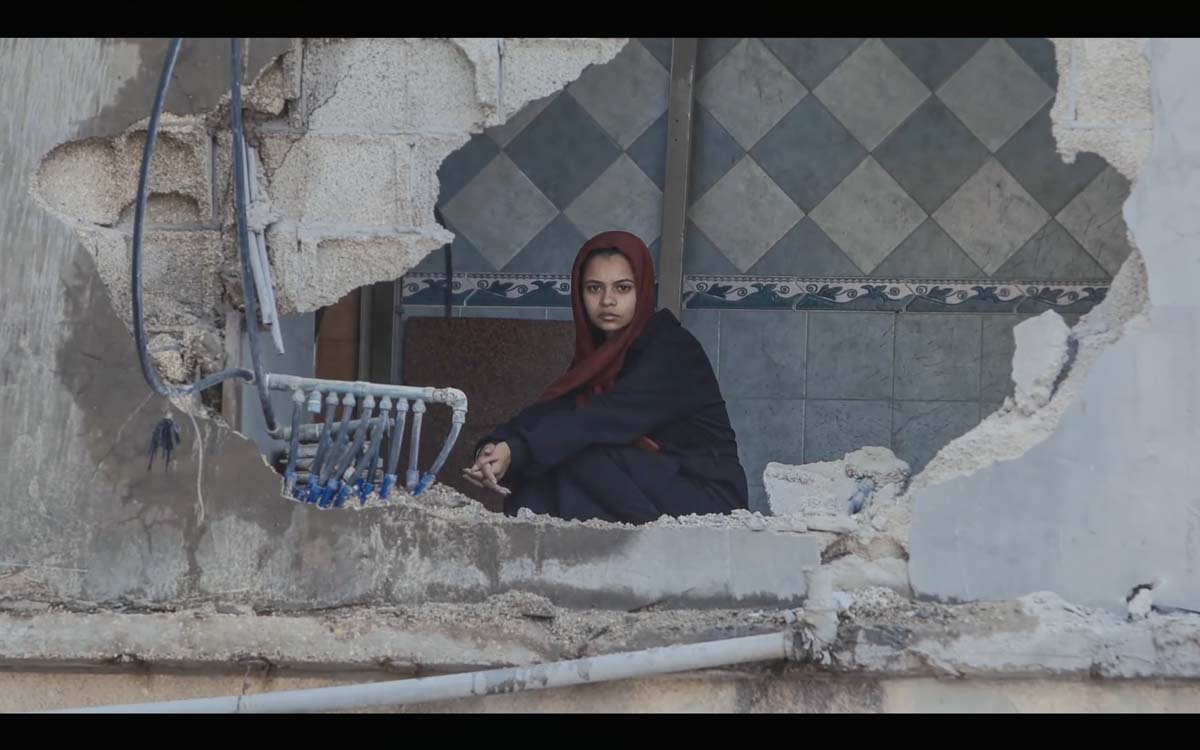
Speaking of Gaza, certainly you would have had a ton of news footage of Gaza, but there’s one moment where you hold on a lingering photo of a woman in Gaza sitting in the rubble, just staring at the camera. What directs you to choose a still - which you would think would have maybe less power than video - which ends up having far more power?
STRAUSS: Just before this sequence we have this sequence about rubble. Orwell is speaking about his own memories from the First World War. So the beginning of the sequence is that we London in rubble in 1918, or something like that. In fact, the voice over about this is from the novel, 1984.
So in the future he’s speaking about his memories of World War One and then about World War two, because he was in London during bombing. So I was showing all these images of London in rubble, but we also we want to tie it to our days, so I used images from Yemen and from Gaza - these very long shots - we are following carriages with horses and you see all the destruction.
To go back to the topic of Gaza, we had already seen a lot about Gaza, so I was thinking about this still that was similar to what Raoul does with people just staring in the camera.
So I found this image. It was the same impact as the portraits that we shot.
When you use a picture in documentary you can take a longer time because and you can put some more difficult sections of script under it.
You just zoom on it, then it’s not distracting you from listening. The photo is of this woman. It was very strong and it helped to land what we were trying to say at this moment.
You mentioned that you didn’t have the modern day portraits at the beginning. Raoul hadn’t shot them yet. Did you put temporary images in there as a placeholder, or did you just put a text card up that said “modern portraits to come?”
STRAUSS: I work with archivists, but I’m always opening the internet all the time because I’m in a hurry to find things and sometimes the footage doesn’t come from the archivists very quickly. I steal images, like the portraits or - for example - for the island of Jura I used a tourism publicity video from Scotland. For the portraits I found some on the internet.
It’s kind of messy when I edit. The first edit has so many different types of images. Then about halfway through the edit, when Raoul goes to shoot the images, I’ll have less different things, and it makes something more visually easy to look at.
Of course, in the last third of the film when Orwell is going to die, and it’s the end of his writing, I really tried to make it quicker and show that suddenly, there’s no time, so I was you using more of these portraits. I was pacing it quicker.
Also this long sequence about hate. I told you that there were not many things from Orwell’s work or about Orwell.
Then we discovered that there was an opera! So I used this music from the real opera that was staged in England. From this music, I made this hate sequence. At the end the audience understands that the film is not about the 30s, so you can be more brutal.
Alexandra, thank you so much for your time. It’s been so interesting talking about this movie. Thank you so much for discussing it with us.
STRAUSS: It was nice to be back.
 March 26, 2026
Young Sherlock
Today on Art of the Cut, we speak with four of the editors on the buzzy new Amazon Prime series, Young Sherlock. With us are ...
Read more February 12, 2026
The Pitt
Today on Art of the Cut we speak with editor Mark Strand, ACE, who is nominated for an ACE Eddie for Best Edited Drama Series ...
Read more February 3, 2026
The Perfect Neighbor
Today on Art of the Cut we’re talking with editor Viridiana Lieberman about the Oscar-nominated and BAFTA-nominated Best Documentary, The Perfect Neighbor. The film was ...
Read more