













Nuremberg
Oscar-nominated editor Tom Eagles, ACE, discusses using archival footage, the power of seduction, the role of hard cuts, and more on Nuremberg.


Today on Art of the Cut, we speak with Oscar-nominated editor Tom Eagles, ACE, about editing the film Nuremberg.
Tom was on Art of the Cut previously to talk about The Harder They Fall. Before that I spoke to Tom about his BAFTA and Oscar-nominated film - and WINNER of the 2020 ACE Eddie for Best Edited Feature film, JoJo Rabbit.
Tom has also edited films like Hunt for the Wilderpeople and TV series like What We Do in the Shadows, Ash versus the Evil Dead and Spartacus: Blood and Sand.
Tom, thanks so much for joining us on Art of the Cut to talk about Nuremberg.
Thanks so much for having me. It’s a pleasure. I’m a big fan of the show.
Thank you. The movie is based on a book called “The Nazi and the Psychiatrist.” Did you read the book?
I did read the book. I’m a little ambivalent about research for editors because I feel like we’re the first audience for the movie and we don’t really want to be ahead of the audience, but in this case, I read the book. I’m very interested in the period, so I couldn’t resist going back to the source material.
The book covers the relationship between Kelly - Rami Malik’s character - and Hermann Göring and the other Nazis.
The trial all came from Jamie’s research. In a way, I feel like I was still useful as a kind of ignoramus in the room to occasionally say, “Wait, I don’t understand that.” Or “Do we really need all of this exposition? Do we need to go into this detail about the trial like that?
The scene where, Jackson and Elsie are setting up what the trial will be, what do we really need out of that scene? We need that it was unprecedented, and it was going to be really hard, then we need to move on. That’s kind of my role in a way.
But I did wind up doing a lot of research in terms of the archive that we used in the movie. So I did actually wind up going down a lot of rabbit holes and learning a lot about the Nazis and the trials and some things you’d rather not know.
Was that archival stuff that you referenced brought into the Avid? I’m assuming edited in Avid?
That’s right. There was a certain amount of stuff that we knew that we would be using, like the concentration camps for the film shown in the trial. There were periods in the filmmaking where we felt like we need a little more context.
So, I asked my amazing assistant editorial team - Montrice White, Kelly McQuade-Weingarten, and Liam Mills was our apprentice - to troll through hours and hours of footage.
The sequence near the beginning where we’re trying to set up who these Nazis were, including Göring, Russell Crowe’s character, was the leader of something that it’s not just him.
And all of these men actually were horrifying individuals in their own right. We had footage of Rami (Dr. Kelly) interviewing them, but we needed a bit more context to build these men up and show that they were all leaders in their own right and had done some truly horrific things and contrast that with where they’re at now in the present day of the movie - these sad men sitting alone in their cells.
What about the structure? Was the structure as scripted, starting with the capture of Göring and then the exposition with the judge.
Broadly, the structure was as scripted. We did lots of little swaps. Later on in the movie, when Gilbert arrives on the scene, Colin Hanks, his character, we swapped Göring’s story about his father so that you could see him setting Kelly up to dislike this man or preparing the ground for Kelly meeting this man.
The scene ends with the line, “Just because a man is your ally doesn’t mean he’s your friend” then we cut to Gilbert. Historical experts might notice that we swapped Jackson’s opening statement and Göring ’s attempted an opening statement. We go to Jackson first.
We see his opening statement, then you have an idea of what Göring might be trying to do when he steps up to the microphone. So there are lots of little swaps like that, but generally the structure of the film was pretty solid.
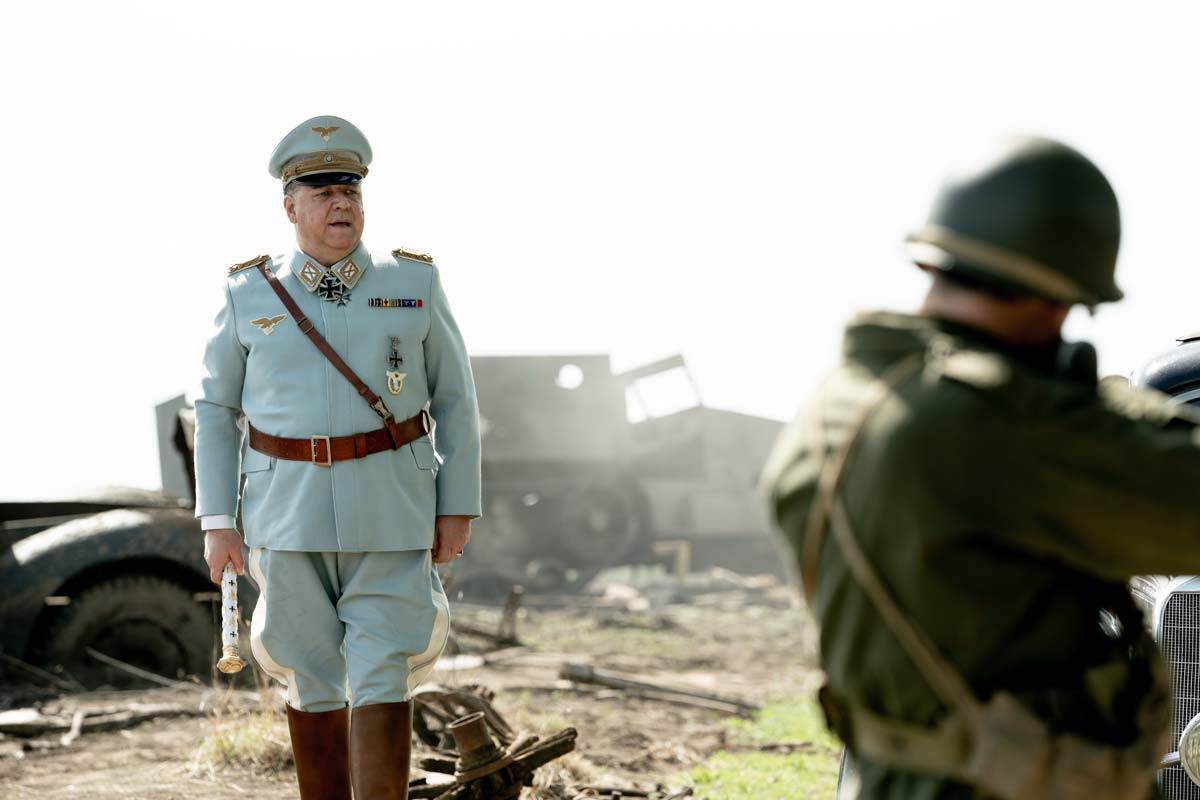
The opening was always the opening. We opened with Göring surrendering to the soldiers. It was a lot longer and it had this long dialogue scene between Göring and his family in the car. But we decided - ultimately - to keep our distance.
And so all the shots I use - from outside of the car - you’re looking through glass, you get a little hint of the dialogue, but we don’t translate it. We don’t have subtitles in this movie.
We really wanted to put you in the position that Kelly is in where you don’t really know what’s going on until someone translates it for you, which makes his translator character very important.
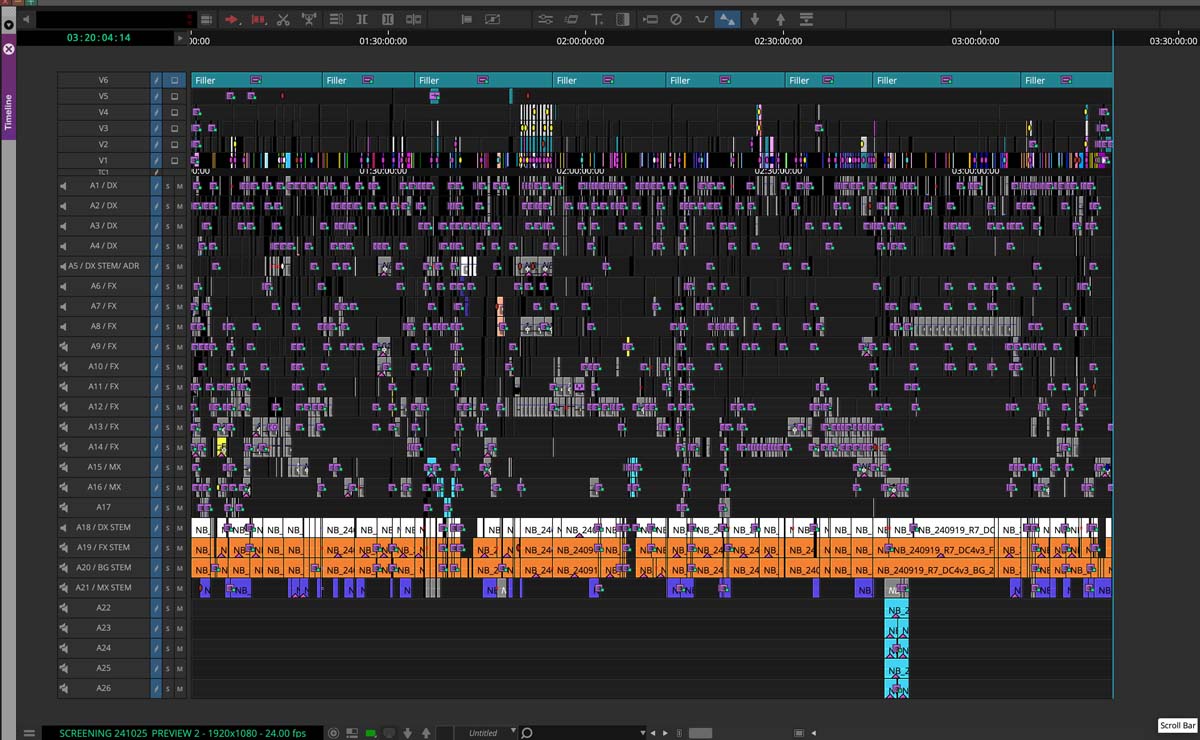
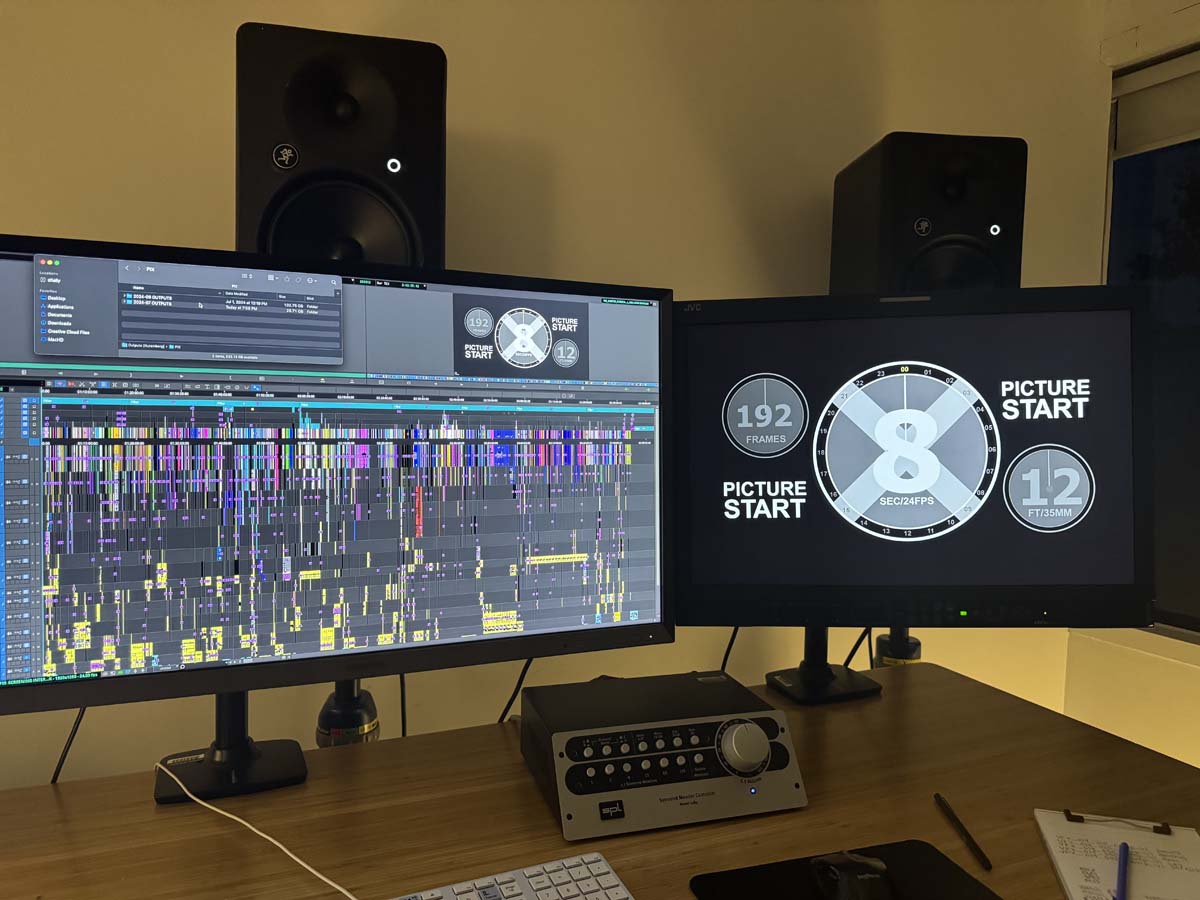
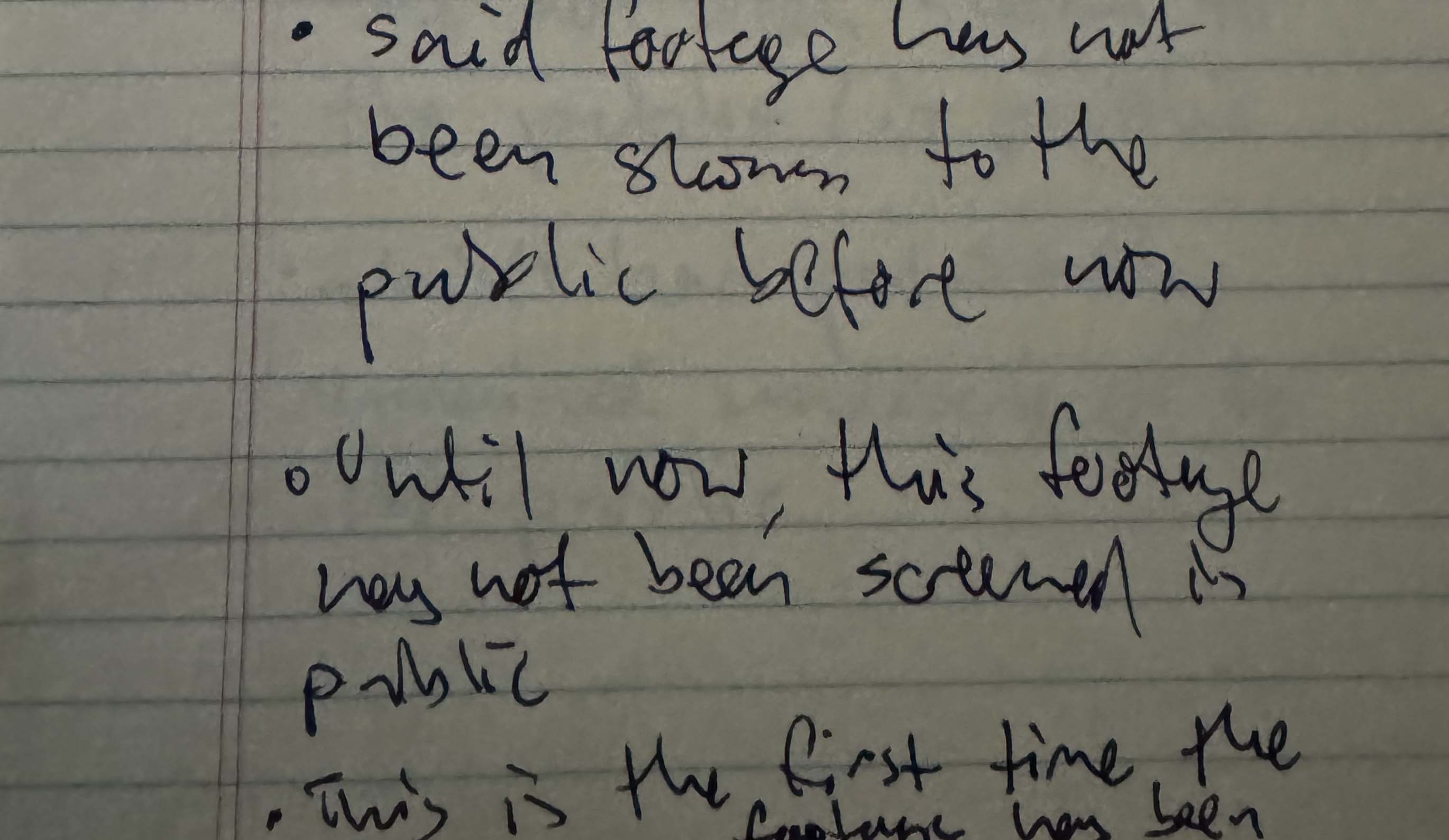
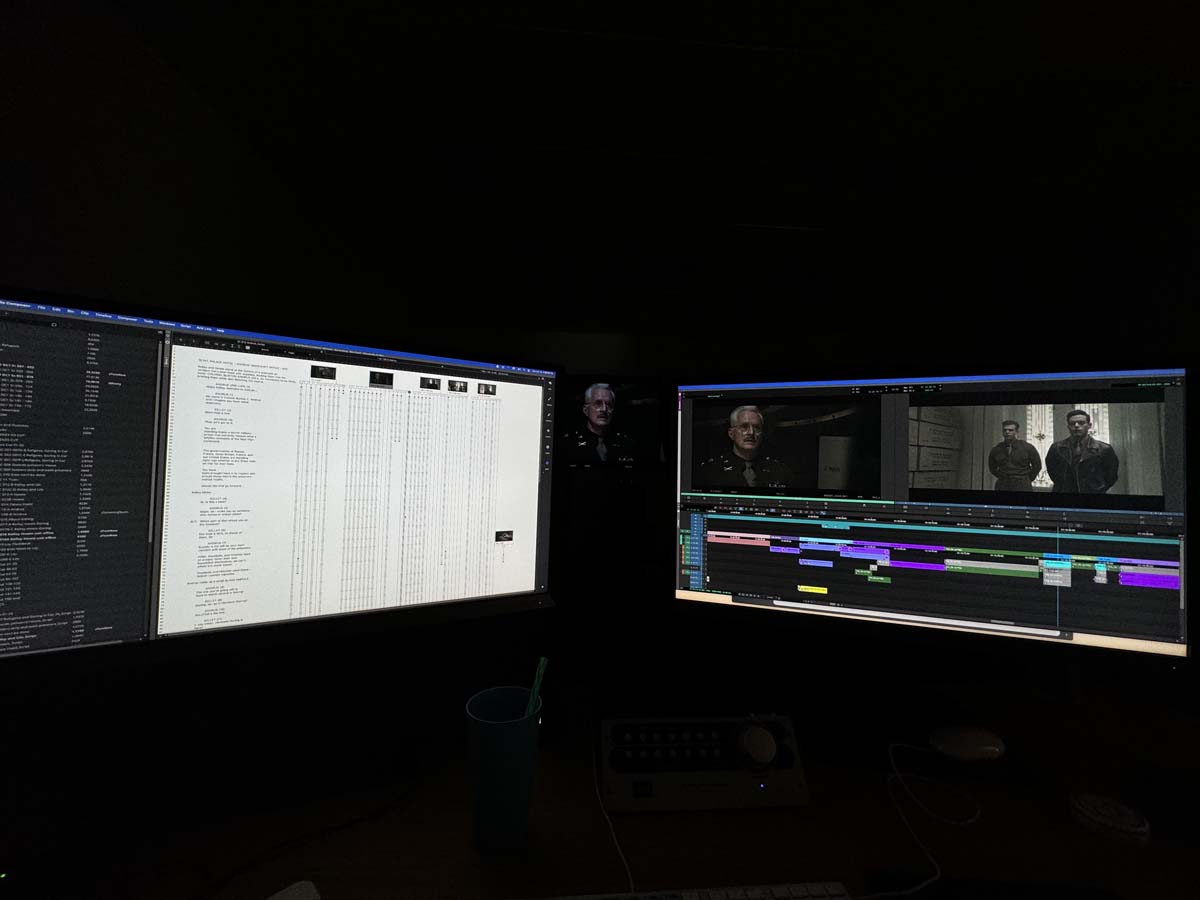
Avid timeline for Nuremberg
There was another reason we cut that scene, because I think if we’d had that scene, we’d have to subtitle, but we really kind of wanted to stay on the outside and get to know Göring, as Kelly does.
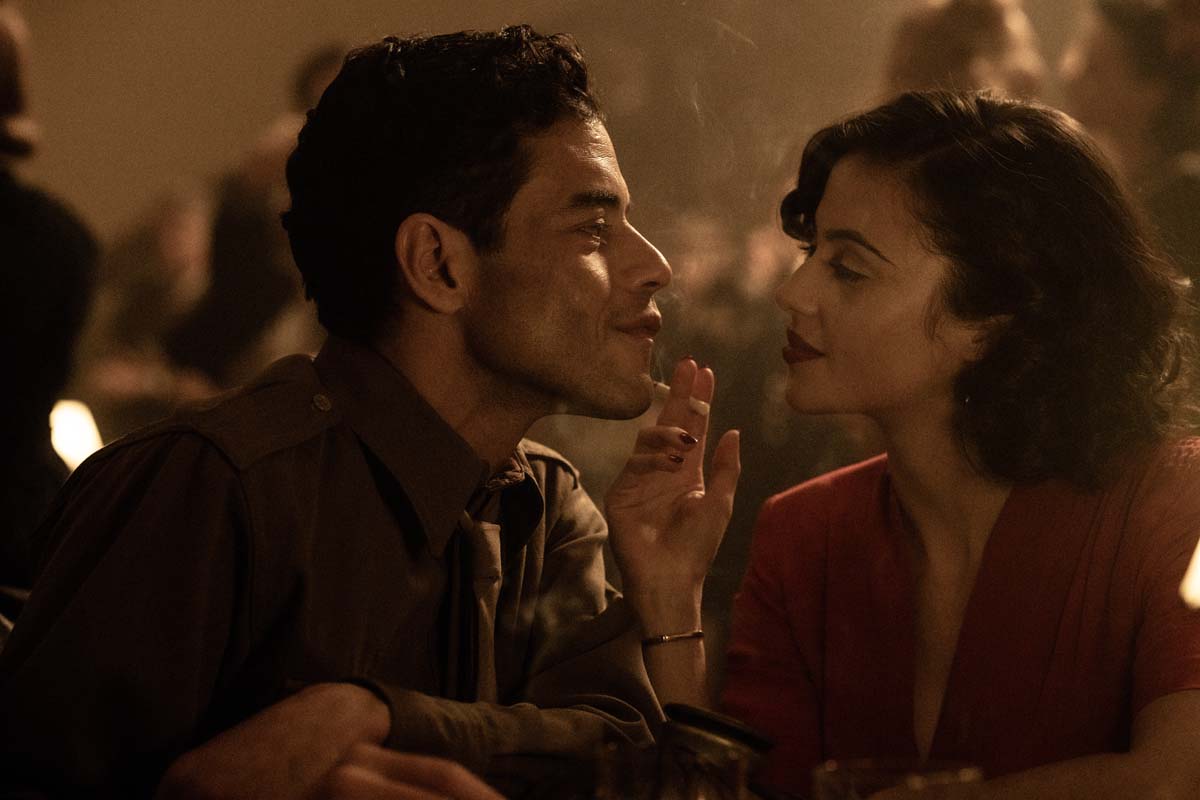
There’s a train scene with Doctor Kelly where he performs this card trick and the scene is played - at least my sense of it as an audience - was very much like a seduction. How much of that seduction was just the performances and the writing, and how much did you try to enhance that tone in editorial?
It was very much in the performances and the writing, and if anything, we kind of backed off a little bit. That character, later on in the movie, gets some information out of Kelly. We didn’t want her to play as like a traditional honeypot.
We kind of wanted to ease up on the flirtation a little bit, but they are flirting. It was important to see that Kelly was a charmer. Kelly’s a magician. He’s quite charismatic, maybe even manipulative. He thinks he can play everyone and he winds up getting played.
The story of the master manipulator meeting an arch manipulator - someone who’s even better at it than him. So it’s kind of important to set him up in that way. And you see, in those first few scenes with Kelly, he seems quite shallow.
He’s entirely self-interested, so that’s part of his journey as well. As he gets deeper and deeper into the complexities of the trial and his relationship with Göring and what that might mean for him and for everyone, he becomes a more serious character, but we wanted to set him up to begin with as this kind of charming, happy-go-lucky guy.
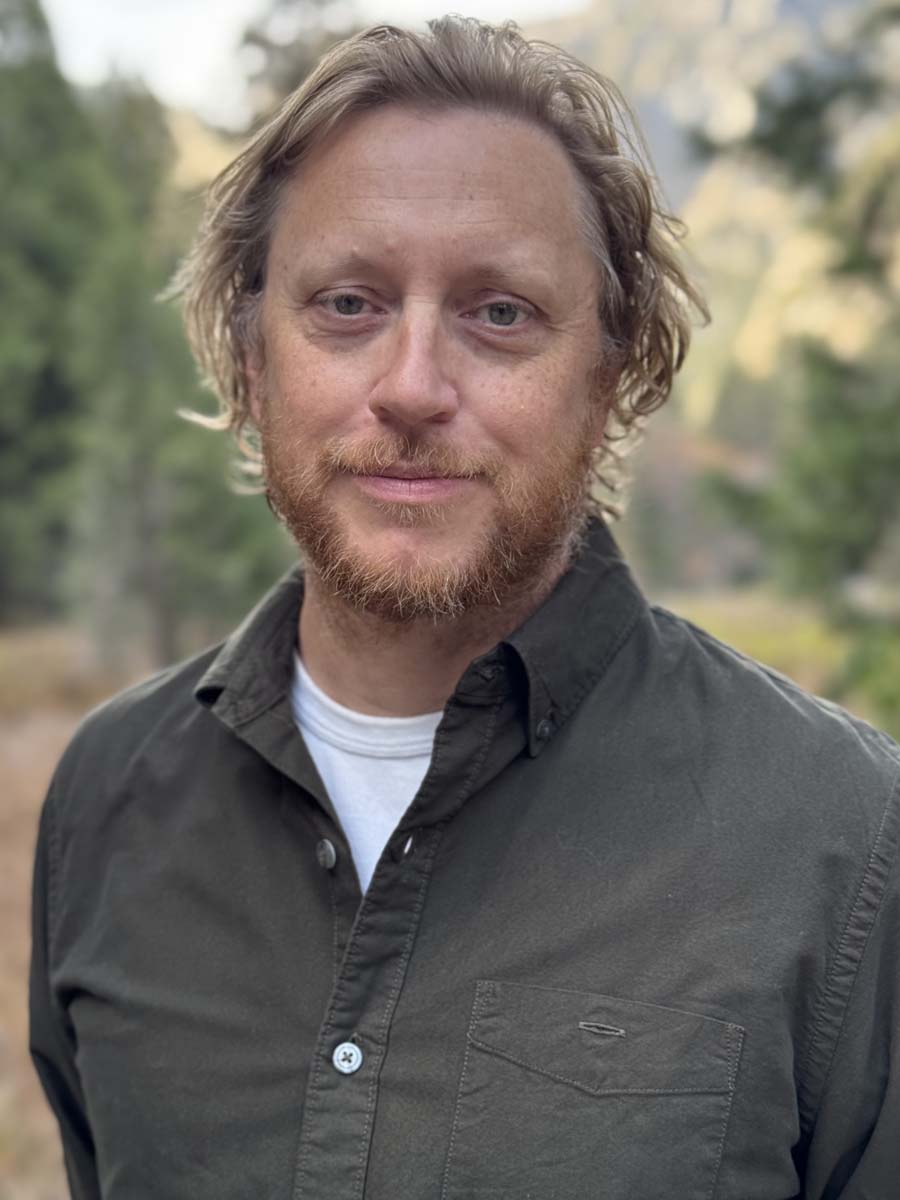
Oscar-nominated editor, Tom Eagles, ACE
It is interesting, though, that you backed off on that seduction for purposes later in the movie. Tonally, you can change those things in editorial. Let’s talk about that first scene where Kelly and Göring meet each other.
That was kind of a makeshift prison which was converted from an old hotel. It’s not exactly high security. It’s quite luxurious to begin with.
There’s this great moment there where you hold on Göring as Kelly leaves. It feels like it really reveals something. Can you talk about those moments of deciding where to be? You could have been on the shot of the doctor walking out of the office, but instead, you’re on Göring.
That is probably the only place other than the scene at the end of the movie where we were alone with Göring - where we see behind the mask a little bit, so it was very deliberate to see the mask slip a little bit. We see these two characters charming each other and being very polite and chummy.
We’re about to get Kelly’s psychological evaluation of Göring, but it was important also to see that Göring is putting on an act as well. It was very deliberate to only do that in 1 or 2 places.
Really, we stayed - more or less - in Kelly’s point of view through all of those encounters, but we wanted to see that one little glimpse of the mask slipping.
Editorially - and I guess also in scriptwriting - you could have had Kelly go from meeting one Nazi to the next in the first prison. Instead you take a moment between each Nazi to introduce them in flashbacks or archival footage. Talk to me about that choice. Did you consider not using archival? Did you have those things longer?
The sequence I was referring to earlier, they were set up as whole scenes, so you would go and sit down and interview Robert Ley, Julius Streicher, and Karl Dönitz, but it really didn’t give you the full dimension of who these men had been. It just showed these sad men sitting alone in their cells. We needed to build up who they were and who they had been.
These three characters were – or four characters, when Hess arrives - our standards for Nazism as a whole: the people we’re going to be cut to at the end of the trial during the cross-examination to kind of show that Nazism was broader than just one man. It wasn’t Adolf Hitler. It wasn’t Hermann Göring. It’s this whole movement. So we went back into the archive.
I asked my assistants to pull everything they could on each of these characters. We’re using newsreel. We’re also using headlines. We’re also taking some of the copy from some of those articles and turning it into newsreel narration, just to give you a quick sketch of who these guys were.
I’m always intrigued when there are jumps in time - which of course is part of our art. One of the places that I noticed that that happened was where - in very short order - we moved from Kelly telling Göring that he’s fat. He kind of insults him - but he’s also, in a way, worried that he might have a heart attack – then, with really no indication that Göring agrees, all of a sudden we’re seeing Göring work out, doing push-ups in his jail cell, and on a diet. Was there anything removed in there and why? Or was it all scripted like that?
There’s definitely material removed. I think you’re seeing a couple of things. Firstly, yes, there was stuff in that scene. Göring agrees to try and do better, try and lose some weight… try and come off the drugs. I always think it’s better to leave some of these things as questions rather than answering them.
You’re also seeing, generally, the compression of that part of the movie - basically everything up until we get to Nuremberg - we’re almost treating that as one sequence. It’s really on rails.
We’re trying to get through all of that exposition as quickly as possible, so we’re using match cuts and long overlaps, and we’re using music to kind of pull you through, because where the heart of the movie is, for me, is when we get to Nuremberg and we have those men sitting in a cell, that’s when we really slam on the brakes and you start to get much harsher cuts between scenes, and you spend a lot of time in those claustrophobic spaces.
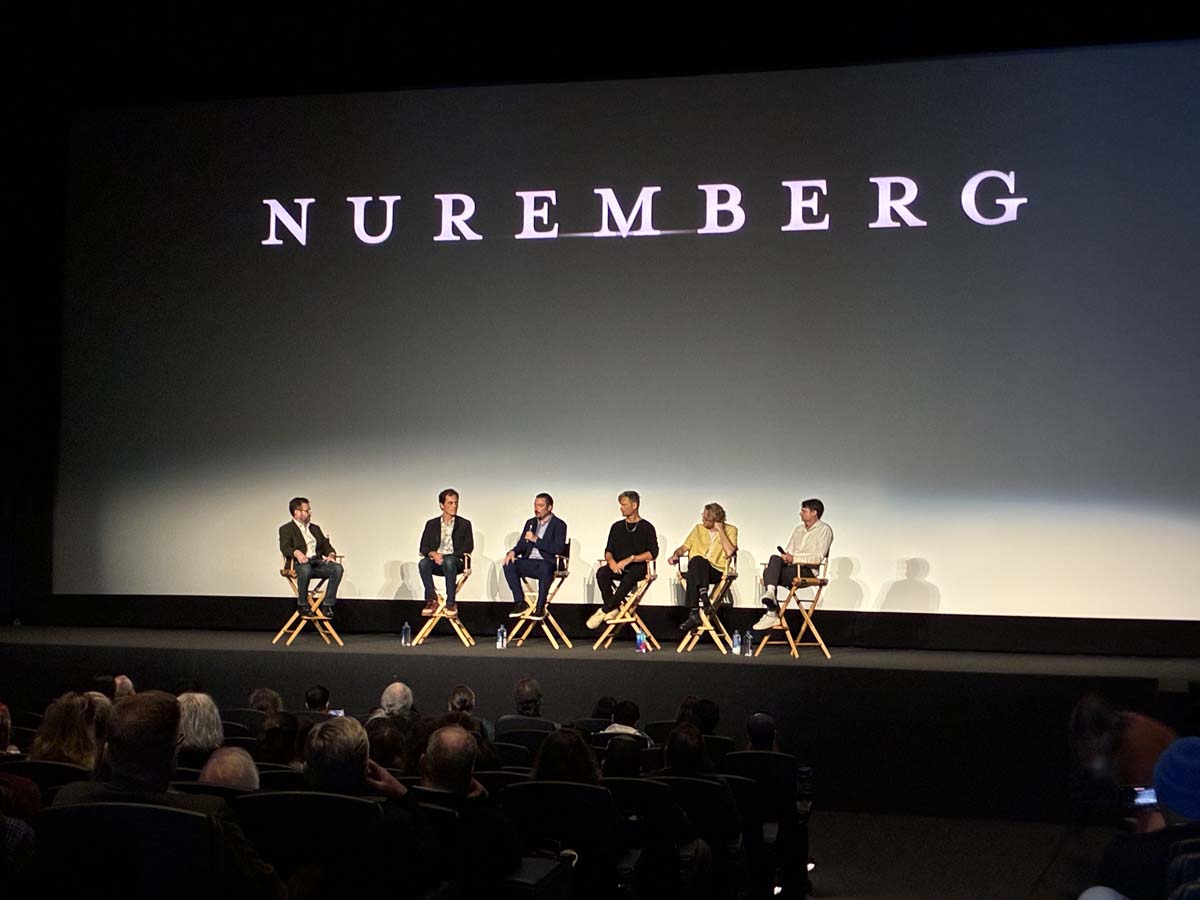
Tom Eagles with wife, Dannelle Satherley at the LA Premiere at the TCL Chinese Theatre.
The other thing to mention there is that, through that sequence initially as scripted, we were cutting back and forth scene by scene by scene between Jackson and Kelly.
But we decided, rather than doing that, to take each of those storylines and condense them down and treat them as sequences and cut back and forth less frequently.
What that allowed us to do was to get Kelly and Göring’s relationship going, because that’s going to be the spine of the movie. We really needed to get that started before we cut back to Jackson.
People always talk about character arcs, but I always think of it more as relationship arcs. That’s the thing that’s going to change the most in any movie, and so we really wanted to get that started.
The other problem with intercutting was that it sometimes felt to audiences - to friends, that we would show it to – as if Jackson and Kelly were working together already. If that was the case, our Deep Throat-like scene where they finally meet in the stadium wouldn’t work.
So we definitely cut back on lines that suggested that they might know each other or would be working together, but also just not intercutting them so frequently kept their stories separate, which they needed to be until they actually meet.
There’s a sequence where Kelly’s administering a Rorschach test to each one of the Nazis, and those are intercut. Is that the way that was planned to be done?
Those sections were the main bit of improv in the film. They just rolled camera, and they showed these men some Rorschach tests and got them to react naturally in the moment.
The stuff with Göring was scripted to be non-dialogue, but they rolled audio on it and I got quite excited when I saw it because there were all these little moments that were quite meaningful.
For example, Kelly says to Göring, “You can say a lot of things with ink.” Then later on in the movie, we’re going to see the importance of laws and what the Nazis did with laws.
So there were all these little things that came up that I thought were quite juicy, so intercutting them seemed to be the best way to move through and give some sense of time passing.
But Kelly’s doing his job and getting to know these men, but also being able to land a couple of those little bits that are going to end up later.
Göring is giving answers to the Rohrschach test that are deceptive or mocking. You can tell he’s playing Kelly.
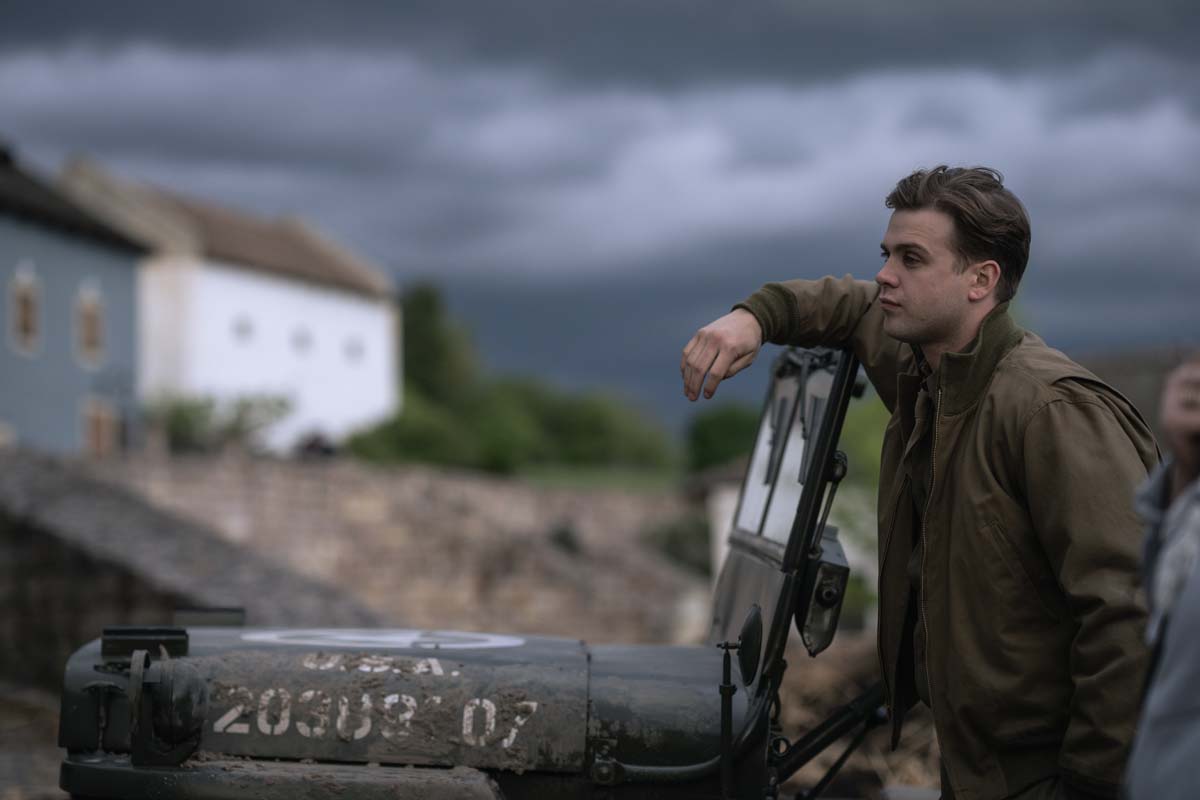
Sometimes you see that Göring perceives that he’s gone too far and he pulls back or he’s spilled something.
Jackson goes to speak with the Pope, and I wanted to use that scene as a chance to talk about when you’re on a reaction, as opposed to when you’re on the person speaking in a dialogue scene. Can you talk about those choices and those moments when you chose to be on reaction?
As with every scene in the movie, we had to cut a lot out. There was a lot of theological and legal debate there. But in terms of the coverage, we kind of worked our way in. It was important upfront to show the scale and the power of the space and the weight that the Pope’s word was going to have.
And we work our way into close-ups, but rather than being tight on some of the most crushing lines in the scene, we actually go wide. The Pope says, “The Catholic Church cannot support you in this.”
Then the Pope walks off in a wide, and we stay in that wide shot as Jackson kind of casts around, trying to figure out what he’s going to do, then he calls after the Pope, saying, “but you could support them in 1933.”
That was quite deliberate because it was it’s a big, wide open space and he’s calling the Pope out, and you can hear his voice echoing in that space, and it’s kind of a hint of almost blackmail.
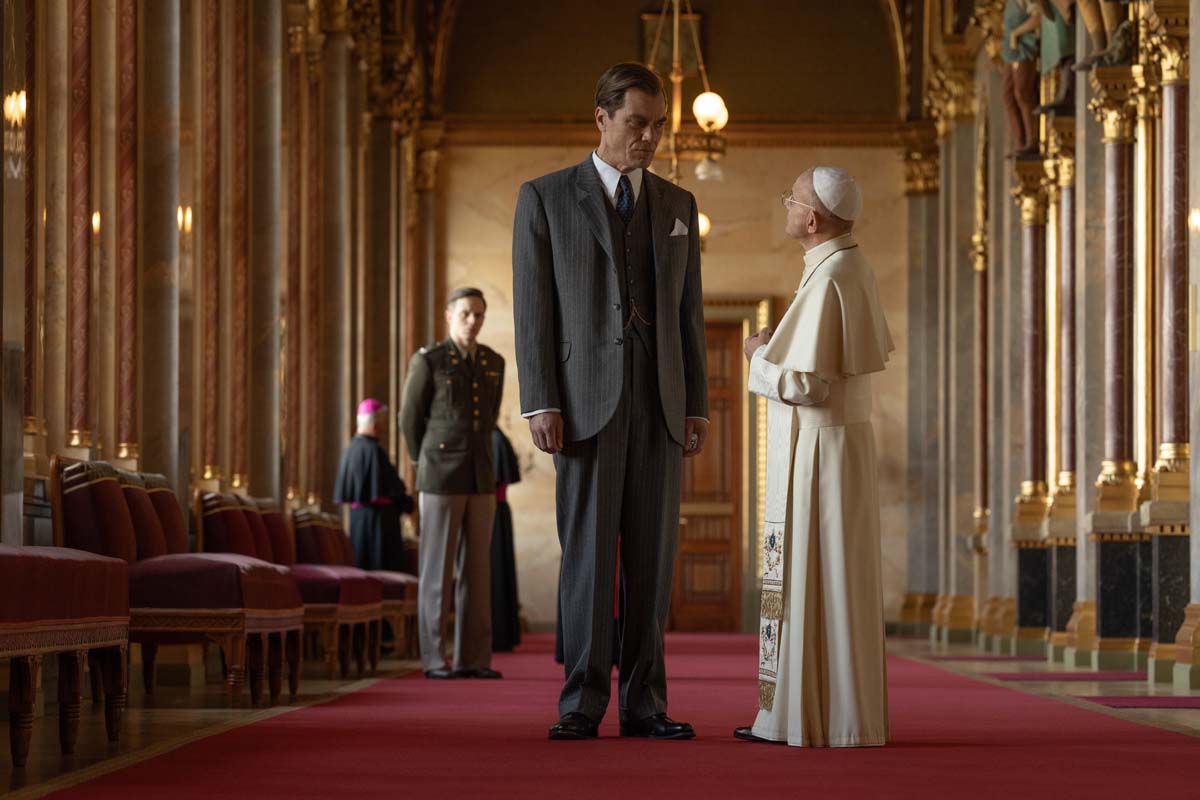
Also, the wide shot rate allows you to see that it literally stops the Pope in his tracks when he says that.
Yeah, so it’s one of those beautiful moments where you can kind of see everything. Then the pope’s drawn back in, and we kind of push back in with the Pope as Jackson outlines his wrongdoings.
In terms of reactions. I remember staying with Jackson after the Pope says, “You believe the laws of man are greater than the laws of God.”
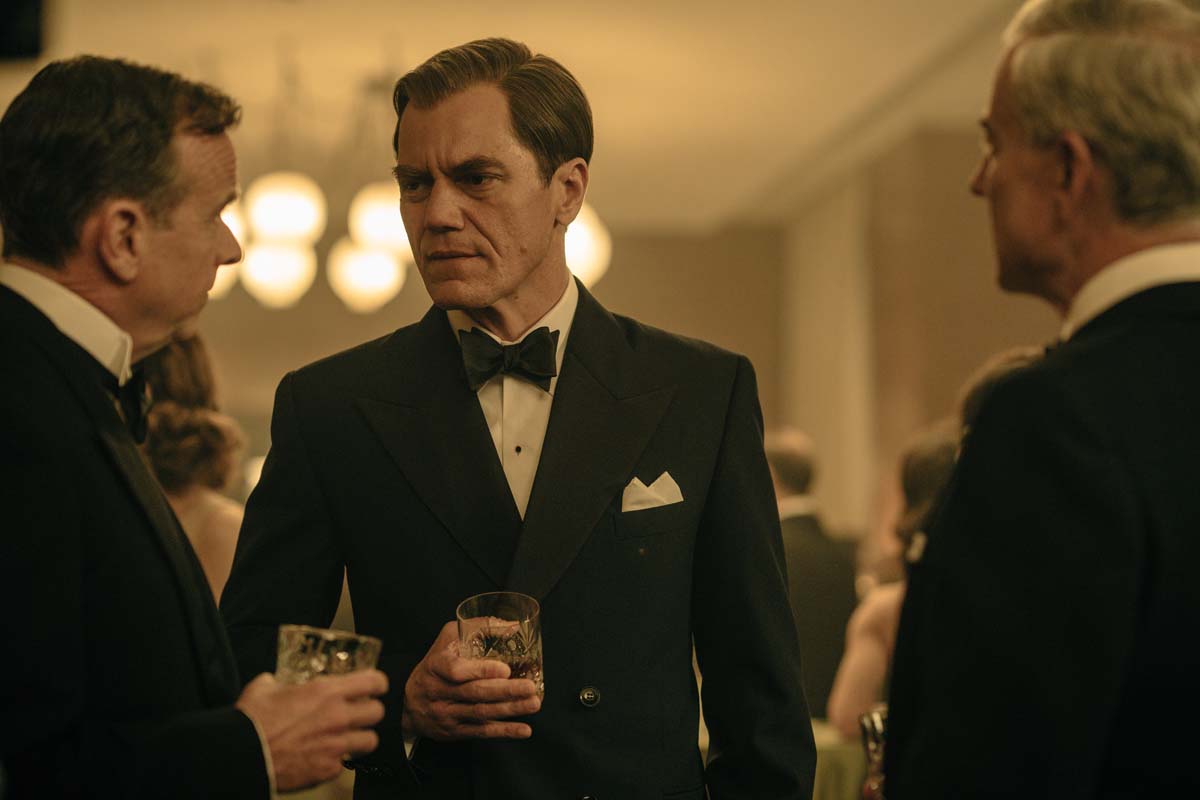
And he walks out of frame and we stay with Michael Shannon there - who is such a great actor, you can always see what’s going on - you can see him actually stop and consider this before he answers, “I don’t believe that.”
Very early in the process, whilst they were still shooting, I decided to cut that scene down. There’s that shot that’s now the end of the scene where Jackson says, “Did the Catholic Church stand with the Nazis or against them?”
That’s basically his pitch - his ultimatum to the Pope. The scene did go on after that, but it was such an incredible moment, and we kind of hang in that frame and the Pope turns towards the camera and we kind of see him pondering for a bit.
I just felt very strongly that that had to be the out for the scene, and I sent it to [director] Jimmy [Vanderbilt], and fortunately, he was on-board.
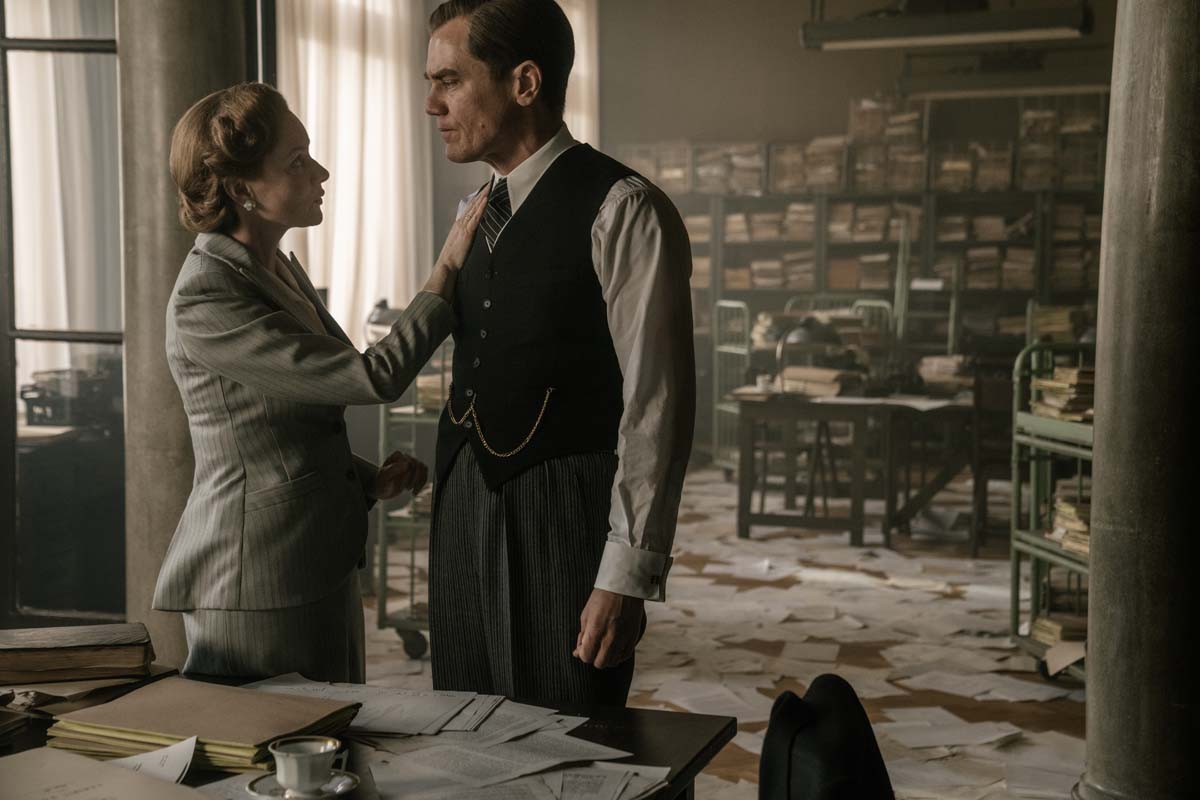
I had a chat with Walter Murch a while ago, where he was talking about editing being kind of like the lines in poetry. In a poem, they just don’t run the words all together, like with prose. There are very deliberate line breaks. He said, the last word in a line break kind of has a glow to it.
There’s a reason why that’s the last word in the line before you go to another line. It sounds very similar to what you’re saying: That is such an important line, so that’s where to end the scene, even if there’s more good information after it, because that is what you remember.
Yeah, it’s a kind of “persistence of vision,” right? That’s what you’re going to take out of the scene. Like what Murch is saying, you could break it down into smaller chunks, you could say the same of a given shot: where you end it is a memorable moment.
Yes. The poetry discussion was actually about where one shot ends and another begins.
There’s another jump in time that I was interested in finding out about. There’s a plane ride where they’re taking all the Germans to Nuremberg, and Göring is told that there’s going to be a trial. Was there a scene before that originally where the audience discovers that there’s going to be a trial lined up?
What you used to see in the full assemble was MPs coming and handcuffing Göring and taking him away. You didn’t exactly know what was going on. Then we would cut to the plane and there’s more of a discussion.
Göring used to postulate that maybe they were going to be shot and there’s a bit more back and forth about what was going to happen before Kelly revealed that there was going to be a trial.
What we’re doing throughout the movie - and particularly that section of the movie - is we’re coming in late and we’re coming out early. We come in hard on, “There’s going to be a trial.”
It gives us the answer to the question that the scene with the Pope sets up: is Jackson going to be able to successfully get this thing together - get this up on its feet? We answer that almost immediately in the next scene with, “Yes, there’s going to be a trial. Characters are already on a plane moving towards Nuremberg.
We’re just trying to keep the train moving at that point so that we can slow it down when we get to Nuremberg, and we get those two men in a cell.
One thing I love about cutting material is that nothing’s ever wasted, so the shots that used to be in that scene where Göring is taken, we used earlier in the film where we’re trying to set up what the process of the trial would be.
Jackson’s talking to Elsie about his big pitch: “We need the Russians. We need the French.” At that point it was just a dialogue scene, but we wanted to create a sequence and move the story forward, so I was able to use the stuff of Göring being arrested - and from the Hess sequence - as a way to illustrate that scene (create a flashforward).
There is a big cut from Ley after he hears the charges against him and he actually hits the doctor screaming, “Shoot me!” and there’s a hard cut to a lady singing “A tisket a tasket.” Can you talk to me about that choice? Whether it was scripted like that, or whether you found that the power of that edit was in … I don’t want to say the harshness of it, but the the strength of it.
Yeah. It’s harsh. It’s a very harsh cut. Through that portion of the movie we’re really trying to work contrast inside and outside the prison, sound-wise as well, we’re always working on “quiet and loud.”
I found - through that section of the movie - sometimes the way to move people through was just to drop them off a cliff, so you go out at the absolute climax of the scene.
The other time that we do it is when Kelly and Gilbert are fighting and we hard cut to John Slattery. In the beginning of the movie - and again at the end - we’re using match cuts and everything’s smooth, but at that part of the film we wanted it to be a little violent and to really work those contrasts between who’s locked away and who’s outside and what’s going on in the outside world - contrasting starkly to the drama that’s going on in those prison cells.
So there’s a fake newsreel story - or maybe it’s a real newsreel story - about the preparations for the Nuremberg trial. Can you talk a little bit about using that footage - the archival footage of the Nuremberg trial - and intercutting that with your cinematic footage?
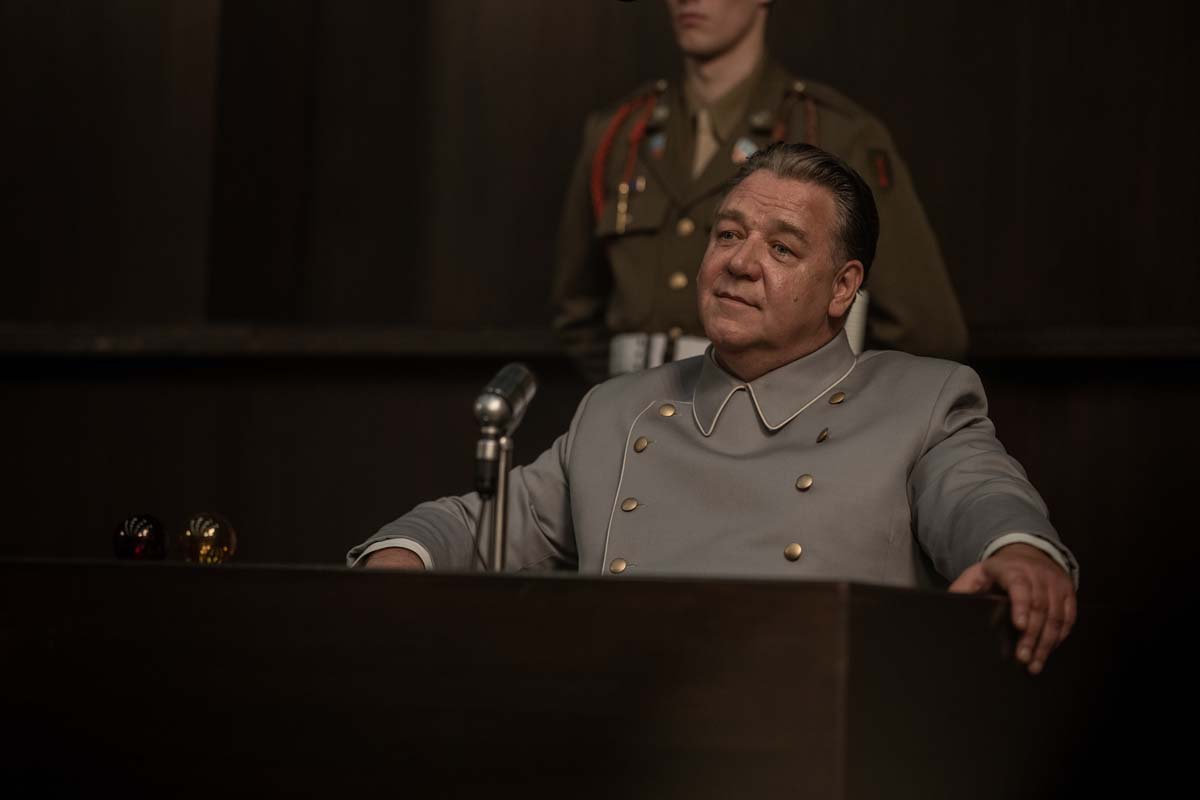
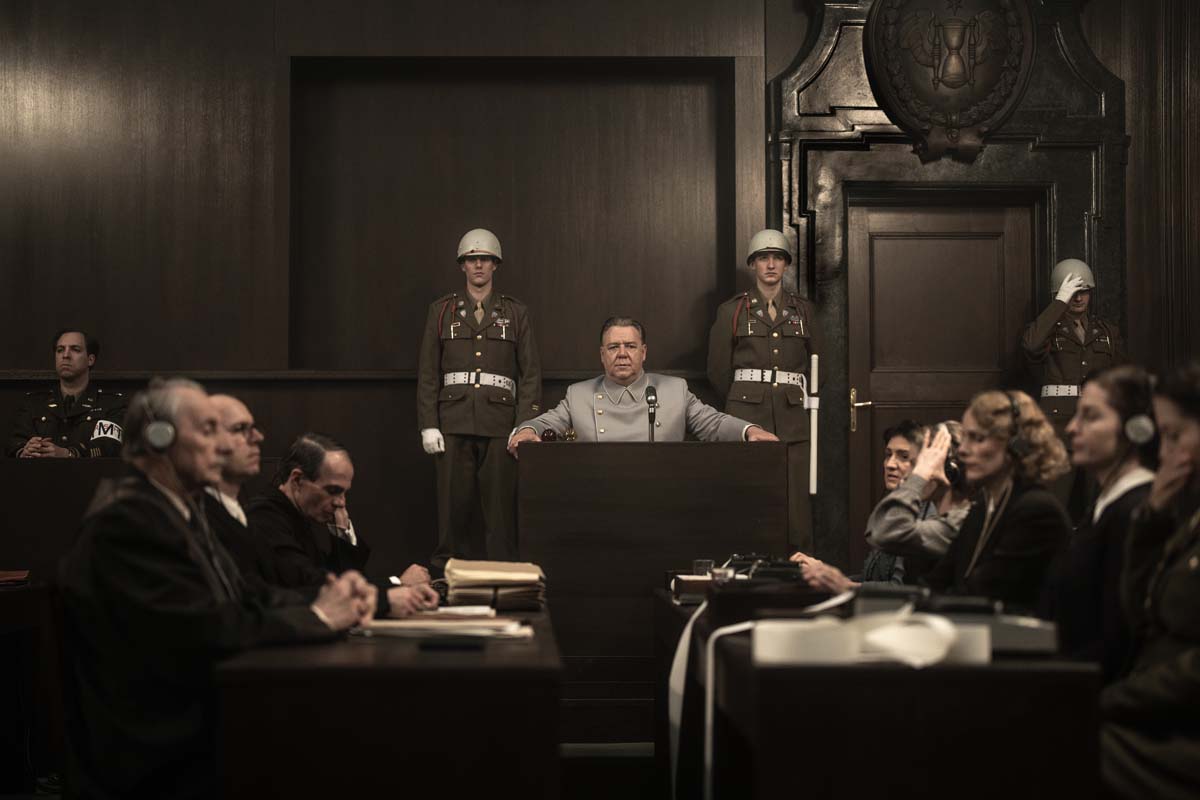
Kudos to the set designer and costume designer. We were able to intercut these things almost seamlessly because the courtroom matched almost exactly. It was a complete replica of the courtroom in Nuremberg. Same thing with the prison. Probably about 95% of that newsreel is real newsreel footage.
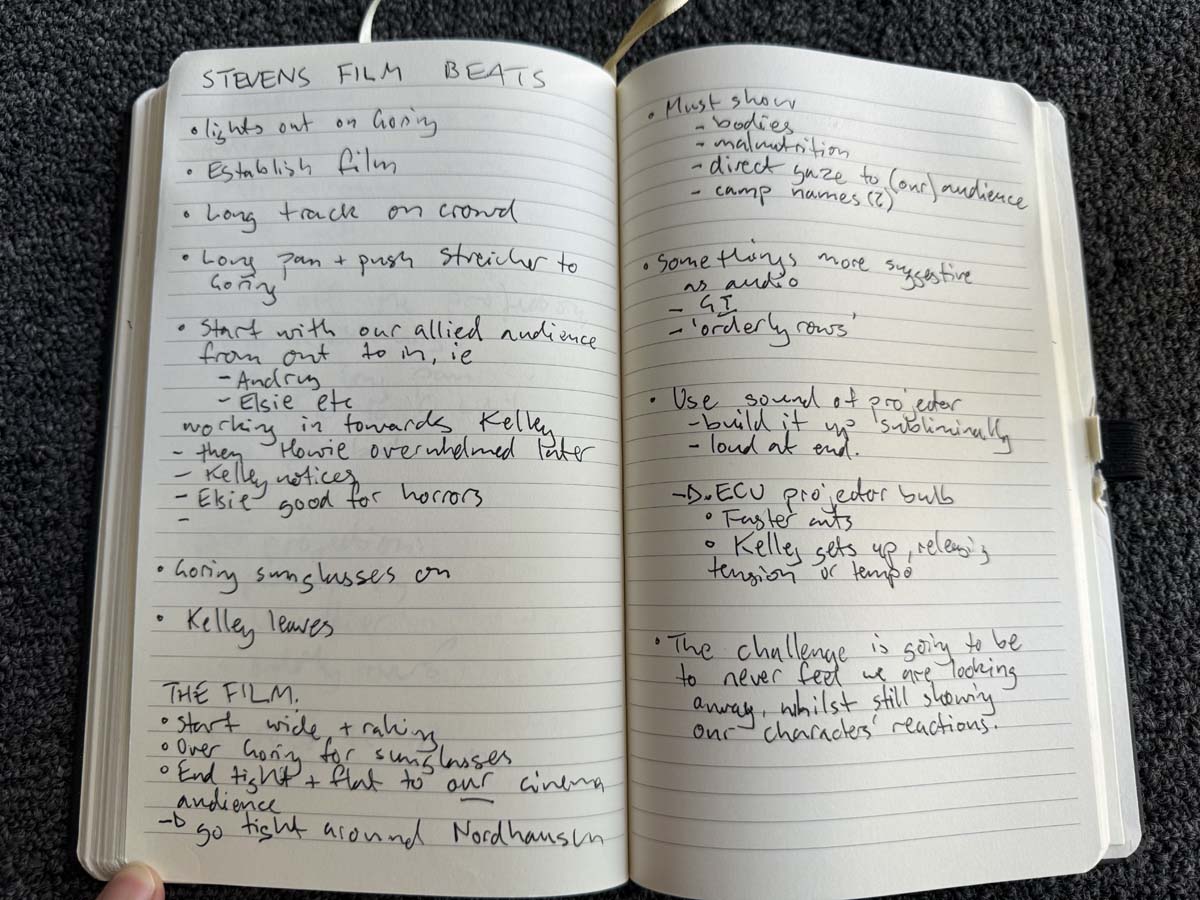
The only two shots I think I use from our footage are the guys stringing up the lights and the little close-up of the sunglasses. Everything else was drawn from newsreels that we found.
For me, I was kind of working backwards. I had seen the set of the courtroom, then to look at the archive and realize how exactly everything matched was astonishing.
That sequence for us was always about writing and rewriting the voiceover that went with that newsreel, because that sequence really was our opportunity for exposition of all these little facts that we needed to know.
We need to have the suggestion that people hadn’t seen the footage from the camps yet, that people didn’t know exactly what was going on in the camps. Sometimes we had to cut lines or add lines to make that clear, like the stuff about the sunglasses. Why are these defendants wearing sunglasses?
Because the lights were so bright. So as the edit progressed, that scene was constantly changing to keep up with what we needed people to know.
Let’s talk a little bit about temp score and the choices of when to temp. I’m always interested in when you’re spotting a cue… and some scenes have no score.
I felt quite strongly with this movie that less is more. As much as possible, if we could get away with not using score that’s what I wanted to do. I didn’t really want to be leading people’s emotions.
The performances were so great that I just wanted to let them speak for themselves, and Jamie was very much on board with that. In fact, originally he said, “Don’t show me any music.”
We would get into these sequences that kind of needed music, so I would show him stuff, and eventually we kind of swung the other way where he was tending more towards music, and I was tending to to pull back. So it was a constant seesaw.
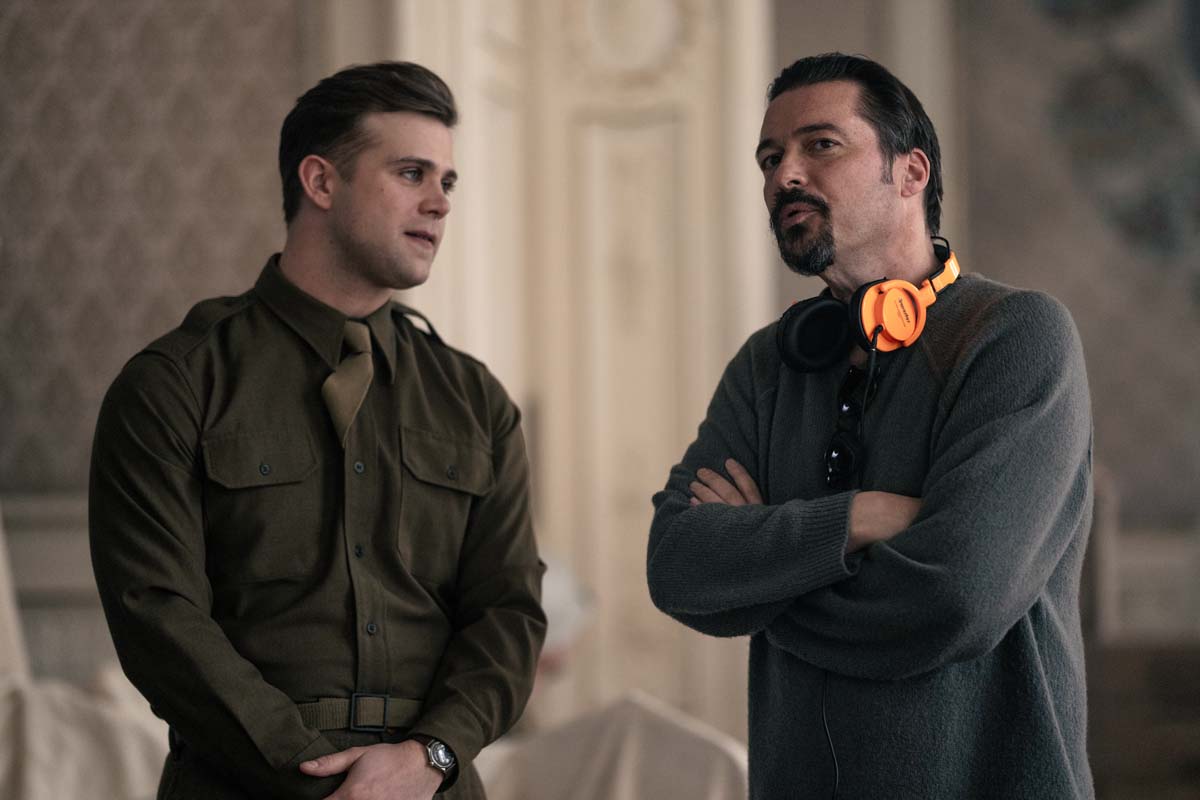
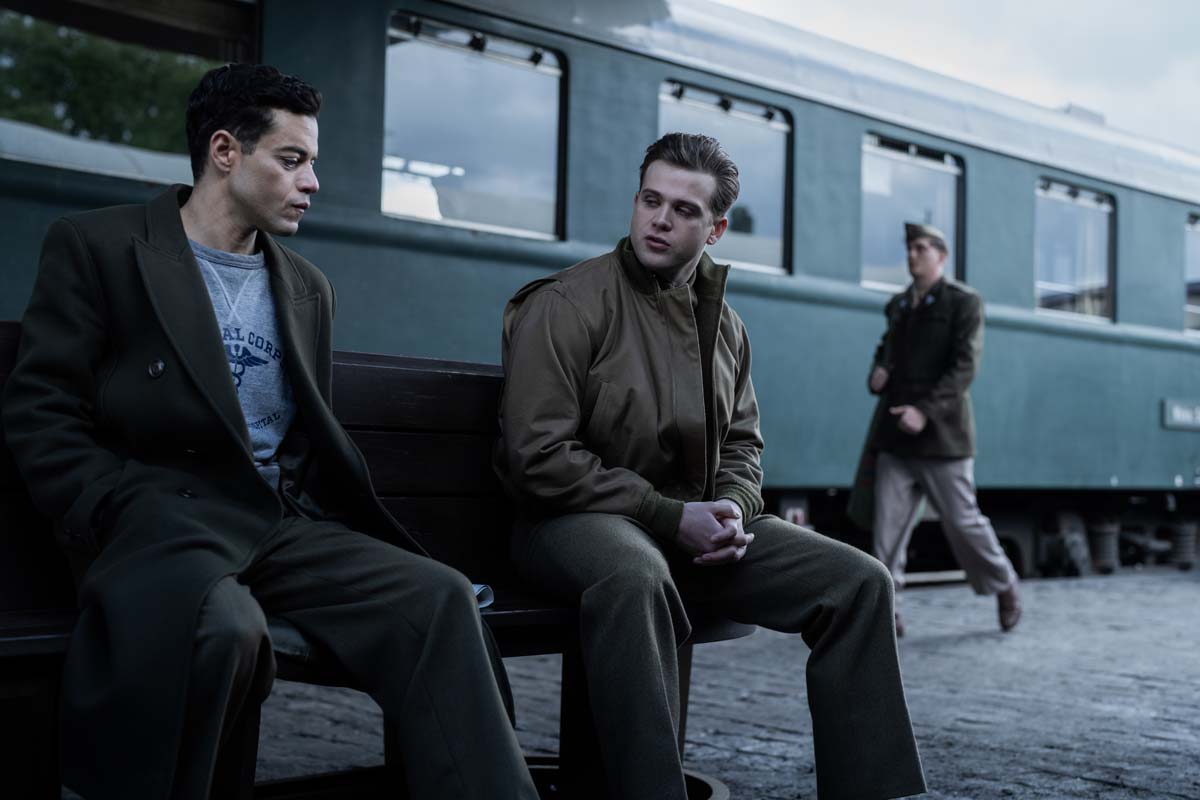
The scene between Howie and Kelly at the railway station, we how do we tell the story? Brian had written score for the whole thing, more or less, but when we got into the mix, we pulled back a little bit and brought it in later and later into the scene, so ultimately it comes in fairly close to the end when he’s talking about his parents and what happened to them.
But generally speaking - when we went to our first spotting session with [composer] Brian [Tyler.] He agreed with us 100% on where to have music and where not to have music.
That was a joy to know that he wasn’t going to try and score things that didn’t need it.
Other people suggested we might want score for the camp film. And I think we all - within the filmmaking team - felt pretty strongly that that needed to play raw. It needed to play clean. Silence and space was our friend.
That was one of the places I definitely noticed that there was no music.
How much did certain scenes evolve?

One thing that I remember coming back to over and over is the scene just after that concentration camp film, where Kelly goes to confront Göring. My first cut of that scene was pretty restrained. It was quite cool. All the performances were crisp and perfect.
That’s often my instinct: to steer clear of anything that anyone might think is melodrama. But this was one of the few scenes that Jamie wanted to see while he was shooting. As he explained to me, this scene is kind of a climax of sorts, certainly of that storyline.
It’s a turning point in the relationship between Kelly Göring and for a movie that’s 172 dialog scenes in a row, you have to find ways to vary them up, so he asked me to go the opposite: use the most melodramatic, biggest performances.
That was also a good version of the scene. But we hadn’t quite bottled the lightning that was there on the day.
The sets that they’d built were exactly to scale: tiny jail cells. I thought that they didn’t have removable walls. Jamie told me the other day that they had removable walls, but they decided not to remove the walls.
So they kept not only the actors, but the camera operator, the boom operator… god knows who else had to be in that room, so it was getting quite frustrating for the actors. It was getting difficult to get an eye line and some of that pressure was kind of showing.
And so we decided to do a version where we used all of the line fluffs and all of the mistakes and all of the bad blocking that didn’t work, and that was also a very good version of the scene that kind of had the lightning that was there on the day. It was a complete mess.
Rami would be bouncing all over the room as we cut it up, but then ultimately the version that you see is some kind of combination of all three of those are of all 20 versions that we cut of that. Occasionally you’ll hear a repeated line or you’ll see that continuity is not technically correct.
Rami will bounce from being up in Göring’s face to the back of the cell or something like that. That was one scene that we just really had to get right, so we worked it and reworked it and reworked it until we felt like we had the energy.
Rhythm and pacing are things we always talk about as editors. One of the places where I felt like that was really beautifully executed was the flashbulb sequence as Göring enters the courtroom.
Every time we went to the courtroom we would show the judges come in, everyone stands, everyone sits. But certainly the first time we go to the courtroom, we really wanted to build this up. If this is our big battle scene - or sequence of battle scenes - then this first scene is the army getting into place. And those flashbulbs, perhaps, are the first shots fired.
A little moment of violence. We’re trying to drop you into what it really would have felt like to be in that place. This was the first trial ever to be recorded, or staged for the public.
So sort of being in that space, walking out of the elevator and getting blasted with those flashbulbs was a fun moment to try and illustrate that. I cut it up a little bit.
I use and reuse a couple of shots in there and there’s a little blow up on Kelly for a few frames just to kind of tie him in to Göring and kind of implicate him: they’re coming together.
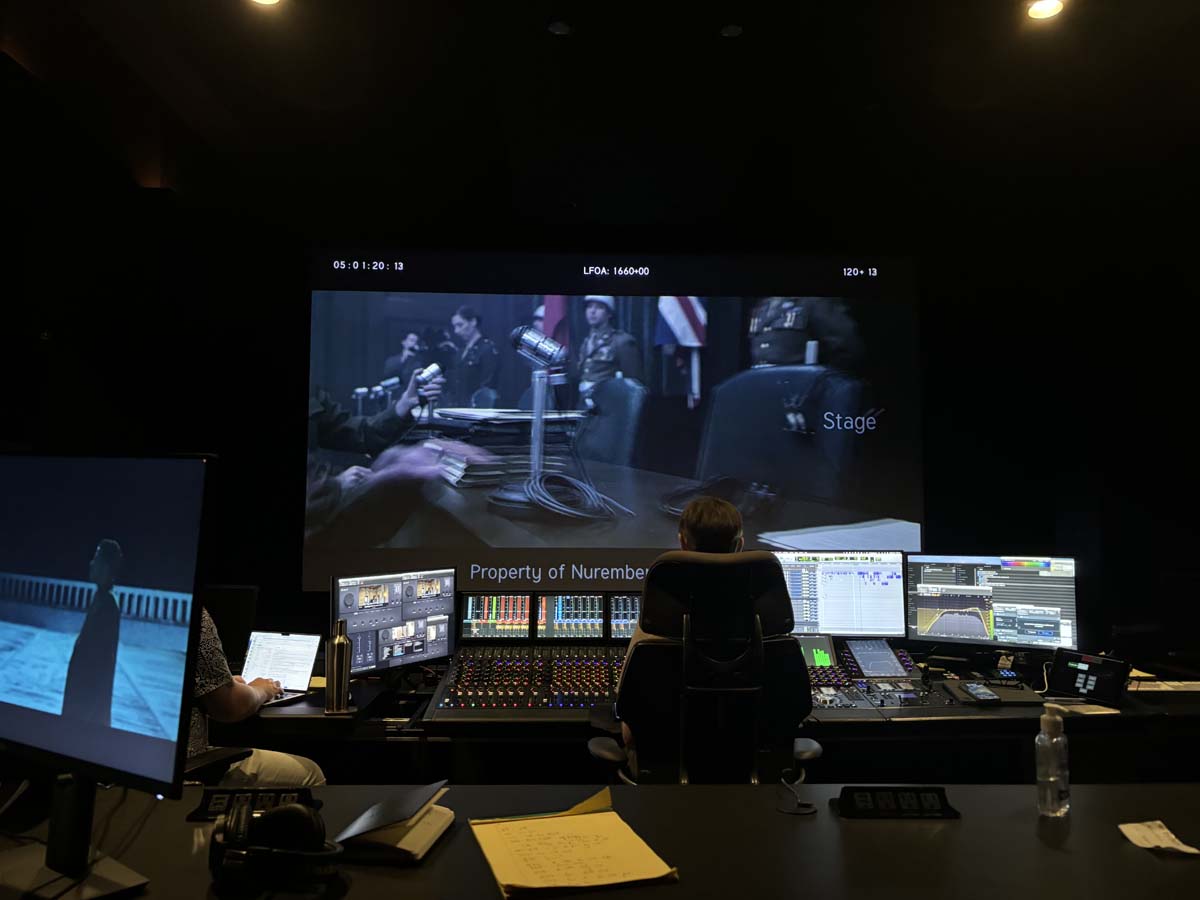
And then we really push the sound of those flashbulbs in the mix. Jamie, in particular, wanted to make them louder and deeper and stronger.
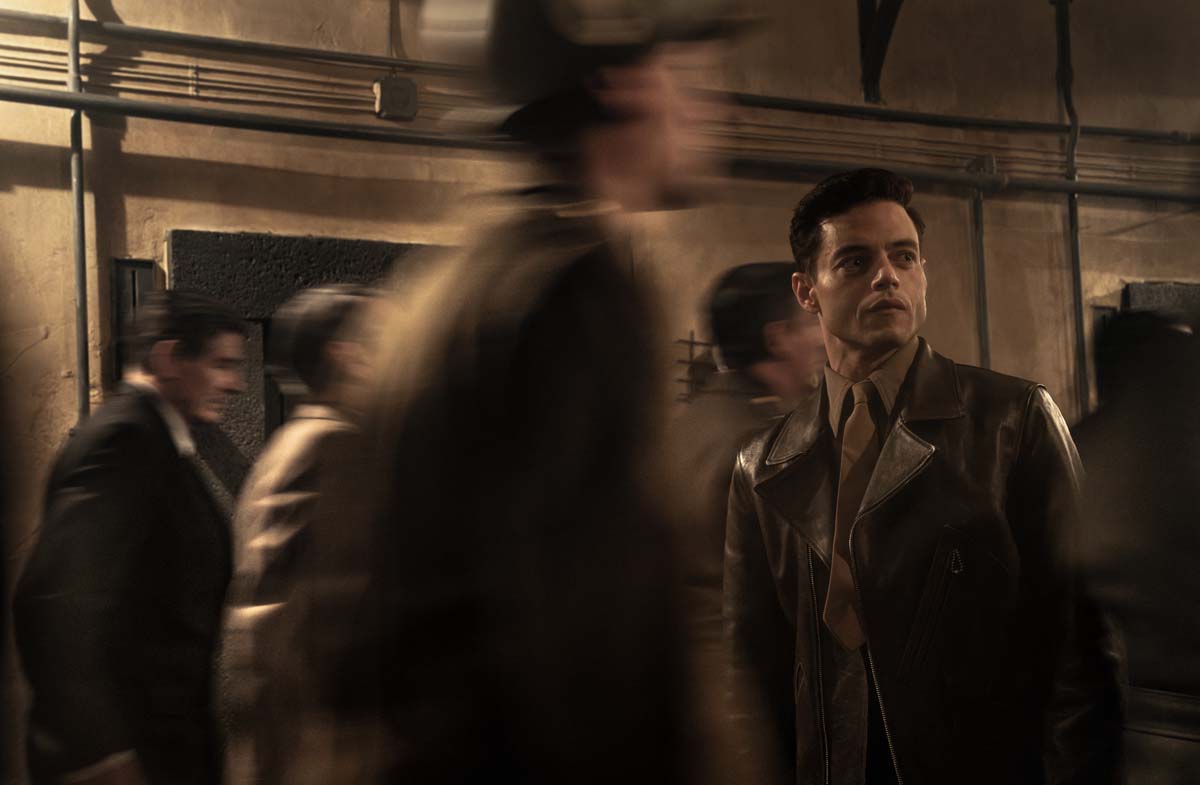
Did the sound effects affect the pacing? When you were cutting picture of that scene at first, were you trying to add some kind of flashbulb sounds?
I was. I do a lot of sound work in the offline, just to indicate things. We had wonderful sound led by Mike Babcock. He was available to us throughout the shoot, so I would often call him for sounds that I needed.
One place that I remember was the hanging sequence. I watched that footage come in. Jamie had shot the shit out of it. He’d covered everything. In the rushes, you saw the trap door open and the body drop through and the trapdoor swing back and hit him in the face.
There was a lot of detail there, but there was this one shot… the shot that’s in the movie… where we’re looking back out over the rope onto the crowd when you see Streicher drop out of frame and the rope goes tight.
Then you see the rope continuing to twitch, then you see the G.I. walk through the foreground and go down the stairs, and suddenly the rope goes tight.
It was such an incredible shot that I felt that it had to be the scene, really. I didn’t want to be cutting that sequence up. But, being as it was my first time working with Jamie, I didn’t know if he would feel like that was going to be a cop out, not to see all of the gory detail, so I reached out to Mike and asked him for rope tension sounds.
I needed the sound of someone being strangled. We added the G.I. saying “shit” as he realizes what’s happening. All of these beats were communicated with sound.
I did enough to show it to Jamie - who was always on board - and to anyone else who was watching the film before with mixed it, that it was a shot that could hold.
Then when we got into the sound mix with Mike, it just elevated to another level. I remember spending a lot of time trying to figure out what the sound of the urine on the floor would sound like.
That’s fascinating! So you had - as you were calling them - the gory details. They were shot.
Yes. And there was even a scene afterwards where they pull the hood off and you see his bloody face, and they talk about what happened.
What actually happened - some people say, maybe deliberately - was that the gallows weren’t built properly.
The trapdoor would hit the Nazis in the face on the way down, so they got extra brutalized. So that sequence did go on longer. But yes, we had all of those details if we had wanted them.
I thought that that rope tension scene was very powerful. A big part of the power of the scene was the sound. You could hear the strain of the rope in the theater.
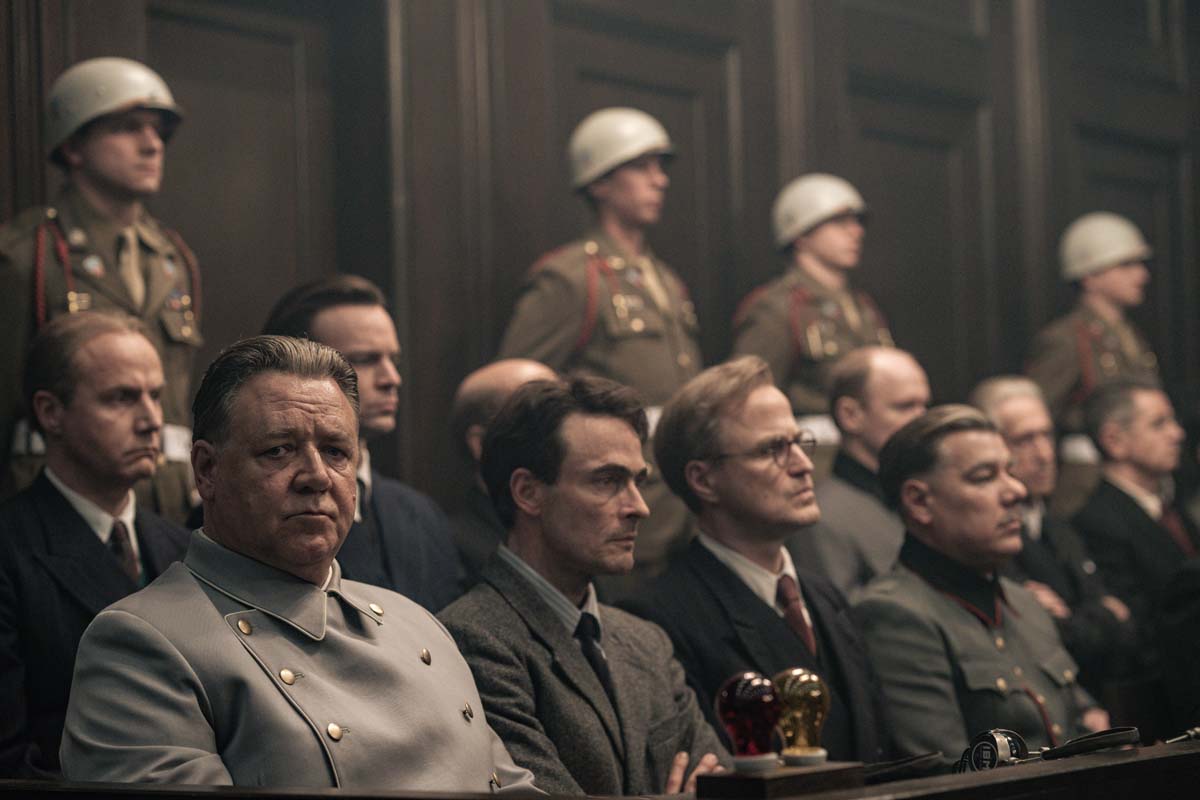
During the trial they show the film of the death camps. Can you talk about deciding how long that should go on? How long was the actual movie that they showed in the real trial?
The movie that they showed in the trial was about an hour long.
An hour! … and it was reduced by you down to 90 seconds or something?
No, I think we were in there for about six minutes. I think we had projected that it would go about eight minutes. It was very important to us to push the duration as much as we could. My concern was that 80 years have passed.
A lot of us have seen these images already. A lot of us are seeing terrible images every day on our phones and scrolling past them. How do you make people feel what it felt like to be locked in that room with that movie for the first time?
No one’s ever seen anything like that before, so certainly duration was important there. I think most people probably feel that it goes on too long. We definitely had that conversation.
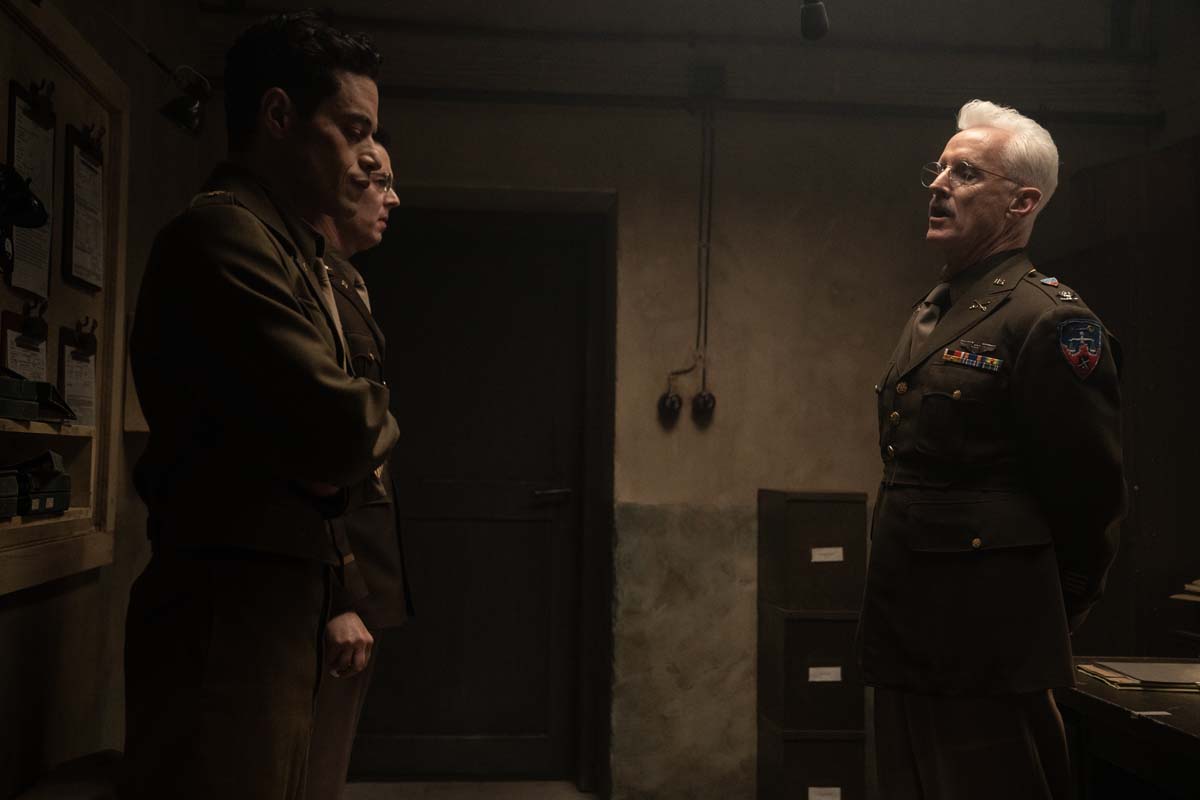
I thought it was in 90 seconds, so I’m not one of them.
People either feel it’s too long or they just feel it’s too much, which again, is deliberate. These are some of the most awful things you can ever see, and we needed you to feel that - needed the audience to understand what it would have felt like at the time, and also just for the narrative of the film to push Kelly over the edge.
This is a turning point where the scales drop from his eyes, and he realizes who Göring really is, despite being charmed by him up to this point. So it was important to push it a little bit.
We did cut it down. We had eight minutes. We came down to six. It was a tough scene to cut. It was a tough thing to watch every time. It was very quiet in the room when we were cutting it, much like it is when we show the movie.
There’s always that moment where you feel this weird opening up of time - where you’re sitting in a movie theater watching these people sitting in a movie theater watching this movie. You’re all going through it in real time at the same time.
There was a weight of responsibility there. I was a little intimidated at times thinking, “Who am I to decide what gets shown and what doesn’t get shown here?” until I remembered that another editor and director - George Stevens and Ray Kellogg - had to make those same decisions back then with their hour-long version of the movie about the camps.
So I went back to that original film just to make sure that we were using the right stuff. The images had the power that they needed to, and the only thing I added the movie was that shot of the very emaciated man looking back into the camera because I felt like it was important to see someone responding in a way or answering our gaze, and to show someone who was alive. It was a very hard thing to cut.
And I think it was a really hard scene for the cast to watch. Jamie had prepared them. They hadn’t shown them the film beforehand, so the reactions that you’re getting - that we were cutting to - were pretty genuine. They rolled four cameras and they just played the film and they shot our actors reacting to it.
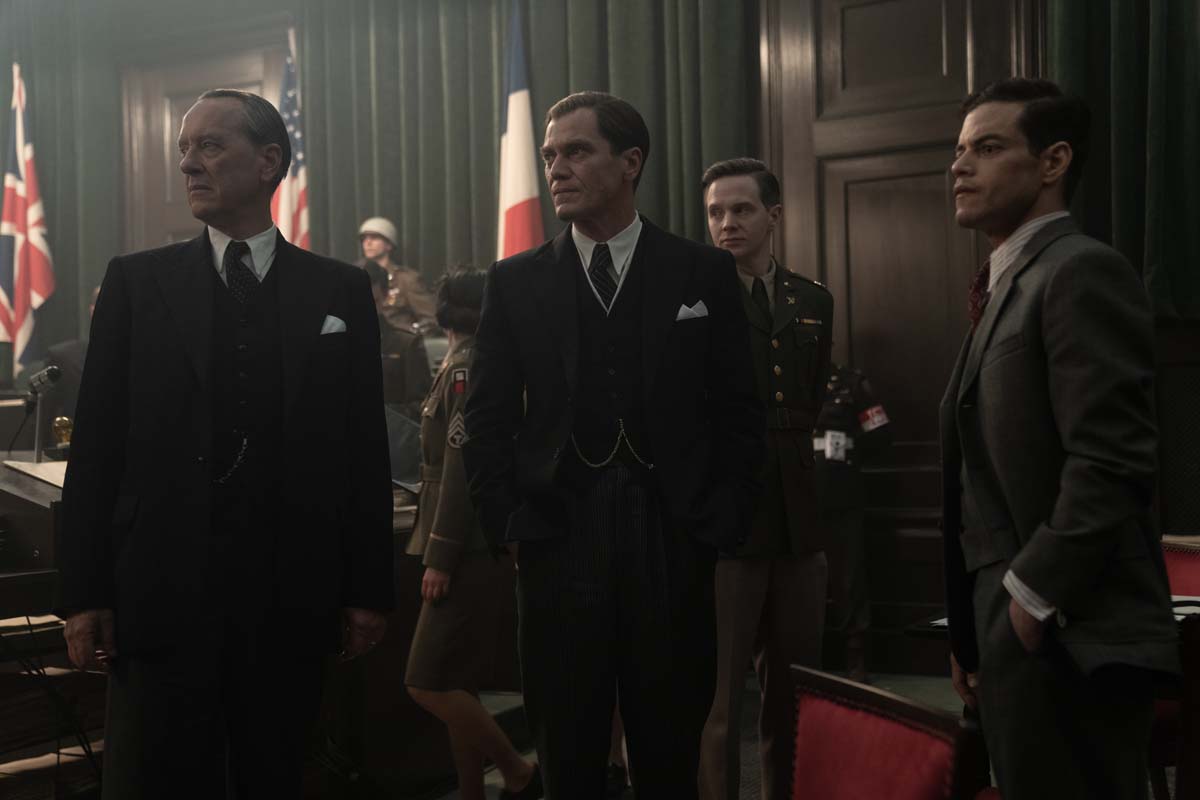
How scripted were the sections of that concentration camps film that were going to be in the movie? You said that you cut it down from 8 to 6, but did you have to choose what eight minutes were going to be in your film, or was that in the script?
I can’t remember exactly what was in the script. I think the script was broader, but I do remember that the script mentioned the bulldozer bulldozing the bodies into a burial pit, which is an incredibly hard thing to watch. It was really down to me and Jamie to decide what we were going to see there.
As the justice prepares to call Göring to the stand, and as Göring takes the stand, that is a very tense moment. Can you talk about giving that some weight and how to draw it out and give it weight, but not spend too much time?
That’s one of the couple of places where we are trying to expand time. The other one is actually the first time they’re in the courtroom and the judge enter and Göring doesn’t stand immediately and he doesn’t sit immediately.
That was just a beautiful little thing that Russell did that I was able to expand by cutting around the room. Some of those shots are stolen from other scenes.
I can’t remember where we got the shot of Jackson looking across, but we pulled that from another scene to have this beat of: is he going to disrupt the trial right from the start?
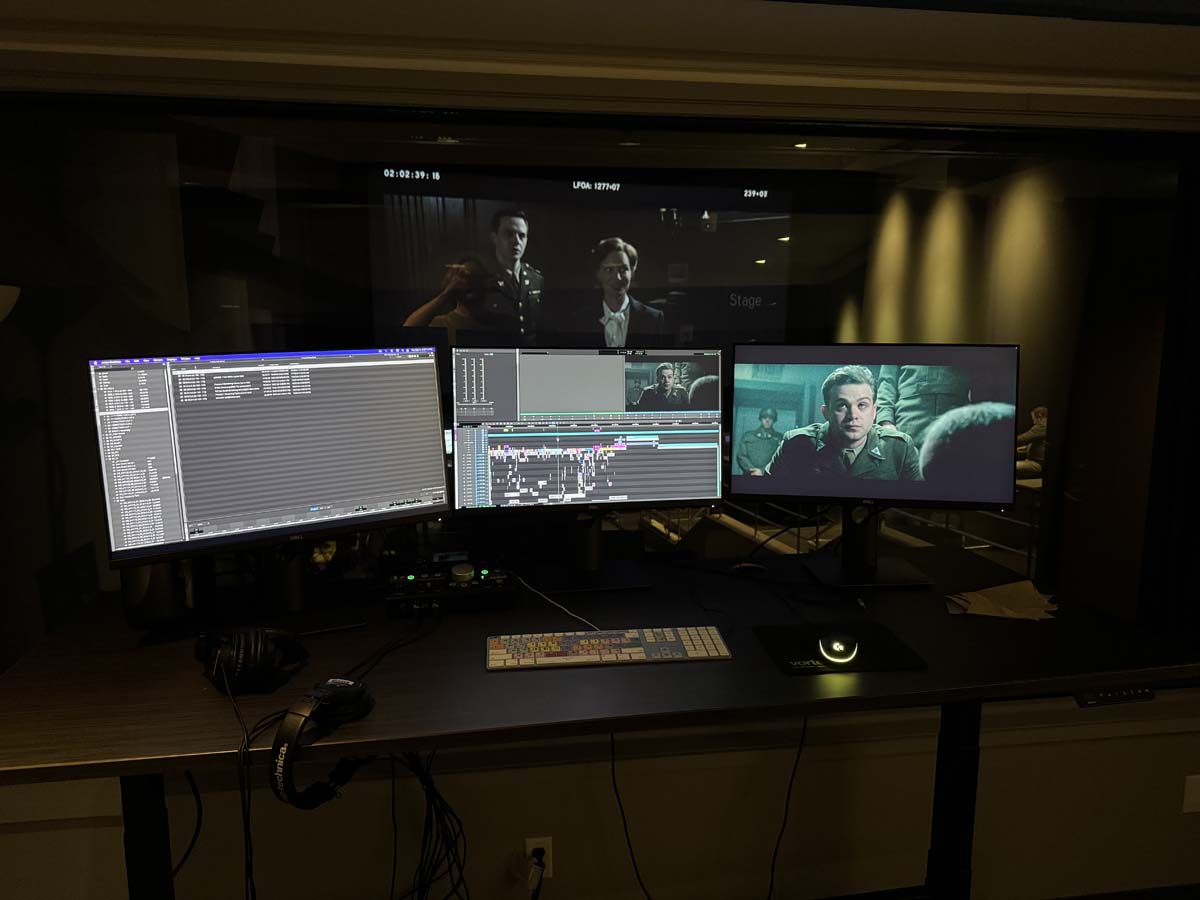
Then when the final cross-examination begins and Göring takes the stand - again, kind of led by performance - so there is an element of Göring performing there and taking his time.
And again we expand that time a little bit by cutting to other people. I remember there’s a shot also stolen there of Rami watching him walk out, which is actually reversed from somewhere else in the movie, but you kind of get the sense of all eyes are on him and he knows that and he’s enjoying it. This is exactly what he’s there to do. He’s kind of a performer.
The grade for the film was really easy. Obviously [DP] Dariusz [Wolski]’s stuff looked amazing right from the get go, then we had this wonderful colorist, Stephen Nakamura.
The one place that I had to stand up for something was that shot where Göring’s face is towards the camera - his back to the audience - and you see this little smirk, and I had to make sure we had enough light on his face to see that little smirk.
It’s one of those moments - if this is the battle, then this is the preparations for that battle with the armies drawing up their lines.
As Göring is giving his testimony, I’m sure Russell’s performance is worthy of being held for the entire testimony if you wanted to, but you also showed reactions from both inside and outside the courtroom. Can you talk about making the choices of “when am I going to cut away from this fantastic performance to show the reactions to this fantastic performance?”
That final cross-examination was just enormous. Each of those takes would be 25 minutes long. They would just play the entire scene all the way through. They filmed each take with four cameras. So 4 X 25, is 100 minutes to view each take. It was kind of like watching theater.
When Michael Shannon did his first take of his opening statement, the entire courtroom burst into applause spontaneously, so I think it was kind of like theater for them as well. It was difficult to take your eyes off Russell and Michael in that scene.
But there were certain moments where I did want to show that what was going in this courtroom had ramifications beyond the courtroom, rippling out through the entire world.
Was this going to be the end of Nazism, or was it going to be a platform actually, for Nazism and fascism?
So you get outside sometimes when Göring is landing some punches. He talks about how the Nazis had a mandate for change in the systems that had run Germany previously. It brought it to the edge of ruin.
That was one point where I remember cutting outside, and seeing this playing on the speakers, outside the court or on radios. I found a little shot that was from pre-roll of one of the MPs gulping as though he’s a little bit nervous about this crowd of Germans around him.
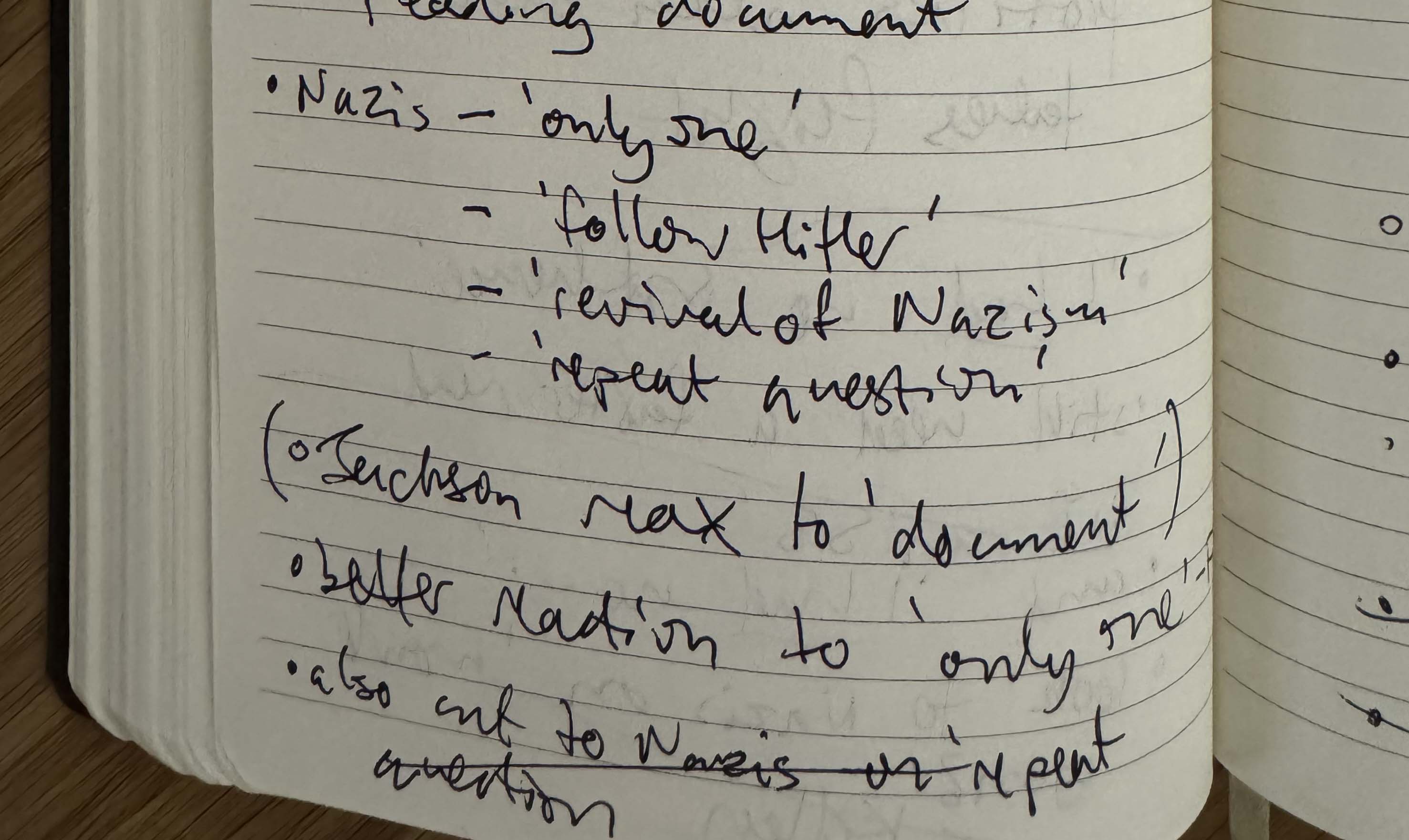
it was it was certainly difficult to take your eyes off those performance. I guess the other place sometimes we did it was to help clarify what was going on because this is legalese.
There are some pretty dense arguments going on. We certainly condense those down, but sometimes we needed to cut to an Elsa or a Colonel Amen to realize that a punch had been landed or that something unexpected had happened.
How do you watch dailies in the case of multicam shoots? Do you throw the Avid in multicam mode and watch all four at the same time, or do you feel each camera needs to be its own viewing experience?
I tend to watch each camera one at a time, which is tremendously time-consuming, but that’s a lot for my attention to be divided. I’m looking for those little moments of magic, and my fear is that I’ll miss them if I’m looking at four things at once.
I’m not just looking at: “Is this the right size to be in?” Sometimes you catch something in a profile that you didn’t see in a frontal or vice versa. So I watched it all. Just the conversation between Jackson and Goring was 13 hours.
What was the cut length of that scene approximately, do you think?
I think in the film it’s probably closer to 18 minutes.
So 13 hours down to 18 minutes.
Probably my original assembly would have been in the zone of 25. There was a lot of material about Rohm and the other Nazis.
There was a lot of detail about all of the machinations of the Nazi Party, and we really had to just boil it down to the argument that Göring was the head of the SS and the SS administered the camps.
So we really kind of tried to boil it down to that. The other thing we really needed to do in that trial was keep Kelly tied into it, because that relationship has been the backbone of the film to this point.
The baton is going to be handed off to Jackson and ultimately actually to Maxwell-Fyfe - Richard Grant’s character, who’s the one who finishes it all.
But we need it to feel like Kelly was integral to that scene. One of the ways that we did that is we wrote a bit of ADR, which was Kelly coaching Jackson, which plays up the montage at the beginning of that sequence, so that we would understand that Kelly’s insights and his book was forming some of the background of those arguments.
And we would kind of have a sense also where we thought the trial was going to go, where we thought the cross exam was going to go, so that you can then be surprised when when things don’t quote quite right to plan.
But then the other thing obviously was cutting to Kelly judiciously at certain points along the way where he recognizes things. He recognizes, Maxwell-Fyfe using the line: “Would you stand against the Führer?”
Talk to me about the choice to cover the trial conclusion with Doctor Kelly on the train, and the explanation of how the executions will take place with the actual preparation for the executions. You kind of are intercutting Kelly on the train with the executions.
That’s another spot where we’re turning scenes into sequences. Some people felt that once the trial was over, then the movie’s over. I think Jamie and I both felt strongly that that wasn’t the case. History is a little bit more complicated than a classic three act structure.
Once you’ve tried these men you have to figure out what you’re going to do with them. You also have to figure out what does that leave you, which is where that kind of final total epilog scene and radio station comes in.
But we did know that we were kind of on borrowed time: people would sense that the trial had concluded. So we took the sentencing and Kelly leaving on the train and setting up how the executions would go. We made that all one sequence. We tried to move quickly through that to – spoiler alert – Göring’s death.
You just basically talked about the value and the timing of the denouement. That’s tricky because once the executions take place, how long can you hold the audience’s attention?
As the script was written, it genuinely has a fourth act. The trial finishes, but then what are you going to do with these men? You’re going to execute them, but how are you going to do that? We certainly compressed all of that fourth act.
There were certainly versions of the film where that whole sequence was probably half an hour long. It certainly did condense right down, but it was important to get to the radio station with Kelly and get some of those points across.
There are a few points to be made in that final radio station scene: the fact that the next time these guys come around, they might not be wearing scary uniforms.
The runtime is about 2.5 hours. What was your editor’s cut or your editor’s assemble length?
Certainly over three. I don’t know if it’s three and a half or something like that. I tend to cut quite a tight assemble. Sometimes I’m pitching things to drop to the director while we’re still shooting.
My way around it is I’ll send a version of the scene with everything in it, then I’ll send a version of the scene where I cut the “low hanging fruit” - you know, the things that I think really should go taken out.
I’ll get a sense of what they want to see, then assemble. But in Jamie’s case, he was pretty amenable to seeing a tight version of the movie.
I think we both knew from the get-go that thew script was 172 dialog scenes, so we’re going to have to find ways to make it move and make it interesting, to vary the pace.
So we were always kind of right from the assemble on a mission to kind of get it down to a digestible length.
Tom, thank you so much for discussing this film with us. I really appreciate all your wisdom and your time today.
Thank you so much. I love the show. I wish this had been around when I was learning to edit, but I’m still tuning in and learning a lot.
 April 2, 2026
Project Hail Mary
Joel was last on Art of the Cut for his work on the Disney film, Jungle Cruise. Joel’s other work includes Thor: Ragnarok, Transformers: Rise ...
Read more March 26, 2026
Young Sherlock
Today on Art of the Cut, we speak with four of the editors on the buzzy new Amazon Prime series, Young Sherlock. With us are ...
Read more February 12, 2026
The Pitt
Today on Art of the Cut we speak with editor Mark Strand, ACE, who is nominated for an ACE Eddie for Best Edited Drama Series ...
Read more