













Marty Supreme
Oscar-nominated for Best Picture, Best Editing, Best Directing and Best Screenplay, Josh Safdie and co-producer, writer, editor Ron Bronstein talk about editing the film linearly – not looking at dailies until after the shoot, and being in love with their flawed main character.


Today on Art of the Cut we speak with director/editor Josh Safdie and his co-editor and co-writer, Ronald Bronstein. Safdie and Bronstein are nominated this year for Oscars for Best Picture, Best Screenplay, and Best Editing for Marty Supreme. Safdie has an additional nomination for the film for Best Achievement in Directing.
The pair has worked together for almost two decades on such films as Uncut Gems, Good Time, Heaven Knows What, and Daddy Longlegs.
Thank you for being on the Art of the Cut. Congratulations on the fantastic success of this movie.
Safdie: Thank you, Stephen. It’s been a thrill ride to see such an epic - yet very personal film -that was written and edited by the two people you’re sitting with in this very room. The whole process is very intimate, so it makes the success and reach of the film that more surreal.
Well, I loved it. I wanted to talk about the sculpting of the performance. Timothée’s character of Marty is very interesting. Certainly, a great character in a movie, but as a human being, he’s kind of unlikable. When you were working with the various performances and takes, did you find that you needed to sculpt that to figure out the right line that you wanted to walk on the likability or unlikability of his character?
Safdie: Ronnie would take certain sequences that were more situated, then I would take the sequences where there’s more movement …
I’m sorry, “movement” meaning physical movement?
Safdie: Physical movement. Many scenes, action sequences, shorter dialog scenes that are happening within a bigger sequence and some of the longer sit down, more situated scenes Ronnie would take on. That was kind of the perfect spot Ronnie can excel in ways that I’m in awe of his skill set.
On the set, the benefit we have as writers and as editors - then myself as a director - is we know our intentions of every scene, then we’re seeing it on set.
As a director, I’m letting Timmy experiment at times, and sometimes it takes a lot of freedom or rope to let him go out on certain takes and rope him back in and use some of the emotional nuances that were coming out of the freedom and roping them back into the lines.
So I’m able to have the kind of fortitude to allow that to happen. Then knowing that - in the edit - Ronnie and I will be able to contain it and basically junk some stuff that was clearly a means and not an end.
There was kind of a rule of thumb that allowed sometimes that Timmy, as a performer, would want to go to an extreme and for sake of continuity, you - almost as a fool’s errand - kind of commit to it.
Then we would often find that extremity sometimes that he would experiment with, would push things off into a place that aren’t necessary.
That’s actually not the Marty that we love. I would say that likability was never something that we were consciously thinking of. We often were chasing what I’ll call - for lack of a more nuanced term – love.
And loving the character and these little tiny, nuanced moments that make you love him, that show his youth, that show his exuberance and show his passion.
Bronstein: So if there’s one organizing principle that connects all of the features that I’ve made with Josh and the ones we’ve made separate from one another, if you zoom close enough into any human being on the planet, no matter how aberrant their behavior might appear, if you can understand their position in life and understand how they got into that position, you can find grounds for empathy.
Our goal is to put the viewer inside the shoes of the main character. In order to do that we have to write - then by extension, edit - from a position of love.
So when we hear “likability” - and I don’t say this defensively - I just don’t relate to it because I’m so rooted in the psychological disposition of this character, and I understand him to the point that I’m just in love with him at all times, not in spite of his flaws, but because of them. Because I understand how those flaws are functioning.
One of the great advantages of being both a writer and an editor on the same film is that once we sit down to cut, we don’t need permission to rethink or override the writing. We can disrespect the writing as much as we want because the writers are us.
We, as writers have a lot of - I wouldn’t say self-doubt - but when you come up with dialogue, no matter how much nuance you’re able to inject into it, it’s still something you made up. It’s completely artificial to us.
So we take it for granted. We look at it askance, and when Josh gets on set, he has a great facility for discarding the writing and inspiring the actor, with full agency, to take ownership over their own psychological interpretation of the dialogue and try to turn it into something that’s going to surprise us.
So when we get into the edit, any line of dialogue that feels superfluous or undercooked or is less interesting than the behavior around it, we can discard it - without ceremony.
We don’t have to ask permission. We can just go with what’s in front of us and fold it into what our intentions were. Again, because we’re the writers, we don’t have to be respectful and we don’t have to ask permission.
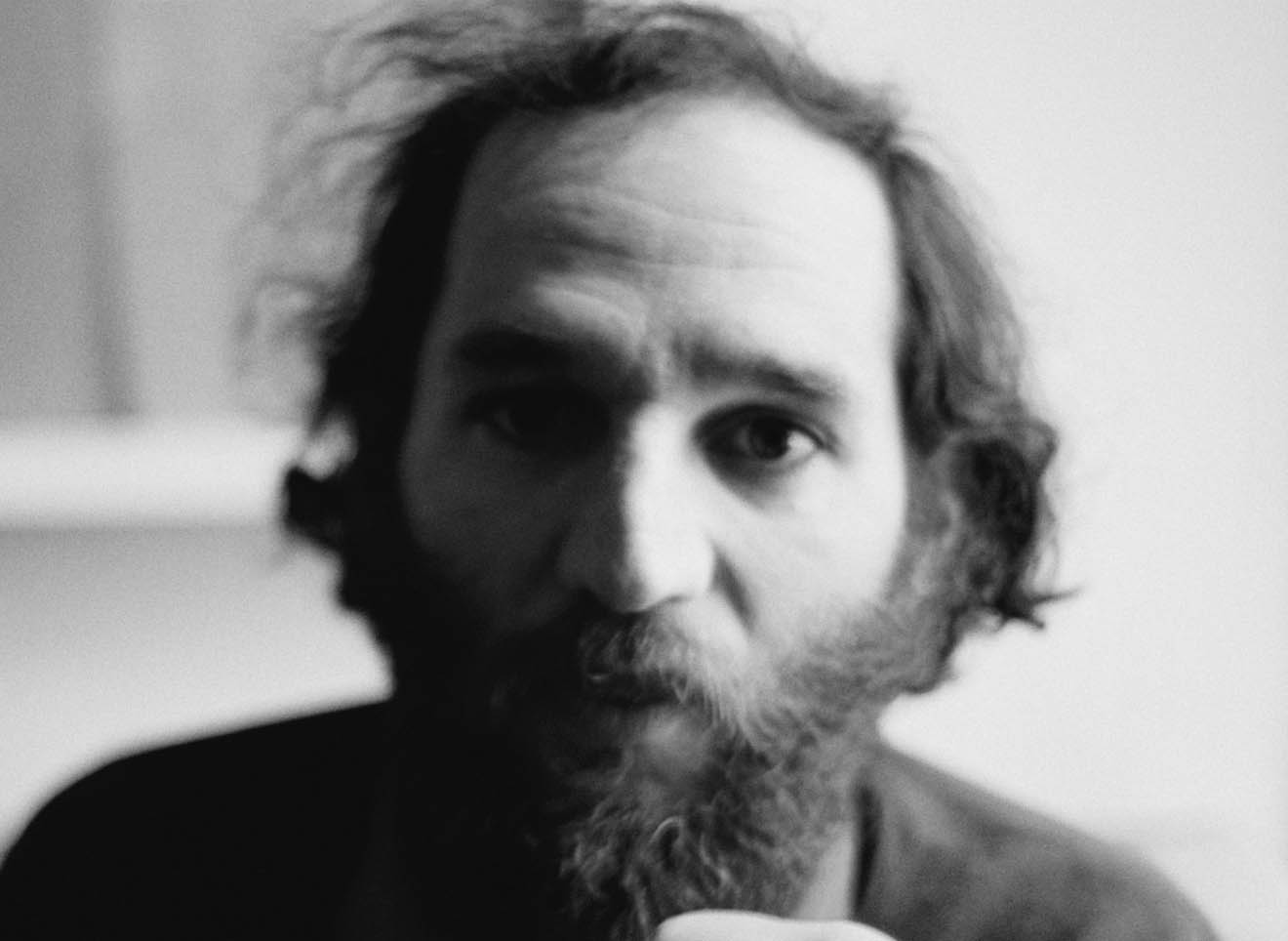
Oscar-nominated director/editor/writer/producer Josh Safdie
Safdie: To that point. The insulated quality of the work does encourage us to kind of rediscover the film at every process so that it stays alive.
And in the editing process, it’s kind of at its peak because we don’t watch dailies during the production. We’re not editing while we’re filming it, almost as principle. Logistically, we don’t have the time to.
I’ve read about directors that get to watch dailies at the end of the day. Sounds incredible! Don’t have the time. There’s not enough time in the day to shoot the movies that I want to make as it stands.
But what’s nice about it is almost like when I was first starting out as a filmmaker, you shoot the film, it’s in a can, and then you send it out to the lab almost at the end.
It’s sitting there almost like a mystery. You don’t even know on some subconscious level if it’s exposed correctly.
So when you get it processed and colored and sitting on a drive, you know it’s waiting for you, almost like anthropologist. It’s waiting to be discovered.
And in that discovery - I often and Ronnie as well - we’re chasing and searching for those little moments that actually you could never script: the way the face reacts to a line, an emotion…
These are the things that fortify the script, that we wrote and make the film feel alive, and in turn, makes the movie feel like it’s unfolding in real time, which I think does lend itself to a little bit of what people call an anxious experience.
Ronnie and I both have anxiety problems, so we found these things almost like if someone has A.D.D., you give them a little speed and it counters it - speed being Adderall or Ritalin - and it tempers the energy.
That’s kind of what these films are for us. Particularly when in the edit, we get to feel really at home and in control there. But I think an audience not knowing what’s going to happen - if we’re in control of it. It’s watching someone juggle plates.
You’re thinking, I know that they might get from one place to the other, but I feel very anxious not knowing what’s going to happen next. And that’s embedded in not only the writing process but also in the editing process.
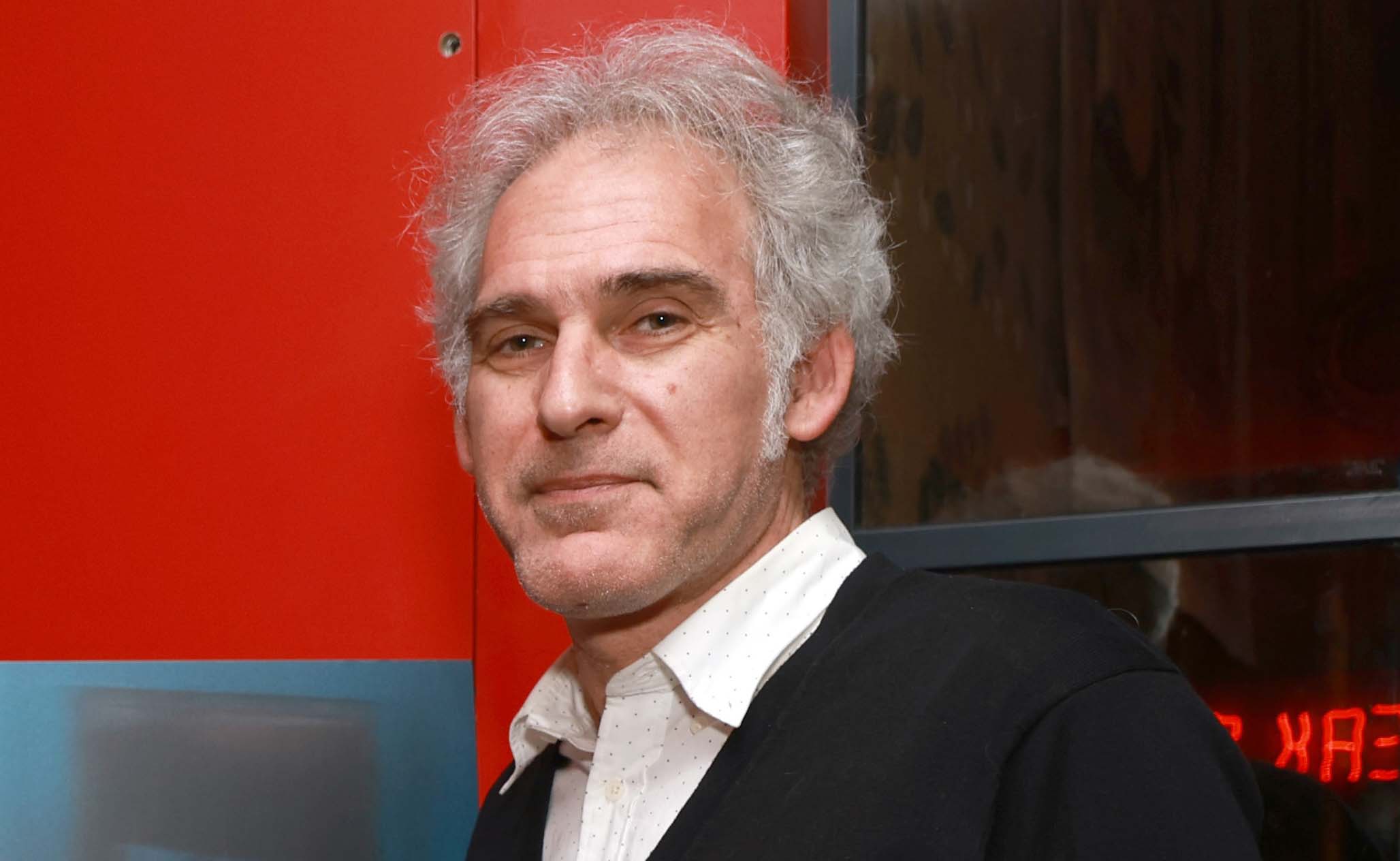
Oscar-nominated writer/editor/producer Ronald Bronstein
Bronstein: Right. And it’s just the mystery that stops us from looking at dailies. We’re very, very protective of keeping the editing process as a discrete phase in the production.
You could say the negative side is that you’ve inherited all the problems from the previous two phases, but the positive side is that you are free. You’re free to be by yourself and surf inside of the material.
In a very practical sense. When you’re shooting, you really are coursing on blind faith and you’re not looking to puncture that.
The analogy that I’ve used with Josh is that when you’re at an ATM machine taking out money, and at the end of the transaction, the machine just decides to involuntarily show you what your bank balance is. I tend to look away and hit the cancel button. I don’t want to know.
My life will find a way of informing me when it needs to, that I don’t have enough money to buy the thing that I want to buy. And that’s kind of how I look at post-production, too.
It’s an unusual way to do it. Obviously, as you know, most people edit as they go along.
Bronstein: But then you have to edit out of sequence - editing in the order that it was shot. That makes no sense.
Is that what you do? Edit in sequence?
Safdie: Absolutely! I’ll say to Ronnie, “I’m going to take the opening credits until the first big dialogue scene, then you take the first big dialogue scene all the way up to…”
So when we’re both finished with our sequences - let’s say after a week and a half, two weeks - we can conjoin them and watch them in real time, then we can create a single voice by working on each other’s sequences.
I think it’s essential that you know how a story begins. In the same way, if you’re at a fireside or you’re at a bar and you’re telling someone a story, you need to feel the spectator in the room. In our instance, the spectator is ourselves.
You need to feel the emotional flow because there’s a real musicality to the way that we edit.
There’s a certain configuration that only works if you’re building on top of it. It’s like building a building. You don’t build the 38th floor. You start at the foundation and you build your way up.
So it’s essential that we do that. In that regard, the idea of an assembly is so frightening to me and so foreign that we would never in a million years do that.
The first cut that we have is the fine cut. And when I say “fine cut,” we cannot move on from an edit unless it has sound design attached to it. So we’re doing intense in-house sound designs with a Foley pit and an incredible library.
Sometimes I’ll look at Ronnie and say, “You spent three hours doing the sound on that one little piece of Marty putting something down on the table in the middle of a dialogue scene!
We’re never going to finish the movie!” He’ll look at me and I realize he has to do that. It’s a part of the process, that’s because we have no suspension of disbelief.
We need it to be, quote unquote, as perfect as we can do in the moment. Now, of course, you go back and you do another second fine cut, but we don’t believe in assemblies and we never screen them.
Bronstein: That loops back to just us being anxious by nature, in the sense that the idea of working on something in the moment and knowing that there’s a missing piece inside of it, but you’re just going to section it off to a little vacant piece of real estate in your skull and just know “I’m going to set this aside because it’ll be filled later.”
That’s anathema to the way we think. That makes us so anxious. We think of editing as another phase of writing. It’s indistinguishable in a way.
So you wouldn’t start telling a story from the middle, and you wouldn’t start editing a movie from the middle. The decisions that we’re making in a given scene are going to inform the decisions we make in later scenes.
If we take a line of dialogue that - when we wrote it - we thought was essential to the forward progression and completion of a certain plot line. If we decide that that line of dialogue was less interesting than the behavior around it - that was discovered on set - we remove it.
We’ll also remove something related to it later in the film. So, it would make no sense for us to edit out of sequence.
Safdie: What made this film unique or different from the previous films was the presence of VFX, which was a completely new experience for me - certainly as a director and then as a team, as our edit team. We know there were certain demands for timing purposes.
You have a release date that you have to hit, and the VFX houses are telling you they need certain edits delivered in time for them to start working on the shots.
So that was a new obstacle, because it forced us to work on some of those sequences out of order, and it was really painful to do that because it was so antithetical to our process.
In particular, the final Japan sequence had a lot of crowd additions. Obviously, all the table tennis sequences had a level of VFX in them because of the mixture of real life playing and the addition of the CG ball and crowd expansion.
So those sequences had to be edited almost like these tangential suites that had to be addressed for the purposes of VFX. That was very unusual for us.
The only benefit of it was that because we had to commit to a certain level of VFX shots early on, there was a working draft, finely edited, but a working draft that could be refined as the finale over and over and over again until the end of the film. So in a way it helped.
But for the most part, it was incredibly anxiety-inducing and really antithetical to our process.
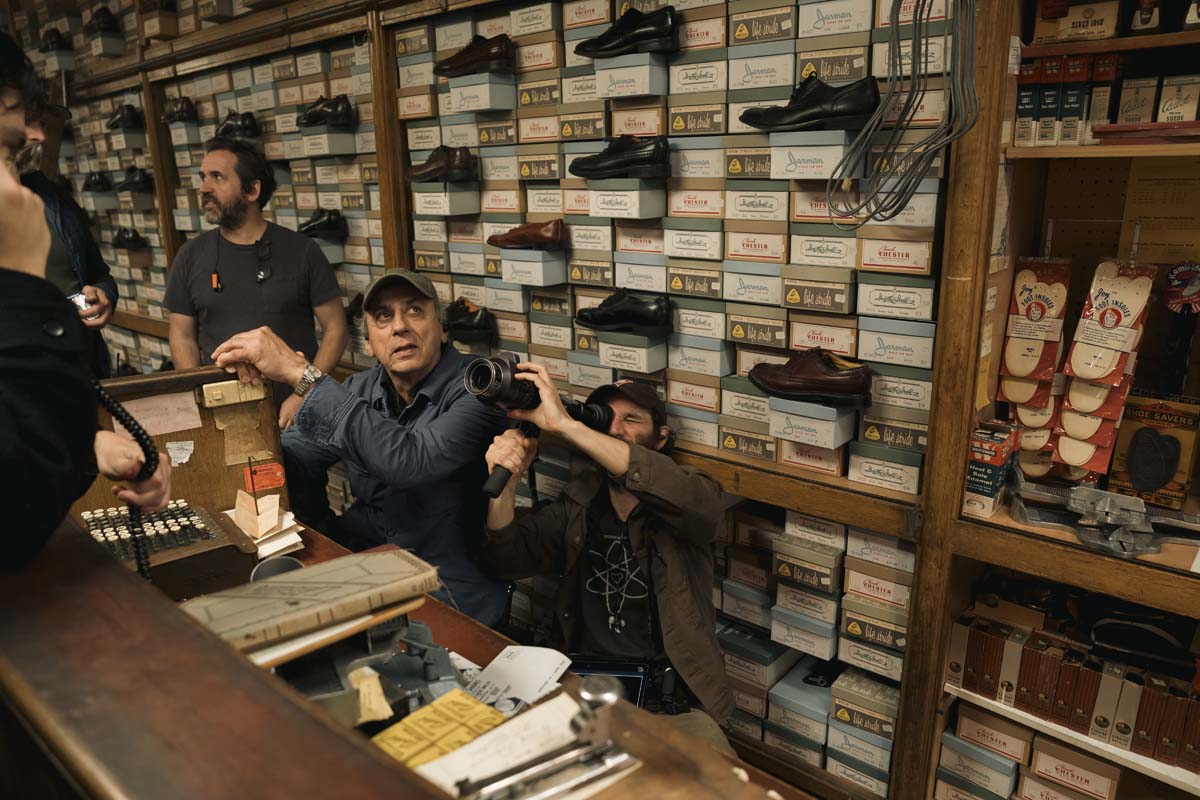
Bronstein: I was spared that pain for the most part, because my wheelhouse was the longer dialogue scenes - the scenes that are more contained, where we’re dealing with close-ups, medium close-ups, extreme close ups, people standing in close proximity to one another - where you basically just have one person angling to dominate or humiliate the other person.
Those were never effects-based scenes, so I was spared the pain of having to work out of sequence as much as Josh was.
When you got done with that first fine cut, how far off were you from your end runtime?
Bronstein: 25 minutes to 30 minutes.
Safdie: Yeah, that’s exactly it. There’s 30 minutes. All that meant was we knew that the amount of movie was right, the writing was correct. It was that musicality, when you watch something.
What’s helpful about being in a fine cut is you’re not having to squint your eyes at anything. It’s all roughly the most refined shape that it can be in that state.
But when you watch it all together, you think, “Actually that scene could be shorter,” and it allows you to see those decisions very clearly.
So what we ended up doing was we went back to every scene and we basically were brutal. We shrink-wrapped every scene, because we didn’t remove any scenes.
You didn’t cut any scenes?
Safdie: No, we cut some scenes in half…
Bronstein: There’s a scene that takes place on a phone and we had shot the other side of the phone call, but decided not to use it, things like that. In the past, we did more Tetris-like reconfiguration in post-production, but we were very, very careful with the material - more than we’d ever been before on the writing side of things.
The sort of Swiss clock quality of the narrative didn’t really allow for us to lose much. The term “shrink-wrap” is correct. You can take 10 to 30 seconds out of each scene, and when you have 200 scenes, you’re bringing your movie down by 25 minutes.
Let’s talk about some of the needle drops and the score. How much of that was discovered in editing, and how much of that do you do in the writing?
Safdie: Every needle drop was written into the script. It was conceptually the foundation going into the concept of making a period film. This is not a period piece. This is a contemporary film shot in 1952.
That was the concept, but told from the point of view of Marty in 1986, at a Tears for Fears concert, listening to Kurt Smith sing the words “everybody wants to rule the world.”
But at that age, knowing that not everybody can. So that’s the haunted quality of the film. So the energy and exuberance of using 80s music lined up with the 50s in an interesting way, because in the 80s that was the goal. It was the first post-modern era that was chasing that exuberance, chasing that opulence, chasing that prosperity.
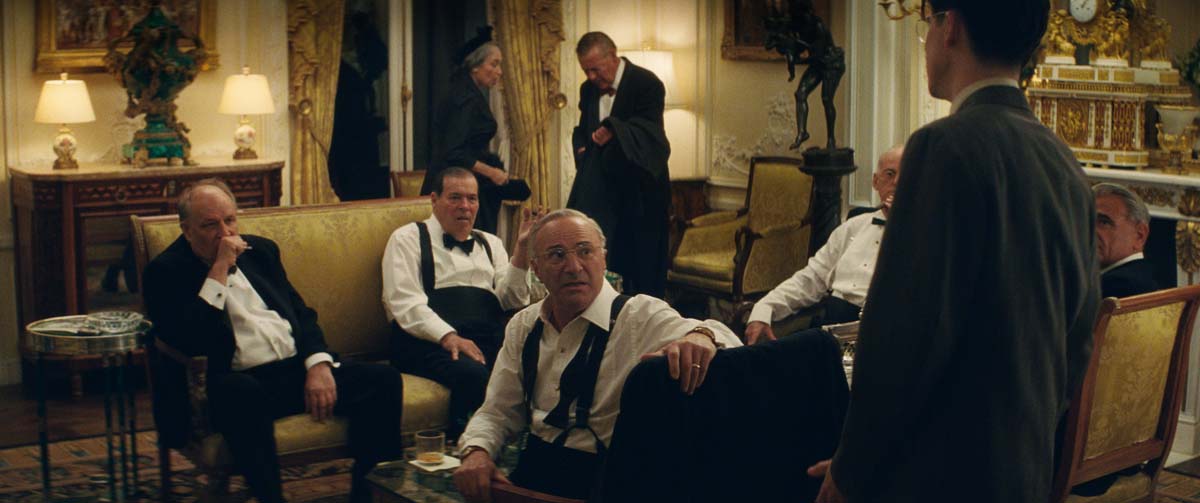
That decision was very intuitive, and it ended up working kind of instinctually, when you watched it. It worked for Timmy when he first saw it early on, before we even really wrote the script.
So those needle drop decisions were there when we wrote the film. Then when we started editing the movie, Dan, the composer is reading the script.
He’s watching cuts. I’ll put all of this music, that throughout the writing process, a lot of new age music, and some baroque kind of classical music. They all go into this massive folder that are the sonic sounds of that will be the score.
Dan’s listening to them a lot, and he’s musing about things and we’re listening to them a lot. Then in the edit, Ronnie and I are Frankenstein-ing these kind of sketches of what the scenes kind of might want to feel like or might need tonally or, rhythmically, so that when Dan can come in and he can see, “Oh, they want this emotion with that pastiche. Okay, I can write something like that.”
That process is in addition to sound-designing. We are doing these quite elaborate Frankenstein pieces of temp score that are using 3 or 4 or sometimes 5 different pieces of music. It more or less works.
That’s when your ears kind of have to squint at times: “I know it works well enough for Dan to hear the score, and it works well enough for a studio head to watch the movie and know and not be distracted.”
Bronstein: Josh, with each project, amasses a folder of temp options. It’s massive and it functions like a style guide for the movie. Our temp music is heavily edited and heavily constructed. I’ll look around this folder when I get to a point where I know that score will be needed.
I will start to just surf my way through the material and find little pieces from various preexisting pieces of music. I might make a single cue with five movements in it that seamlessly transition from five different existing pieces of music.
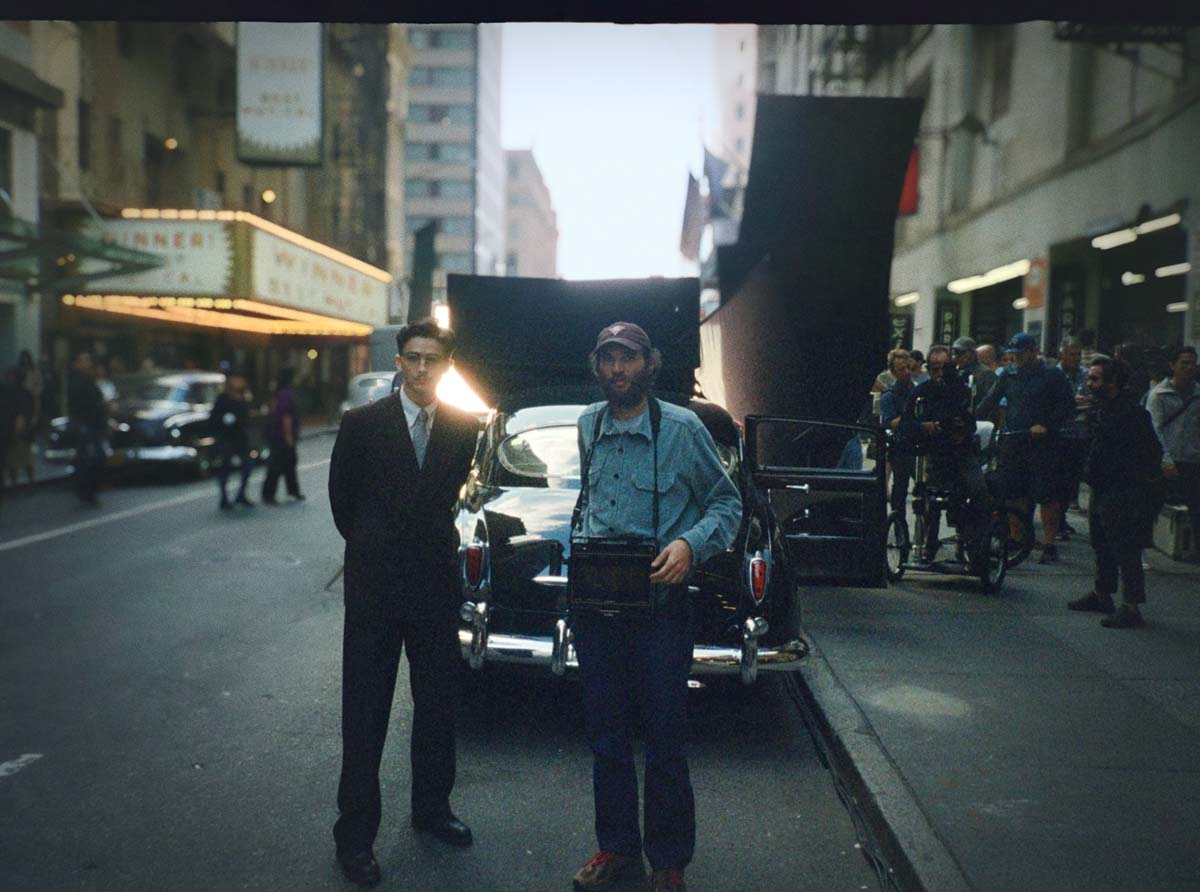
(L-R) Timothée Chalamet, Josh Safdie, credit: Atsushi Nishijima
It sounds like the composer was on from before the script.
Safdie: He’s a collaborator I like to work with for many reasons. We have a shorthand, and he’s okay with listening to these Frankenstein temp pieces. Some composers will actually be almost offended by that.
Did her start delivering music to you while you were still in rough cut stage?
Safdie: He delivered a few pieces of music that were in the direction. He’s more like a sculptor. He’ll come up with one piece of a score, a cue, then we’ll refine it. Like editing, I need to build it from the ground up. The narrative from beginning to end.
So when Dan plays me pieces of music, they’re just wrong because they’re just sketches, and sometimes I can here a direction where he’s going and he can describe it to me, but for the most part, I really enjoy building it with him.
There are these kind of written out maps of: “Okay, music will come here. Music is needed in this section, transitionary pieces of music,” but it’s very romantic. The use of music is very romantic, and the music itself can be quite baroque.
The closest artists - if you wanted to come up with some sort of comp for the score is it’s somewhere between early Hans Zimmer and Ravel or Tangerine Dream and Morton Feldman. It’s kind of a mixture between the classic and let’s say, the early synthesized days.
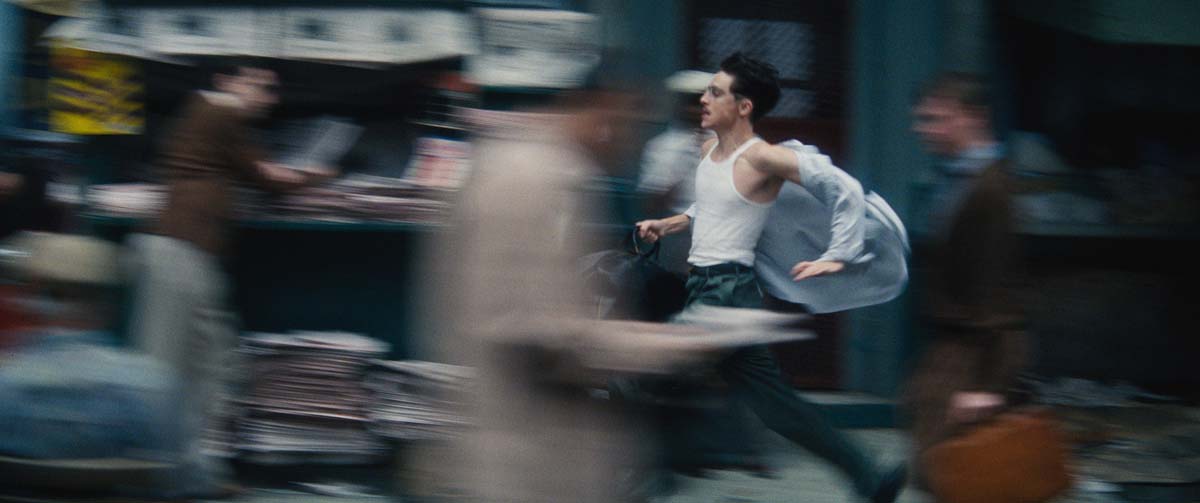
Timothée Chalamet, courtesy of A24
I love the pace and the rhythm of the editing in this film. It felt very natural to the rhythm of the character of Marty himself. Many people will say that you can’t fight the rhythm of the footage that you’re getting. I would think that the rhythm that you’re getting from Marty then becomes inherent in what you’re cutting.
Bronstein: We’re rhythm junkies. The dialogue that we write, is a very rhythm-based dialogue in terms of the back and forth, the patter, the speed, the energy of it. When we get into production, you know, Josh definitely gives the cast the freedom to control the rhythm.
But we’ve also landed on a sort of conservative grammar for how we shoot those scenes to ensure that then ultimately, the control of the rhythm goes back to us.
We’re not hippies. We’re not footloose. At the end of the day, the actor is controlling the rhythm. But then it comes over to us, and since we shoot everything - or most things - in close-up, then we have the ultimate say on that rhythm and we can speed it up and slow it down based on our own sort of emotional reaction to the work.
Safdie: It’s a lot of the scenes that involve movement or action. Although I consider there’s a lot of dialogue scenes that could be conceptually called action scenes as well. There is a lot of camera movement to it, and those have obviously a built-in energy. The actual sequence is designed to hand off to one another in a very rhythmic way.
Those scenes, again, as writing, they’re almost the anti-hippie because they’re very prescribed in their design - the sequence design - but the actors are not being told you need to do X, Y and Z.
So the beauty of being involved in each stage of the process is that you can give the actors the total freedom to do what they want to do naturally without puppeteering them, then adjusting the camera movements to align with it, knowing that, in the edit, we’re going to do the same.
So I think the end result does have this sense of being frenetic, but I’d rather use the word “alive.”
Bronstein: When I edit I go into a complete trance. Josh can be sitting three feet away from me. I will not hear him, I will not see him.
I reach a point where I’m not even consciously registering the monitor anymore. Kind of like when you’re reading a book and you lose your awareness of turning the pages for a 60 to 70 page stretch.
Once I hit that zone - which is kind of like meditation - I don’t have a relationship with wellness, so this is the closest I get to it. It’s the negotiation between who is speaking and who is listening, and it becomes almost unconscious for me.
The act of cutting becomes inseparable from the sensations and emotions of the characters, so I’m not guided by a logic in that sense.
Josh and I really have settled on a very conservative grammar for dialogue scenes. For each character, he gives me a close-up and an extreme close-up. His idea of a close-up would be someone else’s idea of an extreme close-up, but that’s it. That’s what I get, and I treat every cut as an opportunity to either increase or decrease tension.
Safdie: In a sequence like the bowling alley sequence there’s almost a holographic display of subjectivity where the scene can be told really from anyone’s point of view, because it’s being shot from so many people’s different points of view.
And that’s very helpful for me, because when I’m subjectively shooting a scene, I can work with that person. So the person that it’s subjective of them emotionally.
So there’s this kind of maximalist effect of subjectivity which allows, when we get into the edit, to kind of enter these almost K-hole moments where Ronnie’s screen disappears to him, where you can jump from point of view to point of view, and the aggregate effect is actually something that’s very immersive.
Bronstein: Like an emotional cubism. We know the audience is rooted in our protagonist point of view, but since our protagonist is often behaving badly, we want to be able to have the audience at the same time understand why Marty is acting the way that he is, and being able to allow defense to get behind these precision engineered insults that Marty is issuing.
But at the same time, you want the audience to equally feel for the person who’s on the receiving end of it, and Josh manages to get it simply through subjective eye-lines and close-ups.
Just to finish what I was saying before, in terms of what with these close-ups: I treat every cut as an opportunity to increase or decrease tension.
That’s the barometer that I use. I establish a rhythm using the close-ups. I’ll let the scene breathe just enough. Then I wait for the moment when somebody is going to strike.
When a character goes for the jugular in an attempt to seize control over the interaction, and at that precise moment, I push into the extreme close-up, and once I do, Josh and I have a rule for ourselves that we will not back away from that composition until that tension has completely actualized itself and played out and peaked, then we’ll allow ourselves to retreat to a wider shot which I experience as kind of a release valve.
That’s an opportunity to dissolve that tension and reset the board then begin the process of escalation all over again. Sometimes we have scenes where that happens 3 or 4 times, like the Ritz scene - the dinner scene in London.
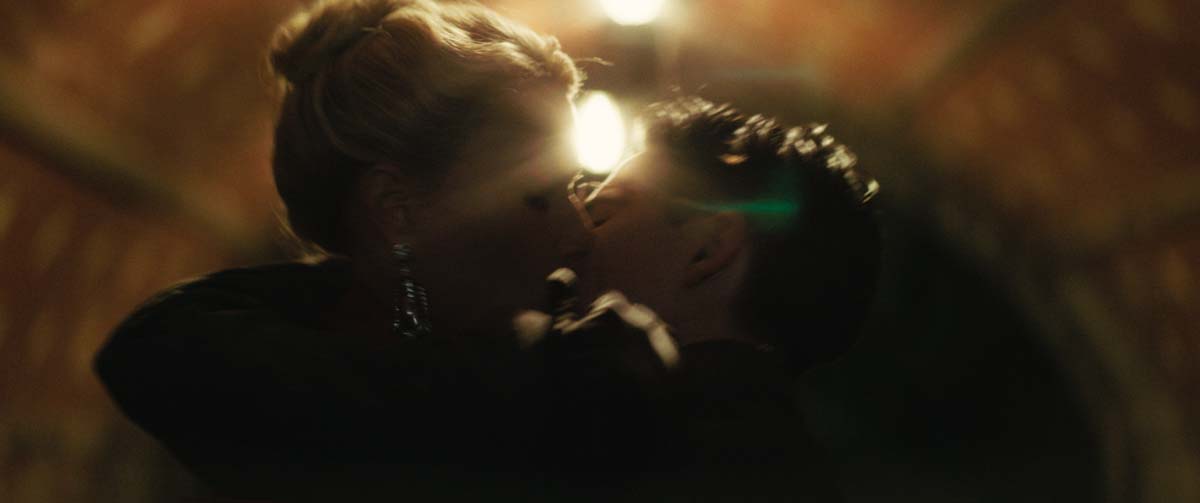
(L-R) Gwenyth Paltrow, Timothée Chalamet, courtesy of A24
When are you on Marty delivering those insults, and what are you on the person receiving them?
Bronstein: It’s just purely emotional-based decisions. I get inside the material. I surf inside of those feelings and I find it, and when I find it, I know it.
And when I share it with Josh, he knows it immediately. And when I don’t get it right, he knows it immediately, and I agree with him immediately.
I get pulled out of it to be in a position to show it to Josh, then we can be more analytical about it.
Safdie: One of the benefits of having an editing partner is you may be riding the flow - this intuitive flow that Ronnie is describing in a scene - then someone can come to him and say, “Oh no. I wanted to stay on that person for a second.” And that perspective is very helpful.
And Ronnie is very good at watching a dialogue scene that I’m cutting and saying, “Let’s stay on Marty until his next line.”
I might have thought it would be interesting to see the subjectivity of that other character delivering that line, but when Ronnie’s watching he says, “I didn’t care what that person looked like or how they were physically acting.
I’m more interested here in this moment with Marty.” At first I might think, ‘Well, that’s not how I was intuitively feeling.” But then you try it, and his intuition is helpful.
If you go back and watch the cut, it’s not fastly edited. Outside of some of the action sequences - where you have shots that are 20 frames long - you’ll never find a jump cut. The scenes actually take their time, but the dialogue itself is quite rhythmic.
Bronstein: What’s nice, almost in a surprising way, is that Josh and I are very, very argumentative in the writing phase - very argumentative! It’s very often like trying to fit two Lego pieces together when they’re not manufactured to do it.
But in the editing, it’s very rarely the case when Josh reviews my material and I review his material, it is an incredibly harmonious process, so we’re very much in lockstep in post-production.
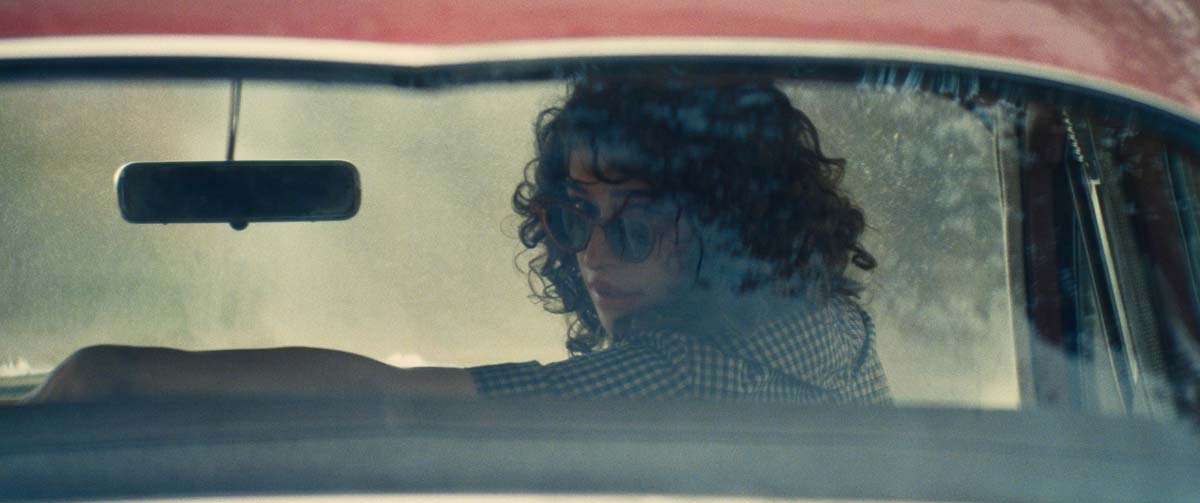
Odessa A’zion, courtesy of A24
Why do you think that is? Because you’ve already made those decisions and hammered out your arguments and justifications?
Bronstein: It’s because we both understand the material so well. We’ve been through the writing, we’ve been through production. We both understand the material so well at that point.
Nothing ends up in the movie if we’re still arguing about it, meaning that all arguments are resolved by the time we move from writing into production.
There’s a mutual trust in our respective understanding of the material. So therefore, when I look at Josh’s cut and I have a small note, it very rarely causes friction and vice versa.
It’s something I appreciate greatly. Editing is the great reward for all of the tensions, anxieties and hassles that are born from the two previous phases. With editing, you get to be by yourself.
You get to commune with the material on the deepest level. Sure, you’ve inherited problems, but it’s up to you. You can fix them by yourself. It’s the only relaxing phase of filmmaking.
Safdie: It’s important to create the image of this edit suite we’re editing in. We’re not alone. We have an incredible team at our disposal. We have, Matthias Hilger, who was our first assistant editor, and we had two additional editors - Max Allman and Lucas Balser - who we could rely on to help support certain sequences when they were getting fine-tuned, because we were under such an intense deadline and we were never in that position before.
But now that we were, we were able to create this little community here. We had our consoles. We had this support team around us, and our post supervisor, Susan Lazarus, who actually, weirdly, her mom and my grandmother had been social workers together.
The VFX team we had was so harmonious. We called our group The Dialers because we work such long hours chasing this deadline.
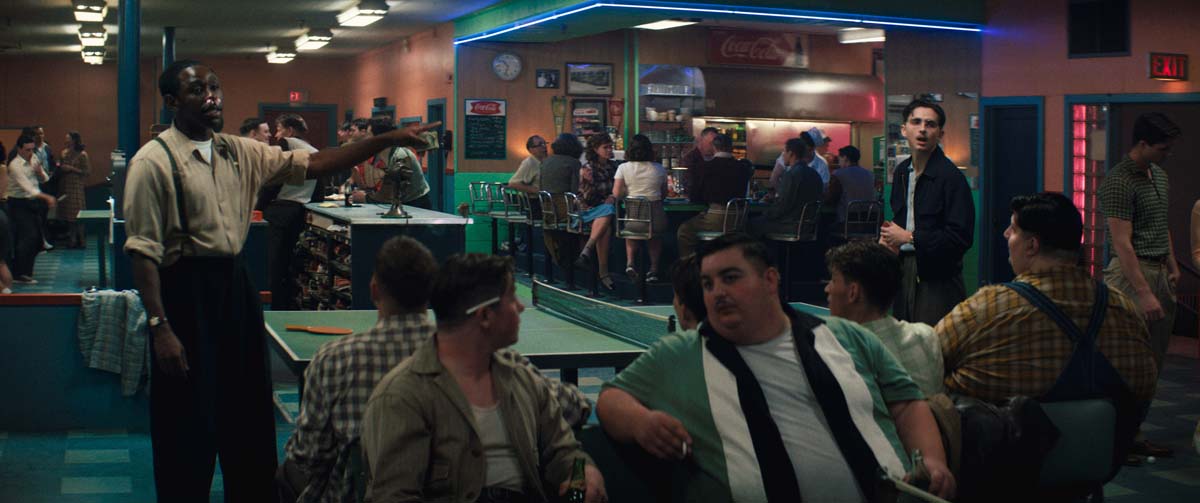
(L-R) Tyler Okonma, Timothée Chalamet, courtesy of A24
Bronstein: “Dialing” could be for food at two in the morning, but also “dial 911.”
Josh and I have been honing our process for 17 years, and to bring anybody else into that process, you have to pity them. Putting anyone in a position where they would have to acclimate to something so nuanced and something that had calcified organically over nearly two decades.
We’re used to doing everything ourselves. That’s how we started making movies on crews of 3 or 4 people where you just did everything yourself. When we got to Uncut Gems it was the first time working in a union capacity.
Well, the union says you need to have an assistant editor. That’s not negotiable. “Well, no, no, no! We just want to do everything ourselves!” It seemed like an intrusion, like somebody bringing a new chemical into our equation which could only lead to an explosion. We found Luca.
Luca was the first. When he came in to my office to interview - I regret it now - I wasn’t mean, but what I basically said was, “We need to have you here. You’re basically going to be paid to do nothing.
I hope you don’t mind that. Are you comfortable with that?” And he said, “I guess so, but there are things that I can do.” I said, “We won’t need it.
We need to do everything ourselves.” Well, it turns out he’s also somebody that learned how to edit films completely on his own and built up his own system from the ground up.
Then we brought in Max Allman on this one. Both of our assistants or associate editors learned by themselves the way that they can think outside the box.
When Josh says that we don’t have imaginations and we can’t achieve suspension of disbelief with pieces missing from our cut, we can go to either Max or Luca and they will literally mock up a temp VFX.
They don’t just know Premiere, they know After Effects, and suddenly they can come up with a version that actually is good enough to help Josh and I reach suspension of disbelief. We’re dealing with incredibly resourceful people.
It’s hard to find people that match your taste. What is taste? It is the summation of every experience you’ve ever had on planet Earth since you were born, culminating in a reaction to stimuli. That’s what taste is.
And we just managed to find people with good taste. I hope they never leave us. I hope we can work together forever. It’s actually the most beautiful, harmonious process that we’ve ever had in post on this project.
Safdie: Matthias, our assistant editor, he was David Lynch’s assistant editor for years.
We bring up a documentarian, rest in peace, Frederick Wiseman, who just passed. Frederick Wiseman is somebody who has informed Ronnie and myself, not only as editors but as a filmmaker. And really almost as like a writer using editing as a form of writing.
When I talk about discovering a hard drive, this footage that existed mysteriously as anthropologist almost that’s what makes his work so powerful is he makes real life feel scripted, and he’s able to do that through control in the edit and subjectivity.
Obviously, he’s on set as the sound operator and directing the cameras on what to do, and he knows “I need this shot in order to create a sequence or create the illusion of an of a controlled sequence.”
When you look at a film like a documentary, that is how we look at film - as epic and as produced as something like Marty Supreme. At the end of the day, we are inspired by Frederick Wiseman.
Bronstein: Wiseman’s inspiration - just on a specific micro-practical sense where he’s influenced our grammar.
Here’s somebody who’s going out into the world and documenting real life, but instead of backing up and shooting things in tableau - shooting things in wide - he decided to really prioritize the close-up.
And by prioritizing the close-up, not only are you able to get at subjectivity, emotionally speaking, but you’re able to have greater control over the rhythm with which you want to show the world that you’re documenting. He likened his own work to dreaming. That had an impact on us
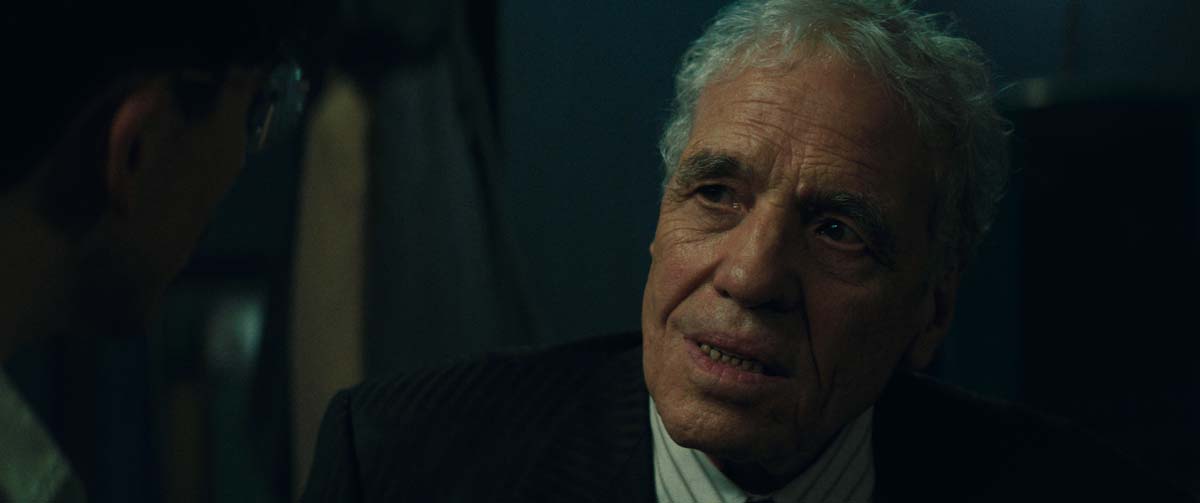
Safdie: Completely. And I think that the actors - because this is not a documentary, it’s not real life - you have the luxury of moving out and starting to get more controlled, guided grammar.
But when you start a scene in close-up, At the Oscar nominee luncheon, I was talking to an incredible filmmaker and he said, “I heard that you start shooting your scenes in close-up.”
And I said, “Absolutely, why wouldn’t you?” The production itself would love to do the opposite, so that they can sculpt these more elaborate lighting designs in the master, then you can slowly move in to a close-up.
But - like Wiseman - I’m thinking, “Well, first what I’m going to do is I’m going to try to just capture the subjectivity and singularity of a human being in close-up or a medium close-up.”
It allows the actor to be think, “Wow, I’m starting in the micro! I’m starting in the microscopic,” and we can move out slowly to the macro. After Wiseman’s passing I said that his impact and influence on our work is ineffable.
Also, the Maysles and Pennebaker - the direct cinema movement - they proved you could make real life seem like fiction through grammar.
By that very idea, you could flip it and make fiction feel like it’s unscripted. You can formally do it. It’s like a math equation. If you can formally have one equation, you could flip it and create the other. That is monstrously impactful on the work.
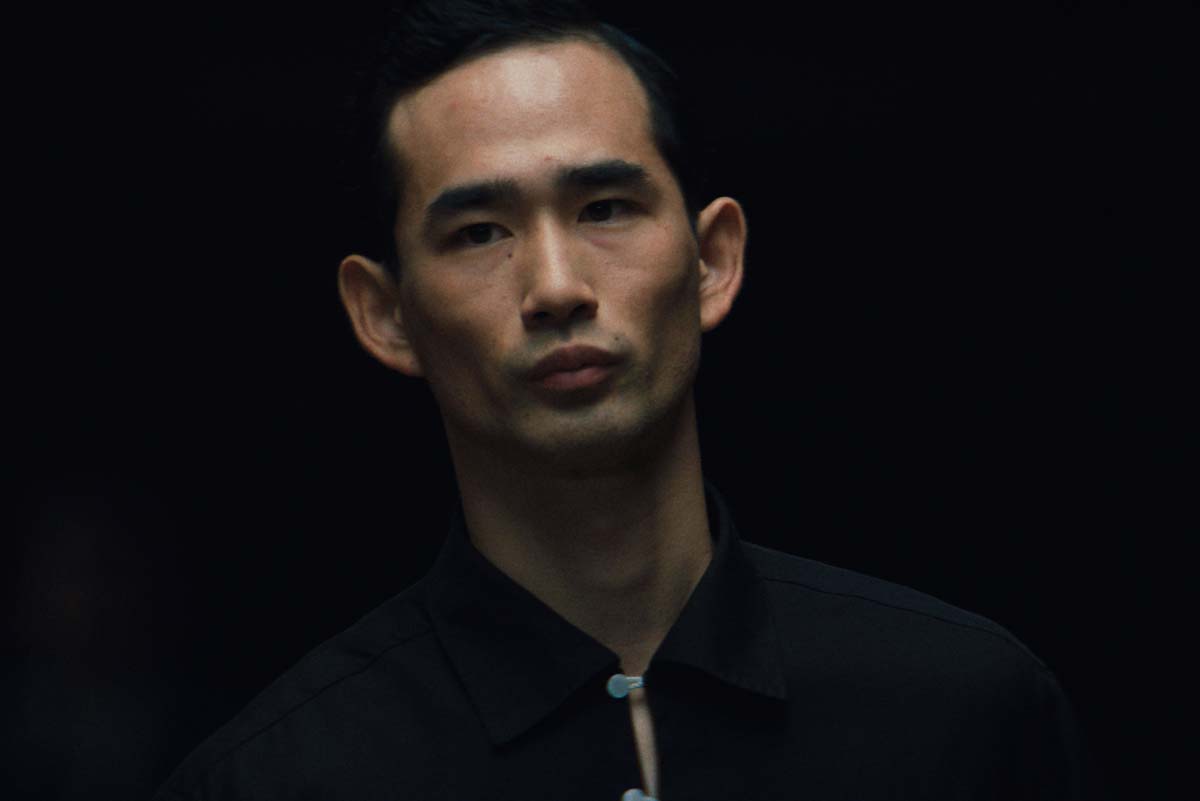
Koto Kawaguchi, courtesy of A24
We talked about tension in these close-up dialogue scenes, but I also felt tension in some of the more action-oriented scenes. One of them I wanted to discuss was when Marty encounters Endo at the finals.
Safdie: The final sequence really hinged upon two performative moments that you had to give breath to. One is the first moment of humility that you really see from Marty. Up until that moment, the movie is obviously doing its own thing.
Ronnie and I have our own rhythms as not only writers and as editors, but you’re seeing the rags-to-riches story, basically in one act.
And that act ends with Marty’s loss at the finals. The cue that you start to hear by Dan for the finals is called “The Humbling.” But the two performative moments that I knew in the directing that you had to give real breath in the edit to were the moment when Marty goes down 4-0 and he realizes, “Wait a second! I haven’t been giving this any attention! I’ve been running on pure hubris.”
As the hubris gives way and the floor gives out beneath him, you can see in Timmy’s performance - which is when you have an amazing actor, it allows you to lean on that without editing and you can just watch him sink into himself, which is in a way, the expression of humility: sinking into yourself and having to look up above you.
In a way, it was that moment and it was in the confidence of Endo. It was in that look that he gives him, like: “You judged me. My people have been completely silenced and isolated and I’m here right now.” Again, that’s a performative thing.
But if you can tie it in a chemical equation, almost to the humility matched with that sort of confidence, you’re creating the beginnings of an epic battle because you’re seeing two diametrically opposed emotions out the gate.
From there, the cue itself has three very complicated, arpeggiated musical pieces, and some of them are in very low frequencies, so you might not be noticing them, but you’re feeling them.
The editing of that sequence isn’t fastly edited. It’s actually taking its time on long shots, seeing somebody perform, which allows the points themselves to feel very real because you know that you’re seeing Timothée play that point.
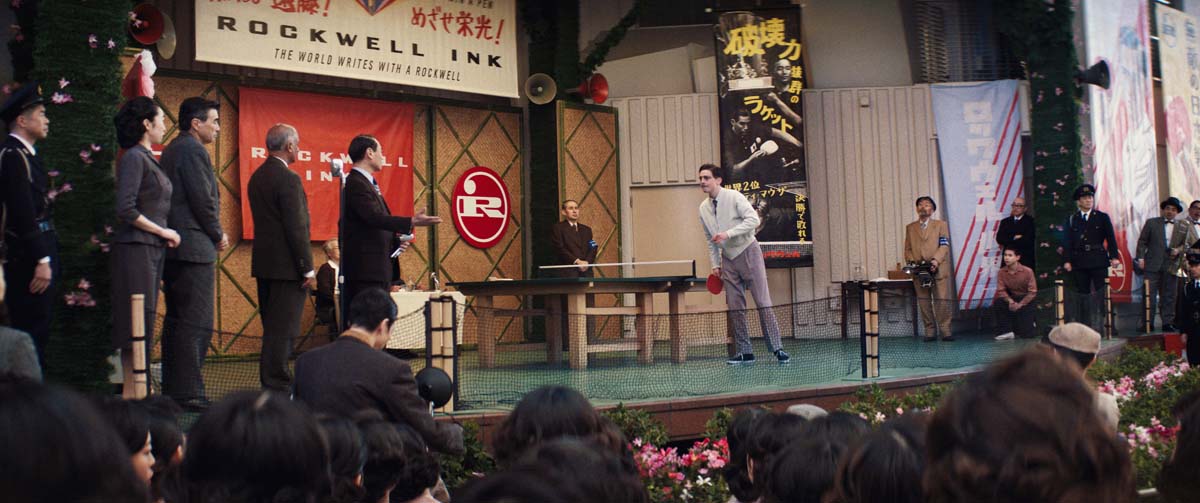
(L-R) Pico Iyer, Timothée Chalamet, courtesy of A24
Most sports figured out the best way to document it for entertainment purposes. In table tennis, it’s three quarters behind and sit on a fixed shot, because you can see the macro movements of each player.
The beauty of that sequence is it starts off very composed, then slowly - as you get down to the final points - you’re handheld and you’re inside the barrier walls and the editing ramps up a little bit.
It’s such an important moment in the film because - up until then - we really saw Marty’s dream almost come to fruition. That’s when act two begins, after the Great Humbling.
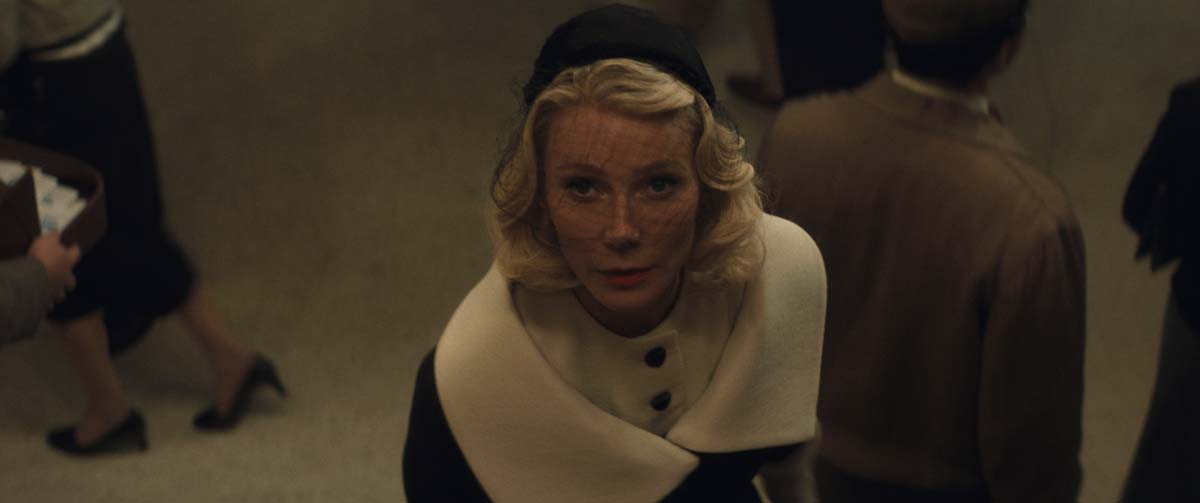
Gwenyth Paltrow, courtesy of A24
Bronstein: From the moment he moves into the Ritz and calls Kay on the phone, the distance between Marty in the present tense and Marty in the future tense - meaning the visions that Marty has mapped out for himself, for his own future - the gap between the present tense of “I’m just a kid from the Lower East Side working in a shoe store” and between being the world’s acknowledged greatest table tennis player - that gap closes and closes as we get closer to the finals, culminating with Gwyneth in his hotel suite in his bed with him and just when we get to that point where again, it seems like Marty is now that his idea for the future and the present have merged, we’re all set up for that humiliation.
Josh cut that so beautifully. I was in awe of it. I don’t have a relationship with sports, so I’m no different from the other people in Marty’s personal life who think that table tennis is a ridiculous, frivolous joke, and hardly something to fuze your identity with. That’s where I sat when I started the project.
I see what Josh did to elevate the sport into something Olympian and something epic and something iconic. You partner up with somebody because they can do things that you can’t do.
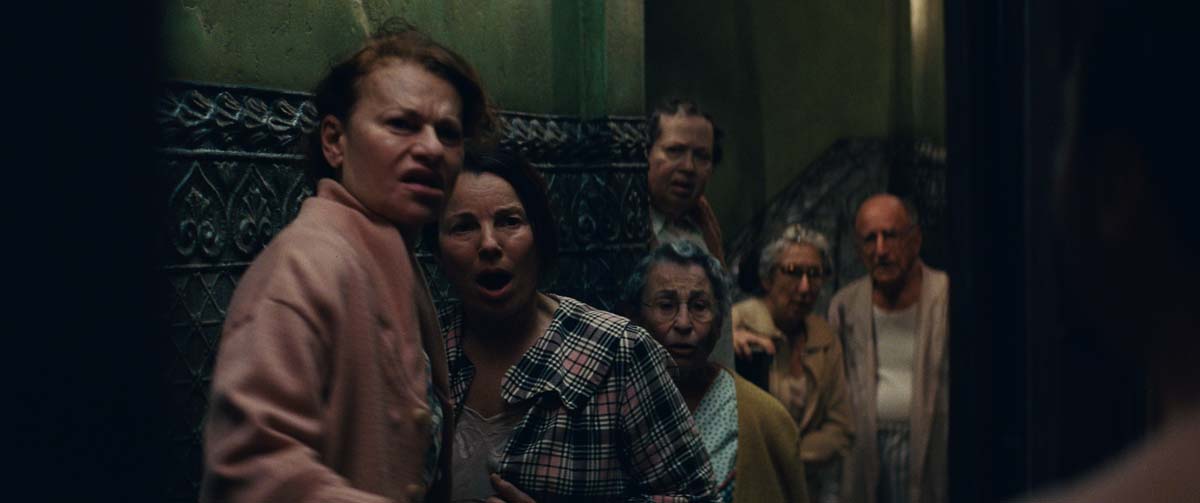
I’ve heard Premiere mentioned. Is that what you cut in?
Safdie: Yeah.
There’s a pre-lap out of the big game to the flight home. We talked about the fact that there are no scenes that were edited out of the movie. So that cut was intended or was it something that you tightened up? You realized, “Hey, the movie needs to move on to the next thing.”
Safdie: Obviously, the ending is very complicated from many angles. Performatively it’s very hard for the actor to show that array of emotions. I’m talking about the moment when you see him on stage. There was a scene that was written that was really a small bridge scene. It was always written to span a montage of him coming home.
The phone call back to America to the hospital where Marty’s child was being born was always written to bridge from Japan to home. There was never any version that didn’t have that.
What there was, was there was a small gap in between that long, extended moment of him kind of looking up and realizing he’s totally alone and that dreams are lonely and there’s this hollow feeling of him losing his purpose and realizing maybe his purpose was this child. “What happened? What about this woman?”
And there was one piece that we thought we needed - in the writing and obviously in production - which was to see Marty give a signature to somebody, to see somebody worship him, and see him give that autograph. The scene starts with him waiting to speak to Bellevue.
So there’s a brief little scene where the ringing starts over him on stage, then someone’s asking him for his autograph in the back room at the Japanese exhibition. But it was so obvious to us to say that it was edited out. It’s kind of misleading.
We never edited it because it was so obvious to us that this tiny little gap to show him give an autograph really meant nothing in that moment, so we never even edited the scene.
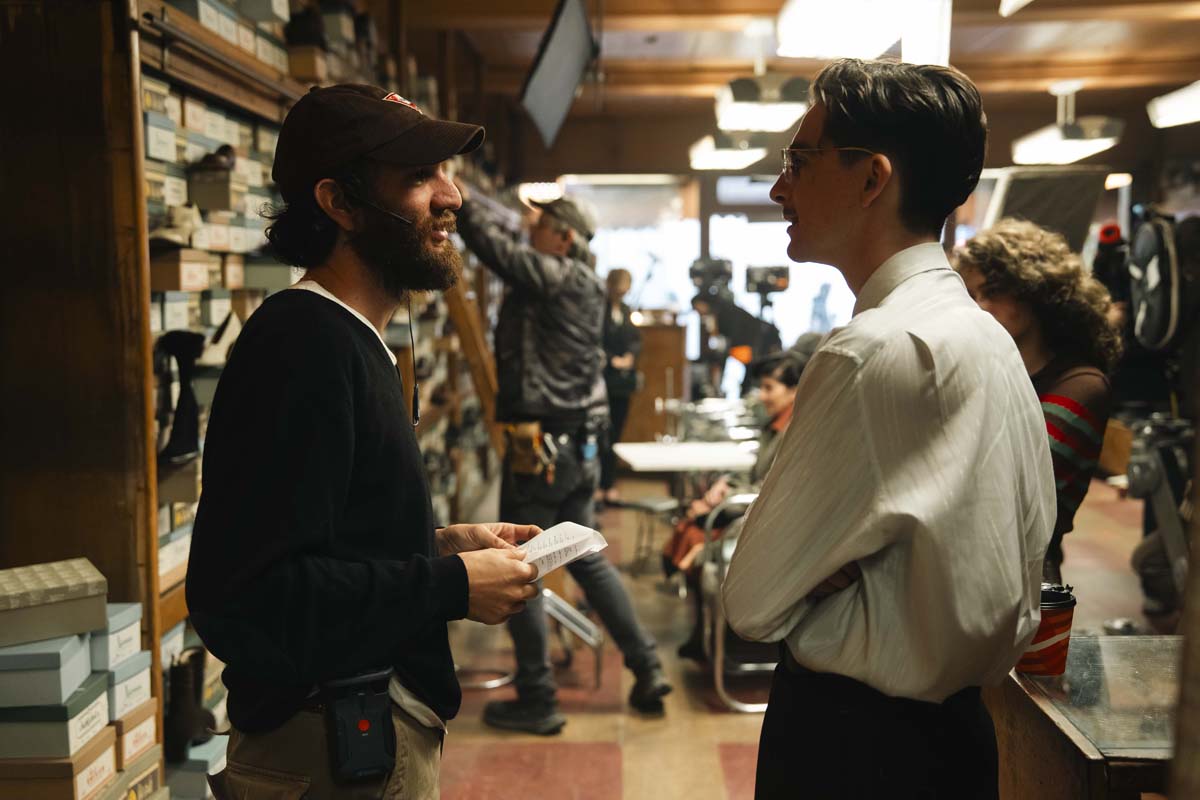
(L-R) Josh Safdie, Timothée Chalamet, courtesy of A24
In a way, it’s like nothing. We didn’t cut it out. It was never edited. That’s when Ronnie said at the beginning of a conversation, that the benefit of being editors and writers is we can do things like that.
We don’t need to honor the idea of assembling that and putting it into the film because it means nothing to us.
Bronstein: Right. And again, you’re also learning during production the American soldiers that are there at the exhibition and the sort of jingoism that they’re displaying read so loudly to the camera in production that there was no reason.
Let’s say originally Josh and I thought maybe we need to see how Marty is able to exploit that relationship after the exhibition to get on an Army plane to get home. Those Army guys - what they were exuding was so immediate and iconic - that you just you decide not to shoot it in the moment.
You decide not to shoot it, much less edit it. It’s already edited out right there in production. We had designed that sequence with voiceover to usher Marty back to New York and to the hospital, but we did lose a couple of things that we thought we needed along the way.
Gentlemen, I loved this conversation. I thank you both so much for your time.
Safdie: Thank you so much.
 April 2, 2026
Project Hail Mary
Joel was last on Art of the Cut for his work on the Disney film, Jungle Cruise. Joel’s other work includes Thor: Ragnarok, Transformers: Rise ...
Read more March 26, 2026
Young Sherlock
Today on Art of the Cut, we speak with four of the editors on the buzzy new Amazon Prime series, Young Sherlock. With us are ...
Read more February 12, 2026
The Pitt
Today on Art of the Cut we speak with editor Mark Strand, ACE, who is nominated for an ACE Eddie for Best Edited Drama Series ...
Read more