













Black Rabbit
The editors of Black Rabbit discuss their approach to new material, the benefits of working with a director who’s also a showrunner, and tying the show’s tone with the score.


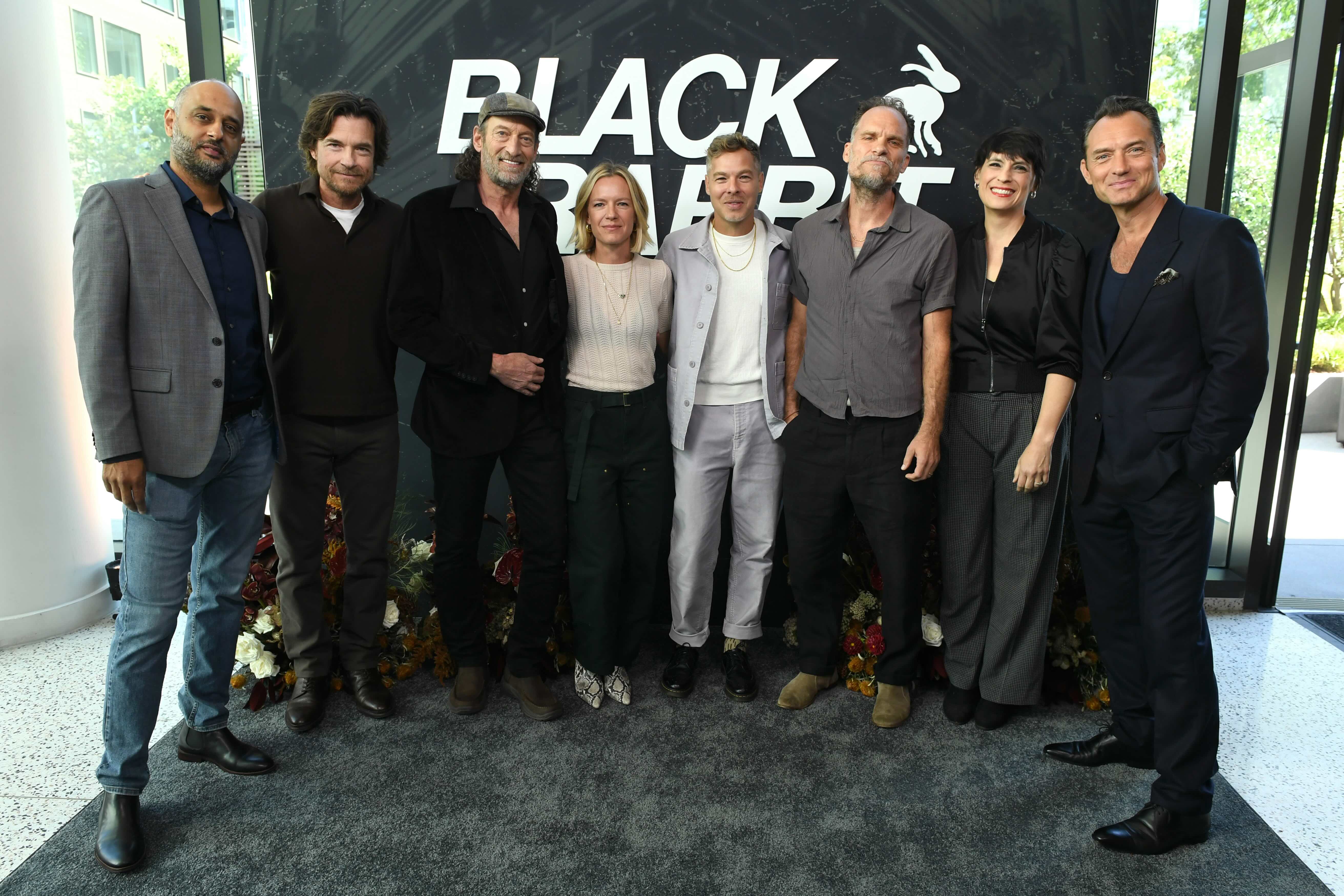
Today on Art of the Cut we speak with the three editors of the Netflix TV series, Black Rabbit: Vikash Patel, Cedric Nairn-Smith, and Kyle Reiter, ACE.
Vikash is an Emmy winner for his work on Top Chef, and an Emmy nominee for Ozark. His other work includes TV series Revolution and The Sympathizer.
Cedric Nairn-Smith has been on Art of the Cut in the past for Daredevil: Born Again. His other work includes Moon Knight and The Boys.
Kyle’s been nominated for four Emmys and four ACE Eddies for his work on Barry, Mr. and Mrs. Smith, and Atlanta.
Gentlemen, it’s so nice to have you on the show. Let me know how each of you got involved in working on this show.
PATEL: I worked with Jason on the entire run of Ozark. We met in 2016, and I’ve worked with him both as a director and also as the producer on the show. He reached out to me in the fall of 2023 saying, “I’ve got this project coming up in the spring of next year.
I want you to do it. I signed on in early 2024. The plan was for me to edit episodes one and two, and an additional two episodes, but due to scheduling, it just made sense for me that I edit episode seven and eight. Jason directed episode one two.
Justin Kurzel directed episodes seven and eight, so I was fortunate to work with both those guys. Jason and Michael were interested in hearing who else should join our team. Kyle was already on, so I introduced Cedric to Jason.
REITER: I had met Jason’s producing partner, Michael Costigan - from Aggregate. I had worked on a show for FX years ago called A Teacher, and we met each other there, and they reached out to me and asked if I could start when they started production doing dailies. And then, when Viks came on, I jumped over to three and four.
NAIRN-SMITH: Viks and I have known each other for a long time. I used to assist Viks, for many years. The first show we did together was season ten of Smallville, then we went from subsequent show to show. I became an editor, back in 2015. Ever since, I’ve always wanted to work with Vicks as an editor, so this was finally that moment where we got to do that.
I’ve worked on shows with a director who is also on-camera talent. Does anyone want to address, working with a director who is also on camera and how that works in the cutting room
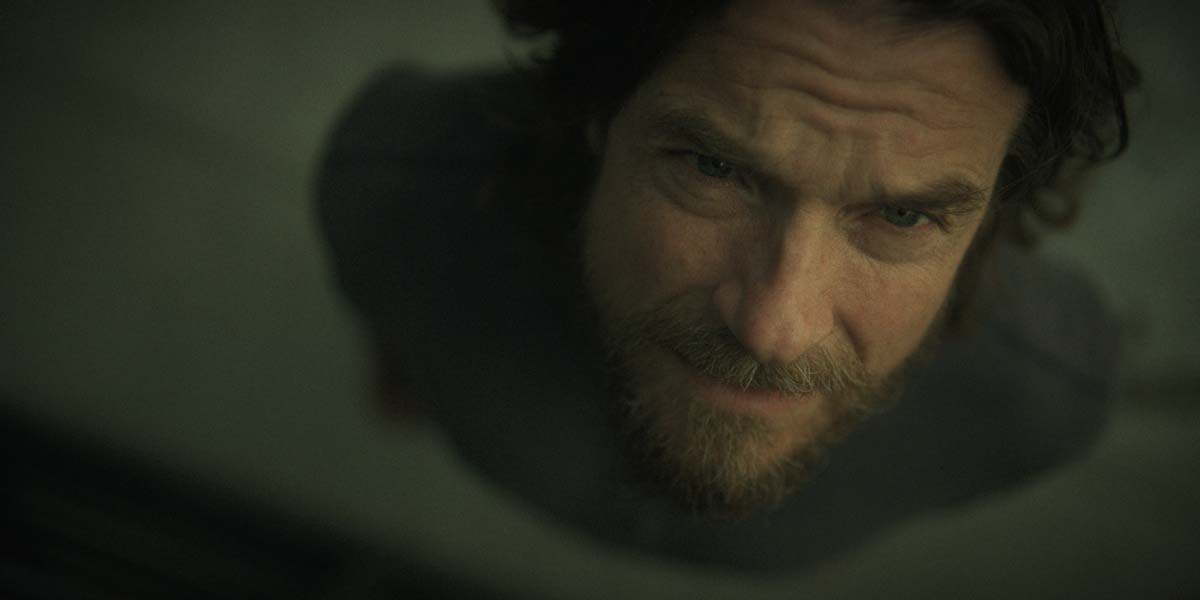
PATEL: It’s kind of fantastic because Jason’s a director, he’s also the producer, he’s co-showrunner on Black Rabbit, so there’s definitely a very strong voice, in terms of what he aspires to visualize on set and how he wants the whole piece to come together.
It’s very efficient in terms of a director/editor relationship, because we’re working together, we’re not just doing a director’s cut, we’re also doing kind of the producer’s cut, so we’re moving it forward much faster as well.
That’s the great thing about working with a director who’s an actor and also a producer and also a showrunner.
In TV, when you’re not working with a director who’s also a showrunner, you then have to negotiate that transition from working with the director to working with the showrunner.
REITER: Six of the eight episodes were directed by kind of “directors for hire.” That can be really tricky sometimes. I’ve had it both ways. I’ve been fortunate where you have directors that come on and really know the vibe of the show and what the showrunner’s after and really nail it.
And I’ve had the opposite experience where the director comes in and does their cut, then you basically start over.
PATEL: I would say on Black Rabbit, the great thing was Jason cherry-picked his directors. So Jason hired Laura Linney to direct episodes three four. He had a past relationship with Laura as an actor on Ozark, and she directed on Ozark, too.
And then Ben Semanoff was the same. Ben was a camera operator on Ozark, then transitioned into becoming a director, so there was there’s a taste and sensibility that comes from both those people.
Then Jason admired Justin Kurzel as a filmmaker/director, too. And Jude Law and Ben Jackson also worked with Justin on their last movie, The Order.
REITER: Let me be clear that the disconnect that I referred to in TV did not happen on Black Rabbit. Everybody was very much in tune with what they were doing.
PATEL: Once we’d done the pilot and episode two, Jason very generously screened the first two episodes with the crew and the other directors. Ultimately the pilot and episode 2 were the North Star, so they had something to build their episodes around in terms of aesthetic.
REITER: Yeah, and they shot in two episode blocks, and they did it chronologically, so we were building towards something.
For the editors that followed after episodes 1 and 2, what did you derive from those or what did you see was the aesthetic that you needed to bring forward?
REITER: From the way they were really well-written and really well-performed it really came through what they were doing and where we were going. Everybody was working as one mind.
NAIRN-SMITH: Luckily we had a pilot that was near completion when I started on episode five. The bones were there and it wasn’t going to change too dramatically from that point on.
As Viks said, we had our North Star. We knew the tone. We knew all of the music that we wanted to use. W e knew the pace, so we had a very good example to follow.
That’s not always the case when you’re working on a new show, where the pilot is being completed all the way up until the very end so you’re chasing something that doesn’t even exist, really.
But this time around, we knew where we were headed.
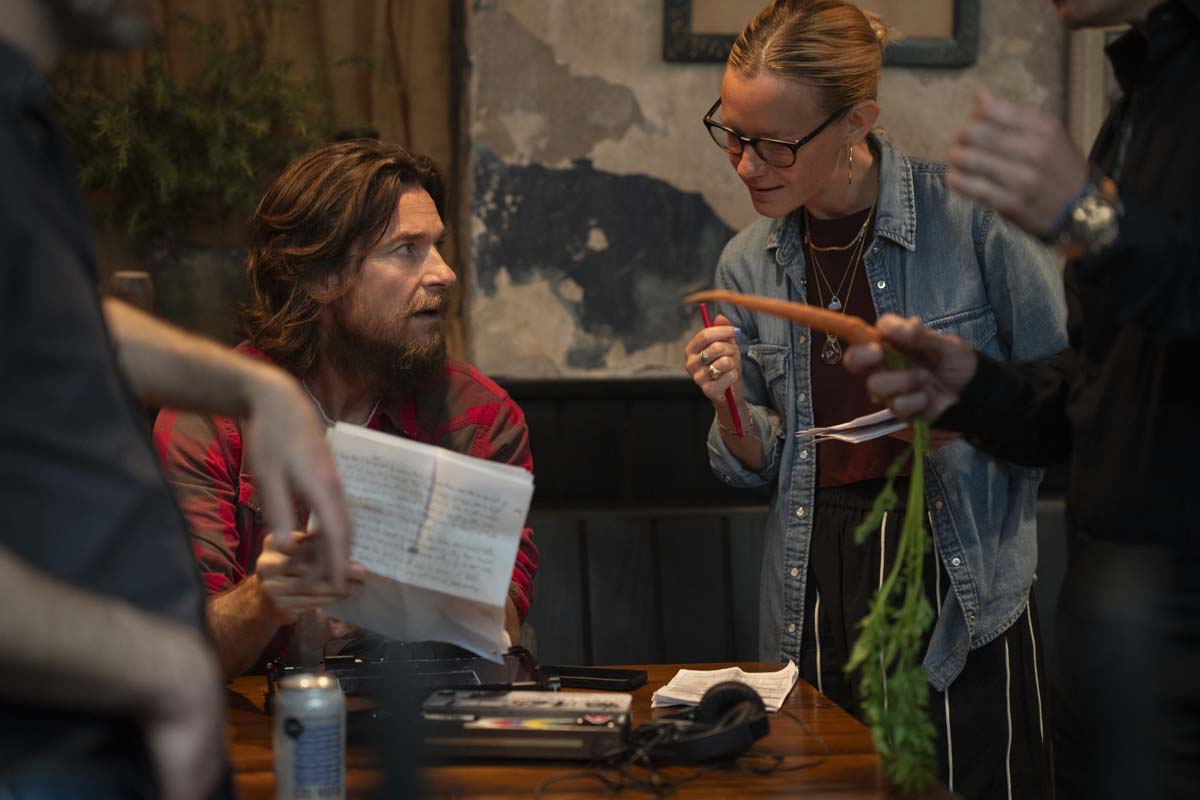
As part of the aesthetic that I really enjoyed on the show. I loved the kind of oblique shots, the shots with a lot of foreground to them, the shots where you kind of have to hunt for who the subject is a little bit, which is engaging, I think. Talk to me about finding that in the footage or having a discussion with the director or showrunner, if that’s what he wants you to look for in the footage.
PATEL: I think that was very deliberately designed by Jason and Igor (cinematographer Igor Martinovic). It wasn’t so much hunting for that.
That was a conversation they had early on regarding the visual aesthetic of the show, adding the live grain, having dirty, messy frames , a combination of hand-held, shots combined with the zooms, and Steadicam camera. Those were the things that he talked about with Igor in terms of visual aesthetic.
There was a temp bin of score that I was responsible for curating in terms of what the what we were tracking with in terms of music.
Jason really wanted the series to have this Uncut Gems/You Were Never Really Here vibe. Those were the two movies he asked me to watch. He really wanted about 10 to 15% of the Uncut Gems feeling, which is a feeling of anxiety… uneasiness…tension’s always simmering.
By curating a bin of score that reflected a little bit of that and being able to track with that, hopefully we were successful in doing that across all eight episodes.
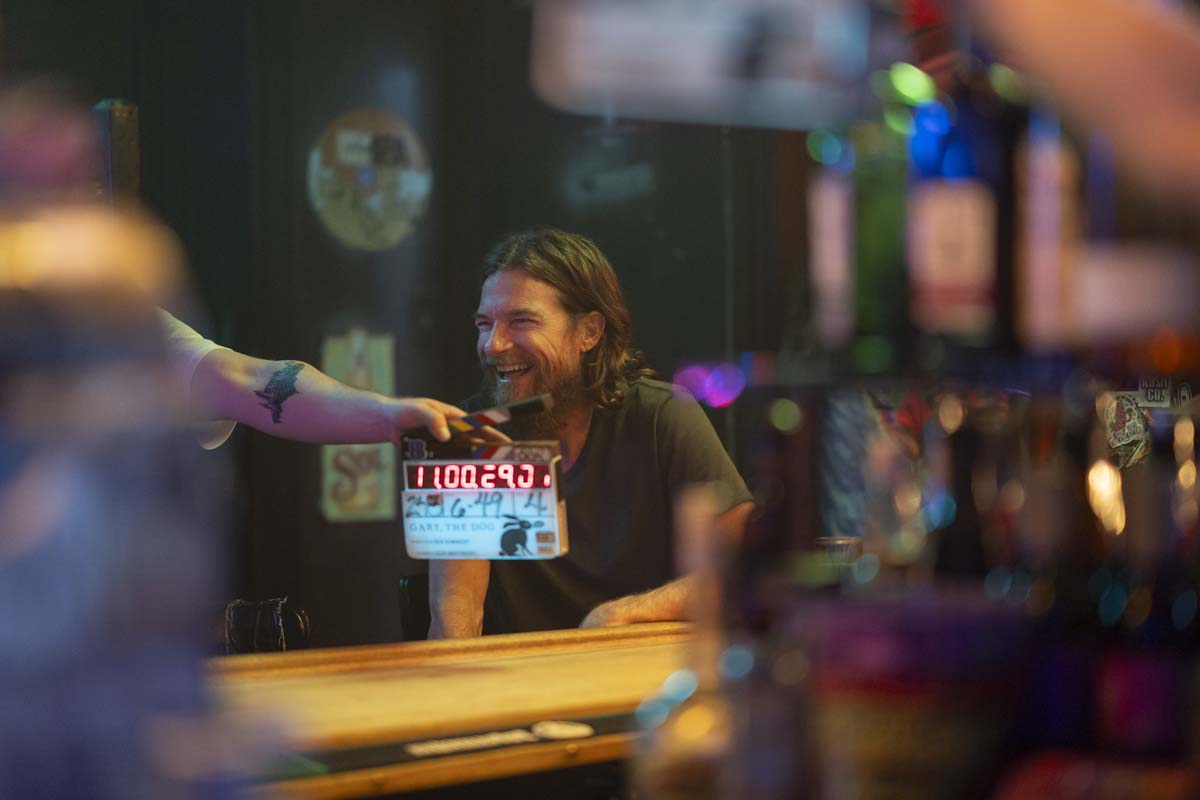
So temp was slightly derived from Uncut Gems. Did you pull temp score from that film?
PATEL: Jason wanted the score to sound very internal, noise, abstract. Jonny Greenwood. Atticus Ross. I asked, “Do you want me to use score from Danny Bensi and Saunder Jurriaans, who were our composers?
Obviously I had four seasons of Ozark that I could have used - or do you want me to use ten score from Atticus Ross? Jason said, “No, you do your thing. You find score that you feel addresses the feeling that I’m looking for. So I curated score from soundscape artists from Europe.
Basically stuff that nobody’d heard, because then as you’re watching an episode and if I’m temping with Ozark score I know that cue is from Ozark and it was this moment with Ruth or this moment with Laura. It takes you out.
So, I created a bunch of bins of temp score and pass them over to Kyle. Bin 2 was the emotional stuff, and bins one and three were the noise, tension, abstract sounds.
By the time Cedric came on there were three bins of temp score with quite a lot of pieces in there. Probably over 100 tracks.
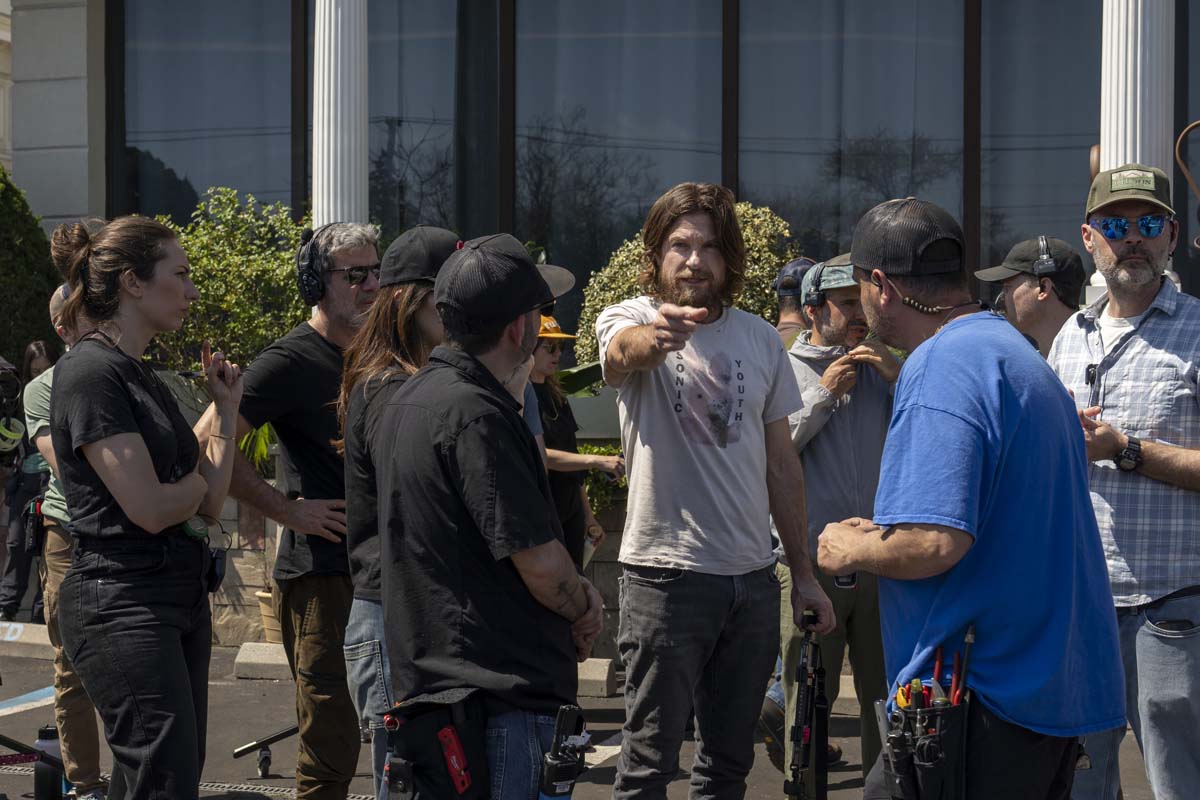
Let’s talk about some specific things with the editing. The pre-title sequence in episode one and intercutting the party and the robbers that are at the beginning of of that.
PATEL: The bones of it are kind of close to what was on the page. But then, as we were cutting it, it really evolved. There’s more intercutting that happens in there. It’s the pilot. You’re laying a lot of pipe for the first ten minutes, essentially. We’re setting the world of New York.
We’re setting the world of Black Rabbit. We’re setting up our characters. We get a taste of our characters, but we don’t really get to live with our characters in the first ten minutes. It’s riddled with tension and that’s the goal.
The moment we come outside of the Black Rabbit, after we’ve introduced Jake, we see the masked man in the car waiting outside, and from that moment on till the moment where the gun is being pointed at Jake’s face, it’s tense right up until then, because you know what’s coming.
You know these masked men are going to come inside the Black Rabbit. The goal was to constantly ratchet the tension from that moment to the moment they break into the VIP room and all hell breaks loose.
In terms of putting that together in the script they were almost individual scenes - their own vignettes - but we realized that it was additive to bleed the dialogue constantly through all of those scenes.
So the example where the masked men are running upstairs, Jake is still talking and giving his speech. I remember having this conversation with Kyle where I linked the VIP speech together with the masked man, and there was score going underneath all of that, and Kyle said, “That feels really good. That feels like these worlds are connected.”
Then when Jason came in, we decided also to carry the dialogue through all of that together, linking all that together.
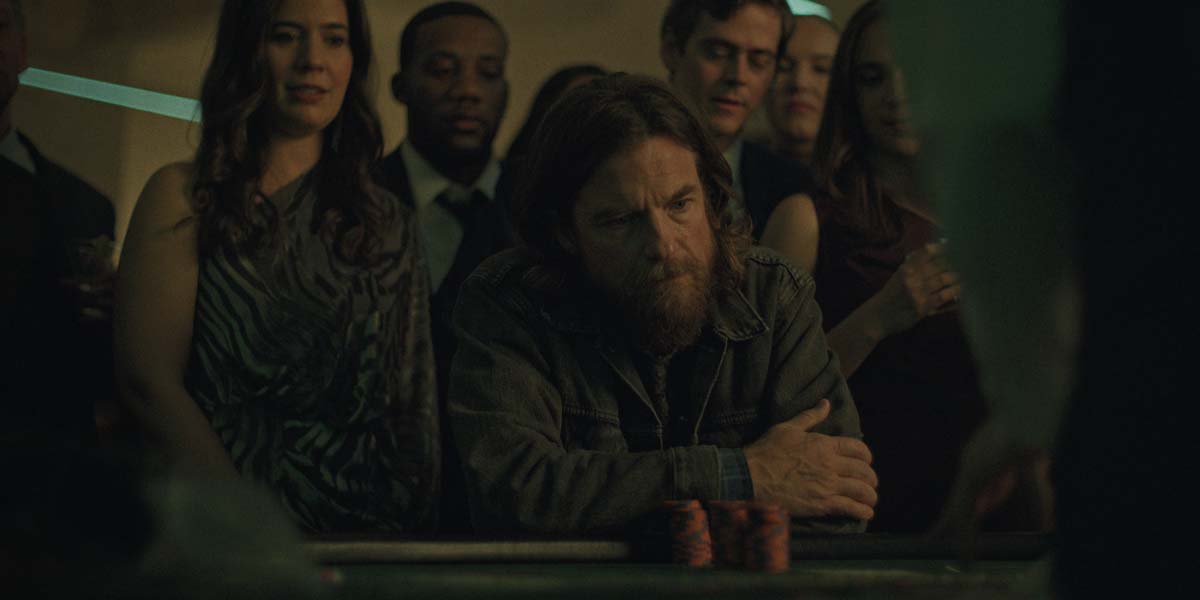
I want to talk about how you ramped up the pace of that scene as you go closer and closer to the title.
PATEL: The tension starts when we reveal the guys outside the restaurant. It’s measured. We’re slowly getting to the moment where it breaks, which is the moment they come rushing through the VIP room is when all hell breaks loose, as I said. Jason’s hope was that we just constantly keep the tension going, so it’s like stepping on each other.
That’s when I really leaned into Uncut Gems. You’re thinking about the anxiety that it offers. The dialogue steps on each other. There’s a lot of noise. It’s relentless. That was the goal: to make that feel chaotic, messy, relentless.
Coupled with the sound effects, coupled with people screaming, the dialogue - all of that is overlapping each other. Rhythmically the cutting pattern becomes very aggressive in that section.
Hopefully not too aggressive that it throws you out, but – as you said - it ramps up as we get closer to that moment. But I think the tension truly is built before we get into the VIP room because we’re building everything before that.
Then ultimately, once they come into the VIP room, that’s kind of the release. We go kind of crazy with that moment.
We had fun on the mix stage as well. Larry, Tim and Nick, our sound department, they were protecting the dialogue in that sequence. I said, “Why don’t we try just living with score pretty loud, too, and NOT protecting the dialogue?”
So ramping both the score and the dialogue together up until the crescendo of that scene. Again, Uncut Gems does that. It’s very tense when you, when you’re fighting dialogue with sound and music. There’s this quality to it which makes you feel anxious.
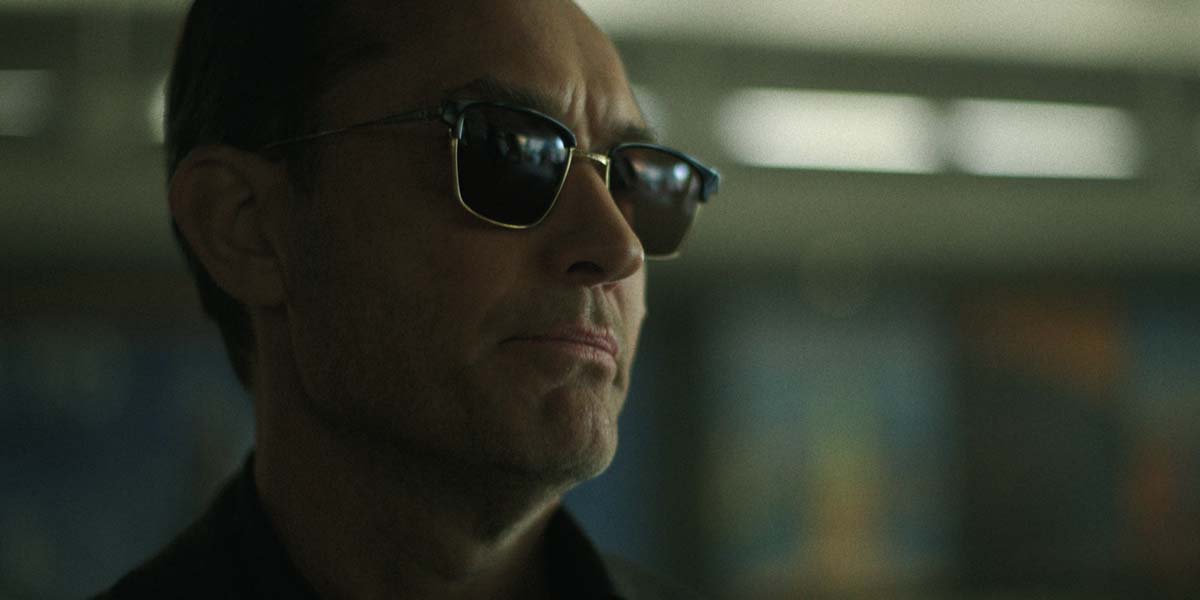
Kyle, let’s talk about a couple of your scenes Tell me about a scene for you that was creatively challenging.
REITER: Episodes three and four as a whole - the scripts were a lot longer. We cut a lot of stuff out of those.
We lost probably 15 minutes of material from each, and that really was the challenge - not just to lose stuff, but then to figure out how to reorder things.
If this scene isn’t there now, do we need to see Jake doing this first or can this go later? Because the scene with Vince is gone and now we have two Jake scenes back-to-back. So it was a lot of restructuring.
Did you use story cards on a wall at all or were you doing everything in the timeline?
REITER: I usually “card things out.” In this case, I didn’t, because we were even moving things from one episode to another, so it got really complicated.
PATEL: I think you did a great job in episodes three and four in terms of whittling down what the what the clear narrative was.
The show really lights up when you’ve got Jason and Jude on camera and to take these right turns, so you needed to be globally looking at that, which you did.
I liked the Roxie and Talia sequence.
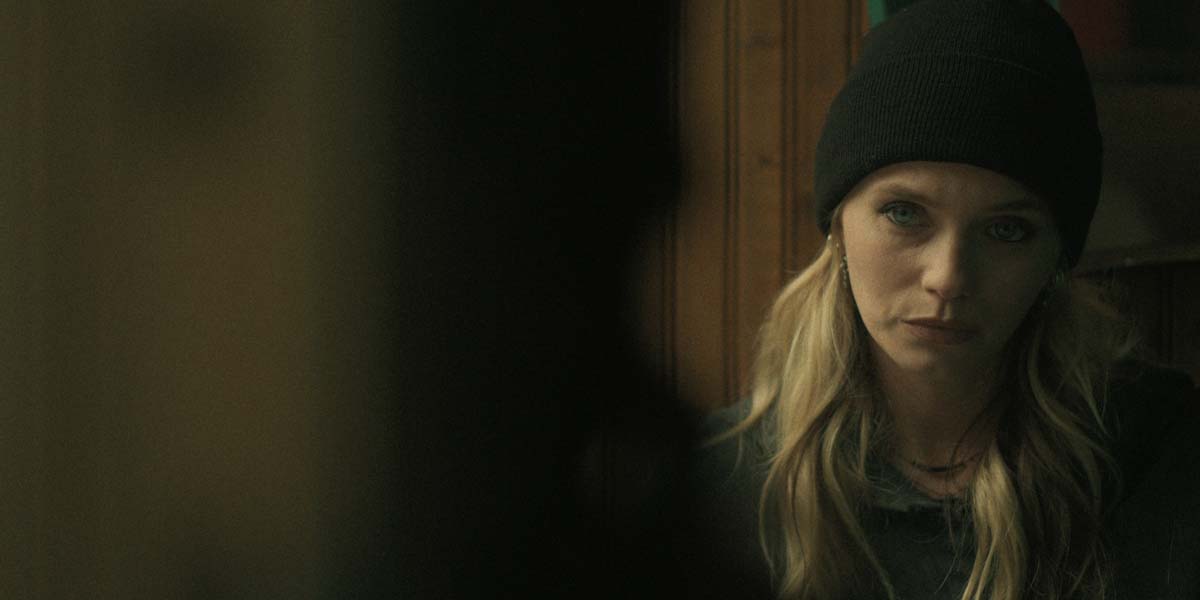
REITER: Yeah, when Roxy goes to visit Talia - that was a much longer sequence and it sort of lived on its own. We realized this is a nice digression, but it became too much of a digression, so we were sort of incorporating their dialogue over what was happening downstate and that became sort of fitting the puzzle pieces together to make it feel coherent without suddenly feeling like we’re in a totally different show. So trying to keep it in the same language - that was a real challenge.
To get back to that idea of the director versus the showrunner, when you delivered the director’s cut, was it the full 15 minutes longer, or did you realize even in the director’s cut that it needed to be shorter?
REITER: We delivered the full thing, because I think it’s important for anyone to come to footage the same way that you did. I get in trouble when I take liberties and say, “Hey, I eliminated all of this, but they need to come to that conclusion the same way I did, which is to live with it, see it and say, “Okay, maybe this isn’t working.”
Sometimes, I’ll say, “What if we eliminate all this?” And they say, “Oh no. It’s important for this reason or that reason.” So I try not to front load too much with cutting out big sequences, though I will say in the past that’s gotten me into trouble, where people ask, “Why don’t you cut all this out? It’s not working.” So it kind of feels like a lose- lose sometimes.
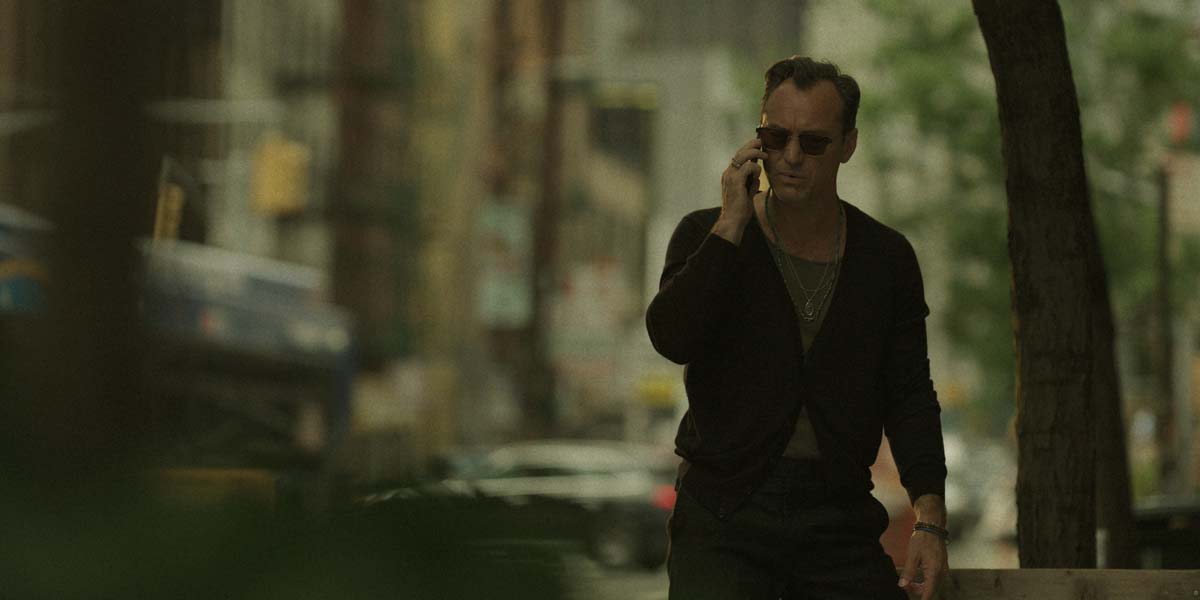
That was one of my rookie mistakes. I cut out a bunch of dialogue in a that I knew shouldn’t be there. There was no way it was going to survive, but when the director saw it, it kind of freaked him out. Eventually all that dialogue disappeared, but the director needed that experience of seeing it, feeling it. Taking my word for it wasn’t going to be enough.
REITER: Yeah, it’s easy to forget that you’ve been looking at this stuff for weeks and weeks, and it feels so ingrained in you that this isn’t going to work.
They’re walking into our room for the first time and I still forget that sometimes that they need to arrive at it the same way I did, and I have to be patient enough to let them.
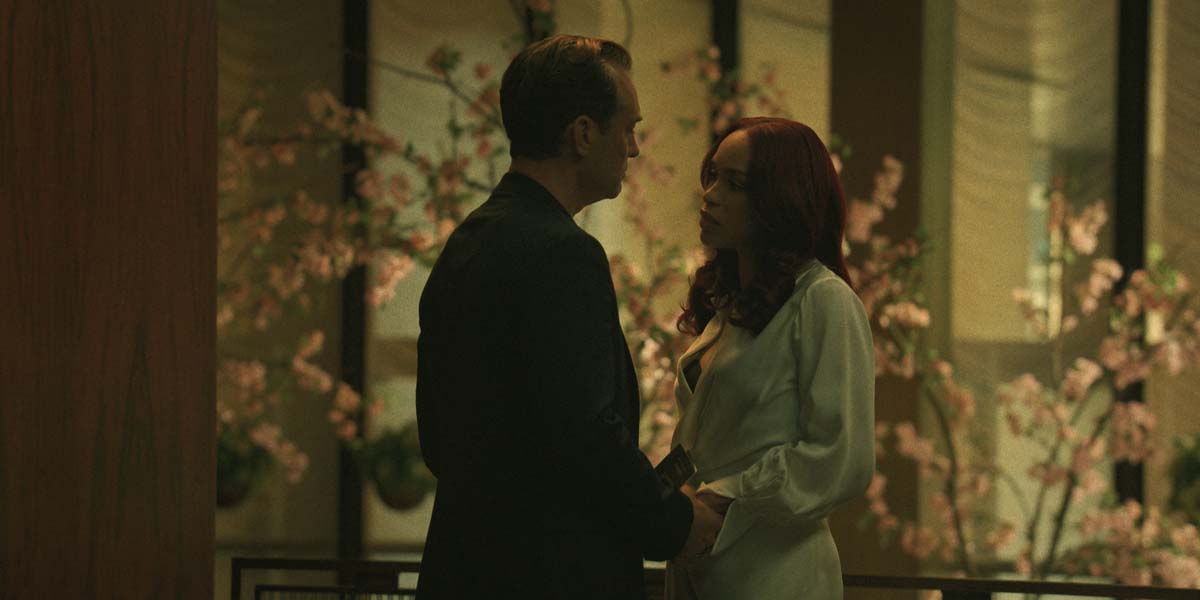
Cedric, can you think of anything that was either a creative challenge or a big creative success that you’re happy about?
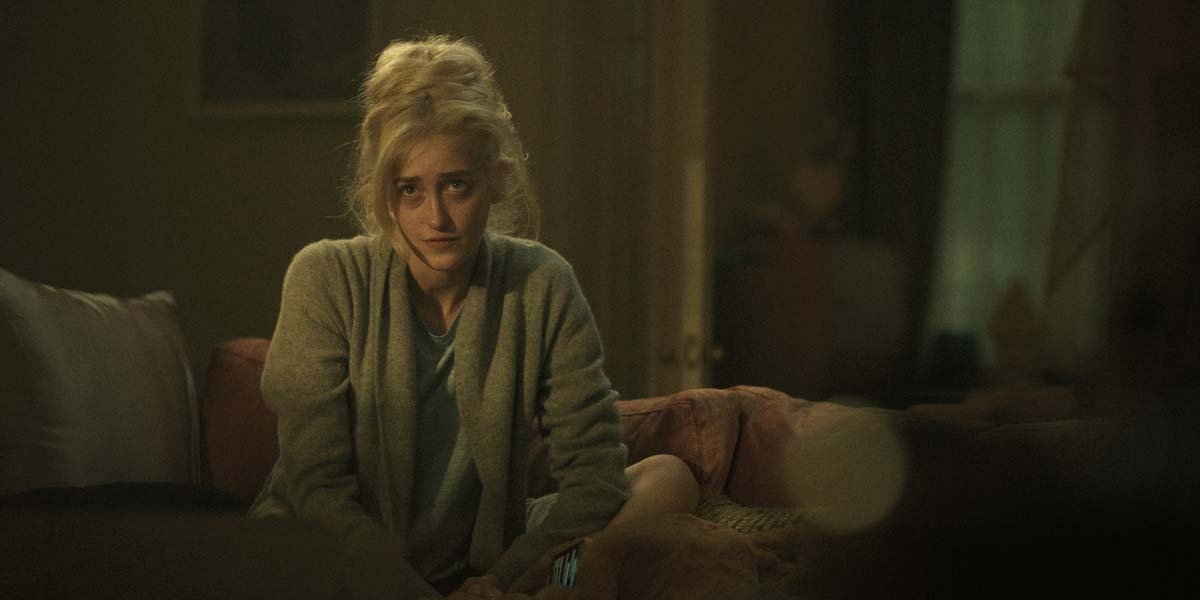
NAIRN-SMITH: The last two scenes of episode five, Junior and Babbitt kidnap Jake and Vince, and take them to this warehouse in the middle of nowhere.
Both of those scenes were particularly challenging because it was at night and the types of coverage it had. When we go into the warehouse, it’s very dark. In the dialogue, they’re stepping all over each other.
They didn’t do clean takes where you got clean dialogue. To your point earlier about the cinematography. It’s handheld.
A lot of what we call “swingles” with the cameras moving from left to right off of lines and a lot of the coverage was very tight. So my first pass of the scene in the warehouse, I was lost. It was not successful.
I recall having to go back and rewatch all of the dailies in a string out. Not three-up (multicam) just watch each camera to really digest the footage, really become comfortable with it, and take my time. I recut the entire scene from top to bottom, and I’m really happy the way it turned out.
Then the last scene of the episode was my favorite when Jake and Vince argue with each other beside the highway. I just love the performance those two brought. I loved how that scene turned out. But the warehouse scene was particularly challenging.
It’s interesting that you mentioned that you couldn’t watch the three-up cameras. Do you think that was largely because of the way it was shot? If it had been lock-offs, maybe you could have watched the three-ups, but with the swingles and camera movement you couldn’t?
NAIRN-SMITH: Yeah. There was no shortcut to putting that scene together. I had to really just watch it down and get comfortable with it.
It was like a second skin towards the end of that process of knowing all the footage and finding unique opportunities to use dialogue from other takes and slide them under when the camera’s moving.
There are multiple times when lines are being delivered and it looks as if the character is delivering a line, but he’s really he’s not. It’s stolen dialogue from other pieces. It was fun to put that one together because it was a real puzzle.
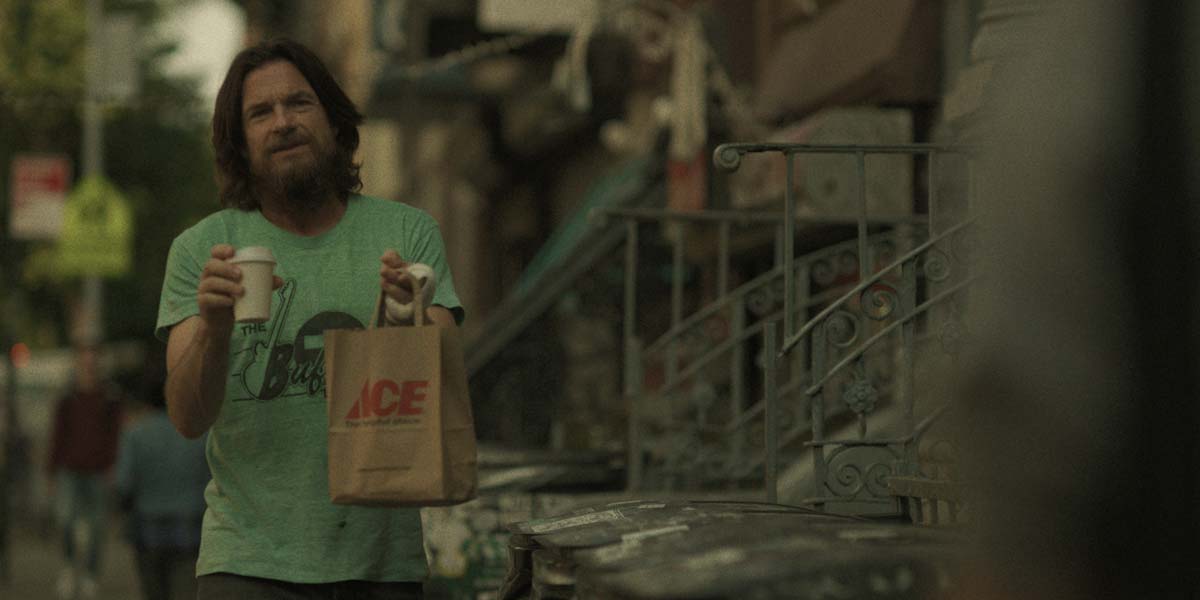
I want to jump back to episode two and talk about the tonal shift or the style shift between the first couple of minutes into the longer-held shots. Can you talk about trying to negotiate those different styles or different feels?
PATEL: Those styles were dictated truthfully, by Jason in terms of how we covered those scenes, especially at the pool room. It’s showcasing the space in upstate New York, so it’s captured in a specific way. I don’t know if they were short on time, but Jason’s very economical and pretty lean when it comes to his filmmaking.
I respond very much to the material. I definitely don’t have a preconceived notion of how I’m going to put the scene together. Once I see it, I think, “Okay, this is how you tell the story.” Story comes first and filmmaking second, so I came from an honest place, but it is more measured.
It’s definitely significantly different - even in the same episode - than the music video which you probably just witnessed, and significantly different from the robbery, which is just chaos…frenetic, with full liberty to do jump cuts, jump the lines.
Piggybacking on what Cedric said, the robbery had multiple cameras, handheld cameras, cameras swinging around, capturing little pieces, whereas the poolroom scene is very, very deliberate and tastefully done.
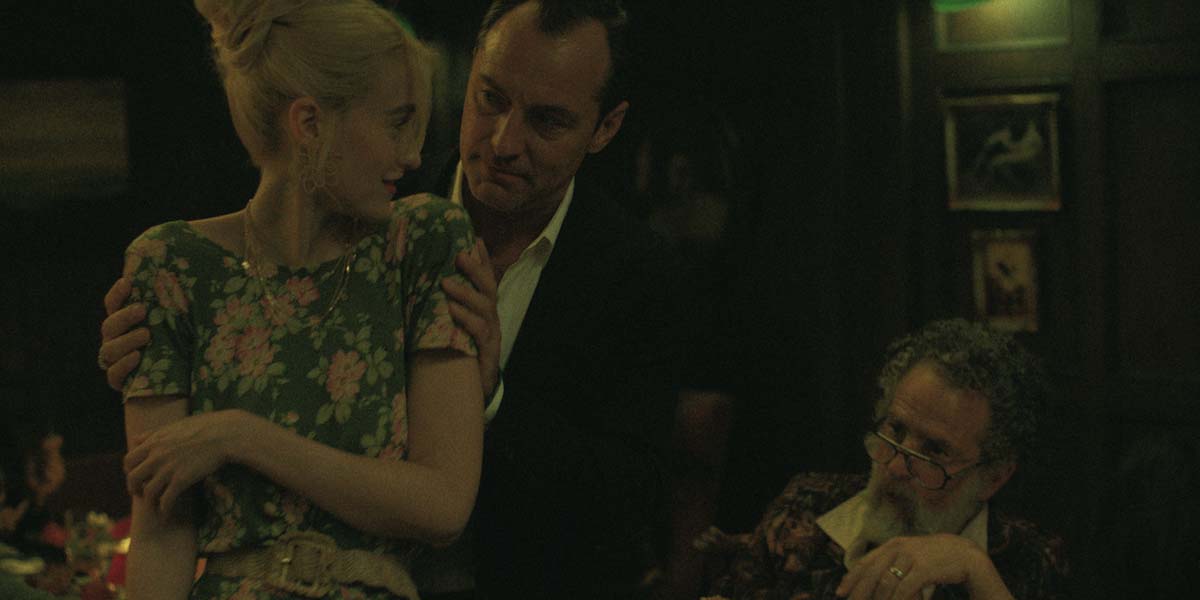
One of the things that I was really interested in also in that episode is that there are two very different scenes - into the tattoo parlor - that are tied with music that seems to fit them both. I was really interested in either the tempo of that or when score came in, because there were two scenes - that tattoo parlor and what came before it - that seemed very different, but the same music runs throughout both scenes.
PATEL: I think you’re talking about the tail end of the conversation where Jake and Estelle in the pool room and Jake offering her to come on board to be the designer for the new venture.
Then that score continues through into the tattoo parlor when Vince, comes to visit his daughter. It stays much longer than you would think. You’d think it would tail out at the top of the scene, but it doesn’t. We carry it much further.
That was an idea from Jason to continue to add the score there. It was a good idea to keep the score continuing through that because there’s this fraught tension between them because their relationship is not in a good place.
He’s just come back into town, so they’re both walking on eggshells. At least he is trying to reconnect with his daughter. So, the score was definitely, helpful there.
Kyle, can you think of any scenes in your episodes that were scripted as stand-alone scenes, but you decided to intercut.
PATEL: The whole end of episode four is all intercut with Roxie and Talia.
REITER: Right. The end of episode 4 when you have Junior and Babette and they’re taking Vince to Jake’s apartment, meanwhile we have Jake, who is at Black Rabbit alone, drinking. We also have Anna, being visited by Campbell, who is paying her to leave.
Those three scenes were scripted as consecutive scenes, and Laura and I realized when we were doing the director’s cut that we needed to start building to something, so we started cross-cutting between those three things and just making it into one large sequence - shortening the time between them as we’re progressing, trying to make it more tense, and trying to see all of these things happening at once.
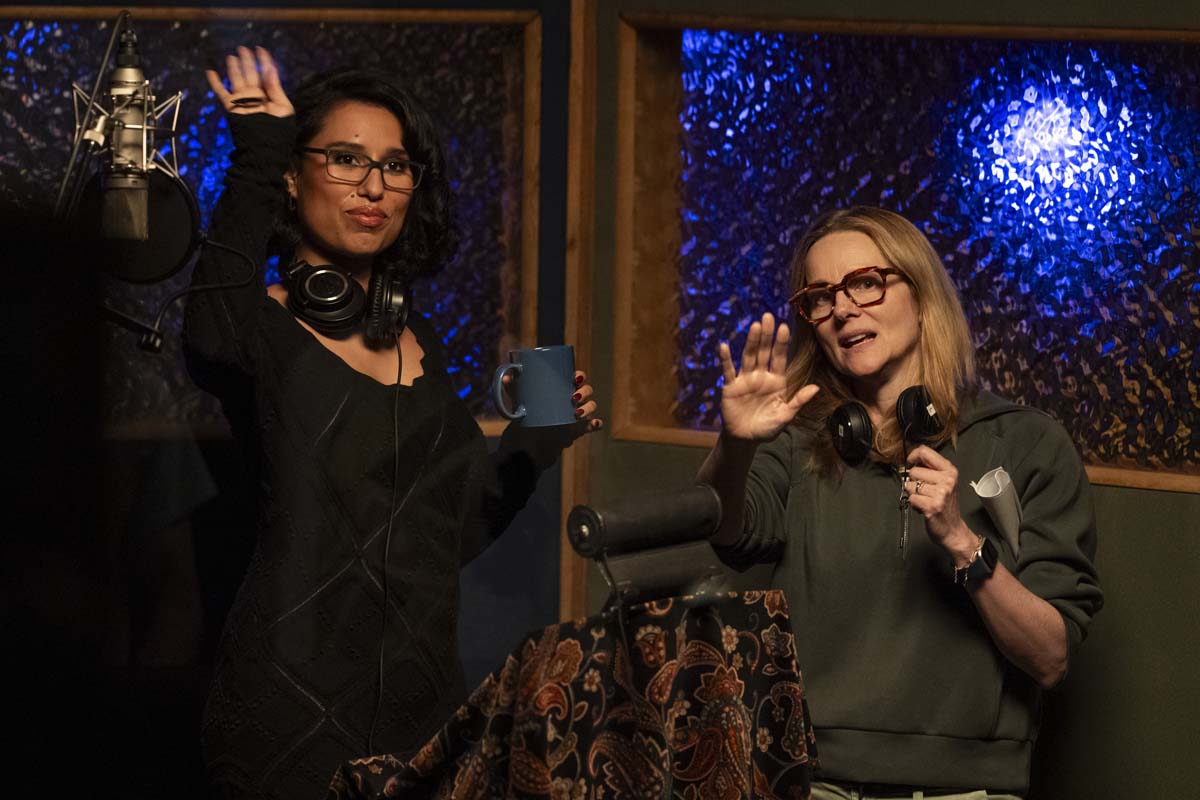
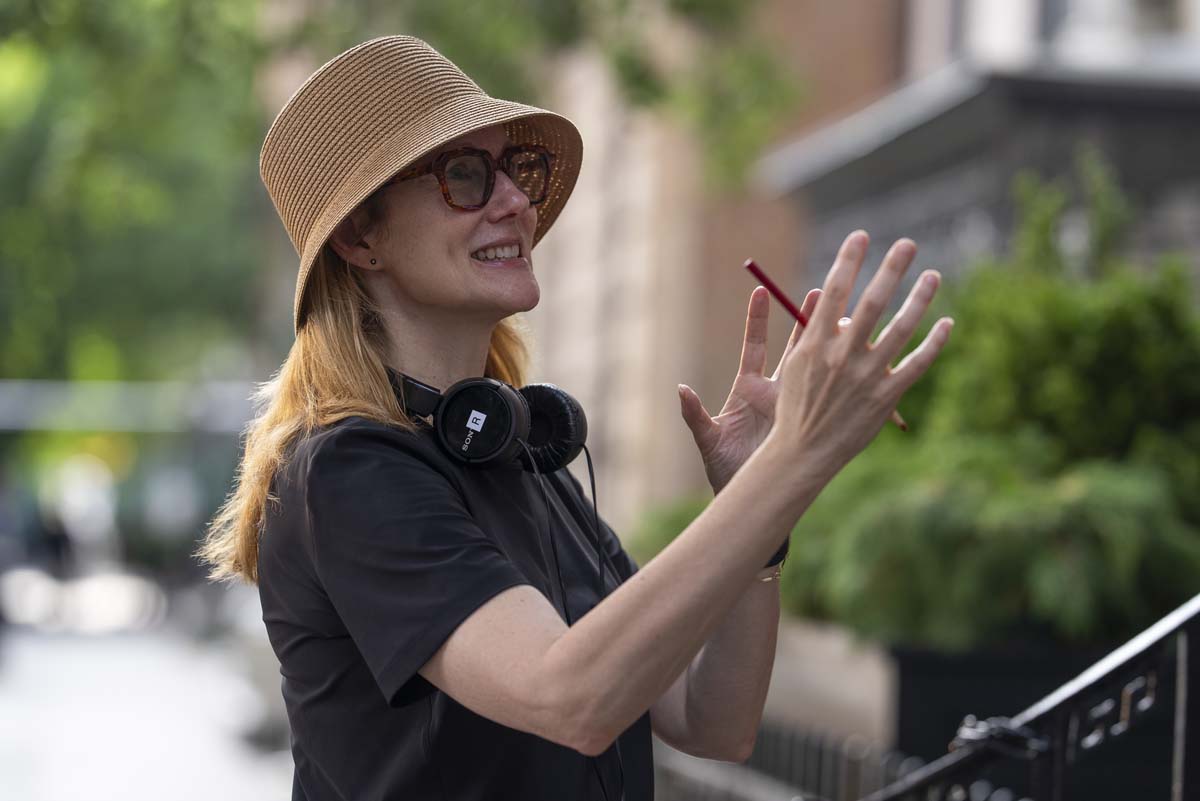
Director Laura Linney
So you were seeing that you didn’t want to have each scene build to its own climax then have to restart again. You wanted a continuous build.
REITER: Correct. We wanted to feel all of those things happening concurrently, and we wanted to feel the tension of each peaking at the same time rather than hitting a peak and then coming down for the next thing. We wanted it to feel like one continuous story, working in tandem.
NAIRN-SMITH: it’s interesting, Kyle, that you couldn’t recall the intercut because we become so accustomed to the intercut and it feels almost seamless.
Episode six is a giant intercut basically. I mean, with the chapters and everything, then by the time we get to the end - the robbery -which we rewind and give the audience a different perspective on the robbery, there are several moments throughout that sequence that are intercut, but it all feels like one piece.
To Viks’ earlier point, some of it is scripted, then at a certain point you’re riffing to find a connection between the 2 or 3 scenes and piecing it together in a different way than what was scripted.
Episode six was intentionally written with those chapters. That way it feels intercut. That was the way it was scripted. I find that even when things are scripted as intercut, they almost always change. You start to realize the connective tissue between these things are always different than how it’s written.
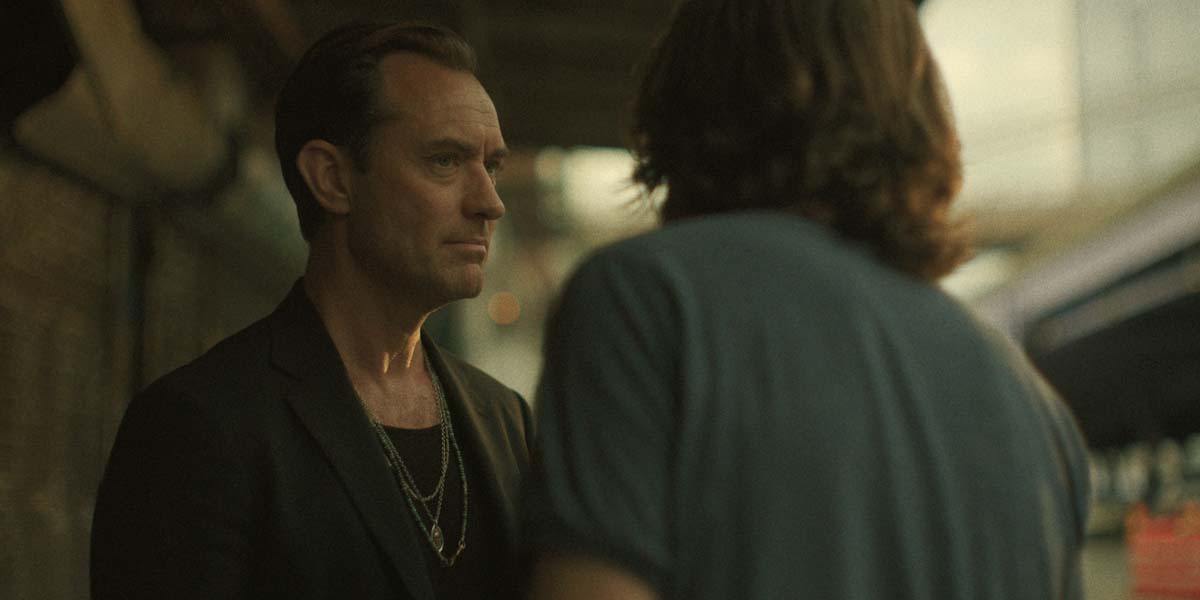
PATEL: You’re always finding creative ways to leave a scene and come back into a scene. You’re always connecting certain characters to certain moments and bleeding dialogue over, even when you intercut from the previous scene.
That’s never scripted. You’re just making it. It’s a guide. I always find the scripts and the intercuts are always just a guide. Telephone conversations: you’ve got to start them somewhere, so ultimately telephone conversations are intercut - back and forth and you feel it out.
REITER: That intercut that I talked about at the end of episode 4, Junior and Babbit are making Vince drink in Jake’s apartment.
We also had a scene where Jake walked into the empty Rabbit, came over to the bar, poured himself a drink… but it just was so natural to say, “We’ll just cut from Vince drinking to Jake drinking. We don’t need all the shoeleather of him coming in.
And it’s a nice match cut. So you’re doing a lot of things at once. You’re pacing things up. You’re connecting the brothers to one another.
It becomes so obvious in the moment. I haven’t come across a lot of stuff where that’s something that’s written. You just see it later.
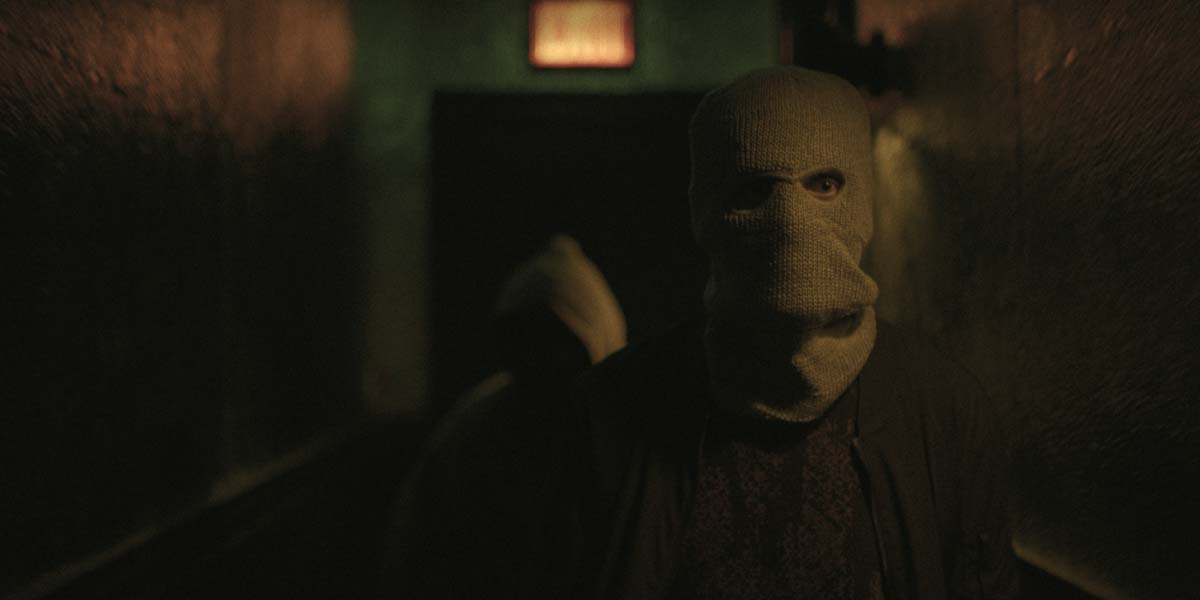
There’s a value to shoe leather sometimes. Can you think of any reason why you would want to show him walking into the bar or driving someplace? Is there an example of that in any of your episodes where you felt like maybe the previous scene was really tense and crazy, and we need the shoe leather to give us a moment?
NAIRN-SMITH: Yeah, shoeleather carries a sort of negative connotation with it, but there’s the scene between the two brothers up in the attic in Episode 5 when they are reminiscing about their teenage years and their early 20s.
There’s a lot of lead up to their discussion of their father. That’s where the conversation takes a much more serious tone. They also go into Jake’s, relationship with Estelle, which - you’re breaking up this friendship once Jake and Estelle go down that route.
But the beginning of that scene is going through the attic and they find an old joint and a box of tapes, and they find an old Playboy magazine. These are touchstone moments that speak to the characters and who they were as brothers.
As the scene progresses they get deeper and deeper. There’s a very natural progression to it. Shoeleather is not the right term, but it was a way of settling into the scene.
PATEL: I’ll definitely say that Jason would never have any shoeleather in the show. He can sniff that out. He’d say, “No. We don’t need it.” He’s ruthless when it comes to that. If it’s not important and if it doesn’t need to be in the show, it won’t be the show.
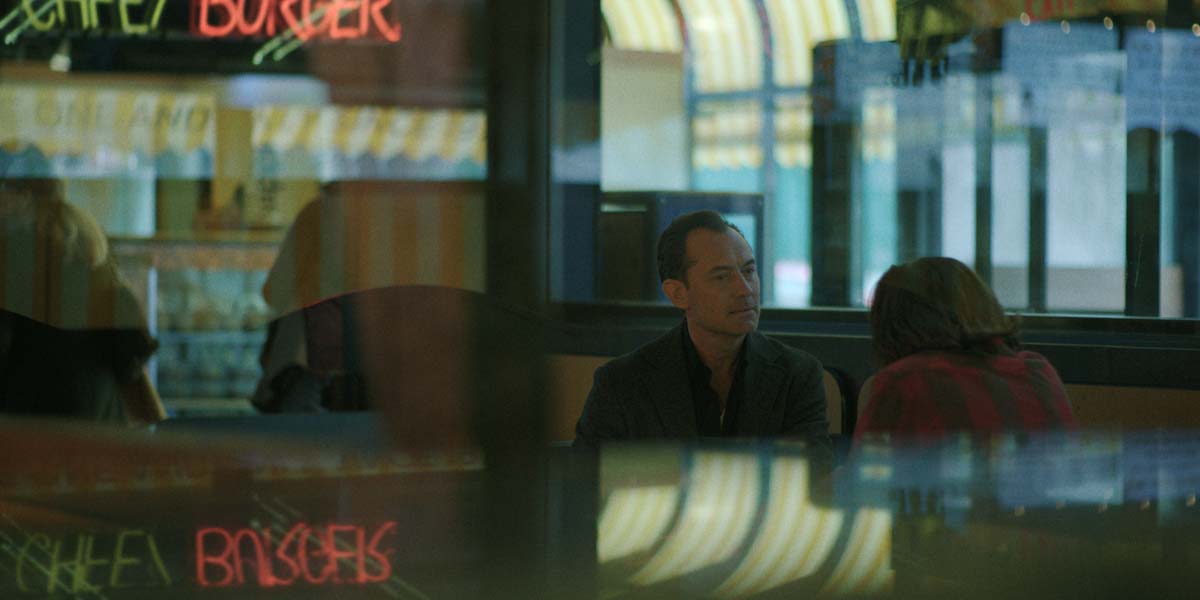
REITER: Steve, I think narrative is context, right? So sometimes coming off of an intense scene, you need a breath or you need to start somewhere so that it has somewhere to go, so if that means starting slower, or starting with somebody crossing a room, it can be helpful or something that’s positive and not negative.
PATEL: Sometimes you need the score to come down. It helps to have the car drive into a shot rather than just being there or having the door open. Sometimes you just need that breat to process what you’ve just seen in the previous scene and really land that, too.
I was trying to remember: was there shoeleather before he goes to the tattoo parlor? Does he walk a ways before he gets to the tattoo parlor?
PATEL: So in the pilot what happens is he clocks Jen through the window, then the next scene starts with… could you start the scene straight away with Bobby and Junior attacking him?
Sure you could, but the two shots that are prior to that are loaded with loaded the tension because Vince is walking, then behind Vince the two guys show up, right?
So you know what’s coming, and it allows us to start creeping in score, and tension starts building because then Vince crosses the street, then there’s only one guy there. So it’s telling the story: where did the other person go?
Then he’s attacked by both Bobby and Junior. Definitely not shoeleather. They definitely merit being there for tension as well.
Not all walking is shoe leather, correct?
PATEL: Correct, correct.
REITER: To your point, though, in episode six, when we’re rewinding the night of the robbery, we do see Vince walking in his underwear along the highway, getting his way over to Matty’s house, and that is something that speak to his character. You can see that he’s pissed off, and there’s something that is emotionally important about that moment.
Watching people walking if they’re not saying anything? That’s on the cutting room floor. You watch someone step into their close-up then you cut to them opening the door or getting to the next place.
Very rarely do I want to see someone walking across the room, but in this case, in episode six, we see Vince walking angrily along the highway. It spoke very much to his character.
What are some other things that, you guys feel are important to discuss about either your episodes or, the editing that you did in this series?
PATEL: I really enjoyed working with Cedric and Kyle. I had like the inside scoop of working with Jason and having the years of trust, then working as a team with Cedric and Kyle - watching their work and vice versa. Hopefully guiding them as well.
Or the simple fact of curating the score which made all eight episodes feel of a piece. We’re all pulling from the same bin. We’re all swimming in the same direction visually - both with audio and tracking the music. But it was the constant discussions between us which I really valued.
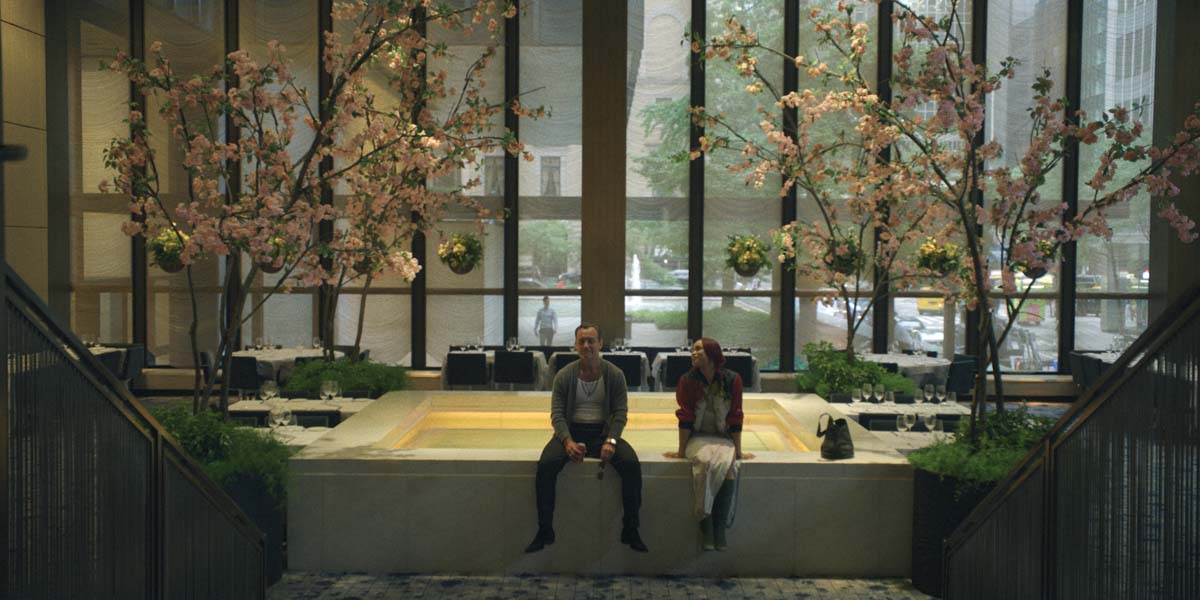
So you guys were working on the same place?
PATEL: Eventually. Kyle and I were working remotely from home during dailies. Cedric was the Lone Star working from the office. Then once production wrapped we would go to the office whenever Jason was there.
What was that schedule like?
REITER: They started shooting in April and finished in the middle of September, so we were working from home through most of that. Jason did come back pretty frequently on weekends to get ahead on stuff, but it wasn’t until September that we started going in pretty regularly to an office and working together.
Viks and I talked on the phone a lot. He’d call me and say, “Hey, look at this scene at the top of my project.” I’d look at it and we’d share things with each other. It felt really collaborative despite working remote.
I typically don’t like working from home because I feel really isolated from the team, and I like the collaborative part of post. But, even though we were at home, I did feel like we were kind of one mind.
PATEL: Kyle initially started putting dailies on Episodes one and two. As I took over, and reimagined some scenes I would show him and he’d say, “Oh, I like how you did that.
There was no judgment. We were both bouncing ideas off each other. Then Cedric came into the fold and it was the same. He would show me scenes.
You showed me sequences of 7 to 10 minutes, and then he showed me the whole episode. It was great to keep each other sharp throughout the process.
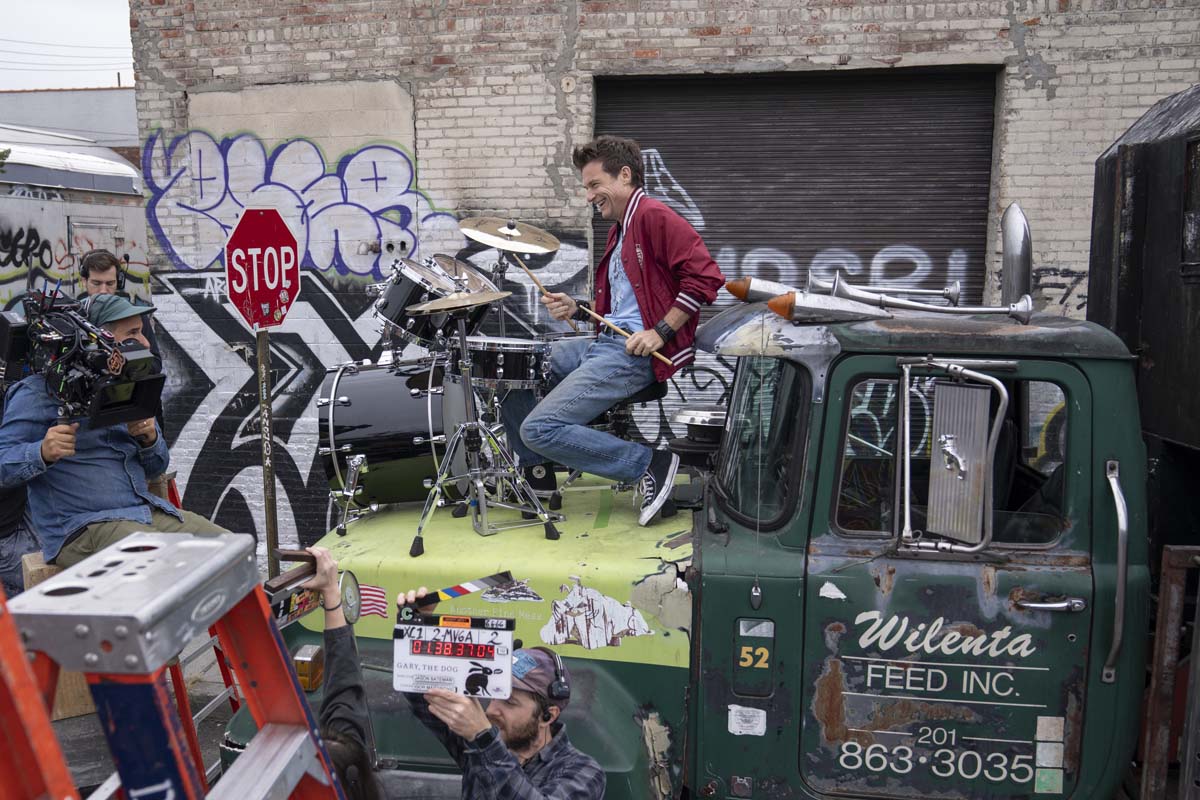
We shot for about 15 days per episode. 32 to 34 days per 2-episode block. All shot in New York. The last production was the music video, which is in episode two. All shot on film. They had to shave their beards and they had to look 20 years younger.
To just get geeky. What technology were you using to work remotely?
REITER: We were on Evercast and Jump Desktop.
PATEL: What did we use Evercast for?
NAIRN-SMITH: I used it sparingly.
REITER: I did a lot of Evercast with Laura, who was in New York. She did come to LA for a bit to work, but it her time here was bookended with some time in New York that we did on Evercast.
PATEL: I was in the room with Jason on episodes one and two. He didn’t want to use Evercast at all. He was in Tasmania for a bit and we just Facetimed and turned the screen around for that.
I like Evercast. I did the whole final season of Ozark with Evercast.
NAIRN-SMITH: It’s so funny to think about how primitive turning a laptop around feels, but could you imagine if Margaret Booth saw a laptop? Her brain would explode! But to us turning a laptop around seems like Neanderthal stuff.
I started out as a film assistant. My basic job was syncing dailies with picture and track and pulling and assembling A/B reels previews. That was my bread and butter for probably a little too long before I made the jump to editor.
Do you think there’s a value to that time of film editing compared to the current digital editing?
NAIRN-SMITH: I stood the entire time at my table. Nowadays we have these standing desks in our office, and you’ll never see me standing. I stood for those seven years, and I just didn’t need to do that anymore. It was very “arts and crafts.” It was very active.
But with digital editing it’s limitless how many cuts you can do. With cutting on film you had to be more select. But even in those days, too we were telecine-ing the reels - transferring them to tape - then ingesting the tapes. So even then you were still cutting on an Avid.
Was there a value to it? I want to say that there is, but I can’t really think of one other than it was a unique opportunity to experience that.
Have any of you guys worked on a show where you got to screen dailies communally?
PATEL: I have not, no,
REITER: I haven’t either.
NAIRN-SMITH: A TV show? No.
I did a movie where we did video dailies on a projector, but we watchedwith a good deal of the cast and the director and DP and everything. Some evenings, if the shoot wrapped early, we would watch dailies, and every weekend we’d communally watch select dailies from the week.
REITER: I read about those stories of Robert Altman, where they would have parties and everyone would come watch dailies.
That sounds so amazing. What a great way to see everything in context with people and different eyes on it. It always seemed so appealing. But, I guess the schedules don’t allow for that sort of thing now.
NAIRN-SMITH: We screened dailies on Mission Impossible 3 and Terminator 3. On Terminator 3 we had mag-less dailies.
So we had to sync the film with the Aaton timecode… that was…a journey to make that work every time, as opposed to just loading the single stripe mag and going film and track.
REITER: I’ve never once in my life cut film. Have you Viks?
PATEL: Yes, once. Once back in England on the Steenbeck.
REITER: I didn’t go to film school, and I’m self-taught, so I never had any reason to do it. I learned on Final Cut 7. It’s something I wish I would have done.
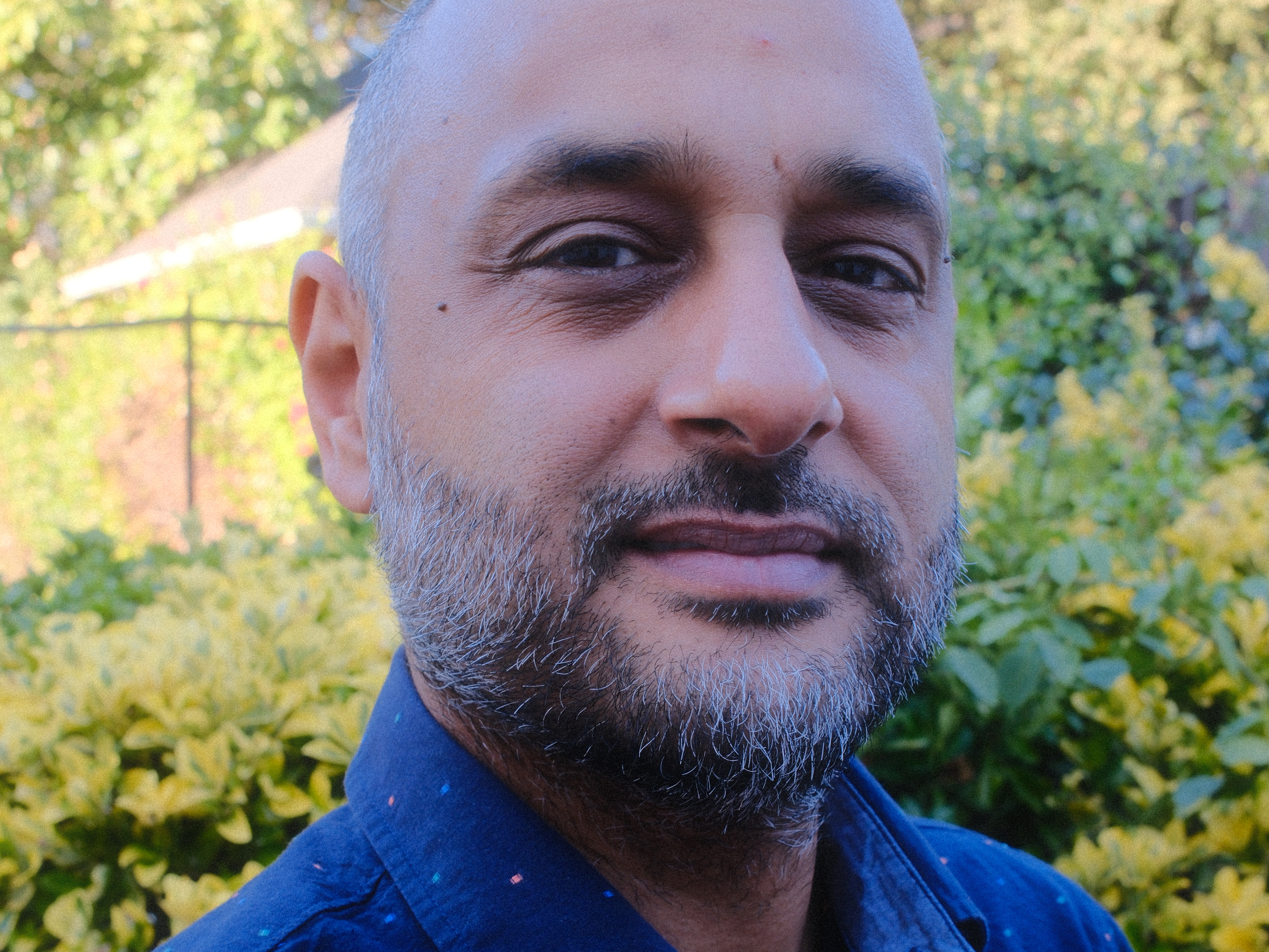
Editor Vikash Patel
I cut 8mm as a kid.
REITER: I was the two VCRs.
I had the two VCRs, too. I wonder if there’s something lost with digital. I think it required a certain amount of discipline. I talked to Carol Littleton who described being very deliberate with her editing choices before she started splicing. After watching dailies she’d write down the ideas for the edits before executing them. Like, “Start on the wide at this line. Cut to a medium at this line. Cut to the close.”
REITER: I read a lot of film books. Editors talked about how much time it would take and how patient they had to be. How so much more time in post was thinking about what to do and how to do it.
I feel like that’s lost. I actually try to slow myself down because it’s so easy just to get in there and start fudging shit around.
Clearly you don’t have to work that way, because some of the best stuff that’s ever been cut was cut that way.
Well, let’s wrap this up with each of you talking about your approach. When you sit down with a fresh set of dailies, what do you do?
REITER: First, I stall as long as I can. Steve, I might have read this in your book or heard an editor once say, “Never finish what you’re doing at the end of the previous day so that when you come in the next morning you have 5% to do.
I find that really helps me because I feel like I’ve made progress early. It sort of jump starts me. I don’t like starting from zero in the morning because I find it takes me a while to get going.
So I like to come in and sort of like shellac whatever I did the day before. So that’s the first thing that I do.
PATEL: So you watch a scene and then not cut it? That would be a disaster for me. That’s the one thing I tell my assistants to never do: Don’t start a scene that you can’t complete, because then you’re not present with your family or you’re constantly thinking about that.
REITER: I don’t have that problem. Also, I don’t leave it halfway. I get to the end and think, “Okay, this can be better. I’ll make it 5% better tomorrow.” It’s very calculated.
PATEL: My process is pretty simple. I’ll read the script pages for the scene that I’m cutting, then I watch all the dailies and add locators as I’m watching the dailies - when certain characters talk, etc.
Then I just go at it. I’ve already kind of formulated in my mind how I’m going to put the thing together after watching the dailies. I kind of know the shape of the scene and what I’m working towards.
Then I build it and I don’t touch it again. I don’t watch the same scene back that same day. My goal is never to watch it back immediately because I always feel I’ll over cut it. It keeps me fresh as well.
If I watch it at the top of the next morning - if I’m waiting for dailies - that’s when I would revisit that scene.
NAIRN-SMITH: I’m very similar to Viks, because I’ve worked with him for so many years, and I watched how he operated in the timeline.
Viks mentioned adding locators. What Viks is talking about is adding a locator for each line that’s on camera. You don’t necessarily have to mark the off-camera lines, but I can’t help myself.
I’ll do that too. But I also use specific colors: Jake is blue, Vince is white. While the playhead is moving, I’m dropping locators on the line. And I’m also, making sure that blue is for Jake.
I’ll also drop a magenta locator for the line in the scene that I know people are going to want to see takes on. It also orients me in the clip: This is where he said “I did it.” Or, “What did you say to dad?” or whatever… the heart of the scene gets a specific color.
Then I’m just looking for something you mentioned earlier: if there are foreground elements or anything that is unique and not sort of rote within the scene, I’m always trying to use those pieces to put the scene together. I don’t look at the scene after I’m done, but I can’t help myself. I will go back and look at it.
But especially in TV or in streaming you’ve got to move on. You cannot get bogged down by trying to perfect the scene on the day. Some people can do it, but you’ve got to be efficient, you’ve got to move on. And hopefully you can go home and have dinner with your family.
So, in a way, you have to divorce yourself from the process and just let it go. Then when you come in in the morning and dailies are being prepped you can revisit the scene.
And it’s a lot more efficient because you can see where things are working and not working, and you can make those changes much more efficiently as opposed to getting into the weeds.
Like what Kyle said earlier, you live with things so much that you’re kind of taking things out before they have their day with the director/producer. So it’s just about having that balance. Not getting too tight with the footage.
I also think that to do that kind of fine cutting, you have to have the context of the scenes around it.
REITER: Absolutely right.
I can’t pull up take one of the scene and press play and watch it through. I start to glaze over. I need to see things in context because - like I said before - narrative is context. I can watch something and say, “That’s a great performance.”
But how do I know that that’s what I’m building to or that’s what I need or that’s appropriate in the scene? So I’ll start throwing things in a timeline as I watch them.
The first thing I do is I get a lay of the land. I’ll see what my coverage is. Read the scene. See the setups, then I’ll start watching backwards, actually.
I’ll start throwing things in the timeline, and as I’m watching, I’ll start constructing…. It’s not always the best use of my time, because I find I’m constantly replacing and constantly realizing, “Actually, this needs to play in the wide because I need to build to this close up.
So, it’s very haphazard. I don’t go from A to Z. Eventually I wind up seeing everything, but it’s just sort of out of order and I’m sort of discovering pieces as I go.
I think a lot about camera placement. Obviously performance is the priority, but if I can get away with having the camera be where I want it to be in a certain part of the scene, that’s the math that I do.
I want to save his extreme close up for this. I want to make sure we’re in a two shot for this. Once I have those in a timeline, it starts to be about connective tissue to get to those moments.
Obviously all of that goes out the window if the performance is better in a wide or if there’s a camera move in the middle of there. It’s really scene by scene. But generally, I just dump all of the puzzle pieces out and start trying to see what fits together.
Then I spend a lot of time revising. I use ScriptSync a lot. Once I have a scene built, I like to go back with ScriptSync and sort of do my due diligence of: “Okay, is this take better? Is this sequence better if I just play it longer in the wide? It’s hard to articulate, but a lot of it’s very intuitive.
NAIRN-SMITH: Kyle, as you were explaining that, I was thinking, “Yeah. I do that as well.” There are so many ingredients that go into viewing dailies and cutting together a scene or an episode. It’s sort of like alchemy in a way.
REITER: For me, it depends so much on what kind of scene is it? How much time do I have? So many of these things factor in to as to how you do it.
PATEL: I do most of my work when I build the episode. I do a first draft of a scene and I put it away and think, “There. The story’s been told, but I know it’s gonna be better once I put it into my assembly with scenes around it. Then I think, “How cool would it be to intercut this?”
Kyle uses ScriptSync. Myself and Cedric don’t, but our “ScriptSync” is the locators because locators. That’s how I’m able to audition takes, by just jumping to those locators.
But I cannot cut a scene if I’ve not watched the dailies. I physically don’t know where to start. I literally have to watch the dailies.
Even if it means - if I’ve run out of time – “Okay, just so I can block this scene out, I will watch the last take of each setup then block it out, but then I’ll go back and locate all the other takes, then rework the scene.
NAIRN-SMITH: I do that a lot too.
PATEL: But I never start a scene that I can complete in the day. And I keep up to camera.
I do want to ask about those markers. When you’re using those markers, are you using the marker list or are you just jumping through markers in a timeline?
PATEL: I just jump to markers in the timeline. Once I hear that one line that I’m looking for in the scene I can jump around quickly.
Thanks to the three of you for discussing this with me.
PATEL: Thank you so much.
REITER: Thanks for having us.
NAIRN-SMITH: Thank you.
 April 2, 2026
Project Hail Mary
Joel was last on Art of the Cut for his work on the Disney film, Jungle Cruise. Joel’s other work includes Thor: Ragnarok, Transformers: Rise ...
Read more March 26, 2026
Young Sherlock
Today on Art of the Cut, we speak with four of the editors on the buzzy new Amazon Prime series, Young Sherlock. With us are ...
Read more March 18, 2026
KPop Demon Hunters
Today on Art of the Cut we speak with editor Nathan Schauf about his ACE Eddie and Annie award-winning work on the Oscar-winning Best Animated ...
Read more