












Avatar: Fire and Ash
Oscar-nominated editor Stephen Rivkin, ACE, discusses editing alongside director James Cameron, ACE, and how the Avatar films use a unique two-step editing process - first editing performance alone, then editing the final shots created with those performances.


Today on Art of the Cu,t we speak with Stephen Rivkin, ACE, who was one of the editors on James Cameron’s Avatar: Fire and Ash. The other editors included Cameron himself, Nicholas de Toth, Jason Gaudio, and John Refoua.
Steve’s been on Art of the Cut before, when we discussed the previous Avatar film – The Way of Water. Steve also edited the first Avatar film, for which he was nominated along with John Refoua and James Cameron for an Oscar, a BAFTA, and an ACE Eddie Award.
He won an Eddie for his work on Pirates of the Caribbean: The Curse of the Black Pearl. He was also nominated for ACE Eddies for Pirates of the Caribbean: Dead Man’s Chest, and Pirates of the Caribbean: At World’s End. Other films include Alita: Battle Angel, Ali, The Hurricane, Robin Hood: Men in Tights, and My Cousin Vinny.
Steve, thanks so much for joining me to talk about, Avatar: Fire and Ash. You and I spoke a couple of years ago for the last Avatar movie.
That would be three years ago. How time flies.
Three years of your life on this. The last two Avatar movies were basically done at the same time, right? So you’ve probably been on this project for far longer than three years.
Way of Water and Fire and Ash were captured at the same time. Performance capture was done over an 18 month period, starting back in, I think, 2017.
And there were a lot of live-action scenes that covered both films. A lot of water under the bridge, as they say. If you add in the first Avatar the total amount of time since we started was something like 17 or 18 years.
You mentioned performance capture. From my recollection of the first chat we had - and I think we need to bring the Art of the Cut audience up to speed as to what the process was - this is not your typical edit. You kind of edited the movie twice, if I remember correctly.
You remembered well. In our process, the performance capture and the creation of the virtual shots are uncoupled, so the performance capture process exists on its own and there’s no cinematography involved. It’s only the data that’s recorded.
We have a record of that capture with video reference cameras. There are people that shoot the actors with telephoto lenses, so they’re not in their faces.
Each camera person is assigned to a character. We get close ups that we use as a record of that performance. That’s what we use to create the “performance edit.” So, as you say, it’s a two-stage process.
So the whole film exists at one time in “performance edit” alone. Then when we pick all the good takes of all the actors and put them together in shootable files, that’s when those files go through our internal lab process of joining the performances with their CG counterparts, bringing in assets from all the other departments, the environments, the props, the wardrobe, the makeup.
And that’s when the virtual camera process begins. This is long after the actors have completed their work, so it’s a matter of playing back their performances, then creating the shots that go into the scenes that make up the movie. That becomes the first time we have actual dailies that we can cut with.
So this is where we get into the things that editors would normally do: cutting the scenes based on those virtual camera shots. The difference here is that because the capture of the performances is separated from this shot-creation process.
During capture, Jim focuses solely on the actors and working through the scene. Then during the shot-creation process - much later, with the virtual camera - he doesn’t have to worry about whether he’s getting the best performance in a close-up, because any performance can be a close-up.
Any performance can be a wide shot. In fact, you could shoot all the coverage you need to create a scene using one single performance take.
Oftentimes, editors say: “Performance is the most important thing to me.” So that performance choice could limit the coverage choice if the performance wasn’t in the coverage the editor wanted. But in this case, you have the perfect performance and you can determine which angle you want to be in on that perfect performance.
Right. Because the best performance take is what you use for every shot angle. That’s very liberating for the actors - to be focused in the performance capture stage, where they don’t have to worry that their best take was in the wide shot.
With traditional live-action coverage, they usually shoot wides first, then work their way in to close-up coverage. Maybe the actor is tired by the time they get into that close-up. Many times editors will say, “I wish I had that in a closeup…” Well, we can do that.
Or you could have a great performance from actor A and a substandard performance from actor B, and that also doesn’t happen with this method, right?
Editors down through history have cut from take to take to take, trying to put together the very best of everyone. We’re limited with live-action film because you have to cut away and you have to cut back in order to get to another take.
You can’t stitch them together, whereas we have the ability to do that, to create a perfect scene file that has the very best of everyone.
When you get the dailies of the video reference cameras, what kind of coverage do you get if these aren’t the shots used in the movie? Do you at least get two shots and close ups?
The most important reference camera is the close-up on each character because it follows our “performance edit,” our virtual camera, and it gets turned over to Wētā FX.
They will often refer to that close-up, and Jim will look at the close-up right through to the end to make sure that the faces are being reproduced faithfully.
But there’s usually a wider shot that shows the character’s relationships to each other. Sometimes there are overs and sometimes there aren’t, but the performance edit is usually a mosaic of whatever we think will tell the story with those performances, but it is by no means the coverage that would go ultimately in the scene when it’s shot in virtual form. It’s just a guide.
Can you talk a little about the editorial team required to bring these films to the screen?
I’m here today representing our team editors on Fire and Ash including myself, Jim Cameron, the late John Refoua, Nick de Toth, and Jason Gaudio, as well as visual effects editors, and editorial assistants on two continents.
We had our production spread across the globe between Los Angeles and Wellington, New Zealand and maintained fully staffed cutting rooms in both places, with the ability to collaborate remotely.
As you know – when we last talked after The Way of Water came out, we had lost David Brenner very suddenly in February of 2022, some 10 before the release of the movie. This was just devastating to us and a very difficult time for everyone on our crew.
During the editing of Fire and Ash, we lost John Refoua, after his battle with liver cancer. John pioneered this process with me and Jim 18 years ago on the first Avatar, working to help develop our methodology and workflow. So, between these two films, our department suffered two heartbreaking losses in less than a year and a half.
Both John and David were amazing editors and it’s still hard to believe that they’re gone.
And if that wasn’t tragic and challenging enough, we lost our beloved producer, Jon Landau, in July of 2024, who was Jim’s producing partner of 30 years. He was a truly great producer and I feel so lucky to have known him and worked with him.
But he wasn’t just a great producer, he was an extraordinary human being as well. Jon was a friend to everyone and so supportive of every member of the crew. He had a witty sense of humor that could break the ice in tense situations and had a unique creative producing partnership with Jim.
He was always there for us, like a guiding light, and we all considered him the head of our Avatar family. His loss had a major impact on our entire production.
John and David – and Jon Landau - will be missed by the entire filmmaking community.
When we lost David near the end of Way of Water, we brought in Nicholas de Toth to train him and get him up to speed on our “way of Avatar,” which is unlike any other film that I know that he’s edited, because it was sure unlike any film I had ever edited when I started many years ago. He learned our very unconventional approach to making these films and very successfully adapted his skills and experience to our process.
He ultimately was able to relocate to New Zealand full time for Fire and Ash, which was extremely beneficial, since Jim spent much of his time there. Our ability to collaborate remotely across the miles was invaluable.
Jason Gaudio was our first assistant on Avatar 1 and continued working closely with me for over 18 years. He goes back even further with Jim, as an assistant and VFX editor on Titanic and Strange Days.
He also helped to evolve our workflow and learned so much over the years that he became an additional editor on Way of Water and was promoted to receiving a full editor credit on Fire and Ash. So, his journey is quite extraordinary.
And of course… there’s Jim Cameron, the editor. Although he wears many hats, as a writer, director, producer, he is also very much an editor on these films, and works very closely with our team in every aspect of editing.
Can you talk a little more about how you go about building the performance capture phase and how you go about selecting and building those performance edits?
Jim would review these takes with the editors, and he would make his selections. There are many times when directors want a specific performance that comes from one take, but it didn’t exist in one take that was best of both actors.
We have the ability to do what all editors do: take the best of everyone. The difference is that we have the capability of putting them in a master together that we can shoot so we don’t have to force a cut.
Jim has the freedom in the virtual camera shot creation phase to not cut if he doesn’t want to, and to have those idealized performances in one shootable file.
That seems like a great way to put together a movie. That’s obviously very expensive and difficult, but to have that perfect performance and to just worry about the performance and lock that in, then to be able to apply that performance to any camera shot is fantastic.
The reality is that the performance capture process is the cheapest part of the production. Because you don’t have giant sets built, you don’t have a giant crew, lighting, cinematography, dolly tracks, cranes.
You don’t have any of that expense. It’s just the actors in the Volume performing on a blank stage. Sigourney Weaver calls it “black box acting.” It’s very much like theatrical stage performing. They have to use their imaginations.
There are some limited “geo” that’s put on the stage to represent little hills and the terrain that they’re standing on. When they’re walking on a woven walkway, that’s actually built. There are a lot of things that are built, but it’s still pale by comparison of what live-action production cost is.
The clock isn’t taking the same way. Jim really spends as much time as he needs to work through each scene with the actors to get the performances that he wants, and at that stage, he’s not worried about the ticking clock of a live action production.
So it’s quite liberating. I know the actors love it, and he loves being able to work through a scene and take his time with the actors.
Yeah, and you’ve got no golden hour rush to contend with.
Right. If they don’t finish it one day, they pick it up the next day. It’s not the same pressure. And even in virtual camera form - when we entered that phase - shooting the virtual cameras that create the shots later, you don’t have a large crew around. It’s just the stage operators playing back these files, making adjustments as Jim is creating the virtual shot.
So where you get into more costs involved is when they’re shooting the live-action portions of these films, they need to build out the sets.
They have traditional lighting and cinematography that’s going on. Plus, it’s 3-D, so that adds an element as well. But in terms of the capture of the virtual camera, it may not be as expensive as you think it is.
When you get the dailies from the virtual set process, I’m assuming those are not the final production quality footage. Can you tell us a little bit about what those dailies look like and how quickly you’re receiving that stuff to edit with?
The dailies are streamed into the Avid instantaneously, so we’re basically cutting behind the virtual camera operator.
In our initial phase of the virtual camera preparation, we have Richie Baneham, who is our visual effect supervisor and second unit virtual director, doing what we call our rough camera pass, which is basically a QC pass of these files.
Through much of this process, Jason Gaudio was working with Richie to check the files and edit a first pass of these scenes.
That’s where they’re doing all the checking of the relationship between the CG characters, and sending these cuts back and forth to Jim to get notes on lighting, environment, any changes he wants to make, and preparing the virtual scenes for final camera. A lot of those shots got into the final film.
The “rough camera pass” proved very valuable on Way of Water and even more so on Fire and Ash. That was a development that helped to streamline the process.
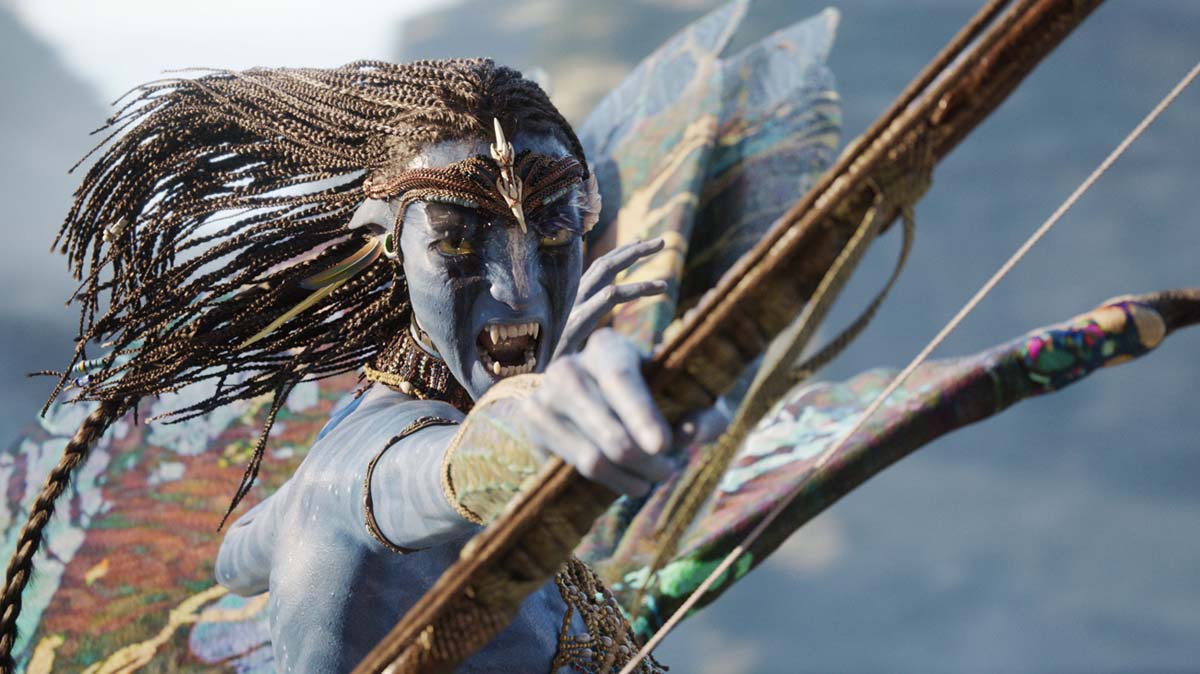
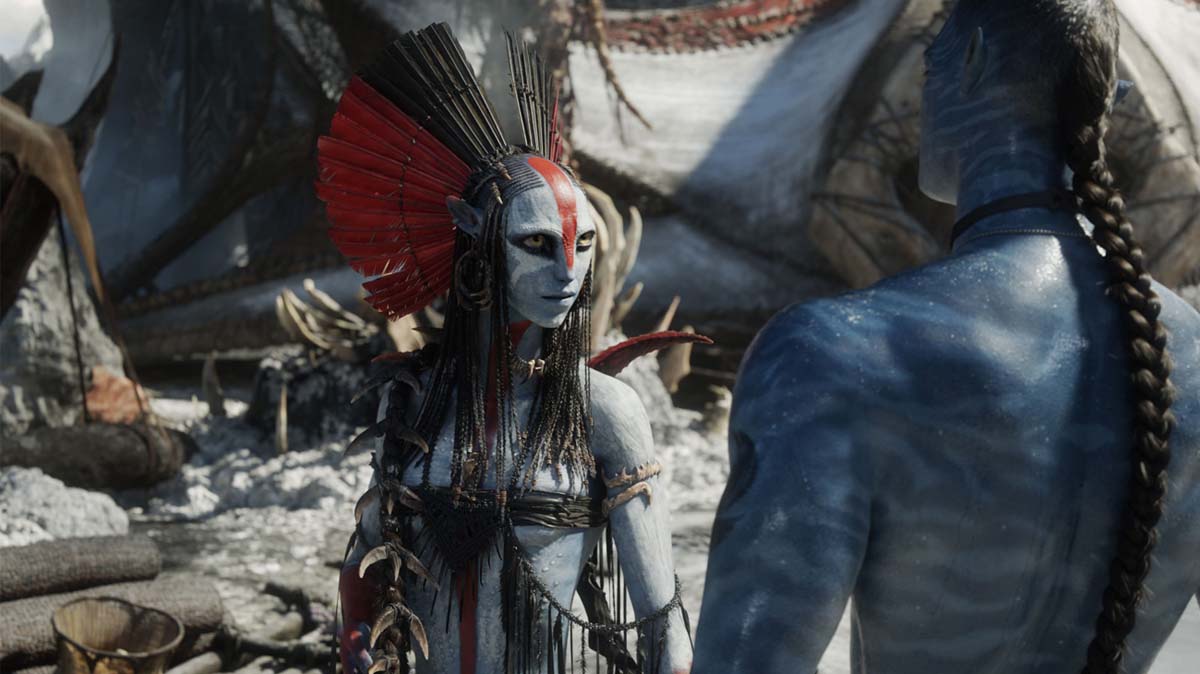
Getting back to your original question, in terms of what that initial stream looks like, it is a representation of what the final render would look like, but it doesn’t have the detail. We have a kind of a crude face - a projected face on the character - where you can see the eyes blinking, the mouth moving.
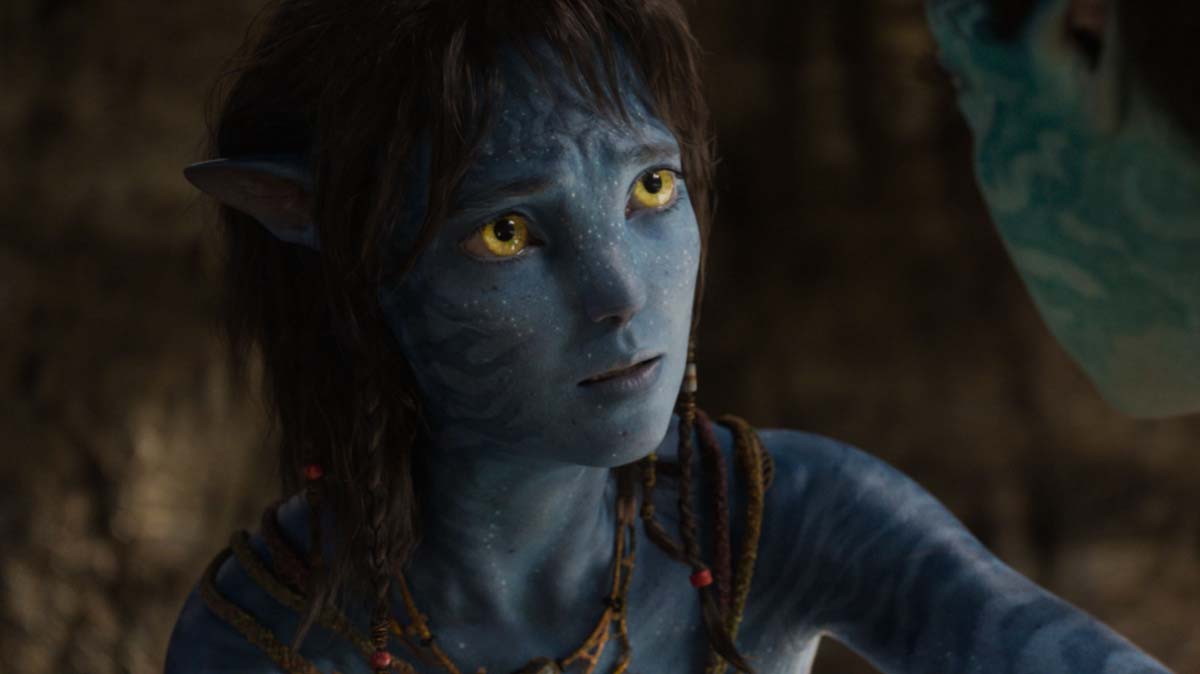
But we know what the performance is, because many times we’ll even put it in a picture in picture side by side to make sure that this is why we picked this close-up for this angle - because Zoe does this amazing look and she cries or whatever it is.
The detail is not there, but we know the performance is , so we know that ultimately they will be there. All of the lighting and the digital assets, like the set and the wardrobe is being worked out through that virtual camera process of what we call a template.
So the template is cut and locked and that’s what gets turned over for Wētā FX to finish. They get all the reference materials. So they have our facial reference for every character. They know what they have to reproduce and how high the bar is to emulate that performance exactly.
I want to talk a little bit about the evolution of the pacing of the film. We’ve talked about how the fact that the first pass of the film is just this performance capture. So you can certainly get pacing from and rhythm from the actor’s performance.
But one of the things you’re not really seeing is: “Oh my gosh! Look at this amazing vista! I just want to sit on this for four seconds - or whatever it is - because it’s so beautiful.” How much did those kinds of things change when you were able to see something that was more visually close to what we watched in the theater?
When the virtual camera shots are created, those vistas are there. They may not have the detail in them, but you’ll see a waterfall from a floating mountain. All of those things will be in the template.
Everything’s accounted for. It will only be 100 times better when it’s full res, with the final renders that Wētā produces, so we’re allowing for that.
If we see something that is worth staying on longer, because it’s a beautiful vista, it’s still evident in the template.
One of the secondary benefits of this uncoupling of performance with shot creation is that you can playback a performance take many times, and the exploration of how a scene can be covered and cut is limitless.
Whether it’s Richie and Jason working through this first pass, or whether it’s John - or Nick or myself working with Jim on the final virtual pass, there is an exploration that takes place where things are tried. There are different paths that lead to alternate coverage.
So one of the things that we do as editors - and this is something that Jim is very much in favor of, because he gets many ideas while shooting the virtual coverage – is that he wants us to explore multiple versions of how to cut the scene based on how he’s shooting it.
We can have three, four, or five different versions that are all quite different. That’s a result of an interaction where - because we’re putting these together as he’s shooting - he may say, “Well, this gives me an idea to cover it a different way and start here, and that would require me shooting another over that goes this way instead of that way.”
We could explore different screen directions, different patterns of shot A - B - C or C – B - A or whatever. It’s a unique relationship between the editor and the director to be able to actually contribute to how a scene is shot,
…because you can say, “Oh, I wish I had an over” or “Could we have something where it starts behind the actor and comes forward?” and we can go do that.
You can say that, and three minutes later you have it.
That’s crazy! One of the things that happens often in editing with, acting performances and also finding things in the context of the story, is that you have the perfect performance, but then you realize - because maybe a scene gets dropped or because you see something in context - maybe it’s not the perfect performance.
Maybe that super emotional performance isn’t the right one. You want to go dryer because you’re seeing it in context now. Did that happen? Were you able to change performances even when you were on to the second stage of editing?
That’s a very interesting question. During the virtual camera process, if Jim decided he wanted to go a different way, we could pull up the alternate performance takes with our reference cameras of what’s captured, and he could review them and say, “You know what? I like this take instead for this moment.”
Within a matter of an hour or so, they can have that take prepared and brought into the scene file, and he can shoot it. So we don’t have to bring the actors back to do that. We just say, “Maybe it will be better if Sam is down a notch on this performance.” We totally have that capability.
Once you have the film put together in virtual camera form, then you’re doing the stuff that editors do every day. You put each scene together, you look at the whole film, then you have to edit the movie, not just the scenes.
So when you’re looking at the movie, you’re doing things that every editor does on every film: How do you best tell the story? What can you do without? Maybe we could move this scene and crosscut this to another scene. Maybe there are scenes that have to be eliminated.
But in our case, if there was a scene that got eliminated and there was an important line of dialogue in it, we could take that line of dialogue or that performance and put it somewhere in a scene that does remain in the movie.
There could be scenes that got cut out of Avatar Fire and Ash and therefore the next shot of that actor—the performance wouldn’t be right because you’ve lost some transitional scene with that actor.
Well we do have the ability, and I think we did utilize this a couple of time where we brought one of our actors back to do a pickup. And so a pickup of capture is not like a pickup of live action. We don’t have to worry about matching if someone grew a beard.
Or we had young actors that were growing up over the many years, but their virtual characters could remain the same. You don’t have the same challenges that you do in trying to match a live action shot into an existing scene, because we can pick up a performance or add a line.
If we want to do a line pickup, we can have the actor come back and match what they did and pick up an additional line that we could put into that scene. So there’s a lot of flexibility that just does not exist in live action filmmaking, so that we are able to do things like that.
If we’re talking about live action, we have to discuss the complexity of combining live action with CG or combining CG with live action.
But the primary challenge in this film for putting a live action character into the CG world, was the Spider character played by Jack Champion. He acted the film twice. He acted at first in capture with his fellow actors.
He was quite a bit younger when we started, then those scenes went through performance edit and virtual camera edit and then locked and then we prepared them for a live action shoot to replace his CG character with a live action character. Every shot had to be singled out and prepared for that live action element to be integrated with the CG.
You’ve cut movies that have more traditional VFX. How different is the whole VFX delivery and turnaround process with Wētā?
I’ve worked on some pretty heavy visual effects movies, like the first three Pirates of the Caribbean movies. That was a type of keyframe performance capture. We had the actors in suits with dots acting in a live action set.
We did the same on Alita: Battle Angel, where we had the lead character acting in a live action world, so there wasn’t really a CG world in those films like there is in this one.
And, by the way, we had a fabulous visual effects editorial team headed by Justin Shaw - I think there were somewhere in the neighborhood of 3500 to 4000 shots that were handled over the course of Fire and Ash that went to Wētā and came back in various stages.
While I’m giving a hats-off to assistants, I’ll say that, our crew in New Zealand and LA represented over 20 assistants and was headed up by Ben Murphy, our “first,” on Fire and Ash in LA and Liz Denekamp in New Zealand. We had an amazing crew doing things no assistant has ever seen, unless they’ve worked on one of these films.
I would think that hiring an assistant would be different on this because nobody’s ever done it. You can’t get anybody with any true experience. You’ve just got to hire them on the fact that they’re going to be great to get along with or they’re technological, or they’re detail-oriented.
I think those are the qualities that - of course - you look for in any assistant, but the ability to learn and to be open… In some ways a seasoned assistant of many years would probably have more trouble with our workflow because it’s so unlike anything they do or have done. It’s probably more about adaptability.
How easily can you adapt to something and learn something that you’ve never done before? Those are qualities that are really important on our crew because we’re doing the most unusual workflow and probably the most complex. I’ve joked that if there was a more difficult way to make a movie, we’d find it.
Do you think those same kind of attributes for hiring an assistant is similar to Jim finding his editors? That they were open? That you guys were all open to crazy new methodologies? Clearly, you’d all had a lot of experience on big VFX movies…
I know that he brought me on to Avatar based on my experience working on effects movies, but on the other hand, in the beginning - on Avatar 1 - he was trying to figure this stuff out himself about how to approach it. How do we build a performance edit?
I started experimenting with picture-in-picture to show the various performances that could be combined into a scene file. Jason Gaudio helped to develop the process of how we turn things over to our internal lab, and utilizing those picture-in-pictures where we started developing a process, building these windows to represent the various face close-ups and wide shots and things like that, all within the “load.”
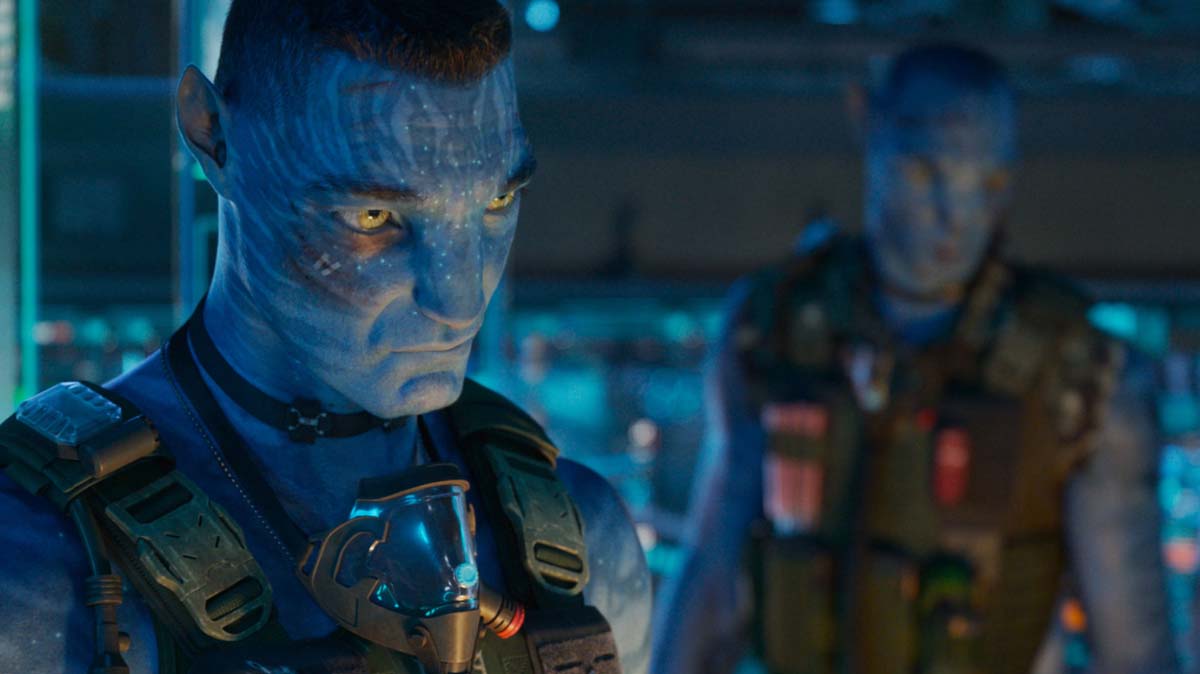
There were also background characters that had to be accounted for. We were limited on Avatar 1 to maybe a half a dozen characters in the Volume (capture stage). Now it’s up to like 20, but we still, for larger crowd scenes, had to go back after the principals were captured and play the performance edit back with a bunch of our troupe extras, and record multiple passes of crowds.
So everything’s real in there. We don’t animate crowds. They’re all based on real human performances. It would have multiple passes. We’d have to build tracks of crowd A, crowd B, crowd C, crowd D, and combine it in sync with the performance edit so that - when we’re shooting the virtual camera - all those characters are there. They don’t come from one take. It’s kind of like overdubbing audio.
You mentioned a “load.” What does a load consist of?
We turn over sections of a scene, because a lot of times - if a scene is three minutes -we’ll maybe turn it over 30 seconds at a time. So a snippet of a scene, we’ll call a “load,” and there’ll be load breaks where it may be quite obvious that there’ll be a cut to a close-up at that break because we don’t have to worry about multiple characters bumping when we cut to that close-up, because it’s cutting to a single shot. So we would look for load breaks.
A lot of times Jim would call them out in advance and say, “That could be a cut.” Now, he’s not locked to that, because if he wanted to bridge those - if he decided later not to do that - we could. But we turn over these snippets of the scene that are anywhere from 30 seconds to a minute. That’s what we call a load.
Then we build every performance that is required within that section of the scene.
So if a load is a section of a scene, what are you delivering to Wētā ?
The load is only the performance edit that we turn over to our internal lab to process it, to get it ready for a virtual camera.
Once the virtual camera edit is finished, the shots are numbered and turned over shot by shot to Wētā. This load - or section of scene - only pertains to the performance edit and how we deliver it to our internal lab, not to Wētā.
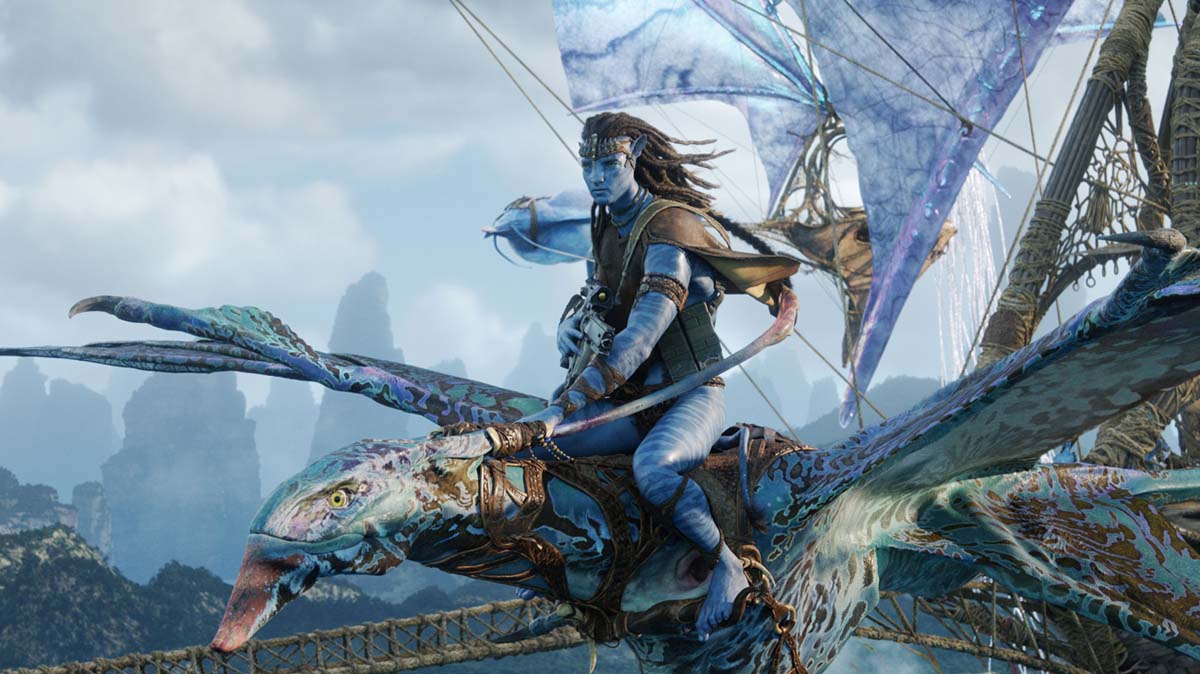
Normally what you turn over in a VFX deliverable to the VFX company is here’s a plate, here’s a greenscreen performance, whatever…you are turning over data.
Each virtual shot contains all of the data of the performances that go into that shot, combined with the digital assets of the environment, the props, the creatures, all of those things are incorporated into each shot.
Those are all elements that are in the virtual shot. That information – shot-for-shot - goes to Wētā in the data contained in that virtual shot, they know the take number for each character.
There’s a lot of metadata that is listed that goes along with it, so they resolve all of that.
They get the facial data from the face cam, and that’s what’s used to drive every facial muscle in the CG character that matches the human performance. That’s why you have these amazing performances coming through on a CG face.
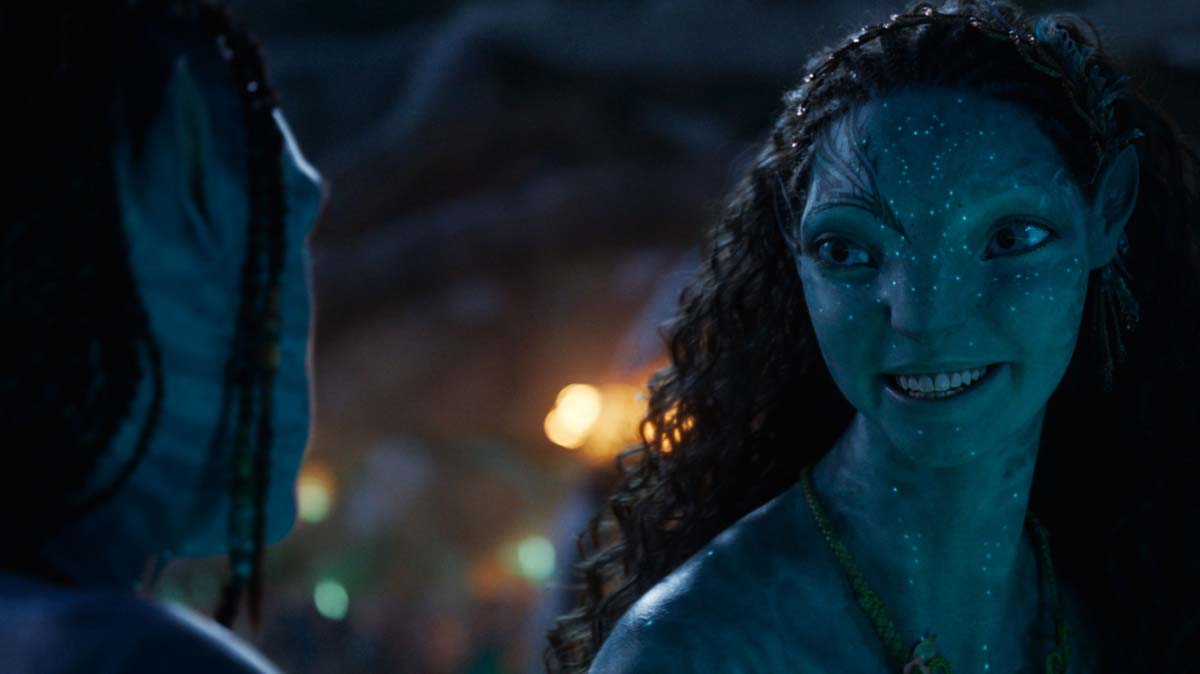
I just wanted to step away from the technical discussion to let you pay tribute to John and David.
David Brenner was an extraordinary editor who had worked on some truly great films before we were lucky enough to have him come and work with us. He learned incredibly fast and he helped to navigate some of the early days of underwater capture.
It just represented a whole new set of challenges and David worked very hard on some key sequences, like the first underwater swim scene in Way of Water, which was so memorable.
It was just amazing to see those scenes come to life, as well as all the great work he did throughout the movie. He never got to experience the thrill of seeing the final film finished because he passed, I think, ten months before the release.
As I mentioned earlier, John Refoua was very instrumental in the way we developed this process from the beginning back in 2007 on the first Avatar. After the many years we worked together on all three Avatar films, it was particularly painful to lose him as a friend and creative partner.
He had an essential role in the editing of these films and his work on Way of Water was magnificent and, at a certain point, he leapfrogged ahead to dedicate himself to preparing Fire and Ash, while the rest of the crew was spending time finishing up on Way of Water.
So, an enormous amount of John’s work is still represented in the finished film. He worked through his illness right up until the very end. That was just how dedicated he was.
David and John were brilliant collaborators. I miss them every day, but their talent and creative contribution to these films will live on for generations to come.
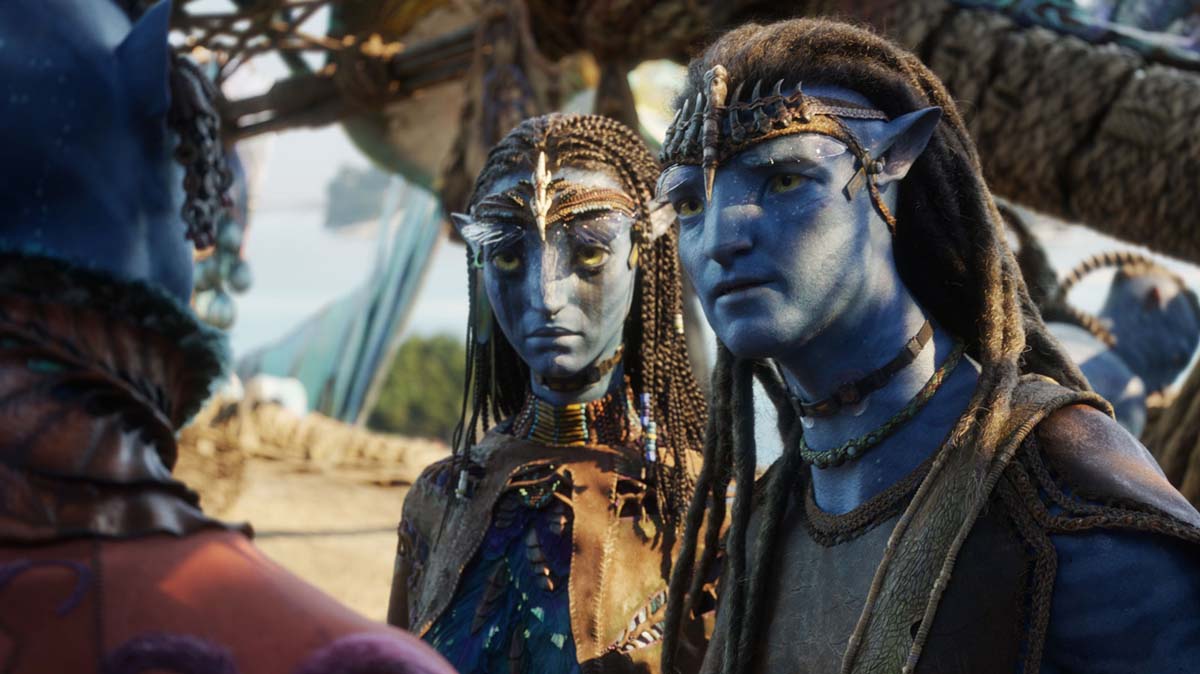
Talk about your other collaborator, who is James Cameron. He’s an editor on this film. Can you talk about working with him as a fellow editor and what you’ve learned from him or his work on the film as an editor instead of as a director?
People don’t give him enough credit as an editor.
He’s an ACE editor, isn’t he?
He’s been a member of ACE for many years. He’s skilled at editing and all of us havecollaborated with him in many ways, passing scenes back and forth and being challenged by his sense of perfection. One of the things that I think he’s really good at is knowing what he wants. I think that falls into how he shoots things.
So as an editor, many times he’ll shoot things with editing in mind. There are other times, like during Virtual Camera, where he wants the exploration. He wants the freedom to explore various ways to shoot and cut a scene.
And we give him lots of alternative cuts and he will experiment with those. He’ll incorporate them. Sometimes he’ll go back and do his own editing for sections of the scene, or maybe he’ll try something completely different, but he’s very much involved in the process, and he’s amazing at it.
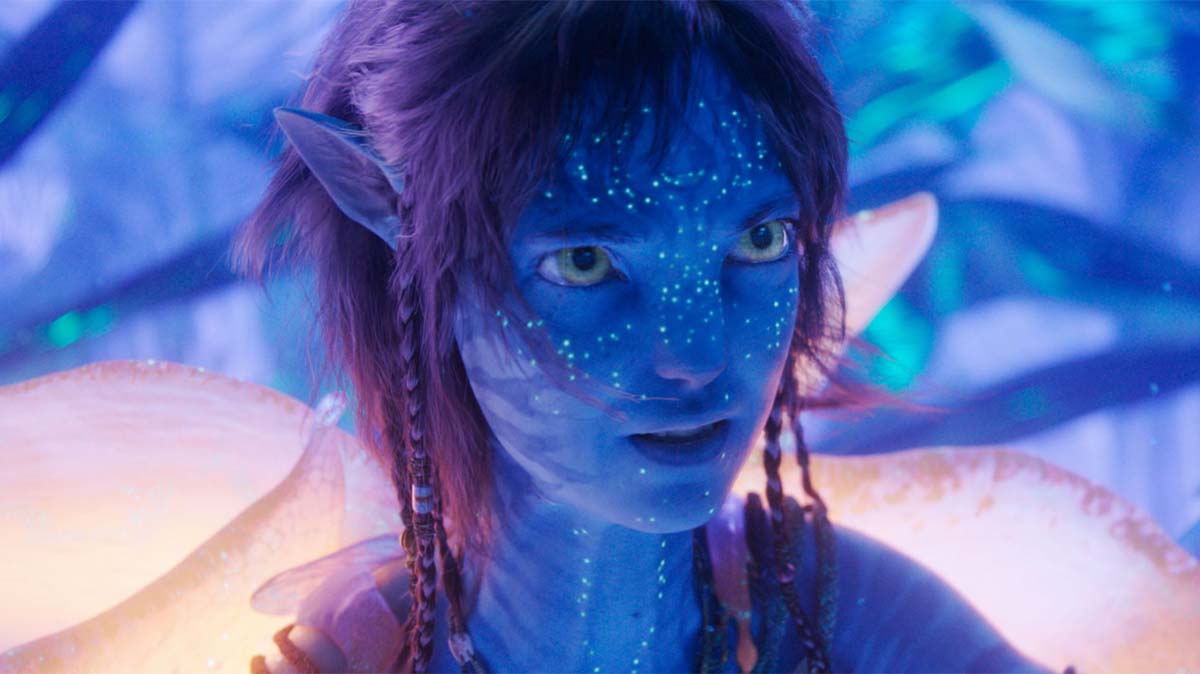
For a good director who knows how to edit, it’s a great thing for them to get their hands dirty.
You have some great editors that have become directors, like Robert Wise, or David Lean was an editor, and Hal Ashby started as an editor. There are a lot of directors that have come from editing. It really helps to have a knowledge of how to put a movie together when you’re sitting in the director’s chair.
Jim changes his hats all the time, and he’s really good at many different jobs, but editing is one that he knows is an essential aspect of telling the story, and he has embraced the skill, and he’s learned from a lot of editors that he’s worked with like Mark Goldblatt (editor on Terminator 2 and True Lies) and Conrad Buff (editor on Titanic and The Abyss).
There are many, many editors that have worked alongside him and that he learned from. He’s very, very sensitive to how important editing is, and my hat’s off to him for that.
Well, that is a fantastic place to end this interview. Steve, thank you so much for your time today, and congratulations on a fantastic project.
Thank you so much. It’s been a pleasure.
 April 2, 2026
Project Hail Mary
Joel was last on Art of the Cut for his work on the Disney film, Jungle Cruise. Joel’s other work includes Thor: Ragnarok, Transformers: Rise ...
Read more March 26, 2026
Young Sherlock
Today on Art of the Cut, we speak with four of the editors on the buzzy new Amazon Prime series, Young Sherlock. With us are ...
Read more March 18, 2026
KPop Demon Hunters
Today on Art of the Cut we speak with editor Nathan Schauf about his ACE Eddie and Annie award-winning work on the Oscar-winning Best Animated ...
Read more